


Search results
Search for "enzymes" in Full Text gives 505 result(s) in Beilstein Journal of Organic Chemistry. Showing first 200.
Designed whole-cell-catalysis-assisted synthesis of 9,11-secosterols
Beilstein J. Org. Chem. 2021, 17, 581–588, doi:10.3762/bjoc.17.52
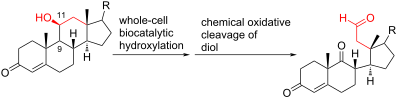
- cellular lysate of the marine gorgonian Pseudopterogorgia americana was published by Keliman et al. in 1996 [26]. They carried out quite effective transformations of a variety of sterols to 9,11-secosteroid derivatives in high yields. However, it is unclear which enzymes were responsible for each oxidation


Breakdown of 3-(allylsulfonio)propanoates in bacteria from the Roseobacter group yields garlic oil constituents
Beilstein J. Org. Chem. 2021, 17, 569–580, doi:10.3762/bjoc.17.51
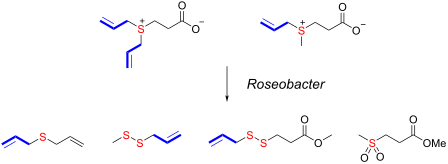
- compounds, structural suggestions were made based on their mass spectrometric fragmentation pattern and confirmed by the synthesis of reference compounds. The results of the feeding experiments allowed to conclude on the substrate tolerance of DMSP degrading enzymes in marine bacteria. Keywords: Allium
- giving another example for the complex interactions between marine bacteria and algae. Known DMSP degradation pathways include its hydrolysis to dimethyl sulfide (DMS) and 3-hydroxypropanoic acid (15) by the enzyme DddD [19], or the lysis to DMS and acrylic acid (16) for which various enzymes including
- ), allyl methyl trisulfide (32), and traces of diallyl trisulfide (3) and allyl methyl tetrasulfide (34) were observed. The formation of these compounds is explainable by the deallylation of DAllSP to 3-(allylsulfanyl)propanoic acid (37) and further degradation to allyl thiol (13) through the enzymes of


A new and efficient methodology for olefin epoxidation catalyzed by supported cobalt nanoparticles
Beilstein J. Org. Chem. 2021, 17, 519–526, doi:10.3762/bjoc.17.46
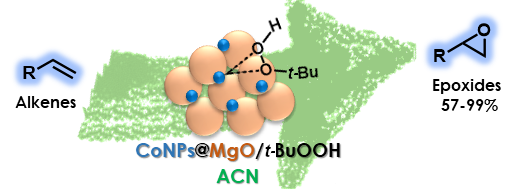
- , Mn and mainly Co-based catalysts for olefin epoxidation. Besides their low cost and low toxicity, the choice of these metals is related to their known ability to activate dioxygen in natural processes catalyzed by metal-containing enzymes [29][30]. Despite that various homogeneous [31][32] and


Biochemistry of fluoroprolines: the prospect of making fluorine a bioelement
Beilstein J. Org. Chem. 2021, 17, 439–460, doi:10.3762/bjoc.17.40
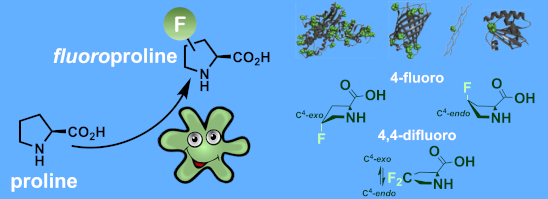
- the velocity as well. For example, in the nonpolar environment of a protein interior or a hydrophobic pocket of a chaperone, the process may occur much faster [53]. Some protein sequences require the action of peptidyl-prolyl cis/trans isomerases, natural enzymes meant to facilitate the amide rotation
- S-Flp may preclude the production of proteins with this substrate as the in vivo expression of enzymes with oligoproline stretches might be completely suppressed with this analogue (vide infra). Chin and co-workers reported the directed evolution on ribosomes that yielded a variant (dubbed as O-d2d8
- incorporation on the enzymatic performance were characterized for a few enzymes [59][130][131][132][135] and the activity of ion channels [110][111][112][113]. These studies generally showed the preservation of the fold of the parent enzymes inferred from the preservation of their native activities. From these


Identification of volatiles from six marine Celeribacter strains
Beilstein J. Org. Chem. 2021, 17, 420–430, doi:10.3762/bjoc.17.38
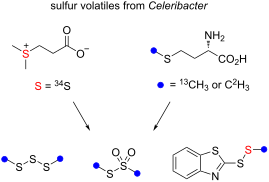
- demethylation pathway by action of the enzymes DmdABCD to methanethiol (MeSH, Scheme 1A) [12] or through lysis by DddD [13] or hydrolytic cleavage by one of the known DMSP lyases (DddW [14], DddP [15], DddQ [16], DddL [17], DddY [18] or DddK [19]) to dimethyl sulfide (DMS, Scheme 1B). It has already been
- , for which all relevant enzymes are encoded in the six Celeribacter strains (only a DmdA homolog is missing in C. indicus, Table S1 in Supporting Information File 1), and e.g., transesterification of the DmdC product with EtOH (Scheme 1A). Compound 42 is not a widespread sulfur volatile, but has been
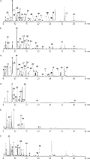
- possibilities for future studies on methionine and DMSP degrading enzymes and pathways in Celeribacter. Our study also shows that the results from trace compound analyses must be taken with care and contaminations from other sources must always be taken into consideration. For the unusual compound 2




Regioselective chemoenzymatic syntheses of ferulate conjugates as chromogenic substrates for feruloyl esterases
Beilstein J. Org. Chem. 2021, 17, 325–333, doi:10.3762/bjoc.17.30
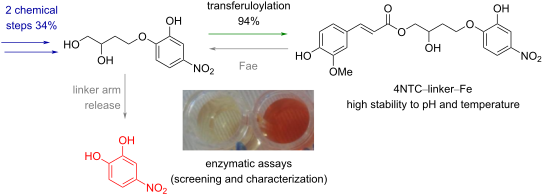
- , France 10.3762/bjoc.17.30 Abstract Generally, carbohydrate-active enzymes are studied using chromogenic substrates that provide quick and easy color-based detection of enzyme-mediated hydrolysis. For feruloyl esterases, commercially available chromogenic ferulate derivatives are both costly and limited
- toolbox, providing informationally rich high-throughput screens that can not only attribute an activity to putative enzymes but also procure some qualitative details on enzyme properties. In this respect, the availability of easy-to-use chromogenic substrates that can provide both qualitative and


19F NMR as a tool in chemical biology
Beilstein J. Org. Chem. 2021, 17, 293–318, doi:10.3762/bjoc.17.28
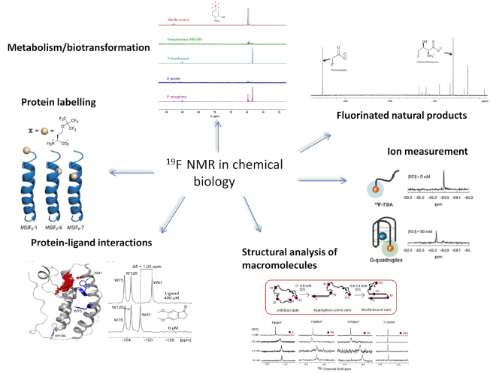
- and complex biomolecules, such as enzymes. In a recent study exemplifying this application, 19F NMR has been employed to investigate the metabolism of carnitine. In animals, carnitine is biosynthesised from trimethyllysine in four enzyme-catalysed steps, which involves in the last step the action of


Semiautomated glycoproteomics data analysis workflow for maximized glycopeptide identification and reliable quantification
Beilstein J. Org. Chem. 2020, 16, 3038–3051, doi:10.3762/bjoc.16.253
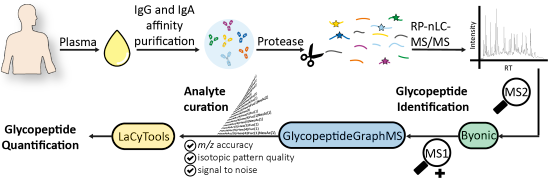
- provides a powerful workflow towards high-throughput glycopeptide analysis. Experimental Sample, chemicals, and enzymes Human plasma Visucon-F was obtained from Affinity Biologicals (Ancaster, ON, Canada). Affinity matrix beads for IgG (CaptureSelect FcXL, capacity 25–35 g/L) and IgA (CaptureSelect IgA


Selected peptide-based fluorescent probes for biological applications
Beilstein J. Org. Chem. 2020, 16, 2971–2982, doi:10.3762/bjoc.16.247

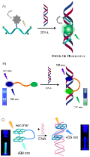
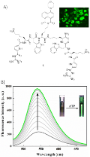
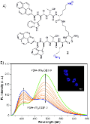
- antibiotic, is used for the treatment of resistant bacterial infections. Its interaction with a small peptidic segment of the bacteria cell wall is a classic example of molecular recognition [6][7]. Peptides are often substrates for protease enzymes [8][9]. Enzymologists have studied the chemical principles



Ultrasound-assisted Strecker synthesis of novel 2-(hetero)aryl-2-(arylamino)acetonitrile derivatives
Beilstein J. Org. Chem. 2020, 16, 2929–2936, doi:10.3762/bjoc.16.242
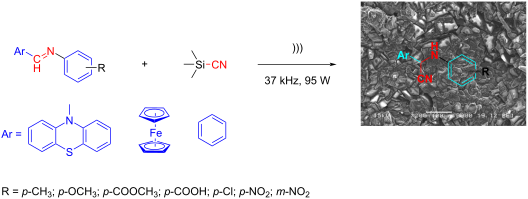
- case of the TA98 strain (44–95%), but nevertheless considerable for TA100 strain (46–79%). The results of the antimutagenicity assay indicate a lower inhibition exhibited in the presence of liver homogenate (S9), pointing out that metabolizing enzymes could interfere with the activation of the


3-Acetoxy-fatty acid isoprenyl esters from androconia of the ithomiine butterfly Ithomia salapia
Beilstein J. Org. Chem. 2020, 16, 2776–2787, doi:10.3762/bjoc.16.228
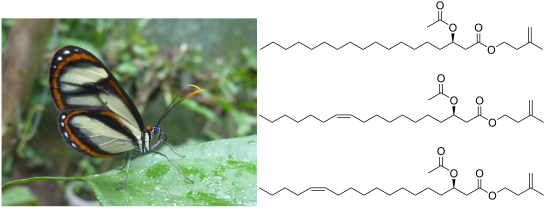
- ]. The differences in the isoprenyl esters reported are present in all individuals tested, pointing to distinct differences in activity of biosynthetic enzymes between the two subspecies. Fatty acid esters, which were repeatedly reported to occur in androconia and male scent glands of butterflies [37][38
- describe a group of esters, never before reported in nature, 3-acetoxyacyl isoprenyl esters from Ithomia salapia. The large amounts of these esters in the androconia and the specialized enzymes needed to produce them seem to indicate a pheromonal function of them, especially at close range. Differences in





Vicinal difluorination as a C=C surrogate: an analog of piperine with enhanced solubility, photostability, and acetylcholinesterase inhibitory activity
Beilstein J. Org. Chem. 2020, 16, 2663–2670, doi:10.3762/bjoc.16.216
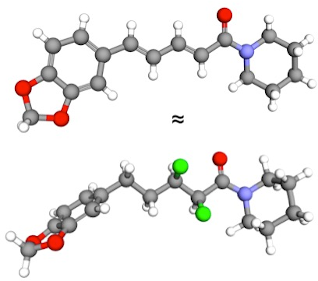
- to different levels of flexibility within the enzyme active sites. A third possibility is that the analog 2 adopts different conformations upon binding to AChE vs BACE-1, since the microenvironments within the enzymes’ active sites could be different (e.g., more/less polar), the “correct” binding


A consensus-based and readable extension of Linear Code for Reaction Rules (LiCoRR)
Beilstein J. Org. Chem. 2020, 16, 2645–2662, doi:10.3762/bjoc.16.215

- conception [10], the adaptation of Linear Code to represent reaction rules aimed to describe how glycosylation enzymes change the structure of glycans in terms of how the Linear Code character string descriptions of the glycans are changed (Figure 1). In the simplest case, we can specify a substring of the


Anion exchange resins in phosphate form as versatile carriers for the reactions catalyzed by nucleoside phosphorylases
Beilstein J. Org. Chem. 2020, 16, 2607–2622, doi:10.3762/bjoc.16.212
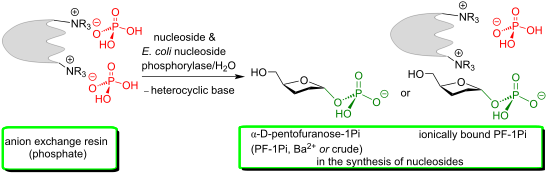
- ). Apparently, a combination of such factors as the molarity of the phosphate buffer and the amount of enzymes per 1 mmol of substrate allows the phosphorolysis reactions to proceed by almost entirely. Taking into account the quantity of UP and PNP in the synthesis of nelarabine employed by Krenitsky et al. [43
- Krenitsky et al. [43] in the transarabinosylation reaction the ratio of substrates to the relevant enzymes (throughout in IU per 1 mmol of substrate) was UP 1,890 IU for Ara-U and PNP 37,780 IU for the heterocyclic base, whereas in our experiment the corresponding values were 516 IU and 1,485 IU for UP and
- activity 167 IU per mg protein), uridine phosphorylase (UP, specific activity 140 IU per mg protein in solution 17 mg/mL), and purine nucleoside phosphorylase (PNP, specific activity 27 IU per mg of protein) [80] have been used throughout of the studies. The powdered enzymes were dissolved in 5 mM K


Leveraging glycomics data in glycoprotein 3D structure validation with Privateer
Beilstein J. Org. Chem. 2020, 16, 2523–2533, doi:10.3762/bjoc.16.204
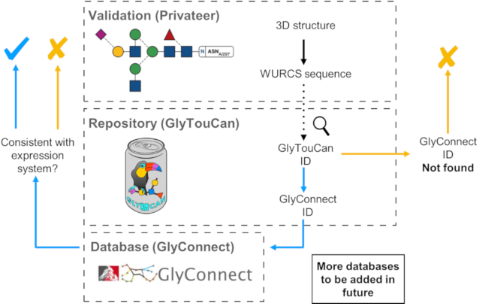
- in the compositions of the glycans added to specific glycosylation sites – microheterogeneity. This variation in the microheterogeneous composition patterns arises due to the competition of glycan-processing enzymes in biosynthesis pathways [23]. Implications for the structure determination of



NMR Spectroscopy of supramolecular chemistry on protein surfaces
Beilstein J. Org. Chem. 2020, 16, 2505–2522, doi:10.3762/bjoc.16.203
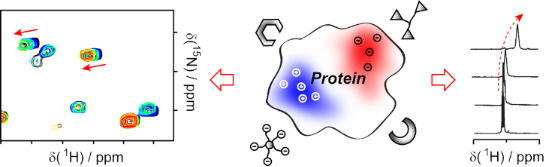
- recent years, the focus of biochemical research and drug development has shifted from the inhibition of single enzymes to targeting protein-protein interactions [1][2], which play key roles in cellular function and dysfunction [3][4]. Enzymes usually bind their substrates in deep pockets with specific
- metabolic enzymes converting glutamate [111]. The bacteria are grown in a modified M9 minimal medium containing the labeled amino acid, all others in unlabeled form, and the corresponding metabolic pathway inhibitors. To our knowledge, this method has not been applied to study the binding of ligands that



Recent developments in enantioselective photocatalysis
Beilstein J. Org. Chem. 2020, 16, 2363–2441, doi:10.3762/bjoc.16.197
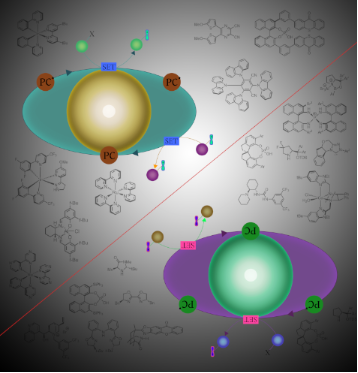


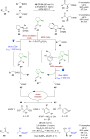
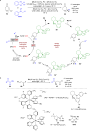


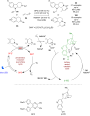


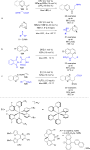
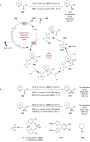
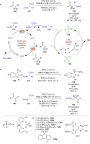
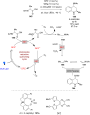
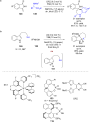




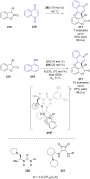


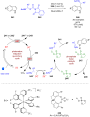

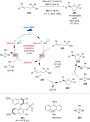


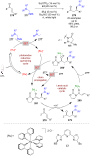


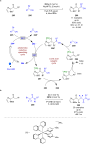


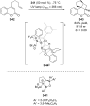


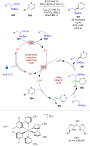


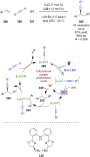




Tools for generating and analyzing glycan microarray data
Beilstein J. Org. Chem. 2020, 16, 2260–2271, doi:10.3762/bjoc.16.187
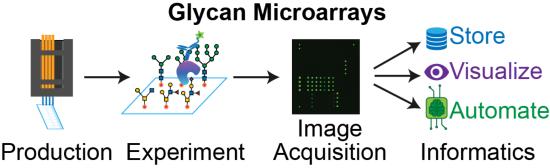
- , all concentration plots, and a model structure. The software was designed to be useful for lectin and enzyme analysis. It has been used to discover fine specificities of lectins (AAL, SNA) and glycosidase enzymes (α1-2-fucosidase and an α2-3,6,8-neuraminidase) [45]. 3. SignalFinder-Microarray: Status


pH- and concentration-dependent supramolecular self-assembly of a naturally occurring octapeptide
Beilstein J. Org. Chem. 2020, 16, 2017–2025, doi:10.3762/bjoc.16.168
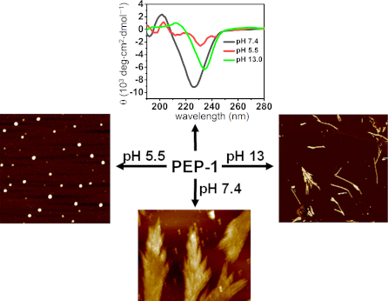
- noncovalent interactions can also be designed to be responsive to various external stimuli, such as heat, pH, light, enzymes, metal ions, and chemical triggers [23][24][25][26][27][28][29][30][31][32][33][34][35][36][37][38][39]. In this regard, a particularly relevant property of peptide assemblies is their


Selective preparation of tetrasubstituted fluoroalkenes by fluorine-directed oxetane ring-opening reactions
Beilstein J. Org. Chem. 2020, 16, 1936–1946, doi:10.3762/bjoc.16.160
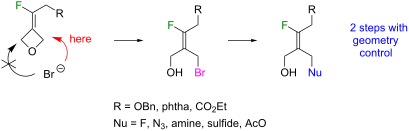
- nucleotides such as the antiviral agent FPMPA (IV) [7][8][9]. Other main structural modifications of ACN relied on the introduction of a hydroxy group into the aliphatic chain to improve hydrogen bonding with enzymes [10], or of a carbon–carbon double bond to constrain the aliphatic chain and to limit
- hydrogen-bond accepting capacity with proteins or enzymes would be restored [14]. The synthesis of fluoroalkene precursors of modified acyclonucleosides (VIII) has been explored by Choi, and more recently by us [15][16][17]. Nevertheless, it was reported that no antiviral activity for compounds of series


Synthesis, docking study and biological evaluation of ᴅ-fructofuranosyl and ᴅ-tagatofuranosyl sulfones as potential inhibitors of the mycobacterial galactan synthesis targeting the galactofuranosyltransferase GlfT2
Beilstein J. Org. Chem. 2020, 16, 1853–1862, doi:10.3762/bjoc.16.152
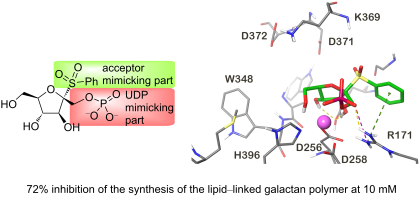
- site of GlfT2, none of these compounds serve as efficient inhibitors of the enzymes involved in the mycobacterial galactan biosynthesis. Keywords: GlfT2; molecular modeling; mycobacterium tuberculosis; synthesis; transition state inhibitors; Introduction Tuberculosis (TB) is one of the most prevalent
- galactofuranose (Galf) residues linked by alternating β-(1→5)- and β-(1→6)-glycosidic bonds [4]. The Galf monomer is restricted to some bacteria, fungi and a few protozoan species, and it seems to be absent in humans [5]. The enzymes participating in the galactan build-up could thus be considered as potential
- enzymes require an activated sugar donor uridine diphosphate (UDP)-Galf, which is synthesized from UDP-galactopyranose (UDP-Galp) by the enzyme UDP-Galp mutase [9] (Supporting Information File 1, Figure S1). The recently published GlfT2 X-ray structure with a UDP donor part [10] was used in the reaction


Nonenzymatic synthesis of anomerically pure, mannosyl-based molecular probes for scramblase identification studies
Beilstein J. Org. Chem. 2020, 16, 1732–1739, doi:10.3762/bjoc.16.145
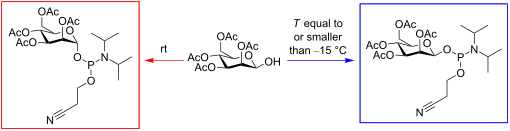
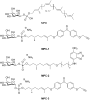
- characterization of the configuration at the anomeric position was done by HSQC NMR (see Supporting Information File 1). Since the target enzymes are unknown and can be expected to have stereospecific binding sites, the α-configured ᴅ-mannose probe MPC-3 is also important as a reference for our biochemical assays



Antibacterial scalarane from Doriprismatica stellata nudibranchs (Gastropoda, Nudibranchia), egg ribbons, and their dietary sponge Spongia cf. agaricina (Demospongiae, Dictyoceratida)
Beilstein J. Org. Chem. 2020, 16, 1596–1605, doi:10.3762/bjoc.16.132
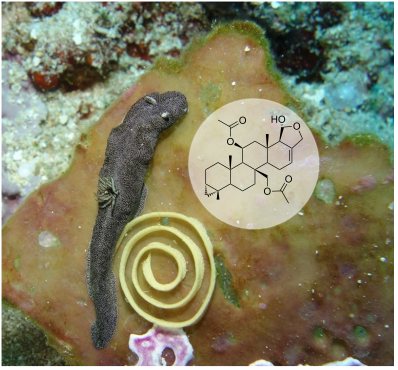
- were shown to share and cover various core functions of sponge metabolism by functionally equivalent symbionts, analogous enzymes, or biosynthetic pathways [16][79][80]. Another Spongia species, S. officinalis, was shown to harbour bacteria with terpenoid cyclases/protein prenyltransferases responsible



A dynamic combinatorial library for biomimetic recognition of dipeptides in water
Beilstein J. Org. Chem. 2020, 16, 1588–1595, doi:10.3762/bjoc.16.131
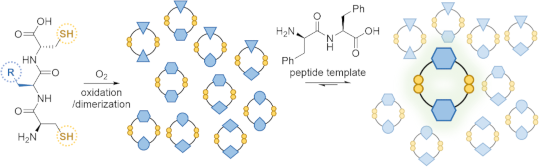
- our initial assumption that dynamic peptides, due to their similarity towards enzymes, can bind a broad scope of biomolecules. ITC measurements suggest that the cyclic tripeptide dimers a(CFC)2 and p(CFC)2 are stronger binders for the aromatic dipeptides FF and YY (K ≈ 229–702 M−1), then for the non


4-Hydroxy-3-methyl-2(1H)-quinolone, originally discovered from a Brassicaceae plant, produced by a soil bacterium of the genus Burkholderia sp.: determination of a preferred tautomer and antioxidant activity
Beilstein J. Org. Chem. 2020, 16, 1489–1494, doi:10.3762/bjoc.16.124
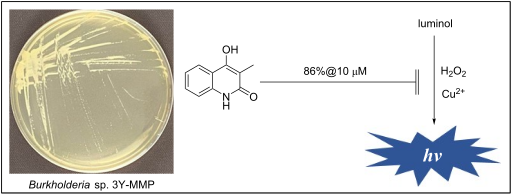
- immunity [33], among which redox enzymes and antioxidants are the direct countermeasures to neutralize the toxicity of ROS [34]. Limited examples of antioxidants include catecholamine melanin from a fungus Cryptococcus neoformans [35], 1,8-dihydroxynaphthalene melanin from fungi Wangiella dermatitidis and





