Search results
Search for "flow" in Full Text gives 720 result(s) in Beilstein Journal of Organic Chemistry. Showing first 200.
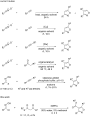
Synthesis of 3,4,5-trisubstituted isoxazoles in water via a [3 + 2]-cycloaddition of nitrile oxides and 1,3-diketones, β-ketoesters, or β-ketoamides
Beilstein J. Org. Chem. 2022, 18, 446–458, doi:10.3762/bjoc.18.47

- , Saugus, MA, USA). The DART ion source was operated with helium gas (approximately 4.0 L/min flow rate), the gas heater (350 °C), and the source grid (350 V). The data acquisition range was from m/z 50 to 1000. Polyethylene glycol (PEG 600) was used for the exact mass calibration. General synthetic



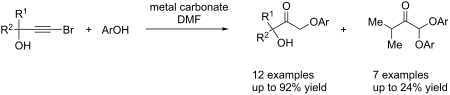
Cs2CO3-Promoted reaction of tertiary bromopropargylic alcohols and phenols in DMF: a novel approach to α-phenoxyketones
Beilstein J. Org. Chem. 2022, 18, 420–428, doi:10.3762/bjoc.18.44
- , thickness of stationary phase film 0.25 μm; injector temperature 250 °C, gas carrier – helium, flow rate 0.7 mL/min; detector temperature 250 °C; mass analyzer: quadrupole, electron ionization, electron energy: 70 eV, ion source temperature 200 °C; mass range 34–650 Da. The solvent was distilled DMF. Column


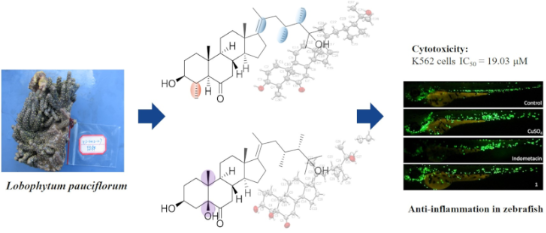
Four bioactive new steroids from the soft coral Lobophytum pauciflorum collected in South China Sea
Beilstein J. Org. Chem. 2022, 18, 374–380, doi:10.3762/bjoc.18.42
- -operation and Development (OECD). The zebrafish were maintained under a 14/10 h light/dark cycle at the temperature (28 ± 0.5°C) in a closed flow-through system with charcoal-filtered tap water to ensure normal spawning. CuSO4-induced model of zebrafish In a manner similar to literature reference [11


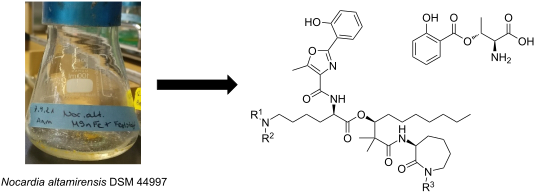
Amamistatins isolated from Nocardia altamirensis
Beilstein J. Org. Chem. 2022, 18, 360–367, doi:10.3762/bjoc.18.40
- supplemented with 0.1% (v/v) trifluoroacetic acid. The gradient conditions were as follows: from 40% methanol to 70% in 5 minutes followed by an increase to 90% in 20 minutes, kept at 90% for 10 minutes. The flow rate was set to 10 mL/min. The elution of compounds was monitored with a diode array detector
- . Again, CAS active fractions were collected. For the final purification step, a Nucleodur C18 Isis column (250 × 10 mm, 5 μm, Macherey-Nagel) was used with a linear gradient from 25% to 90% acetonitrile in water + 0.1% (v/v) trifluoroacetic acid over a period of 30 min. The flow rate was set to 6 mL/min


Synthesis of piperidine and pyrrolidine derivatives by electroreductive cyclization of imine with terminal dihaloalkanes in a flow microreactor
Beilstein J. Org. Chem. 2022, 18, 350–359, doi:10.3762/bjoc.18.39
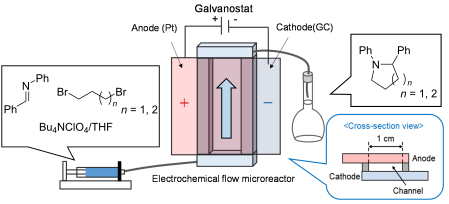
- available imine and terminal dihaloalkanes in a flow microreactor. Reduction of the substrate imine on the cathode proceeded efficiently due to the large specific surface area of the microreactor. This method provided target compounds in good yields compared to a conventional batch-type reaction
- . Furthermore, piperidine and pyrrolidine derivatives could be obtained on preparative scale by continuous electrolysis for approximately 1 hour. Keywords: electrochemical synthesis; electrocyclization; flow microreactor; heterocyclic amines; imine; Introduction Heterocycles are a very important class of
- their demonstration. Therefore, it is desirable to conduct the reductive cyclizations without the use of a mercury cathode, and the development of a simple, green, and efficient method for the electrochemical synthesis of heterocyclic amines is an important research target. The electrochemical flow


Flow synthesis of oxadiazoles coupled with sequential in-line extraction and chromatography
Beilstein J. Org. Chem. 2022, 18, 232–239, doi:10.3762/bjoc.18.27
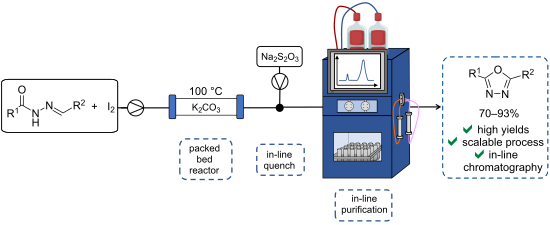
- Kian Donnelly Marcus Baumann School of Chemistry, University College Dublin, Science Centre South, Belfield, Dublin 4, Ireland 10.3762/bjoc.18.27 Abstract An efficient continuous flow process is reported for the synthesis of various 1,3,4-oxadiazoles via an iodine-mediated oxidative cyclisation
- approach. This entails the use of a heated packed-bed reactor filled with solid K2CO3 as a base. Using DMSO as solvent, this flow method generates the target heterocycles within short residence times of 10 minutes and in yields up to 93%. Scale-up of this flow process was achieved (34 mmol/h) and featured
- an integrated quenching and extraction step. Lastly, the use of an automated in-line chromatography system was exploited to realise a powerful flow platform for the generation of the heterocyclic targets. Keywords: chromatography; flow synthesis; in-line purification; oxadiazole; reaction


Organocatalytic asymmetric nitroso aldol reaction of α-substituted malonamates
Beilstein J. Org. Chem. 2022, 18, 217–224, doi:10.3762/bjoc.18.25

- /v, flow rate 1.0 mL/min, 254 nm, τminor = 13.0 min, τmajor = 13.9 min, 90% ee). HRMS (m/z): [M + Na]+ calcd for C17H17BrN2NaO4+, 415.0264; found, 415.0278. ORTEP diagram drawn with 30% ellipsoid probability for non-H atoms of the crystal structure of chiral compound 4a determined at 293 K. The




Anomeric 1,2,3-triazole-linked sialic acid derivatives show selective inhibition towards a bacterial neuraminidase over a trypanosome trans-sialidase
Beilstein J. Org. Chem. 2022, 18, 208–216, doi:10.3762/bjoc.18.24
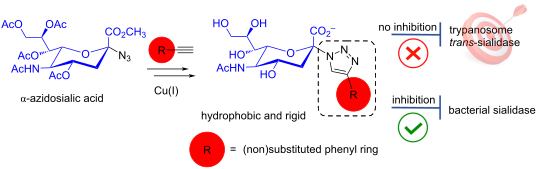
- ). The organic layer was dried over MgSO4, filtered, concentrated under vacuum and purified by flash chromatography [cartridge: SNAP Ultra 10g; isocratic: 80–80% and 100–100% EtOAc/hexane (v:v); flow: 12 mL/min] to afford 1,4-disubstituted 1,2,3-triazole derivatives 2a–h in good yields and purity. After

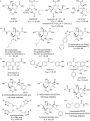


Glycosylated coumarins, flavonoids, lignans and phenylpropanoids from Wikstroemia nutans and their biological activities
Beilstein J. Org. Chem. 2022, 18, 200–207, doi:10.3762/bjoc.18.23
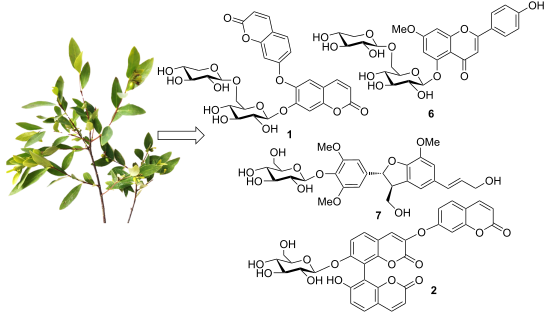
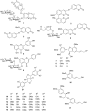
- ) at 35 °C with isocratic elution of 25% CH3CN in 0.1% H3PO4 for 40 min and subsequent washing of the column with 90% CH3CN at a flow rate 0.8 mL/min. Peaks at 16.54 and 19.64 min have coincided with derivatives of ᴅ-glucose and ᴅ-xylose [30]. Chemical structures of compounds 1–17 from W. nutans. The



High-speed C–H chlorination of ethylene carbonate using a new photoflow setup
Beilstein J. Org. Chem. 2022, 18, 152–158, doi:10.3762/bjoc.18.16
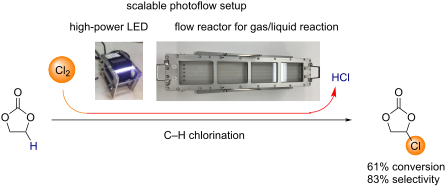
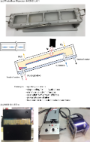
- ethylene carbonate was introduced to the reactor, the residence time was measured to be 15 or 30 s, depending on the slope of the reactor set at 15 or 5°, respectively. Such short time of exposition sufficed the photo C–H chlorination. The partial irradiation of the flow channels also sufficed for the C–H
- ; ethylene carbonate; photo flow reactor; vinylene carbonate; Introduction The C–H chlorination by molecular chlorine is a highly exothermic reaction that proceeds via a radical chain mechanism as illustrated in Scheme 1 [1][2][3][4][5][6]. Frequently, photoirradiation is used for radical initiation through
- , sustaining the radical chain. Chlorine gas is a cheap feedstock since it is formed as a byproduct of the electrolysis of NaCl to produce NaOH in an industrial process [7]. We felt that C–H chlorination would be updated by using scalable flash chemistry [8]. Flow C–H chlorination using a compact flow reactor




Tenacibactins K–M, cytotoxic siderophores from a coral-associated gliding bacterium of the genus Tenacibaculum
Beilstein J. Org. Chem. 2022, 18, 110–119, doi:10.3762/bjoc.18.12
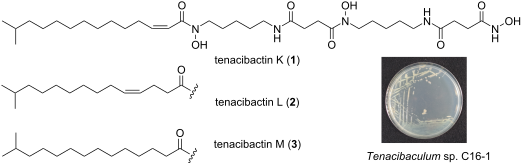
- Cholester Packed Column, 10 × 250 mm, Nacalai Tesque) using an isocratic elution with 50% MeCN in 0.1% HCO2H over 40 min at a flow rate of 4 mL/min, yielding tenacibactin K (1, 31.6 mg, tR 28.0 min), tenacibactin L (2, 2.8 mg, tR 22.0 min), and tenacibactin M (3, 18.2 mg, tR 34.4 min). Tenacibactin K (1


Regioselective synthesis of methyl 5-(N-Boc-cycloaminyl)-1,2-oxazole-4-carboxylates as new amino acid-like building blocks
Beilstein J. Org. Chem. 2022, 18, 102–109, doi:10.3762/bjoc.18.11
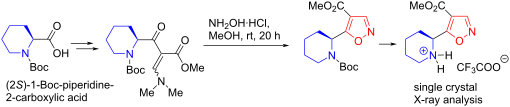
- /(H2O + 0.1% HCOOH (30:70 isocratic mode); T = 36 °C; flow rate 1.0 mL/min. Samples were prepared in methanol. The injection volume was 10 μL, λdet = 245 nm. (a) Structure of 4b with syn- and anti-conformers; (b) superimposed 1H NMR and 1D gradient NOE spectra with a selective irradiation of signal at δ


1,2-Naphthoquinone-4-sulfonic acid salts in organic synthesis
Beilstein J. Org. Chem. 2022, 18, 53–69, doi:10.3762/bjoc.18.5
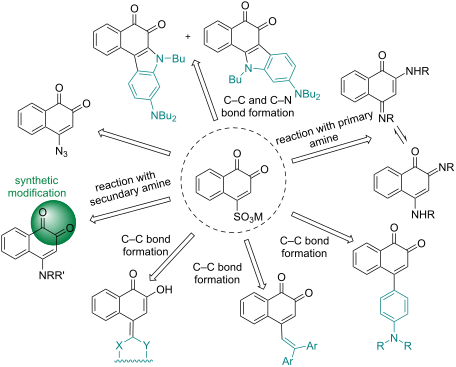
- addition, several authors concluded that this was a good method for analytically determining low levels of activated aromatic amines in drugs. This method continued to be used over the years and was subsequently optimized by a spectrophotometric determination technique coupled with continuous flow [55]. In


Recent advances and perspectives in ruthenium-catalyzed cyanation reactions
Beilstein J. Org. Chem. 2022, 18, 37–52, doi:10.3762/bjoc.18.4
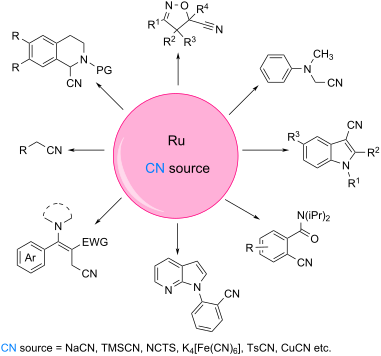
- proposed mechanism for the cyanation step is depicted in Scheme 21. Chemical synthesis usually needs labor-intensive and tiresome procedures. One of the approaches to overcome these challenges is to perform the reactions in flow [44]. The major advantages of this approach include predictable reaction scale
- -up, high reproducibility and yields, lower catalyst loading, high product purity, and excellent selectivity. A visible-light-promoted Strecker-type functionalization of N-aryl-substituted tetrahydroisoquinolines under flow conditions was reported (Scheme 22) [45]. The cyanating agent utilized was
- strategy. Proposed mechanistic pathway for the cyanation of the aldimine intermediate. Strecker-type functionalization of N-aryl-substituted tetrahydroisoquinolines under flow conditions. One-pot synthesis of α-aminonitriles using RuCl3 as catalyst. Synthesis of alkyl nitriles using (Ru(TMHD)3) as the


First total synthesis of hoshinoamide A
Beilstein J. Org. Chem. 2021, 17, 2924–2931, doi:10.3762/bjoc.17.201
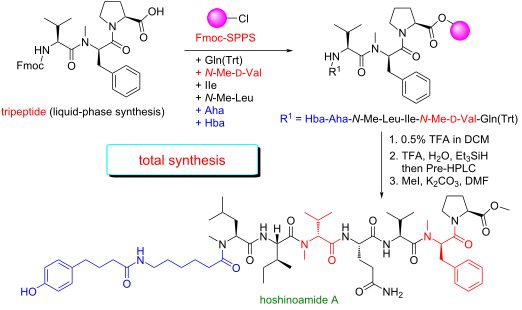
- % CH3CN/H2O and 0.1% TFA over 40 min were applied at a flow rate of 1.0 mL/min and detection at 220 nm. Method B: Linear gradient of 10–90–90–10% CH3CN/H2O and 0.1% TFA over 10 min (10–90 vol % MeCN over 6 min, 90–90 vol % over 3 min, 90–10 vol % MeCN over 1 min) were applied at a flow rate of 1.0 mL/min
- –90 vol % MeCN over 30 min, 90–90 vol % over 10 min, 90–10 vol % MeCN over 10 min) at a flow rate of 8 mL/min. Standard SPPS (solid-phase peptide synthesis) method: General procedures for coupling on resin: The loaded resin was shaken for 2 h at room temperature with a solution of the desired Fmoc-AA


The ethoxycarbonyl group as both activating and protective group in N-acyl-Pictet–Spengler reactions using methoxystyrenes. A short approach to racemic 1-benzyltetrahydroisoquinoline alkaloids
Beilstein J. Org. Chem. 2021, 17, 2716–2725, doi:10.3762/bjoc.17.183
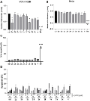
- compounds 2a–f, 3a–c and 4 regarding their P-glycoprotein blocking potential. For that, we used the P-glycoprotein substrate calcein as reporter dye and analyzed intracellular calcein fluorescence of P-glycoprotein overexpressing VCR-R CEM cells by flow cytometry. An increase of the calcein-positive
- after substraction of the basal value. Flow cytometry P-glycoprotein activity was assessed using the reporter dye calcein acetoxymethyl ester (AM) as described previously [59]. To assess apoptosis, VCR-R CEM cells were seeded at 0.125 × 10⁶ cells/well, incubated for 4 h and stimulated as indicated for
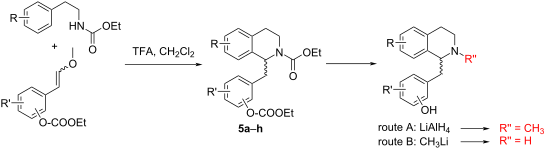
- 48 h. Apoptosis was analyzed by propidium iodide staining and flow cytometry as described by Nicoletti et al. [60]. All flow cytometry experiments were conducted on a BD FACS Canto II (BD Biosciences). Prominent synthetic approaches to 1-benzyltetrahydroisoquinolines: Bischler–Napieralski, Pictet


Electrocatalytic C(sp3)–H/C(sp)–H cross-coupling in continuous flow through TEMPO/copper relay catalysis
Beilstein J. Org. Chem. 2021, 17, 2650–2656, doi:10.3762/bjoc.17.178
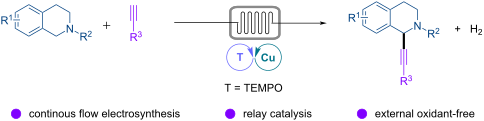
- terminal alkynes has been achieved in a continuous-flow microreactor through 2,2,6,6-tetramethylpiperidine 1-oxyl (TEMPO)/copper relay catalysis. The reaction is easily scalable and requires low concentration of supporting electrolyte and no external chemical oxidants or ligands, providing straightforward
- and sustainable access to 2-functionalized tetrahydroisoquinolines. Keywords: continuous flow; copper; catalysis; dehydrogenative cross-coupling; electrochemistry; Introduction The dehydrogenative cross-coupling of two C–H bonds represents an ideal strategy for the construction of C–C bonds [1][2
- reaction of tetrahydroisoquinolines with terminal alkynes (Scheme 1C) [10]. The chiral ligand was found to be critical for the stereoinduction as well as product formation for these electrochemical reactions that are conducted in batch. Continuous-flow electrochemical microreactors offer several advantages




Adjusting the length of supramolecular polymer bottlebrushes by top-down approaches
Beilstein J. Org. Chem. 2021, 17, 2621–2628, doi:10.3762/bjoc.17.175
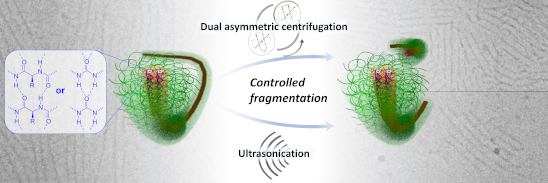
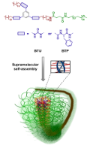
- ][27][28]. Both methods are applied for fragmentation of initially µm-long SPBs based on BTU–PEO and BTP–PEO conjugates. The resulting nanofibers were characterized in detail by cryogenic transmission electron microscopy (cryoTEM), as well as by asymmetrical flow field-flow fractionation measurements



In-depth characterization of self-healing polymers based on π–π interactions
Beilstein J. Org. Chem. 2021, 17, 2496–2504, doi:10.3762/bjoc.17.166
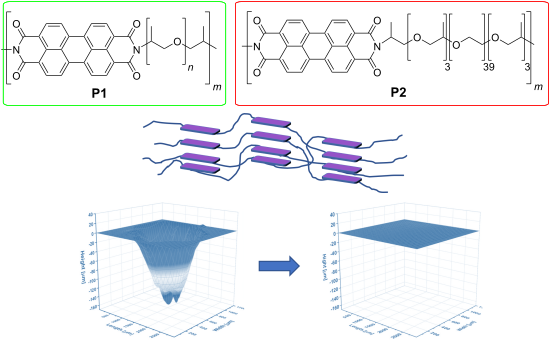
- ]. Besides the examples of self-healing/regeneration that exist in Nature, the general concept could also be transferred to different synthetic materials. Hereby, two concepts can be distinguished. In extrinsic self-healing materials, a material flow is achieved by the encapsulation of microcapsules [7] or
- flow behavior was started (see results of DMTA). Hereby, a partial healing was also observed (healing efficiency 50.64%, for pictures see Supporting Information File 1). Looking closer at the 3D-profiles, it can be seen that the depth of the scratch was reduced by more than 60% (from max. 64 µm to max


Isolation and characterization of new phenolic siderophores with antimicrobial properties from Pseudomonas sp. UIAU-6B
Beilstein J. Org. Chem. 2021, 17, 2390–2398, doi:10.3762/bjoc.17.156
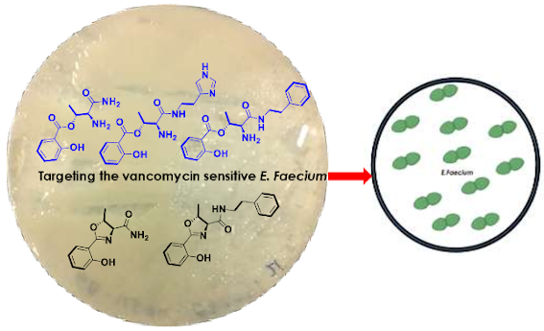
- 20 min followed by a linear gradient from 20% to 50% MeOH over 10 min, 50% MeOH for 5 min, 50% to 70% MeOH/H2O for 15 min, 70% MeOH for 5 min, 70% to 100% MeOH/H2O for 15 min and 100% MeOH over 20 min) at a flow rate of 10 mL/min. Four fractions were obtained: FD1 (0.8 g, tR 8.2–12.0 min), FD2 (0.35
- g, tR 27–40 min), FD3 (0.24 g, tR 41–57 min), and FD4 (0.45 g, tR 58–70 min). Fraction FD1 (0.8 g) was subjected to reversed-phase semipreparative HPLC on a Sunfire column C18 (5 µm, 10 × 250 mm) with a linear gradient of H2O/MeOH 80–20% over 30 min at a flow rate of 2 mL/min, yielding compounds 7
- (5 µm, 10 × 250 mm) with a mobile phase gradient system of H2O/MeOH 80–20% and 0.01% TFA for 35 min at a flow rate of 2 mL/min to afford compound 2 (15.3 mg, tR 19.1 min). The final dichloromethane subfraction FD4 (0.45 g) was rechromatographed by reversed-phase HPLC using a Sunfire column C18 (5 µm


Photoredox catalysis in nickel-catalyzed C–H functionalization
Beilstein J. Org. Chem. 2021, 17, 2209–2259, doi:10.3762/bjoc.17.143
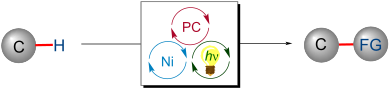
- process in a continuous-flow reactor. The mechanistic studies indicated that a nickel hydride intermediate generated with C(sp3)–H as the hydride source is involved in this catalytic transformation. The hydronickelation step results in the sterically less hindered vinylnickel intermediate 15-I, which










An initiator- and catalyst-free hydrogel coating process for 3D printed medical-grade poly(ε-caprolactone)
Beilstein J. Org. Chem. 2021, 17, 2095–2101, doi:10.3762/bjoc.17.136
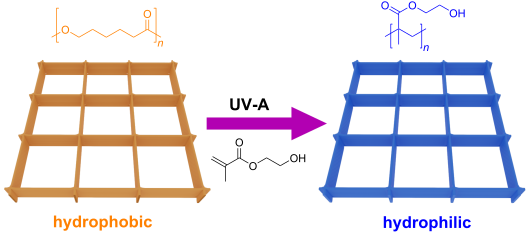
- polymerization should be feasible. At this point, the coating of the fibrous scaffolds is rather inhomogeneous, as the surface-initiated polymerization is confounded by polymerization in bulk. Therefore, we are currently working on a slightly modified experimental setup, which utilizes a flow setup, constantly


On the application of 3d metals for C–H activation toward bioactive compounds: The key step for the synthesis of silver bullets
Beilstein J. Org. Chem. 2021, 17, 1849–1938, doi:10.3762/bjoc.17.126
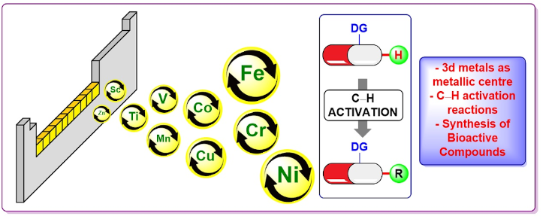
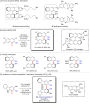
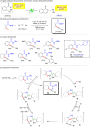
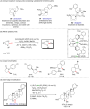
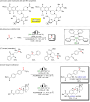
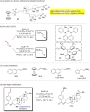
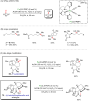
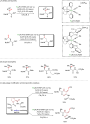
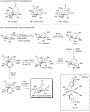
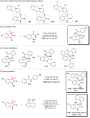
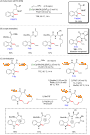
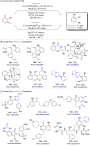
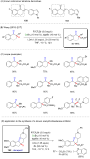
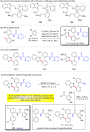
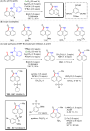
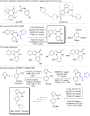
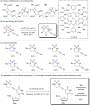
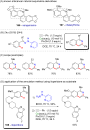
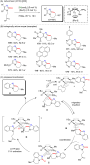
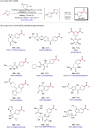
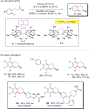
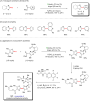
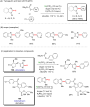
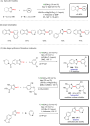
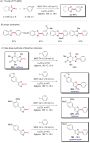
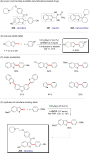
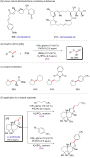
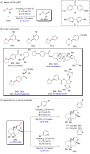
- are crucial. In 2018, Ackermann and co-workers described a novel room temperature C–H arylation by using a continuous visible light photo-flow technique, allied with a manganese photocatalyst CpMn(CO)3 [142]. The new flow protocol enabled the synthesis of several arene- and heterocyclic-based
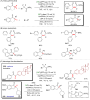
- compounds in excellent yields and short reaction times (Scheme 21B and C). The robustness of the manganese-catalyzed photo-flow reaction was demonstrated by a gram-scale preparation of the key intermediate in the synthesis of the pharmaceutical compound dantrolene (60) in high yields (Scheme 21D). The azide




























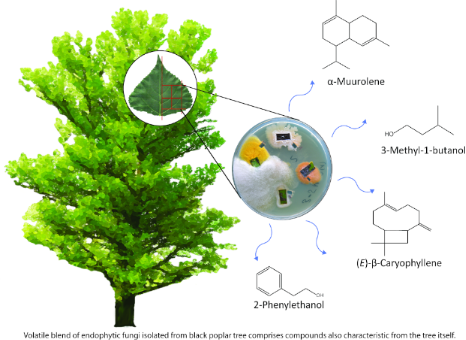
Volatile emission and biosynthesis in endophytic fungi colonizing black poplar leaves
Beilstein J. Org. Chem. 2021, 17, 1698–1711, doi:10.3762/bjoc.17.118
- PDMS tube from each replicate was placed in a glass tube (Supelco; Sigma-Aldrich). Desorption was achieved by a He flow (60 mL min−1) at 200 °C for 8 min in the glass tube and the analytes were trapped on a Tenax® (Buchem BV, Apeldoorn, Netherlands) adsorbent trap at −17 °C. The trap was then heated to
- 230 °C, and the analytes injected onto the GC column (Rtx®-5MScolumn with 30 m × 0.25 mm × 0.25 μm (Restek GmbH, Bad Homburg, Germany)). The gas chromatograph was operated at a column flow rate of 1.5 mL/min (He), split injection (split ratio: 5). The oven was set to 45 °C, held for 3 min, increased
- flow desalting column (GE Healthcare, Chicago, IL, USA) and eluted in extraction buffer. Enzyme assays were performed in a Teflon-sealed, screw-capped 1 mL GC glass vial containing 50 μL of the heterologously expressed protein and 50 µL assay buffer containing 50 μM substrate (GPP, (E,E)-FPP, or (E,E,E



Chemical approaches to discover the full potential of peptide nucleic acids in biomedical applications
Beilstein J. Org. Chem. 2021, 17, 1641–1688, doi:10.3762/bjoc.17.116