


Search results
Search for "metal-free" in Full Text gives 303 result(s) in Beilstein Journal of Organic Chemistry. Showing first 200.
Iodine-mediated hydration of alkynes on keto-functionalized scaffolds: mechanistic insight and the regiospecific hydration of internal alkynes
Beilstein J. Org. Chem. 2019, 15, 2747–2752, doi:10.3762/bjoc.15.265
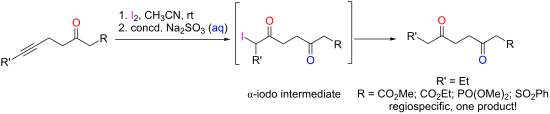
- (II) [7], silver(I) [8], and gold(I)/(III) [9][10][11][12]. While less toxic than mercury, such catalysts are still environmental hazards and tend to be costlier [13][14]. The iodine-mediated hydration described herein is a viable solution to these issues [15][16]. This metal-free method produces
- innocuous, water-soluble byproducts, such as iodide and sulfate salts, and uses inexpensive molecular iodine to facilitate the hydration. Moreover, unlike other metal-free alkyne hydration procedures, heat and strong acids are not required [17][18][19][20]. The reaction proceeds under mild conditions at


Synthesis of aryl-substituted thieno[3,2-b]thiophene derivatives and their use for N,S-heterotetracene construction
Beilstein J. Org. Chem. 2019, 15, 2678–2683, doi:10.3762/bjoc.15.261
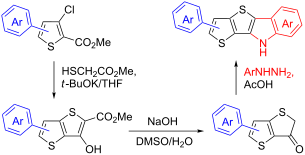
- effectively tune their physical characteristics and also reduce production costs since the routine synthesis of heteroacene structures involves cross-coupling reactions catalyzed by expensive transition metals [15]. Thus, in this paper, we would like to present an efficient metal-free synthesis of the aryl



Friedel–Crafts approach to the one-pot synthesis of methoxy-substituted thioxanthylium salts
Beilstein J. Org. Chem. 2019, 15, 2105–2112, doi:10.3762/bjoc.15.208
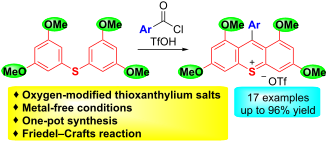
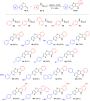
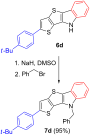
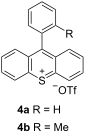
- . Keywords: Friedel–Crafts reaction; metal-free conditions; one-pot synthesis; photoredox catalyst; thioxanthylium salt; Introduction Thioxanthylium salts are one of the important structural motifs found in biologically active compounds and photochemical materials [1][2][3][4][5][6][7][8]. Owing to these



Synthesis of benzo[d]imidazo[2,1-b]benzoselenoazoles: Cs2CO3-mediated cyclization of 1-(2-bromoaryl)benzimidazoles with selenium
Beilstein J. Org. Chem. 2019, 15, 2029–2035, doi:10.3762/bjoc.15.199
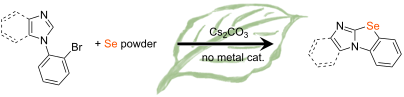
- metal catalyst. We present in this paper the synthesis of benzo[d]imidazo[2,1-b]benzoselenoazoles under transition metal-free conditions by the Cs2CO3-mediated cyclization of 1-(2-bromoaryl)benzimidazoles with selenium. Results and Discussion We initially focused our attention on determining the optimal


A metal-free approach for the synthesis of amides/esters with pyridinium salts of phenacyl bromides via oxidative C–C bond cleavage
Beilstein J. Org. Chem. 2019, 15, 1864–1871, doi:10.3762/bjoc.15.182
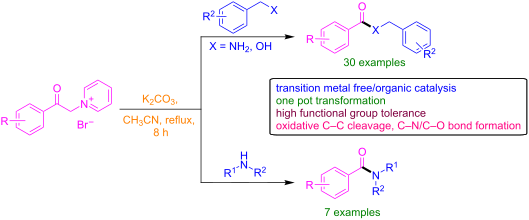
- 10.3762/bjoc.15.182 Abstract An efficient, simple, and metal-free synthetic approach for the N- and O-benzoylation of various amines/benzyl alcohols with pyridinium salts of phenacyl bromides is demonstrated to generate the corresponding amides and esters. This protocol facilitates the oxidative cleavage
- restrict the substrate scope. Qandil et al. reported a transition metal-free approach for the formation of amides and esters from phenacyl bromides or chlorides [36]. Zhang et al. developed a milder and metal-free approach for the selective cleavage of C(CO)–C(α) bonds [37][38][39][40]. Kamal and co
- -workers also demonstrated a transition metal-free aerobic oxidative cleavage of C–C bonds of phenacyl azides employed in the construction of amides utilizing benzylamines [41]. Herein we wish to report a metal-free C(CO)–C(α) bond cleavage of pyridinium salts of phenacyl bromides for the facile synthesis




Metal-free mechanochemical oxidations in Ertalyte® jars
Beilstein J. Org. Chem. 2019, 15, 1786–1794, doi:10.3762/bjoc.15.172
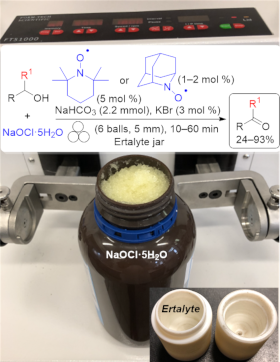
- against residual metals in manufactured goods and active ingredients stimulates the ongoing search for new metal-free solutions to the problem making this challenge even topical [26][27]. Based on the considerations mentioned above, we focused on an alternative strategy to activate the oxidation process


Functional panchromatic BODIPY dyes with near-infrared absorption: design, synthesis, characterization and use in dye-sensitized solar cells
Beilstein J. Org. Chem. 2019, 15, 1758–1768, doi:10.3762/bjoc.15.169
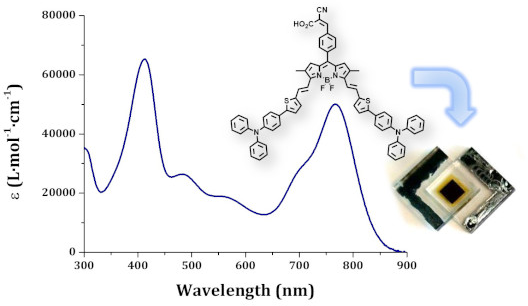
- ] but these molecules reveal low absorption coefficients over the visible range. Furthermore, they contain a rare and a relatively high-cost element (Ru) and their plausible toxicity restrains their development at the industrial level. For these reasons, in the last decade, metal-free organic dyes based




A novel three-component reaction between isocyanides, alcohols or thiols and elemental sulfur: a mild, catalyst-free approach towards O-thiocarbamates and dithiocarbamates
Beilstein J. Org. Chem. 2019, 15, 1523–1533, doi:10.3762/bjoc.15.155
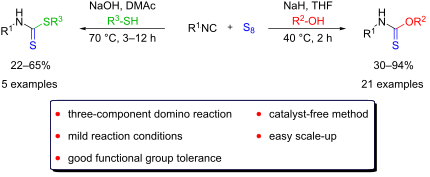
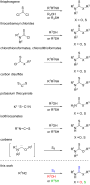
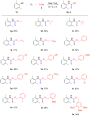
- functional group tolerance to halogen, olefin and nitrile groups among others. Moreover, this multicomponent reaction is suitable for a one-pot cascade annulation providing a thioxo dihydroquinazolinone derivative in a metal-free approach. Compared to other reported syntheses of thiocarbamates, this method




Robust perfluorophenylboronic acid-catalyzed stereoselective synthesis of 2,3-unsaturated O-, C-, N- and S-linked glycosides
Beilstein J. Org. Chem. 2019, 15, 1275–1280, doi:10.3762/bjoc.15.125
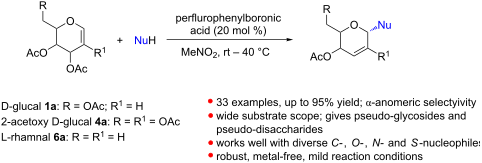
- . The majority of the reported catalysts are metal-based, and in pharmaceutical manufacturing, traces of metals pose a major challenge for their removal to acceptable limits. Therefore, the discovery of efficient, metal-free and mild catalysts for the Ferrier rearrangement is still challenging and



Mechanochemical amorphization of chitin: impact of apparatus material on performance and contamination
Beilstein J. Org. Chem. 2019, 15, 1217–1225, doi:10.3762/bjoc.15.119
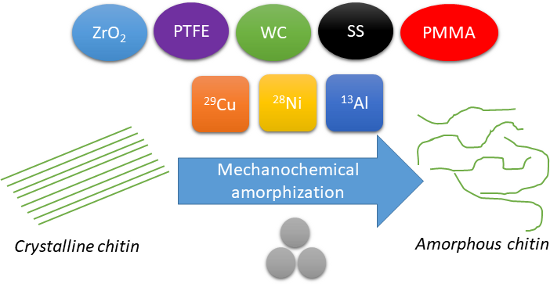
- stainless steel ones, since the latter caused the reactive mixture to adhere to the jars, which was not the case of the former. In another example, for the metal-free transfer hydrogenation of carbonyl compounds, PTFE was used instead of steel to eliminate the possibility of catalysis from the milling media


Mechanochemical synthesis of hyper-crosslinked polymers: influences on their pore structure and adsorption behaviour for organic vapors
Beilstein J. Org. Chem. 2019, 15, 1154–1161, doi:10.3762/bjoc.15.112
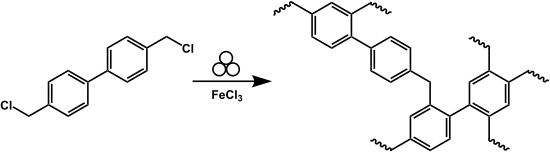
- –Teller) surface areas of up to 2000 m2g−1 for fully amorphous materials [10]. Typically, chloromethyl or methoxy groups are used to crosslink aromatic building blocks by using stoichiometric or even excess amounts of FeCl3 as catalyst. Recently, also a metal-free Brønsted acid-catalyzed reaction using


Precious metal-free molecular machines for solar thermal energy storage
Beilstein J. Org. Chem. 2019, 15, 1096–1106, doi:10.3762/bjoc.15.106
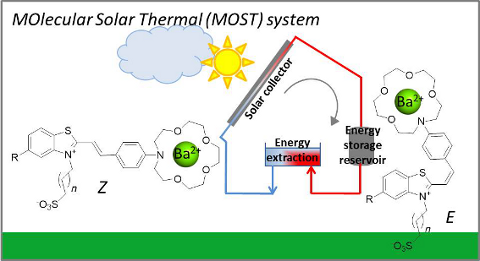
- -system [9] with a triplet–triplet annihilation photon energy upconversion system (TTA-UC) [10][11] an effective utilization of sub-bandgap photons is possible [12][13]. Nevertheless, the identification of a precious metal-free MOST system utilizing the visible part of the sun spectrum remains a
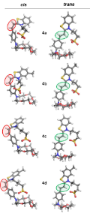
- spectra of the metal-free and Ba2+ complexed cis form of compound 4b are also presented in Figure 7. The oscillator strengths of the cis forms, calculated at the same computational level, are found to be significantly lower than those calculated for the respective trans forms (metal-free compound trans-4b




Multicomponent reactions (MCRs): a useful access to the synthesis of benzo-fused γ-lactams
Beilstein J. Org. Chem. 2019, 15, 1065–1085, doi:10.3762/bjoc.15.104
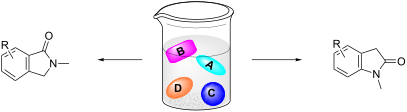
- also been prepared in situ and used for a three-component transition-metal-free synthesis of phthalimides 79 induced by fluoride (Scheme 23) [102]. The reaction makes use of 2-(trimethylsilyl)aryl triflates 77, isocyanides 42 and CO2 (78), and takes place in acetonitrile as solvent and without the need






Catalytic asymmetric oxo-Diels–Alder reactions with chiral atropisomeric biphenyl diols
Beilstein J. Org. Chem. 2019, 15, 955–962, doi:10.3762/bjoc.15.92
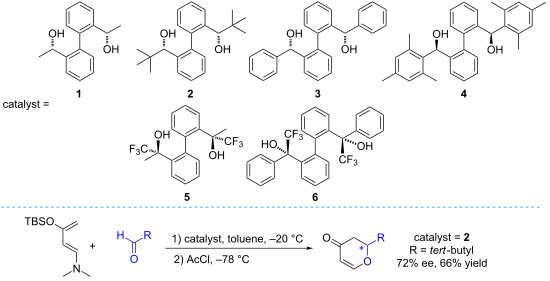
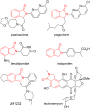
- acid catalysts for over three decades [15][16][17][18][19][20][21][22][23][24][25][26]. Comparatively, interest in the utilization of metal-free organocatalytic oxo-DA reactions began to grow only after Rawal’s group reported a ground-breaking contribution in using a diol molecule, TADDOL, as a


Towards the preparation of synthetic outer membrane vesicle models with micromolar affinity to wheat germ agglutinin using a dialkyl thioglycoside
Beilstein J. Org. Chem. 2019, 15, 937–946, doi:10.3762/bjoc.15.90
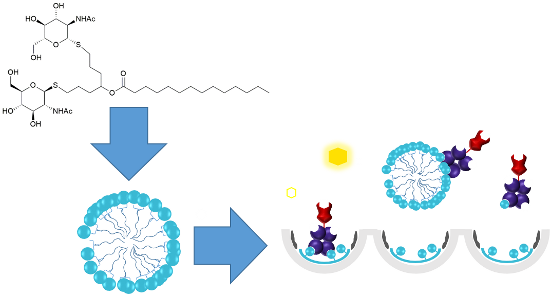
- addition of thiols to alkenes – known as thiol–ene coupling, TEC – a very efficient metal-free click reaction [18][19]. We prepared n-alkyl 1-thio-β--glycosides from unprotected sugar anomeric thiols, commercial n-alkenes and one synthetic lipophilic scaffold presenting two reactive alkenyl ends. Although


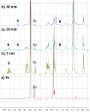


![[Graphic 2]](/bjoc/content/inline/1860-5397-15-90-i4.svg?max-width=637&scale=0.472728) ) and (○) ...
) and (○) ...
Selective benzylic C–H monooxygenation mediated by iodine oxides
Beilstein J. Org. Chem. 2019, 15, 602–609, doi:10.3762/bjoc.15.55
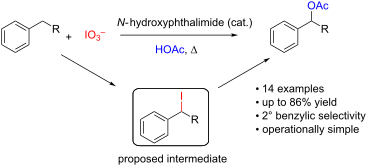
- widely used in industrial processes as promoters of autoxidation in the functionalization of benzylic C–H bonds of aryl alkanes, such as in the synthesis of terephthalic acid from p-xylene [21]. Metal-free oxidants have been used in benzylic C–H to C–O functionalization. Specifically, the use of
- radicals are then captured by I2, generated in situ by the reduction of iodate. The benzylic iodide formed upon trapping is expected to be reactive, readily converting to the corresponding ester in carboxylic acid media. Conclusion A metal-free method for the selective monooxygenation of secondary benzylic




Metal-free C–H mercaptalization of benzothiazoles and benzoxazoles using 1,3-propanedithiol as thiol source
Beilstein J. Org. Chem. 2019, 15, 279–284, doi:10.3762/bjoc.15.24



Oxidative radical ring-opening/cyclization of cyclopropane derivatives
Beilstein J. Org. Chem. 2019, 15, 256–278, doi:10.3762/bjoc.15.23
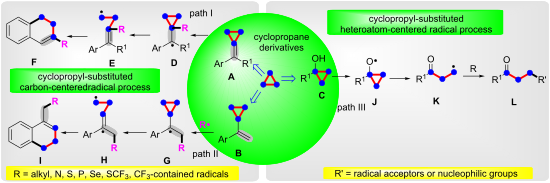
- cyclization under transition-metal free conditions. With the addition of a radical scavenger such as TEMPO or BHT, the reaction was suppressed remarkably. In the same year, Dai’s group also reported the ring-opening-initiated tandem cyclization of cyclopropanols 91 with acrylamides 122 or 2-isocyanobiphenyls
- transformation proceeded under transition-metal-free conditions with high selectivity and yields. A series of substituents such as methoxy, dimethoxy, trimethoxy, methyl, chloro, bromo, and fluoro on the aromatic ring of cyclopropanols were tolerated well. The mechanism is outlined in Scheme 35. A β






Organometallic vs organic photoredox catalysts for photocuring reactions in the visible region
Beilstein J. Org. Chem. 2018, 14, 3025–3046, doi:10.3762/bjoc.14.282
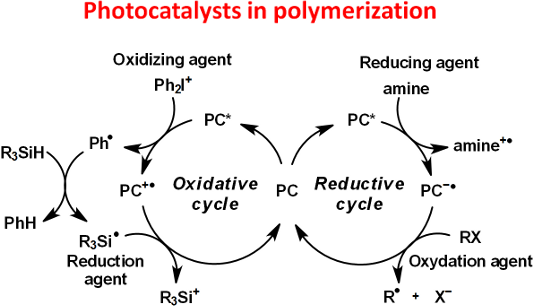
- developments have promoted the emergence of metal-free catalysts that could in the future discard those based on metals, notably due to cost and environmental issues. Both categories of photoredox catalysts (PCs) will be described in this part and a series of structures is given in Scheme 2. 2.1 Metal-based
- phosphorescent molecules, e.g., in the microsecond time scale [69]. Due to these really interesting properties, metal-based and metal-free TADF fluorescent materials have been extensively studied over the past few years, improving the photophysics of this new class of materials by molecular design [72][73][74
- catalysts For some specific applications, it can be essential to develop metal-free systems because of potential toxicity, storage stability or bioaccumulation of metal for example. Organic photoredox catalysis has been largely studied in the past few years and is the topic of many reviews [17][40][45][49



Nucleofugal behavior of a β-shielded α-cyanovinyl carbanion
Beilstein J. Org. Chem. 2018, 14, 3018–3024, doi:10.3762/bjoc.14.281
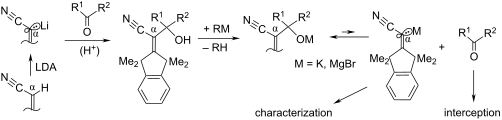
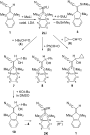
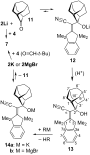
- fission may also be used to generate different metal derivatives of the nucleofugal anions as equilibrium components. Fluoride-catalyzed, metal-free desilylation admitted carbonyl addition but blocked the retro-addition. Keywords: alkoxide fission; desilylation; fragmentation; retro-addition; reversible
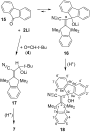
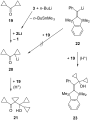
- ). Preparation and cleavage of the adduct 18 of fluoren-9-one (15). Proton transfer from dicyclopropyl ketone (19) to 2Li. Metal-free release of the carbanion unit in 25 and its seizure by t-BuCH=O (→ 7); Bu = n-butyl. Supporting Information Supporting Information File 336: Ion-pair intermediate through



Generation of 1,2-oxathiolium ions from (arysulfonyl)- and (arylsulfinyl)allenes in Brønsted acids. NMR and DFT study of these cations and their reactions
Beilstein J. Org. Chem. 2018, 14, 2897–2906, doi:10.3762/bjoc.14.268
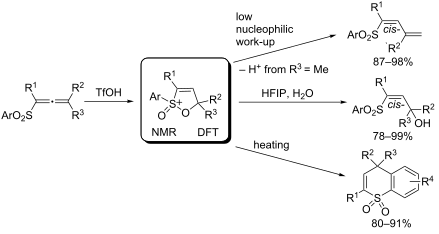
- noting, that compounds 3a–h have strictly cis-configuration of SO2Ar group and a vinyl substituent at C2 carbon. It should be mentioned that palladium-catalyzed isomerization of such (arylsulfonyl)allenes 2 into trans-butadienes 3 was described recently [23]. Herein, we have developed a novel metal-free


DABCO- and DBU-promoted one-pot reaction of N-sulfonyl ketimines with Morita–Baylis–Hillman carbonates: a sequential approach to (2-hydroxyaryl)nicotinate derivatives
Beilstein J. Org. Chem. 2018, 14, 2771–2778, doi:10.3762/bjoc.14.254
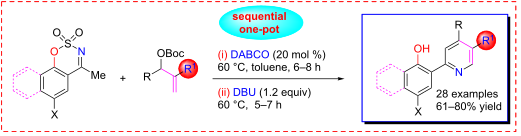
- -Michael reaction between MBH carbonates derived from an acrylate/acrylonitrile and N-sulfonyl ketimines as C,N-binucleophiles catalyzed by DABCO, followed by elimination of SO2 under the influence of base and subsequent aromatization in an open atmosphere. Keywords: MBH carbonates; metal-free; N-sulfonyl
- practical usage. Therefore, we are interested to devise a metal-free based general synthetic technique for the construction of substituted (2-hydroxyaryl)nicotinate/nicotinonitrile scaffolds. In recent years, our research group has been concentrated on the development of new synthetic methods for the
- DABCO, followed by aromatization using DBU as a base in an open-flask has been developed. This smart oxidant metal-free C–C/C–N bond forming process leads to an array of functionalized nicotinates/nicotinonitriles possessing an interesting phenolic moiety at C6 position in good to high yields. Moreover



Assembly of fully substituted triazolochromenes via a novel multicomponent reaction or mechanochemical synthesis
Beilstein J. Org. Chem. 2018, 14, 2689–2697, doi:10.3762/bjoc.14.246
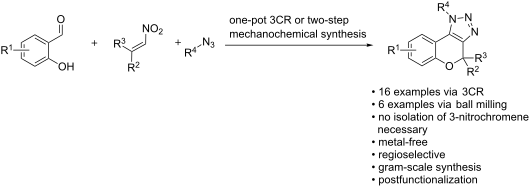
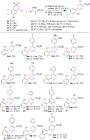
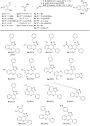
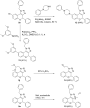
- .14.246 Abstract A new metal-free one-pot three-component procedure towards fully substituted triazolochromenes has been developed, starting from commercially available materials. Salicylaldehydes and nitroalkenes were reacted under solvent-free conditions, followed by a 1,3-dipolar cycloaddition of the
- the development of a metal-free sequential one-pot three-component reaction and the mechanochemically assisted 3-nitrochromene synthesis towards fully substituted triazolochromenes, without the isolation of the intermediate 3-nitrochromenes, have not been reported until now. Results and Discussion To




Transition metal-free oxidative and deoxygenative C–H/C–Li cross-couplings of 2H-imidazole 1-oxides with carboranyl lithium as an efficient synthetic approach to azaheterocyclic carboranes
Beilstein J. Org. Chem. 2018, 14, 2618–2626, doi:10.3762/bjoc.14.240

- 10.3762/bjoc.14.240 Abstract The direct C–H functionalization methodology has first been applied to perform transition metal-free C–H/C–Li cross-couplings of 2H-imidazole 1-oxides with carboranyllithium. This atom- and step-economical approach, based on one-pot reactions of nucleophilic substitution of
- . An alternative approach to exploit the C–X/C–M cross-coupling reactions, leading to heterocyclic boron clusters, is based on the C–H/C–M coupling strategy. One of the ways to realize these cross couplings is the transition metal-free methodology for direct C–H functionalization of azaheterocyclic
- mentioned C–H/C–Li coupling reactions successfully as a nucleophilic partner. The direct transition metal-free C–H/C–Li cross-coupling reactions of 2H-imidazole 1-oxides 1a–d with 2 have been found to result in the novel carboranes 4a–d and 5a–d of various architectures. These transformations are able to be


Synthesis of aryl sulfides via radical–radical cross coupling of electron-rich arenes using visible light photoredox catalysis
Beilstein J. Org. Chem. 2018, 14, 2520–2528, doi:10.3762/bjoc.14.228
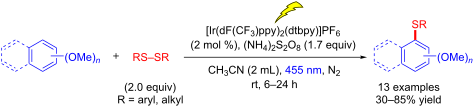
- reports on direct C–H functionalization using transition metals or metal free [37][38][39] conditions and different sources of sulfur, for example arylsulfonyl chlorides, sodium arylsulfinates, sulfinic acids and arylsulfonyl hydrazides have been reported (Scheme 1). However, the protocols require





