Search results
Search for "photoredox" in Full Text gives 183 result(s) in Beilstein Journal of Organic Chemistry.
Chemoselective synthesis of diaryl disulfides via a visible light-mediated coupling of arenediazonium tetrafluoroborates and CS2
Beilstein J. Org. Chem. 2017, 13, 903–909, doi:10.3762/bjoc.13.91
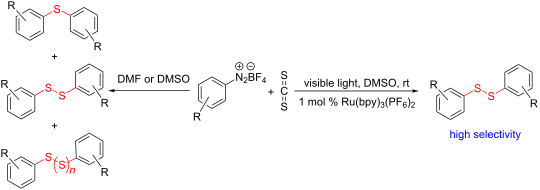
- and to minimize the formation of the byproducts was conducted. As recently surveyed, photoredox catalysts are widely employed for the generation of radicals for diverse radical reactions [19]. Further, the application of aryl radicals generated from aryldiazonium salts under visible light irradiation


Contribution of microreactor technology and flow chemistry to the development of green and sustainable synthesis
Beilstein J. Org. Chem. 2017, 13, 520–542, doi:10.3762/bjoc.13.51
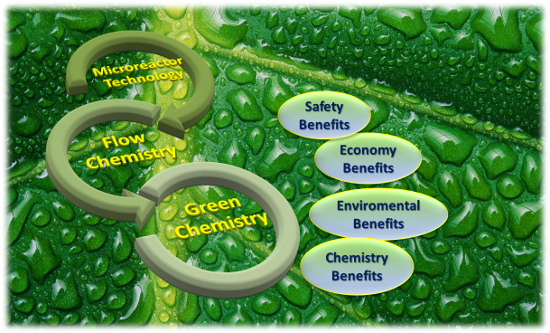
- residence time. Noël optimized, for the first time, a trifluoromethylation of aromatic heterocycles by continuous-flow photoredox catalysis. The process benefited from the use of microreactor technology and readily available photocatalysts. The process was also employable for perfluoroalkylation. The
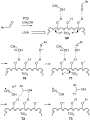
- . Trifluoromethylation by continuous-flow photoredox catalysis. Flow photochemical synthesis of 6(5H)-phenanthridiones from 2-chlorobenzamides. Synthesis of biaryls 14a–g under photochemical flow conditions. Flow oxidation of hydrazones to diazo compounds. Synthetic use of flow-generated diazo compounds. Ley’s flow






Green chemistry
Beilstein J. Org. Chem. 2016, 12, 2763–2765, doi:10.3762/bjoc.12.273

- . Turner [10], and “Organic synthesis using photoredox catalysis” by Axel G. Griesbeck [11], proving that green chemistry and sustainability can be approached from many different perspectives. The breadth of chemical and technological innovations makes the definition of novel metrics for the evaluation of
Copper-catalyzed asymmetric sp3 C–H arylation of tetrahydroisoquinoline mediated by a visible light photoredox catalyst
Beilstein J. Org. Chem. 2016, 12, 2636–2643, doi:10.3762/bjoc.12.260
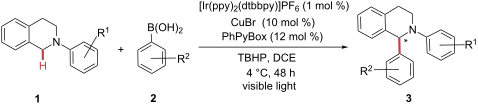
- , St Andrews, Fife, KY16 9ST, UK 10.3762/bjoc.12.260 Abstract This report describes a highly enantioselective oxidative sp3 C–H arylation of N-aryltetrahydroisoquinolines (THIQs) through a dual catalysis platform. The combination of the photoredox catalyst, [Ir(ppy)2(dtbbpy)]PF6, and chiral copper
- [2]. The emerging and expanding field of visible-light-mediated photoredox catalysis presents unique opportunities for the conception of new synthetic routes [3][4][5][6][7][8][9][10][11][12]. Upon exposure to visible light, photoredox catalysts can function as both reductant and oxidant, thereby
- providing extremely important tools for potential transition-metal-catalyzed enantioselective reactions of sp3 C–H bonds, which could be carried out at low temperature and under mild reaction conditions [13][14]. We envisioned that combining photoredox catalysis with typical cross-coupling methods will




Enantioconvergent catalysis
Beilstein J. Org. Chem. 2016, 12, 2038–2045, doi:10.3762/bjoc.12.192
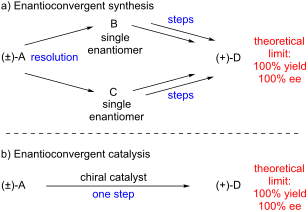
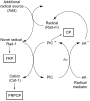
- halide (e.g., (±)-16). Subsequently, the achiral radical combines with the chiral Cu catalyst and undergoes an enantioselective bond-formation step in conjunction with the carbazole nucleophile to form α-aminoamide 18. This report fuses both enantioconvergent and photoredox catalysis, two powerful and
- . Enantioconvergent synthesis of phosphines governed by Curtin–Hammett/Winstein–Holness kinetics (TMS = trimethylsilyl, Is = 2,4,6-triisopropylphenyl). Stoltz’ stereoablative oxindole functionalization. Fu’s type II enantioconvergent Cu-catalyzed photoredox reaction. Stereoablative enantioconvergent allylation and


Opportunities and challenges for direct C–H functionalization of piperazines
Beilstein J. Org. Chem. 2016, 12, 702–715, doi:10.3762/bjoc.12.70
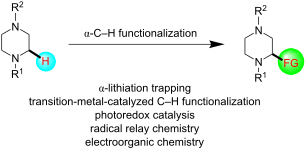
- functionalizations, and photoredox catalysis are discussed. We also highlight the difficulties experienced when successful methods for α-C–H functionalization of acyclic amines and saturated mono-nitrogen heterocyclic compounds (such as piperidines and pyrrolidines) were applied to piperazine substrates. Keywords
- : α-lithiation; C–H functionalization; heterocycle; photoredox catalysis; piperazine; Introduction Piperazine is one of the most important saturated N-heterocycles frequently found in life-saving small-molecule pharmaceuticals [1]. In a recent statistical study done by Njardarson and co-workers
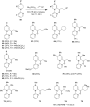
- starting materials. The reaction proceeds with excellent regio- and diastereoselectivity which is presumably due to a regio- and stereoselective alkene insertion into the strained metalla-aziridine intermediate 84. Photoredox catalysis Visible-light photoredox catalysis has emerged as a powerful platform




(Thio)urea-mediated synthesis of functionalized six-membered rings with multiple chiral centers
Beilstein J. Org. Chem. 2016, 12, 462–495, doi:10.3762/bjoc.12.48
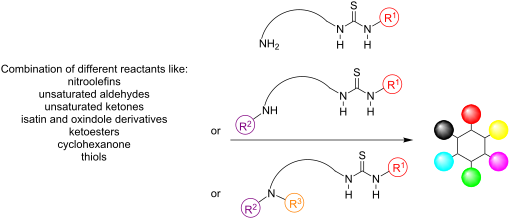
- )ureas have been synthesized in order to utilize both hydrogen bonding interactions and enamine formation. In the last 10 years the field has witnessed the development of some new activation modes, such as SOMO catalysis [8] and photoredox organocatalysis [9]. Six-membered rings are found in many natural


Enantioselective additions of copper acetylides to cyclic iminium and oxocarbenium ions
Beilstein J. Org. Chem. 2015, 11, 2696–2706, doi:10.3762/bjoc.11.290
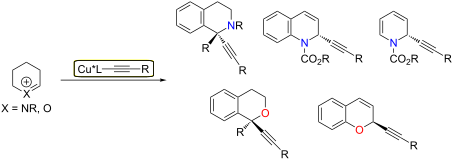
- facilitates the iminium ion isomerization. This year, several examples of improved conditions for CDC reactions have been reported. With the emergence of photoredox catalysis as a powerful technique for organic synthesis, Li’s research group has discovered improved conditions for the CDC reaction of N
- -aryltetrahydroisoquinolines with alkynes (Scheme 11) [33]. By using an iridium-based photoredox catalyst in combination with benzoyl peroxide, iminium ion 7 is formed in situ. This strategy enables reduction of the reaction temperature, ultimately enabling higher enantioselectivities. With respect to the scope of alkynes
- azomethine imines. Su’s CDC of tetrahydroisoquinolines and alkynes under ball milling conditions. Ma’s A3-coupling. Li’s CDC reaction using photoredox catalysis. Liu’s CDC reaction of N-carbamoyltetrahydroisoquinolines. T+BF4– = 2,2,6,6-tetramethylpiperidine N-oxide tetrafluoroborate. Aponick’s alkynylation





Preparative semiconductor photoredox catalysis: An emerging theme in organic synthesis
Beilstein J. Org. Chem. 2015, 11, 1570–1582, doi:10.3762/bjoc.11.173
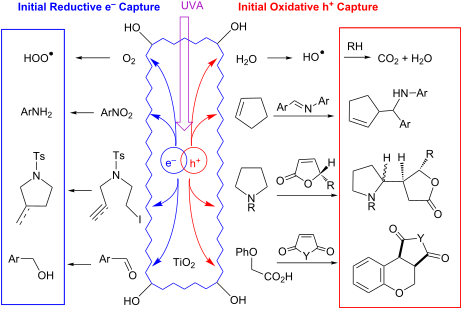
- David W. Manley John C. Walton University of St. Andrews, EaStCHEM School of Chemistry, St. Andrews, Fife, KY16 9ST, UK 10.3762/bjoc.11.173 Abstract Heterogeneous semiconductor photoredox catalysis (SCPC), particularly with TiO2, is evolving to provide radically new synthetic applications. In
- photoredox catalysts (PRCs), have been exploited that enable visible and UVA radiation to be put to use without directly breaking chemical bonds. Typically, PRCs when photoexcited mediate electron transfer between suitable precursor substrates thus generating radical ions and thereby launching fresh
- popularity of homogeneous PRCs is due to their ease of synthesis and stability as well as their excellent photoredox properties. Furthermore, they can be activated by visible light, precluding the requirement for specialized irradiation setups, and their reactivity can be tuned by altering the substitution







Photocatalytic nucleophilic addition of alcohols to styrenes in Markovnikov and anti-Markovnikov orientation
Beilstein J. Org. Chem. 2015, 11, 568–575, doi:10.3762/bjoc.11.62
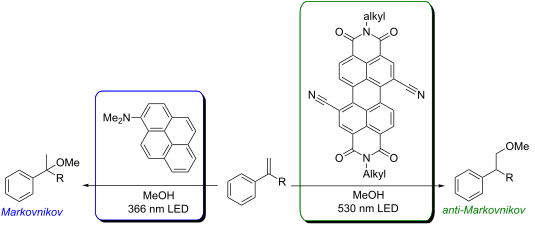
- ) and styrene (6) into the Markovnikov- and anti-Markovnikov-type products was selectively achieved with 1-(N,N-dimethylamino)pyrene (Py) and 1,7-dicyanoperylene-3,4:9,10-tetracarboxylic acid bisimide (PDI) as photoredox catalysts. The regioselectivity was controlled by the photocatalyst. For the
- light sources, the research field of photoredox catalysis has tremendously grown over the past decade [1][2][3][4][5][6][7]. Transition metal complexes, mainly [Ru(bpy)3]2+ [7], were most often used as photocatalysts, whereas the potential of organic compounds and dyes has not yet been fully exploited
- [8]. The way towards a really complete organo-type photoredox catalysis has mainly been established for eosin Y as an important alternative for [Ru(bpy)3]2+ [9]. Photocatalytic nucleophilic additions of amines and alcohols to olefins, especially styrenes, became an increasingly important task due to


Eosin Y-catalyzed visible-light-mediated aerobic oxidative cyclization of N,N-dimethylanilines with maleimides
Beilstein J. Org. Chem. 2015, 11, 425–430, doi:10.3762/bjoc.11.48
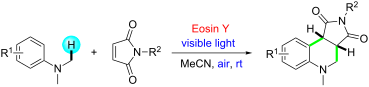
- as a photocatalyst has been developed. The metal-free protocol involves aerobic oxidative cyclization via sp3 C–H bond functionalization process to afford good yields in a one-pot procedure under mild conditions. Keywords: aerobic oxidative cyclization; C–H functionalization; Eosin Y; photoredox
- catalysis; visible light; Introduction Over the past several years, visible light photoredox catalysis has become a powerful and promising tool and has been productively used to drive chemical transformations in the field of organic synthesis [1][2][3][4][5][6]. The approach takes full advantage of visible
- light, which is clean, abundant, and renewable. The pioneering work in this research area, reported by the groups of MacMillan [7][8][9], Yoon [10][11], Stephenson [12][13] and others [14][15][16][17][18], has demonstrated that ruthenium and iridium complexes as visible light photoredox catalysts are



An improved procedure for the preparation of Ru(bpz)3(PF6)2 via a high-yielding synthesis of 2,2’-bipyrazine
Beilstein J. Org. Chem. 2015, 11, 61–65, doi:10.3762/bjoc.11.9
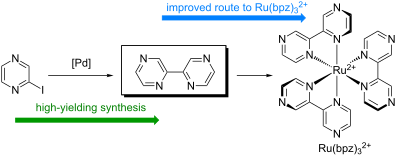
- suited for oxidatively induced photoredox transformations. We present here a straightforward and high-yielding route to Ru(bpz)3(PF6)2 that features an improved Pd-catalyzed synthesis of the 2,2’-bipyrazine ligand that is amenable to gram-scale preparations. Keywords: heterocycles; ligand synthesis
- ; palladium; photocatalysis; reductive coupling; Findings Visible light-photoredox catalysis using transition metal chromophores is rapidly becoming recognized as an important strategy in organic synthesis [1][2][3][4][5]. This approach towards reaction design enables the facile generation and exploitation
- of odd-electron intermediates such as radicals and radical ions under exceptionally mild reaction conditions. A large number of transition metal chromophores with well-characterized photophysical and electrochemical properties are known, and the influence of ligand modification on the photoredox


Visible-light-induced bromoetherification of alkenols for the synthesis of β-bromotetrahydrofurans and -tetrahydropyrans
Beilstein J. Org. Chem. 2015, 11, 31–36, doi:10.3762/bjoc.11.5
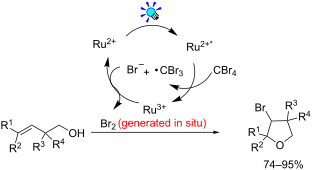
- photoredox-catalyzed bromoetherification of alkenols is described. This approach, with CBr4 as the bromine source through generation of bromine in situ, provides a mild and operationally simple access to the synthesis of β-bromotetrahydrofurans and -tetrahydropyrans with high efficiency and regioselectivity
- . Keywords: alkenols; bromoetherification; photoredox catalysis; visible light; Introduction The halocyclization of alkenes provides an excellent synthetic method for halogenated heterocycles [1][2][3]. In recent years, haloaminocyclization [4][5], halolactonization [6][7] and haloetherification [8][9] of
- reported that visible-light-induced photoredox catalysis could serve as a more environmental-friendly alternative reaction system to obtain Br2 in situ from CBr4, an oxidative quencher of photoredox catalyst [16][17][18][19][20][21][22]. Thus, as part of difunctionalization of alkenes, with our continuous


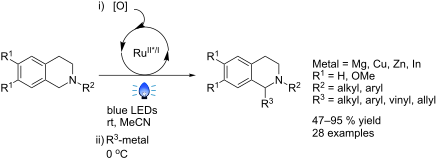
One-pot functionalisation of N-substituted tetrahydroisoquinolines by photooxidation and tunable organometallic trapping of iminium intermediates
Beilstein J. Org. Chem. 2014, 10, 2981–2988, doi:10.3762/bjoc.10.316
- . Keywords: iminium salt; organometallic; oxidative functionalisation; photoredox catalysis; tetrahydroisoquinoline; Introduction Tetrahydroisoquinolines (THIQs) are structural motifs prominent within biologically active natural products and pharmaceutical compounds [1][2]. From (−)-carnegine (1, a
- tertiary amine substrates and unstabilised carbon nucleophiles. Recently, visible-light photoredox catalysis has gained interest as a technique for oxidative functionalisation [34][35]. An important feature of photoredox catalysis is that different photocatalysts have different redox potentials upon
- accessing the excited state [18][34][36]. The ability to adjust oxidising power through photocatalyst choice renders the transformation substrate-tunable. Thus, we selected photoredox catalysis as an oxidative functionalisation whose substrate scope might be extended (by catalyst selection) in future


Visible light photoredox-catalyzed deoxygenation of alcohols
Beilstein J. Org. Chem. 2014, 10, 2157–2165, doi:10.3762/bjoc.10.223
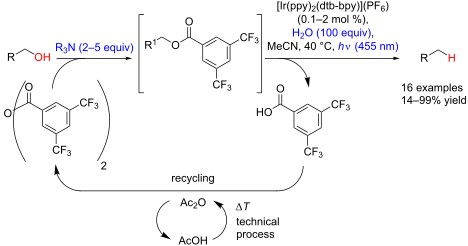
- developed is limited to benzylic, α-carbonyl, and α-cyanoalcohols; with other alcohols a slow partial C–F bond reduction in the 3,5-bis(trifluoromethyl)benzoate moiety occurs. Keywords: C–O bond activation; deoxygenation; photochemistry; photoredox catalysis; visible light; Introduction The dwindling
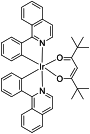
- = 2-phenylpyridine) as photoredox catalyst (Scheme 1) [10]. This protocol is applicable to a broad range of alcohols. It also greatly advanced the quest to develop sustainable methods for the deoxygenation of alcohols. Yet, several redox steps, i.e., the stoichiometric transformation of
- an initial photoredox electron transfer that we considered in analogy to the Barton–McCombie technology to be crucial to trigger deoxygenations. Initial deoxygenation experiments were carried out with either Ru(bpy)3Cl2·6H2O [bpy = 2,2'-bipyridine] or [Ir(ppy)2(dtb-bpy)](PF6) [ppy = 2-phenylpyridine


Cyclization–endoperoxidation cascade reactions of dienes mediated by a pyrylium photoredox catalyst
Beilstein J. Org. Chem. 2014, 10, 1272–1281, doi:10.3762/bjoc.10.128
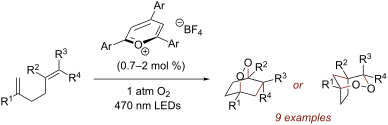
- to 79%. Keywords: alkene; cascade; endoperoxide; oxidation; photoredox catalysis; Introduction Endoperoxides are a structurally unique class of naturally-occurring compounds that feature a reactive cyclic peroxide moiety of varying ring sizes (Figure 1). The lability of the endocyclic peroxide O–O
- the reactivity of the diene with respect to its structure to better predict the mode of diene cation radical cyclization (5-exo vs 6-endo). Herein is reported an organocatalytic photoredox-mediated strategy for the endoperoxidation of 1,5-dienes using 3O2 to rapidly generate complex endoperoxide


Visible-light photoredox catalyzed synthesis of pyrroloisoquinolines via organocatalytic oxidation/[3 + 2] cycloaddition/oxidative aromatization reaction cascade with Rose Bengal
Beilstein J. Org. Chem. 2014, 10, 1233–1238, doi:10.3762/bjoc.10.122
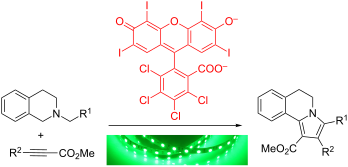
- Carlos Vila Jonathan Lau Magnus Rueping Institute of Organic Chemistry, RWTH Aachen University, Landoltweg 1, D-52074 Aachen, Germany 10.3762/bjoc.10.122 Abstract Pyrrolo[2,1-a]isoquinoline alkaloids have been prepared via a visible light photoredox catalyzed oxidation/[3 + 2] cycloaddition
- /oxidative aromatization cascade using Rose Bengal as an organo-photocatalyst. A variety of pyrroloisoquinolines have been obtained in good yields under mild and metal-free reaction conditions. Keywords: alkaloids; [3 + 2] cycloaddition; organocatalysis; oxidation; photochemistry; photoredox catalysis; Rose
- [32]. Despite these elegant and important syntheses of pyrrolo[2,1-a]isoquinolines through dipolar [3 + 2] cycloaddition, the development of metal-free syntheses using visible light photoredox catalysis with simple organic dyes remained unexplored. Visible-light photoredox catalysis has emerged as an


Homogeneous and heterogeneous photoredox-catalyzed hydroxymethylation of ketones and keto esters: catalyst screening, chemoselectivity and dilution effects
Beilstein J. Org. Chem. 2014, 10, 1143–1150, doi:10.3762/bjoc.10.114
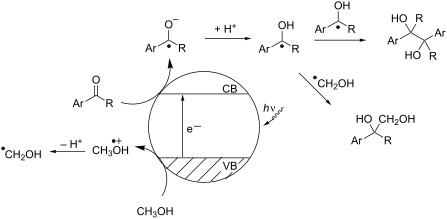
- ; photocatalysis; photoredox catalysis; redox; semiconductor; Introduction Stimulated by the principles of sustainable chemical synthesis and the progress in our understanding of catalytic and photoinduced electron-transfer processes, in recent years photoredox catalysis emerged as a new and powerful area for
- advanced synthesis [1][2][3][4][5][6][7][8][9][10]. There are numerous features that characterize an effective photoredox catalytic cycle: light absorption, charge separation, charge transport and annihilation as well as the use of appropriate sacrificial compounds such as electron and hole donors
- visible region and appropriate redox activity in the excited states. Many potent photoredox catalysts with sufficient long-term stability are transition metal complexes with excited MLCT states that can be generated in the visible. Another important group of photocatalytic active compounds are


Direct C–H trifluoromethylation of di- and trisubstituted alkenes by photoredox catalysis
Beilstein J. Org. Chem. 2014, 10, 1099–1106, doi:10.3762/bjoc.10.108
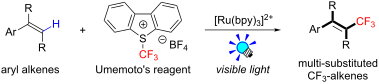
- –CF3 bonds is highly demanded. Results: The photoredox reaction of alkenes with 5-(trifluoromethyl)dibenzo[b,d]thiophenium tetrafluoroborate, Umemoto’s reagent, as a CF3 source in the presence of [Ru(bpy)3]2+ catalyst (bpy = 2,2’-bipyridine) under visible light irradiation without any additive afforded
- to afford geminal bis(trifluoromethyl)alkenes. Conclusion: A range of multisubstituted CF3-alkenes are easily accessible by photoredox-catalyzed direct C–H trifluoromethylation of alkenes under mild reaction conditions. In particular, trifluoromethylation of triphenylethene derivatives, from which
- synthetically valuable tetrasubstituted CF3-alkenes are obtained, have never been reported so far. Remarkably, the present facile and straightforward protocol is extended to double trifluoromethylation of alkenes. Keywords: electrophilic trifluoromethylating reagent; multi-substituted alkene; photoredox


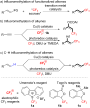


Organic synthesis using photoredox catalysis
Beilstein J. Org. Chem. 2014, 10, 1097–1098, doi:10.3762/bjoc.10.107
- Axel G. Griesbeck University of Cologne, Department of Chemistry, Organic Chemistry, Greinstr. 4, D-50939 Köln, Germany; Fax: +49 (221) 470 5057 10.3762/bjoc.10.107 Keywords: photoredox catalysis; Natural photosynthesis is a remarkable chemical machinery that enables our life on earth and
- delivers a constant stream of oxygen and organic biomass. We should acknowledge this fact with humbleness, especially because we have not been able yet to mimic this process in a reliable way even after decades of intense research. The basic mechanistic principle behind photosynthesis is photoredox
- synthesis, the principles of photoredox chemistry serve as guidelines, i.e., photoinduced electron transfer (PET) kinetics and thermodynamics as expressed in the Rehm–Weller and Marcus equations. For catalytic versions, the photoinduced redox processes require efficient and robust photocatalysts, and in
On the mechanism of photocatalytic reactions with eosin Y
Beilstein J. Org. Chem. 2014, 10, 981–989, doi:10.3762/bjoc.10.97
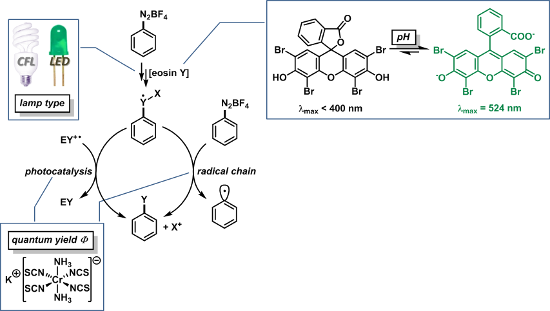
- discussed on the basis of pH, solvent polarity, lamp type, absorption properties, and quantum yields. Determination of the latter proved to be an especially valuable tool for the distinction between radical chain and photocatalytic reactions. Keywords: mechanism; organocatalysis; photocatalysis; photoredox
- reactions of activated organic electrophiles [2][3][4][5][6][7][8]. Despite the numerous examples of efficient catalytic photoredox transformations with organometallic dyes known to date, their high price, toxicity profile, and problematic recyclability might limit their more general use especially on
- larger scales. However, the recent pursuit of environmentally more benign photoactive catalysts has focused on much cheaper metal-free dyes. Several commercially available fluorescein and xanthene dyes have been successfully applied to photoredox reactions, including radical substitutions at α-amino, β


Visible light mediated intermolecular [3 + 2] annulation of cyclopropylanilines with alkynes
Beilstein J. Org. Chem. 2014, 10, 975–980, doi:10.3762/bjoc.10.96
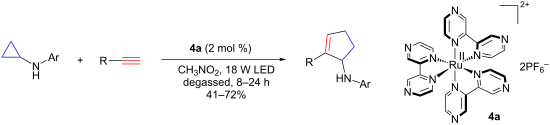
- Theresa H. Nguyen Soumitra Maity Nan Zheng Department of Chemistry and Biochemistry, University of Arkansas, Fayetteville, Arkansas, 72701, USA 10.3762/bjoc.10.96 Abstract Intermolecular [3 + 2] annulation of cyclopropylanilines with alkynes is realized using visible light photoredox catalysis
- , yielding a variety of cyclic allylic amines in fair to good yields. This method exhibits significant group tolerance particularly with heterocycles. It can also be used to prepare complex heterocycles such as fused indolines. Keywords: [3 + 2]; alkyne; annulation; cyclopropylaniline; photoredox catalysis
- parent amine. This oxidation step can be realized enzymatically [6][7][8], chemically [9][10][11][12][13][14], electrochemically [15][16], and photochemically [17][18][19][20]. Recently, visible light photoredox catalysis has emerged as a powerful method to manipulate the redox chemistry of organic


Tailoring of organic dyes with oxidoreductive compounds to obtain photocyclic radical generator systems exhibiting photocatalytic behavior
Beilstein J. Org. Chem. 2014, 10, 936–947, doi:10.3762/bjoc.10.92
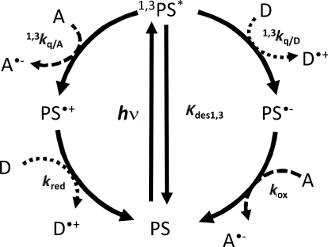
- transfer; kinetic; photocatalysis; photochemistry; photocyclic initiating system; photopolymerization; photoredox catalysis; radical generator; Introduction Among the possible usage of light, the conversion of photons into chemical energy, as stored into radicals or ions, is of great interest. As a part


![[Graphic 1]](/bjoc/content/inline/1860-5397-10-92-i10.png?max-width=637&scale=1.18182) ), b) excited state...
), b) excited state...


Visible-light-induced, Ir-catalyzed reactions of N-methyl-N-((trimethylsilyl)methyl)aniline with cyclic α,β-unsaturated carbonyl compounds
Beilstein J. Org. Chem. 2014, 10, 890–896, doi:10.3762/bjoc.10.86
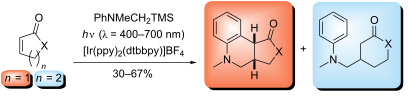
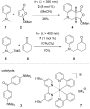
- lactone and lactam substrates, the latter products were the only products isolated. For the six-membered lactones and lactams and for cyclopentenone the simple addition products prevailed. Keywords: cyclization; electron transfer; iridium; photochemistry; photoredox catalysis; radical reactions
- with the aniline as the limiting agent. To our surprise, however, the relative product ratio remained unchanged when the substrate ratio 5/12 = 1.5/1 was decreased to 1/1.5. Mechanistically, it is likely that the well-established photoredox cascade between aniline 5 and the photoexcited iridium complex



Metal and metal-free photocatalysts: mechanistic approach and application as photoinitiators of photopolymerization
Beilstein J. Org. Chem. 2014, 10, 863–876, doi:10.3762/bjoc.10.83
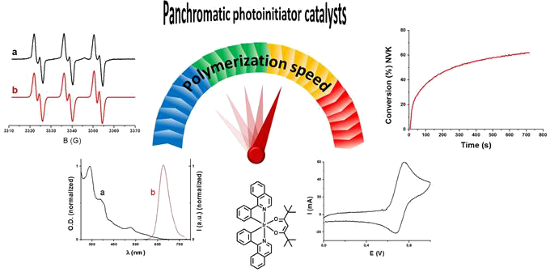
- formerly: University of Haute Alsace/ENSCMu, 3 rue Alfred Werner, 68093 Mulhouse Cedex, France 10.3762/bjoc.10.83 Abstract In the present paper, the photoredox catalysis is presented as a unique approach in the field of photoinitiators of polymerization. The principal photocatalysts already reported as
- -trapping, laser flash photolysis, steady state photolysis, cyclic voltammetry and luminescence experiments. Keywords: LEDs; photoinitiators; photopolymerization; photoredox catalysis; Introduction Photoredox catalysis is now well-known and largely used in organic synthesis, especially in the development
- , potential toxicity and limited availability of these structures, metal-free organic dye compounds (e.g., Eosin-Y, Nile Red, Alizarine Red S, perylene derivative or Rhodamine B etc.) were recently proposed for cooperative asymmetric organophotoredox catalysis [13][14]. Photoredox catalysis was then