


Search results
Search for "X-ray crystallography" in Full Text gives 326 result(s) in Beilstein Journal of Organic Chemistry. Showing first 200.
From dipivaloylketene to tetraoxaadamantanes
Beilstein J. Org. Chem. 2018, 14, 1–10, doi:10.3762/bjoc.14.1

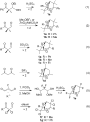
- and ethyl esters were determined by X-ray crystallography [19]. The X-ray structure of the Pt(II) chelate of tetramethyl 2,6,9-trioxabicyclo[3.3.1]nona-3,7-diene obtained from tris-acetylacetonato platinum(II) was determined previously [22][23], and the separation of the enantiomers of the free ligand
- was achieved by fractional crystallization [24]. Chirality of the bisdioxine dicarbaldehyde, 2,6,9-trioxabicyclo[3.3.l]nona-3,7-diene-4,8-dicarbaldehyde, obtained by extrusion of water from triformylmethane, has also been demonstrated [25], and X-ray crystallography confirmed the structure of this
- , urethanes and isocyanates point inward (Scheme 9). This observation was confirmed by X-ray crystallography as well as calculations at the B3LYP/6-31G** level [38][39]. The tert-butyl groups provide steric protection to the exo sides of the molecules, making the diisocyanate stable at ordinary temperatures





Acid-catalyzed ring-opening reactions of a cyclopropanated 3-aza-2-oxabicyclo[2.2.1]hept-5-ene with alcohols
Beilstein J. Org. Chem. 2017, 13, 2888–2894, doi:10.3762/bjoc.13.281
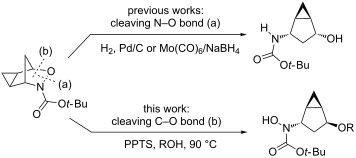
- reactions. The scope of the reaction was successfully expanded to include primary, secondary, and tertiary alcohol nucleophiles. Through X-ray crystallography, the stereochemistry of the product was determined which confirmed an SN2-like mechanism to form the ring-opened product. Keywords: acid catalysis
- most cases, the starting material was completely consumed, the yields of these ring-opening reactions were only moderate (26–61%). This may be due to the decomposition or polymerization of the cyclopropanated 3-aza-2-oxabicyclic alkene under the reaction conditions. Through X-ray crystallography [20
- of the reaction was successfully expanded to include primary, secondary, and tertiary alcohol nucleophiles. Through X-ray crystallography, the stereochemistry of the product was determined which confirmed an SN2-like mechanism to form the ring-opened product. Further investigation of the ring-opening


The photodecarboxylative addition of carboxylates to phthalimides as a key-step in the synthesis of biologically active 3-arylmethylene-2,3-dihydro-1H-isoindolin-1-ones
Beilstein J. Org. Chem. 2017, 13, 2833–2841, doi:10.3762/bjoc.13.275
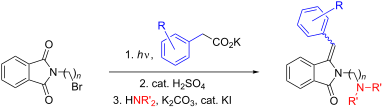
- photoaddition products 3a and 3b were unambiguously confirmed by X-ray crystallography (Figure 2). In the solid state, molecules of both compounds undergo hydrogen bonding between the newly formed hydroxy group and the intact carbonyl group, resulting in a one-dimensional network (see Supporting Information


15N-Labelling and structure determination of adamantylated azolo-azines in solution
Beilstein J. Org. Chem. 2017, 13, 2535–2548, doi:10.3762/bjoc.13.250
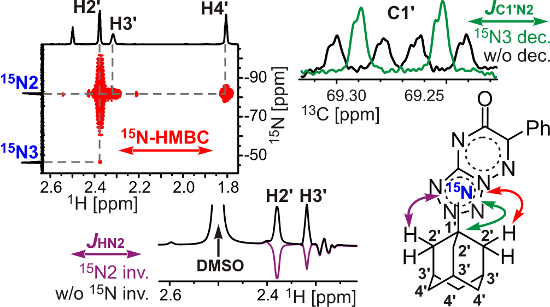
- pure compounds, while the heterogeneity observed at 45 °C was connected to the presence of different rotameric states. To confirm the determined positions of the N-adamantane substitutions, compounds 15a and 15b were studied by X-ray crystallography. Suitable crystals of 15a and 15b were obtained by





Synthesis, effect of substituents on the regiochemistry and equilibrium studies of tetrazolo[1,5-a]pyrimidine/2-azidopyrimidines
Beilstein J. Org. Chem. 2017, 13, 2396–2407, doi:10.3762/bjoc.13.237
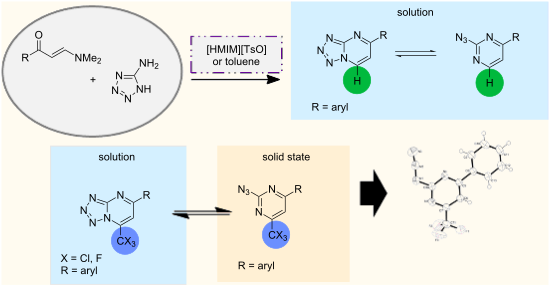
- Information File 1. Similar to our study, Sirakanyan et al. [46] presented the synthesis and structure of condensed triazolo- and tetrazolopyrimidines, wherein, in DMSO-d6, tetrazolo-azidopyrimidines were in equilibrium. However, the structure confirmed by X-ray crystallography was the tetrazole form, which


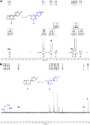
![[Graphic 9]](/bjoc/content/inline/1860-5397-13-237-i9.svg?max-width=637&scale=1.18182) 4d equilibrium in DMSO-d6 at 25 °C.
4d equilibrium in DMSO-d6 at 25 °C.


Synthesis and application of trifluoroethoxy-substituted phthalocyanines and subphthalocyanines
Beilstein J. Org. Chem. 2017, 13, 2273–2296, doi:10.3762/bjoc.13.224
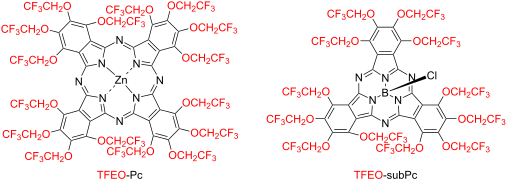
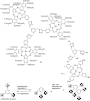
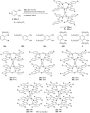
- of axial ligand substituted subphthalocyanine hybrid dyes. Energy transfer between subphthalocyanine units. Structure of phthalocyanine and subphthalocyanine benzene-fused homodimers. X-ray crystallography of Pc-subPc (left) and UV–vis spectra of benzene-fused dimers. Synthesis of trifluoroethoxy








Curcuminoid–BF2 complexes: Synthesis, fluorescence and optimization of BF2 group cleavage
Beilstein J. Org. Chem. 2017, 13, 2264–2272, doi:10.3762/bjoc.13.223
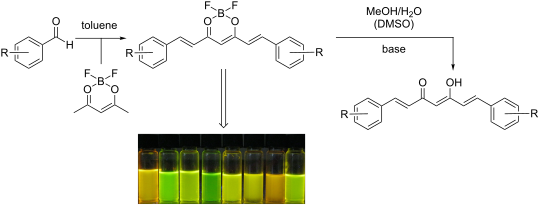
- (sharp singlet) could be assigned to BF4− as the most common hydrolysis byproduct by comparison with HBF4 in DMSO-d6. X-ray crystallography Compounds 2f, 2g and 2h were also characterized by X-ray diffraction methods. Crystals suitable for analysis were grown by slow diffusion of n-hexane into CH2Cl2


Dialkyl dicyanofumarates and dicyanomaleates as versatile building blocks for synthetic organic chemistry and mechanistic studies
Beilstein J. Org. Chem. 2017, 13, 2235–2251, doi:10.3762/bjoc.13.221
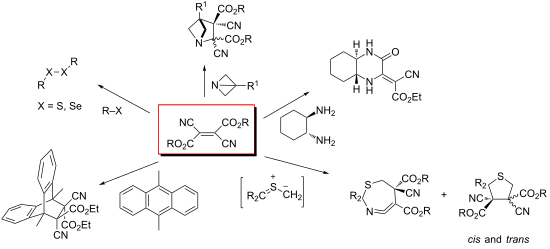
- ][74] and chromocenes [75], to form one-to-one charge-transfer salts 100 (Scheme 31), which are molecular magnets. Their physical properties depend on the size of the alkyl groups of the ester function [73]. Some chromocene complexes with E-1a,b were studied by means of X-ray crystallography [74][76


Regiodivergent condensation of 5-alkoxycarbonyl-1H-pyrrol-2,3-diones with cyclic ketazinones en route to spirocyclic scaffolds
Beilstein J. Org. Chem. 2017, 13, 2179–2185, doi:10.3762/bjoc.13.218
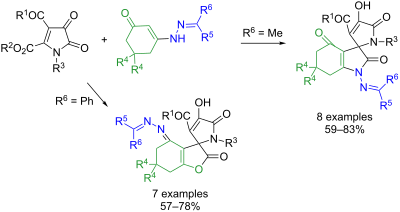
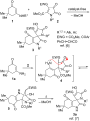
- diastereomers (see Scheme 3 for atom numbering). This configuration was unambiguously confirmed by a single crystal X-ray crystallography of compound 12ab (CCDC 1546062) shown in Figure 1. Puzzled by this unexpected reactivity, we reasoned that the enolate moiety can be activated towards the desired
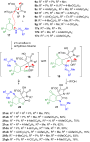
- , which ultimately could help us to redirect the course of the reaction towards formation of spirolactones of type 20. To evaluate this idea, we prepared ketazinones 22 (crystal structure of ketazinone 22a was confirmed by X-ray crystallography (CCDC 1546065, Figure 3)), derived from benzophenone and





Preparation of imidazo[1,2-a]-N-heterocyclic derivatives with gem-difluorinated side chains
Beilstein J. Org. Chem. 2017, 13, 2115–2121, doi:10.3762/bjoc.13.208
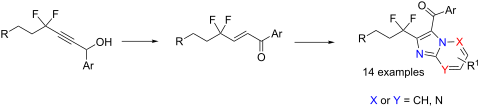
- 7e by X-ray crystallography analysis. Retrosynthetic scheme for the preparation of our target molecules A. Synthesis of enones 6 with a gem-difluoroalkyl side chain. Synthesis of 7a. One-pot synthesis of 7a. Synthesis of enones 6a–e. Preparation of different imidazo[1,2-a]-N-heterocyclic derivatives


Complexation of molecular clips containing fragments of diphenylglycoluril and benzocrown ethers with paraquat and its derivatives
Beilstein J. Org. Chem. 2017, 13, 2056–2067, doi:10.3762/bjoc.13.203
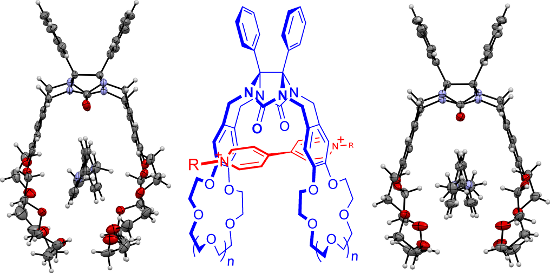
- chain – to that of the complexes of the clips 3–5 with paraquat (7). The data obtained show that the clips 4 and 5 are maximum pre-organized to form a 1:1 complex with paraquat compared to other clips with benzocrown ether moieties. X-ray crystallography The structures of the complexes of clips 2, 3 and
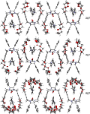
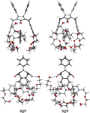
- 5 with paraquat (7) have been studied by X-ray crystallography. All these clips form inclusion complexes with a 1:1 ratio where the paraquat molecule is located within the pseudo-cavity formed by two crown ether fragments (Figure 6). The complexes are stabilized by π–π intermolecular stacking




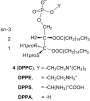
Remarkable functions of sn-3 hydroxy and phosphocholine groups in 1,2-diacyl-sn-glycerolipids to induce clockwise (+)-helicity around the 1,2-diacyl moiety: Evidence from conformation analysis by 1H NMR spectroscopy
Beilstein J. Org. Chem. 2017, 13, 1999–2009, doi:10.3762/bjoc.13.196
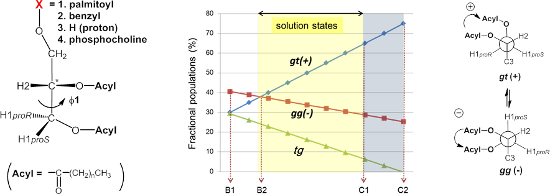
- (+) and gg(−) conformations around the 1,2-diacyl moiety (Figure 1). From X-ray crystallography data, a common structure in which the 1,2-diacyl chains are aligned in parallel is observed, which adopts either the gt(+) or gg(−) conformer [7][10][12]. An analogous conformation has been reportedly observed




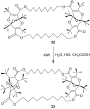
The chemistry and biology of mycolactones
Beilstein J. Org. Chem. 2017, 13, 1596–1660, doi:10.3762/bjoc.13.159
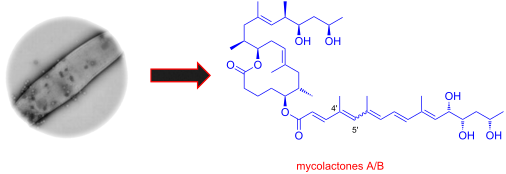
- -regulation of Bim. Furthermore, the suggested interaction of mycolactone A/B with FKBP12 is supported by the protective effects of an excess of FK506 against mycolactone-induced apoptosis. However, further experimental validation of the mycolactone-FKBP12 interaction, e.g., by SPR, NMR or X-ray
- crystallography, would be highly appreciable. Finally, we also demonstrated the key role of mycolactone-triggered Bim-mediated apoptosis in vivo. To this end, the food pads of wild-type (WT) and homozygous Bim and Fas knockout mice (Bim−/− and Fas−/−) were infected with M. ulcerans. Intriguingly, WT and Fas









Molecular recognition of N-acetyltryptophan enantiomers by β-cyclodextrin
Beilstein J. Org. Chem. 2017, 13, 1572–1582, doi:10.3762/bjoc.13.157
- constants, K, of the L- to the D-enantiomer) shows an increasing order (1.04, 1.1 and 1.34, respectively). X-ray crystallography, on the other hand, can improve our understanding of chiral recognition by CDs at the atomic level by providing insight into the interactions and the fit of the guest in the
- diagrams [15], NMR spectroscopy [16] and electrochemical methods [17], as well as by X-ray crystallography [18]. Detailed structures of β-CD with L- and D-N-acetylphenylalanine (NAcPhe) grown separately [18] has shown that although the two complexes are isomorphous (same space group, very similar unit cell
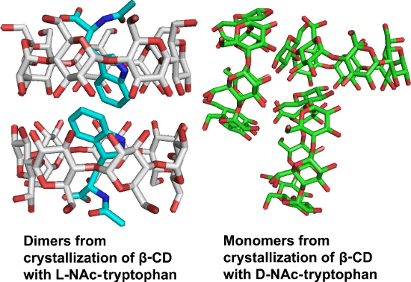
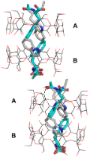
- percentage cannot be excluded. X-ray crystallography studies In the crystalline state, the structure of the inclusion complex of L-NAcTrp in β-CD comprises dimers. The asymmetric unit of the complex contains two crystallographically independent β-CD hosts (A and B) forming a dimer (Figure 2), in which two




A speedy route to sterically encumbered, benzene-fused derivatives of privileged, naturally occurring hexahydropyrrolo[1,2-b]isoquinoline
Beilstein J. Org. Chem. 2017, 13, 1413–1424, doi:10.3762/bjoc.13.138
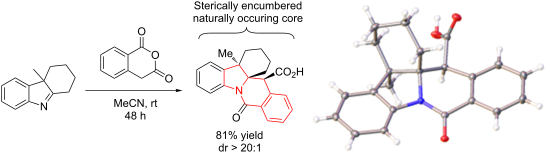
- [1][28] but never isolated) was characterized by means of 1H and 13C NMR spectroscopy as well as X-ray crystallography. The isolation, for the first time, of the Mannich-type adduct 13 between HPA and an imine clearly attests to the viability of mechanistic pathway (b) shown in Scheme 3. When left at
- spectrometry and X-ray crystallography and certain regularities in the NMR behavior have been established, leading a set of rules for stereochemical assignment based on the NMR data. A Mannich-type adduct between HPA and an imine (previously only postulated as a crucial intermediate en route to CCR products


Nitration of 5,11-dihydroindolo[3,2-b]carbazoles and synthetic applications of their nitro-substituted derivatives
Beilstein J. Org. Chem. 2017, 13, 1396–1406, doi:10.3762/bjoc.13.136
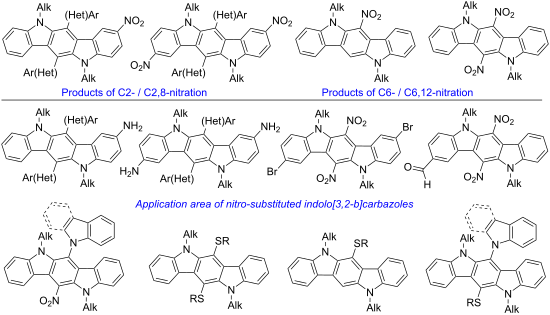
- nature of the target product and concomitant impurities. In addition to the data of 1H and 13C NMR and elemental analysis, the structure of nitro-substituted ICZs 9 and 10 has been confirmed unequivocally by X-ray crystallography analysis of derivatives 9b and 10b (Figure 4). Taking into account that
- performed by using the Suzuki–Miyaura cross-coupling reaction with phenylboronic acid under Pd catalysis (Scheme 5). The location of the formyl group and bromine atoms in ICZ derivatives 12 and 13 has been established by X-ray crystallography analysis, performed for single crystals of 12b and 13b (Figure 5
- desired product in 88% yield. At the same time, in the experiment with fuming nitric acid (5 equiv), used instead of acetyl nitrate (Table 1, entry 5), we have obtained a mixture of compound 2a and byproducts again. The molecular structure of compound 2a has been proved unequivocally by X-ray


Switchable highly regioselective synthesis of 3,4-dihydroquinoxalin-2(1H)ones from o-phenylenediamines and aroylpyruvates
Beilstein J. Org. Chem. 2017, 13, 1350–1360, doi:10.3762/bjoc.13.132
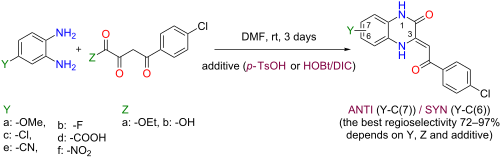
- , anticancer, anti-HIV, antithrombotic, analgesic and antidiabetic [1][2][3]. Substitution on C(3) of quinoxalin-2(1H)-ones 1 by substituents that possess a carbonyl group in a β side chain position 2, 3 significantly alters their chemical properties as suggested by 1H NMR, IR spectra and X-ray crystallography


Glycoscience@Synchrotron: Synchrotron radiation applied to structural glycoscience
Beilstein J. Org. Chem. 2017, 13, 1145–1167, doi:10.3762/bjoc.13.114
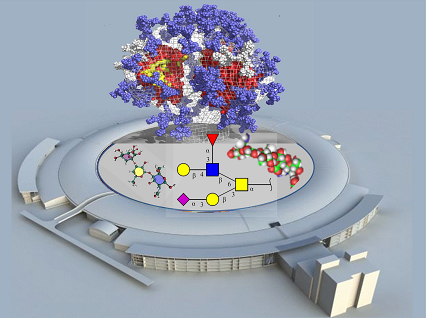
- hydrolases; glycosyl transferases; kinetic crystallography; lectins; polysaccharides; powder diffraction; small-angle X-ray scattering; starch; synchrotron radiation; transporters; X-ray crystallography; Introduction Over the last decade, glycoscience has greatly benefited from the development of structural
- recognition with the elucidation of glycosyl hydrolases mechanism by X-ray crystallography, but the scope of applications in glycobiology is much broader: it encompasses the range of glycan containing (macro)-molecules and their conjugates. The present article reviews the application of synchrotron radiation
- thrombin and antithrombin at 2.5 Å resolution. For the time being, this is one of the largest oligosaccharide structures ever established throughout macromolecular X-ray crystallography (Figure 12) [59]. Transporters: Soluble sugars serve many purposes in complex organisms. Their cellular exchange relies




G-Protein coupled receptors: answers from simulations
Beilstein J. Org. Chem. 2017, 13, 1071–1078, doi:10.3762/bjoc.13.106
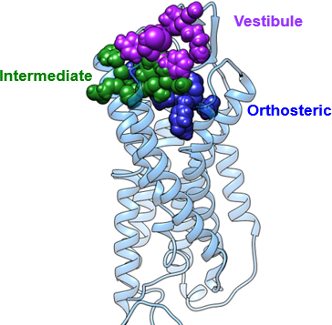
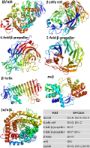
- , so that the low number of structures being published represents the output of a major worldwide research effort to obtain structures for receptors that unfortunately require considerable ingenuity (and luck) to obtain suitable crystals for X-ray crystallography [6]. Not only has the paucity of


Phosphazene-catalyzed desymmetrization of cyclohexadienones by dithiane addition
Beilstein J. Org. Chem. 2017, 13, 762–767, doi:10.3762/bjoc.13.75
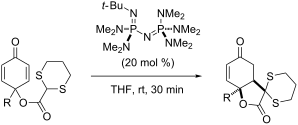
- 1H and 13C NMR spectra for final compounds. Supporting Information File 248: Crystallographic data. Acknowledgements The project described was supported by Award R35 GM118055 from the National Institute of General Medical Sciences. X-ray crystallography was performed by Dr. Peter White.




Fluorinated cyclohexanes: Synthesis of amine building blocks of the all-cis 2,3,5,6-tetrafluorocyclohexylamine motif
Beilstein J. Org. Chem. 2017, 13, 728–733, doi:10.3762/bjoc.13.72
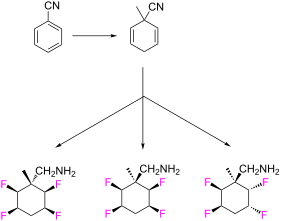
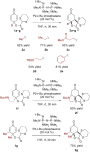
- with Et3N·3HF at 120 °C generated the tetrafluorocyclohexane 11a, the structure of which was confirmed by X-ray crystallography (Scheme 2). Although the conversion of 10a to 11a was high as judged by 19F NMR, the isolated yield was modest as the compound was volatile and sublimed easily under reduced
- pressure. Hydrogenation of 11a over 10% Pd/C in ethyl acetate gave the desired amine 5a but in very low yield (0–15%) [18][19][20]. The structure of 5a was confirmed by X-ray crystallography (Scheme 2). Adding a few drops of formic acid and triethylamine (molar ratio 37:1) to the hydrogenation, furnished
- formamide 12 in 78% yield, a compound also confirmed by X-ray crystallography [20]. Ultimately treatment of nitrile 11a with nickel boride generated in situ from nickel chloride and sodium borohydride, resulted in its full reduction to amine 5a in 50% yield (Scheme 2) [21][22]. The analogous protocol was



Unpredictable cycloisomerization of 1,11-dien-6-ynes by a common cobalt catalyst
Beilstein J. Org. Chem. 2017, 13, 639–643, doi:10.3762/bjoc.13.62
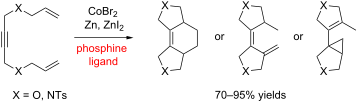
- diastereomer, however, it was not possible to unambiguously determine whether it was the cis- or the trans-isomer by NMR (including various correlation techniques) because of the high symmetry of both possible isomers. Attempts to grow crystals of 2c or its Br2 adduct for X-ray crystallography were also
- -spectrometry (for ethers, which are oils) or elemental analysis (for tosylamides, which are crystalline solids). The structures of the starting dienyne 1h and the cyclohexene trans-2b were established by X-ray crystallography. The structures of cis-2b and 3b had been reported previously [11][43]. Conclusion To


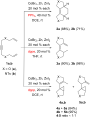


Highly bulky and stable geometry-constrained iminopyridines: Synthesis, structure and application in Pd-catalyzed Suzuki coupling of aryl chlorides
Beilstein J. Org. Chem. 2017, 13, 213–221, doi:10.3762/bjoc.13.24
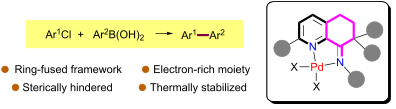
- -ray crystallography were performed on a Bruker Smart Apex CCD area detector diffractometer using graphite-monochromated Mo Kα radiation (λ = 0.71073 Å). Details of the X-ray structure determinations and refinements are provided in Table 5. According to the synthetic procedures in the literature, the
- (30 m × 0.32 mm (i.d.), 0.25 μ). High-resolution mass spectra were recorded in the EI mode on Agilent 6210 TOF mass spectrometry. Flash column chromatography was performed on neutral SiO2 (200–300 mesh) with ethyl acetate/petroleum as eluent. Melting points were determined on BÜCHI M-565 apparatus. X


Supramolecular frameworks based on [60]fullerene hexakisadducts
Beilstein J. Org. Chem. 2017, 13, 1–9, doi:10.3762/bjoc.13.1
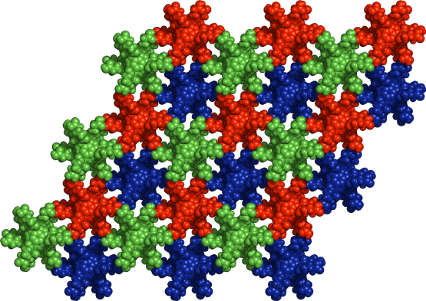
- . Experimental Hexakisadduct C3 [55] and malonate 1 [59] were synthesized according to literature procedures. X-ray crystallography: Bruker D8 Quest diffractometer with Photon 100 CMOS APS detector and Montel multilayer optics monochromated Cu Kα radiation. PXRD diffraction: Bruker D8 Discovery with 1D-Lynxeye


O-Alkylated heavy atom carbohydrate probes for protein X-ray crystallography: Studies towards the synthesis of methyl 2-O-methyl-L-selenofucopyranoside
Beilstein J. Org. Chem. 2016, 12, 2828–2833, doi:10.3762/bjoc.12.282

- are used as reactive glycosyl donors in the syntheses of oligosaccharides. In addition, such heavy atom analogs of natural glycosides are useful tools for structure determination of their lectin receptors using X-ray crystallography. Some lectins, e.g., members of the tectonin family, only bind to
- -glucosamine, have been described in rats as metabolites for detoxifying inorganic selenite intake [12][13]. Selenium-containing compounds are also widely used as tools for protein X-ray crystallography in structural biology. The determination of a protein structure depends on the correct phase recovering
- mushroom Laccaria bicolor (Lb-Tec2) [28], a protein that belongs to the tectonin family of β-propeller lectins and plays an important role in fungal defense against bacteria and nematodes. The determination of the Lb-Tec2 structure by X-ray crystallography promised to be difficult since no suitable model





