


Search results
Search for "arene" in Full Text gives 281 result(s) in Beilstein Journal of Organic Chemistry. Showing first 200.
Transition-metal-catalyzed synthesis of phenols and aryl thiols
Beilstein J. Org. Chem. 2017, 13, 589–611, doi:10.3762/bjoc.13.58

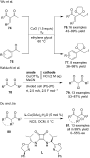
- reoxidation of Pd(0) as the reaction couldn't proceed with a stoichiometric amount of Pd(OAc)2 under argon. In 2012, the Rao group and the Dong group simultaneously reported a palladium catalyzed ortho-hydroxylation of aryl ketones, and thus further broadened the directing groups of arene substrates [70][71


Correction: Inherently chiral calix[4]arenes via oxazoline directed ortholithiation: synthesis and probe of chiral space
Beilstein J. Org. Chem. 2017, 13, 347–347, doi:10.3762/bjoc.13.38
- Simon A. Herbert Laura J. van Laeren Dominic C. Castell Gareth E. Arnott Department of Chemistry and Polymer Science, Stellenbosch University, Private Bag X1, Matieland 7602, South Africa 10.3762/bjoc.13.38 Keywords: calix[4]arene; inherently chiral; ortholithiation; oxazoline; Tsuji–Trost; In
New approaches to organocatalysis based on C–H and C–X bonding for electrophilic substrate activation
Beilstein J. Org. Chem. 2016, 12, 2834–2848, doi:10.3762/bjoc.12.283
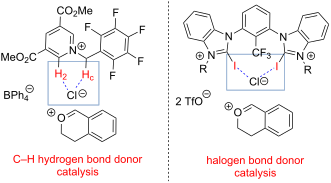
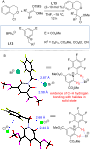
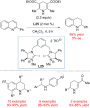
- of an electron-withdrawing group into the aryl ring (i.e., NO2, CN, CF3, etc.) could significantly enhance this binding and result in stronger hydrogen bonds between the arene and the anion. Thus, the gas-phase binding energy of the nitrobenzene and chloride anion complex containing two C–H hydrogen
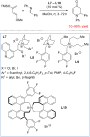
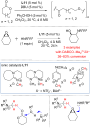
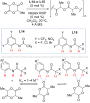
- L15 were proposed to form additional C–H hydrogen bonds between arene or α-halogenated acetyl groups and the carbonyl of lactide. X-ray crystallographic analysis and molecular modeling provided the evidence of such interactions in solid state, and the titration studies established weak binding (Ka ≈ 1








cis-Diastereoselective synthesis of chroman-fused tetralins as B-ring-modified analogues of brazilin
Beilstein J. Org. Chem. 2016, 12, 2816–2822, doi:10.3762/bjoc.12.280
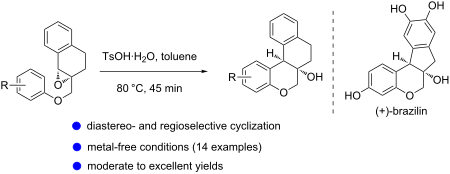
- Abstract We have synthesized a series of cis-6a,7,8,12b-tetrahydro-6H-naphtho[2,1-c]chromen-6a-ols as B-ring-modified analogues of (±)-brazilin. A completely regio- and cis-diastereoselective intramolecular Friedel–Crafts epoxy–arene cyclization of 1-tetralone-derived glycidyl ethers catalyzed by Brønsted
- been reductively removed by a diastereoselective method which should be useful in future for preparing libraries of chroman-fused tetralins with trans-stereochemistry at the ring junction. Keywords: brazilin; chroman; epoxy-arene cyclization; natural-product-like molecules; tetralin; Findings The
- studied during the past 15 years [19]. Moreover, on many occasions natural product-like molecules exhibit more potent biological activities than the parent natural products [20]. Meanwhile, the intramolecular Friedel–Crafts epoxy–arene (IFCEA) cyclization has been well-established as a powerful tool for


Palladium-catalyzed ring-opening reactions of cyclopropanated 7-oxabenzonorbornadiene with alcohols
Beilstein J. Org. Chem. 2016, 12, 2189–2196, doi:10.3762/bjoc.12.209

- ). Syn-stereoisomeric products 2 and 3 can be obtained using rhodium [14], palladium [15], or nickel [16] catalysts with an arene nucleophile and when palladium [17] or nickel [18] are used with an alkyl nucleophile. Recently, it was shown that the syn-stereoisomeric product 4 could be obtained through
- both bridgehead positions was first investigated. With a methyl group at both bridge head positions, the yield was decreased to 40% at 90 °C (Table 3, entry 1). Substitution on the arene portion of cyclopropanated oxabenzonorbornadiene 8a was investigated. p-Methoxy-substituted 8c underwent minimal
- halide substitution on the arene was also investigated in the ortho position which decreased the yield to 37% (Table 3, entry 4). The scope of the reaction was then extended to include examples of unsymmetrical functionalized substrates 8f–j bearing substituents at the C1 position. With a substituent at


Superelectrophilic activation of 5-hydroxymethylfurfural and 2,5-diformylfuran: organic synthesis based on biomass-derived products
Beilstein J. Org. Chem. 2016, 12, 2125–2135, doi:10.3762/bjoc.12.202
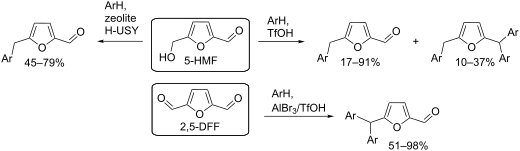
- temperature for 1–24 h gives rise to 5-arylmethylfurfurals (yields of 17–91%) and 2-arylmethyl-5-(diarylmethyl)furans (yields of 10–37%). The formation of these two types of reaction products depends on the nucleophilicity of the arene. The same reactions under the action of acidic zeolites H-USY in high
- the substrate (arene) molecules. We also varied reaction conditions (time, amount of arene) in TfOH to check yields of compounds 3 and 4. In general, increasing the reaction time up to 3–24 h led to an increase in the yield of furans 4 and a decreased yield of compounds 3 (compare pairs of entries in
- , 11, 13, and 15). The coordination of aluminum halides with the aldehyde group results in the activation of one of the aldehyde groups, catalyzing the reaction subsequently with two arene molecules resulting in the 1,1-diarylated product. The second aldehyde group does not take part in the reaction


Practical synthetic strategies towards lipophilic 6-iodotetrahydroquinolines and -dihydroquinolines
Beilstein J. Org. Chem. 2016, 12, 1851–1862, doi:10.3762/bjoc.12.174
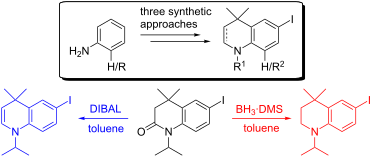
- literature [13]. An initial investigation with the corresponding bromides indicated that these were unreactive towards many cross-coupling methodologies, presumably due to the highly electron-rich arene [14]. Reactions such as the Sonogashira coupling, for example, often required high catalyst loadings


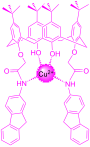
Amidofluorene-appended lower rim 1,3-diconjugate of calix[4]arene: synthesis, characterization and highly selective sensor for Cu2+
Beilstein J. Org. Chem. 2016, 12, 1749–1757, doi:10.3762/bjoc.12.163
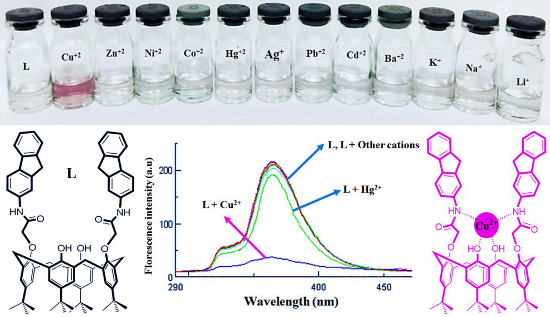
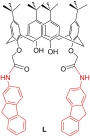
- Basic Science, University of Mazandaran, Babolsar, Iran 10.3762/bjoc.12.163 Abstract Functionalization of calix[4]arene with amidofluorene moieties at the lower rim led to formation of the 1,3-diconjugate of calix[4]arene L as a novel fluorescent chemosensor for Cu2+. The receptor molecule L exhibited
- of 9.6 × 10⁻⁸ M. Keywords: calix[4]arene; chemosensor; copper ions; fluorene; fluorescence; Introduction Owing to the substantial role of fluorescent chemosensors in biological, environmental, and chemical processes, their design and synthesis, especially for detection of metal ions has attracted
- supramolecular structures, especially calixarene derivatives, has been an appealing field for research [14]. Calixarene has been considered as an effective molecular scaffold in the improvement of fluorescent and chromogenic sensors, especially for metal-ion recognition [14][15]. Calix[4]arene derivatives having




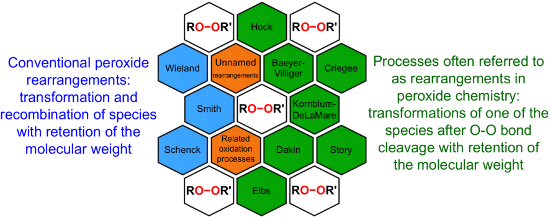
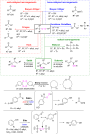
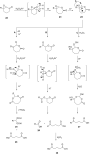
Rearrangements of organic peroxides and related processes
Beilstein J. Org. Chem. 2016, 12, 1647–1748, doi:10.3762/bjoc.12.162











Experimental and theoretical insights in the alkene–arene intramolecular π-stacking interaction
Beilstein J. Org. Chem. 2016, 12, 1616–1623, doi:10.3762/bjoc.12.158
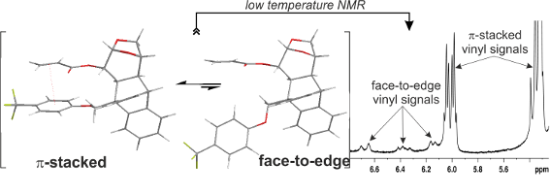
- all noncovalent interactions, π-stacking is perhaps the less well understood, although its application in materials sciences, enzyme design and template-directed synthesis have had a dramatic growth, mainly for arene–arene interactions [1][2][3][4][5][6][7][8]. In particular, the use of π–π overlap as
- , spectroscopic and computational evidence of the structurally related chiral acrylates to get new insights into the alkene–arene intramolecular interaction. Besides, it was evaluated the effect of the electron density of the aromatic counterpart and its influence on the asymmetric inductive capacity of the
- and aromatic groups in a face-to-edge arrangement, with a dihedral angle of 73.8(2)° between the groups’ mean planes (Figure 6 and Supporting Information File 1). The distance between the centroid of the arene and the middle point of the C=C double bond is 6.48 Å. The conformation found in the solid




Ring-whizzing in polyene-PtL2 complexes revisited
Beilstein J. Org. Chem. 2016, 12, 1410–1420, doi:10.3762/bjoc.12.135
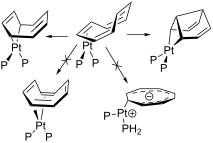
- arene–Pt(PR3)2 structures in the literature [47][48] and both have η2 geometries. The barrier for ring whizzing in (CF3)6C6–Pt(PEt3)2 has been measured to be ≈11 kcal/mol [41]. One member of the LUMO e1g set in benzene has a large overlap with the b2 ML2 MO. The computed ground state structure for η2






Synthesis of 2-substituted tetraphenylenes via transition-metal-catalyzed derivatization of tetraphenylene
Beilstein J. Org. Chem. 2016, 12, 1302–1308, doi:10.3762/bjoc.12.122
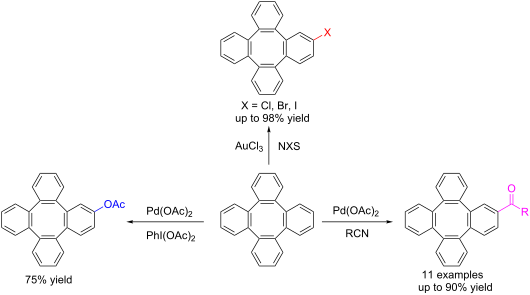
- into other functionalities [58][59]. The Larock group reported a novel Pd-catalyzed addition of nitriles to an arene C–H bond for the synthesis of aryl ketones [60][61]. Following the Larock’s conditions, we investigated the carbonylation of tetraphenylene (1) and the carbonylated product 5a was


Palladium-catalyzed picolinamide-directed iodination of remote ortho-C−H bonds of arenes: Synthesis of tetrahydroquinolines
Beilstein J. Org. Chem. 2016, 12, 1243–1249, doi:10.3762/bjoc.12.119
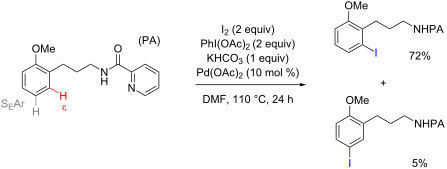
- . Arene substrates bearing strongly electron-donating substituents typically gave substantial amounts of undesired iodinated side products via competing innate SEAr processes, and arene substrates bearing strongly electron-withdrawing substituents were often unreactive. Herein, we report our development
- iodination, and undirected SEAr iodination to quickly access THQs 27–30 bearing iodo groups at different positions on the arene ring [40][41][42]. Ortho-diiodinated product 4 was obtained from 2 in 69% yield using optimized Pd-catalyzed ε-C–H iodination conditions, and Cu-catalyzed C–N cyclization of 4 gave


Reactions of N,3-diarylpropiolamides with arenes under superelectrophilic activation: synthesis of 4,4-diaryl-3,4-dihydroquinolin-2(1H)-ones and their derivatives
Beilstein J. Org. Chem. 2016, 12, 950–956, doi:10.3762/bjoc.12.93

- , 0.5 h. Some optimization of the reaction on minimization of the usage of arenes and TfOH were performed. The amount of arene may be decreased to 5 equivalents. But, concerning the use of a lower amount of TfOH, for instance, running the reaction in CH2Cl2 solution led to a dramatic decrease of the
- amides 1k,o gave regioselectively only 7-substituted quinolinones 2c,f (Table 1, entries 7, 8, 14 and 15) and 6,7-disubstituted quinolinones 2k,o (Table 1, entries 25 and 29), respectively. Concerning the arene component of this reaction, apart from benzene, chlorobenzene and 1,2-dichlorobenzene it may
- , perhaps, dication D1 was not reactive due to the bigger spatial volume of the methyl substituent in the N-acyl group compared to hydrogen of the N-formyl one in C1, that hampered the reaction with arene molecule. Conclusion A simple and effective approach to 4,4-diaryl-3,4-dihydroquinolin-2-(1H)-ones


A convenient route to symmetrically and unsymmetrically substituted 3,5-diaryl-2,4,6-trimethylpyridines via Suzuki–Miyaura cross-coupling reaction
Beilstein J. Org. Chem. 2016, 12, 835–845, doi:10.3762/bjoc.12.82
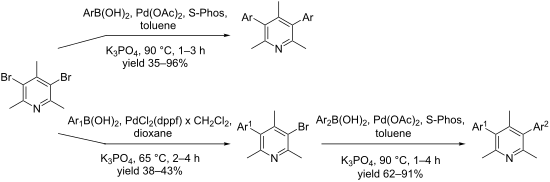
- substituted arene rings. An elegant approach to variously arylated pentaarylpyridines was recently proposed by Reimann et al. [60]. The final outcome of such a procedure is governed by many factors, including differences in site reactivity of polyhaloarenes (concerning both regio- and chemoselectivity




Iridium/N-heterocyclic carbene-catalyzed C–H borylation of arenes by diisopropylaminoborane
Beilstein J. Org. Chem. 2016, 12, 654–661, doi:10.3762/bjoc.12.65

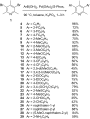
- 1g afforded 17-B in 48% isolated yield even when the reaction was conducted under neat conditions (Table 3, entry 1) (see the Supporting Information File 1 for details on the optimization for the borylation of benzene). Borylation was relatively independent of the electronic nature of the arene
- 1g.a Scope of the heteroarene substrates.a Scope of the arene substrates.a Supporting Information Supporting Information File 50: Experimental procedures, data for optimization studies and copies of 1H and 13C NMR spectra. Acknowledgements This work was supported by a Grant-in-Aid for Scientific


Copper-mediated arylation with arylboronic acids: Facile and modular synthesis of triarylmethanes
Beilstein J. Org. Chem. 2016, 12, 496–504, doi:10.3762/bjoc.12.49
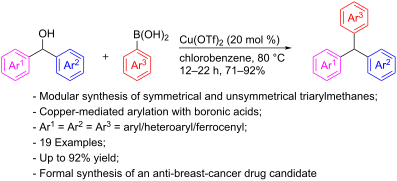
- arene aldehydes followed by substitution of the resulting hydroxy group with another electron-rich aromatic compound (Scheme 1A, method 2) [36][37][38][39]. Both of the approaches are limited in scope and suffer from drawbacks such as (a) electron-rich aromatic systems that are required as nucleophiles


My maize and blue brick road to physical organic chemistry in materials
Beilstein J. Org. Chem. 2016, 12, 229–238, doi:10.3762/bjoc.12.24
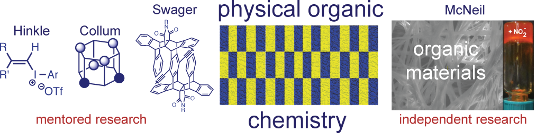
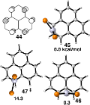
- : to evaluate the effect of through-space (rather than through-bond) interactions on a conjugated polymer’s properties. During this project I synthesized some of the most beautiful molecules I have ever seen, with one and two cofacial arenes surrounding the central arene of the monomer (Figure 1) [14


Carbon–carbon bond cleavage for Cu-mediated aromatic trifluoromethylations and pentafluoroethylations
Beilstein J. Org. Chem. 2015, 11, 2661–2670, doi:10.3762/bjoc.11.286
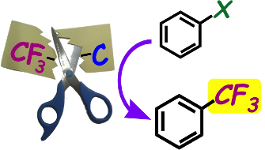
- − source and [CF3Cu] species with CuI are generated in situ. In the presence of CuI, CF3CO2Na undergoes trifluoromethylation with aryl halides via decarboxylation [33][34] (Scheme 1). A pentafluoroethyl group (C2F5) was fixed at the arene with sodium pentafluoropropionate [35] (Scheme 2). The reaction


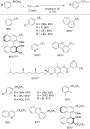


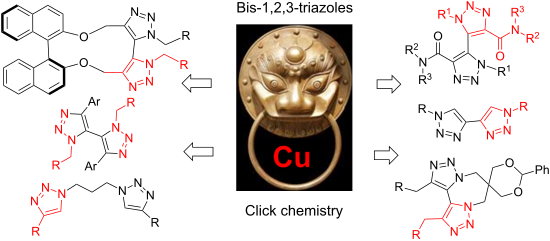
Synthesis of bi- and bis-1,2,3-triazoles by copper-catalyzed Huisgen cycloaddition: A family of valuable products by click chemistry
Beilstein J. Org. Chem. 2015, 11, 2557–2576, doi:10.3762/bjoc.11.276
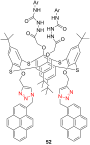
- opposite side of the thiacalix[4]arene cavity [38]. The authors found that receptor 52 (Scheme 18) could selectively bind Cl− through hydrogen bonding interaction with the urea NH protons, and 52 can also bind with Ag+ through complexation with the pyrene-appended bistriazole. In homogeneous catalysis
- bistriazoles. The pyrene-appended thiacalix[4]arene-based bistriazole. The synthesis of triazole-based tetradentate ligands. The synthesis of phenanthroline-2,9-bistriazoles. The three-component reaction for the synthesis of bistriazoles. The one-pot synthesis of bistriazoles. The synthesis of polymer-bearing




Friedel–Crafts-type reaction of pyrene with diethyl 1-(isothiocyanato)alkylphosphonates. Efficient synthesis of highly fluorescent diethyl 1-(pyrene-1-carboxamido)alkylphosphonates and 1-(pyrene-1-carboxamido)methylphosphonic acid
Beilstein J. Org. Chem. 2015, 11, 2451–2458, doi:10.3762/bjoc.11.266
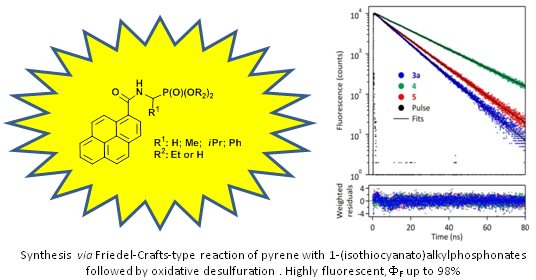
- relevance which have attracted the interest of biologically-oriented chemists and biochemists [9][10][11][12]. Furthermore, the phosphonate group offers various possibilities of metal binding or anchoring to solid surfaces [13][14][15][16][17][18][19][20]. For our purposes we chose pyrene as a model arene
- observed features of solid-state emission of this compound (vide suppra). Conclusion We demonstrated the feasibility of the Friedel–Crafts reaction with 1-(isothiocyanato)alkylphosphonates by using pyrene as an arene. The pyrenyl thioamidoalkylphosphonates formed in this reaction can be readily transformed




C–H bond halogenation catalyzed or mediated by copper: an overview
Beilstein J. Org. Chem. 2015, 11, 2132–2144, doi:10.3762/bjoc.11.230
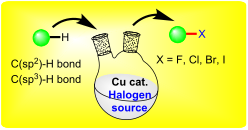
- catalysis in modern organic synthesis, herein, we would like to highlight the recent progress in the C–H bond halogenation with copper catalysis or mediation. Review Copper-catalyzed/mediated halogenation of the C(sp2)–H bond Halogenation of the arene C(sp2)–H bond In the synthesis of aryl halides employing
- a few examples giving mixed mono- and dihalogenated products. In all these known arene C–H halogenation protocols with pyridine as directing group (DG), the chemo-selectivity remained as a challenge since either mixed mono- and dihalogenated products or only one of the two potential products could
- -functionalized arene dimerization [37]. Besides the issue of selectivity, another major challenge in the DG-assisted C–H activation lied in the removal of the DG, which undermined the efficiency of the synthetic procedure. To alternate the hardly removable DG of the pyridine ring, Carretero and co-workers [38


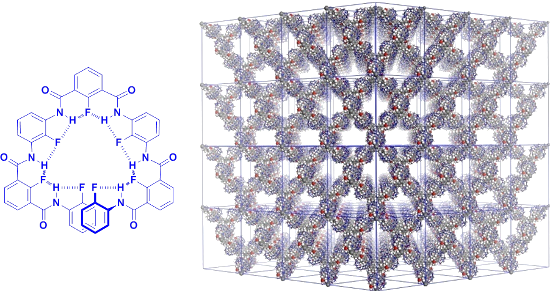
Supramolecular chemistry: from aromatic foldamers to solution-phase supramolecular organic frameworks
Beilstein J. Org. Chem. 2015, 11, 2057–2071, doi:10.3762/bjoc.11.222
- project: constructing calix[4]arene-derived catenanes, such as 7a–c [15] (Scheme 3). I chose this project because I believed that I could make progress in a short time. Most of the work was done by myself, but I also received assistance from several young technicians. We succeeded in investigating the
- effect of the calix[4]arene moiety on the relative rotation of the two rings using 1H NMR, and from 1998 to 2000, we published four papers from this project. However, this was generally a tough period for me. Due to some nonacademic reasons, I could not build an efficient research group after several


![[Graphic 1]](/bjoc/content/inline/1860-5397-11-222-i19.png?max-width=637&scale=1.18182) 16 and dynamic [2]catenane formed by compounds 17–19.
16 and dynamic [2]catenane formed by compounds 17–19.


Recent applications of ring-rearrangement metathesis in organic synthesis
Beilstein J. Org. Chem. 2015, 11, 1833–1864, doi:10.3762/bjoc.11.199

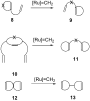
- step starting with 2-methoxyphenol. Later, compound 316 was subjected to a RRM under the influence of catalyst 2 in the presence of ethylene (24) to deliver the expected rearranged product 317 (Scheme 68). Vanderwal and co-workers [66] described the synthesis of polycyclic lactams obtained by arene




Synthesis and spectroscopic properties of β-triazoloporphyrin–xanthone dyads
Beilstein J. Org. Chem. 2015, 11, 1434–1440, doi:10.3762/bjoc.11.155
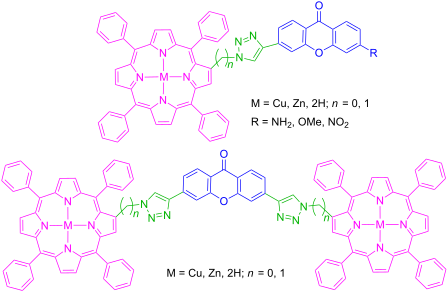
- –tetrathiafulvalenes [14], porphyrin–cyanines [15], porphyrin–carotenes [16], porphyrin–arene diimide [17] and porphyrin–fluorocene or rhodamine [18] have also been synthesized in which the porphyrin unit acts as an electron acceptor. Recently, the 1,2,3-triazole scaffold has been successfully employed to connect





