


Search results
Search for "aromatic rings" in Full Text gives 256 result(s) in Beilstein Journal of Organic Chemistry. Showing first 200.
Further exploration of the heterocyclic diversity accessible from the allylation chemistry of indigo
Beilstein J. Org. Chem. 2015, 11, 481–492, doi:10.3762/bjoc.11.54
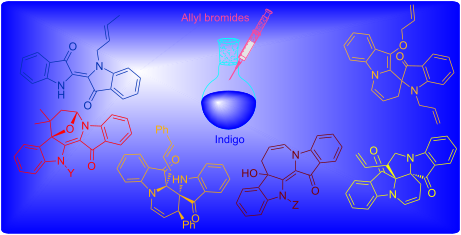
- (IC50 3.06 µg/mL, 9.44 µM). While the introduction of a methyl substituent in the allylic moiety (spiro heterocycle 14) was detrimental to this activity, other possibilities exist for substituent variation at other sites, e.g., in the aromatic rings (starting with substituted indigo derivatives) and at


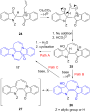


Bis(vinylenedithio)tetrathiafulvalene analogues of BEDT-TTF
Beilstein J. Org. Chem. 2015, 11, 403–415, doi:10.3762/bjoc.11.46
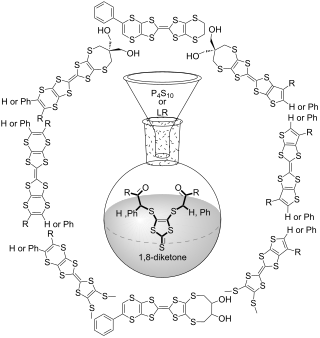
- ][28][29][30] and fused aromatic rings [31][32][33][34] and the construction of molecules having acceptor substituents [35][36][37]. Generally, all these modifications served to produce molecules with better conjugation and improved S···S intermolecular and C–H···anion interactions in determining the


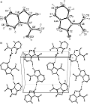
Attempts to prepare an all-carbon indigoid system
Beilstein J. Org. Chem. 2015, 11, 363–372, doi:10.3762/bjoc.11.42

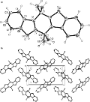
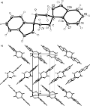
- structure 16 to the isolated dimer 17. Clearly, among these alternatives, the last route is preferred. In 17 the two benzene rings are anellated in anti-orientation, i.e., as far apart as possible. There exists an alternative structure, however, in which the two aromatic rings point in the same direction







Natural phenolic metabolites with anti-angiogenic properties – a review from the chemical point of view
Beilstein J. Org. Chem. 2015, 11, 249–264, doi:10.3762/bjoc.11.28
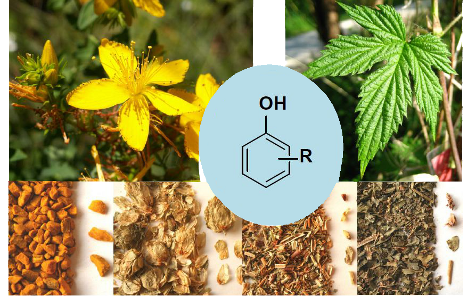
- the two aromatic rings was shortened, and a series of compounds (Scheme 2) with different substitutions on the aromatic rings was synthesized to explore the role of stereoelectronic effects. It was demonstrated that these analogs of curcumin showed excellent anti-angiogenic activity with equivalent or


A facile synthesis of functionalized 7,8-diaza[5]helicenes through an oxidative ring-closure of 1,1’-binaphthalene-2,2’-diamines (BINAMs)
Beilstein J. Org. Chem. 2015, 11, 9–15, doi:10.3762/bjoc.11.2
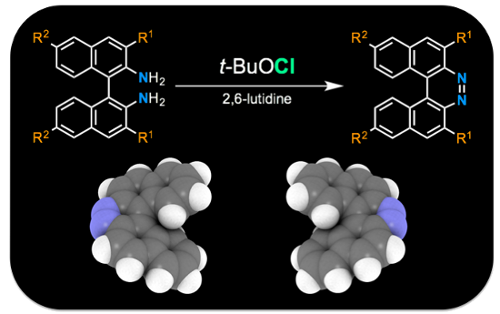
- due to background side-reactions such as chlorination on the aromatic rings and oxidative oligomerization of BINAMs. Furthermore, this new oxidative method was found to be applicable in the ring-closing reaction of 1,1’-biphenyl-2,2’-diamine (3) leading to benzo[c]cinnoline (4) in a good yield


Binding mode and free energy prediction of fisetin/β-cyclodextrin inclusion complexes
Beilstein J. Org. Chem. 2014, 10, 2789–2799, doi:10.3762/bjoc.10.296
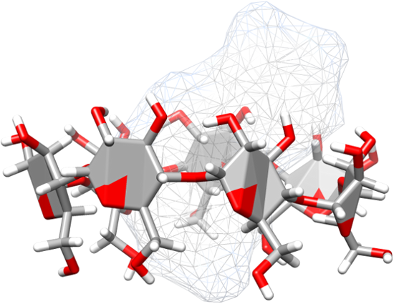
- definition of the A- and B-rings (chromone and phenyl subunits). The atomic labels and the torsional angle (τ) between both aromatic rings are given. (A) Chemical structure of β-CD and (B) its truncated cone shape. Docked structures of the four possible inclusion complexes between fisetin and β-CD, where


Synthesis of nanodiamond derivatives carrying amino functions and quantification by a modified Kaiser test
Beilstein J. Org. Chem. 2014, 10, 2729–2737, doi:10.3762/bjoc.10.288
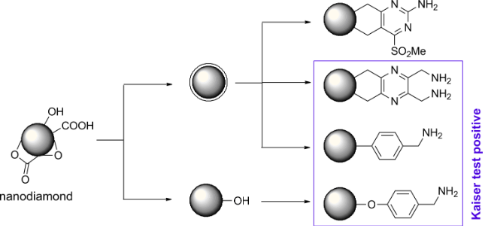
- 0.15 mmol g−1 for the Diels–Alder reaction of the non-functionalized ortho-quinodimethane [11] proves that a significantly increased grafting is observed using the pyrazine derivative. So far, the reported cycloaddition reactions of ortho-quinodimethanes leading to the grafting of aromatic rings by


Cyclodextrin-grafted polymers functionalized with phosphanes: a new tool for aqueous organometallic catalysis
Beilstein J. Org. Chem. 2014, 10, 2642–2648, doi:10.3762/bjoc.10.276
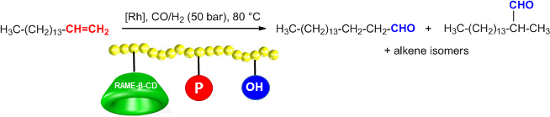
- isolated in 55% yield as white crystals. The meta-sulfonation on the aromatic rings was confirmed by NMR. The COSY spectrum (Supporting Information File 1) was especially indicative of the meta-substitution. Indeed, H4 (Scheme 1) did not correlate with any other proton and appeared as an upfield shifted


Selenium halide-induced bridge formation in [2.2]paracyclophanes
Beilstein J. Org. Chem. 2014, 10, 2550–2555, doi:10.3762/bjoc.10.266
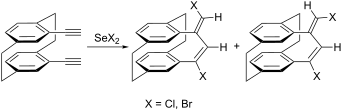
- neglected so far. Functional groups in pseudo-geminally substituted [2.2]paracyclophanes often undergo highly specific reactions. This is due to the rigid framework and the short distance between the two aromatic rings within the [2.2]paracyclophane unit. Thus, unsaturated cyclophane bis(esters) undergo


New highlights of the syntheses of pyrrolo[1,2-a]quinoxalin-4-ones
Beilstein J. Org. Chem. 2014, 10, 2377–2387, doi:10.3762/bjoc.10.248
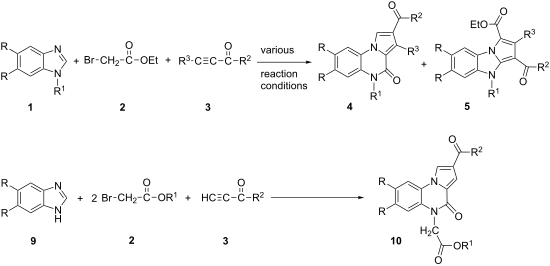
- , quartet, 7.2 Hz, CH2), 5.50 (2H, bs, CH2), 7.19–7.33 (8H, m, aromatic rings), 7.68 (1H, d, 1.6 Hz, H-3), 7.72–7.73 (1H, m, H-9), 8.24 (1H, d, 1.6 Hz, H-1). The individual chemical shifts, multiplicities and coupling constants for the 7.19–7.33 multiplet were obtained from undecoupled HSQC as follows: 7.21
- Hz, CH2-3), 4.45 (2H, quartet, 7.2 Hz, CH2-1), 6.13 (2H, bs, CH2), 7.25–7.32 (8H, m, aromatic rings), 7.78 (1H, s, H-2), 8.88 (1H, d, 8.2 Hz, H-8). The individual chemical shifts, multiplicities and coupling constants for the 7.25–7.32 multiplet were obtained from undecoupled HSQC as follows: 7.240
- -dicarboxylate (4h). 0.33 g (42%) white crystals. FTIR (νmax, cm–1): 1748, 1710, 1663, 1523, 1412, 1370, 1270, 1246, 1198, 1153, 1074; 1H NMR (CDCl3) δ 3.90 (3H, s, CH3-2), 4.05 (3H, s, CH3-3), 5.47 (2H, bs, CH2), 7.22–7.33 (8H, m, aromatic rings), 7.72–7.74 (1H, m, H-9), 8.19 (1H, s, H-1). The individual



Photorelease of phosphates: Mild methods for protecting phosphate derivatives
Beilstein J. Org. Chem. 2014, 10, 2038–2054, doi:10.3762/bjoc.10.212
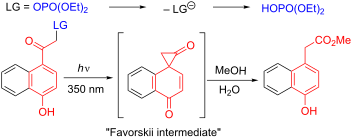
- energy of the naphthyl ketone platform or the disruption of both aromatic rings for the 1,5 substituted analog 27 whereas only one ring is involved for the 1,4 substituted derivative [19]. Both of the contributing components of the 2,6 pattern, 2-naphthol (ET = 60.2 kcal/mol) and 2-acetylnaphthalene (ET
- rearrangement processes for pHP. Wan’s alternative suggestion that a disruption of both aromatic rings' π-conjugation would be less favorable than only one ring’s disruption has merit. For this to be a determining factor, the disruption would have to occur prior to or during the product determining formation of


Influence of perylenediimide–pyrene supramolecular interactions on the stability of DNA-based hybrids: Importance of electrostatic complementarity
Beilstein J. Org. Chem. 2014, 10, 1589–1595, doi:10.3762/bjoc.10.164
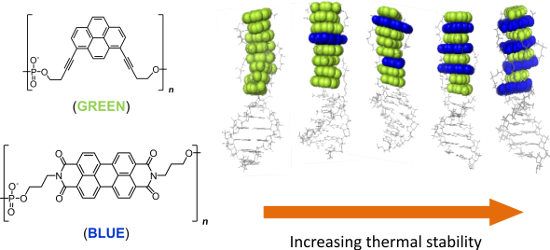
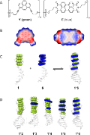
- are strongly dependent on the electron density and distribution of the partners [2][9][13][14][15][16]. In particular, the interaction between electron-rich (donor) and electron-deficient (acceptor) aromatic rings results in stable aggregates [17][18][19][20][21][22]. In the DNA duplex, the



Homochiral BINOL-based macrocycles with π-electron-rich, electron-withdrawing or extended spacing units as receptors for C60
Beilstein J. Org. Chem. 2014, 10, 1308–1316, doi:10.3762/bjoc.10.132
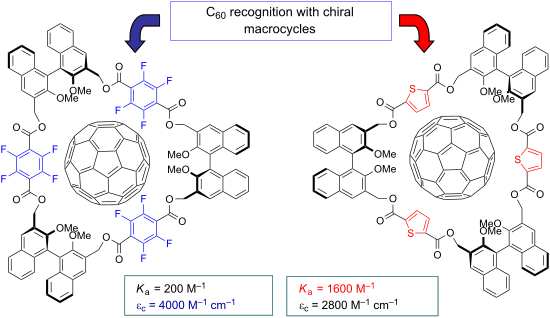
- made chiral by substituting one of the nitrogen atoms, and the enantioselective complexation of chiral higher fullerenes (C84) has been demonstrated [22]. Complexes of C60 and C70 with large, calix-type macrocycles formed by π-electron deficient pyridine aromatic rings bridged by a nitrogen heteroatom



Site-selective covalent functionalization at interior carbon atoms and on the rim of circumtrindene, a C36H12 open geodesic polyarene
Beilstein J. Org. Chem. 2014, 10, 956–968, doi:10.3762/bjoc.10.94
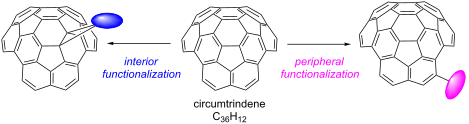
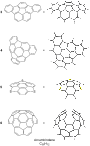
- nuclei that are positioned over the faces of aromatic rings. In planar PAHs, the π-orbitals are perpendicular to the σ-bonds, the electrons are distributed equally on the two faces of the aromatic system, and the ring currents on the two faces are equivalent. When curvature is built into molecules




Direct and indirect single electron transfer (SET)-photochemical approaches for the preparation of novel phthalimide and naphthalimide-based lariat-type crown ethers
Beilstein J. Org. Chem. 2014, 10, 514–527, doi:10.3762/bjoc.10.47
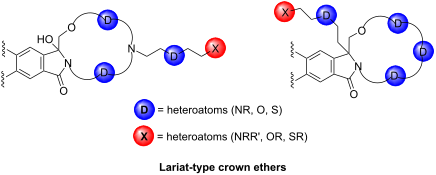
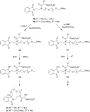
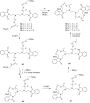
- results in a close facial approach of the benzamide aromatic rings in 60, which results in intramolecular exciplex formation (Scheme 16). Conclusion Direct and indirect approaches, which rely on the use of SET-promoted photocyclization reactions of α-silyl ether-terminated, polydonor-linked, imides (e.g




The Flögel-three-component reaction with dicarboxylic acids – an approach to bis(β-alkoxy-β-ketoenamides) for the synthesis of complex pyridine and pyrimidine derivatives
Beilstein J. Org. Chem. 2014, 10, 394–404, doi:10.3762/bjoc.10.37
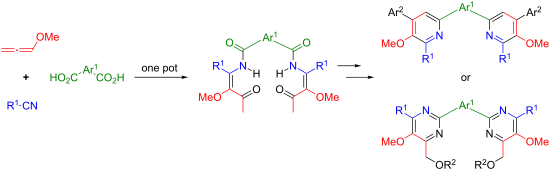
- aromatic rings. Flögel-three-component reaction of lithiated alkoxyallenes, nitriles and carboxylic acids providing β-alkoxy-β-ketoenamides 1 – versatile precursors for the synthesis of functionalized N-heteroaromatics 2–6. Synthesis of bis(β-ketoenamides) 13–15 by three-component reactions of lithiated


The regioselective synthesis of spirooxindolo pyrrolidines and pyrrolizidines via three-component reactions of acrylamides and aroylacrylic acids with isatins and α-amino acids
Beilstein J. Org. Chem. 2014, 10, 117–126, doi:10.3762/bjoc.10.8
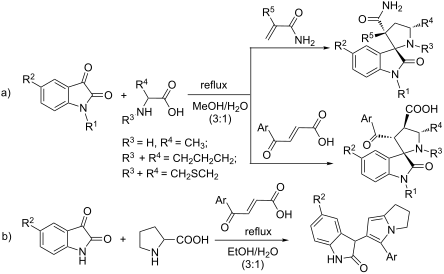
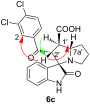
- C9–C10 endocyclic bond (the C10–C9–C14–O4 torsion angle is 10.2(4)°). Such an orientation of this substituent creates conditions for appearance of intramolecular stacking interactions between the aromatic rings of the indole fragment and the aryl substituent (angle between planes of aromatic rings is




Studies on the interaction of isocyanides with imines: reaction scope and mechanistic variations
Beilstein J. Org. Chem. 2014, 10, 12–17, doi:10.3762/bjoc.10.3
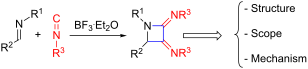
- it may stabilize the nitrilium intermediate precluding further addition events and leading to the aminoamides 7 after the final aqueous treatment. Furthermore, we have detected indole 6 arising from the cyclization of electron-rich aromatic rings linked to the imine nitrogen upon the electrophilic


Efficient synthesis of dihydropyrimidinones via a three-component Biginelli-type reaction of urea, alkylaldehyde and arylaldehyde
Beilstein J. Org. Chem. 2013, 9, 2846–2851, doi:10.3762/bjoc.9.320
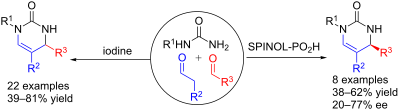
- –13). Electron-withdrawing as well as electron-donating groups on aromatic rings were tolerated, although the latter gave slightly reduced yields. It is noted that a halogen group on the aromatic ring was well tolerated to give the desired products, which can participate in subsequent transformations


Gold(I)-catalyzed domino cyclization for the synthesis of polyaromatic heterocycles
Beilstein J. Org. Chem. 2013, 9, 2625–2628, doi:10.3762/bjoc.9.297
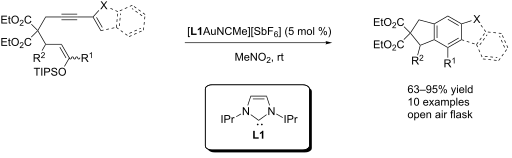
- charge build-up at the cationic cyclization transition state. Substituted aromatic compounds have a fundamental importance in organic and medicinal chemistry as well as in materials. Although there are many methods to functionalize aromatic rings, one can recognize that the above transformation
- represents an attractive and complementary approach for the synthesis of substituted aromatic rings. Taking advantage of the high regiospecificity of [L1AuNCMe][SbF6] associated with alkyne activation, we examined the scope of the reaction using various substituted alkynes (Scheme 3). Gold(I)-catalyzed


Oxidative 3,3,3-trifluoropropylation of arylaldehydes
Beilstein J. Org. Chem. 2013, 9, 2417–2421, doi:10.3762/bjoc.9.279
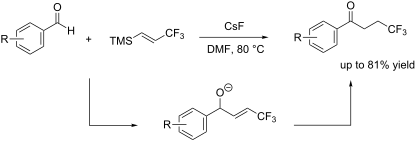
- aldehydes in the presence of fluoride anion [29]. Recently, Prakash et al. [30] reported the synthesis of β-trifluoromethylstyrenes through a Heck coupling reaction of aryl iodides with 1-iodo-3,3,3-trifluoropropane, allowing a direct introduction of 3,3,3-trifluoropropenyl groups to aromatic rings


Synthesis of enantiopure sugar-decorated six-armed triptycene derivatives
Beilstein J. Org. Chem. 2013, 9, 2410–2416, doi:10.3762/bjoc.9.278
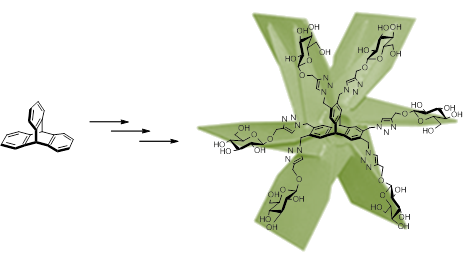
- the preparation of sugar-decorated triptycene derivatives. We also reasoned on the opportunity to link a significant number of carbohydrate moieties to the triptycene platform. For this reason we chose to multi-functionalize the three aromatic rings fused to the bicyclo[2.2.2]octatriene system



Synthesis of axially chiral gold complexes and their applications in asymmetric catalyses
Beilstein J. Org. Chem. 2013, 9, 2224–2232, doi:10.3762/bjoc.9.261
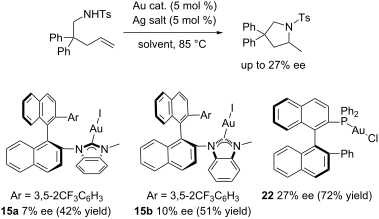
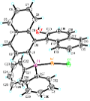
- structures clearly revealed the presence of a weak gold–π interaction between the Au atom and the aromatic rings in these gold complexes. Because of the gold–π interaction, the C–N bond could not rotate freely, giving two diastereomeric rotamers (S)-15a and (S)-15b. Slaughter and co-workers have also found



Regioselective 1,4-trifluoromethylation of α,β-unsaturated ketones via a S-(trifluoromethyl)diphenylsulfonium salts/copper system
Beilstein J. Org. Chem. 2013, 9, 2189–2193, doi:10.3762/bjoc.9.257
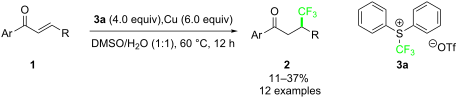
- , aromatic rings substituted with either electron-donating or -withdrawing substituents, such as methyl, methoxy, fluoro and chloro were tolerated (Table 2, entries 2–4). A heteroaromatic, furanyl-substituted enone was compatible with the same reaction conditions (Table 2, entry 6). We next examined
- substrates differing in the nature of the β-aryl substituents under the same reaction conditions. A series of compounds with aromatic rings substituted with either electron-donating or -withdrawing substituents, such as methyl, methoxy, fluoro and chloro were also acceptable. Furthermore, the β-alkyl


Structure of 1,5-benzodiazepinones in the solid state and in solution: Effect of the fluorination in the six-membered ring
Beilstein J. Org. Chem. 2013, 9, 2156–2167, doi:10.3762/bjoc.9.253
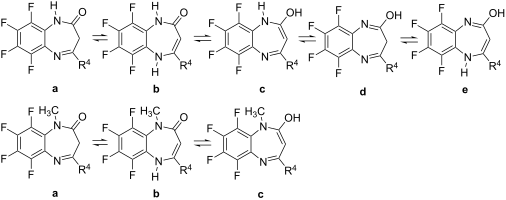
- of a molecule and the F6 of a neighboring one (distance 2.875(2) Å) giving rise to a zigzag chain in the [10-1] direction (Figure 4). These chains are stacked by a partial π–π overlapping between the aromatic rings with a shortest distance of 3.19(1) Å. Compound 2 crystallizes in the triclinic P–1
- aromatic rings, with a shortest distance of 3.35(1) Å. The so formed double chains are isolated because of the above-mentioned steric reasons. We compared the geometries of compounds 3 (TUPSAZ) [8][10] and 5 (EFARUA) [8][9][10] (Figure 2) with those determined in the present work, 1 and 2. To describe the





