


Search results
Search for "carbocation" in Full Text gives 211 result(s) in Beilstein Journal of Organic Chemistry. Showing first 200.
Copper-catalyzed aerobic aliphatic C–H oxygenation with hydroperoxides
Beilstein J. Org. Chem. 2013, 9, 1217–1225, doi:10.3762/bjoc.9.138

- hydroperoxide deliver 1,4-diol 3a. In the absence of molecular O2 (under a N2 atmosphere, Table 1, entry 15), the resulting C-radical I is oxidized by the Cu(II) species to give carbocation VI [19], which is trapped by the intramolecular hydroxy group to give 4a. We next explored the substrate scope of the


Interplay of ortho- with spiro-cyclisation during iminyl radical closures onto arenes and heteroarenes
Beilstein J. Org. Chem. 2013, 9, 1083–1092, doi:10.3762/bjoc.9.120
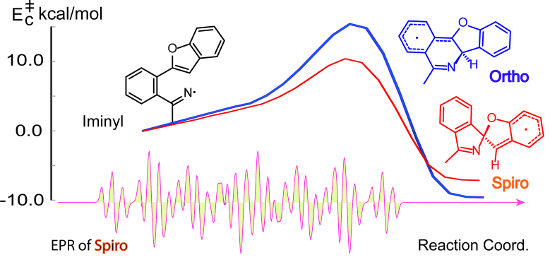
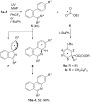
- carbocation, followed by proton loss. Kinetic or other data to help predict which mode would be favoured for a novel iminyl radical is essentially nonexistent. We discovered recently that oxime carbonates ArC(R)=N–OC(O)OR’ are clean and convenient precursors for iminyl as well as O-centred radicals [26][35




A new intermediate in the Prins reaction
Beilstein J. Org. Chem. 2013, 9, 476–485, doi:10.3762/bjoc.9.51
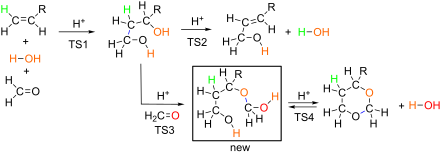
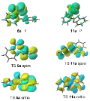
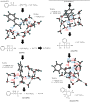
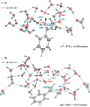
- -dioxane product. The intermediate is of almost the same stability as the product, and two species were suggested to be in a state of equilibrium. While the geometry of TS1 appears to be forwarded to that of a carbocation intermediate, the cation disappeared through the enlargement of the water cluster
- ][11][12][13][14][15][16][17][18] to afford 1,3-dioxane, 1,3-diol and allylic alcohol, where the carbocation intermediate (X) is included (Scheme 5). In the second step, X is formed. From X, two routes, (i) and (ii), are possible. In the route (i), a water molecule is linked with the cation center
- ) bond is formed. After TS1(Me), not the carbonium ion but rather the butane-1,3-diol, diol(Me), is afforded. This result demonstrates that steps 1, 2 and 3 in Scheme 5 occur at the same time without intervention of the carbocation X. From diol(Me), two TSs were obtained. One is TS2(Me) leading to the


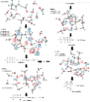



Caryolene-forming carbocation rearrangements
Beilstein J. Org. Chem. 2013, 9, 323–331, doi:10.3762/bjoc.9.37
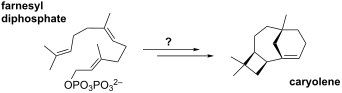
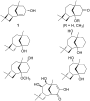
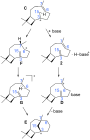
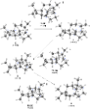
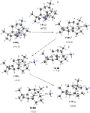
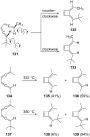
- -10-ol, reveal two mechanisms for caryolene formation: one involves a base-catalyzed deprotonation/reprotonation sequence and tertiary carbocation minimum, whereas the other (with a higher energy barrier) involves intramolecular proton transfer and the generation of a secondary carbocation minimum and
- a hydrogen-bridged minimum. Both mechanisms are predicted to involve concerted suprafacial/suprafacial [2 + 2] cycloadditions, whose asynchronicity allows them to avoid the constraints of orbital symmetry. Keywords: carbocation; cycloaddition; density functional theory; mechanism; reactive
- formation, applying the principles derived from previous theoretical studies on terpene-forming carbocation rearrangements [8]. In this mechanism, formation of the C1–C11 bond was expected to result in secondary carbocation B, in analogy to previously characterized pathways to sesquiterpenes containing 11





















Cation affinity numbers of Lewis bases
Beilstein J. Org. Chem. 2012, 8, 1406–1442, doi:10.3762/bjoc.8.163
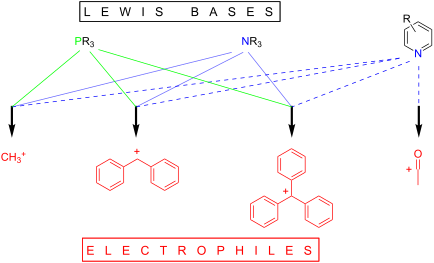
- Discussion Methyl cation affinities (MCA) The methyl cation (CH3+) is the smallest carbocation which is useful as a chemical probe for Lewis bases. The respective methyl cation affinity of a given Lewis base (LB) is obtained as the reaction enthalpy at 298.15 K and 1 bar pressure for the reaction shown in


Synthesis and antiviral activities of spacer-linked 1-thioglucuronide analogues of glycyrrhizin
Beilstein J. Org. Chem. 2012, 8, 705–711, doi:10.3762/bjoc.8.79
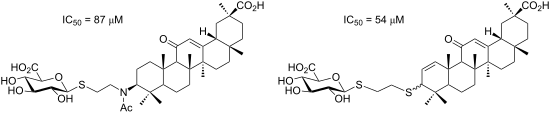
- diphenylmethyl ester group with TFA/anisole (as carbocation scavenger), giving the monoacid derivatives 10 and 11 in 75% and 89% yield, respectively. Subsequent transesterification of 10 and 11 with methanolic NaOMe afforded the deacetylated methyl ester glucuronide derivatives 12 and 14, respectively, which


Efficient oxidation of oleanolic acid derivatives using magnesium bis(monoperoxyphthalate) hexahydrate (MMPP): A convenient 2-step procedure towards 12-oxo-28-carboxylic acid derivatives
Beilstein J. Org. Chem. 2012, 8, 164–169, doi:10.3762/bjoc.8.17
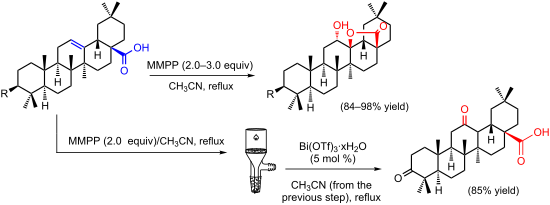
- group, creating a tertiary carbocation at C-13. Then, a concerted stereoselective 1,2-migration of the 12β-H to the 13β-position with the rearrangement of the 12α-hydroxy group affords the final 12-oxo-28-carboxylic acid structure [18]. The molecular structure of compound 11, determined by single


Structural conditions required for the bridge lithiation and substitution of a basic calix[4]arene
Beilstein J. Org. Chem. 2011, 7, 1602–1608, doi:10.3762/bjoc.7.188
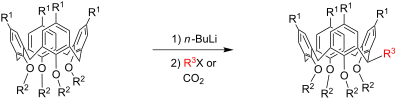
- decade two main preparative routes for the methylene-bridge substitution of p-tert-butyltetramethoxycalix[4]arene have been established: A protocol described by Biali et al. yields a stabilized methylene carbocation through bromination that is ready for electrophilic substitution under SN1 conditions [3


Koch–Haaf reaction of adamantanols in an acid-tolerant hastelloy-made microreactor
Beilstein J. Org. Chem. 2011, 7, 1288–1293, doi:10.3762/bjoc.7.149
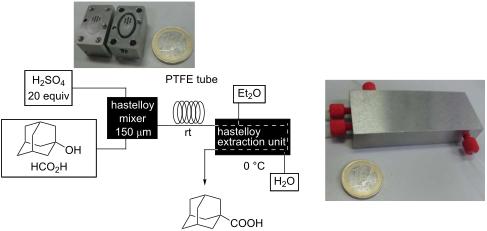
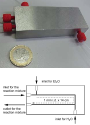
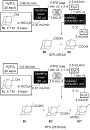
- organic molecules, and we also reported that Pd-catalyzed carbonylation [13] and radical carbonylation [16] could be successfully carried out in a continuous microflow system with higher efficiency than in a batch autoclave system. In this study, we focused on the carbonylation of carbocation





Gold(I)-catalyzed synthesis of γ-vinylbutyrolactones by intramolecular oxaallylic alkylation with alcohols
Beilstein J. Org. Chem. 2011, 7, 1198–1204, doi:10.3762/bjoc.7.139
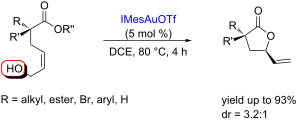
- [52] and entry 15 in Table 1). Regeneration of the active cationic gold species or assistance in the formation of the reactive allylic carbocation intermediate II are key steps in which the Brønsted cocatalysis could be exerted [52]. Finally, the mandatory role of enol tautomer (or gold–enolate


A practical microreactor for electrochemistry in flow
Beilstein J. Org. Chem. 2011, 7, 1108–1114, doi:10.3762/bjoc.7.127

- trapped immediately after generation. In the "cation flow" method, a carbocation is generated continuously in a flow system by low temperature electrolysis. The generation of the cation can be monitored by a FTIR spectrometer in the flow system. The electrochemically generated N-acyliminium ions can then


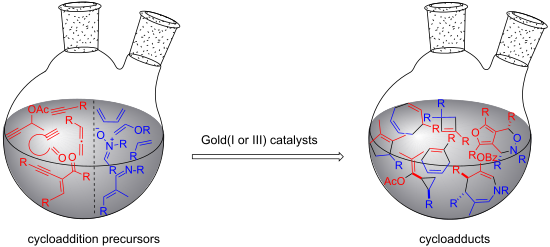
Recent developments in gold-catalyzed cycloaddition reactions
Beilstein J. Org. Chem. 2011, 7, 1075–1094, doi:10.3762/bjoc.7.124
- give a stabilized carbocation XXVI, usually a benzylic cation (Scheme 24). A subsequent ring closure through the carbon adjacent to the gold atom provides the final cycloadduct 46, featuring a four membered ring carbocycle. Importantly, these reactions could be rendered enantioselective with catalysts
- ]. The authors propose stepwise mechanisms proceeding through a common cationic intermediate XXVI, which can evolve into the cyclopentyl cycloadducts via the species XXXI. Alternatively, when the benzylic carbocation in XXVI is intercepted by the carbon atom bearing the gold atom, the (2 + 2) adduct 46


Recent advances in the gold-catalyzed additions to C–C multiple bonds
Beilstein J. Org. Chem. 2011, 7, 897–936, doi:10.3762/bjoc.7.103
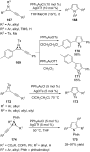
- alcohols has been developed by utilizing NaAuCl4. The benzylic and secondary alcohols (55 and 58) worked well under mild conditions with low catalyst loading (Scheme 11). The chiral benzyl alcohol 60 gave racemic ether 61, which suggested the intermediacy of a carbocation. Ye et al. reported an expedient








Gold-catalyzed propargylic substitutions: Scope and synthetic developments
Beilstein J. Org. Chem. 2011, 7, 866–877, doi:10.3762/bjoc.7.99

- , alcohols, thiols, electron rich aromatic compounds), and showed that gold probably acts as a Lewis acid to promote the formation of a stabilized propargylic carbocation intermediate [23][24]. A related reaction was subsequently reported by Dyker [25] in 2006, using azulene and 1,3-dimethoxybenzene in
- allenyl(cyano)cuprate on butyraldehyde [71][72][73], was reacted with allyltrimethylsilane. The reaction was totally regioselective for the propargylic site. Different reaction paths can be expected: i) The formation of a propargylic carbocation that can be attacked by allyltrimethylsilane or vicinal




When gold can do what iodine cannot do: A critical comparison
Beilstein J. Org. Chem. 2011, 7, 847–859, doi:10.3762/bjoc.7.97
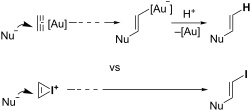
- proceed over indene formation, since it is required to stabilize the intermediate carbocation. As before, the only difference in the product structure is whether H or I has been incorporated. Sanz and co-workers reported in 2010 that indenes were formed from o-alkynylstyrenes in the presence of AuCl(PPh3
- ]. This reaction proceeds via an exceptional 5-endo halocyclization, which likely results from the stability of the tertiary carbocation, since only H at the C1-position rendered the enyne unreactive under the conditions used (excess NIS, CH2Cl2 at reflux). From a synthetic point of view, the development
- , the reaction yield was considerably reduced. Again in this case, product formation is best understood by assuming the intermediate formation of the most stabilized carbocation. Surprisingly, the analogous gold-catalyzed process has not been described up to now; instead, 3-silyloxy-1,5-enynes with a




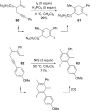


Isotopic labelling studies for a gold-catalysed skeletal rearrangement of alkynyl aziridines
Beilstein J. Org. Chem. 2011, 7, 839–846, doi:10.3762/bjoc.7.96
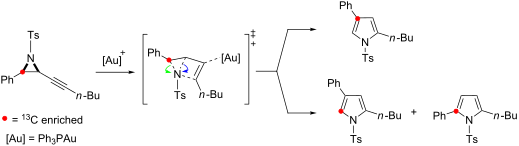
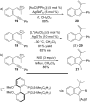
- , either by solvent stabilisation or the formation of a closer contact ion pair, and/or by more basic solvents/counter ions assisting proton elimination [18][26][27]. However, for the proposed skeletal rearrangement mechanism to be valid, gold bound carbocation B must be prone to undergo a relatively rare


Synthetic applications of gold-catalyzed ring expansions
Beilstein J. Org. Chem. 2011, 7, 767–780, doi:10.3762/bjoc.7.87
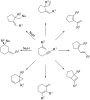
- and trapping of the carbocation by the sulfonamide. Subsequent intramolecular hydroamination gave the pyrrolidine products. 1.3 Oxiranes As an oxophilic Lewis acid, gold can activate epoxides towards the attack of nucleophiles. A good example is the AuCl3 catalyzed ring opening of aryl alkyl epoxide
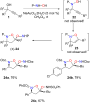
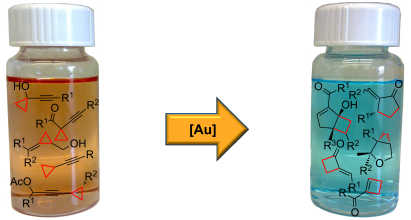
- cyclopropyl ring opening to give carbocation 45, which is then trapped in the presence of an external nucleophile to give, after protonolysis, furans 43 (Scheme 14, path a). Alternatively, gold can complex both of the unsaturated moieties as in 46, triggering the cyclopropyl ring opening through an
- . Cyclopropanes 85a are generated in situ by intermolecular cyclopropanation of enyne 84 and a carbene resulting from the rearrangement of propargyl ester 83. When tertiary propargyl esters are used, the 5-endo-dig cyclization generates the carbocation 89. Migration of the pivaloyloxy group affords the allylic


Alkene selenenylation: A comprehensive analysis of relative reactivities, stereochemistry and asymmetric induction, and their comparisons with sulfenylation
Beilstein J. Org. Chem. 2011, 7, 744–758, doi:10.3762/bjoc.7.85
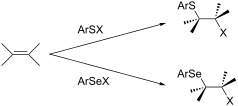
- anti stereospecificity [58][59]. The nucleophile attacks the more substituted carbon in the seleniranium ion (Scheme 1), unless that carbon bears bulky groups, such as tert-butyl or cyclohexyl [55][56] or unless the open carbocation is stabilized, e.g., by an aryl group or a heteroatom [60][61][62][63


When cyclopropenes meet gold catalysts
Beilstein J. Org. Chem. 2011, 7, 717–734, doi:10.3762/bjoc.7.82
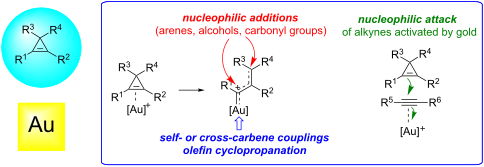
- undergo subsequent ring-opening to produce an organogold species that can be viewed as a hybrid between a gold-stabilized allylic carbocation B and a gold carbene C. The organogold carbenoid species generated by the ring-opening of cyclopropenes can participate in a variety of reaction types such as
- indicate that a secondary gold-substituted carbocation (at C1) is as stable as a tertiary dimethyl-substituted carbocation (at C3) and that the magnitude of stabilization from the gold moiety increases with increasing electrophilicity of the allylic cation. Toste et al. investigated the effect of the
- ligand on the structure of gold-substituted 3,3-dimethyl allyl cations of type D. Increasing trans σ-donation from the ligand and strongly π-acidic ligands such as phosphites (decreasing back π-donation from gold to C1) led to a longer C1–Au bond and hence a more carbocation-like character for the




Asymmetric synthesis of tertiary thiols and thioethers
Beilstein J. Org. Chem. 2011, 7, 582–595, doi:10.3762/bjoc.7.68
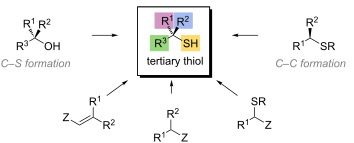
- -withdrawing nature of the substituent inhibits SN1 dissociation and carbocation formation, and the planar ester group poses minimal steric hindrance towards approach of the nucleophile. Yields of substitution in α-aryl-α-hydroxy esters 5 are poor with a significantly decreased enantiomeric ratio in the








Kinetic evaluation of the solvolysis of isobutyl chloro- and chlorothioformate esters
Beilstein J. Org. Chem. 2011, 7, 543–552, doi:10.3762/bjoc.7.62
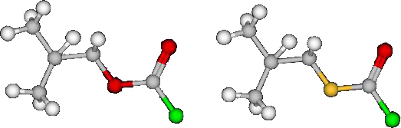
- –solvolysis of 4, points to strong rear-side nucleophilic solvation of the developing resonance-stabilized carbocation. Another useful tool for mechanistic studies is the l/m ratio. We have found [17] that values >2.7 are typical of solvolytic mechanisms proceeding by an addition–elimination pathway with the
- resonance-stabilized carbocation intermediate is more efficient for isopropyl chlorothioformate (5) when compared to 2, as the presence of the additional carbon pushes the isopropyl group out of the plane of the thioether atom in 2' (Figure 1). This opinion is supported by an increase seen in the l/m ratio
- 1 solvolyzes by a bimolecular addition–elimination (AN + DN) process due to the inductive ability of the isobutoxy group, whereas in the four aqueous TFE mixtures a predominant unimolecular SN1 mechanism with rear-side solvation of the developing carbocation is suggested. For 2, due to a more


Molecular rearrangements of superelectrophiles
Beilstein J. Org. Chem. 2011, 7, 346–363, doi:10.3762/bjoc.7.45
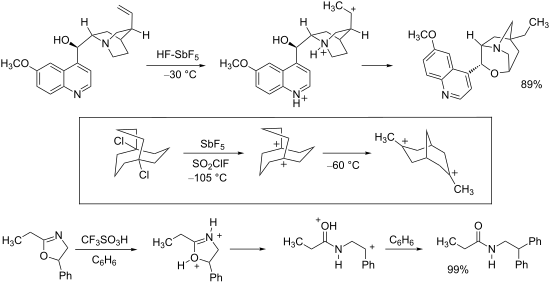
- observed. It is proposed that the adjacent ammonium group decreases the basicity of the C1–C2 bond in 24, leading to protonation at the more distant C2–C3 bond. The final product is formed by reaction of benzene at the carbocation site. A number of superelectrophilic ring opening reactions are followed by
- dehydrogenation. For example, 2-decalone (51) (primarily trans) was reacted with HF-SbF5-CCl4 at 0 °C to give products 52 and 53 in 25% and 12% yields, respectively (Scheme 12). The proposed mechanism involves protonation and hydride abstraction to give superelectrophile 54. It is notable that the carbocation
- forms in the 6- or 7-position on the decalone ring, as this provides maximum separation of the cationic centers. In accord with other carbocation rearrangements, the superelectrophile 54 (a 2° carbocation) isomerizes to 56 (a 3° carbocation). This likely occurs through the ring-fused, protonated


Anion–π interactions influence pKa values
Beilstein J. Org. Chem. 2011, 7, 320–328, doi:10.3762/bjoc.7.42
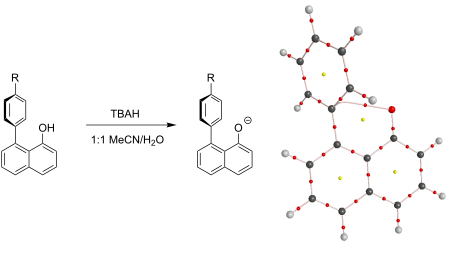
- indicated that aromatics in close proximity to an incipient carbocation could accelerate tosylation reactions by up to 1800-fold [21]. Similarly, neighbouring aromatics have been shown to have an effect on radical reactions proceeding through a polarised transition state [22]. Clearly there is excellent


β-Hydroxy carbocation intermediates in solvolyses of di- and tetra-hydronaphthalene substrates
Beilstein J. Org. Chem. 2010, 6, 1035–1042, doi:10.3762/bjoc.6.118
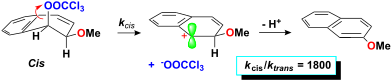
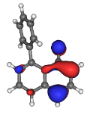
- formation of a β-hydroxynaphthalenium carbocation with a conformation in which a C–OH occupies an axial position β to the carbocation centre preventing stabilisation of the carbocation by C–H hyperconjugation, which would occur in the conformation initially formed from the cis isomer. It is suggested that C
- product (naphthol) is expected to be too fast [6][7]. This conclusion is confirmed by the lack of saturation of the effect and the normal salt effects observed for sodium acetate and sodium azide, which would be expected to trap a carbocation intermediate more effectively than the trichloroacetate anion
- . The normal salt effect exerted by the sodium azide also confirms that the solvolysis proceeds via the formation of a carbocation intermediate rather than by an SN2 mechanism. 1-Chloro- and 1-chloro-2-hydroxy-1,2-tetrahydronaphthalenes Rate constants for solvolysis of cis- and trans-1-chloro-2-hydroxy





