


Search results
Search for "copper-catalyzed" in Full Text gives 286 result(s) in Beilstein Journal of Organic Chemistry. Showing first 200.
Multicomponent reactions: A simple and efficient route to heterocyclic phosphonates
Beilstein J. Org. Chem. 2016, 12, 1269–1301, doi:10.3762/bjoc.12.121
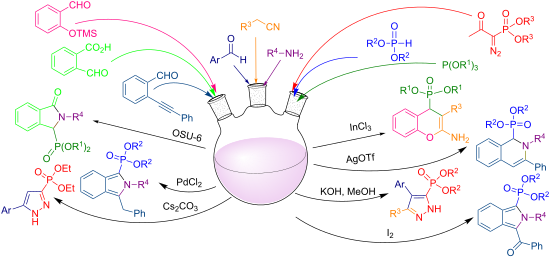
- multicomponent reactions Transition metals, especially Pd and Cu, are well-known catalysts for multicomponent reactions. Carbopalladation reactions of allenes, alkynes and carbon monoxide are very important processes in multicomponent syntheses. Additionally, copper-catalyzed multicomponent reactions such as


Palladium-catalyzed picolinamide-directed iodination of remote ortho-C−H bonds of arenes: Synthesis of tetrahydroquinolines
Beilstein J. Org. Chem. 2016, 12, 1243–1249, doi:10.3762/bjoc.12.119
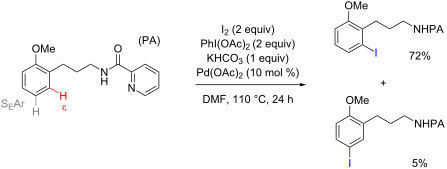
- γ-arylpropylpicolinamides were then selectively iodinated at the remote ε-C(sp2)−H position via a rarely precedented PA-directed electrophilic aromatic substitution (SEAr) reaction (Scheme 1, reaction 2) [21][22]. Copper-catalyzed intramolecular C−N cyclization of these ortho-iodinated intermediates


Catalytic asymmetric synthesis of biologically important 3-hydroxyoxindoles: an update
Beilstein J. Org. Chem. 2016, 12, 1000–1039, doi:10.3762/bjoc.12.98
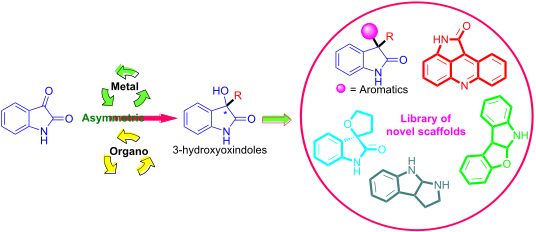
- increasing attention in the last decades and have been successfully employed in various transformations. In 2014, Cai and co-workers reported a copper-catalyzed asymmetric direct addition of acetonitrile to isatins in the presence of K2CO3 (Scheme 4) [16]. The reactions were conducted in acetonitrile using


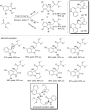


The synthesis of functionalized bridged polycycles via C–H bond insertion
Beilstein J. Org. Chem. 2016, 12, 985–999, doi:10.3762/bjoc.12.97
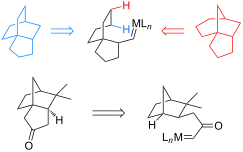
- limitations. Bridged rings from N–H bond insertions. The synthesis of deoxystemodin. A model system for ingenol. Formal synthesis of platensimycin. The formal synthesis of gerryine. Copper-catalyzed bridged-ring synthesis. Factors influencing insertion selectivity. Bridged-lactam formation. The total




Bi- and trinuclear copper(I) complexes of 1,2,3-triazole-tethered NHC ligands: synthesis, structure, and catalytic properties
Beilstein J. Org. Chem. 2016, 12, 863–873, doi:10.3762/bjoc.12.85
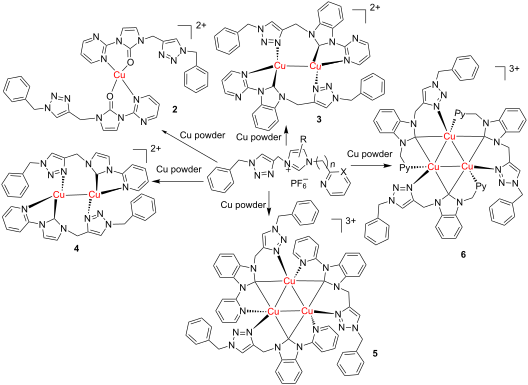
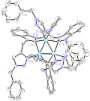
- , 134.68, 133.85, 129.16, 128.98, 128.81, 128.12, 125.04, 124.62, 124.35, 123.79, 110.58, 110.26, 54.49, 51.29, 40.72; Anal. calcd for C69H60Cu3F18N18P3: C, 46.90; H, 3.42; Cu, 10.79; N, 14.27; found: C, 46.35; H, 3.31; N, 13.95. General procedure for the copper-catalyzed CuAAC reaction: Analogously as



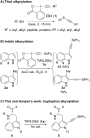
Gold-catalyzed direct alkynylation of tryptophan in peptides using TIPS-EBX
Beilstein J. Org. Chem. 2016, 12, 745–749, doi:10.3762/bjoc.12.74
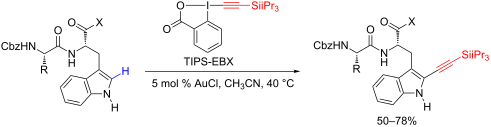
- blocks in synthetic organic chemistry. Recently, they have attracted also strong interest for applications in materials science and chemical biology [1]. One of the most important transformations of alkynes is the copper-catalyzed [3 + 2] cycloaddition with azides, which can be performed under mild



Opportunities and challenges for direct C–H functionalization of piperazines
Beilstein J. Org. Chem. 2016, 12, 702–715, doi:10.3762/bjoc.12.70
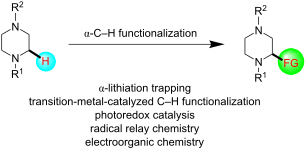
- enantioselective versions of these transformations. Copper-catalyzed C–H oxidation In an effort to establish a chemical toolkit to rapidly deliver oxidized drug metabolites, Touré, Sames and co-workers have discovered that piperazines could be oxidized to diketopiperazines as well as ring fragmented products under
- )piperazines by Murai et al. in 1997 [52]. Ta-catalyzed hydroaminoalkylation of piperazines by Schafer et al. in 2013 [55]. Photoredox catalysis for α-C–H functionalization of piperazines by MacMillan et al. in 2011 and 2014 [63][65][66]. Copper-catalyzed aerobic C–H oxidation of piperazines by Touré, Sames


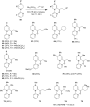


Creating molecular macrocycles for anion recognition
Beilstein J. Org. Chem. 2016, 12, 611–627, doi:10.3762/bjoc.12.60
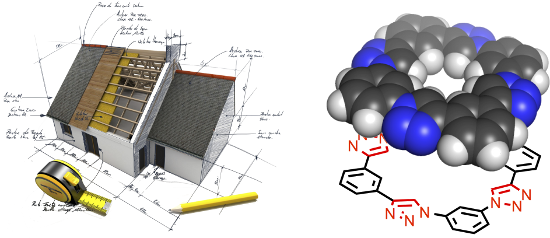
- house is just as satisfying as that of a new molecule and often takes the same amount of time (left: Franck Boston copyright 123RF.com). Timeline of anion-binding macrocycles. Click chemistry’s copper-catalyzed azide–alkyne cycloaddition (CuAAC) forms 1,2,3-triazoles that stabilize anions by CH hydrogen




Copper-mediated arylation with arylboronic acids: Facile and modular synthesis of triarylmethanes
Beilstein J. Org. Chem. 2016, 12, 496–504, doi:10.3762/bjoc.12.49
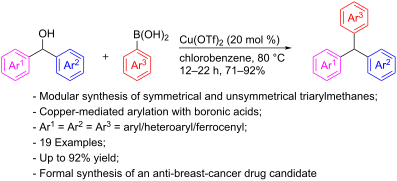
- . Recently, we reported a copper-catalyzed C–C bond formation by substitution of the labile C(4)SMe group in 4H-chromenes or C(3)–OH in isoindolinones with aryl/alkenyl groups by employing the corresponding boronic acids [51][52]. Continuing these efforts, we designed a copper-catalyzed synthesis of a
- ). Structure of 11l was readily confirmed on the basis of 13C NMR and DEPT-135 spectra. We surmise that the initially formed, transmetallated product 18 rearranged to the more stable 18a before it could react with diphenylmethanol (9a, Scheme 4). The scope of the copper-catalyzed coupling reaction of
- diarylmethanols 9b–d with phenylboronic acid (10a) was explored by changing one or both of the aryl rings in the diarylmethanol (Table 3) [62]. The copper-catalyzed reaction of phenyl(pyren-1-yl)methanol (9b) with phenylboronic acid (10a) was very facile and the product triarylmethane 11n was obtained in 72


Base metal-catalyzed benzylic oxidation of (aryl)(heteroaryl)methanes with molecular oxygen
Beilstein J. Org. Chem. 2016, 12, 144–153, doi:10.3762/bjoc.12.16
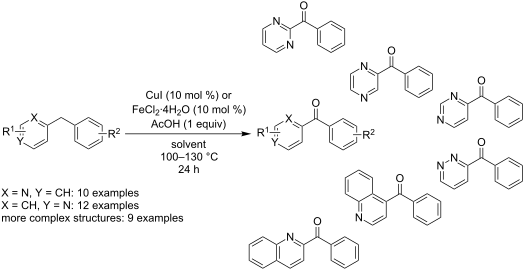
- with molecular oxygen can be used to perform benzylic oxidations [20]. The aerobic copper-catalyzed α-oxygenation of 2-arylthioacetamides was reported by Moghaddam [21]. In this transformation CuCl2 and K2CO3 in DMF were used to produce α-ketoarylthioacetamides. The coupling of 2-arylacetaldehydes with
- -benzylpyridines (1).a Iron and copper-catalyzed aerobic oxidation of pyridine-substituted 2-benzylpyridines (3).a The influence of the purification method on the amount of Fe impurities in papaveraldine (15) after oxidation. An extended solvent screening for the base metal-catalyzed aerobic oxidation reaction.a

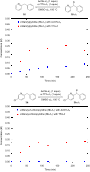


Copper-catalyzed intermolecular oxyamination of olefins using carboxylic acids and O-benzoylhydroxylamines
Beilstein J. Org. Chem. 2016, 12, 22–28, doi:10.3762/bjoc.12.4
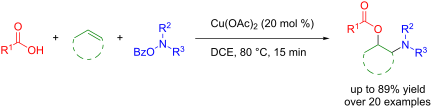
- Brett N. Hemric Qiu Wang Department of Chemistry, Duke University, Durham, NC, USA 10.3762/bjoc.12.4 Abstract This paper reports a novel approach for the direct and facile synthesis of 1,2-oxyamino moieties via an intermolecular copper-catalyzed oxyamination of olefins. This strategy utilizes O
- oxygen sources, such as TEMPO and acetate. Herein, we envisioned that a copper-catalyzed intermolecular olefin oxyamination could be achieved using O-acylhydroxylamines as an electrophilic amino precursor [35][36][37][38][39] and carboxylic acids as a nucleophilic oxygen source (Scheme 1E). The proposed
- transformation, integrating an electrophilic amination with a nucleophilic oxygenation, builds upon our recent development in copper-catalyzed olefin difunctionalization, such as copper-catalyzed diamination [40] and amino lactonization [34]. This strategy overcomes common issues of chemo- and regioselectivity


Copper-catalyzed aminooxygenation of styrenes with N-fluorobenzenesulfonimide and N-hydroxyphthalimide derivatives
Beilstein J. Org. Chem. 2015, 11, 2721–2726, doi:10.3762/bjoc.11.293
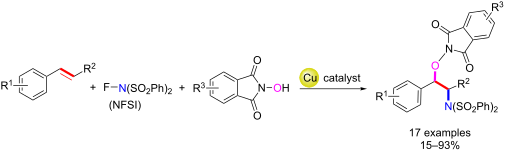
- Yan Li Xue Zhou Guangfan Zheng Qian Zhang Department of Chemistry, Northeast Normal University, Changchun 130024, China 10.3762/bjoc.11.293 Abstract A copper-catalyzed aminooxygenation reaction of styrenes with N-fluorobenzenesulfonimide and N-hydroxyphthalimide derivatives has been developed
- modes of NFSI [37][38][39][40][41], especially as a nitrogen-centred radical. In this context, we have realized copper-catalyzed benzylic sp3 C–H amination [42], aminative multiple functionalization of alkynes [43], diamination, aminocyanation [44] and aminofluorination of alkenes [45], as well as
- amination of allenes [46]. Encouraged by these results, we try to develop copper-catalyzed aminooxygenation of alkenes by using NFSI. Herein, we report a simple and efficient copper-catalyzed three-component aminooxygenation reaction of styrenes with NFSI and N-hydroxyphthalimide (NHPI) derivatives (Scheme




Enantioselective additions of copper acetylides to cyclic iminium and oxocarbenium ions
Beilstein J. Org. Chem. 2015, 11, 2696–2706, doi:10.3762/bjoc.11.290
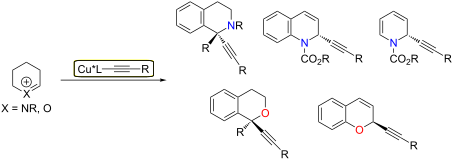
- Jixin Liu Srimoyee Dasgupta Mary P. Watson Department of Chemistry and Biochemistry, University of Delaware, Newark, DE 19716, USA 10.3762/bjoc.11.290 Abstract The development of enantioselective, copper-catalyzed alkynylations of cyclic iminium and oxocarbenium ions is reviewed. The use of
- -based catalysts [9][10][11][12][13][14][15]. Among these, chiral copper catalysts have been used with remarkable success in the alkynylation of cyclic iminium ion and oxocarbenium ion intermediates. This review will focus on the development of these enantioselective, copper-catalyzed alkynylations
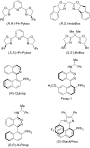
- , highlighting both the accomplishments and the future work needed in this important area. Throughout the discussion below, it is clear that there are privileged ligand architectures of these copper-catalyzed alkynylations. High enantioselectivities have been achieved with pyridine bis(oxazoline) (Pybox), bis





Carbon–carbon bond cleavage for Cu-mediated aromatic trifluoromethylations and pentafluoroethylations
Beilstein J. Org. Chem. 2015, 11, 2661–2670, doi:10.3762/bjoc.11.286
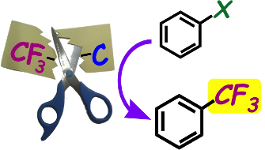
- − sources for perfluoroalkylation reactions. Furthermore, CF3Cu and C2F5Cu were utilized for oxidative perfluoroalkylation reactions of arylboronic acids [44][45] (Scheme 13). Copper-catalyzed group transfer from fluoral derivatives Catalytic systems in organic synthesis are desirable from an
- environmentally benign point of view. With regard to aromatic trifluoromethylation, the effort is devoted to reduce the copper reagents employed in the reactions. Copper-catalyzed aromatic trifluoromethylation with CF3SiMe3 was developed using phen as a ligand [50]. On the other hand, Billard and Langlois et al
- . described silylated hemiaminals of fluoral (trifluoroacetaldehyde) that act as a nucleophilic trifluoromethyl source for electrophiles such as aldehydes and ketones [51][52] (Scheme 14). Amii and co-workers reported a copper-catalyzed aromatic trifluoromethylation from silylated hemiaminals of fluoral [53


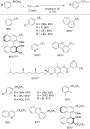


Recent advances in copper-catalyzed asymmetric coupling reactions
Beilstein J. Org. Chem. 2015, 11, 2600–2615, doi:10.3762/bjoc.11.280
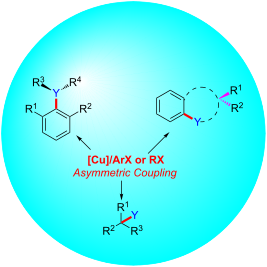
- construction of heteroatom-containing ring systems. This review summarizes the recent progress in copper-catalyzed asymmetric coupling reactions for the formation of C–C and carbon–heteroatom bonds. Keywords: asymmetric; carbon–heteroatom bond; copper; coupling; Introduction Copper-mediated coupling
- ][8][9][10][11][12][13]. Despite the progress in recent years, the research on asymmetric coupling reactions is still relatively rare. In this review, we highlight the developments in copper-catalyzed asymmetric coupling reactions, including the asymmetric coupling of aryl halides with nucleophiles
- for the formation of carbon–carbon and carbon–heteroatom bonds as well as the asymmetric allylic substitution with a wide range of nucleophiles for the formation of C–C and carbon–heteroatom bonds. Review Copper-catalyzed coupling of aryl halides with nucleophiles Chiral auxiliary-induced aryl C–C


Synthesis of bi- and bis-1,2,3-triazoles by copper-catalyzed Huisgen cycloaddition: A family of valuable products by click chemistry
Beilstein J. Org. Chem. 2015, 11, 2557–2576, doi:10.3762/bjoc.11.276
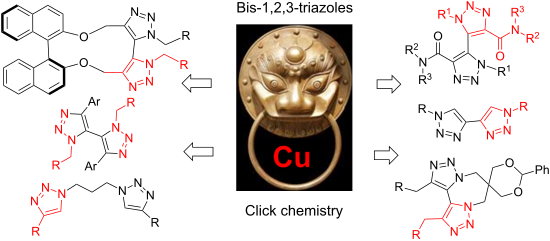
- , powder or nanoparticles) in the presence or absence of Cu(II) in aqueous media also provides the key active Cu(I) in some CuAAC reactions. As an important supplement to the classic Huisgen cycloaddition promoted by copper catalysis, this review will deal with the copper-catalyzed syntheses of bi- and
- low yield when the alkynes or azides were linked directly with a hindered group or an aromatic moiety. In 2012, Xu and co-workers disclosed that both the secondary and primary amine-functionalized polysiloxanes were good ligands for the copper-catalyzed Huisgen reaction of organic azides and alkynes
- , Mohammed and co-workers selected the commercially available D-mannitol 38 as the starting material [33] in this reaction. After protection and introduction of the two alkyne groups to give dialkyne 39, the copper-catalyzed cycloaddition occurred smoothly with the different long chain alkyl azides under the




Copper-catalyzed stereoselective conjugate addition of alkylboranes to alkynoates
Beilstein J. Org. Chem. 2015, 11, 2444–2450, doi:10.3762/bjoc.11.265

- Takamichi Wakamatsu Kazunori Nagao Hirohisa Ohmiya Masaya Sawamura Department of Chemistry, Faculty of Science, Hokkaido University, Sapporo 060-0810, Japan 10.3762/bjoc.11.265 Abstract A copper-catalyzed conjugate addition of alkylboron compounds (alkyl-9-BBN, prepared by hydroboration of
- and their compatibility with a multitude of functional groups, organoboron compounds are especially popular organometallic reagents. Recently, Yamamoto and co-workers developed copper-catalyzed conjugate additions of aryl- and allylboron compounds to alkynoates [9][10], but alkylboron compounds have
- not been used for these methods [11]. As related studies we reported earlier the copper-catalyzed conjugate addition of alkylboranes (alkyl-9-BBN) to imidazole-2-yl α,β-unsaturated ketones [12][13][14] and the copper-catalyzed three-component coupling with alkylboranes, alkynoates, and tributyltin


Copper-catalyzed asymmetric conjugate addition of organometallic reagents to extended Michael acceptors
Beilstein J. Org. Chem. 2015, 11, 2418–2434, doi:10.3762/bjoc.11.263
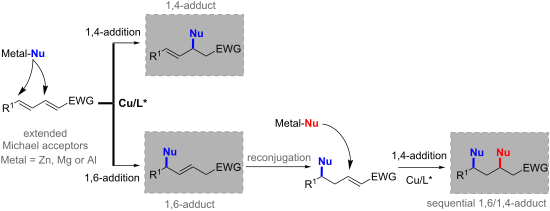
- Chimie, 8 Rue de l’Ecole Normale, 34296 Montpellier Cedex 5, France 10.3762/bjoc.11.263 Abstract The copper-catalyzed asymmetric conjugate addition (ACA) of nucleophiles onto polyenic Michael acceptors represents an attractive and powerful methodology for the synthesis of relevant chiral molecules, as
- provided dramatic breakthroughs during the last two decades. This review aims to describe the early examples and recent advances in copper-catalyzed asymmetric conjugate additions of organometallic reagents to extended Michael acceptors. First, seminal reports dealing with the reactivity of extended
- co-workers discovered in 2001 the first example of copper-catalyzed enantioselective 1,6-conjugate addition [16]. Using phosphoramidite ligand (S,R,R)-L1 and Cu(OTf)2 as the copper source, diethylzinc was added to dienone 16 with a full 1,6-regioselectivity, and an ee of 35% (Scheme 1). In 2006


Copper-catalyzed arylation of alkyl halides with arylaluminum reagents
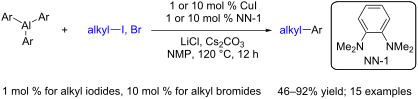
Beilstein J. Org. Chem. 2015, 11, 2400–2407, doi:10.3762/bjoc.11.261


Cu(I)-catalyzed N,N’-diarylation of natural diamines and polyamines with aryl iodides
Beilstein J. Org. Chem. 2015, 11, 2297–2305, doi:10.3762/bjoc.11.250

- iodides in the copper-catalyzed amination of di- and polyamines providing mainly N-monoaryl derivatives [31]. On the basis of our recent investigations, in order to obtain N,N’-diaryl derivatives, we employed the most suitable catalytic systems, CuI/L-proline (L1) and CuI/2-(isobutyryl)cyclohexanone (L2
- )-catalysis conditions is a more challenging task than N,N’-diarylation of diamines because copper-catalyzed amination is less selective than palladium-catalyzed coupling. In view of earlier obtained data we used the CuI/L1/EtCN catalytic system for the diarylation of the triamine 5 (Scheme 5, Table 4). In


Recent developments in copper-catalyzed radical alkylations of electron-rich π-systems
Beilstein J. Org. Chem. 2015, 11, 2278–2288, doi:10.3762/bjoc.11.248
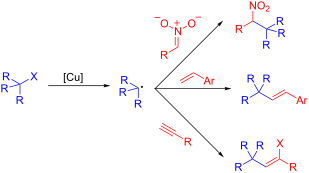
- Kirk W. Shimkin Donald A. Watson Department of Chemistry and Biochemistry, University of Delaware, Newark, Delaware 19716, United States 10.3762/bjoc.11.248 Abstract Recently, a number of papers have emerged demonstrating copper-catalyzed alkylation reactions of electron-rich small molecules. The
- the most common and effective [14]. Recently, several groups, including our own, have developed copper-catalyzed alkylation reactions of molecules containing electron-rich π-systems. These reactions all utilize alkyl halides as the alkylating agent, and deliver reactivity that is not observed in the
- non-catalyzed reactions. Mechanistically, it is believed that these reactions all share features of classic ATR reactions, but are distinct as they deliver simple alkylation products. These transformations represent a new paradigm in copper-catalyzed radical reactions. This article will highlight


Copper catalysis in organic synthesis
Beilstein J. Org. Chem. 2015, 11, 2252–2253, doi:10.3762/bjoc.11.244
- also an essential element, responsible for important biological processes. The title of this Thematic Series published in the Beilstein Journal of Organic Chemistry is “Copper catalysis in organic synthesis”. A web of scienceTM topic search of “copper-catalyzed synthesis” indicated over 500 papers had
- . Some of the most highly cited papers of all time on this topic are reviews on conjugate addition, cross-coupling, and [3 + 2] “Click” reaction applied to bioconjugation. The growth in copper-catalyzed organic reactions may be driven by a couple of factors. First, copper chemistry is incredibly diverse
- field of copper-catalysis from 7 countries make up this Thematic Series, “Copper catalysis in organic synthesis”. Contributions include authoritative reviews on the latest developments in copper-catalyzed Click applications, C–N cross-coupling, C–H functionalization, trifluoromethylations, asymmetric
Recent advances in copper-catalyzed C–H bond amidation
Beilstein J. Org. Chem. 2015, 11, 2209–2222, doi:10.3762/bjoc.11.240

- copper catalysis is in the C–N bond formation by using carbon sources and nitrogen functional groups such as amides. In this review, the recent progress in the amidation reactions employing copper-catalyzed C–H amidation is summarized. Keywords: amidation; C–H bond; cascade reactions; Copper catalysis
- to be capable of catalyzing the C–H amidation reactions, copper is particularly advantageous because of the low cost, low toxicity and broad tolerance of copper catalysts. Therefore, the present review summarizes the advances on the copper-catalyzed C–H activation-based amidation (including related
- ] reported the copper-catalyzed, tert-butyl hydroperoxide (TBHP)-assisted C–H amidation of tertiary amines 1. By heating at 80 °C, the C–H bond in dimethylaniline underwent direct amidation to provide products 3 in the presence of amides 2. On the other hand, the dephenylation transformation via C–C bond


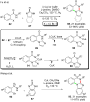


Molecular-oxygen-promoted Cu-catalyzed oxidative direct amidation of nonactivated carboxylic acids with azoles
Beilstein J. Org. Chem. 2015, 11, 2158–2165, doi:10.3762/bjoc.11.233
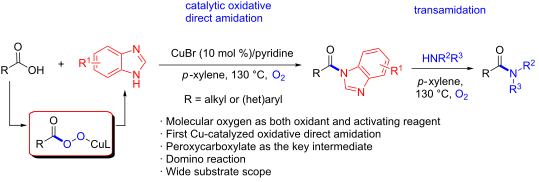
- Sciences, Beijing, 100190, P. R. China 10.3762/bjoc.11.233 Abstract A copper-catalyzed oxidative direct formation of amides from nonactivated carboxylic acids and azoles with dioxygen as an activating reagent is reported. The azole amides were produced in good to excellent yields with a broad substrate
- [25][26]. Currently, copper-catalyzed, aerobic, oxidative transformations with dioxygen as the sole oxidant have emerged as a useful and powerful strategy to construct carbon–carbon and carbon–heteroatom bonds [27][28][29]. It is known that Cu(II) superoxide species are usually reported to be formed
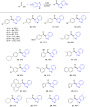
- ), inexpensive and readily available pyridine was employed as both the ligand and base in our case. Results and Discussion Our initial exploration commenced with benzoic acid (1) and benzimidazole (2) as the model substrates to investigate the copper-catalyzed oxidative direct amidation reaction (Table 1). The




Coupling of α,α-difluoro-substituted organozinc reagents with 1-bromoalkynes
Beilstein J. Org. Chem. 2015, 11, 2145–2149, doi:10.3762/bjoc.11.231

- . Conclusion In summary, a method for the copper-catalyzed coupling of α,α-difluoro-substituted organozinc compounds with 1-bromoalkynes has been developed. The reaction is performed under mild conditions affording gem-difluoro-substituted alkynes in good yields. Reaction of organozinc compounds. Proposed





