Search results
Search for "intermediates" in Full Text gives 1507 result(s) in Beilstein Journal of Organic Chemistry. Showing first 200.
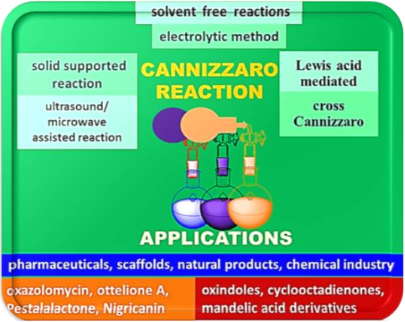
Synthetic applications of the Cannizzaro reaction
Beilstein J. Org. Chem. 2024, 20, 1376–1395, doi:10.3762/bjoc.20.120
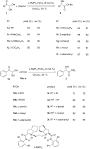
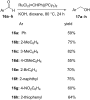
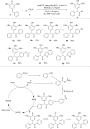
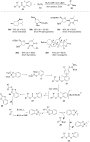
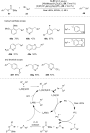
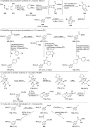
- reaction representing analogous derivatives related to pestalachloride A. The mechanistic transformation could be illustrated schematically following the transformation from 58 to 61 through the intermediates 59 and 60. The natural pestalone 62 when subjected to a photo-induced transformation leads to

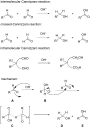


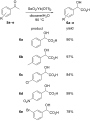

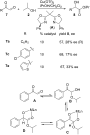




Generation of alkyl and acyl radicals by visible-light photoredox catalysis: direct activation of C–O bonds in organic transformations
Beilstein J. Org. Chem. 2024, 20, 1348–1375, doi:10.3762/bjoc.20.119
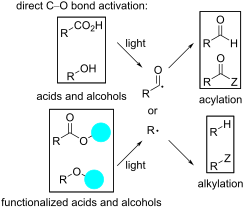
- catalysis In recent times, visible-light-mediated photoredox chemistry has evolved as a unique tool for various organic transformations. In contrast to traditional catalysis, the photochemical process uses an electron or energy transfer mechanism to form reactive intermediates. Typically, a photocatalyst is
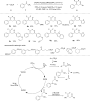
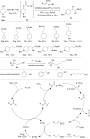
- acyl radical. This acyl radical eventually leads to the formation of expected product. Reactions involving alkyl radical obtained via C–O bond cleavage C–O bond activation of prefunctionalized alcohols Alkyl radicals play a crucial role as intermediates in various chemical transformations involving C–H








Transition-metal-catalyst-free electroreductive alkene hydroarylation with aryl halides under visible-light irradiation
Beilstein J. Org. Chem. 2024, 20, 1327–1333, doi:10.3762/bjoc.20.116
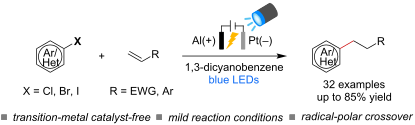
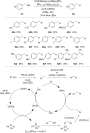
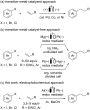
- intermediates through a single-electron transfer process [26][27][28][29][30][31]. In particular, electroreductive transformations have recently received renewed attention from modern synthetic chemists as a safer protocol than conventional methods using chemical reductants such as metal hydride species [32][33
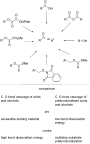
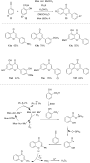
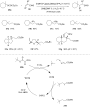
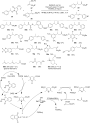
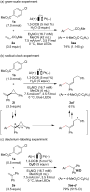
- hydroarylation product was not observed (Scheme 3b). This result strongly supported the involvement of radical intermediates in the present transformation. Next, a deuterium-labeling experiment was conducted to elucidate the H-source of this reaction (Scheme 3c). The reaction of 1a and 2e in MeCN with D2O


Computation-guided scaffold exploration of 2E,6E-1,10-trans/cis-eunicellanes
Beilstein J. Org. Chem. 2024, 20, 1320–1326, doi:10.3762/bjoc.20.115

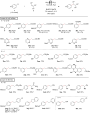
- chemically-induced cationic cyclization mechanisms, we performed quantum chemical calculations [mPW1PW91/6–31+G(d/p)/SMD(chloroform)] [13][14][15][16][17][18][19][20] to obtain the relative free energies of the cationic intermediates and transition states that interconvert them, as well as the relative free
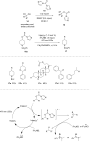
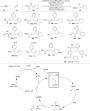
- epoxide 9, but the similar reaction with 2 yields gersemienol 8. Isolation yields are provided. (B and C) Results of DFT calculations on the protonation-induced cyclizations of 1 and 2. The energies of the cationic intermediates (italicized values) are not on the same energy scale as for the substrates


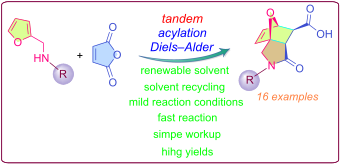
Sustainable tandem acylation/Diels–Alder reaction toward versatile tricyclic epoxyisoindole-7-carboxylic acids in renewable green solvents
Beilstein J. Org. Chem. 2024, 20, 1308–1319, doi:10.3762/bjoc.20.114
- of hydrocarbons and a variety of intermediates that are needed by a wide range of industries [6][7][8][9][10][11][12][13][14]. Worldwide, vegetable oils are mainly produced for food and feed purposes, but a small number of specific oils are also produced as a source of materials for industrial
- applications [15][16]. These oils are of increasing interest for the production of a wide range of polymeric materials [17][18][19][20][21][22][23], drug delivery systems [24][25][26][27][28][29], less toxic anticancer drugs [30][31][32][33] and intermediates suitable for various organic transformations [14
- reaction medium increases, the size of these lamellar units decreases, increasing the ability to dissolve Diels–Alder components and intermediates. It should be noted that the hydrophobicity of triglycerides is much higher than that of aromatic solvents such as benzene and toluene. For comparison with


Oxidative hydrolysis of aliphatic bromoalkenes: scope study and reactivity insights
Beilstein J. Org. Chem. 2024, 20, 1286–1291, doi:10.3762/bjoc.20.111
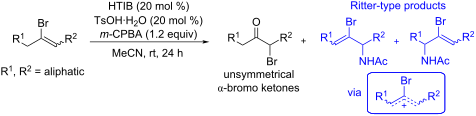
- heterocyclic compounds [20][21][22]. Particularly dialkyl bromoketones have been utilized in natural product synthesis [23][24][25], also as a precursor to reactive oxyallyl cation intermediates [26][27][28], and for their photochemical reactions [29]. However, the direct halogenation of unsymmetrical ketones


Domino reactions of chromones with activated carbonyl compounds
Beilstein J. Org. Chem. 2024, 20, 1256–1269, doi:10.3762/bjoc.20.108
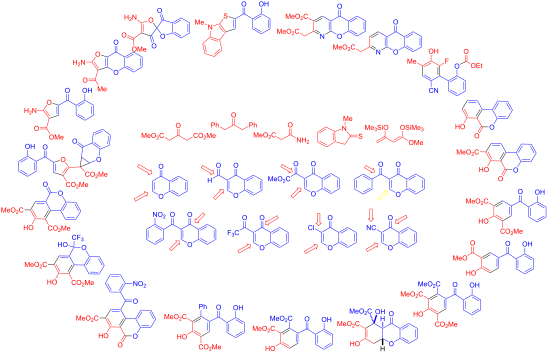
- with 1,3-bis(silyloxy)-1,3-butadienes 6a–z afforded azaxanthones 41a–am (Scheme 23) [45][46]. The formation of the products can be explained by the mechanism discussed for the formation of azaxanthone 40 that involves intermediates AF and AG. For most products, the yields were in the range of 30 to 66






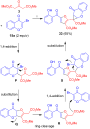

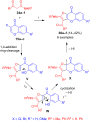


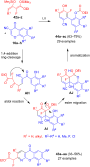
Cofactor-independent C–C bond cleavage reactions catalyzed by the AlpJ family of oxygenases in atypical angucycline biosynthesis
Beilstein J. Org. Chem. 2024, 20, 1198–1206, doi:10.3762/bjoc.20.102
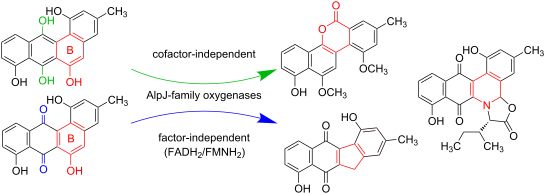
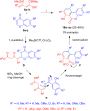
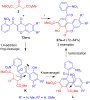
- distinctive subset of compounds, including jadomycin, gilvocarcin, kinamycin, fluostatin, and lomaiviticin, arises from typical angucycline intermediates via oxidative C–C bond cleavage and subsequent ring rearrangement reactions. These atypical angucyclines exhibit intriguing chemical structures and various




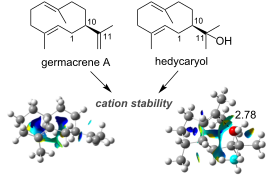
Stability trends in carbocation intermediates stemming from germacrene A and hedycaryol
Beilstein J. Org. Chem. 2024, 20, 1189–1197, doi:10.3762/bjoc.20.101
- diols by addition of water. For each of these intermediates, simple deprotonation or nucleophilic attack by water are possible. Also, hydride shifts can occur first, which widens the chemical space of possible products. Additionally, the presence of multiple stereocenters adds to the rich
- analyze the intermediates formed from germacrene A and hedycaryol. These carbocations are key mechanistic branching points in different sesquiterpene synthases and calculation of their relative energy trends can explain the preference for (6,6) or (5,7) intermediate carbocations. Considering that the
- formation of (6,6) vs (5,7) is rooted in very slight changes in mechanism (protonation at C1 vs C10), it is of interest to understand whether there is a systematic difference in energy. In cases where enzymes use pathways with high-energy intermediates, the enzyme active site must in some way direct the


Manganese-catalyzed C–C and C–N bond formation with alcohols via borrowing hydrogen or hydrogen auto-transfer
Beilstein J. Org. Chem. 2024, 20, 1111–1166, doi:10.3762/bjoc.20.98
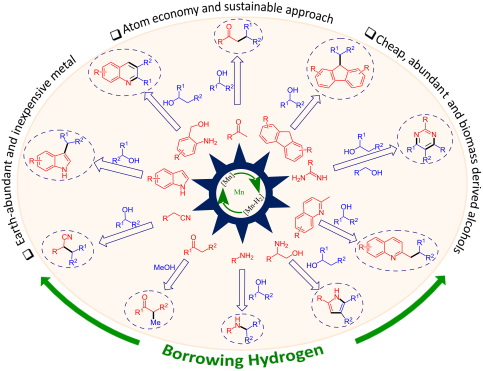
- ethylene glycol followed by condensation with ethylenediamine generated the corresponding imine intermediates. The subsequent hydrogenation with borrowed hydrogen finally formed the polyethyleneimine product. In 2023, Royo and co-workers conveyed the N-alkylation of amines with alcohols using the bis
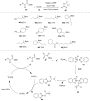
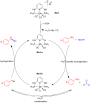
- of t-BuOK (1.5 equiv) at 125 °C for 18 h (Scheme 28B). The proposed mechanism suggested the formation of α,β-unsaturated ketones as the intermediates, similar to the previous report [58] and the selective hydrogenation of the C=C bond was the last step. In 2018, Banerjee’s group developed the
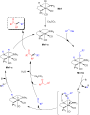
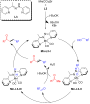
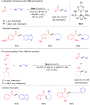
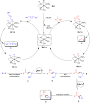
- . Furthermore, β-alkylation of 1-phenyl-1-ethanol with benzylic alcohols was also studied with 2 mol % of the Mn4 pre-catalyst, 5 mol % of Cs2CO3 in t-AmOH at 135 °C for 20 h (Scheme 32). NMR studies endorsed the formation of intermediates such as aldehyde, ketone, and α,β-unsaturated ketone. The proposed























Kinetically stabilized 1,3-diarylisobenzofurans and the possibility of preparing large, persistent isoacenofurans with unusually small HOMO–LUMO gaps
Beilstein J. Org. Chem. 2024, 20, 1099–1110, doi:10.3762/bjoc.20.97
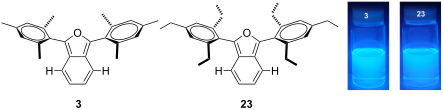
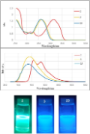
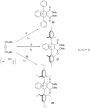
- interesting class of organic semiconductors. Hamura and co-workers pioneered the synthesis of large isoacenofurans. They prepared a pair of 1,3-diarylisoanthracenofurans [3] and a pair of 1,3-diphenethynylisoanthracenofurans [4], and impressively utilized the latter as intermediates for the synthesis of
- persistence associated with isoacenofurans is of great concern if these molecules are to be utilized as organic semiconductors. Likewise, Hamura and co-workers’ 1,3-diphenethynylisobenzofurans were fleeting intermediates that could not be isolated, but were instead trapped in situ by a suitable dienophile [4






Synthesis of 1,4-azaphosphinine nucleosides and evaluation as inhibitors of human cytidine deaminase and APOBEC3A
Beilstein J. Org. Chem. 2024, 20, 1088–1098, doi:10.3762/bjoc.20.96
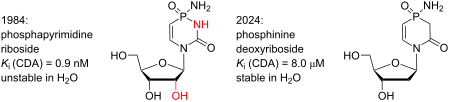
- ][3][4][5]. Full inhibition of CDA leads to accumulation of toxic pyrimidine catabolism intermediates [6][7]. However, local and temporary inhibition of CDA in the liver provides a therapeutic benefit by allowing cytosine analogue-containing drugs to bypass the liver with an intact nucleobase
- ) and FdZ (IId) form tetrahedral intermediates after hydrolysis of the N3–C4 double bond in the active sites of A3Gctd and A3A [59][60]. The intermediates formed had the same R-stereochemistry at the C4 atom of the nucleobase as previously observed for CDA, and thus confirming the general mechanism of


Light on the sustainable preparation of aryl-cored dibromides
Beilstein J. Org. Chem. 2024, 20, 1076–1087, doi:10.3762/bjoc.20.95
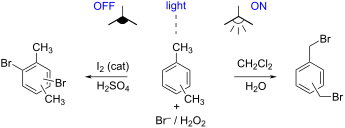
- environment [15]. Nevertheless, in line with the European Union's 'green new deal' guidelines [16], addressing two pivotal issues could facilitate the environmentally conscious utilisation of halogenated compounds as intermediates in chemical processes: The development of more sustainable production methods
- follows a different mechanism, producing the ortho and para-bromoarenes through Ar-SE, that involves cationic intermediates. In this case, a catalytic amount of iodine [21][22] or FeCl3 [23] is added to enhance the electrophilicity of bromine. While widely employed and capable of producing reliable


Novel analogues of a nonnucleoside SARS-CoV-2 RdRp inhibitor as potential antivirotics
Beilstein J. Org. Chem. 2024, 20, 1029–1036, doi:10.3762/bjoc.20.91
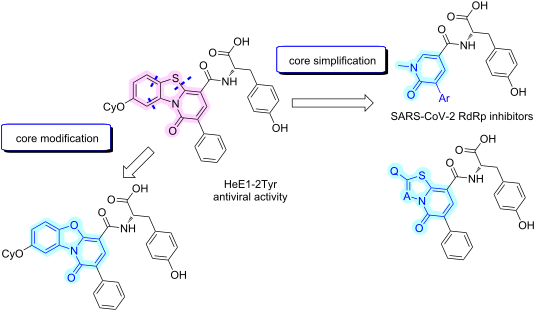
- , led to two crucial mesoionic compounds, 22 and 27. The recrystallized intermediates then underwent a formal cycloaddition with ethyl acrylate, followed by the elimination of H2S, forming the desired heterocyclic core structures (intermediates 23 and 28, respectively). A subsequent saponification step


Auxiliary strategy for the general and practical synthesis of diaryliodonium(III) salts with diverse organocarboxylate counterions
Beilstein J. Org. Chem. 2024, 20, 1020–1028, doi:10.3762/bjoc.20.90
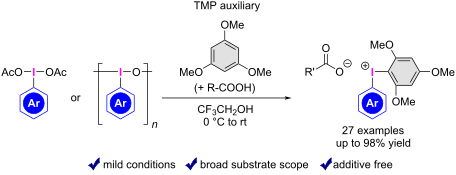
- intermediates in the synthesis of diaryliodonium(III) salts from Koser's reagents or (diacetoxyiodo)arenes. While iodonium salts with TfO−, TsO−, and other counterions are common, the related diaryliodonium carboxylates are more attractive from a cost and safety standpoint. In this work, we present a more


Carbonylative synthesis and functionalization of indoles
Beilstein J. Org. Chem. 2024, 20, 973–1000, doi:10.3762/bjoc.20.87
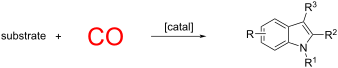
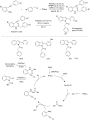
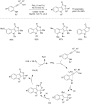
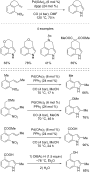
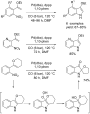
- vinyl propargylic esters could be employed as five-carbon atom building blocks in [5 + 2] cycloadditions with alkynes or alkenes by carbene intermediates. Starting from those results they envisaged the benzannulation of heteroaryl propargylic esters favored by CO [44]. The process led to the desired
- relevant intermediates in organic synthesis [52][53]. Therefore, the significance of 6H-isoindolo[2,1-a]indol-6-ones has led to a longstanding interest in the development of efficient and versatile methods for their synthesis. In 2016, four independent studies reported the first successful application of a












Enhancing structural diversity of terpenoids by multisubstrate terpene synthases
Beilstein J. Org. Chem. 2024, 20, 959–972, doi:10.3762/bjoc.20.86
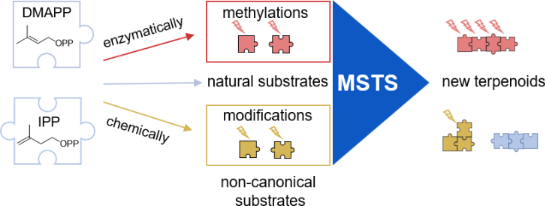
- depyrophosphorylation, whereas class II TSs utilize a general acid (a key Asp residue) to protonate the terminal C=C bond or epoxide group to yield a tertiary carbocation. The highly reactive carbocation is then converted to different carbocation intermediates, facilitated by the hydrophobic pocket of the TSs, which
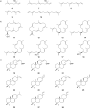
- 82 and 83 by TSs led to the production of ruptenes including compounds 84–90, which revealed the structure of the proposed intermediates for the cyclization reactions and therefore provided important insights into the reaction mechanism [49] (Figure 6c). With the aid of artificial prenyl analogs, a






Enantioselective synthesis of β-aryl-γ-lactam derivatives via Heck–Matsuda desymmetrization of N-protected 2,5-dihydro-1H-pyrroles
Beilstein J. Org. Chem. 2024, 20, 940–949, doi:10.3762/bjoc.20.84
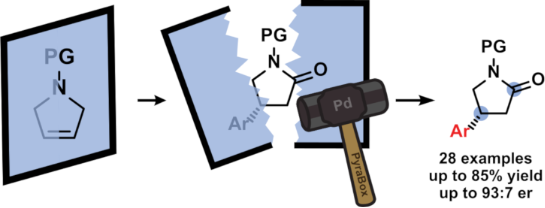
- determined by the correlation of their optical rotations with that of the previously reported aryl-lactam 4bb [23], and its deprotected analog [24], as well as with the intermediates 5b, 5a, and 6 in the (R)-rolipram (5b) and (R)-baclofen hydrochloride (6) [25] syntheses. Assignment of the stereochemistry of




Direct synthesis of acyl fluorides from carboxylic acids using benzothiazolium reagents
Beilstein J. Org. Chem. 2024, 20, 921–930, doi:10.3762/bjoc.20.82
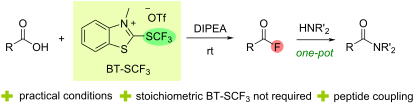
- unreliable isolation of acyl fluoride intermediates, we next considered whether BT-SCF3-mediated deoxyfluorination of carboxylic acids could be coupled with a subsequent acylation in an overall one-pot process. Selecting amines as nucleophilic coupling partners, a short optimisation study was carried out to
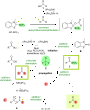
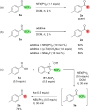
- , reacting BT-SCF3 with carboxylic acids 1 under similar conditions provides (trifluoromethyl)thioesters 3 via a concerted deoxytrifluoromethylthiolation process from tetrahedral intermediate A affording thiocarbamate by-product B [31]. To test whether thioester species could act as intermediates in the



One-pot Ugi-azide and Heck reactions for the synthesis of heterocyclic systems containing tetrazole and 1,2,3,4-tetrahydroisoquinoline
Beilstein J. Org. Chem. 2024, 20, 912–920, doi:10.3762/bjoc.20.81
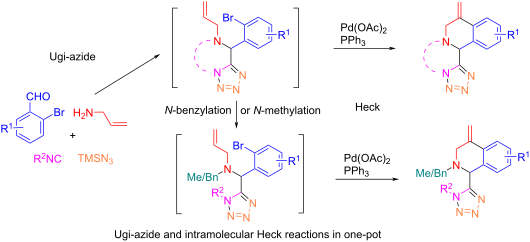
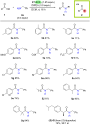
- the Ugi reaction products 5 could affect the yield of the Heck reaction. To address the issue, compounds 5 were N-alkylated to afford intermediates 7 which were used in the subsequent Heck reaction step. Thus, an alternative one-pot Ugi-azide/N-alkylation/Heck reaction procedure was developed (Scheme


(Bio)isosteres of ortho- and meta-substituted benzenes
Beilstein J. Org. Chem. 2024, 20, 859–890, doi:10.3762/bjoc.20.78
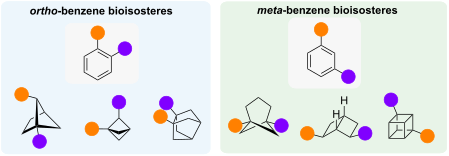
- , respectively (Scheme 12B) [58]. Saponification of the ester moieties in these species followed by Curtius rearrangements then led to amines 114 and 116. Non-natural amino acid derivatives 113 and 117 are intermediates prepared using these methods that could be of interest to medicinal chemistry. Alcohol 111














Confirmation of the stereochemistry of spiroviolene
Beilstein J. Org. Chem. 2024, 20, 852–858, doi:10.3762/bjoc.20.77
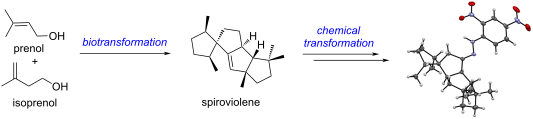
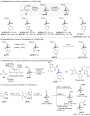
- IM-7. A key 1,3-hydride shift of IM-7 from the β-face, followed by deprotonation of the formed C2-cation IM-8, would deliver the originally proposed structure 1' [6]. However, no related natural products that would be derived from the intermediates of this pathway have been found so far. A third
- either IM-9 or IM-11 cations. A direct dyotropic rearrangement, or two stepwise 1,2-alkyl migrations of IM-9, are possible pathways en route to cation IM-10. The presence of these intermediates IM-9, -10, -11 could be inferred by the identification of GJ1012B/D (5/6, Scheme 1D) [11], cattleyene (7) [19


Skeletal rearrangement of 6,8-dioxabicyclo[3.2.1]octan-4-ols promoted by thionyl chloride or Appel conditions
Beilstein J. Org. Chem. 2024, 20, 823–829, doi:10.3762/bjoc.20.74
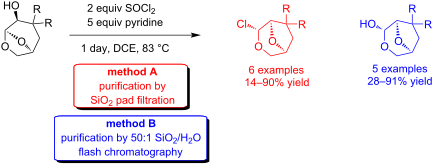
- ]octane, while O6 migrated when the C4–OH was axial leading to 2,4-dioxabicyclo[2.2.2]octanes. The formation of both anomers from the non-selective addition of fluoride suggested intermediates with oxocarbenium character. This work has recently been extended by Banwell and co-workers to include a set of
- sulfites were not intermediates in the reaction manifold. Furthermore, the isolation of some starting alcohols in the reactions of 10b and 10d following chromatography was attributed to hydrolysis of the corresponding dialkyl sulfite 13b and 13d on silica, a process that can be acid or base-catalysed [26
- skeletal rearrangement (vide infra). Inclusion of the soft-nucleophile allyltrimethylsilane in the reaction of 10b to trap potential oxocarbenium ion intermediates also resulted in a complex mixture. During the isolation of the chloroalkyl ether products 11a–f, it was apparent that hydrolysis occurred


Advancements in hydrochlorination of alkenes
Beilstein J. Org. Chem. 2024, 20, 787–814, doi:10.3762/bjoc.20.72
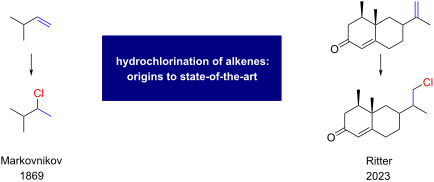
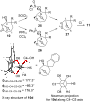
- the alkene in the first step, providing a carbocation that subsequently reacts with a chloride anion to yield the Markovnikov product. While this ionic mechanism is commonly illustrated in textbooks by showing “naked” cations as intermediates, several recent studies suggest a molecular concerted or
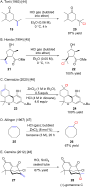
- ) could be prevented when switching to BCl3 (10 mol %). Interestingly, toluene (94), which is generated as a byproduct of the Grob fragmentation, must react more sluggishly with the generated cationic intermediates compared to chloride, as no alkylations of toluene were reported. In 2017, the Snyder group
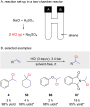
- concerning the polar hydrochlorinations the activation energy for an anti-Markovnikov addition is at least by 30 kJ mol−1 higher than for normal addition. Therefore, the formation of the anti-Markovnikov product via purely cationic intermediates is never observed. The only report for the formation of the






Synthesis and characterization of water-soluble C60–peptide conjugates
Beilstein J. Org. Chem. 2024, 20, 777–786, doi:10.3762/bjoc.20.71
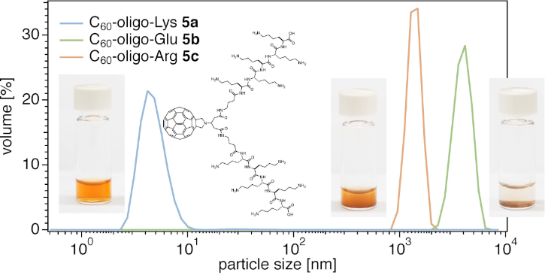
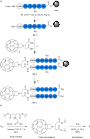
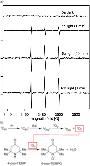
- s, number of scans: 1. b) Scheme for the photoinduced 1O2 generation by C60 and reaction with spin trapping reagent 4-oxo-TEMP to form 4-oxo-TEMPO. Supporting Information Supporting Information File 4: Details for the synthesis of 5a–c and intermediates as well as spectral data. Acknowledgements