


Search results
Search for "migration" in Full Text gives 312 result(s) in Beilstein Journal of Organic Chemistry. Showing first 200.
Protonated paramagnetic redox forms of di-o-quinone bridged with p-phenylene-extended TTF: A EPR spectroscopy study
- Nikolay O. Chalkov,
- Vladimir K. Cherkasov,
- Gleb A. Abakumov,
- Andrey G. Starikov and
- Viacheslav A. Kuropatov
Beilstein J. Org. Chem. 2016, 12, 2450–2456, doi:10.3762/bjoc.12.238
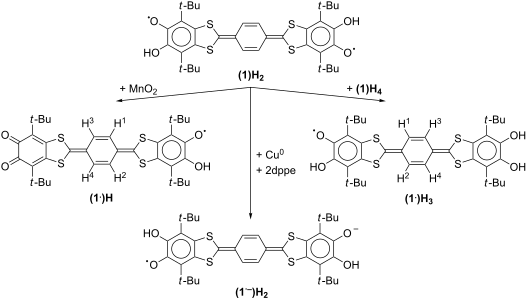
- coordination sites should cause an equalization of the proton constants on the p-phenylene group in the case of a fast process. In fact, we have not found any evidence of such migration, at least accessible for an observation in the EPR timescale. The lack of a substantial temperature dependence of the shape

Graphical Abstract

Figure 1: The structural formula of acceptor–donor–acceptor triad 1.

Figure 2: The EPR spectrum of (1·)H in CHCl3, 293 K: a) experimental and b) experimental + D2O.

Scheme 1: Disproportionation of the protonated semiquinones in solution.

Scheme 2: Paramagnetic reduced protonated derivatives of the quinone 2.

Figure 3: The EPR spectrum of (1·)H3 in CHCl3, 293 K: a) experimental, b) simulated, c) experimental + D2O an...

Figure 4: The EPR spectrum of (1·−)H2 THF, 293 K: a) experimental and b) experimental + D2O). Magnified side ...

Figure 5: The well-resolved EPR spectrum of (1·−)H2 in dimethoxyethane (diluted solution), 273 K: a) experime...
Solvent-free, visible-light photocatalytic alcohol oxidations applying an organic photocatalyst
- Martin Obst and
- Burkhard König
Beilstein J. Org. Chem. 2016, 12, 2358–2363, doi:10.3762/bjoc.12.229
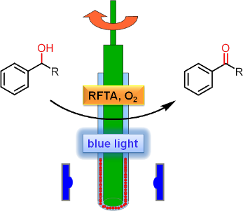
- test tube. Subsequently, the rotating glass rod is pressed into the test tube, which leads to vertical migration of the reaction mixture and the formation of a film between the inner wall of the test tube and the glass rod. The reaction is carried out by rotation and irradiation with the LEDs from the

Graphical Abstract

Figure 1: Rod mill, schematic (left) and photographs (middle and right).

Scheme 1: Oxidation of 4,4’-dimethoxybenzhydrol (1a) to 4,4’-dimethoxybenzophenone (1b).
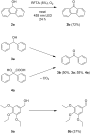
Scheme 2: Scope for benzylic alcohol oxidation and obtained yields.

Scheme 3: Oxidation of 4-methoxyphenyl methyl carbinol (6a) to 4-methoxyacetophenone (6b).

Figure 2: 1H NMR (crude) of 4-methoxyacetophenone 6b.
Unusual reactions of diazocarbonyl compounds with α,β-unsaturated δ-amino esters: Rh(II)-catalyzed Wolff rearrangement and oxidative cleavage of N–H-insertion products
- Valerij A. Nikolaev,
- Jury J. Medvedev,
- Olesia S. Galkina,
- Ksenia V. Azarova and
- Christoph Schneider
Beilstein J. Org. Chem. 2016, 12, 1904–1910, doi:10.3762/bjoc.12.180
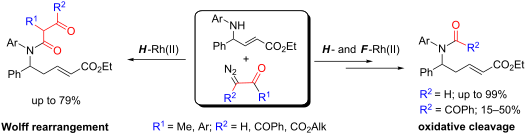
- nucleophilic 1,2-migration of aryl (Ph) or alkyl (Me) group R2 occurs, producing α-oxoketene D. The latter interacts with N–H-group of the aminoester 1 to give acylamides 6a–c. Predominance of the Wolff rearrangement over typical carbenoid reactions (N–H-insertion, etc.) in the case of diazodicarbonyl

Graphical Abstract

Scheme 1: Catalytic reactions of diazocarbonyl compounds with unsaturated δ-amino esters.

Figure 1: The structures of the starting compounds 1–3 and catalysts used in this study.

Scheme 2: The assumed pathway for the occurance of amides 6a–c by way of the catalytic Wolff rearrangement.

Scheme 3: The assumed mechanism for the formation of the amides 4 and 7 during oxidative cleavage of the N–H-...
Rearrangements of organic peroxides and related processes
- Ivan A. Yaremenko,
- Vera A. Vil’,
- Dmitry V. Demchuk and
- Alexander O. Terent’ev
Beilstein J. Org. Chem. 2016, 12, 1647–1748, doi:10.3762/bjoc.12.162
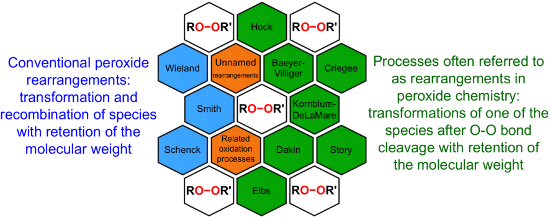
- summarize systematically related and different features of these reactions, compares their mechanisms, and assesses the prospects of their application. By definition, a rearrangement is a migration of an atom or a group of atoms from one atom to another within the same molecule [189]. In contrast, a
- as rearrangements of peroxides can give both isomeric and non-isomeric compounds either containing a peroxy group or without the latter. In most cases, a rearrangement involves the migration or cleavage of the peroxide group in an intermediate molecule, and the stability of the latter is responsible
- binds to the carbonyl group of ketone 1 to form the tetrahedral intermediate 3 which is referred to as the Criegee intermediate. The next step involves the concerted migration of the R2 group to the peroxide oxygen atom, resulting in the formation of ester 4 and carboxylic acid 5 (Scheme 2). The ability

Graphical Abstract
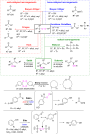
Figure 1: The named transformations considered in this review.

Scheme 1: The Baeyer–Villiger oxidation.

Scheme 2: The general mechanism of the peracid-promoted Baeyer–Villiger oxidation.

Scheme 3: General mechanism of the Lewis acid-catalyzed Baeyer–Villiger rearrangement.

Scheme 4: The theoretically studied mechanism of the BV oxidation reaction promoted by H2O2 and the Lewis aci...

Scheme 5: Proton movements in the transition states of the Baeyer–Villiger oxidation.

Scheme 6: The dependence of the course of the Baeyer–Villiger oxidation on the type of O–O-bond cleavage in t...
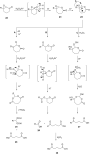
Scheme 7: The acid-catalyzed Baeyer–Villiger oxidation of cyclic epoxy ketones 22.

Scheme 8: Oxidation of isophorone oxide 29.

Scheme 9: Synthesis of acyl phosphate 32 from acyl phosphonate 31.

Scheme 10: Synthesis of aflatoxin B2 (36).

Scheme 11: The Baeyer–Villiger rearrangement of ketones 37 to lactones 38.

Scheme 12: Synthesis of 3,4-dimethoxybenzoic acid (40) via Baeyer–Villiger oxidation.

Scheme 13: Oxone transforms α,β-unsaturated ketones 43 into vinyl acetates 44.

Scheme 14: The Baeyer–Villiger oxidation of ketones 45 using diaryl diselenide and hydrogen peroxide.

Scheme 15: Baeyer–Villiger oxidation of (E)-2-methylenecyclobutanones.

Scheme 16: Oxidation of β-ionone (56) by H2O2/(BnSe)2 with formation of (E)-2-(2,6,6-trimethylcyclohex-1-en-1-...

Scheme 17: The mechanism of oxidation of ketones 58a–f by hydrogen peroxide in the presence of arsonated polys...

Scheme 18: Oxidation of ketone (58b) by H2O2 to 6-methylcaprolactone (59b) catalyzed by Pt complex 66·BF4.

Scheme 19: Oxidation of ketones 67 with H2O2 in the presence of [(dppb}Pt(µ-OH)]22+.

Scheme 20: The mechanism of oxidation of ketones 67 in the presence of [(dppb}Pt(µ-OH)]22+ and H2O2.

Scheme 21: Oxidation of benzaldehydes 69 in the presence of the H2O2/MeReO3 system.

Scheme 22: Oxidation of acetophenones 72 in the presence of the H2O2/MeReO3 system.

Scheme 23: Baeyer–Villiger oxidation of 2-adamantanone (45c) in the presence of Sn-containing mesoporous silic...

Scheme 24: Aerobic Baeyer–Villiger oxidation of ketones 76 using metal-free carbon.

Scheme 25: A regioselective Baeyer-Villiger oxidation of functionalized cyclohexenones 78 into a dihydrooxepin...

Scheme 26: The oxidation of aldehydes and ketones 80 by H2O2 catalyzed by Co4HP2Mo15V3O62.

Scheme 27: The cleavage of ketones 82 with hydrogen peroxide in alkaline solution.

Scheme 28: Oxidation of ketones 85 to esters 86 with H2O2–urea in the presence of KHCO3.

Scheme 29: Mechanism of the asymmetric oxidation of cyclopentane-1,2-dione 87a with the Ti(OiPr)4/(+)DET/t-BuO...

Scheme 30: The oxidation of cis-4-tert-butyl-2-fluorocyclohexanone (93) with m-chloroperbenzoic acid.

Scheme 31: The mechanism of the asymmetric oxidation of 3-substituted cyclobutanone 96a in the presence of chi...

Scheme 32: Enantioselective Baeyer–Villiger oxidation of cyclic ketones 98.

Scheme 33: Regio- and enantioselective Baeyer–Villiger oxidation of cyclic ketones 101.

Scheme 34: The proposed mechanism of the Baeyer–Villiger oxidation of acetal 105f.

Scheme 35: Synthesis of hydroxy-10H-acridin-9-one 117 from tetramethoxyanthracene 114.

Scheme 36: The Baeyer–Villiger oxidation of the fully substituted pyrrole 120.

Scheme 37: The Criegee rearrangement.

Scheme 38: The mechanism of the Criegee reaction of a peracid with a tertiary alcohol 122.

Scheme 39: Criegee rearrangement of decaline ethylperoxoate 127 into ketal 128.

Scheme 40: The ionic cleavage of 2-methoxy-2-propyl perester 129.

Scheme 41: The Criegee rearrangement of α-methoxy hydroperoxide 136.
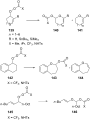
Scheme 42: Synthesis of enol esters and acetals via the Criegee rearrangement.

Scheme 43: Proposed mechanism of the transformation of 1-hydroperoxy-2-oxabicycloalkanones 147a–d.

Scheme 44: Transformation of 3-hydroxy-1,2-dioxolanes 151 into diketone derivatives 152.

Scheme 45: Criegee rearrangement of peroxide 153 with the mono-, di-, and tri-O-insertion.

Scheme 46: The sequential Criegee rearrangements of adamantanes 157a,b.

Scheme 47: Synthesis of diaryl carbonates 160a–d from triarylmethanols 159a–d through successive oxygen insert...

Scheme 48: The synthesis of sesquiterpenes 162 from ketone 161 with a Criegee rearrangement as one key step.

Scheme 49: Synthesis of trans-hydrindan derivatives 164, 165.

Scheme 50: The Hock rearrangement.

Scheme 51: The general scheme of the cumene process.

Scheme 52: The Hock rearrangement of aliphatic hydroperoxides.
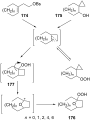
Scheme 53: The mechanism of solvolysis of brosylates 174a–c and spiro cyclopropyl carbinols 175a–c in THF/H2O2....

Scheme 54: The fragmentation mechanism of hydroperoxy acetals 178 to esters 179.

Scheme 55: The acid-catalyzed rearrangement of phenylcyclopentyl hydroperoxide 181.

Scheme 56: The peroxidation of tertiary alcohols in the presence of a catalytic amount of acid.

Scheme 57: The acid-catalyzed reaction of bicyclic secondary alcohols 192 with hydrogen peroxide.

Scheme 58: The photooxidation of 5,6-disubstituted 3,4-dihydro-2H-pyrans 196.

Scheme 59: The oxidation of tertiary alcohols 200a–g, 203a,b, and 206.

Scheme 60: Transformation of functional peroxide 209 leading to 2,3-disubstitued furans 210 in one step.

Scheme 61: The synthesis of carbazoles 213 via peroxide rearrangement.

Scheme 62: The construction of C–N bonds using the Hock rearrangement.

Scheme 63: The synthesis of moiety 218 from 217 which is a structural motif in the antitumor–antibiotic of CC-...

Scheme 64: The in vivo oxidation steps of cholesterol (219) by singlet oxygen.

Scheme 65: The proposed mechanism of the rearrangement of cholesterol-5α-OOH 220.

Scheme 66: Photochemical route to artemisinin via Hock rearrangement of 223.

Scheme 67: The Kornblum–DeLaMare rearrangement.

Scheme 68: Kornblum–DeLaMare transformation of 1-phenylethyl tert-butyl peroxide (225).

Scheme 69: The synthesis 4-hydroxyenones 230 from peroxide 229.

Scheme 70: The Kornblum–DeLaMare rearrangement of peroxide 232.

Scheme 71: The reduction of peroxide 234.

Scheme 72: The Kornblum–DeLaMare rearrangement of endoperoxide 236.

Scheme 73: The rearrangement of peroxide 238 under Kornblum–DeLaMare conditions.

Scheme 74: The proposed mechanism of rearrangement of peroxide 238.

Scheme 75: The Kornblum–DeLaMare rearrangement of peroxides 242a,b.

Scheme 76: The base-catalyzed rearrangements of bicyclic endoperoxides having electron-withdrawing substituent...

Scheme 77: The base-catalyzed rearrangements of bicyclic endoperoxides 249a,b having electron-donating substit...

Scheme 78: The base-catalyzed rearrangements of bridge-head substituted bicyclic endoperoxides 251a,b.

Scheme 79: The Kornblum–DeLaMare rearrangement of hydroperoxide 253.

Scheme 80: Synthesis of β-hydroxy hydroperoxide 254 from endoperoxide 253.

Scheme 81: The amine-catalyzed rearrangement of bicyclic endoperoxide 263.

Scheme 82: The base-catalyzed rearrangement of meso-endoperoxide 268 into 269.

Scheme 83: The photooxidation of 271 and subsequent Kornblum–DeLaMare reaction.

Scheme 84: The Kornblum–DeLaMare rearrangement as one step in the oxidation reaction of enamines.

Scheme 85: The Kornblum–DeLaMare rearrangement of 3,5-dihydro-1,2-dioxenes 284, 1,2-dioxanes 286, and tert-but...

Scheme 86: The Kornblum–DeLaMare rearrangement of epoxy dioxanes 290a–d.

Scheme 87: Rearrangement of prostaglandin H2 292.

Scheme 88: The synthesis of epicoccin G (297).

Scheme 89: The Kornblum–DeLaMare rearrangement used in the synthesis of phomactin A.

Scheme 90: The Kornblum–DeLaMare rearrangement in the synthesis of 3H-quinazolin-4-one 303.

Scheme 91: The Kornblum–DeLaMare rearrangement in the synthesis of dolabriferol (308).

Scheme 92: Sequential transformation of 3-substituted 2-pyridones 309 into 3-hydroxypyridine-2,6-diones 311 in...

Scheme 93: The Kornblum–DeLaMare rearrangement of peroxide 312 into hydroxy enone 313.

Scheme 94: The Kornblum–DeLaMare rearrangement in the synthesis of polyfunctionalized carbonyl compounds 317.

Scheme 95: The Kornblum–DeLaMare rearrangement in the synthesis of (Z)-β-perfluoroalkylenaminones 320.

Scheme 96: The Kornblum–DeLaMare rearrangement in the synthesis of γ-ketoester 322.

Scheme 97: The Kornblum–DeLaMare rearrangement in the synthesis of diterpenoids 326 and 328.

Scheme 98: The synthesis of natural products hainanolidol (331) and harringtonolide (332) from peroxide 329.

Scheme 99: The synthesis of trans-fused butyrolactones 339 and 340.

Scheme 100: The synthesis of leucosceptroid C (343) and leucosceptroid P (344) via the Kornblum–DeLaMare rearra...

Scheme 101: The Dakin oxidation of arylaldehydes or acetophenones.

Scheme 102: The mechanism of the Dakin oxidation.

Scheme 103: A solvent-free Dakin reaction of aromatic aldehydes 356.

Scheme 104: The organocatalytic Dakin oxidation of electron-rich arylaldehydes 358.

Scheme 105: The Dakin oxidation of electron-rich arylaldehydes 361.

Scheme 106: The Dakin oxidation of arylaldehydes 358 in water extract of banana (WEB).

Scheme 107: A one-pot approach towards indolo[2,1-b]quinazolines 364 from indole-3-carbaldehydes 363 through th...

Scheme 108: The synthesis of phenols 367a–c from benzaldehydes 366a-c via acid-catalyzed Dakin oxidation.

Scheme 109: Possible transformation paths of the highly polarized boric acid coordinated H2O2–aldehyde adduct 3...

Scheme 110: The Elbs oxidation of phenols 375 to hydroquinones.

Scheme 111: The mechanism of the Elbs persulfate oxidation of phenols 375 affording p-hydroquinones 376.

Scheme 112: Oxidation of 2-pyridones 380 under Elbs persulfate oxidation conditions.

Scheme 113: Synthesis of 3-hydroxy-4-pyridone (384) via an Elbs oxidation of 4-pyridone (382).

Scheme 114: The Schenck rearrangement.

Scheme 115: The Smith rearrangement.

Scheme 116: Three main pathways of the Schenck rearrangement.

Scheme 117: The isomerization of hydroperoxides 388 and 389.

Scheme 118: Trapping of dioxacyclopentyl radical 392 by oxygen.

Scheme 119: The hypothetical mechanism of the Schenck rearrangement of peroxide 394.

Scheme 120: The autoxidation of oleic acid (397) with the use of labeled isotope 18O2.

Scheme 121: The rearrangement of 18O-labeled hydroperoxide 400 under an atmosphere of 16O2.

Scheme 122: The rearrangement of the oleate-derived allylic hydroperoxides (S)-421 and (R)-425.

Scheme 123: Mechanisms of Schenck and Smith rearrangements.

Scheme 124: The rearrangement and cyclization of 433.

Scheme 125: The Wieland rearrangement.

Scheme 126: The rearrangement of bis(triphenylsilyl) 439 or bis(triphenylgermyl) 441 peroxides.

Scheme 127: The oxidative transformation of cyclic ketones.

Scheme 128: The hydroxylation of cyclohexene (447) in the presence of tungstic acid.

Scheme 129: The oxidation of cyclohexene (447) under the action of hydrogen peroxide.

Scheme 130: The reaction of butenylacetylacetone 455 with hydrogen peroxide.

Scheme 131: The oxidation of bridged 1,2,4,5-tetraoxanes.

Scheme 132: The proposed mechanism for the oxidation of bridged 1,2,4,5-tetraoxanes.

Scheme 133: The rearrangement of ozonides.

Scheme 134: The acid-catalyzed oxidative rearrangement of malondialdehydes 462 under the action of H2O2.

Scheme 135: Pathways of the Lewis acid-catalyzed cleavage of dialkyl peroxides 465 and ozonides 466.

Scheme 136: The mechanism of the transformation of (tert-butyldioxy)cyclohexanedienones 472.

Scheme 137: The synthesis of Vitamin K3 from 472a.

Scheme 138: Proposed mechanism for the transformation of 478d into silylated endoperoxide 479d.

Scheme 139: The rearrangement of hydroperoxide 485 to form diketone 486.

Scheme 140: The base-catalyzed rearrangement of cyclic peroxides 488a–g.

Scheme 141: Synthesis of chiral epoxides and aldols from peroxy hemiketals 491.

Scheme 142: The multistep transformation of (R)-carvone (494) to endoperoxides 496a–e.

Scheme 143: The decomposition of anthracene endoperoxide 499.

Scheme 144: Synthesis of esters 503 from aldehydes 501 via rearrangement of peroxides 502.

Scheme 145: Two possible paths for the base-promoted decomposition of α-azidoperoxides 502.

Scheme 146: The Story decomposition of cyclic diperoxide 506a.

Scheme 147: The Story decomposition of cyclic triperoxide 506b.

Scheme 148: The thermal rearrangement of endoperoxides A into diepoxides B.

Scheme 149: The transformation of peroxide 510 in the synthesis of stemolide (511).

Scheme 150: The possible mechanism of the rearrangement of endoperoxide 261g.

Scheme 151: The photooxidation of indene 517.

Scheme 152: The isomerization of ascaridole (523).

Scheme 153: The isomerization of peroxide 525.

Scheme 154: The thermal transformation of endoperoxide 355.

Scheme 155: The photooxidation of cyclopentadiene (529) at a temperature higher than 0 °C.

Scheme 156: The thermal rearrangement of endoperoxides 538a,b.

Scheme 157: The transformation of peroxides 541.

Scheme 158: The thermal rearrangements of strained cyclic peroxides.

Scheme 159: The thermal rearrangement of diacyl peroxide 551 in the synthesis of C4-epi-lomaiviticin B core 553....

Scheme 160: The 1O2 oxidation of tryptophan (554) and rearrangement of dioxetane intermediate 555.

Scheme 161: The Fe(II)-promoted cleavage of aryl-substituted bicyclic peroxides.

Scheme 162: The proposed mechanism of the Fe(II)-promoted rearrangement of 557a–c.

Scheme 163: The reaction of dioxolane 563 with Fe(II) sulfate.

Scheme 164: Fe(II)-promoted rearrangement of 1,2-dioxane 565.

Scheme 165: Fe(II) cysteinate-promoted rearrangement of 1,2-dioxolane 568.

Scheme 166: The transformation of 1,2-dioxanes 572a–c under the action of FeCl2.

Scheme 167: Fe(II) cysteinate-promoted transformation of tetraoxane 574.

Scheme 168: The CoTPP-catalyzed transformation of bicyclic endoperoxides 600a–d.

Scheme 169: The CoTPP-catalyzed transformation of epoxy-1,2-dioxanes.

Scheme 170: The Ru(II)-catalyzed reactions of 1,4-endoperoxide 261g.

Scheme 171: The Ru(II)-catalyzed transformation as a key step in the synthesis of elyiapyrone A (610) from 1,4-...

Scheme 172: Peroxides with antimalarial activity.

Scheme 173: The interaction of iron ions with artemisinin (616).

Scheme 174: The interaction of FeCl2 with 1,2-dioxanes 623, 624.

Scheme 175: The mechanism of reaction 623 and 624 with Fe(II)Cl2.

Scheme 176: The reaction of bicyclic natural endoperoxides G3-factors 631–633 with FeSO4.

Scheme 177: The transformation of terpene cardamom peroxide 639.
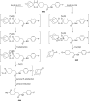
Scheme 178: The different ways of the cleavage of tetraoxane 643.

Scheme 179: The LC–MS analysis of interaction of tetraoxane 646 with iron(II)heme 647.

Scheme 180: The rearrangement of 3,6-epidioxy-1,10-bisaboladiene (EDBD, 649).

Scheme 181: Easily oxidized substrates.

Scheme 182: Biopathway of synthesis of prostaglandins.

Scheme 183: The reduction and rearrangements of isoprostanes.

Scheme 184: The partial mechanism for linoleate 658 oxidation.

Scheme 185: The transformation of lipid hydroperoxide.

Scheme 186: The acid-catalyzed cleavage of the product from free-radical oxidation of cholesterol (667).

Scheme 187: Two pathways of catechols oxidation.

Scheme 188: Criegee-like or Hock-like rearrangement of the intermediate hydroperoxide 675 in dioxygenase enzyme...

Scheme 189: Carotinoides 679 cleavage by carotenoid cleavage dioxygenases.
Ring-whizzing in polyene-PtL2 complexes revisited
- Oluwakemi A. Oloba-Whenu,
- Thomas A. Albright and
- Chirine Soubra-Ghaoui
Beilstein J. Org. Chem. 2016, 12, 1410–1420, doi:10.3762/bjoc.12.135
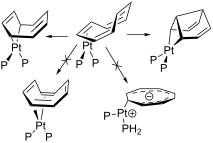
- ; density functional theory (DFT); hapototropic rearrangements; HOMO–LUMO interactions; polyene-ML2 complexes; ring-whizzing; Introduction Polyene–transition metal complexes were found to undergo fluxional rearrangements as early as 1956 with the preparation of Cp2Fe(CO)2 [1]. The migration of an MLn unit
- thought [20] that migration of an ML2 unit from one ring to another would involve an η3 structure where Pt would bond to C(1), C(9) and C(8). For the carbon numbering system please see 48. Bonding between b2 ML2 and the b1g MO would be retained. Unfortunately this is not quite the entire story. One of the

Graphical Abstract

Figure 1: The four coordination geometries for d10 polyene-ML2 complexes along with their hapto numbers and e...

Figure 2: The important valence orbitals of a d10 ML2 group, 5–7, along with the computed structures of Pt(PH3...

Figure 3: The empty degenerate set of π orbitals in the cyclopropenium cation is shown on the left side. On t...

Figure 4: Two unoccupied MOs for Cp+ are shown on the left side. The two stationary points for Cp–Pt(dpe)+ ar...

Figure 5: The half-filled degenerate π orbitals in cyclobutadiene. The computed ground state (15) and transit...
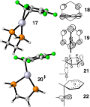
Figure 6: The ground and transition state for ring whizzing in F6C6–Pt(dpe), 17 and 20, respectively. The dom...
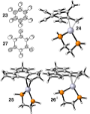
Figure 7: The LUMO, 23, and HOMO, 27, in 6-radialene. The optimized η2 ground states are shown in 24 and 25 w...

Figure 8: Two representations for the half-filled e2u set of π orbitals in cyclooctatetraene.

Figure 9: The stationary points found on the potential energy surface of C8F8–Pt(dpe). For clarity the groups...

Figure 10: The two important bonding interactions for transition state 31 are drawn in 33 and 34.

Figure 11: Three other coordination geometries that did not lead to new stationary points are shown in 35–37.

Figure 12: The LUMO and LUMO+1 shown in 38 and 39, respectively. The four stationary points found for pentalen...
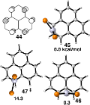
Figure 13: The LUMO of the phenalenium cation is given in 44. The structures of the three stationary points fo...

Figure 14: A top view of two stationary points found for F8C10–Pt(dpe); 48 is the ground state and 50, represe...

Figure 15: At top view of the η4, 52, and η4, 54, transition states along with the η2, 53, intermediate.
Application of Cu(I)-catalyzed azide–alkyne cycloaddition for the design and synthesis of sequence specific probes targeting double-stranded DNA
- Svetlana V. Vasilyeva,
- Vyacheslav V. Filichev and
- Alexandre S. Boutorine
Beilstein J. Org. Chem. 2016, 12, 1348–1360, doi:10.3762/bjoc.12.128
- ) with barely visible traces of mono-polyamide conjugate (line 6, e). Lines 5d and 6d are visible by UV-shadowing bands of electrophoresis migration marker xylene cyanol that is absent in other gels. Mass-spectrometry analysis confirmed the identity of the products obtained (Table S3 in Supporting
- arrows indicate positions: a and c – initial alkyne-modified oligonucleotides, b and e – 1:1 conjugates TFO:polyamide, f – 1:2 conjugate TFO-polyamide, d – visible migration marker xylene cyanol. Electrophoresis analysis of reaction mixtures in 20% denaturing polyacrylamide gel after TINA-TFO-MGB

Graphical Abstract

Figure 1: A) Formation of nucleotide triplets in parallel and antiparallel (relatively to polypurine strand) ...

Figure 2: Synthesis of MGB-fluorophore (A) and MGB-TFO (B) conjugates using CuACC. Linker length and composit...

Figure 3: Bifunctional linkers for conjugation of oligonucleotides and polyamides using CuACC.

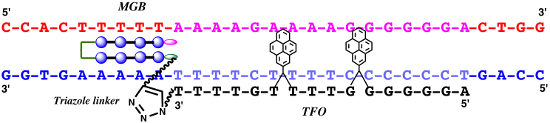
Figure 4: The target duplex contains a 29 base pair fragment from HIV proviral DNA [35] and a T4 hairpin is conne...

Figure 5: A) Sequence derived from the murine pericentromere repeat fragment with only one target site for th...

Figure 6: Synthesis of azide- and alkyne-modified MGBs.

Figure 7: Structures of fluorescent probes synthesized by "click chemistry".

Figure 8: Titration of the probes F1-NH2-MM14 (12 µM, A, C) and F1-NH2-TO (10 µM, B, D) by the target DNA dup...

Figure 9: Synthesis of modified oligonucleotides containing an alkyne group.

Figure 10: Gel electrophoresis of oligonucleotides modified by alkyne linkers: A – oligonucleotide HIVP (detec...

Figure 11: TINA-TFOs bearing a 3'-alkyne group for antiparallel triplex formation with the target HIV proviral...

Figure 12: Structures of polyamide-TFO conjugates.

Figure 13: Electrophoresis analysis of samples from reaction mixtures after click reactions between alkyne-TFO...

Figure 14: Electrophoresis analysis of reaction mixtures in 20% denaturing polyacrylamide gel after TINA-TFO-M...

Figure 15: Electrophoretic analysis of reaction mixtures in standard 20% denaturing PAGE after DNA-templated s...

Figure 16: Non-denaturing gel electrophoresis analysis of conjugate 28 with fluorescein-labeled target HIV dup...
On the mechanism of imine elimination from Fischer tungsten carbene complexes
- Philipp Veit,
- Christoph Förster and
- Katja Heinze
Beilstein J. Org. Chem. 2016, 12, 1322–1333, doi:10.3762/bjoc.12.125
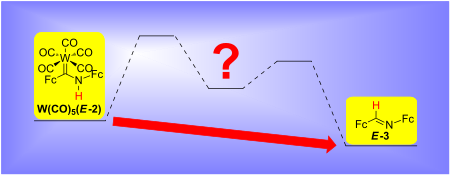
- -ylidene)(pentacarbonyl) W(CO)5(12) (Scheme 1f) [53]. In principle, the formation of imines from NH carbene complexes can occur by three conceivable fundamental pathways. The first pathway starts with the dissociation of the carbene followed by a 1,2-H shift at the free carbene (elimination–migration). The
- second one operates via a hydrogen atom shift at the coordinated carbene followed by dissociation of the resulting imine (migration–elimination). A third conceivable pathway could start with CO loss, followed by H atom migration. To the best of our knowledge, the mechanism of the imine formation from NH
- carbene complexes is not yet established. In the absence of a base, the bulky diferrocenylcarbene complex Cr(CO)5(E-2) is stable even in refluxing toluene and hence, a simple migration–elimination or elimination–migration reaction is not anticipated in this case. We report here the heavier tungsten

Graphical Abstract

Scheme 1: Imine formation and isomerization reactions from NH carbene complexes Cr(CO)5(E-2) (a) [27], Cr(CO)5(E/Z...

Scheme 2: Synthesis of W(CO)5(E-2) from W(CO)5(1Et) [20,21] and aminoferrocene [40,41] with concomitant formation of E-1,2-...

Scheme 3: Reaction pathways 1a/1b (migration–elimination) and 2a/2b (elimination–migration) for the formation...
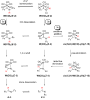
Scheme 4: Reaction pathways 3a/3b/3c (CO dissociation) for the formation of imine E-3 from W(CO)5(E-2).

Figure 1: DFT calculated oxidative addition/pseudorotation/reductive elimination pathway 3c from W(CO)4(E-2) ...

Figure 2: DFT calculated geometries of the two hydrido intermediates cis(N,H)-W(CO)4(H)(Z-15) and cis(C,H)-W(...

Scheme 5: Proposed reaction sequence from W(CO)5(E-2) to W(CO)5(PPh3) in the presence of triphenylphosphane.
Catalytic asymmetric synthesis of biologically important 3-hydroxyoxindoles: an update
- Bin Yu,
- Hui Xing,
- De-Quan Yu and
- Hong-Min Liu
Beilstein J. Org. Chem. 2016, 12, 1000–1039, doi:10.3762/bjoc.12.98
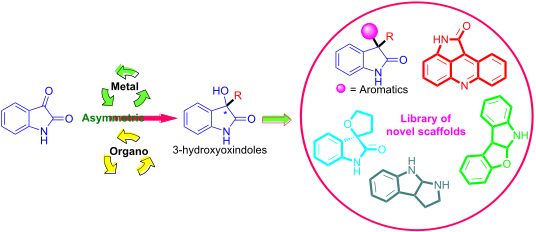
- [2,3,4-kl]acridines (the core structure of plakinidine C) from enaminones and 3-indolyl-3-hydroxyoxindoles through a cascade ring-opening/recyclization/methyl migration sequence (Scheme 61) [78]. The reactions proceeded well in MeCN in the presence of catalytic I2 (30 mol %) under an O2 atmosphere

Graphical Abstract

Figure 1: 3-Hydroxyoxindole-containing natural products and biologically active molecules.

Scheme 1: Chiral CNN pincer Pd(II) complex 1 catalyzed asymmetric allylation of isatins.

Scheme 2: Asymmetric allylation of ketimine catalyzed by the chiral CNN pincer Pd(II) complex 2.

Scheme 3: Pd/L1 complex-catalyzed asymmetric allylation of 3-O-Boc-oxindoles.

Scheme 4: Cu(OTf)2-catalyzed asymmetric direct addition of acetonitrile to isatins.

Scheme 5: Chiral tridentate Schiff base/Cu complex catalyzed asymmetric Friedel–Crafts alkylation of isatins ...

Scheme 6: Guanidine/CuI-catalyzed asymmetric alkynylation of isatins with terminal alkynes.

Scheme 7: Asymmetric intramolecular direct hydroarylation of α-ketoamides.

Scheme 8: Plausible catalytic cycle for the direct hydroarylation of α-ketoamides.

Scheme 9: Ir-catalyzed asymmetric arylation of isatins with arylboronic acids.

Scheme 10: Enantioselective decarboxylative addition of β-ketoacids to isatins.

Scheme 11: Ruthenium-catalyzed hydrohydroxyalkylation of olefins and 3-hydroxy-2-oxindoles.

Scheme 12: Proposed catalytic mechanism and stereochemical model.

Scheme 13: In-catalyzed allylation of isatins with stannylated reagents.

Scheme 14: Modified protocol for the synthesis of allylated 3-hydroxyoxindoles.

Scheme 15: Hg-catalyzed asymmetric allylation of isatins with allyltrimethylsilanes.

Scheme 16: Enantioselective additions of organoborons to isatins.

Scheme 17: Asymmetric aldol reaction of isatins with cyclohexanone.

Scheme 18: Enantioselective aldol reactions of aliphatic aldehydes with isatin derivatives and the plausible t...

Scheme 19: Enantioselective aldol reaction of isatins and 2,2-dimethyl-1,3-dioxan-5-one.

Scheme 20: Asymmetric aldol reactions between ketones and isatins.

Scheme 21: Phenylalanine lithium salt-catalyzed asymmetric synthesis of 3-alkyl-3-hydroxyoxindoles.

Scheme 22: Aldolization between isatins and dihydroxyacetone derivatives.

Scheme 23: One-pot asymmetric synthesis of convolutamydine A.

Scheme 24: Asymmetric aldol reactions of cyclohexanone and acetone with isatins.

Scheme 25: Aldol reactions of acetone with isatins.

Scheme 26: Aldol reactions of ketones with isatins.

Scheme 27: Enantioselective allylation of isatins.

Scheme 28: Asymmetric aldol reaction of trifluoromethyl α-fluorinated β-keto gem-diols with isatins.

Scheme 29: Plausible mechanism proposed for the asymmetric aldol reaction.
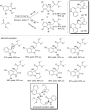
Scheme 30: Asymmetric aldol reaction of 1,1-dimethoxyacetone with isatins.

Scheme 31: Enantioselective Friedel-Crafts reaction of phenols with isatins.

Scheme 32: Enantioselective addition of 1-naphthols with isatins.

Scheme 33: Enantioselective aldol reaction between 3-acetyl-2H-chromen-2-ones and isatins.

Scheme 34: Stereoselective Mukaiyama–aldol reaction of fluorinated silyl enol ethers with isatins.

Scheme 35: Asymmetric vinylogous Mukaiyama–aldol reaction between 2-(trimethylsilyloxy)furan and isatins.

Scheme 36: β-ICD-catalyzed MBH reactions of isatins with maleimides.

Scheme 37: β-ICD-catalyzed MBH reactions of 7-azaisatins with maleimides and activated alkenes.

Scheme 38: Enantioselective aldol reaction of isatins with ketones.

Scheme 39: Direct asymmetric vinylogous aldol reactions of allyl ketones with isatins.

Scheme 40: Enantioselective aldol reactions of ketones with isatins.

Scheme 41: The MBH reaction of isatins with α,β-unsaturated γ-butyrolactam.

Scheme 42: Reactions of tert-butyl hydrazones with isatins followed by oxidation.

Scheme 43: Aldol reactions of isatin derivatives with ketones.

Scheme 44: Enantioselective decarboxylative cyanomethylation of isatins.

Scheme 45: Catalytic kinetic resolution of 3-hydroxy-3-substituted oxindoles.

Scheme 46: Lewis acid catalyzed Friedel–Crafts alkylation of 3-hydroxy-2-oxindoles with electron-rich phenols.

Scheme 47: Lewis acid catalyzed arylation of 3-hydroxyoxindoles with aromatics.

Scheme 48: Synthetic application of 3-arylated disubstituted oxindoles in the construction of core structures ...

Scheme 49: CPA-catalyzed dearomatization and arylation of 3-indolyl-3-hydroxyoxindoles with tryptamines and 3-...

Scheme 50: CPA-catalyzed enantioselective decarboxylative alkylation of β-keto acids with 3-hydroxy-3-indolylo...

Scheme 51: BINOL-derived imidodiphosphoric acid-catalyzed enantioselective Friedel–Crafts reactions of indoles...

Scheme 52: CPA-catalyzed enantioselective allylation of 3-indolylmethanols.

Scheme 53: 3-Indolylmethanol-based substitution and cycloaddition reactions.

Scheme 54: CPA-catalyzed asymmetric [3 + 3] cycloaddtion reactions of 3-indolylmethanols with azomethine ylide...

Scheme 55: CPA-catalyzed three-component cascade Michael/Pictet–Spengler reactions of 3-indolylmethanols and a...

Scheme 56: Acid-promoted chemodivergent and stereoselective synthesis of diverse indole derivatives.

Scheme 57: CPA-catalyzed asymmetric formal [3 + 2] cycloadditions.

Scheme 58: CPA-catalyzed enantioselective cascade reactions for the synthesis of C7-functionlized indoles.

Scheme 59: Lewis acid-promoted Prins cyclization of 3-allyl-3-hydroxyoxindoles with aldehydes.

Scheme 60: Ga(OTf)3-catalyzed reactions of allenols and phenols.

Scheme 61: I2-catalyzed construction of pyrrolo[2.3.4-kl]acridines from enaminones and 3-indolyl-3-hydroxyoxin...

Scheme 62: CPA-catalyzed asymmetric aza-ene reaction of 3-indolylmethanols with cyclic enaminones.

Scheme 63: Asymmetric α-alkylation of aldehydes with 3-indolyl-3-hydroxyoxindoles.

Scheme 64: Organocatalytic asymmetric α-alkylation of enolizable aldehydes with 3-indolyl-3-hydroxyoxindoles a...
Synthesis and in vitro cytotoxicity of acetylated 3-fluoro, 4-fluoro and 3,4-difluoro analogs of D-glucosamine and D-galactosamine
- Štěpán Horník,
- Lucie Červenková Šťastná,
- Petra Cuřínová,
- Jan Sýkora,
- Kateřina Káňová,
- Roman Hrstka,
- Ivana Císařová,
- Martin Dračínský and
- Jindřich Karban
Beilstein J. Org. Chem. 2016, 12, 750–759, doi:10.3762/bjoc.12.75
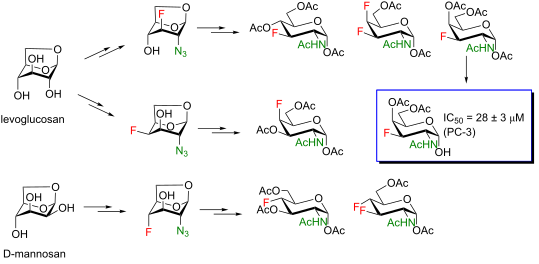
- ]. The resulting disruption of protein–(glycosamino)glycan interactions had important biomedical consequences such as reduced selectin-mediated tumor cell adhesion [12][13], suppressed selectin-mediated leukocyte migration [11][14][15], reduced angiogenesis [3], or inhibition of tumor growth by decreased

Graphical Abstract
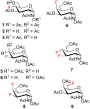
Figure 1: Examples of deoxofluorinated hexosamines.

Scheme 1: Retrosynthetic plan.

Scheme 2: Preparation of starting 2-azido compounds. Reagents and conditions: (a) NaN3, NH4Cl, MeOC2H4OH, 79%...

Scheme 3: Preparation of mono and difluoro analogs of 2-azido-2-deoxy-1,6-anhydro-β-D-gluco- and galactopyran...

Scheme 4: Suggested mechanisms for deoxofluorination at C-3 of 1,6-anhydro-β-D-glucohexopyranose derivatives....

Scheme 5: Formation of oxazoline 41 from 19.

Scheme 6: 1-O-Deacetylation of monofluorinated hexosamines. Reagents and conditions: (a) BnNH2, THF, 62%; (b)...
Strecker degradation of amino acids promoted by a camphor-derived sulfonamide
- M. Fernanda N. N. Carvalho,
- M. João Ferreira,
- Ana S. O. Knittel,
- Maria da Conceição Oliveira,
- João Costa Pessoa,
- Rudolf Herrmann and
- Gabriele Wagner
Beilstein J. Org. Chem. 2016, 12, 732–744, doi:10.3762/bjoc.12.73
- may expect such a barrier in the tautomerization (probably catalyzed by water) which forms the zwitterion by proton migration from the neutral imine. The experimental results on Strecker degradation have been summarized in a rule that says that the most efficient promoters have a structure of the type
- ). We therefore expected that kinetic effects during the tautomerizations might be responsible for the observed selectivity and checked the interconversion pathways between the tautomers 7–11 which differ only in the position of one proton. Such a proton migration must of course be catalyzed, and water

Graphical Abstract

Figure 1: Camphor and some camphor derivatives.

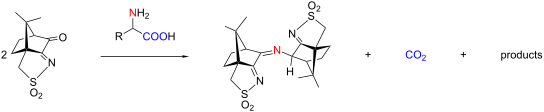
Scheme 1: Formation of 2 from reaction of oxoimine 1 with amino acids (H2NCH(R)COOH: R = H, CH3, CH2Ph, CH2CH...

Figure 2: ESI mass spectrum of 2 (positive ion mode).

Figure 3: 1H NMR spectrum of 2 in CD3CN at T = −20 °C.

Figure 4: 13C NMR spectrum of 2 in CD3CN at T = −20 °C.

Figure 5: Optimized structure of 2 ((S)-3A isomer) with labeling scheme.

Figure 6: NOESY spectrum (detail) showing the cross peak between H3A and H10A (see Supporting Information File 1, Figure S6 for the full s...
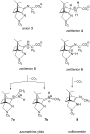
Figure 7: Upper row: anion 3 and zwitterion 4 which are stable upon geometry optimization. Middle row: zwitte...

Figure 8: Intramolecular reactions of non-zwitterionic ground state 6g to 11 (top) or 8 (bottom). The activat...

Figure 9: Transition-state geometry and salient bond distances along the IRC path for the reaction of 6g → 11...

Figure 10: Transition-state geometry and salient bond distances along the IRC path for the reaction of 6g → 8....
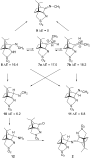
Figure 11: Potential products 7–11 of the Strecker degradation together with the reaction of compound 10 to gi...

Figure 12: ESI(+) tandem mass spectrum of the intermediate 12 (m/z 229) and proposed fragment ions.
Dynamic behavior of rearranging carbocations – implications for terpene biosynthesis
- Stephanie R. Hare and
- Dean J. Tantillo
Beilstein J. Org. Chem. 2016, 12, 377–390, doi:10.3762/bjoc.12.41
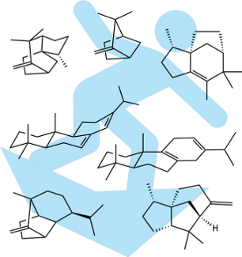
- in bringing the issue of dynamic effects to a wide audience [46]. The question addressed in this work was ostensibly simple: is the mechanism of dehydration/alkyl migration of a protonated alcohol a concerted or stepwise process? The IRC for the process revealed a concerted mechanism (Figure 5, blue
- and co-workers [55]. Additionally, replacing R in Figure 5 with a non-methyl substituent opened up the possibility of the formation of two different products resulting from migration of different alkyl groups (tertiary carbocation products A and B in Figure 5). While these differences led to results
- preorganization of the substrate into a conformation that disfavors the 1,2-hydride shift actually promotes miltiradiene formation. Finally, when dynamics trajectories were initiated from the region of the 1,6-proton transfer transition state associated with proton migration to the si face of the C=C double bond

Graphical Abstract
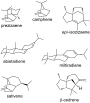
Figure 1: Representative terpenes.

Figure 2: Two different models showing how energy evolves throughout the course of a reaction: (a) a two-dime...

Figure 3: A depiction of the “snowboarder” analogy for reactions displaying non-statistical dynamic effects. ...

Figure 4: The tetramethylbromonium ion system [14].

Figure 5: The reaction mechanisms of interest in the PES and dynamics studies of Dupuis and co-workers (R = CH...

Figure 6: The portion of the norborn-2-en-7-ylmethyl cation PES examined by Ghigo et al. [60]. Energies reported ...

Figure 7: The transformation of 2-norbornyl cation to 1,3-dimethylcyclopentyl cation.
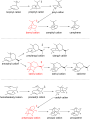
Figure 8: Carbocation rearrangements for which trajectory calculations were used to estimate lifetimes of sec...
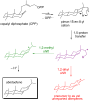
Figure 9: Carbocation rearrangements involved in abietadiene formation.
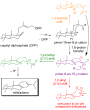
Figure 10: Carbocation rearrangements involved in miltiradiene formation.
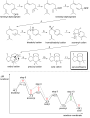
Figure 11: Top: carbocation rearrangements involved in epi-isozizaene formation. Bottom: reaction coordinate d...
Art, auto-mechanics, and supramolecular chemistry. A merging of hobbies and career
- Eric V. Anslyn
Beilstein J. Org. Chem. 2016, 12, 362–376, doi:10.3762/bjoc.12.40
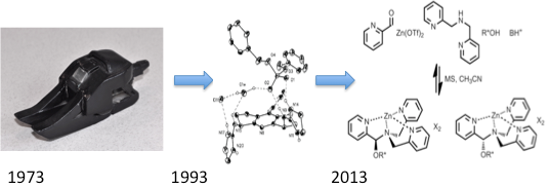
- medical school, research was one of my pursuits from freshman year throughout my undergraduate career. The project entailed the use of variable-temperature NMR to measure the dynamics of ligand migration in trimetallic osmium clusters [22][23]. Dr. Rosenberg was an inspirational figure, and his pursuit

Graphical Abstract

Figure 1: A) An Atwood Cluster, picture donated from Jerry Atwood. B) Vasarely serograph, personal photograph...

Figure 2: A) An airplane part air-brush rendering (S. S. Anslyn, 1950’s). B) A mural of a locomotive engine (...

Figure 3: Representative crystal structures of various complexes we have created over the years, that in my o...
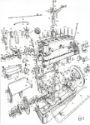
Figure 4: Exploded view of a 1953 Mk VII Jaguar in-line six internal combustion motor (bottom end), overhaule...

Figure 5: Kandinsky’s Concentric Circles. (http://amazinglittleartiststves.weebly.com/student-artwork/categor...

Figure 6: A potpourri of chemical receptor designs that influenced our group’s work 1, 2, 5, 6, 7, 8), along ...

Figure 7: Evolution of design of our citrate receptor [63-67].

Figure 8: Combinatorial peptide library designs used for differential sensing purposes [92-94].

Figure 9: Concept behind the electronic tongue, with micromachined divets that hold beads placed in an array....

Figure 10: a) LDA plot of the response from different wine varietals with array Z [103]. b) Three-dimensional LDA p...

Figure 11: Two seemingly impossible targets to make highly selective receptors for.
Diastereoselective synthesis of new O-alkylated and C-branched inositols and their corresponding fluoro analogues
- Charlotte Collet,
- Françoise Chrétien,
- Yves Chapleur and
- Sandrine Lamandé-Langle
Beilstein J. Org. Chem. 2016, 12, 353–361, doi:10.3762/bjoc.12.39
- ]. The trityl group in myo-11 and scyllo-11 was cleaved without acetyl migration using FeCl3 [47] to afford myo-12 and scyllo-12 in good yields. The primary hydroxy groups can be easily converted into fluorine by action of DAST in dichloromethane in less than 5 minutes to give myo-13 and scyllo-13 in 95
- /or acetate migration. By reducing the reaction time to 15 minutes the byproducts formation could be lowered to 10% and myo-2 was obtained in 45% isolated yield. It is worthy to note that 41% of the starting material was recovered. At this stage, the fluorination was tested using DAST [48] on myo-20
- show any fluorine incorporation. Various types of compounds resulting from the migration of the tertiary acetate to the primary position, elimination reaction or cyclization were identified depending on the experimental procedure. From these results, the fluorination was finally investigated on myo-22

Graphical Abstract

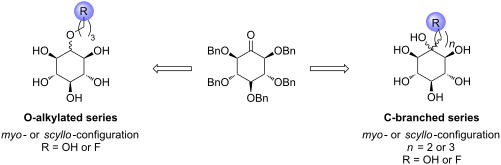
Figure 1: Structures of targeted synthetic inositol derivatives.

Scheme 1: Synthesis of O-alkylated inositol derivatives 1. Reagents and conditions: a) NaBH4, iPrOH, rt, 2 h,...

Scheme 2: Synthesis of O-alkylated fluorinated inositol derivatives 2.

Scheme 3: Synthesis of C-alkenylated inositol intermediates.

Figure 2: nOe correlations for C-alkenylated inositol intermediates.

Scheme 4: Synthesis of C-branched inositol derivatives 3 and 4.

Scheme 5: Synthesis of C-branched fluorinated inositol derivatives 5. Reagents and conditions: a) TrCl, DMAP ...

Scheme 6: Synthesis of C-branched fluorinated inositol derivatives 6. Reagents and conditions: a) TrCl, DMAP ...
Mycothiol synthesis by an anomerization reaction through endocyclic cleavage
- Shino Manabe and
- Yukishige Ito
Beilstein J. Org. Chem. 2016, 12, 328–333, doi:10.3762/bjoc.12.35
- migration, as reported previously, gave mycothiol 1 [23][24]. Conclusion We demonstrated a MSH synthesis using an anomerization reaction through endocyclic cleavage in the presence of a weak Lewis acid. Murphy also reported the utility of the anomerization of glucuronic acid for preparing 1,2-cis-linked

Graphical Abstract

Figure 1: Structure of mycothiol 1.

Scheme 1: Detoxification pathway mediated by MSH.

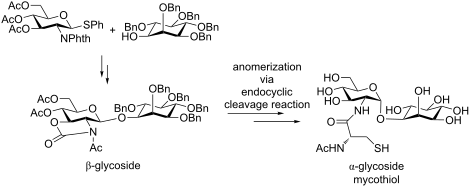
Scheme 2: Anomerization via endocyclic cleavage.

Scheme 3: Outline of mycothiol synthesis by anomerization.

Scheme 4: Synthesis of a pseudodisaccharide by an anomerization reaction.

Scheme 5: Mycothiol synthesis from pseudo-disaccharide 4.
Cascade alkylarylation of substituted N-allylbenzamides for the construction of dihydroisoquinolin-1(2H)-ones and isoquinoline-1,3(2H,4H)-diones
- Ping Qian,
- Bingnan Du,
- Wei Jiao,
- Haibo Mei,
- Jianlin Han and
- Yi Pan
Beilstein J. Org. Chem. 2016, 12, 301–308, doi:10.3762/bjoc.12.32
- [18][19], decarboxylative alkenylation of cycloalkanes with aryl vinylic carboxylic acids [20][21], trifluoromethylthiolation [22], thiolation [23][24], alkenylation [25][26], dehydrogenation−olefination and esterification [27][28], radical addition/1,2-aryl migration [29], cascade alkylation

Graphical Abstract

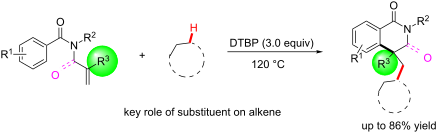
Scheme 1: Cascade 1,2-difunctionalization and cyclization to construct heterocycles.
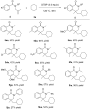
Scheme 2: Cyclization of cyclohexane (2a) with substituted N-(2-methylallyl)benzamide (reaction conditions: 4...

Scheme 3: Cyclization of cycloalkanes with N-methyl-N-(2-methylallyl)benzamide (reaction conditions: 4a (0.2 ...

Scheme 4: Cyclization reaction of 6 with cyclohexane 2a (reaction conditions: 6 (0.2 mmol), cyclohexane 2a (2...

Scheme 5: Control experiments for the mechanism studies. a) Reaction with N-unprotected substrate 8a; b) reac...

Scheme 6: Proposed mechanism.
Tandem processes promoted by a hydrogen shift in 6-arylfulvenes bearing acetalic units at ortho position: a combined experimental and computational study
- Mateo Alajarin,
- Marta Marin-Luna,
- Pilar Sanchez-Andrada and
- Angel Vidal
Beilstein J. Org. Chem. 2016, 12, 260–270, doi:10.3762/bjoc.12.28
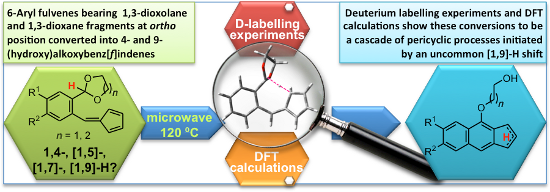
- promoting the migration of its acetalic H atom in a hydride-like manner. As result, we have disclosed a variety of tandem processes initiated by [1,5]- and [1,4]-hydride shifts from the acetalic carbon atom toward electrophilic molecular fragments [19][20][21][22][23][24][25][26][27]. Thus, we have reported
- products, it seems reasonable to hypothesize that the conversions 3 → 5 + 6 are initiated by an H migration from the acetalic carbon toward the fulvene substructure. If this migration is a [1,4]-hydride shift to the exocyclic C4 carbon atom of the fulvene fragment, as initially postulated, this step
- geometries of both transition structures TS1-A and TS1-B, more specifically to the distance between the two carbon atom termini of the H migration, shorter in TS1-B (2.63 Å) than in TS1-A (2.67 Å). Therefore, TS1-B is earlier than TS1-A. The geometry of TS1-B also accounts for its greater conjugation as the

Graphical Abstract

Scheme 1: Lewis acid-catalyzed [1,4]-H transfer/1,5-electrocyclization tandem processes of benzylidenemalonat...

Scheme 2: Preparation of benz[f]indenes 5 and 6. Reagents and conditions: i) cyclopentadiene, pyrrolidine, an...

Scheme 3: Postulated reaction path for the conversion 3a → 5a + 6a initiated by a [1,4]-hydride shift.

Scheme 4: Alternative mechanistic paths for the conversion 3a → 5a + 6a initiated by [1,5]-, [1,7]- or [1,9]-...

Scheme 5: Postulated outcome of the conversion 14 → 18 + 19 initiated by a [1,4]-deuteride shift.

Scheme 6: Preparation of deuterated benz[f]indenes 18 + 19 and 21 + 22. Reagents and conditions: i) DMSO, mic...

Scheme 7: Reagents and conditions: i) triethylamine (10%), DMSO, rt, 2 h.

Scheme 8: Preparation of benz[f]indenes 25 and 26. Reagents and conditions: i) cyclopentadiene, pyrrolidine, ...

Scheme 9: Mechanistic paths for the conversion of fulvene 3a into the benz[f]indenes 5a and 6a showing the en...

Figure 1: Optimized geometry of transition structures TS1-A, TS1-B, and TS1-C computed at the B3LYP/6-31+G** ...
Recent advances in metathesis-derived polymers containing transition metals in the side chain
- Ileana Dragutan,
- Valerian Dragutan,
- Bogdan C. Simionescu,
- Albert Demonceau and
- Helmut Fischer
Beilstein J. Org. Chem. 2015, 11, 2747–2762, doi:10.3762/bjoc.11.296
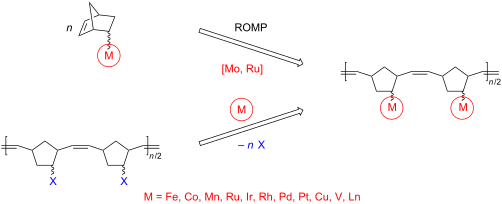
- ) polymerization [15][16], living ionic polymerizations, specifically ring-opening polymerization (ROP) [17], as well as migration insertion polymerization (MIP) [18], acyclic diene metathesis polymerization (ADMET) [19][20] and ring-opening metathesis polymerization (ROMP) [21][22][23][24][25][26][27]. These

Graphical Abstract

Scheme 1: Synthesis of homopolymers containing ferrocenyl and tetraethylene glycol groups.

Scheme 2: Synthesis of redox-robust triazolylbiferrocenyl polymers 4.

Scheme 3: Synthesis of cobaltocenium-containing polymers by ROMP.

Scheme 4: Cobaltocenium-appending copolymers by the ROMP approach (X = PF6, Y = BPh4 or Cl).

Scheme 5: Cobalt-containing polymers by click and ROMP approach.

Scheme 6: Synthesis of new cobalt-integrating block copolymers.

Scheme 7: Two alternative routes for the synthesis of redox-active cobalticenium-tethered polyelectrolytes.

Scheme 8: Oxanorbornene monomers for the synthesis of Ru-containing polymers by ROMP.

Scheme 9: ROMP synthesis of Ru-containing homopolymers.

Scheme 10: Synthesis of diblock copolymers incorporating ruthenium.

Scheme 11: Synthesis of Ru triblock copolymers.

Scheme 12: Synthesis of cross-linked Ru-containing triblock copolymers.

Scheme 13: Synthesis of Ir-containing homopolymers by ROMP.

Scheme 14: Monomers for Ir- and Os-containing ROMP polymers.

Scheme 15: ROMP block copolymers integrating Ir in their side chains.

Scheme 16: Synthesis of Rh-containing block copolymers.

Scheme 17: Access to rhodocenium-containing metallopolymers by ROMP.

Scheme 18: Synthesis of homopolymers equipped with Cu coordination centers.

Scheme 19: Synthesis of Cu-containing copolymers (spacer = –(CH2)5–; >C=O).

Scheme 20: Synthesis of polynorbornene bearing a polyoxometalate (POM) cluster in the side chain.

Scheme 21: Synthesis of Eu-containing copolymers by a ROMP-based route.
Recent highlights in biosynthesis research using stable isotopes
- Jan Rinkel and
- Jeroen S. Dickschat
Beilstein J. Org. Chem. 2015, 11, 2493–2508, doi:10.3762/bjoc.11.271
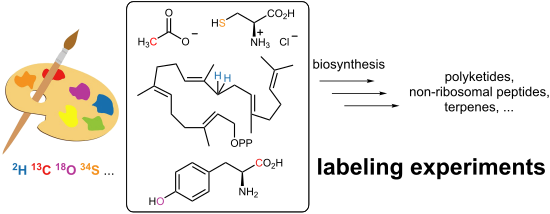
- GGPP cyclization to form the bicyclic cation 46, followed by a second cyclization and a 1,5-hydride shift to yield 47. This unusual hydride migration was experimentally supported by location of Hc at C-15 of 52. A 1,3-hydride shift generates the allylic cation 48, which can undergo another 1,5-hydride
- labeled product indicated a migration of the C-12 deuterium atoms to C-19 and to C-2, thus proving evidence for the proposed hydride migrations from 54 to 55 and from 57 to 58. The application of isotopes in mechanistic investigations is by far not limited to following atoms through the biosynthetic
- subsequent 1,2-hydride migration to 63 followed by ring closure gives 64, which is deprotonated to give pentalenene (65). Quantum chemical calculations led to the suggestion of the protoilludyl cation 66 as central intermediate between 61 and 64 (pathway B), which is directly formed from 61 [72

Graphical Abstract

Figure 1: Structures of lovastatin (1), aflatoxin B1 (2) and amphotericin B (3).

Scheme 1: a) Structure of rhizoxin (4). b) Two possible mechanisms of chain branching catalysed by a branchin...
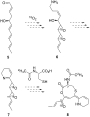
Scheme 2: Structure of coelimycin P1 (8) and proposed biosynthetic formation from the putative PKS produced a...
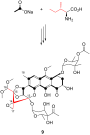
Scheme 3: Structure of trioxacarcin A (9) with highlighted carbon origins of the polyketide core from acetate...

Scheme 4: Proposed biosynthetic assembly of clostrubin A (12). Bold bonds show intact acetate units.

Figure 2: Structure of forazoline A (13).

Figure 3: Structures of tyrocidine A (14) and teixobactin (15).

Figure 4: Top: Structure of the NRPS product kollosin A (16) with the sequence N-formyl-D-Leu-L-Ala-D-Leu-L-V...

Scheme 5: Proposed biosynthesis of aspirochlorine (20) via 18 and 19.
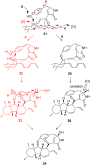
Scheme 6: Two different macrocyclization mechanisms in the biosynthesis of pyrrocidine A (24).

Figure 5: Structure of thiomarinol A (27). Bold bonds indicate carbon atoms derived from 4-hydroxybutyrate.
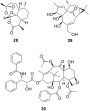
Figure 6: Structures of artemisinin (28), ingenol (29) and paclitaxel (30).

Figure 7: The revised (31) and the previously suggested (32) structure of hypodoratoxide and the structure of...

Figure 8: Structure of the two interconvertible conformers of (1(10)E,4E)-germacradien-6-ol (34) studied with...
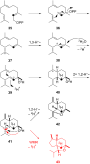
Scheme 7: Proposed cyclization mechanism of corvol ethers A (42) and B (43) with the investigated reprotonati...

Scheme 8: Predicted (top) and observed (bottom) 13C-labeling pattern in cyclooctatin (45) after feeding of [U-...

Scheme 9: Proposed mechanism of the cyclooctat-9-en-7-ol (52) biosynthesis catalysed by CotB2. Annotated hydr...

Scheme 10: Cyclization mechanism of sesterfisherol (59). Bold lines indicate acetate units; black circles repr...
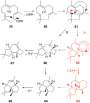
Scheme 11: Cyclization mechanisms to pentalenene (65) and protoillud-6-ene (67).

Scheme 12: Reactions of chorismate catalyzed by three different enzyme subfamilies. Oxygen atoms originating f...

Scheme 13: Incorporation of sulfur into tropodithietic acid (72) via cysteine.

Scheme 14: Biosynthetic proposal for the starter unit of antimycin biosynthesis. The hydrogens at positions R1...
Total synthesis of panicein A2
- Lili Yeung,
- Lisa I. Pilkington,
- Melissa M. Cadelis,
- Brent R. Copp and
- David Barker
Beilstein J. Org. Chem. 2015, 11, 1991–1996, doi:10.3762/bjoc.11.215
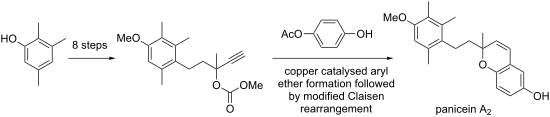
- isolated from Reniera fulva and R. mucosa [2][3]. It has been postulated that the biosynthesis of paniceins centres around the cyclisation of a farnesyl precursor 6 [4] to an abscisane derivative 7 followed by a 1,2-methyl migration and subsequent oxidation to give panicein A (1) [1][3]. Subsequent

Graphical Abstract
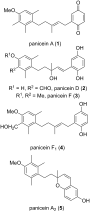
Figure 1: Members of the panicein family of aromatic sesquiterpenoids.
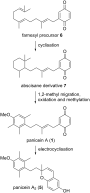
Figure 2: Proposed biogenesis of panicein A2 (5).

Figure 3: Retrosynthetic analysis of panicein A2 (5).

Scheme 1: Synthesis of ketone 13.

Scheme 2: Synthesis of propargyl ether 8 through formation of trifluoroacetate intermediate 17.

Scheme 3: Synthesis of propargyl ether 8 through carbonate 18.

Scheme 4: Synthesis of panicein A2 (5).
Cross metathesis of unsaturated epoxides for the synthesis of polyfunctional building blocks
- Meriem K. Abderrezak,
- Kristýna Šichová,
- Nancy Dominguez-Boblett,
- Antoine Dupé,
- Zahia Kabouche,
- Christian Bruneau and
- Cédric Fischmeister
Beilstein J. Org. Chem. 2015, 11, 1876–1880, doi:10.3762/bjoc.11.201
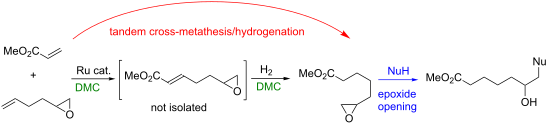
- phosphine could interact with the electron-deficient olefin leading to catalyst decomposition [31]. As observed by us and other groups in cross metathesis involving different substrates, double bond migration side-reactions took place during this transformation. This side reaction could be circumvented
- using benzoquinone [32] as an additive to decrease the extent of double-bond migration. As depicted in Table 1 (entries 1–4), 10 mol % of benzoquinone were necessary to ensure a limited amount (<10%) of side products resulting from double-bond migration. However, addition of benzoquinone resulted in

Graphical Abstract

Scheme 1: Cross metathesis of 1 with methyl acrylate.

Scheme 2: Cross metathesis of 1 with acrylonitrile.

Scheme 3: Tandem cross metathesis/hydrogenation.

Scheme 4: Trifunctional compounds obtained by ring-opening of epoxide 4.
Preparation of conjugated dienoates with Bestmann ylide: Towards the synthesis of zampanolide and dactylolide using a facile linchpin approach
- Jingjing Wang,
- Samuel Z. Y. Ting and
- Joanne E. Harvey
Beilstein J. Org. Chem. 2015, 11, 1815–1822, doi:10.3762/bjoc.11.197
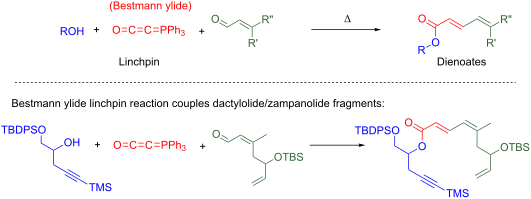
- was contaminated with further isomeric material. Careful analysis of the product mixtures led to the realisation that silyl migration from the primary to the secondary hydroxy group was occurring in the reaction, leading to the C20-linked ester isomer in addition to the desired C19 ester 11g. In
- -unsaturated ester 5a was formed as a mixture of diastereomers (Scheme 3), as expected, but was again contaminated with the regioisomer resulting from silyl migration (2:1 ratio 5a:isomeric C20 ester). Employing the PMB-protected C19 alcohols 7b [43][44][45] and 7c [43][44][45][49] led to the desired products

Graphical Abstract

Figure 1: Structures of (−)-zampanolide (2) and (+)-dactylolide (3).

Scheme 1: Retrosynthesis of zampanolide involving a Bestmann ylide linchpin strategy.

Scheme 2: Synthesis of aldehyde 8.

Scheme 3: Bestmann ylide linchpin coupling of the C16–C20 and C3–C8 fragments of zampanolide/dactylolide.
Dicarboxylic esters: Useful tools for the biocatalyzed synthesis of hybrid compounds and polymers
- Ivan Bassanini,
- Karl Hult and
- Sergio Riva
Beilstein J. Org. Chem. 2015, 11, 1583–1595, doi:10.3762/bjoc.11.174

- respective two parent compounds. This is the so-called ‘dual drug’ strategy [37][38][39][40][41]. For instance [40][41], an increased capacity of inhibiting endothelial cell differentiation and migration (key steps of the angiogenic process) was observed as well as a marked ability to inhibit the

Graphical Abstract

Scheme 1: Activated derivatives of dicarboxylic acids.

Figure 1: Example of natural compounds selectively acylated with dicarboxylic esters.

Figure 2: C6-dicarboxylic acid diesters derivatives of NAG-thiazoline.

Figure 3: Sylibin dimers obtained by CAL-B catalyzed trans-acylation reactions.

Scheme 2: Biocatalyzed synthesis of paclitaxel derivatives.

Figure 4: 5-Fluorouridine derivatives obtained by CAL-B catalysis.

Scheme 3: Biocatalyzed synthesis of hybrid diesters 17 and 18.

Scheme 4: Hybrid derivatives of sylibin.

Figure 5: Bolaamphiphilic molecules containing (L)- and/or (D)-isoascorbic acid moieties.

Figure 6: Doxorubicin (29) trapped in a polyester made of glycolate, sebacate and 1,4-butandiol units.

Figure 7: Polyesters containing functionalized pentofuranose derivatives.

Figure 8: Polyesters containing disulfide moieties.

Figure 9: Polyesters containing epoxy moieties.

Figure 10: Biocatalyzed synthesis of polyesters containing glycerol.

Figure 11: Iataconic (34) and malic (35) acid.

Figure 12: Oxidized poly(hexanediol-2-mercaptosuccinate) polymer.

Figure 13: C-5-substituted isophthalates.

Figure 14: Curcumin-based polyesters.

Figure 15: Silylated polyesters.

Figure 16: Polyesters containing reactive ether moieties.

Figure 17: Polyesters obtained by CAL-B-catalyzed condensation of dicarboxylic esters and N-substituted dietha...

Figure 18: Polyesters comprising mexiletine (38) moieties.

Figure 19: Poly(amide-co-ester)s comprising a terminal hydroxy moiety.

Figure 20: Polymer comprising α-oxydiacid moieties.

Figure 21: Telechelics with methacrylate ends.

Figure 22: Telechelics with allyl-ether ends.

Figure 23: Telechelics with ends functionalized as epoxides.
Synthesis of a tricyclic lactam via Beckmann rearrangement and ring-rearrangement metathesis as key steps
- Sambasivarao Kotha,
- Ongolu Ravikumar and
- Jadab Majhi
Beilstein J. Org. Chem. 2015, 11, 1503–1508, doi:10.3762/bjoc.11.163
- amide in the presence of acid was discovered in 1886. This rearrangement involves the migration of a group anti to the leaving group on the nitrogen atom. The BR has widely been used in synthetic organic chemistry, for example, a large-scale production of Nylon-6 is based on the synthesis of ε

Graphical Abstract

Figure 1: Retrosynthetic analysis of tricyclic amide 1.

Scheme 1: Synthesis of tricyclic ketone 4.

Scheme 2: Beckmann rearrangement of oximes 8a and 8b.

Scheme 3: Beckmann rearrangement reaction in a single step.

Scheme 4: Synthesis of ring-rearrangement precursors.

Scheme 5: Synthesis of Beckmann rearrangement precursors.

Scheme 6: Beckmann rearrangement of oxime isomers 11a and 11b.

Figure 2: Molecular crystal structure of compound 11b.

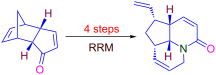
Scheme 7: Synthesis of aza tricyclic compound 1 by RRM.
Selected synthetic strategies to cyclophanes
- Sambasivarao Kotha,
- Mukesh E. Shirbhate and
- Gopalkrushna T. Waghule
Beilstein J. Org. Chem. 2015, 11, 1274–1331, doi:10.3762/bjoc.11.142

Graphical Abstract

Figure 1: General representation of cyclophanes.

Figure 2: cyclophanes one or more with heteroatom.

Figure 3: Metathesis catalysts 12–17 and C–C coupling catalyst 18.

Figure 4: Natural products containing the cyclophane skeleton.

Figure 5: Turriane family of natural products.

Scheme 1: Synthesis of [3]ferrocenophanes through Mannich reaction. Reagents and conditions: (i) excess HNMe2...

Scheme 2: Synthesis of cyclophanes through Michael addition. Reagents and conditions: (i) xylylene dibromide,...

Scheme 3: Synthesis of normuscopyridine analogue 37 through an oxymercuration–oxidation strategy. Reagents an...

Scheme 4: Synthesis of tribenzocyclotriyne 39 through Castro–Stephens coupling reaction. Reagents and conditi...

Scheme 5: Synthesis of cyclophane 43 through Glaser–Eglinton coupling. Reagents and conditions: (i) 9,10-bis(...

Scheme 6: Synthesis of the macrocyclic C-glycosyl cyclophane through Glaser coupling. Reagents and conditions...

Scheme 7: Synthesis of cyclophane-containing complex 49 through Glaser–Eglinton coupling reaction. Reagents a...

Scheme 8: Synthesis of cyclophane 53 through Glaser–Eglinton coupling. Reagents and conditions: (i) K2CO3, ac...

Figure 6: Cyclophanes 54–56 that have been synthesized through Glaser–Eglinton coupling.

Figure 7: Synthesis of tetrasubstituted [2.2]paracyclophane 57 and chiral cyclophyne 58 through Eglinton coup...

Scheme 9: Synthesis of cyclophane through Glaser–Hay coupling reaction. Reagents and conditions: (i) CuCl2 (1...

Scheme 10: Synthesis of seco-C/D ring analogs of ergot alkaloids through intramolecular Heck reaction. Reagent...

Scheme 11: Synthesis of muscopyridine 73 via Kumada coupling. Reagents and conditions: (i) 72, THF, ether, 20 ...

Scheme 12: Synthesis of the cyclophane 79 via McMurry coupling. Reagents and conditions: (i) 75, decaline, ref...

Scheme 13: Synthesis of stilbenophane 81 via McMurry coupling. Reagents and conditions: (i) TiCl4, Zn, pyridin...

Scheme 14: Synthesis of stilbenophane 85 via McMurry coupling. Reagents and conditions: (i) NBS (2 equiv), ben...
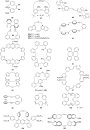
Figure 8: List of cyclophanes prepared via McMurry coupling reaction as a key step.

Scheme 15: Synthesis of paracyclophane by cross coupling involving Pd(0) catalyst. Reagents and conditions: (i...

Scheme 16: Synthesis of the cyclophane 112 via the pinacol coupling and 113 by RCM. Reagents and conditions: (...

Scheme 17: Synthesis of cyclophane derivatives 122a–c via Sonogoshira coupling. Reagents and conditions: (i) C...

Scheme 18: Synthesis of cyclophane 130 via Suzuki–Miyaura reaction as a key step. Reagents and conditions: (i)...

Scheme 19: Synthesis of the mycocyclosin via Suzuki–Miyaura cross coupling. Reagents and conditions: (i) benzy...

Scheme 20: Synthesis of cyclophanes via Wurtz coupling reaction Reagents and conditions: (i) PhLi, Et2O, C6H6,...

Scheme 21: Synthesis of non-natural glycophanes using alkyne metathesis. Reagents and conditions: (i) G-I (12)...

Figure 9: Synthesis of cyclophanes via ring-closing alkyne metathesis.

Scheme 22: Synthesis of crownophanes by cross-enyne metathesis. Reagents and conditions: (i) G-II (13), 5 mol ...

Scheme 23: Synthesis of (−)-cylindrocyclophanes A (156) and (−)-cylindrocyclophanes F (155). Reagents and cond...

Scheme 24: Synthesis of cyclophane 159 derivatives via SM cross-coupling and RCM. Reagents and conditions: (i)...

Scheme 25: Sexithiophene synthesis via cross metathesis. Reagents and conditions: (i) 161, Pd(PPh3)4, K2CO3, T...

Scheme 26: Synthesis of pyrrole-based cyclophane using enyne metathesis. Reagents and conditions: (i) Se, chlo...

Scheme 27: Synthesis of macrocyclic derivatives by RCM. Reagents and conditions: (i) G-I/G-II, CH2Cl2, 0.005 M...

Scheme 28: Synthesis of enantiopure β-lactam-based dienyl bis(dihydrofuran) 179. Reagents and conditions: (i) ...

Scheme 29: Synthesis of a [1.1.6]metaparacyclophane derivative 183 via SM cross coupling. Reagents and conditi...

Scheme 30: Synthesis of a [1.1.6]metaparacyclophane derivative 190 via SM cross coupling. Reagents and conditi...

Scheme 31: Template-promoted synthesis of cyclophanes involving RCM. Reagents and conditions: (i) acenaphthene...

Scheme 32: Synthesis of [3.4]cyclophane derivatives 200 via SM cross coupling and RCM. Reagents and conditions...
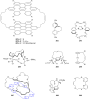
Figure 10: Examples for cyclophanes synthesized by RCM.

Scheme 33: Synthesis of the longithorone C framework assisted by fluorinated auxiliaries. Reagents and conditi...

Scheme 34: Synthesis of the longithorone framework via RCM. Reagents and conditions: (i) 213, NaH, THF, rt, 10...

Scheme 35: Synthesis of floresolide B via RCM as a key step. Reagents and conditions: (i) G-II (13, 0.1 equiv)...

Scheme 36: Synthesis of normuscopyridine (223) by the RCM strategy. Reagents and condition: (i) Mg, THF, hexen...

Scheme 37: Synthesis of muscopyridine (73) via RCM. Reagents and conditions: (i) 225, NaH, THF, 0 °C to rt, 1....

Scheme 38: Synthesis of muscopyridine (73) via RCM strategy. Reagents and conditions: (i) NaH, n-BuLi, 5-bromo...

Scheme 39: Synthesis of pyridinophane derivatives 223 and 245. Reagents and conditions: (i) PhSO2Na, TBAB, CH3...

Scheme 40: Synthesis of metacyclophane derivatives 251 and 253. Reagents and conditions: (i) 240, NaH, THF, rt...

Scheme 41: Synthesis of normuscopyridine and its higher analogues. Reagents and conditions: (i) alkenyl bromid...

Scheme 42: Synthesis of fluorinated ferrocenophane 263 via a [2 + 2] cycloaddition. Reagents and conditions: (...

Scheme 43: Synthesis of [2.n]metacyclophanes 270 via a [2 + 2] cycloaddition. Reagents and conditions: (i) Ac2...

Scheme 44: Synthesis of metacyclophane 273 by a [2 + 2 + 2] co-trimerization. Reagents and conditions: (i) [Rh...

Scheme 45: Synthesis of paracyclophane 276 via a [2 + 2 + 2] cycloaddition reaction. Reagents and conditions: ...

Scheme 46: Synthesis of cyclophane 278 via a [2 + 2 + 2] cycloaddition reaction. Reagents and conditions: (i) ...

Scheme 47: Synthesis of cyclophane 280 via a [2 + 2 + 2] cycloaddition. Reagents and conditions: (i) [(Rh(cod)(...

Scheme 48: Synthesis of taxane framework by a [2 + 2 + 2] cycloaddition. Reagents and conditions: (i) Cp(CO)2 ...

Scheme 49: Synthesis of cyclophane 284 and 285 via a [2 + 2 + 2] cycloaddition reaction. Reagents and conditio...

Scheme 50: Synthesis of pyridinophanes 293a,b and 294a,b via a [2 + 2 + 2] cycloaddition. Reagents and conditi...

Scheme 51: Synthesis of pyridinophanes 296 and 297 via a [2 + 2 + 2] cycloaddition. Reagents and conditions: (...

Scheme 52: Synthesis of triazolophane by a 1,3-dipolar cycloaddition. Reagents and conditions: (i) propargyl b...

Scheme 53: Synthesis of glycotriazolophane 309 by a click reaction. Reagents and conditions: (i) LiOH, H2O, Me...

Figure 11: Cyclophanes 310 and 311 prepared via click chemistry.

Scheme 54: Synthesis of cyclophane via the Dötz benzannulation. Reagents and conditions: (i) THF, 100 °C, 12 h...

Scheme 55: Synthesis of [6,6]metacyclophane by a Dötz benzannulation. Reagents and conditions: (i) THF, 100 °C...

Scheme 56: Synthesis of cyclophanes by a Dötz benzannulation. Reagents and conditions: (i) THF, 65 °C, 3 h; (i...

Scheme 57: Synthesis of muscopyridine (73) via an intramolecular DA reaction of ketene. Reagents and condition...

Scheme 58: Synthesis of bis[10]paracyclophane 336 via Diels–Alder reaction. Reagents and conditions: (i) DMAD,...

Scheme 59: Synthesis of [8]paracyclophane via DA reaction. Reagents and conditions: (i) maleic anhydride, 3–5 ...

Scheme 60: Biomimetic synthesis of (−)-longithorone A. Reagents and conditions: (i) Me2AlCl, CH2Cl2, −20 °C, 7...

Scheme 61: Synthesis of sporolide B (349) via a [4 + 2] cycloaddition reaction. Reagents and conditions: (i) P...

Scheme 62: Synthesis of the framework of (+)-cavicularin (352) via a [4 + 2] cycloaddition. Reagents and condi...

Scheme 63: Synthesis of oxazole-containing cyclophane 354 via Beckmann rearrangement. Reagents and conditions:...

Scheme 64: Synthesis of cyclophanes 360a–c via benzidine rearrangement. Reagents and conditions: (i) 356a–d, K2...

Scheme 65: Synthesis of cyclophanes 365a–c via benzidine rearrangement. Reagents and conditions: (i) BocNHNH2,...

Scheme 66: Synthesis of metacyclophane 367 via Ciamician–Dennstedt rearrangement. Reagents and conditions: (i)...

Scheme 67: Synthesis of cyclophane by tandem Claisen rearrangement and RCM as key steps. Reagents and conditio...

Scheme 68: Synthesis of cyclophane derivative 380. Reagents and conditions: (i) K2CO3, CH3CN, allyl bromide, r...

Scheme 69: Synthesis of metacyclophane via Cope rearrangement. Reagents and conditions: (i) MeOH, NaBH4, rt, 1...

Scheme 70: Synthesis of cyclopropanophane via Favorskii rearrangement. Reagents and conditions: (i) Br2, CH2Cl2...

Scheme 71: Cyclophane 389 synthesis via photo-Fries rearrangement. Reagents and conditions: (i) DMAP, EDCl/CHCl...

Scheme 72: Synthesis of normuscopyridine (223) via Schmidt rearrangement. Reagents and conditions: (i) ethyl s...

Scheme 73: Synthesis of crownophanes by tandem Claisen rearrangement. Reagents and conditions: (i) diamine, Et3...

Scheme 74: Attempted synthesis of cyclophanes via tandem Claisen rearrangement and RCM. Reagents and condition...

Scheme 75: Synthesis of muscopyridine via alkylation with 2,6-dimethylpyridine anion. Reagents and conditions:...

Scheme 76: Synthesis of cyclophane via Friedel–Craft acylation. Reagents and conditions: (i) CS2, AlCl3, 7 d, ...

Scheme 77: Pyridinophane 418 synthesis via Friedel–Craft acylation. Reagents and conditions: (i) 416, AlCl3, CH...

Scheme 78: Cyclophane synthesis involving the Kotha–Schölkopf reagent 421. Reagents and conditions: (i) NBS, A...

Scheme 79: Cyclophane synthesis involving the Kotha–Schölkopf reagent 421. Reagents and conditions: (i) BEMP, ...

Scheme 80: Cyclophane synthesis by coupling with TosMIC. Reagents and conditions: (i) (a) ClCH2OCH3, TiCl4, CS2...

Scheme 81: Synthesis of diaza[32]cyclophanes and triaza[33]cyclophanes. Reagents and conditions: (i) DMF, NaH,...

Scheme 82: Synthesis of cyclophane 439 via acyloin condensation. Reagents and conditions: (i) Na, xylene, 75%;...

Scheme 83: Synthesis of multibridged binuclear cyclophane 442 by aldol condensation. Reagents and conditions: ...

Scheme 84: Synthesis of various macrolactones. Reagents and conditions: (i) iPr2EtN, DMF, 77–83%; (ii) TBDMSCl...

Scheme 85: Synthesis of muscone and muscopyridine via Yamaguchi esterification. Reagents and conditions: (i) 4...

Scheme 86: Synthesis of [5]metacyclophane via a double elimination reaction. Reagents and conditions: (i) LiBr...

Figure 12: Cyclophanes 466–472 synthesized via Hofmann elimination.

Scheme 87: Synthesis of cryptophane via Baylis–Hillman reaction. Reagents and conditions: (i) methyl acrylate,...

Scheme 88: Synthesis of cyclophane 479 via double Chichibabin reaction. Reagents and conditions: (i) excess 478...

Scheme 89: Synthesis of cyclophane 483 via double Chichibabin reaction. Reagents and conditions: (i) 481, OH−;...

Scheme 90: Synthesis of cyclopeptide via an intramolecular SNAr reaction. Reagents and conditions: (i) TBAF, T...

Scheme 91: Synthesis of muscopyridine (73) via C-zip ring enlargement reaction. Reagents and conditions: (i) H...

Figure 13: Mechanism of the formation of compound 494.

Scheme 92: Synthesis of indolophanetetraynes 501a,b using the Nicholas reaction as a key step. Reagents and co...

Scheme 93: Synthesis of cyclophane via radical cyclization. Reagents and conditions: (i) cyclododecanone, phen...

Scheme 94: Synthesis of (−)-cylindrocyclophanes A (156) and (−)-cylindrocyclophanes F (155). Reagents and cond...

Scheme 95: Cyclophane synthesis via Wittig reaction. Reagents and conditions: (i) LiOEt (2.1 equiv), THF, −78 ...

Figure 14: Representative examples of cyclophanes synthesized via Wittig reaction.

Scheme 96: Synthesis of the [6]paracyclophane via isomerization of Dewar benzene. Reagents and conditions: (i)...
Synthesis of icariin from kaempferol through regioselective methylation and para-Claisen–Cope rearrangement
- Qinggang Mei,
- Chun Wang,
- Zhigang Zhao,
- Weicheng Yuan and
- Guolin Zhang
Beilstein J. Org. Chem. 2015, 11, 1220–1225, doi:10.3762/bjoc.11.135
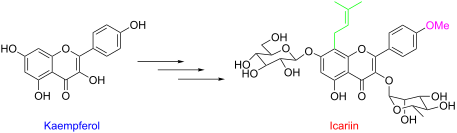
- unsatisfactory, even when prolonging the reaction time to 36 h or raising the temperature to 100 °C. By carefully investigating the two routes in Scheme 3, we assumed that an appropriate base is in favor of the [1,5]H σ migration in route 2, as well as lowering the acidity of Eu(fod)3 to prevent 12b from

Graphical Abstract

Figure 1: Structures of icariin (1), icariside I (2) and icaritin (3).

Scheme 1: Reagents and conditions: (a) Ac2O, pyridine, 94%; (b) BnBr, KI, K2CO3, acetone, 85%; (c) Me2SO4, K2...

Scheme 2: Decomposition of 8.

Scheme 3: Claisen rearrangement of flavonol 8.

Scheme 4: Reagents and conditions: (a) 15, DMF/CHCl3, Ag2CO3, molecular sieves (4 Å, powder); (b) 16, CH2Cl2,...



