


Search results
Search for "charge separation" in Full Text gives 90 result(s) in Beilstein Journal of Nanotechnology.
Tin dioxide nanomaterial-based photocatalysts for nitrogen oxide oxidation: a review
Beilstein J. Nanotechnol. 2022, 13, 96–113, doi:10.3762/bjnano.13.7
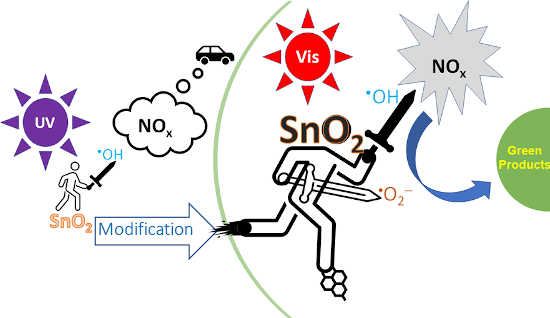
- band structure, which remains critical for studying charge separation [29]. In another study, a SnO2–Zn2SnO4 Z-scheme photocatalyst system was prepared with a graphene modification to create surface vacancy sites in the composite, which contributed to an enhanced photoactivity in the oxidation of NO
- of SnO2. Moreover, enhanced visible light response and enhanced charge separation in the sample with GQDs have been observed (Figure 13c). The EIS measurements (Figure 13d) indicated that the diameter of the arc radius of SnO2/GQDs (1%) is much smaller than that of SnO2, confirming that the GQDs
- contributed to improving the charge separation, significantly reducing indoor NO under visible light irradiation. The optimized composite removed 57% of the initial NO while generating a negligible amount of NO2. In addition, this work found that the insertion of graphene quantum dots did not induce any


Nanoporous and nonporous conjugated donor–acceptor polymer semiconductors for photocatalytic hydrogen production
Beilstein J. Nanotechnol. 2021, 12, 607–623, doi:10.3762/bjnano.12.50
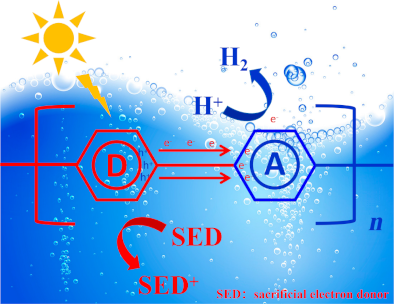
- and M2 showed better charge separation than M3. In particular, M2 exhibited superior charge separation when considering spatial effects among the three fragments. Consequently, increasing the fraction of M2 in the polymers could be beneficial to the photocatalytic efficiency. He et al. developed two
- photocatalytic properties. PDI-containing polymers, such as P15, normally confer smaller HERs than the others. P18, composed of strong electron-donating and bipyridine segments, rendered the best HER, which was attributed to its enhanced light absorption, better wettability, and more efficient charge separation
- * intermediates on polymer surface. Consequently, halogen substitution on the polymer is an approach to evoke enhanced charge separation and improve the HER of CPs. In 2018, Jiang et al. [68] systematically studied the effects of π-linking groups, that is, benzene or biphenyl moieties in pyrene–benzothiadiazole




Boosting of photocatalytic hydrogen evolution via chlorine doping of polymeric carbon nitride
Beilstein J. Nanotechnol. 2021, 12, 473–484, doi:10.3762/bjnano.12.38
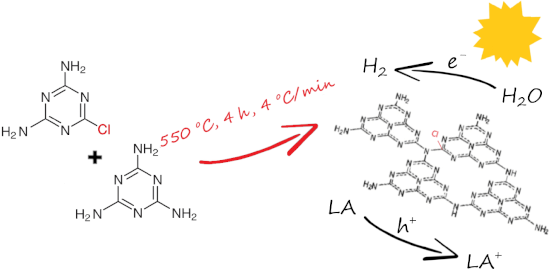
- electron delocalization, efficient charge separation, favorable retention of the crystal structure, and light-harvesting extension [37]. Here, a new procedure of PCN doping with chlorine will be revealed. The photocatalytic activity of the prepared materials was investigated in a water-splitting reaction
- structure allows for the catalyst to have a higher specific surface area and more active sites, which can simultaneously promote mass transfer and charge separation in nanodomains, thus optimizing the π-conjugated system for photochemical applications [40][41]. Furthermore, elemental mapping of nitrogen


Controlling the electronic and physical coupling on dielectric thin films
Beilstein J. Nanotechnol. 2020, 11, 1492–1503, doi:10.3762/bjnano.11.132
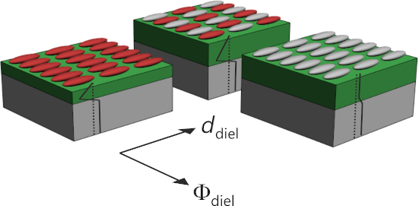
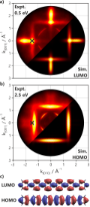
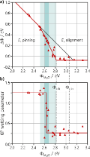
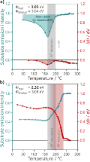
- constant of the thin film, and dcs is the distance between the charge in the molecule and its image charge in the metal (i.e., the charge separation distance). In this report, we demonstrate the robustness of the conclusions drawn from the 5A study by considering para-sexiphenyl (6P, C36H26). In contrast




Preparation, characterization and photocatalytic performance of heterostructured CuO–ZnO-loaded composite nanofiber membranes
Beilstein J. Nanotechnol. 2020, 11, 631–650, doi:10.3762/bjnano.11.50
- oxidize species adsorbed on the semiconductor material. However, the high degree of recombination of charge carriers is disadvantage [6]. The coupling of two different semiconductors can yield an efficient charge separation, leading to a vector transmission of photogenerated electrons and holes from one
- a high photocatalytic activity because of a better charge separation [16][17][18][19][20][21][22]. Liu et al. [23] prepared CuO/ZnO nanocomposites by homogeneous coprecipitation and used them for the photocatalytic degradation of methyl orange. Wei et al. [24] fabricated CuO/ZnO composite nanofilms











Synthesis and enhanced photocatalytic performance of 0D/2D CuO/tourmaline composite photocatalysts
Beilstein J. Nanotechnol. 2020, 11, 407–416, doi:10.3762/bjnano.11.31
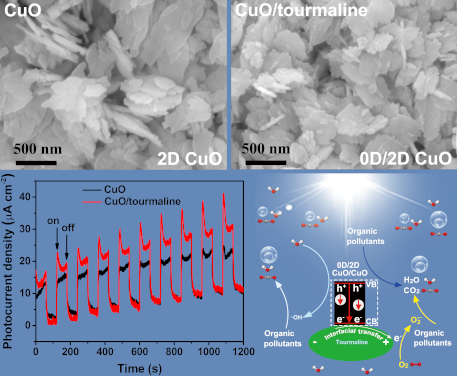
- tourmaline-based functional composite photocatalysts for the treatment of organic contaminants in water. Keywords: 0D/2D CuO; organic contaminants; photocatalytic activity; photoinduced charge separation; tourmaline; Introduction Developing a novel semiconductor with excellent photoreactive activity toward


Molecular architectonics of DNA for functional nanoarchitectures
Beilstein J. Nanotechnol. 2020, 11, 124–140, doi:10.3762/bjnano.11.11
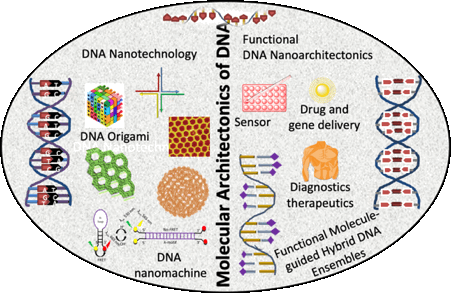
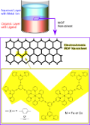
- of the advantages of this system was that the DNA–multichromophore organization could be aligned vertically over the gold electrode, which facilitated exothermic charge separation and suppressesed the ground-state charge transfer (CT) complexation between DPP and NDI, followed by the generation of a


Nontoxic pyrite iron sulfide nanocrystals as second electron acceptor in PTB7:PC71BM-based organic photovoltaic cells
Beilstein J. Nanotechnol. 2019, 10, 2238–2250, doi:10.3762/bjnano.10.216
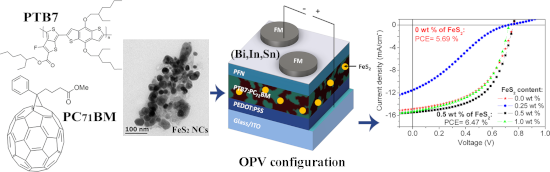
- correlation with the absorption of the PTB7:PC71BM blend. The EQE of devices with 0.5 wt % of FeS2 is higher than that of the reference OPV cells, which could be attributed to a better charge separation (exciton dissociation enhancement) as well as enhanced carrier transport and collection in the


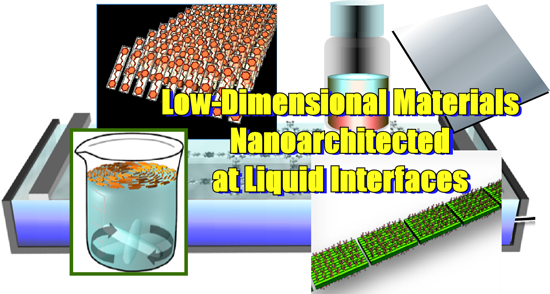
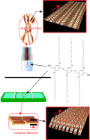
Materials nanoarchitectonics at two-dimensional liquid interfaces
Beilstein J. Nanotechnol. 2019, 10, 1559–1587, doi:10.3762/bjnano.10.153













Review of time-resolved non-contact electrostatic force microscopy techniques with applications to ionic transport measurements
Beilstein J. Nanotechnol. 2019, 10, 617–633, doi:10.3762/bjnano.10.62
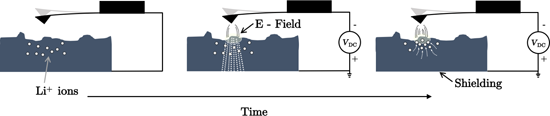
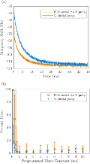
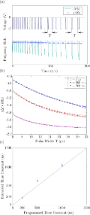
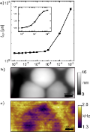
- allow for the measurement of time-varying forces arising from phenomena such as ion transport in battery materials or charge separation in photovoltaic systems. These forces reveal information about dynamic processes happening over nanometer length scales due to the nanometer-sized probe tips used in





Reduced graphene oxide supported C3N4 nanoflakes and quantum dots as metal-free catalysts for visible light assisted CO2 reduction
Beilstein J. Nanotechnol. 2019, 10, 448–458, doi:10.3762/bjnano.10.44
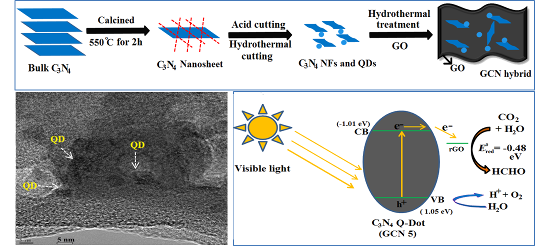
- conduction band (CB) and valence band (VB) edge positions, exhibit efficient charge separation, have a large surface area, and it must be cost effective. Considering the above factors, nontoxic metal-free catalysts, such as graphitic carbon nitride (g-C3N4) and reduced graphene oxide (rGO) have received wide
- all these interesting properties, pure g-C3N4 only weakly absorbs visible light due to its wide band gap and also has poor electrical conductivity [18]. An efficient way to increase the charge separation and electrical conductivity of g-C3N4 is to modify it with rGO. Besides the structural and
- and NFs, which increases the effective charge separation within the hybrids. Interestingly, the results also show that CN-5 exhibited almost two times higher reduction capacity of CO2 compared to CN-10 and CN-20. This is because of the QD size of CN-5, which increases its surface area (231.3 m2/g





Impact of the anodization time on the photocatalytic activity of TiO2 nanotubes
Beilstein J. Nanotechnol. 2018, 9, 2628–2643, doi:10.3762/bjnano.9.244
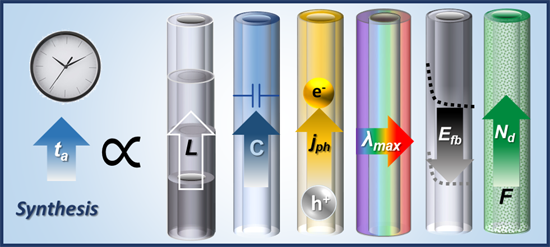
- = 0.5 h, the transients revealed that in fact Eonset starts below 0.05 V/RHE, while for longer ta, Eonset shifts to higher values (Figure S1d, Supporting Information File 1). This observation has been associated with electron mobility and charge separation kinetics [63]. As the electrode is illuminated
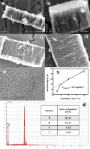


Hierarchical heterostructures of Bi2MoO6 microflowers decorated with Ag2CO3 nanoparticles for efficient visible-light-driven photocatalytic removal of toxic pollutants
Beilstein J. Nanotechnol. 2018, 9, 2297–2305, doi:10.3762/bjnano.9.214
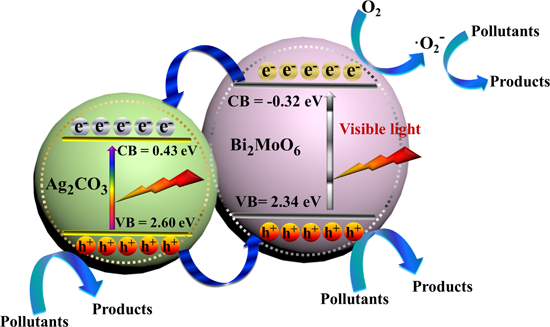
- attributed to the high charge-separation capacity, which results from the matched band alignment of the two components. The cycling experiments showed a good durability of Ag2CO3/Bi2MoO6. Holes were found to be the dominant active species accounting for the pollutant degradation. This compound is a promising
- Bi2MoO6, which originates from the increased charge separation at the interface [22][23][24][25][26][27][28][29][30]. Recently, Ag-based compounds (e.g., Ag3PO4, Ag3VO4, Ag2CrO4, and Ag2CO3) [34][35][36] have emerged as good VLD photocatalysts for pollutant removal. Ag2CO3 exhibits a high visible-light
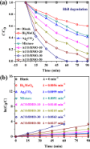
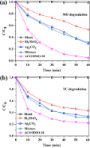
- /Ag2CO3/Bi2MoO6 [32] and Ag2MoO4/Bi2MoO6 [22]. This result shows that the charge separation efficiency is enhanced in ACO/BMO-30. Photocatalytic performance The efficiency of Ag2CO3/Bi2MoO6 heterostructures in the photocatalytic degradation of industrial dyes (RhB, MO and MB), and the antibiotic TC of the




Lead-free hybrid perovskites for photovoltaics
Beilstein J. Nanotechnol. 2018, 9, 2209–2235, doi:10.3762/bjnano.9.207
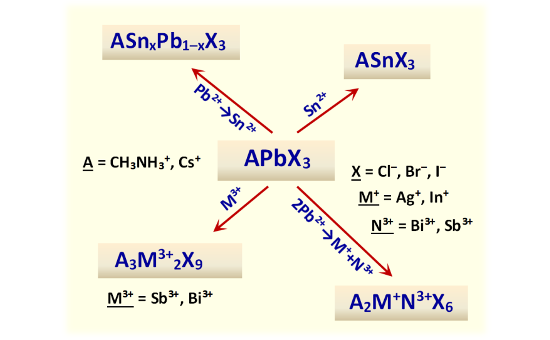
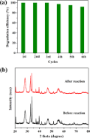
- are withdrawn to the Spiro-MeOTAD HTL and then – into the gold back contact (Figure 11b). The charge separation efficiency is evidenced by a relatively high FF of almost 80%, while a high Voc of 0.83 V observed for such cells attests to the structural perfection of the light-absorbing HP layer [84]. A


Spin-coated planar Sb2S3 hybrid solar cells approaching 5% efficiency
Beilstein J. Nanotechnol. 2018, 9, 2114–2124, doi:10.3762/bjnano.9.200
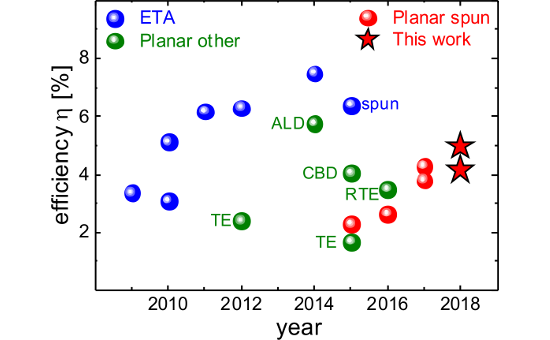
- needed. Two basic factors that impact the solar cell performance of a given material are the device architecture, which defines the mechanism of charge separation, and the deposition method for the absorber, which affects the film and electronic material quality. Sb2S3 is commonly applied in an extremely


Localized photodeposition of catalysts using nanophotonic resonances in silicon photocathodes
Beilstein J. Nanotechnol. 2018, 9, 2097–2105, doi:10.3762/bjnano.9.198
- ][31]. An exception is the work of Li et al. [27], where charge separation was achieved at different crystal facets of BiVO4 nanocrystals for selective photodeposition of metal and metal oxide catalytic nanoparticles. Nevertheless, this method for the moment is limited to this specific material and
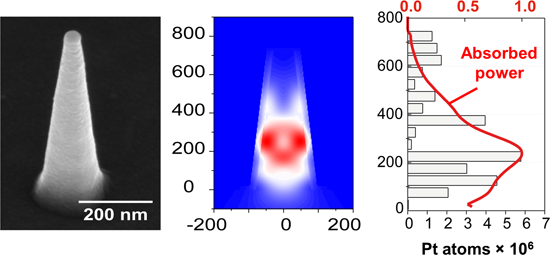
- carriers (Figure 2). An 18 nm amorphous TiO2 layer was conformally deposited on the silicon nanostructures by using atomic layer deposition (ALD). This layer assists with charge separation, stabilizes the silicon surface and helps to passivate trap states, leading to well-known improvements in photo
- platinum nanoparticles does not allow for a “back” transfer of electrons. Hence, charge separation is promoted, which allows further reduction of hexachloroplatinate to Pt(0) on one of the existing platinum nanoparticles rather than in new locations. As a result, the initial platinum nanoparticle formation


Controllable one-pot synthesis of uniform colloidal TiO2 particles in a mixed solvent solution for photocatalysis
Beilstein J. Nanotechnol. 2018, 9, 1715–1727, doi:10.3762/bjnano.9.163
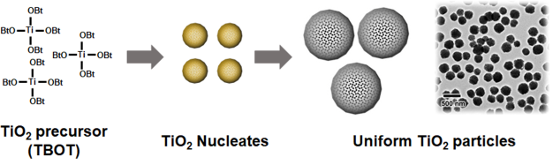
- photocatalyst must be narrow in order to facilitate the facile adsorption of the low energy photon and high harvesting efficiency under visible-light irradiation conditions [11]. To enhance charge separation efficiency and extend the lifetime of photoexcited electron–hole pairs, properties such as a crystalline
- phase as well as a large surface area, should have beneficial effects including light absorption, charge separation and facile surface reaction, all resulting in the enhanced photocatalytic efficiency towards RhB degradation. As pointed out in the Introduction section and in our previous study, many
- absorption and charge separation [20]. It should be noted that the increased activity of P25 TiO2 is due to the electron sink of rutile preventing electron–hole recombination in the anatase phase. It allows an anatase-originating hole to move to the surface, resulting in a high surface reaction under UV




Sheet-on-belt branched TiO2(B)/rGO powders with enhanced photocatalytic activity
Beilstein J. Nanotechnol. 2018, 9, 1550–1557, doi:10.3762/bjnano.9.146
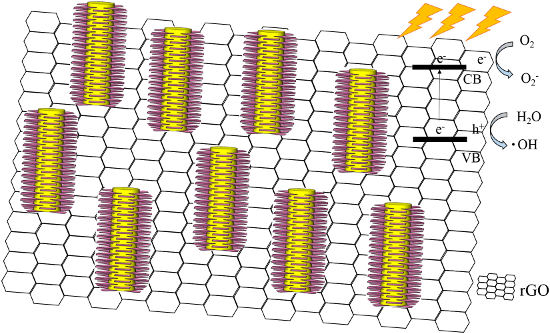
- TiO2(B) is usually adopted to construct phase junctions with anatase TiO2 for applications in photocatalysis to facilitate charge separation; its intrinsic photocatalytic activity, especially when in the form of one- or three-dimensional nanostructures, has been rarely reported. In this study, a sheet
- assist the photodegradation of phenol in water under UV light illumination. The enhanced photocatalytic activity can be attributed to the significantly increased surface area and enhanced charge separation. Keywords: branched nanostructure; photocatalysis; reduced graphene oxide; TiO2(B); Introduction
- safety and rate capability [11][17][18][19][20]. For photocatalytic applications, TiO2(B) is usually combined with anatase TiO2 to construct a multiphase heterostructure to enhance charge separation and in turn the photocatalytic activity [21][22][23][24][25]. For example, Yang et al. synthesized anatase


Cr(VI) remediation from aqueous environment through modified-TiO2-mediated photocatalytic reduction
Beilstein J. Nanotechnol. 2018, 9, 1448–1470, doi:10.3762/bjnano.9.137
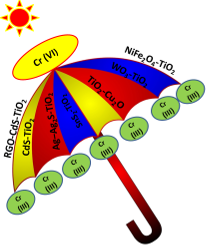
- activity by achieving a more efficient charge separation, increasing the lifetime of the charge carriers, inhibiting the recombination of electron–hole pairs and facilitating interfacial charge transfer to adsorbed substrates [91][92]. In this review we have focused on modification of nanostructured TiO2
- for efficient photocatalytic Cr(VI) reduction [134]. They prepared the photocatalyst using a direct-wrapped route followed by hydrothermal etching. The high charge separation efficiency and redox ability are due to the synergetic effect of formation of a Z scheme photocatalytic process and its
- photocatalytic reduction of Cr(VI) Modification of TiO2 with semiconductor oxides having a suitable band gap is a novel approach for significant charge separation, long lifetime of the charge carriers and effective interfacial charge transfer, which are properties that lead to enhanced photocatalytic activity


Computational exploration of two-dimensional silicon diarsenide and germanium arsenide for photovoltaic applications
Beilstein J. Nanotechnol. 2018, 9, 1247–1253, doi:10.3762/bjnano.9.116
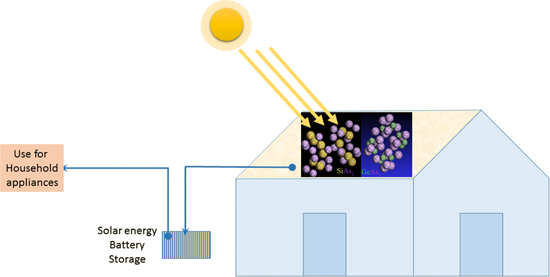
- suitable for photovoltaic applications, such as excellent visible light absorption, favorable exciton formation, and charge separation are equally essential for two-dimensional (2D) materials. Here, we systematically study 2D group IV–V compounds such as SiAs2 and GeAs2 with regard to their structural


Facile synthesis of a ZnO–BiOI p–n nano-heterojunction with excellent visible-light photocatalytic activity
Beilstein J. Nanotechnol. 2018, 9, 789–800, doi:10.3762/bjnano.9.72
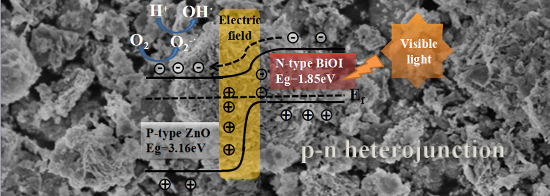
- favor. As can be clearly seen, B-1 and B-6 exhibited an extremely strong intensity, demonstrating the lower charge separation efficiency of pure BiOI and ZnO. The intensity greatly decreased as the BiOI/ZnO ratio equals 1:3, revealing that the formation of the ZnO/BiOI heterostructured composite is
- beneficial for improving the charge separation ability. The light adsorption ability and the band gap structure are some of the decisive factors for photocatalysis. Therefore, the UV–vis diffuse reflection spectra (UV-DRS) is worthy of study to explore their optical properties. The UV-DRS results are shown


Perovskite-structured CaTiO3 coupled with g-C3N4 as a heterojunction photocatalyst for organic pollutant degradation
Beilstein J. Nanotechnol. 2018, 9, 671–685, doi:10.3762/bjnano.9.62
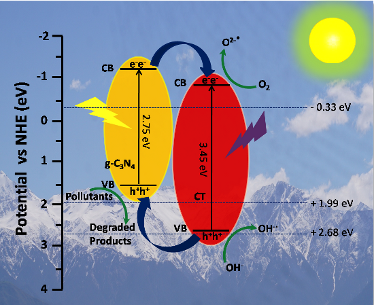
- in the literature [32][33]. Xian and coworkers have studied the photocatalytic degradation of MO under simulated solar light irradiation in BaTiO3–g-C3N4 composites with an efficient charge separation of photogenerated charge carriers at the interfaces [30]. Leong et al. have successfully made a
- materials [37]. Thus, the fabrication of a binary heterojunction of CT with a narrow band gap semiconductor like g-C3N4 can enhance the photocatalytic activity by effective charge separation and transfer across the heterojunction. Moreover, a sheet-like morphology can promote the photocatalytic activity, as
- degradation. Thus, the recycling results reflect the commendable stability of the CTCN heterojunction and support its potential for environmental remediation applications. Mechanism of photocatalytic activity The attainment of high efficiency of charge separation during a photocatalytic reaction plays an


Mechanistic insights into plasmonic photocatalysts in utilizing visible light
Beilstein J. Nanotechnol. 2018, 9, 628–648, doi:10.3762/bjnano.9.59
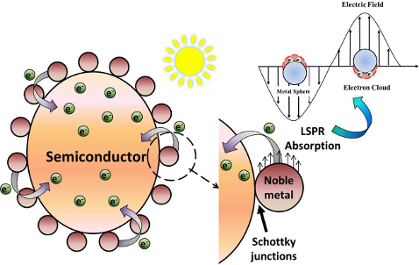
- spatial charge separation of photoinduced carriers by creating an alternate permutation of band edges at the interface [146]. Some researchers found that both titanium nitride (TiN) and zirconium nitride (ZrN) displayed similar optical properties as Au and can replace Au NPs for vis–NIR light absorption





Facile synthesis of ZnFe2O4 photocatalysts for decolourization of organic dyes under solar irradiation
Beilstein J. Nanotechnol. 2018, 9, 436–446, doi:10.3762/bjnano.9.42
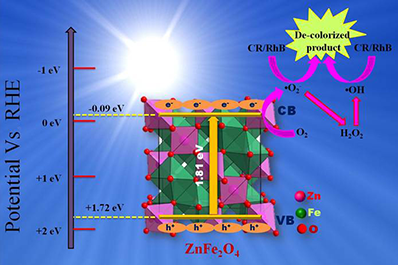
- band-edge potential, a mechanism of the photocatalytic reaction has been proposed which is discussed later. Electrochemical impedance study Impedance measurements are commonly used to determine the charge transfer, resistance, and effective charge separation processes occurring at electrode–electrolyte
- transfer, effective charge separation and high conductivity (Figure 9). This result is well supported by PL measurements and photocatalytic activity. Photocatalytic activity Decolourization of Congo red under solar-light irradiation The photocatalytic activity in the decolourization of 10 ppm Congo red (CR
- constant, respectively. In the above equation, n determines the transition in a semiconductor, i.e., n = 1/2 for a direct transition and n = 2 for an indirect transition. Figure 4b shows that the band-gap energy of ZFO-500 C is 1.81 eV. PL analysis The PL emission can be used to investigate the charge


Sugarcane juice derived carbon dot–graphitic carbon nitride composites for bisphenol A degradation under sunlight irradiation
Beilstein J. Nanotechnol. 2018, 9, 353–363, doi:10.3762/bjnano.9.35
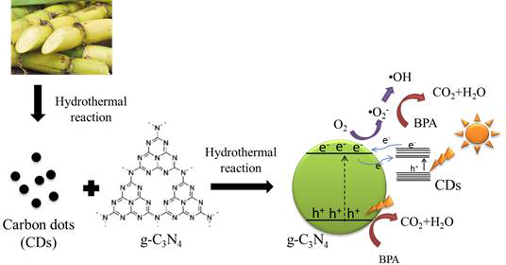
- of g-C3N4. Hence, the charge separation efficiency should not be one of the main factors responsible for the enhancement of the photocatalytic activity of CD/g-C3N4. Instead, the light absorption capability was the dominant factor since the photoreactivity correlated well with the ultraviolet–visible
- structure [31] and the hydrogenation of g-C3N4 [32] could be an alternative to increase the light-harvesting ability and charge separation efficiency. Our group has reported the self-modification of g-C3N4 structures using alkaline [28] and acid treatment [29] to overcome the limitations of g-C3N4. Despite
- irradiation because the UCPL properties of CDs (which could overcome the low energy of NIR-light photons to initiate the excitation of electrons) are not detected in Figure 3b. The PL spectra in Figure 3d were evaluated to determine the charge separation efficiency of all composites. The recombination of





