


Search results
Search for "force microscopy" in Full Text gives 650 result(s) in Beilstein Journal of Nanotechnology. Showing first 200.
Measurement of polarization effects in dual-phase ceria-based oxygen permeation membranes using Kelvin probe force microscopy
Beilstein J. Nanotechnol. 2021, 12, 1380–1391, doi:10.3762/bjnano.12.102
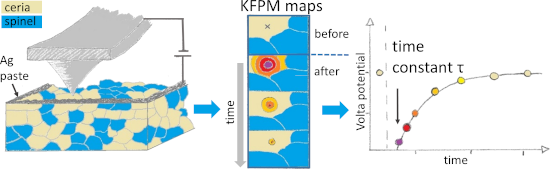
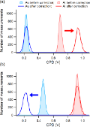
- was used as a model to demonstrate that a combination of polarization relaxation measurements and Kelvin probe force microscopy (KPFM)-based mapping of the Volta potential before and after the end of polarization can be used to determine the chemical diffusion coefficient of the ceria component of the
- |ceria, ceria|electron conductor, and electron conductor|electron conductor). Kelvin probe force microscopy (KPFM) is an atomic force microscopy (AFM)-based measurement method that can measure the local surface potential (or Volta potential) of the sample [18][19]. The surface potential is a sensitive
- small contacts are needed, where the electron and ion conducting phase can be addressed separately, making AFM-based electrochemical measurements predestined for detailed analyses of the constituents of composite materials. Theoretical Background Kelvin probe force microscopy The presented measurements


Alteration of nanomechanical properties of pancreatic cancer cells through anticancer drug treatment revealed by atomic force microscopy
Beilstein J. Nanotechnol. 2021, 12, 1372–1379, doi:10.3762/bjnano.12.101
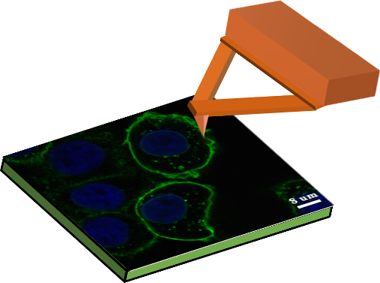
- regulation of cell activity, and hence to the health level of organisms. Here, the morphology and mechanical properties of normal pancreatic cells (HDPE6-C7) and pancreatic cancer cells (AsPC-1, MIA PaCa-2, BxPC-3) were studied by atomic force microscopy. In addition, the mechanical properties of MIA PaCa-2
- aggressive cancer cell BxPC-3. In addition, the Young's modulus of MIA PaCa-2 rises with the increasing of DOX concentration. This study may provide a new strategy of detecting cancer, and evaluate the possible interaction of drugs on cells. Keywords: anticancer drug; atomic force microscopy; nanomechanical
- from measuring the alteration of cellular mechanics, which provides a guide for the innovation and development of anticancer drugs [11]. Atomic force microscopy (AFM) has matured into a forceful nanoscale platform for imaging biological samples and quantifying biomechanical properties of living cells


Cantilever signature of tip detachment during contact resonance AFM
Beilstein J. Nanotechnol. 2021, 12, 1286–1296, doi:10.3762/bjnano.12.96
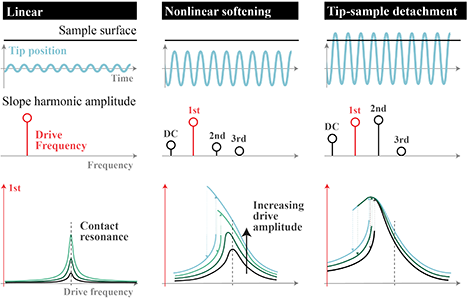
- Devin Kalafut Ryan Wagner Maria Jose Cadena Anil Bajaj Arvind Raman School of Mechanical Engineering, Purdue University, West Lafayette, IN 47907, USA 10.3762/bjnano.12.96 Abstract Contact resonance atomic force microscopy, piezoresponse force microscopy, and electrochemical strain microscopy are
- atomic force microscopy modes in which the cantilever is held in contact with the sample at a constant average force while monitoring the cantilever motion under the influence of a small, superimposed vibrational signal. Though these modes depend on permanent contact, there is a lack of detailed analysis
- connect the qualitative and quantitative behavior to experimental features. Keywords: atomic force microscopy (AFM); contact resonance; nonlinear normal mode (NNM); tip–sample detachment; photothermal excitation; Introduction Contact resonance atomic force microscopy (CR-AFM) [1][2], piezoresponse force
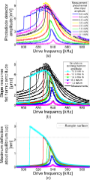


Enhancement of the piezoelectric coefficient in PVDF-TrFe/CoFe2O4 nanocomposites through DC magnetic poling
Beilstein J. Nanotechnol. 2021, 12, 1262–1270, doi:10.3762/bjnano.12.93
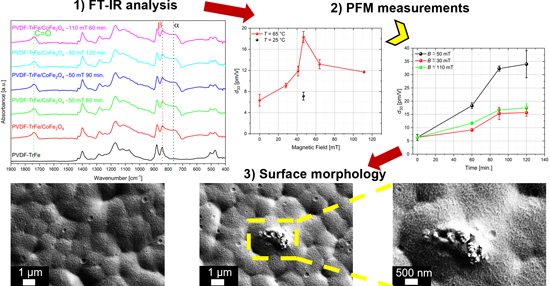
- poling; piezoelectric effect; piezoresponse force microscopy (PFM); poly(vinylidene fluoride-co-trifluoroethylene); PVDF-TrFe; PVDF-TrFe nanocomposites; Introduction In the last years, innovative energy harvesting systems based on the piezoelectric effect, able to convert vibrational mechanical energy
- piezoelectric coefficient was evaluated through piezoresponse force microscopy (PFM), which is a very powerful technique to characterize the micro- and nanoscale piezoelectric response of piezoelectric materials [1][2][4][26][27]. Results and Discussion In order to understand whether the β phase fraction was


A review on slip boundary conditions at the nanoscale: recent development and applications
Beilstein J. Nanotechnol. 2021, 12, 1237–1251, doi:10.3762/bjnano.12.91
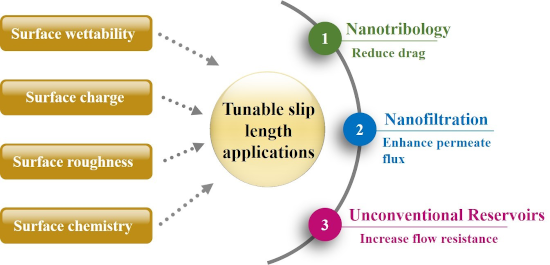
- nanoscale systems [8][34][38][39]. For example, based on surface force apparatus (SFA) and atomic force microscopy (AFM) measurements, many researchers have investigated the slippage characteristics of nanoconfined liquid flows and derived the slip length according to its correlation with the hydrodynamic


Two dynamic modes to streamline challenging atomic force microscopy measurements
Beilstein J. Nanotechnol. 2021, 12, 1226–1236, doi:10.3762/bjnano.12.90
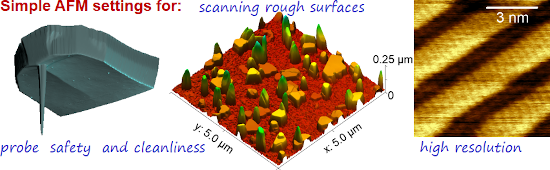
- 10.3762/bjnano.12.90 Abstract The quality of topographic images obtained using atomic force microscopy strongly depends on the accuracy of the choice of scanning parameters. When using the most common scanning method – semicontact amplitude modulation (tapping) mode, the choice of scanning parameters is
- formalized choice of the imaging parameters in these modes allows addressing a wide range of formerly challenging tasks – from scanning rough samples with high aspect ratio features to molecular resolution imaging. Keywords: atomic force microscopy; dissipation mode; scanning probe microscopy; vertical mode
- ; Introduction More than 30 years have passed since the introduction of atomic force microscopy (AFM) [1]. This technique has established itself as an indispensable tool for characterization not only in physics and chemistry, but also in related fields of research including medicine, biology, and materials


Open-loop amplitude-modulation Kelvin probe force microscopy operated in single-pass PeakForce tapping mode
Beilstein J. Nanotechnol. 2021, 12, 1115–1126, doi:10.3762/bjnano.12.83
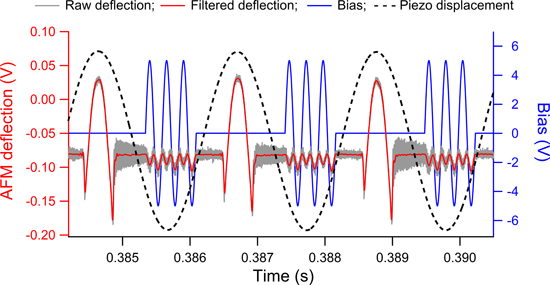
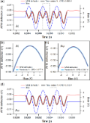
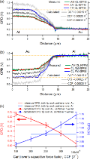
- (OL) variant of Kelvin probe force microscopy (KPFM) provides access to the voltage response of the electrostatic interaction between a conductive atomic force microscopy (AFM) probe and the investigated sample. The measured response can be analyzed a posteriori, modeled, and interpreted to include
- probe force microscopy; open loop; surface potential; Introduction Over many years, an abundance of developments and applications has made Kelvin probe force microscopy (KPFM) [1] one of the most versatile nanoscale surface electronic characterization techniques. With its main measurement in terms of
- -excitation OL BE-KPFM [37][38][39], intermodulation electrostatic force microscopy [40], and dual-harmonic KPFM (DH-KPFM) [34][41][42]. In DH-KPFM, the CPD is obtained from the ratio of the amplitudes of the first two harmonics of the cantilever response to an AC bias modulation and requires a prior





A new method for obtaining model-free viscoelastic material properties from atomic force microscopy experiments using discrete integral transform techniques
Beilstein J. Nanotechnol. 2021, 12, 1063–1077, doi:10.3762/bjnano.12.79
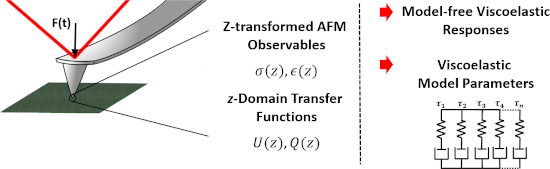
- at the micro- and the nanoscale is commonly performed with the aid of force–distance relationships acquired using atomic force microscopy (AFM). The general strategy for existing methods is to fit the observed material behavior to specific viscoelastic models, such as generalized viscoelastic models
- unbounded inputs traditionally used to acquire force–distance relationships in AFM, such as ramp functions, in which the cantilever position is displaced linearly with time for a finite period of time. Keywords: atomic force microscopy; force spectroscopy; material properties; viscoelasticity
- ; Introduction Atomic force microscopy (AFM) is a prominent technique for investigating material properties at the micro- and the nanoscale [1][2][3], within which a wide variety of instruments, probes, and analysis techniques have been developed to attempt meaningful material property extraction [4][5][6][7][8


Revealing the formation mechanism and band gap tuning of Sb2S3 nanoparticles
Beilstein J. Nanotechnol. 2021, 12, 1021–1033, doi:10.3762/bjnano.12.76
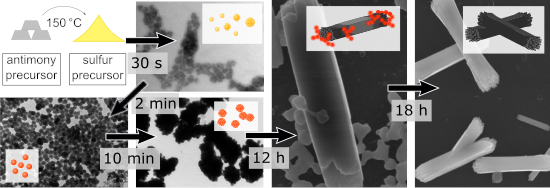
- . Atomic force microscopy (AFM) as an additional method of size determination was applied to confirm the TEM results of the sample obtained after 30 s reaction time. AFM enables imaging of the nanoparticles under milder conditions than TEM and at ambient conditions so that thermal damage of the


Molecular assemblies on surfaces: towards physical and electronic decoupling of organic molecules
Beilstein J. Nanotechnol. 2021, 12, 950–956, doi:10.3762/bjnano.12.71

- . To a lesser extent, metal oxides have also been used, for which defects and charging often pose additional challenges [44][45][46]. On electronically insulating surfaces, non-contact atomic force microscopy (AFM) is the method of choice to study molecular assemblies and individual molecules in real
Self-assembly of Eucalyptus gunnii wax tubules and pure ß-diketone on HOPG and glass
Beilstein J. Nanotechnol. 2021, 12, 939–949, doi:10.3762/bjnano.12.70
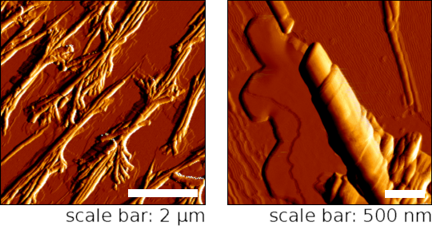
- is unknown. In this study, extracted wax of E. gunnii leaves and pure ß-diketone were recrystallized on two different artificial materials and analyzed by scanning electron microscopy (SEM) and atomic force microscopy (AFM) to study their formation process. Both the wax mixture and pure ß-diketone
- formation of the tubules [26]. Atomic force microscopy (AFM) investigations further showed that the elongation of secondary alcohol tubules is based on a helical growth mechanism [27]. Recrystallization experiments with nonacosan-10-ol on non-biological substrates showed that the chemical and physical
- morphologically different type of wax tubules is unknown. On Eucalyptus gunnii leaves mainly the characteristic ß-diketone tubules are present (Figure 1), but helically wound ribbons and a transitional form between both shapes are also present. Atomic force microscopy investigations of tubule formation on living




The role of convolutional neural networks in scanning probe microscopy: a review
Beilstein J. Nanotechnol. 2021, 12, 878–901, doi:10.3762/bjnano.12.66
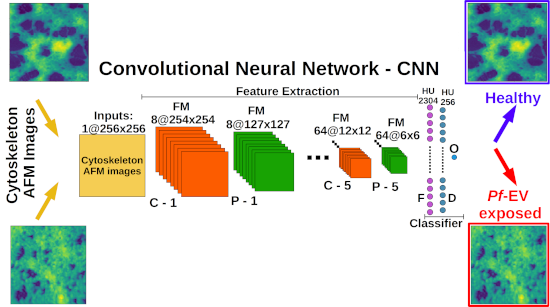
- , convolutional neural networks, and how it is transforming the acquisition and analysis of scanning probe data. Keywords: atomic force microscopy (AFM); deep learning; machine learning; neural networks; scanning probe microscopy (SPM); Review Introduction: traditional machine learning vs deep learning Machine
- conditions for band-excitation piezoresponse force microscopy (PFM) [134]. Band excitation collects a band of frequencies around the contact resonance frequency of the tip–sample system, which is modeled by a simple harmonic oscillator equation. This allows for the determination of several physical
- analysis gave the best result. The authors suggest that using data obtained before from neural network analysis as input to model fitting could be extended to other modalities of SPM, such as magnetic force microscopy and Kelvin probe force microscopy. Another recent example of application to a non







Reducing molecular simulation time for AFM images based on super-resolution methods
Beilstein J. Nanotechnol. 2021, 12, 775–785, doi:10.3762/bjnano.12.61
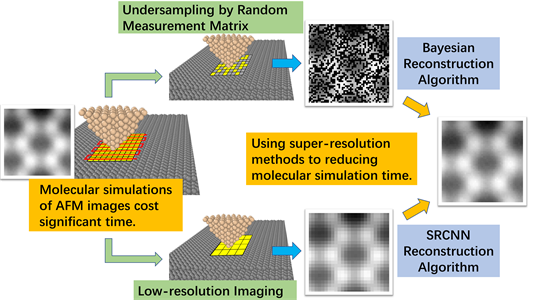
- Zhipeng Dou Jianqiang Qian Yingzi Li Rui Lin Jianhai Wang Peng Cheng Zeyu Xu School of Physics, Beihang University, Beijing 100083, China 10.3762/bjnano.12.61 Abstract Atomic force microscopy (AFM) has been an important tool for nanoscale imaging and characterization with atomic and subatomic
- can be used to speed up the generation of training data and vary simulation resolution for AFM machine learning. Keywords: atomic force microscopy; Bayesian compressed sensing; convolutional neural network; molecular dynamics simulation; super resolution; Introduction Atomic force microscopy methods




9.1% efficient zinc oxide/silicon solar cells on a 50 μm thick Si absorber
Beilstein J. Nanotechnol. 2021, 12, 766–774, doi:10.3762/bjnano.12.60
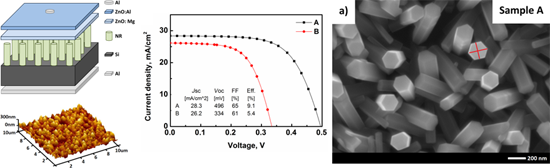
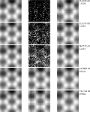
- the tested PV cells, as measured with atomic force microscopy (AFM). The results for the photovoltaic cell modified with zinc oxide nanorods are shown in Figure 4a and Figure 4c. The results for the planar cell are shown in Figure 4b and Figure 4d. There are significant differences in the roughness


Physical constraints lead to parallel evolution of micro- and nanostructures of animal adhesive pads: a review
Beilstein J. Nanotechnol. 2021, 12, 725–743, doi:10.3762/bjnano.12.57
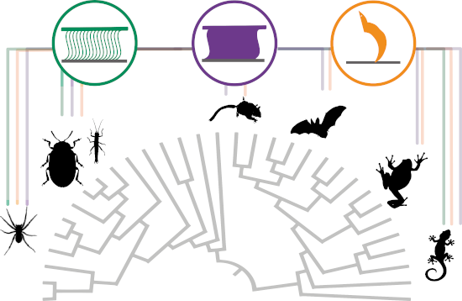
- CC BY 4.0). (D–G) Atomic force microscopy (AFM) height images of the footprint droplets of the beetle Coccinella septempunctata (D,F) and the fly Calliphora vicina (E,G). (D) and (E) share the same colour scale. Brighter pixels correspond to higher z values. (F,G) Three-dimensional impressions of the


A review of defect engineering, ion implantation, and nanofabrication using the helium ion microscope
Beilstein J. Nanotechnol. 2021, 12, 633–664, doi:10.3762/bjnano.12.52


Impact of GaAs(100) surface preparation on EQE of AZO/Al2O3/p-GaAs photovoltaic structures
Beilstein J. Nanotechnol. 2021, 12, 578–592, doi:10.3762/bjnano.12.48
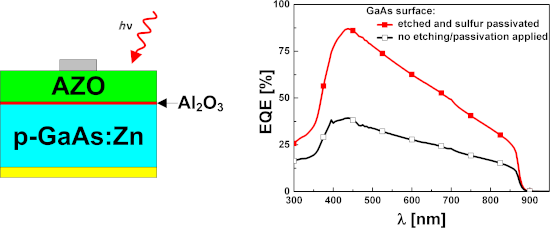
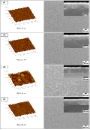
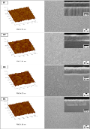
- /interface needs to be properly prepared. In the experiments described here we examined eight different paths of GaAs surface treatment (cleaning, etching, passivation) which resulted in different external quantum efficiency (EQE) values of the tested photovoltaic (PV) cells. Atomic force microscopy (AFM




Local stiffness and work function variations of hexagonal boron nitride on Cu(111)
Beilstein J. Nanotechnol. 2021, 12, 559–565, doi:10.3762/bjnano.12.46
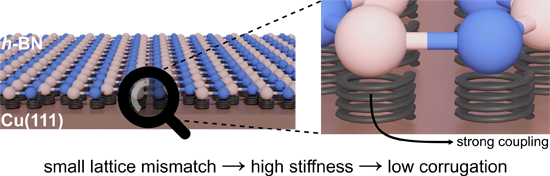
- , CH-1015 Lausanne, Switzerland II. Institute of Physics, RWTH Aachen University, D-52074 Aachen, Germany 10.3762/bjnano.12.46 Abstract Combined scanning tunnelling and atomic force microscopy using a qPlus sensor enables the measurement of electronic and mechanic properties of two-dimensional
- the contact potential difference measured by Kelvin probe force microscopy. Using 3D force profiles of the same area we determine the relative stiffness of the Moiré region allowing us to analyse both electronic and mechanical properties of the 2D layer simultaneously. We obtain a sheet stiffness of
- non-contact atomic force microscopy (nc-AFM) to study h-BN on Cu(111). This template has interesting properties because the dielectric layer is only very weakly bound to the metal and shows an electronically induced Moiré superstructure [25][26]. First STM studies on this system pointed to only a


On the stability of microwave-fabricated SERS substrates – chemical and morphological considerations
Beilstein J. Nanotechnol. 2021, 12, 541–551, doi:10.3762/bjnano.12.44
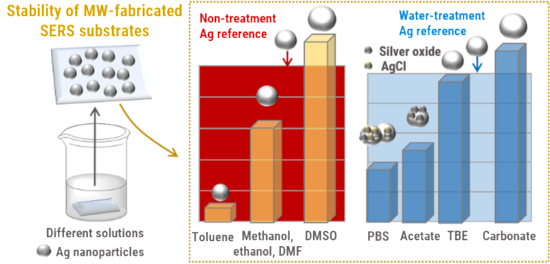
- glass capillaries or on scanning force microscopy tips) in a very economic and fast (less than five minutes) coating process. The formed substrates, which are coated with a monolayer of silver nanoparticles, have been demonstrated to be highly reproducible and to perform very well in the detection of


Determining amplitude and tilt of a lateral force microscopy sensor
Beilstein J. Nanotechnol. 2021, 12, 517–524, doi:10.3762/bjnano.12.42
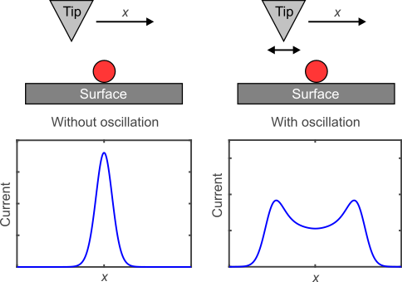
- Oliver Gretz Alfred J. Weymouth Thomas Holzmann Korbinian Purckhauer Franz J. Giessibl Institute of Experimental and Applied Physics, Department of Physics, University of Regensburg, 93053 Regensburg, Germany 10.3762/bjnano.12.42 Abstract In lateral force microscopy (LFM), implemented as
- frequency-modulation atomic force microscopy, the tip oscillates parallel to the surface. Existing amplitude calibration methods are not applicable for mechanically excited LFM sensors at low temperature. Moreover, a slight angular offset of the oscillation direction (tilt) has a significant influence on
- for a given amplitude and tilt. Finally, the amplitude and tilt are determined by fitting the simulation output to the data with oscillation. Keywords: frequency-modulation atomic force microscopy; lateral force microscopy; amplitude calibration; tilt estimation; Introduction Frequency-modulation


Boosting of photocatalytic hydrogen evolution via chlorine doping of polymeric carbon nitride
Beilstein J. Nanotechnol. 2021, 12, 473–484, doi:10.3762/bjnano.12.38
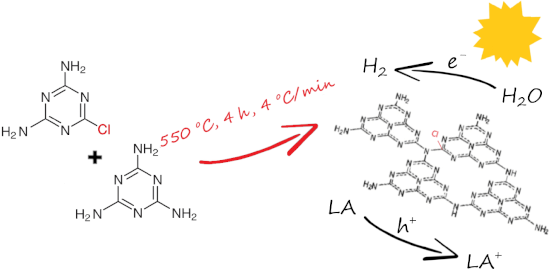
- , carbon, oxygen, and chlorine in Cl-PCN was performed and showed homogeneous distribution of all elements in the sample. As analyzed via atomic force microscopy (AFM, Figure 2a and Figure 2b) the as-prepared PCN aggregated as large sheets with thickness ranging from 1 to 4 nm (corresponding to 3–11 atomic


Reconstruction of a 2D layer of KBr on Ir(111) and electromechanical alteration by graphene
Beilstein J. Nanotechnol. 2021, 12, 432–439, doi:10.3762/bjnano.12.35
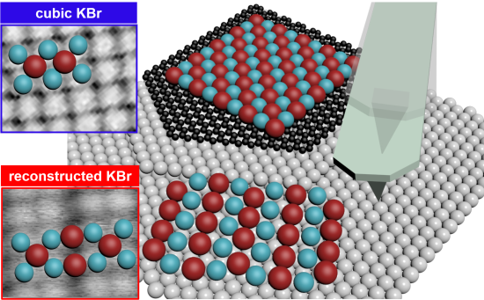
- reconstruction of a two-dimensional layer of KBr on an Ir(111) surface is observed by high-resolution noncontact atomic force microscopy and verified by density functional theory (DFT). The observed KBr structure is oriented along the main directions of the Ir(111) surface, but forms a characteristic double-line
- pattern. Comprehensive calculations by DFT, taking into account the observed periodicities, resulted in a new low-energy reconstruction. However, it is fully relaxed into a common cubic structure when a monolayer of graphene is located between substrate and KBr. By using Kelvin probe force microscopy, the
- with unconventional stoichiometries have been observed indirectly on graphene surfaces [37]. Here, we report on the formation of irregularly shaped KBr islands with corrugated stripe structures, observed on the (111) surface of Ir and analyzed by non-contact atomic force microscopy (nc-AFM) at room


The nanomorphology of cell surfaces of adhered osteoblasts
Beilstein J. Nanotechnol. 2021, 12, 242–256, doi:10.3762/bjnano.12.20
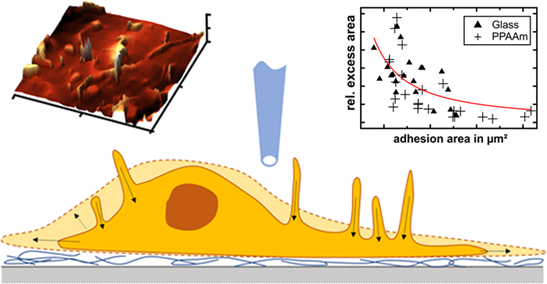
- signal is a force, pressure is applied to the sample. This is the case when using atomic force microscopy (AFM), giving rise to substantially depressed apparent heights on living and fixed cells [17]. Typically, mammalian cells exhibit Young's moduli in the range of 1 to 10 kPa while AFM probe pressures


Mapping the local dielectric constant of a biological nanostructured system
Beilstein J. Nanotechnol. 2021, 12, 139–150, doi:10.3762/bjnano.12.11
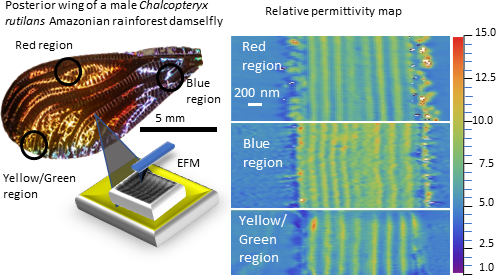
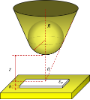
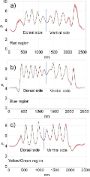
- work is to determine the varying dielectric constant of a biological nanostructured system via electrostatic force microscopy (EFM) and to show how this method is useful to study natural photonic crystals. We mapped the dielectric constant of the cross section of the posterior wing of the damselfly
- ; electrostatic force microscopy (EFM); natural photonic crystals; relative permittivity; structural colors; Introduction The dielectric constant, or relative permittivity, is a fundamental physical property that is crucial for describing various biological, chemical, or physical phenomena. It is a material
- Riedel et al. [16] developed several techniques of electrostatic force microscopy (EFM) to extract the relative permittivity at the nanoscale, allowing for new fields to be explored. Here we use EFM to map the relative permittivity of nanostructures within the wings of the Chalcopteryx rutilans damselfly




Correction: Extracting viscoelastic material parameters using an atomic force microscope and static force spectroscopy
Beilstein J. Nanotechnol. 2021, 12, 137–138, doi:10.3762/bjnano.12.10
- Cameron H. Parvini M. A. S. R. Saadi Santiago D. Solares Department of Mechanical and Aerospace Engineering, The George Washington University School of Engineering and Applied Science, 800 22nd St. NW, Suite 3000, Washington, DC 20052, United States 10.3762/bjnano.12.10 Keywords: atomic force
- microscopy (AFM); creep; force mapping; indentation; Kelvin–Voigt; static force spectroscopy (SFS); viscoelasticity; In the “Useful Viscoelastic Quantities” section of the original publication, it is stated that the storage modulus (E′) and storage compliance (J′) are inverses of one another (Equation 10



