Search results
Search for "magnetic field" in Full Text gives 325 result(s) in Beilstein Journal of Nanotechnology. Showing first 200.
Interaction-induced zero-energy pinning and quantum dot formation in Majorana nanowires
Beilstein J. Nanotechnol. 2018, 9, 2171–2180, doi:10.3762/bjnano.9.203
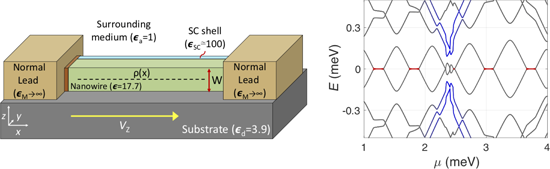
- , Universidad Autónoma de Madrid, E-28049 Madrid, Spain 10.3762/bjnano.9.203 Abstract Majorana modes emerge in non-trivial topological phases at the edges of specific materials such as proximitized semiconducting nanowires under an external magnetic field. Ideally, they are non-local states that are charge
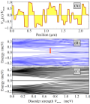
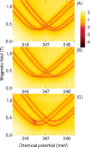
- in these regions disperse with magnetic field (or chemical potential) and appear below the induced gap in the wire spectrum (in blue in Figure 1b). In the topological regime, dot-like levels interact with Majorana states, anticrossing them when they approach zero energy. Similar phenomena were
- annihilation operators, and σ and τ are the Pauli matrices in spin and Nambu space, respectively. The model is defined by setting the parameters m*, μ, α, VZ and Δ, corresponding to the effective mass, the chemical potential, the spin–orbit coupling, the Zeeman energy caused by an external magnetic field, and



Phosphorus monolayer doping (MLD) of silicon on insulator (SOI) substrates
Beilstein J. Nanotechnol. 2018, 9, 2106–2113, doi:10.3762/bjnano.9.199
- wet-chemistry functionalization due to the precise dimensions needed for analysis. The Hall measurement system applies current and magnetic field and measures voltages and resistances. It then infers mobility and carrier properties from these measurements. The sheet resistivity (ρs) is directly
- measured first by the four-point method, followed by the sheet Hall coefficient (sheet Hall resistance divided by magnetic field) as measured by Hall effect, RHS = VH/(I·B), where VH is the measured Hall voltage, I is the applied current and B is the applied magnetic field. Since ρs and RHS are now
- effect measurements Room temperature Hall effect measurements are performed using a controllable electromagnet in a LakeShore Model 8404 Hall effect measurement system (HMS) with dc and ac magnetic field capability in the range of ±1.7 T for dc, and of 1.2 T RMS (ac, 50/100 mHz), respectively. The ac




A variable probe pitch micro-Hall effect method
Beilstein J. Nanotechnol. 2018, 9, 2032–2039, doi:10.3762/bjnano.9.192
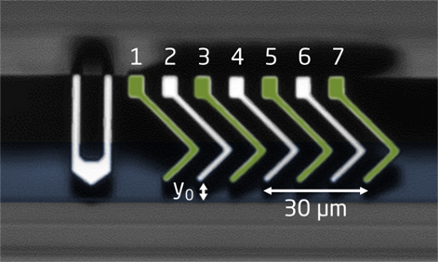
- MHE measurement itself is performed simply by placing a micro four-point probe (M4PP) in parallel and close proximity to an insulating boundary, with an orthogonal magnetic field applied. Then the measured resistance will have three contributions: a drift term, a Hall effect term and a magnetoresitive
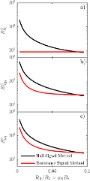
- 7 generalizes the results from Figure 6 in the sense that the sensitivity of each parameter to electrical noise is investigated for varying RH/R0 ratios. A small RH/R0 ratio corresponds to a low mobility sample or a setup using a small magnetic field, whereas a higher ratio indicates the opposite
- microHall-A300 tool from CAPRES A/S and an M7PP with an electrode pitch of 10 μm. The M7PP used consisted of nickel-coated poly-silicon cantilever electrodes extending from the edge of a silicon die. A magnetic field with the flux density Bz = 600 mT was applied perpendicular to a boron-doped (1015 cm−2


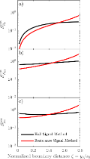
![[Graphic 11]](/bjnano/content/inline/2190-4286-9-192-i25.svg?max-width=637&scale=1.18182) for a) R0, b) NHS and c) μH when in- and off-line errors are present during ...
for a) R0, b) NHS and c) μH when in- and off-line errors are present during ...

![[Graphic 15]](/bjnano/content/inline/2190-4286-9-192-i29.svg?max-width=637&scale=1.18182) for the sheet resistance, Hall mobility and Hall sheet carrier density, due ...
for the sheet resistance, Hall mobility and Hall sheet carrier density, due ...
Synthesis of a MnO2/Fe3O4/diatomite nanocomposite as an efficient heterogeneous Fenton-like catalyst for methylene blue degradation
Beilstein J. Nanotechnol. 2018, 9, 1940–1950, doi:10.3762/bjnano.9.185
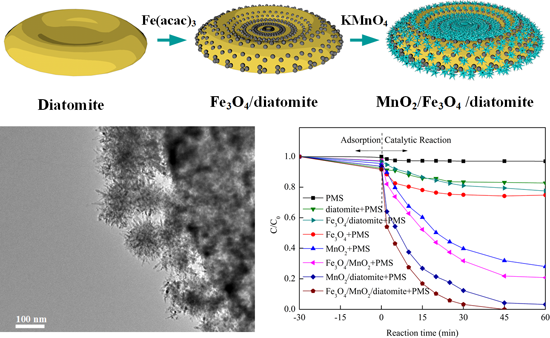
- indicates that both of the samples show superparamagnetic behavior at room temperature [31]. The maximum saturation magnetizations of Fe3O4/diatomite and MnO2/Fe3O4/diatomite were measured to be 16.57 and 10.61 emu/g, respectively, which make the composites very easy to be separated by an external magnetic
- field (inset). The decrease of the maximum saturation magnetizations after the treatment with KMnO4 is largely ascribed to the outer MnO2 shell, the saturation magnetization of which is much lower than the Fe3O4 nanoparticles. XPS measurements were carried out to determine the surface chemical


A differential Hall effect measurement method with sub-nanometre resolution for active dopant concentration profiling in ultrathin doped Si1−xGex and Si layers
Beilstein J. Nanotechnol. 2018, 9, 1926–1939, doi:10.3762/bjnano.9.184
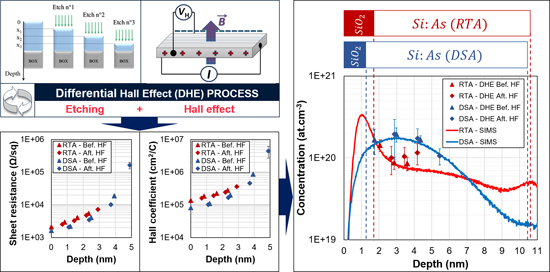
- resistance, then a magnetic field is applied orthogonally to the sample surface to measure the sheet Hall coefficient RSH, which is finally used to deduce NH and µH. Several classical Van der Pauw shapes were tested to perform electrical measurements (square, Greek cross and bridge “bar-shaped” structures


Tunable fractional Fourier transform implementation of electronic wave functions in atomically thin materials
Beilstein J. Nanotechnol. 2018, 9, 1828–1833, doi:10.3762/bjnano.9.174
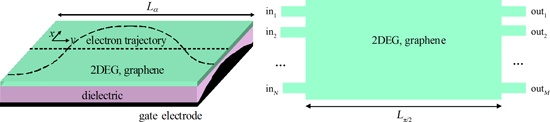
- proposed already. For instance, it was shown that a tunable continuous FrFT of the wave function of a 2DEG can be obtained by applying an in-plane magnetic field [14], while a discrete Fourier transform based on an array of four quantum waveguides was demonstrated in [19]. The advantage of the proposal put


Uniform cobalt nanoparticles embedded in hexagonal mesoporous nanoplates as a magnetically separable, recyclable adsorbent
Beilstein J. Nanotechnol. 2018, 9, 1770–1781, doi:10.3762/bjnano.9.168
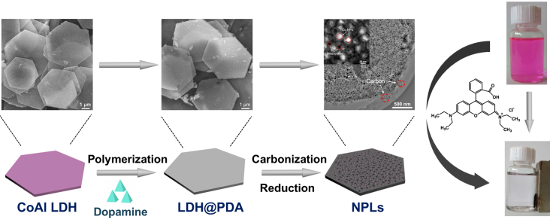
- and NPLs-2.5-800 in Figure 5A indicate their strong magnetic response to the varying magnetic field, which is highly favorable for fast separation after the adsorption process. Figure 5B shows that the black adsorbent material (NPLs-2.5-800) can be attracted by a magnet within 20 s, indicating the
- dopamine hydrochloride concentrations of: (a) 2.0, (b) 2.5, (c) 1.0 and (d) 2.5 g/L. (B) A photograph illustrating the physical separation of the adsorbent material (NPLs-2.5-800) from water in the presence of an external magnetic field (permanent magnet). (A) Raman spectrum and (B–D) XPS spectra of the


Increasing the performance of a superconducting spin valve using a Heusler alloy
Beilstein J. Nanotechnol. 2018, 9, 1764–1769, doi:10.3762/bjnano.9.167
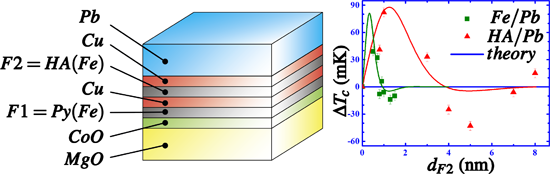
- magnetic field, should yield a complete switching on and off of the superconducting current in such a construction. A number of experimental studies have confirmed the predicted effect of the mutual orientation of magnetizations in the F1/S/F2 structure on Tc [5][6][7][8][9]. However, the major difficulty
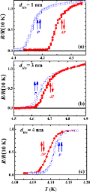

![[Graphic 4]](/bjnano/content/inline/2190-4286-9-167-i9.svg?max-width=637&scale=1.18182) on the thickness of layer F2, dF2 in the SSV heterostructures AFM/F1/N1/F2/N2/S. Tri...
on the thickness of layer F2, dF2 in the SSV heterostructures AFM/F1/N1/F2/N2/S. Tri...
Magnetic properties of Fe3O4 antidot arrays synthesized by AFIR: atomic layer deposition, focused ion beam and thermal reduction
Beilstein J. Nanotechnol. 2018, 9, 1728–1734, doi:10.3762/bjnano.9.164
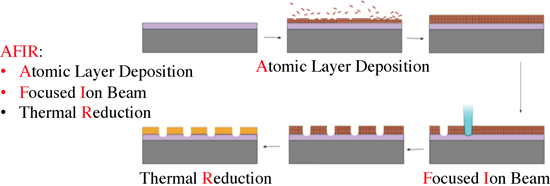
- NanoMOKE3 from Quantum Design with the applied magnetic field applied parallel to the substrate plane and reaching a maximum value of 1.5 kOe. The laser spot was placed into each antidot array and, in order to check that the spot was located in the right position, the longitudinal reflectivity was measured
- . Magnetic field was applied along the 0° and 45° directions when measuring the square arrays (i.e., the first and second neighbors directions, respectively) and along 0° and 30° direction when measuring the hexagonal arrays (first and second neighbors directions in this case, respectively). Additionally
- lattice parameters are slightly larger than those of the arrays with smaller lattice parameters (i.e., the curves exhibit a wider and more vertical shape), regardless of whether we treat square or hexagonal arrays. Small differences exist between the loops obtained with the external magnetic field applied




A zero-dimensional topologically nontrivial state in a superconducting quantum dot
Beilstein J. Nanotechnol. 2018, 9, 1705–1714, doi:10.3762/bjnano.9.162
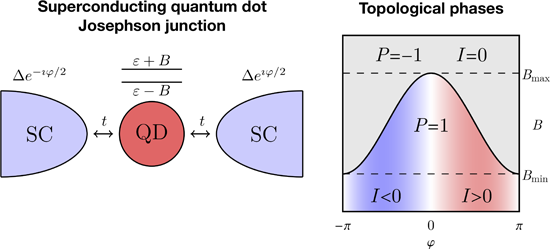
- [14][15][16][17][18][19][20]. The simplest realization of a topological superconductor is the well-known Kitaev chain [3], which can be implemented in a one-dimensional system proximized by a conventional superconductor in the presence of a magnetic field and spin–orbit coupling [21][22][23][24][25
- consider a semiconducting quantum dot in a magnetic field B and coupled with two superconducting leads, as shown in Figure 1. We assume that the only effect of the magnetic field is the lifting of the spin degeneracy via the Zeeman effect, and we neglect orbital effects of the field. Moreover, we assume
- the critical current by varying the magnetic field, or by varying, e.g., the energy level ε in a constant field B. Figure 4b shows the critical current of the junction as a function of the Zeeman field. As one can see, the critical current is finite in the trivial P = 1 state when |B| < Bmin (i.e., λ


Josephson effect in junctions of conventional and topological superconductors
Beilstein J. Nanotechnol. 2018, 9, 1659–1676, doi:10.3762/bjnano.9.158
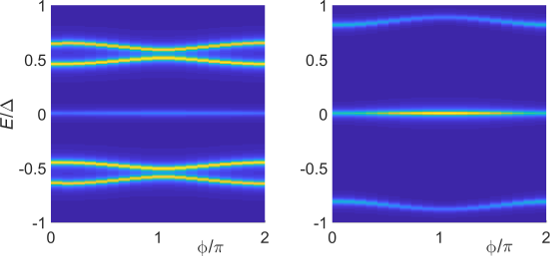
- magnetic impurity in a local magnetic field. We here analyze the S–QD–TS setup in Figure 1a in some detail, where a quantum dot (QD) is present within the S–TS junction region. The QD is modeled as an Anderson impurity [36], which is equivalent to a spin-1/2 quantum impurity over a wide parameter regime
- . Once spin mixing is induced by the magnetic impurity and the local magnetic field, we predict that a finite Josephson current flows even in the deep topological limit. In particular, in the cotunneling regime, we find an anomalous Josephson effect with finite supercurrent at vanishing phase difference
- vanishing phase difference ( = 0) [45][46][72]. One can equivalently view this effect as a φ0-shift in the CPR, I() = Ic sin( + φ0). An observation of this φ0-junction behavior could then provide additional evidence for MBSs (see also [47]), where Equation 23 shows that the local magnetic field is required


![[Graphic 75]](/bjnano/content/inline/2190-4286-9-158-i137.svg?max-width=637&scale=1.18182) = 1 in Figure 6, for different bulk Zeeman fields Vx (in meV) near the crit...
= 1 in Figure 6, for different bulk Zeeman fields Vx (in meV) near the crit...


Nanocomposites comprised of homogeneously dispersed magnetic iron-oxide nanoparticles and poly(methyl methacrylate)
Beilstein J. Nanotechnol. 2018, 9, 1613–1622, doi:10.3762/bjnano.9.153
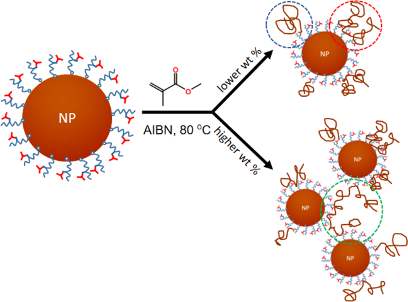
- with the methyl methacrylate (MMA) monomer. The resulting suspension of magnetic nanoparticles decorated with poly(methyl methacrylate) (PMMA) chains in toluene were colloidal, even in the presence of a magnetic field gradient. Nanocomposites were precipitated from these suspensions. The transmission
- coercivity in the absence of an external magnetic field [1][2]. Their colloidal suspensions are vital in a variety of technological [3] and biomedical applications [4], such as contrast agents in magnetic resonance imaging (MRI) [5][6], targeted drug delivery [6] and magnetic hyperthermia based on the
- selective heating of magnetic nanoparticles using an external AC magnetic field [7][8]. While magnetic nanoparticles exhibit unique physico-chemical properties, they also tend to agglomerate, leading to the loss of their interesting properties and their potential for applications. Organic/inorganic
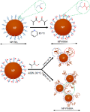


Closed polymer containers based on phenylboronic esters of resorcinarenes
Beilstein J. Nanotechnol. 2018, 9, 1594–1601, doi:10.3762/bjnano.9.151
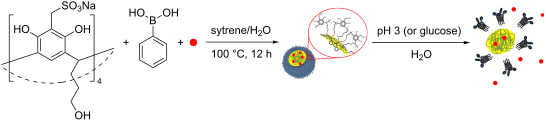
- pulsed gradient unit capable of producing magnetic-field pulse gradients in the z-direction of about 56 G/cm. D2O was used as solvent in all experiments. Chemical shifts were reported relative to H2O (δ = 4.7 ppm) as an internal standard. Measurements by the DSC and TGA methods were carried out with a


Interaction-tailored organization of large-area colloidal assemblies
Beilstein J. Nanotechnol. 2018, 9, 1582–1593, doi:10.3762/bjnano.9.150
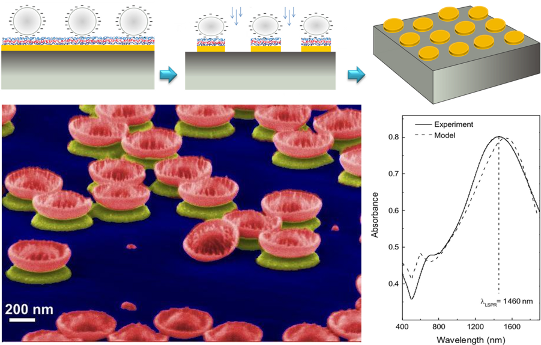
- properties of cobalt nanoholes were investigated by the magneto-optical Kerr effect technique in longitudinal configuration. The samples were placed between the poles of a GMW 3470 electromagnet, where the magnetic field intensity was measured by a Group3 Teslameter probe. A He–Ne laser beam (wavelength 633
- their possible applications in plasmonic and magnonic fields. In both cases, nanoparticle size, distribution and nanostructure mesospacing are key parameters for the control of the electric or magnetic field distribution and intensity on the investigated area. Concerning plasmonic applications, the


Solid-state Stern–Gerlach spin splitter for magnetic field sensing, spintronics, and quantum computing
Beilstein J. Nanotechnol. 2018, 9, 1558–1563, doi:10.3762/bjnano.9.147
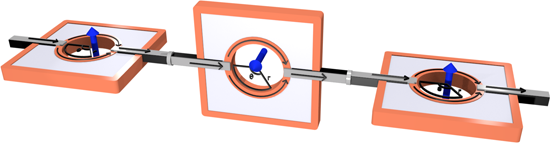
- ferromagnetic leads, the device can be used for sensitive measurements of magnetic field strengths. The same setup can also be used to implement a spintronic switch. Instead using normal metallic leads, we show that a switchable spintronics NOT-gate can be constructed. Finally, we also demonstrate how a
- coordinate x1 = r(2π − θ) and x2 = rθ along the upper and lower edges, respectively. The eigenvalue equations along the two edges are then and the corresponding eigenstates can be written as We now thread a magnetic flux of magnetic field strength B through the hole. To describe this we choose the vector
- spin-up electrons, the only relevant matrix element for the scattering matrix is The conductance is therefore given by It is clear that the very strong dependence of the current on the magnetic flux Br2π makes this setup ideal for measuring magnetic field strength, as a potential alternative to


Robust topological phase in proximitized core–shell nanowires coupled to multiple superconductors
Beilstein J. Nanotechnol. 2018, 9, 1512–1526, doi:10.3762/bjnano.9.142

- Science and Engineering, Reykjavik University, Menntavegur 1, IS-101 Reykjavik, Iceland 10.3762/bjnano.9.142 Abstract We consider core–shell nanowires with prismatic geometry contacted with two or more superconductors in the presence of a magnetic field applied parallel to the wire. In this geometry, the
- lowest energy states are localized on the outer edges of the shell, which strongly inhibits the orbital effects of the longitudinal magnetic field that are detrimental to Majorana physics. Using a tight-binding model of coupled parallel chains, we calculate the topological phase diagram of the hybrid
- longitudinal magnetic field. The system is predicted to host zero-energy Majorana modes localized at the two ends of the nanowire [5][7][8]. These zero-energy states combine equal proportions of electrons and holes and are created by second quantized operators satisfying the “Majorana condition” γ† = γ. The


![[Graphic 30]](/bjnano/content/inline/2190-4286-9-142-i36.svg?max-width=637&scale=1.18182) ) = 0 and
) = 0 and ![[Graphic 31]](/bjnano/content/inline/2190-4286-9-142-i37.svg?max-width=637&scale=1.18182) = 0. The white areas are t...
= 0. The white areas are t...


![[Graphic 40]](/bjnano/content/inline/2190-4286-9-142-i46.svg?max-width=637&scale=1.18182) ) ≠ 0 and
) ≠ 0 and ![[Graphic 41]](/bjnano/content/inline/2190-4286-9-142-i47.svg?max-width=637&scale=1.18182) = 0. The white areas are topol...
= 0. The white areas are topol...

![[Graphic 50]](/bjnano/content/inline/2190-4286-9-142-i56.svg?max-width=637&scale=1.18182) ) ≠ 0 and
) ≠ 0 and ![[Graphic 51]](/bjnano/content/inline/2190-4286-9-142-i57.svg?max-width=637&scale=1.18182) 1 = 0,
1 = 0, ![[Graphic 52]](/bjnano/content/inline/2190-4286-9-142-i58.svg?max-width=637&scale=1.18182) 3 = π/2,
3 = π/2, ![[Graphic 53]](/bjnano/content/inline/2190-4286-9-142-i59.svg?max-width=637&scale=1.18182) 5 = −π/2. T...
5 = −π/2. T...

![[Graphic 65]](/bjnano/content/inline/2190-4286-9-142-i71.svg?max-width=637&scale=1.18182) ) ≠ 0 and
) ≠ 0 and ![[Graphic 66]](/bjnano/content/inline/2190-4286-9-142-i72.svg?max-width=637&scale=1.18182) 1 = π/2,
1 = π/2, ![[Graphic 67]](/bjnano/content/inline/2190-4286-9-142-i73.svg?max-width=637&scale=1.18182) 3 = −π/2,
3 = −π/2, ![[Graphic 68]](/bjnano/content/inline/2190-4286-9-142-i74.svg?max-width=637&scale=1.18182) 5 = π/2, and ...
5 = π/2, and ...


![[Graphic 79]](/bjnano/content/inline/2190-4286-9-142-i85.svg?max-width=637&scale=1.18182) = 3 of a triangular wi...
= 3 of a triangular wi...


Excitation of nonradiating magnetic anapole states with azimuthally polarized vector beams
Beilstein J. Nanotechnol. 2018, 9, 1478–1490, doi:10.3762/bjnano.9.139
- useful applications in biosensing, i.e., in the detection of molecules that interact strongly once exposed to magnetic field hotspots, which nanoparticles in a magnetic anapole state can offer in their near field. Moreover, the signal-to-noise ratio of an MRI machine, that is defined as the ratio of the
- , leading to a scattering dip of less than −30 dB between two, hexadecapolar and quadrupolar, resonances. In Supporting Information File 1, one can find a plot with the proposed phase-modulation mask, together with some electric and magnetic field plots that correspond to the illumination of a silicon
- wave and the formulas with which the elements of the T-matrix are calculated based on the EBCM method. It also includes a plot of the proposed phase mask for Figure 1c, electric and magnetic field plots corresponding to the anapole condition discussed in Figure 1b and Figure 1c, and some extra 2D plots


Cr(VI) remediation from aqueous environment through modified-TiO2-mediated photocatalytic reduction
Beilstein J. Nanotechnol. 2018, 9, 1448–1470, doi:10.3762/bjnano.9.137
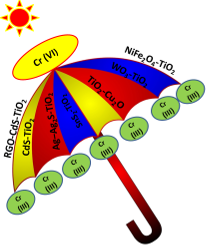
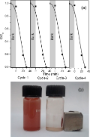
- overlap of the TiO2 band with that of Fe3O4 and (iii) efficient separation and recyclability of the catalyst under application of an external magnetic field because of the presence of magnetic Fe3O4. Therefore, the composite photocatalysts exhibited a higher rate of photoreduction of Cr(VI) as compared to


Tailoring polarization and magnetization of absorbing terahertz metamaterials using a cut-wire sandwich structure
Beilstein J. Nanotechnol. 2018, 9, 1437–1447, doi:10.3762/bjnano.9.136
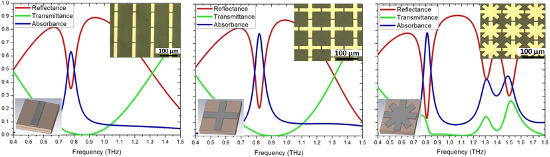
- relative permeability can be defined as μr = 1 + M / H, where E, H, P, and M are the electric field, magnetic field, polarization, and magnetization [12], respectively. Magnetization and polarization are two factors that can be used to tailor the relative permeability and relative permittivity
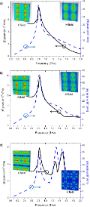
- existence of a high absorption when the high electric field and magnetic field are stored on the metamaterial structure. The electric and magnetic field distributions are presented in the inset of Figure 6. The electric field distribution showed that the maximum value of the electric field was at the gap
- between two unit cells. The magnetic field distribution showed that the maximum value of the magnetic field was between layers 1 and 2. The anti-parallel surface in the gold metallic bars on layers 1 and 2 generated magnetization. The maximum value of the electric and magnetic fields was found here, while


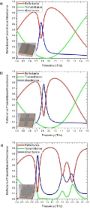




Robust midgap states in band-inverted junctions under electric and magnetic fields
Beilstein J. Nanotechnol. 2018, 9, 1405–1413, doi:10.3762/bjnano.9.133
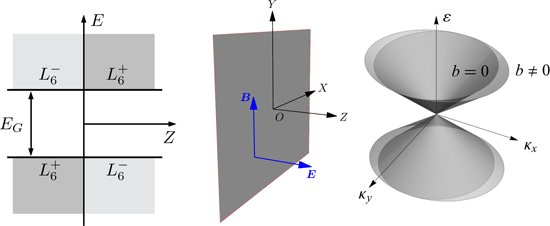
- up to stage once again with the theoretical prediction by Bernevig et al. [3] of a topological insulating behaviour in a HgTe/CdTe quantum well. The difference between the latter and the quantum Hall system lies in the fact that the quantum well required no magnetic field at all, but just
- symmetry allow us to define a topological index given by the sign of the Dirac mass [21]. In 1994, Agassi studied the case of a band-inverted junction with a magnetic field applied parallel to the junction [23]. This author showed that the Dirac point remains robust upon the application of a magnetic field
- of arbitrary strengths and that the Landau levels in the continuum split for non-zero values of the in-plane momentum in the direction perpendicular to the magnetic field. By means of the modern theory of symmetry-protected topological phases, the protection of the Dirac point can be understood in

![[Graphic 1]](/bjnano/content/inline/2190-4286-9-133-i26.svg?max-width=637&scale=1.18182) and
and ![[Graphic 2]](/bjnano/content/inline/2190-4286-9-133-i27.svg?max-width=637&scale=1.18182) band-edge profile of an abrupt band-inverted junction with aligned and same-sized gaps, l...
band-edge profile of an abrupt band-inverted junction with aligned and same-sized gaps, l...


![[Graphic 35]](/bjnano/content/inline/2190-4286-9-133-i60.svg?max-width=637&scale=1.18182) and b = 0.5 as a function of the electric field. It is important...
and b = 0.5 as a function of the electric field. It is important...

Interplay between pairing and correlations in spin-polarized bound states
Beilstein J. Nanotechnol. 2018, 9, 1370–1380, doi:10.3762/bjnano.9.129
- aligned perpendicularly to the wire and the magnetic field parallel to it, leading to the effective intersite pairing of identical spins and (under specific conditions) inducing zero-energy end modes resembling Majorana quasiparticles. This issue has been recently studied very intensively but here we
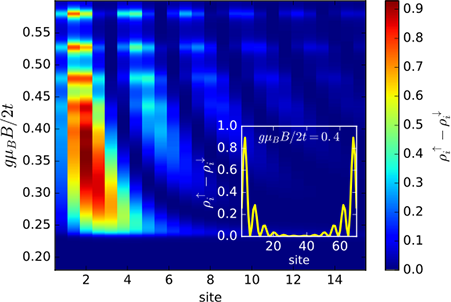
- the spin-dependent spectrum ρiσ(ω) as a function of a varying magnetic field. At a critical value (B ≈ 0.2) we observe the emergence of zero-energy quasiparticles, whose spectral weights strongly depend on the spin σ. For a better understanding of the polarized zero-energy quasiparticles, we present
- recently observed by STM spectroscopy with use of a polarized tip [42]. We have studied here the evolution of the polarized quasiparticle states with respect to the magnetic field (Figure 4) and investigated the spatial oscillations of the Majorana zero-energy modes near the chain edges (Figure 5). Finally


![[Graphic 23]](/bjnano/content/inline/2190-4286-9-129-i39.svg?max-width=637&scale=1.18182) obtained for |J| < Jc in the absence of spin–orbit coupling (le...
obtained for |J| < Jc in the absence of spin–orbit coupling (le...

![[Graphic 26]](/bjnano/content/inline/2190-4286-9-129-i42.svg?max-width=637&scale=1.18182) as a function of the r...
as a function of the r...


Disorder-induced suppression of the zero-bias conductance peak splitting in topological superconducting nanowires
Beilstein J. Nanotechnol. 2018, 9, 1358–1369, doi:10.3762/bjnano.9.128
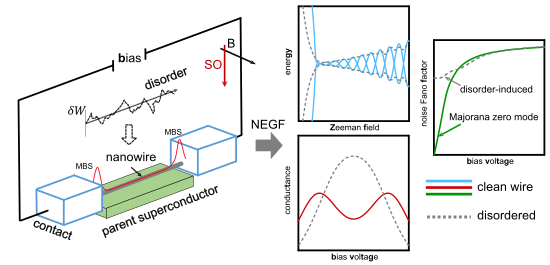
- several experiments since 2012 [23][24][25][26][27][28][29][30]. As an important signature of MBSs in the semiconductor nanowires which are proximity-coupled to s-wave superconductors, the zero-bias conductance peak has been observed in the tunneling spectra in the presence of a finite magnetic field [23
- Coulomb island. It is illustrated that the energy splitting is exponentially suppressed with increasing wire length. For short wires with a typical length of a few hundred nanometers, the Majorana energies oscillate as the magnetic field varies. These observations are consistent with previous theoretical
- ][41][42][43]. Secondly, theory predicts an increasing oscillation magnitude of Majorana energy splitting with the increase of magnetic field [36][44], while the experiment indicates the damped oscillation with increasing field. Similar discrepancy was also shown in the Majorana-quantum dot hybrid


![[Graphic 20]](/bjnano/content/inline/2190-4286-9-128-i39.svg?max-width=637&scale=1.18182) (das...
(das...


Andreev spectrum and supercurrents in nanowire-based SNS junctions containing Majorana bound states
Beilstein J. Nanotechnol. 2018, 9, 1339–1357, doi:10.3762/bjnano.9.127
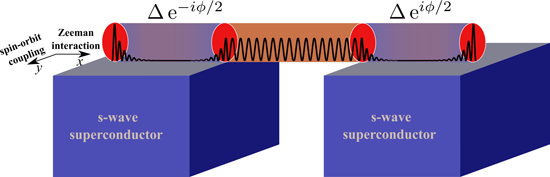
- Hamiltonian of which is given by [38][39][40][41][42][43] where is the momentum operator, μ the chemical potential that determines the filling of the nanowire, αR represents the strength of Rashba spin–orbit coupling, is the Zeeman energy as a result of the applied magnetic field in the x-direction along
- Anderson’s theorem [47]. A finite magnetic field induces a so-called Zeeman depairing, which results in a complete closing of the induced superconducting gap when B exceeds Δ. This is indeed observed in Figure 2b (magenta dash-dot line). Further increasing of the Zeeman field in this normal state gives rise
- is subjected to an external magnetic field (denoted by the black arrow). Superconducting correlations are induced into the nanowire via proximity effect, thus becoming superconducting with the induced pairing potential ΔS < ΔS′. Low-energy spectrum of a superconducting nanowire as function of the


![[Graphic 44]](/bjnano/content/inline/2190-4286-9-127-i52.svg?max-width=637&scale=1.18182) in a short SNS j...
in a short SNS j...


![[Graphic 73]](/bjnano/content/inline/2190-4286-9-127-i81.svg?max-width=637&scale=1.18182) = 0 (a,b)...
= 0 (a,b)...


![[Graphic 84]](/bjnano/content/inline/2190-4286-9-127-i92.svg?max-width=637&scale=1.18182) ), fo...
), fo...


![[Graphic 119]](/bjnano/content/inline/2190-4286-9-127-i127.svg?max-width=637&scale=1.18182) at B = 1.5Bc. Contributions to the supercurrent for (a,b) short and ...
at B = 1.5Bc. Contributions to the supercurrent for (a,b) short and ...

![[Graphic 163]](/bjnano/content/inline/2190-4286-9-127-i171.svg?max-width=637&scale=1.18182) ), in (a,b) a short and (c,d) a long junction. (a,...
), in (a,b) a short and (c,d) a long junction. (a,...

![[Graphic 175]](/bjnano/content/inline/2190-4286-9-127-i183.svg?max-width=637&scale=1.18182) ), in (a,b) a...
), in (a,b) a...

![[Graphic 186]](/bjnano/content/inline/2190-4286-9-127-i194.svg?max-width=637&scale=1.18182) ) in (a,b) a short and (c,d) a long ...
) in (a,b) a short and (c,d) a long ...
New 2D graphene hybrid composites as an effective base element of optical nanodevices
Beilstein J. Nanotechnol. 2018, 9, 1321–1327, doi:10.3762/bjnano.9.125
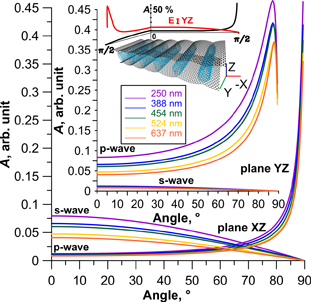
- and magnetic field strength, respectively. The host medium is vacuum. In this configuration the wave is p-polarized (or E-wave). To determine the coefficient of reflection, transmission and absorption, Maxwell's equations for the electric and magnetic fields in a vacuum with the 2D CNT–graphene
- composite as an interface have been considered. Assuming a plane-wave solution, Maxwell's equations can be written in the form where E and H are the electric and the magnetic field strength, respectively, k is the wave vector and ω is the frequency of the incident electromagnetic radiation. The following
- of a p-polarized wave: where R and T are the reflection and the transmission coefficient, respectively. Due to continuity of the tangent components of the electric field at the composite surface one can write: For the tangent components of the magnetic field at the composite surface one can write


Induced smectic phase in binary mixtures of twist-bend nematogens
Beilstein J. Nanotechnol. 2018, 9, 1297–1307, doi:10.3762/bjnano.9.122
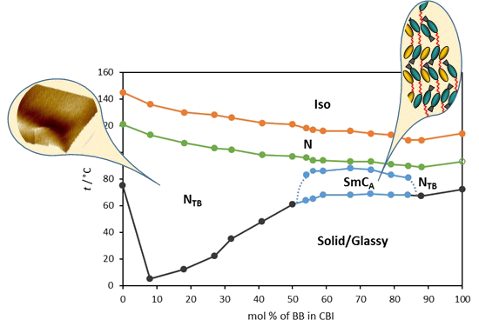
- . The assignment of the NTB phase was further supported by small-angle X-ray diffraction studies on the mixture containing 18 mol % BB as shown in Figure 3. X-ray diffraction measurements of the sample were performed under a magnetic field of 1 T upon cooling (1 K/min) from the isotropic liquid. A
- between adjacent layers [34]. The induction of the smectic phase was confirmed by the presence of an additional peak in the DSC trace and by X-ray diffraction analysis performed on the mixture containing 73 mol % of BB. The diffraction pattern obtained in magnetic field of 1 T upon cooling at 73 °C shows
- texture after shearing the sample at 82 °C, d) 2D XRD patterns for a sample of 73 mol % BB mixture aligned in the magnetic field obtained on cooling from the isotropic liquid at 73 °C. IR spectra of pure BB (red), pure CBI (green) and a 73 mol % BB mixture (blue) at room temperature. IR spectra in the CH2