


Search results
Search for "NHC ligands" in Full Text gives 56 result(s) in Beilstein Journal of Organic Chemistry.
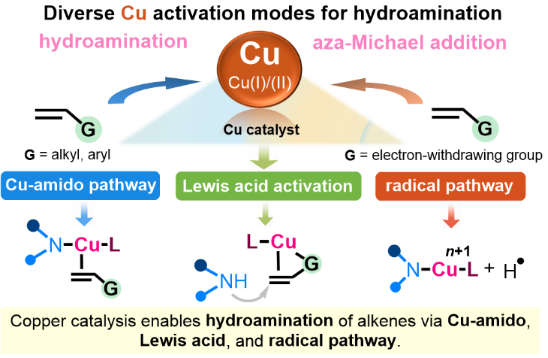
Recent advances in copper-catalyzed direct hydroamination of alkenes with (hetero)aromatic amines
- Hyejeong Lee and
- Yunmi Lee
Beilstein J. Org. Chem. 2026, 22, 925–947, doi:10.3762/bjoc.22.73
- , while suppressing the competing 1,4-addition pathways commonly observed in copper-catalyzed amination reactions. Recently, Lee et al. reported the copper-catalyzed hydroamination of allylic sulfones 10 (Scheme 6) [41]. By tuning the steric and electronic properties of the NHC ligands (e.g., IPrCuCl vs

Graphical Abstract

Scheme 1: Mechanistic pathways in copper-catalyzed hydroamination.

Scheme 2: Synthesis of copper–amido complexes.

Scheme 3: Cu–amido catalysts studied for the aza-Michael addition of aniline to electron-deficient olefins.
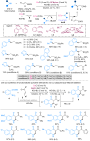
Scheme 4: Copper-catalyzed aza-Michael addition of (hetero)aromatic amines to α,β-unsaturated alkenes.

Scheme 5: Copper-catalyzed 1,6-conjugate addition of aza-heterocycles to sulfonyl dienes.

Scheme 6: Cu-catalyzed aza-Michael addition of arylamines to allylic sulfones.

Scheme 7: Cyclic(alkyl)(amino)carbene-copper-catalyzed aza-Michael addition.

Scheme 8: Aza-Michael addition enabled by Lewis acidic copper catalyst. a20 mol % bpy, 50 mol % Na2CO3.

Scheme 9: One-pot cyclization via aza-Michael addition enabled by Lewis acidic copper catalyst.

Scheme 10: Lewis acidic Cu-catalyzed tandem reaction via aza-Michael addition.

Scheme 11: Copper nanomaterials-catalyzed aza-Michael addition via Lewis acid activation and radical pathways.

Scheme 12: Copper–amido-mediated hydroamination of aniline with vinylarenes.

Scheme 13: Copper-catalyzed anti-Markovnikov hydroamination of (hetero)aromatic N–H with vinylarenes.

Scheme 14: Hydroamination of oxa- and azabenzonorbornadienes with pyrazoles.
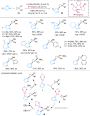
Scheme 15: Copper-catalyzed enantioselective hydroamination of cyclopropenes with pyrazoles.

Scheme 16: Copper/Brønsted acid system for hydroamination of strained alkenes.

Scheme 17: Hydroamination of allenes enabled by Lewis acidic copper catalyst.

Scheme 18: Enantioselective intramolecular hydroamination through aminocupration followed by radical processes....
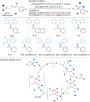
Scheme 19: Visible-light-induced copper-catalyzed hydroamination of styrenes.

Scheme 20: Lewis acid-catalyzed radical hydroamination of styrenes with isatins.
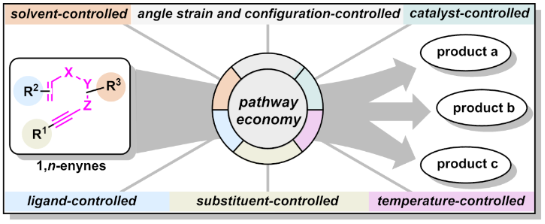
Pathway economy in cyclization of 1,n-enynes
- Hezhen Han,
- Wenjie Mao,
- Bin Lin,
- Maosheng Cheng,
- Lu Yang and
- Yongxiang Liu
Beilstein J. Org. Chem. 2025, 21, 2260–2282, doi:10.3762/bjoc.21.173
- cyclization, and hydrolysis, exclusively producing cis-tetrahydropyridin-4-one derivatives 77 (Scheme 16, path b). Mechanistic studies revealed that intermediate 74 could be stabilized by NHC ligands to facilitate 1,5-acyl migration, whereas phosphine ligands could accelerate proton dissociation in

Graphical Abstract

Scheme 1: Economical synthesis and pathway economy.

Scheme 2: Au(I)-catalyzed cascade cyclization paths of 1,5-enynes.

Scheme 3: Au(I)-catalyzed cyclization paths of 1,7-enynes.

Scheme 4: I2/TBHP-mediated radical cycloisomerization paths of 1,n-enyne.

Scheme 5: Au(I)-catalyzed cycloisomerization paths of 3-allyloxy-1,6-diynes.

Scheme 6: Pd(II)-catalyzed cycloisomerization paths of 2-alkynylbenzoate-cyclohexadienone.

Scheme 7: Stereoselective cyclization of 1,5-enynes.

Scheme 8: Substituent-controlled cycloisomerization of propargyl vinyl ethers.

Scheme 9: Au(I)-catalyzed pathway-controlled domino cyclization of 1,2-diphenylethynes.

Scheme 10: Au(I)-catalyzed tandem cyclo-isomerization of tryptamine-N-ethynylpropiolamide.

Scheme 11: Au(I)-catalyzed tunable cyclization of 1,6-cyclohexenylalkyne.

Scheme 12: Substituent-controlled 7-exo- and 8-endo-dig-selective cyclization of 2-propargylaminobiphenyl deri...

Scheme 13: BiCl3-catalyzed cycloisomerization of tryptamine-ynamide derivatives.

Scheme 14: Au(I)-mediated substituent-controlled cycloisomerization of 1,6-enynes.

Scheme 15: Ligand-controlled regioselective cyclization of 1,6-enynes.

Scheme 16: Ligand-dependent cycloisomerization of 1,7-enyne esters.

Scheme 17: Ligand-controlled cycloisomerization of 1,5-enynes.

Scheme 18: Ligand-controlled cyclization strategy of alkynylamide tethered alkylidenecyclopropanes.

Scheme 19: Ag(I)-mediated pathway-controlled cycloisomerization of tryptamine-ynamides.

Scheme 20: Gold-catalyzed cycloisomerization of indoles with alkynes.

Scheme 21: Catalyst-dependent cycloisomerization of dienol silyl ethers.

Scheme 22: Cycloisomerization of aromatic enynes governed by catalyst.

Scheme 23: Catalyst-dependent 1,2-migration in cyclization of 1-(indol-2-yl)-3-alkyn-1-ols.

Scheme 24: Gold-catalyzed cycloisomerization of N-propargyl-N-vinyl sulfonamides.

Scheme 25: Gold(I)-mediated enantioselective cycloisomerizations of ortho-(alkynyl)styrenes.

Scheme 26: Catalyst-controlled intramolecular cyclization of 1,7-enynes.

Scheme 27: Brønsted acid-catalyzed cycloisomerizations of tryptamine ynamides.

Scheme 28: Catalyst-controlled cyclization of indolyl homopropargyl amides.

Scheme 29: Angle strain-dominated 6-endo-trig cyclization of propargyl vinyl ethers.

Scheme 30: Angle strain-controlled cycloisomerization of alkyn-tethered indoles.

Scheme 31: Geometrical isomeration-dependent cycloisomerization of 1,3-dien-5-ynes.

Scheme 32: Temperature-controlled cyclization of 1,7-enynes.

Scheme 33: Cycloisomerizations of n-(o-ethynylaryl)acrylamides through temperature modulation.

Scheme 34: Temperature-controlled boracyclization of biphenyl-embedded 1,3,5-trien-7-ynes.
Recent advances in synthetic approaches for bioactive cinnamic acid derivatives
- Betty A. Kustiana,
- Galuh Widiyarti and
- Teni Ernawati
Beilstein J. Org. Chem. 2025, 21, 1031–1086, doi:10.3762/bjoc.21.85
- product 245 or the corresponding Z-isomeric product 246, both in good yields. Alkenyl sulfides have also been used for the preparation of cinnamic acid esters. For example, Wu and co-workers (2020) studied the Pd-catalyzed carbonylation of alkenyl sulfides in the presence of NHC ligands via C–S cleavage

Graphical Abstract

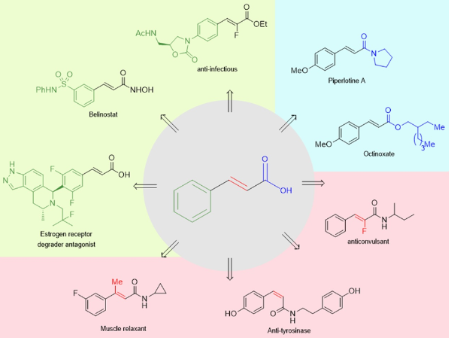
Figure 1: Biologically active cinnamic acid derivatives.

Scheme 1: General synthetic strategies for cinnamic acid derivatizations.

Scheme 2: Cinnamic acid coupling via isobutyl anhydride formation.
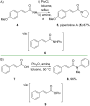
Scheme 3: Amidation reaction via O/N-pivaloyl activation.

Scheme 4: Cinnamic acid amidation using TCCA/PPh3 reagent.
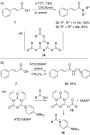
Scheme 5: Cinnamic acid amidation using triazine-based reagents.

Scheme 6: Cinnamic acid amidation using continuous flow mechanochemistry.

Scheme 7: Cinnamic acid amidation using COMU as coupling reagent.
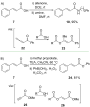
Scheme 8: Cinnamic acid amidation using allenone coupling reagent.

Scheme 9: Cinnamic acid amidation using 4-acetamidophenyl triflimide as reagent.

Scheme 10: Cinnamic acid amidation using methyltrimethoxysilane (MTM).

Scheme 11: Cinnamic acid amidation utilizing amine–borane reagent.

Scheme 12: Cinnamic acid amidation using TCCA/PPh3 reagent.

Scheme 13: Cinnamic acid amidation using PPh3/I2 reagent.

Scheme 14: Cinnamic acid amidation using PCl3 reagent.

Scheme 15: Cinnamic acid amidation utilizing pentafluoropyridine (PFP) as reagent.

Scheme 16: Cinnamic acid amidation using hypervalent iodine(III).

Scheme 17: Mechanochemical amidation using 1,1,2,2-tetrafluoroethyl-N,N-dimethylamine (TFEDMA) reagent.

Scheme 18: Methyl ester preparation using tris(2,4,6-trimethoxyphenyl)phosphine (TMPP).

Scheme 19: N-Trifluoromethyl amide preparation using isothiocyanate and AgF.

Scheme 20: POCl3-mediated amide coupling of carboxylic acid and DMF.

Scheme 21: O-Alkylation of cinnamic acid using alkylating agents.

Scheme 22: Glycoside preparation via Mitsunobu reaction.

Scheme 23: O/N-Acylation via rearrangement reactions.

Scheme 24: Amidation reactions using sulfur-based alkylating agents.

Scheme 25: Amidation reaction catalyzed by Pd0 via C–N cleavage.

Scheme 26: Amidation reaction catalyzed by CuCl/PPh3.

Scheme 27: Cu(II) triflate-catalyzed N-difluoroethylimide synthesis.

Scheme 28: Cu/Selectfluor-catalyzed transamidation reaction.

Scheme 29: CuO–CaCO3-catalyzed amidation reaction.

Scheme 30: Ni-catalyzed reductive amidation.

Scheme 31: Lewis acidic transition-metal-catalyzed O/N-acylations.

Scheme 32: Visible-light-promoted amidation of cinnamic acid.

Scheme 33: Sunlight/LED-promoted amidation of cinnamic acid.

Scheme 34: Organophotocatalyst-promoted N–O cleavage of Weinreb amides to synthesize primary amides.

Scheme 35: Cinnamamide synthesis through [Ir] photocatalyst-promoted C–N-bond cleavage of tertiary amines.

Scheme 36: Blue LED-promoted FeCl3-catalyzed reductive transamidation.

Scheme 37: FPyr/TCT-catalyzed amidation of cinnamic acid derivative 121.

Scheme 38: Cs2CO3/DMAP-mediated esterification.

Scheme 39: HBTM organocatalyzed atroposelective N-acylation.

Scheme 40: BH3-catalyzed N-acylation reactions.
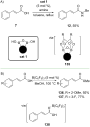
Scheme 41: Borane-catalyzed N-acylation reactions.

Scheme 42: Catalytic N-acylation reactions via H/F bonding activation.

Scheme 43: Brønsted base-catalyzed synthesis of cinnamic acid esters.

Scheme 44: DABCO/Fe3O4-catalyzed N-methyl amidation of cinnamic acid 122.

Scheme 45: Catalytic oxidation reactions of acylating agents.

Scheme 46: Preparation of cinnamamide-substituted benzocyclooctene using I(I)/I(III) catalysis.

Scheme 47: Pd-colloids-catalyzed oxidative esterification of cinnamyl alcohol.

Scheme 48: Graphene-supported Pd/Au alloy-catalyzed oxidative esterification via hemiacetal intermediate.

Scheme 49: Au-supported on A) carbon nanotubes (CNT) and B) on porous boron nitride (pBN) as catalyst for the ...

Scheme 50: Cr-based catalyzed oxidative esterification of cinnamyl alcohols with H2O2 as the oxidant.

Scheme 51: Co-based catalysts used for oxidative esterification of cinnamyl alcohol.

Scheme 52: Iron (A) and copper (B)-catalyzed oxidative esterification of cinnamaldehyde.

Scheme 53: NiHPMA-catalyzed oxidative esterification of cinnamaldehyde.

Scheme 54: Synthesis of cinammic acid esters through NHC-catalyzed oxidative esterification via intermolecular...
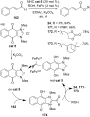
Scheme 55: Redox-active NHC-catalyzed esterification via intramolecular oxidation.

Scheme 56: Electrochemical conversion of cinnamaldehyde to methyl cinnamate.

Scheme 57: Bu4NI/TBHP-catalyzed synthesis of bisamides from cinnamalaldehyde N-tosylhydrazone.

Scheme 58: Zn/NC-950-catalyzed oxidative esterification of ketone 182.

Scheme 59: Ru-catalyzed oxidative carboxylation of terminal alkenes.

Scheme 60: Direct carboxylation of alkenes using CO2.

Scheme 61: Carboxylation of alkenylboronic acid/ester.

Scheme 62: Carboxylation of gem-difluoroalkenes with CO2.

Scheme 63: Photoredox-catalyzed carboxylation of difluoroalkenes.

Scheme 64: Ru-catalyzed carboxylation of alkenyl halide.
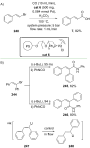
Scheme 65: Carboxylation of alkenyl halides under flow conditions.

Scheme 66: Cinnamic acid ester syntheses through carboxylation of alkenyl sulfides/sulfones.

Scheme 67: Cinnamic acid derivatives synthesis through a Ag-catalyzed decarboxylative cross-coupling proceedin...
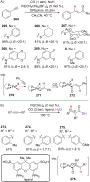
Scheme 68: Pd-catalyzed alkyne hydrocarbonylation.

Scheme 69: Fe-catalyzed alkyne hydrocarbonylation.

Scheme 70: Alkyne hydrocarboxylation using CO2.
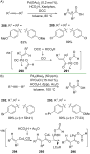
Scheme 71: Alkyne hydrocarboxylation using HCO2H as CO surrogate.

Scheme 72: Co/AlMe3-catalyzed alkyne hydrocarboxylation using DMF.

Scheme 73: Au-catalyzed oxidation of Au–allenylidenes.
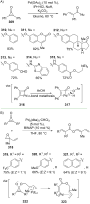
Scheme 74: Pd-catalyzed C–C-bond activation of cyclopropenones to synthesize unsaturated esters and amides.
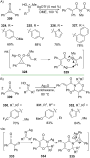
Scheme 75: Ag-catalyzed C–C-bond activation of diphenylcyclopropenone.

Scheme 76: Cu-catalyzed C–C bond activation of diphenylcyclopropenone.

Scheme 77: PPh3-catalyzed C–C-bond activation of diphenylcyclopropenone.

Scheme 78: Catalyst-free C–C-bond activation of diphenylcyclopropenone.

Scheme 79: Cu-catalyzed dioxolane cleavage.

Scheme 80: Multicomponent coupling reactions.

Scheme 81: Pd-catalyzed partial hydrogenation of electrophilic alkynes.

Scheme 82: Nickel and cobalt as earth-abundant transition metals used as catalysts for the partial hydrogenati...
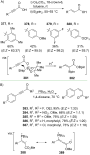
Scheme 83: Metal-free-catalyzed partial hydrogenation of conjugated alkynes.

Scheme 84: Horner–Wadsworth–Emmons reaction between triethyl 2-fluoro-2-phosphonoacetate and aldehydes with ei...

Scheme 85: Preparation of E/Z-cinnamates using thiouronium ylides.

Scheme 86: Transition-metal-catalyzed ylide reactions.

Scheme 87: Redox-driven ylide reactions.
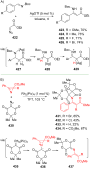
Scheme 88: Noble transition-metal-catalyzed olefination via carbenoid species.

Scheme 89: TrBF4-catalyzed olefination via carbene species.

Scheme 90: Grubbs catalyst (cat 7)/photocatalyst-mediated metathesis reactions.

Scheme 91: Elemental I2-catalyzed carbonyl-olefin metathesis.

Scheme 92: Cu-photocatalyzed E-to-Z isomerization of cinnamic acid derivatives.

Scheme 93: Ni-catalyzed E-to-Z isomerization.

Scheme 94: Dehydration of β-hydroxy esters via an E1cB mechanism to access (E)-cinnamic acid esters.

Scheme 95: Domino ring-opening reaction induced by a base.
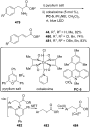
Scheme 96: Dehydroamination of α-aminoester derivatives.

Scheme 97: Accessing methyl cinnamate (44) via metal-free deamination or decarboxylation.

Scheme 98: The core–shell magnetic nanosupport-catalyzed condensation reaction.
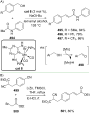
Scheme 99: Accessing cinnamic acid derivatives from acetic acid esters/amides through α-olefination.
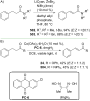
Scheme 100: Accessing cinnamic acid derivatives via acceptorless α,β-dehydrogenation.

Scheme 101: Cu-catalyzed formal [3 + 2] cycloaddition.

Scheme 102: Pd-catalyzed C–C bond formation via 1,4-Pd-shift.

Scheme 103: NHC-catalyzed Rauhut–Currier reactions.
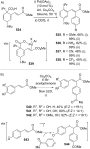
Scheme 104: Heck-type reaction for Cα arylation.

Scheme 105: Cu-catalyzed trifluoromethylation of cinnamamide.

Scheme 106: Ru-catalyzed alkenylation of arenes using directing groups.

Scheme 107: Earth-abundant transition-metal-catalyzed hydroarylation of α,β-alkynyl ester 374.

Scheme 108: Precious transition-metal-catalyzed β-arylation of cinnamic acid amide/ester.

Scheme 109: Pd-catalyzed β-amination of cinnamamide.

Scheme 110: S8-mediated β-amination of methyl cinnamate (44).

Scheme 111: Pd-catalyzed cross-coupling reaction of alkynyl esters with phenylsilanes.

Scheme 112: Pd-catalyzed β-cyanation of alkynyl amide/ester.

Scheme 113: Au-catalyzed β-amination of alkynyl ester 374.
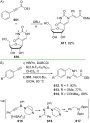
Scheme 114: Metal-free-catalyzed Cβ-functionalizations of alkynyl esters.

Scheme 115: Heck-type reactions.

Scheme 116: Mizoroki–Heck coupling reactions using unconventional functionalized arenes.
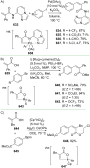
Scheme 117: Functional group-directed Mizoroki–Heck coupling reactions.
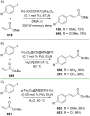
Scheme 118: Pd nanoparticles-catalyzed Mizoroki–Heck coupling reactions.

Scheme 119: Catellani-type reactions to access methyl cinnamate with multifunctionalized arene.
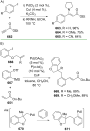
Scheme 120: Multicomponent coupling reactions.

Scheme 121: Single atom Pt-catalyzed Heck coupling reaction.

Scheme 122: Earth-abundant transition metal-catalyzed Heck coupling reactions.
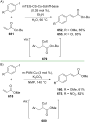
Scheme 123: Polymer-coated earth-abundant transition metals-catalyzed Heck coupling reactions.

Scheme 124: Earth-abundant transition-metal-based nanoparticles as catalysts for Heck coupling reactions.

Scheme 125: CN- and Si-based directing groups to access o-selective cinnamic acid derivatives.
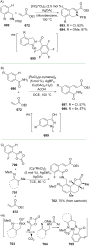
Scheme 126: Amide-based directing group to access o-selective cinnamic acid derivatives.

Scheme 127: Carbonyl-based directing group to access o-selective cinnamic acid derivatives.

Scheme 128: Stereoselective preparation of atropisomers via o-selective C(sp2)–H functionalization.

Scheme 129: meta-Selective C(sp2)–H functionalization using directing group-tethered arenes.

Scheme 130: para-Selective C(sp2)–H functionalization using directing group-tethered arenes.

Scheme 131: Non-directed C(sp2)–H functionalization via electrooxidative Fujiwara–Moritani reaction.
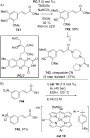
Scheme 132: Interconversion of functional groups attached to cinnamic acid.

Scheme 133: meta-Selective C(sp2)–H functionalization of cinnamate ester.

Scheme 134: C(sp2)–F arylation using Grignard reagents.

Scheme 135: Truce–Smiles rearrangement of N-aryl metacrylamides.

Scheme 136: Phosphine-catalyzed cyclization of γ-vinyl allenoate with enamino esters.
Application of N-heterocyclic carbene–Cu(I) complexes as catalysts in organic synthesis: a review
- Nosheen Beig,
- Varsha Goyal and
- Raj K. Bansal
Beilstein J. Org. Chem. 2023, 19, 1408–1442, doi:10.3762/bjoc.19.102
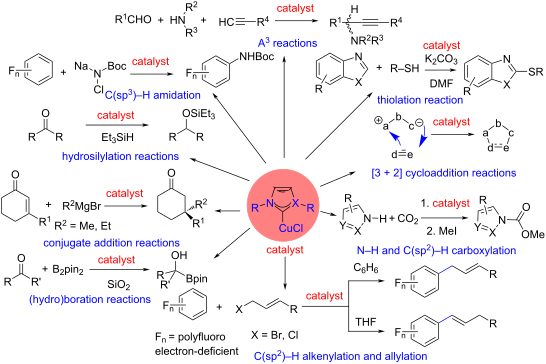
- catalysts for hydrosilylation and [3 + 2] cycloaddition discussed later [39]. 1.4 By ligand displacement Corrigan and co-worker stabilized homoleptic copper- and silver bis(trimethylsilyl)phosphido compounds [M6{P(SiMe3)2}6] (M = Cu, Ag) through their coordination with NHC ligands. For this purpose, they
- -Ph) in this manner (Scheme 29) [42]. The X-ray studies revealed two major structure types of the compounds [(NHC)Cu-ER3] in the solid state. In the case of bulky NHC ligands, such as IDipp, IMes, and It-Bu, the CuI complexes with ER3 = SiMe2Ph, SiPh3, SnMe3 as well as for Ph and CC-Ph, have monomeric
- -naphthol moiety 193 afforded the highest yield and enantioselectivity. On protecting the hydroxy group in the ligand as methyl ether, the reaction efficiency decreased remarkably. However, on using NHC ligands without oxygen atom, such as analogues of 193, IMes, and SIMes, no conversion occurred. 2.8 C(sp2

Graphical Abstract

Scheme 1: In situ generation of imidazolylidene carbene.

Scheme 2: Hg(II) complex of NHC.

Scheme 3: Isolable and bottlable carbene reported by Arduengo [3].

Scheme 4: First air-stable carbene synthesized by Arduengo in 1992 [5].

Figure 1: General structure of an NHC.

Figure 2: Stabilization of an NHC by donation of the lone pair electrons into the vacant p-orbital (LUMO) at ...

Figure 3: Abnormal NHC reported by Bertrand [8,9].

Figure 4: Cu(d) orbital to σ*C-N(NHC) interactions in NHC–CuX complexes computed at the B3LYP/def2-SVP level ...
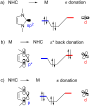
Figure 5: Molecular orbital contributions to the NHC–metal bond.

Scheme 5: Synthesis of NHC–Cu(I) complexes by deprotonation of NHC precursors with a base.

Scheme 6: Synthesis of [NHC–CuX] complexes.

Scheme 7: Synthesis of [(ICy)CuX] and [(It-Bu)CuX] complexes.

Scheme 8: Synthesis of iodido-bridged copper–NHC complexes by deprotonation of benzimidazolium salts reported...

Scheme 9: Synthesis of copper complexes by deprotonation of triazolium salts.

Scheme 10: Synthesis of thiazolylidene–Cu(I) complex by deprotonation with KOt-Bu.

Scheme 11: Preparation of NHC–Cu(I) complexes.

Scheme 12: Synthesis of methylmalonic acid-derived anionic [(26a,b)CuCl]Li(THF)2 and zwitterionic (28) heterol...

Scheme 13: Synthesis of diaminocarbene and diamidocarbene (DAC)–Cu(I) complexes.

Scheme 14: Synthesis of the cationic (NHC)2Cu(I) complex 39 from benzimidazolium salts 38 with tetrakis(aceton...

Scheme 15: Synthesis of NHC and ADC (acyclic diamino carbenes) Cu(I) hexamethyldisilazide complexes reported b...

Scheme 16: Synthesis of NHC–copper(I) complexes using an acetylacetonate-functionalized imidazolium zwitterion...

Scheme 17: Synthesis of NHC–Cu(I) complexes through deprotonation of azolium salts with Cu2O.

Scheme 18: Synthesis of NHC–CuBr complex through deprotonation with Cu2O reported by Kolychev [31].

Scheme 19: Synthesis of chiral NHC–CuBr complexes from phenoxyimine-imidazolium salts reported by Douthwaite a...

Scheme 20: Preparation of linear neutral NHC–CuCl complexes through the use of Cu2O. For abbreviations, please...

Scheme 21: Synthesis of abnormal-NHC–copper(I) complexes by Bertrand, Cazin and co-workers [35].

Scheme 22: Microwave-assisted synthesis of thiazolylidene/benzothiazolylidene–CuBr complexes by Bansal and co-...

Scheme 23: Synthesis of NHC–CuX complexes through transmetallation.

Scheme 24: Preparation of six- or seven-membered NHC–Cu(I) complexes through transmetalation from Ag(I) comple...

Scheme 25: Synthesis of 1,2,3-triazolylidene–CuCl complexes through transmetallation of Ag(I) complexes genera...

Scheme 26: Synthesis of NHC–copper complexes having both Cu(I) and Cu(II) units through transmetalation report...

Scheme 27: Synthesis of new [(IPr(CH2)3Si(OiPr)3)CuX] complexes and anchoring on MCM-41.

Scheme 28: Synthesis of bis(trimethylsilyl)phosphide–Cu(I)–NHC complexes through ligand displacement.

Scheme 29: Synthesis of silyl- and stannyl [(NHC)Cu−ER3] complexes.

Scheme 30: Synthesis of amido-, phenolato-, thiophenolato–Cu(NHC) complexes.

Scheme 31: Synthesis of first isolable NHC–Cu–difluoromethyl complexes reported by Sanford et al. [44].

Scheme 32: Synthesis of NHC–Cu(I)–bifluoride complexes reported by Riant, Leyssens and co-workers [45].

Scheme 33: Conjugate addition of Et2Zn to enones catalyzed by an NHC–Cu(I) complex reported by Woodward in 200...

Scheme 34: Hydrosilylation of a carbonyl group.

Scheme 35: NHC–Cu(I)-catalyzed hydrosilylation of ketones reported by Nolan et al. [48,49].

Scheme 36: Application of chiral NHC–CuCl complex 104 for the enantioselective hydrosilylation of ketones.

Scheme 37: Hydrosilylation reactions catalyzed by NHC–Cu(Ot-Bu) complexes.

Scheme 38: NHC–CuCl catalyzed carbonylative silylation of alkyl halides.

Scheme 39: Nucleophilic conjugate addition to an activated C=C bond.

Figure 6: Molecular electrostatic potential maps (MESP) of two NHC–CuX complexes computed at the B3LYP/def2-S...

Scheme 40: Conjugate addition of Grignard reagents to 3-alkyl-substituted cyclohexenones catalyzed by a chiral...

Scheme 41: NHC–copper complex-catalyzed conjugate addition of Grignard reagent to 3-substituted hexenone repor...

Scheme 42: Conjugate addition or organoaluminum reagents to β-substituted cyclic enones.

Scheme 43: Conjugate addition of boronates to acyclic α,β-unsaturated carboxylic esters, ketones, and thioeste...

Scheme 44: NHC–Cu(I)-catalyzed hydroboration of an allene reported by Hoveyda [63].

Scheme 45: Conjugate addition of Et2Zn to cyclohexenone catalyzed by NHC–Cu(I) complex derived from benzimidaz...

Scheme 46: Asymmetric conjugate addition of diethylzinc to 3-nonen-2-one catalyzed by NHC–Cu complexes derived...

Scheme 47: General scheme of a [3 + 2] cycloaddition reaction.

Scheme 48: [3 + 2] Cycloaddition of azides with alkynes catalyzed by NHC–Cu(I) complexes reported by Diez-Gonz...

Scheme 49: Application of NHC–CuCl/N-donor combination to catalyze the [3 + 2] cycloaddition of benzyl azide w...

Scheme 50: [3 + 2] Cycloaddition of azides with acetylenes catalyzed by bis(NHC)–Cu complex 131 and mixed NHC–...
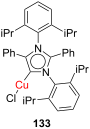
Figure 7: NHC–CuCl complex 133 as catalyst for the [3 + 2] cycloaddition of alkynes with azides at room tempe...

Scheme 51: [3 + 2] Cycloaddition of a bulky azide with an alkynylpyridine using [(NHC)Cu(μ-I)2Cu(NHC)] copper ...

Scheme 52: [3 + 2] Cycloaddition of benzyl azide with phenylacetylene under homogeneous and heterogeneous cata...

Scheme 53: [3 + 2] Cycloaddition of benzyl azide with acetylenes catalyzed by bisthiazolylidene dicopper(I) co...
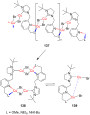
Figure 8: Copper (I)–NHC linear coordination polymer 137 and its conversion into tetranuclear (138) and dinuc...

Scheme 54: An A3 reaction.

Scheme 55: Synthesis of SiO2-immobilized NHC–Cu(I) catalyst 141 and its application in the A3-coupling reactio...

Scheme 56: Preparation of dual-purpose Ru@SiO2–[(NHC)CuCl] catalyst system 142 developed by Bordet, Leitner an...

Scheme 57: Application of the catalyst system Ru@SiO2–[Cu(NHC)] 142 to the one-pot tandem A3 reaction and hydr...

Scheme 58: A3 reaction of phenylacetylene with secondary amines and aldehydes catalyzed by benzothiazolylidene...

Figure 9: Kohn–Sham HOMOs of phenylacetylene and NHC–Cu(I)–phenylacetylene complex computed at the B3LYP/def2...

Figure 10: Energies of the FMOs of phenylacetylene, iminium ion, and NHC–Cu(I)–phenylacetylene complex compute...

Scheme 59: NHC–Cu(I) catalyzed diboration of ketones 147 by reacting with bis(pinacolato)diboron (148) reporte...

Scheme 60: Protoboration of terminal allenes catalyzed by NHC–Cu(I) complexes reported by Hoveyda and co-worke...

Scheme 61: NHC–CuCl-catalyzed borylation of α-alkoxyallenes to give 2-boryl-1,3-butadienes.

Scheme 62: Regioselective hydroborylation of propargylic alcohols and ethers catalyzed by NHC–CuCl complexes 1...

Scheme 63: NHC–CuOt-Bu-catalyzed semihydrogenation and hydroborylation of alkynes.

Scheme 64: Enantioselective NHC–Cu(I)-catalyzed hydroborations of 1,1-disubstituted aryl olefins reported by H...

Scheme 65: Enantioselective NHC–Cu(I)-catalyzed hydroboration of exocyclic 1,1-disubstituted alkenes reported ...

Scheme 66: Markovnikov-selective NHC–CuOH-catalyzed hydroboration of alkenes and alkynes reported by Jones et ...

Scheme 67: Dehydrogenative borylation and silylation of styrenes catalyzed by NHC–CuOt-Bu complexes developed ...

Scheme 68: N–H/C(sp2)–H carboxylation catalyzed by NHC–CuOH complexes.

Scheme 69: C–H Carboxylation of benzoxazole and benzothiazole derivatives with CO2 using a 1,2,3-triazol-5-yli...

Scheme 70: Use of Cu(I) complex derived from diethylene glycol-functionalized imidazo[1,5,a] pyridin-3-ylidene...

Scheme 71: Allylation and alkenylation of polyfluoroarenes and heteroarenes catalyzed by NHC–Cu(I) complexes r...

Scheme 72: Enantioselective C(sp2)–H allylation of (benz)oxazoles and benzothiazoles with γ,γ-disubstituted pr...

Scheme 73: C(sp2)–H arylation of arenes catalyzed by dual NHC–Cu/NHC–Pd catalytic system.

Scheme 74: C(sp2)–H Amidation of (hetero)arenes with N-chlorocarbamates/N-chloro-N-sodiocarbamates catalyzed b...

Scheme 75: NHC–CuI catalyzed thiolation of benzothiazoles and benzoxazoles.
Pyridine C(sp2)–H bond functionalization under transition-metal and rare earth metal catalysis
- Haritha Sindhe,
- Malladi Mounika Reddy,
- Karthikeyan Rajkumar,
- Akshay Kamble,
- Amardeep Singh,
- Anand Kumar and
- Satyasheel Sharma
Beilstein J. Org. Chem. 2023, 19, 820–863, doi:10.3762/bjoc.19.62
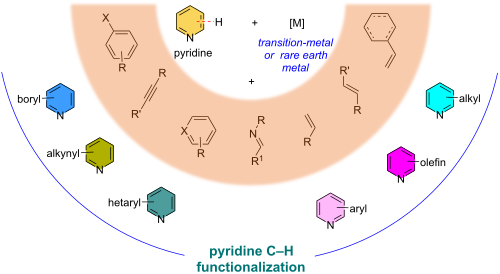
- . Also, metal–NHC complexes have wide application in catalysis and various organic transformations and a range of metal–NHCs served as catalysts. In 2010, using NHC ligands, Yap and co-workers [90] developed a method for the direct para and meta-C–H alkenylation of pyridines with 4-octyne (107) using a
- oxidized by Cu(II) to complete the catalytic cycle. Next, considering the role of N-heterocyclic carbene (NHC) ligands acting as directing group as well as functionalizing unit in arene C–H functionalization reactions with alkynes, Choudhury and group [106] in 2015 developed a protocol for the
- regeneration of 189 (Scheme 36b). In 2019, using NHC ligands, a protocol for the regio- and enantioselective C–H cyclization of pyridines was reported by Shi and co-workers [107] toward the direct asymmetric pyridine C–H alkylation (Scheme 37). The authors found that alkene-tethered C2 pyridine 193, C3

Graphical Abstract

Figure 1: Representative examples of bioactive natural products and FDA-approved drugs containing a pyridine ...

Scheme 1: Classical and traditional methods for the synthesis of functionalized pyridines.

Scheme 2: Rare earth metal (Ln)-catalyzed pyridine C–H alkylation.

Scheme 3: Pd-catalyzed C–H alkylation of pyridine N-oxide.

Scheme 4: CuI-catalyzed C–H alkylation of N-iminopyridinium ylides with tosylhydrazones (A) and a plausible r...
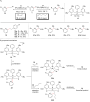
Scheme 5: Zirconium complex-catalyzed pyridine C–H alkylation.

Scheme 6: Rare earth metal-catalyzed pyridine C–H alkylation with nonpolar unsaturated substrates.

Scheme 7: Heterobimetallic Rh–Al complex-catalyzed ortho-C–H monoalkylation of pyridines.

Scheme 8: Mono(phosphinoamido)-rare earth complex-catalyzed pyridine C–H alkylation.

Scheme 9: Rhodium-catalyzed pyridine C–H alkylation with acrylates and acrylamides.

Scheme 10: Ni–Al bimetallic system-catalyzed pyridine C–H alkylation.

Scheme 11: Iridium-catalyzed pyridine C–H alkylation.
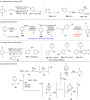
Scheme 12: para-C(sp2)–H Alkylation of pyridines with alkenes.

Scheme 13: Enantioselective pyridine C–H alkylation.

Scheme 14: Pd-catalyzed C2-olefination of pyridines.

Scheme 15: Ru-catalyzed C-6 (C-2)-propenylation of 2-arylated pyridines.
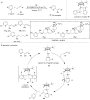
Scheme 16: C–H addition of allenes to pyridines catalyzed by half-sandwich Sc metal complex.

Scheme 17: Pd-catalyzed stereodivergent synthesis of alkenylated pyridines.

Scheme 18: Pd-catalyzed ligand-promoted selective C3-olefination of pyridines.

Scheme 19: Mono-N-protected amino acids in Pd-catalyzed C3-alkenylation of pyridines.

Scheme 20: Amide-directed and rhodium-catalyzed C3-alkenylation of pyridines.

Scheme 21: Bimetallic Ni–Al-catalyzed para-selective alkenylation of pyridine.

Scheme 22: Arylboronic ester-assisted pyridine direct C–H arylation.
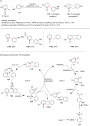
Scheme 23: Pd-catalyzed C–H arylation/benzylation with toluene.

Scheme 24: Pd-catalyzed pyridine C–H arylation with potassium aryl- and heteroaryltrifluoroborates.

Scheme 25: Transient activator strategy in pyridine C–H biarylation.
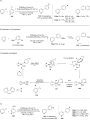
Scheme 26: Ligand-promoted C3-arylation of pyridine.

Scheme 27: Pd-catalyzed arylation of nicotinic and isonicotinic acids.

Scheme 28: Iron-catalyzed and imine-directed C–H arylation of pyridines.

Scheme 29: Pd–(bipy-6-OH) cooperative system-mediated direct pyridine C3-arylation.

Scheme 30: Pd-catalyzed pyridine N-oxide C–H arylation with heteroarylcarboxylic acids.

Scheme 31: Pd-catalyzed C–H cross-coupling of pyridine N-oxides with five-membered heterocycles.

Scheme 32: Cu-catalyzed dehydrative biaryl coupling of azine(pyridine) N-oxides and oxazoles.

Scheme 33: Rh(III)-catalyzed cross dehydrogenative C3-heteroarylation of pyridines.

Scheme 34: Pd-catalyzed C3-selective arylation of pyridines.
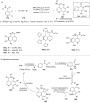
Scheme 35: Rhodium-catalyzed oxidative C–H annulation of pyridines to quinolines.
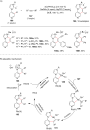
Scheme 36: Rhodium-catalyzed and NHC-directed C–H annulation of pyridine.

Scheme 37: Ni/NHC-catalyzed regio- and enantioselective C–H cyclization of pyridines.

Scheme 38: Rare earth metal-catalyzed intramolecular C–H cyclization of pyridine to azaindolines.

Scheme 39: Rh-catalyzed alkenylation of bipyridine with terminal silylacetylenes.

Scheme 40: Rollover cyclometallation in Rh-catalyzed pyridine C–H functionalization.

Scheme 41: Rollover pathway in Rh-catalyzed C–H functionalization of N,N,N-tridentate chelating compounds.

Scheme 42: Pd-catalyzed rollover pathway in bipyridine-6-carboxamides C–H arylation.
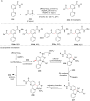
Scheme 43: Rh-catalyzed C3-acylmethylation of bipyridine-6-carboxamides with sulfoxonium ylides.

Scheme 44: Rh-catalyzed C–H functionalization of bipyridines with alkynes.

Scheme 45: Rh-catalyzed C–H acylmethylation and annulation of bipyridine with sulfoxonium ylides.

Scheme 46: Iridium-catalyzed C4-borylation of pyridines.

Scheme 47: C3-Borylation of pyridines.

Scheme 48: Pd-catalyzed regioselective synthesis of silylated dihydropyridines.
Recent advances in palladium-catalysed asymmetric 1,4–additions of arylboronic acids to conjugated enones and chromones
- Jan Bartáček,
- Jan Svoboda,
- Martin Kocúrik,
- Jaroslav Pochobradský,
- Alexander Čegan,
- Miloš Sedlák and
- Jiří Váňa
Beilstein J. Org. Chem. 2021, 17, 1048–1085, doi:10.3762/bjoc.17.84
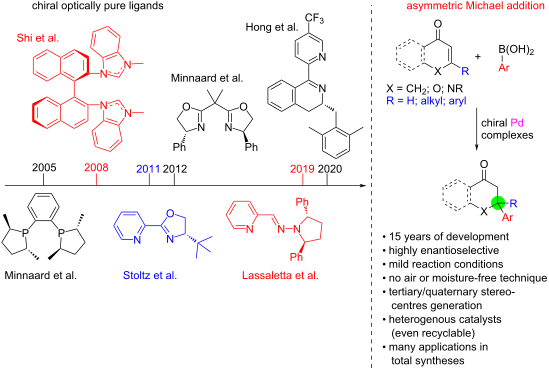
- oxidative Heck-type product. The authors stated that as a result of the coordination with PPh3, there is a steric hindrance disfavouring the β-hydride elimination [43]. Catalytic systems based on NHC ligands Historically, the second type of ligands used were N-heterocyclic carbenes (NHC). The first use was

Graphical Abstract

Scheme 1: Synthesis of optically pure 4-phenylchroman-2-one [34].

Scheme 2: Synthesis of (R)-tolterodine [3].

Scheme 3: Catalytic cycle of the Pd(II)-catalysed 1,4-addition of organoboron reagents to enones [3,26,35].

Scheme 4: Enantioselective β-arylation of cyclohexanone [38].

Scheme 5: Application of L2/Pd(OAc)2 in the total synthesis of terpenes [8].
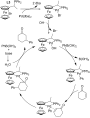
Scheme 6: Plausible catalytic cycle for the addition of phenylboronic acid to 2-cyclohexenone catalysed by L3...

Scheme 7: Microwave-assisted addition of phenylboronic acid to 2-cyclohexenone catalysed by L4/Pd2(dba)3·CHCl3...
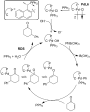
Scheme 8: Plausible catalytic cycle of the addition of phenylboronic acid to 2-cyclohexenone catalysed by pal...
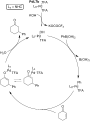
Scheme 9: Proposed catalytic cycle for the addition of phenylboronic acids to 2-cyclohexenone catalysed by Pd...

Scheme 10: Usage of addition reactions of boronic acids to various chromones in the syntheses of potentially a...

Scheme 11: Multigram-scale synthesis of ABBV-2222 [6].

Scheme 12: Application of the asymmetric addition of phenylboronic acid to a chromone derivative for the total...

Scheme 13: Plausible catalytic cycle for the addition of phenylboronic acid to 3-methyl-2-cyclohexenone cataly...

Scheme 14: Total syntheses of naturally occurring terpenoids [10,11].

Scheme 15: Use of the L9/Pd(TFA)2 catalytic system for the synthesis of intermediates of biologically active c...

Scheme 16: Usage of a Michael addition catalysed by L9/Pd(TFA)2 in the total synthesis of (–)-ar-tenuifolene [12].

Scheme 17: Synthesis of terpenoids by Michael addition to 3-methyl-2-cyclopentenone [13].

Scheme 18: Rh-catalysed isomerisation of 3-alkyl-3-arylcyclopentanones to 1-tetralones [53].

Scheme 19: Addition reaction of phenylboronic acid to 3-methyl-2-cyclohexenone catalysed by L9/Pd(TFA)2 in wat...

Scheme 20: Micellar nanoreactor PdL10c for the synthesis of flavanones [58].
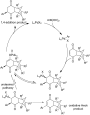
Scheme 21: Plausible catalytic cycle for the desymmetrisation of polycyclic cyclohexenediones by the addition ...

Scheme 22: Attempt to use the catalytic system L2/Pd(TFA)2 for the addition of phenylboronic acid to 3-methyl-...

Scheme 23: Ring opening of an enantioenriched tetrahydropyran-2-one derivative as alternative strategy to line...

Scheme 24: Synthesis of biologically active compounds from addition products [14-16].

Scheme 25: Chiral 1,10-phenantroline derivative L15 as ligand for the Pd-catalysed addition reactions of pheny...

Scheme 26: The Rh-catalysed addition reaction of phenylboronic acid to a 3-substituted enone [20].
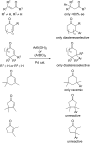
Scheme 27: Underdeveloped methodologies [14,15,65-67].
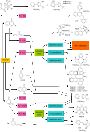
Scheme 28: Flowchart for the selection of the proper catalytic system.
Using multiple self-sorting for switching functions in discrete multicomponent systems
- Amit Ghosh and
- Michael Schmittel
Beilstein J. Org. Chem. 2020, 16, 2831–2853, doi:10.3762/bjoc.16.233
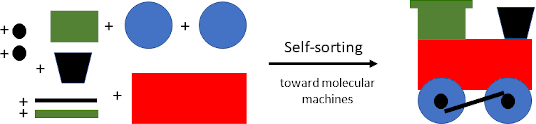
- BPh4− at the cage [Co6(10')4]12+ (SelfSORT-I). Double self-sorting (only structural) Hahn et al. demonstrated for the first time that poly-NHC ligands furnish metallosupramolecular assemblies through narcissistic self-sorting [53]. The one-pot reaction of the tris-NHC ligands 13–15 with different

Graphical Abstract

Figure 1: Some selected self-sorting outcomes and their qualitative and quantitative assessment.

Figure 2: Illustration of an integrative vs a non-integrative self-sorting.

Figure 3: The pH-driven four-component 2-fold completive self-sorting based on host–guest chemistry.

Figure 4: (a) The monomers 5 and 6 and their H-bonding array. (b) The hydrogen-bonded octameric and tetrameri...

Figure 5: (a) Two new Zn4L6-type cages. (b) The encapsulation of C70 induced distinct reconstitutions within ...
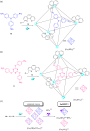
Figure 6: The formation of octahedral cages (a) [Co6(10')4]12+ and (b) [Co6(11')4]12+. (c) The 2-fold complet...

Figure 7: Exchange of Ag+ for Au+ ions in poly-NHC ligand-based organometallic assemblies.

Figure 8: The reversible interconversion between the three-component rectangle [Cu4(16)2(17)2]4+ and the four...

Figure 9: a) Chemical structure of the monomer 20 with its quadruple hydrogen-bonding array and a metal-affin...

Figure 10: Communication between the nanoswitch 21 and the supramolecular assemblies [Cu4(22)2(24)2]4+ or [Cu6(...

Figure 11: (a) The chemical structures and cartoon representations of the switch 25, the decks 26 and 27, and ...

Figure 12: Double self-sorting leads to a catalytic machinery in SelfSORT-II, in which the 46 kHz-nanorotor ac...

Figure 13: ON/OFF control of a networked catalytic catch–release system.

Figure 14: A multicomponent information system for the reversible reconfiguration of switchable dual catalysis....

Figure 15: a) The chemically fueled cascaded ion translocation, monitored by distinct emission colors. b) Work...
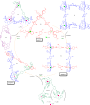
Figure 16: Cyclic metallosupramolecular transformations.

Figure 17: Fully reversible multiple-state rearrangement of metallosupramolecular architectures depending upon...

Figure 18: The selective encapsulation and sequential release of guests in a self-sorted mixture of three tetr...

Figure 19: Two catalytic reactions are alternately controlled by a toggle nanoswitch.
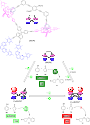
Figure 20: A biped walking along a tetrahedral track and unfolding its catalytic action. Adapted with permissi...
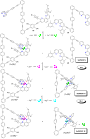
Figure 21: A three state supramolecular AND logic gate.

Figure 22: Four-component nanorotor and its catalytic activity. Adapted with permission from (Biswas, P. K.; S...
Efficient [(NHC)Au(NTf2)]-catalyzed hydrohydrazidation of terminal and internal alkynes
- Maximillian Heidrich and
- Herbert Plenio
Beilstein J. Org. Chem. 2020, 16, 2080–2086, doi:10.3762/bjoc.16.175
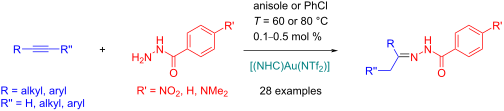
- catalysts with such ligands also display high activities in other gold-catalyzed reactions. Results and Discussion Catalyst screening: Five different [(NHC)Au(NTf2)] complexes 1, 2, 3, 4, and 5 with bulky NHC ligands were tested in the hydrohydrazidation of phenylacetylene with benzohydrazide (Scheme 2; T
- . In this group of gold complexes with sterically demanding NHC ligands, the NHC ligands with intermediate bulk provided the best catalytic performance. The use of the bulkiest complex 2 [46], resulted only in modest substrate conversion. Nonetheless, all of the tested complexes performed much better

Graphical Abstract

Scheme 1: Simplified mechanism of the hydrohydrazidation (NuH= ArCONHNH2) of alkynes.

Scheme 2: [(NHC)Au(NTf2)] complexes tested in hydrohydrazidation reactions of phenylacetylene.

Scheme 3: Hydrohydrazidation of terminal alkynes in chlorobenzene and anisole using complex 1 (first line sol...

Scheme 4: Hydrohydrazidation of internal alkynes in chlorobenzene and anisole using complex 1. Reaction tempe...
A systematic review on silica-, carbon-, and magnetic materials-supported copper species as efficient heterogeneous nanocatalysts in “click” reactions
- Pezhman Shiri and
- Jasem Aboonajmi
Beilstein J. Org. Chem. 2020, 16, 551–586, doi:10.3762/bjoc.16.52
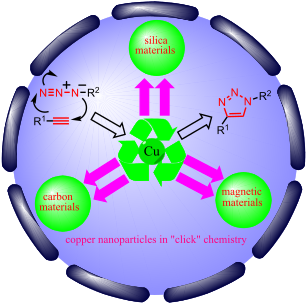
- 1,2-dichloroethane by ultrasonication. After adding N,N-diisopropylethylamine, the mixture was heated at reflux for 20 h. The nanoparticles 107 were magnetically separated and finally, the corresponding complexes of copper(I) and copper(II) with the NHC ligands, 108–111, were prepared as shown in

Graphical Abstract
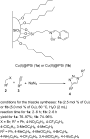
Scheme 1: Chemical structure of the catalysts 1a and 1b and their catalytic application in CuAAC reactions.
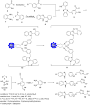
Scheme 2: Synthetic route to the catalyst 11 and its catalytic application in CuAAC reactions.

Scheme 3: Synthetic route of dendrons, illustrated using G2-AMP 23.

Scheme 4: The catalytic application of CuYAu–Gx-AAA–SBA-15 in a CuAAC reaction.
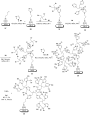
Scheme 5: Synthetic route to the catalyst 36.

Scheme 6: Application of the catalyst 36 in CuAAC reactions.

Scheme 7: The synthetic route to the catalyst 45 and catalytic application of 45 in “click” reactions.

Scheme 8: Synthetic route to the catalyst 48 and catalytic application of 48 in “click” reactions.
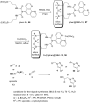
Scheme 9: Synthetic route to the catalyst 58 and catalytic application of 58 in “click” reactions.

Scheme 10: Synthetic route to the catalyst 64 and catalytic application of 64 in “click” reactions.
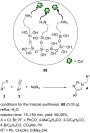
Scheme 11: Chemical structure of the catalyst 68 and catalytic application of 68 in “click” reactions.

Scheme 12: Chemical structure of the catalyst 69 and catalytic application of 69 in “click” reactions.

Scheme 13: Synthetic route to, and chemical structure of the catalyst 74.

Scheme 14: Application of the cayalyst 74 in “click” reactions.

Scheme 15: Synthetic route to, and chemical structure of the catalyst 78 and catalytic application of 78 in “c...
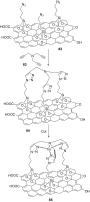
Scheme 16: Synthetic route to the catalyst 85.

Scheme 17: Application of the catalyst 85 in “click” reactions.

Scheme 18: Synthetic route to the catalyst 87 and catalytic application of 87 in “click” reactions.

Scheme 19: Chemical structure of the catalyst 88 and catalytic application of 88 in “click” reactions.

Scheme 20: Synthetic route to the catalyst 90 and catalytic application of 90 in “click” reactions.
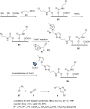
Scheme 21: Synthetic route to the catalyst 96 and catalytic application of 96 in “click” reactions.
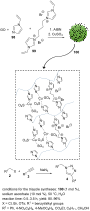
Scheme 22: Synthetic route to the catalyst 100 and catalytic application of 100 in “click” reactions.
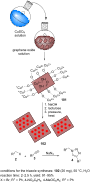
Scheme 23: Synthetic route to the catalyst 102 and catalytic application of 23 in “click” reactions.

Scheme 24: Synthetic route to the catalysts 108–111.

Scheme 25: Catalytic application of 108–111 in “click” reactions.

Scheme 26: Synthetic route to the catalyst 121 and catalytic application of 121 in “click” reactions.
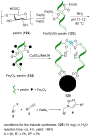
Scheme 27: Synthetic route to 125 and application of 125 in “click” reactions.
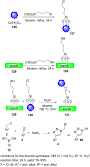
Scheme 28: Synthetic route to the catalyst 131 and catalytic application of 131 in “click” reactions.

Scheme 29: Synthetic route to the catalyst 136.

Scheme 30: Application of the catalyst 136 in “click” reactions.

Scheme 31: Synthetic route to the catalyst 141 and catalytic application of 141 in “click” reactions.
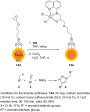
Scheme 32: Synthetic route to the catalyst 144 and catalytic application of 144 in “click” reactions.
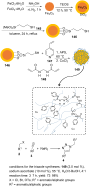
Scheme 33: Synthetic route to the catalyst 149 and catalytic application of 149 in “click” reactions.
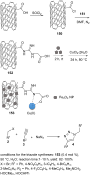
Scheme 34: Synthetic route to the catalyst 153 and catalytic application of 153 in “click” reactions.
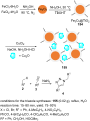
Scheme 35: Synthetic route to the catalyst 155 and catalytic application of 155 in “click” reactions.
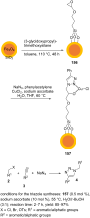
Scheme 36: Synthetic route to the catalyst 157 and catalytic application of 157 in “click” reactions.
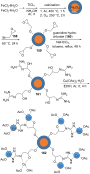
Scheme 37: Synthetic route to the catalyst 162.

Scheme 38: Application of the catalyst 162 in “click” reactions.

Scheme 39: Synthetic route to the catalyst 167 and catalytic application of 167 in “click” reactions.

Scheme 40: Synthetic route to the catalyst 169 and catalytic application of 169 in “click” reactions.
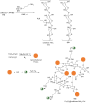
Scheme 41: Synthetic route to the catalyst 172.

Scheme 42: Application of the catalyst 172 in “click” reactions.
Copper-catalyzed enantioselective conjugate reduction of α,β-unsaturated esters with chiral phenol–carbene ligands
- Shohei Mimura,
- Sho Mizushima,
- Yohei Shimizu and
- Masaya Sawamura
Beilstein J. Org. Chem. 2020, 16, 537–543, doi:10.3762/bjoc.16.50
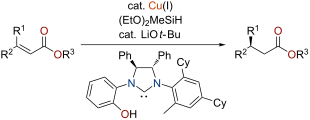
- enantioselectivity. Conclusion A chiral phenol–NHC ligand efficiently promoted the enantioselective conjugate reduction of α,β-unsaturated esters with a hydrosilane. To the best of our knowledge, this is the first demonstration of the applicability of chiral NHC ligands in Cu-catalyzed enantioselective conjugate


Progress in metathesis chemistry
- Karol Grela and
- Anna Kajetanowicz
Beilstein J. Org. Chem. 2019, 15, 2765–2766, doi:10.3762/bjoc.15.267
- by Kotha et al. [4], on artificial metalloproteins by Okuda et al. [5], on stereoretentive ruthenium dithiolate catalysts by Mauduit et al. [6], on unsymmetrical NHC ligands by Grisi et al. [7], on polymers by Kudryavtsev [8] and on polyhedral oligomeric silsesquioxanes by Pietraszuk et al. [9
Aqueous olefin metathesis: recent developments and applications
- Valerio Sabatino and
- Thomas R. Ward
Beilstein J. Org. Chem. 2019, 15, 445–468, doi:10.3762/bjoc.15.39
- . Water can lead to the formation of catalytically inactive Ru hydride species. Fürstner et al. isolated these complexes as byproducts during the synthesis of Grubbs second generation-type catalysts with saturated NHC ligands [29]. In this specific case, the formation of the metal hydride complex is

Graphical Abstract

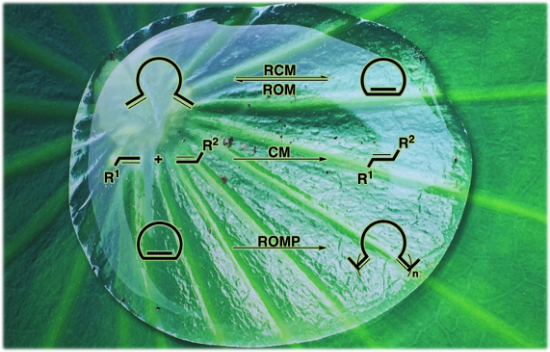
Scheme 1: Most common metathesis reactions. Ring-opening metathesis polymerization (ROMP), acyclic diene meta...

Scheme 2: Catalytic cycle for metathesis proposed by Chauvin.
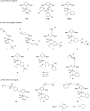
Figure 1: Some of the most representative catalysts for aqueous metathesis. a) Well-defined ruthenium catalys...

Scheme 3: First aqueous ROMP reactions catalyzed by ruthenium(III) salts.

Scheme 4: Degradation pathway of first generation Grubbs catalyst (G-I) in methanol.

Scheme 5: Synthesis of Blechert-type catalysts 19 and 20.

Figure 2: Chemical structure and components of amphiphilic molecule PTS and derivatives.

Scheme 6: RCM of selected substrates in the presence of the surfactant PTS. Conditionsa: The reaction was car...

Scheme 7: RCM reactions of substrates 31 and 33 with the encapsulated G-II catalyst.

Scheme 8: Living ROMP of norbornene derivatives 35 and 36 with phosphine-based catalysts bearing quaternary a...

Scheme 9: Synthesis of water-soluble catalysts 3 and 4 bearing quaternary ammonium tags.

Scheme 10: In situ formation of catalyst 5 bearing a quaternary ammonium group.

Scheme 11: Catalyst recycling of an ammonium-bearing catalyst.

Scheme 12: Removal of the water-soluble catalyst 12 through host–guest interaction with silica-gel-supported β...

Scheme 13: Selection of artificial metathases reported by Ward and co-workers (ArM 1 based on biotin–(strept)a...

Figure 3: In vivo metathesis with an artificial metalloenzyme based on the biotin–streptavidin technology.

Scheme 14: Artificial metathase based on covalent anchoring approach. α-Chymotrypsin interacts with catalyst 66...

Scheme 15: Assembling an artificial metathase (ArM 4) based on the small heat shock protein from M. Jannaschii...

Scheme 16: Artificial metathases based on cavity-size engineered β-barrel protein nitrobindin (NB4exp). The HG...

Scheme 17: Artificial metathase based on cutinase (ArM 8) and resulting metathesis activities.

Scheme 18: Site-specific modification of proteins via aqueous cross-metathesis. The protein structure is based...

Scheme 19: a) Allyl homocysteine (Ahc)-modified proteins as CM substrates. b) Incorporation of Ahc in the Fc p...

Scheme 20: On-DNA cross-metathesis reaction of allyl sulfide 99.

Scheme 21: Preparation of BODIPY-containing profluorescent probes 102 and 104.

Scheme 22: Metathesis-based ethylene detection in live cells.

Scheme 23: First example of stapled peptides via olefin metathesis.
Ammonium-tagged ruthenium-based catalysts for olefin metathesis in aqueous media under ultrasound and microwave irradiation
- Łukasz Gułajski,
- Andrzej Tracz,
- Katarzyna Urbaniak,
- Stefan J. Czarnocki,
- Michał Bieniek and
- Tomasz K. Olszewski
Beilstein J. Org. Chem. 2019, 15, 160–166, doi:10.3762/bjoc.15.16
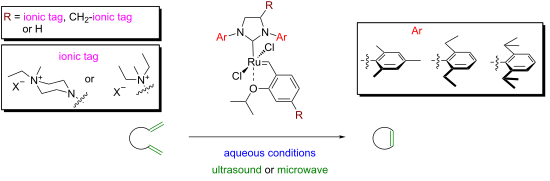
- –d) and also included catalysts having differently sized NHC ligands (2a,c). For testing the catalysts performances, we selected the RCM of the water-soluble substrate 12 (Table 2). Under the reaction conditions the classical catalyst 5 (0.25 mol %) was not soluble resulting in poor yields and

Graphical Abstract

Figure 1: Structures of the Ru-based catalysts used in this study.
Ruthenium-based olefin metathesis catalysts with monodentate unsymmetrical NHC ligands
- Veronica Paradiso,
- Chiara Costabile and
- Fabia Grisi
Beilstein J. Org. Chem. 2018, 14, 3122–3149, doi:10.3762/bjoc.14.292
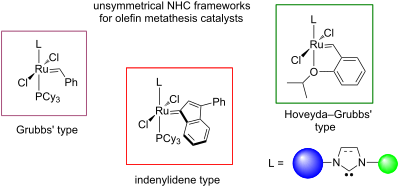
- , ruthenium olefin metathesis complexes bearing N-heterocyclic carbene (NHC) ligands, known as second generation catalysts (Figure 1), have shown improved catalytic efficiency over other metathesis catalysts [3][4]. Moreover, their catalytic properties can be finely modulated through variation of the steric
- ruthenium complexes with monodentate NHC ligands bearing unsymmetrical N-aryl, N’-aryl groups were reported by Blechert [12], who synthesized Grubbs and Hoveyda-type complexes with N-phenyl, N’-mesityl NHC substituents (1a,b in Figure 2). Both complexes were air stable, but in CH2Cl2 solution complex 1b
- , involves a pericyclic reaction followed by an irreversible oxidation step, and, finally, a rearomatization. To avoid the C–H activation of aryl-substituted NHC ligands the corresponding ortho positions have to be substituted by different groups. Indeed, almost contemporaneously, Grubbs et al. reported on

Graphical Abstract
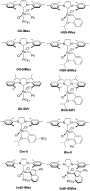
Figure 1: Second-generation Grubbs (GII), Hoveyda (HGII), Grela (Gre-II), Blechert (Ble-II) and indenylidene-...

Figure 2: Grubbs (1a) and Hoveyda-type (1b) complexes with N-phenyl, N’-mesityl NHCs.

Figure 3: C–H insertion product 2.
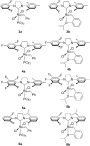
Figure 4: Grubbs (3a–6a) and Hoveyda-type (3b–6b) complexes with N-fluorophenyl, N’-aryl NHCs.

Scheme 1: RCM of diethyl diallylmalonate (7).

Scheme 2: RCM of diethyl allylmethallylmalonate (9).

Scheme 3: RCM of diethyl dimethallylmalonate (11).

Scheme 4: CM of allylbenzene (13) with cis-1,4-diacetoxy-2-butene (14).

Scheme 5: ROMP of 1,5-cyclooctadiene (16).
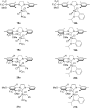
Figure 5: Grubbs (18a–21a) and Hoveyda-type (18b–21b) catalysts bearing uNHCs with a hexafluoroisopropylalkox...

Figure 6: A Grubbs-type complex with an N-adamantyl, N’-mesityl NHC 22 and the Hoveyda-type complex with a ch...

Figure 7: Grubbs (24a and 25a) and Hoveyda-type (24b and 25b) complexes with N-alkyl, N’-mesityl NHCs.

Figure 8: Grubbs-type complexes 31–34 with N-alkyl, N’-mesityl NHCs.

Figure 9: Grubbs-type complex 35 with an N-cyclohexyl, N’-2,6-diisopropylphenyl NHC.

Figure 10: Hoveyda-type complexes with an N-alkyl, N’-mesityl (36, 37) and an N-alkyl, N’-2,6-diisopropylpheny...

Figure 11: Indenylidene-type complexes 41–43 with N-alkyl, N’-mesityl NHCs.

Figure 12: Grubbs-type complex 44 and its monopyridine derivative 45 containing a chiral uNHC.

Scheme 6: Alternating copolymerization of 46 with 47 and 48.

Figure 13: Pyridine-containing complexes 49–52 and Grubbs-type complex 53.

Figure 14: Hoveyda-type complexes 54–58 in the alternating ROMP of NBE (46) and COE (47).

Figure 15: Catalysts 59 and 60 in the tandem RO–RCM of 47.

Figure 16: Hoveyda-type complexes 61–69 with N-alkyl, N’-aryl NHCs.

Scheme 7: Ethenolysis of methyl oleate (70).

Scheme 8: AROCM of cis-5-norbornene-endo-2,3-dicarboxylic anhydride (75) with styrene.

Figure 17: Hoveyda-type catalysts 79–82 with N-tert-butyl, N’-aryl NHCs.

Scheme 9: Latent ROMP of 83 with catalyst 82.

Figure 18: Indenylidene and Hoveyda-type complexes 85–92 with N-cycloalkyl, N’-mesityl NHCs.

Scheme 10: RCM of N,N-dimethallyl-N-tosylamide (93) with catalyst 85.

Scheme 11: Self metathesis of 13 with catalyst 85.

Figure 19: Grubbs-type complexes 98–104 with N-alkyl, N’-mesityl NHCs.

Figure 20: Grubbs-type complexes 105–115 with N-alkyl, N’-mesityl ligands.

Figure 21: Complexes 116 and 117 bearing a carbohydrate-based NHC.

Figure 22: Complexes 118 and 119 bearing a hemilabile amino-tethered NHC.

Figure 23: Indenylidene-type complexes 120–126 with N-benzyl, N’-mesityl NHCs.

Scheme 12: Diastereoselective ring-rearrangement metathesis (dRRM) of cyclopentene 131.

Figure 24: Indenylidene-type complexes 134 and 135 with N-nitrobenzyl, N’-mesityl NHCs.

Figure 25: Hoveyda-type complexes 136–138 with N-benzyl, N’-mesityl NHCs.

Figure 26: Hoveyda-type complexes 139–142 with N-benzyl, N’-Dipp NHC.

Figure 27: Indenylidene (143–146) and Hoveyda-type (147) complexes with N-heteroarylmethyl, N’-mesityl NHCs.

Figure 28: Hoveyda-type complexes 148 and 149 with N-phenylpyrrole, N’-mesityl NHCs.

Figure 29: Grubbs-type complexes with N-trifluoromethyl benzimidazolidene NHCs 150–153, 155 and N-isopropyl be...

Scheme 13: Ethenolysis of ethyl oleate 156.

Scheme 14: Ethenolysis of cis-cyclooctene (47).

Figure 30: Grubbs-type C1-symmetric (164) and C2-symmetric (165) catalysts with a backbone-substituted NHC.

Figure 31: Possible syn and anti rotational isomers of catalyst 164.

Scheme 15: ARCM of substrates 166, 168 and 170.

Figure 32: Hoveyda (172) and Grubbs-type (173,174) backbone-substituted C1-symmetric NHC complexes.
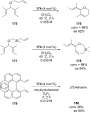
Scheme 16: ARCM of 175,177 and 179 with catalyst 174.

Figure 33: Grubbs-type C1-symmetric NHC catalysts bearing N-propyl (181, 182) or N-benzyl (183, 184) groups on...

Scheme 17: ARCM of 185 and 187 promoted by 184 to form the encumbered alkenes 186 and 188.
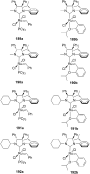
Figure 34: N-Alkyl, N’-isopropylphenyl NHC ruthenium complexes with syn (189, 191) and anti (190, 192) phenyl ...

Figure 35: Hoveyda-type complexes 193–198 bearing N-alkyl, N’-aryl backbone-substituted NHC ligands.

Scheme 18: ARCM of 166 and 199 promoted by 192b.

Figure 36: Enantiopure catalysts 201a and 201b with syn phenyl units on the NHC backbone.

Figure 37: Backbone-monosubstituted catalysts 202–204.

Figure 38: Grubbs (205a) and Hoveyda-type (205b) backbone-monosubstituted catalysts.

Scheme 19: AROCM of 206 with allyltrimethylsilane promoted by catalyst 205a.
A tutorial review of stereoretentive olefin metathesis based on ruthenium dithiolate catalysts
- Daniel S. Müller,
- Olivier Baslé and
- Marc Mauduit
Beilstein J. Org. Chem. 2018, 14, 2999–3010, doi:10.3762/bjoc.14.279
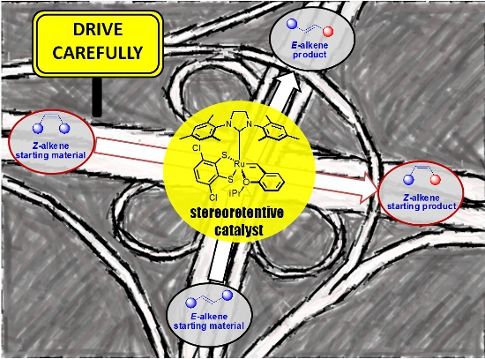
- NHC ligand. To avoid steric repulsions, the substituents at the α-positions of the metallacycle point away from the N-aryl groups of the NHC-ligands. In contrast, the substituents at the β-position can point up or down. For the reaction with Z-alkenes (Figure 3a), the substituent at the β-position has

Graphical Abstract

Scheme 1: Synthesis of first Ru-dithiolate metathesis catalysts.

Figure 1: Most efficient Ru-dithiolate catalysts for stereoretentive olefin metathesis with Z- and E-alkenes ...

Figure 2: Selected examples of sterically or electronically modified ruthenium dithiolate complexes.

Figure 3: Model for stereoretentive metathesis proposed by Pederson and Grubbs [3].

Figure 4: Decrease in the benzylidene signal over time upon reaction with (E)-2-hexenyl acetate.
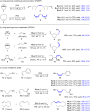
Scheme 2: Selected applications, part 1.

Scheme 3: Selected applications, part 2.

Figure 5: Catalyst loading required for different types of metathesis reactions.

Scheme 4: Proposed catalyst decomposition pathway occurring via attack of the electron-rich sulfide into meth...

Scheme 5: In situ methylene capping strategy for stereoretentive metathesis.

Scheme 6: Stereoretentive cross-metathesis with (Z)-butene (Z-25) as in situ methylene capping agent; selecte...

Scheme 7: Cross metathesis with Z- and E-trisubstituted allylic alcohols.

Scheme 8: In situ synthesis of Ru-3 and application thereof in the cross-metathesis of 12 and 50.

Figure 6: Examples of biologically active and fragrance molecules synthesized by stereoretentive metathesis.
The activity of indenylidene derivatives in olefin metathesis catalysts
- Maria Voccia,
- Steven P. Nolan,
- Luigi Cavallo and
- Albert Poater
Beilstein J. Org. Chem. 2018, 14, 2956–2963, doi:10.3762/bjoc.14.275
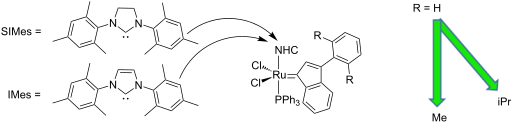
- (1,3-bis(2,4,6-trimethylphenyl)-4,5-dihydroimidazol-2-ylidene) and the IMes (1,3-bis(2,4,6-trimethylphenyl)imidazol-2-ylidene) NHC ligands. The group trans to the NHC ligand is triphenylphosphine for all catalysts. Table 1 includes the energy profiles for the substituted indenylidenes, bearing methyl
- substitution, being 4.2 and 3.4 kcal/mol relatively more stable for systems 3 and 5, respectively, with respect to 1. This effect of reducing steric hindrance between the ylidene and the NHC ligands was examined previously, with the exchange of benzylidene by indenylidene [51]; and with larger NHC ligands [52
- (GIAO), at the BP86/SVP level. The magnetic shielding tensor was calculated for ghost atoms located at the centre of the rings determined by the nonweighted mean of the heavy atom coordinates. Topographic steric maps (plane xy) of the NHC ligands of species I for the studied SIMes–Ru complexes 1, 3 and

Graphical Abstract

Scheme 1: Catalysts studied by DFT calculations.

Scheme 2: Precatalyst initiation in olefin metathesis (L = NHC ligand).

Figure 1: Topographic steric maps (plane xy) of the NHC ligands of species I for the studied SIMes–Ru complex...

Figure 2: Intermediate II for catalysts a) 1 and b) 5 (important bond lengths are given in Å).
The influence of the cationic carbenes on the initiation kinetics of ruthenium-based metathesis catalysts; a DFT study
- Magdalena Jawiczuk,
- Angelika Janaszkiewicz and
- Bartosz Trzaskowski
Beilstein J. Org. Chem. 2018, 14, 2872–2880, doi:10.3762/bjoc.14.266
- of metathesis results from the high stabilities and efficiencies of Ruthenium catalysts stabilised by NHC moieties. In this class of compounds NHC ligands, with the poor π-acceptor and strong σ-donor properties, stabilize the 14-electron ruthenium active species during the catalytic cycle [11][12
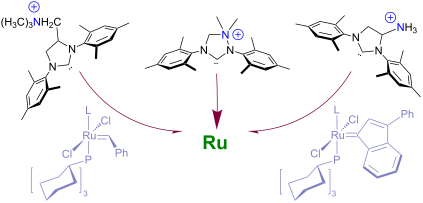
- Schanz and co-workers synthesized also Hoveyda-like complexes with ammonium groups introduced into the aryl rings of the NHC ligands [25]. Most of these complexes showed good efficiency in selected metathesis reactions. Interestingly in all reported cases of ammonium tagged Ru–alkylidene metathesis
- metathesis. Precatalysts with unsaturated NHC ligands are estimated to have slightly lower Gibbs free energy barriers than saturated ones by ca. 3–5 kcal/mol (Table 3). Interestingly, the free energies in water are 3–12 kcal/mol lower indicating that 1-GrII and 2-GrII may act as very slow metathesis

Graphical Abstract

Scheme 1: NHC’s and their ruthenium complexes studied in this work; L = carbene 1, 2 or 3.

Scheme 2: Schematic representation of carbene dimerization and atom numbering scheme used throughout this wor...
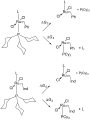
Scheme 3: Dissociative mechanism of initiation for Grubbs-like 1–3-GrI and M1 indenylidene type complexes 1–3...
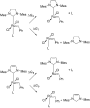
Scheme 4: Dissociative mechanism of initiation of 2nd generation Grubbs-like saturated 1–3-GrII and unsaturat...

Scheme 5: Dissociative mechanism of activation for complexes 1–3-Hov; L = carbene 1, 2 or 3.
Recent advances in phosphorescent platinum complexes for organic light-emitting diodes
- Cristina Cebrián and
- Matteo Mauro
Beilstein J. Org. Chem. 2018, 14, 1459–1481, doi:10.3762/bjoc.14.124
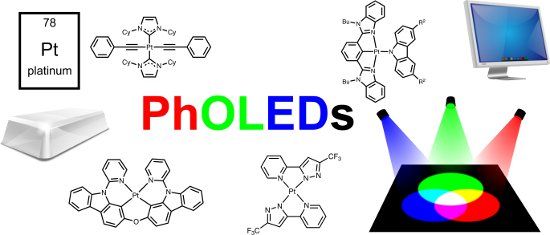
- components (sky-blue-orange); ii) using a phosphorescent material to partially down-convert UV or blue light from a LED source; the latter seems a promising option to date. The group of Sicilia has recently applied some cyclometallated platinum(II) complexes bearing NHC ligands to develop WOLEDs, whose

Graphical Abstract

Figure 1: Molecular structure of neutral platinum(II) complex 1 bearing four monodentate ligands; cy = cycloh...

Figure 2: Chemical structure of the dinuclear Pt complexes 2a–b and 3 [20].

Figure 3: Molecular structure of platinum(II) complexes bearing isoquinolinylpyrazolates; dip = 2,6-diisoprop...

Figure 4: Selected neutral platinum(II) complexes featuring dianionic biazolate and neutral bipyridines [27].

Figure 5: Selected neutral platinum(II) complexes from bipyrazolate and carbene-based chelates [34,35].

Figure 6: Cyclometalated thiazol-2-ylidene platinum(II) complexes with different acetylacetonate ligands [37].

Figure 7: Neutral platinum(II) complexes 13–15 bearing azolate ligands [13].

Figure 8: Chemical structure of neutral platinum(II) complexes 16–18 bearing azine-pyrazolato bidentate ligan...
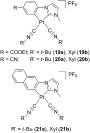
Figure 9: Molecular structure of carbene-containing cyclometallated alkynylplatinum(II) complexes 19–21 [41].

Figure 10: Chemical structure of platinum(II) complexes 22a–d bearing asymmetric C^N^N tridentate ligands [53].
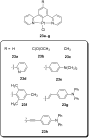
Figure 11: Chemical structure of platinum(II) complexes 23 bearing bis-cyclometalating 2,6-dipyridylbenzene ty...

Figure 12: Molecular structure of dendritic carbazole-containing alkynyl-platinum(II) complexes 24a–d [62].

Figure 13: Molecular structure of bipolar alkynyl-platinum(II) complexes 25 bearing carbazole and electron-acc...

Figure 14: Molecular structures of neutral platinum(II) complexes comprising donor-acceptor alkynyls (26) or e...

Figure 15: Chemical structure of the asymmetric Pt(II) derivatives 28 bearing triazole and tetrazole moieties ...

Figure 16: Molecular structure of the tetradentate platinum complexes 29–32 bearing N^C^C^N and C^C^C^N ligand...

Figure 17: Chemical structure of the tetradentate Pt complexes 33–38 based on N^C^C^N-type of ligands [80-84].

Figure 18: Chemical structure of the macrocyclic tetradentate platinum complexes reported by Wang and co-worke...

Figure 19: Molecular structure of complex 41–46 [88,89].

Figure 20: Molecular structure of asymmetric derivatives 47–49 based on triaryl-type of bridge [90].

Figure 21: Chemical structure of the asymmetric tetradentate derivatives 50 and 51 based on spirofluorene link...

Figure 22: Molecular structure of the pyridylazolate-based complexes 52–54 reported by Chi and co-workers [97].
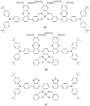
Figure 23: Chemical structure of the red-to-NIR emitting complexes 55–57 bearing donor–acceptor triphenylamino...

Figure 24: Molecular structures of the Pt(IV) derivatives 58 and 59 employed as triplet emitters in solution-p...
Cobalt-catalyzed directed C–H alkenylation of pivalophenone N–H imine with alkenyl phosphates
- Wengang Xu and
- Naohiko Yoshikai
Beilstein J. Org. Chem. 2018, 14, 709–715, doi:10.3762/bjoc.14.60
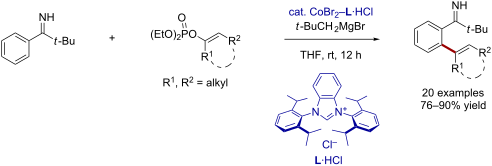
- Grignard reagent would furnish the alkenylation product 3·MgX and regenerate the species A. While the relationship between the ligand and the catalytic activity remains unclear, we speculate that a strong σ-donating ability of NHC ligands would facilitate the SET step among others. Conclusion In summary
- architecture proved to have a significant impact on the efficiency of the present C–H/electrophile coupling. We anticipate that the elaboration of NHC ligands would also be instrumental to the improvement of other C–H activation and related transformations promoted by low-valent cobalt complexes [32][33][34

Graphical Abstract

Scheme 1: Cobalt–NHC-catalyzed C–H alkenylation reactions with alkenyl electrophiles.

Scheme 2: Reaction of substituted pivalophenone N–H imines with 2a. aThe major regioisomer is shown (rr = reg...

Scheme 3: Reaction of 1a with various alkenyl phosphates. aA mixture of E- and Z-alkenyl phosphate (ca. 1:1) ...

Scheme 4: The cyclization of o-alkenylpivalophenone N–H imine.

Scheme 5: Proposed catalytic cycle (R = t-BuCH2, R' = P(O)(OEt)2).
An efficient Pd–NHC catalyst system in situ generated from Na2PdCl4 and PEG-functionalized imidazolium salts for Mizoroki–Heck reactions in water
- Nan Sun,
- Meng Chen,
- Liqun Jin,
- Wei Zhao,
- Baoxiang Hu,
- Zhenlu Shen and
- Xinquan Hu
Beilstein J. Org. Chem. 2017, 13, 1735–1744, doi:10.3762/bjoc.13.168
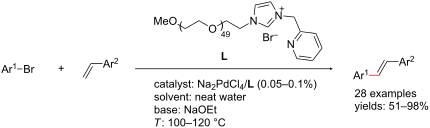
- functionalization of the N atom of the NHC ring allows for the possible incorporation of water soluble moieties, thus providing more opportunities for water soluble catalyst design [37][38][39]. Since the pioneering report of a sulfonate-functionalized NHC ligand by Shaughnessy [40], a number of water-soluble NHC
- ligands, functionalized with sulfonate- [41][42][43][44][45][46], carboxylate- [47][48][49][50][51][52], polyether- [53][54][55][56][57][58][59] and other hydrophilic groups [60][61][62][63], have been developed and used in the aqueous Pd-catalyzed cross-coupling reactions. Among them, most of them were

Graphical Abstract

Figure 1: Structures of imidazolium salts L1–L3.

Scheme 1: The synthetic route for the preparation of imidazolium salts L1–L3.

Figure 2: Kinetic profiles of Mizoroki–Heck reactions in water, Na2PdCl4/L1 (square), L2 (circle), and L3 (tr...

Figure 3: Reusability of the Na2PdCl4/L1 catalytic system for the catalytic Mizoroki–Heck coupling reaction o...
Experimental and theoretical investigations on the high-electron donor character of pyrido-annelated N-heterocyclic carbenes
- Michael Nonnenmacher,
- Dominik M. Buck and
- Doris Kunz
Beilstein J. Org. Chem. 2016, 12, 1884–1896, doi:10.3762/bjoc.12.178
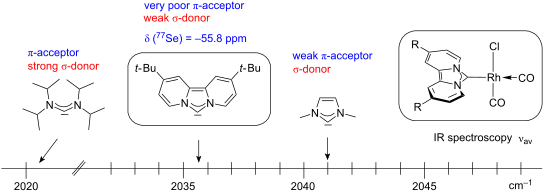
- most common types of NHC ligands L. A graphical illustration of these values is depicted in Figure 3. It shows that the dipyrido-annelated carbenes have an overall donor capacity that lies in between that of acyclic (Ia) or ferrocene bridged (Ib) diaminocarbenes and saturated imidazolidin-2-ylidenes

Graphical Abstract

Figure 1: Left: resonance hybrid of the dipyrido carbenes dipiy and dipiytBu. Right: two canonical forms of t...

Scheme 1: Preparation of the 13CO substituted rhodium complexes 2 bearing the dipyrido-annelated carbenes dip...

Figure 2: 13C NMR spectra (carbonyl region, 125 MHz) of the reaction of 1a with 13CO under variable pressure ...

Scheme 2: Proposed mechanism for the preferred exchange of the cis-CO ligand based on DFT-calculations (BP86 ...

Figure 3: IR scale (cm−1) to determine the overall electron-donor capacity of various N-heterocyclic carbenes...

Figure 4: Highest occupied molecular orbitals for the dipyrido-annelated carbene dipiy. The σ-type carbene lo...

Figure 5: Molecular orbitals of the Rh complexes II-Rh, III-Rh and 2a that show ligand-metal π-bonds.
Methylpalladium complexes with pyrimidine-functionalized N-heterocyclic carbene ligands
- Dirk Meyer and
- Thomas Strassner
Beilstein J. Org. Chem. 2016, 12, 1557–1565, doi:10.3762/bjoc.12.150
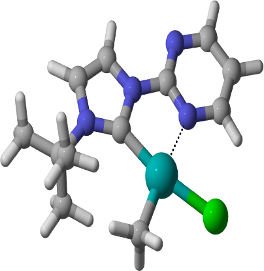
- Dirk Meyer Thomas Strassner Physikalische Organische Chemie, TU Dresden, Bergstraße 66, 01062 Dresden, Germany 10.3762/bjoc.12.150 Abstract A series of methylpalladium(II) complexes with pyrimidine-NHC ligands carrying different aryl- and alkyl substituents R ([((pym)^(NHC-R))PdII(CH3)X] with X
- byproduct of the methanol synthesis. Sen reported the activity of palladium(II) catalysts for the oxidation of methane [21] and several groups contributed to the progress in the field which is summarized in recent reviews [22][23]. The system based on N-heterocyclic carbene (NHC) ligands developed in our

Graphical Abstract

Scheme 1: Synthesis of the monomethylpalladium(II) complexes 9–11 (in DCM) and 12 (in CH3CN).

Figure 1: Possible isomers.

Figure 2: ORTEP [39] style plot of complex 9 in the solid state. Thermal ellipsoids are given at the 50% probabil...

Figure 3: ORTEP [39] style plot of complex 12 in the solid state. Thermal ellipsoids are drawn at the 50% probabi...

Scheme 2: Synthesis of complex 13.

Figure 4: ORTEP [39] style plot of complex 13 in the solid state. Thermal ellipsoids are drawn at the 50% probabi...

Scheme 3: Possible pathways of methyl trifluoroacetate formation starting from complex 13.

Scheme 4: Synthesis of complex 14 by conversion of complex 13 with iodobenzene bistrifluoroacetate.

Scheme 5: Synthesis of the [((pym)^(NHC-R))PdII(CH3)2] complex 15.
Bi- and trinuclear copper(I) complexes of 1,2,3-triazole-tethered NHC ligands: synthesis, structure, and catalytic properties
- Shaojin Gu,
- Jiehao Du,
- Jingjing Huang,
- Huan Xia,
- Ling Yang,
- Weilin Xu and
- Chunxin Lu
Beilstein J. Org. Chem. 2016, 12, 863–873, doi:10.3762/bjoc.12.85
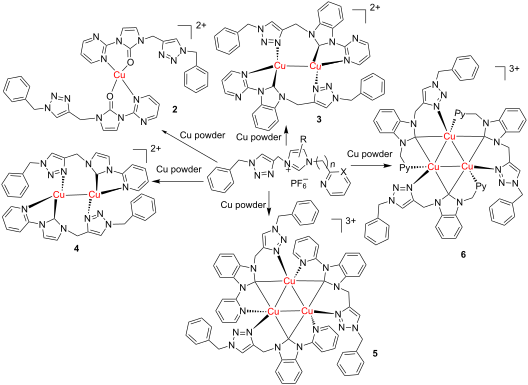
- , reports concerning their preparation and use of 1,4-disubstituted-1,2,3-triazoles bearing NHC ligands are rare [22][23]. Elsevier et al. [23] reported several of palladium(II) complexes containing a heterobidentate N-heterocyclic carbene-triazolyl ligand. These palladium(II) complexes are active
- and platinum complexes containing 1,2,3-triazole-tethered NHC ligands. The obtained palladium complexes displayed high activity in aqueous Suzuki–Miyaura cross-coupling reactions. We are interested in the synthesis and use of functionalized NHC ligands [20][28][29][30][31]. Herein, the synthesis
- copper atoms are bridged by three NpyridineCNtriazole NHC ligands forming a Cu3 ring with three Cu–Cu–Cu angles of 60.0. The geometry of the copper center can be described as distorted trigonal planar. Each copper ion is coordinated by one pyridine, one triazole, and two benzimidazolylidene ligands

Graphical Abstract

Scheme 1: Synthesis of copper complexes 2–6.

Figure 1: X-ray diffraction structure of copper(II) complex 2 with thermal ellipsoids drawn at 30% probabilit...

Figure 2: ORTEP the cationic section of [Cu2(L2)2](PF6)2 (3). Thermal ellipsoids are drawn at the 30% probabi...

Figure 3: ORTEP drawing of [Cu2(L3)2](PF6)2 (4). Thermal ellipsoids are drawn at the 30% probability level. H...

Figure 4: ORTEP drawing of [Cu3(L4)3](PF6)3 (5). Thermal ellipsoids are drawn at the 30% probability level. H...
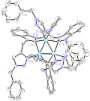
Figure 5: ORTEP drawing of [Cu3(L5)3](PF6)3 (6). Thermal ellipsoids are drawn at the 30% probability level. H...

Figure 6: Yield vs reaction time of different copper complex. The reaction was carried out in acetonitrile-d3...
Iridium/N-heterocyclic carbene-catalyzed C–H borylation of arenes by diisopropylaminoborane
- Mamoru Tobisu,
- Takuya Igarashi and
- Naoto Chatani
Beilstein J. Org. Chem. 2016, 12, 654–661, doi:10.3762/bjoc.12.65

- C–H borylation [2], the reaction failed to give 2-B under these conditions (Table 1, entry 1). Several mono- and diphosphine ligands were found to be active for the formation of 2-B, but the best yield was only 21% (Table 1, entries 2–6). Our success in C–H borylation using NHC ligands [8][10] led
- us to investigate a series of NHC ligands for this process. Among the NHC ligands examined, 1,3-dicyclohexylimidazol-2-ylidene (ICy) [28][29][30][31][32][33] was found to be most effective, giving 2-B in 33% yield with a 2-/3-borylation ratio of 88:12 (Table 1, entry 9). It should be noted that [Ir

Graphical Abstract

Scheme 1: Catalytic C–H borylation of arenes and related reported boron sources.

Scheme 2: Scalability and derivatization.
Scope and limitations of the dual-gold-catalysed hydrophenoxylation of alkynes
- Adrián Gómez-Suárez,
- Yoshihiro Oonishi,
- Anthony R. Martin and
- Steven P. Nolan
Beilstein J. Org. Chem. 2016, 12, 172–178, doi:10.3762/bjoc.12.19
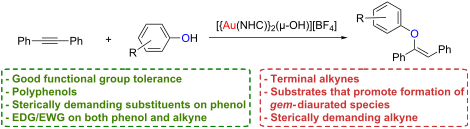
- metal and main-group chemistry [10][11][12][13]. We have been interested in exploring the use of NHC ligands in transition metal complexes for the development of highly active and well-defined catalysts. One of our main interests during the last decade has been to study the use of gold–NHC species as

Graphical Abstract

Scheme 1: Dual-gold-catalysed hydrophenoxylation of alkynes.
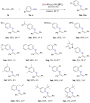
Scheme 2: Exploring the functional group tolerance. Reaction conditions: 1a (0.50 mmol, 1 equiv), 2a–o (0.55 ...

Scheme 3: Hydrophenoxylation using polyphenols. Reaction conditions: 1a (1 mmol, 2 equiv), 2p–s (0.50 mmol, 1...

Scheme 4: Hydrophenoxylation of (un)symmetrical alkynes. Reaction conditions: 1b–k (0.50 mmol, 1 equiv), 2t (...

Scheme 5: Regioselective hydrophenoxylation of unsymmetrical alkynes. Reaction conditions: 1l–p (1 equiv), 2a...



