


Search results
Search for "cages" in Full Text gives 53 result(s) in Beilstein Journal of Organic Chemistry.
Steroid diversification by multicomponent reactions
Beilstein J. Org. Chem. 2019, 15, 1236–1256, doi:10.3762/bjoc.15.121
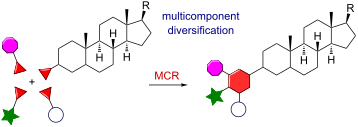
- promise for the future development of peptide pharmaceuticals. 5 Multicomponent synthesis of steroidal macrocycles and cages Since the beginning of this century, the field of macrocycle synthesis has witnessed the emergence of MCRs as effective ring closing procedures, including the cyclization of large
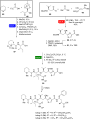
- have been included in previous reviews [12][13] this section will cover those reports from 2009 on, with emphasis on multicomponent macrocyclization approaches leading to steroidal cages. The first report of a MCR-derived steroidal macrocycles was described by Wessjohann et al. in 2005 as part of a
- synthesis of steroidal cages multiple multicomponent macrocyclization [73]. As shown in Scheme 20, Rivera and Wessjohann expanded the MiBs concept to the development of a threefold Ugi-4CR-based macrocyclization between cholanic tricarboxlic acid 68 and an aliphatic triisocyanide in the presence of three


Understanding the unexpected effect of frequency on the kinetics of a covalent reaction under ball-milling conditions
Beilstein J. Org. Chem. 2019, 15, 1226–1235, doi:10.3762/bjoc.15.120
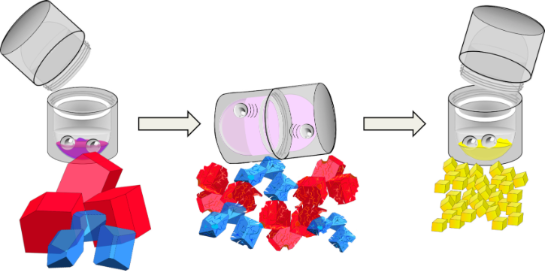
- for a wide range of different syntheses and chemical reactions of inorganic [8][9] and organic [10][11] compounds. Even supramolecular architectures such as co-crystals and metal-organic frameworks [4][12][13][14], cages [15] and rotaxanes [16] could be formed mechanochemically. Crucially, the


Design of a double-decker coordination cage revisited to make new cages and exemplify ligand isomerism
Beilstein J. Org. Chem. 2019, 15, 1129–1140, doi:10.3762/bjoc.15.109
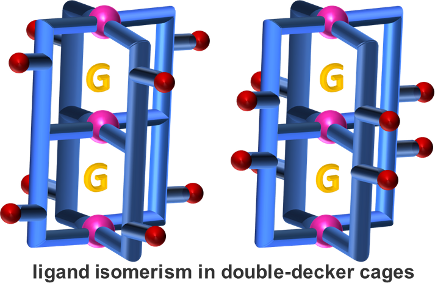
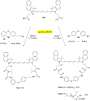
- ]. Complexation of cis-protected palladium(II), i.e., (PdL’) or bare palladium(II) with non-chelating bidentate ligands is known to afford a series of (PdL’)mLm or PdmL2m-type self-assembled coordination complexes [5]. Pd2L4-type cages are the simplest representatives among the PdmL2m-type complexes, yet most
- utilised [5][6]. The Pd2L4-type cages are well explored for the encapsulation of guests that are anionic [7][8][9][10][11], neutral [12][13][14][15][16], radical initiators [17], and drug molecules [18][19]. It is necessary to emphasize here that Pd2L4-type cages contain a cavity. McMorran and Steel
- formation of PdL2-type spiro and Pd3L4-type double-decker complexes that is reversible under appropriate conditions. Subsequently, other research groups (Chand, Clever, Crowley and Yoshizawa groups) published Pd3L4-type cages [24]. This design has been further explored by Crowley et al. for the synthesis of


Synthesis of (macro)heterocycles by consecutive/repetitive isocyanide-based multicomponent reactions
Beilstein J. Org. Chem. 2019, 15, 906–930, doi:10.3762/bjoc.15.88
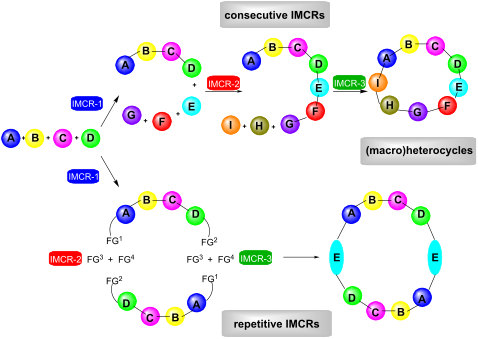
- -based macrocyclization yielded steroid-aryl hybrid macroheterocycles 151 and 152, which after ester hydrolysis, acted as trifunctional building blocks for consecutive 3-fold Ugi-4CR-based macrocyclizations with triisocyanide 153. The cross-linked igloo-shaped skeletons of cages 154 and 155 were obtained
- for the synthesis of molecular cages was described [50]. The approach was based on macromulticycle connectivities through bridgeheads. For the macrocyclization reaction, metal-template-driven and dilution conditions were used. These conditions allowed one-pot synthesis including aryl, heterocyclic
- macrocyclizations [44]. Synthesis of steroid–aryl hybrid cages by sequential 2- and 3-fold Ugi-4CR-based macrocyclizations [46]. Ugi-MiBs approach towards natural product-like macrocycles [47]. a) Bidirectional macrocyclization of peptides by double Ugi reaction. b) Ugi-4CR for the generation of exocyclic diversity







Mechanochemistry of supramolecules
Beilstein J. Org. Chem. 2019, 15, 881–900, doi:10.3762/bjoc.15.86
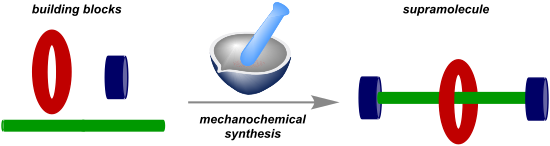
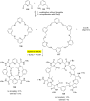
- cages under high-speed vibration milling (HSVM) conditions. The condensation of pentaerythritol and triboronic acid at 58 Hz for 40 min led to the formation of cage structure 22 (Figure 11) with nearly 96% yield [64]. The authors also reported that the cage compounds such as 22 had high thermal
- ester cages of type 22 [64]. Mechanochemical synthesis of borasiloxane-based macrocycles. Mechanochemical synthesis of 2-dimensional aromatic polyamides. Nitschke’s tetrahedral Fe(II) cage 25. Mechanochemical one-pot synthesis of the 22-component [Fe4(AD2)6]4− 26, 11-component [Fe2(BD2)3]2− 27 and 5


Selectivity in multiple multicomponent reactions: types and synthetic applications
Beilstein J. Org. Chem. 2019, 15, 521–534, doi:10.3762/bjoc.15.46
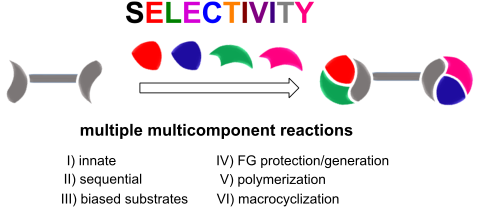
- [21], supramolecular structures (cryptands, cages, cryptophanes, podands, etc.) [22][23][24], cyclic/macrocyclic peptides [25] and other complex structures in a straightforward manner (Scheme 5). The diversity in these systems arises not only from combining a variety of building blocks (from simple


Application of olefin metathesis in the synthesis of functionalized polyhedral oligomeric silsesquioxanes (POSS) and POSS-containing polymeric materials
Beilstein J. Org. Chem. 2019, 15, 310–332, doi:10.3762/bjoc.15.28
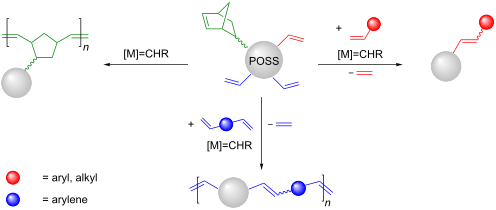
- to 11033 Da and polydispersity index (PDI) = 1.5. Ring-opening metathesis polymerization (ROMP) of POSS-functionalized monomers The chemistry of inorganic–organic hybrid materials has emerged as a fascinating new field of modern nanotechnology. The inclusion of POSS cages into the polymeric material
- ca. 48000–63000 Da. The synthesized POSS containing nanocomposites displayed significant improvements in their thermal stability relative to that of the polynorbornenes formed in the absence of POSS cages. Xu has reported an example of the synthesis of POSS-containing block copolymers via “living


Efficient catalytic alkyne metathesis with a fluoroalkoxy-supported ditungsten(III) complex
Beilstein J. Org. Chem. 2018, 14, 2425–2434, doi:10.3762/bjoc.14.220
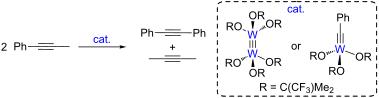
- molybdenum propylidyne precursors to form chelate complexes of type IV [31][32][33][34]. These catalysts were especially successful in the construction of supramolecular materials such as ethynylene-linked polymers [11][35], porous networks [36] and molecular cages [37][38][39][40][41][42][43]. Furthermore


Coordination-driven self-assembly of discrete Ru6–Pt6 prismatic cages
Beilstein J. Org. Chem. 2018, 14, 2242–2249, doi:10.3762/bjoc.14.199
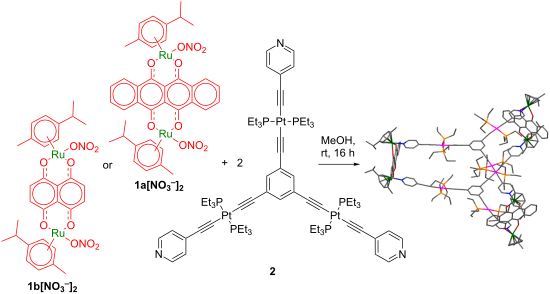
- Aderonke Ajibola Adeyemo Partha Sarathi Mukherjee Department of Inorganic and Physical Chemistry, Indian Institute of Science, Bangalore 560 012, India 10.3762/bjoc.14.199 Abstract The coordination-driven self-assembly of two new Ru6–Pt6 hexanuclear trigonal prismatic cages comprising arene
- –ruthenium(II) clips (1a(NO3)2 and 1b(NO3)2) and a tritopic platinum(II) metalloligand 2 has been performed in methanol at room temperature. The [3 + 2] hexanuclear cages 3a and 3b were isolated in good yields and characterized by well-known spectroscopic techniques including multinuclear NMR, mass
- spectrometry, UV–vis and infrared studies. Geometry optimization revealed the shapes and sizes of these hexanuclear prismatic cages. The combination of ruthenium and platinum metal center in a one-pot self-assembly reaction showcases the construction of aesthetically elegant heterometallic structures in


Tetrathiafulvalene – a redox-switchable building block to control motion in mechanically interlocked molecules
Beilstein J. Org. Chem. 2018, 14, 2163–2185, doi:10.3762/bjoc.14.190
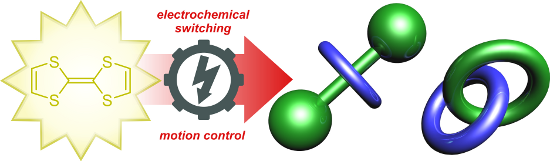
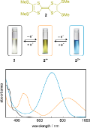
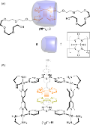
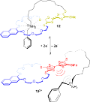
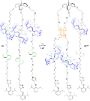
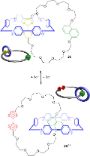
- electrochemical operation of MIMs. Several excellent reviews on the use of TTF in other supramolecular systems such as macrocycles, cages, and receptor molecules are already available [15][16][17][18][19][20][21]. In this review, motifs of construction and working principles of TTF-based MIMs in the past and











Coordination-driven self-assembly vs dynamic covalent chemistry: versatile methods for the synthesis of molecular metallarectangles
Beilstein J. Org. Chem. 2018, 14, 2027–2034, doi:10.3762/bjoc.14.178
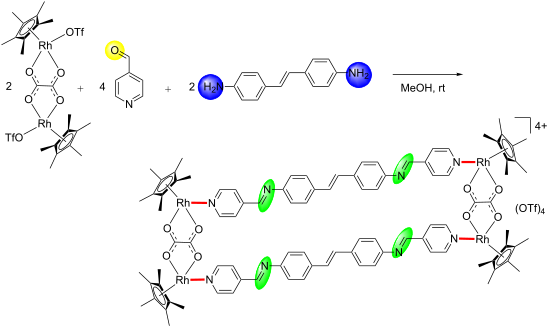
- elaborately designed building blocks, such as dinuclear half-sandwich molecular clips and appropriate pyridyl ligands. The sizes and structures of the obtained molecular rectangles, cages or rings can be easily tuned by adjusting the length and shape of the bridging ligands and molecular clips. We and others
- cages based on half-sandwich ruthenium could be obtained in one-pot reactions from simple building blocks [38][39]. This finding prompted us to investigate whether condensation reactions between amines and 4-formylpyridine can be used simultaneously with coordination bond formation to construct


A hemicryptophane with a triple-stranded helical structure
Beilstein J. Org. Chem. 2018, 14, 1885–1889, doi:10.3762/bjoc.14.162
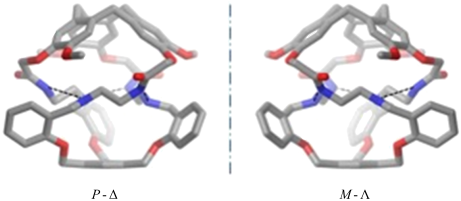
- retained in solution. Keywords: CTV; hemicryptophanes; organic cages; triple helical structure; Introduction Among the remarkable architectures found in biological systems, those presenting a triple helical arrangement are of particular interest. Beside its classical double strand structure formed by
- a better understanding of the properties of this biological system and giving rise to numerous applications ranging from artificial collagenous biomaterials to peptides for therapeutic uses [3][4][5]. Recently, molecular cages presenting a triple helical structure have aroused a considerable
- in a propeller fashion. Other recent examples are the triple-stranded phenylene cages presenting a helical rod-like shape synthesized by Kirsche et al. [10]. Hemicryptophanes are chiral covalent cages combining a cyclotriveratrylene (CTV, north part) unit with another C3 symmetrical moiety (south


Steric “attraction”: not by dispersion alone
Beilstein J. Org. Chem. 2018, 14, 1482–1490, doi:10.3762/bjoc.14.125
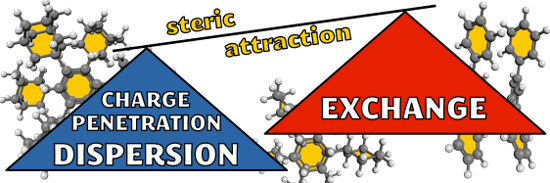
- cages [10]. Intermolecular interactions in hydrocarbons are also subject to significant dispersion contribution. In the unsaturated systems, from benzene dimer to higher acenes and, ultimately, graphenes, dispersion is increasingly the key force behind the π–π stacking interactions [11]. Large and flat



Superelectrophilic activation of 5-hydroxymethylfurfural and 2,5-diformylfuran: organic synthesis based on biomass-derived products
Beilstein J. Org. Chem. 2016, 12, 2125–2135, doi:10.3762/bjoc.12.202
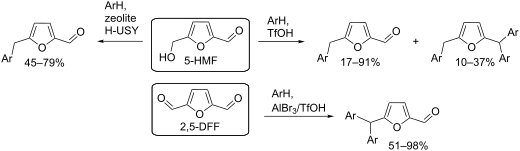
- products. It is interesting to note that compounds 4 were not observed in reactions with zeolite (Table 4, entries 3, 10, 14 and 17), most likely, due to lower acidity of the zeolite compared to TfOH and spatial restrictions in zeolite cages, diminishing the contact between protonated aldehyde groups and
- reactive species, derived from 1a in TfOH, is cation A. In zeolite cages the activation of the CH2OH group of 1a takes place due to the coordination of the basic centers of this molecule with Brønsted and Lewis acidic sites of zeolite. 2,5-DFF (2) reacted with arenes under electrophilic activation with


Rhodium, iridium and nickel complexes with a 1,3,5-triphenylbenzene tris-MIC ligand. Study of the electronic properties and catalytic activities
Beilstein J. Org. Chem. 2015, 11, 2584–2590, doi:10.3762/bjoc.11.278
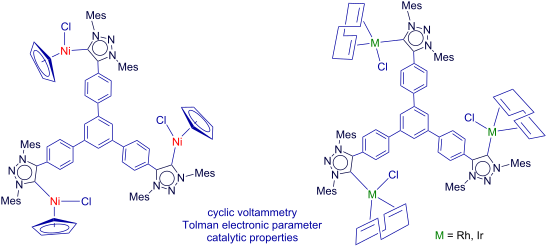
- interested in the design of several types of C3v-symmetric tris-NHCs, both for the preparation of self-assembly molecular cages [12][13][27] and for the design of discrete trimetallic molecules whose catalytic performances were explored [23][25][28][29]. Among these ligands, we found those featuring a
- [32][33][34][35][36], and because poly-MIC ligands are less explored [37][38][39][40][41][42][43][44][45][46], we very recently synthesized the tris-diarylated-(1,2,3-triazol-5-ylidene)-1,3,5-triphenylbenzene-based ligand (B). This ligand afforded trisilver and trigold cages with very interesting
- rearranging properties when mixed with the related 1,3,5-triphenylbenzene-based tris-NHC Ag cages [27]. Shortly afterwards, Sarkar and co-workers used a dialkylated (1,2,3-triazol-5-ylidene)-1,3,5-triphenylbenzene-based ligand for the preparation of the corresponding tris-Ir(III) and Pd(II) complexes and


Glycoluril–tetrathiafulvalene molecular clips: on the influence of electronic and spatial properties for binding neutral accepting guests
Beilstein J. Org. Chem. 2015, 11, 1023–1036, doi:10.3762/bjoc.11.115
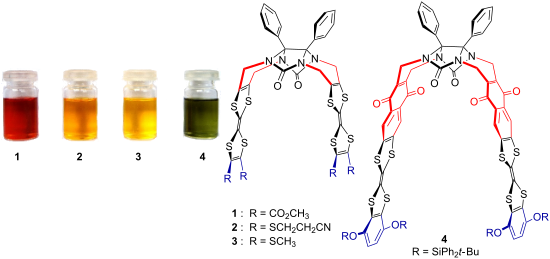
- ]catenane [53], cucubit[8]uril [54] or self-assembled cages [55] which facilitate the formation of TTF dimers. Studying the glycoluril-based molecular clip 15 presenting also TTF sidewalls [56][57], Chiu et al. have observed the mixed-valence and radical cation dimer states at high concentration (10−3 M




Tuning the size of a redox-active tetrathiafulvalene-based self-assembled ring
Beilstein J. Org. Chem. 2015, 11, 966–971, doi:10.3762/bjoc.11.108
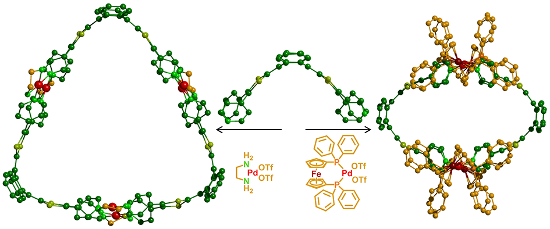
- obtain, from one given ligand, one single and stable assembly whose cavity size can be controlled. We recently depicted the preparation and properties of redox-active rings [29][35] and cages [36][37][38][39][40] integrating the tetrathiafulvalene (TTF) skeleton. In particular, we described self
- -assembled containers prepared from an electron-rich ligand precursor based on the extended-TTF framework (exTTF) [39]. On this basis, we report herein that the size and the shape of coordination-driven self-assembled redox-active cages, constructed from a exTTF-based tetratopic ligand, can be tuned by


An integrated photocatalytic/enzymatic system for the reduction of CO2 to methanol in bioglycerol–water
Beilstein J. Org. Chem. 2014, 10, 2556–2565, doi:10.3762/bjoc.10.267
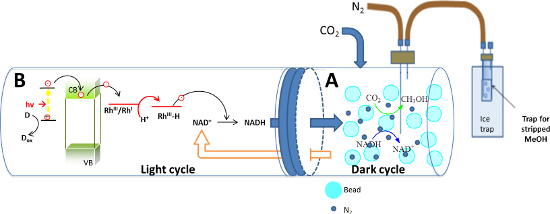
- enzymes FateDH, FaldDH, and ADH were encapsulated into silicate cages made from Ca alginate and tetraethoxysilanes (TEOS) and used at a controlled pH of 7. CO2 was admitted in a continuous flow reactor at such a rate to generate a 20% excess with respect to the stoichiometric amount required by the


Towards the sequence-specific multivalent molecular recognition of cyclodextrin oligomers
Beilstein J. Org. Chem. 2014, 10, 2428–2440, doi:10.3762/bjoc.10.253
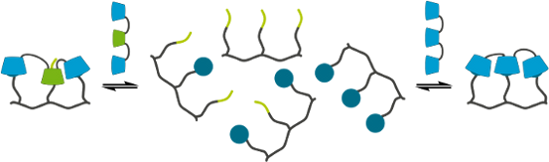
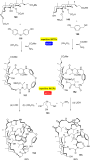
- short peptides made of natural amino acids with aromatic side chains by different host moieties like coordination cages [37] and cucurbiturils [38][39] has been demonstrated. For cyclodextrins (CD) a similar approach is reported, but by using CD strands and different model peptides of natural and


Photorelease of phosphates: Mild methods for protecting phosphate derivatives
Beilstein J. Org. Chem. 2014, 10, 2038–2054, doi:10.3762/bjoc.10.212
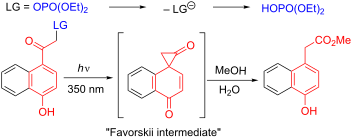
- in 1% aq MeCN. Quantum yields and conversions of 24 with and without Ar purging.a A comparison of photorelease from cages for diethyl phosphates. Chemical yields, quantum yields, efficiencies and complexity based on solvents and chromophores. Supporting Information Supporting Information File 394


Tuning the interactions between electron spins in fullerene-based triad systems
Beilstein J. Org. Chem. 2014, 10, 332–343, doi:10.3762/bjoc.10.31
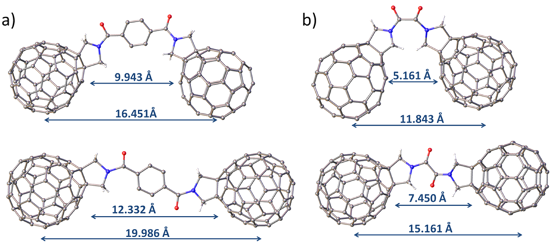
- 10.3762/bjoc.10.31 Abstract A series of six fullerene–linker–fullerene triads have been prepared by the stepwise addition of the fullerene cages to bridging moieties thus allowing the systematic variation of fullerene cage (C60 or C70) and linker (oxalate, acetate or terephthalate) and enabling precise
- up per molecule in the potential range between −2.3 and 0.2 V (vs Fc+/Fc). No significant electronic interactions between fullerene cages are observed in the ground state indicating that the individual properties of each C60 or C70 cage are retained within the triads. The electron–electron
- of N@C60–N@C60 molecules [5][6][7]. However the application of these systems is limited due to a number of synthetic challenges associated with the preparation and purification of endohedral fullerenes [8]. This notwithstanding, fullerene cages are excellent electron acceptors and can support up to


Spin state switching in iron coordination compounds
Beilstein J. Org. Chem. 2013, 9, 342–391, doi:10.3762/bjoc.9.39
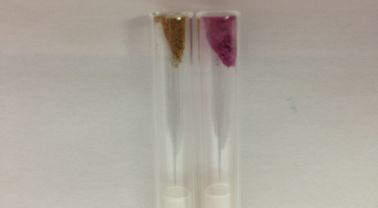
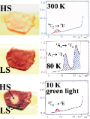
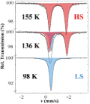
- phenomenon encompasses mono-, oligo- and polynuclear iron(II) complexes and cages, polymeric 1D, 2D and 3D systems, nanomaterials, and polyfunctional materials that combine spin crossover with another physical or chemical property. Keywords: cages; iron(II) coordination compounds; physical techniques




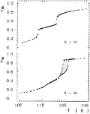

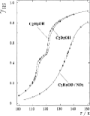


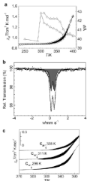
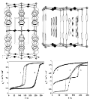
![[Graphic 1]](/bjoc/content/inline/1860-5397-9-39-i3.png?max-width=637&scale=1.18182) ) modes versus the anion volu...
) modes versus the anion volu...






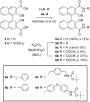
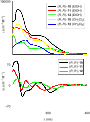
Synthesis and anion recognition properties of shape-persistent binaphthyl-containing chiral macrocyclic amides
Beilstein J. Org. Chem. 2012, 8, 967–976, doi:10.3762/bjoc.8.109
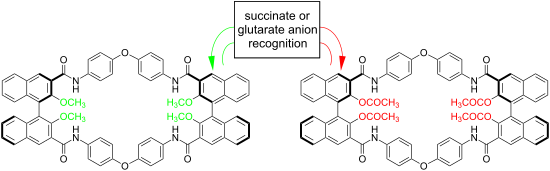
- electronic features of the functional groups in the 2,2' positions. Keywords: amides; anion recognition; chirality; macrocycles; molecular switches; supramolecular chemistry; Introduction Macrocyclic molecules possessing a high degree of shape persistency act as molecular cages, and the scientific interest





Molecular switches and cages
Beilstein J. Org. Chem. 2012, 8, 870–871, doi:10.3762/bjoc.8.97
- compounds but in its infancy in the case of reversible photoswitches. The present Thematic Series of the Beilstein Journal of Organic Chemistry addresses the crucial role that chemistry, and particularly organic chemistry, can play in tuning the functional features of molecular switches and cages. These
- in photovoltaics (Matile). Chemists, by nature, like to control things and probably actuate macroscopic switches more often than the average person. We hope that this collection of papers will motivate some of our colleagues to also consider nanoscopic versions of switches (and cages). For those of
Self-assembly of Ru4 and Ru8 assemblies by coordination using organometallic Ru(II)2 precursors: Synthesis, characterization and properties
Beilstein J. Org. Chem. 2012, 8, 313–322, doi:10.3762/bjoc.8.34
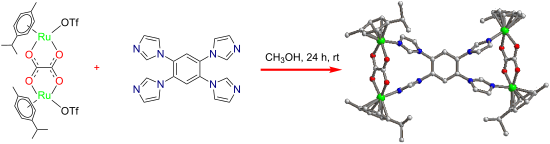
- tetranuclear rectangular geometry with the dimensions of 5.53 Å × 12.39 Å. Furthermore, the photo- and electrochemical properties of these newly synthesized assemblies have been studied by using UV–vis absorption and cyclic voltammetry analysis. Keywords: cages; macrocycles; ruthenium(II); self-assembly; self
- , we and others have recently reported several shape-persistent discrete macrocycles/cages using half-sandwich octanuclear Ru(II) piano-stool complexes in combination with polypyridyl or polycarboxylate donors [6][7][8][9][10]. Ligands with an imidazole functionality are of considerable interest due to
- . Therefore, macrocycle 2c adopts a staggered conformation as was observed in similar types of 3D cages [14]. UV–vis absorption and electrochemical studies One of the strongest driving factors to design multifarious functional supramolecular complexes is attributed to their interesting functional properties





