Search for "carbamate" in Full Text gives 203 result(s) in Beilstein Journal of Organic Chemistry. Showing first 200.
Beilstein J. Org. Chem. 2023, 19, 1055–1145, doi:10.3762/bjoc.19.81
Graphical Abstract
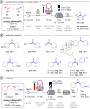
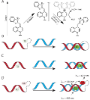
Figure 1: Oxidative and reductive activations of organic compounds harvesting photoredox catalysis.
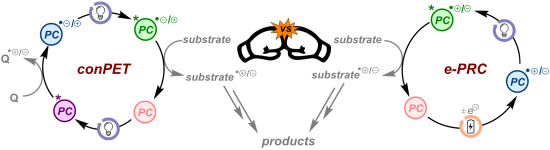
Figure 2: General catalytic cycles of radical ion conPET (left) and radical ion e-PRC (right).
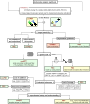
Figure 3: “Beginner’s guide”: comparison between advantages, capacities, and prospectives of conPET and PEC.
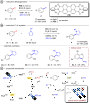
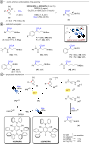
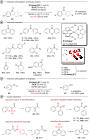
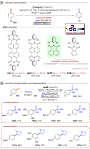
Figure 4: A) conPET reductive dehalogenation of aryl halides with PDI. B) Reductive C–H arylation with pyrrol...
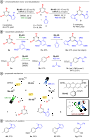
Figure 5: A) Chromoselective mono- and disubstitution or polybrominated pyrimidines with pyrroles. B) Sequent...
Figure 6: A) Synthesis of pyrrolo[1,2-a]quinolines. B) Synthesis of ullazines.
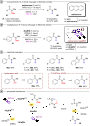
Figure 7: A) Reductive phosphorylation of aryl halides via conPET. B) Selected examples from the substrate sc...
Figure 8: A) Reductive dehalogenation of aryl halides via conPET and selected examples from the substrate sco...
Figure 9: A) Reductive C–H arylation of aryl halides via conPET (top) and selected examples from the substrat...
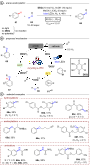
Figure 10: A) Reductive hydrodehalogenation of aryl halides with Mes-Acr-BF4. B) Selected examples from the su...
Figure 11: A) Reductive hydrodechlorination of aryl chlorides with 4-DPAIPN. B) Proposed formation of CO2•−. C...
Figure 12: A) Reductive conPET borylation with 3CzEPAIPN (top) and selected examples from the substrate scope ...
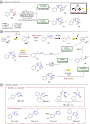
Figure 13: Scale-up of conPET phosphorylation with 3CzEPAIPN.
Figure 14: A) Borylation of 1d. B) Characteristics and structure of PC1 with green and red parts showing the l...
Figure 15: A) Reductive C–H arylation scope with polysulfide conPET (top) and selected examples from the subst...
Figure 16: Scale-up of A) C–H arylation and B) dehaloborylation with polysulfide photocatalysis in continuous-...
Figure 17: A) Formation of [Ir1]0 and [Ir2]0 upon PET between [Ir1]+ and Et3N. B) Mechanism of multi-photon ta...
Figure 18: A) Reductive hydrodehalogenation of aryl halides via multi-photon tandem photocatalysis. B) Selecte...
Figure 19: A) Carbonylative amidation of aryl halides in continuous flow. B) Selected examples from the substr...
Figure 20: A) General scheme for reductive (RQ) and oxidative quenching (OQ) protocols using [FeIII(btz)3](PF6)...
Figure 21: A) Carbonylative amidation of alkyl iodides with [IrIII(ppy)2(dtbbpy)]PF6. B) Selected examples fro...
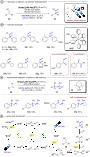
Figure 22: A) Carboxylative C–N bond cleavage in cyclic amines. B) Selected examples from the substrate scope....
Figure 23: A) Formal reduction of alkenes to alkanes via transfer hydrogenation. B) Selected examples from the...
Figure 24: A) Birch-type reduction of benzenes with PMP-BPI. B) Selected examples from the substrate scope (sc...
Figure 25: Proposed mechanism of the OH− mediated conPET Birch-type reduction of benzene via generation of sol...
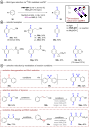
Figure 26: Reductive detosylation of N-tosylated amides with Mes-Acr-BF4. B) Selected examples from the substr...
Figure 27: A) Reductive detosylation of N-tosyl amides by dual PRC. B) Selected examples from the substrate sc...
Figure 28: A) Mechanism of the dual PRC based on PET between [Cu(dap)2]+ and DCA. B) Mechanism of the dual PRC...
Figure 29: A) N–O bond cleavage in Weinreb amides with anthracene. B) N–O bond cleavage in Weinreb amides rely...
Figure 30: A) Pentafluorosulfanylation and fluoride elimination. B) Mechanism of the pentafluorosulfanylation ...
Figure 31: A) α-Alkoxypentafluorosulfanylation (top) and selected examples from the substrate scope (bottom). ...
Figure 32: A) Oxidative amination of arenes with azoles catalyzed by N-Ph PTZ. B) Selected examples from the s...
Figure 33: A) C(sp3)–H bond activation by HAT via chloride oxidation by *N-Ph PTZ•+. B) Proposed mechanism for...
Figure 34: A) Recycling e-PRC C–H azolation of electron-rich arenes with pyrazoles using Mes-Acr+ as a photoca...
Figure 35: A) Radical ion e-PRC direct oxidation of unactivated arenes using TAC+ as an electro-activated phot...
Figure 36: A) Radical ion e-PRC direct oxidation of unactivated arenes using TPA as an electro-activated photo...
Figure 37: Proposed mechanism (top) and mode of preassembly (bottom).
Figure 38: A) Possible preassemblies of reactive (left) vs unreactive (right) arenes. B) Calculated spin densi...
Figure 39: A) Recycling e-PRC C(sp2 )–H acetoxylation of arenes using DDQ as a photocatalyst. B) Proposed cata...
Figure 40: Gram scale hydroxylation of benzene in a recirculated flow setup.
Figure 41: A) Radical ion e-PRC vicinal diamination of alkylarenes using TAC+ as an electro-activated photocat...
Figure 42: A) Sequential oxygenation of multiple adjacent C–H bonds under radical ion e-PRC using TAC+ as an e...
Figure 43: A) Enantioselective recycling e-PRC cyanation of benzylic C–H bonds using ADQS as photocatalyst. B)...
Figure 44: Proposed tandem mechanism by Xu and co-workers.
Figure 45: A) Enantioselective recycling e-PRC decarboxylative cyanation using Cu(acac)2, Ce(OTf)3 and a box l...
Figure 46: A) Enantioselective recycling e-PRC benzylic cyanation using Cu(MeCN)4BF4, box ligand and anthraqui...
Figure 47: A) Radical ion e-PRC acetoxyhydroxylation of aryl olefins using TAC+ as an electro-activated photoc...
Figure 48: Selected examples from the substrate scope.
Figure 49: Photoelectrochemical acetoxyhydroxylation in a recirculated flow setup.
Figure 50: A) Radical ion e-PRC aminooxygenation of aryl olefins using TAC+ as an electro-activated photocatal...
Figure 51: A) Recycling e-PRC C–H alkylation of heteroarenes with organic trifluoroborates using Mes-Acr+ as p...
Figure 52: A) Recycling e-PRC decarboxylative C–H alkylation of heteroarenes using CeCl3·7H2O as catalyst. B) ...
Figure 53: A) Recycling e-PRC decarboxylative C–H alkylation of heteroarenes using Fe(NH4)2(SO4)2·6H2O as cata...
Figure 54: A) Recycling e-PRC C–H alkylation of heteroarenes with alkyl oxalates and 4CzIPN as photocatalyst. ...
Figure 55: A) Recycling e-PRC decarboxylative C–H carbamoylation of heteroarenes using 4CzIPN as photocatalyst...
Figure 56: A) Photoelectrochemical HAT-mediated hydrocarbon activation via the chlorine radical. B) Proposed m...
Figure 57: A) Selected examples from the substrate scope. B) Gram and decagram scale semi-continuous flow PEC ...
Figure 58: A) Photoelectrochemical HAT-mediated dehydrogenative coupling of benzothiazoles with aliphatic C–H ...
Figure 59: A) Photoelectrochemical HAT activation of ethers using electro-activated TAC+ as photocatalyst. B) ...
Figure 60: Selected examples from the substrate scope.
Figure 61: A) Photoelectrochemical HAT-mediated synthesis of alkylated benzimidazo-fused isoquinolinones using...
Figure 62: A) Decoupled photoelectrochemical cerium-catalyzed oxydichlorination of alkynes using CeCl3 as cata...
Figure 63: Proposed decoupled photoelectrochemical mechanism.
Figure 64: A) Decoupled photoelectrochemical ring-opening bromination of tertiary cycloalkanols using MgBr2 as...
Figure 65: A) Recycling e-PRC ring-opening functionalization of cycloalkanols using CeCl3 as catalyst. B) Prop...
Figure 66: Selected examples from the substrate scope of the PEC ring-opening functionalization.
Figure 67: A) Radical ion e-PRC reduction of chloro- and bromoarenes using DCA as catalyst and various accepto...
Figure 68: A) Screening of different phthalimide derivatives as catalyst for the e-PRC reduction of aryl halid...
Figure 69: Screening of different organic catalysts for the e-PRC reduction of trialkylanilium salts.
Figure 70: A) e-PRC reduction of phosphonated phenols and anilinium salts. B) Selected examples from the subst...
Figure 71: A) ConPET and e-PRC reduction of 4-bromobenzonitrile using a naphthalene diimide (NDI) precatalyst ...
Figure 72: A) Radical ion e-PRC reduction of phosphinated aliphatic alcohols with n-BuO-NpMI as catalyst. B) C...
Figure 73: Selected examples from the substrate scope.
Figure 74: A) Recycling e-PRC reductive dimerization of benzylic chlorides using a [Cu2] catalyst. B) Proposed...
Figure 75: A) Decoupled photoelectrochemical C–H alkylation of heteroarenes through deamination of Katritzky s...
Figure 76: Proposed mechanism by Chen and co-workers.
Beilstein J. Org. Chem. 2023, 19, 687–699, doi:10.3762/bjoc.19.50
Graphical Abstract
Figure 1: Biologically active agents and chiral ligands containing medium and large phostams, phostones, and ...
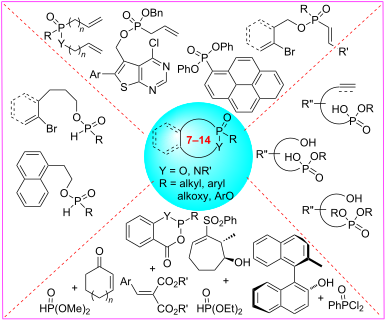
Figure 2: Synthetic strategies for the preparation of medium and large phostams, phostones, and phostines.
Scheme 1: Synthesis of 1,2-azaphosphepine 2-oxide, 1,2-azaphosphocine 2-oxide, 1,2-azaphosphepane 2-oxide, an...
Scheme 2: Synthesis of bis[1,2]oxaphosphepine 2-oxide from tert-butyl 2-(bis(allyloxy)phosphoryl)pent-4-enoat...
Scheme 3: Synthesis of 2-ethoxy-5H-benzo[f][1,2]oxaphosphepine 2-oxides from 2-allylphenyl ethyl vinylphospho...
Scheme 4: Synthesis of 2-ethoxy-3,6-dihydrobenzo[g][1,2]oxaphosphocine 2-oxides from 2-allylphenyl ethyl ally...
Scheme 5: Synthesis of benzothiophene-fused 2-hydroxy-1,2-oxaphosphecane 2-oxide from (4-allyl-2-(4-methylphe...
Scheme 6: Synthesis of benzothiophene-fused 2-hydroxy-1,2-oxaphosphecane 2-oxide from benzyl hydrogen ((4-all...
Scheme 7: Synthesis of benzothiophene-fused 2-hydroxy-1-oxa-2-phosphacycloundecane 2-oxide from benzyl hydrog...
Scheme 8: Synthesis of 5,6,7-trihydro-1,2-oxaphosphepine 2-oxide and its benzo derivatives from 3-bromobut-3-...
Scheme 9: Synthesis of thieno[2,3-d]pyrimidine-fused 2-hydroxy-1,2-oxaphosphonane 2-oxide from benzyl hydroge...
Scheme 10: Synthesis of 3-phenoxybenzo[f]pyreno[1,10-cd][1,2]oxaphosphepine 3-oxide from diphenyl pyren-1-ylph...
Scheme 11: Synthesis of 1,2-oxaphosphepane 2-oxides and 1,2-oxaphosphocane 2-oxide from hydrogen methyl hex-5-...
Scheme 12: Synthesis of 2-methoxy-1,2-oxaphosphinane 2-oxides, 1,2-oxaphosphepine 2-oxides, 1,2-oxaphosphepane...
Scheme 13: Synthesis of 1,2-azaphosphepane 2-oxide and its benzo derivatives from 5-bromohex-5-en-1-yl methylp...
Scheme 14: Synthesis of 4-phenyl-1,2-dihydronaphtho[2,1-c][1,2]oxaphosphinine 4-oxide and 1-phenyl-3,4-dihydro...
Scheme 15: Synthesis of 2-alkoxy-3,5-dimethylene-1,2-oxaphosphepane 2-oxides from dialkyl 2-bromo-1-methylethy...
Scheme 16: Synthesis of 14-methyl-2-phenoxy-1-oxa-2-phosphacyclotetradecane 2-oxide from phenyl hydrogen (12-h...
Scheme 17: Synthesis of 5-oxo-1,3,5-trihydrobenzo[f][1,2]azaphosphepine 2-oxides from 1,2-dihydro-4H-benzo[d][...
Scheme 18: Synthesis of 3-hydrobenzo[f][1,2]oxaphosphepin-5(4H)-one 2-oxides from 2-phenyl/alkoxy-4H-benzo[d][...
Scheme 19: Synthesis of bicyclic seven- and eight-membered phosphotones from cycloalk-2-enones and dimethyl ph...
Scheme 20: Synthesis of binaphthylene-fused phosphotones from (M)-2'-methyl-[1,1'-binaphthalen]-2-ol and pheny...
Scheme 21: Synthesis of bicyclic phosphotone from (1S,2R)-2-methyl-3-(phenylsulfonyl)cyclohept-3-en-1-ol and d...
Beilstein J. Org. Chem. 2023, 19, 541–549, doi:10.3762/bjoc.19.39
Graphical Abstract
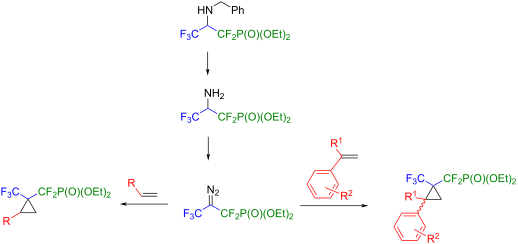
Scheme 1: Previous works (A–D) and the extension (this work).
Scheme 2: Synthesis of diethyl 2-diazo-1,1,3,3,3-pentafluoropropylphosphonate (5).
Scheme 3: Scope of the cyclopropanation. Reaction conditions: alkene (0.15 mmol), diazo compound 5 (0.1 mmol)...
Figure 1: 19F,1H-HOESY spectrum of compound 6c.
Scheme 4: Scope of the cyclopropanation. Reaction conditions: alkene (0.15 mmol), diazo compound 5 (0.1 mmol)...
Scheme 5: Addition of CuI to the diazo compound 5.
Scheme 6: Possible addition of styrene to Int2 yielding Int4_1 and Int4_2 through Int3_1 and Int3_2.
Scheme 7: Possible addition of styrene to Int2 yielding Int4_3 and Int4_4 without further intermediates.
Scheme 8: Formation of the products Pr1 to Pr4.
Beilstein J. Org. Chem. 2023, 19, 487–540, doi:10.3762/bjoc.19.38
Graphical Abstract
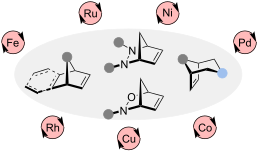
Figure 1: Ring-strain energies of homobicyclic and heterobicyclic alkenes in kcal mol−1. a) [2.2.1]-Bicyclic ...
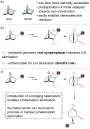
Figure 2: a) Exo and endo face descriptions of bicyclic alkenes. b) Reactivity comparisons for different β-at...
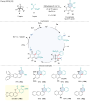
Scheme 1: Ni-catalyzed ring-opening/cyclization cascade of heterobicyclic alkenes 1 with alkyl propiolates 2 ...
Scheme 2: Ni-catalyzed ring-opening/cyclization cascade of heterobicyclic alkenes 8 with β-iodo-(Z)-propenoat...
Scheme 3: Ni-catalyzed two- and three-component difunctionalizations of norbornene derivatives 15 with alkyne...
Scheme 4: Ni-catalyzed intermolecular three-component difunctionalization of oxabicyclic alkenes 1 with alkyn...
Scheme 5: Ni-catalyzed intermolecular three-component carboacylation of norbornene derivatives 15.
Scheme 6: Photoredox/Ni dual-catalyzed coupling of 4-alkyl-1,4-dihydropyridines 31 with heterobicyclic alkene...
Scheme 7: Photoredox/Ni dual-catalyzed coupling of α-amino radicals with heterobicyclic alkenes 30.
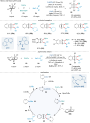
Scheme 8: Cu-catalyzed rearrangement/allylic alkylation of 2,3-diazabicyclo[2.2.1]heptenes 47 with Grignard r...
Scheme 9: Cu-catalyzed aminoboration of bicyclic alkenes 1 with bis(pinacolato)diboron (B2pin2) (53) and O-be...
Scheme 10: Cu-catalyzed borylalkynylation of oxabenzonorbornadiene (30b) with B2pin2 (53) and bromoalkynes 62.
Scheme 11: Cu-catalyzed borylacylation of bicyclic alkenes 1.
Scheme 12: Cu-catalyzed diastereoselective 1,2-difunctionalization of oxabenzonorbornadienes 30 for the synthe...
Scheme 13: Fe-catalyzed carbozincation of heterobicyclic alkenes 1 with arylzinc reagents 74.
Scheme 14: Co-catalyzed addition of arylzinc reagents of norbornene derivatives 15.
Scheme 15: Co-catalyzed ring-opening/dehydration of oxabicyclic alkenes 30 via C–H activation of arenes.
Scheme 16: Co-catalyzed [3 + 2] annulation/ring-opening/dehydration domino reaction of oxabicyclic alkenes 1 w...
Scheme 17: Co-catalyzed enantioselective carboamination of bicyclic alkenes 1 via C–H functionalization.
Scheme 18: Ru-catalyzed cyclization of oxabenzonorbornene derivatives with propargylic alcohols for the synthe...
Scheme 19: Ru-catalyzed coupling of oxabenzonorbornene derivatives 30 with propargylic alcohols and ethers 106...
Scheme 20: Ru-catalyzed ring-opening/dehydration of oxabicyclic alkenes via the C–H activation of anilides.
Scheme 21: Ru-catalyzed of azabenzonorbornadiene derivatives with arylamides.
Scheme 22: Rh-catalyzed cyclization of bicyclic alkenes with arylboronate esters 118.
Scheme 23: Rh-catalyzed cyclization of bicyclic alkenes with dienyl- and heteroaromatic boronate esters.
Scheme 24: Rh-catalyzed domino lactonization of doubly bridgehead-substituted oxabicyclic alkenes with seconda...
Scheme 25: Rh-catalyzed domino carboannulation of diazabicyclic alkenes with 2-cyanophenylboronic acid and 2-f...
Scheme 26: Rh-catalyzed synthesis of oxazolidinone scaffolds 147 through a domino ARO/cyclization of oxabicycl...
Scheme 27: Rh-catalyzed oxidative coupling of salicylaldehyde derivatives 151 with diazabicyclic alkenes 130a.
Scheme 28: Rh-catalyzed reaction of O-acetyl ketoximes with bicyclic alkenes for the synthesis of isoquinoline...
Scheme 29: Rh-catalyzed domino coupling reaction of 2-phenylpyridines 165 with oxa- and azabicyclic alkenes 30....
Scheme 30: Rh-catalyzed domino dehydrative naphthylation of oxabenzonorbornadienes 30 with N-sulfonyl 2-aminob...
Scheme 31: Rh-catalyzed domino dehydrative naphthylation of oxabenzonorbornadienes 30 with arylphosphine deriv...
Scheme 32: Rh-catalyzed domino ring-opening coupling reaction of azaspirotricyclic alkenes using arylboronic a...
Scheme 33: Tandem Rh(III)/Sc(III)-catalyzed domino reaction of oxabenzonorbornadienes 30 with alkynols 184 dir...
Scheme 34: Rh-catalyzed asymmetric domino cyclization and addition reaction of 1,6-enynes 194 and oxa/azabenzo...
Scheme 35: Rh/Zn-catalyzed domino ARO/cyclization of oxabenzonorbornadienes 30 with phosphorus ylides 201.
Scheme 36: Rh-catalyzed domino ring opening/lactonization of oxabenzonorbornadienes 30 with 2-nitrobenzenesulf...
Scheme 37: Rh-catalyzed domino C–C/C–N bond formation of azabenzonorbornadienes 30 with aryl-2H-indazoles 210.
Scheme 38: Rh/Pd-catalyzed domino synthesis of indole derivatives with 2-(phenylethynyl)anilines 212 and oxabe...
Scheme 39: Rh-catalyzed domino carborhodation of heterobicyclic alkenes 30 with B2pin2 (53).
Scheme 40: Rh-catalyzed three-component 1,2-carboamidation reaction of bicyclic alkenes 30 with aromatic and h...
Scheme 41: Pd-catalyzed diarylation and dialkenylation reactions of norbornene derivatives.
Scheme 42: Three-component Pd-catalyzed arylalkynylation reactions of bicyclic alkenes.
Scheme 43: Three-component Pd-catalyzed arylalkynylation reactions of norbornene and DFT mechanistic study.
Scheme 44: Pd-catalyzed three-component coupling N-tosylhydrazones 236, aryl halides 66, and norbornene (15a).
Scheme 45: Pd-catalyzed arylboration and allylboration of bicyclic alkenes.
Scheme 46: Pd-catalyzed, three-component annulation of aryl iodides 66, alkenyl bromides 241, and bicyclic alk...
Scheme 47: Pd-catalyzed double insertion/annulation reaction for synthesizing tetrasubstituted olefins.
Scheme 48: Pd-catalyzed aminocyclopropanation of bicyclic alkenes 1 with 5-iodopent-4-enylamine derivatives 249...
Scheme 49: Pd-catalyzed, three-component coupling of alkynyl bromides 62 and norbornene derivatives 15 with el...
Scheme 50: Pd-catalyzed intramolecular cyclization/ring-opening reaction of heterobicyclic alkenes 30 with 2-i...
Scheme 51: Pd-catalyzed dimer- and trimerization of oxabenzonorbornadiene derivatives 30 with anhydrides 268.
Scheme 52: Pd-catalyzed Catellani-type annulation and retro-Diels–Alder of norbornadiene 15b yielding fused xa...
Scheme 53: Pd-catalyzed hydroarylation and heteroannulation of urea-derived bicyclic alkenes 158 and aryl iodi...
Scheme 54: Access to fused 8-membered sulfoximine heterocycles 284/285 via Pd-catalyzed Catellani annulation c...
Scheme 55: Pd-catalyzed 2,2-bifunctionalization of bicyclic alkenes 1 generating spirobicyclic xanthone deriva...
Scheme 56: Pd-catalyzed Catellani-type annulation and retro-Diels–Alder of norbornadiene (15b) producing subst...
Scheme 57: Pd-catalyzed [2 + 2 + 1] annulation furnishing bicyclic-fused indanes 281 and 283.
Scheme 58: Pd-catalyzed ring-opening/ring-closing cascade of diazabicyclic alkenes 130a.
Scheme 59: Pd-NHC-catalyzed cyclopentannulation of diazabicyclic alkenes 130a.
Scheme 60: Pd-catalyzed annulation cascade generating diazabicyclic-fused indanones 292 and indanols 294.
Scheme 61: Pd-catalyzed skeletal rearrangement of spirotricyclic alkenes 176 towards large polycyclic benzofur...
Scheme 62: Pd-catalyzed oxidative annulation of aromatic enamides 298 and diazabicyclic alkenes 130a.
Scheme 63: Accessing 3,4,5-trisubstituted cyclopentenes 300, 301, 302 via the Pd-catalyzed domino reaction of ...
Scheme 64: Palladacycle-catalyzed ring-expansion/cyclization domino reactions of terminal alkynes and bicyclic...
Scheme 65: Pd-catalyzed carboesterification of norbornene (15a) with alkynes, furnishing α-methylene γ-lactone...
Beilstein J. Org. Chem. 2023, 19, 317–324, doi:10.3762/bjoc.19.27
Graphical Abstract
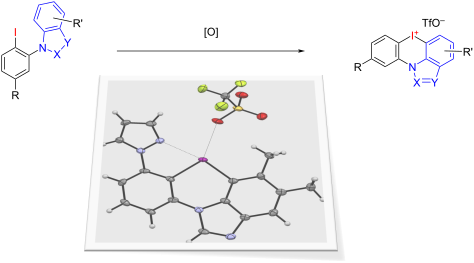
Figure 1: Nitrogen-containing iodolium and iodonium salts.
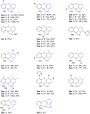
Figure 2: Synthesis of a set of azoiodazinium salts 5. Method A: Iodoarene 4 (200 µmol) and mCPBA (1.1 equiv)...
Figure 3: Single crystal structures (ORTEP drawing with 50% probability) of the pyrazole-coordinated salt 5bb...
Scheme 1: Derivatizations of the iodonium salt 5aa. a) Ac2O, CuSO4·5H2O, NaOAc, AcOH, 120 °C, 5 h; b) S8/Se/T...
Scheme 2: Post-functionalization of mono- and dicationic iodonium salts under preservation of the hypervalent...
Beilstein J. Org. Chem. 2023, 19, 282–293, doi:10.3762/bjoc.19.24
Graphical Abstract
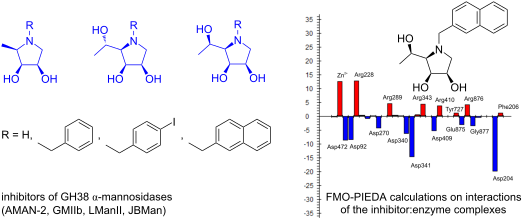
Figure 1: Natural iminosugars (1,4-dideoxy-1,4-imino-ᴅ-mannitol (DIM) and swainsonine) and selected examples ...
Scheme 1: Synthesis of the key pyrrolidine 3 and the target pyrrolidines 7–10. Reagents and conditions: (a) M...
Scheme 2: Synthesis of the intermediate 13 and the target pyrrolidines 17–20. Reagents and conditions: (a) 1....
Scheme 3: Synthesis of the target pyrrolidines 26–29. Reagents and conditions: (a) Tf2O, pyridine, CH2Cl2, 0 ...
Figure 2: Superposition of the inhibitor 29 (green), docked into dGMII, with X-ray complexes of swainsonine (...
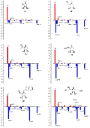
Figure 3: FMO-PIEDA total pair interaction energies (ΔElinker-E) (in kcal mol−1) between the structural moiet...
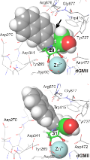
Figure 4: QM/MM optimized complexes 28:dGMII (top) and 31:dGMII (bottom) [22]. N-2-naphthylmethyl group (grey) an...
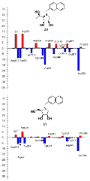
Figure 5: FMO-PIEDA total pair interaction energies (ΔElinker-E) (in kcal mol−1) between the N-2-naphthylmeth...
Beilstein J. Org. Chem. 2022, 18, 1720–1740, doi:10.3762/bjoc.18.182
Graphical Abstract
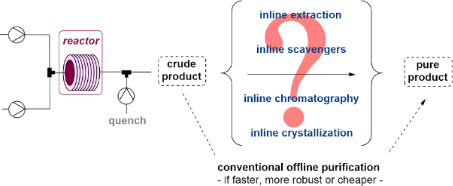
Scheme 1: Automated in-line chromatography with the Advion puriFlash® system. The rightmost part of the schem...
Scheme 2: Purification via pH tuning and several Zaiput membranes. Redrawn from [51].
Scheme 3: Two-phase recirculating system for purifications of an immobilized enzyme-based reaction. Redrawn f...
Scheme 4: Countercurrent L–L purification using large Zaiput membranes in the presence of a phase transfer ca...
Scheme 5: General scheme of a telescoped flow process using L–L separators.
Scheme 6: Example of phase separation using a computer-vision approach. Redrawn from [68].
Scheme 7: Example of an inline purification using heterogeneous scavenging. Redrawn from [76].
Scheme 8: General scheme of a telescoped process using heterogenous cartridges.
Scheme 9: Comparison of two strategies for flow-based imatinib syntheses. Redrawn from [91] and [92].
Scheme 10: General purification scheme using the catch and release strategy.
Scheme 11: Exemplar catch and release purification of a stereoselective oxidation. Redrawn from [105].
Scheme 12: Catch and release-type purification using conventional SiO2. Redrawn from [107].
Scheme 13: Schematic representation of an industrial continuous crystallization. Redrawn from [109].
Scheme 14: General scheme of an academic inline crystallization approach.
Scheme 15: Simplified overview of purification options and selected criteria.
Beilstein J. Org. Chem. 2022, 18, 1596–1606, doi:10.3762/bjoc.18.170
Graphical Abstract
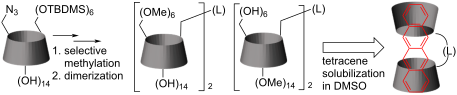
Scheme 1: The synthesis of 6A-azido-6A-deoxy-per-6-O-tert-butyldimethylsilyl-β-cyclodextrin.
Scheme 2: The synthesis of β-cyclodextrin dimers with permethylated secondary rims.
Scheme 3: The synthesis of β-cyclodextrin dimers with permethylated primary rims.
Figure 1: The fragments of 1H NOESY NMR spectra of 4 (a), 10 (b), and 9 (c) indicating the interaction betwee...
Figure 2: The fragment of the 1H NMR spectrum of compounds 9 (green); 10 (red); 12 (blue) representing the si...
Figure 3: Other cyclodextrins that were used in the solubilization experiments with tetracene.
Figure 4: The tetracene UV absorbance dependence on concentration at 476 nm.
Figure 5: The relative concentrations of tetracene in DMSO solutions with hosts 4, 5, 10, 12, 13–18 referred ...
Figure 6: "Tail-to-tail" (a) and "head-to-head" (b) orientation of two cyclodextrin moieties and primary-rim ...
Figure 7: Isotherms of the titration of tetracene with "dimeric" CD solutions in DMSO at 298 K (circles – 10;...
Figure 8: Isotherms of the titration of tetracene with "monomeric" CD solutions in DMSO at 298 K (circles – 16...
Beilstein J. Org. Chem. 2022, 18, 1424–1434, doi:10.3762/bjoc.18.148
Graphical Abstract
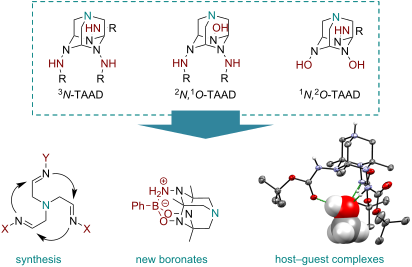
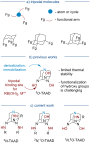
Figure 1: Adamantane-based tripodal scaffolds and current work.
Scheme 1: A general strategy for the assembly of TAAD derivatives.
Scheme 2: Synthesis of acyclic precursors to 3N-TAADs, 2N,1O-TAADs, and 1N,2O-TAADs.
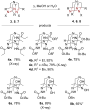
Scheme 3: Synthesis of 3N-TAADs, 2N,1O-TAADs, and 1N,2O-TAADs. *Yield based on compound 14.
Scheme 4: Deprotection of TAAD 8b and subsequent complexation with phenylboronic acid.
Scheme 5: Quaternization of TAADs 4c, 4e, 6a, and 8a followed by deprotection of N-Boc groups.
Figure 2: General view of the 1,4,6,10-tetraazaadamantane motif in X-ray structures of the obtained N-TAAD de...
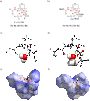
Figure 3: (a) General structure of host–guest complexes of 3N-TAADs with water. (b) The general structure of ...
Figure 4: (a) Dynamic processes in TAADs 4 and complexation with ROH. (b) Fragment of 1H NMR spectra of Bn-4c...
Beilstein J. Org. Chem. 2022, 18, 1385–1395, doi:10.3762/bjoc.18.143
Graphical Abstract
Figure 1: Structures of leustroducsins and phoslactomycins.
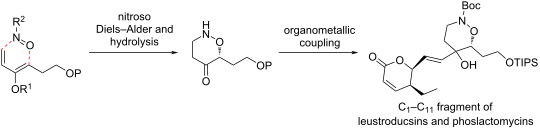
Figure 2: Synthetic strategy for the leustroducins and phoslactomycins.
Figure 3: strategy for the synthesis of central fragment 4: nitroso Diels–Alder reaction.
Scheme 1: A highly regio-and stereoselective nitroso Diels–Alder cycloaddition between Wightman’s reagent 6 a...
Scheme 2: Hydrolysis of enol phosphate in the unprotected cycloadduct.
Scheme 3: Attempts for hydrolysis of the enol phosphate under basic conditions.
Scheme 4: Cleavage of enol phosphate with Red-Al.
Scheme 5: Synthesis of the protected central fragment 11b.
Scheme 6: Synthesis and derivatization of the lactone fragment.
Scheme 7: Coupling reaction between alkyne 19 and ketone 11b.
Scheme 8: Coupling reaction between vinyl iodide 20 and ketone 11b.
Scheme 9: Oxidation of the acetal to the lactone.
Beilstein J. Org. Chem. 2022, 18, 1278–1288, doi:10.3762/bjoc.18.134
Graphical Abstract
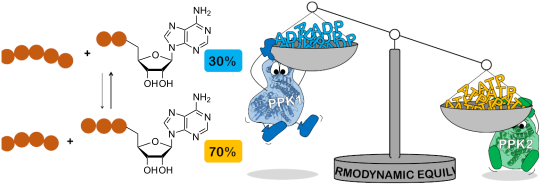
Figure 1: Polyphosphate, a ubiquitous phosphate storage molecule. Reported chain lengths range from three to ...
Figure 2: Comparison of PPK1 and PPK2 enzymes. a) Reaction scheme; b) structure of the EcPPK1 monomer (PDB 1X...
Figure 3: a) Kinases as ATP regeneration enzymes, exemplified by the hexokinase-catalysed ATP-dependent phosp...
Figure 4: Time courses of reactions started with ADP catalysed by a) SmPPK2 and b) EcPPK1. Time courses of re...
Figure 5: a) Ratio of product to substrate for the three nucleotide concentrations (0.5, 2, and 4 mM) used in...
Figure 6: Time courses comparing EcPPK1 (blue) and SmPPK2 (green) for ATP synthesis (a) and ATP degradation (...
Beilstein J. Org. Chem. 2022, 18, 889–915, doi:10.3762/bjoc.18.90
Graphical Abstract
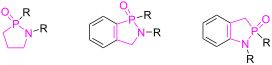
Figure 1: Biologically active 1,2-azaphospholine 2-oxide derivatives.
Figure 2: Diverse synthetic strategies for the preparation of 1,2-azaphospholidine and 1,2-azaphospholine 2-o...
Scheme 1: Synthesis of 1-phenyl-2-phenylamino-γ-phosphonolactam (2) from N,N’-diphenyl 3-chloropropylphosphon...
Scheme 2: Synthesis of 2-ethoxy-1-methyl-γ-phosphonolactam (6) from ethyl N-methyl-(3-bromopropyl)phosphonami...
Scheme 3: Synthesis of 2-aryl-1-methyl-2,3-dihydrobenzo[c][1,2]azaphosphole 1-oxides 13 from N-aryl-2-chlorom...
Scheme 4: Synthesis of 2,3-dihydrobenzo[c][1,2]azaphosphole 1-oxides from alkylarylphosphinyl or diarylphosph...
Scheme 5: Synthesis of 3-arylmethylidene-2,3-dihydrobenzo[c][1,2]azaphosphole 1-oxides via the TBAF-mediated ...
Scheme 6: Synthesis of 2-hydrobenzo[c][1,2]azaphosphol-3-one 1-oxides via the metal-free intramolecular oxida...
Scheme 7: Synthesis of 1,3-dihydrobenzo[d][1,2]azaphosphole 2-oxides 42 and 44 from ethyl/benzyl 2-bromobenzy...
Scheme 8: Synthesis of azaphospholidine 2-oxides/sulfide from 1,2-oxaphospholane 2-oxides/sulfides and 1,2-th...
Scheme 9: Synthesis of 1,3-dihydrobenzo[d][1,2]azaphosphole 2-oxides/sulfides from 2-aminobenzyl(phenyl)phosp...
Scheme 10: Synthesis of 1,3-dihydrobenzo[d][1,2]azaphosphole 2-sulfide (59) from zwitterionic 2-aminobenzyl(ph...
Scheme 11: Synthesis of 1,3-dihydrobenzo[d][1,2]azaphosphole 2-oxides from 2-aminobenzyl(methyl/phenyl)phosphi...
Scheme 12: Synthesis of ethyl 2-methyl-1,2-azaphospholidine-5-carboxylate 2-oxide 69 from 2-amino-4-(hydroxy(m...
Scheme 13: Synthesis of 2-methoxy-1,3-dihydrobenzo[d][1,2]azaphosphole 2-oxide 71 from dimethyl 2-(methylamino...
Scheme 14: Synthesis of tricyclic γ-phosphonolactams via formation of the P–C bond.
Scheme 15: Synthesis of γ-phosphonolactams 85 from ethyl 2-(3-chloropropyl)aminoalkanoates with diethyl chloro...
Scheme 16: Synthesis of N-phosphoryl- and N-thiophosphoryl-1,2-azaphospholidine 2-oxides 90/2-sulfides 91 from...
Scheme 17: Synthesis of 1-methyl-1,3-dihydrobenzo[d][1,2]azaphosphole 2-oxides 56a and 93 from P-(chloromethyl...
Scheme 18: Synthesis of 2-allylamino-1,5-dihydro-1,2-azaphosphole 2-oxides from N,N’-diallyl-vinylphosphonodia...
Scheme 19: Diastereoselective synthesis of 2-allylamino-1,5-dihydro-1,2-azaphosphole 2-oxides from N,N’-dially...
Scheme 20: Synthesis of 1-alkyl-3-benzoyl-2-ethoxy-1,3-dihydrobenzo[d][1,2]azaphosphole 2-oxides 106 from ethy...
Scheme 21: Synthesis of cyclohexadiene-fused γ-phosphinolactams from diphenyl-N-benzyl-N-methylphosphinamide (...
Scheme 22: Synthesis of cyclohexadiene-fused γ-phosphinolactams from diphenyl-N-alkyl-N-benzylphosphinamides.
Scheme 23: Synthesis of cyclohexadiene-fused γ-phosphinolactams from diphenyl-N-methyl-N-(1-phenylethyl)phosph...
Scheme 24: Synthesis of benzocyclohexadiene-fused γ-phosphinolactams from dinaphth-1-yl-N-alkyl-N-benzylphosph...
Scheme 25: Synthesis of benzocyclohexadiene-fused γ-phosphinolactams from dinaphth-1-yl-N-benzyl-N-methylphosp...
Scheme 26: Synthesis of carbonyl-containing benzocyclohexadiene-fused γ-phosphinolactams from dinaphth-1-yl-N-...
Scheme 27: Synthesis of benzocyclohexadiene-fused γ-phosphinolactams from dinaphthyl-N-benzyl-N-methylphosphin...
Scheme 28: Synthesis of cyclohexadiene-fused 1-(N-benzyl-N-methyl)amino-γ-phosphinolactams from aryl-N,N’-dibe...
Scheme 29: Synthesis of bis(cyclohexadiene-fused γ-phosphinolactam)s from bis(diphenyl-N-benzylphosphinamide)s....
Scheme 30: Synthesis of bis(hydroxymethyl-derived cyclohexadiene-fused γ-phosphinolactam)s from tetramethylene...
Scheme 31: Synthesis of 2-aryl/dimethylamino-1-ethoxy-2-hydrobenzo[c][1,2]azaphosphol-3-one 1-oxides from ethy...
Scheme 32: Synthesis of ethyl 2-ethoxy-1,2-azaphospholidine-4-carboxylate 2-oxides from ethyl 2-((chloro(ethox...
Scheme 33: Synthesis of (1S,3R)-2-(tert-butyldiphenylsilyl)-3-methyl-1-phenyl-2,3-dihydrobenzo[c][1,2]azaphosp...
Scheme 34: Synthesis of 2,3,3a,9a-tetrahydro-4H-1,2-azaphospholo[5,4-b]chromen-4-one (215) from 3-(phenylamino...
Scheme 35: Synthesis of quinoline-fused 1,2-azaphospholine 2-oxides from 2-azidoquinoline-3-carbaldehydes and ...
Scheme 36: Synthesis of 1-hydro-1,2-azaphosphol-5-one 2-oxide from cyanoacetohydrazide with phosphonic acid an...
Scheme 37: Synthesis of chromene-fused 5-oxo-1,2-azaphospolidine 2-oxides.
Scheme 38: Synthesis of (R)-1-phenyl-2-((R)-1-phenylethyl)-2-hydrobenzo[c][1,2]azaphosphol-3-one 1-oxide (239)...
Scheme 39: Synthesis of dihydro[1,2]azaphosphole 1-oxides from aryl/vinyl-N-phenylphosphonamidates and aryl-N-...
Scheme 40: Synthesis of 1,3-dihydro-[1,2]azaphospholo[5,4-b]pyridine 2-oxides.
Beilstein J. Org. Chem. 2022, 18, 438–445, doi:10.3762/bjoc.18.46
Graphical Abstract
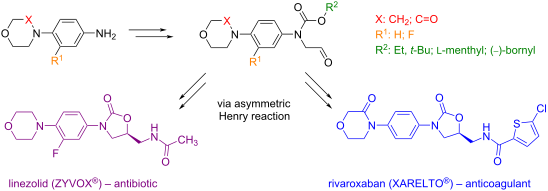
Figure 1: The structure of the oxazolidine-2-one-containing drugs linezolid (1) and rivaroxaban (2).
Figure 2: Overview of the chiral ligands that were used for the study of the asymmetric Henry reaction.
Scheme 1: Syntheses of aldehydes 15–20.
Scheme 2: Synthesis of linezolid (1) and rivaroxaban (2) from nitroaldols 24 or 26.
Beilstein J. Org. Chem. 2022, 18, 167–173, doi:10.3762/bjoc.18.18
Graphical Abstract
Figure 1: Model of the catalyst action.
Figure 2: Catalysts screened.
Scheme 1: Screening of different N-protecting groups. Reaction conditions: 0.2 M solution of 1 (1 equiv), 2 (...
Scheme 2: Scope of the reaction (the relative configuration of the major diastereoisomer is depicted). Reacti...
Scheme 3: Comparison reactions of E- and Z-isomers (the relative configurations of the major diastereoisomers...
Beilstein J. Org. Chem. 2022, 18, 77–85, doi:10.3762/bjoc.18.7
Graphical Abstract
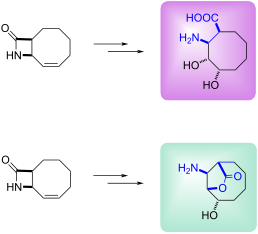
Figure 1: Examples of natural products containing β-amino acids.
Scheme 1: Synthesis of cyclic β-amino acid 6.
Scheme 2: Epoxidation of Boc-protected amino ester 4 and hydrolysis of epoxide 7 with HCl(g)–MeOH.
Scheme 3: Reaction of epoxide 7 with NaHSO4 in methylene chloride/MeOH.
Figure 2: The X-ray crystal structure of 10.
Scheme 4: Synthesis of cyclic β-amino acid derivative 8.
Scheme 5: Suggested mechanism for the reaction of epoxide 7 with NaHSO4.
Figure 3: Solvent-corrected relative free energy profile at 298.15 K for the reaction mechanism of 14 shown i...
Figure 4: Solvent-corrected relative free energy profile at 298.15 K for the reaction mechanism of 17 shown i...
Figure 5: The optimized geometries of the conformers 7a and 7b with selected interatomic distances at the B3L...
Beilstein J. Org. Chem. 2021, 17, 2716–2725, doi:10.3762/bjoc.17.183
Graphical Abstract
Figure 1: Prominent synthetic approaches to 1-benzyltetrahydroisoquinolines: Bischler–Napieralski, Pictet–Spe...
Figure 2: Structures of N-methylcoclaurine (1) and the ten 1-benzyl-1,2,3,4-tetrahydroisoquinoline alkaloids ...
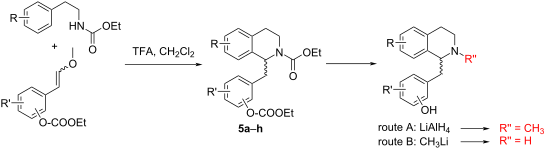
Figure 3: Two routes using N- and O-alkoxycarbonylated building blocks for the synthesis of phenolic N-methyl...
Figure 4: Structures of the building blocks A1–A4 (N-ethoxycarbonyl phenethylamines) and B1–B3 (ω-methoxystyr...
Figure 5: Biological activity. Antiproliferative effects of the 1-benzyltetrahydroisoquinoline alkaloids in A...
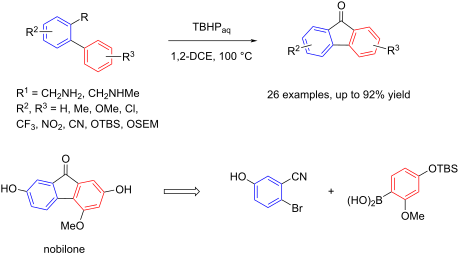
Beilstein J. Org. Chem. 2021, 17, 2668–2679, doi:10.3762/bjoc.17.181
Graphical Abstract
Scheme 1: Selected fluorenone-type natural products.
Scheme 2: Overview of published cyclization methodologies for the synthesis of fluorenones starting from func...
Scheme 3: Preliminary considerations for the oxidative cyclization of 2-(aminomethyl)biphenyls to fluorenones....
Scheme 4: Substrate scope and yields for oxidative cyclizations of N-methyl-2-(aminomethyl)biphenyls 9a–d bea...
Scheme 5: Substrate scope for the oxidative cyclization of 2-(aminomethyl)biphenyls. Conditions: a) Boc2O, NEt...
Scheme 6: Substrate scope for the oxidative cyclization of 2-(aminomethyl)biphenyls with main focus on protec...
Scheme 7: Total synthesis of nobilone (1d). Conditions: a) TBS-Cl, imidazole, DMF, 50 °C, 18 h; b) n-BuLi, B(...
Scheme 8: Proposed mechanism for the oxidative cyclization of amines 2a and 2b to fluorenone (3).
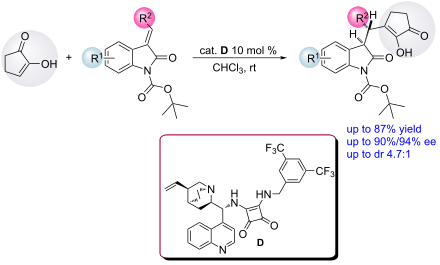
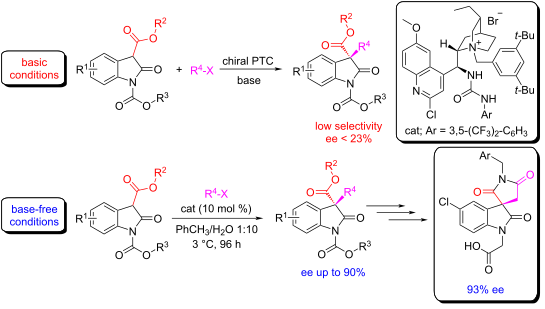
Beilstein J. Org. Chem. 2021, 17, 2287–2294, doi:10.3762/bjoc.17.146
Graphical Abstract
Figure 1: The importance of the 3,3-spirooxindole core and its access through enantioselective enolate alkyla...
Scheme 1: A) SN2 alkylation of 3-subtituted-2-oxindoles not readily functionalisable; B) Previous work: enant...
Figure 2: Substrate scope. aIsolated yield. bDetermined by CSP-HPLC. cValue in brackets refers to reaction co...
Scheme 2: Enantioselective synthesis of a CRTH2 receptor antagonist.
Beilstein J. Org. Chem. 2021, 17, 2164–2185, doi:10.3762/bjoc.17.139
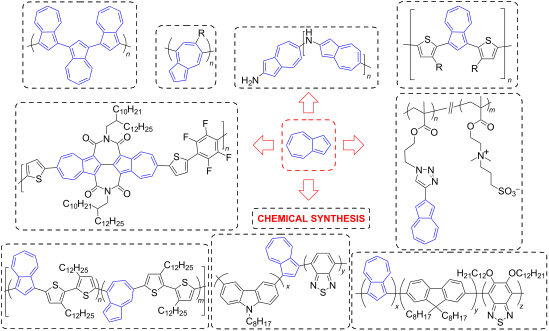
Graphical Abstract
Figure 1: Chemical structure, numbering scheme, and resonance form of azulene.
Scheme 1: Synthesis of polyazulene-iodine (PAz-I2) and polyazulene-bromine (PAz-Br2) complexes.
Scheme 2: Synthesis of ‘true polyazulene’ 3 or 3’ by cationic polymerization.
Scheme 3: Synthesis of 1,3-polyazulene 5 by Yamamoto protocol.
Scheme 4: Synthesis of 4,7-dibromo-6-(n-alkyl)azulenes 12–14.
Scheme 5: Synthesis of (A) 4,7-diethynyl-6-(n-dodecyl)azulene (16) and (B) 4,7-polyazulene 17 containing an e...
Scheme 6: Synthesis of directly connected 4,7-polyazulenes 18–20.
Scheme 7: Synthesis of (A) tert-butyl N-(6-bromoazulen-2-yl)carbamate (27), (B) dimeric aminoazulene 29, and ...
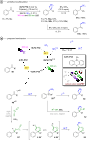
Figure 2: Iminium zwitterionic resonance forms of poly[2(6)-aminoazulene] 31.
Scheme 8: Synthesis of poly{1,3-bis[2-(3-alkylthienyl)]azulene} 33–38.
Scheme 9: Synthesis of polymer ruthenium complexes 40–43.
Scheme 10: Synthesis of 4,7-polyazulenes 45 containing a thienyl linker.
Scheme 11: Synthesis of azulene-bithiophene 48 and azulene-benzothiadiazole 52 copolymers. Conditions: (a): (i...
Scheme 12: Synthesis of azulene-benzodithiophene copolymer 54 and azulene-bithiophene copolymer 56.
Scheme 13: Synthesis of (A) 5,5’-bis(trimethylstannyl)-3,3’-didodecyl-2,2’-bithiophene (60) and (B) azulene-bi...
Scheme 14: Synthesis of 1,3-bisborylated azulene 67.
Scheme 15: Synthesis of D–A-type azulene-DPP copolymers 69, 71, and 72. Conditions: (a) Pd(PPh3)4, K2CO3, Aliq...
Scheme 16: Synthesis of the key precursor TBAzDI 79.
Scheme 17: Synthesis of TBAzDI-based polymers 81 and 83. Conditions: (a) P(o-tol)3, Pd2(dba)3, PivOH, Cs2CO3, ...
Scheme 18: Synthesis of (A) 1,3-dibromo-2-arylazulene 92–98 and (B) 2-arylazulene-thiophene copolymers 99–101.
Scheme 19: Synthesis of (A) poly[2,7-(9,9-dialkylfluorenyl)-alt-(1’,3’-azulenyl)] 106–109, (B) 1,3-bis(7-bromo...
Scheme 20: Synthesis of azulene-fluorene copolymers 117–121 containing varying ratios of 1,3- and 4,7-connecte...
Scheme 21: Synthesis of (A) 2,6-dibromoazulene (125), (B) azulene-fluorene copolymer 126, and (C) azulene-fluo...
Scheme 22: Synthesis of 2-arylazulene-fluorene copolymers 131–134.
Scheme 23: Synthesis of azulene-fluorene-benzothiadiazole terpolymers 136–138.
Scheme 24: Synthesis of azulene-carbazole-benzothiadiazole-conjugated polymers 140–144.
Scheme 25: Synthesis of (A) azulene-2-yl methacrylate (146) and (B) the triazole-containing azulene methacryla...
Scheme 26: Synthesis of (A) azulene methacrylate polymer 151 and (B) triazole-containing azulene methacrylate ...
Scheme 27: Synthesis of azulene methyl methacrylate polymers 154, 155 (A and B) and azulene-sulfobetaine metha...
Beilstein J. Org. Chem. 2021, 17, 1733–1751, doi:10.3762/bjoc.17.122
Graphical Abstract
Scheme 1: Mn-catalyzed late-stage fluorination of sclareolide (1) and complex steroid 3.
Figure 1: Proposed reaction mechanism of C–H fluorination by a manganese porphyrin catalyst.
Scheme 2: Late-stage radiofluorination of biologically active complex molecules.
Figure 2: Proposed mechanism of C–H radiofluorination.
Scheme 3: Late-stage C–H azidation of bioactive molecules. a1.5 mol % of Mn(TMP)Cl (5) was used. bMethyl acet...
Figure 3: Proposed reaction mechanism of manganese-catalyzed C–H azidation.
Scheme 4: Mn-catalyzed late-stage C–H azidation of bioactive molecules via electrophotocatalysis. a2.5 mol % ...
Figure 4: Proposed reaction mechanism of electrophotocatalytic azidation.
Scheme 5: Manganaelectro-catalyzed late-stage azidation of bioactive molecules.
Figure 5: Proposed reaction pathway of manganaelectro-catalyzed late-stage C–H azidation.
Scheme 6: Mn-catalyzed late-stage amination of bioactive molecules. a3 Å MS were used. Protonation with HBF4⋅...
Figure 6: Proposed mechanism of manganese-catalyzed C–H amination.
Scheme 7: Mn-catalyzed C–H methylation of heterocyclic scaffolds commonly found in small-molecule drugs. aDAS...
Scheme 8: Examples of late-stage C–H methylation of bioactive molecules. aDAST activation. bFor insoluble sub...
Scheme 9: A) Mn-catalyzed late-stage C–H alkynylation of peptides. B) Intramolecular late-stage alkynylative ...
Figure 7: Proposed reaction mechanism of Mn(I)-catalyzed C–H alkynylation.
Scheme 10: Late-stage Mn-catalyzed C–H allylation of peptides and bioactive motifs.
Scheme 11: Intramolecular C–H allylative cyclic peptide formation.
Scheme 12: Late-stage C–H glycosylation of tryptophan analogues.
Scheme 13: Late-stage C–H glycosylation of tryptophan-containing peptides.
Scheme 14: Late-stage C–H alkenylation of tryptophan-containing peptides.
Scheme 15: A) Late-stage C–H macrocyclization of tryptophan-containing peptides and B) traceless removal of py...
Beilstein J. Org. Chem. 2021, 17, 1641–1688, doi:10.3762/bjoc.17.116
Graphical Abstract
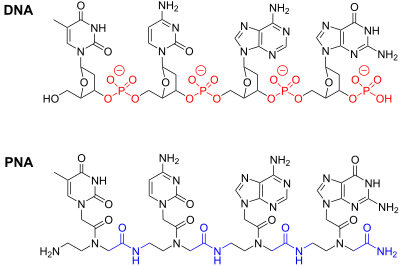
Figure 1: Structure of DNA and PNA.
Figure 2: PNA binding modes: (A) PNA–dsDNA 1:1 triplex; (B) PNA–DNA–PNA strand-invasion triplex; (C) the Hoog...
Figure 3: Structure of P-form PNA–DNA–PNA triplex from reference [41]. (A) view in the major groove and (B) view ...
Figure 4: Structures of backbone-modified PNA.
Figure 5: Structures of PNA having α- and γ-substituted backbones.
Figure 6: Structures of modified nucleobases in PNA to improve Hoogsteen hydrogen bonding to guanine and aden...
Figure 7: Proposed hydrogen bonding schemes for modified PNA nucleobases designed to recognize pyrimidines or...
Figure 8: Modified nucleobases to modulate Watson–Crick base pairing and chemically reactive crosslinking PNA...
Figure 9: Examples of triplets formed by Janus-wedge PNA nucleobases (blue). R1 denotes DNA, RNA, or PNA back...
Figure 10: Examples of fluorescent PNA nucleobases. R1 denotes DNA, RNA, or PNA backbones.
Figure 11: Endosomal entrapment and escape pathways of PNA and PNA conjugates.
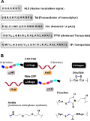
Figure 12: (A) representative cell-penetrating peptides (CPPs), (B) conjugation designs and linker chemistries....
Figure 13: Proposed delivery mode by pHLIP-PNA conjugates (A) the transmembrane section of pHLIP interacting w...
Figure 14: Structures of modified penetratin CPP conjugates with PNA linked through either disulfide (for stud...
Figure 15: Chemical structure of C9–PNA, a stable amphipathic (cyclic-peptide)–PNA conjugate.
Figure 16: Structures of PNA conjugates with a lipophilic triphenylphosphonium cation (TPP–PNA) through (A) th...
Figure 17: Structures of (A) chloesteryl–PNA, (B) cholate–PNA and (C) cholate–PNA(cholate)3.
Figure 18: Structures of PNA–GalNAc conjugates (A) (GalNAc)2K, (B) triantennary (GalNAc)3, and (C) trivalent (...
Figure 19: Vitamin B12–PNA conjugates with different linkages.
Figure 20: Structures of (A) neomycin B, (B) PNA–neamine conjugate, and (C) PNA–neosamine conjugate.
Figure 21: PNA clamp (red) binding to target DNA containing a mixture of sequences (A) PNA binds with higher a...
Figure 22: Rolling circle amplification using PNA openers (red) to invade a dsDNA target forming a P-loop. A p...
Figure 23: Molecular beacons containing generic fluorophores (Fl) and quenchers (Q) recognizing a complementar...
Figure 24: (A) Light-up fluorophores such as thiazole orange display fluorescence enhancement upon binding to ...
Figure 25: Templated fluorogenic detection of oligonucleotides using two PNAs. (A) Templated FRET depends on h...
Figure 26: Lateral flow devices use a streptavidin labeled strip on nitrocellulose paper to anchor a capture P...
Beilstein J. Org. Chem. 2021, 17, 983–990, doi:10.3762/bjoc.17.80
Graphical Abstract
Figure 1: Biologically active 2-amino-1,3-diols.
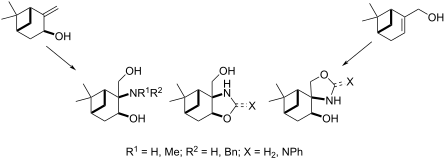
Scheme 1: Stereoselective synthesis of the pinane-fused oxazolidin-2-one 9.
Figure 2: NOESY experiments and X-ray structure elucidation of oxazolidin-2-one 9.
Scheme 2: Stereoselective synthesis of the pinane spiro-fused oxazolidin-2-one 12.
Scheme 3: Parallel synthesis of 2-amino-1,3-diols.
Scheme 4: Synthesis of N-benzyl-2-amino-1,3-diol 16.
Scheme 5: Synthesis of 2-amino-1,3-diols.
Figure 3: NOESY experiments and X-ray structure proofment of the structure of oxazolidine 17.
Scheme 6: Synthesis of 2-phenyliminooxazolidines.
Figure 4: Proposed pathway for the ring–ring tautomerism.
Beilstein J. Org. Chem. 2021, 17, 932–963, doi:10.3762/bjoc.17.77
Graphical Abstract
Scheme 1: General strategy for the synthesis of THPs.
Scheme 2: Developments towards the Prins cyclization.
Scheme 3: General stereochemical outcome of the Prins cyclization.
Scheme 4: Regioselectivity in the Prins cyclization.
Scheme 5: Mechanism of the oxonia-Cope reaction in the Prins cyclization.
Scheme 6: Cyclization of electron-deficient enantioenriched alcohol 27.
Scheme 7: Partial racemization through 2-oxonia-Cope allyl transfer.
Scheme 8: Partial racemization by reversible 2-oxonia-Cope rearrangement.
Scheme 9: Rychnovsky modification of the Prins cyclization.
Scheme 10: Synthesis of (−)-centrolobine and the C22–C26 unit of phorboxazole A.
Scheme 11: Axially selective Prins cyclization by Rychnovsky et al.
Scheme 12: Mechanism for the axially selectivity Prins cyclization.
Scheme 13: Mukaiyama aldol–Prins cyclization reaction.
Scheme 14: Application of the aldol–Prins reaction.
Scheme 15: Hart and Bennet's acid-promoted Prins cyclization.
Scheme 16: Tetrahydropyran core of polycarvernoside A as well as (−)-clavoslide A and D.
Scheme 17: Scheidt and co-workers’ route to tetrahydropyran-4-one.
Scheme 18: Mechanism for the Lewis acid-catalyzed synthesis of tetrahydropyran-4-one.
Scheme 19: Hoveyda and co-workers’ strategy for 2,6-disubstituted 4-methylenetetrahydropyran.
Scheme 20: Funk and Cossey’s ene-carbamates strategy.
Scheme 21: Yadav and Kumar’s cyclopropane strategy for THP synthesis.
Scheme 22: 2-Arylcylopropylmethanolin in centrolobine synthesis.
Scheme 23: Yadav and co-workers’ strategy for the synthesis of THP.
Scheme 24: Yadav and co-workers’ Prins–Ritter reaction sequence for 4-amidotetrahydropyran.
Scheme 25: Yadav and co-workers’ strategy to prelactones B, C, and V.
Scheme 26: Yadav and co-workers’ strategy for the synthesis of (±)-centrolobine.
Scheme 27: Loh and co-workers’ strategy for the synthesis of zampanolide and dactylolide.
Scheme 28: Loh and Chan’s strategy for THP synthesis.
Scheme 29: Prins cyclization of cyclohexanecarboxaldehyde.
Scheme 30: Prins cyclization of methyl ricinoleate (127) and benzaldehyde (88).
Scheme 31: AlCl3-catalyzed cyclization of homoallylic alcohol 129 and aldehyde 130.
Scheme 32: Martín and co-workers’ stereoselective approach for the synthesis of highly substituted tetrahydrop...
Scheme 33: Ene-IMSC strategy by Marko and Leroy for the synthesis of tetrahydropyran.
Scheme 34: Marko and Leroy’s strategy for the synthesis of tetrahydropyrans 146.
Scheme 35: Sakurai dimerization/macrolactonization reaction for the synthesis of cyanolide A.
Scheme 36: Hoye and Hu’s synthesis of (−)-dactyloide by intramolecular Sakurai cyclization.
Scheme 37: Minehan and co-workers’ strategy for the synthesis of THPs 157.
Scheme 38: Yu and co-workers’ allylic transfer strategy for the construction of tetrahydropyran 161.
Scheme 39: Reactivity enhancement in intramolecular Prins cyclization.
Scheme 40: Floreancig and co-workers’ Prins cyclization strategy to (+)-dactyloide.
Scheme 41: Panek and Huang’s DHP synthesis from crotylsilanes: a general strategy.
Scheme 42: Panek and Huang’s DHP synthesis from syn-crotylsilanes.
Scheme 43: Panek and Huang’s DHP synthesis from anti-crotylsilanes.
Scheme 44: Roush and co-workers’ [4 + 2]-annulation strategy for DHP synthesis [82].
Scheme 45: TMSOTf-promoted annulation reaction.
Scheme 46: Dobb and co-workers’ synthesis of DHP.
Scheme 47: BiBr3-promoted tandem silyl-Prins reaction by Hinkle et al.
Scheme 48: Substrate scope of Hinkle and co-workers’ strategy.
Scheme 49: Cho and co-workers’ strategy for 2,6 disubstituted 3,4-dimethylene-THP.
Scheme 50: Furman and co-workers’ THP synthesis from propargylsilane.
Scheme 51: THP synthesis from silyl enol ethers.
Scheme 52: Rychnovsky and co-workers’ strategy for THP synthesis from hydroxy-substituted silyl enol ethers.
Scheme 53: Li and co-workers’ germinal bissilyl Prins cyclization strategy to (−)-exiguolide.
Scheme 54: Xu and co-workers’ hydroiodination strategy for THP.
Scheme 55: Wang and co-workers’ strategy for tetrahydropyran synthesis.
Scheme 56: FeCl3-catalyzed synthesis of DHP from alkynylsilane alcohol.
Scheme 57: Martín, Padrón, and co-workers’ proposed mechanism of alkynylsilane Prins cyclization for the synth...
Scheme 58: Marko and co-workers’ synthesis of 2,6-anti-configured tetrahydropyran.
Scheme 59: Loh and co-workers’ strategy for 2,6-syn-tetrahydropyrans.
Scheme 60: Loh and co-workers’ strategy for anti-THP synthesis.
Scheme 61: Cha and co-workers’ strategy for trans-2,6-tetrahydropyran.
Scheme 62: Mechanism proposed by Cha et al.
Scheme 63: TiCl4-mediated cyclization to trans-THP.
Scheme 64: Feng and co-workers’ FeCl3-catalyzed Prins cyclization strategy to 4-hydroxy-substituted THP.
Scheme 65: Selectivity profile of the Prins cyclization under participation of an iron ligand.
Scheme 66: Sequential reactions involving Prins cyclization.
Scheme 67: Banerjee and co-workers’ strategy of Prins cyclization from cyclopropane carbaldehydes and propargy...
Scheme 68: Mullen and Gagné's (R)-[(tolBINAP)Pt(NC6F5)2][SbF6]2-catalyzed asymmetric Prins cyclization strateg...
Scheme 69: Yu and co-workers’ DDQ-catalyzed asymmetric Prins cyclization strategy to trisubstituted THPs.
Scheme 70: Lalli and Weghe’s chiral-Brønsted-acid- and achiral-Lewis-acid-promoted asymmetric Prins cyclizatio...
Scheme 71: List and co-workers’ iIDP Brønsted acid-promoted asymmetric Prins cyclization strategy.
Scheme 72: Zhou and co-workers’ strategy for chiral phosphoric acid (CPA)-catalyzed cascade Prins cyclization.
Scheme 73: List and co-workers’ approach for asymmetric Prins cyclization using chiral imidodiphosphoric acid ...
Beilstein J. Org. Chem. 2021, 17, 771–799, doi:10.3762/bjoc.17.67
Graphical Abstract
Scheme 1: The electron transfer process in EDA complexes.
Scheme 2: Synthesis of benzo[b]phosphorus oxide 3 initiated by an EDA complex.
Scheme 3: Mechanism of the synthesis of quinoxaline derivative 7.
Scheme 4: Synthesis of imidazole derivative 10 initiated by an EDA complex.
Scheme 5: Synthesis of sulfamoylation product 12 initiated by an EDA complex.
Scheme 6: Mechanism of the synthesis of sulfamoylation product 12.
Scheme 7: Synthesis of indole derivative 22 initiated by an EDA complex.
Scheme 8: Synthesis of perfluoroalkylated pyrimidines 26 initiated by an EDA complex.
Scheme 9: Synthesis of phenanthridine derivative 29 initiated by an EDA complex.
Scheme 10: Synthesis of cis-tetrahydroquinoline derivative 32 initiated by an EDA complex.
Scheme 11: Mechanism of the synthesis of cis-tetrahydroquinoline derivative 32.
Scheme 12: Synthesis of phenanthridine derivative 38 initiated by an EDA complex.
Scheme 13: Synthesis of spiropyrroline derivative 40 initiated by an EDA complex.
Scheme 14: Synthesis of benzothiazole derivative 43 initiated by an EDA complex.
Scheme 15: Synthesis of perfluoroalkyl-s-triazine derivative 45 initiated by an EDA complex.
Scheme 16: Synthesis of indoline derivative 47 initiated by an EDA complex.
Scheme 17: Mechanism of the synthesis of spirocyclic indoline derivative 47.
Scheme 18: Synthesis of cyclobutane product 50 initiated by an EDA complex.
Scheme 19: Mechanism of the synthesis of spirocyclic indoline derivative 50.
Scheme 20: Synthesis of 1,3-oxazolidine compound 59 initiated by an EDA complex.
Scheme 21: Synthesis of trifluoromethylated product 61 initiated by an EDA complex.
Scheme 22: Synthesis of indole alkylation product 64 initiated by an EDA complex.
Scheme 23: Synthesis of perfluoroalkylation product 67 initiated by an EDA complex.
Scheme 24: Synthesis of hydrotrifluoromethylated product 70 initiated by an EDA complex.
Scheme 25: Synthesis of β-trifluoromethylated alkyne product 71 initiated by an EDA complex.
Scheme 26: Mechanism of the synthesis of 2-phenylthiophene derivative 74.
Scheme 27: Synthesis of allylated product 80 initiated by an EDA complex.
Scheme 28: Synthesis of trifluoromethyl-substituted alkynyl product 84 initiated by an EDA complex.
Scheme 29: Synthesis of dearomatized fluoroalkylation product 86 initiated by an EDA complex.
Scheme 30: Mechanism of the synthesis of dearomatized fluoroalkylation product 86.
Scheme 31: Synthesis of C(sp3)–H allylation product 91 initiated by an EDA complex.
Scheme 32: Synthesis of perfluoroalkylation product 93 initiated by an EDA complex.
Scheme 33: Synthesis of spirocyclic indolene derivative 95 initiated by an EDA complex.
Scheme 34: Synthesis of perfluoroalkylation product 97 initiated by an EDA complex.
Scheme 35: Synthesis of alkylated indole derivative 100 initiated by an EDA complex.
Scheme 36: Mechanism of the synthesis of alkylated indole derivative 100.
Scheme 37: Synthesis of arylated oxidized indole derivative 108 initiated by an EDA complex.
Scheme 38: Synthesis of 4-ketoaldehyde derivative 111 initiated by an EDA complex.
Scheme 39: Mechanism of the synthesis of 4-ketoaldehyde derivative 111.
Scheme 40: Synthesis of perfluoroalkylated olefin 118 initiated by an EDA complex.
Scheme 41: Synthesis of alkylation product 121 initiated by an EDA complex.
Scheme 42: Synthesis of acylation product 123 initiated by an EDA complex.
Scheme 43: Mechanism of the synthesis of acylation product 123.
Scheme 44: Synthesis of trifluoromethylation product 126 initiated by an EDA complex.
Scheme 45: Synthesis of unnatural α-amino acid 129 initiated by an EDA complex.
Scheme 46: Synthesis of thioether derivative 132 initiated by an EDA complex.
Scheme 47: Synthesis of S-aryl dithiocarbamate product 135 initiated by an EDA complex.
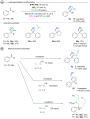
Scheme 48: Mechanism of the synthesis of S-aryl dithiocarbamate product 135.
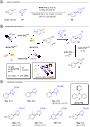
Scheme 49: Synthesis of thioether product 141 initiated by an EDA complex.
Scheme 50: Mechanism of the synthesis of borate product 144.
Scheme 51: Synthesis of boronation product 148 initiated by an EDA complex.
Scheme 52: Synthesis of boration product 151 initiated by an EDA complex.
Scheme 53: Synthesis of boronic acid ester derivative 154 initiated by an EDA complex.
Scheme 54: Synthesis of β-azide product 157 initiated by an EDA complex.
Scheme 55: Decarboxylation reaction initiated by an EDA complex.
Scheme 56: Synthesis of amidated product 162 initiated by an EDA complex.
Scheme 57: Synthesis of diethyl phenylphosphonate 165 initiated by an EDA complex.
Scheme 58: Mechanism of the synthesis of diethyl phenylphosphonate derivative 165.
Scheme 59: Synthesis of (Z)-2-iodovinyl phenyl ether 168 initiated by an EDA complex.
Scheme 60: Mechanism of the synthesis of (Z)-2-iodovinyl phenyl ether derivative 168.
Scheme 61: Dehalogenation reaction initiated by an EDA complex.
Beilstein J. Org. Chem. 2021, 17, 461–484, doi:10.3762/bjoc.17.41
Graphical Abstract
Figure 1: Phosphonopeptides, phosphonodepsipeptides, peptides, and depsipeptides.
Figure 2: The diverse strategies for phosphonodepsipeptide synthesis.
Scheme 1: Synthesis of α-phosphonodepsidipeptides as inhibitors of leucine aminopeptidase.
Figure 3: Structure of 2-hydroxy-2-oxo-3-[(phenoxyacetyl)amino]-1,2-oxaphosphorinane-6-carboxylic acid (16).
Scheme 2: Synthesis of α-phosphonodepsidipeptide 17 as coupling partner for cyclen-containing phosphonodepsip...
Scheme 3: Synthesis of α-phosphonodepsidipeptides containing enantiopure hydroxy ester as VanX inhibitors.
Scheme 4: Synthesis of α-phosphonodepsidipeptides as VanX inhibitors.
Scheme 5: Synthesis of optically active α-phosphonodepsidipeptides as VanX inhibitors.
Scheme 6: The synthesis of phosphonodepsipeptides through a thionyl chloride-catalyzed esterification of N-Cb...
Scheme 7: Synthesis of α-phosphinodipeptidamide as a hapten.
Scheme 8: Synthesis of α-phosphonodepsioctapeptide 41.
Scheme 9: Synthesis of phosphonodepsipeptides via an in situ-generated phosphonochloridate.
Scheme 10: Synthesis of α-phosphonodepsitetrapeptides 58 as inhibitors of the aspartic peptidase pepsin.
Scheme 11: Synthesis of a β-phosphonodepsidipeptide library 64.
Scheme 12: Synthesis of another β-phosphonodepsidipeptide library.
Scheme 13: Synthesis of γ-phosphonodepsidipeptides.
Scheme 14: Synthesis of phosphonodepsipeptides 85 as folylpolyglutamate synthetase inhibitors.
Scheme 15: Synthesis of the γ-phosphonodepsitripeptide 95 as an inhibitor of γ-gutamyl transpeptidase.
Scheme 16: Synthesis of phosphonodepsipeptides as inhibitors and probes of γ-glutamyl transpeptidase.
Scheme 17: Synthesis of phosphonyl depsipeptides 108 via DCC-mediated condensation and oxidation.
Scheme 18: Synthesis of phosphonodepsipeptides 111 with BOP and PyBOP as coupling reagents.
Scheme 19: Synthesis of optically active phosphonodepsipeptides with BOP and PyBOP as coupling reagents.
Scheme 20: Synthesis of phosphonodepsipeptides with BroP and TPyCIU as coupling reagents.
Scheme 21: Synthesis of a phosphonodepsipeptide hapten with BOP as coupling reagent.
Scheme 22: Synthesis of phosphonodepsitripeptide with BOP as coupling reagent.
Scheme 23: Synthesis of norleucine-derived phosphonodepsipeptides 135 and 138.
Scheme 24: Synthesis of norleucine-derived phosphonodepsipeptides 141 and 144.
Scheme 25: Solid-phase synthesis of phosphonodepsipeptides.
Scheme 26: Synthesis of phosphonodepsidipeptides via the Mitsunobu reaction.
Scheme 27: Synthesis of γ-phosphonodepsipeptide via the Mitsunobu reaction.
Scheme 28: Synthesis of phosphonodepsipeptides via a multicomponent condensation reaction.
Scheme 29: Synthesis of phosphonodepsipeptides with a functionalized side-chain via a multicomponent condensat...
Scheme 30: High yielding synthesis of phosphonodepsipeptides via a multicomponent condensation.
Scheme 31: Synthesis of optically active phosphonodepsipeptides via a multicomponent condensation reaction.
Scheme 32: Synthesis of N-phosphoryl phosphonodepsipeptides.
Scheme 33: Synthesis of phosphonodepsipeptides via the alkylation of phosphonic monoesters.
Scheme 34: Synthesis of phosphonodepsipeptides as inhibitors of aspartic protease penicillopepsin.
Scheme 35: Synthesis of phosphonodepsipeptides as prodrugs.
Scheme 36: Synthesis of phosphonodepsithioxopeptides 198.
Scheme 37: Synthesis of phosphonodepsipeptides.
Scheme 38: Synthesis of phosphonodepsipeptides with C-1-hydroxyalkylphosphonic acid.
Scheme 39: Synthesis of phosphonodepsipeptides with C-1-hydroxyalkylphosphonate via the rhodium-catalyzed carb...
Scheme 40: Synthesis of phosphonodepsipeptides with a C-1-hydroxyalkylphosphonate motif via a copper-catalyzed...