


Search results
Search for "carboxylates" in Full Text gives 165 result(s) in Beilstein Journal of Organic Chemistry.
Computational model predicts protein binding sites of a luminescent ligand equipped with guanidiniocarbonyl-pyrrole groups
Beilstein J. Org. Chem. 2022, 18, 1322–1331, doi:10.3762/bjoc.18.137
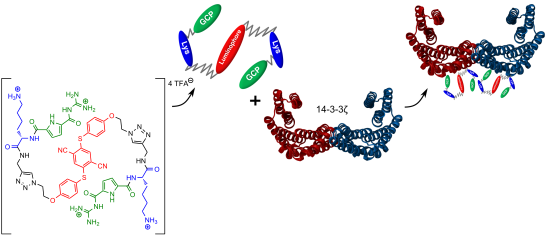
- to efficiently bind to oxo-anions such as carboxylates [10]. These compounds were already used to specifically address carboxylates on the surface of proteins. Many artificial receptors based on guanidinium scaffolds use hydrogen bonding, charge pairing, and hydrophobic interactions to complex oxo




Derivatives of benzo-1,4-thiazine-3-carboxylic acid and the corresponding amino acid conjugates
Beilstein J. Org. Chem. 2022, 18, 1195–1202, doi:10.3762/bjoc.18.124
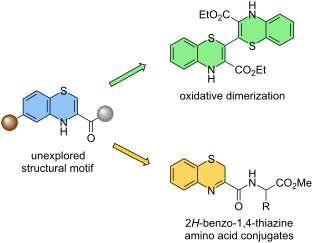
- -3(4H)-ones were also prepared by cyclization of 1,2-diaryldisulfanes with dialkyl but-2-ynedioates [24][25]. N-Substituted benzo-1,4-thiazine-2-carboxylates 4 (Figure 1) were prepared by m-CPBA-mediated oxidative ring expansion of substituted benzothiazoles [26], or via copper-catalyzed
Electrogenerated base-promoted cyclopropanation using alkyl 2-chloroacetates
Beilstein J. Org. Chem. 2022, 18, 1116–1122, doi:10.3762/bjoc.18.114
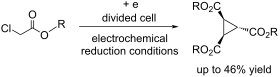
- seems to be the trialkyl propane-1,2,3-carboxylates [32], because the HRMS analyses of the isolated compounds, such as 6 (Table 3, entry 2), 10 (Table 3, entry 5), and 12 (Table 3, entry 6), which were not of high purity, showed the existence of the corresponding trialkyl propane-1,2,3-carboxylates


An isoxazole strategy for the synthesis of 4-oxo-1,4-dihydropyridine-3-carboxylates
Beilstein J. Org. Chem. 2022, 18, 738–745, doi:10.3762/bjoc.18.74
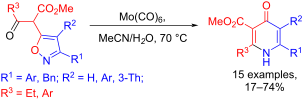
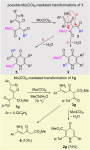
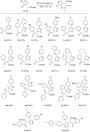
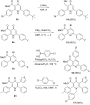
- -aryl-, 2-aryl-6-aryl and 2,6-diaryl-5-aryl/hetaryl-substituted methyl 4-oxo-1,4-dihydropyridine-3-carboxylates by Mo(CO)6-mediated ring expansion of methyl 2-(isoxazol-5-yl)-3-oxopropanoates. The high reactivity of 4-oxo-1,4-dihydropyridine-3-carboxylates synthesized provide easy access to 2,4,6
- , contain the fragment of 4-oxo-1,4-dihydropyridine-3-carboxamide [5][6][7]. Finding new synthetic methods for the preparation of derivatives of 4-oxo-1,4-dihydropyridine-3-carboxylic acid are therefore relevant. Some alkyl 6-aryl-2-methyl-4-oxo-1,4-dihydropyridine-3-carboxylates were prepared by refluxing
- rearrangement of methyl 2-(isoxazol-5-yl)-3-oxopropanoates 1. High yield transformations of compound 2 provide easy access to 2,4,6-triaryl-substituted and 1,2,5,6-tetrasubstituted nicotinates. Approaches to the synthesis of alkyl 4-oxo-1,4-dihydropyridine-3-carboxylates. Synthesis of 4-oxo-1,4-dihydropyridine




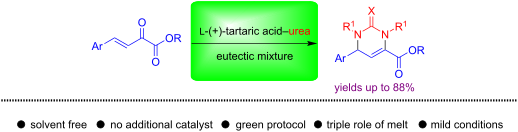
Synthesis of 5-unsubstituted dihydropyrimidinone-4-carboxylates from deep eutectic mixtures
Beilstein J. Org. Chem. 2022, 18, 331–336, doi:10.3762/bjoc.18.37


Regioselective synthesis of methyl 5-(N-Boc-cycloaminyl)-1,2-oxazole-4-carboxylates as new amino acid-like building blocks
Beilstein J. Org. Chem. 2022, 18, 102–109, doi:10.3762/bjoc.18.11
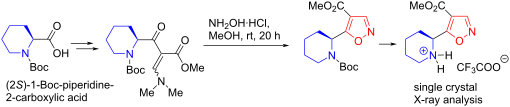
- blocks was developed. Regioisomeric methyl 5-(N-Boc-cycloaminyl)-1,2-oxazole-4-carboxylates were prepared by the reaction of β-enamino ketoesters (including azetidine, pyrrolidine or piperidine enamines) with hydroxylamine hydrochloride. Unambiguous structural assignments were based on chiral HPLC
- -oxazoles [34][35]. This study aimed to develop and synthesize methyl 5-(cycloaminyl)-1,2-oxazole-4-carboxylates, as new amino acid-like building blocks. This type of functionalized heterocycles could exhibit not only useful biological properties, but also find application as building blocks for the
- signals C-3 (1JC3-N2 = 4.55 Hz), C-4 (2JC4-N2 = 1.30 Hz), and C-5 (2JC5-N2 = 1.96 Hz), which unambiguously indicates the presence of a 1,2-oxazole ring in the target compound. Also, chiral methyl 5-(N-Boc-cycloaminyl)-1,2-oxazole-4-carboxylates 4b–g were obtained from β-enamino ketoesters 3b–g with


Silica gel and microwave-promoted synthesis of dihydropyrrolizines and tetrahydroindolizines from enaminones
Beilstein J. Org. Chem. 2021, 17, 2543–2552, doi:10.3762/bjoc.17.170
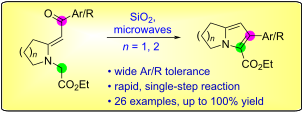
- , underwent cyclization in the presence of silica gel to give ethyl 6-(hetero)aryl-2,3-dihydro-1H-pyrrolizine-5-carboxylates within minutes upon microwave heating in xylene at 150 °C. Instead of functioning as a nucleophile, the enaminone acted as an electrophile at its carbonyl group during the cyclization
- . Yields of the bicyclic products were generally above 75%. The analogous microwave-assisted reaction to produce ethyl 2-aryl-5,6,7,8-tetrahydroindolizine-3-carboxylates from (E)-ethyl 2-[2-(2-oxo-2-arylethylidene)piperidin-1-yl]acetates failed in nonpolar solvents, but occurred in ethanol at lower
- , was reported as recently as 2018 [55]. More interestingly, conventional heating in acetic acid of an enaminone bearing a phenacylsulfanyl substituent adjacent to nitrogen on the C=C bond produced ethyl pyrrolo[2,1-b]thiazole-5-carboxylates in moderate yield, while the corresponding microwave-assisted




Visible-light-mediated copper photocatalysis for organic syntheses
Beilstein J. Org. Chem. 2021, 17, 2520–2542, doi:10.3762/bjoc.17.169
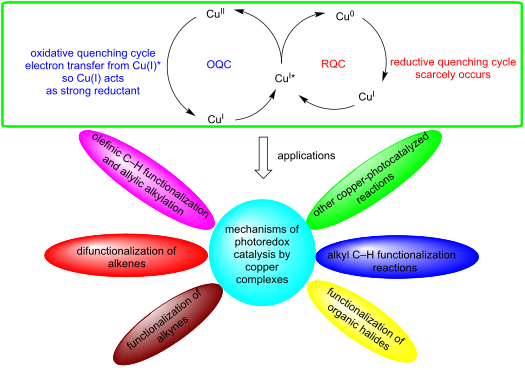
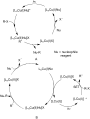
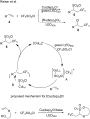
- )–O cross-coupling using oxime esters and phenols 76 (Scheme 30). In 2020, Loh and co-workers [104] reported the copper-catalyzed highly site-selective alkylation of heteroarene N-oxides in the presence of hypervalent iodineIII carboxylates. As an alkylating agent, the hypervalent iodineIII
- carboxylates were reduced by active copperI complexes and produced an alkyl radical, which was then captured by a copperIII active species. Finally, after reductive elimination, the target products were obtained (Scheme 31). Conclusion This review highlighted the special features and applications of






Facile and innovative catalytic protocol for intramolecular Friedel–Crafts cyclization of Morita–Baylis–Hillman adducts: Synergistic combination of chiral (salen)chromium(III)/BF3·OEt2 catalysis
Beilstein J. Org. Chem. 2021, 17, 2186–2193, doi:10.3762/bjoc.17.140
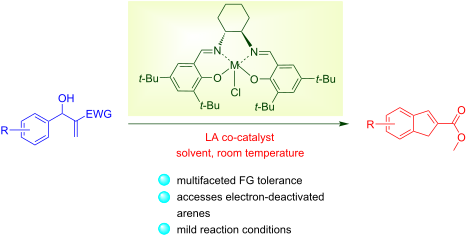
- -carboxylates [9], indenes [10][11][12][13] and indanones [14]. However, most of the reported Friedel–Crafts reactions utilize either strong Lewis acid catalysts or severe reaction conditions resulting in low yield, unwanted byproducts and tedious workup methodologies [15][16]. Therefore, developing an


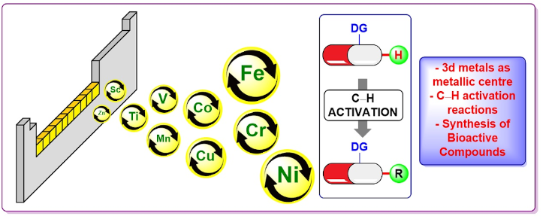
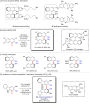
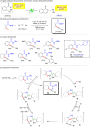
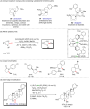
On the application of 3d metals for C–H activation toward bioactive compounds: The key step for the synthesis of silver bullets
Beilstein J. Org. Chem. 2021, 17, 1849–1938, doi:10.3762/bjoc.17.126







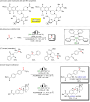


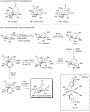


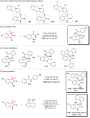
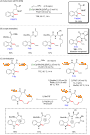
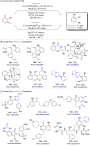
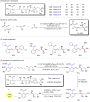

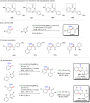

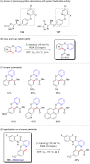
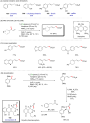



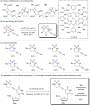


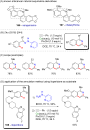
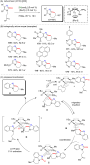


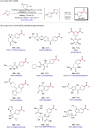
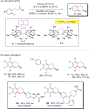

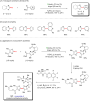
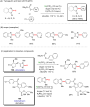
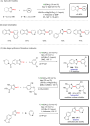
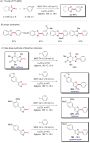


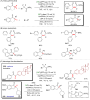


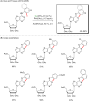

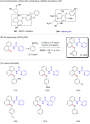

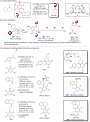

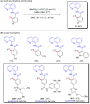
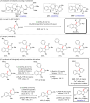
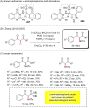
Chemical synthesis of C6-tetrazole ᴅ-mannose building blocks and access to a bioisostere of mannuronic acid 1-phosphate
Beilstein J. Org. Chem. 2021, 17, 1527–1532, doi:10.3762/bjoc.17.110
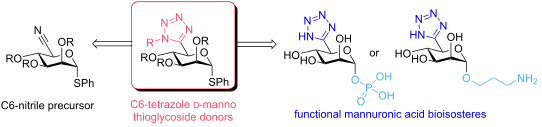
- properties from the charged carboxylate groups within its polyuronic acid backbone. The design and inclusion of isosteric replacements for these carboxylates would underpin provision of new oligo-/polysaccharide materials with alternate physicochemical properties. Presented herein is our synthesis of


Recent advances in palladium-catalysed asymmetric 1,4–additions of arylboronic acids to conjugated enones and chromones
Beilstein J. Org. Chem. 2021, 17, 1048–1085, doi:10.3762/bjoc.17.84
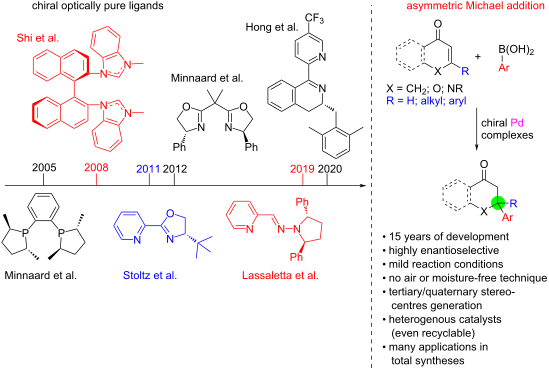
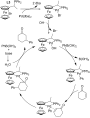
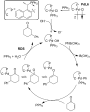
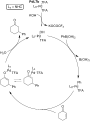
- -dihydropyridine-1(2H)-carboxylates were excellent in terms of both conversion (72–96%) and enantioselectivities (87–99% ee; Table 15) [45]. In addition, the authors proposed a catalytic cycle for this reaction (Scheme 9). In 2013, the most recent NHC-Pd based system has been developed by Mullick et al. who used
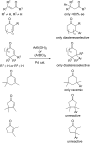
- [44][45]. Addition reaction of arylboronic acids to different enones catalysed by Pd-NHC complexes PdL7a–c [44][45]. Addition reaction of arylboronic acids to various 4-oxo-3,4-dihydropyridine-1(2H)-carboxylates catalysed by Pd-NHC complexes PdL7a–c [45]. Addition reactions of boronic acids to five





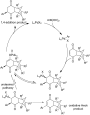


Synthesis of trifluoromethyl ketones by nucleophilic trifluoromethylation of esters under a fluoroform/KHMDS/triglyme system
Beilstein J. Org. Chem. 2021, 17, 431–438, doi:10.3762/bjoc.17.39
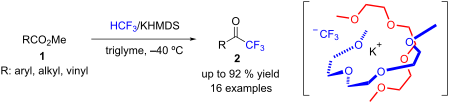
- necessary, and the resistance of the reaction was also verified from various pharmacophores to be acceptable. Conclusion In conclusion, the trifluoromethylation of methyl carboxylates to trifluoromethyl ketones is accomplished under basic conditions with fluoroform in triglyme at −40 °C. An equivalent


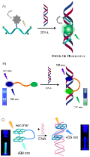
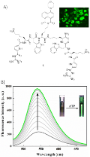
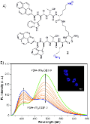
Selected peptide-based fluorescent probes for biological applications
Beilstein J. Org. Chem. 2020, 16, 2971–2982, doi:10.3762/bjoc.16.247

- serum albumin. Other biomolecules such as adenosine, adenosine monophosphate, adenosine triphosphate, phosphate, pyrophosphate, glucose, heparin, hyaluronic acid and chondroitin sulfate, and amino acids containing two carboxylates (glutamic acid and aspartic acid) have not increased the fluorescence



UV resonance Raman spectroscopy of the supramolecular ligand guanidiniocarbonyl indole (GCI) with 244 nm laser excitation
Beilstein J. Org. Chem. 2020, 16, 2911–2919, doi:10.3762/bjoc.16.240
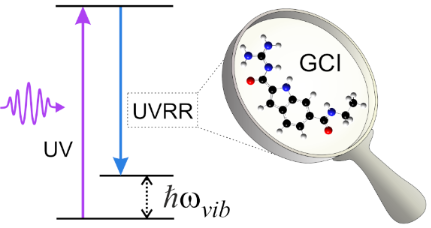
- autofluorescence of the peptide or protein. Here, we demonstrate the use of UVRR spectroscopy with 244 nm laser excitation for the characterization of GCP as well as guanidiniocarbonyl indole (GCI), a next generation supramolecular ligand for the recognition of carboxylates. For demonstrating the feasibility of
- (CBS) [6][7][8][9]. The GCP takes part selectively and efficiently in the complexation of carboxylates based on the electrostatic interaction between the positively charged CBS and the negatively charged carboxylate in the combination with hydrogen bonding, enabling molecular recognition even in the
- presence of polar solvents like water. This makes GCPs promising binding partners for acidic residues such as carboxylates at the C-terminus of peptides and proteins. The intermolecular interactions upon recognition induce subtle changes in the molecular properties such as the electronic structure and bond


NMR Spectroscopy of supramolecular chemistry on protein surfaces
Beilstein J. Org. Chem. 2020, 16, 2505–2522, doi:10.3762/bjoc.16.203
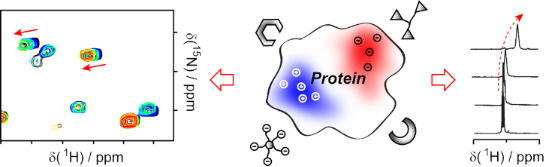
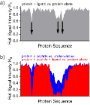
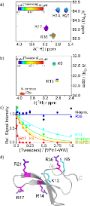
- ). However, this requires knowledge of the chemical shifts and relaxation rates for both, the free and bound components in pure form, which are challenging to obtain for complexes with only moderate affinity. For example, the binding of a single GCP unit to the carboxylates of different N-acetylated amino



Palladium nanoparticles supported on chitin-based nanomaterials as heterogeneous catalysts for the Heck coupling reaction
Beilstein J. Org. Chem. 2020, 16, 2477–2483, doi:10.3762/bjoc.16.201
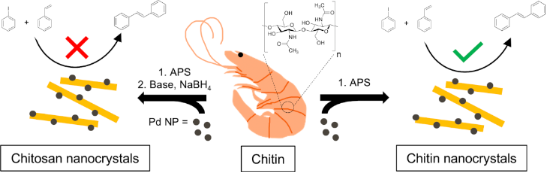
- ], environmental remediation [5], and catalysis [6]. With their high solubility and presence of functionalities such as hydroxy groups, sulfate half-esters, and carboxylates, CNCs are able to stabilize highly disperse metal nanoparticles (NPs), which can act as heterogeneous catalysts for a wide array of organic
- resistance to reduction was surprising and in contradiction to what we observed with deposition onto CNC of Pd in the presence of H2 [7], or Ag alone [20]. The striking difference between CNC on one hand and ChNC/ChsNC on the other is the presence of carboxylates on the latter. Carboxylates are expected to


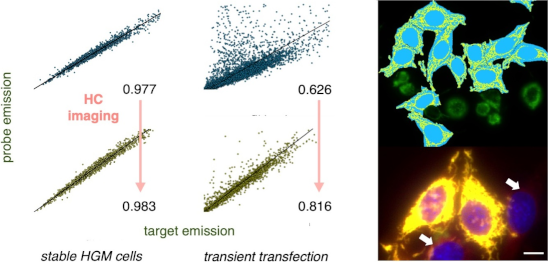
Automated high-content imaging for cellular uptake, from the Schmuck cation to the latest cyclic oligochalcogenides
Beilstein J. Org. Chem. 2020, 16, 2007–2016, doi:10.3762/bjoc.16.167
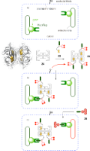
- as carboxylate (Figure 1, red part). Finally, the selectivity and specificity for different substrates can be achieved through the additional secondary interactions between the GCP side chain and the anionic substrates (Figure 1, green part). The binding of the Schmuck cation with carboxylates in
- aqueous solvents was evaluated by a series of experimental studies, such as NMR, UV, CD, and fluorescence titrations [23][25]. The Schmuck cation indeed showed a much higher affinity towards carboxylates, with dissociation constants of KD ≈ 1 mM (4: 620 µM; 5: 1.3 mM) compared to simple acylguanidinium




Design, synthesis and application of carbazole macrocycles in anion sensors
Beilstein J. Org. Chem. 2020, 16, 1901–1914, doi:10.3762/bjoc.16.157
- silico ionophore design to functional sensor characterization. The biscarbazolylurea moiety was used to synthesize methylene-bridged macrocycles of different ring size aiming to fine tune selectivity towards different carboxylates. Cyclization was achieved with two separate strategies, using either amide
- synthesis to access up to –[CH2]10– macrocycles or acyl halides to access up to –[CH2]14– macrocycles. Seventy-five receptor–anion complexes were modelled and studied with COSMO-RS, in addition to all free host molecules. In order to predict initial selectivity towards carboxylates, 1H NMR relative
- sensor development, the results obtained in this work emphasize the importance of evaluating the binding behavior of receptors in real sensor membranes. Keywords: anion sensors; carboxylates; ionophores; macrocycles; sensor prototype; Introduction In 2013, Otto S. Wolfbeis asked the supramolecular




Polarity effects in 4-fluoro- and 4-(trifluoromethyl)prolines
Beilstein J. Org. Chem. 2020, 16, 1837–1852, doi:10.3762/bjoc.16.151
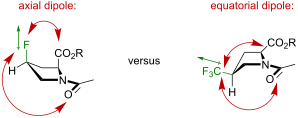
- isomerism were examined for diastereomeric 4-fluoroprolines, 4-(trifluoromethyl)prolines, and 1,1-difluoro-5-azaspiro[2.4]heptane-6-carboxylates. The preferred conformation on the proline ring originated from a preferential axial positioning for a single fluorine atom, and an equatorial positioning for a


Microwave-assisted efficient one-pot synthesis of N2-(tetrazol-5-yl)-6-aryl/heteroaryl-5,6-dihydro-1,3,5-triazine-2,4-diamines
Beilstein J. Org. Chem. 2020, 16, 1706–1712, doi:10.3762/bjoc.16.142
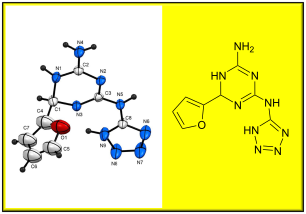
- required temperature control and showed dependence on the amine nucleophile reactivity [27]. Another route involved the reaction of substituted biguanidines with acetic anhydrides, chlorides or carboxylates [11][28][29][30][31]. Liu et al. [32] reported a one-pot synthesis of N2,6-disubstituted-1,3,5


Photocatalyzed syntheses of phenanthrenes and their aza-analogues. A review
Beilstein J. Org. Chem. 2020, 16, 1476–1488, doi:10.3762/bjoc.16.123
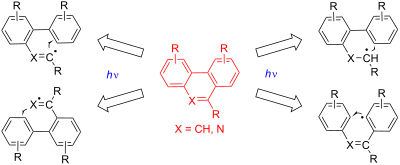
- exploited for the construction of phenanthridine 6-carboxylates (Scheme 12). Notably, the process occurred in water under metal-free conditions in the presence of rose bengal (5 mol %) and made use of molecular oxygen as the terminal oxidant. Thus, N-biarylglycine esters 12.1a–d promoted the reductive
- quenching of the excited photocatalyst, in turn triggering the formation of radicals 12.2·a–d. These smoothly underwent radical cyclization to give the corresponding methyl 5,6-dihydrophenanthridine-6-carboxylates and then the desired phenanthridine 6-carboxylates 12.3a–d in good yields. Noteworthy, the
- the synthesis of 6-(trifluoromethyl)phenanthridines 10.3a–e. Synthesis of phenanthridines via aryl–aryl-bond formation. Oxidative conversion of N-biarylglycine esters to phenanthridine-6-carboxylates. Photocatalytic synthesis of benzo[f]quinolines from 2-heteroaryl-substituted anilines and


Recent synthesis of thietanes
Beilstein J. Org. Chem. 2020, 16, 1357–1410, doi:10.3762/bjoc.16.116
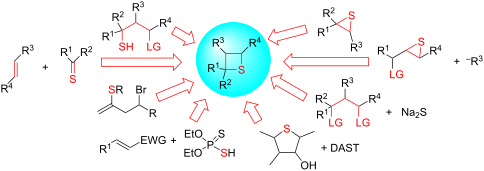
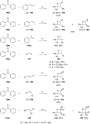
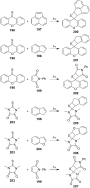
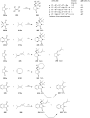
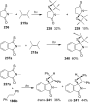
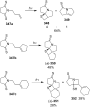
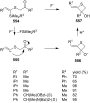
- ] (Scheme 54). They further investigated the photochemical [2 + 2] cycloadditions of alkyl and aryl 2-thioxo-3H-benzoxazole-3-carboxylates 302 and alkenes 215a,b, 251a, and 227, affording the corresponding spirobenzoxazole-thietane derivatives 303 [81][82][83][84] (Scheme 55). Upon the irradiation of
- chloromethylthiirane (epithiochlorohydrin, 398a), with hard and weak nucleophiles [105][106][107][108][109], including phenoxides [105], carboxylates and dicarboxylates [106][107], potassium cyanide, sodium azide, hydroxylamine, trifluoromethanesulfonamide, and pyridine [108]. However, the method could only applied to














Synthesis of 3-substituted isoxazolidin-4-ols using hydroboration–oxidation reactions of 4,5-unsubstituted 2,3-dihydroisoxazoles
Beilstein J. Org. Chem. 2020, 16, 1313–1319, doi:10.3762/bjoc.16.112
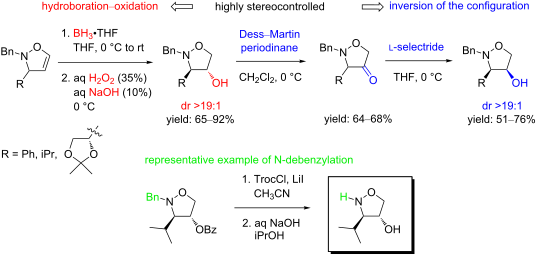
- showed the applicability of the reductive cleavage of anomeric isoxazolidinyl carboxylates in the synthesis of the respective 5-unsubstituted 4-hydroxyisoxazolidines, this pioneering approach mainly suffered from a large number of synthetic steps starting from 2,3-dihydroisoxazoles, leading to the target


Ferrocenyl-substituted tetrahydrothiophenes via formal [3 + 2]-cycloaddition reactions of ferrocenyl thioketones with donor–acceptor cyclopropanes
Beilstein J. Org. Chem. 2020, 16, 1288–1295, doi:10.3762/bjoc.16.109
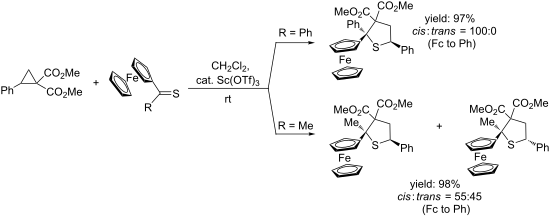
- the five-membered ring occurred regioselectively and the expected tetrahydrothiophene-3,3-carboxylates were the products. The studied reactions displayed an interesting stereoselectivity and, in the case of 2,5-diaryl-substituted products 9, both aryl groups were exclusively located at the opposite





