Search results
Search for "crown ethers" in Full Text gives 60 result(s) in Beilstein Journal of Organic Chemistry.
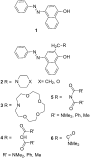
Tautomerism as primary signaling mechanism in metal sensing: the case of amide group
Beilstein J. Org. Chem. 2019, 15, 1898–1906, doi:10.3762/bjoc.15.185
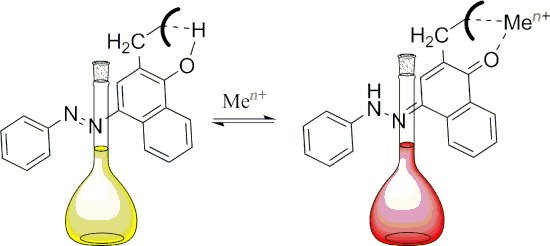
- alkali metal determination is still a challenge. In the case of alkaline earth metal ions, the reagents with reasonable selectivity are still not commonly accepted since they compete with transitional metal ions [4]. The discovery of crown ethers [5] and 3D-based ligands [6] unquestionably helped the





Novel macrocycles – and old ones doing new tricks
Beilstein J. Org. Chem. 2019, 15, 1838–1839, doi:10.3762/bjoc.15.178
- 10.3762/bjoc.15.178 Keywords: macrocycles; supramolecular chemistry; Macrocycles [1] are the workhorses in supramolecular chemistry. Many basic supramolecular concepts have been developed through studying crown ethers, cryptands, podands and spherands in the 1970s and 1980s. For these contributions
Host–guest interactions between p-sulfonatocalix[4]arene and p-sulfonatothiacalix[4]arene and group IA, IIA and f-block metal cations: a DFT/SMD study
Beilstein J. Org. Chem. 2019, 15, 1321–1330, doi:10.3762/bjoc.15.131
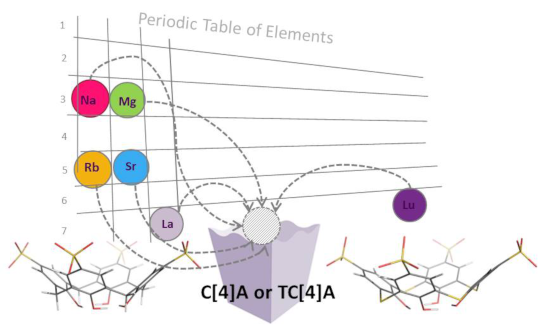
- the well-studied cyclodextrins and crown ethers. Calixarenes are products of phenol–aldehyde condensation, as the aromatic components may derived from phenol, resorcinol, or pyrogallol; the aldehyde most often used for phenol is simple formaldehyde (methanal, HCHO), while larger aldehydes (e.g





Self-assembly behaviors of perylene- and naphthalene-crown macrocycle conjugates in aqueous medium
Beilstein J. Org. Chem. 2019, 15, 1203–1209, doi:10.3762/bjoc.15.117
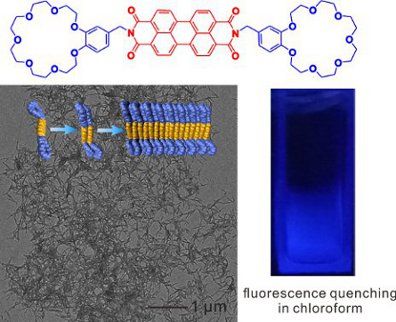
- macrocyclic hosts, crown ethers, have been widely used as building blocks for supramolecular assemblies in the past two decades [37][38][39][40][41][42][43][44][45][46][47][48][49][50][51][52][53], mainly in the fabrication of crown ether-based threaded or interlocked assemblies in organic solvents [54
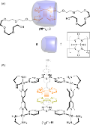
- water-soluble crown macrocycle 3 was synthesized according to reported protocols, by using potassium cations as template [86][87]. The primary amine group in 3 offers diverse reaction pathways to design crown ethers appended LMW gelators, dendrimers and polymers [88][89][90][91][92]. In order to


Precious metal-free molecular machines for solar thermal energy storage
Beilstein J. Org. Chem. 2019, 15, 1096–1106, doi:10.3762/bjoc.15.106
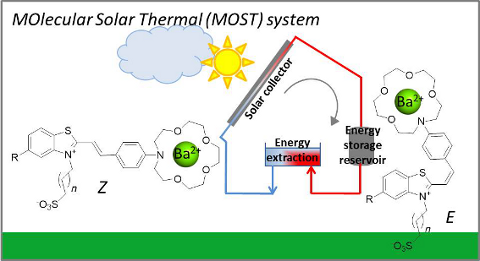
- , their structures predispose to an easy functionalization and low cost synthesis. Another advantage of these dyes is the very low molar absorptivity [16][17] of the higher energy cis isomer, which is a prerequisite for its photostability. The cis isomers of styryl dyes linked to crown ethers have been
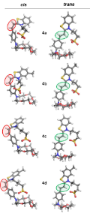
- . This finding is a resemblance to the results from reference [24] where the 5-methoxy-substituted benzothiazole styryl-crown ethers demonstrated higher quantum yields of trans-to-cis photoisomerization. Insight from electronic structure calculations To rationalize the experimental findings, we performed




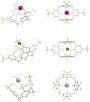
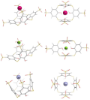
Design, synthesis and spectroscopic properties of crown ether-capped dibenzotetraaza[14]annulenes
Beilstein J. Org. Chem. 2019, 15, 617–622, doi:10.3762/bjoc.15.57
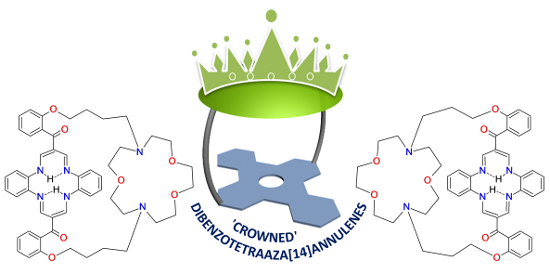
- much better understanding of complex biological systems [1]. Since the serendipitous discovery of crown ethers by Charles Pedersen in 1967 [2], there have been significant advances in the design and synthesis of sophisticated multidentate macrocycles with mixed-donor sites [3] and high selectivity


LCST phase behavior of benzo-21-crown-7 with different alkyl chains
Beilstein J. Org. Chem. 2019, 15, 437–444, doi:10.3762/bjoc.15.38
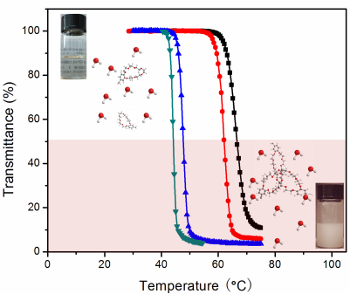
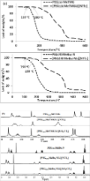
- .15.38 Abstract The introduction of hydrophobic units into crown ethers can dramatically decrease the critical transition temperature of LCST and realize macroscopic phase separation at low to moderate temperature and concentration. Minor modifications in the chemical structure of crown ethers (benzo-21
- -crown-7, B21C7s) can effectively control the thermo-responsive properties. Keywords: crown ethers; hydrophobic units; lower critical solution temperature; LCST; thermo-responsiveness; supramolecular chemistry; Introduction The introduction of stimuli-responsiveness into artificial materials is vital
- (>50 °C) are necessary to realize LCST phase separation, which significantly restricts an application in functional materials. In order to achieve LCST behavior of crown ethers at moderate concentrations and temperatures, two methods would be applied: combining multiple B21C7 units into a single


Tetrathiafulvalene – a redox-switchable building block to control motion in mechanically interlocked molecules
Beilstein J. Org. Chem. 2018, 14, 2163–2185, doi:10.3762/bjoc.14.190
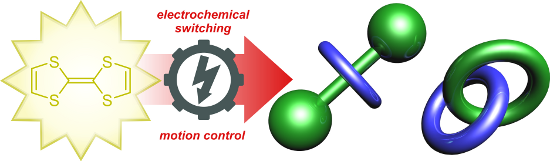
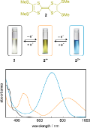
- the [3]rotaxane 23 which bears two cofacially oriented TTF crown ethers on a divalent ammonium axle. The distance between the wheels is convenient for TTF-dimer interactions. In the non-switched neutral state of both TTFs, the wheels adopt a syn co-conformation caused by weak non-covalent interactions









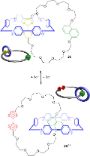


A pyridinium/anilinium [2]catenane that operates as an acid–base driven optical switch
Beilstein J. Org. Chem. 2018, 14, 1908–1916, doi:10.3762/bjoc.14.165
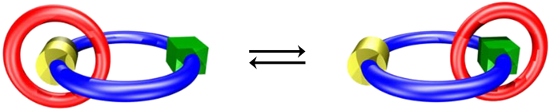
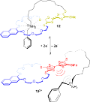
- (Figure 2) was synthesized using a one-step, self-assembly procedure from two bis(pyridinium)ethane axles, two terphenyl spacers and two DB24C8 crown ethers, a [2]catenane with different recognition sites requires a stepwise approach involving the incorporation of each recognition site independently


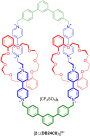

![[Graphic 3]](/bjoc/content/inline/1860-5397-14-165-i4.svg?max-width=637&scale=0.827274) DB24C8]6+ containing benzylanilinium and bis(pyridinium)ethane...
DB24C8]6+ containing benzylanilinium and bis(pyridinium)ethane...

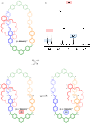

Strong binding and fluorescence sensing of bisphosphonates by guanidinium-modified calix[5]arene
Beilstein J. Org. Chem. 2018, 14, 1840–1845, doi:10.3762/bjoc.14.157
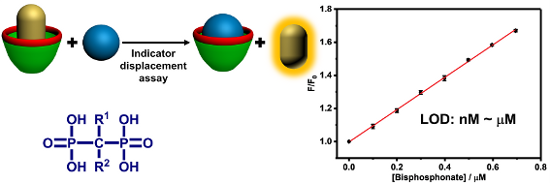
- particularly suitable for the detection of analytes lacking chromophores. The key factor in IDA is the rational design of artificial receptors that are capable of binding analytes strongly and specifically. Calixarenes are the third generation of macrocyclic receptors after crown ethers and cyclodextrins. Due


Recent applications of chiral calixarenes in asymmetric catalysis
Beilstein J. Org. Chem. 2018, 14, 1389–1412, doi:10.3762/bjoc.14.117
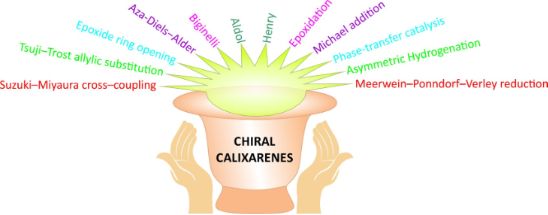
- asymmetric catalysis has received considerable interest and witnessed significant progress in recent years [2][3][4]. Calixarenes are considered as the third generation of supramolecular hosts after cyclodextrins and crown ethers [5][6]. Due to their easy preparation and readily modification at either the


Superstructures with cyclodextrins: Chemistry and applications IV
Beilstein J. Org. Chem. 2017, 13, 2157–2159, doi:10.3762/bjoc.13.215
- repulsive. The first examples of superstructures formed by attractive intermolecular forces were complexes of crown ethers [1], cryptands [2] and spherands [3], which were recognized by the 1987 Nobel Prize in Chemistry. In addition, inclusion compounds of cyclodextrins (CDs), cyclic oligomers of glucose
Complexation of molecular clips containing fragments of diphenylglycoluril and benzocrown ethers with paraquat and its derivatives
Beilstein J. Org. Chem. 2017, 13, 2056–2067, doi:10.3762/bjoc.13.203
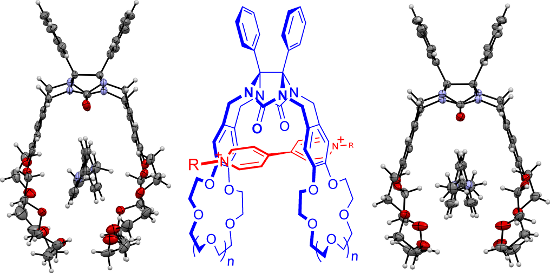
- size and the nature of the substituents at the nitrogen atoms of the paraquat derivatives on the composition and stability of these complexes. Keywords: complexation; crown ethers; "host–guest chemistry"; molecular clips; paraquat; Introduction After the first report on the synthesis of crown ethers
- and co-workers in 1987 [2] reported the complexation of crown ethers with paraquat and diquat for the first time, these compounds have become the most commonly used models in the design of various systems such as host–guest and supramolecular assemblies based on crown ethers [3]. The development of
- on crown ethers differing in the structure of the intramolecular cavity and in the type of complexation, is still relevant. Among the large variety of synthetic receptors, so-called molecular tweezers and clips are of interest [16][17]. These are a particular case of U-shaped hosts, highly


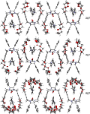

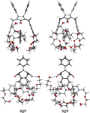

Chiral phase-transfer catalysis in the asymmetric α-heterofunctionalization of prochiral nucleophiles
Beilstein J. Org. Chem. 2017, 13, 1753–1769, doi:10.3762/bjoc.13.170
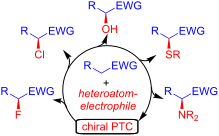
- asymmetric applications. Besides quaternary ammonium salts, also chiral phosphonium salts [21][36], chiral (bis)guanidinium systems [22][27][37], chiral crown ethers [38][39], bifunctional onium salts [17][40][41][42][43][44][45][46], or even sulfonium salts [47][48] have been systematically developed very


Interactions between photoacidic 3-hydroxynaphtho[1,2-b]quinolizinium and cucurbit[7]uril: Influence on acidity in the ground and excited state
Beilstein J. Org. Chem. 2017, 13, 203–212, doi:10.3762/bjoc.13.23
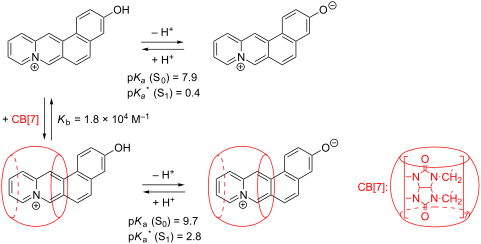
- this ligand increase by about two to three orders of magnitude, respectively, when bound to CB[7]. Keywords: azoniahetarenes; cucurbit[7]uril; heterocycles; photoacids; supramolecular photochemistry; Introduction The complexation of ligands by macrocyclic host molecules, such as crown ethers


Microwave-assisted synthesis of (aminomethylene)bisphosphine oxides and (aminomethylene)bisphosphonates by a three-component condensation
Beilstein J. Org. Chem. 2016, 12, 1493–1502, doi:10.3762/bjoc.12.146
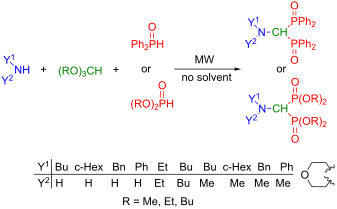
- [15][16][17][18][19][20][21]. The use of crown ethers with an NH unit, or thienopyrimidine amines as starting materials was also reported [22][23]. The catalyst- and solvent-free methods required long reaction times and/or a high temperature [6][7][8][9][10][11][12][13][14][21][22][23]. Ionic liquids


A journey in bioinspired supramolecular chemistry: from molecular tweezers to small molecules that target myotonic dystrophy
Beilstein J. Org. Chem. 2016, 12, 125–138, doi:10.3762/bjoc.12.14
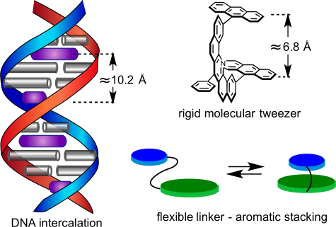
- excitement surrounding the 1987 Nobel Prize to Cram, Lehn, and Pedersen had generated an enormous interest in host–guest chemistry and there was at this time a move to go beyond cyclic crown ethers. In particular, the groups of Rebek [11] and Hamilton [12] and many others were developing hosts capable of


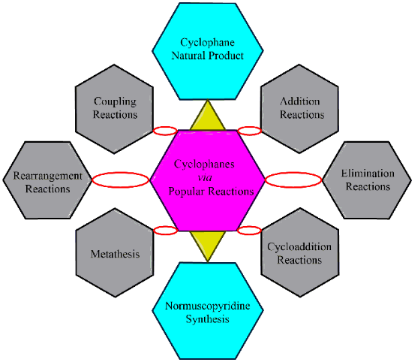
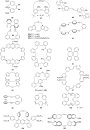
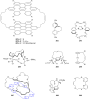
Selected synthetic strategies to cyclophanes
Beilstein J. Org. Chem. 2015, 11, 1274–1331, doi:10.3762/bjoc.11.142






Discrete multiporphyrin pseudorotaxane assemblies from di- and tetravalent porphyrin building blocks
Beilstein J. Org. Chem. 2015, 11, 748–762, doi:10.3762/bjoc.11.85
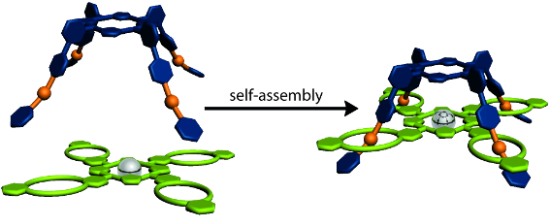
- stoichiometry, while the amount of alternative structures can be neglected. Our results illustrate the power of multivalency to program the multicomponent self-assembly of specific entities into discrete functional nanostructures. Keywords: crown ethers; multicomponent assembly; multivalency; porphyrins
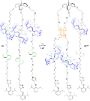
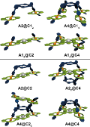
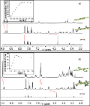
- difficult, is the fact that the di- and tetravalent crown ethers C2 and C4 are achiral themselves, but become chiral, when complexed to axle components A2 and A4. Consequently, the signals for all methylene protons of the crown ethers split into two diastereotopic ones not only producing another set of
- signals, but also more complicated splitting patterns. Furthermore, the crown ethers are connected to the porphyrin core by single bonds, around which they can easily rotate in the non-complexed state. This rotation is, however, fixed upon complexation and two possible orientations of each of the crown





First principle investigation of the linker length effects on the thermodynamics of divalent pseudorotaxanes
Beilstein J. Org. Chem. 2015, 11, 687–692, doi:10.3762/bjoc.11.78
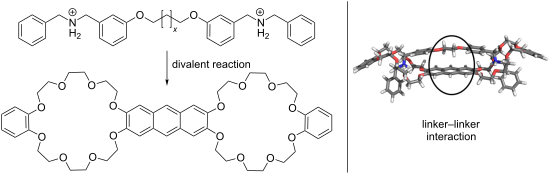
- the crown/ammonium binding motif. In this motif ammonium can bind on top of small crown ethers, e.g., crown-6, or can pass through larger crown ethers, e.g., crown-8. Jiang et al. [16] have investigated the assembly thermodynamics and kinetics of divalent crown-8/ammonium pseudorotaxanes with


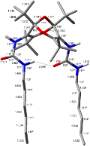
Molecular cleft or tweezer compounds derived from trioxabicyclo[3.3.1]nonadiene diisocyanate and diacid dichloride
Beilstein J. Org. Chem. 2015, 11, 1–8, doi:10.3762/bjoc.11.1
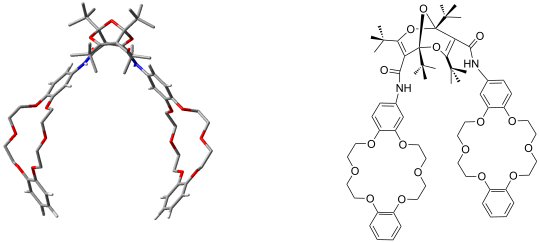
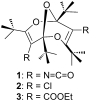
- ability to extract some alkali, alkaline earth and rare earth metal ions. Keywords: carbamates; crown ethers; diisocyanate; isocyanate; ureas; Introduction The synthesis of the surprisingly stable, monomeric diisocyanate 1 (Figure 1) was reported recently [1]. This and several other derivatives of the





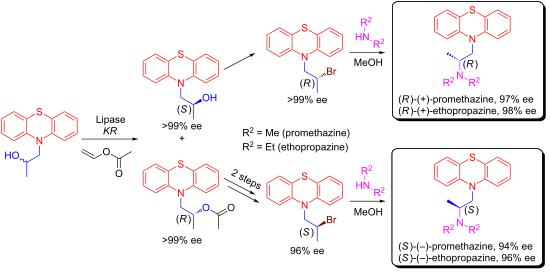
First chemoenzymatic stereodivergent synthesis of both enantiomers of promethazine and ethopropazine
Beilstein J. Org. Chem. 2014, 10, 3038–3055, doi:10.3762/bjoc.10.322
- been reported. Only enantioselective analytical methods towards enantioresolution of promethazine employing various chiral selectors including proteins, cyclodextrines, modified crown ethers or macrocyclic antibiotics have been proposed [52][53][54][55][56]. Other two reports [57][58] containing


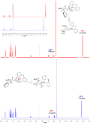


Electrocarboxylation: towards sustainable and efficient synthesis of valuable carboxylic acids
Beilstein J. Org. Chem. 2014, 10, 2484–2500, doi:10.3762/bjoc.10.260
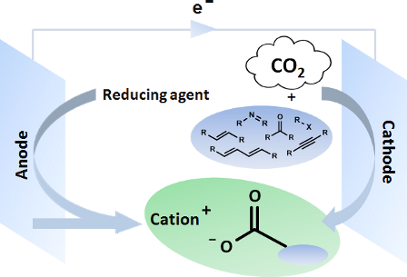
- the acquired double bond. Sodium carbonate is a suitable proton scavenger, providing the required alkalinity and being a convenient source of sodium ions. Crown ethers are added to dissolve the alkali metal salts in the organic solvent system. After reaction, anolyte and catholyte are filtered and


Efficient CO2 capture by tertiary amine-functionalized ionic liquids through Li+-stabilized zwitterionic adduct formation
Beilstein J. Org. Chem. 2014, 10, 1959–1966, doi:10.3762/bjoc.10.204
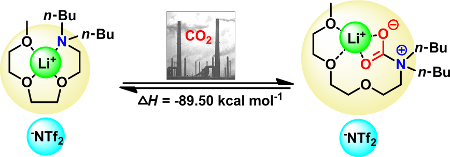
- CO2 capture, by simple mixing of equimolar amounts of alkanolamines with LiNTf2 [38]. The strong complexation of alkali metal cations by crown ethers could be used to achieve equimolar CO2 absorption in systems containing crown ethers and easily available alkali metal salts of amino acids, resulting




Synthesis of a sucrose dimer with enone tether; a study on its functionalization
Beilstein J. Org. Chem. 2014, 10, 1246–1254, doi:10.3762/bjoc.10.124
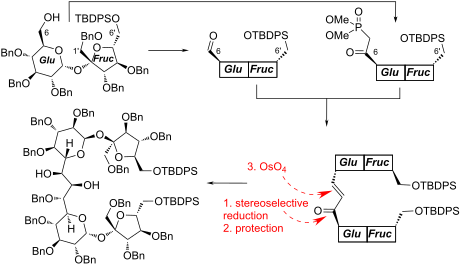
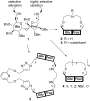
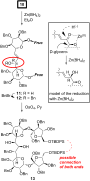
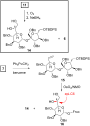
- synthesis; sucrose; Introduction Molecular recognition is one of the most important phenomena in stereoselective processes. Chiral crown ethers (or analogs) are particularly useful in enantioselective reactions [1][2] as well as differentiation of chiral guests [3][4]. From all of the chiral platforms
- become engaged in the preparation of the analogs of crown and aza-crown ethers with sucrose scaffold. It is based on a selective protection of 1’,2,3,3’,4,4’-hexa-O-benzylsucrose (1) either at the glucose (C-6) [8] or fructose (C-6’) [9] end and further transformations to a variety of macrocycles (2–4