


Search results
Search for "dipolar cycloaddition" in Full Text gives 186 result(s) in Beilstein Journal of Organic Chemistry.
One-pot nucleophilic substitution–double click reactions of biazides leading to functionalized bis(1,2,3-triazole) derivatives
- Hans-Ulrich Reissig and
- Fei Yu
Beilstein J. Org. Chem. 2023, 19, 1399–1407, doi:10.3762/bjoc.19.101
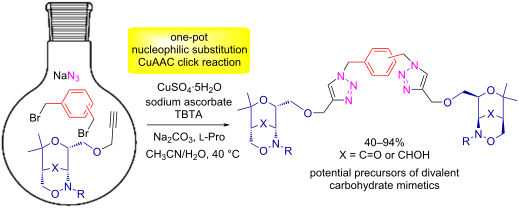
- ]). Mechanistic aspects of the CuAAC have been studied in detail [16][17]. Whereas the traditional 1,3-dipolar cycloaddition (Huisgen reaction) [18][19][20] of azides and alkynes requires often – but not always – relatively harsh conditions and proceeds with moderate regioselectivity only [21], the copper

Graphical Abstract
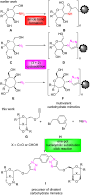
Scheme 1: Earlier approaches to multivalent carbohydrate mimetics B, D or F based on enantiopure aminopyran a...

Scheme 2: Synthesis of model compound 3 under conventional conditions and as a one-pot process employing benz...

Scheme 3: One-pot reaction employing enantiopure alkynyl-substituted 1,2-oxazin-4-one derivative 6 leading to...

Scheme 4: One-pot reactions of dihalides 8 and 11 with sodium azide and alkyne 2 leading to symmetric divalen...

Scheme 5: One-pot reactions employing enantiopure alkynyl-substituted 1,2-oxazin-4-one derivative 6 leading t...

Scheme 6: One-pot reaction employing enantiopure alkynyl-substituted 1,2-oxazin-4-ol derivative 19 leading to...

Scheme 7: Reductive ring-openings of 1,2-oxazine derivatives 19 and 23 as simple model compounds by hydrogeno...

Scheme 8: Attempted reductive ring-openings of compound 21 by hydrogenolysis or by samarium diiodide leading ...
The unique reactivity of 5,6-unsubstituted 1,4-dihydropyridine in the Huisgen 1,4-diploar cycloaddition and formal [2 + 2] cycloaddition
- Xiu-Yu Chen,
- Hui Zheng,
- Ying Han,
- Jing Sun and
- Chao-Guo Yan
Beilstein J. Org. Chem. 2023, 19, 982–990, doi:10.3762/bjoc.19.73
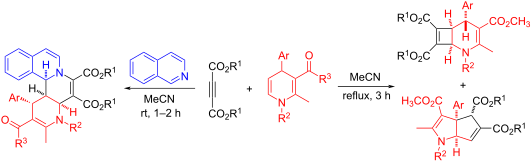
- ; isoquinolino[1,2-f][1,6]naphthyridine; Introduction Among various well-known cycloaddition reactions such as the 1,3-dipolar cycloaddition reaction, Diels–Alder reaction, and the Povarov reaction, the cycloaddition reaction of Huisgen 1,4-dipoles with activated alkenes received increasing attention [1][2][3

Graphical Abstract

Scheme 1: Various cycloaddition reactions of 5,6-unsymmetric 1,4-dihydropyridines.

Figure 1: Single crystal structure of the compound 4k.

Figure 2: Single crystal structure of compound 5a.

Figure 3: Single crystal structure of compound 6f.

Scheme 2: Plausible reaction mechanism for the various products 4, 5, and 6.
Computational studies of Brønsted acid-catalyzed transannular cycloadditions of cycloalkenone hydrazones
- Manuel Pedrón,
- Jana Sendra,
- Irene Ginés,
- Tomás Tejero,
- Jose L. Vicario and
- Pedro Merino
Beilstein J. Org. Chem. 2023, 19, 477–486, doi:10.3762/bjoc.19.37
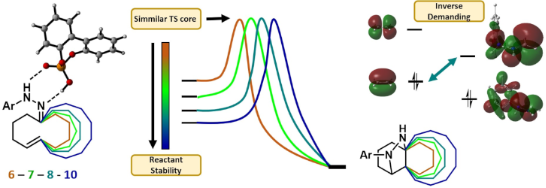
- common reaction conditions. The reaction has been defined by Houk and Rueping as a (3+ + 2) monopolar cycloaddition [33] pointing out the protonated state of the imino nitrogen of the hydrazone in contrast to the well-known 1,3-dipolar cycloaddition of azomethine imines in which the terminal nitrogen has

Graphical Abstract
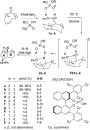
Scheme 1: Experimental data (series a–d, k) and non-studied examples (series e–j) for transannular cycloaddit...

Figure 1: Optimized (m062x/6-31G(d)) geometries for the transition structures of series a–f.
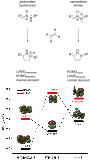
Figure 2: Top: Cycloaddition of protonated hydrazones as inverse-demand reaction of cycloaddition of azomethi...

Figure 3: Global electron density transfer (GEDT). Dashed black line indicates both TS.

Figure 4: ELF analysis for the reaction of series b leading to a system 6-6. Black trace corresponds to IRC. ...

Figure 5: Quantitative NCI analysis [36] for the reaction of series a–f leading to fused cyclohexanes. The result...

Figure 6: (a) Transannular cycloadditons of compounds 1a–k. (b) Houk’s distortion model applied to the reacti...

Scheme 2: Reaction with simple models.
CuAAC-inspired synthesis of 1,2,3-triazole-bridged porphyrin conjugates: an overview
- Dileep Kumar Singh
Beilstein J. Org. Chem. 2023, 19, 349–379, doi:10.3762/bjoc.19.29
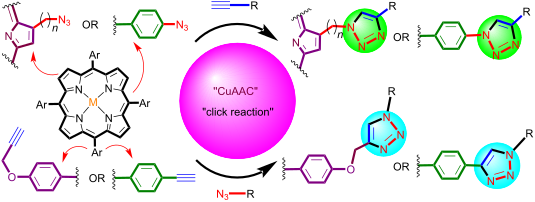
- -dipolar cycloaddition reaction between an azide and a terminal alkyne, also popular as "click reaction" or CuAAC reaction. Moreover, the 1,2,3-triazole ring also serves as a spacer and an electron transfer bridge between the porphyrin and the attached chromophores. In order to provide a critical overview
- of the synthesis and properties of various porphyrin-triazole hybrids, this review will discuss some of the key reactions involved in the preparation of triazole-linked porphyrin conjugates. Keywords: azide–alkyne; click chemistry; CuAAC; 1,3-dipolar cycloaddition; porphyrin; 1,2,3-triazole
- connect a porphyrin with a chromophoric group. Among these, the copper(I)-catalyzed Huisgen 1,3-dipolar cycloaddition reaction [1][2] of azides with terminal alkynes is a popular and well established process to link a porphyrin with other moieties via 1,2,3-triazole group [3] (Figure 1). The term “click

Graphical Abstract

Figure 1: Alkyne–azide "click reaction".

Figure 2: β- and meso-triazole-linked porphyrin.

Scheme 1: Synthesis of β-triazole-linked porphyrins 3a–c.

Scheme 2: Synthesis of β-triazole-bridged porphyrin-coumarin conjugates 11–20.

Scheme 3: Synthesis of β-triazole-bridged porphyrin-xanthone conjugates 23–27 and xanthone-bridged β-triazolo...

Scheme 4: Synthesis of meso-triazoloporphyrins 32a–c and triazole-bridged diporphyrins 34.

Scheme 5: Synthesis of meso-triazole-linked porphyrin-ferrocene conjugates 37a–d.

Scheme 6: Synthesis of meso-triazole-linked porphyrin conjugates 40a,b and 41a,b.

Scheme 7: Synthesis of meso-triazole-linked glycoporphyrins 43a–c.

Scheme 8: Synthesis of meso-triazole-linked porphyrin-coumarin conjugates 44–48.

Scheme 9: Synthesis of meso-triazole-bridged porphyrin-DNA conjugate 50.

Scheme 10: Synthesis of meso-linked porphyrin-triazole conjugates 53 and 57.

Scheme 11: Synthesis of meso-triazole-linked porphyrin-corrole conjugate 60.
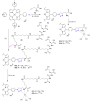
Scheme 12: Synthesis of porphyrin conjugates 64a,b and 67a,b. Reaction conditions: (i) CuSO4, sodium ascorbate...

Scheme 13: Synthesis of meso-triazole-bridged porphyrin-quinolone conjugates 70a–e.

Scheme 14: Synthesis of meso-triazole-linked porphyrin-fluorescein dyad 73.

Scheme 15: Synthesis of meso-triazole-linked porphyrin-carborane conjugates 76a,b.

Scheme 16: Synthesis of meso-triazole-bridged porphyrin-BODIPY conjugates 78 and 80.

Scheme 17: Synthesis of meso-triazole-linked cationic porphyrin conjugates 85 and 87. Reaction conditions: (i)...

Scheme 18: Synthesis of meso-triazole-cobalt-porphyrin diimine-dioxime conjugate 91. Reactions conditions: (i)...

Scheme 19: Synthesis of triazole-linked porphyrin-bearing N-doped graphene hybrid 96.

Scheme 20: Synthesis of meso-triazole-linked porphyrin-fullerene dyads 100a–d and 104a,b.

Scheme 21: Synthesis of meso-triazole-bridged diporphyrin conjugates 107 and 108.

Scheme 22: Synthesis of porphyrin-ruthenium (II) conjugates 112a,b and 116a,b. Reaction conditions: (i) Zn(OAc)...

Scheme 23: Synthesis of meso-triazole-linked porphyrin dyad 119 and triad 121.

Scheme 24: Synthesis of di-triazole-bridged porphyrin-β-CD conjugate 126.

Scheme 25: Synthesis of meso-triazole-bridged porphyrin star trimer 129.

Scheme 26: Synthesis of 1,2,3-triazole-linked porphyrin-β-CD conjugates 131a,b.

Scheme 27: Synthesis of tritriazole-bridged porphyrin-lantern-DNA sequence 134.

Scheme 28: Synthesis of meso-triazole-linked porphyrin-polymer conjugates 137 and 139.

Scheme 29: Synthesis of triazole-linked capped porphyrin 142; Reaction conditions: method A: 10% H2O in THF, C...

Scheme 30: Synthesis of meso-tetratriazole-linked porphyrin-maleimine conjugates 145a–c.

Scheme 31: Synthesis of meso-tetratriazole-linked porphyrin-cholic acid complex 148a,b.

Scheme 32: Synthesis of meso-tetratriazole-linked porphyrin conjugates 151–153.

Scheme 33: Synthesis of meso-tetratrizole-porphyrin-carborane conjugates 155, 156 and 158a–c.

Scheme 34: Synthesis of meso-tetratriazole-porphyrin-cardanol conjugates 160 and 162.

Scheme 35: Synthesis of meso-tetratriazole-linked porphyrin-BODIPY conjugate 164.

Scheme 36: Synthesis of meso-tetratriazole-linked porphyrin-β-CD conjugates 166a,b.

Scheme 37: Synthesis of tetratriazole-bridged meso-arylporphyrins 171a–c and 172a–c.

Scheme 38: Synthesis of octatriazole-bridged porphyrin-β-CD conjugate 174 and porphyrin-adamantane conjugates ...
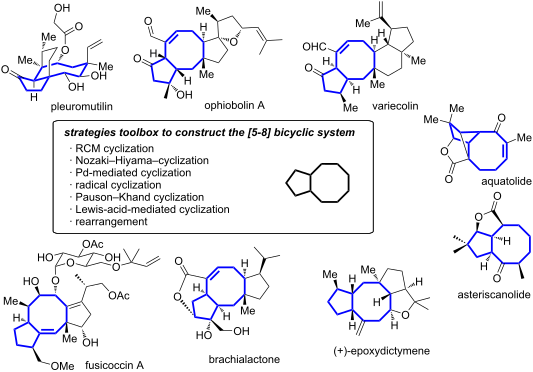
Strategies to access the [5-8] bicyclic core encountered in the sesquiterpene, diterpene and sesterterpene series
- Cécile Alleman,
- Charlène Gadais,
- Laurent Legentil and
- François-Hugues Porée
Beilstein J. Org. Chem. 2023, 19, 245–281, doi:10.3762/bjoc.19.23

Graphical Abstract

Figure 1: Examples of terpenes containing a bicyclo[3.6.0]undecane motif.

Figure 2: Commercially available first and second generation Grubbs and Hoveyda–Grubbs catalysts.

Figure 3: Examples of strategies to access the fusicoccan and ophiobolin tricyclic core structure by RCM.

Scheme 1: Synthesis of bicyclic core structure 12 of ophiobolin M (13) and cycloaraneosene (14).

Scheme 2: Synthesis of the core structure 21 of ophiobolins and fusicoccanes.

Scheme 3: Ring-closing metathesis attempts starting from thioester 22.

Scheme 4: Total synthesis of ent-fusicoauritone (28).

Figure 4: General structure of ophiobolins and congeners.

Scheme 5: Total synthesis of (+)-ophiobolin A (8).

Scheme 6: Investigation of RCM for the synthesis of ophiobolin A (8). Path A) RCM with TBDPS-protected alcoho...

Scheme 7: Synthesis of the core structure of cotylenin A aglycon, cotylenol (50).

Scheme 8: Synthesis of tricyclic core structure of fusicoccans.

Scheme 9: Total synthesis of (−)-teubrevin G (59).

Scheme 10: Synthesis of the core skeleton 63 of the basmane family.

Scheme 11: Total synthesis of (±)-schindilactone A (68).

Scheme 12: Total synthesis of dactylol (72).

Scheme 13: Ring-closing metathesis for the total synthesis of (±)-asteriscanolide (2).

Scheme 14: Synthesis of the simplified skeleton of pleuromutilin (1).

Scheme 15: Total synthesis of (−)-nitidasin (93) using a ring-closing metathesis to construct the eight-member...

Scheme 16: Total synthesis of (±)-naupliolide (97).

Scheme 17: Synthesis of the A-B ring structure of fusicoccane (101).

Scheme 18: First attempts of TRCM of dienyne substrates.

Scheme 19: TRCM on optimized substrates towards the synthesis of ophiobolin A (8).

Scheme 20: Tandem ring-closing metathesis for the synthesis of variecolin intermediates 114 and 115.

Scheme 21: Synthesis of poitediol (118) using the allylsilane ring-closing metathesis.

Scheme 22: Access to scaffold 122 by a NHK coupling reaction.

Scheme 23: Key step to construct the [5-8] bicyclooctanone core of aquatolide (4).

Scheme 24: Initial strategy to access aquatolide (4).

Scheme 25: Synthetic plan to cotylenin A (130).

Scheme 26: [5-8] Bicyclic structure of brachialactone (7) constructed by a Mizoroki–Heck reaction.

Scheme 27: Influence of the replacement of the allylic alcohol moiety.

Scheme 28: Formation of variecolin intermediate 140 through a SmI2-mediated Barbier-type reaction.

Scheme 29: SmI2-mediated ketyl addition. Pleuromutilin (1) eight-membered ring closure via C5–C14 bond formati...

Scheme 30: SmI2-mediated dialdehyde cyclization cascade of [5-8-6] pleuromutilin scaffold 149.

Scheme 31: A) Modular synthetic route to mutilin and pleuromutilin family members by Herzon’s group. B) Scaffo...

Scheme 32: Photocatalyzed oxidative ring expansion in pleuromutilin (1) total synthesis.

Scheme 33: Reductive radical cascade cyclization route towards (−)-6-epi-ophiobolin N (168).

Scheme 34: Reductive radical cascade cyclization route towards (+)-6-epi-ophiobolin A (173).

Scheme 35: Radical 8-endo-trig-cyclization of a xanthate precursor.

Figure 5: Structural representations of hypoestin A (177), albolic acid (178), and ceroplastol II (179) beari...

Scheme 36: Synthesis of the common [5-8-5] tricyclic intermediate of hypoestin A (177), albolic acid (178), an...

Scheme 37: Asymmetric synthesis of hypoestin A (177), albolic acid (178), and ceroplastol II (179).

Figure 6: Scope of the Pauson–Khand reaction.

Scheme 38: Nazarov cyclization revealing the fusicoauritone core structure 192.

Scheme 39: Synthesis of fusicoauritone (28) through Nazarov cyclization.

Scheme 40: (+)-Epoxydictymene (5) synthesis through a Nicholas cyclization followed by a Pauson–Khand reaction...

Scheme 41: Synthesis of aquatolide (4) by a Mukaiyama-type aldolisation.

Scheme 42: Tandem Wolff/Cope rearrangement furnishing the A-B bicyclic moiety 204 of variecolin.

Scheme 43: Asymmetric synthesis of the A-B bicyclic core 205 and 206 of variecolin.

Scheme 44: Formation of [5-8]-fused rings by cyclization under thermal activation.

Scheme 45: Construction of the [5-8-6] tricyclic core structure of variecolin (3) by Diels–Alder reaction.

Scheme 46: Synthesis of the [6-4-8-5]-tetracyclic skeleton by palladium-mediated cyclization.

Scheme 47: Access to the [5-8] bicyclic core structure of asteriscanolide (227) through rhodium-catalyzed cycl...

Scheme 48: Total syntheses of asterisca-3(15),6-diene (230) and asteriscanolide (2) with a Rh-catalyzed cycliz...

Scheme 49: Photocyclization of 2-pyridones to access the [5-8-5] backbone of fusicoccanes.

Scheme 50: Total synthesis of (+)-asteriscunolide D (245) and (+)-aquatolide (4) through photocyclization.

Scheme 51: Biocatalysis pathway to construct the [5-8-5] tricyclic scaffold of brassicicenes.

Scheme 52: Influence of the CotB2 mutant over the cyclization’s outcome of GGDP.
One-pot double annulations to confer diastereoselective spirooxindolepyrrolothiazoles
- Juan Lu,
- Bin Yao,
- Desheng Zhan,
- Zhuo Sun,
- Yun Ji and
- Xiaofeng Zhang
Beilstein J. Org. Chem. 2022, 18, 1607–1616, doi:10.3762/bjoc.18.171
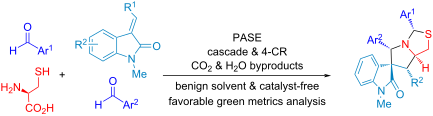
- introduced in this study. Subsequently one equivalent of aldehyde and olefinic oxindole in situ were followed by decarboxylative 1,3-dipolar cycloaddition for diastereoselective synthesis of spirooxindolepyrrolothiazoles with generating 5 new bonds, 5 stereocenters and two heterocycles (Scheme 1C and Scheme
- 2C). Results and Discussion The optimized reaction conditions of stepwise, one-pot and cascade (two-step with one operational step) processes for N,S-acetalation and decarboxylative 1,3-dipolar cycloaddition were developed by using two equivalents of 4-bromobenzaldehyde (1a), ʟ-cysteine (2) and
- . Subsequent decarboxylation of thiazolooxazol-1-one I affords non-stabilized azomethine ylide (AY) for 1,3-dipolar cycloaddition with olefinic oxindole 4a to give spirooxindolepyrrolothiazoles 5 and 7. The endo-TS is more favorable than exo-TS for the 1,3-dipolar cycloaddition to afford the major and minor

Graphical Abstract

Scheme 1: The diastereoselective synthesis of spirooxindoles through MCRs.

Figure 1: Bioactive Spirooxindole-pyrrolothiazoles.

Scheme 2: The synthesis of spirooxindolepyrrolothiazoles.

Scheme 3: Four-component reaction for the synthesis of compound 5.

Scheme 4: Proposed mechanism for the double [3 + 2] cycloadditions.

Scheme 5: The synthesis of compound 5a with ᴅ- and ʟ-cysteine.

Scheme 6: Two-step (process A) vs cascade (process B) synthesis of 5a. i) 1.0:1.15 of 1a/2, EtOH (0.05 M), 25...

Figure 2: Graphical representation of the green metrics (AE, AEf, CE, RME, OE and MP) analysis for processes ...

Figure 3: Graphical representation of the green metrics (PMI, E-factor, and SI) analysis for processes A and ...
Vicinal ketoesters – key intermediates in the total synthesis of natural products
- Marc Paul Beller and
- Ulrich Koert
Beilstein J. Org. Chem. 2022, 18, 1236–1248, doi:10.3762/bjoc.18.129
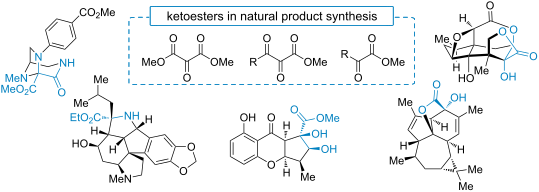
- of L. Overman et al. in 1997 [18] towards the originally proposed structure of palau’amine (44), a [3 + 2]-dipolar cycloaddition of α-ketoester 41 and the thiosemicarbazide 42-derived azomethine imine VI to the triazacyclopenta[cd]pentalene 43 was utilized as a key step (Scheme 7) [18][19][20][21

Graphical Abstract

Scheme 1: Structures of vicinal ketoesters and examples for their typical reactivity.

Scheme 2: Doyle’s diastereoselective intramolecular aldol addition of α,β-diketoester.

Scheme 3: Synthesis of euphorikanin A (16) by intramolecular, nucleophilic addition [6].

Scheme 4: Ketoester cycloisomerization for the synthesis of preussochromone A (24) [10].

Scheme 5: Diastereoselective, intramolecular aldol reaction of an α-ketoester 28 in the synthesis of (−)-preu...

Scheme 6: Synthesis of an α-ketoester through Riley oxidation and its use in an α-ketol rearrangement in the ...

Scheme 7: Azomethine imine cycloaddition towards the synthesis of the proposed structure of palau’amine (44) [19]....

Scheme 8: Intramolecular diastereoselective carbonyl-ene reaction of an α-ketoester in the synthesis of jatro...

Scheme 9: Grignard addition to an α-ketoester and subsequent Friedel–Crafts cyclization in the synthesis of (...

Scheme 10: Diastereoselective addition to an auxiliary modified α-ketoester in the formal synthesis of (+)-cam...

Scheme 11: Intramolecular photoreduction of an α-ketoester in the synthesis of (rac)-isoretronecanol (69) [26].

Scheme 12: α-Ketoester as nucleophile in a Tsuji–Trost reaction in the synthesis of (rac)-corynoxine (76) [27].

Scheme 13: Mannich reaction of an α-ketoester in the synthesis of (+)-gracilamine (83) [28].

Scheme 14: Enantioselective aldol reaction using an α-ketoester in the synthesis of (−)-irofulven (87) [29].

Scheme 15: Allylboration of a mesoxalic acid ester in the synthesis of (+)-awajanomycin (92) [30,31].

Scheme 16: Condensation of a diamine with mesoxolate in the synthesis of (−)-aplaminal (96) [32].

Scheme 17: Synthesis of mesoxalic ester amide 102 and its use in the synthesis of (rac)-cladoniamide G (103) [33].

Scheme 18: The thermodynamically controlled, intramolecular aldol addition of a vic-tricarbonyl compound in th...
Synthesis of N-phenyl- and N-thiazolyl-1H-indazoles by copper-catalyzed intramolecular N-arylation of ortho-chlorinated arylhydrazones
- Yara Cristina Marchioro Barbosa,
- Guilherme Caneppele Paveglio,
- Claudio Martin Pereira de Pereira,
- Sidnei Moura,
- Cristiane Storck Schwalm,
- Gleison Antonio Casagrande and
- Lucas Pizzuti
Beilstein J. Org. Chem. 2022, 18, 1079–1087, doi:10.3762/bjoc.18.110
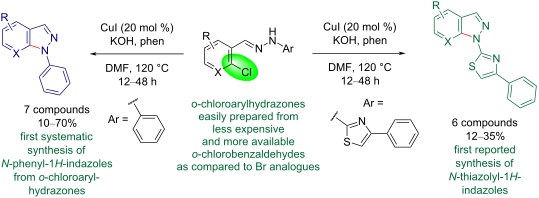
- bendazac [10], the anti-inflammatory agent benzydamine [11], and the antiemetic agent granisetron [12] are commercially available examples. In view of the abovementioned interest, an increasing number of approaches for the synthesis of 1H-indazoles has been recently reported, including 1,3-dipolar
- cycloaddition reaction of α-diazomethylphosphonates with o-(trimethylsilyl)phenyl triflate in the presence of CsF [13], Cu2+-mediated N−N bond formation from ketimines in the presence of oxygen [14], Pd2+-mediated oxidative benzannulation from pyrazoles and internal alkynes [15], Pd-catalyzed Aza–Nenitzescu

Graphical Abstract

Scheme 1: One-pot approach for the synthesis of 2a. aYield calculated vs trichloroethylene by 1H NMR spectros...

Scheme 2: Regioselectivity of the reaction of arylhydrazones 1i and 3i, respectively.
Synthesis of bis-spirocyclic derivatives of 3-azabicyclo[3.1.0]hexane via cyclopropene cycloadditions to the stable azomethine ylide derived from Ruhemann's purple
- Alexander S. Filatov,
- Olesya V. Khoroshilova,
- Anna G. Larina,
- Vitali M. Boitsov and
- Alexander V. Stepakov
Beilstein J. Org. Chem. 2022, 18, 769–780, doi:10.3762/bjoc.18.77
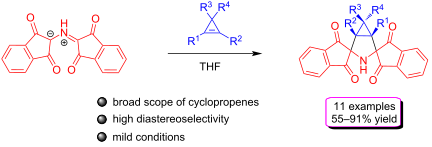
- 1,3-dipolar cycloaddition (1,3-DC) reactions of cyclopropenes to the stable azomethine ylide – protonated form of Ruhemann's purple (PRP) has been developed. Both 3-substituted and 3,3-disubstituted cyclopropenes reacted with PRP, affording the corresponding bis-spirocyclic 3-azabicyclo[3.1.0]hexane
- [15]. In our recent studies, great attention was paid to developing methods for the synthesis of spiro[3-azabicyclo[3.1.0]hexanes] based on 1,3-dipolar cycloaddition reactions involving azomethine ylides and cyclopropene dipolarophiles, and also the in vitro activity of some synthesized compounds has
- been explored [19][20][21][22][23][24]. To generate azomethine ylides, we used a classical method based on the reaction of cyclic carbonyl compounds with α-amino acids. Μono-, bi-, and tetracyclic carbonyl compounds were utilized in these studies. 1,3-Dipolar cycloaddition of cyclopropenes to

Graphical Abstract

Scheme 1: Early studies concerning cyclopropene cycloadditions to azomethine ylides and cycloaddition reactio...

Scheme 2: The pilot experiment aimed at studying the cycloaddition reaction between the protonated form of Ru...
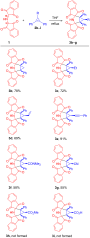
Scheme 3: Synthesis of meso-3'-azadispiro[indene-2,2'-bicyclo[3.1.0]hexane-4',2''-indene] derivatives 3b–g vi...

Figure 1: ORTEP representation of the molecular structure of 3e.

Scheme 4: The reaction of protonated Ruhemann's purple (1) with 3-methyl-3-phenylcyclopropene (2j).

Scheme 5: Attempts to carry out the cycloaddition reactions between 3,3-disubstituted cyclopropenes 2k,l and ...

Scheme 6: The reactions of protonated Ruhemann's purple (1) with unstable cyclopropenes 2m–p.
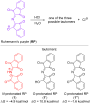
Scheme 7: The acid–base reaction of Ruhemann's purple with hydrochloric acid and relative Gibbs free energy c...

Scheme 8: Plausible mechanism of the 1,3-DC reaction of protonated Ruhemann's purple (1) with 3-methyl-3-phen...

Scheme 9: Plausible mechanism of the 1,3-DC reaction of protonated Ruhemann's purple (1) with 1-chloro-2-phen...
Synthesis of 3,4,5-trisubstituted isoxazoles in water via a [3 + 2]-cycloaddition of nitrile oxides and 1,3-diketones, β-ketoesters, or β-ketoamides
- Md Imran Hossain,
- Md Imdadul H. Khan,
- Seong Jong Kim and
- Hoang V. Le
Beilstein J. Org. Chem. 2022, 18, 446–458, doi:10.3762/bjoc.18.47

- , β-ketoesters or β-ketoamides are a commonly used 2-step route to 3,4,5-trisubstituted isoxazoles [24][25]. Xiao Zhou et al. recently reported a direct access to 3,4,5-trisubstituted isoxazoles via an enolate-mediated 1,3-dipolar cycloaddition of β-functionalized ketones with nitrile oxides using

Graphical Abstract
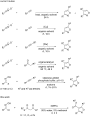
Figure 1: Routes to isoxazoles.

Figure 2: Possible products of the reaction between nitrile oxides and 1,3-diketones. Path D (C-trapping) pro...

Figure 3: Reactions between various arylhydroximoyl chlorides and 1,3-diketones. The reactions were performed...

Figure 4: Reactions between various phenyl hydroximoyl chlorides and β-ketoesters or β-ketoamides. The reacti...

Figure 5: Reactions between 4-fluorophenyl hydroximoyl chloride (1a) and diethyl malonate (2j) or dibenzyl ma...

Figure 6: Reactions between phenyl hydroximoyl chlorides 1a,c and 4,4,4-trifluoro-1-phenyl- (2l) and 4,4,4-tr...

Figure 7: 1H NMR spectra of 1-phenyl-1,3-butanedione (2a) in methanol-d4 (top) and in CDCl3 (bottom).

Figure 8: A plausible mechanism for the formation of the 3,4,5-trisubstituted isoxazoles 3 in the presence of...

Figure 9: Structures of β-lactamase-resistant antibiotics oxacillin, cloxacillin, dicloxacillin, and flucloxa...
New advances in asymmetric organocatalysis
- Radovan Šebesta
Beilstein J. Org. Chem. 2022, 18, 240–242, doi:10.3762/bjoc.18.28
- disclosed important discoveries with proline and imidazolidinones as ample chiral catalysts for aldol [7][8], Diels–Alder [9], dipolar cycloaddition [10], and Mannich reactions [11]. The organic chemistry community this time took a tremendous interest in this concept, which led to many valuable developments
Anomeric 1,2,3-triazole-linked sialic acid derivatives show selective inhibition towards a bacterial neuraminidase over a trypanosome trans-sialidase
- Peterson de Andrade,
- Sanaz Ahmadipour and
- Robert A. Field
Beilstein J. Org. Chem. 2022, 18, 208–216, doi:10.3762/bjoc.18.24
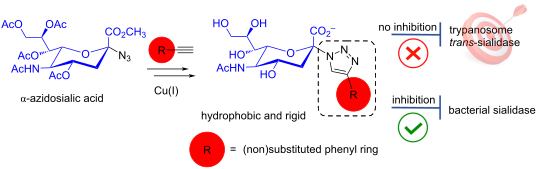
- broad range of substrates, solvents, and reaction conditions; all these parameters have to be carefully planned to avoid low yields or even no product formation, as previously described for compound 1 [20]. Amongst the vast number of reported procedures, the 1,3-dipolar cycloaddition was performed with

Graphical Abstract
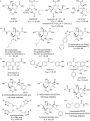
Figure 1: Chemical structures and reported activities of viral (A), human neuraminidases (B) and Trypanosoma ...

Figure 2: Design and synthesis of potential neuraminidase and trans-sialidase inhibitors exploiting a moiety ...

Figure 3: TcTS and neuraminidase hydrolase activity (A) as well as TcTS transferase activity (B) in the prese...

Figure 4: TcTS and neuraminidase inhibition by 1,2,3-triazole-linked sialic acid derivatives 3a–h (1 mM) usin...

Figure 5: Crystal structure of TcTS (PDB code 1MS1 – coloured red) (A) and neuraminidase (PDB code 2VK6 – col...
Regioselective synthesis of methyl 5-(N-Boc-cycloaminyl)-1,2-oxazole-4-carboxylates as new amino acid-like building blocks
- Jolita Bruzgulienė,
- Greta Račkauskienė,
- Aurimas Bieliauskas,
- Vaida Milišiūnaitė,
- Miglė Dagilienė,
- Gita Matulevičiūtė,
- Vytas Martynaitis,
- Sonata Krikštolaitytė,
- Frank A. Sløk and
- Algirdas Šačkus
Beilstein J. Org. Chem. 2022, 18, 102–109, doi:10.3762/bjoc.18.11
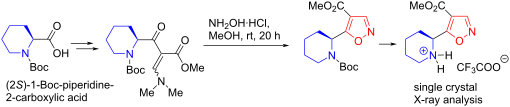
- -oxazoles are: the 1,3-dipolar cycloaddition of alkenes and alkynes with nitrile oxides, and the reaction of a three-carbon atom component, such as a α,β-unsaturated ketone or a 1,3-diketone with hydroxylamine hydrochloride [33]. Recently, Rosa et al. reported a useful procedure for the synthesis of various

Graphical Abstract

Figure 1: Examples of amino-functionalized 1,2-oxazole derivatives I–VIII.

Scheme 1: Conversion of cyclic amino acids to 1,2-oxazole derivatives.

Scheme 2: Plausible mechanisms for the formation of 1,2-oxazoles 4a–h and VII from β-enamino ketoesters 3a–h ...

Figure 2: (a) 1H NMR (italics), 13C NMR (normal), and 15N NMR (bold) chemical shifts (ppm) of compound 3a in ...

Scheme 3: Synthesis of compound 15N-1,2-oxazole 5. The coupling constants of JHN and JCN from 15N2 are indica...

Figure 3: Stacked chromatogram view of pairs of enantiomers with area, %: (R)-4b, ee 100% (tR = 10.1 min) and...

Figure 4: (a) Structure of 4b with syn- and anti-conformers; (b) superimposed 1H NMR and 1D gradient NOE spec...

Scheme 4: Synthesis of 2-[4-(methoxycarbonyl)-1,2-oxazol-5-yl]cycloaminyl-1-ium trifluoroacetates 6a,b.

Figure 5: ORTEP diagram of the asymmetric unit consisting of two cations 6b(A) and 6b(B) and triflate anions.
Iron-catalyzed domino coupling reactions of π-systems
- Austin Pounder and
- William Tam
Beilstein J. Org. Chem. 2021, 17, 2848–2893, doi:10.3762/bjoc.17.196
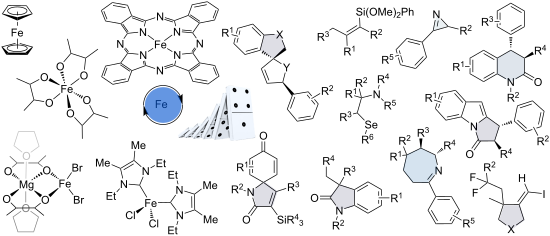

Graphical Abstract

Figure 1: Price comparison among iron and other transition metals used in catalysis.

Scheme 1: Typical modes of C–C bond formation.

Scheme 2: The components of an iron-catalyzed domino reaction.

Scheme 3: Iron-catalyzed tandem cyclization and cross-coupling reactions of iodoalkanes 1 with aryl Grignard ...
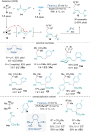
Scheme 4: Three component iron-catalyzed dicarbofunctionalization of vinyl cyclopropanes 14.
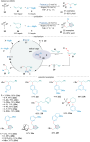
Scheme 5: Three-component iron-catalyzed dicarbofunctionalization of alkenes 21.

Scheme 6: Double carbomagnesiation of internal alkynes 31 with alkyl Grignard reagents 32.

Scheme 7: Iron-catalyzed cycloisomerization/cross-coupling of enyne derivatives 35 with alkyl Grignard reagen...
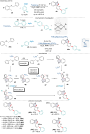
Scheme 8: Iron-catalyzed spirocyclization/cross-coupling cascade.
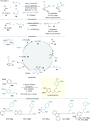
Scheme 9: Iron-catalyzed alkenylboration of alkenes 50.
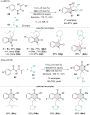
Scheme 10: N-Alkyl–N-aryl acrylamide 60 CDC cyclization with C(sp3)–H bonds adjacent to a heteroatom.

Scheme 11: 1,2-Carboacylation of activated alkenes 60 with aldehydes 65 and alcohols 67.
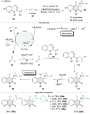
Scheme 12: Iron-catalyzed dicarbonylation of activated alkenes 68 with alcohols 67.
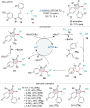
Scheme 13: Iron-catalyzed cyanoalkylation/radical dearomatization of acrylamides 75.

Scheme 14: Synergistic photoredox/iron-catalyzed 1,2-dialkylation of alkenes 82 with common alkanes 83 and 1,3...

Scheme 15: Iron-catalyzed oxidative coupling/cyclization of phenol derivatives 86 and alkenes 87.

Scheme 16: Iron-catalyzed carbosulfonylation of activated alkenes 60.

Scheme 17: Iron-catalyzed oxidative spirocyclization of N-arylpropiolamides 91 with silanes 92 and tert-butyl ...

Scheme 18: Iron-catalyzed free radical cascade difunctionalization of unsaturated benzamides 94 with silanes 92...

Scheme 19: Iron-catalyzed cyclization of olefinic dicarbonyl compounds 97 and 100 with C(sp3)–H bonds.

Scheme 20: Radical difunctionalization of o-vinylanilides 102 with ketones and esters 103.

Scheme 21: Dehydrogenative 1,2-carboamination of alkenes 82 with alkyl nitriles 76 and amines 105.

Scheme 22: Iron-catalyzed intermolecular 1,2-difunctionalization of conjugated alkenes 107 with silanes 92 and...

Scheme 23: Four-component radical difunctionalization of chemically distinct alkenes 114/115 with aldehydes 65...

Scheme 24: Iron-catalyzed carbocarbonylation of activated alkenes 60 with carbazates 117.
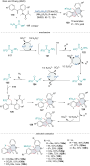
Scheme 25: Iron-catalyzed radical 6-endo cyclization of dienes 119 with carbazates 117.

Scheme 26: Iron-catalyzed decarboxylative synthesis of functionalized oxindoles 130 with tert-butyl peresters ...
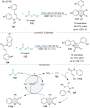
Scheme 27: Iron‑catalyzed decarboxylative alkylation/cyclization of cinnamamides 131/134.

Scheme 28: Iron-catalyzed carbochloromethylation of activated alkenes 60.

Scheme 29: Iron-catalyzed trifluoromethylation of dienes 142.

Scheme 30: Iron-catalyzed, silver-mediated arylalkylation of conjugated alkenes 115.

Scheme 31: Iron-catalyzed three-component carboazidation of conjugated alkenes 115 with alkanes 101/139b and t...

Scheme 32: Iron-catalyzed carboazidation of alkenes 82 and alkynes 160 with iodoalkanes 20 and trimethylsilyl ...

Scheme 33: Iron-catalyzed asymmetric carboazidation of styrene derivatives 115.

Scheme 34: Iron-catalyzed carboamination of conjugated alkenes 115 with alkyl diacyl peroxides 163 and acetoni...

Scheme 35: Iron-catalyzed carboamination using oxime esters 165 and arenes 166.

Scheme 36: Iron-catalyzed iminyl radical-triggered [5 + 2] and [5 + 1] annulation reactions with oxime esters ...

Scheme 37: Iron-catalyzed decarboxylative alkyl etherification of alkenes 108 with alcohols 67 and aliphatic a...

Scheme 38: Iron-catalyzed inter-/intramolecular alkylative cyclization of carboxylic acid and alcohol-tethered...

Scheme 39: Iron-catalyzed intermolecular trifluoromethyl-acyloxylation of styrene derivatives 115.

Scheme 40: Iron-catalyzed carboiodination of terminal alkenes and alkynes 180.

Scheme 41: Copper/iron-cocatalyzed cascade perfluoroalkylation/cyclization of 1,6-enynes 183/185.

Scheme 42: Iron-catalyzed stereoselective carbosilylation of internal alkynes 187.

Scheme 43: Synergistic photoredox/iron catalyzed difluoroalkylation–thiolation of alkenes 82.

Scheme 44: Iron-catalyzed three-component aminoazidation of alkenes 82.

Scheme 45: Iron-catalyzed intra-/intermolecular aminoazidation of alkenes 194.

Scheme 46: Stereoselective iron-catalyzed oxyazidation of enamides 196 using hypervalent iodine reagents 197.
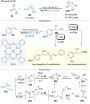
Scheme 47: Iron-catalyzed aminooxygenation for the synthesis of unprotected amino alcohols 200.

Scheme 48: Iron-catalyzed intramolecular aminofluorination of alkenes 209.
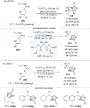
Scheme 49: Iron-catalyzed intramolecular aminochlorination and aminobromination of alkenes 209.

Scheme 50: Iron-catalyzed intermolecular aminofluorination of alkenes 82.

Scheme 51: Iron-catalyzed aminochlorination of alkenes 82.

Scheme 52: Iron-catalyzed phosphinoylazidation of alkenes 108.
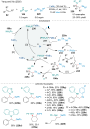
Scheme 53: Synergistic photoredox/iron-catalyzed three-component aminoselenation of trisubstituted alkenes 82.
Biological properties and conformational studies of amphiphilic Pd(II) and Ni(II) complexes bearing functionalized aroylaminocarbo-N-thioylpyrrolinate units
- Samet Poyraz,
- Samet Belveren,
- Sabriye Aydınoğlu,
- Mahmut Ulger,
- Abel de Cózar,
- Maria de Gracia Retamosa,
- Jose M. Sansano and
- H. Ali Döndaş
Beilstein J. Org. Chem. 2021, 17, 2812–2821, doi:10.3762/bjoc.17.192
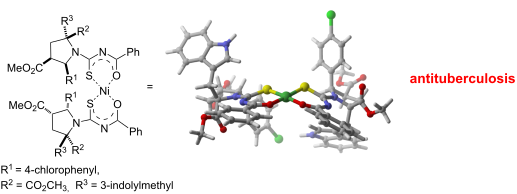
- -dipolar cycloaddition [16][21][22], were submitted to the reaction with benzoyl isothiocyanate in refluxing acetonitrile to obtain compounds L1, L2 and L3 in good yields [16][21]. Due to the very low biological activity of these ligands by themselves, the chelation with nickel(II) and palladium(II) was

Graphical Abstract

Scheme 1: Synthetic route for the preparation of L1-M, L2-M and L3-M complexes.
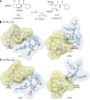
Figure 1: Main geometrical features and the relative energies (in kcal·mol–1) of (A) ligand L1, (B) nickel- a...
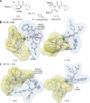
Figure 2: Main geometrical features and the relative energies (in kcal mol–1) of (A) ligand L3, (B) nickel- a...
Synthesis of new bile acid-fused tetrazoles using the Schmidt reaction
- Dušan Đ. Škorić,
- Olivera R. Klisurić,
- Dimitar S. Jakimov,
- Marija N. Sakač and
- János J. Csanádi
Beilstein J. Org. Chem. 2021, 17, 2611–2620, doi:10.3762/bjoc.17.174
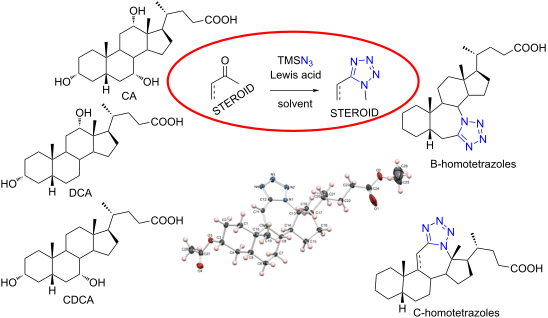
- ]. The main approach in the synthesis of the tetrazoles is 1,3-dipolar cycloaddition between azide and nitrile. These reactions often follow the principles of “click” chemistry [20]. Although the formation of tetrazole in the Schmidt reaction of ketones was noted in the original study by Schmidt himself
- , derivatives of bile acid, androstene, and cholestane were prepared, with the tetrazole ring not being fused to the steroid core [30][31][32][33]. Some fused steroidal tetrazole derivatives were obtained by intramolecular 1,3-dipolar cycloaddition [34][35]. It should be noted that the Schmidt reaction

Graphical Abstract

Figure 1: Structures of the steroidal tetrazoles that showed anticancer potential in vitro.

Figure 2: Mechanism of the Schmidt reaction.

Scheme 1: Synthesis of 12-oxo intermediates. Reagents and conditions: a) EtOAc, pTsOH, reflux, 14 h (81%); b)...

Scheme 2: Synthesis of 7-oxo intermediate 11 from chenodeoxycholic acid (9). Reagents and conditions: a) EtOA...

Figure 3: Mercury [51] drawing of the molecular structures of compounds 13 and 14, with labelling of nonhydrogen ...

Figure 4: Dose dependence of the cytotoxicity of tested compounds on treated cell lines. All compounds were t...
Synthesis and antimicrobial activity of 1H-1,2,3-triazole and carboxylate analogues of metronidazole
- Satya Kumar Avula,
- Syed Raza Shah,
- Khdija Al-Hosni,
- Muhammad U. Anwar,
- Rene Csuk,
- Biswanath Das and
- Ahmed Al-Harrasi
Beilstein J. Org. Chem. 2021, 17, 2377–2384, doi:10.3762/bjoc.17.154
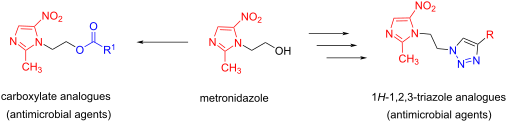
- . The structure of metronidazide 3 was unambiguously confirmed by single crystal X-ray analysis (Figure 3). The next step was carried out by using “click” chemistry involving the 1,3-dipolar cycloaddition reaction between metronidazide 3 and alkyne derivative 4a in the presence of CuI and Hünig’s base

Graphical Abstract

Figure 1: Structure of metronidazole (1).

Figure 2: Chemical structures of some metronidazole derivatives with different biological activity.

Figure 3: Crystal structure of compound 3. Colour codes: carbon = grey, mitrogen = blue, oxygen = red, hydrog...

Scheme 1: Reagents and conditions: (a) TsCl, Et3N, dry DCM, DMAP, 0 °C to room temperature, 5 h, 96%; (b) NaN3...

Figure 4: Crystal structure of 1H-1,2,3-triazole compound 5c: Colour codes: carbon = grey, nitrogen = blue, o...

Scheme 2: Reagents and conditions: (a) acid chlorides 6a–e, pyridine, dry DCM, DMAP, room temperature, 4–5 h,...

Figure 5: Crystal structures of compound 7b. Colour codes: carbon = grey, nitrogen = blue, oxygen = red, hydr...

Figure 6: General structural feature of the synthesized molecules 5.

Figure 7: The graph representing the antifungal activity of Didymella sp. against compounds 5a–i and 7a–e.

Figure 8: The graph representing the antibacterial activity of E. coli against compounds 5a–i and 7a–e.
(Phenylamino)pyrimidine-1,2,3-triazole derivatives as analogs of imatinib: searching for novel compounds against chronic myeloid leukemia
- Luiz Claudio Ferreira Pimentel,
- Lucas Villas Boas Hoelz,
- Henayle Fernandes Canzian,
- Frederico Silva Castelo Branco,
- Andressa Paula de Oliveira,
- Vinicius Rangel Campos,
- Floriano Paes Silva Júnior,
- Rafael Ferreira Dantas,
- Jackson Antônio Lamounier Camargos Resende,
- Anna Claudia Cunha,
- Nubia Boechat and
- Mônica Macedo Bastos
Beilstein J. Org. Chem. 2021, 17, 2260–2269, doi:10.3762/bjoc.17.144
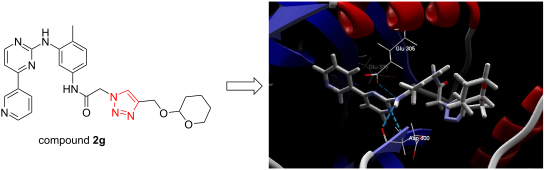
- )pyrimidine-pyridine (PAPP) group as a pharmacophoric fragment, and these compounds were biologically evaluated. The synthesis of twelve new compounds was performed in three steps and assisted by microwave irradiation in a 1,3-dipolar cycloaddition to obtain 1,2,3-triazole derivatives substituted on carbon C
- in the docking studies. Keywords: chronic myeloid leukemia; 1,3-dipolar cycloaddition; imatinib; (phenylamino)pyrimidine-pyridine; 1,2,3-triazole; Introduction Changes in tyrosine kinase proteins (TKPs), either by mutation or chromosomal translocation, can turn them into potent oncogenes
- developed by Sharpless and collaborators, to the Huisgen cycloaddition (a 1,3-dipolar cycloaddition reaction to obtain this heterocycle) allowed the regiospecific synthesis of the 1,4-disubstituted isomers with good yields in the presence of copper(I) salts [15][16][17]. Since then, medicinal chemists used

Graphical Abstract

Figure 1: Proposed structural modifications to obtain triazole derivatives 1a, b and 2a–j.

Scheme 1: Synthetic route of the triazole derivatives 1a,b, and 2a–j.

Figure 2: Asymmetric unit representation of the 1,2,3-triazole derivative 2b. Displacement ellipsoids are dra...

Figure 3: Screening of the triazole derivatives of imatinib 1a,b, and 2a–j at concentrations of 1 μM and 10 μ...

Figure 4: Interaction maps of IMT, 2c, 2d, and 2g with the BCR-Abl-1 structure (PDB code: 3PYY), showing ster...
A study on selective transformation of norbornadiene into fluorinated cyclopentane-fused isoxazolines
- Zsanett Benke,
- Attila M. Remete and
- Loránd Kiss
Beilstein J. Org. Chem. 2021, 17, 2051–2066, doi:10.3762/bjoc.17.132
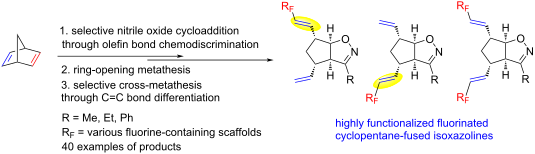
- Abstract This work presents an examination of the selective functionalization of norbornadiene through nitrile oxide 1,3-dipolar cycloaddition/ring-opening metathesis (ROM)/cross-metathesis (CM) protocols. Functionalization of commercially available norbornadiene provided novel bicyclic scaffolds with
- oxide 1,3-dipolar cycloaddition/ROM/CM strategies was presented. The stepwise functionalization of norbornadiene across the ring olefin bonds generated fluorine-containing alkenylated cyclopentane-fused isoxazolines. The synthetic protocol was based on selective nitrile oxide cycloaddition to the

Graphical Abstract
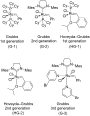
Figure 1: Some commercial Ru-based catalysts used in the current work.

Figure 2: Synthesis of divinylated cyclopentane-fused isoxazolines [41].
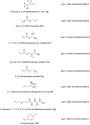
Figure 3: Various fluorine-containing olefins used in the current work.

Scheme 1: Cross-metathesis of divinylated isoxazoline (±)-4 with 1,1,1,3,3,3-hexafluoropropan-2-yl acrylate (...

Scheme 2: Cross-metathesis of divinylated isoxazoline (±)-4 with 2,2,3,3,4,4,4-heptafluorobutyl acrylate (7d)....

Scheme 3: Cross-metathesis of divinylated isoxazoline (±)-4 with 2,2,2-trifluoroethyl acrylate (7e).

Scheme 4: Cross-metathesis of divinylated isoxazoline (±)-4 with 1,1,1-trifluoro-2-(trifluoromethyl)pent-4-en...

Scheme 5: Cross-metathesis of divinylated isoxazoline (±)-4 with 8-(allyloxy)-1,1,1,2,2,3,3,4,4,5,5,6,6-tride...

Scheme 6: Cross-metathesis of divinylated isoxazoline (±)-4 with 4-fluorostyrene (7h).

Scheme 7: Selective CM of divinylated isoxazoline (±)-5 with 1,1,1,3,3,3-hexafluoropropan-2-yl acrylate (7c).

Scheme 8: Cross-metathesis of divinylated isoxazoline (±)-5 with 2,2,3,3,4,4,4-heptafluorobutyl acrylate (7d)....

Scheme 9: Cross-metathesis of divinylated isoxazoline (±)-5 with 2,2,2-trifluoroethyl acrylate (7e).

Scheme 10: Cross-metathesis of divinylated isoxazoline (±)-5 with 1,1,1-trifluoro-2-(trifluoromethyl)pent-4-en...

Scheme 11: Cross-metathesis of divinylated isoxazoline (±)-5 with 8-(allyloxy)-1,1,1,2,2,3,3,4,4,5,5,6,6-tride...

Scheme 12: Cross-metathesis of divinylated isoxazoline (±)-5 with 4-fluorostyrene (7h).

Scheme 13: Cross-metathesis of divinylated isoxazoline (±)-6 with 1,1,1,3,3,3-hexafluoropropan-2-yl acrylate (...

Scheme 14: Cross-metathesis of divinylated isoxazoline (±)-6 with 2,2,3,3,4,4,4-heptafluorobutyl acrylate (7d)....

Scheme 15: Cross-metathesis of divinylated isoxazoline (±)-6 with 2,2,2-trifluoroethyl acrylate (7e).

Scheme 16: Cross-metathesis of divinylated isoxazoline (±)-6 with 1,1,1-trifluoro-2-(trifluoromethyl)pent-4-en...

Scheme 17: Cross-metathesis of divinylated isoxazoline (±)-6 with 8-(allyloxy)-1,1,1,2,2,3,3,4,4,5,5,6,6-tride...

Scheme 18: Cross-metathesis of divinylated isoxazoline (±)-6 with 4-fluorostyrene (7h).

Figure 4: Chemoselective CM reaction due to steric hindrance.
A recent overview on the synthesis of 1,4,5-trisubstituted 1,2,3-triazoles
- Pezhman Shiri,
- Ali Mohammad Amani and
- Thomas Mayer-Gall
Beilstein J. Org. Chem. 2021, 17, 1600–1628, doi:10.3762/bjoc.17.114
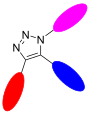
- applications of these five-membered N-heterocycles are the result of both their easy synthetic procedures and ring functionalization [9][31][32]. Typically, 1,2,3-triazole derivatives are prepared via a 1,3-dipolar cycloaddition reaction between azides and alkynes [33]. It is worth noting that the metal
- 1,2,3-triazoles through multicomponent reactions and the relevant mechanistic aspects have been surveyed by Chen, Ren, et al. [27]. The 1,3-dipolar cycloaddition reaction between azides and alkynes is the most efficient pathway for the preparation of disubstituted 1,2,3-triazole derivatives. The copper
- of the imine intermediate produces the intermediate enamine 13. The 1,3-dipolar cycloaddition of enamine 13 with azide produces intermediate 1,2,3-triazoline 14. In continuation, a ring-opening process is promoted by acetic acid to afford the intermediate 16. Afterward, triazene intermediate 17 was
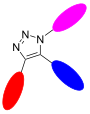
Graphical Abstract

Figure 1: Some significant triazole derivatives [8,23-27].
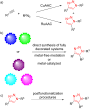
Scheme 1: A general comparison between synthetic routes for disubstituted 1,2,3-triazole derivatives and full...

Scheme 2: Synthesis of formyltriazoles 3 from the treatment of α-bromoacroleins 1 with azides 2.

Scheme 3: A probable mechanism for the synthesis of formyltriazoles 5 from the treatment of α-bromoacroleins 1...

Scheme 4: Synthesis of 1,4,5-trisubstituted 1,2,3-triazoles 8 from the reaction of aryl azides 7 with enamino...
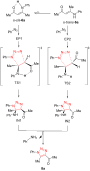
Scheme 5: Proposed mechanism for the synthesis of 1,4,5-trisubstituted 1,2,3-triazoles from the reaction of a...

Scheme 6: Synthesis of 1,4,5-trisubstituted 1,2,3-triazoles 11 from the reaction of primary amines 10 with 1,...

Scheme 7: The proposed mechanism for the synthesis of 1,4,5-trisubstituted 1,2,3-triazoles 11 from the reacti...

Scheme 8: Synthesis of fully decorated 1,2,3-triazoles 19 containing a sulfur-based side chain.

Scheme 9: Mechanism for the formation of fully decorated 1,2,3-triazoles 19 containing a sulfur-based side ch...

Scheme 10: Synthesis of fully decorated 1,2,3-triazole compounds 25 through the regioselective addition and cy...

Scheme 11: A reasonable mechanism for the synthesis of fully decorated 1,2,3-triazole compounds 25 through the...
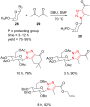
Scheme 12: Synthesis of 1,4,5-trisubstituted glycosyl-containing 1,2,3-triazole derivatives 30 from the reacti...

Scheme 13: Synthesis of 1,4,5-trisubstituted 1,2,3-triazoles 34 via intramolecular cyclization reaction of ket...

Scheme 14: Synthesis of fully decorated 1,2,3-triazoles 38 from the reaction of aldehydes 35, amines 36, and α...

Scheme 15: A reasonable mechanism for the synthesis of fully decorated 1,2,3-triazoles 38 from the reaction of...
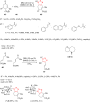
Scheme 16: Synthesis of functionally rich double C- and N-vinylated 1,2,3-triazoles 45 and 47.

Scheme 17: Synthesis of disubstituted 4-chloro-, 4-bromo-, and 4-iodo-1,2,3-triazoles 50.

Scheme 18: a) A general route for SPAAC in polymer chemistry and b) synthesis of a novel pH-sensitive polymeri...

Scheme 19: Synthesis of 5-allenyl-1,2,3-triazoles 60 by the treatment of alkynes 57, azides 58, and propargyli...

Scheme 20: A reasonable mechanism for the synthesis of 5-allenyl-1,2,3-triazoles 60 by the treatment of alkyne...

Scheme 21: Synthesis of 5‐alkynyl-1,2,3-triazoles 69.

Scheme 22: A reasonable mechanism for the synthesis of 5‐alkynyl-1,2,3-triazoles 69.
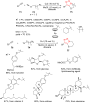
Scheme 23: Synthesis of sulfur-cycle-fused 1,2,3-triazoles 75 and 77.

Scheme 24: A reasonable mechanism for the synthesis of sulfur-cycle-fused 1,2,3‐triazoles 75 and 77.

Scheme 25: Synthesis of 5-selanyltriazoles 85 from the reaction of ethynylstibanes 82, organic azides 83, and ...

Scheme 26: A mechanism for the synthesis of 5-selanyltriazoles 85 from the reaction of ethynylstibanes 82, org...

Scheme 27: Synthesis of trisubstituted triazoles containing an Sb substituent at position C5 in 93 and 5-unsub...

Scheme 28: Synthesis of asymmetric triazole disulfides 98 from disulfide-containing tert-butyltosyl disulfide 97...

Scheme 29: A mechanism for the synthesis of asymmetric triazole disulfides 98 from disulfide-containing tert-bu...

Scheme 30: Synthesis of triazole-fused sultams 104.

Scheme 31: Synthesis of 1,2,3-triazole-fused tricyclic heterocycles 106.

Scheme 32: A reasonable mechanism for the synthesis of 1,2,3-triazole-fused tricyclic heterocycles 106.

Scheme 33: Synthesis of 5-aryl-substituted 1,2,3-triazole derivatives 112.

Scheme 34: A reasonable mechanism for the synthesis of 5-aryl-substituted 1,2,3-triazole derivatives 112.

Scheme 35: Synthesis of 1,4,5-trisubstituted 1,2,3-triazole-5-carboxamides 119.

Scheme 36: A probable mechanism for the synthesis of 1,4,5-trisubstituted 1,2,3-triazole-5-carboxamides 119.

Scheme 37: Synthesis of fully decorated triazoles 125 via the Pd/C-catalyzed arylation of disubstituted triazo...

Scheme 38: Synthesis of triazolo[1,5-a]indolones 131.
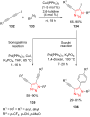
Scheme 39: Synthesis of unsymmetrically substituted triazole-fused enediyne systems 135 and 5-aryl-4-ethynyltr...

Scheme 40: Synthesis of Pd/Cu-BNP 139 and application of 139 in the synthesis of polycyclic triazoles 142.

Scheme 41: A probable mechanism for the synthesis of polycyclic triazoles 142.

Scheme 42: Synthesis of highly functionalized 1,2,3-triazole-fused 5-, 6-, and 7-membered rings 152–154.

Scheme 43: A probable mechanism for the synthesis of highly functionalized 1,2,3-triazole-fused 5-, 6-, and 7-...

Scheme 44: Synthesis of fully functionalized 1,2,3-triazolo-fused chromenes 162, 164, and 166 via the intramol...

Scheme 45: Ru-catalyzed synthesis of fully decorated triazoles 172.

Scheme 46: Synthesis of 4-cyano-1,2,3-triazoles 175.

Scheme 47: Synthesis of functionalized triazoles from the reaction of 1-alkyltriazenes 176 and azides 177 and ...
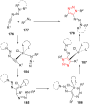
Scheme 48: Mechanism for the synthesis of functionalized triazoles from the reaction of 1-alkyltriazenes 176 a...
Chemical synthesis of C6-tetrazole ᴅ-mannose building blocks and access to a bioisostere of mannuronic acid 1-phosphate
- Eleni Dimitriou and
- Gavin J. Miller
Beilstein J. Org. Chem. 2021, 17, 1527–1532, doi:10.3762/bjoc.17.110
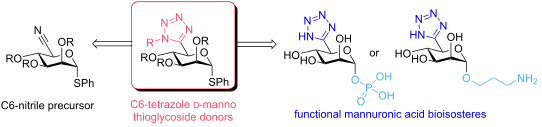
- mannuronic acid building blocks, appropriately modified at the carboxylate C6 position with a bioisosteric tetrazole. Thioglycosides containing a protected C6-tetrazole are accessed from a C6-nitrile, through dipolar cycloaddition using NaN3 with n-Bu2SnO. We also demonstrate access to orthogonally C4
- yield of 50% (compared to 31% in accessing 9 from 7). Nitrile 16 then underwent dipolar cycloaddition with NaN3, converting it to C6-tetrazole thioglycoside 17 in 55% yield. This material was then protected at tetrazole nitrogen in 76% yield using PMBCl to give 18 and 19 (N1-PMB/N2-PMB = 1:1.2) as

Graphical Abstract

Figure 1: a) Chemical structure of alginate showing constituent M and G residues and C2/C3 acetylation for on...

Scheme 1: a) H2N(CH2)2CN, PyBOP, DIPEA, CH2Cl2, 0 °C, 40 min, 47% (+44% 3); b) TBSOTf, imidazole, DMAP, DMF, ...

Scheme 2: a) BzCl, DMAP, pyridine, CH2Cl2, rt, 24 h, 90%; b) TBSOTf, imidazole, DMAP, DMF, 40 °C, 24 h, 78%; ...

Scheme 3: a) PMBCl, KI, K2CO3, DMF, rt, 53% for 11 and 12; b) BnBr, DMF, Et3N, DCM, rt, 31% for 13 and 14.

Scheme 4: a) DMSO, SO3·pyridine, Et3N, rt, 1 h, 96%; b) H2NOH·HCl, THF, H2O, Na2CO3, 89%; c) POCl3, MeCN, 65 ...
A comprehensive review of flow chemistry techniques tailored to the flavours and fragrances industries
- Guido Gambacorta,
- James S. Sharley and
- Ian R. Baxendale
Beilstein J. Org. Chem. 2021, 17, 1181–1312, doi:10.3762/bjoc.17.90
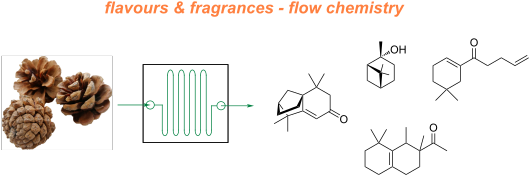

Graphical Abstract

Figure 1: Representative shares of the global F&F market (2018) segmented on their applications [1].

Figure 2: General structure of an international fragrance company [2].

Figure 3: The Michael Edwards fragrance wheel.

Figure 4: Examples of oriental (1–3), woody (4–7), fresh (8–10), and floral (11 and 12) notes.

Figure 5: A basic depiction of batch vs flow.

Scheme 1: Examples of reactions for which flow processing outperforms batch.

Scheme 2: Some industrially important aldol-based transformations.

Scheme 3: Biphasic continuous aldol reactions of acetone and various aldehydes.

Scheme 4: Aldol synthesis of 43 in flow using LiHMDS as the base.

Scheme 5: A semi-continuous synthesis of doravirine (49) involving a key aldol reaction.

Scheme 6: Enantioselective aldol reaction using 5-(pyrrolidin-2-yl)tetrazole (51) as catalyst in a microreact...

Scheme 7: Gröger's example of asymmetric aldol reaction in aqueous media.

Figure 6: Immobilised reagent column reactor types.

Scheme 8: Photoinduced thiol–ene coupling preparation of silica-supported 5-(pyrrolidin-2-yl)tetrazole 63 and...

Scheme 9: Continuous-flow approach for enantioselective aldol reactions using the supported catalyst 67.

Scheme 10: Ötvös’ employment of a solid-supported peptide aldol catalyst in flow.

Scheme 11: The use of proline tetrazole packed in a column for aldol reaction between cyclohexanone (65) and 2...

Scheme 12: Schematic diagram of an aminosilane-grafted Si-Zr-Ti/PAI-HF reactor for continuous-flow aldol and n...

Scheme 13: Continuous-flow condensation for the synthesis of the intermediate 76 to nabumetone (77) and Microi...

Scheme 14: Synthesis of ψ-Ionone (80) in continuous-flow via aldol condensation between citral (79) and aceton...

Scheme 15: Synthesis of β-methyl-ionones (83) from citral (79) in flow. The steps are separately described, an...

Scheme 16: Continuous-flow synthesis of 85 from 84 described by Gavriilidis et al.

Scheme 17: Continuous-flow scCO2 apparatus for the synthesis of 2-methylpentanal (87) and the self-condensed u...

Scheme 18: Chen’s two-step flow synthesis of coumarin (90).

Scheme 19: Pechmann condensation for the synthesis of 7-hydroxyxcoumarin (93) in flow. The setup extended to c...

Scheme 20: Synthesis of the dihydrojasmonate 35 exploiting nitro derivative proposed by Ballini et al.

Scheme 21: Silica-supported amines as heterogeneous catalyst for nitroaldol condensation in flow.

Scheme 22: Flow apparatus for the nitroaldol condensation of p-hydroxybenzaldehyde (102) to nitrostyrene 103 a...

Scheme 23: Nitroaldol reaction of 64 to 105 employing a quaternary ammonium functionalised PANF.

Scheme 24: Enantioselective nitroaldol condensation for the synthesis of 108 under flow conditions.

Scheme 25: Enatioselective synthesis of 1,2-aminoalcohol 110 via a copper-catalysed nitroaldol condensation.

Scheme 26: Examples of Knoevenagel condensations applied for fragrance components.

Scheme 27: Flow apparatus for Knoevenagel condensation described in 1989 by Venturello et al.

Scheme 28: Knoevenagel reaction using a coated multichannel membrane microreactor.

Scheme 29: Continuous-flow apparatus for Knoevenagel condensation employing sugar cane bagasse as support deve...

Scheme 30: Knoevenagel reaction for the synthesis of 131–135 in flow using an amine-functionalised silica gel. ...

Scheme 31: Continuous-flow synthesis of compound 137, a key intermediate for the synthesis of pregabalin (138)...
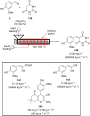
Scheme 32: Continuous solvent-free apparatus applied for the synthesis of compounds 140–143 using a TSE. Throu...

Scheme 33: Lewis et al. developed a spinning disc reactor for Darzens condensation of 144 and a ketone to furn...

Scheme 34: Some key industrial applications of conjugate additions in the F&F industry.

Scheme 35: Continuous-flow synthesis of 4-(2-hydroxyethyl)thiomorpholine 1,1-dioxide (156) via double conjugat...

Scheme 36: Continuous-flow system for Michael addition using CsF on alumina as the catalyst.

Scheme 37: Calcium chloride-catalysed asymmetric Michael addition using an immobilised chiral ligand.

Scheme 38: Continuous multistep synthesis for the preparation of (R)-rolipram (173). Si-NH2: primary amine-fun...

Scheme 39: Continuous-flow Michael addition using ion exchange resin Amberlyst® A26.

Scheme 40: Preparation of the heterogeneous catalyst 181 developed by Paixão et al. exploiting Ugi multicompon...

Scheme 41: Continuous-flow system developed by the Paixão’s group for the preparation of Michael asymmetric ad...

Scheme 42: Continuous-flow synthesis of nitroaldols catalysed by supported catalyst 184 developed by Wennemers...

Scheme 43: Heterogenous polystyrene-supported catalysts developed by Pericàs and co-workers.

Scheme 44: PANF-supported pyrrolidine catalyst for the conjugate addition of cyclohexanone (65) and trans-β-ni...

Scheme 45: Synthesis of (−)-paroxetine precursor 195 developed by Ötvös, Pericàs, and Kappe.

Scheme 46: Continuous-flow approach for the 5-step synthesis of (−)-oseltamivir (201) as devised by Hayashi an...

Scheme 47: Continuous-flow enzyme-catalysed Michael addition.

Scheme 48: Continuous-flow copper-catalysed 1,4 conjugate addition of Grignard reagents to enones. Reprinted w...

Scheme 49: A collection of commonly encountered hydrogenation reactions.

Figure 7: The ThalesNano H-Cube® continuous-flow hydrogenator.

Scheme 50: Chemoselective reduction of an α,β-unsaturated ketone using the H-Cube® reactor.

Scheme 51: Incorporation of Lindlar’s catalyst into the H-Cube® reactor for the reduction of an alkyne.

Scheme 52: Continuous-flow semi-hydrogenation of alkyne 208 to 209 using SACs with H-Cube® system.

Figure 8: The standard setups for tube-in-tube gas–liquid reactor units.

Scheme 53: Homogeneous hydrogenation of olefins using a tube-in-tube reactor setup.
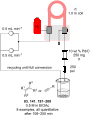
Scheme 54: Recyclable heterogeneous flow hydrogenation system.

Scheme 55: Leadbeater’s reverse tube-in-tube hydrogenation system for olefin reductions.

Scheme 56: a) Hydrogenation using a Pd-immobilised microchannel reactor (MCR) and b) a representation of the i...

Scheme 57: Hydrogenation of alkyne 238 exploiting segmented flow in a Pd-immobilised capillary reactor.

Scheme 58: Continuous hydrogenation system for the preparation of cyrene (241) from (−)-levoglucosenone (240).

Scheme 59: Continuous hydrogenation system based on CSMs developed by Hornung et al.

Scheme 60: Chemoselective reduction of carbonyls (ketones over aldehydes) in flow.

Scheme 61: Continuous system for the semi-hydrogenation of 256 and 258, developed by Galarneau et al.

Scheme 62: Continuous synthesis of biodiesel fuel 261 from lignin-derived furfural acetone (260).

Scheme 63: Continuous synthesis of γ-valerolacetone (263) via CTH developed by Pineda et al.

Scheme 64: Continuous hydrogenation of lignin-derived biomass (products 265, 266, and 267) using a sustainable...

Scheme 65: Ru/C or Rh/C-catalysed hydrogenation of arene in flow as developed by Sajiki et al.

Scheme 66: Polysilane-immobilized Rh–Pt-catalysed hydrogenation of arenes in flow by Kobayashi et al.

Scheme 67: High-pressure in-line mixing of H2 for the asymmetric reduction of 278 at pilot scale with a 73 L p...
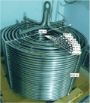
Figure 9: Picture of the PFR employed at Eli Lilly & Co. for the continuous hydrogenation of 278 [287]. Reprinted ...

Scheme 68: Continuous-flow asymmetric hydrogenation using Oppolzer's sultam 280 as chiral auxiliary.
Scheme 69: Some examples of industrially important oxidation reactions in the F&F industry. CFL: compact fluor...

Scheme 70: Gold-catalysed heterogeneous oxidation of alcohols in flow.
Scheme 71: Uozumi’s ARP-Pt flow oxidation protocol.

Scheme 72: High-throughput screening of aldehyde oxidation in flow using an in-line GC.

Scheme 73: Permanganate-mediated Nef oxidation of nitroalkanes in flow with the use of in-line sonication to p...

Scheme 74: Continuous-flow aerobic anti-Markovnikov Wacker oxidation.

Scheme 75: Continuous-flow oxidation of 2-benzylpyridine (312) using air as the oxidant.

Scheme 76: Continuous-flow photo-oxygenation of monoterpenes.

Scheme 77: A tubular reactor design for flow photo-oxygenation.

Scheme 78: Glucose oxidase (GOx)-mediated continuous oxidation of glucose using compressed air and the FFMR re...

Scheme 79: Schematic continuous-flow sodium hypochlorite/TEMPO oxidation of alcohols.

Scheme 80: Oxidation using immobilised TEMPO (344) was developed by McQuade et al.

Scheme 81: General protocol for the bleach/catalytic TBAB oxidation of aldehydes and alcohols.

Scheme 82: Continuous-flow PTC-assisted oxidation using hydrogen peroxide. The process was easily scaled up by...

Scheme 83: Continuous-flow epoxidation of cyclohexene (348) and in situ preparation of m-CPBA.

Scheme 84: Continuous-flow epoxidation using DMDO as oxidant.

Scheme 85: Mukayama aerobic epoxidation optimised in flow mode by the Favre-Réguillon group.

Scheme 86: Continuous-flow asymmetric epoxidation of derivatives of 359 exploiting a biomimetic iron catalyst.

Scheme 87: Continuous-flow enzymatic epoxidation of alkenes developed by Watts et al.

Scheme 88: Engineered multichannel microreactor for continuous-flow ozonolysis of 366.

Scheme 89: Continuous-flow synthesis of the vitamin D precursor 368 using multichannel microreactors. MFC: mas...

Scheme 90: Continuous ozonolysis setup used by Kappe et al. for the synthesis of various substrates employing ...

Scheme 91: Continuous-flow apparatus for ozonolysis as developed by Ley et al.

Scheme 92: Continuous-flow ozonolysis for synthesis of vanillin (2) using a film-shear flow reactor.

Scheme 93: Examples of preparative methods for ajoene (386) and allicin (388).

Scheme 94: Continuous-flow oxidation of thioanisole (389) using styrene-based polymer-supported peroxytungstat...

Scheme 95: Continuous oxidation of thiosulfinates using Oxone®-packed reactor.

Scheme 96: Continuous-flow electrochemical oxidation of thioethers.

Scheme 97: Continuous-flow oxidation of 400 to cinnamophenone (235).

Scheme 98: Continuous-flow synthesis of dehydrated material 401 via oxidation of methyl dihydrojasmonate (33).

Scheme 99: Some industrially important transformations involving Grignard reagents.

Scheme 100: Grachev et al. apparatus for continuous preparation of Grignard reagents.

Scheme 101: Example of fluidized Mg bed reactor with NMR spectrometer as on-line monitoring system.

Scheme 102: Continuous-flow synthesis of Grignard reagents and subsequent quenching reaction.

Figure 10: Membrane-based, liquid–liquid separator with integrated pressure control [52]. Adapted with permission ...

Scheme 103: Continuous-flow synthesis of 458, an intermediate to fluconazole (459).

Scheme 104: Continuous-flow synthesis of ketones starting from benzoyl chlorides.

Scheme 105: A Grignard alkylation combining CSTR and PFR technologies with in-line infrared reaction monitoring....

Scheme 106: Continuous-flow preparation of 469 from Grignard addition of methylmagnesium bromide.

Scheme 107: Continuous-flow synthesis of Grignard reagents 471.

Scheme 108: Preparation of the Grignard reagent 471 using CSTR and the continuous process for synthesis of the ...

Scheme 109: Continuous process for carboxylation of Grignard reagents in flow using tube-in-tube technology.

Scheme 110: Continuous synthesis of propargylic alcohols via ethynyl-Grignard reagent.

Scheme 111: Silica-supported catalysed enantioselective arylation of aldehydes using Grignard reagents in flow ...

Scheme 112: Acid-catalysed rearrangement of citral and dehydrolinalool derivatives.

Scheme 113: Continuous stilbene isomerisation with continuous recycling of photoredox catalyst.

Scheme 114: Continuous-flow synthesis of compound 494 as developed by Ley et al.

Scheme 115: Selected industrial applications of DA reaction.

Scheme 116: Multistep flow synthesis of the spirocyclic structure 505 via employing DA cycloaddition.

Scheme 117: Continuous-flow DA reaction developed in a plater flow reactor for the preparation of the adduct 508...

Scheme 118: Continuous-flow DA reaction using a silica-supported imidazolidinone organocatalyst.

Scheme 119: Batch vs flow for the DA reaction of (cyclohexa-1,5-dien-1-yloxy)trimethylsilane (513) with acrylon...

Scheme 120: Continuous-flow DA reaction between 510 and 515 using a shell-core droplet system.

Scheme 121: Continuous-flow synthesis of bicyclic systems from benzyne precursors.

Scheme 122: Continuous-flow synthesis of bicyclic scaffolds 527 and 528 for further development of potential ph...

Scheme 123: Continuous-flow inverse-electron hetero-DA reaction to pyridine derivatives such as 531.

Scheme 124: Comparison between batch and flow for the synthesis of pyrimidinones 532–536 via retro-DA reaction ...

Scheme 125: Continuous-flow coupled with ultrasonic system for preparation of ʟ-ascorbic acid derivatives 539 d...

Scheme 126: Two-step continuous-flow synthesis of triazole 543.

Scheme 127: Continuous-flow preparation of triazoles via CuAAC employing 546-based heterogeneous catalyst.

Scheme 128: Continuous-flow synthesis of compounds 558 through A3-coupling and 560 via AgAAC both employing the...

Scheme 129: Continuous-flow photoinduced [2 + 2] cycloaddition for the preparation of bicyclic derivatives of 5...

Scheme 130: Continuous-flow [2 + 2] and [5 + 2] cycloaddition on large scale employing a flow reactor developed...

Scheme 131: Continuous-flow preparation of the tricyclic structures 573 and 574 starting from pyrrole 570 via [...

Scheme 132: Continuous-flow [2 + 2] photocyclization of cinnamates.

Scheme 133: Continuous-flow preparation of cyclobutane 580 on a 5-plates photoreactor.

Scheme 134: Continuous-flow [2 + 2] photocycloaddition under white LED lamp using heterogeneous PCN as photocat...

Figure 11: Picture of the parallel tube flow reactor (PTFR) "The Firefly" developed by Booker-Milburn et al. a...

Scheme 135: Continuous-flow acid-catalysed [2 + 2] cycloaddition between silyl enol ethers and acrylic esters.

Scheme 136: Continuous synthesis of lactam 602 using glass column reactors.

Scheme 137: In situ generation of ketenes for the Staudinger lactam synthesis developed by Ley and Hafner.

Scheme 138: Application of [2 + 2 + 2] cycloadditions in flow employed by Ley et al.

Scheme 139: Examples of FC reactions applied in F&F industry.

Scheme 140: Continuous-flow synthesis of ibuprofen developed by McQuade et al.

Scheme 141: The FC acylation step of Jamison’s three-step ibuprofen synthesis.

Scheme 142: Synthesis of naphthalene derivative 629 via FC acylation in microreactors.

Scheme 143: Flow system for rapid screening of catalysts and reaction conditions developed by Weber et al.

Scheme 144: Continuous-flow system developed by Buorne, Muller et al. for DSD optimisation of the FC acylation ...

Scheme 145: Continuous-flow FC acylation of alkynes to yield β-chlorovinyl ketones such as 638.

Scheme 146: Continuous-flow synthesis of tonalide (619) developed by Wang et al.

Scheme 147: Continuous-flow preparation of acylated arene such as 290 employing Zr4+-β-zeolite developed by Kob...

Scheme 148: Flow system applied on an Aza-FC reaction catalysed by the thiourea catalyst 648.

Scheme 149: Continuous hydroformylation in scCO2.

Scheme 150: Two-step flow synthesis of aldehyde 655 through a sequential Heck reaction and subsequent hydroform...

Scheme 151: Single-droplet (above) and continuous (below) flow reactors developed by Abolhasani et al. for the ...

Scheme 152: Continuous hydroformylation of 1-dodecene (655) using a PFR-CSTR system developed by Sundmacher et ...

Scheme 153: Continuous-flow synthesis of the aldehyde 660 developed by Eli Lilly & Co. [32]. Adapted with permissio...

Scheme 154: Continuous asymmetric hydroformylation employing heterogenous catalst supported on carbon-based sup...

Scheme 155: Examples of acetylation in F&F industry: synthesis of bornyl (S,R,S-664) and isobornyl (S,S,S-664) ...

Scheme 156: Continuous-flow preparation of bornyl acetate (S,R,S-664) employing the oscillating flow reactor.

Scheme 157: Continuous-flow synthesis of geranyl acetate (666) from acetylation of geraniol (343) developed by ...

Scheme 158: 12-Ttungstosilicic acid-supported silica monolith-catalysed acetylation in flow.

Scheme 159: Continuous-flow preparation of cyclopentenone 676.

Scheme 160: Two-stage synthesis of coumarin (90) via acetylation of salicylaldehyde (88).

Scheme 161: Intensification process for acetylation of 5-methoxytryptamine (677) to melatonin (678) developed b...

Scheme 162: Examples of macrocyclic musky odorants both natural (679–681) and synthetic (682 and 683).

Scheme 163: Flow setup combined with microwave for the synthesis of macrocycle 686 via RCM.

Scheme 164: Continuous synthesis of 2,5-dihydro-1H-pyrroles via ring-closing metathesis.

Scheme 165: Continuous-flow metathesis of 485 developed by Leadbeater et al.

Figure 12: Comparison between RCM performed using different routes for the preparation of 696. On the left the...

Scheme 166: Continuous-flow RCM of 697 employed the solid-supported catalyst 698 developed by Grela, Kirschning...

Scheme 167: Continuous-flow RORCM of cyclooctene employing the silica-absorbed catalyst 700.

Scheme 168: Continuous-flow self-metathesis of methyl oleate (703) employing SILP catalyst 704.

Scheme 169: Flow apparatus for the RCM of 697 using a nanofiltration membrane for the recovery and reuse of the...

Scheme 170: Comparison of loadings between RCMs performed with different routes for the synthesis of 709.
N-tert-Butanesulfinyl imines in the asymmetric synthesis of nitrogen-containing heterocycles
- Joseane A. Mendes,
- Paulo R. R. Costa,
- Miguel Yus,
- Francisco Foubelo and
- Camilla D. Buarque
Beilstein J. Org. Chem. 2021, 17, 1096–1140, doi:10.3762/bjoc.17.86

- stereoselective synthesis is especially interesting, highlighting the 1,3-dipolar cycloaddition reactions with azomethine ylides as an example of transformation that take place with great stereocontrol, and allow the synthesis of polyfunctionalized pyrrolidines in a single reaction step [91][92]. On the other

Graphical Abstract

Scheme 1: General strategy for the enantioselective synthesis of N-containing heterocycles from N-tert-butane...

Scheme 2: Methodologies for condensation of aldehydes and ketones with tert-butanesulfinamides (1).

Scheme 3: Transition models for cis-aziridines and trans-aziridines.

Scheme 4: Mechanism for the reduction of N-tert-butanesulfinyl imines.

Scheme 5: Transition models for the addition of organomagnesium and organolithium compounds to N-tert-butanes...

Scheme 6: Synthesis of 2,2-dibromoaziridines 15 from aldimines 14 and bromoform, and proposed non-chelation-c...

Scheme 7: Diastereoselective synthesis of aziridines from tert-butanesulfinyl imines.

Scheme 8: Synthesis of vinylaziridines 22 from aldimines 14 and 1,3-dibromopropene 23, and proposed chelation...

Scheme 9: Synthesis of vinylaziridines 27 from aldimines 14 and α-bromoesters 26, and proposed transition sta...

Scheme 10: Synthesis of 2-chloroaziridines 28 from aldimines 14 and dichloromethane, and proposed transition s...

Scheme 11: Synthesis of cis-vinylaziridines 30 and 31 from aldimines 14 and bromomethylbutenolide 29.

Scheme 12: Synthesis of 2-chloro-2-aroylaziridines 36 and 32 from aldimines 14, arylnitriles 34, and silyldich...

Scheme 13: Synthesis of trifluoromethylaziridines 39 and proposed transition state of the aziridination.

Scheme 14: Synthesis of aziridines 42 and proposed state transition.

Scheme 15: Synthesis of 1-substituted 2-azaspiro[3.3]heptanes, 1-phenyl-2-azaspiro[3.4]octane and 1-phenyl-2-a...

Scheme 16: Synthesis of 1-substituted 2,6-diazaspiro[3.3]heptanes 48 from chiral imines 14 and 1-Boc-azetidine...

Scheme 17: Synthesis of β-lactams 52 from chiral imines 14 and dimethyl malonate (49).

Scheme 18: Synthesis of spiro-β-lactam 57 from chiral (RS)-N-tert-butanesulfinyl isatin ketimine 53 and ethyl ...

Scheme 19: Synthesis of β-lactam 60, a precursor of (−)-batzelladine D (61) and (−)-13-epi-batzelladine D (62)...

Scheme 20: Rhodium-catalyzed asymmetric synthesis of 3-substituted pyrrolidines 66 from chiral imine (RS)-63 a...

Scheme 21: Asymmetric synthesis of 1,3-disubstituted isoindolines 69 and 70 from chiral imine 67.

Scheme 22: Asymmetric synthesis of cis-2,5-disubstituted pyrrolidines 73 from chiral imine (RS)-71.

Scheme 23: Asymmetric synthesis of 3-hydroxy-5-substituted pyrrolidin-2-ones 77 from chiral imine (RS)-74.

Scheme 24: Asymmetric synthesis of 4-hydroxy-5-substituted pyrrolidin-2-ones 80 from chiral imines 79.

Scheme 25: Asymmetric synthesis of 3-pyrrolines 82 from chiral imines 14 and ethyl 4-bromocrotonate (81).

Scheme 26: Asymmetric synthesis of γ-amino esters 84, and tetramic acid derivative 86 from chiral imines (RS)-...

Scheme 27: Asymmetric synthesis of α-methylene-γ-butyrolactams 90 from chiral imines (Z,SS)-87 and ethyl 2-bro...

Scheme 28: Asymmetric synthesis of methylenepyrrolidines 92 from chiral imines (RS)-14 and 2-(trimethysilylmet...

Scheme 29: Synthesis of dibenzoazaspirodecanes from cyclic N-tert-butanesulfinyl imines.

Scheme 30: Stereoselective synthesis of cyclopenta[c]proline derivatives 103 from β,γ-unsaturated α-amino acid...

Scheme 31: Stereoselective synthesis of alkaloids (−)-angustureine (107) and (−)-cuspareine (108).

Scheme 32: Stereoselective synthesis of alkaloids (−)-pelletierine (112) and (+)-coniine (117).

Scheme 33: Synthesis of piperidine alkaloids (+)-dihydropinidine (122a), (+)-isosolenopsin (122b) and (+)-isos...

Scheme 34: Stereoselective synthesis of the alkaloids(+)-sedamine (125) from chiral imine (SS)-119.

Scheme 35: Stereoselective synthesis of trans-5-hydroxy-6-substituted-2-piperidinones 127 and 129 from chiral ...

Scheme 36: Stereoselective synthesis of trans-5-hydroxy-6-substituted ethanone-2-piperidinones 132 from chiral...

Scheme 37: Stereoselective synthesis of trans-3-benzyl-5-hydroxy-6-substituted-2-piperidinones 136 from chiral...

Scheme 38: Stereoselective synthesis of trans-5-hydroxy-6-substituted 2-piperidinones 139 from chiral imine 138...

Scheme 39: Stereoselective synthesis of ʟ-hydroxypipecolic acid 145 from chiral imine 144.

Scheme 40: Synthesis of 1-substituted isoquinolones 147, 149 and 151.

Scheme 41: Stereoselective synthesis of 3-substituted dihydrobenzo[de]isoquinolinones 154.

Scheme 42: Enantioselective synthesis of alkaloids (S)-1-benzyl-6,7-dimethoxy-1,2,3,4-tetrahydroisoquinoline (...

Scheme 43: Enantioselective synthesis of alkaloids (−)-cermizine B (171) and (+)-serratezomine E (172) develop...

Scheme 44: Stereoselective synthesis of (+)-isosolepnosin (177) and (+)-solepnosin (178) from homoallylamine d...

Scheme 45: Stereoselective synthesis of tetrahydroquinoline derivatives 184, 185 and 187 from chiral imines (RS...

Scheme 46: Stereoselective synthesis of pyridobenzofuran and pyridoindole derivatives 193 from homopropargylam...

Scheme 47: Stereoselective synthesis of 2-substituted 1,2,5,6-tetrahydropyridines 196 from chiral imines (RS)-...

Scheme 48: Stereoselective synthesis of 2-substituted trans-2,6-disubstituted piperidine 199 from chiral imine...

Scheme 49: Stereoselective synthesis of cis-2,6-disubstituted piperidines 200, and alkaloid (+)-241D, from chi...

Scheme 50: Stereoselective synthesis of 6-substituted piperidines-2,5-diones 206 and 1,7-diazaspiro[4.5]decane...

Scheme 51: Stereoselective synthesis of spirocyclic oxindoles 210 from chiral imines (RS)-53.

Scheme 52: Stereoselective synthesis of azaspiro compound 213 from chiral imine 211.

Scheme 53: Stereoselective synthesis of tetrahydroisoquinoline derivatives from chiral imines (RS)-214.

Scheme 54: Stereoselective synthesis of (−)-crispine A 223 from chiral imine (RS)-214.

Scheme 55: Synthesis of (−)-harmicine (228) using tert-butanesulfinamide through haloamide cyclization.

Scheme 56: Stereoselective synthesis of tetraponerines T1–T8.

Scheme 57: Stereoselective synthesis of phenanthroindolizidines 246a and (−)-tylophorine (246b), and phenanthr...

Scheme 58: Stereoselective synthesis of indoline, tetrahydroquinoline and tetrahydrobenzazepine derivatives 253...

Scheme 59: Stereoselective synthesis of (+)-epohelmin A (258) and (+)-epohelmin B (260) from aldimine (RS)-79.

Scheme 60: Stereoselective synthesis of (−)-epiquinamide (266) from chiral aldimine (SS)-261.

Scheme 61: Synthesis synthesis of (–)-hippodamine (273) and (+)-epi-hippodamine (272) using chiral sulfinyl am...

Scheme 62: Stereoselective synthesis of (+)-grandisine D (279) and (+)-amabiline (283).

Scheme 63: Stereoselective synthesis of (−)-epiquinamide (266) and (+)-swaisonine (291) from aldimine (SS)-126....

Scheme 64: Stereoselective synthesis of (+)-C(9a)-epi-epiquinamide (294).

Scheme 65: Stereoselective synthesis of (+)-lasubine II (298) from chiral aldimine (SS)-109.

Scheme 66: Stereoselective synthesis of (−)-epimyrtine (300a) and (−)-lasubine II (ent-302) from β-amino keton...

Scheme 67: Stereoselective synthesis of (−)-tabersonine (310), (−)-vincadifformine (311), and (−)-aspidospermi...

Scheme 68: Stereoselective synthesis of (+)-epohelmin A (258) and (+)-epohelmin B (260) from aldehyde 313 and ...

Scheme 69: Total synthesis of (+)-lysergic acid (323) from N-tert-butanesulfinamide (RS)-1.
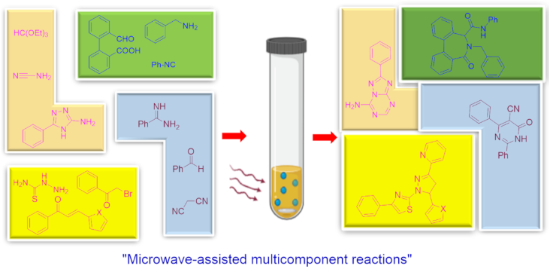
Microwave-assisted multicomponent reactions in heterocyclic chemistry and mechanistic aspects
- Shivani Gulati,
- Stephy Elza John and
- Nagula Shankaraiah
Beilstein J. Org. Chem. 2021, 17, 819–865, doi:10.3762/bjoc.17.71
- plausible mechanism shown in Scheme 14 explains the formation of azomethine ylide B by condensation of isatin with amino acid followed by release of a molecule of CO2 via A. The imine B undergoes 1,3-dipolar cycloaddition with the dipolarophiles 39. The cyclization yields the desired product 40 of the three
- introduces primary amines for 1,3-dipolar cycloaddition which is less explored due to the probability of competitive Strecker degradation over decarboxylation of azomethine ylides. The protocol reveals the efficiency of MW assisted reaction with reduced reaction time from 18 h to 12 min and enhanced the
- ylide formation over the expected Strecker degradation. The azomethine ylide trapped by 3-alkenylindole undergoes 1,3-dipolar cycloaddition and led to the cycloadducts 44. 4 Pyrans Pyran is a six-membered heterocyclic, non-aromatic ring, consisting of five carbon atoms and one oxygen atom with two

Graphical Abstract

Figure 1: Marketed drugs with acridine moiety.

Scheme 1: Synthesis of 4-arylacridinediones.

Scheme 2: Proposed mechanism for acridinedione synthesis.

Scheme 3: Synthesis of tetrahydrodibenzoacridinones.

Scheme 4: Synthesis of naphthoacridines.

Scheme 5: Plausible mechanism for naphthoacridines.
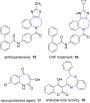
Figure 2: Benzoazepines based potent molecules.

Scheme 6: Synthesis of azepinone.

Scheme 7: Proposed mechanism for azepinone formation.

Scheme 8: Synthesis of benzoazulenen-1-one derivatives.

Scheme 9: Proposed mechanism for benzoazulene-1-one synthesis.

Figure 3: Indole-containing pharmacologically active molecules.

Scheme 10: Synthesis of functionalized indoles.

Scheme 11: Plausible mechanism for the synthesis of functionalized indoles.

Scheme 12: Synthesis of spirooxindoles.

Scheme 13: Synthesis of substituted spirooxindoles.

Scheme 14: Plausible mechanism for the synthesis of substituted spirooxindoles.

Scheme 15: Synthesis of pyrrolidinyl spirooxindoles.

Scheme 16: Proposed mechanism for pyrrolidinyl spirooxindoles.

Figure 4: Pyran-containing biologically active molecules.

Scheme 17: Synthesis of functionalized benzopyrans.

Scheme 18: Plausible mechanism for synthesis of benzopyran.

Scheme 19: Synthesis of indoline-spiro-fused pyran derivatives.

Scheme 20: Proposed mechanism for indoline-spiro-fused pyran.

Scheme 21: Synthesis of substituted naphthopyrans.

Figure 5: Marketed drugs with pyrrole ring.

Scheme 22: Synthesis of tetra-substituted pyrroles.

Scheme 23: Mechanism for silica-supported PPA-SiO2-catalyzed pyrrole synthesis.

Scheme 24: Synthesis of pyrrolo[1,10]-phenanthrolines.

Scheme 25: Proposed mechanism for pyrrolo[1,10]-phenanthrolines.

Figure 6: Marketed drugs and molecules containing pyrimidine and pyrimidinones skeletons.

Scheme 26: MWA-MCR pyrimidinone synthesis.

Scheme 27: Two proposed mechanisms for pyrimidinone synthesis.

Scheme 28: MWA multicomponent synthesis of dihydropyrimidinones.

Scheme 29: Proposed mechanism for dihydropyrimidinones.

Figure 7: Biologically active fused pyrimidines.

Scheme 30: MWA- MCR for the synthesis of pyrrolo[2,3-d]pyrimidines.

Scheme 31: Proposed mechanism for pyrrolo[2,3-d]pyrimidines.

Scheme 32: Synthesis of substituted pyrrolo[2,3-d]pyrimidine-2,4-diones.

Scheme 33: Probable pathway for pyrrolo[2,3-d]pyrimidine-2,4-diones.

Scheme 34: Synthesis of pyridopyrimidines.

Scheme 35: Plausible mechanism for the synthesis of pyridopyrimidines.

Scheme 36: Synthesis of dihydropyridopyrimidine and dihydropyrazolopyridine.

Scheme 37: Proposed mechanism for the formation of dihydropyridopyrimidine.

Scheme 38: Synthesis of thiopyrano[4,3-d]pyrimidines.

Scheme 39: Plausible mechanism for the synthesis of thiopyrano[4,3-d]pyrimidines.

Scheme 40: Synthesis of decorated imidazopyrimidines.

Scheme 41: Proposed mechanism for imidazopyrimidine synthesis.

Figure 8: Pharmacologically active molecules containing purine bases.

Scheme 42: Synthesis of aza-adenines.

Scheme 43: Synthesis of 5-aza-7-deazapurines.

Scheme 44: Proposed mechanism for deazapurines synthesis.

Figure 9: Biologically active molecules containing pyridine moiety.

Scheme 45: Synthesis of steroidal pyridines.

Scheme 46: Proposed mechanism for steroidal pyridine.

Scheme 47: Synthesis of N-alkylated 2-pyridones.

Scheme 48: Two possible mechanisms for pyridone synthesis.

Scheme 49: Synthesis of pyridone derivatives.

Scheme 50: Postulated mechanism for synthesis of pyridone.

Figure 10: Biologically active fused pyridines.

Scheme 51: Benzimidazole-imidazo[1,2-a]pyridines synthesis.

Scheme 52: Mechanism for the synthesis of benzimidazole-imidazo[1,2-a]pyridines.

Scheme 53: Synthesis of pyrazolo[3,4-b]pyridine-5-spirocycloalkanedione derivatives.

Scheme 54: Proposed mechanism for spiro-pyridines.

Scheme 55: Functionalized macrocyclane-fused pyrazolo[3,4-b]pyridine derivatives.

Scheme 56: Mechanism postulated for macrocyclane-fused pyrazolo[3,4-b]pyridine.

Scheme 57: Generation of pyrazolo[3,4-b]pyridines.

Scheme 58: Proposed mechanism for the synthesis of pyrazolo[3,4-b]pyridines.

Scheme 59: Proposed mechanism for the synthesis of azepinoindole.

Figure 11: Pharmaceutically important molecules with quinoline moiety.

Scheme 60: Povarov-mediated quinoline synthesis.

Scheme 61: Proposed mechanism for Povarov reaction.

Scheme 62: Synthesis of pyrazoloquinoline.

Scheme 63: Plausible mechanism for pyrazoloquinoline synthesis.

Figure 12: Quinazolinones as pharmacologically significant scaffolds.

Scheme 64: Four-component reaction for dihydroquinazolinone.

Scheme 65: Proposed mechanism for dihydroquinazolinones.

Scheme 66: Synthesis purine quinazolinone and PI3K-δ inhibitor.

Scheme 67: Synthesis of fused benzothiazolo/benzoimidazoloquinazolinones.

Scheme 68: Proposed mechanism for fused benzothiazolo/benzoimidazoloquinazolinones.

Scheme 69: On-water reaction for synthesis of thiazoloquinazolinone.

Scheme 70: Proposed mechanism for the thiazoloquinazolinone synthesis.

Scheme 71: β-Cyclodextrin-mediated synthesis of indoloquinazolinediones.

Scheme 72: Proposed mechanism for synthesis of indoloquinazolinediones.

Figure 13: Triazoles-containing marketted drugs and pharmacologically active molecules.

Scheme 73: Cu(I) DAPTA-catalyzed 1,2,3-triazole formation.

Scheme 74: Mechanism for Cu(I) DAPTA-catalyzed triazole formation.

Scheme 75: Synthesis of β-hydroxy-1,2,3-triazole.

Scheme 76: Proposed mechanism for synthesis of β-hydroxy-1,2,3-triazoles.

Scheme 77: Synthesis of bis-1,2,4-triazoles.

Scheme 78: Proposed mechanism for bis-1,2,4-triazoles synthesis.

Figure 14: Thiazole containing drugs.

Scheme 79: Synthesis of a substituted thiazole ring.

Scheme 80: Synthesis of pyrazolothiazoles.

Figure 15: Chromene containing drugs.

Scheme 81: Magnetic nanocatalyst-mediated aminochromene synthesis.

Scheme 82: Proposed mechanism for the synthesis of chromenes.
Synthesis of β-triazolylenones via metal-free desulfonylative alkylation of N-tosyl-1,2,3-triazoles
- Soumyaranjan Pati,
- Renata G. Almeida,
- Eufrânio N. da Silva Júnior and
- Irishi N. N. Namboothiri
Beilstein J. Org. Chem. 2021, 17, 762–770, doi:10.3762/bjoc.17.66
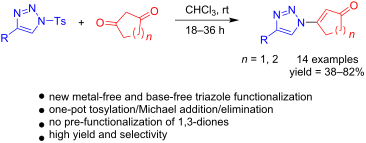
- precursors in denitrogenative transannulation reactions under metal-catalysed conditions to form other heterocycles such as functionalized pyrroles, imidazoles and pyridines (Scheme 1b) [11][12][13]. The traditional method for the synthesis of triazole unit is the Huisgen 1,3-dipolar cycloaddition between
- -triazoles with alkynes and Rh catalysed N1 and N2 selective alkylations [24][25]. As for metal-free approaches, besides synthesizing N-alkylated triazoles via 1,3-dipolar cycloaddition of alkyl azide with enols generated from carbonyl compounds under transition metal-free conditions [26], a direct

Graphical Abstract

Scheme 1: Synthesis, functionalization and applications of triazoles.

Scheme 2: The reaction was performed using 0.2 mmol N-tosyl-1,2,3-triazole 1 and 0.2 mmol of cyclohexyl-1,3-d...

Scheme 3: Control experiments.

Scheme 4: Mechanistic proposal for the formation of β-triazolylenones.

Figure 1: Nucleophilic addition to 5- and 6-membered cyclic tosyloxyenones.



