Search results
Search for "ketone" in Full Text gives 711 result(s) in Beilstein Journal of Organic Chemistry. Showing first 200.
Rapid access to the core of malayamycin A by intramolecular dipolar cycloaddition
Beilstein J. Org. Chem. 2025, 21, 2542–2547, doi:10.3762/bjoc.21.196
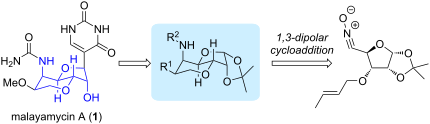
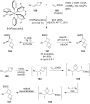
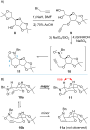
- details). The following reductive cleavage of the N–O bond was carried out by Mo(CO)6 in refluxing CH3CN [39]. Subsequent oxidation of the resulting secondary alcohol with Dess–Martin periodinane (DMP) [40] afforded methyl ketone 20 in 53% yield for 2 steps. Moreover, the minor isomer 19b also underwent
- inaccessible (Scheme 5) [41]. We assumed the steric hinderance of the Boc protecting group might have a great impact to the reactivity of ketone. Investigation along this line is currently on the way. Conclusion In summary, we have streamlined the rapid construction of the core perhydrofuropyran skeleton of




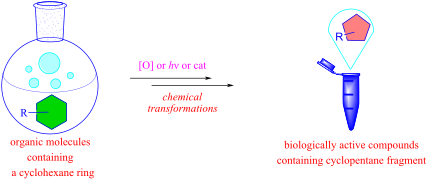
Transformation of the cyclohexane ring to the cyclopentane fragment of biologically active compounds
Beilstein J. Org. Chem. 2025, 21, 2416–2446, doi:10.3762/bjoc.21.185
- measure the significance of the β-face methyl groups. The attractive synthesis of 3-ethyl-substituted betulinic acid derivatives with high cytotoxic and anti-inflammatory activity was described by Grishko et al. [35]. The 2,3-secotriterpenic 3-ethyl-3-ketone 46 was obtained in two steps from lupane α
- -ketoxime 45 by Grignard reduction alkylation, followed by a Beckmann fragmentation of the C2–C3 bond of the intermediate 3-ethyl-substituted hydroxyimino ketone in the SOCl2-CH2Cl2 system. The introduction of a carbonyl substituent into the isopropylidene fragment of ketone 46 was achieved either by
- allylic oxidation using H2SeO3-dioxane system to form the C30 aldehyde 47, or by the ozonolytic cleavage of the double bond between C20 and C29 to produce 20-methyl-3-ethyldiketone 48 [36]. Intramolecular nitrile–anionic cyclization of ketone 46 or diketone 48 under conditions of basic catalysis proceeded


An Fe(II)-catalyzed synthesis of spiro[indoline-3,2'-pyrrolidine] derivatives
Beilstein J. Org. Chem. 2025, 21, 2383–2388, doi:10.3762/bjoc.21.183
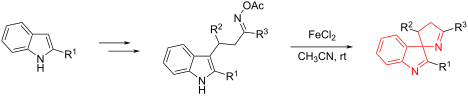
- -unsaturated ketone; dearomatization; indole; spirocyclization; spiro[indoline-3,2'-pyrrolidine]; Introduction Spiro[indoline-3,2'-pyrrolidine] derivatives represent an important class of organic compounds found in both natural products (e.g., coerulescine [1], horsfiline [2], and elacomine [3]) and synthetic
- . For instance, an intramolecular SN2-type cyclization of β-3-indolyl ketone oximes using MsCl and Et₃N affords spiro[indoline-3,2'-pyrrolidines] (Scheme 1, path f) [13]. A subsequent Cu-catalyzed spirocyclization of β-3-indolyl ketone oxime acetates was developed. This process involves homolytic N–O
- demonstrated an Fe-catalyzed dearomatization of β-2-furyl ketone oxime acetates, yielding functionalized pyrroles [18]. Herein, we report our investigation of the Fe-catalyzed spirocyclization of β-3-indolyl ketone oxime acetates. Results and Discussion Our study commenced with the synthesis of key propan-1


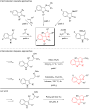


Synthetic study toward vibralactone
Beilstein J. Org. Chem. 2025, 21, 2376–2382, doi:10.3762/bjoc.21.182

- deprotection followed by C–H insertion. However, when attempting to remove the ketal protecting group, only decomposition of the starting material was observed. A plausible explanation for this outcome is that the β-lactone ring, located at the β-position of the methyl ketone, may undergo facile β-elimination


Comparative analysis of complanadine A total syntheses
Beilstein J. Org. Chem. 2025, 21, 2334–2344, doi:10.3762/bjoc.21.178
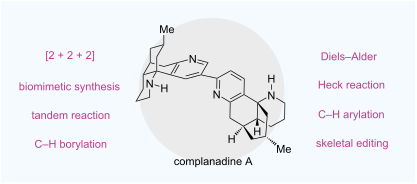
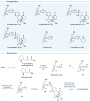
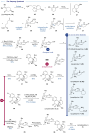
- in four steps. Subsequent conjugate addition of the lithium anion of TMS-acetonitrile to 15, followed by careful one-pot protonation of the resulting enolate with ethyl salicylate and TMS removal with CsF, gave 16 bearing three properly arranged substituents. Grignard 1,2-addition to ketone 16
- underwent ketone release and amine-ketone condensation to form iminium ion 27. Under the same acidic conditions, enamide 26 underwent hydrolysis and tautomerization to form enol 28. Conjugate addition of enol 28 to iminium ion 27 gave 29 for the subsequent intramolecular Mannich cyclization to deliver 30
- , which continued with an amide-ketone condensation to finally produce 31 in this highly efficient one-step biomimetic cascade sequence. The secondary amine of 31 was selectively protected as a Boc carbamate and the dihydropyridone moiety was oxidized to a pyridone with Pb(OAc)4. Pyridone 32 was prepared



Recent advances in Norrish–Yang cyclization and dicarbonyl photoredox reactions for natural product synthesis
Beilstein J. Org. Chem. 2025, 21, 2315–2333, doi:10.3762/bjoc.21.177
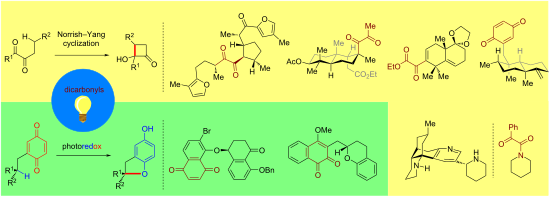
- congested benzofuranone-based 4,5-spirocycle [26]. Starting from Wieland–Miescher ketone (18, Scheme 4), the synthesis proceeded through a sequence of transformations: the nonconjugated carbonyl was chemoselectively protected as ketal 19; the unprotected ketone then underwent α-methylation to provide 20
- ; and subsequent conversion of the ketone in 20 to the vinyl iodide in 21 – via hydrazone formation, lithium–halogen exchange, and final nucleophilic substitution – secured the Norrish–Yang cyclization precursor 22. Following systematic optimization of reaction conditions, irradiation of 22 with 100 W
- (44) would trigger a quinone-based Norrish–Yang cyclization, enabling divergent synthesis of these meroterpenoids (or their core structures). In Yang's divergent total synthesis, Wieland–Miescher ketone (18) served as the starting material. Selective acetalization of the non-conjugated ketone in 18




Halogenated butyrolactones from the biomass-derived synthon levoglucosenone
Beilstein J. Org. Chem. 2025, 21, 2297–2301, doi:10.3762/bjoc.21.175
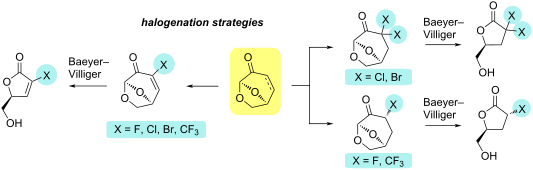
- [14][15]. In recent years, the chiral biomass derivatives levoglucosenone (LGO, 5) and its reduced form Cyrene® (6) have gained increased attention as platforms for drug discovery [16][17][18][19]. The bicyclic ketone 5 is the major product from the pyrolysis of acid-treated cellulose [20], while its
- monochlorination and bromination of ketone 6 via enamine 9a [31], and it was envisaged that 9a would be a suitable substrate to achieve the double halogenation using an excess of electrophilic halogen. When enamine 9a was treated with 1.0 mol equivalent of trichloroisocyanouric acid (TCCA), a reagent which can
- transfer all three chlorine atoms [32], dichlorinated ketone 10a was obtained in 88% yield following acidic workup. Similarly, treatment of enamine 9a with 3.0 equivalents of N-bromosuccinimide and acidic hydrolysis gave dibrominated material 10b in excellent yield. This procedure is attractive due to the



Enantioselective radical chemistry: a bright future ahead
Beilstein J. Org. Chem. 2025, 21, 2283–2296, doi:10.3762/bjoc.21.174
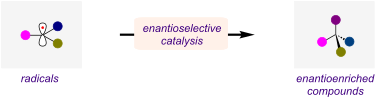
- method for the enantioselective α-C(sp3) alkenylation of ketones containing imidazole auxiliaries (Scheme 10) [24]. The transformation was catalyzed by a chiral-at-rhodium Lewis acid 42. A variety of ketone electrophiles 40 and alkenyl trifluoroborate nucleophiles 41 were converted to the corresponding α


A chiral LC–MS strategy for stereochemical assignment of natural products sharing a 3-methylpent-4-en-2-ol moiety in their terminal structures
Beilstein J. Org. Chem. 2025, 21, 2243–2249, doi:10.3762/bjoc.21.171
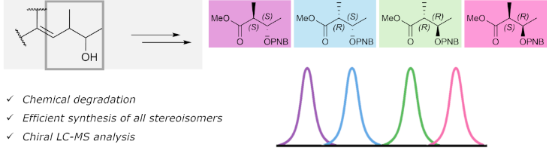
- –MS detection of the MPO-derived fragment and to achieve a separation of four candidate stereoisomers. To this end, methylation of commercially available methyl acetoacetate (2) and subsequent reduction of the ketone carbonyl group was carried out to prepare a mixture of four stereoisomers of methyl 3


Thiadiazino-indole, thiadiazino-carbazole and benzothiadiazino-carbazole dioxides: synthesis, physicochemical and early ADME characterization of representatives of new tri-, tetra- and pentacyclic ring systems and their intermediates
Beilstein J. Org. Chem. 2025, 21, 2220–2233, doi:10.3762/bjoc.21.169
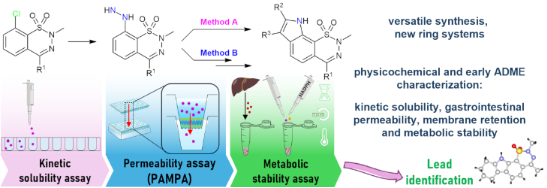
- reaction of compounds 5a,b with ketone 8, a crude mixture of pentacyclic derivatives 10 and 11 was obtained (10a/11a = 50:50 and 10b/11b = 46:54, respectively). Under these conditions, a full conversion to the oxidized product 10 could not be reached even after long reaction times, presumably because the
- ): [M•]+ calcd for C14H14N4O2S, 302.0837; found, 302.0827. General procedure for the synthesis of hydrazones 7a–e, (E)-9a [22][23]. Method A, step 1: A suspension of 5a (100 mg, 0.416 mmol), the corresponding ketone 6a–e or 8 (1.1 equiv) and bismuth(III) nitrate pentahydrate (44.4 mg, 0.092 mmol) in
- , 1475, 1299, 1152 cm−1; HRESIMS (m/z): [M + H]+ calcd for C15H21N4O2S, 321.1385; found, 321.1377. General procedure for the synthesis of hydrazones 7f–j, (E)-9b [22][23]. A suspension of 5b (100 mg, 0.331 mmol), the corresponding ketone 6a–e or 8 (1.1 equiv) and bismuth(III) nitrate pentahydrate (35.4


Electrochemical cyclization of alkynes to construct five-membered nitrogen-heterocyclic rings
Beilstein J. Org. Chem. 2025, 21, 2173–2201, doi:10.3762/bjoc.21.166
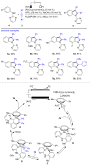
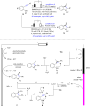
- for this reaction was proposed. Firstly, oxidation of I− at the anode afforded I•, which abstracted a hydrogen atom from 50a to form the intermediate A with elimination of HI as a by-product. The second abstraction of a hydrogen atom generated ketone B, which then underwent 1,3-dipolar cycloaddition









C2 to C6 biobased carbonyl platforms for fine chemistry
Beilstein J. Org. Chem. 2025, 21, 2103–2172, doi:10.3762/bjoc.21.165
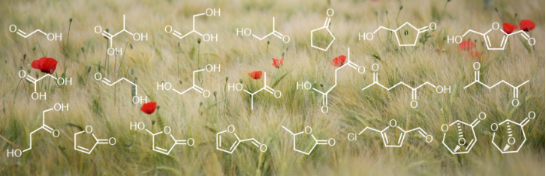
- level of oxygen content in biomass, small molecules arising from biomass often possess a carbonyl group. This is why biobased platform molecules possessing a carbonyl group, either under the form of an aldehyde, a ketone, an acid or an ester, play a dominant role in biobased chemistry. This review aims


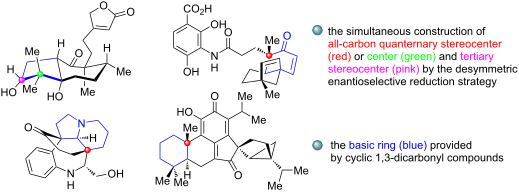
The application of desymmetric enantioselective reduction of cyclic 1,3-dicarbonyl compounds in the total synthesis of terpenoid and alkaloid natural products
Beilstein J. Org. Chem. 2025, 21, 2085–2102, doi:10.3762/bjoc.21.164
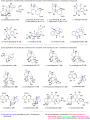
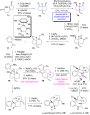
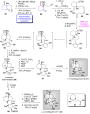
- secondary alcohol to a ketone allowed for rapid construction of bicyclic ketone 34 in high overall yield. The oxidative dehydrogenation of 34 gave α,β-unsaturated bicyclic ketone 35 smoothly. Sequential A-ring construction and functional group modifications of 35 produced the diketone 36. Subsequently, 36
- to ketone 48 via a seven-step transformation. Finally, removal of the TBS group in 48 followed by a sequential reduction and selective oxidation of allylic primary alcohol achieved the total synthesis of (−)-cyrneine A (7). The authors then moved forward to the synthesis of other target molecules
- (Scheme 3) [31][32]. Oxidation state adjustment of 48 led to the ketone 49. Starting from this common intermediate, firstly, base-promoted double bond migration and oxidation at the γ-position gave tertiary alcohol 50. Deprotection of acetyl in 50 followed by selective oxidation delivered (−)-cyrneine B







Bioinspired total syntheses of natural products: a personal adventure
Beilstein J. Org. Chem. 2025, 21, 2048–2061, doi:10.3762/bjoc.21.160
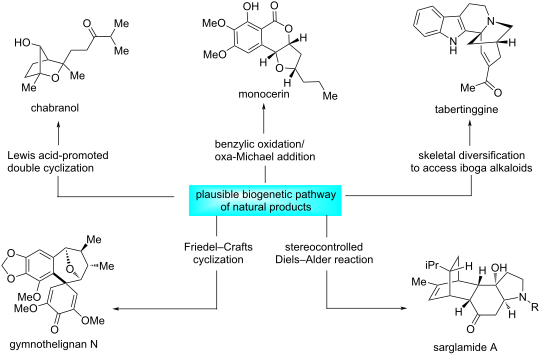
- be oxidized to ketone, which gives chabranol. According to this biosynthetic proposal, we thought that the Prins-triggered double cyclization would serve as a powerful method to construct the bicycle in one step, and moreover, the proposed Prins-based double cyclization needs further supporting
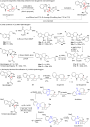
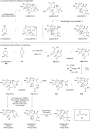
- , Wittig reaction with MOMPPh3Cl and LDA gave the putative methyl enol ether, which could be directly converted into 1,3-dithiane 12 with propane-1,3-dithiol. Nucleophilic addition to chiral epoxide 13 and oxidative hydrolysis of 1,3-dithiane to ketone delivered chiral β-hydroxyketone 14. Evans−Tishchenko
- reduction of ketone using SmI2 and propionaldehyde provided 15 diastereoselectively. Friedel–Crafts cyclization using trimethyl orthoformate and TMSOTf provided the cyclic acetal moiety to be oxidized with PDC, delivering the isocoumarin skeleton in 16. Chemoselective removal of the ester with the lactone




Photochemical reduction of acylimidazolium salts
Beilstein J. Org. Chem. 2025, 21, 1973–1983, doi:10.3762/bjoc.21.153
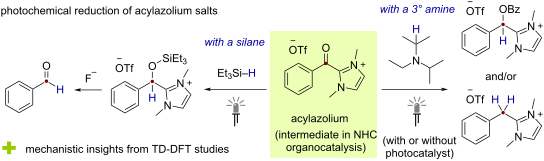
- catalytic photoenolization/Diels–Alder (PEDA) reaction [14][15]. In this process, the NHC fragment present in the acylazolium species influences the absorption wavelength and fundamental photochemical reactivity of the C=O bond, enabling a “ketone-like” photoreaction from otherwise unsuitable carboxylic
- manifold with carboxylic acid derivatives, numerous coupling processes affording ketone products have been developed. Since the initial report from Scheidt and co-workers using 4-alkyl-substituted Hantzsch esters as coupling partners [31][32][33][34][35][36], several alkyl radical sources have been


Asymmetric total synthesis of tricyclic prostaglandin D2 metabolite methyl ester via oxidative radical cyclization
Beilstein J. Org. Chem. 2025, 21, 1964–1972, doi:10.3762/bjoc.21.152
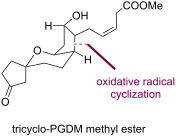
- as a single diastereomer. Subsequently, one-pot transesterification and palladium-catalyzed decarboxylative allylation delivered compound 25 in 72% yield. Next, we expected that we could perform a chemo- and diastereoselective reduction of the ketone to introduce the hydroxy group at C9 in a single
- step. However, the diastereoselective reduction of the ketone in 25 was challenging because the ketone was embedded in the concave face, which was more sterically hindered than the convex face. Common reductants, such as NaBH4, DIBAL-H, and LiAlH(Ot-Bu)3, provided product 32 with the opposite



Enantioselective desymmetrization strategy of prochiral 1,3-diols in natural product synthesis
Beilstein J. Org. Chem. 2025, 21, 1932–1963, doi:10.3762/bjoc.21.151
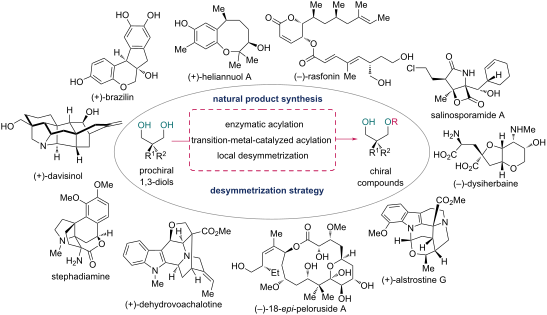
- norlignans hyperione A and ent-hyperione B was reported by the Deska group (Scheme 4) [33]. The synthesis commenced with a two-step conversion of ketone 22 to alkyne 23. Pd-catalyzed Tsuji-type reaction with zinc reagent 24, followed by acetonide hydrolysis, furnished allenic diol 25. Treating allenic diol
- enantioenriched monoester 53 in hand, the synthesis proceeded toward fredericamycin A (60) (Scheme 9). Dione 55, which was prepared from 53 in six steps, underwent addition with alkyne 56 followed by acylation of the resulting hydroxy group with compound 57 to yield ketone 58. A subsequent seven-step
- the cyclohexanone ring into 120, and the resulting hydroxy group was protected to give ketone 121. The γ-lactam moiety of compound 122 was then constructed in subsequent 12 steps. SmI2-mediated intermolecular Reformatsky-type reaction with aldehyde 123 yielded compound 124. Finally, salinosporamide A










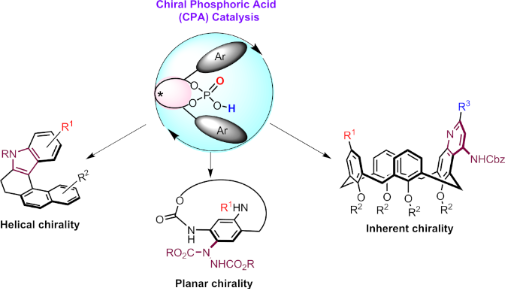
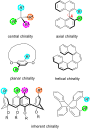
Chiral phosphoric acid-catalyzed asymmetric synthesis of helically chiral, planarly chiral and inherently chiral molecules
Beilstein J. Org. Chem. 2025, 21, 1864–1889, doi:10.3762/bjoc.21.145
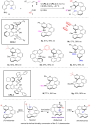
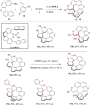
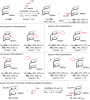
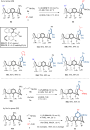
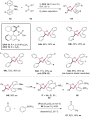
- and polycyclic ketone 2, they achieved the efficient asymmetric synthesis of various helically chiral azahelicenes 3 (Scheme 1). To address the inherent length-scale challenges of molecular helicene frameworks, the authors designed and synthesized novel CPAs bearing extended π-substituents at the
- stereoselectivity for the more sterically demanding aza[5]helicene 3c and aza[7]helicenes 3d–f. Furthermore, the authors expanded this methodology to a double Fischer indolization reaction between hydrazine 1i and ketone 2i, which yielded diaza[8]helicene 4 with moderate yield and high enantioselectivity after








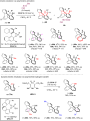

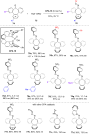
Photoswitches beyond azobenzene: a beginner’s guide
Beilstein J. Org. Chem. 2025, 21, 1808–1853, doi:10.3762/bjoc.21.143
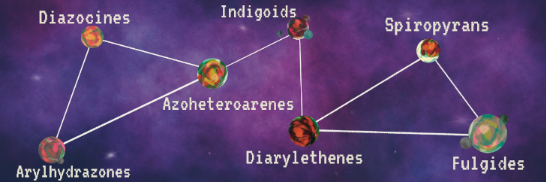


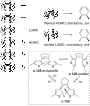


Convenient alternative synthesis of the Malassezia-derived virulence factor malassezione and related compounds
Beilstein J. Org. Chem. 2025, 21, 1730–1736, doi:10.3762/bjoc.21.135
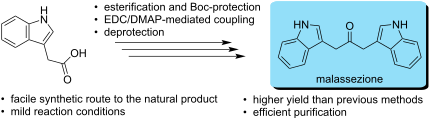
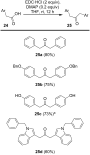
- ) ketone, which could be converted to the corresponding bis(4-hydroxybenzyl) ketone (25c) by heating at 200 °C for 15 min to 3 h in the presence of pyridinium chloride [22][24]. Herein, we also show that the EDC-mediated coupling of 4-(benzyloxy)phenylacetic acid readily yields 25b, which may be
- , 38.7, 28.3 ppm; HRESIMS (m/z): [M + Na]+ calcd for C29H32N2NaO5, 511.2203; found, 511.2222. 1,3-Di(1H-indol-3-yl)propan-2-one (1): The ketone 23 (200 mg, 0.4 mmol, 1 equiv) was dissolved in DCM (6 mL) in a 25 mL round bottom flask equipped with a magnetic stirrer. Trifluoroacetic acid (3 mL) was then
- anhydrous Na2SO4 and concentrated under reduced pressure to afford 2-(1-benzyl-1H-indol-3-yl)acetic acid [36]. The resulting product was then used to synthesize ketone 25d following the general procedure. The crude product was purified by chromatography on silica gel (hexane/EtOAc; 90:10) to afford 25d as a


Catalytic asymmetric reactions of isocyanides for constructing non-central chirality
Beilstein J. Org. Chem. 2025, 21, 1648–1660, doi:10.3762/bjoc.21.129
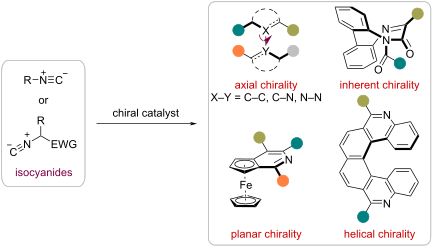
- L6 as the chiral catalyst, atropisomeric 3-arylpyrroles 34 were generated in 43–98% yield with 82–96% ee. Notably, two by-products 35 and 36 were observed during the reaction, resulting from the aldol reaction of isocyanoacetates with the ketone moiety in 33. The authors have also demonstrated that
- 34f could be used as the starting material to prepare the axially chiral olefin-oxazole 37, which might be a potentially useful ligand in asymmetric catalysis. A possible stereochemical model was proposed as well, involving synergistic activation of both the alkynyl ketone and isocyanoacetate by the




Formal synthesis of a selective estrogen receptor modulator with tetrahydrofluorenone structure using [3 + 2 + 1] cycloaddition of yne-vinylcyclopropanes and CO
Beilstein J. Org. Chem. 2025, 21, 1639–1644, doi:10.3762/bjoc.21.127
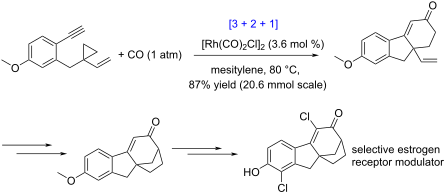
- asymmetric Lu [3 + 2] cycloaddition reaction [20][21] between indanone and allenyl ketone. Then hydrogenation and Robinson annulation delivered the core of the target molecule. Some other excellent synthetic routes for tetrahydrofluorenone derivates have been developed [12][13][14][15][16][17][18][19] but


General method for the synthesis of enaminones via photocatalysis
Beilstein J. Org. Chem. 2025, 21, 1535–1543, doi:10.3762/bjoc.21.116
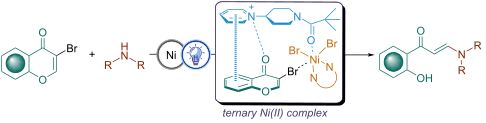
- condensation of 1,3-dicarbonyl compounds with amines [30]. While this approach is simple and straightforward, it often leads to a mixture of constitutional isomers in which the two different α-positions of the ketone have been functionalized. Therefore, the development of novel methods for the synthesis of




Heterologous biosynthesis of cotylenol and concise synthesis of fusicoccane diterpenoids
Beilstein J. Org. Chem. 2025, 21, 1489–1495, doi:10.3762/bjoc.21.111
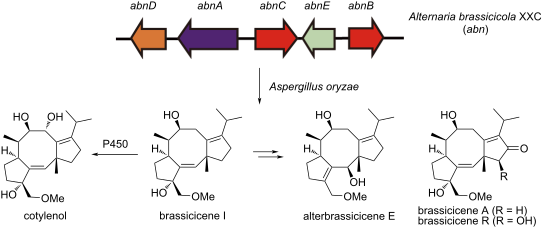
- (7) and R (8) (Scheme 1). The secondary hydroxy group of brassicicene I was selectively TBS-protected in the presence of TBSOTf and 2,6-lutidine to give compound 13 in 93% yield. Then, compound 13 underwent oxidative rearrangement with PCC to afford ketone 14 in 61% yield. Under Luche reduction


Oxetanes: formation, reactivity and total syntheses of natural products
Beilstein J. Org. Chem. 2025, 21, 1324–1373, doi:10.3762/bjoc.21.101
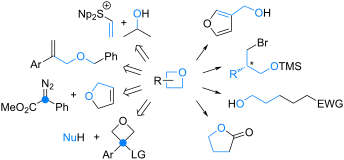
- /Williamson etherification sequence (Scheme 8) [43]. In this case, however, the radicals were generated by irradiation of α-acetyloxy iodides 36, formed by treating the corresponding ketone precursors with acetyl iodide in the presence of catalytic Zn(OTf)2. The radical addition employed electron-rich alkenes
- by the same research group [65][66], the Ir catalyst initially interacts through hydrogen bonds with the quinolone substrate 84, and then upon irradiation, energy transfer occurs to the unbound ketone which enantioselectively reacts with the bound quinolone. Unfortunately, investigations of the
- diastereomeric ratios favouring the trans-isomer, however, a reversed diastereoselectivity was observed for ortho-substituted aryls due to steric factors. The investigation of the substrate scope revealed that while the reaction shuts down in the absence of the trifluoromethyl group in the ketone component, it