


Search results
Search for "multistep" in Full Text gives 298 result(s) in Beilstein Journal of Organic Chemistry. Showing first 200.
Development and mechanistic studies of calcium–BINOL phosphate-catalyzed hydrocyanation of hydrazones
Beilstein J. Org. Chem. 2025, 21, 755–765, doi:10.3762/bjoc.21.59
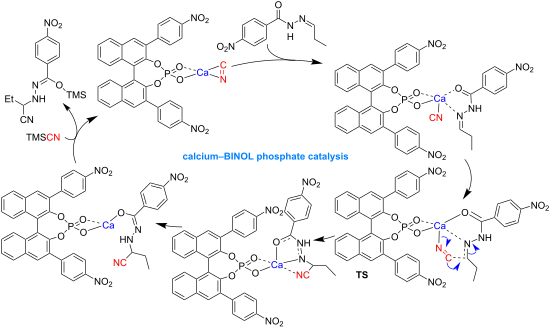
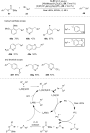
- energy than that of the entry channel (1 + 7 + 8, Figure 3). Because the rate-determining and configuration-determining steps are different, reaction control of the whole multistep transformation in terms of enantioselectivity is therefore neither predominantly thermodynamic nor predominantly kinetic


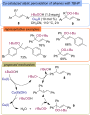
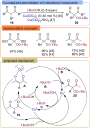
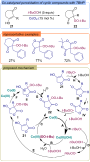
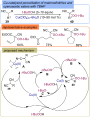
Copper-catalyzed domino cyclization of anilines and cyclobutanone oxime: a scalable and versatile route to spirotetrahydroquinoline derivatives
Beilstein J. Org. Chem. 2025, 21, 749–754, doi:10.3762/bjoc.21.58
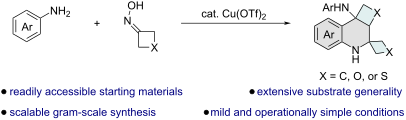
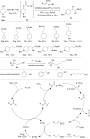
- employ catalytic cyclization [9][10][11][12][13], reductive aminations [14][15][16][17], and photochemical cyclization [18][19][20]. However, these approaches often necessitate multistep syntheses of starting materials and involve intricate experimental procedures, significantly impeding their practical


The effect of neighbouring group participation and possible long range remote group participation in O-glycosylation
Beilstein J. Org. Chem. 2025, 21, 369–406, doi:10.3762/bjoc.21.27
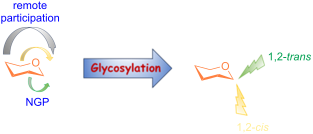
- multistep synthesis of complex oligosaccharides and in turn, standardise the process of the glycosylation towards a particular stereochemical output. While neighbouring group participation has been quite effective in achieving the required stereochemistry of the produced glycosides, remote participation
- the presence of Pd-C. This deprotection protocol also facilitates an orthogonal deprotection strategy in multistep oligosaccharide syntheses in the presence of benzyl (OBn) groups (Scheme 6). The benzyl and cyanopivaloyl-protected hexarhamnoside derivative 37 was completely deprotected by a single




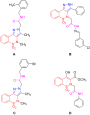
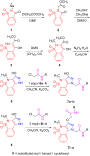
Synthesis, characterization, antimicrobial, cytotoxic and carbonic anhydrase inhibition activities of multifunctional pyrazolo-1,2-benzothiazine acetamides
Beilstein J. Org. Chem. 2025, 21, 348–357, doi:10.3762/bjoc.21.25
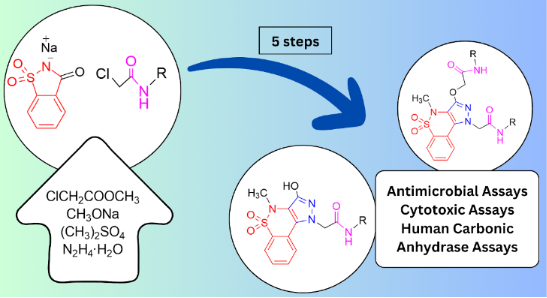
- . Finally, none of the pyrazolobenzothiazine scaffolds showed hCA inhibition activity comparable to acetazolamide (AAZ, reference drug). Conclusion In summary, an economical multistep synthesis approach without using any coupling reagents for the synthesis of new multifunctional pyrazolo-1,2-benzothiazines


Visible-light-promoted radical cyclisation of unactivated alkenes in benzimidazoles: synthesis of difluoromethyl- and aryldifluoromethyl-substituted polycyclic imidazoles
Beilstein J. Org. Chem. 2025, 21, 234–241, doi:10.3762/bjoc.21.15
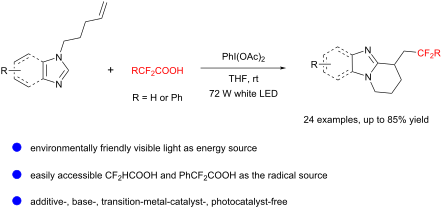
- −), respectively (Scheme 1a). Despite these advances, the above methods still suffer from several limitations, including a narrow substrate scope, the reliance on expensive metal catalysts and excess additives, and the need for multistep synthesis of difluoromethylating reagents. These drawbacks restrict their


Emerging trends in the optimization of organic synthesis through high-throughput tools and machine learning
Beilstein J. Org. Chem. 2025, 21, 10–38, doi:10.3762/bjoc.21.3
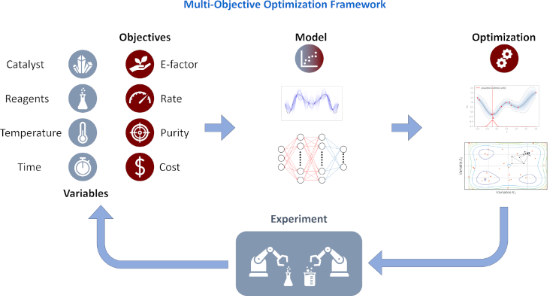
- perform most tasks in chemical and material synthesis, the hardware currently cannot perform product purification and multistep synthesis continuously. HTE using flow platforms Flow reactions are characterized by a constant flow of reagents and products into and out of the reaction vessel. A flow platform
- traditional batch reactions by over a 500-fold and outperforming flow reactions with a five-fold improvement. A fully integrated automated multistep chemical synthesizer (AutoSyn) was reported to be able to autonomously synthesize milligram- to gram-scale amounts of any organic or drug-like molecule [49]. The
- multistep reactions into parallel processes. Individually accessible reactors are arranged around a central switching station that enables the delivery of independent reaction mixtures or reagents. Each reactor loop functions as an independent unit to carry out thermal or photochemical reactions under


Cyclodextrin-based rotaxanes for polymer materials: challenge on simultaneous realization of inexpensive production and defined structures
Beilstein J. Org. Chem. 2024, 20, 3026–3049, doi:10.3762/bjoc.20.252
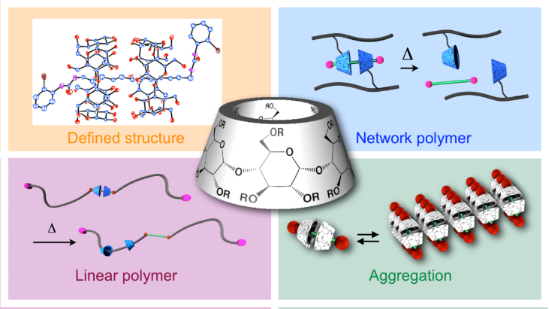
- -0083 Tokyo, Japan 10.3762/bjoc.20.252 Abstract Owing to their dynamic natures, rotaxane-based polymers are attractive motifs for developing stimuli-responsive materials. However, the accurate control of the rotaxane structure, which can be achieved via multistep synthesis, is key to utilizing the
- ][22][23][24][25][26][27][28][29][30]. To maximize the utility of rotaxane-based architectures, the accurate control of their structures is the key, although multistep synthesis is required to implement an elaborate molecular design. However, realizing the material application requires a scalable
- , most of their rotaxane structures required a complicated multistep synthesis as well as the introduction of polar substituents, such as carboxylic acid or sulfonic acid groups, to generate a water-soluble system, and these prevent the direct application of those frameworks to polymer systems. As the


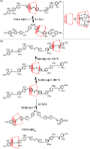


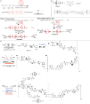


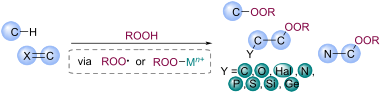
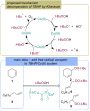
Advances in radical peroxidation with hydroperoxides
Beilstein J. Org. Chem. 2024, 20, 2959–3006, doi:10.3762/bjoc.20.249












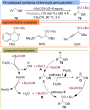


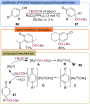


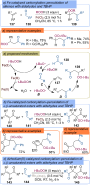


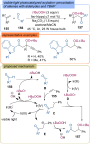
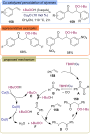


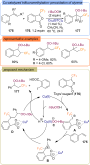
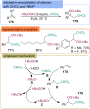

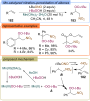





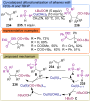
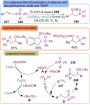
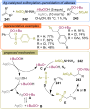


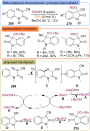


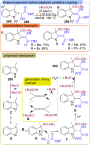

Synthesis of spiroindolenines through a one-pot multistep process mediated by visible light
Beilstein J. Org. Chem. 2024, 20, 2722–2731, doi:10.3762/bjoc.20.230
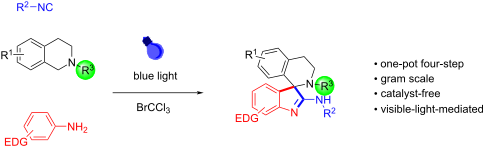
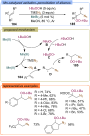
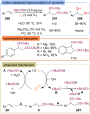
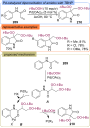
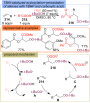
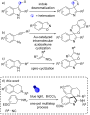
- indole alkaloids. Here, we develop a novel approach for the one-pot multistep synthesis of different spiro[indole-isoquinolines]. The protocol proposed involves the visible light mediated oxidation of N-aryl tertiary amines using bromochloroform with the generation of a reactive iminium species, which
- -pot multistep synthesis of unprecedent 2,3-diaminoindolenines using graphene oxide (GO) as heterogeneous catalyst [21]. The protocol involves the three-component Ugi (3C-Ugi) reaction between aldehydes, isocyanides and 2 equivalents of electron-rich anilines to give α-aminoamidines, which undergo a C
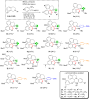
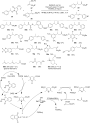
- Supporting Information File 1). Having the optimized conditions in our hands, we moved on to establish the scope (Scheme 3). Different N-arylated-THIQs, isocyanides and electron-rich anilines have been combined. The overall yields of the protocol are good considering its multistep behavior. Very good results





Visible-light-mediated flow protocol for Achmatowicz rearrangement
Beilstein J. Org. Chem. 2024, 20, 2493–2499, doi:10.3762/bjoc.20.213
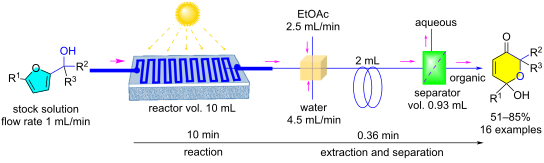
- reaction selectivity [25]. Continuous flow technology has emerged as an attractive solution for many of these challenges, gaining popularity for its ability to efficiently address these issues. Additionally, this platform offers the advantage of integrating multiple steps, i.e., performing multistep



Machine learning-guided strategies for reaction conditions design and optimization
Beilstein J. Org. Chem. 2024, 20, 2476–2492, doi:10.3762/bjoc.20.212

- enhancing the overall chemical synthesis pathway. They demonstrated the predictive pathway for sonidegib synthesis, but it still required chemical insights to verify the compatibility of the solvents predicted by the global model with the reactants. Moreover, in a multistep synthesis route, the
- interdependencies between different reaction sequences, such as additional separation and purification steps, could reduce the overall yield [202]. This indicates that the suboptimal combination of each reaction does not necessarily represent the global optimum for multistep synthesis [203][204][205]. In contrast
- , this study was still able to identify better solutions than conventional designs through reinforcement learning in multistep processes. Besides maximizing the reaction yield for a given reaction with given substrates, another goal of reaction optimization is to discover general reaction conditions that


Hypervalent iodine-mediated cyclization of bishomoallylamides to prolinols
Beilstein J. Org. Chem. 2024, 20, 2455–2460, doi:10.3762/bjoc.20.209
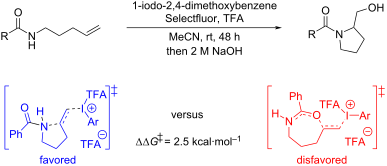
- important area of study as this ring system is prevalent in many useful molecules. Typical literature procedures include multistep derivations of proline itself, e.g., the destruction of the stereocenter and then its reinstallation by an enantioselective conjugate addition [9]. Other methods include the


Improved deconvolution of natural products’ protein targets using diagnostic ions from chemical proteomics linkers
Beilstein J. Org. Chem. 2024, 20, 2323–2341, doi:10.3762/bjoc.20.199
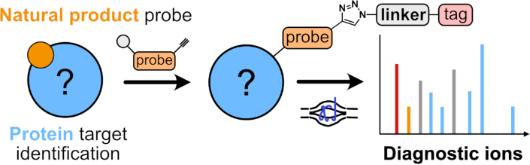
- disadvantage of the TEV-linker might be the multistep synthesis. The labile and open search of the publicly available data revealed a set of diagnostic ions, both derived from the linker and the probe (Figure 10A and B). The structural motives of the diagnostic ions corroborate the above-described findings




Multicomponent syntheses of pyrazoles via (3 + 2)-cyclocondensation and (3 + 2)-cycloaddition key steps
Beilstein J. Org. Chem. 2024, 20, 2024–2077, doi:10.3762/bjoc.20.178

- efficiency of these reactions. In particular, traditional multistep syntheses of pyrazoles have considerably been extended by MCR. Progress has been made in the cyclocondensation of 1,3-dielectrophiles that are generated in situ. Limitations in the regioselectivity of cyclocondensation with 1,3-dicarbonyls




The Groebke–Blackburn–Bienaymé reaction in its maturity: innovation and improvements since its 21st birthday (2019–2023)
Beilstein J. Org. Chem. 2024, 20, 1839–1879, doi:10.3762/bjoc.20.162
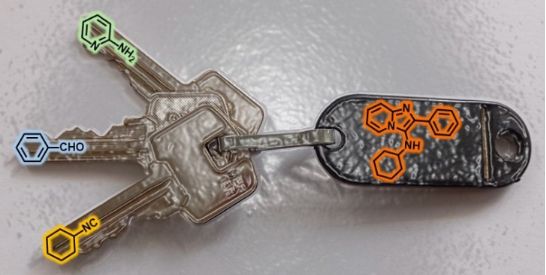
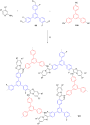
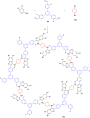
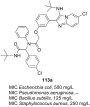
- multistep procedure, however, by employing 3,6-diamino-1,2,4-triazin-5-one 44 as amidine derivative, 46 could be simply obtained through a GBB-3CR. The amino group in position 3 was opportunely protected to drive the GBB reaction to the selective formation of 45. Microwave heating appeared to be beneficial






Chemo-enzymatic total synthesis: current approaches toward the integration of chemical and enzymatic transformations
Beilstein J. Org. Chem. 2024, 20, 1693–1712, doi:10.3762/bjoc.20.151
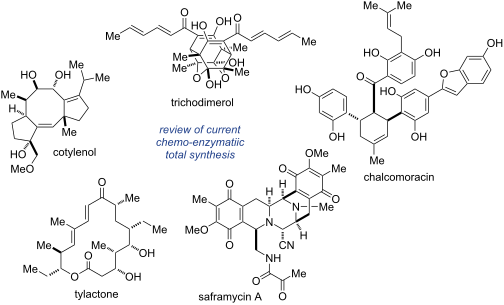
- tylactone (4), the combination of two large PKS modules with synthetic substrate mimics facilitated the multistep cascade reaction including carbon chain extension, installation of chiral centers, and macrolactonization in one pot (Scheme 7 and Scheme 8). Moreover, the "site- and stereoselective late-stage




Generation of alkyl and acyl radicals by visible-light photoredox catalysis: direct activation of C–O bonds in organic transformations
Beilstein J. Org. Chem. 2024, 20, 1348–1375, doi:10.3762/bjoc.20.119
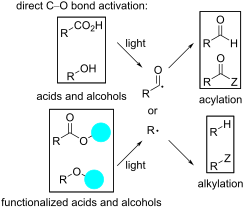
- (Scheme 16). This one-pot strategy involved the reaction of xanthates formed in situ with electron-deficient alkenes under visible-light photoredox conditions in the presence of PPh3. This approach did not require multistep synthesis of starting materials. In addition, alcohol groups in polyols could be








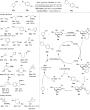
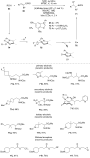
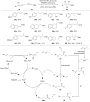
Phenotellurazine redox catalysts: elements of design for radical cross-dehydrogenative coupling reactions
Beilstein J. Org. Chem. 2024, 20, 1292–1297, doi:10.3762/bjoc.20.112
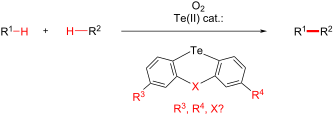
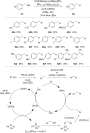
- the Te(II)-catalyzed benchmark dehydrogenative phenothiazination of phenols, a reaction that we discovered in 2015 [35][36][37], under analogous conditions as previously described [30][31][32]. The results are summarized in Scheme 2. The multistep synthesis and characterization of all Te-based



Stability trends in carbocation intermediates stemming from germacrene A and hedycaryol
Beilstein J. Org. Chem. 2024, 20, 1189–1197, doi:10.3762/bjoc.20.101
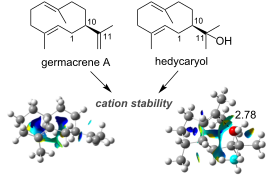
- (GPP, FPP, GGPP) undergo highly complex cyclisation cascades forming terpenes and terpenoids that often have great structural complexity. For class I terpene synthases this multistep process is initiated by a heterolytic C–O bond cleavage, separating the diphosphate and isoprenoid ion pairs [3][4]. The


Innovative synthesis of drug-like molecules using tetrazole as core building blocks
Beilstein J. Org. Chem. 2024, 20, 950–958, doi:10.3762/bjoc.20.85
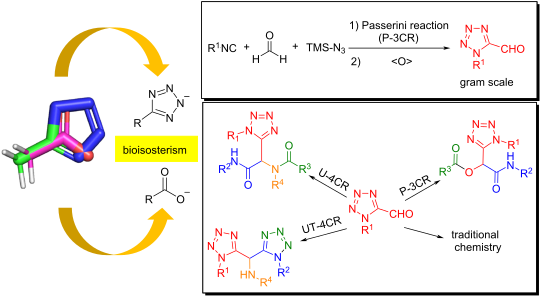
- EtOH under refluxing overnight conditions which provides the desired 1H-tetrazole with an acceptable yield of 31%. Noteworthy, only two syntheses of 6 are described in the literature [28][29]. Both methods use dangerous, explosive and toxic hydrazoic acid in a sequential multistep synthesis. In




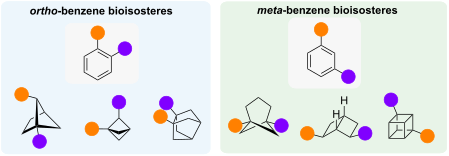
(Bio)isosteres of ortho- and meta-substituted benzenes
Beilstein J. Org. Chem. 2024, 20, 859–890, doi:10.3762/bjoc.20.78
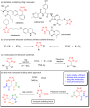
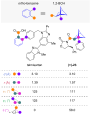
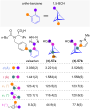
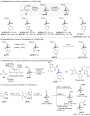
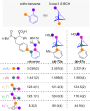
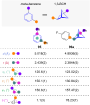
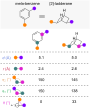
- planarity. Brown and co-workers prepared the [2]-ladderanes via a multistep sequence from diene 147 including an intramolecular [2 + 2] cycloaddition (to (±)-148) and a Wolff rearrangement (to (±)-150) (Scheme 16A) [63]. This approach yielded predominantly the endo diastereomer of trans-[2]-ladderanes 150












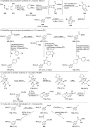


Chemoenzymatic synthesis of macrocyclic peptides and polyketides via thioesterase-catalyzed macrocyclization
Beilstein J. Org. Chem. 2024, 20, 721–733, doi:10.3762/bjoc.20.66
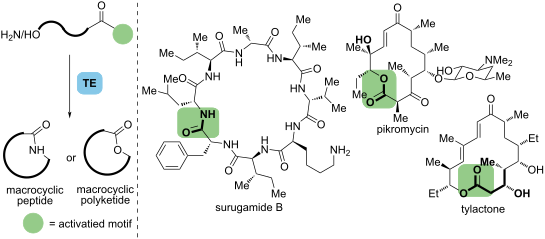
- review summarizes recent advances in combining thioesterase-catalyzed macrocyclization and typical chemical approaches in the rapid generation of these complex cyclic natural products and their analogs with exquisite biological activity. Moreover, multistep enzyme cascades simplify synthesis by reducing


Recent developments in the engineered biosynthesis of fungal meroterpenoids
Beilstein J. Org. Chem. 2024, 20, 578–588, doi:10.3762/bjoc.20.50
- ) derived from andiconin, can be converted into emervaridone B (33) and anditomin (34), respectively (Figure 6). Subsequently, 33 can be further modified into emervaridone C (35), which can be oxidized to 37 or 38 (Figure 6). In contrast, 34 is converted to compounds 36a and 36b (Figure 6). These multistep
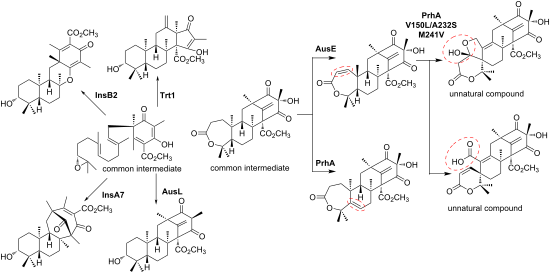
- common intermediate 21 to ascochlorin (22) and ascofuranone (23), respectively. The multistep oxidations catalyzed by AusE and PrhA from the common intermediate 24. Reactions of SptF with native substrates 31 and 32. A) Reactions of SptF with unnatural substrates. B) Reactions of SptF variants with 31


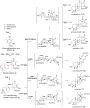
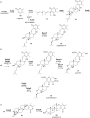


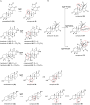


Perspectives on push–pull chromophores derived from click-type [2 + 2] cycloaddition–retroelectrocyclization reactions of electron-rich alkynes and electron-deficient alkenes
Beilstein J. Org. Chem. 2024, 20, 125–154, doi:10.3762/bjoc.20.13
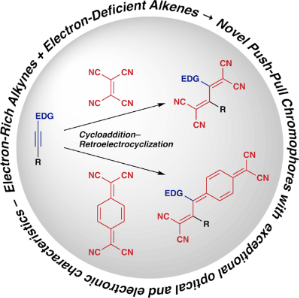
- a DCF structure and is amenable to further molecular transformations through a reaction with 1 [103]. Considering the structure of 7, the possibility of a multistep [2 + 2] CA–RE reaction via a reaction with 1 becomes feasible. To execute such a multistep [2 + 2] CA–RE reaction, it becomes


Controlling the reactivity of La@C82 by reduction: reaction of the La@C82 anion with alkyl halide with high regioselectivity
Beilstein J. Org. Chem. 2023, 19, 1858–1866, doi:10.3762/bjoc.19.138

- the unreacted La@C2v-C82 in its neutral form. Four isomers, 2a, 3a, 4a, and 5a, and La@C2v-C82 were isolated from the reaction mixture using multistep HPLC, as shown in Supporting Information File 1, Figures S2, S4, and S6. The yields were calculated from the HPLC peak areas monitored at 330 nm





