Search results
Search for "solid phase" in Full Text gives 252 result(s) in Beilstein Journal of Organic Chemistry. Showing first 200.
Synthesis of 2,2-difluoro-1,3-diketone and 2,2-difluoro-1,3-ketoester derivatives using fluorine gas
Beilstein J. Org. Chem. 2024, 20, 460–469, doi:10.3762/bjoc.20.41
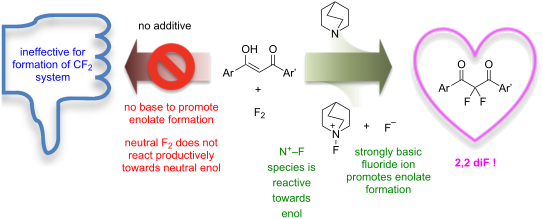
- , but the second fluorination step occurs only after reaction for several days. In the solid phase, mechanical milling of the diketone substrate with solid Selectfluor in the presence of sodium carbonate [13][14], and reaction of ketones with a strong base and an N–F reagent give rise to the


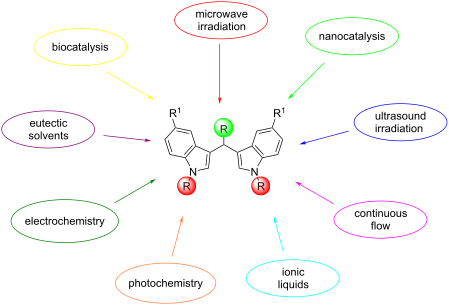
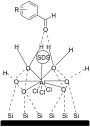
Green and sustainable approaches for the Friedel–Crafts reaction between aldehydes and indoles
Beilstein J. Org. Chem. 2024, 20, 379–426, doi:10.3762/bjoc.20.36




A novel recyclable organocatalyst for the gram-scale enantioselective synthesis of (S)-baclofen
Beilstein J. Org. Chem. 2023, 19, 1811–1824, doi:10.3762/bjoc.19.133

- long and expensive process. Therefore, for sustainable application, the cost-efficient recovery and reuse of organocatalysts are critical issues. Fortunately, a wide range of recycling options are known in the literature, often based on liquid–solid phase separation [14]. Catalyst recycling can be


Linker, loading, and reaction scale influence automated glycan assembly
Beilstein J. Org. Chem. 2023, 19, 1015–1020, doi:10.3762/bjoc.19.77
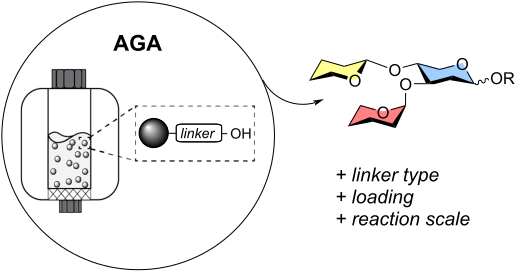
- purification steps. Keywords: automated glycan assembly; photocleavable linker; polysaccharides; solid-phase synthesis; Introduction Automated glycan assembly (AGA) is a solid-phase method that enables the rapid synthesis of complex oligo- and polysaccharides from protected monosaccharide building blocks
- scale [19], and linkers [20][21] affect the overall yield of solid phase peptide synthesis (SPPS). In the past decades, several supports and linkers have been developed and commercialized for SPPS, enabling a wide range of applications. Solid supports are available with different linker loadings, with

Synthesis of tetrahydrofuro[3,2-c]pyridines via Pictet–Spengler reaction
Beilstein J. Org. Chem. 2023, 19, 991–997, doi:10.3762/bjoc.19.74
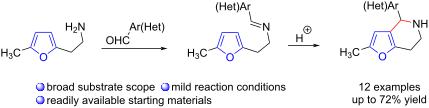
- -c]pyridines. Moreover, multistep cascade processes with the simultaneous construction of several cores were described, where the key step is the generation of an acyliminium cation and the Pictet–Spengler cyclization [30][31][32], including solid-phase synthesis [33][34][35]. Another route for the


C3-Alkylation of furfural derivatives by continuous flow homogeneous catalysis
Beilstein J. Org. Chem. 2023, 19, 582–592, doi:10.3762/bjoc.19.43
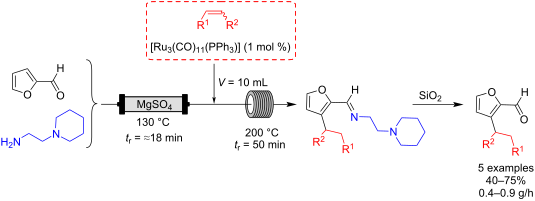
- Supporting Information File 1, p. S20), meaning that the ruthenium trimer was no longer present. The TEM analysis of the recovered solid phase (Scheme 5B) showed the formation of large aggregates with high electron density. Moreover, ruthenium was detected by XPS analysis (Scheme 5B); the binding energy of
- reaction with formation of ruthenium aggregates and mononuclear Ru(0) catalyst. A) Isolation test of a reaction intermediate; B) XPS and TEM (in ethanol) of the recovered solid phase: showing the presence of Ru aggregates. Ruthenium aggregate-catalyzed alkylation reaction. Scope of continuous flow furfural


CuAAC-inspired synthesis of 1,2,3-triazole-bridged porphyrin conjugates: an overview
Beilstein J. Org. Chem. 2023, 19, 349–379, doi:10.3762/bjoc.19.29
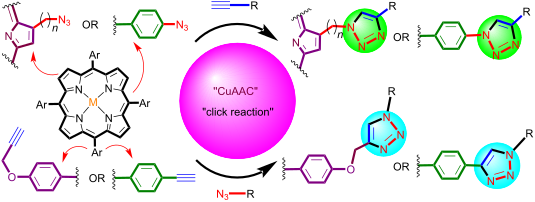
- the coumarin moiety in the case of zinc porphyrin analogues. In 2017, Yamana et at. [35] reported the synthesis of porphyrin-DNA conjugate 50 by a solid-phase “click reaction” between azidoporphyrin 39a and oligodeoxynucleotides 49 bearing an ethynyl group in the presence of CuSO4·5H2O and sodium




Solid-phase total synthesis and structural confirmation of antimicrobial longicatenamide A
Beilstein J. Org. Chem. 2022, 18, 1560–1566, doi:10.3762/bjoc.18.166
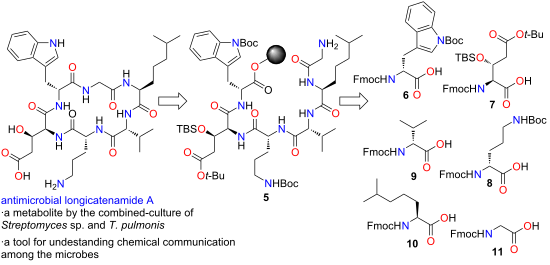
- communication in the microbial world. Herein, we report the solid-phase total synthesis and structural confirmation of longicatenamide A. First, commercially unavailable building blocks were chemically synthesized with stereocontrol. Second, the peptide chain was elongated via Fmoc-based solid-phase peptide
- longicatenamide A was confirmed. The developed solid-phase synthesis is expected to facilitate the rapid synthesis of diverse synthetic analogues. Keywords: antimicrobial; longicatenamides; peptidic natural product; solid-phase synthesis; total synthesis; Introduction Naturally occurring bioactive compounds can
- microbial world. To elucidate the role of compounds 1–4 in the microbial world, developing a strategy to synthesize compounds 1–4, including future derivatization to produce probe molecules, is required. Herein, we report the total synthesis of peptide 1 by Fmoc-based solid-phase peptide synthesis [9] and



Using UHPLC–MS profiling for the discovery of new sponge-derived metabolites and anthelmintic screening of the NatureBank bromotyrosine library
Beilstein J. Org. Chem. 2022, 18, 1544–1552, doi:10.3762/bjoc.18.164
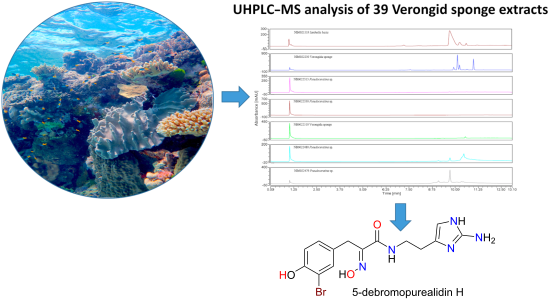
- II ETD ESI-qTOF. Phenomenex Strata solid phase extraction (SPE) cartridges (3 cc, polypropylene, single fritted) were used for the small-scale marine sponge extractions. GRACE Davisil (35–70 µm, 60 Å) C18-bonded silica was used for pre-absorption work before reversed-phase (RP) HPLC. The preabsorbed


Thermally activated delayed fluorescence (TADF) emitters: sensing and boosting spin-flipping by aggregation
Beilstein J. Org. Chem. 2022, 18, 1177–1187, doi:10.3762/bjoc.18.122
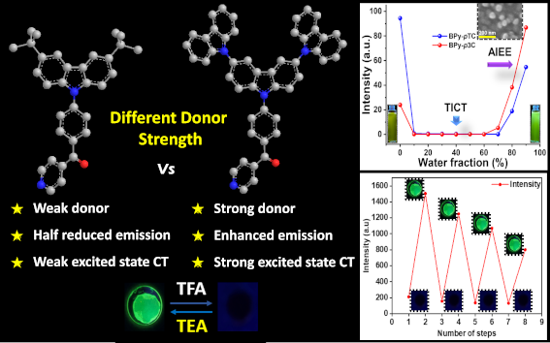
- thermally activated delayed fluorescence (TADF) characteristics are emerging due to the potential applications in optoelectronic devices, time-resolved luminescence imaging, and solid-phase sensing. Herein, we synthesized two (4-bromobenzoyl)pyridine (BPy)-based donor–acceptor (D–A) compounds with varying
- donor size and strength: the emitter BPy-pTC with tert-butylcarbazole (TC) as the donor and BPy-p3C with bulky tricarbazole (3C) as the donor unit. Both BPy-pTC and BPy-p3C exhibited prominent emission with TADF properties in solution and in the solid phase. The stronger excited-state charge transfer
- sensitive to acidic protons. Hence, the exposure to acid and base vapors using trifluoroacetic acid (TFA) and triethylamine (TEA) led to solid-phase fluorescence switching with fatigue resistance. The current study demonstrates the role of the donor strength and size in tuning ΔEST in the aggregated state


On Reuben G. Jones synthesis of 2-hydroxypyrazines
Beilstein J. Org. Chem. 2022, 18, 935–943, doi:10.3762/bjoc.18.93
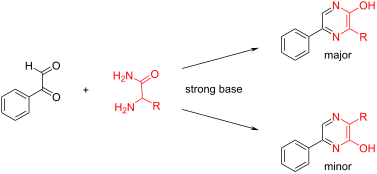
- system driven by a UV detector set to 254 nm unless required otherwise. Sample deposition was carried out by absorption of the mixture to be purified on a small amount of the solid phase followed by its deposition on the top of the column. For chromatography run at 60 °C a complete and illustrated


First series of N-alkylamino peptoid homooligomers: solution phase synthesis and conformational investigation
Beilstein J. Org. Chem. 2022, 18, 845–854, doi:10.3762/bjoc.18.85
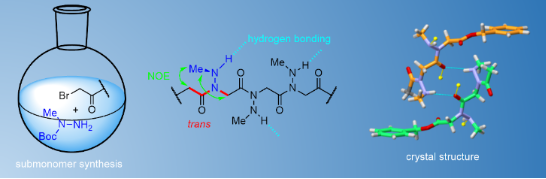
- evaluated few segment-based coupling methods. The optimizations made with respect to the standard submonomer synthetic conditions will be useful for developing solid-phase synthesis and access longer and more diverse N-(alkylamino)peptoid oligomers in the future. NMR analysis of the synthesized oligomers 1


A trustworthy mechanochemical route to isocyanides
Beilstein J. Org. Chem. 2022, 18, 732–737, doi:10.3762/bjoc.18.73
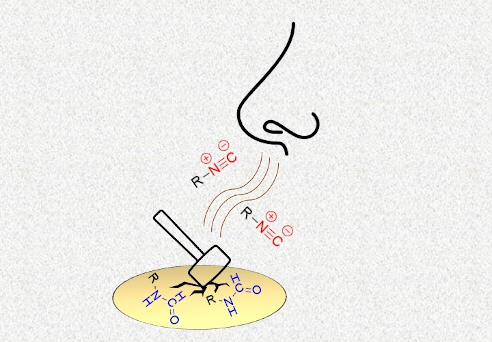
- entirely exerted in the solid phase through mechanochemical activation. In conclusion, we hope that our synthetic strategy could be considered a significant step toward a less impacting and more extensive research on isocyanide chemistry. Resonance forms of isocyanides. The purification process of a


Synthesis and bioactivity of pyrrole-conjugated phosphopeptides
Beilstein J. Org. Chem. 2022, 18, 159–166, doi:10.3762/bjoc.18.17
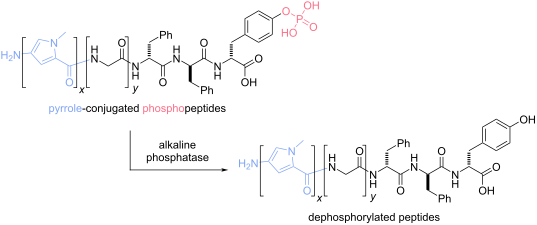
- shown nucleobases, as the heteroaromatic groups, are able to act as the N-capping group for EISA of phosphopeptides [67]. In this study, we chose to examine a different type of heteroaromatic group, pyrroles, because pyrrole is adaptable for solid-phase synthesis [68] so that it is feasible to conjugate
- the designed peptides combines solution synthesis of the enzyme trigger or the fluorophore with the solid-phase synthesis of the pyrrole-peptide conjugates. We used phosphorus pentoxide and phosphoric acid to react with ᴅ-tyrosine, ʟ-tyrosine, ʟ-serine, or ᴅ-serine to produce ᴅ-phosphotyrosine, ʟ
- -phosphotyrosine, ʟ-phosphoserine, or ᴅ-phosphoserine, respectively. After being protected by an Fmoc group, these phosphorylated amino acids are suitable for solid-phase synthesis. We also used solution-phase synthesis to synthesize NBD-β-alanine according to the reported procedures [66]. We used standard Fmoc


Peptide stapling by late-stage Suzuki–Miyaura cross-coupling
Beilstein J. Org. Chem. 2022, 18, 1–12, doi:10.3762/bjoc.18.1
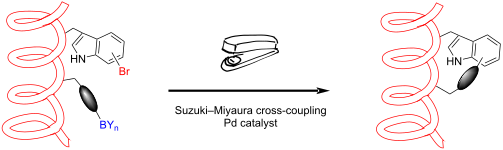
- organoboron containing side chain in the i + 4-position. The peptides were synthesised on Rink amide resin by solid-phase peptide synthesis (SPPS) with Fmoc/t-Bu strategy followed by on-resin SMC. For the cross-coupling, a modified protocol by Planas and co-workers was used [78]. Pd2(dba)3 was employed as the


First total synthesis of hoshinoamide A
Beilstein J. Org. Chem. 2021, 17, 2924–2931, doi:10.3762/bjoc.17.201
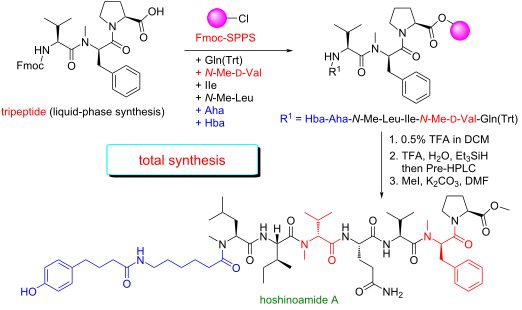
- -sensitive Plasmodium falciparum. Herein, we describe the first total synthesis of hoshinoamide A by the combination of liquid-phase and solid-phase peptide synthesis. Liquid-phase synthesis is to improve the coupling yield of ʟ-Val3 and N-Me-ᴅ-Phe2. Connecting other amino acids efficiency and convergence is
- in Scheme 1, we initially tested Fmoc solid-phase peptide synthesis (SPPS) [13] to get 2-chlorotrityl resin-bound Pro1-(N-Me)-Phe2 dipeptide 2 under the conditions of HCTU and DIPEA. Unfortunately, the N-Me coupling proceeded in low yield (<10%). In order to improve the coupling yield of the hindered
- spectroscopic data of synthetic hoshinoamide A were in excellent agreement with the data previously reported for the natural product. Conclusion In summary, we have completed the first total synthesis of hoshinoamide A. By combining the liquid and solid-phase peptide synthetic strategy, hoshinoamide A was


Progress and challenges in the synthesis of sequence controlled polysaccharides
Beilstein J. Org. Chem. 2021, 17, 1981–2025, doi:10.3762/bjoc.17.129
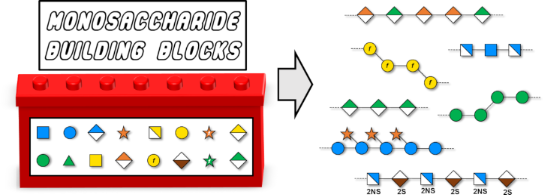
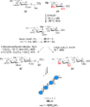
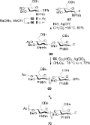
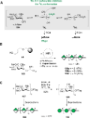
- approach was efficient in solid phase as well as in solution phase synthesis. The participating (S)-(phenylthiomethyl) benzyl chiral auxiliary at the C-2 position of the glucosyl donor permitted the solid phase synthesis of a branched pentaglucan having a α(1–3) branch on an α(1–6) backbone [174]. Boron
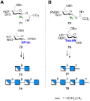
- ][260]. The automated solid-phase approach required only two BBs with the amino group protected either with the N-TCA 79 or with the N-Cbz group 80 (Scheme 12). Compounds 81–85 served as standards to explore the conformational space of COS with different PA. NMR analysis and MD simulations revealed the
- , ranging from tri- to hexasaccharide, was obtained via iterative electrochemical assembly [266]. A solid-phase automated approach delivered β(1–6)-glucosamine hexasaccharide 87a and dodecasaccharide 87b (Scheme 13A) [267]. β(1–3)-Oligomer 90 was prepared as chitin mimetics (Scheme 13B). Despite the subtle










Cationic oligonucleotide derivatives and conjugates: A favorable approach for enhanced DNA and RNA targeting oligonucleotides
Beilstein J. Org. Chem. 2021, 17, 1828–1848, doi:10.3762/bjoc.17.125
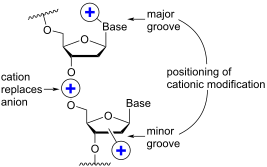
- solid-phase DNA synthesis, circumventing some of the laborious work involved in the synthesis of some internucleotide linkages. The authors demonstrated that this new modification could enhance the stability of the ON/RNA duplex, although no significant change was observed for the ON /DNA duplex (100 mM


Chemical synthesis of C6-tetrazole ᴅ-mannose building blocks and access to a bioisostere of mannuronic acid 1-phosphate
Beilstein J. Org. Chem. 2021, 17, 1527–1532, doi:10.3762/bjoc.17.110
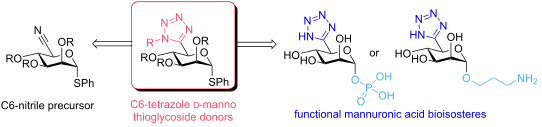
- this end, synthetic chemistry strategies (both solution and solid phase) have demonstrated exciting capabilities for access to native alginate oligosaccharides in recent years [6][7][8][9][10]. As part of a program to access non-native alginate oligosaccharide sequences, we targeted a synthetic


Double-headed nucleosides: Synthesis and applications
Beilstein J. Org. Chem. 2021, 17, 1392–1439, doi:10.3762/bjoc.17.98
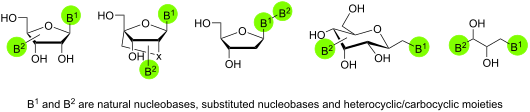
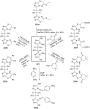
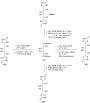
- phosphoramidites 160 and 164 which were then incorporated into oligodeoxynucleotides using automated solid phase synthesis. The synthesized oligonucleotides were removed from the solid support by treatment with concentrated aqueous ammonia which resulted in the formation of incorporated monomers 161 and 165 by





A comprehensive review of flow chemistry techniques tailored to the flavours and fragrances industries
Beilstein J. Org. Chem. 2021, 17, 1181–1312, doi:10.3762/bjoc.17.90




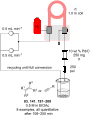


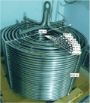

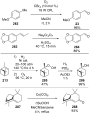

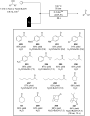


Beyond ribose and phosphate: Selected nucleic acid modifications for structure–function investigations and therapeutic applications
Beilstein J. Org. Chem. 2021, 17, 908–931, doi:10.3762/bjoc.17.76
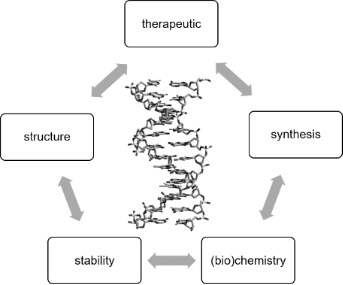
- diseases. Oligonucleotides with alterations to their scaffold, prepared with modified nucleosides and solid-phase synthesis, have yielded molecules with interesting biophysical properties that bind to their targets and are tolerated by the cellular machinery to elicit a therapeutic outcome. Structural
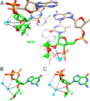
- modifications N3' → P5' phosphoramidate The N3' → P5' phosphoramidate DNA (3'-NP DNA) contains a negatively charged internucleotide linkage, but one of the bridging oxygens is replaced by a nitrogen (Figure 1A). The 3'-NP linkage is generated during solid-phase synthesis where the incoming protected 5'-DMT-3
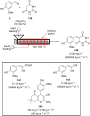
- synthesize the nucleoside dimer phosphoramidite with the appropriate amide linkage, which can then be introduced into the strand by solid-phase synthesis. These dimers are synthesized by using an amide coupling reagent to condense a 3'-carboxylic acid nucleoside with a 5'-amine nucleoside, where the




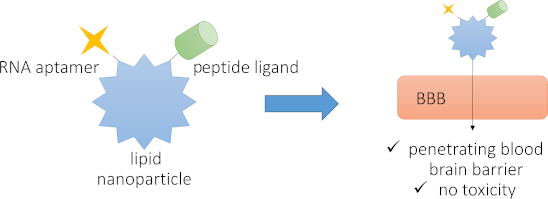
Enhanced target cell specificity and uptake of lipid nanoparticles using RNA aptamers and peptides
Beilstein J. Org. Chem. 2021, 17, 891–907, doi:10.3762/bjoc.17.75
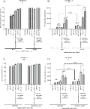
- ’-flouronated base; italics and underlined = 2’-O-methyl base Complementary DNA A-1: (Cy5/AGG CTA TCT AGA ATG TAC) G-3: (Cy5/TCT ATC AAT CTA TCA) Peptide synthesis, purification, and characterization Peptide assembly was carried out by solid-phase peptide synthesis in standard solid-phase extraction filtration


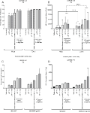

DNA with zwitterionic and negatively charged phosphate modifications: Formation of DNA triplexes, duplexes and cell uptake studies
Beilstein J. Org. Chem. 2021, 17, 749–761, doi:10.3762/bjoc.17.65
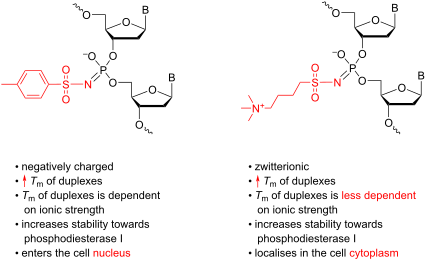
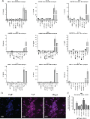
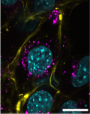
- section are shown: nuclear DNA (blue), 4Ts-FAM/ON (magenta), cell membrane (yellow). Scale bar: 20 μm. The synthesis of ONs with Ts and N+ modification using the Staudinger reaction during the solid-phase DNA synthesis. Conditions: (i) 0.5 M TsN3, MeCN, 37 °C, 30 min for Ts modification; 0.7 M 4
- sequences [56], regardless of the number of BCNSs incorporated. This is in line with our results where increasing the number of N+ or Ts modifications showed no benefit in Tm values of the antiparallel duplexes formed with complementary RNA or DNA. In order to be compatible with standard automated solid
- -phase DNA or RNA synthesis, the introduction of SaRNA monomers into an RNA backbone involved a 14-step preparation of the phosphoramidite for the SaRNA-TT dinucleotide. Similarly, the incorporation of BCNS groups on a DNA backbone requires the synthesis of thymidine and 2’-OMe-uridine phosphoramidites


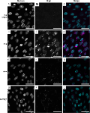
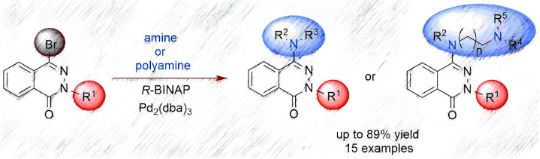
Amino- and polyaminophthalazin-1(2H)-ones: synthesis, coordination properties, and biological activity
Beilstein J. Org. Chem. 2021, 17, 558–568, doi:10.3762/bjoc.17.50
- A and B, the geometry optimization was performed for the isolated molecules A and B. In a solid phase the Cu(II) central ion is five-coordinated by three nitrogen atoms of 7 and two chloride anions. The CuN3Cl2 coordination center adopts the strongly distorted square pyramidal geometry with the five