


Search results
Search for "synthon" in Full Text gives 85 result(s) in Beilstein Journal of Organic Chemistry.
Tuning the solid-state emission of liquid crystalline nitro-cyanostilbene by halogen bonding
- Subrata Nath,
- Alexander Kappelt,
- Matthias Spengler,
- Bibhisan Roy,
- Jens Voskuhl and
- Michael Giese
Beilstein J. Org. Chem. 2021, 17, 124–131, doi:10.3762/bjoc.17.13
- behaviour of halogen-bonded liquid crystals has been reported. In 2014, Tothadi and Desiraju reported on a new supramolecular synthon based on the non-covalent interaction between 1,4-dinitrobenzene and iodobenzene [13]. Their structural analysis of a series of ternary cocrystals revealed that the nitro
- group is a suitable halogen bond acceptor, which interacts with polarised iodobenzene components in three different geometries – symmetrical, unsymmetrical or sidewise. Many other crystal structures support these findings and suggest the suitability of this synthon for the construction of supramolecular

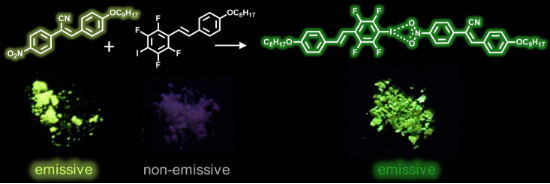
Graphical Abstract

Figure 1: Schematic representation of the modular approach towards halogen-bonded fluorescent liquid crystals....

Figure 2: Representative POM images of NO2-C10 at 94 °C (a) and NO2-C10∙∙∙F4Az at 61.5 °C (b) upon cooling fr...
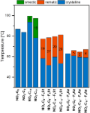
Figure 3: Comparison of the mesomorphic properties of NO2-Cn, NO2-Cn∙∙∙F4St, and NO2-Cn∙∙∙F4Az (n = 8–11). Th...

Figure 4: Graphical representation of the calculated interaction energies in kJ/mol of the XB-acceptor NO2-C1...
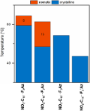
Figure 5: Summary of the thermal behaviour of the azo complexes with decreasing fluorination degree as observ...

Figure 6: POM images of the supramolecular assemblies NO2-C10∙∙∙F3Az (a), NO2-C10∙∙∙F2Az (b) and NO2-C10∙∙∙F2...
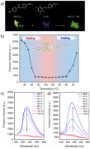
Figure 7: Fluorescence studies of NO2-C9∙∙∙F4St. The photographs of the solid components as well as the forme...

Figure 8: Photographs of the assemblies with different alkoxy chain lengths on the NO2-Cn moiety directly aft...

Figure 9: Temperature-dependent fluorescent images of NO2-C9∙∙∙F4St showing the enhancement of emission upon ...
Design and synthesis of diazine-based panobinostat analogues for HDAC8 inhibition
- Sivaraman Balasubramaniam,
- Sajith Vijayan,
- Liam V. Goldman,
- Xavier A. May,
- Kyra Dodson,
- Sweta Adhikari,
- Fatima Rivas,
- Davita L. Watkins and
- Shana V. Stoddard
Beilstein J. Org. Chem. 2020, 16, 628–637, doi:10.3762/bjoc.16.59
- obstacle was overcome by using a modified Fieser work-up procedure to yield the aldehyde 6 in high yield, 78%. Then, aldehyde 6 was converted to the α,β-unsaturated trans-ester 7 through a Wittig reaction with the phosphorane synthon 8, which was derived from ethyl bromoacetate at 60 °C for 8 h in THF in

Graphical Abstract

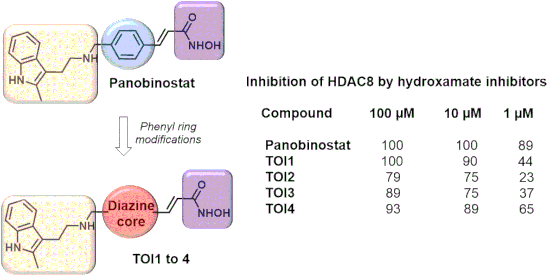
Figure 1: Chemical structures of the target diazine-based surrogates for the central core of panobinostat.

Figure 2: Docking pose for panobinostat and panobinostat derivatives in the HDAC8 receptor. (a) Overlay of al...

Figure 3: General building blocks for the visualized targets.

Scheme 1: Reaction conditions: a) MeOH, H2SO4 (5 drops), MS 4 Å (2 pieces), 68 °C, 8 h, 81%; b) DIBAL-H (1.2 ...
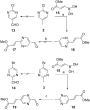
Scheme 2: Reaction conditions: a) boronic acid 15 (1.3 equiv), PdCl2(PPh3)2 (0.1 equiv), dioxane/H2O (3:1), Na...

Scheme 3: Reaction conditions: a) 5-bromo-2-chloropyrimidine (1 equiv), ethyl formate (1.5 equiv), THF (20 mL...

Scheme 4: Reaction conditions: a) boronic acid 15 (1.3 equiv), PdCl2(PPh3)2 (0.1 equiv), dioxane/H2O (8:2, Na2...
Regioselectively α- and β-alkynylated BODIPY dyes via gold(I)-catalyzed direct C–H functionalization and their photophysical properties
- Takahide Shimada,
- Shigeki Mori,
- Masatoshi Ishida and
- Hiroyuki Furuta
Beilstein J. Org. Chem. 2020, 16, 587–595, doi:10.3762/bjoc.16.53
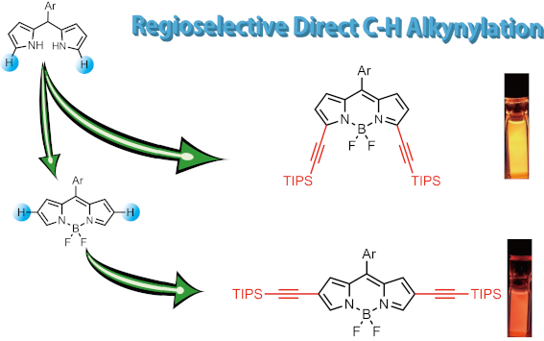
- BODIPY core has not yet been achieved. Inspired by the works of Waser and co-workers showing the gold(I)-catalyzed C–H electrophilic alkynylation of various heterocycles (e.g., pyrroles, indoles, etc.) with ethynylbenziodoxolone (EBX) as an activated ethynyl synthon [38][39][40][41][42], we investigated

Graphical Abstract
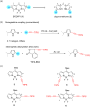
Figure 1: (a) Chemical structures of BODIPY (1) and dipyrromethane (2). (b) C–C bond forming alkynylations of...

Scheme 1: Synthesis of α-ethynyl-substituted BODIPY derivatives 3a and 4a.

Scheme 2: Synthesis of β-ethynyl-substituted BODIPY derivatives 5a and 5b and β,β'-diethynyl-substituted comp...

Figure 2: Top and front views of the crystal structures of (a) 4a and (b) 6b with 50% thermal ellipsoid proba...

Figure 3: Partial 1H NMR spectra of (a) 1a, (b) 3a, (c) 4a, (d) 5a, and (e) 6a recorded in CDCl3 at 298 K. As...
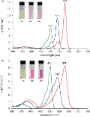
Figure 4: UV–vis absorption spectra of the BODIPY derivatives, (a) 1a (green), 3a (blue), 4a (red), and (b) 1a...
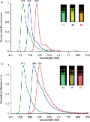
Figure 5: Fluorescence spectra of BODIPY derivatives. (a) 1a (green), 3a (blue), 4a (red) and (b) 1a (green), ...
Copper-catalyzed enantioselective conjugate addition of organometallic reagents to challenging Michael acceptors
- Delphine Pichon,
- Jennifer Morvan,
- Christophe Crévisy and
- Marc Mauduit
Beilstein J. Org. Chem. 2020, 16, 212–232, doi:10.3762/bjoc.16.24
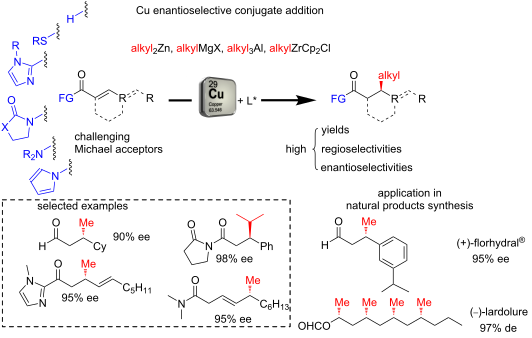
- product 59c, affording the key synthon 60 with a slight erosion of the optical purity (Scheme 22). α,β-Unsaturated N-acylpyrroles α,β-Unsaturated N-acylpyrroles were also investigated as Michael acceptors in enantioselective conjugate additions using organometallic reagents. In 2013, Endo and Shibata

Graphical Abstract

Scheme 1: Competitive side reactions in the Cu ECA of organometallic reagents to α,β-unsaturated aldehydes.
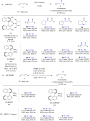
Scheme 2: Cu-catalyzed ECA of α,β-unsaturated aldehydes with phosphoramidite- (a) and phosphine-based ligands...

Scheme 3: One-pot Cu-catalyzed ECA/organocatalyzed α-substitution of enals.

Scheme 4: Combination of copper and amino catalysis for enantioselective β-functionalizations of enals.

Scheme 5: Optimized conditions for the Cu ECAs of R2Zn, RMgBr, and AlMe3 with α,β-unsaturated aldehydes.

Scheme 6: CuECA of Grignard reagents to α,β-unsaturated thioesters and their application in the asymmetric to...

Scheme 7: Improved Cu ECA of Grignard reagents to α,β-unsaturated thioesters, and their application in the as...

Scheme 8: Catalytic enantioselective synthesis of vicinal dialkyl arrays via Cu ECA of Grignard reagents to γ...

Scheme 9: 1,6-Cu ECA of MeMgBr to α,β,γ,δ-bisunsaturated thioesters: an iterative approach to deoxypropionate...

Scheme 10: Tandem Cu ECA/intramolecular enolate trapping involving 4-chloro-α,β-unsaturated thioester 22.

Scheme 11: Cu ECA of Grignard reagents to 3-boronyl α,β-unsaturated thioesters.

Scheme 12: Cu ECA of alkylzirconium reagents to α,β-unsaturated thioesters.

Scheme 13: Conversion of acylimidazoles into aldehydes, ketones, acids, esters, amides, and amines.

Scheme 14: Cu ECA of dimethyl malonate to α,β-unsaturated acylimidazole 31 with triazacyclophane-based ligand ...

Scheme 15: Cu/L13-catalyzed ECA of alkylboranes to α,β-unsaturated acylimidazoles.

Scheme 16: Cu/hydroxyalkyl-NHC-catalyzed ECA of dimethylzinc to α,β-unsaturated acylimidazoles.

Scheme 17: Stereocontrolled synthesis of 3,5,7-all-syn and anti,anti-stereotriads via iterative Cu ECAs.

Scheme 18: Stereocontrolled synthesis of anti,syn- and anti,anti-3,5,7-(Me,OR,Me) units via iterative Cu ECA/B...

Scheme 19: Cu-catalyzed ECA of dialkylzinc reagents to α,β-unsaturated N-acyloxazolidinones.

Scheme 20: Cu/phosphoramidite L16-catalyzed ECA of dialkylzincs to α,β-unsaturated N-acyl-2-pyrrolidinones.

Scheme 21: Cu/(R,S)-Josiphos (L9)-catalyzed ECA of Grignard reagents to α,β-unsaturated amides.

Scheme 22: Cu/Josiphos (L9)-catalyzed ECA of Grignard reagents to polyunsaturated amides.

Scheme 23: Cu-catalyzed ECA of trimethylaluminium to N-acylpyrrole derivatives.
Combination of multicomponent KA2 and Pauson–Khand reactions: short synthesis of spirocyclic pyrrolocyclopentenones
- Riccardo Innocenti,
- Elena Lenci,
- Gloria Menchi and
- Andrea Trabocchi
Beilstein J. Org. Chem. 2020, 16, 200–211, doi:10.3762/bjoc.16.23
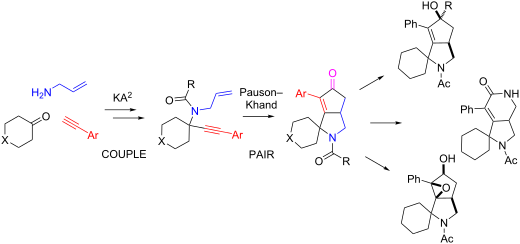
- cyclopentenone ring [37], as this heterocycle is a powerful synthon for the synthesis of a variety of bioactive target molecules, due to the broad diversity of chemical modifications available for the enone structural motif [38]. The most common approach to access such chemotype is the Pauson–Khand (PK) reaction

Graphical Abstract

Figure 1: Chemical structure of representative approved drugs containing a spirocyclic moiety.

Scheme 1: Synthetic strategies for accessing pyrrolocyclopentenone derivatives, including the novel couple/pa...

Scheme 2: Couple/pair approach using combined KA2 and Pauson–Khand multicomponent reactions.

Scheme 3: Follow-up chemistry on compound 5 taking advantage of the enone chemistry. Reaction conditions. (i)...
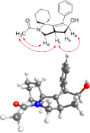
Figure 2: Top: Selected NOE contacts from NOESY 1D spectra of compound 36; bottom: low energy conformer of 36...

Figure 3: PCA plot resulting from the correlation between PC1 vs PC2, showing the positioning in the chemical...

Figure 4: PMI plot showing the skeletal diversity of compounds 3–39 (blue diamonds) with respect to the refer...
Application of chiral 2-isoxazoline for the synthesis of syn-1,3-diol analogs
- Juanjuan Feng,
- Tianyu Li,
- Jiaxin Zhang and
- Peng Jiao
Beilstein J. Org. Chem. 2019, 15, 1840–1847, doi:10.3762/bjoc.15.179
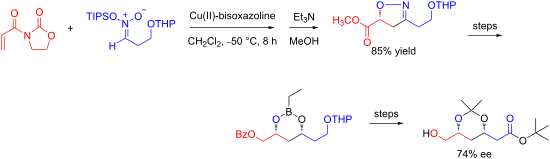
- oxidation conditions. Based on this assumption, the corresponding silyl nitronate from 3-nitropropanal or its acetal were not tried for cycloaddition. We then set to liberate the β-hydroxy ketone synthon by ring opening of the isoxazoline 3 (Scheme 3). Raney-Ni-catalyzed hydrogenolysis in the presence of

Graphical Abstract

Scheme 1: Accesses to tert-butyl 3,5-O-isopropylidene-3,5-dihydroxyhexanoates. (a) Previous methods using Cla...

Scheme 2: Attempted oxidations of 4.

Scheme 3: Preparations of 16 and related syn-1,3-diol compounds.

Scheme 4: Attempted oxidations of 6'.

Scheme 5: Attempted selective protections of internal 1,3-hydroxy groups: (a) acetonizations of 1,3-diols; (b...
Vicinal difunctionalization of alkenes by four-component radical cascade reaction of xanthogenates, alkenes, CO, and sulfonyl oxime ethers
- Shuhei Sumino,
- Takahide Fukuyama,
- Mika Sasano,
- Ilhyong Ryu,
- Antoine Jacquet,
- Frédéric Robert and
- Yannick Landais
Beilstein J. Org. Chem. 2019, 15, 1822–1828, doi:10.3762/bjoc.15.176

- /acceptor type C1 synthons [6][7][8][9][10][11][12][13][14][15]. In this context, sulfonyl oxime ethers are powerful acceptors of type C1 synthon [8][16][17], which terminates the multicomponent reaction by a β-scission of RSO2 radicals [18][19][20]. Recently, one of us reported on a three-component radical

Graphical Abstract

Scheme 1: Concept: Alkene difuctionalization by four-component radical reaction using xanthates, alkenes, CO ...

Figure 1: Vicinal difunctionalization of alkenes by four-component radical cascade reaction using xanthogenat...

Figure 2: Proposed radical chain mechanism.
N-(1-Phenylethyl)aziridine-2-carboxylate esters in the synthesis of biologically relevant compounds
- Iwona E. Głowacka,
- Aleksandra Trocha,
- Andrzej E. Wróblewski and
- Dorota G. Piotrowska
Beilstein J. Org. Chem. 2019, 15, 1722–1757, doi:10.3762/bjoc.15.168

- which is finally easily removed [11]. Among three-carbon chirons related to Garner’s aldehyde derivatives of N-(1-phenylethyl)aziridine-2-carboxylic acid 5–8 (Figure 2) play an important role in asymmetric synthesis as they function as a chiral synthon combined with a chiral auxiliary [(R)- or (S)-1

Graphical Abstract

Figure 1: Examples of three-carbon chirons.

Figure 2: Structures of derivatives of N-(1-phenylethyl)aziridine-2-carboxylic acid 5–8.

Figure 3: Synthetic equivalency of aziridine aldehydes 6.

Scheme 1: Synthesis of N-(1-phenylethyl)aziridine-2-carboxylates 5. Reagents and conditions: a) TEA, toluene,...

Scheme 2: Absolute configuration at C2 in (2S,1'S)-5a. Reagents and conditions: a) 20% HClO4, 80 °C, 30 h the...

Scheme 3: Major synthetic strategies for a 2-ketoaziridine scaffold [R* = (R)- or (S)-1-phenylethyl; R′ = Alk...

Scheme 4: Synthesis of cyanide (2S,1'S)-13. Reagents and conditions: a) NH3, EtOH/H2O, rt, 72 h; b) Ph3P, CCl4...

Scheme 5: Synthesis of key intermediates (R)-16 and (R)-17 for (R,R)-formoterol (14) and (R)-tamsulosin (15)....

Scheme 6: Synthesis of mitotic kinesin inhibitors (2R/S,1'R)-23. Reagents and conditions: a) H2, Pd(OH)2, EtO...

Scheme 7: Synthesis of (R)-mexiletine ((R)-24). Reagents and conditions: a) TsCl, TEA, DMAP, CH2Cl2, rt, 1 h;...

Scheme 8: Synthesis of (−)-cathinone ((S)-27). Reagents and conditions: a) PhMgBr, ether, 0 °C; b) H2, 10% Pd...

Scheme 9: Synthesis of N-Boc-norpseudoephedrine ((1S,2S)-(+)-29) and N-Boc-norephedrine ((1R,2S)-29). Reagent...

Scheme 10: Synthesis of (−)-ephedrine ((1R,2S)-31). Reagents and conditions: a) TfOMe, MeCN then NaBH3CN, rt; ...

Scheme 11: Synthesis of xestoaminol C ((2S,3R)-35), 3-epi-xestoaminol C ((2S,3S)-35) and N-Boc-spisulosine ((2S...

Scheme 12: Synthesis of ʟ-tryptophanol ((S)-41). Reagents and conditions: a) CDI, MeCN, rt, 1 h then TMSI, MeC...

Scheme 13: Synthesis of ʟ-homophenylalaninol ((S)-42). Reagents and conditions: a) NaH, THF, 0 °C to −78 °C, 1...

Scheme 14: Synthesis of ᴅ-homo(4-octylphenyl)alaninol ((R)-47) and a sphingolipid analogue (R)-48. Reagents an...

Scheme 15: Synthesis of florfenicol ((1R,2S)-49). Reagents and conditions: a) (S)-1-phenylethylamine, TEA, MeO...

Scheme 16: Synthesis of natural tyroscherin ((2S,3R,6E,8R,10R)-55). Reagents and conditions: a) I(CH2)3OTIPS, t...

Scheme 17: Syntheses of (−)-hygrine (S)-61, (−)-hygroline (2S,2'S)-62 and (−)-pseudohygroline (2S,2'R)-62. Rea...

Scheme 18: Synthesis of pyrrolidine (3S,3'R)-68, a fragment of the fluoroquinolone antibiotic PF-00951966. Rea...

Scheme 19: Synthesis of sphingolipid analogues (R)-76. Reagents and conditions: a) BnBr, Mg, THF, reflux, 6 h;...

Scheme 20: Synthesis of ᴅ-threo-PDMP (1R,2R)-81. Reagents and conditions: a) TMSCl, NaI, MeCN, rt, 1 h 50 min,...

Scheme 21: Synthesis of the sphingolipid analogue SG-14 (2S,3S)-84. Reagents and conditions: a) LiAlH4, THF, 0...

Scheme 22: Synthesis of the sphingolipid analogue SG-12 (2S,3R)-88. Reagents and conditions: a) 1-(bromomethyl...

Scheme 23: Synthesis of sphingosine-1-phosphate analogues DS-SG-44 and DS-SG-45 (2S,3R)-89a and (2S,3R)-89a. R...

Scheme 24: Synthesis of N-Boc-safingol ((2S,3S)-95) and N-Boc-ᴅ-erythro-sphinganine ((2S,3R)-95). Reagents and...

Scheme 25: Synthesis of ceramide analogues (2S,3R)-96. Reagents and conditions: a) NaBH4, ZnCl2, MeOH, −78 °C,...

Scheme 26: Synthesis of orthogonally protected serinols, (S)-101 and (R)-102. Reagents and conditions: a) BnBr...

Scheme 27: Synthesis of N-acetyl-3-phenylserinol ((1R,2R)-105). Reagents and conditions: a) AcOH, CH2Cl2, refl...

Scheme 28: Synthesis of (S)-linezolid (S)-107. Reagents and conditions: a) LiAlH4, THF, 0 °C to reflux; b) Boc2...

Scheme 29: Synthesis of (2S,3S,4R)-2-aminooctadecane-1,3,4-triol (ᴅ-ribo-phytosphingosine) (2S,3S,4R)-110. Rea...

Scheme 30: Syntheses of ᴅ-phenylalanine (R)-116. Reagents and conditions: a) AcOH, CH2Cl2, reflux, 4 h; b) MsC...

Scheme 31: Synthesis of N-Boc-ᴅ-3,3-diphenylalanine ((R)-122). Reagents and conditions: a) PhMgBr, THF, −78 °C...

Scheme 32: Synthesis of ethyl N,N’-di-Boc-ʟ-2,3-diaminopropanoate ((S)-125). Reagents and conditions: a) NaN3,...

Scheme 33: Synthesis of the bicyclic amino acid (S)-(+)-127. Reagents and conditions: a) BF3·OEt2, THF, 60 °C,...

Scheme 34: Synthesis of lacosamide, (R)-2-acetamido-N-benzyl-3-methoxypropanamide (R)-130. Reagents and condit...

Scheme 35: Synthesis of N-Boc-norfuranomycin ((2S,2'R)-133). Reagents and conditions: a) H2C=CHCH2I, NaH, THF,...

Scheme 36: Synthesis of MeBmt (2S,3R,4R,6E)-139. Reagents and conditions: a) diisopropyl (S,S)-tartrate (E)-cr...

Scheme 37: Synthesis of (+)-polyoxamic acid (2S,3S,4S)-144. Reagents and conditions: a) AD-mix-α, MeSO2NH2, t-...

Scheme 38: Synthesis of the protected 3-hydroxy-ʟ-glutamic acid (2S,3R)-148. Reagents and conditions: a) LiHMD...

Scheme 39: Synthesis of (+)-isoserine (R)-152. Reagents and conditions: a) AcCl, MeCN, rt, 0.5 h then Na2CO3, ...

Scheme 40: Synthesis of (3R,4S)-N3-Boc-3,4-diaminopentanoic acid (3R,4S)-155. Reagents and conditions: a) Ph3P...

Scheme 41: Synthesis of methyl (2S,3S,4S)-4-(dimethylamino)-2,3-dihydroxy-5-methoxypentanoate (2S,3S,4S)-159. ...

Scheme 42: Syntheses of methyl (3S,4S) 4,5-di-N-Boc-amino-3-hydroxypentanoate ((3S,4S)-164), methyl (3S,4S)-4-N...

Scheme 43: Syntheses of (3R,5S)-5-(aminomethyl)-3-(4-methoxyphenyl)dihydrofuran-2(3H)-one ((3R,5S)-168). Reage...

Scheme 44: Syntheses of a series of imidazolin-2-one dipeptides 175–177 (for R' and R'' see text). Reagents an...

Scheme 45: Syntheses of (2S,3S)-N-Boc-3-hydroxy-2-hydroxymethylpyrrolidine ((2S,3S)-179). Reagents and conditi...

Scheme 46: Syntheses of enantiomers of 1,4-dideoxy-1,4-imino-ʟ- and -ᴅ-lyxitols (2S,3R,4S)-182 and (2R,3S,4R)-...

Scheme 47: Synthesis of 1,4-dideoxy-1,4-imino-ʟ-ribitol (2S,3S,4R)-182. Reagents and conditions: a) AcOH, CH2Cl...

Scheme 48: Syntheses of 1,4-dideoxy-1,4-imino-ᴅ-arabinitol (2R,3R,4R)-182 and 1,4-dideoxy-1,4-imino-ᴅ-xylitol ...

Scheme 49: Syntheses of natural 2,5-imino-2,5,6-trideoxy-ʟ-gulo-heptitol ((2S,3R,4R,5R)-184) and its C4 epimer...

Scheme 50: Syntheses of (−)-dihydropinidine ((2S,6R)-187a) (R = C3H7) and (2S,6R)-isosolenopsins (2S,6R)-187b ...

Scheme 51: Syntheses of (+)-deoxocassine ((2S,3S,6R)-190a, R = C12H25) and (+)-spectaline ((2S,3S,6R)-190b, R ...

Scheme 52: Synthesis of (−)-microgrewiapine A ((2S,3R,6S)-194a) and (+)-microcosamine A ((2S,3R,6S)-194b). Rea...

Scheme 53: Syntheses of ʟ-1-deoxynojirimycin ((2S,3S,4S,5R)-200), ʟ-1-deoxymannojirimycin ((2S,3S,4S,5S)-200) ...

Scheme 54: Syntheses of 1-deoxy-ᴅ-galacto-homonojirimycin (2R,3S,4R,5S)-211. Reagents and conditions: a) MeONH...

Scheme 55: Syntheses of 7a-epi-hyacinthacine A1 (1S,2R,3R,7aS)-220. Reagents and conditions: a) TfOTBDMS, 2,6-...

Scheme 56: Syntheses of 8-deoxyhyacinthacine A1 ((1S,2R,3R,7aR)-221). Reagents and conditions: a) H2, Pd/C, PT...

Scheme 57: Syntheses of (+)-lentiginosine ((1S,2S,8aS)-227). Reagents and conditions: a) (EtO)2P(O)CH2COOEt, L...

Scheme 58: Syntheses of 8-epi-swainsonine (1S,2R,8S,8aR)-231. Reagents and conditions: a) Ph3P=CHCOOMe, MeOH, ...

Scheme 59: Synthesis of a protected vinylpiperidine (2S,3R)-237, a key intermediate in the synthesis of (−)-sw...

Scheme 60: Synthesis of a modified carbapenem 245. Reagents and conditions: a) AcOEt, LiHMDS, THF, −78 °C, 1.5...
Recent advances on the transition-metal-catalyzed synthesis of imidazopyridines: an updated coverage
- Gagandeep Kour Reen,
- Ashok Kumar and
- Pratibha Sharma
Beilstein J. Org. Chem. 2019, 15, 1612–1704, doi:10.3762/bjoc.15.165
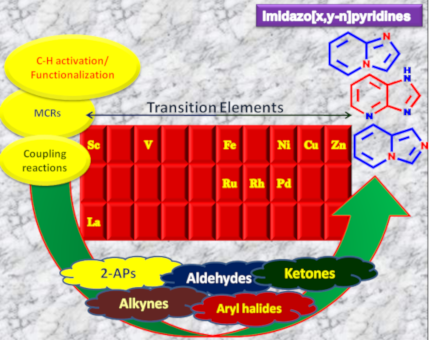
- performed a Cu(OAc)2-Et3N-mediated coupling reaction of α-azido ketones 115 with pyridinium ylides 114 using oxygen as a green oxidant (Scheme 40). The oxo-functionality present in α-azido ketones increased its acidity thus making it a good organic synthon. Optimization of the reaction conditions revealed

Graphical Abstract

Figure 1: Various drugs having IP nucleus.

Figure 2: Participation percentage of various TMs for the syntheses of IPs.

Scheme 1: CuI–NaHSO4·SiO2-catalyzed synthesis of imidazo[1,2-a]pyridines.

Scheme 2: Experimental examination of reaction conditions.

Scheme 3: One-pot tandem reaction for the synthesis of 2-haloimidazopyridines.

Scheme 4: Mechanistic scheme for the synthesis of 2-haloimidazopyridine.

Scheme 5: Copper-MOF-catalyzed three-component reaction (3-CR) for imidazo[1,2-a]pyridines.

Scheme 6: Mechanism for copper-MOF-driven synthesis.

Scheme 7: Heterogeneous synthesis via titania-supported CuCl2.

Scheme 8: Mechanism involving oxidative C–H functionalization.

Scheme 9: Heterogeneous synthesis of IPs.

Scheme 10: One-pot regiospecific synthesis of imidazo[1,2-a]pyridines.

Scheme 11: Vinyl azide as an unprecedented substrate for imidazo[1,2-a]pyridines.

Scheme 12: Radical pathway.

Scheme 13: Cu(I)-catalyzed transannulation approach for imidazo[1,5-a]pyridines.

Scheme 14: Plausible radical pathway for the synthesis of imidazo[1,5-a]pyridines.

Scheme 15: A solvent-free domino reaction for imidazo[1,2-a]pyridines.

Scheme 16: Cu-NPs-mediated synthesis of imidazo[1,2-a]pyridines.

Scheme 17: CuI-catalyzed synthesis of isoxazolylimidazo[1,2-a]pyridines.

Scheme 18: Functionalization of 4-bromo derivative via Sonogashira coupling reaction.

Scheme 19: A plausible reaction pathway.

Scheme 20: Cu(I)-catalyzed intramolecular oxidative C–H amidation reaction.

Scheme 21: One-pot synthetic reaction for imidazo[1,2-a]pyridine.

Scheme 22: Plausible reaction mechanism.

Scheme 23: Cu(OAc)2-promoted synthesis of imidazo[1,2-a]pyridines.

Scheme 24: Mechanism for aminomethylation/cycloisomerization of propiolates with imines.

Scheme 25: Three-component synthesis of imidazo[1,2-a]pyridines.

Figure 3: Scope of pyridin-2(1H)-ones and acetophenones.

Scheme 26: CuO NPS-promoted A3 coupling reaction.

Scheme 27: Cu(II)-catalyzed C–N bond formation reaction.

Scheme 28: Mechanism involving Chan–Lam/Ullmann coupling.

Scheme 29: Synthesis of formyl-substituted imidazo[1,2-a]pyridines.

Scheme 30: A tandem sp3 C–H amination reaction.

Scheme 31: Probable mechanistic approach.

Scheme 32: Dual catalytic system for imidazo[1,2-a]pyridines.

Scheme 33: Tentative mechanism.

Scheme 34: CuO/CuAl2O4/ᴅ-glucose-promoted 3-CCR.

Scheme 35: A tandem CuOx/OMS-2-based synthetic strategy.

Figure 4: Biomimetic catalytic oxidation in the presence of electron-transfer mediators (ETMs).

Scheme 36: Control experiment.

Scheme 37: Copper-catalyzed C(sp3)–H aminatin reaction.

Scheme 38: Reaction of secondary amines.

Scheme 39: Probable mechanistic pathway.

Scheme 40: Coupling reaction of α-azidoketones.

Scheme 41: Probable pathway.

Scheme 42: Probable mechanism with free energy calculations.

Scheme 43: MCR for cyanated IP synthesis.

Scheme 44: Substrate scope for the reaction.

Scheme 45: Reaction mechanism.

Scheme 46: Probable mechanistic pathway for Cu/ZnAl2O4-catalyzed reaction.

Scheme 47: Copper-catalyzed double oxidative C–H amination reaction.

Scheme 48: Application towards different coupling reactions.

Scheme 49: Reaction mechanism.

Scheme 50: Condensation–cyclization approach for the synthesis of 1,3-diarylated imidazo[1,5-a]pyridines.

Scheme 51: Optimized reaction conditions.

Scheme 52: One-pot 2-CR.

Scheme 53: One-pot 3-CR without the isolation of chalcone.

Scheme 54: Copper–Pybox-catalyzed cyclization reaction.

Scheme 55: Mechanistic pathway catalyzed by Cu–Pybox complex.

Scheme 56: Cu(II)-promoted C(sp3)-H amination reaction.

Scheme 57: Wider substrate applicability for the reaction.

Scheme 58: Plausible reaction mechanism.

Scheme 59: CuI assisted C–N cross-coupling reaction.

Scheme 60: Probable reaction mechanism involving sp3 C–H amination.

Scheme 61: One-pot MCR-catalyzed by CoFe2O4/CNT-Cu.

Scheme 62: Mechanistic pathway.

Scheme 63: Synthetic scheme for 3-nitroimidazo[1,2-a]pyridines.

Scheme 64: Plausible mechanism for CuBr-catalyzed reaction.

Scheme 65: Regioselective synthesis of halo-substituted imidazo[1,2-a]pyridines.

Scheme 66: Synthesis of 2-phenylimidazo[1,2-a]pyridines.

Scheme 67: Synthesis of diarylated compounds.

Scheme 68: CuBr2-mediated one-pot two-component oxidative coupling reaction.

Scheme 69: Decarboxylative cyclization route to synthesize 1,3-diarylimidazo[1,5-a]pyridines.

Scheme 70: Mechanistic pathway.

Scheme 71: C–H functionalization reaction of enamines to produce diversified heterocycles.

Scheme 72: A plausible mechanism.

Scheme 73: CuI-promoted aerobic oxidative cyclization reaction of ketoxime acetates and pyridines.

Scheme 74: CuI-catalyzed pathway for the formation of imidazo[1,2-a]pyridine.

Scheme 75: Mechanistic pathway.

Scheme 76: Mechanistic rationale for the synthesis of products.

Scheme 77: Copper-catalyzed synthesis of vinyloxy-IP.

Scheme 78: Regioselective product formation with propiolates.

Scheme 79: Proposed mechanism for vinyloxy-IP formation.

Scheme 80: Regioselective synthesis of 3-hetero-substituted imidazo[1,2-a]pyridines with different reaction su...

Scheme 81: Mechanistic pathway.

Scheme 82: CuI-mediated synthesis of 3-formylimidazo[1,2-a]pyridines.

Scheme 83: Radical pathway for 3-formylated IP synthesis.

Scheme 84: Pd-catalyzed urea-cyclization reaction for IPs.

Scheme 85: Pd-catalyzed one-pot-tandem amination and intramolecular amidation reaction.

Figure 5: Scope of aniline nucleophiles.

Scheme 86: Pd–Cu-catalyzed Sonogashira coupling reaction.

Scheme 87: One-pot amide coupling reaction for the synthesis of imidazo[4,5-b]pyridines.

Scheme 88: Urea cyclization reaction for the synthesis of two series of pyridines.

Scheme 89: Amidation reaction for the synthesis of imidazo[4,5-b]pyridines.

Figure 6: Amide scope.

Scheme 90: Pd NPs-catalyzed 3-component reaction for the synthesis of 2,3-diarylated IPs.

Scheme 91: Plausible mechanistic pathway for Pd NPs-catalyzed MCR.

Scheme 92: Synthesis of chromenoannulated imidazo[1,2-a]pyridines.

Scheme 93: Mechanism for the synthesis of chromeno-annulated IPs.

Scheme 94: Zinc oxide NRs-catalyzed synthesis of imidazo[1,2-a]azines/diazines.

Scheme 95: Zinc oxide-catalyzed isocyanide based GBB reaction.

Scheme 96: Reaction pathway for ZnO-catalyzed GBB reaction.

Scheme 97: Mechanistic pathway.

Scheme 98: ZnO NRs-catalyzed MCR for the synthesis of imidazo[1,2-a]azines.

Scheme 99: Ugi type GBB three-component reaction.

Scheme 100: Magnetic NPs-catalyzed synthesis of imidazo[1,2-a]pyridines.

Scheme 101: Regioselective synthesis of 2-alkoxyimidazo[1,2-a]pyridines catalyzed by Fe-SBA-15.

Scheme 102: Plausible mechanistic pathway for the synthesis of 2-alkoxyimidazopyridine.

Scheme 103: Iron-catalyzed synthetic approach.

Scheme 104: Iron-catalyzed aminooxygenation reaction.

Scheme 105: Mechanistic pathway.

Scheme 106: Rh(III)-catalyzed double C–H activation of 2-substituted imidazoles and alkynes.

Scheme 107: Plausible reaction mechanism.

Scheme 108: Rh(III)-catalyzed non-aromatic C(sp2)–H bond activation–functionalization for the synthesis of imid...

Scheme 109: Reactivity and selectivity of different substrates.

Scheme 110: Rh-catalyzed direct C–H alkynylation by Li et al.

Scheme 111: Suggested radical mechanism.

Scheme 112: Scandium(III)triflate-catalyzed one-pot reaction and its mechanism for the synthesis of benzimidazo...

Scheme 113: RuCl3-assisted Ugi-type Groebke–Blackburn condensation reaction.

Scheme 114: C-3 aroylation via Ru-catalyzed two-component reaction.

Scheme 115: Regioselective synthetic mechanism.

Scheme 116: La(III)-catalyzed one-pot GBB reaction.

Scheme 117: Mechanistic approach for the synthesis of imidazo[1,2-a]pyridines.

Scheme 118: Synthesis of imidazo[1,2-a]pyridine using LaMnO3 NPs under neat conditions.

Scheme 119: Mechanistic approach.

Scheme 120: One-pot 3-CR for regioselective synthesis of 2-alkoxy-3-arylimidazo[1,2-a]pyridines.

Scheme 121: Formation of two possible products under optimization of the catalysts.

Scheme 122: Mechanistic strategy for NiFe2O4-catalyzed reaction.

Scheme 123: Two-component reaction for synthesizing imidazodipyridiniums.

Scheme 124: Mechanistic scheme for the synthesis of imidazodipyridiniums.

Scheme 125: CuI-catalyzed arylation of imidazo[1,2-a]pyridines.

Scheme 126: Mechanism for arylation reaction.

Scheme 127: Cupric acetate-catalyzed double carbonylation approach.

Scheme 128: Radical mechanism for double carbonylation of IP.

Scheme 129: C–S bond formation reaction catalyzed by cupric acetate.

Scheme 130: Cupric acetate-catalyzed C-3 formylation approach.

Scheme 131: Control experiments for signifying the role of DMSO and oxygen.

Scheme 132: Mechanism pathway.

Scheme 133: Copper bromide-catalyzed CDC reaction.

Scheme 134: Extension of the substrate scope.

Scheme 135: Plausible radical pathway.

Scheme 136: Transannulation reaction for the synthesis of imidazo[1,5-a]pyridines.

Scheme 137: Plausible reaction pathway for denitrogenative transannulation.

Scheme 138: Cupric acetate-catalyzed C-3 carbonylation reaction.

Scheme 139: Plausible mechanism for regioselective C-3 carbonylation.

Scheme 140: Alkynylation reaction at C-2 of 3H-imidazo[4,5-b]pyridines.

Scheme 141: Two-way mechanism for C-2 alkynylation of 3H-imidazo[4,5-b]pyridines.

Scheme 142: Palladium-catalyzed SCCR approach.

Scheme 143: Palladium-catalyzed Suzuki coupling reaction.

Scheme 144: Reaction mechanism.

Scheme 145: A phosphine free palladium-catalyzed synthesis of C-3 arylated imidazopyridines.

Scheme 146: Palladium-mediated Buchwald–Hartwig cross-coupling reaction.

Figure 7: Structure of the ligands optimized.

Scheme 147: Palladium acetate-catalyzed direct arylation of imidazo[1,2-a]pyridines.

Scheme 148: Palladium acetate-catalyzed mechanistic pathway.

Scheme 149: Palladium acetate-catalyzed regioselective arylation reported by Liu and Zhan.

Scheme 150: Mechanism for selective C-3 arylation of IP.

Scheme 151: Pd(II)-catalyzed alkenylation reaction with styrenes.

Scheme 152: Pd(II)-catalyzed alkenylation reaction with acrylates.

Scheme 153: A two way mechanism.

Scheme 154: Double C–H activation reaction catalyzed by Pd(OAc)2.

Scheme 155: Probable mechanism.

Scheme 156: Palladium-catalyzed decarboxylative coupling.

Scheme 157: Mechanistic cycle for decarboxylative arylation reaction.

Scheme 158: Ligand-free approach for arylation of imidazo[1,2-a]pyridine-3-carboxylic acids.

Scheme 159: Mechanism for ligandless arylation reaction.

Scheme 160: NHC-Pd(II) complex assisted arylation reaction.

Scheme 161: C-3 arylation of imidazo[1,2-a]pyridines with aryl bromides catalyzed by Pd(OAc)2.

Scheme 162: Pd(II)-catalyzed C-3 arylations with aryl tosylates and mesylates.

Scheme 163: CDC reaction for the synthesis of imidazo[1,2-a]pyridines.

Scheme 164: Plausible reaction mechanism for Pd(OAc)2-catalyzed synthesis of imidazo[1,2-a]pyridines.

Scheme 165: Pd-catalyzed C–H amination reaction.

Scheme 166: Mechanism for C–H amination reaction.

Scheme 167: One-pot synthesis for 3,6-di- or 2,3,6-tri(hetero)arylimidazo[1,2-a]pyridines.

Scheme 168: C–H/C–H cross-coupling reaction of IPs and azoles catalyzed by Pd(II).

Scheme 169: Mechanistic cycle.

Scheme 170: Rh-catalyzed C–H arylation reaction.

Scheme 171: Mechanistic pathway for C–H arylation of imidazo[1,2-a]pyridine.

Scheme 172: Rh(III)-catalyzed double C–H activation of 2-phenylimidazo[1,2-a]pyridines and alkynes.

Scheme 173: Rh(III)-catalyzed mechanistic pathway.

Scheme 174: Rh(III)-mediated oxidative coupling reaction.

Scheme 175: Reactions showing functionalization of the product obtained by the group of Kotla.

Scheme 176: Mechanism for Rh(III)-catalyzed oxidative coupling reaction.

Scheme 177: Rh(III)-catalyzed C–H activation reaction.

Scheme 178: Mechanistic cycle.

Scheme 179: Annulation reactions of 2-arylimidazo[1,2-a]pyridines and alkynes.

Scheme 180: Two-way reaction mechanism for annulations reaction.

Scheme 181: [RuCl2(p-cymene)]2-catalyzed C–C bond formation reaction.

Scheme 182: Reported reaction mechanism.

Scheme 183: Fe(III) catalyzed C-3 formylation approach.

Scheme 184: SET mechanism-catalyzed by Fe(III).

Scheme 185: Ni(dpp)Cl2-catalyzed KTC coupling.

Scheme 186: Pd-catalyzed SM coupling.

Scheme 187: Vanadium-catalyzed coupling of IP and NMO.

Scheme 188: Mechanistic cycle.

Scheme 189: Selective C3/C5–H bond functionalizations by mono and bimetallic systems.

Scheme 190: rGO-Ni@Pd-catalyzed C–H bond arylation of imidazo[1,2-a]pyridine.

Scheme 191: Mechanistic pathway for heterogeneously catalyzed arylation reaction.

Scheme 192: Zinc triflate-catalyzed coupling reaction of substituted propargyl alcohols.
Formation of an unexpected 3,3-diphenyl-3H-indazole through a facile intramolecular [2 + 3] cycloaddition of the diazo intermediate
- Andrew T. King,
- Hugh G. Hiscocks,
- Lidia Matesic,
- Mohan Bhadbhade,
- Roger Bishop and
- Alison T. Ung
Beilstein J. Org. Chem. 2019, 15, 1347–1354, doi:10.3762/bjoc.15.134
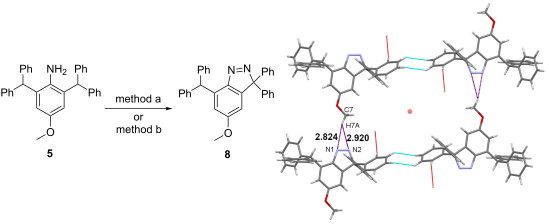
- sulfonyl fluorides in biological applications has been on the increase as evidenced by the number of recent publications [1][2][3]. One potential application of sulfonyl fluorides is as an 18F-radiolabelled synthon that can be conjugated to macromolecules and used to image cancer and other diseases in the

Graphical Abstract

Figure 1: Examples of 18F-radiolabelled arylsulfonyl fluorides containing electron-donating 1, electron-withd...

Scheme 1: Reaction for the formation of sulfonyl chloride 6 using DABSO.

Figure 2: Possible compounds with the molecular formula C33H26N2O (structure 7 contains 27 hydrogen atoms).

Figure 3: ORTEP view of the molecule 8 showing the atom labelling (ellipsoids are drawn at 50% probability le...

Figure 4: Significant intermolecular interactions made by the benzhydryl group (a, upper) and the gem-dipheny...

Figure 5: Relationship of the C–H···N and cyclic C–H···H-C contacts in the crystal structure of 8. The centro...

Figure 6: Part of a hydrocarbon tape along a formed by a combination of alternating linear and cyclic C–H···H...

Scheme 2: Proposed mechanism for the formation of 8.

Scheme 3: Direct preparation of compound 8. method a: t-BuONO, CuCl2, dry CH3CN, −10 °C, 89%; method b: NaNO2...
Homo- and hetero-difunctionalized β-cyclodextrins: Short direct synthesis in gram scale and analysis of regiochemistry
- Gábor Benkovics,
- Mihály Bálint,
- Éva Fenyvesi,
- Erzsébet Varga,
- Szabolcs Béni,
- Konstantina Yannakopoulou and
- Milo Malanga
Beilstein J. Org. Chem. 2019, 15, 710–720, doi:10.3762/bjoc.15.66
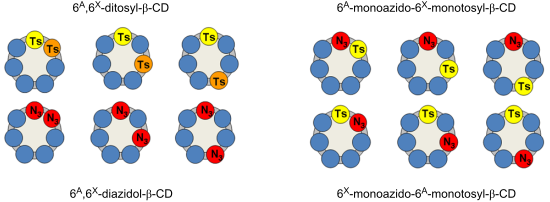
- fact that in the large – kilogram – scale production of the key synthon 6-monotosyl-β-CD besides the desired product, over-tosylation occurs giving a mixture of regioisomers of ditosylated and tritosylated β-CDs. The ditosylated fraction represents a significant amount (10–20%) of the crude product

Graphical Abstract

Figure 1: Schematic representation of β-CD with glucopyranose atom numbering and with alphabetic labeling of ...

Scheme 1: Syntheses of 6A,6X-diazido-β-CDs as reference compounds using the “capping” literature method [11,12].

Scheme 2: Syntheses of homo-difunctionalized β-CDs using different reaction conditions.

Figure 2: HPLC chromatograms of the authentic 6A,6X-diazido-β-CDs with known regiochemistry (references 1–3, Scheme 1...

Figure 3: NMR spectral regions of the three ditosyl regioisomers in D2O (500 MHz). The signals of the tosylat...

Scheme 3: Syntheses of 6A-monoazido-6X-monotosyl-β-CDs using starting materials obtained from different react...

Figure 4: Reversed-phase HPLC chromatograms of 6A-monoazido-6X-monotosyl-β-CDs prepared through reactions 4–8....

Figure 5: HPLC separation of regioisomers and pseudoenantiomers of 6A-monoazido-6X-monotosyl-β-CD prepared in...

Figure 6: Reversed-phase HPLC chromatograms of 6A,6X-diazido-β-CDs prepared in reactions 9–13.
Polyaminoazide mixtures for the synthesis of pH-responsive calixarene nanosponges
- Antonella Di Vincenzo,
- Antonio Palumbo Piccionello,
- Alberto Spinella,
- Delia Chillura Martino,
- Marco Russo and
- Paolo Lo Meo
Beilstein J. Org. Chem. 2019, 15, 633–641, doi:10.3762/bjoc.15.59
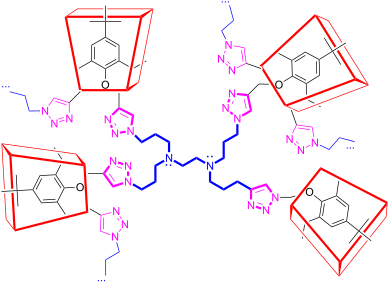
- ) of polyaminoazide mixtures, which were in turn used for the preparation of CaNSs materials with pH-tunable properties, by reaction with the (5,11,17,23-tetra(tert-butyl))-(25,26,27,28-tetrakis(propargyloxy)calix[4]arene (Ca) under the CuAAC reaction conditions. In turn, the synthon Ca is obtained by

Graphical Abstract

Scheme 1: Synthesis of the propargyloxy calixarene Ca.

Scheme 2: Synthesis of polyaminoazides from polyamines.

Scheme 3: Reaction of 1,3-dibromopropane (4) with sodium azide.

Scheme 4: Formation of the 1,3-oxazinan-2-one ring.

Scheme 5: Formation of the product at m/z 382.2765 u.

Scheme 6: Formation of the components of mixture I.

Figure 1: FTIR spectra (liquid) of mixture I (red) and mixture II (blue).

Figure 2: FTIR spectra (nujol) of Ca (red), CaNS-I (blue) and CaNS-II (green).

Figure 3: CP-MAS NMR spectra of CaNSs.

Figure 4: Structures of guests 6–15.
Gold-catalyzed ethylene cyclopropanation
- Silvia G. Rull,
- Andrea Olmos and
- Pedro J. Pérez
Beilstein J. Org. Chem. 2019, 15, 67–71, doi:10.3762/bjoc.15.7
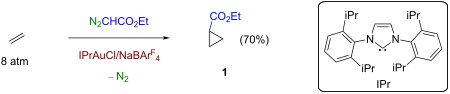
- additives [11], alkylating reagent in the Friedel–Crafts synthesis of indanones [12] or as synthon toward the introduction of cyclopropyl moieties in compounds with medicinal or biological interest [13][14]. In view of the lack of examples of direct conversions of ethylene into cyclopropanecarboxylates, and

Graphical Abstract

Scheme 1: (a) General metal-catalyzed olefin cyclopropanation reaction with diazo compounds. (b) The ethylene...

Scheme 2: Routes toward ethyl cyclopropanecarboxylate (1). (a) Ethylene cyclopropanation described by De Brui...

Figure 1: Effect of the pressure of ethylene on the yields of ethyl cyclopropanecarboxylate in the reaction o...
Revisiting ring-degenerate rearrangements of 1-substituted-4-imino-1,2,3-triazoles
- James T. Fletcher,
- Matthew D. Hanson,
- Joseph A. Christensen and
- Eric M. Villa
Beilstein J. Org. Chem. 2018, 14, 2098–2105, doi:10.3762/bjoc.14.184
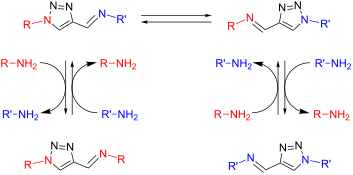
- than originally reported are lacking. With an emerging interest in the 4-imino-1,2,3-triazole motif as coordination chemistry synthon, motivation for revisiting the ring degenerate rearrangements first described by L’abbe is twofold. A better understanding of parameters suppressing this rearrangement
- was undertaken. With a secondary aim of identifying improved reaction conditions for exploiting this rearrangement as an efficient synthetic tool for formyltriazole preparations, it was proposed that 1a might display significant advantages over previously utilized 1c [30][31][32][42] as a synthon for
- useful synthon for formyltriazole preparations, it was used to prepare analogs 1c (59% isolated yield) and 1d (64% isolated yield) by the kinetic assay conditions (see Supporting Information File 1). Optimizing of reaction yields and exploring of the scope of amine reagents tolerated by this

Graphical Abstract

Figure 1: Conversion of 1-substituted-4-formyltriazole analogs via ring-degenerate rearrangement of 1-substit...

Figure 2: ORTEP structure of 2cc’. Thermal ellipsoids shown at 25% probability.

Figure 3: 1H NMR aromatic region of a product mixture compared with reference imine analogs. Singlets appeari...

Figure 4: Rearrangement reaction progress of 1a leading to irreversible formation of a colorimetric self-indi...
Hyper-reticulated calixarene polymers: a new example of entirely synthetic nanosponge materials
- Alberto Spinella,
- Marco Russo,
- Antonella Di Vincenzo,
- Delia Chillura Martino and
- Paolo Lo Meo
Beilstein J. Org. Chem. 2018, 14, 1498–1507, doi:10.3762/bjoc.14.127
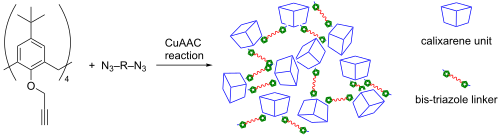
- organic synthesis viewpoint, both CyNSs and CyCaNSs are “artificial” materials, in the sense that they derive from chemical manipulation of a natural occurring starting synthon, namely the cyclodextrin unit. We reasoned that it could be very interesting to explore the possibility of obtaining an entirely

Graphical Abstract

Scheme 1: Structures of: a) calixarene Ca-OP; b) alkyl diazides A1–A4.

Scheme 2: Structures of p-nitroaniline derivatives 1–5 and dyes 6–10.

Figure 1: FTIR spectra of Ca-OP (red), A2 (green) and CaNS2 (blue).

Figure 2: a) 13C{1H} CP-MAS NMR spectra of CaNSs; b) signal attributions.

Figure 3: Selection of SEM micrographs for materials for CaNS1 (a), CaNS2 (b), CaNS3 (c) and CaNS4 (d).
A mechanochemical approach to access the proline–proline diketopiperazine framework
- Nicolas Pétry,
- Hafid Benakki,
- Eric Clot,
- Pascal Retailleau,
- Farhate Guenoun,
- Fatima Asserar,
- Chakib Sekkat,
- Thomas-Xavier Métro,
- Jean Martinez and
- Frédéric Lamaty
Beilstein J. Org. Chem. 2017, 13, 2169–2178, doi:10.3762/bjoc.13.217
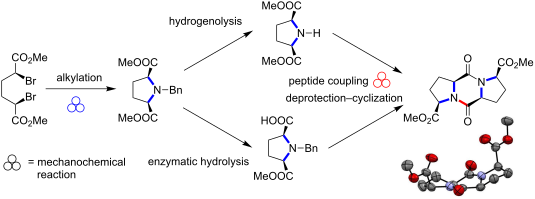
- provide a useful rigid structure. During the course of our project on the exploitation of dimethyl dibromoadipate as a synthon to access original molecules [13][14], we thought that it could provide an original access to the DKP Pro–Pro framework. More specifically, this type of framework has been used as

Graphical Abstract

Scheme 1: Retrosynthesis of the Pro–Pro DKP framework.

Scheme 2: Coupling with N-hydroxysuccinimide-activated amino acids.

Scheme 3: Synthesis of Pro–Pro DKP.

Scheme 4: Synthesis of substituted Pro–Pro DKP 15a.

Scheme 5: Potential isomers yielded by cyclization of 16.

Figure 1: Optimized geometries for the two conformers presenting interactions with either Ca (16a) or Cb (16b...

Figure 2: Optimized geometries of the extrema located along the pathway for formation of 15a with explicit pa...

Figure 3: Optimized geometries of the extrema located along the pathway for formation of 15b with explicit pa...

Figure 4: Optimized geometries for the transition states associated to alternate position of the methanol mol...

Scheme 6: Synthesis of diketopiperazine 19.
An efficient synthesis of a C12-higher sugar aminoalditol
- Łukasz Szyszka,
- Anna Osuch-Kwiatkowska,
- Mykhaylo A. Potopnyk and
- Sławomir Jarosz
Beilstein J. Org. Chem. 2017, 13, 2146–2152, doi:10.3762/bjoc.13.213
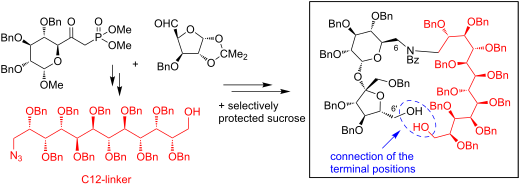
- developed an efficient method for the synthesis of a C12-aminoalditol H2NCH2–(CHOBn)10–CH2OH 10. The chemical reactivity of this valuable synthon was demonstrated by its high yielding coupling with the C-6 position of a selectively protected sucrose by a reductive amination reaction. Experimental General

Graphical Abstract

Figure 1: Previous synthesis of a C12-higher sugar 1 and its application in the preparation of a polyhydroxyl...

Scheme 1: Preparation of C12-aminoalditol 10.

Figure 2: Examples of highly functionalized sucrose derivatives from our laboratory.

Scheme 2: Preparation of a sucrose molecule with a higher aminoalditol pendant.
Mechanochemical synthesis of thioureas, ureas and guanidines
- Vjekoslav Štrukil
Beilstein J. Org. Chem. 2017, 13, 1828–1849, doi:10.3762/bjoc.13.178
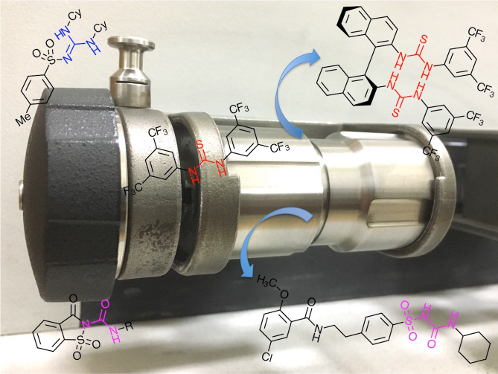
- : corrugated chains of head-to-head or head-to-tail aligned molecules and discrete centrosymmetric dimers based on the R22(8) supramolecular synthon in the case of sterically hindered thioureas (Figure 2). The crystal structures of N,N'-diarylthioureas linked in chains via N–H···S hydrogen bonds can further be

Graphical Abstract

Scheme 1: a) Schematic representations of unsubstituted urea, thiourea and guanidine. b) Wöhler's synthesis o...

Figure 1: Antidiabetic (1–3) and antimalarial (4) drugs derived from ureas and guanidines currently available...

Scheme 2: The structures of some representative (thio)urea and guanidine organocatalysts 5–8 and anion sensor...

Scheme 3: Solid-state reactivity of isothiocyanates reported by Kaupp [30].

Scheme 4: a) Mechanochemical synthesis of aromatic and aliphatic di- and trisubstituted thioureas by click-co...

Figure 2: The supramolecular level of organization of thioureas in the solid-state.

Figure 3: The supramolecular level of organization of thioureas in the solid-state.

Scheme 5: Thiourea-based organocatalysts and anion sensors obtained by click-mechanochemical synthesis.

Scheme 6: Mechanochemical desymmetrization of ortho-phenylenediamine.

Scheme 7: Mechanochemical desymmetrization of para-phenylenediamine.

Scheme 8: a) Selected examples of a mechanochemical synthesis of aromatic isothiocyanates from anilines. b) O...

Scheme 9: In solution, aromatic N-thiocarbamoyl benzotriazoles 27 are unstable and decompose to isothiocyanat...
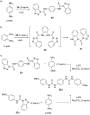
Scheme 10: Mechanosynthesis of a) bis-thiocarbamoyl benzotriazole 29 and b) benzimidazole thione 31. c) Synthe...

Figure 4: In situ Raman spectroscopy monitoring the synthesis of thiourea 28d in the solid-state. N-Thiocarba...

Scheme 11: a) The proposed synthesis of monosubstituted thioureas 32. b) Conversion of N-thiocarbamoyl benzotr...

Scheme 12: A few examples of mechanochemical amination of thiocarbamoyl benzotriazoles by in situ generated am...

Scheme 13: Mechanochemical synthesis of a) anion binding urea 33 by amine-isocyanate coupling and b) dialkylur...

Scheme 14: a) Solvent-free milling synthesis of the bis-urea anion sensor 35. b) Non-selective desymmetrizatio...

Scheme 15: a) HOMO−1 contours of mono-thiourea 19b and mono-urea 36. b) Mechanochemical synthesis of hybrid ur...

Scheme 16: Synthesis of ureido derivatives 38 and 39 from KOCN and hydrochloride salts of a) L-phenylalanine m...

Scheme 17: a) K2CO3-assisted synthesis of sulfonyl (thio)ureas. b) CuCl-catalyzed solid-state synthesis of sul...

Scheme 18: Two-step mechanochemical synthesis of the antidiabetic drug glibenclamide (2).

Scheme 19: Derivatization of saccharin by mechanochemical CuCl-catalyzed addition of isocyanates.

Scheme 20: a) Unsuccessful coupling of p-toluenesulfonamide and DCC in solution and by neat/LAG ball milling. ...

Scheme 21: a) Expansion of the saccharin ring by mechanochemical insertion of carbodiimides. b) Insertion of D...

Scheme 22: Synthesis of highly basic biguanides by ball milling.
Oxidative dehydrogenation of C–C and C–N bonds: A convenient approach to access diverse (dihydro)heteroaromatic compounds
- Santanu Hati,
- Ulrike Holzgrabe and
- Subhabrata Sen
Beilstein J. Org. Chem. 2017, 13, 1670–1692, doi:10.3762/bjoc.13.162
- facilitate a variety of quinazolinones 44 (Scheme 12) [47]. N-Alkyl benzamides 44´ were also synthesized with this protocol. The average yield ranged from 30 to 92%. Other than methyl(hetero)arenes dimethylamides were also used as C-synthon for such intermolecular annulation to afford unsubstituted

Graphical Abstract

Figure 1: Representative bioactive heterocycles.

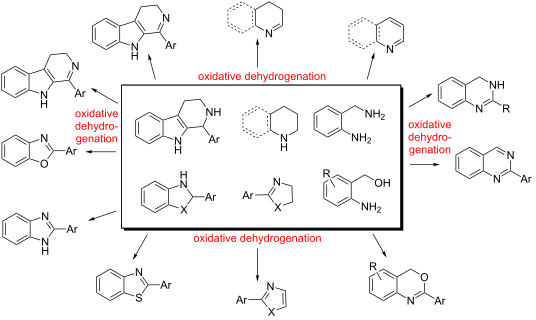
Scheme 1: The concept of oxidative dehydrogenation.
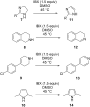
Scheme 2: IBX-mediated oxidative dehydrogenation of various heterocycles [31-34].

Scheme 3: Potential mechanism of IBX-mediated oxidative dehydrogenation of N-heterocycles [31-34].

Scheme 4: IBX-mediated room temperature one-pot condensation–oxidative dehydrogenation of o-aminobenzylamines....

Scheme 5: Anhydrous cerium chloride-catalyzed, IBX-mediated oxidative dehydrogenation of various heterocycles...

Scheme 6: Oxidative dehydrogenation of quinazolinones with I2 and DDQ [37-40].

Scheme 7: DDQ-mediated oxidative dehydrogenation of thiazolidines and oxazolidines.

Scheme 8: Oxone-mediated oxidative dehydrogenation of intermediates from o-phenylenediamine and o-aminobenzyl...

Scheme 9: Transition metal-free oxidative cross-dehydrogenative coupling.

Scheme 10: NaOCl-mediated oxidative dehydrogenation.

Scheme 11: NBS-mediated oxidative dehydrogenation of tetrahydro-β-carbolines.

Scheme 12: One-pot synthesis of various methyl(hetero)arenes from o-aminobenzamide in presence of di-tert-buty...

Scheme 13: Oxidative dehydrogenation of 1, 4-DHPs.

Scheme 14: Synthesis of quinazolines in the presence of MnO2.

Scheme 15: Selenium dioxide and potassium dichromate-mediated oxidative dehydrogenation of tetrahydro-β-carbol...

Scheme 16: Synthesis of substituted benzazoles in the presence of barium permanganate.
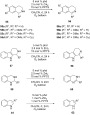
Scheme 17: Oxidative dehydrogenation with phenanthroline-based catalysts. PPTS = pyridinium p-toluenesulfonic ...

Scheme 18: Oxidative dehydrogenation with Flavin mimics.

Scheme 19: o-Quinone based bioinspired catalysts for the synthesis of dihydroisoquinolines.

Scheme 20: Cobalt-catalyzed aerobic dehydrogenation of Hantzch 1,4-DHPs and pyrazolines.

Scheme 21: Mechanism of cobalt-catalyzed aerobic dehydrogenation of Hantzch 1,4-DHPs.

Scheme 22: DABCO and TEMPO-catalyzed aerobic oxidative dehydrogenation of quinazolines and 4H-3,1-benzoxazines....

Scheme 23: Putative mechanism for Cu(I)–DABCO–TEMPO catalyzed aerobic oxidative dehydrogenation of tetrahydroq...

Scheme 24: Potassium triphosphate modified Pd/C catalysts for the oxidative dehydrogenation of tetrahydroisoqu...

Scheme 25: Ruthenium-catalyzed polycyclic heteroarenes.

Scheme 26: Plausible mechanism of the ruthenium-catalyzed dehydrogenation.

Scheme 27: Bi-metallic platinum/iridium alloyed nanoclusters and 5,5’,6,6’-tetrahydroxy-3,3,3’,3’-tetramethyl-...

Scheme 28: Magnesium iodide-catalyzed synthesis of quinazolines.

Scheme 29: Ferrous chloride-catalyzed aerobic dehydrogenation of 1,2,3,4-tetrahydroquinolines.

Scheme 30: Cu(I)-catalyzed oxidative aromatization of indoles.

Scheme 31: Putative mechanism of the transformation.

Scheme 32: Oxidative dehydrogenation of pyrimidinones and pyrimidines.
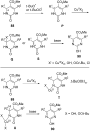
Scheme 33: Putative mechanisms (radical and metal-catalyzed) of the transformation.

Scheme 34: Ferric chloride-catalyzed, TBHP-oxidized synthesis of substituted quinazolinones and arylquinazolin...

Scheme 35: Iridium-catalyzed oxidative dehydrogenation of quinolines.

Scheme 36: Microwave-assisted synthesis of β-carboline with a catalytic amount of Pd/C in lithium carbonate at...

Scheme 37: 4-Methoxy-TEMPO-catalyzed aerobic oxidative synthesis of 2-substituted benzazoles.

Scheme 38: Plausible mechanism of the 4-methoxy-TEMPO-catalyzed transformation.

Scheme 39: One-pot synthesis of 2-arylquinazolines, catalyzed by 4-hydroxy-TEMPO.

Scheme 40: Oxidative dehydrogenation – a key step in the synthesis of AZD8926.

Scheme 41: Catalytic oxidative dehydrogenation of tetrahydroquinolines to afford bioactive molecules.

Scheme 42: Iodobenzene diacetate-mediated synthesis of β-carboline natural products.
Synthesis of oligonucleotides on a soluble support
- Harri Lönnberg
Beilstein J. Org. Chem. 2017, 13, 1368–1387, doi:10.3762/bjoc.13.134
- N-bromosuccinimide (NBS) as an activator. The coupling efficiency was high (98%) on using 2.5 equiv of the H-phosphonate synthon and 5 equiv of the activator. After each coupling step, the support was precipitated from Et2O and recrystallized from MeCN/Et2O. The unreacted hydroxy groups were capped

Graphical Abstract

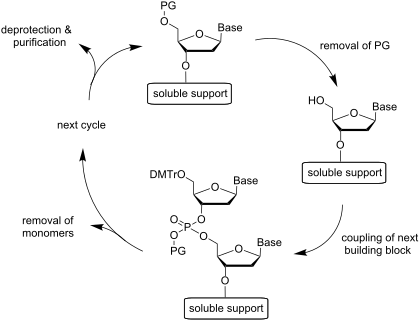
Figure 1: General principle of oligonucleotide synthesis.
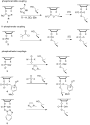
Scheme 1: Alternative coupling methods used in the synthesis of oligonucleotides.

Scheme 2: Synthesis of ODNs on a precipitative PEG-support by phosphotriester chemistry using MSNT/NMI activa...

Scheme 3: Synthesis of ODNs on a precipitative tetrapodal support by phosphotriester chemistry using 1-hydrox...

Scheme 4: Synthesis of ODNs on a precipitative PEG-support by conventional phosphoramidite chemistry [51].

Scheme 5: Synthesis of ODNs on a precipitative tetrapodal support by conventional phosphoramidite chemistry [43].

Scheme 6: Synthesis of ODNs by an extractive strategy on an adamant-1-ylacetyl support [57].

Scheme 7: Synthesis of ODNs by a combination of extractive and precipitative strategy [58].

Scheme 8: Synthesis of ODNs by phosphoramidite chemistry on a N1,N3,N5-tris(2-aminoethyl)benzene-1,3,5-tricar...
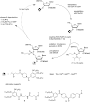
Scheme 9: Synthesis of ORNs by phosphoramidite chemistry on a hydrophobic support [61].

Scheme 10: Synthesis of ORNs by the phosphoramidite chemistry on a precipitative tetrapodal support using 2´-O...

Scheme 11: Synthesis of ORNs by phosphoramidite chemistry on a precipitative tetrapodal support from commercia...

Scheme 12: Synthesis of ODNs on a precipitative PEG-support by H-phosphonate chemistry [65].

Scheme 13: Synthesis of 2´-O-methyl ORN phosphorothioates by phosphoramidite chemistry by making use of nanofi...
A versatile route to polythiophenes with functional pendant groups using alkyne chemistry
- Xiao Huang,
- Li Yang,
- Rikard Emanuelsson,
- Jonas Bergquist,
- Maria Strømme,
- Martin Sjödin and
- Adolf Gogoll
Beilstein J. Org. Chem. 2016, 12, 2682–2688, doi:10.3762/bjoc.12.265
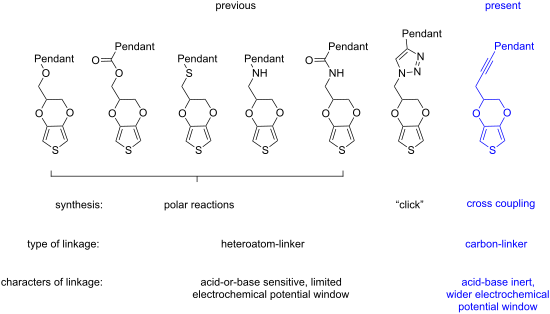
- cross-coupling reactions, cycloaddition reactions, radical reactions and reductive addition reactions. A terminal alkyne can also react as nucleophile or serve as synthon for pyrrole rings [24][25]. Thus we here fuse the rich alkyne chemistry to the EDOT backbone, resulting in a novel EDOT derivative
- , the 3-(EDOT)prop-1-yne (pyEDOT, 3). pyEDOT provides a useful synthon for the synthesis of a variety of EDOT-based polymerizable building blocks. This new EDOT functionalization strategy (Scheme 1), including the polymerization of the resulting building blocks, we illustrate by introducing two examples
- on a glassy carbon electrode, giving a robust electroactive film. Additionally, we show that alkyne-PEDOT can also be post-functionalized in a “click” fashion. All of these proved the synthetic and electrochemical utilities of pyEDOT. Thus, we believe that the pyEDOT synthon provides valuable

Graphical Abstract

Scheme 1: Previous and present EDOT functionalization routes.

Scheme 2: The synthetic route from glycidol to pyEDOT (3).

Scheme 3: The synthetic route from D-mannitol diketal to eEDOT 8 and TMS-eEDOT 8’.
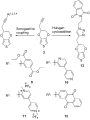
Scheme 4: New EDOT derivatives 9–13 accessible from pyEDOT with bromo-pendant group precursors via Sonogashir...
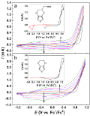
Figure 1: CVs of electrochemical polymerization of (a) pyEDOT 3 and (b) EDOT in MeCN solution with 0.1 M TEAPF...
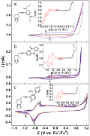
Figure 2: CVs of electrochemical polymerization of (a) pyEDOT-DeT (9), (b) pyEDOT-AQ (12) and (c) pyEDOT-MVPF...
Stereo- and regioselectivity of the hetero-Diels–Alder reaction of nitroso derivatives with conjugated dienes
- Lucie Brulíková,
- Aidan Harrison,
- Marvin J. Miller and
- Jan Hlaváč
Beilstein J. Org. Chem. 2016, 12, 1949–1980, doi:10.3762/bjoc.12.184
- nitroso dienophiles with masked o-benzoquinones [128]. For instance, they synthesized synthon 152 from 2-methoxyphenol (150) and the chiral auxiliary 151 with 99% de, which was further utilized for the synthesis of (+)-conduramine E-1 (153, Scheme 30). The hetero-Diels–Alder reaction of chloronitroso

Graphical Abstract

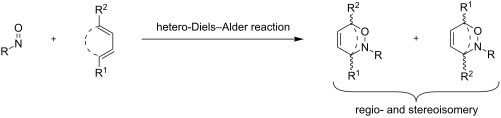
Scheme 1: Nitroso hetero-Diels–Alder reaction.

Scheme 2: The hetero-Diels–Alder reaction between thebaine (4) and an acylnitroso dienophile 5.

Figure 1: Examples of nitroso dienophiles frequently used in hetero-Diels–Alder reaction studies.

Scheme 3: Synthesis of arylnitroso species by substitution of a trifluoroborate group [36].
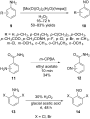
Scheme 4: Synthesis of arylnitroso compounds by amine oxidation.

Scheme 5: Synthesis of arylnitroso compounds by hydroxylamine oxidation.

Scheme 6: Synthesis of chloronitroso compounds by the treatment of a nitronate anion with oxalyl chloride.

Scheme 7: Non-oxidative routes to acylnitroso species.

Figure 2: RB3LYP/6-31G* computed energies (in kcal·mol−1) and bond lengths for exo and endo-transition states...

Scheme 8: Hetero-Diels–Alder cycloadditions of diene 28 and nitroso dienophiles 29.

Figure 3: Relative reactivity (ΔE#) and regioselectivity (Δ) for hetero-Diels–Alder of 28 and nitroso dienoph...

Scheme 9: Reaction of chiral 1-phosphono-1,3-butadiene 31 with nitroso dienophiles 32.

Scheme 10: Hetero-Diels–Alder reactions of hydroxamic acids 35 with various dienes 37.

Scheme 11: General regioselectivity of the nitroso hetero-Diels–Alder reaction observed with unsymmetrical die...

Scheme 12: Effect of the nitroso species on the regioselectivity for weakly directing 2-substituted dienes.

Scheme 13: Regioselectivity of 1,4-disubstituted dienes 51.

Scheme 14: Nitroso hetero-Diels–Alder reaction between Boc-nitroso compound 54 and dienes 55.

Scheme 15: Nitroso hetero-Diels–Alder reaction between Wightman reagent 58 and dienes 59.

Scheme 16: Regioselective reaction of 3-dienyl-2-azetidinones 62 with nitrosobenzene (47).

Scheme 17: The regioselective reaction of 1,3-butadienes 65 with various nitroso heterodienophiles 66.

Scheme 18: Catalysis of the nitroso hetero-Diels–Alder reaction by vanadium in the presence of the oxidant CHP...

Figure 4: 1,2-Oxazines synthesized in solution with moderate to high regioselectivity, showing the favored re...

Figure 5: 1,2-Oxazines synthesized in the solid phase with moderate to high regioselectivity, showing the fav...

Scheme 19: Regioselectivity of solution-phase nitroso hetero-Diels–Alder reaction with acyl and aryl nitroso d...

Scheme 20: Favored regioisomeric outcome for the solution and solid-phase reactions, giving hetero-Diels–Alder...

Figure 6: Favored regioisomers and regioisomeric ratios for 1,2-oxazines synthesized in solid phase (91, 93, ...

Scheme 21: Regiocontrol of the reaction between 3-dienyl-2-azetidinones and nitrosobenzene due to change in a ...

Scheme 22: Regiocontrol of the reaction between diene 111 and 2-methyl-6-nitrosopyridine (112) due to metal co...

Scheme 23: Asymmetric hetero-Diels–Alder reactions reported by Vasella [56].

Scheme 24: Asymmetric hetero-Diels–Alder reaction of cyclohexa-1,3-diene (120) with acylnitroso dienophile 119....

Scheme 25: Asymmetric induction with L-proline derivatives 124–126.

Scheme 26: Asymmetric cycloaddition of the acylnitroso compound 136 to diene 135.

Scheme 27: Asymmetric induction with arylmenthol-based nitroso dienophiles 142.

Scheme 28: Cycloaddition of silyloxycyclohexadiene 145 to the acylnitroso dienophile derived from (+)-camphors...

Scheme 29: Asymmetric reaction of O-isopropylidene-protected cis-cyclohexa-3,5-diene-1,2-diol 147 with mannofu...

Scheme 30: Synthesis of synthon 152 from 2-methoxyphenol 150 and chiral auxiliary 151.

Scheme 31: Asymmetric nitroso hetero-Diels–Alder reaction with Wightman chloronitroso reagent 58.

Scheme 32: Asymmetric 1,2-oxazine synthesis using chiral cyclic diene 157 and the application of this reaction...

Scheme 33: Asymmetric 1,2-oxazine synthesis using a chiral diene reported by Jones et al. [75]. aRegioisomeric rat...

Scheme 34: The nitroso hetero-Diels–Alder reaction of acyclic oxazolidine-substituted diene 170 and chiral 1-s...

Scheme 35: The nitroso hetero-Diels–Alder reaction of acyclic lactam-substituted diene 176 with various acylni...

Scheme 36: The hetero-Diels–Alder reaction of acylnitroso dienophile.

Scheme 37: The hetero-Diels–Alder reaction of arylnitroso dienophiles using Lewis acids.

Scheme 38: Asymmetric hetero-Diels–Alder reactions of chiral alkyl N-dienylpyroglutamates.

Scheme 39: Catalytic asymmetric arylnitroso reaction between mono-substituted 1,3-cyclohexadiene 196 and disub...

Figure 7: Plausible chelate intermediate complexes formed during the hetero-Diels–Alder reaction to give 1,2-...

Scheme 40: Catalytic asymmetric nitroso hetero-Diels–Alder between cyclic dienes and 2-nitrosopyridine.

Scheme 41: The reason for the increased enantioselectivity of stereoisomer 212 compared with stereoisomer 213.

Scheme 42: The copper-catalyzed nitroso hetero-Diels–Alder reaction of 6-methyl-2-nitrosopyridine (199) with p...

Scheme 43: Asymmetric nitroso hetero-Diels–Alder reaction of nitrosoarenes with dienylcarbamates catalyzed by ...

Scheme 44: The enantioselective hetero-Diels–Alder reaction between nitrosobenzene and (E)-2,4-pentadien-1-ol (...

Scheme 45: Asymmetric nitroso hetero-Diels–Alder reaction using tartaric acid ester chelation of the diene and...
Bridgehead vicinal diallylation of norbornene derivatives and extension to propellane derivatives via ring-closing metathesis
- Sambasivarao Kotha and
- Rama Gunta
Beilstein J. Org. Chem. 2016, 12, 1877–1883, doi:10.3762/bjoc.12.177
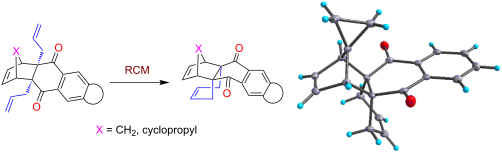
- diallylation; Introduction The norbornene moiety is a useful template and also a versatile synthon in organic synthesis [1]. The double bond present in the norbornene frame is strained and therefore participates in cycloaddition sequences as a C2-synthon [2][3]. It was reported that the norbornene system is

Graphical Abstract

Figure 1: Retrosynthetic approach to propellane derivatives.

Scheme 1: Synthesis of the propellane derivative 1a via RCM.

Scheme 2: Garratts work on alkylation of norbornene with retention of configuration.

Figure 2: The molecular structure of 1a, with displacement ellipsoids drawn at the 50% probability level.

Scheme 3: Control experiment carried out to probe the configuration of 2a.

Figure 3: Crystal structure of compound 15 showing 50% displacement ellipsoids.

Scheme 4: RCM of the compound 2aa'.

Scheme 5: RCM approach to the propellane derivative 1b.

Figure 4: The molecular structures of the compounds 2b (left) and 1b (right) showing 30% displacement ellipso...

Scheme 6: Construction of the propellane derivative 1bb' using RCM.
Selective bromochlorination of a homoallylic alcohol for the total synthesis of (−)-anverene
- Frederick J. Seidl and
- Noah Z. Burns
Beilstein J. Org. Chem. 2016, 12, 1361–1365, doi:10.3762/bjoc.12.129

- (Scheme 1, bottom) as a useful synthon, as it is readily accessible from prenol using our original bromochlorination protocol [7]. In a forward sense, this intermediate could be coupled with a vinyl organometallic to introduce the remainder of the carbon skeleton of 1. While we have achieved moderate

Graphical Abstract

Scheme 1: Selective bromochlorination and possible disconnections for anverene (1).

Scheme 2: Selective total synthesis of (−)-anverene. Reagents and conditions: a) NBS (1.2 equiv), ClTi(OiPr)3...
Application of Cu(I)-catalyzed azide–alkyne cycloaddition for the design and synthesis of sequence specific probes targeting double-stranded DNA
- Svetlana V. Vasilyeva,
- Vyacheslav V. Filichev and
- Alexandre S. Boutorine
Beilstein J. Org. Chem. 2016, 12, 1348–1360, doi:10.3762/bjoc.12.128
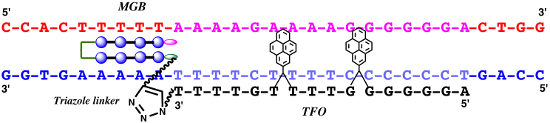
- results, we decided to synthesize TFOs directly by solid-phase synthesis using a 3'-terminal synthon possessing an alkyne group [30] in order to avoid additional post-synthetic reactions and formation of side products. Also we decided to profit from pH-independent triplex formation by antiparallel TINA

Graphical Abstract

Figure 1: A) Formation of nucleotide triplets in parallel and antiparallel (relatively to polypurine strand) ...

Figure 2: Synthesis of MGB-fluorophore (A) and MGB-TFO (B) conjugates using CuACC. Linker length and composit...

Figure 3: Bifunctional linkers for conjugation of oligonucleotides and polyamides using CuACC.

Figure 4: The target duplex contains a 29 base pair fragment from HIV proviral DNA [35] and a T4 hairpin is conne...

Figure 5: A) Sequence derived from the murine pericentromere repeat fragment with only one target site for th...

Figure 6: Synthesis of azide- and alkyne-modified MGBs.

Figure 7: Structures of fluorescent probes synthesized by "click chemistry".

Figure 8: Titration of the probes F1-NH2-MM14 (12 µM, A, C) and F1-NH2-TO (10 µM, B, D) by the target DNA dup...

Figure 9: Synthesis of modified oligonucleotides containing an alkyne group.

Figure 10: Gel electrophoresis of oligonucleotides modified by alkyne linkers: A – oligonucleotide HIVP (detec...

Figure 11: TINA-TFOs bearing a 3'-alkyne group for antiparallel triplex formation with the target HIV proviral...

Figure 12: Structures of polyamide-TFO conjugates.

Figure 13: Electrophoresis analysis of samples from reaction mixtures after click reactions between alkyne-TFO...

Figure 14: Electrophoresis analysis of reaction mixtures in 20% denaturing polyacrylamide gel after TINA-TFO-M...

Figure 15: Electrophoretic analysis of reaction mixtures in standard 20% denaturing PAGE after DNA-templated s...

Figure 16: Non-denaturing gel electrophoresis analysis of conjugate 28 with fluorescein-labeled target HIV dup...



