Search for "N-bromosuccinimide" in Full Text gives 85 result(s) in Beilstein Journal of Organic Chemistry.
Beilstein J. Org. Chem. 2017, 13, 1907–1931, doi:10.3762/bjoc.13.186
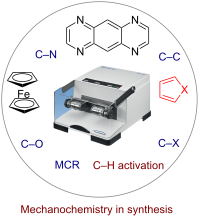
Graphical Abstract
Scheme 1: Mechanochemical aldol condensation reactions [48].
Scheme 2: Enantioselective organocatalyzed aldol reactions under mechanomilling. a) Based on binam-(S)-prolin...
Scheme 3: Mechanochemical Michael reaction [51].
Scheme 4: Mechanochemical organocatalytic asymmetric Michael reaction [52].
Scheme 5: Mechanochemical Morita–Baylis–Hillman (MBH) reaction [53].
Scheme 6: Mechanochemical Wittig reactions [55].
Scheme 7: Mechanochemical Suzuki reaction [56].
Scheme 8: Mechanochemical Suzuki–Miyaura coupling by LAG [57].
Scheme 9: Mechanochemical Heck reaction [59].
Scheme 10: a) Sonogashira coupling under milling conditions. b) The representative example of a double Sonogas...
Scheme 11: Copper-catalyzed CDC reaction under mechanomilling [67].
Scheme 12: Asymmetric alkynylation of prochiral sp3 C–H bonds via CDC [68].
Scheme 13: Fe(III)-catalyzed CDC coupling of 3-benzylindoles [69].
Scheme 14: Mechanochemical synthesis of 3-vinylindoles and β,β-diindolylpropionates [70].
Scheme 15: Mechanochemical C–N bond construction using anilines and arylboronic acids [78].
Scheme 16: Mechanochemical amidation reaction from aromatic aldehydes and N-chloramine [79].
Scheme 17: Mechanochemical CDC between benzaldehydes and benzyl amines [81].
Scheme 18: Mechanochemical protection of -NH2 and -COOH group of amino acids [85].
Scheme 19: Mechanochemical Ritter reaction [87].
Scheme 20: Mechanochemical synthesis of dialkyl carbonates [90].
Scheme 21: Mechanochemical transesterification reaction using basic Al2O3 [91].
Scheme 22: Mechanochemical carbamate synthesis [92].
Scheme 23: Mechanochemical bromination reaction using NaBr and oxone [96].
Scheme 24: Mechanochemical aryl halogenation reactions using NaX and oxone [97].
Scheme 25: Mechanochemical halogenation reaction of electron-rich arenes [88,98].
Scheme 26: Mechanochemical aryl halogenation reaction using trihaloisocyanuric acids [100].
Scheme 27: Mechanochemical fluorination reaction by LAG method [102].
Scheme 28: Mechanochemical Ugi reaction [116].
Scheme 29: Mechanochemical Passerine reaction [116].
Scheme 30: Mechanochemical synthesis of α-aminonitriles [120].
Scheme 31: Mechanochemical Hantzsch pyrrole synthesis [121].
Scheme 32: Mechanochemical Biginelli reaction by subcomponent synthesis approach [133].
Scheme 33: Mechanochemical asymmetric multicomponent reaction[134].
Scheme 34: Mechanochemical Paal–Knorr pyrrole synthesis [142].
Scheme 35: Mechanochemical synthesis of benzothiazole using ZnO nano particles [146].
Scheme 36: Mechanochemical synthesis of 1,2-di-substituted benzimidazoles [149].
Scheme 37: Mechanochemical click reaction using an alumina-supported Cu-catalyst [152].
Scheme 38: Mechanochemical click reaction using copper vial [155].
Scheme 39: Mechanochemical indole synthesis [157].
Scheme 40: Mechanochemical synthesis of chromene [158].
Scheme 41: Mechanochemical synthesis of azacenes [169].
Scheme 42: Mechanochemical oxidative C-P bond formation [170].
Scheme 43: Mechanochemical C–chalcogen bond formation [171].
Scheme 44: Solvent-free synthesis of an organometallic complex.
Scheme 45: Selective examples of mechano-synthesis of organometallic complexes. a) Halogenation reaction of Re...
Scheme 46: Mechanochemical activation of C–H bond of unsymmetrical azobenzene [178].
Scheme 47: Mechanochemical synthesis of organometallic pincer complex [179].
Scheme 48: Mechanochemical synthesis of tris(allyl)aluminum complex [180].
Scheme 49: Mechanochemical Ru-catalyzed olefin metathesis reaction [181].
Scheme 50: Rhodium(III)-catalyzed C–H bond functionalization under mechanochemical conditions [182].
Scheme 51: Mechanochemical Csp2–H bond amidation using Ir(III) catalyst [183].
Scheme 52: Mechanochemical Rh-catalyzed Csp2–X bond formation [184].
Scheme 53: Mechanochemical Pd-catalyzed C–H activation [185].
Scheme 54: Mechanochemical Csp2–H bond amidation using Rh catalyst.
Scheme 55: Mechanochemical synthesis of indoles using Rh catalyst [187].
Scheme 56: Mizoroki–Heck reaction of aminoacrylates with aryl halide in a ball-mill [58].
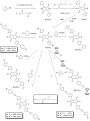
Scheme 57: IBX under mechanomilling conditions [8].
Scheme 58: Thiocarbamoylation of anilines; trapping of reactive aryl-N-thiocarbamoylbenzotriazole intermediate...
Beilstein J. Org. Chem. 2017, 13, 1753–1769, doi:10.3762/bjoc.13.170
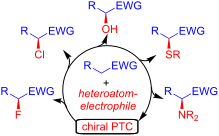
Graphical Abstract
Scheme 1: Generally accepted ion-pairing mechanism between the chiral cation Q+ of a PTC and an enolate and s...
Scheme 2: Reported asymmetric α-fluorination of β-ketoesters 1 using different chiral PTCs.
Scheme 3: Asymmetric α-fluorination of benzofuranones 4 with phosphonium salt PTC F1.
Scheme 4: Asymmetric α-fluorination of 1 with chiral phosphate-based catalysts.
Scheme 5: Anionic PTC-catalysed α-fluorination of enamines 7 and ketones 10.
Scheme 6: PTC-catalysed α-chlorination reactions of β-ketoesters 1.
Scheme 7: Shioiri’s seminal report of the asymmetric α-hydroxylation of 15 with chiral ammonium salt PTCs.
Scheme 8: Asymmetric ammonium salt-catalysed α-hydroxylation using oxygen together with a P(III)-based reduct...
Scheme 9: Asymmetric ammonium salt-catalysed α-photooxygenations.
Scheme 10: Asymmetric ammonium salt-catalysed α-hydroxylations using organic oxygen-transfer reagents.
Scheme 11: Asymmetric triazolium salt-catalysed α-hydroxylation with in situ generated peroxy imidic acid 24.
Scheme 12: Phase-transfer-catalysed dearomatization of phenols and naphthols.
Scheme 13: Ishihara’s ammonium salt-catalysed oxidative cycloetherification.
Scheme 14: Chiral phase-transfer-catalysed α-sulfanylation reactions.
Scheme 15: Chiral phase-transfer-catalysed α-trifluoromethylthiolation of β-ketoesters 1.
Scheme 16: Chiral phase-transfer-catalysed α-amination of β-ketoesters 1 using diazocarboxylates 38.
Scheme 17: Asymmetric α-fluorination of benzofuranones 4 using diazocarboxylates 38 in the presence of phospho...
Scheme 18: Anionic phase-transfer-catalysed α-amination of β-ketoesters 1 with aryldiazonium salts 41.
Scheme 19: Triazolium salt L-catalysed α-amination of different prochiral nucleophiles with in situ activated ...
Scheme 20: Phase-transfer-catalysed Neber rearrangement.
Beilstein J. Org. Chem. 2017, 13, 1670–1692, doi:10.3762/bjoc.13.162
Graphical Abstract
Figure 1: Representative bioactive heterocycles.
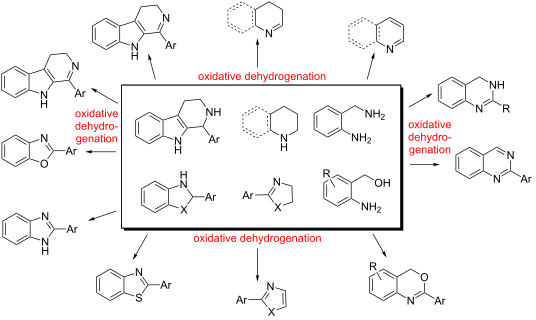
Scheme 1: The concept of oxidative dehydrogenation.
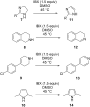
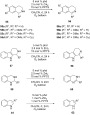
Scheme 2: IBX-mediated oxidative dehydrogenation of various heterocycles [31-34].
Scheme 3: Potential mechanism of IBX-mediated oxidative dehydrogenation of N-heterocycles [31-34].
Scheme 4: IBX-mediated room temperature one-pot condensation–oxidative dehydrogenation of o-aminobenzylamines....
Scheme 5: Anhydrous cerium chloride-catalyzed, IBX-mediated oxidative dehydrogenation of various heterocycles...
Scheme 6: Oxidative dehydrogenation of quinazolinones with I2 and DDQ [37-40].
Scheme 7: DDQ-mediated oxidative dehydrogenation of thiazolidines and oxazolidines.
Scheme 8: Oxone-mediated oxidative dehydrogenation of intermediates from o-phenylenediamine and o-aminobenzyl...
Scheme 9: Transition metal-free oxidative cross-dehydrogenative coupling.
Scheme 10: NaOCl-mediated oxidative dehydrogenation.
Scheme 11: NBS-mediated oxidative dehydrogenation of tetrahydro-β-carbolines.
Scheme 12: One-pot synthesis of various methyl(hetero)arenes from o-aminobenzamide in presence of di-tert-buty...
Scheme 13: Oxidative dehydrogenation of 1, 4-DHPs.
Scheme 14: Synthesis of quinazolines in the presence of MnO2.
Scheme 15: Selenium dioxide and potassium dichromate-mediated oxidative dehydrogenation of tetrahydro-β-carbol...
Scheme 16: Synthesis of substituted benzazoles in the presence of barium permanganate.
Scheme 17: Oxidative dehydrogenation with phenanthroline-based catalysts. PPTS = pyridinium p-toluenesulfonic ...
Scheme 18: Oxidative dehydrogenation with Flavin mimics.
Scheme 19: o-Quinone based bioinspired catalysts for the synthesis of dihydroisoquinolines.
Scheme 20: Cobalt-catalyzed aerobic dehydrogenation of Hantzch 1,4-DHPs and pyrazolines.
Scheme 21: Mechanism of cobalt-catalyzed aerobic dehydrogenation of Hantzch 1,4-DHPs.
Scheme 22: DABCO and TEMPO-catalyzed aerobic oxidative dehydrogenation of quinazolines and 4H-3,1-benzoxazines....
Scheme 23: Putative mechanism for Cu(I)–DABCO–TEMPO catalyzed aerobic oxidative dehydrogenation of tetrahydroq...
Scheme 24: Potassium triphosphate modified Pd/C catalysts for the oxidative dehydrogenation of tetrahydroisoqu...
Scheme 25: Ruthenium-catalyzed polycyclic heteroarenes.
Scheme 26: Plausible mechanism of the ruthenium-catalyzed dehydrogenation.
Scheme 27: Bi-metallic platinum/iridium alloyed nanoclusters and 5,5’,6,6’-tetrahydroxy-3,3,3’,3’-tetramethyl-...
Scheme 28: Magnesium iodide-catalyzed synthesis of quinazolines.
Scheme 29: Ferrous chloride-catalyzed aerobic dehydrogenation of 1,2,3,4-tetrahydroquinolines.
Scheme 30: Cu(I)-catalyzed oxidative aromatization of indoles.
Scheme 31: Putative mechanism of the transformation.
Scheme 32: Oxidative dehydrogenation of pyrimidinones and pyrimidines.
Scheme 33: Putative mechanisms (radical and metal-catalyzed) of the transformation.
Scheme 34: Ferric chloride-catalyzed, TBHP-oxidized synthesis of substituted quinazolinones and arylquinazolin...
Scheme 35: Iridium-catalyzed oxidative dehydrogenation of quinolines.
Scheme 36: Microwave-assisted synthesis of β-carboline with a catalytic amount of Pd/C in lithium carbonate at...
Scheme 37: 4-Methoxy-TEMPO-catalyzed aerobic oxidative synthesis of 2-substituted benzazoles.
Scheme 38: Plausible mechanism of the 4-methoxy-TEMPO-catalyzed transformation.
Scheme 39: One-pot synthesis of 2-arylquinazolines, catalyzed by 4-hydroxy-TEMPO.
Scheme 40: Oxidative dehydrogenation – a key step in the synthesis of AZD8926.
Scheme 41: Catalytic oxidative dehydrogenation of tetrahydroquinolines to afford bioactive molecules.
Scheme 42: Iodobenzene diacetate-mediated synthesis of β-carboline natural products.
Beilstein J. Org. Chem. 2017, 13, 1368–1387, doi:10.3762/bjoc.13.134
Graphical Abstract
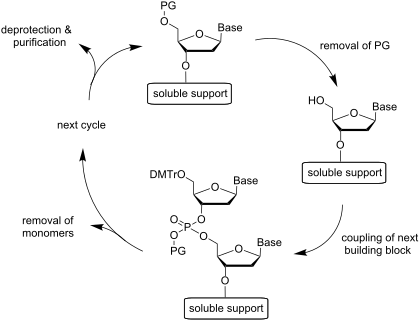
Figure 1: General principle of oligonucleotide synthesis.
Scheme 1: Alternative coupling methods used in the synthesis of oligonucleotides.
Scheme 2: Synthesis of ODNs on a precipitative PEG-support by phosphotriester chemistry using MSNT/NMI activa...
Scheme 3: Synthesis of ODNs on a precipitative tetrapodal support by phosphotriester chemistry using 1-hydrox...
Scheme 4: Synthesis of ODNs on a precipitative PEG-support by conventional phosphoramidite chemistry [51].
Scheme 5: Synthesis of ODNs on a precipitative tetrapodal support by conventional phosphoramidite chemistry [43].
Scheme 6: Synthesis of ODNs by an extractive strategy on an adamant-1-ylacetyl support [57].
Scheme 7: Synthesis of ODNs by a combination of extractive and precipitative strategy [58].
Scheme 8: Synthesis of ODNs by phosphoramidite chemistry on a N1,N3,N5-tris(2-aminoethyl)benzene-1,3,5-tricar...
Scheme 9: Synthesis of ORNs by phosphoramidite chemistry on a hydrophobic support [61].
Scheme 10: Synthesis of ORNs by the phosphoramidite chemistry on a precipitative tetrapodal support using 2´-O...
Scheme 11: Synthesis of ORNs by phosphoramidite chemistry on a precipitative tetrapodal support from commercia...
Scheme 12: Synthesis of ODNs on a precipitative PEG-support by H-phosphonate chemistry [65].
Scheme 13: Synthesis of 2´-O-methyl ORN phosphorothioates by phosphoramidite chemistry by making use of nanofi...
Beilstein J. Org. Chem. 2017, 13, 895–902, doi:10.3762/bjoc.13.90
Graphical Abstract
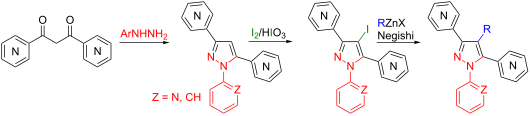
Scheme 1: Envisaged general approach for the synthesis of the title compounds.
Scheme 2: Synthesis of 4-iodopyrazoles of type 3.
Scheme 3: Lithium–halogen exchange and subsequent carboxylation with iodopyrazoles 3a–d.
Scheme 4: Attempted cross-coupling reactions with 4-halopyrazoles 5 and 3a.
Scheme 5: Negishi couplings with 4-iodopyrazoles 3a,b.
Scheme 6: Formation of pyrazoloquinolizin-6-ium iodide 12 upon reaction of 3a with (phenylethynyl)zinc bromid...
Scheme 7: Prototropic tautomerism of compound 1a.
Figure 1: 1H NMR (in italics), 13C NMR and 15N NMR (in bold) chemical shifts of compound 9a (in CDCl3).
Beilstein J. Org. Chem. 2017, 13, 863–873, doi:10.3762/bjoc.13.87
Graphical Abstract
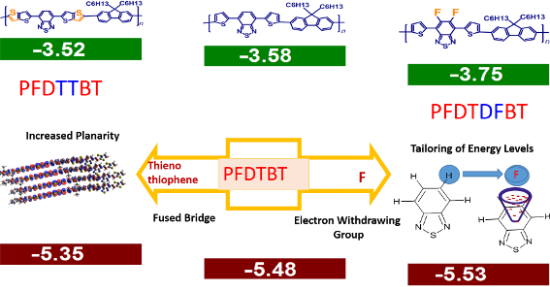
Scheme 1: Synthetic route towards monomers M1, M2 and M3.
Scheme 2: Synthesis of polymers P1, P2, and P3.
Figure 1: Isodensity surface plots of frontier molecular orbitals and optimized molecular geometries of P1, P2...
Figure 2: Theoretical absorption spectra of the polymers P1–P3 calculated using TDDFT.
Figure 3: Electrochemical spectra of polymers P1–P3.
Figure 4: Normalized absorption spectra of the polymers in solution, film and annealed film (130 °C) forms.
Figure 5: Photoluminescence spectra of polymers P1–P3 and polymer:PC70BM blends.
Figure 6: Bulk heterojunction solar cells device architecture, illustrating favorable conditions for absorpti...
Figure 7: J–V Spectra in chlorobenzene (CB) for which the ratio of polymer:PC70BM was optimized as follows: P1...
Figure 8: External quantum efficiency spectra of optimized devices fabricated with polymers P1, P2 and P3 and...
Beilstein J. Org. Chem. 2017, 13, 825–834, doi:10.3762/bjoc.13.83
Graphical Abstract
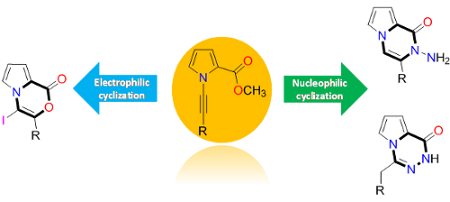
Figure 1: Structures of some natural products containing pyrazinone and aminotriazonone skeletons.
Figure 2: Structures of some natural products containing a pyrrolopyrazinone moiety.
Figure 3: N-alkyne substituted pyrrole esters 7a–d.
Scheme 1: Synthesis of N-alkyne substituted methyl 1H-pyrrole-2-carboxylate derivatives 7a–d.
Scheme 2: Nucleophilic cyclization reaction of compounds 7a–d and acetylation of 12c.
Figure 4: Correlations of olefinic proton in 12c and methylene protons in 13c and 16 with the relevant carbon...
Figure 5: Single-crystal X-ray structure of 12c shown with 40% probability displacement ellipsoids.
Scheme 3: Synthesis of 16.
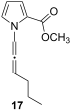
Figure 6: The structure of allene 17 formed during the reaction of 7d with a base.
Scheme 4: Proposed reaction mechanism of nucleophilic cyclization reaction of 7.
Scheme 5: Electrophilic cyclization reactions of 19a–c with iodine.
Figure 7: Single-crystal X-ray structure of 19c shown with 40% probability displacement ellipsoids.
Scheme 6: Proposed reaction mechanism of electrophilic cyclization reaction of 7c.
Figure 8: Potential energy profile related to the formation of pyrrolooxazinone 19c in the polarizable continu...
Beilstein J. Org. Chem. 2017, 13, 543–551, doi:10.3762/bjoc.13.52
Graphical Abstract
Figure 1: Reaction scheme for the synthesis of eosin Y (2) and eosin B (4).
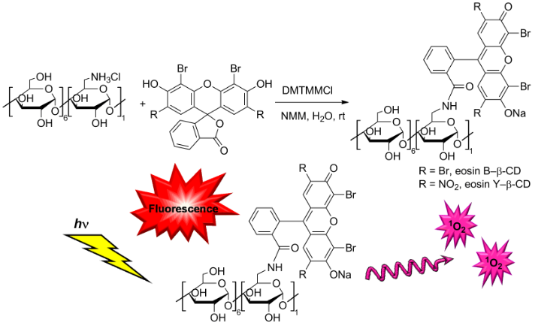
Figure 2: Reaction scheme for the synthesis of eosin-appended β-CDs, 2–β-CD and 4–β-CD (NMM: N-methylmorpholi...
Figure 3: TLC analysis of the composition of the crude coupling reaction mixtures.
Figure 4: 1H NMR spectrum of 2–β-CD with partial assignment (DMSO-d6, 600 MHz, 298 K).
Figure 5: Size distributions of 1 mM aqueous solutions of conjugates 4–β-CD (a) and 2–β-CD (b) at 25.0 °C (pH...
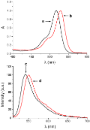
Figure 6: Normalized absorption spectra of aqueous solutions of (a) eosin Y (2) and (b) conjugate 2–β-CD and ...
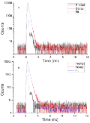
Figure 7: Time-resolved fluorescence observed for aqueous solutions of (a) eosin Y (2) and (b) the 2–β-CD con...
Figure 8: 1O2 luminescence detected upon 528 nm light excitation of D2O solutions of (a) eosin Y (2) and (b) 2...
Beilstein J. Org. Chem. 2017, 13, 195–202, doi:10.3762/bjoc.13.22
Graphical Abstract
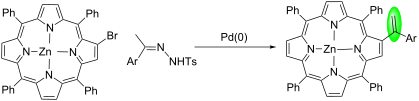
Scheme 1: Schematic representation of palladium-catalyzed cross-coupling reaction between aryl halides and N-...
Scheme 2: A retrosynthetic scheme for the synthesis of β-alkenyl-type porphyrin derivatives from the Zn(II) c...
Scheme 3: Palladium catalysed cross-coupling reactions between β-brominated porphyrin 1 and N-tosylhydrazones ...
Figure 1: 1H NMR of β-alkenylporphyrin derivative 3a. Green arrows illustrate principal COSY correlations.
Beilstein J. Org. Chem. 2016, 12, 2443–2449, doi:10.3762/bjoc.12.237
Graphical Abstract
Figure 1: Chemical structures of parylene N, parylene C, and parylene D.
Figure 2: Chemical structures of [2.2]paracyclophane and 4,7,12,15-tetrachloro[2.2]paracyclophane.
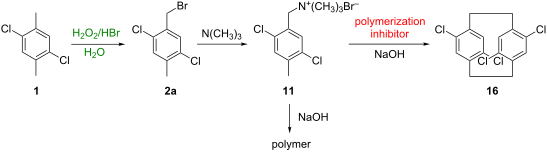
Scheme 1: Synthesis of substituted (4-methylbenzyl)trimethylammonium bromides from substituted (4-methylbenzy...
Beilstein J. Org. Chem. 2016, 12, 1772–1777, doi:10.3762/bjoc.12.166
Graphical Abstract
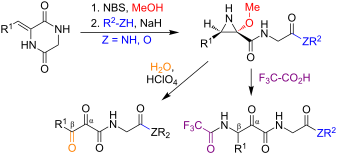
Scheme 1: Summary of the work described in this paper.
Scheme 2: Synthesis of aziridines 2.
Figure 1: NOE effects in compound 2f.
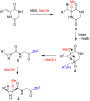
Scheme 3: Mechanistic proposal accounting for the chemo- and diastereoselective formation of aziridines 2.
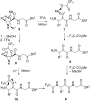
Scheme 4: Transformation of aziridines 2 into β-trifluoroacetamido-α-ketoamides 6.
Scheme 5: Two mechanistic proposals explaining the formation of compounds 6.
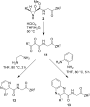
Scheme 6: Transformation of aziridines 2 into vicinal tricarbonyl compounds 11 and transformation of the latt...
Scheme 7: Mechanistic proposal for the transformation of aziridines 2 into compounds 11.
Beilstein J. Org. Chem. 2016, 12, 1361–1365, doi:10.3762/bjoc.12.129
Graphical Abstract
Scheme 1: Selective bromochlorination and possible disconnections for anverene (1).
Scheme 2: Selective total synthesis of (−)-anverene. Reagents and conditions: a) NBS (1.2 equiv), ClTi(OiPr)3...
Beilstein J. Org. Chem. 2016, 12, 1178–1184, doi:10.3762/bjoc.12.113
Graphical Abstract
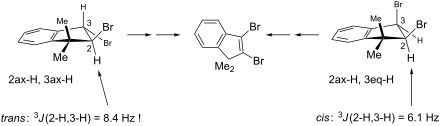
Scheme 1: Bromine adducts (trans-1 and cis-1) of 1,1-dimethylindene (2) and their envelope conformations: ax ...
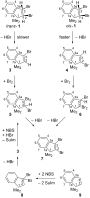
Scheme 2: The ways to 2-bromo- (4), 3-bromo- (3), and 2,3-dibromo-1,1-dimethylindene (7); SuIm = succinimide,...
Scheme 3: Unsolvated 2-bromo-3-lithio-1,1-dimethylindene (10) precipitated from the reaction mixture of 7 wit...
Beilstein J. Org. Chem. 2016, 12, 1153–1169, doi:10.3762/bjoc.12.111
Graphical Abstract
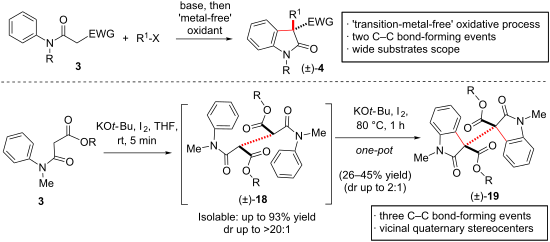
Scheme 1: Synthesis of 2-oxindoles via oxidative processes.
Figure 1: Substrates scope of one-pot ‘transition-metal-free’ IDC. The syntheses of compounds 4a–s according ...
Figure 2: Further substrates scope of one-pot ‘transition metal-free’ IDC. Conditions A: KOt-Bu, iodine; cond...
Figure 3: Substrates scope of ‘transition-metal-free’ IDC using KOt-Bu/I2. Reproduced from [46].
Figure 4: C-Alkylation of anilides using KOt-Bu.
Figure 5: Substrates scope of ‘transition-metal-free’ IDC of C-alkylated anilides using DBU/I2.
Scheme 2: Oxidative coupling of C-arylated anilides (±)-11a–d. The synthesis of 12b as per method A has been ...
Scheme 3: Synthesis of spirocyclic product through IDC The synthesis of 14 as per method A has been reproduce...
Scheme 4: Dimerization of β-N-aryl-amidoesters 3a and b. Reproduced from [46].
Scheme 5: Synthesis of dimeric 2-oxindoles utilizing IDC. The syntheses of 19a and b have been reproduced fro...
Scheme 6: Plausible mechanism of ‘transition-metal-free’ IDC The mechanistic consideration in Scheme 6 has been repro...
Scheme 7: Intramolecular-dehydrogenative-coupling (IDC) of 3a and 5a. Reproduced from [46].
Scheme 8: IDC of 3a and 5a using different oxidants. Reproduced from [46].
Scheme 9: Synthesis of 3-substituted-2-oxindoles from benzyl esters.
Scheme 10: 3-Substituted-2-oxindoles from p-methoxybenzyl esters.
Scheme 11: Synthetic elaboration using Tsuji–Trost reactions. Reproduced from [46].
Beilstein J. Org. Chem. 2016, 12, 1081–1095, doi:10.3762/bjoc.12.103
Graphical Abstract
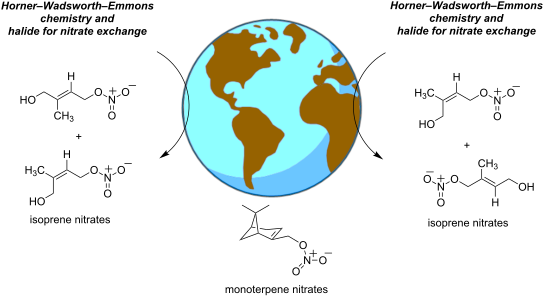
Scheme 1: Simplified overview outlining how a small number of different IPNs are synthesised and are able to ...
Scheme 2: Protocols for the synthesis of O-nitrated alcohols using (±)-isoprene epoxide and 2° alcohols as st...
Scheme 3: Attempted synthesis of O-nitrate ester rac-19 and rac-20 synthesis.
Scheme 4: Olah et al. O-nitrated alcohol syntheses of 23–33 using N-nitro-2,4-6-trimethylpyridinium tetrafluo...
Scheme 5: O-nitration study using 22 and the alcohols 34–37.
Scheme 6: Silver nitrate mediated synthesis of 2-oxopropyl nitrate 43.
Scheme 7: Application of isoprene for the synthesis of precursors to IPNs and synthesis via ‘halide for nitra...
Scheme 8: Synthesis of (E)-3-methyl-4-chlorobut-2-en-1-ol ((E)-60) and (Z)-3-methyl-4-chlorobut-2-en-1-ol ((Z...
Scheme 9: Using NOESY interactions to establish the conformations of the C=C bonds within (E)-10 and (Z)-9.
Scheme 10: Synthesis of isoprene nitrates (E)-11 and (Z)-12 from ketone 63.
Scheme 11: Attempted synthesis of rac-8 from O-mesylate rac-71.
Scheme 12: Synthesis of O-nitrate 73 from O-mesylate 72.
Scheme 13: Attempted synthesis of 2° alcohol containing 1° nitrate ester rac-19 and the unexpected synthesis o...
Scheme 14: Synthesis of monoterpene derived (1R,5S)-(−)-myrtenol nitrate 86.
Beilstein J. Org. Chem. 2016, 12, 245–252, doi:10.3762/bjoc.12.26
Graphical Abstract
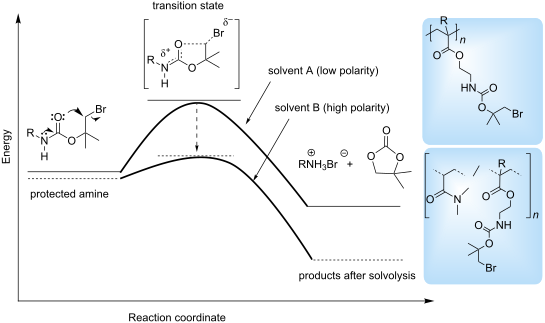
Figure 1: Schematic representation of a deprotection taking the relatively high polarity of the transition st...
Scheme 1: Synthesis of Br-t-Boc-protected monomers 3a,b and homopolymers 6a,b.
Figure 2: 300 MHz 1H NMR spectrum of 3a in CDCl3.
Figure 3: 300 MHz 1H NMR spectrum of 3b in CDCl3.
Scheme 2: Stability of 3 in different solvents.
Scheme 3: Synthesized derivative monomers 3c,d.
Scheme 4: a) Self deactivation of homopolymer 6a,b due to competing hydrogen interactions in comparison to b)...
Figure 4: Kinetic studies of the deprotection of 3a, 6a and 7a.
Figure 5: 300 MHz 1H NMR spectra of a) 6a in CDCl3 and b) 8a in DMSO-d6.
Beilstein J. Org. Chem. 2015, 11, 1418–1424, doi:10.3762/bjoc.11.153
Graphical Abstract
Figure 1: General structure of bisphosphonates.
Figure 2: General structures of 1-hydroxy- and 1-amino-1-phosphinylalkylphosphonates (2 and 3, respectively) ...
Scheme 1: Electrochemical α-methoxylation of 1-(N-acylamino)alkylphosphonates.
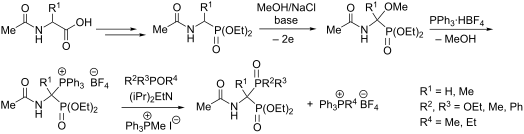
Scheme 2: Transformation of diethyl 1-(N-acetylamino)-1-methoxyalkylphosphonates into bisphosphoric acid este...
Beilstein J. Org. Chem. 2015, 11, 174–183, doi:10.3762/bjoc.11.18
Graphical Abstract
Scheme 1: Cobalt-catalysed 1,4-hydrovinylation.
Scheme 2: Electrochemical selenoalkoxylation of 2.
Scheme 3: Electrochemical iodoalkoxylation of 2.
Beilstein J. Org. Chem. 2015, 11, 92–146, doi:10.3762/bjoc.11.13
Graphical Abstract
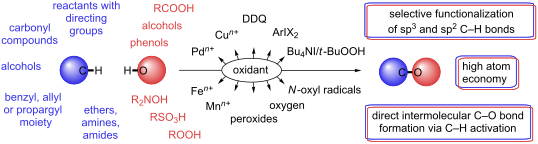
Scheme 1: Cross-dehydrogenative coupling.
Scheme 2: Cross-dehydrogenative C–O coupling.
Scheme 3: Regioselective ortho-acetoxylation of meta-substituted arylpyridines and N-arylamides.
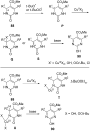
Scheme 4: ortho-Acyloxylation and alkoxylation of arenes directed by pyrimidine, benzoxazole, benzimidazole a...
Scheme 5: Cu(OAc)2/AgOTf/O2 oxidative system in the ortho-alkoxylation of arenes.
Scheme 6: Pd(OAc)2/persulfate oxidative system in the ortho-alkoxylation and acetoxylation of arenes with nit...
Scheme 7: ortho-Acetoxylation and methoxylation of O-methyl aryl oximes, N-phenylpyrrolidin-2-one, and (3-ben...
Scheme 8: Ruthenium-catalyzed ortho-acyloxylation of acetanilides.
Scheme 9: Acetoxylation and alkoxylation of arenes with amide directing group using Pd(OAc)2/PhI(OAc)2 oxidat...
Scheme 10: Alkoxylation of azoarenes, 2-aryloxypyridines, picolinamides, and N-(1-methyl-1-(pyridin-2-yl)ethyl...
Scheme 11: Acetoxylation of compounds containing picolinamide and quinoline-8-amine moieties using the Pd(OAc)2...
Scheme 12: (CuOH)2CO3 catalyzed oxidative ortho-etherification using air as oxidant.
Scheme 13: Copper-catalyzed aerobic alkoxylation and aryloxylation of arenes containing pyridine-N-oxide moiet...
Scheme 14: Cobalt-catalyzed aerobic alkoxylation of arenes and alkenes containing pyridine N-oxide moiety.
Scheme 15: Non-symmetric double-fold C–H ortho-acyloxylation.
Scheme 16: N-nitroso directed ortho-alkoxylation of arenes.
Scheme 17: Selective alkoxylation and acetoxylation of alkyl groups.
Scheme 18: Acetoxylation of 2-alkylpyridines and related compounds.
Scheme 19: Acyloxylation and alkoxylation of alkyl fragments of substrates containing amide or sulfoximine dir...
Scheme 20: Palladium-catalyzed double sp3 C–H alkoxylation of N-(quinolin-8-yl)amides for the synthesis of sym...
Scheme 21: Copper-catalyzed acyloxylation of methyl groups of N-(quinolin-8-yl)amides.
Scheme 22: One-pot acylation and sp3 C–H acetoxylation of oximes.
Scheme 23: Possible mechanism of oxidative esterification catalyzed by N-heterocyclic nucleophilic carbene.
Scheme 24: Oxidative esterification employing stoichiometric amounts of aldehydes and alcohols.
Scheme 25: Selective oxidative coupling of aldehydes with alcohols in the presence of amines.
Scheme 26: Iodine mediated oxidative esterification.
Scheme 27: Oxidative C–O coupling of benzyl alcohols with methylarenes under the action of Bu4NI/t-BuOOH syste...
Scheme 28: Oxidative coupling of methyl- and ethylarenes with aromatic aldehydes under the action of Bu4NI/t-B...
Scheme 29: Cross-dehydrogenative C–O coupling of aldehydes with t-BuOOH in the presence of Bu4NI.
Scheme 30: Bu4NI-catalyzed α-acyloxylation reaction of ethers and ketones with aldehydes and t-BuOOH.
Scheme 31: Oxidative coupling of aldehydes with N-hydroxyimides and hexafluoroisopropanol.
Scheme 32: Oxidative coupling of alcohols with N-hydroxyimides.
Scheme 33: Oxidative coupling of aldehydes and primary alcohols with N-hydroxyimides using (diacetoxyiodo)benz...
Scheme 34: Proposed mechanism of the oxidative coupling of aldehydes and N-hydroxysuccinimide under action of ...
Scheme 35: Oxidative coupling of aldehydes with pivalic acid (172).
Scheme 36: Oxidative C–O coupling of aldehydes with alkylarenes using the Cu(OAc)2/t-BuOOH system.
Scheme 37: Copper-catalyzed acyloxylation of C(sp3)-H bond adjacent to oxygen in ethers using benzyl alcohols.
Scheme 38: Oxidative C–O coupling of aromatic aldehydes with cycloalkanes.
Scheme 39: Ruthenium catalyzed cross-dehydrogenative coupling of primary and secondary alcohols.
Scheme 40: Cross-dehydrogenative C–O coupling reactions of β-dicarbonyl compounds with sulfonic acids, acetic ...
Scheme 41: Acyloxylation of ketones, aldehydes and β-dicarbonyl compounds using carboxylic acids and Bu4NI/t-B...
Scheme 42: Acyloxylation of ketones using Bu4NI/t-BuOOH system.
Scheme 43: Cross-dehydrogenative C–O coupling of β-dicarbonyl compounds and their heteroanalogues with N-hydro...
Scheme 44: Cross-dehydrogenative C–O coupling of β-dicarbonyl compounds and their heteroanalogues with t-BuOOH....
Scheme 45: Oxidative C–O coupling of 2,6-dialkylphenyl-β-keto esters and thioesters with tert-butyl hydroxycar...
Scheme 46: α’-Acyloxylation of α,β-unsaturated ketones using KMnO4.
Scheme 47: Possible mechanisms of the acetoxylation at the allylic position of alkenes by Pd(OAc)2.
Scheme 48: Products of the oxidation of terminal alkenes by Pd(II)/AcOH/oxidant system.
Scheme 49: Acyloxylation of terminal alkenes with carboxylic acids.
Scheme 50: Synthesis of linear E-allyl esters by cross-dehydrogenative coupling of terminal alkenes wih carbox...
Scheme 51: Pd(OAc)2-catalyzed acetoxylation of Z-vinyl(triethylsilanes).
Scheme 52: α’-Acetoxylation of α-acetoxyalkenes with copper(II) chloride in acetic acid.
Scheme 53: Oxidative acyloxylation at the allylic position of alkenes and at the benzylic position of alkylare...
Scheme 54: Copper-catalyzed alkoxylation of methylheterocyclic compounds using di-tert-butylperoxide as oxidan...
Scheme 55: Oxidative C–O coupling of methylarenes with β-dicarbonyl compounds or phenols.
Scheme 56: Copper-catalyzed esterification of methylbenzenes with cyclic ethers and cycloalkanes.
Scheme 57: Oxidative C–O coupling of carboxylic acids with toluene catalyzed by Pd(OAc)2.
Scheme 58: Oxidative acyloxylation at the allylic position of alkenes with carboxylic acids using the Bu4NI/t-...
Scheme 59: Cross-dehydrogenative C–O coupling of carboxylic acids with alkylarenes using the Bu4NI/t-BuOOH sys...
Scheme 60: Oxidative C–O cross-coupling of methylarenes with ethyl or isopropylarenes.
Scheme 61: Phosphorylation of benzyl C–H bonds using the Bu4NI/t-BuOOH oxidative system.
Scheme 62: Selective C–H acetoxylation of 2,3-disubstituted indoles.
Scheme 63: Acetoxylation of benzylic position of alkylarenes using DDQ as oxidant.
Scheme 64: C–H acyloxylation of diarylmethanes, 3-phenyl-2-propen-1-yl acetate and dimethoxyarene using DDQ.
Scheme 65: Cross-dehydrogenative C–O coupling of 1,3-diarylpropylenes and 1,3-diarylpropynes with alcohols.
Scheme 66: One-pot azidation and C–H acyloxylation of 3-chloro-1-arylpropynes.
Scheme 67: Cross-dehydrogenative C–O coupling of 1,3-diarylpropylenes, (E)-1-phenyl-2-isopropylethylene and is...
Scheme 68: Cross-dehydrogenative C–O coupling of alkylarenes and related compounds with N-hydroxyphthalimide.
Scheme 69: Acetoxylation at the benzylic position of alkylarenes mediated by N-hydroxyphthalimide.
Scheme 70: C–O coupling of methylarenes with aromatic carboxylic acids employing the NaBrO3/NaHSO3 system.
Scheme 71: tert-Butyl peroxidation of allyl, propargyl and benzyl ethers catalyzed by Fe(acac)3.
Scheme 72: Cross-dehydrogenative C–O coupling of ethers with carboxylic acids mediated by Bu4NI/t-BuOOH system....
Scheme 73: Oxidative acyloxylation of dimethylamides and dioxane with 2-aryl-2-oxoacetic acids accompanied by ...
Scheme 74: tert-Butyl peroxidation of N-benzylamides and N-allylbenzamide using the Bu4NI/t-BuOOH system.
Scheme 75: Cross-dehydrogenative C–O coupling of aromatic carboxylic acids with ethers using Fe(acac)3 as cata...
Scheme 76: Cross-dehydrogenative C–O coupling of cyclic ethers with 2-hydroxybenzaldehydes using iron carbonyl...
Scheme 77: Cross-dehydrogenative C–O coupling of ethers with β-dicarbonyl compounds and phenols using copper c...
Scheme 78: Cross-dehydrogenative C–O coupling of 2-hydroxybenzaldehyde with dioxane catalyzed by Cu2(BPDC)2(BP...
Scheme 79: Ruthenium chloride-catalyzed acyloxylation of β-lactams.
Scheme 80: Ruthenium-catalyzed tert-butyl peroxydation amides and acetoxylation of β-lactams.
Scheme 81: PhI(OAc)2-mediated α,β-diacetoxylation of tertiary amines.
Scheme 82: Electrochemical oxidative methoxylation of tertiary amines.
Scheme 83: Cross-dehydrogenative C–O coupling of ketene dithioacetals with carboxylic acids in the presence of...
Scheme 84: Cross-dehydrogenative C–O coupling of enamides with carboxylic acids using iodosobenzene as oxidant....
Scheme 85: Oxidative alkoxylation, acetoxylation, and tosyloxylation of acylanilides using PhI(O(O)CCF3)2 in t...
Scheme 86: Proposed mechanism of the oxidative C–O coupling of actetanilide with O-nucleophiles in the presenc...
Scheme 87: Three-component coupling of aldehydes, anilines and alcohols involving oxidative intermolecular C–O...
Scheme 88: Oxidative coupling of phenols with alcohols.
Scheme 89: 2-Acyloxylation of quinoline N-oxides with arylaldehydes in the presence of the CuOTf/t-BuOOH syste...
Scheme 90: Cross-dehydrogenative C–O coupling of azoles with primary alcohols.
Scheme 91: Oxidation of dipyrroles to dipyrrins and subsequent oxidative alkoxylation in the presence of Na3Co...
Scheme 92: Oxidative dehydrogenative carboxylation of alkanes and cycloalkanes to allylic esters.
Scheme 93: Pd-catalyzed acetoxylation of benzene.
Beilstein J. Org. Chem. 2015, 11, 31–36, doi:10.3762/bjoc.11.5
Graphical Abstract
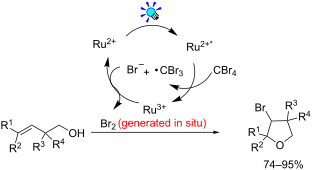
Scheme 1: Control experiment with liquid bromine for bromoethrification of alkenols.
Scheme 2: Proposed mechanism for the photocatalytic bromoetherification of alkenols.
Beilstein J. Org. Chem. 2014, 10, 2800–2808, doi:10.3762/bjoc.10.297
Graphical Abstract
Figure 1: Synthesis of [1]rotaxane by self-inclusion of a host–guest-linked molecule: a) short molecular leng...
Figure 2: Synthesis of an insulated molecule via flipping phenomenon.
Scheme 1: The synthetic route to the PMβ-CD based linked [3]rotaxane with a 5,15-di([1,1'-biphenyl]-4-yl)porp...
Figure 3: The aromatic region of the 1H NMR spectra of 5 at 25 °C: 1) CDCl3, 2) CD3OD, and 3) CD3OD:D2O 1:1.
Scheme 2: Selective synthesis of fixed [3]rotaxane by Suzuki cross-coupling reaction.
Scheme 3: The synthetic routes to precursor of PM β-CD based insulated oligothiophene.
Scheme 4: Synthesis of dibromohexa(para-phenylene) with two PMCDs 20.
Scheme 5: Synthesis of pseudo-linked [3]rotaxanes via double self-inclusion through flipping.
Figure 4: The aromatic region of the 1H NMR spectra of 5 at 25 °C: 1) CDCl3, 2) CD3OD, and CD3OD/D2O 1:1.
Figure 5: The aromatic region of the 1H NMR spectra of 20 at 25 °C: 1) CDCl3, 2) CD3OD, and CD3OD/D2O 1:1.
Scheme 6: Synthesis of fixed [3]rotaxane via complexation with rhodium porphyrin.
Figure 6: Partial ROESY NMR spectrum of 26 (400 MHz, CDCl3) showing the NOEs between aromatic protons of the ...
Beilstein J. Org. Chem. 2014, 10, 1233–1238, doi:10.3762/bjoc.10.122
Graphical Abstract
Figure 1: Representative examples of lamellarin alkaloids.
Scheme 1: Photocatalytic metal free construction of pyrrolo[2,1-a]isoquinolines.
Scheme 2: Evaluation of the substrate scope.
Scheme 3: Evaluation of the substrate scope with activated alkynes.
Beilstein J. Org. Chem. 2014, 10, 622–627, doi:10.3762/bjoc.10.53
Graphical Abstract
Scheme 1: Strategy for in situ generation of bromine.
Scheme 2: Synthesis of dibromophenol product 2b''.
Scheme 3: Scope of the photocatalytic bromination of alkenes.
Scheme 4: Bromination of diketones and cyclization reactions.
Beilstein J. Org. Chem. 2014, 10, 34–114, doi:10.3762/bjoc.10.6
Graphical Abstract
Figure 1: Five and six-membered cyclic peroxides.
Figure 2: Artemisinin and semi-synthetic derivatives.
Scheme 1: Synthesis of 3-hydroxy-1,2-dioxolanes 3a–c.
Scheme 2: Synthesis of dioxolane 6.
Scheme 3: Photooxygenation of oxazolidines 7a–d with formation of spiro-fused oxazolidine-containing dioxolan...
Scheme 4: Oxidation of cyclopropanes 10a–e and 11a–e with preparation of 1,2-dioxolanes 12a–e.
Scheme 5: VO(acac)2-catalyzed oxidation of silylated bicycloalkanols 13a–c.
Scheme 6: Mn(II)-catalyzed oxidation of cyclopropanols 15a–g.
Scheme 7: Oxidation of aminocyclopropanes 20a–c.
Scheme 8: Synthesis of aminodioxolanes 24.
Figure 3: Trifluoromethyl-containing dioxolane 25.
Scheme 9: Synthesis of 1,2-dioxolanes 27a–e by the oxidation of cyclopropanes 26a–e.
Scheme 10: Photoinduced oxidation of methylenecyclopropanes 28.
Scheme 11: Irradiation-mediated oxidation.
Scheme 12: Application of diazene 34 for dioxolane synthesis.
Scheme 13: Mn(OAc)3-catalyzed cooxidation of arylacetylenes 37a–h and acetylacetone with atmospheric oxygen.
Scheme 14: Peroxidation of (2-vinylcyclopropyl)benzene (40).
Scheme 15: Peroxidation of 1,4-dienes 43a,b.
Scheme 16: Peroxidation of 1,5-dienes 46.
Scheme 17: Peroxidation of oxetanes 53a,b.
Scheme 18: Peroxidation of 1,6-diene 56.
Scheme 19: Synthesis of 3-alkoxy-1,2-dioxolanes 62a,b.
Scheme 20: Synthesis of spiro-bis(1,2-dioxolane) 66.
Scheme 21: Synthesis of dispiro-1,2-dioxolanes 68, 70, 71.
Scheme 22: Synthesis of spirohydroperoxydioxolanes 75a,b.
Scheme 23: Synthesis of spirohydroperoxydioxolane 77 and dihydroperoxydioxolane 79.
Scheme 24: Ozonolysis of azepino[4,5-b]indole 80.
Scheme 25: SnCl4-mediated fragmentation of ozonides 84a–l in the presence of allyltrimethylsilane.
Scheme 26: SnCl4-mediated fragmentation of bicyclic ozonide 84m in the presence of allyltrimethylsilane.
Scheme 27: MCl4-mediated fragmentation of alkoxyhydroperoxides 96 in the presence of allyltrimethylsilane.
Scheme 28: SnCl4-catalyzed reaction of monotriethylsilylperoxyacetal 108 with alkene 109.
Scheme 29: SnCl4-catalyzed reaction of triethylsilylperoxyacetals 111 with alkenes.
Scheme 30: Desilylation of tert-butyldimethylsilylperoxy ketones 131a,b followed by cyclization.
Scheme 31: Deprotection of peroxide 133 followed by cyclization.
Scheme 32: Asymmetric peroxidation of methyl vinyl ketones 137a–e.
Scheme 33: Et2NH-catalyzed intramolecular cyclization.
Scheme 34: Synthesis of oxodioxolanes 143a–j.
Scheme 35: Haloperoxidation accompanied by intramolecular ring closure.
Scheme 36: Oxidation of triterpenes 149a–d with Na2Cr2O7/N-hydroxysuccinimide.
Scheme 37: Curtius and Wolff rearrangements to form 1,2-dioxolane ring-retaining products.
Scheme 38: Oxidative desilylation of peroxide 124.
Scheme 39: Synthesis of dioxolane 158, a compound containing the aminoquinoline antimalarial pharmacophore.
Scheme 40: Diastereomers of plakinic acid A, 162a and 162b.
Scheme 41: Ozonolysis of alkenes.
Scheme 42: Cross-ozonolysis of alkenes 166 with carbonyl compounds.
Scheme 43: Ozonolysis of the bicyclic cyclohexenone 168.
Scheme 44: Cross-ozonolysis of enol ethers 172a,b with cyclohexanone.
Scheme 45: Griesbaum co-ozonolysis.
Scheme 46: Reactions of aryloxiranes 177a,b with oxygen.
Scheme 47: Intramolecular formation of 1,2,4-trioxolane 180.
Scheme 48: Formation of 1,2,4-trioxolane 180 by the reaction of 1,5-ketoacetal 181 with H2O2.
Scheme 49: 1,2,4-Trioxolane 186 with tetrazole fragment.
Scheme 50: 1,2,4-Trioxolane 188 with a pyridine fragment.
Scheme 51: 1,2,4-Trioxolane 189 with pyrimidine fragment.
Scheme 52: Synthesis of aminoquinoline-containing 1,2,4-trioxalane 191.
Scheme 53: Synthesis of arterolane.
Scheme 54: Oxidation of diarylheptadienes 197a–c with singlet oxygen.
Scheme 55: Synthesis of hexacyclinol peroxide 200.
Scheme 56: Oxidation of enone 201 and enenitrile 203 with singlet oxygen.
Scheme 57: Synthesis of 1,2-dioxanes 207 by oxidative coupling of carbonyl compounds 206 and alkenes 205.
Scheme 58: 1,2-Dioxanes 209 synthesis by co-oxidation of 1,5-dienes 208 and thiols.
Scheme 59: Synthesis of bicyclic 1,2-dioxanes 212 with aryl substituents.
Scheme 60: Isayama–Mukaiyama peroxysilylation of 1,5-dienes 213 followed by desilylation under acidic conditio...
Scheme 61: Synthesis of bicycle 218 with an 1,2-dioxane ring.
Scheme 62: Intramolecular cyclization with an oxirane-ring opening.
Scheme 63: Inramolecular cyclization with the oxetane-ring opening.
Scheme 64: Intramolecular cyclization with the attack on a keto group.
Scheme 65: Peroxidation of the carbonyl group in unsaturated ketones 228 followed by cyclization of hydroperox...
Scheme 66: CsOH and Et2NH-catalyzed cyclization.
Scheme 67: Preparation of peroxyplakoric acid methyl ethers A and D.
Scheme 68: Hg(OAc)2 in 1,2-dioxane synthesis.
Scheme 69: Reaction of 1,4-diketones 242 with hydrogen peroxide.
Scheme 70: Inramolecular cyclization with oxetane-ring opening.
Scheme 71: Inramolecular cyclization with MsO fragment substitution.
Scheme 72: Synthesis of 1,2-dioxane 255a, a structurally similar compound to natural peroxyplakoric acids.
Scheme 73: Synthesis of 1,2-dioxanes based on the intramolecular cyclization of hydroperoxides containing C=C ...
Scheme 74: Use of BCIH in the intramolecular cyclization.
Scheme 75: Palladium-catalyzed cyclization of δ-unsaturated hydroperoxides 271a–e.
Scheme 76: Intramolecular cyclization of unsaturated peroxyacetals 273a–d.
Scheme 77: Allyltrimethylsilane in the synthesis of 1,2-dioxanes 276a–d.
Scheme 78: Intramolecular cyclization using the electrophilic center of the peroxycarbenium ion 279.
Scheme 79: Synthesis of bicyclic 1,2-dioxanes.
Scheme 80: Preparation of 1,2-dioxane 286.
Scheme 81: Di(tert-butyl)peroxalate-initiated radical cyclization of unsaturated hydroperoxide 287.
Scheme 82: Oxidation of 1,4-betaines 291a–d.
Scheme 83: Synthesis of aminoquinoline-containing 1,2-dioxane 294.
Scheme 84: Synthesis of the sulfonyl-containing 1,2-dioxane.
Scheme 85: Synthesis of the amido-containing 1,2-dioxane 301.
Scheme 86: Reaction of singlet oxygen with the 1,3-diene system 302.
Scheme 87: Synthesis of (+)-premnalane А and 8-epi-premnalane A.
Scheme 88: Synthesis of the diazo group containing 1,2-dioxenes 309a–e.
Figure 4: Plakortolide Е.
Scheme 89: Synthesis of 6-epiplakortolide Е.
Scheme 90: Application of Bu3SnH for the preparation of tetrahydrofuran-containing bicyclic peroxides 318a,b.
Scheme 91: Application of Bu3SnH for the preparation of lactone-containing bicyclic peroxides 320a–f.
Scheme 92: Dihydroxylation of the double bond in the 1,2-dioxene ring 321 with OsO4.
Scheme 93: Epoxidation of 1,2-dioxenes 324.
Scheme 94: Cyclopropanation of the double bond in endoperoxides 327.
Scheme 95: Preparation of pyridazine-containing bicyclic endoperoxides 334a–c.
Scheme 96: Synthesis of 1,2,4-trioxanes 337 by the hydroperoxidation of unsaturated alcohols 335 with 1O2 and ...
Scheme 97: Synthesis of sulfur-containing 1,2,4-trioxanes 339.
Scheme 98: BF3·Et2O-catalyzed synthesis of the 1,2,4-trioxanes 342a–g.
Scheme 99: Photooxidation of enol ethers or vinyl sulfides 343.
Scheme 100: Synthesis of tricyclic peroxide 346.
Scheme 101: Reaction of endoperoxides 348a,b derived from cyclohexadienes 347a,b with 1,4-cyclohexanedione.
Scheme 102: [4 + 2]-Cycloaddition of singlet oxygen to 2Н-pyrans 350.
Scheme 103: Synthesis of 1,2,4-trioxanes 354 using peroxysilylation stage.
Scheme 104: Epoxide-ring opening in 355 with H2O2 followed by the condensation of hydroxy hydroperoxides 356 wi...
Scheme 105: Peroxidation of unsaturated ketones 358 with the H2O2/CF3COOH/H2SO4 system.
Scheme 106: Synthesis of 1,2,4-trioxanes 362 through Et2NH-catalyzed intramolecular cyclization.
Scheme 107: Reduction of the double bond in tricyclic peroxides 363.
Scheme 108: Horner–Wadsworth–Emmons reaction in the presence of peroxide group.
Scheme 109: Reduction of ester group by LiBH4 in the presence of 1,2,4-trioxane moiety.
Scheme 110: Reductive amination of keto-containing 1,2,4-trioxane 370.
Scheme 111: Reductive amination of keto-containing 1,2,4-trioxane and a Fe-containing moiety.
Scheme 112: Acid-catalyzed reactions of Н2О2 with ketones and aldehydes 374.
Scheme 113: Cyclocondensation of carbonyl compounds 376a–d using Me3SiOOSiMe3/CF3SO3SiMe3.
Scheme 114: Peroxidation of 4-methylcyclohexanone (378).
Scheme 115: Synthesis of symmetrical tetraoxanes 382a,b from aldehydes 381a,b.
Scheme 116: Synthesis of unsymmetrical tetraoxanes using of MeReO3.
Scheme 117: Synthesis of symmetrical tetraoxanes using of MeReO3.
Scheme 118: Synthesis of symmetrical tetraoxanes using of MeReO3.
Scheme 119: MeReO3 in the synthesis of symmetrical tetraoxanes with the use of aldehydes.
Scheme 120: Preparation of unsymmmetrical 1,2,4,5-tetraoxanes with high antimalarial activity.
Scheme 121: Re2O7-Catalyzed synthesis of tetraoxanes 398.
Scheme 122: H2SO4-Catalyzed synthesis of steroidal tetraoxanes 401.
Scheme 123: HBF4-Catalyzed condensation of bishydroperoxide 402 with 1,4-cyclohexanedione.
Scheme 124: BF3·Et2O-Catalyzed reaction of gem-bishydroperoxides 404 with enol ethers 405 and acetals 406.
Scheme 125: HBF4-Catalyzed cyclocondensation of bishydroperoxide 410 with ketones.
Scheme 126: Synthesis of symmetrical and unsymmetrical tetraoxanes 413 from benzaldehydes 412.
Scheme 127: Synthesis of bridged 1,2,4,5-tetraoxanes 415a–l from β-diketones 414a–l and H2O2.
Scheme 128: Dimerization of zwitterions 417.
Scheme 129: Ozonolysis of verbenone 419.
Scheme 130: Ozonolysis of O-methyl oxime 424.
Scheme 131: Peroxidation of 1,1,1-trifluorododecan-2-one 426 with oxone.
Scheme 132: Intramolecular cyclization of dialdehyde 428 with H2O2.
Scheme 133: Tetraoxanes 433–435 as by-products in peroxidation of ketals 430–432.
Scheme 134: Transformation of triperoxide 436 in diperoxide 437.
Scheme 135: Preparation and structural modifications of tetraoxanes.
Scheme 136: Structural modifications of steroidal tetraoxanes.
Scheme 137: Synthesis of 1,2,4,5-tetraoxane 454 containing the fluorescent moiety.
Scheme 138: Synthesis of tetraoxane 458 (RKA182).
Beilstein J. Org. Chem. 2013, 9, 2265–2319, doi:10.3762/bjoc.9.265
Graphical Abstract
Scheme 1: Scaled industrial processes for the synthesis of simple pyridines.
Scheme 2: Synthesis of nicotinic acid from 2-methyl-5-ethylpyridine (1.11).
Scheme 3: Synthesis of 3-picoline and nicotinic acid.
Scheme 4: Synthesis of 3-picoline from 2-methylglutarodinitrile 1.19.
Scheme 5: Picoline-based synthesis of clarinex (no yields reported).
Scheme 6: Mode of action of proton-pump inhibitors and structures of the API’s.
Scheme 7: Hantzsch-like route towards the pyridine rings in common proton pump inhibitors.
Figure 1: Structures of rosiglitazone (1.40) and pioglitazone (1.41).
Scheme 8: Synthesis of rosiglitazone.
Scheme 9: Syntheses of 2-pyridones.
Scheme 10: Synthesis and mechanism of 2-pyrone from malic acid.
Scheme 11: Polymer-assisted synthesis of rosiglitazone.
Scheme 12: Synthesis of pioglitazone.
Scheme 13: Meerwein arylation reaction towards pioglitazone.
Scheme 14: Route towards pioglitazone utilising tyrosine.
Scheme 15: Route towards pioglitazone via Darzens ester formation.
Scheme 16: Syntheses of the thiazolidinedione moiety.
Scheme 17: Synthesis of etoricoxib utilising Negishi and Stille cross-coupling reactions.
Scheme 18: Synthesis of etoricoxib via vinamidinium condensation.
Figure 2: Structures of nalidixic acid, levofloxacin and moxifloxacin.
Scheme 19: Synthesis of moxifloxacin.
Scheme 20: Synthesis of (S,S)-2,8-diazabicyclo[4.3.0]nonane 1.105.
Scheme 21: Synthesis of levofloxacin.
Scheme 22: Alternative approach to the levofloxacin core 1.125.
Figure 3: Structures of nifedipine, amlodipine and clevidipine.
Scheme 23: Mg3N2-mediated synthesis of nifedipine.
Scheme 24: Synthesis of rac-amlodipine as besylate salt.
Scheme 25: Aza Diels–Alder approach towards amlodipine.
Scheme 26: Routes towards clevidipine.
Figure 4: Examples of piperidine containing drugs.
Figure 5: Discovery of tiagabine based on early leads.
Scheme 27: Synthetic sequences to tiagabine.
Figure 6: Structures of solifenacin (2.57) and muscarine (2.58).
Scheme 28: Enantioselective synthesis of solifenacin.
Figure 7: Structures of DPP-4 inhibitors of the gliptin-type.
Scheme 29: Formation of inactive diketopiperazines from cis-rotameric precursors.
Figure 8: Co-crystal structure of carmegliptin bound in the human DPP-4 active site (PDB 3kwf).
Scheme 30: Improved route to carmegliptin.
Figure 9: Structures of lamivudine and zidovudine.
Scheme 31: Typical routes accessing uracil, thymine and cytosine.
Scheme 32: Coupling between pyrimidones and riboses via the Vorbrüggen nucleosidation.
Scheme 33: Synthesis of lamivudine.
Scheme 34: Synthesis of raltegravir.
Scheme 35: Mechanistic studies on the formation of 3.22.
Figure 10: Structures of selected pyrimidine containing drugs.
Scheme 36: General preparation of pyrimidines and dihydropyrimidones.
Scheme 37: Synthesis of imatinib.
Scheme 38: Flow synthesis of imatinib.
Scheme 39: Syntheses of erlotinib.
Scheme 40: Synthesis of erlotinib proceeding via Dimroth rearrangement.
Scheme 41: Synthesis of lapatinib.
Scheme 42: Synthesis of rosuvastatin.
Scheme 43: Alternative preparation of the key aldehyde towards rosuvastatin.
Figure 11: Structure comparison between nicotinic acetylcholine receptor agonists.
Scheme 44: Syntheses of varenicline and its key building block 4.5.
Scheme 45: Synthetic access to eszopiclone and brimonidine via quinoxaline intermediates.
Figure 12: Bortezomib bound in an active site of the yeast 20S proteasome ([114], pdb 2F16).
Scheme 46: Asymmetric synthesis of bortezomib.
Figure 13: Structures of some prominent piperazine containing drugs.
Figure 14: Structural comparison between the core of aplaviroc (4.35) and a type-1 β-turn (4.36).
Scheme 47: Examplary synthesis of an aplaviroc analogue via the Ugi-MCR.
Scheme 48: Syntheses of azelastine (5.1).
Figure 15: Structures of captopril, enalapril and cilazapril.
Scheme 49: Synthesis of cilazapril.
Figure 16: Structures of lamotrigine, ceftriaxone and azapropazone.
Scheme 50: Synthesis of lamotrigine.
Scheme 51: Alternative synthesis of lamotrigine (no yields reported).
Figure 17: Structural comparison between imiquimod and the related adenosine nucleoside.
Scheme 52: Conventional synthesis of imiquimod (no yields reported).
Scheme 53: Synthesis of imiquimod.
Scheme 54: Synthesis of imiquimod via tetrazole formation (not all yields reported).
Figure 18: Structures of various anti HIV-medications.
Scheme 55: Synthesis of abacavir.
Figure 19: Structures of diazepam compared to modern replacements.
Scheme 56: Synthesis of ocinaplon.
Scheme 57: Access to zaleplon and indiplon.
Scheme 58: Different routes towards the required N-methylpyrazole 6.65 of sildenafil.
Scheme 59: Polymer-supported reagents in the synthesis of key aminopyrazole 6.72.
Scheme 60: Early synthetic route to sildenafil.
Scheme 61: Convergent preparations of sildenafil.
Figure 20: Comparison of the structures of sildenafil, tadalafil and vardenafil.
Scheme 62: Short route to imidazotriazinones.
Scheme 63: Alternative route towards vardenafils core imidazotriazinone (6.95).
Scheme 64: Bayer’s approach to the vardenafil core.
Scheme 65: Large scale synthesis of vardenafil.
Scheme 66: Mode of action of temozolomide (6.105) as methylating agent.
Scheme 67: Different routes to temozolomide.
Scheme 68: Safer route towards temozolomide.
Figure 21: Some unreported heterocyclic scaffolds in top market drugs.