Search results
Search for "iron" in Full Text gives 275 result(s) in Beilstein Journal of Organic Chemistry. Showing first 200.
Selectivity control towards CO versus H2 for photo-driven CO2 reduction with a novel Co(II) catalyst
Beilstein J. Org. Chem. 2023, 19, 1766–1775, doi:10.3762/bjoc.19.129
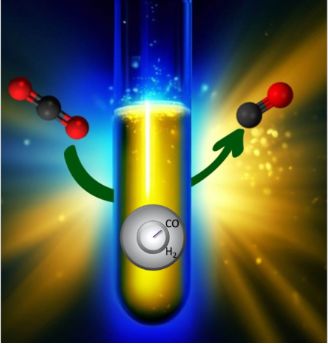
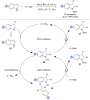
- ]. Among the most employed earth-abundant metal-based PS, Cu(I) complexes have the first place, not only in artificial photosynthesis, but also in a large variety of photo(redox)catalyses [12][13][14][15][16][17]. On the other hand, several complexes based on 3d transition metals, like manganese [18], iron


Tying a knot between crown ethers and porphyrins
Beilstein J. Org. Chem. 2023, 19, 1630–1650, doi:10.3762/bjoc.19.120
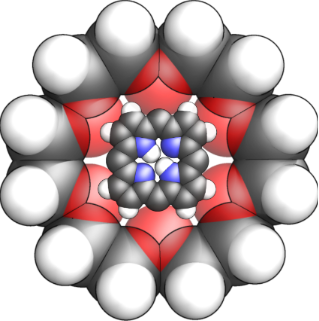
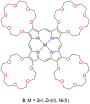
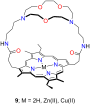
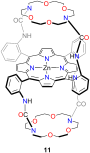
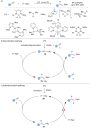
- of coordination compounds of copper(II), iron(II/III), manganese(II), nickel(II), and cobalt(II) with 9-Zn and 9-Cu was demonstrated. The emission quenching was rationalised considering the binding of the transition metal within the crown ether cavity. No quenching was observed upon the addition of
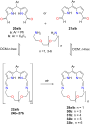
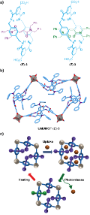
- iron(II) and manganese(II) complexes with similar compositions. Interestingly, by-products incorporating the [2 + 2] macrocycles were isolated from the reaction mixtures targeting 16-Fe, 18a-Fe and 16-Mn, 18a-Mn (Figure 13) [67]. The helical geometry of [16-M]2 was attributed to the inherent
- flexibility of macrocyclic ligands, as demonstrated by X-ray molecular structures. The helicates consisted of two metal centres, namely cobalt, manganese, or iron, each coordinated by two nitrogens and oxygen donors of the ligand. The metal centres adopted distorted octahedral geometries with slight







Synthesis of 7-azabicyclo[4.3.1]decane ring systems from tricarbonyl(tropone)iron via intramolecular Heck reactions
Beilstein J. Org. Chem. 2023, 19, 1615–1619, doi:10.3762/bjoc.19.118
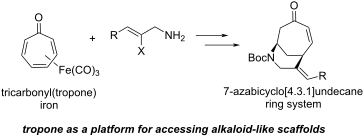
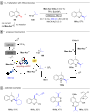
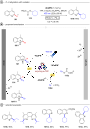
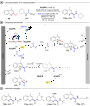
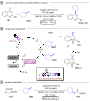
- accessed from tropone (via its η4-diene complex with Fe(CO)3) in a short sequence of steps: 1) nucleophilic amine addition and subsequent Boc-protection, 2) photochemical demetallation of the iron complex, and 3) an intramolecular Heck reaction. Minor modifications to the protocol enabled access to the
- related 2-azabicyclo[4.4.1]undecane system, albeit in lower yield. Keywords: alkaloids; azabicycles; Heck reaction; iron complex; tropone; Introduction Azapolycycles are embedded within numerous biologically active alkaloids [1] and pharmaceuticals [2]. As such, novel approaches to the synthesis of
- these scaffolds, even though they are found within a number of biologically active alkaloids. We recently demonstrated that the readily available, bench-stable tricarbonyl(tropone)iron complex [4] (1, Scheme 1) could serve as a precursor to the previously unreported 2-azatricyclo[4.3.2.04,9]undecane


N-Sulfenylsuccinimide/phthalimide: an alternative sulfenylating reagent in organic transformations
Beilstein J. Org. Chem. 2023, 19, 1471–1502, doi:10.3762/bjoc.19.106
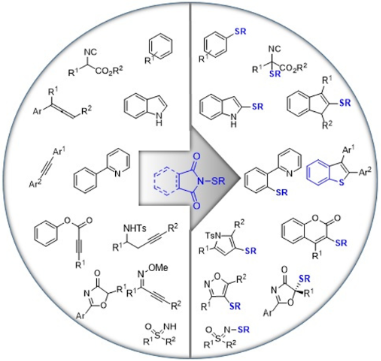
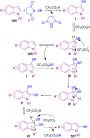
- sulfide moieties 11 was performed by Fu et al. (Scheme 6) [47]. Iron(III) chloride was used as a catalyst for this coupling reaction without the need of any ligand and additive. Screening for other metal salts, such as Cu(OAc)2, Pd(OAc)2, AgOAc or CuI was not successful, although FeS·7H2O, FeS, Fe2(SO4)3
- of unactivated arenes. Iron- or boron-catalyzed C–H arylthiation of substituted phenols. Iron-catalyzed azidoalkylthiation of alkenes. Plausible mechanism for iron-catalyzed azidoalkylthiation of alkenes. BF3·Et2O‑mediated electrophilic cyclization of aryl alkynoates. Tentative mechanism for BF3·Et2O
- . Co-catalyzed C2-sulfenylation and C2,C3-disulfenylation of indole derivatives. Plausible catalytic cycle for Co-catalyzed C2-sulfenylation and C2,C3-disulfenylation of indoles. C–H thioarylation of electron-rich arenes by iron(III) triflimide catalysis. Difunctionalization of alkynyl bromides with




Non-noble metal-catalyzed cross-dehydrogenation coupling (CDC) involving ether α-C(sp3)–H to construct C–C bonds
Beilstein J. Org. Chem. 2023, 19, 1259–1288, doi:10.3762/bjoc.19.94
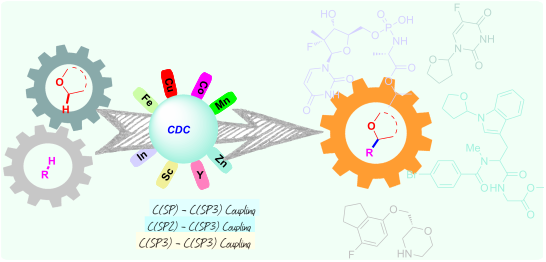
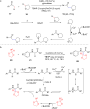
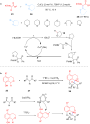
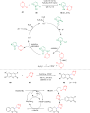
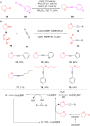
- , and the cleavage of the C(sp3)–H bond in the ether substrates which produces α-alkyl radicals is the rate-determining step. Fe-catalyzed reactions Iron is a transition metal with abundant reserves, low price, and non-toxicity, which shows many characteristics in catalytic processes, such as the
- properties of transition metals and Lewis acids [69][70][71][72]. These advantages make iron salts attractive catalysts or reagents in chemical transformations and are considered ideal materials for developing catalysts [73]. Fe-catalyzed CDC reactions have achieved remarkable achievements in recent years
- directing groups could be used as coupling partners. The ligand acts as an activator of the catalyst to promote the reaction, and the iron-bound anion plays a crucial role in catalysis. This reaction might occur via a radical pathway, with the iron catalyst playing a significant role in electron transfer










Radical ligand transfer: a general strategy for radical functionalization
Beilstein J. Org. Chem. 2023, 19, 1225–1233, doi:10.3762/bjoc.19.90
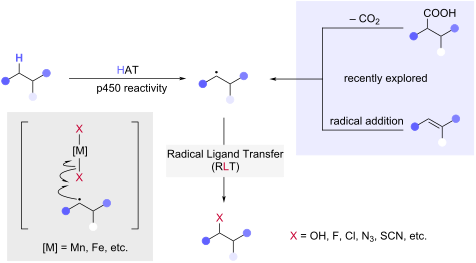
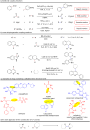
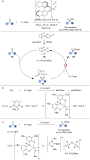
- alkyl C–H bond to a high valent iron oxo species, resulting in formation of iron hydroxo and alkyl radical intermediates [15]. Subsequent RLT of the hydroxo ligand to the alkyl radical produces a hydroxylated product, allowing for metabolism and excretion of previously diverse bioactive compounds
- behavior of P450 oxygenases encouraged early work on site-selective C–H functionalization [20]. Throughout their studies, it was found that manganese could perform the same HAT and RLT steps as iron at heme active sites. Groves developed the manganese tetramesitylporphine catalyst V (Scheme 2), which was
- the power of RLT to install a variety of medicinally relevant groups, largely mirroring the selectivity of CYP450s. Intriguingly, studies by Groves have revealed earth abundant iron and manganese to be particularly privileged for this application of RLT, a major advantage for sustainable method


Photoredox catalysis harvesting multiple photon or electrochemical energies
Beilstein J. Org. Chem. 2023, 19, 1055–1145, doi:10.3762/bjoc.19.81
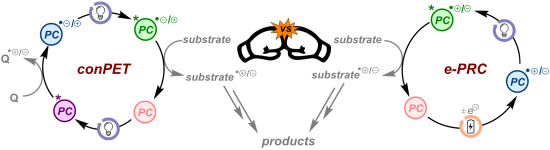
- and Epred = −2.10 V vs SCE for CF3Br) [93]. As a further application of conPET to atom transfer processes, the Wärnmark group recently disclosed an alternative protocol for the ATRA reaction of perfluoroalkyl iodides using the iron-based NHC complex [FeIII(btz)3](PF6)3 (btz = (3,3’-dimethyl-1,1’-bis(p
- -tolyl)-4,4’-bis(1,2,3-triazol-5-ylidene))) as the first example of an earth-abundant transition metal complex capable of accumulating two photon energies via consecutive 2LMCT and 3MLCT excitations in an overall conPET mechanism [94]. Since iron-based photocatalysts generally suffer notoriously short
- of iron CT states (in the nanosecond domain) enabled by the relatively longer lifetimes of e.g. Fe–NHC complexes [97][98][99][100]. In particular, the Wärnmark group reported two sets of conditions with and without Et3N as a sacrificial electron donor, to achieve reductive and oxidative quenching





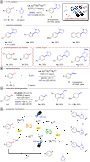


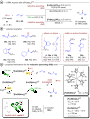
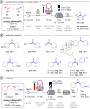
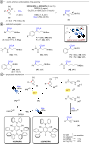


















Clauson–Kaas pyrrole synthesis using diverse catalysts: a transition from conventional to greener approach
Beilstein J. Org. Chem. 2023, 19, 928–955, doi:10.3762/bjoc.19.71
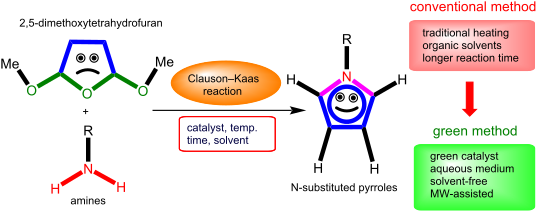
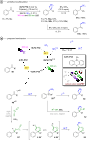
- of N-substituted pyrroles using iron(III) chloride as a Lewis acid catalyst. These nitrogen-substituted pyrroles 33 were obtained in 74–98% yields by the reaction between various alkyl-, aryl-, sulfonyl- and aroylamines 32 with 2,5-DMTHF (2) in the presence of 2 mol % FeCl3∙7H2O as catalyst under H2O
- synthesis and proposed mechanism of N-substituted pyrroles 29. Magnetic nanoparticle-supported antimony catalyst used in the synthesis of N-substituted pyrroles 31. Iron(III) chloride-catalyzed synthesis of N-substituted pyrroles 33. Copper-catalyzed Clauson–Kaas synthesis and mechanism of pyrroles 35. β-CD




Intermediates and shunt products of massiliachelin biosynthesis in Massilia sp. NR 4-1
Beilstein J. Org. Chem. 2023, 19, 909–917, doi:10.3762/bjoc.19.69
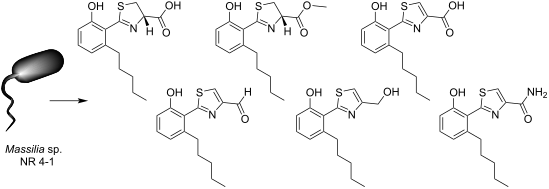
- order to scavenge iron from the environment. An example is the thiazoline-containing natural product massiliachelin, which is produced by Massilia sp. NR 4-1 under iron-deficient conditions. Based on experimental evidence and genome analysis, it was suspected that this bacterium synthesizes further iron
- biosynthetic intermediates or shunt products of massiliachelin. Their bioactivity was tested against one Gram-positive and three Gram-negative bacteria. Keywords: Massilia; massiliachelin; siderophore; structure elucidation; Introduction Iron is crucial for many important biological processes, such as
- photosynthesis, respiration or nitrogen fixation, in which iron-containing proteins are engaged in electron transfer reactions. In fact, the transition metal is perfectly suited for shifting electrons due to its ability to easily interconvert between a reduced ferrous (Fe2+) and an oxidized ferric state (Fe3


Synthesis of aliphatic nitriles from cyclobutanone oxime mediated by sulfuryl fluoride (SO2F2)
Beilstein J. Org. Chem. 2023, 19, 901–908, doi:10.3762/bjoc.19.68
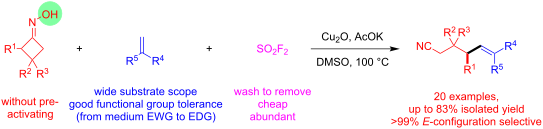
- ], Liu [35], and Yang [36] achieved similar transformations through visible-light photocatalysis. In addition, Guo [37][38] improved the protocol by using low-cost nickel and iron catalysts. However, most of these advancements mainly relied on the excellent redox potential manipulation of cyclic oxime


Light-responsive rotaxane-based materials: inducing motion in the solid state
Beilstein J. Org. Chem. 2023, 19, 873–880, doi:10.3762/bjoc.19.64
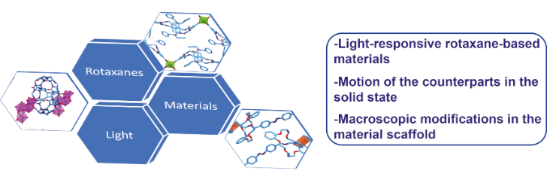
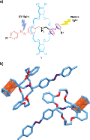
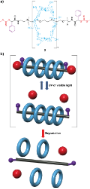
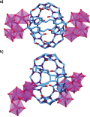
- -crystal X-ray structure of rotaxane 1a (R1 = Me, R2 = R3 = H) showing two interlocked molecules of the crystalline array [44]. Colour key of the solid structure: light blue = carbon atoms; purple = nitrogen atoms; red = oxygen atoms; and orange = iron atoms. Hydrogen atoms are omitted for clarity. (a

Pyridine C(sp2)–H bond functionalization under transition-metal and rare earth metal catalysis
Beilstein J. Org. Chem. 2023, 19, 820–863, doi:10.3762/bjoc.19.62
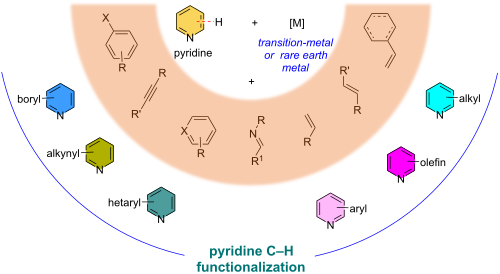
- yields generating a library of isonicotinic and nicotinic acid derivatives. Another inexpensive and non-toxic iron-catalyzed C–H arylation of pyridines has been reported by DeBeof and co-workers [98]. Using the imine in 147 as directing group, afforded the arylated pyridine products 150 in good to high
- reaction conditions. Also, the additive KF was employed in order to minimize the oxidative iron-catalyzed homocoupling of 148. An imine directing group at the para-position in pyridine 147 lead to activated ortho-position products 150 within 15 minutes. The imine group of the products can further be
















Honeycomb reactor: a promising device for streamlining aerobic oxidation under continuous-flow conditions
Beilstein J. Org. Chem. 2023, 19, 752–763, doi:10.3762/bjoc.19.55
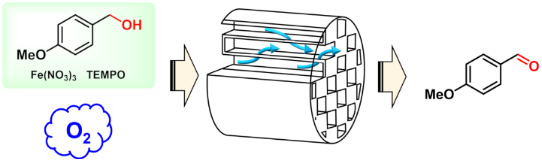
- . From the viewpoint of application to pharmaceutical manufacturing, the residual amount of copper must be controlled according to ICH Q3D [41]. Iron and zinc have low toxicity and are not listed in ICH Q3D. In comparison with the initial reaction rate of 60 min, Fe(NO3)3/TEMPO in Table 1, entry 3 shows


Palladium-catalyzed enantioselective three-component synthesis of α-arylglycine derivatives from glyoxylic acid, sulfonamides and aryltrifluoroborates
Beilstein J. Org. Chem. 2023, 19, 719–726, doi:10.3762/bjoc.19.52
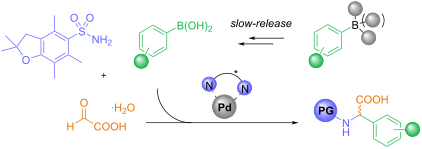
- situ generation of reactive imine species, we have disclosed iron- and bismuth-catalyzed three-component reactions for the synthesis of α-arylglycines [14][15][16], in which the arylboronic acid could be replaced with an electron-rich (hetero)arene as nucleophile. In parallel, we have developed




Strategies in the synthesis of dibenzo[b,f]heteropines
Beilstein J. Org. Chem. 2023, 19, 700–718, doi:10.3762/bjoc.19.51

- . Knell et al. [40][41] reported a comparison of several catalysts, which included potassium-promoted iron, cobalt and manganese oxide catalysts, for the synthesis of 1a. Industrially, 1a is produced by the vapour phase dehydration of 2a over an iron/potassium/chromium catalyst system (Scheme 4) [42]. 2
- synthesising the tethers and RCM products are reported, the method does not currently allow for the synthesis of unsymmetrical compounds. 3.6 Alkyne–aldehyde metathesis Bera et al. [69] reported on the synthesis of a series of 10-acyldibenzo[b,f]oxepines 125 by alkyne–aldehyde metathesis catalysed by iron(III


Transition-metal-catalyzed domino reactions of strained bicyclic alkenes
Beilstein J. Org. Chem. 2023, 19, 487–540, doi:10.3762/bjoc.19.38
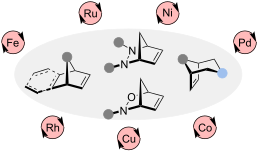
- active Cu(I) catalyst. The reaction was broadly successful with the steric and electronic nature of the aryl iodide having little effect on the reaction. Iron-catalyzed reactions Being the most earth-abundant d-block element, as well as orders of magnitude less expensive than other transition-metal
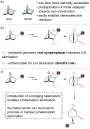
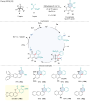
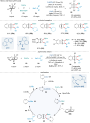
- catalysts, iron is bringing a renaissance to the idea of sustainable, green catalysis. In 2011, Ito et al. reported a diastereoselective Fe-catalyzed carbozincation of heterobicyclic alkenes 1 with diphenylzinc (74a) (Scheme 13) [47]. Using an ortho-phenylene diphosphine ligand L3, the authors were able to











Group 13 exchange and transborylation in catalysis
Beilstein J. Org. Chem. 2023, 19, 325–348, doi:10.3762/bjoc.19.28
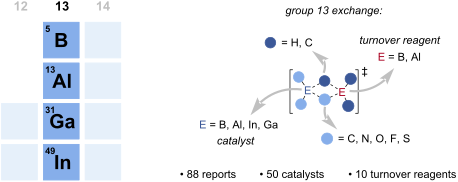
- , acetals, aminals, and alkyl ethers (Scheme 26) [119][120][121]. The proposed mechanism was analogous to the GaI catalysis by Schneider, with an In‒O/B‒C exchange proposed to drive catalytic turnover. Nakazawa reported an iron–indium cooperative catalytic system for the hydroboration of nitriles with HBpin
- and HBcat (Scheme 27) [122]. The precatalyst ([Fe(CH3CN)6][cis-Fe(CO)4(InCl3)2]) was activated in situ with HBpin to give ClBpin and HInCl2 107 by In‒Cl/B‒H exchange. The indium hydride 107 underwent hydroelementation of an iron-coordinated nitrile 108, to give an indylimine iron complex 109, which
- after In‒N/B‒H exchange with HBpin gave a borylimine iron complex 110. A second hydroelementation and In‒N/B‒H exchange gave the bisborylamine 113 and regenerated the HInCl2 107 co-catalyst (Scheme 27). Conclusion Increasing concerns over the sustainability and toxicity of many transition-metal










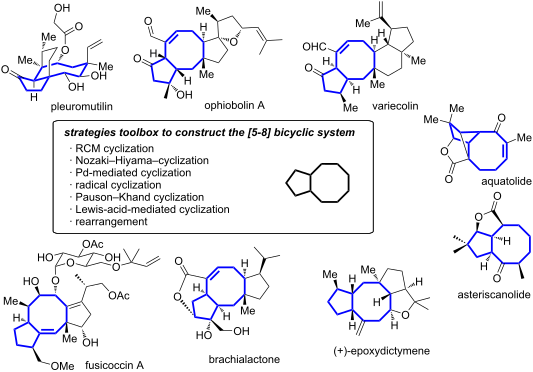
Strategies to access the [5-8] bicyclic core encountered in the sesquiterpene, diterpene and sesterterpene series
Beilstein J. Org. Chem. 2023, 19, 245–281, doi:10.3762/bjoc.19.23
- exo Diels–Alder cycloaddition, which resulted in compound 159. The enol ether was oxidized by ceric ammonium nitrate (CAN) to deliver intermediate 160, which was further subjected to an iron-catalyzed hydrogen atom transfer generating tricyclic intermediate 161. Further functionalization permitted the


Friedel–Crafts acylation of benzene derivatives in tunable aryl alkyl ionic liquids (TAAILs)
Beilstein J. Org. Chem. 2023, 19, 212–216, doi:10.3762/bjoc.19.20
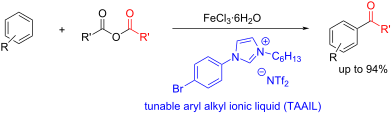
- Swantje Lerch Stefan Fritsch Thomas Strassner Professur für Physikalische Organische Chemie, Technische Universität Dresden, 01062 Dresden, Germany 10.3762/bjoc.19.20 Abstract An iron(III) chloride hexahydrate-catalyzed Friedel–Crafts acylation of benzene derivatives in tunable aryl alkyl ionic
- acylation; homogeneous catalysis; ionic liquids; iron catalysis; TAAILs; Introduction The Friedel–Crafts acylation is one of the oldest metal-catalyzed reactions in organic chemistry [1] and allows for the synthesis of a broad range of diverse compounds [2][3][4][5]. Starting from electron-rich aromatic
- nor the hexahydrate were able to catalyze the reaction in TAAILs. The hydrates of several rare-earth metal chlorides (CeCl3, NdCl3 and SmCl3) were used as well, but only small amounts of product (less than 5%) were observed, whereas the hydrates of cobalt and iron chloride were able to catalyze the


Germacrene B – a central intermediate in sesquiterpene biosynthesis
Beilstein J. Org. Chem. 2023, 19, 186–203, doi:10.3762/bjoc.19.18

- (+)-α-vetivone (43) (Scheme 12C) [96][97] and isovalencenic acid (45) (Scheme 12D) [98] were correlated to this hydrocarbon. Recently, an iron catalyst has been developed that was applied in the isomerisation of valencene (48) to 39 (Scheme 12E) [99]. The biogenesis of 40 would be possible from I2a






Total synthesis of insect sex pheromones: recent improvements based on iron-mediated cross-coupling chemistry
Beilstein J. Org. Chem. 2023, 19, 158–166, doi:10.3762/bjoc.19.15
- insect sex pheromones as an alternative to conventional pesticides is in constant growth. In this report, we discuss the recent contributions brought by our groups in the field of iron-catalyzed cross-couplings applied to the synthesis of insect pheromones. The pivotal question of the development of
- sustainable synthetic procedures involving cheap, non-toxic and efficient additives is also discussed, as well as the mechanistic features guiding the reactivity of such catalytic systems. Keywords: catalysis; cross-coupling; insect pheromones; iron; Introduction Public health issues related to
- carbon–carbon iron-catalyzed cross coupling as a key step were developed, capitalizing on the low toxicity and the cheap cost of this abundant metal [10]. For instance, in 1971, Kochi developed an iron-catalyzed alkyl–alkenyl cross-coupling reaction between aliphatic Grignard reagents and vinyl bromides


Improving the accuracy of 31P NMR chemical shift calculations by use of scaling methods
Beilstein J. Org. Chem. 2023, 19, 36–56, doi:10.3762/bjoc.19.4
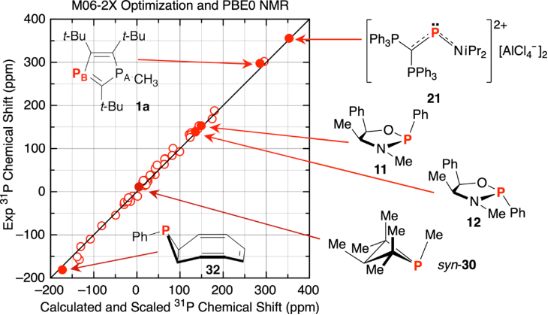
- this point, as well as for the commonly recommended methods for 1H and 13C calculations [15]. However, the first method to be tried for this group of three compounds utilized the alternative CSGT NMR method recommended by Iron [7] with the TPSSTPSS [92][99][100] functional for the NMR calculation
- with the TPSSTPSS functional followed by the TPSSTPSS/CSGT NMR (Table 4, entry 7) failed, especially for compound 32. Iron further found that long-range corrected (LC) functionals all out-performed the non-corrected functionals, so this was tested as seen by entries 8 and 9 (Table 4) for both the GIAO




Microelectrode arrays, electrosynthesis, and the optimization of signaling on an inert, stable surface
Beilstein J. Org. Chem. 2022, 18, 1488–1498, doi:10.3762/bjoc.18.156
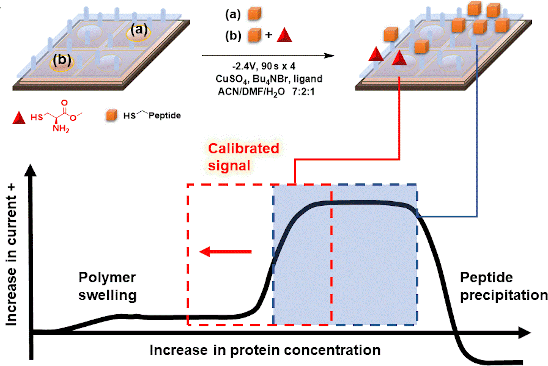
- used for the subsequent signaling experiment [20]. The hydroquinone/quinone redox couple has superior stability to the iron-based systems used previously [20], and its use leads to more reproducible binding curves. To generate the binding curve shown in Figure 4, the concentration of the integrin
- for the placement reaction. The "binding curves" generated at the electrodes with these two placement times were compared with the background signal derived from the unfunctionalized polymer. The more stable (relative to iron-based mediator pairs) hydroquinone/quinone redox pair was used, again in


1,4,6,10-Tetraazaadamantanes (TAADs) with N-amino groups: synthesis and formation of boron chelates and host–guest complexes
Beilstein J. Org. Chem. 2022, 18, 1424–1434, doi:10.3762/bjoc.18.148
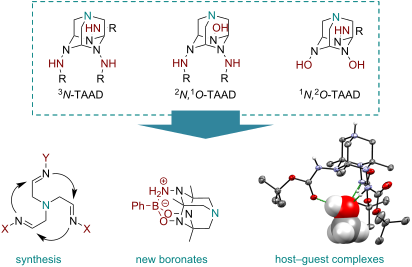
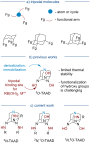
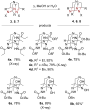
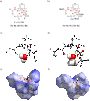
- dynamic covalent libraries [25]. TAAD can be covalently bound to a polymer matrix through the nucleophilic nitrogen N(1) that was used to prepare scavengers of boronic acids [25]. Also, TAAD was demonstrated to serve as a scorpionate-type ligand for manganese and iron leading to complexes with the metal






Synthesis and electrochemical properties of 3,4,5-tris(chlorophenyl)-1,2-diphosphaferrocenes
Beilstein J. Org. Chem. 2022, 18, 1338–1345, doi:10.3762/bjoc.18.139
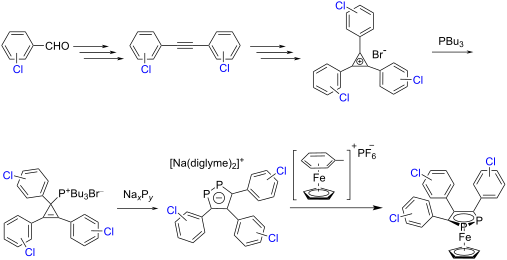
- replaced with phosphacyclopentadienyl ligands. Related diphosphacyclobutadiene complexes Fe(η4-P2C2R2)2 were oxidized much more cathodically (negative by 1.7–2.0 V) [46][47], which indicated a significant contribution of the phosphacyclopentadienyl ligands to the iron atomic orbitals. Of course the