Search results
Search for "peptide" in Full Text gives 490 result(s) in Beilstein Journal of Organic Chemistry. Showing first 200.
Methyltransferases from RiPP pathways: shaping the landscape of natural product chemistry
Beilstein J. Org. Chem. 2024, 20, 1652–1670, doi:10.3762/bjoc.20.147
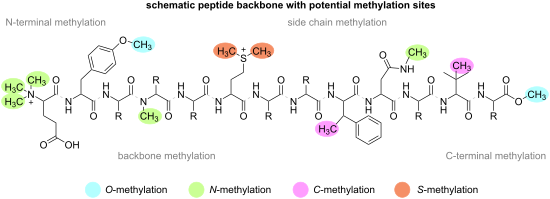
- within the context of ribosomally synthesised and post-translationally modified peptide (RiPP) natural products. Methyltransferases play a pivotal role in the biosynthesis of diverse natural products with unique chemical structures and bioactivities. They are highly chemo-, regio-, and stereoselective
- bioactivities [1]. RiPP natural products are typically encoded in a biosynthetic gene cluster (BGC) and produced following defined biosynthetic rules. Initially, a precursor peptide encompassing a core peptide, a leader part and/or a follower part, is synthesised at the ribosome. Next, distinct maturases
- encoded in the same BGC as the precursor peptide install post-translational modifications in the core peptide. Finally, a protease releases the modified core peptide, creating the mature natural product [2]. The transfer of a methyl group is a common post-translational modification in RiPP biosynthesis




Polymer degrading marine Microbulbifer bacteria: an un(der)utilized source of chemical and biocatalytic novelty
Beilstein J. Org. Chem. 2024, 20, 1635–1651, doi:10.3762/bjoc.20.146
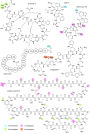
- invertebrates and plants, perhaps hinting at these molecules being widely used alphabets in inter-organismal chemical cross talk. Non-ribosomally synthesized peptidic natural products Assembly line non-ribosomal peptide synthetases (NRPSs) are routinely detected to be encoded in Microbulbifer genomes [141]. An
- NRPS-derived macrolactam ureidopeptide, bulbiferamide (27, Figure 10), was isolated and characterized from a coral-derived Microbulbifer sp. C10-1 by Igarashi and co-workers [7]. The ureido linkage did not allow for the peptide main chain in 27 to possess a terminal primary amine and none of the side




Mining raw plant transcriptomic data for new cyclopeptide alkaloids
Beilstein J. Org. Chem. 2024, 20, 1548–1559, doi:10.3762/bjoc.20.138

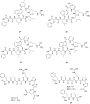
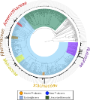
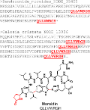
- and post-translationally modified peptide (RiPP) natural products offer a valuable opportunity for bioinformatics-guided discovery in plants due to their short biosynthetic pathways and gene encoded substrates. Using a high-throughput approach to assemble and analyze 700 publicly available raw
- ; transcriptome mining; Introduction Plants are prolific producers of cyclic peptide natural products, making 1000s of different molecules [1]. While the orbitide [2] and cyclotide [3] classes of peptides are well known, it has been recently discovered that a new class of molecules called burpitides are also
- prevalent in plants [4]. Like all known plant peptides, burpitides fall under the ribosomally synthesized and post-translationally modified peptides (RiPPs) superclass of natural products (Figure 1). The typical pathway for a RiPP starts with a precursor peptide made by the ribosome that undergoes post





Bioinformatic prediction of the stereoselectivity of modular polyketide synthase: an update of the sequence motifs in ketoreductase domain
Beilstein J. Org. Chem. 2024, 20, 1476–1485, doi:10.3762/bjoc.20.131
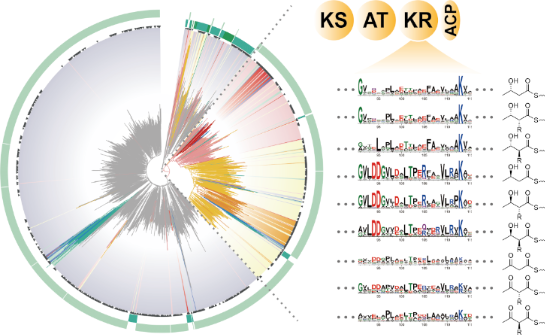
- targeted for further analysis. Sequences with multiple modules on a peptide chain were cut into single-module sequences based on the boundaries annotated of modules. These sequences were then filtered according to the following rules: (a) The PKS sequences that produce the same final product but originate


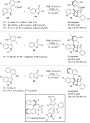
A Diels–Alder probe for discovery of natural products containing furan moieties
Beilstein J. Org. Chem. 2024, 20, 1001–1010, doi:10.3762/bjoc.20.88
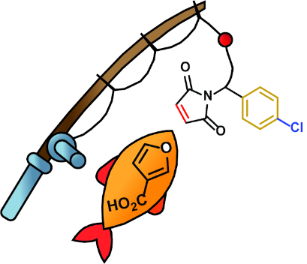
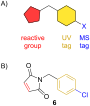
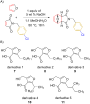
- ][16]. One probe has been developed capable of undergoing a Diels–Alder reaction with a peptide containing a terminal furan [17]. However, to date, no one has developed probes that have been demonstrated to work well with natural products containing furans. Therefore, we have developed a probe that can




Direct synthesis of acyl fluorides from carboxylic acids using benzothiazolium reagents
Beilstein J. Org. Chem. 2024, 20, 921–930, doi:10.3762/bjoc.20.82
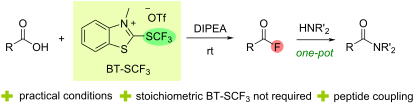
- observed (yield = 72%) with analysis by chiral HPLC revealing no erosion of the enantiomeric ratio (er = 99:1). At this stage, the suitability of BT-SCF3-mediated deoxyfluorination for the one-pot formation of peptide linkages between amino acids was investigated (Scheme 3). Treatment of N-Boc-valine under
- under mild and operationally simple conditions while peptide coupling between two amino acids could be efficiently conducted using the longer-chain perfluoroalkyl reagent BT-SC5F11. Mechanistic studies revealed that each equivalent of the benzothiazolium reagent can feasibly generate two equivalents of



Activity assays of NnlA homologs suggest the natural product N-nitroglycine is degraded by diverse bacteria
Beilstein J. Org. Chem. 2024, 20, 830–840, doi:10.3762/bjoc.20.75
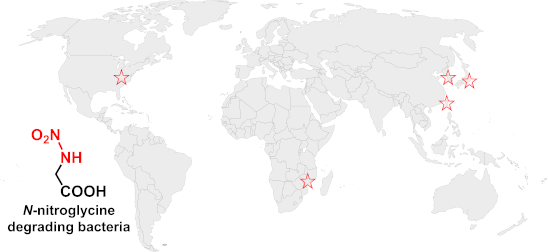
- . NNG is a non-proteinogenic amino acid, similar to other such N–N containing compounds such as piperazic acid and hydrazinoacetic acid [43]. These precursors are incorporated into larger NPs by non-ribosomal peptide synthases or polyketide synthases, and NNG may have a similar fate [44][45]. Another


Synthesis and characterization of water-soluble C60–peptide conjugates
Beilstein J. Org. Chem. 2024, 20, 777–786, doi:10.3762/bjoc.20.71
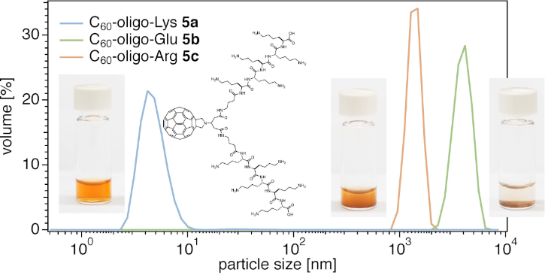
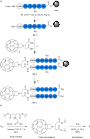
- Yue Ma Lorenzo Persi Yoko Yamakoshi Department of Chemistry and Applied Biosciences, ETH Zürich, Vladimir-Prelog-Weg 3, 8093 Zürich, Switzerland 10.3762/bjoc.20.71 Abstract With the aim of developing biocompatible and water-soluble C60 derivatives, three types of C60–peptide conjugates consisting
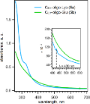
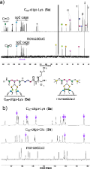
- successfully provide C60–peptide conjugates with one C60 and two peptide anchors as water-soluble moieties. Among three C60–peptide conjugates prepared, C60–oligo-Lys was soluble in water at neutral pH, and C60–oligo-Glu was soluble in buffer with a higher pH value, but C60–oligo-Arg was insoluble in water and
- example, as a photosensitizer in photodynamic therapy. Keywords: biomaterial; fullerene; peptide; water-soluble; Introduction Since the seminal discovery in 1985 by Kroto, Smalley, Curl, and co-workers [1], fullerenes, specifically buckminsterfullerene C60, have intrigued the scientific community. The




Substrate specificity of a ketosynthase domain involved in bacillaene biosynthesis
Beilstein J. Org. Chem. 2024, 20, 734–740, doi:10.3762/bjoc.20.67
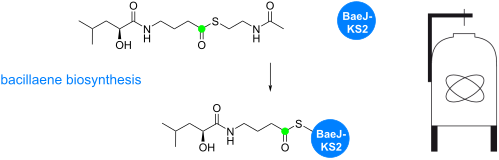
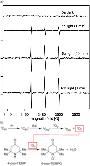
- compound is made through a trans-AT polyketide synthase–non-ribosomal peptide synthase (PKS-NRPS) hybrid [9][10]. Instead of using the classical domain organisation KS-AT-ACP with AT domains integrated into the PKS, trans-AT PKSs utilize discrete ATs that are not an integral part of the PKS, but rather


Chemoenzymatic synthesis of macrocyclic peptides and polyketides via thioesterase-catalyzed macrocyclization
Beilstein J. Org. Chem. 2024, 20, 721–733, doi:10.3762/bjoc.20.66
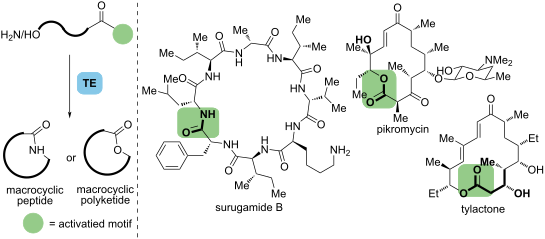
- and multifunctional enzymatic assembly, nonribosomal peptide synthases (NRPS), polyketide synthases (PKS), and hybrid NRPS/PKS systems, which are organized into sets of functional domains known as modules and function through a similar mechanism [9][10][11][12]. Each NRPS module is composed of three
- attention is given to the strategies of mimics formation to demonstrate how biocatalysis provides an elegant link between chemistry and biology. Review Macrocyclic peptides Since first being reported in the 1960s [26], solid-phase peptide synthesis (SPPS) has been an invaluable tool for preparing numerous
- -workers developed an elegant chemoenzymatic route in 2000 [36]. The synthesis commenced to construct linear decapeptide 2 by global SPPS method on 2-chlorotrityl resin. After coupling 2 with N-acetylcysteamine (NAC, 3), the mimic of peptide-S-PCP, peptide-SNAC 4 was prepared. When incubated with purified


New variochelins from soil-isolated Variovorax sp. H002
Beilstein J. Org. Chem. 2024, 20, 692–700, doi:10.3762/bjoc.20.63
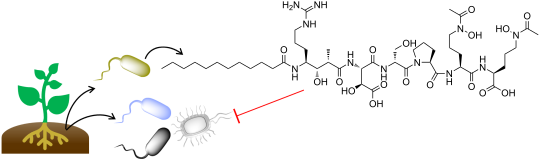
- draft genome sequence of the H002 strain identified the variochelin biosynthetic gene cluster (var), which encodes PKS (polyketide synthase) and NRPS (non-ribosomal peptide synthetase) genes. Finally, the siderophores isolated in this study exhibited antibacterial activity against several bacteria
- siderophores 1–5 share the same amino acid residues containing a combination of two hydroxamates and α-hydroxycarboxylate functional groups, which are capable of forming a photoreactive Fe(III) complex [5]. The common peptide headgroup with the additional repertoire of hydrophobic tails at the N-termini (3–5
- by diamonds. EIMS of DMOX derivatized free fatty acids derived from variochelins C–E (3–5). (a) 3, (b) 4, and (c) 5. (a) Plausible biosynthetic pathway of variochelin A–E (1–5). The circles represent domains: A: adenylation domain, C: condensation domain, PCP: peptide carrier protein, E


Palladium-catalyzed three-component radical-polar crossover carboamination of 1,3-dienes or allenes with diazo esters and amines
Beilstein J. Org. Chem. 2024, 20, 661–671, doi:10.3762/bjoc.20.59
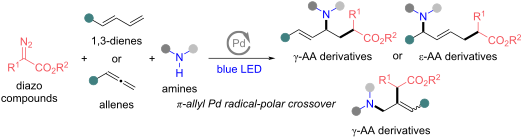
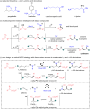
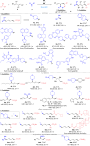
- owing to their wide applications in medicinal chemistry [1][2][3][4][5]. γ- and ε-AA derivatives are widely distributed in peptide natural products, bioactive molecules, and drugs, such as pregabalin, baclofen, ε-aminocaproic acid and lysine (Scheme 1a) [6][7][8][9][10][11][12]. The number of reported



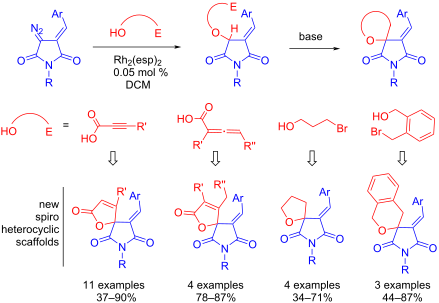
Entry to new spiroheterocycles via tandem Rh(II)-catalyzed O–H insertion/base-promoted cyclization involving diazoarylidene succinimides
Beilstein J. Org. Chem. 2024, 20, 561–569, doi:10.3762/bjoc.20.48
- treatment of acute severe pain) [29] and an investigational drug NOP-1A (a ligand for the nociceptin/orphanin FQ peptide (NOP) receptor which is thought to be involved in several central nervous system disorders such as anxiety, depression, drug abuse, and seizures) [30]. A wide range of biological


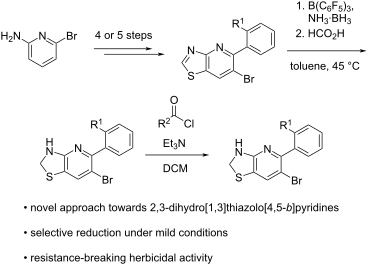
Synthesis and biological profile of 2,3-dihydro[1,3]thiazolo[4,5-b]pyridines, a novel class of acyl-ACP thioesterase inhibitors
Beilstein J. Org. Chem. 2024, 20, 540–551, doi:10.3762/bjoc.20.46
- (SORHA), Triticum aestivum (TRZAS), and Zea mays (ZEAMX). LpFAT A expression and purification: The fat a03 gene from Lemna paucicostata, in which the N-terminal amino acids representing the chloroplast transit peptide were replaced by an N-terminal 6xHis-tag, was cloned into a pET24 vector [3]. The LpFAT


Development of a chemical scaffold for inhibiting nonribosomal peptide synthetases in live bacterial cells
Beilstein J. Org. Chem. 2024, 20, 445–451, doi:10.3762/bjoc.20.39
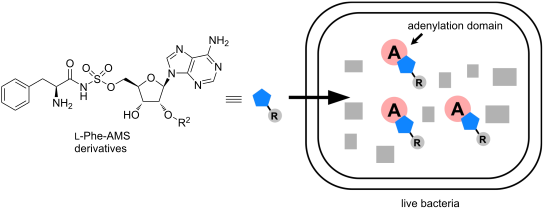
- University, Sakyo, Kyoto 606-8501, Japan 10.3762/bjoc.20.39 Abstract The adenylation (A) domain is essential for non-ribosomal peptide synthetases (NRPSs), which synthesize various peptide-based natural products, including virulence factors, such as siderophores and genotoxins. Hence, the inhibition of A
- synthetase A (GrsA) in the gramicidin S-producer Aneurinibacillus migulanus ATCC 9999, providing an alternative scaffold to develop novel A-domain inhibitors. Keywords: adenylation domain inhibitor; gramicidin S synthetase; natural product; nonribosomal peptide; nonribosomal peptide synthetase
- biosynthesis by using small molecules can help to elucidate their natural functions and their potential as therapeutic targets. NRPs are synthesized by large, versatile, and multifunctional proteins called nonribosomal peptide synthetases (NRPSs), which are composed of multiple modules and subdivided domains


Discovery of unguisin J, a new cyclic peptide from Aspergillus heteromorphus CBS 117.55, and phylogeny-based bioinformatic analysis of UngA NRPS domains
Beilstein J. Org. Chem. 2024, 20, 321–330, doi:10.3762/bjoc.20.32
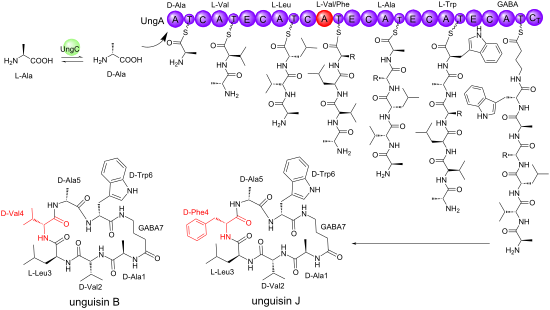
- 2 was determined by Marfey’s method. A biosynthetic gene cluster (BGC) encoding unguisins B and J was compared to characterized BGCs in other Aspergillus sp. Since the unguisin family of heptapetides incorporate different amino acid residues at different positions of the peptide, the A and C domains
- of the UngA NRPS were analyzed in an attempt to understand the lack of substrate specificity observed. Keywords: adenylation domain; condensation domain; fungal non-ribosomal peptide synthetase; heptapeptide; unguisin biosynthesis; Introduction Unguisins are a small family of fungal cyclic
- small peptides [3][4][9], however, unguisin A has been shown to bind a series of anions [10]. Recently the biosynthesis of unguisins A and B from Aspergillus violaceofuscus CBS 115571 was reported [5]. A seven module non-ribosomal peptide synthetase (NRPS; UngA) was heterologously expressed in


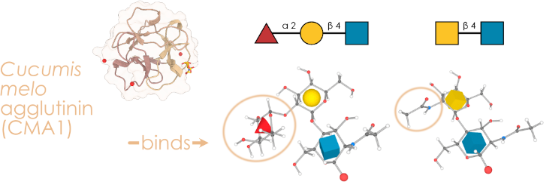
Elucidating the glycan-binding specificity and structure of Cucumis melo agglutinin, a new R-type lectin
Beilstein J. Org. Chem. 2024, 20, 306–320, doi:10.3762/bjoc.20.31
- hexa-His tag, cleavable by TEV (Tobacco etch virus) protease. Despite the presence of the DsbC signal peptide, we did not observe periplasmic localization, and all proteins were instead purified from the cytoplasm. Ni-NTA affinity chromatography followed by TEV protease cleavage of the fusion construct


Optimizations of lipid II synthesis: an essential glycolipid precursor in bacterial cell wall synthesis and a validated antibiotic target
Beilstein J. Org. Chem. 2024, 20, 220–227, doi:10.3762/bjoc.20.22
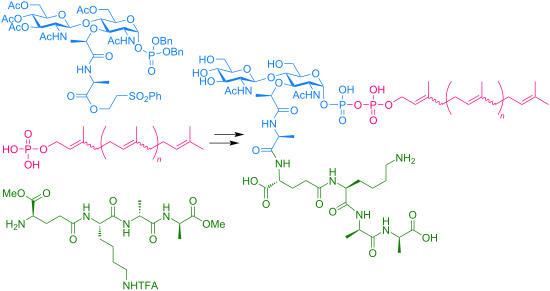
- applications due to their improved solubility in aqueous systems. Assembly is achieved by integrating distinct carbohydrate, peptide, and polyprenyl phosphate building blocks. This modular synthetic method allows for the strategic substitution of constituent building blocks at different synthetic stages and


Perspectives on push–pull chromophores derived from click-type [2 + 2] cycloaddition–retroelectrocyclization reactions of electron-rich alkynes and electron-deficient alkenes
Beilstein J. Org. Chem. 2024, 20, 125–154, doi:10.3762/bjoc.20.13
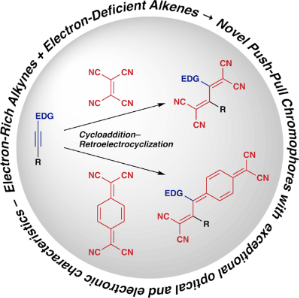
- chromophores, is the preferred method for stoppering. Accordingly, Li et al. synthesized a rotaxane 44 terminated using push–pull chromophores by incorporating concise peptide and DCNQ moieties and employing the threading–stoppering method (Scheme 16). In 44, the rod moiety and macrocycle feature short peptide
- substructures. Consequently, the macrocycle was tethered to the peptide segment through amide–amide hydrogen bonding, and 44 was obtained with 30% yield. The generation of 44 was accompanied by the formation of the corresponding free thread with 62% yield, resulting from the reaction between the thread
- yield for the ring-formation process was modest at 5% (see Scheme 16) [121][122]. The macrocycle in 46 was observed to engage with the peptide segment in low-polarity solvents. In contrast, 1H NMR analysis suggested that the macrocycle disengaged from the peptide segment and relocated along the alkyl


Effects of the aldehyde-derived ring substituent on the properties of two new bioinspired trimethoxybenzoylhydrazones: methyl vs nitro groups
Beilstein J. Org. Chem. 2023, 19, 1713–1727, doi:10.3762/bjoc.19.125
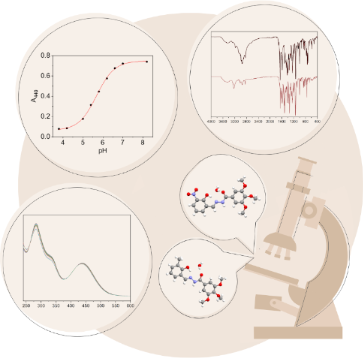
- affect its pharmacological properties and metallophoric potential against copper(II) when compared to the unsubstituted counterpart. Nevertheless, the bioinspired compound was still able to reduce oxidative stress and affect the aggregation of the amyloid-β peptide, related to pathophysiological events




Secondary metabolites of Diaporthe cameroonensis, isolated from the Cameroonian medicinal plant Trema guineensis
Beilstein J. Org. Chem. 2023, 19, 1555–1561, doi:10.3762/bjoc.19.112
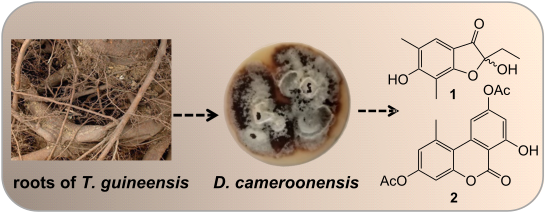
- great structural variability such as polyketides, terpenoids, polyketide synthase–nonribosomal peptide synthetase (PKS–NRPS) alkaloids, and cytochalasins, which have been considered as taxonomic markers of the genus [7][8][9][10]. However, it is worthwhile to mention that the name Phomopsis should no


Correction: Non-peptide compounds from Kronopolites svenhedini (Verhoeff) and their antitumor and iNOS inhibitory activities
Beilstein J. Org. Chem. 2023, 19, 1370–1371, doi:10.3762/bjoc.19.97
- , Shenzhen University, Shenzhen 518060, PR China Department of Pathogen Biology, Health Science Center, Shenzhen University, Shenzhen 518060, PR China 10.3762/bjoc.19.97 Keywords: arthropod; iNOS; Kronopolites svenhedini (Verhoeff); non-peptide small molecules; The structure of compound 1 of the original


Non-noble metal-catalyzed cross-dehydrogenation coupling (CDC) involving ether α-C(sp3)–H to construct C–C bonds
Beilstein J. Org. Chem. 2023, 19, 1259–1288, doi:10.3762/bjoc.19.94
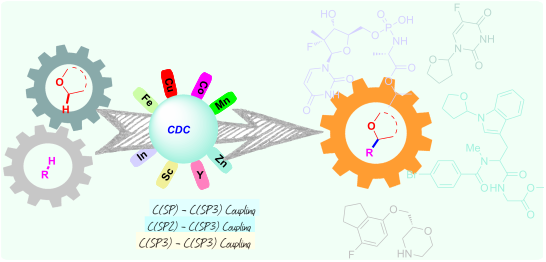
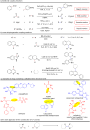
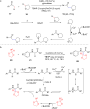
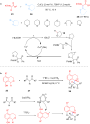
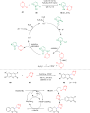
- unique catalytic behavior [89]. However, there are only a few examples of cobalt catalysis in CDC reactions. Limited by the activity of Co catalysts, there are few examples of Co-catalyzed reactions involving ether C(sp3)–H bond activation. The Co-catalyzed C(sp3)–C(sp3) CDC of glycine and peptide










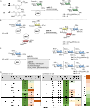
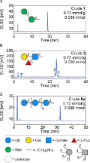
Linker, loading, and reaction scale influence automated glycan assembly
Beilstein J. Org. Chem. 2023, 19, 1015–1020, doi:10.3762/bjoc.19.77
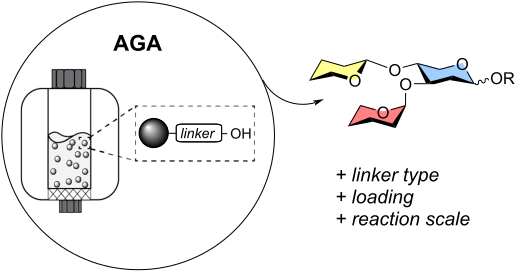
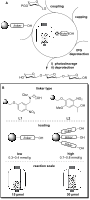
- scale [19], and linkers [20][21] affect the overall yield of solid phase peptide synthesis (SPPS). In the past decades, several supports and linkers have been developed and commercialized for SPPS, enabling a wide range of applications. Solid supports are available with different linker loadings, with
- low loading (0.1–0.2 mmol/g) being beneficial to avoid aggregation of long peptide sequences, and high loadings (0.4–0.5 mmol/g) advantageous for more efficient syntheses [21]. Herein, we systematically investigate how variations in linker type, resin loading, and reaction scale influence the
- some peptide sequences [18]. Moreover, high-loading supports might result in inefficient UV cleavage due to quenching. These four supports were studied in AGA experiments performed at 15 and 30 µmol reaction scales. While AGA is commonly performed at a 15 µmol reaction scale, a larger reaction scale is

Aromatic C–H bond functionalization through organocatalyzed asymmetric intermolecular aza-Friedel–Crafts reaction: a recent update
Beilstein J. Org. Chem. 2023, 19, 956–981, doi:10.3762/bjoc.19.72

- antibacterial acitivity against resistant S. aureus strains. It is also an inhibitor of the enzyme peptide deformylases (PDFs). The synthesis comprised the reaction between the highly substituted hydroquinone 142 and dehydroalanine 143 in the presence of chiral phosphoric acid P7 as catalyst to prepare