


Search results
Search for "piperazine" in Full Text gives 74 result(s) in Beilstein Journal of Organic Chemistry.
The synthesis of active pharmaceutical ingredients (APIs) using continuous flow chemistry
- Marcus Baumann and
- Ian R. Baxendale
Beilstein J. Org. Chem. 2015, 11, 1194–1219, doi:10.3762/bjoc.11.134
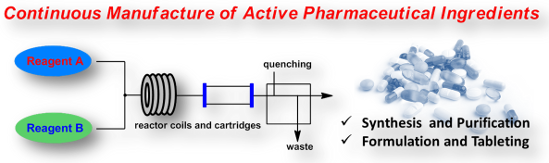

Graphical Abstract

Figure 1: Pharmaceutical structures targeted in early flow syntheses.

Scheme 1: Flow synthesis of 6-hydroxybuspirone (9). Inserted photograph reprinted with permission from [45]. Copy...

Figure 2: Configuration of a baffled reactor tube (left) and its schematic working principle (right).

Scheme 2: McQuade’s flow synthesis of ibuprofen (16).

Scheme 3: Jamison’s flow synthesis of ibuprofen sodium salt (17).

Scheme 4: Flow synthesis of imatinib (23).

Scheme 5: Flow synthesis of the potent 5HT1B antagonist 28.

Scheme 6: Flow synthesis of a selective δ-opioid receptor agonist 33.

Scheme 7: Flow synthesis of a casein kinase I inhibitor library (38).

Scheme 8: Flow synthesis of fluoxetine (46).

Scheme 9: Flow synthesis of artemisinin (55).

Scheme 10: Telescoped flow synthesis of artemisinin (55) and derivatives (62–64).

Scheme 11: Flow approach towards AZD6906 (65).

Scheme 12: Pilot scale flow synthesis of key intermediate 73.

Scheme 13: Semi-flow synthesis of vildagliptine (77).

Scheme 14: Pilot scale asymmetric flow hydrogenation towards 83. Inserted photograph reprinted with permission...

Figure 3: Schematic representation of the ‘tube-in-tube’ reactor.

Scheme 15: Flow synthesis of fanetizole (87) via tube-in-tube system.

Scheme 16: Flow synthesis of diphenhydramine.HCl (92).

Scheme 17: Flow synthesis of rufinamide (95).

Scheme 18: Large scale flow synthesis of rufinamide precursor 102.

Scheme 19: First stage in the flow synthesis of meclinertant (103).

Scheme 20: Completion of the flow synthesis of meclinertant (103).

Scheme 21: Flow synthesis of olanzapine (121) utilising inductive heating techniques.

Scheme 22: Flow synthesis of amitriptyline·HCl (127).

Scheme 23: Flow synthesis of E/Z-tamoxifen (132) using peristaltic pumping modules.

Figure 4: Container sized portable mini factory (photograph credit: INVITE GmbH, Leverkusen Germany).

Scheme 24: Flow synthesis of imidazo[1,2-a]pyridines 136 linked to frontal affinity chromatography (FAC).

Figure 5: Structures of zolpidem (142) and alpidem (143).

Scheme 25: Synthesis and screening loops in the discovery of new Abl kinase inhibitors.

Figure 6: Schotten–Baumann approach towards LY573636.Na (147).

Scheme 26: Pilot scale flow synthesis of LY2886721 (146).

Scheme 27: Continuous flow manufacture of alikiren hemifumarate 152.
Domino reactions of 2H-azirines with acylketenes from furan-2,3-diones: Competition between the formation of ortho-fused and bridged heterocyclic systems
- Alexander F. Khlebnikov,
- Mikhail S. Novikov,
- Viktoriia V. Pakalnis,
- Roman O. Iakovenko and
- Dmitry S. Yufit
Beilstein J. Org. Chem. 2014, 10, 784–793, doi:10.3762/bjoc.10.74

- give monoadduct 12a. Interaction of the latter with ketene 6a leads to unsymmetrical cis-isomer 4a' with the piperazine ring in a chair conformation. The isomer 4a' transforms through a low barrier to a much more stable isomer 4a of C2 symmetry with the piperazine ring in a boat conformation (see
- Supporting Information File 1). No intermediate structure was located on the way to the most stable conformation of trans-isomer 5a with the piperazine ring in a boat conformation. The free energies of the highest transition states on the pathways from 12a to cis-isomer 4a and trans-isomer 5a are practically

Graphical Abstract

Scheme 1: Reactions of furan-2,3-diones 1 and azirines 2.

Figure 1: Molecular structures of compounds 3а, 4b.

Scheme 2: The route of formation of compounds 3 and possible intermediates in route to compounds 4 and 5.

Figure 2: Energy profiles for the reactions of azirines 2a,c and acylketene 6a, as well as acylketene 6a with...

Scheme 3: Possible intermediates in routes to compounds 4 and 5.

Figure 3: Energy profiles for the reactions of dihydropyrazine 11a with acylketene 6a, as well as acylketene ...

Figure 4: Energy profiles for the reactions of azirines 2a,c with protonated azirines 14a,c. Relative free en...

Scheme 4: Isodesmic equation for evaluation of relative basicity of azirines 2c,a.

Scheme 5: Reaction of furandione 1a with azirine 2d.

Figure 5: Molecular structure of compound 17.

Scheme 6: Reaction of furandione 1d with azirine 2a.

Scheme 7: Reactions of compounds 3d and 18a with methanol.
Integration of enabling methods for the automated flow preparation of piperazine-2-carboxamide
- Richard J. Ingham,
- Claudio Battilocchio,
- Joel M. Hawkins and
- Steven V. Ley
Beilstein J. Org. Chem. 2014, 10, 641–652, doi:10.3762/bjoc.10.56
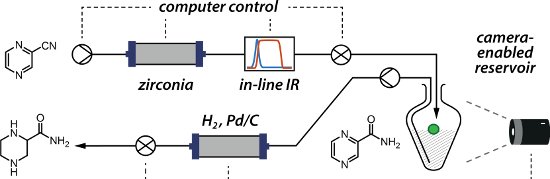
- treatment of tuberculosis – and its reduced derivative piperazine-2-carboxamide. Keywords: automation; flow chemistry; hydration; hydrogenation; sustainable processing; Introduction Enabling synthesis technologies such as flow chemistry are becoming commonplace in modern laboratories (for recent reviews
- database for medicinal chemistry. For example, piperazine-2-carboxamide (1, Figure 2a) is an amino acid derivative with interesting biological properties [17]. At the time of writing, racemic 1 was identified as a notably expensive building block [18] and thus a good target for this transformation. We have
- pyrazine 2 to piperazine 1 (Figure 2b). Both of these steps involve flowing through heterogeneous catalysts, a metal oxide for the hydration of the nitrile and a supported precious metal for the hydrogenation of the heteroaromatic ring. Furthermore, both steps involve the addition of a volatile small

Graphical Abstract

Figure 1: Raspberry Pi® (RPi) computer operating in the laboratory, shown here without its protective case. U...

Figure 2: Two step approach to piperazine-2-carboxamide via hydrolysis followed by reduction. (a) Retrosynthe...

Figure 3: Heterogeneous hydration of pyrazine-2-carbonitrile with hydrous zirconia.

Figure 4: FlowIR™ profile for the reactor output after hydration of pyrazine-2-carbonitrile using hydrous zir...

Figure 5: (a) Fluidic setup for the zirconia catalysed hydration of aromatic nitrile. (b) Raspberry Pi® micro...
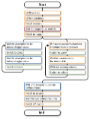
Figure 6: Flowchart describing the control sequence for operating and monitoring the hydration reaction. The ...

Figure 7: Profile for a 3 hour reaction simulating a long run. The absorbance shown is that at 1685 cm−1, whi...

Figure 8: Reactor setup for optimisation reactions. A multi-position valve (V2) was used for collecting sampl...

Figure 9: Representation of the control sequence for running experiments under a set of conditions. (See Supporting Information File 3 for...

Figure 10: Reduction products of piperazine-2-carboxamide.

Figure 11: (a) In-line reservoir schematic. The liquid level is measured by observation of a plastic float. (b...

Figure 12: Flow set up for the automated machine assisted synthesis of (R,S)-piperidine-2-carboxamide.

Figure 13: Control sequence for the two-step process.

Figure 14: Chart of monitored parameters over a 15 hour reaction. The output from the hydrolysis step is direc...
Isocyanide-based multicomponent reactions towards cyclic constrained peptidomimetics
- Gijs Koopmanschap,
- Eelco Ruijter and
- Romano V.A. Orru
Beilstein J. Org. Chem. 2014, 10, 544–598, doi:10.3762/bjoc.10.50

- in e.g. beer, cacao and coffee [138][139][140]. The DKPs occur in three different isomers, in which the position of one oxo-group is different at the piperazine-ring [26]. The 2,5-diketopiperazines are most relevant due to the structural similarity with peptides (Figure 1). The DKP core shows

Graphical Abstract

Scheme 1: The proposed mechanism of the Passerini reaction.

Scheme 2: The PADAM-strategy to α-hydroxy-β-amino amide derivatives 7. An additional oxidation provides α-ket...

Scheme 3: The general accepted Ugi-mechanism.

Scheme 4: Three commonly applied Ugi/cyclization approaches. a) UDC-process, b) UAC-sequence, c) UDAC-combina...

Scheme 5: Ugi reaction that involves the condensation of Armstrong’s convertible isocyanide.

Scheme 6: Mechanism of the U-4C-3CR towards bicyclic β-lactams.

Scheme 7: The Ugi 4C-3CR towards oxabicyclo β-lactams.

Scheme 8: Ugi MCR between an enantiopure monoterpene based β-amino acid, aldehyde and isocyanide resulting in...

Scheme 9: General MCR for β-lactams in water.

Scheme 10: a) Ugi reaction for β-lactam-linked peptidomimetics. b) Varying the β-amino acid resulted in β-lact...

Scheme 11: Ugi-4CR followed by a Pd-catalyzed Sn2 cyclization.

Scheme 12: Ugi-3CR of dipeptide mimics from 2-substituted pyrrolines.

Scheme 13: Joullié–Ugi reaction towards 2,5-disubstituted pyrrolidines.

Scheme 14: Further elaboration of the Ugi-scaffold towards bicyclic systems.

Scheme 15: Dihydroxyproline derivatives from an Ugi reaction.

Scheme 16: Diastereoselective Ugi reaction described by Banfi and co-workers.

Scheme 17: Similar Ugi reaction as in Scheme 16 but with different acids and two chiral isocyanides.

Scheme 18: Highly diastereoselective synthesis of pyrrolidine-dipeptoids via a MAO-N/MCR-procedure.

Scheme 19: MAO-N/MCR-approach towards the hepatitis C drug telaprevir.

Scheme 20: Enantioselective MAO-U-3CR procedure starting from chiral pyrroline 64.

Scheme 21: Synthesis of γ-lactams via an UDC-sequence.

Scheme 22: Utilizing bifunctional groups to provide bicyclic γ-lactam-ketopiperazines.

Scheme 23: The Ugi reaction provided both γ- as δ-lactams depending on which inputs were used.

Scheme 24: The sequential Ugi/RCM with olefinic substrates provided bicyclic lactams.

Scheme 25: a) The structural and dipole similarities of the triazole unit with the amide bond. b) The copper-c...

Scheme 26: The Ugi/Click sequence provided triazole based peptidomimetics.

Scheme 27: The Ugi/Click reaction as described by Nanajdenko.

Scheme 28: The Ugi/Click-approach by Pramitha and Bahulayan.

Scheme 29: The Ugi/Click-combination by Niu et al.

Scheme 30: Triazole linked peptidomimetics obtained from two separate MCRs and a sequential Click reaction.

Scheme 31: Copper-free synthesis of triazoles via two MCRs in one-pot.

Scheme 32: The sequential Ugi/Paal–Knorr reaction to afford pyrazoles.

Scheme 33: An intramolecular Paal–Knorr condensation provided under basic conditions pyrazolones.

Scheme 34: Similar cyclization performed under acidic conditions provided pyrazolones without the trifluoroace...

Scheme 35: The Ugi-4CR towards 2,4-disubstituted thiazoles.

Scheme 36: Solid phase approach towards thiazoles.

Scheme 37: Reaction mechanism of formation of thiazole peptidomimetics containing an additional β-lactam moiet...

Scheme 38: The synthesis of the trisubstituted thiazoles could be either performed via an Ugi reaction with pr...

Scheme 39: Performing the Ugi reaction with DMB-protected isocyanide gave access to either oxazoles or thiazol...

Scheme 40: Ugi/cyclization-approach towards 2,5-disubstituted thiazoles. The Ugi reaction was performed with d...

Scheme 41: Further derivatization of the thiazole scaffold.

Scheme 42: Three-step procedure towards the natural product bacillamide C.

Scheme 43: Ugi-4CR to oxazoles reported by Zhu and co-workers.

Scheme 44: Ugi-based synthesis of oxazole-containing peptidomimetics.

Scheme 45: TMNS3 based Ugi reaction for peptidomimics containing a tetrazole.

Scheme 46: Catalytic cycle of the enantioselective Passerini reaction towards tetrazole-based peptidomimetics.

Scheme 47: Tetrazole-based peptidomimetics via an Ugi reaction and a subsequent sigmatropic rearrangement.

Scheme 48: Resin-bound Ugi-approach towards tetrazole-based peptidomimetics.

Scheme 49: Ugi/cyclization approach towards γ/δ/ε-lactam tetrazoles.

Scheme 50: Ugi-3CR to pipecolic acid-based peptidomimetics.

Scheme 51: Staudinger–Aza-Wittig/Ugi-approach towards pipecolic acid peptidomimetics.

Figure 1: The three structural isomers of diketopiperazines. The 2,5-DKP isomer is most common.

Scheme 52: UDC-approach to obtain 2,5-DKPs, either using Armstrong’s isocyanide or via ethylglyoxalate.

Scheme 53: a) Ugi reaction in water gave either 2,5-DKP structures or spiro compounds. b) The Ugi reaction in ...

Scheme 54: Solid-phase approach towards diketopiperazines.

Scheme 55: UDAC-approach towards DKPs.

Scheme 56: The intermediate amide is activated as leaving group by acid and microwave assisted organic synthes...

Scheme 57: UDC-procedure towards active oxytocin inhibitors.

Scheme 58: An improved stereoselective MCR-approach towards the oxytocin inhibitor.

Scheme 59: The less common Ugi reaction towards DKPs, involving a Sn2-substitution.

Figure 2: Spatial similarities between a natural β-turn conformation and a DKP based β-turn mimetic [158].

Scheme 60: Ugi-based syntheses of bicyclic DKPs. The amine component is derived from a coupling between (R)-N-...

Scheme 61: Ugi-based synthesis of β-turn and γ-turn mimetics.

Figure 3: Isocyanide substituted 3,4-dihydropyridin-2-ones, dihydropyridines and the Freidinger lactams. Bio-...

Scheme 62: The mechanism of the 4-CR towards 3,4-dihydropyridine-2-ones 212.

Scheme 63: a) Multiple MCR-approach to provide DHP-peptidomimetic in two-steps. b) A one-pot 6-CR providing th...

Scheme 64: The MCR–alkylation–MCR procedure to obtain either tetrapeptoids or depsipeptides.

Scheme 65: U-3CR/cyclization employing semicarbazone as imine component gave triazine based peptidomimetics.

Scheme 66: 4CR towards triazinane-diones.

Scheme 67: The MCR–alkylation–IMCR-sequence described by our group towards triazinane dione-based peptidomimet...

Scheme 68: Ugi-4CR approaches followed by a cyclization to thiomorpholin-ones (a) and pyrrolidines (b).

Scheme 69: UDC-approach for benzodiazepinones.

Scheme 70: Ugi/Mitsunobu sequence to BDPs.

Scheme 71: A UDAC-approach to BDPs with convertible isocyanides. The corresponding amide is cleaved by microwa...

Scheme 72: microwave assisted post condensation Ugi reaction.

Scheme 73: Benzodiazepinones synthesized via the post-condensation Ugi/ Staudinger–Aza-Wittig cyclization.

Scheme 74: Two Ugi/cyclization approaches utilizing chiral carboxylic acids. Reaction (a) provided the product...

Scheme 75: The mechanism of the Gewald-3CR includes three base-catalysed steps involving first a Knoevnagel–Co...

Scheme 76: Two structural 1,4-thienodiazepine-2,5-dione isomers by U-4CR/cyclization.

Scheme 77: Tetrazole-based diazepinones by UDC-procedure.

Scheme 78: Tetrazole-based BDPs via a sequential Ugi/hydrolysis/coupling.

Scheme 79: MCR synthesis of three different tricyclic BPDs.

Scheme 80: Two similar approaches both involving an Ugi reaction and a Mitsunobu cyclization.

Scheme 81: Mitsunobu–Ugi-approach towards dihydro-1,4-benzoxazepines.

Scheme 82: Ugi reaction towards hetero-aryl fused 5-oxo-1,4-oxazepines.

Scheme 83: a) Ugi/RCM-approach towards nine-membered peptidomimetics b) Sequential peptide-coupling, deprotect...

Scheme 84: Ugi-based synthesis towards cyclic RGD-pentapeptides.

Scheme 85: Ugi/MCR-approach towards 12–15 membered macrocycles.

Scheme 86: Stereoselective Ugi/RCM approach towards 16-membered macrocycles.

Scheme 87: Passerini/RCM-sequence to 22-membered macrocycles.

Scheme 88: UDAC-approach towards 12–18-membered depsipeptides.

Figure 4: Enopeptin A with its more active derivative ADEP-4.

Scheme 89: a) The Joullié–Ugi-approach towards ADEP-4 derivatives b) Ugi-approach for the α,α-dimethylated der...

Scheme 90: Ugi–Click-strategy for 15-membered macrocyclic glyco-peptidomimetics.

Scheme 91: Ugi/Click combinations provided macrocycles containing both a triazole and an oxazole moiety.

Scheme 92: a) A solution-phase procedure towards macrocycles. b) Alternative solid-phase synthesis as was repo...

Scheme 93: Ugi/cyclization towards cyclophane based macrocycles.

Scheme 94: PADAM-strategy towards eurystatin A.

Scheme 95: PADAM-approach for cyclotheanamide.

Scheme 96: A triple MCR-approach affording RGD-pentapeptoids.

Scheme 97: Ugi-MiBs-approach towards peptoid macrocycles.

Scheme 98: Passerini-based MiB approaches towards macrocycles 345 and 346.

Scheme 99: Macrocyclic peptide formation by the use of amphoteric aziridine-based aldehydes.
Secondary amine-initiated three-component synthesis of 3,4-dihydropyrimidinones and thiones involving alkynes, aldehydes and thiourea/urea
- Jie-Ping Wan,
- Yunfang Lin,
- Kaikai Hu and
- Yunyun Liu
Beilstein J. Org. Chem. 2014, 10, 287–292, doi:10.3762/bjoc.10.25
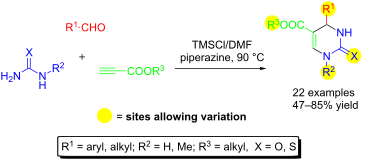
- demonstrated that 0.5 equiv of piperazine was favorable (Table 1, entries 4–6). Reducing the amount of TMSCl led to a decrease in product yield (Table 1, entry 7). Other Lewis acid or Brønsted acids such as FeCl3 and p-TSA gave no better result for the same reaction (Table 1, entries 8 and 9). In addition, the
- 2 (0.4 mmol) and alkyl propionate 3 (0.3 mmol) piperazine (0.15 mmol), and p-tolylsulfonic acid (0.15 mmol, 0.3 mmol for the reaction of urea) were charged in a 25 mL round bottom flask equipped with a stirring bar. DMF (THF for the reaction of urea) (4 mL) and TMSCl (0.6 mmol, 0.9 mmol for the
- and removing of the solvent under reduced pressure, the residue was subjected to flash column chromatography to provide pure products. Synthesis of intermediate 6a. Into a 25 mL round bottom flask was added ethyl propiolate (0.6 mmol) and piperazine (0.3 mmol). 1.5 mL DMF was added and the mixture was

Graphical Abstract

Figure 1: Some DHPMs-based lead compounds.

Scheme 1: Regioselective 1,3-thiazines and DHPMs via aldehydes, ureas/thioureas and alkynes.

Scheme 2: Synthesis of enamino ester intermediate and its transformation to DHPM.

Scheme 3: Proposed reaction mechanism.
An overview of the synthetic routes to the best selling drugs containing 6-membered heterocycles
- Marcus Baumann and
- Ian R. Baxendale
Beilstein J. Org. Chem. 2013, 9, 2265–2319, doi:10.3762/bjoc.9.265
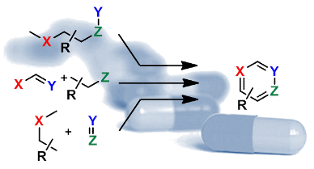

Graphical Abstract

Scheme 1: Scaled industrial processes for the synthesis of simple pyridines.

Scheme 2: Synthesis of nicotinic acid from 2-methyl-5-ethylpyridine (1.11).

Scheme 3: Synthesis of 3-picoline and nicotinic acid.

Scheme 4: Synthesis of 3-picoline from 2-methylglutarodinitrile 1.19.

Scheme 5: Picoline-based synthesis of clarinex (no yields reported).

Scheme 6: Mode of action of proton-pump inhibitors and structures of the API’s.

Scheme 7: Hantzsch-like route towards the pyridine rings in common proton pump inhibitors.

Figure 1: Structures of rosiglitazone (1.40) and pioglitazone (1.41).

Scheme 8: Synthesis of rosiglitazone.

Scheme 9: Syntheses of 2-pyridones.

Scheme 10: Synthesis and mechanism of 2-pyrone from malic acid.

Scheme 11: Polymer-assisted synthesis of rosiglitazone.

Scheme 12: Synthesis of pioglitazone.

Scheme 13: Meerwein arylation reaction towards pioglitazone.

Scheme 14: Route towards pioglitazone utilising tyrosine.

Scheme 15: Route towards pioglitazone via Darzens ester formation.

Scheme 16: Syntheses of the thiazolidinedione moiety.

Scheme 17: Synthesis of etoricoxib utilising Negishi and Stille cross-coupling reactions.

Scheme 18: Synthesis of etoricoxib via vinamidinium condensation.

Figure 2: Structures of nalidixic acid, levofloxacin and moxifloxacin.

Scheme 19: Synthesis of moxifloxacin.

Scheme 20: Synthesis of (S,S)-2,8-diazabicyclo[4.3.0]nonane 1.105.

Scheme 21: Synthesis of levofloxacin.

Scheme 22: Alternative approach to the levofloxacin core 1.125.

Figure 3: Structures of nifedipine, amlodipine and clevidipine.

Scheme 23: Mg3N2-mediated synthesis of nifedipine.

Scheme 24: Synthesis of rac-amlodipine as besylate salt.

Scheme 25: Aza Diels–Alder approach towards amlodipine.

Scheme 26: Routes towards clevidipine.

Figure 4: Examples of piperidine containing drugs.

Figure 5: Discovery of tiagabine based on early leads.

Scheme 27: Synthetic sequences to tiagabine.

Figure 6: Structures of solifenacin (2.57) and muscarine (2.58).

Scheme 28: Enantioselective synthesis of solifenacin.

Figure 7: Structures of DPP-4 inhibitors of the gliptin-type.

Scheme 29: Formation of inactive diketopiperazines from cis-rotameric precursors.

Figure 8: Co-crystal structure of carmegliptin bound in the human DPP-4 active site (PDB 3kwf).

Scheme 30: Improved route to carmegliptin.

Figure 9: Structures of lamivudine and zidovudine.

Scheme 31: Typical routes accessing uracil, thymine and cytosine.

Scheme 32: Coupling between pyrimidones and riboses via the Vorbrüggen nucleosidation.

Scheme 33: Synthesis of lamivudine.

Scheme 34: Synthesis of raltegravir.

Scheme 35: Mechanistic studies on the formation of 3.22.

Figure 10: Structures of selected pyrimidine containing drugs.

Scheme 36: General preparation of pyrimidines and dihydropyrimidones.

Scheme 37: Synthesis of imatinib.

Scheme 38: Flow synthesis of imatinib.

Scheme 39: Syntheses of erlotinib.

Scheme 40: Synthesis of erlotinib proceeding via Dimroth rearrangement.

Scheme 41: Synthesis of lapatinib.

Scheme 42: Synthesis of rosuvastatin.

Scheme 43: Alternative preparation of the key aldehyde towards rosuvastatin.

Figure 11: Structure comparison between nicotinic acetylcholine receptor agonists.

Scheme 44: Syntheses of varenicline and its key building block 4.5.

Scheme 45: Synthetic access to eszopiclone and brimonidine via quinoxaline intermediates.

Figure 12: Bortezomib bound in an active site of the yeast 20S proteasome ([114], pdb 2F16).

Scheme 46: Asymmetric synthesis of bortezomib.

Figure 13: Structures of some prominent piperazine containing drugs.

Figure 14: Structural comparison between the core of aplaviroc (4.35) and a type-1 β-turn (4.36).

Scheme 47: Examplary synthesis of an aplaviroc analogue via the Ugi-MCR.

Scheme 48: Syntheses of azelastine (5.1).

Figure 15: Structures of captopril, enalapril and cilazapril.

Scheme 49: Synthesis of cilazapril.

Figure 16: Structures of lamotrigine, ceftriaxone and azapropazone.

Scheme 50: Synthesis of lamotrigine.

Scheme 51: Alternative synthesis of lamotrigine (no yields reported).

Figure 17: Structural comparison between imiquimod and the related adenosine nucleoside.

Scheme 52: Conventional synthesis of imiquimod (no yields reported).

Scheme 53: Synthesis of imiquimod.

Scheme 54: Synthesis of imiquimod via tetrazole formation (not all yields reported).

Figure 18: Structures of various anti HIV-medications.

Scheme 55: Synthesis of abacavir.

Figure 19: Structures of diazepam compared to modern replacements.

Scheme 56: Synthesis of ocinaplon.

Scheme 57: Access to zaleplon and indiplon.

Scheme 58: Different routes towards the required N-methylpyrazole 6.65 of sildenafil.

Scheme 59: Polymer-supported reagents in the synthesis of key aminopyrazole 6.72.

Scheme 60: Early synthetic route to sildenafil.

Scheme 61: Convergent preparations of sildenafil.

Figure 20: Comparison of the structures of sildenafil, tadalafil and vardenafil.

Scheme 62: Short route to imidazotriazinones.

Scheme 63: Alternative route towards vardenafils core imidazotriazinone (6.95).

Scheme 64: Bayer’s approach to the vardenafil core.

Scheme 65: Large scale synthesis of vardenafil.

Scheme 66: Mode of action of temozolomide (6.105) as methylating agent.

Scheme 67: Different routes to temozolomide.

Scheme 68: Safer route towards temozolomide.

Figure 21: Some unreported heterocyclic scaffolds in top market drugs.
α-Bromodiazoacetamides – a new class of diazo compounds for catalyst-free, ambient temperature intramolecular C–H insertion reactions
- Åsmund Kaupang and
- Tore Bonge-Hansen
Beilstein J. Org. Chem. 2013, 9, 1407–1413, doi:10.3762/bjoc.9.157

- N-methylene groups of the amide [44]. With the exception of the piperazine derivative 5d, the observed diastereomeric ratio in the β-lactam products was approximately 6:1, favouring the diastereomer in which the bromine atom and the ring fragment are in a trans relationship (hereafter referred to as

Graphical Abstract

Scheme 1: Preparation of the diazoacetamides.

Scheme 2: Bromination of the diazoacetamides 3a–f and thermolysis of the α-bromodiazoacetamides 4a–f.
Facile synthesis of benzothiadiazine 1,1-dioxides, a precursor of RSV inhibitors, by tandem amidation/intramolecular aza-Wittig reaction
- Krishna C. Majumdar and
- Sintu Ganai
Beilstein J. Org. Chem. 2013, 9, 503–509, doi:10.3762/bjoc.9.54

- double bonds in various heterocycles and heterocycle-containing natural products [33][34][35][36][37][38][39][40][41][42][43]. Recently, we have synthesized asymmetrically substituted piperazine-2,5-dione derivatives using the intramolecular aza-Wittig reaction [44]. In continuation of our earlier work

Graphical Abstract

Figure 1: Biologically active 1,2,4-benzothiadiazine 1,1-dioxide derivatives.

Scheme 1: Retrosynthesis analysis of RSV inhibitors.

Scheme 2: Preparation of 3-ethoxy-1,2,4-benzothiadiazine 1,1-dioxide. Reagent and conditions: (i) (COCl)2, DM...

Scheme 3: Rationalization of the formation of compound 13.

Scheme 4: Preparation of benzothiadiazine-3-one 1,1-dioxide derivatives by acid-catalyzed hydrolysis; reagent...
Synthesis of meso-substituted dihydro-1,3-oxazinoporphyrins
- Satyasheel Sharma and
- Mahendra Nath
Beilstein J. Org. Chem. 2013, 9, 496–502, doi:10.3762/bjoc.9.53
- [25], pyrrolidinone [26], pyrrolidine [27] and piperazine [28], to the porphyrin periphery. In addition, many porphyrin dimers and trimers have displayed significant biological efficacy [29] and some of these are used as photosensitizers in PDT applications for the treatment of various types of

Graphical Abstract

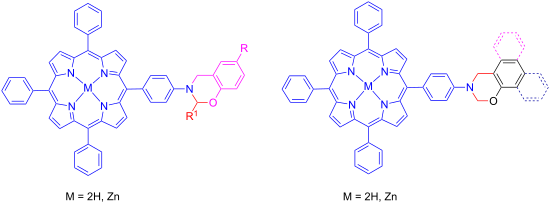
Scheme 1: Synthesis of dihydro-1,3-benzoxazinoporphyrins.

Scheme 2: Synthesis of dihydro-1,3-naphthoxazinoporphyrins.

Scheme 3: Synthesis of naphtho[e]bis(dihydro-1,3-oxazinoporphyrin) derivatives.

Figure 1: (a) Electronic absorption spectra of free-base porphyrins 6, 8, 14, 16 and 18 in CHCl3 at 298 K. (b...
Chemical–biological characterization of a cruzain inhibitor reveals a second target and a mammalian off-target
- Jonathan W. Choy,
- Clifford Bryant,
- Claudia M. Calvet,
- Patricia S. Doyle,
- Shamila S. Gunatilleke,
- Siegfried S. F. Leung,
- Kenny K. H. Ang,
- Steven Chen,
- Jiri Gut,
- Juan A. Oses-Prieto,
- Jonathan B. Johnston,
- Michelle R. Arkin,
- Alma L. Burlingame,
- Jack Taunton,
- Matthew P. Jacobson,
- James M. McKerrow,
- Larissa M. Podust and
- Adam R. Renslo
Beilstein J. Org. Chem. 2013, 9, 15–25, doi:10.3762/bjoc.9.3
- potential for lysosomotropic behavior [31][32]. We sought to address the question of lysosomotropism by preparing analogues of 1 in which the basic piperazine substituent at “P3” (which binds the S3 subsite of cruzain) was replaced with nonbasic or weakly basic heterocycles. In our initial structure

Graphical Abstract

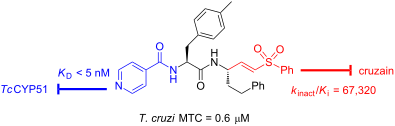
Figure 1: Chemical structures of vinylsulfone-based cruzain inhibitors 1–4, known TcCYP51 inhibitor 5, dihydr...

Figure 2: Computational docking models. (A) Predicted binding modes of 4 and (R)-5 bound to TcCYP51. For 4, t...

Figure 3: Synthesis of the additional control compound 6–8, the reduced forms of analogues 1, 3, and 4 respec...
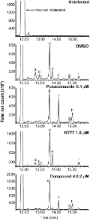
Figure 4: GC/MS analysis of lipid extracts from T. cruzi parasites treated with test compounds. DMSO and K777...

Figure 5: Chemical structures of compound 9, a “clickable” activity-based probe based on 1 and complementary ...
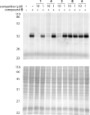
Figure 6: Competitive labeling of host cell (C2C12) proteins. Intact cells were labeled with probe 9 followin...

Figure 7: MS/MS spectrum of the tryptic peptide S264-R281 from mouse cathepsin B, identified in pull-down exp...
A bisazobenzene crosslinker that isomerizes with visible light
- Subhas Samanta,
- Harris I. Qureshi and
- G. Andrew Woolley
Beilstein J. Org. Chem. 2012, 8, 2184–2190, doi:10.3762/bjoc.8.246
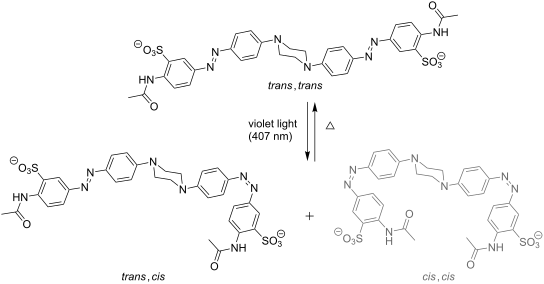
- of a new crosslinker in which a central piperazine unit links two azobenzene chromophores. Molecular modeling indicates that this crosslinker can undergo a large change in end-to-end distance upon trans,trans to cis,cis isomerization. Photochemical characterization indicates that it does isomerize
- -lifetimes may be longer when the crosslinker is attached to a biomolecule, it appears the para-piperazine unit may be best suited for applications where rapid thermal relaxation is required. Keywords: azobenzene; molecular switches; switch; photo-control; visible; Introduction Azobenzene derivatives have
- toxic stimulus [25][26]. In an attempt to red-shift the switching wavelength while maintaining a large end-to-end distance change upon photoisomerization, we designed compound 2 (Scheme 1). The central piperazine unit in this structure was expected to disconnect the π-delocalization between the two azo

Graphical Abstract

Scheme 1: Bisazobenzene derivatives.

Scheme 2: Synthetic route for the preparation of bisazobenzene derivative 2.

Figure 1: (a) Histograms showing the relative populations of conformations having the sulfur-to-sulfur distan...

Figure 2: (a) Normalized UV–vis absorption spectra of 2 in DMSO, acetonitrile, MeOH and sodium phosphate buff...

Figure 3: (a) Photoswitching of 2 with violet light (407–410 nm) at different temperatures (4, 10 and 20 °C) ...
Palladium-catalyzed C–N and C–O bond formation of N-substituted 4-bromo-7-azaindoles with amides, amines, amino acid esters and phenols
- Rajendra Surasani,
- Dipak Kalita,
- A. V. Dhanunjaya Rao and
- K. B. Chandrasekhar
Beilstein J. Org. Chem. 2012, 8, 2004–2018, doi:10.3762/bjoc.8.227
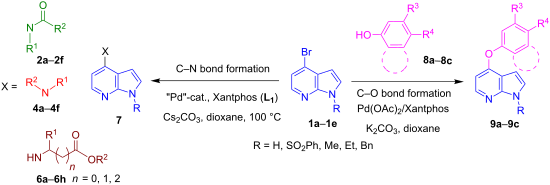
- -protected piperazine (Table 4, entry 8). The reaction works equally well for aliphatic primary amine too (Table 4, entry 7) resulting in 90% isolated yield. There was a feeble change in yield by varying the substitution on the 7-azaindole nitrogen (N1) from a methyl to an ethyl group (Table 4, entries 6–8

Graphical Abstract

Figure 1: Representative drug candidates of amino-azaindole and phenyl-azaindole containing motifs.

Scheme 1: Cross coupling of 4-bromo-7-azaindole with amides, amines, amino acid esters and phenols.
Engineering of indole-based tethered biheterocyclic alkaloid meridianin into β-carboline-derived tetracyclic polyheterocycles via amino functionalization/6-endo cationic π-cyclization
- Piyush K. Agarwal,
- Meena D. Dathi,
- Mohammad Saifuddin and
- Bijoy Kundu
Beilstein J. Org. Chem. 2012, 8, 1901–1908, doi:10.3762/bjoc.8.220
- nortopsentins [21][22][23]), dihydroimidazole (discodermindole [24]), oxadiazine (alboinon [25]), piperazine (dragmacidon [26]), maleimide (didemidines [25]), and pyrimidine (meridianins) [27][28][29]. Among these, meridianins (Figure 1), the tethered biheterocycles isolated from the south Atlantic tunicate

Graphical Abstract

Figure 1: Structure of meridianins A–G.

Scheme 1: Synthesis of functionalized meridianin with an amino group at position 5.

Scheme 2: Synthesis of a functionalized meridianin with an amino group at position 5.

Scheme 3: Synthesis of substrate for the modified Pictet–Spengler reaction.

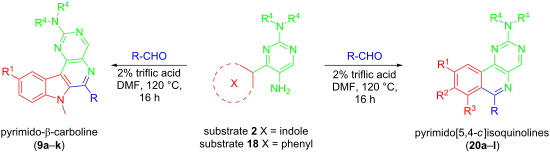
Scheme 4: The Pictet–Spengler reaction involving substrate 2a. Reagents and conditions: (i) RCHO, 2% triflic ...

Scheme 5: Synthesis of dihydropyrimido-β-carbolines: (i) R-CHO, 2% triflic acid in DMF, 120 °C, 16 h.

Scheme 6: Synthesis of substrates 18a–c for the modified Pictet–Spengler reaction.

Scheme 7: General strategy for the Pictet–Spengler reaction involving substrates 18. Reagents and conditions:...
Synthesis of 5-oxyquinoline derivatives for reversal of multidrug resistance
- Torsten Dittrich,
- Nils Hanekop,
- Nacera Infed,
- Lutz Schmitt and
- Manfred Braun
Beilstein J. Org. Chem. 2012, 8, 1700–1704, doi:10.3762/bjoc.8.193
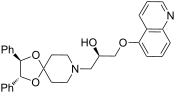
- multidrug efflux pumps. Twelve 5-oxyisoquinoline derivatives, which are analogues of zosuquidar wherein the dibenzosuberyl-piperazine moiety is replaced by either a diarylaminopiperidine or a piperidone-derived acetal or thioacetal group, have been synthesized as pure enantiomers. Their inhibitory power has
- crucial for inhibitory activity on P-glycoprotein [14][15][16][17][18], our strategy was based on modification or replacement of the dibenzosuberyl and the piperazine moieties, whereas the above-mentioned “southern part” of zosuquidar (1a) was planned to be maintained, including the absolute configuration
- of the stereogenic carbinol center. Thus, we replaced the piperazine motif in 1 by a piperidine ring carrying either nitrogen or oxygen as a hetero substituent(s) in the 4-position. Therefore, an initial series of 4-aminopiperidines 2a–4a and, in a second approach, new spirocyclic acetals 5a–12a as

Graphical Abstract
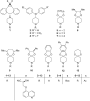
Scheme 1: Lead structure of zosuquidar (1a) and new inhibitors 2–13 (series a); precursors 2–13 (series b); p...

Scheme 2: Synthetic route to compounds 2a–13a. Reagents and conditions: (a) K3PO4, CH2Cl2, reflux, 3 h; then ...

Scheme 3: Preparation of N-Boc-protected 4-aminopiperidines 3c and 4c. Reagents and conditions: (a) NaOt-Bu, ...
Parallel solid-phase synthesis of diaryltriazoles
- Matthias Wrobel,
- Jeffrey Aubé and
- Burkhard König
Beilstein J. Org. Chem. 2012, 8, 1027–1036, doi:10.3762/bjoc.8.115
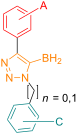
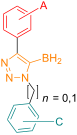
- , 4.25; N, 23.75. Terphenyl scaffold 1 [13][14]; oxazole-pyridazine-piperazine 2 [14][15] and aryl-triazoles 3 and 4 [15][16] as α-helix mimetics. Synthesis of azido-functionalized resins 7 and 9. Copper-catalyzed [2 + 3] cycloadditions of resin-bound azide 7 with five terminal alkynes. Copper-catalyzed
Graphical Abstract

Scheme 1: Terphenyl scaffold 1 [13,14]; oxazole-pyridazine-piperazine 2 [14,15] and aryl-triazoles 3 and 4 [15,16] as α-helix mime...

Scheme 2: Synthesis of azido-functionalized resins 7 and 9.
Synthesis and characterization of Sant-75 derivatives as Hedgehog-pathway inhibitors
- Chao Che,
- Song Li,
- Bo Yang,
- Shengchang Xin,
- Zhixiong Yu,
- Taofeng Shao,
- Chuanye Tao,
- Shuo Lin and
- Zhen Yang
Beilstein J. Org. Chem. 2012, 8, 841–849, doi:10.3762/bjoc.8.94
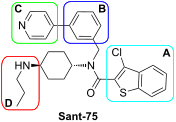
- , piperazine and homo-piperazine, were also investigated. Accordingly, a small series of Sant-75 analogues 18a–j were synthesized in a parallel fashion from the corresponding intermediates 19a–j. For intermediates 19a–j, different coupling reactions were required to achieve their synthesis, depending on the

Graphical Abstract

Figure 1: Structures of Smo antagonists and agonists.

Scheme 1: General synthetic route for Sant-75. Reagents and conditions: (a) Pd(PPh3)4, PhMe, Na2CO3, H2O, 85 ...

Scheme 2: Substituent-modifications on the motif A. Reagents and conditions: (a) CH2Cl2, Et3N; (b) CH2Cl2, TF...

Scheme 3: Substituent-modifications on the motif A. Reagents and conditions: (a) (i) FeCl3, Zn, H2O, DMF, 100...

Scheme 4: Core modification on the motif A. Reagents and conditions: (a) BOP, DIEA, DMF; (b) CH2Cl2, TFA.

Figure 2: Core modification on the motif B.

Scheme 5: Synthesis of key intermediate biaryl aldehydes. Reagents and conditions: (a) Pd(OAc)2, PPh3, 1,4-di...

Scheme 6: Chemical modifications on the motif C. Reagents and conditions: (a) Pd(OAc)2, PPh3, 1,4-dioxane, Na2...

Scheme 7: Chemical modifications on the motif D. Reagents and conditions: (a) R2COCl, CH2Cl2.
Thermodynamic and kinetic stabilization of divanadate in the monovanadate/divanadate equilibrium using a Zn-cyclene derivative: Towards a simple ATP synthase model
- Hanno Sell,
- Anika Gehl,
- Frank D. Sönnichsen and
- Rainer Herges
Beilstein J. Org. Chem. 2012, 8, 81–89, doi:10.3762/bjoc.8.8
- titrations three different buffer stock solutions were used: pH 7.6: HEPES (4-(2-hydroxyethyl)piperazine-1-ethanesulfonic acid), pH 8.5: EPPS (4-(2-hydroxyethyl)-1-piperazinepropanesulfonic acid) and pH 9.5: CHES (2-(cyclohexylamino)ethanesulfonic acid). The stock solutions had a total buffer concentration

Graphical Abstract

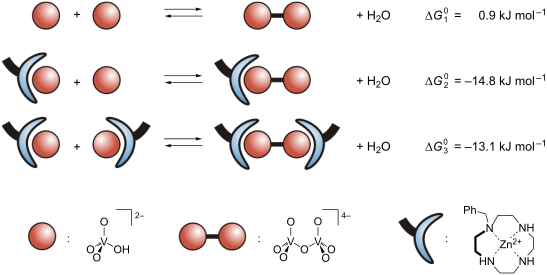
Figure 1: Simplified free energy scheme for driving an endergonic condensation (elimination/addition of water...

Figure 2: Binding motive of a vanadate zinc benzylcyclene complex (left) as suggested by the results of DFT c...
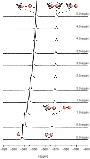
Figure 3: 51V NMR titration at pH 9.5 ([V]t = 1.5 mM, [1]t = 0 to 7.5 mM (0 to 5 equiv), 100 mM CHES). [V]t a...

Figure 4: Speciation of vanadium in a solution containing 1.5 mM Na3VO4, 100 mM CHES (pH = 9.5) and a Zn-benz...

Figure 5: 51V EXSY NMR spectrum (tmix = 1 ms) of a solution containing 1.5 mM Na3VO4, 3 mM Zn-benzylcyclene a...
An overview of the key routes to the best selling 5-membered ring heterocyclic pharmaceuticals
- Marcus Baumann,
- Ian R. Baxendale,
- Steven V. Ley and
- Nikzad Nikbin
Beilstein J. Org. Chem. 2011, 7, 442–495, doi:10.3762/bjoc.7.57
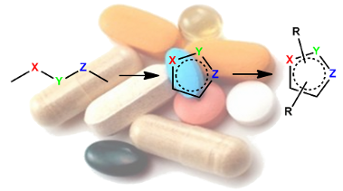
- studies this fused heterocycle was found to be more metabolically stable compared to earlier leads that contained a simple piperazine ring. Furthermore, the triazolopiperazine is not only involved in a tight H-bond network within the active site of DPP-IV, but also in π-stacking with the aromatic ring of
- 283 was then subjected to cyclodehydration using phosphoryl chloride to give a chloromethyl oxadiazole derivative 284. In a cleverly staged transformation, this compound was treated with diaminoethane to yield the piperazine ring 285, which, on heating under reflux in methanol, undergoes a further

Graphical Abstract
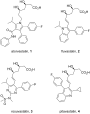
Figure 1: Structures of atorvastatin and other commercial statins.

Figure 2: Structure of compactin.

Scheme 1: Synthesis of pentasubstituted pyrroles.

Scheme 2: [3 + 2] Cycloaddition to prepare 5-isopropylpyrroles.

Scheme 3: Regiospecific [3 + 2] cycloaddition to prepare the pyrrole scaffold.

Scheme 4: Formation of the pyrrole core of atorvastatin via [3 + 2] cycloaddition.

Scheme 5: Formation of pyrrole 33 via the Paal–Knorr reaction.

Scheme 6: Convergent synthesis towards atorvastatin.

Figure 3: Binding pocket of sunitinib in the TRK KIT.

Scheme 7: Synthesis of sunitinib.

Scheme 8: Alternative synthesis of sunitinib.

Scheme 9: Key steps in the syntheses of sumatriptan and zolmitriptan.

Scheme 10: Introduction of the N,N-dimethylaminoethyl side chain.

Scheme 11: Japp–Klingemann reaction in the synthesis of sumatriptan.

Scheme 12: Synthesis of the intermediate sulfonyl chlorides 62 and 63.

Scheme 13: Alternative introduction of the sulfonamide.

Scheme 14: Negishi-type coupling to benzylic sulfonamides.

Scheme 15: Heck reaction used to introduce the sulfonamide side chain of naratriptan.

Scheme 16: Synthesis of the oxazolinone appendage of zolmitriptan.

Scheme 17: Grandberg indole synthesis used in the preparation of rizatriptan.

Scheme 18: Improved synthesis of rizatriptan.

Scheme 19: Larock-type synthesis of rizatriptan.

Scheme 20: Synthesis of eletriptan.

Scheme 21: Heck coupling for the indole system in eletriptan.

Scheme 22: Attempted Fischer indole synthesis of elatriptan.

Scheme 23: Successful Fischer indole synthesis for eletriptan.

Scheme 24: Mechanistic rationale for the Bischler–Möhlau reaction.

Scheme 25: Bischler-type indole synthesis used in the fluvastatin sodium synthesis.

Scheme 26: Palladium-mediated synthesis of ondansetron.

Scheme 27: Fischer indole synthesis of ondansetron.

Scheme 28: Optimised Pictet–Spengler reaction towards tadalafil.

Figure 4: Structures of carvedilol 136 and propranolol 137.

Scheme 29: Synthesis of the carbazole core of carvedilol.

Scheme 30: Alternative syntheses of 4-hydroxy-9H-carbazole.

Scheme 31: Convergent synthesis of etodolac.

Scheme 32: Alternative synthesis of etodolac.

Figure 5: Structures of imidazole-containing drugs.

Scheme 33: Synthesis of functionalised imidazoles towards losartan.

Scheme 34: Direct synthesis of the chlorinated imidazole in losartan.

Scheme 35: Synthesis of trisubstituted imidazoles.

Scheme 36: Preparation of the imidazole ring in olmesartan.

Scheme 37: Synthesis of ondansetron.

Scheme 38: Alternative route to ondansetron and its analogues.

Scheme 39: Proton pump inhibitors and synthesis of esomeprazole.

Scheme 40: Synthesis of benzimidazole core pantoprazole.

Figure 6: Structure of rabeprazole 194.

Scheme 41: Synthesis of candesartan.

Scheme 42: Alternative access to the candesartan key intermediate 216.

Scheme 43: .Medicinal chemistry route to telmisartan.

Scheme 44: Improved synthesis of telmisartan.

Scheme 45: Synthesis of zolpidem.

Scheme 46: Copper-catalysed 3-component coupling towards zolpidem.

Figure 7: Structure of celecoxib.

Scheme 47: Preparation of celecoxib.

Scheme 48: Alternative synthesis of celecoxib.

Scheme 49: Regioselective access to celecoxib.

Scheme 50: Synthesis of pazopanib.

Scheme 51: Syntheses of anastrozole, rizatriptan and letrozole.

Scheme 52: Regioselective synthesis of anastrozole.

Scheme 53: Triazine-mediated triazole formation towards anastrozole.

Scheme 54: Alternative routes to 1,2,4-triazoles.

Scheme 55: Initial synthetic route to sitagliptin.

Figure 8: Binding of sitagliptin within DPP-IV.

Scheme 56: The process route to sitagliptin key intermediate 280.

Scheme 57: Synthesis of maraviroc.

Scheme 58: Synthesis of alprazolam.

Scheme 59: The use of N-nitrosoamidine derivatives in the preparation of fused benzodiazepines.

Figure 9: Structures of itraconazole, ravuconazole and voriconazole.

Scheme 60: Synthesis of itraconazole.

Scheme 61: Synthesis of rufinamide.

Scheme 62: Representative tetrazole formation in valsartan.

Figure 10: Structure of tetrazole containing olmesartan, candesartan and irbesartan.

Scheme 63: Early stage introduction of the tetrazole in losartan.

Scheme 64: Synthesis of cilostazol.

Figure 11: Structure of cefdinir.

Scheme 65: Semi-synthesis of cefdinir.

Scheme 66: Thiazole syntheses towards ritonavir.

Scheme 67: Synthesis towards pramipexole.

Scheme 68: Alternative route to pramipexole.

Scheme 69: Synthesis of famotidine.

Scheme 70: Efficient synthesis of the hyperuricemic febuxostat.

Scheme 71: Synthesis of ziprasidone.

Figure 12: Structure of mometasone.

Scheme 72: Industrial access to 2-furoic acid present in mometasone.

Scheme 73: Synthesis of ranitidine from furfuryl alcohol.

Scheme 74: Synthesis of nitrofurantoin.

Scheme 75: Synthesis of benzofuran.

Scheme 76: Synthesis of amiodarone.

Scheme 77: Synthesis of raloxifene.

Scheme 78: Alternative access to the benzo[b]thiophene core of raloxifene.

Scheme 79: Gewald reaction in the synthesis of olanzapine.

Scheme 80: Alternative synthesis of olanzapine.
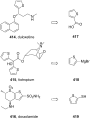
Figure 13: Access to simple thiophene-containing drugs.

Scheme 81: Synthesis of clopidogrel.

Scheme 82: Pictet–Spengler reaction in the preparation of tetrahydrothieno[3,2-c]pyridine (422).

Scheme 83: Alternative synthesis of key intermediate 422.

Figure 14: Co-crystal structures of timolol (left) and carazolol (right) in the β-adrenergic receptor.

Scheme 84: Synthesis of timolol.

Scheme 85: Synthesis of tizanidine 440.

Scheme 86: Synthesis of leflunomide.

Scheme 87: Synthesis of sulfamethoxazole.

Scheme 88: Synthesis of risperidone.

Figure 15: Relative abundance of selected transformations.

Figure 16: The abundance of heterocycles within top 200 drugs (5-membered rings).
Palladium- and copper-mediated N-aryl bond formation reactions for the synthesis of biological active compounds
- Carolin Fischer and
- Burkhard Koenig
Beilstein J. Org. Chem. 2011, 7, 59–74, doi:10.3762/bjoc.7.10
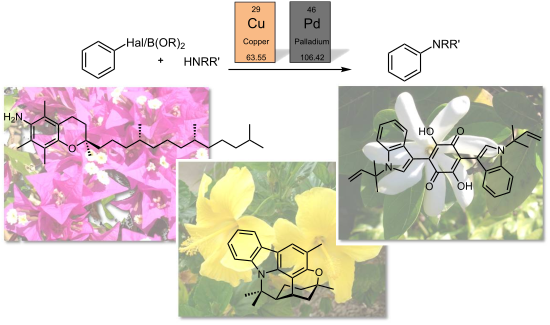
- synthesis of biological active molecules A typical example for the application of palladium-catalysed N-aryl bond formation is the synthesis of highly selective D3 receptor ligands 4. Piperazine (1) and a substituted aryl bromide 2 (Scheme 1) are coupled in the initial step of the synthesis. The electron
- structure–activity relationship [49]. Federsel et al. used a piperazine derivative 6 and an aryl halide 5 for the preparation of a CNS-active substituted chiral aminotetralin 7 (Scheme 2) [50]. The 5-HT1B receptor antagonist 8 was developed for the treatment of certain neuronal disorders. Different

Graphical Abstract

Scheme 1: Synthesis of selective D3 receptor ligands.

Scheme 2: Synthesis of a novel 5-HT1B receptor antagonist.

Scheme 3: Synthesis of A-366833, a selective α4β2 neural nicotinic receptor agonist.

Scheme 4: A new route to oxcarbazepine.

Scheme 5: Synthesis of key intermediates for norepinephrine transporter (NET) inhibitors.

Scheme 6: N-Annulation yielding substituted indole for the synthesis of demethylasterriquinone A1.

Scheme 7: Palladium-catalysed double N-arylation contributing to the synthesis of murrazoline.

Scheme 8: Synthesis of vitamin E amines.
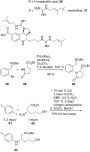
Scheme 9: Improved synthesis of martinellic acid.
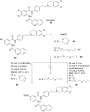
Scheme 10: New tariquidar-derived ABCB1 inhibitors.

Scheme 11: β-Carbolin-1-ones as inhibitors of tumour cell proliferation.

Scheme 12: Copper-catalysed synthesis of promazine drugs.

Scheme 13: Palladium-catalysed multicomponent reaction for the synthesis of promazine drugs.

Scheme 14: Key intermediate for imatinib.

Scheme 15: Synthesis of an effective Chek1/KDR kinase inhibitor.

Scheme 16: Macrocyclization as final step of the synthesis of heat shock protein inhibitor.

Scheme 17: Synthesis of N-arylimidazoles.

Scheme 18: Synthesis of benzolactam V8.

Scheme 19: Synthesis of an intermediate for lotrafiban (SB-214857).

Scheme 20: Intermolecular effort towards lotrafiban.

Scheme 21: Synthesis of matrix metalloproteases (MMPs) inhibitor.

Scheme 22: Regioselective 9-N-arylation of purines.

Scheme 23: N-Arylation of adenine and cytosine.

Scheme 24: 9-N-Arylpurines as enterovirus inhibitors.

Scheme 25: Xanthine analogues as kinase inhibitors.

Scheme 26: Synthesis of dual PPARα/γ agonists.

Scheme 27: N-Aryltriazole ribonucleosides with anti-proliferative activity.
Molecular recognition of organic ammonium ions in solution using synthetic receptors
- Andreas Späth and
- Burkhard König
Beilstein J. Org. Chem. 2010, 6, No. 32, doi:10.3762/bjoc.6.32
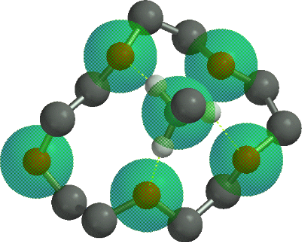

Graphical Abstract

Figure 1: Biologically important amines and quaternary ammonium salts: histamine (1), dopamine (2) and acetyl...

Figure 2: Crown ether 18-crown-6.

Figure 3: Conformations of 18-crown-6 (4) in solvents of different polarity.

Figure 4: Binding topologies of the ammonium ion depending on the crown ring size.
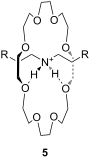
Figure 5: A “pseudorotaxane” structure consisting of 24-crown-8 and a secondary ammonium ion (5); R = Ph.

Figure 6: Typical examples of azacrown ethers, cryptands and related aza macrocycles.

Figure 7: Binding of ammonium to azacrown ethers and cryptands [111-113].

Figure 8: A 19-crown-6-ether with decalino blocking groups (11) and a thiazole-dibenzo-18-crown-6-ether (12).

Figure 9: 1,3-Bis(6-oxopyridazin-1-yl)propane derivatives 13 and 14 by Campayo et al.

Figure 10: Fluorescent azacrown-PET-sensors based on coumarin.

Figure 11: Two different pyridino-cryptands (17 and 18) compared to a pyridino-crown (19); chiral ammonium ion...

Figure 12: Pyridino-18-crown-6 ligand (21), a similar acridino-18-crown-6 ligand (22) and a structurally relat...

Figure 13: Ciral pyridine-azacrown ether receptors 24.

Figure 14: Chiral 15-crown-5 receptors 26 and an analogue 18-crown-6 ligand 27 derived from amino alcohols.

Figure 15: C2-symmetric chiral 18-crown-6 amino alcohol derivatives 28 and related macrocycles.

Figure 16: Macrocycles with diamide-diester groups (30).

Figure 17: C2-symmetric chiral aza-18-crown-6 ethers (31) with phenethylamine residues.

Figure 18: Chiral C-pivot p-methoxy-phenoxy-lariat ethers.

Figure 19: Chiral lariat crown ether 34.

Figure 20: Sucrose-based chiral crown ether receptors 36.
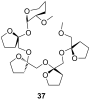
Figure 21: Permethylated fructooligosaccharide 37 showing induced-fit chiral recognition.

Figure 22: Biphenanthryl-18-crown-6 derivative 38.

Figure 23: Chiral lariat crown ethers derived from binol by Fuji et al.

Figure 24: Chiral phenolic crown ether 41 with “aryl chiral barriers” and guest amines.
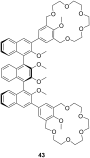
Figure 25: Chiral bis-crown receptor 43 with a meso-ternaphthalene backbone.

Figure 26: Chromogenic pH-dependent bis-crown chemosensor 44 for diamines.

Figure 27: Triamine guests for binding to receptor 44.

Figure 28: Chiral bis-crown phenolphthalein chemosensors 46.

Figure 29: Crown ether amino acid 47.

Figure 30: Luminescent receptor 48 for bis-alkylammonium guests.

Figure 31: Luminescent CEAA (49a), a bis-CEAA receptor for amino acids (49b) and the structure of lysine bindi...

Figure 32: Luminescent CEAA tripeptide for binding small peptides.

Figure 33: Bis crown ether 51a self assembles co-operatively with C60-ammonium ion 51b.

Figure 34: Triptycene-based macrotricyclic dibenzo-[24]-crown-8 ether host 52 and guests.

Figure 35: Copper imido diacetic acid azacrown receptor 53a and the suggested His-Lys binding motif; a copper ...

Figure 36: Urea (54) and thiourea (55) benzo crown receptor for transport and extraction of amino acids.

Figure 37: Crown pyryliums ion receptors 56 for amino acids.

Figure 38: Ditopic sulfonamide bridged crown ether receptor 57.

Figure 39: Luminescent peptide receptor 58.

Figure 40: Luminescent receptor 59 for the detection of D-glucosamine hydrochloride in water/ethanol and lumin...

Figure 41: Guanidinium azacrown receptor 61 for simple amino acids and ditopic receptor 62 with crown ether an...

Figure 42: Chiral bicyclic guanidinium azacrown receptor 63 and similar receptor 64 for the enantioselective t...

Figure 43: Receptors for zwitterionic species based on luminescent CEAAs.

Figure 44: 1,10-Azacrown ethers with sugar podand arms and the anticancer agent busulfan.

Figure 45: Benzo-18-crown-6 modified β-cyclodextrin 69 and β-cyclodextrin functionalized with diaza-18-crown-6...

Figure 46: Receptors for colorimetric detection of primary and secondary ammonium ions.

Figure 47: Porphyrine-crown-receptors 72.

Figure 48: Porphyrin-crown ether conjugate 73 and fullerene-ammonium ion guest 74.

Figure 49: Calix[4]arene (75a), homooxocalix[4]arene (75b) and resorcin[4]arene (75c) compared (R = H, alkyl c...

Figure 50: Calix[4]arene and ammonium ion guest (R = H, alkyl, OAcyl etc.), possible binding sites; A: co-ordi...

Figure 51: Typical guests for studies with calixarenes and related molecules.
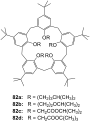
Figure 52: Lower rim modified p-tert-butylcalix[5]arenes 82.

Figure 53: The first example of a water soluble calixarene.

Figure 54: Sulfonated water soluble calix[n]arenes that bind ammonium ions.
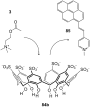
Figure 55: Displacement assay for acetylcholine (3) with a sulfonato-calix[6]arene (84b).

Figure 56: Amino acid inclusion in p-sulfonatocalix[4]arene (84a).

Figure 57: Calixarene receptor family 86 with upper and lower rim functionalization.

Figure 58: Calix[6]arenes 87 with one carboxylic acid functionality.
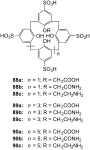
Figure 59: Sulfonated calix[n]arenes with mono-substitution at the lower rim systematically studied on their r...

Figure 60: Cyclotetrachromotropylene host (91) and its binding to lysine (81c).

Figure 61: Calixarenes 92 and 93 with phosphonic acids groups.

Figure 62: Calix[4]arene tetraphosphonic acid (94a) and a double bridged analogue (94b).

Figure 63: Calix[4]arene tetraphosphonic acid ester (92c) for surface recognition experiments.

Figure 64: Calixarene receptors 95 with α-aminophosphonate groups.

Figure 65: A bridged homocalix[3]arene 95 and a distally bridged homocalix[4]crown 96.

Figure 66: Homocalix[3]arene ammonium ion receptor 97a and the Reichardt’s dye (97b) for colorimetric assays.

Figure 67: Chromogenic diazo-bridged calix[4]arene 98.

Figure 68: Calixarene receptor 99 by Huang et al.

Figure 69: Calixarenes 100 reported by Parisi et al.

Figure 70: Guest molecules for inclusion in calixarenes 100: DAP × 2 HCl (101a), APA (101b) and Lys-OMe × 2 HC...

Figure 71: Different N-linked peptido-calixarenes open and with glycol chain bridges.

Figure 72: (S)-1,1′-Bi-2-naphthol calixarene derivative 104 published by Kubo et al.

Figure 73: A chiral ammonium-ion receptor 105 based on the calix[4]arene skeleton.

Figure 74: R-/S-phenylalaninol functionalized calix[6]arenes 106a and 106b.

Figure 75: Capped homocalix[3]arene ammonium ion receptor 107.

Figure 76: Two C3 symmetric capped calix[6]arenes 108 and 109.

Figure 77: Phosphorous-containing rigidified calix[6]arene 110.

Figure 78: Calix[6]azacryptand 111.

Figure 79: Further substituted calix[6]azacryptands 112.

Figure 80: Resorcin[4]arene (75c) and the cavitands (113).

Figure 81: Tetrasulfonatomethylcalix[4]resorcinarene (114).
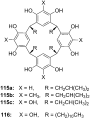
Figure 82: Resorcin[4]arenes (115a/b) and pyrogallo[4]arenes (115c, 116).
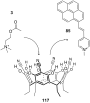
Figure 83: Displacement assay for acetylcholine (3) with tetracyanoresorcin[4]arene (117).

Figure 84: Tetramethoxy resorcinarene mono-crown-5 (118).

Figure 85: Components of a resorcinarene based displacement assay for ammonium ions.

Figure 86: Chiral basket resorcin[4]arenas 121.

Figure 87: Resorcinarenes with deeper cavitand structure (122).

Figure 88: Resorcinarene with partially open deeper cavitand structure (123).

Figure 89: Water-stabilized deep cavitands with partially structure (124, 125).
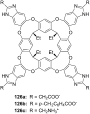
Figure 90: Charged cavitands 126 for tetralkylammonium ions.

Figure 91: Ditopic calix[4]arene receptor 127 capped with glycol chains.

Figure 92: A calix[5]arene dimer for diammonium salt recognition.

Figure 93: Calixarene parts 92c and 129 for the formation molecular capsules.
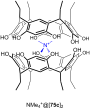
Figure 94: Encapsulation of a quaternary ammonium cation by two resorcin[4]arene molecules (NMe4+@[75c]2 × Cl−...

Figure 95: Encapsulation of a quaternary ammonium cation by six resorcin[4]arene molecules (NMe3D+@[130]6 × Cl−...

Figure 96: Structure and schematic of cucurbit[6]uril (CB[6], 131a).
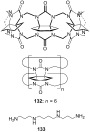
Figure 97: Cyclohexanocucurbit[6]uril (CB′[6], 132) and the guest molecule spermine (133).

Figure 98: α,α,δ,δ-Tetramethylcucurbit[6]uril (134).

Figure 99: Structure of the cucurbituril-phthalhydrazide analogue 135.

Figure 100: Organic cavities for the displacement assay for amine differentiation.

Figure 101: Displacement assay methodology for diammonium- and related guests involving cucurbiturils and some ...

Figure 102: Nor-seco-Cucurbituril (±)-bis-ns-CB[6] (140) and guest molecules.

Figure 103: The cucurbit[6]uril based complexes 141 for chiral discrimination.
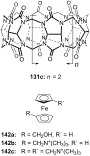
Figure 104: Cucurbit[7]uril (131c) and its ferrocene guests (142) opposed.

Figure 105: Cucurbit[7]uril (131c) guest inclusion and representative guests.

Figure 106: Cucurbit[7]uril (131c) binding to succinylcholine (145) and different bis-ammonium and bis-phosphon...

Figure 107: Paraquat-cucurbit[8]uril complex 149.
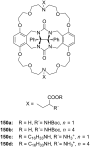
Figure 108: Gluconuril-based ammonium receptors 150.
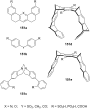
Figure 109: Examples of clefts (151a), tweezers (151b, 151c, 151d) and clips (151e).

Figure 110: Kemp’s triacid (152a), on example of Rebek’s receptors (152b) and guests.

Figure 111: Amino acid receptor (154) by Rebek et al.

Figure 112: Hexagonal lattice designed hosts by Bell et al.

Figure 113: Bell’s amidinium receptor (156) and the amidinium ion (157).
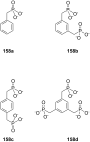
Figure 114: Aromatic phosphonic acids.

Figure 115: Xylene phosphonates 159 and 160a/b for recognition of amines and amino alcohols.
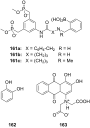
Figure 116: Bisphosphonate recognition motif 161 for a colorimetric assay with alizarin complexone (163) for ca...

Figure 117: Bisphosphonate/phosphate clip 164 and bisphosphonate cleft 165.

Figure 118: N-Methylpyrazine 166a, N-methylnicotinamide iodide (166b) and NAD+ (166c).

Figure 119: Bisphosphate cavitands.
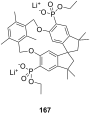
Figure 120: Bisphosphonate 167 of Schrader and Finocchiaro.
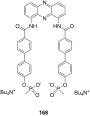
Figure 121: Tweezer 168 for noradrenaline (80b).

Figure 122: Different tripods and heparin (170).
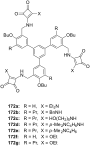
Figure 123: Squaramide based receptors 172.
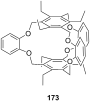
Figure 124: Cage like NH4+ receptor 173 of Kim et al.

Figure 125: Ammonium receptors 174 of Chin et al.

Figure 126: 2-Oxazolin-based ammonium receptors 175a–d and 176 by Ahn et al.

Figure 127: Racemic guest molecules 177.

Figure 128: Tripods based on a imidazole containing macrocycle (178) and the guest molecules employed in the st...

Figure 129: Ammonium ion receptor 180.

Figure 130: Tetraoxa[3.3.3.3]paracyclophanes 181 and a cyclophanic tetraester (182).

Figure 131: Peptidic bridged paraquat-cyclophane.
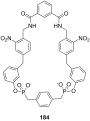
Figure 132: Shape-selective noradrenaline host.

Figure 133: Receptor 185 for binding of noradrenaline on surface layers from Schrader et al.

Figure 134: Tetraphosphonate receptor for binding of noradrenaline.

Figure 135: Tetraphosphonate 187 of Schrader and Finocchiaro.

Figure 136: Zinc-Porphyrin ammonium-ion receptors 188 and 189 of Mizutani et al.
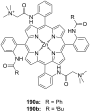
Figure 137: Zinc porphyrin receptor 190.

Figure 138: Zinc porphyrin receptors 191 capable of amino acid binding.

Figure 139: Zinc-porphyrins with amino acid side chains for stereoinduction.

Figure 140: Bis-zinc-bis-porphyrin based on Tröger’s base 193.

Figure 141: BINAP-zinc-prophyrin derivative 194 and it’s guests.

Figure 142: Bisaryl-linked-zinc-porphyrin receptors.
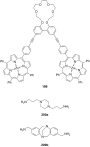
Figure 143: Bis-zinc-porphyrin 199 for diamine recognition and guests.

Figure 144: Bis-zinc-porphyrin crown ether 201.

Figure 145: Bis-zinc-porphyrin 202 for stereodiscrimination (L = large substituent; S = small substituent).

Figure 146: Bis-zinc-porphyrin[3]rotaxane and its copper complex and guests.

Figure 147: Dien-bipyridyl ligand 206 for co-ordination of two metal atoms.

Figure 148: The ligand and corresponding tetradentate co-complex 207 serving as enantioselective receptor for a...

Figure 149: Bis(oxazoline)–copper(II) complex 208 for the recognition of amino acids in aqueous solution.

Figure 150: Zinc-salen-complexes 209 for the recognition tertiary amines.

Figure 151: Bis(oxazoline)–copper(II) 211 for the recognition of amino acids in aqueous solution.

Figure 152: Zn(II)-complex of a C2 terpyridine crown ether.

Figure 153: Displacement assay and receptor for aspartate over glutamate.

Figure 154: Chiral complex 214 for a colorimetric displacement assay for amino acids.

Figure 155: Metal complex receptor 215 with tripeptide side arms.

Figure 156: A sandwich complex 216 and its displaceable dye 217.

Figure 157: Lanthanide complexes 218–220 for amino acid recognition.
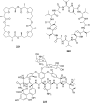
Figure 158: Nonactin (221), valinomycin (222) and vancomycin (223).

Figure 159: Monesin (224a) and a chiral analogue for enantiodiscrimination of ammonium guests (224b).

Figure 160: Chiral podands (226) compared to pentaglyme-dimethylether (225) and 18-crown-6 (4).

Figure 161: Lasalocid A (228).

Figure 162: Lasalocid derivatives (230) of Sessler et al.

Figure 163: The Coporphyrin I tetraanion (231).

Figure 164: Linear and cyclic peptides for ammonium ion recognition.

Figure 165: Cyclic and bicyclic depsipeptides for ammonium ion recognition.
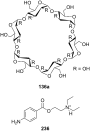
Figure 166: α-Cyclodextrin (136a) and novocaine (236).
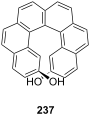
Figure 167: Helical diol receptor 237 by Reetz and Sostmann.

Figure 168: Ammonium binding spherand by Cram et al. (238a) and the cyclic[6]metaphenylacetylene 238b in compar...

Figure 169: Receptor for peptide backbone and ammonium binding (239).

Figure 170: Anion sensor principle with 3-hydroxy-2-naphthanilide of Jiang et al.

Figure 171: 7-bromo-3-hydroxy-N-(2-hydroxyphenyl)naphthalene 2-carboxamide (241) and its amine binding.

Figure 172: Naturally occurring catechins with affinity to quaternary ammonium ions.

Figure 173: Spiropyran (244) and merocyanine form (244a) of the amino acid receptors of Fuji et al.

Figure 174: Coumarin aldehyde (245) and its iminium species with amino acid bound (245a) by Glass et al.
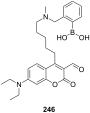
Figure 175: Coumarin aldehyde appended with boronic acid.

Figure 176: Quinolone aldehyde dimers by Glass et al.

Figure 177: Chromogenic ammonium ion receptors with trifluoroacetophenone recognition motifs.

Figure 178: Chromogenic ammonium ion receptor with trifluoroacetophenone recognition motif bound on different m...
Comparison of zwitterionic N-alkylaminomethanesulfonic acids to related compounds in the Good buffer series
- Robert D. Long,
- Newton P. Hilliard Jr,
- Suneel A. Chhatre,
- Tatiana V. Timofeeva,
- Andrey A. Yakovenko,
- Daniel K. Dei and
- Enoch A. Mensah
Beilstein J. Org. Chem. 2010, 6, No. 31, doi:10.3762/bjoc.6.31
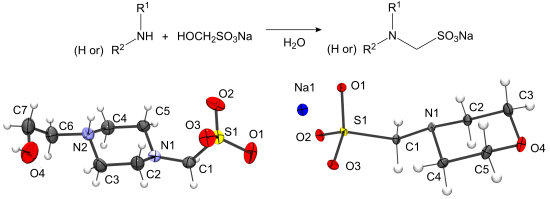
- methodology to produce other compounds that are the α-aminosulfonic acid analogs of other commonly used Good buffers including N-(2-hydroxyethyl)piperazine-N′-methanesulfonic acid [HEPMS] (2), piperazine-N,N′-bis(methanesulfonic acid) [PBMS] (3), and cyclohexylaminomethanesulfonic acid [CAMS] (4). Our initial
- sulfonic acid and amino group is if the zwitterion is formed by protonation at the piperazine nitrogen that is bonded to the hydroxyethyl functional group. This nitrogen’s basicity would be expected to be only slightly impacted by structural modifications of the alkylsulfonic acid group at the other
- nitrogen. This hypothesis is supported by the crystal structure of HEPMS 2 as a zwitterion shown in Figure 4. The crystal structure of 2 is consistent with the one previously reported for HEPES [11]. Both have piperazine rings in the chair conformation, with extended conformation for the side chains. Both

Graphical Abstract

Figure 1: Examples of some currently available Good buffers (and their reported pKa values) for the low end o...

Figure 2: Aminomethanesulfonic acids in this study and their proposed acronyms.

Figure 3: Possible ionization states of 1.

Scheme 1: Routes reported previously for the synthesis of Good buffers.

Scheme 2: Synthetic routes investigated.

Figure 4: Crystal structure of HEPMS 2 with displacement ellipsoids at the 30% probability level.

Figure 5: Hydrogen bonded molecular ribbon in solid phase 2 along [101].
Continuous flow enantioselective arylation of aldehydes with ArZnEt using triarylboroxins as the ultimate source of aryl groups
- Julien Rolland,
- Xacobe C. Cambeiro,
- Carles Rodríguez-Escrich and
- Miquel A. Pericàs
Beilstein J. Org. Chem. 2009, 5, No. 56, doi:10.3762/bjoc.5.56
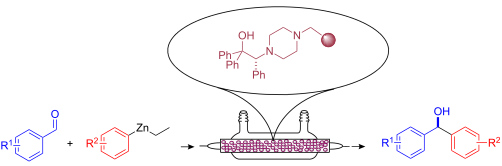
- stereospecific ring-opening with piperazine, and the resulting diamino alcohol 3 is subsequently supported onto a slightly cross-linked (1% DVB) Merrifield resin by direct treatment at room temperature in DMF in the presence of cesium carbonate (Scheme 3). Evaluation of resin 2 under batch conditions Prior to

Graphical Abstract

Figure 1: Biologically active diarylmethanol derivatives.

Figure 2: Structures of (R)-1,1,2-triphenyl-2-(piperidin-1-yl)ethanol (1) and its polystyrene-immobilized ana...

Scheme 1: Generation of the mixed ArZnEt species from a boronic acid and Et2Zn.

Scheme 2: Generation of the mixed ArZnEt species from a triarylboroxin and Et2Zn.

Scheme 3: Synthesis of the immobilized amino alcohol 2.

Scheme 4: Phenylation of tolualdehyde catalyzed by 2.

Figure 3: Experimental set-up for the continuous flow experiments. (A) Schematic representation and (B) Actua...

Scheme 5: Continuous flow enantioselective preparation of diarylmethanols.
Iridium-catalyzed asymmetric ring-opening reactions of oxabicyclic alkenes with secondary amine nucleophiles
- Dingqiao Yang,
- Ping Hu,
- Yuhua Long,
- Yujuan Wu,
- Heping Zeng,
- Hui Wang and
- Xiongjun Zuo
Beilstein J. Org. Chem. 2009, 5, No. 53, doi:10.3762/bjoc.5.53
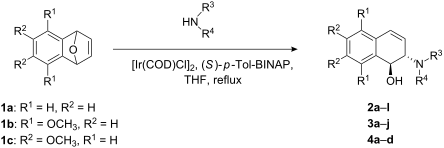
- catalyst. The trans-1,2-dihydronaphthalenol product 2 is subsequently released and the iridium monomer B is regenerated. Conclusion In summary, we have explored the iridium-catalyzed ARO reaction of oxabicyclic alkenes with N-alkylated anilines or N-substituted piperazine nucleophiles; the reactions gave

Graphical Abstract

Scheme 1: Identification of optimal chiral ligand for iridium-catalyzed asymmetric ring-opening of oxabenzono...

Figure 1: ORTEP plot for 3f.
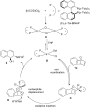
Scheme 2: Proposed mechanism for the ARO of oxabenzonorbornadiene 1a with secondary amine nucleophiles.
Hydrogen bonding patterns in the cocrystals of 5-nitrouracil with several donor and acceptor molecules
- Reji Thomas,
- R. Srinivasa Gopalan,
- G. U. Kulkarni and
- C. N. R. Rao
Beilstein J. Org. Chem. 2005, 1, No. 15, doi:10.1186/1860-5397-1-15
- , pyridine, DMSO, formamide and ethanol as well as with piperazine, N, N'-dimethylpiperazine, 3-aminopyridine and diazabicyclo [2.2.2]octane obtained by deliberate inclusion, have been examined by X-ray crystallography. The tape structure found in the parent centric form of nitrouracil is retained with some
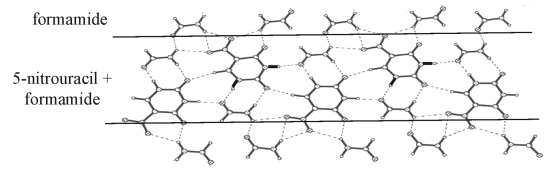
- modifications in the cocrystals with dioxane, piperazine, diazabicyclo [2.2.2]octane, N,N'-dimethylpiperazine, pyridine and DMSO, with the guest molecules forming alternate tapes. In cocrystals involving formamide, ethanol and 3-aminopyridine, the molecular tapes exhibit mixed compositions. The observed bonding
- cocrystals of I with other electron donor compounds such as piperazine, N,N'-dimethylpiperazine, 3-aminopyridine and diazabicyclo [2.2.2]octane. Crystallographic structures of the cocrystals so obtained have revealed interesting changes in the hydrogen bonding pattern of I in the presence of other molecules

Graphical Abstract

Scheme 1: Hydrogen bonding patterns of I commonly found in its cocrystals with other molecules. Cyclic N-H......

Figure 1: Dioxane molecules held between the zig-zag rows of I, viewed (a) perpendicular and (b) parallel to ...

Figure 2: Cocrystal of I and piperazine: (a) A molecular layer showing alternating tapes of I and piperazine....
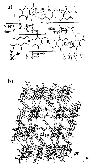
Figure 3: Cocrystal of I and N,N'-dimethylpiperazine: (a) A molecular layer showing alternating chains of I a...

Figure 4: Cocrystal of I and pyridine: A molecular layer showing alternating rows of I and pyridine.

Figure 5: Cocrystal of I and formamide: A molecular layer showing tapes of mixed composition,I and formamide,...

Figure 6: Cocrystal of I, ethanol and water: (a) A molecular layer showing tapes of mixed compositions- tapes...

Figure 7: Cocrystal of I and 3-aminopyridine: Stacks of molecular tapes arranged in alternating parallel and ...

Figure 8: Cocrystal of I and DABCO: A view along the diagonal of the ab plane showing the supramolecular asse...
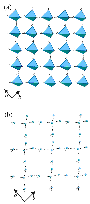
Figure 9: (a) Tetrahedral pentamers of water in the ab plane forming a nearly square arrangement (b) Hydrogen...

Figure 10: A tetrahedron pentamer of water. The O...O distances and H-O-H angles are indicated in the inset.



