


Search results
Search for "alkene" in Full Text gives 560 result(s) in Beilstein Journal of Organic Chemistry. Showing first 200.
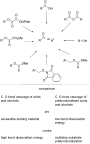
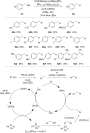
Electrophotochemical metal-catalyzed synthesis of alkylnitriles from simple aliphatic carboxylic acids
Beilstein J. Org. Chem. 2024, 20, 1497–1503, doi:10.3762/bjoc.20.133
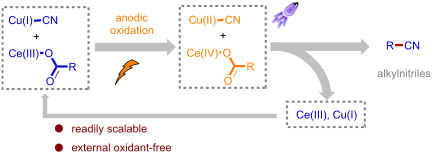
- size of the alkyl side chain at the alpha position of arylacetic acids (9–16). These features offer great opportunities for the introduction of a wide range of functional groups, including bromide (9), boron (12), ether (13), nitrile (14), ester (15), and alkene (16) moieties, which are versatile
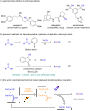
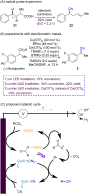
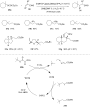
- system [48]. To probe the radical intermediate in the reaction, a radical rearrangement experiment with cyclopropane-derived acid 31 was subjected to the standard conditions, leading to the expected ring opening, alkene-containing nitrile product 32 in 62% isolated yield (Figure 3A). Moreover


Bioinformatic prediction of the stereoselectivity of modular polyketide synthase: an update of the sequence motifs in ketoreductase domain
Beilstein J. Org. Chem. 2024, 20, 1476–1485, doi:10.3762/bjoc.20.131
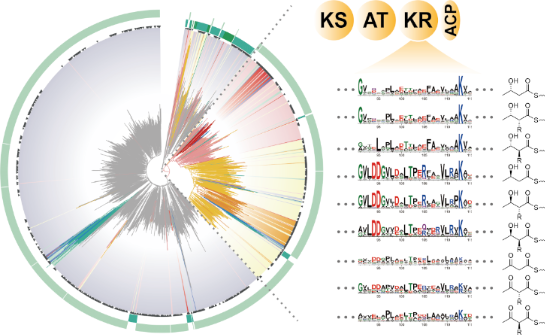
- elongated growing chain may undergo further processing by KR, DH, and ER domains, generating β-hydroxy, α,β-alkene, and saturated β-methylene groups, respectively (Figure 1a). KR domains have garnered significant attention from researchers due to their ability to control the stereochemistry at the α- and β


Selectfluor and alcohol-mediated synthesis of bicyclic oxyfluorination compounds by Wagner–Meerwein rearrangement
Beilstein J. Org. Chem. 2024, 20, 1462–1467, doi:10.3762/bjoc.20.129
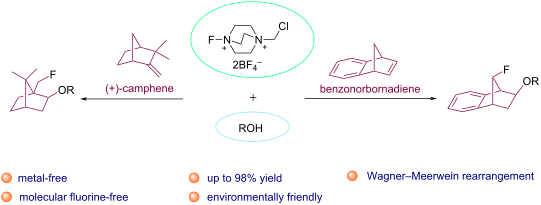
- . Keywords: alkoxyfluorine compounds; bicyclic alkene; oxyfluorination; selectfluor; Wagner–Meerwein rearrangement; Introduction Organofluorines are of great importance in the pharmaceutical and agrochemical industries, as the presence of fluorine has a serious effect on the biological activities of organic
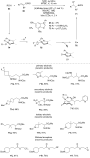
- (Scheme 1). The configurations of fluoroalkoxy compounds 3a–j were confirmed by the COSY 2D-NMR spectrum of compound 3a (Supporting Information File 1). Additionally, (+)-camphene (1b), a chiral natural product, was used as another alkene for fluoroalkoxy reactions. From (+)-camphene (1b), fluoroalkoxy


Predicting bond dissociation energies of cyclic hypervalent halogen reagents using DFT calculations and graph attention network model
Beilstein J. Org. Chem. 2024, 20, 1444–1452, doi:10.3762/bjoc.20.127
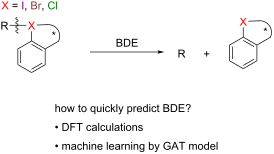
- applications [27][28][29][30]. For example, hypervalent bromine(III) reagents enable C–H amination and alkene aziridination reactions without the need for additional Lewis acid activation [31][32][33]. However, challenges in the synthesis and stabilization of cyclic hypervalent bromine and chlorine reagents


Hypervalent iodine-catalyzed amide and alkene coupling enabled by lithium salt activation
Beilstein J. Org. Chem. 2024, 20, 1405–1411, doi:10.3762/bjoc.20.122

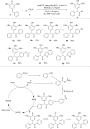
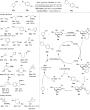
- bifunctional amide nucleophiles (Scheme 1e). Results and Discussion Our studies here focused on the development of hypervalent iodine-catalyzed amide and alkene coupling reaction [53][54][55]. In this case, we started with styrene (1) and benzamide (2) as the standard substrates. Using iodotoluene A as the
- benzamides provided a significant yield boost to provide the oxazoline structures 14 and 15. Finally, sterically encumbered tertiary amides participated in the reaction to afford the respective regioisomeric product 16. Encouraged by these results, we then turned our attention to explore the extent of alkene
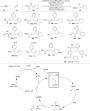
- difluorinated iodotoluene B. Then, LiBF4 can perform a salt metathesis with B to produce LiF along with the active hypervalent iodoarene catalyst C. The activated hypervalent iodine catalyst C can coordinate to the alkene to form complex D. The nucleophilic oxygen of the amide will attack in the internal



Generation of alkyl and acyl radicals by visible-light photoredox catalysis: direct activation of C–O bonds in organic transformations
Beilstein J. Org. Chem. 2024, 20, 1348–1375, doi:10.3762/bjoc.20.119
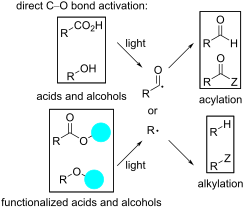
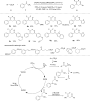
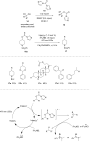
- . Appropriate selection of the phosphine reagent was the key to success in the process. Due to the lower oxidation potential, electron-rich PMe2Ph preferentially transferred a single electron to the excited state of the photocatalyst rather than the alkene, which was essential for obtaining the desired product
- presence of alkene, alkyne, halogen, and ether moieties. N-Boc-protected amines and esters also provided a good to excellent yield. Unfortunately, α,β-unsaturated carboxylic acids and aliphatic carboxylic acids were ineffective using this method. In 2024, Liu and co-workers [31] introduced a photocatalytic
- excited-state photocatalyst oxidizes the cesium alkyl oxalate via SET, followed by elimination of two carbon dioxide molecules, generating a tertiary alkyl radical that easily combines with an electron-deficient alkene, providing the product. This protocol was well compatible with a wide range of acceptor






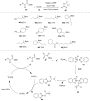

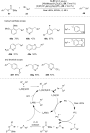

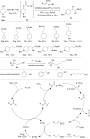
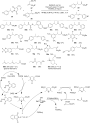
Transition-metal-catalyst-free electroreductive alkene hydroarylation with aryl halides under visible-light irradiation
Beilstein J. Org. Chem. 2024, 20, 1327–1333, doi:10.3762/bjoc.20.116
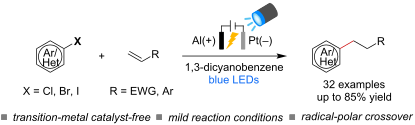
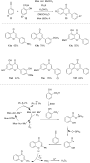
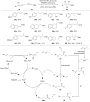
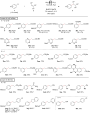
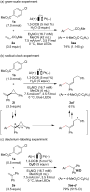
- that a reductive radical-polar crossover pathway is likely to be involved in this transformation. Keywords: aryl halides; C–C bond formation; electroreduction; radicals; visible light; Introduction Alkene hydroarylation is an attractive method for the construction of alkylarenes, which serve as
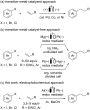
- -light-mediated alkene hydroarylation commonly requires external reductants and/or hydrogen atom sources to complete the catalytic cycle [21][22][23][24][25]. Over the past few decades, electrochemistry has proven to be an environmentally benign and convenient approach for accessing open-shell
- by preventing overreduction [39]. While the metal-catalyst-free radical cyclization of alkene-tethered aryl halides has been well documented in the literature [40][41][42][43], the efficient intermolecular hydroarylation of alkenes still relies on the use of transition-metal catalysts, including Pd


Computation-guided scaffold exploration of 2E,6E-1,10-trans/cis-eunicellanes
Beilstein J. Org. Chem. 2024, 20, 1320–1326, doi:10.3762/bjoc.20.115

- system and the C2–C3 alkene, are instilled by these terpene synthases. Four types of eunicellane synthases are known (Figure 1B). The first eunicellane synthase identified, Bnd4 from the biosynthesis of benditerpenoic acid in Streptomyces sp. (CL12-4) [5], forms a cis-eunicellane named benditerpetriene
- (1) [6]. In 1, the C2–C3 and C6–C7 alkenes are E-configured, with the latter alkene configuration being conserved in all known eunicellane cyclization mechanisms. The first trans-eunicellane synthase, AlbS from the biosynthesis of albireticulone in Streptomyces albireticuli [10], was also identified
- from bacteria and forms albireticulene (2), a C1 diastereomer of 1 that also features the 2E alkene [7]. Two coral enzymes, BaTC-2 and EcTPS1, were found to form klysimplexin R (3), a 2Z-cis-eunicellane [8][9]. Recently, a third bacterial version, MicA, was identified as producing the 2Z-trans


The Ugi4CR as effective tool to access promising anticancer isatin-based α-acetamide carboxamide oxindole hybrids
Beilstein J. Org. Chem. 2024, 20, 1213–1220, doi:10.3762/bjoc.20.104
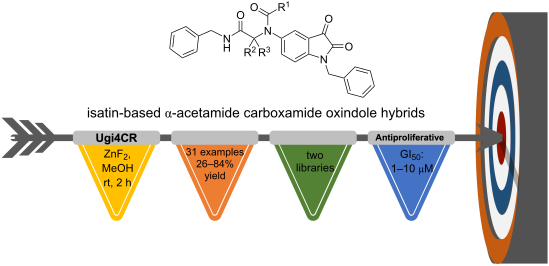
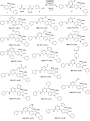
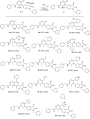
- alkene 2j carboxylic acids were used successfully in this MCR, demonstrating a great reaction scope (Scheme 2 and Figure 2). Remarkably, the best yields were obtained when heterocyclic carboxylic acid components like 1H-pyrrole-3-carboxylic acid (2n), 2-furoic acid (2o) and 5-nitrofuran-2-carboxylic acid




Carbonylative synthesis and functionalization of indoles
Beilstein J. Org. Chem. 2024, 20, 973–1000, doi:10.3762/bjoc.20.87
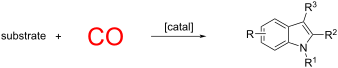
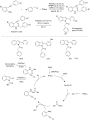
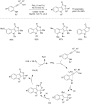
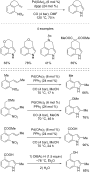
- alcohols were used as the nucleophiles (Scheme 32). About three years later, the same group developed a simple and efficient method to access CO-linked heterocyclic scaffolds by a Pd-catalyzed carbonylative cyclization of alkene–indole derivatives with 2-alkynylanilines and 2-alkynylphenols, in the
- )-catalyzed synthesis of CO-linked heterocyclic scaffolds from alkene-indole derivatives and 2-alkynylanilines (top) and 2-alkynylphenols (bottom). Proposed mechanism for the Pd(0)-catalyzed synthesis of CO-linked heterocyclic scaffolds. Pd-catalyzed C–H and N–H alkoxycarbonylation of indole derivatives to












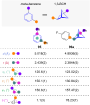
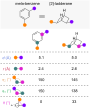
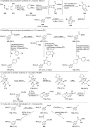
(Bio)isosteres of ortho- and meta-substituted benzenes
Beilstein J. Org. Chem. 2024, 20, 859–890, doi:10.3762/bjoc.20.78
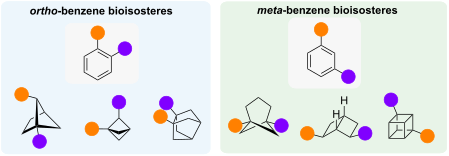
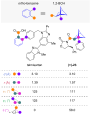
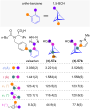
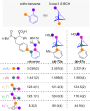
- were rare, but a number of practical approaches have been disclosed in recent years. Many of these utilise the ability of bicyclo[1.1.0]butanes (BCBs) to undergo [2σ-2π]-type cycloadditions with alkene reaction partners [37]. Brown and co-workers used this approach to synthesise a variety of 1,2-BCHs
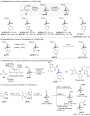
- (±)-30. In a related strategy, Procter and co-workers prepared 1,2-BCHs (±)-33a–e from BCBs 32 via a SmI2-catalysed radical relay alkene insertion (Scheme 3C) [35]. This approach relied on single-electron reduction of the ketone moiety and ring-expansion from the ketyl radical anion. Electron-deficient
- homologation and hydrolysis led to aldehyde (±)-46 which could then be oxidised to acid (±)-47 using a Pinnick oxidation. BCH 42b also led to ester (±)-48 via a Horner–Wadsworth–Emmons reaction followed by hydrogenation of the formed alkene. 1,2-BCH 44 could be turned into amine (±)-49 by oxime formation and














Skeletal rearrangement of 6,8-dioxabicyclo[3.2.1]octan-4-ols promoted by thionyl chloride or Appel conditions
Beilstein J. Org. Chem. 2024, 20, 823–829, doi:10.3762/bjoc.20.74
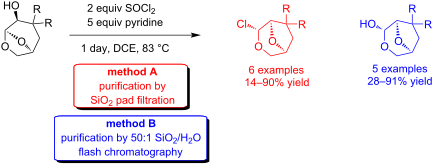
- 18 containing an exocyclic alkene was subjected to the reaction conditions, a mixture of benzylic chlorides (20) was formed in low yields, and trace amounts of the allylic chloride 19 was also isolated, the materials differentiated on the basis of the coupling of the acetal H5 with the respective


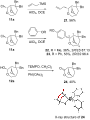
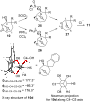
Advancements in hydrochlorination of alkenes
Beilstein J. Org. Chem. 2024, 20, 787–814, doi:10.3762/bjoc.20.72
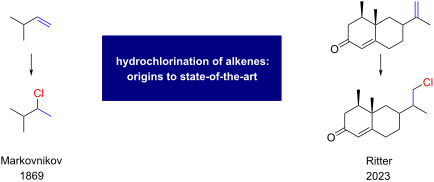
- provide a better overall understanding. The hydrochlorination of alkenes can be categorized into three main classes (Scheme 1; only a terminal alkene is shown as a substrate, although polysubstituted and conjugated alkenes can also serve as substrates). 1) Polar reactions: These involve the protonation of
- the alkene in the first step, providing a carbocation that subsequently reacts with a chloride anion to yield the Markovnikov product. While this ionic mechanism is commonly illustrated in textbooks by showing “naked” cations as intermediates, several recent studies suggest a molecular concerted or
- alkene reactivity is essential. Two reactivity scales for alkenes are available in the literature, one considering the reactivity of the alkene itself (Mayr scale) [25] and the other the stability of the corresponding cation after protonation (hydride affinities) [26]. In the polar hydrochlorination


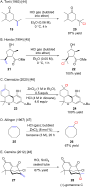




SOMOphilic alkyne vs radical-polar crossover approaches: The full story of the azido-alkynylation of alkenes
Beilstein J. Org. Chem. 2024, 20, 701–713, doi:10.3762/bjoc.20.64
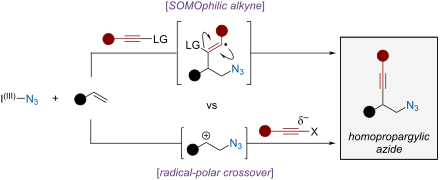
- , greatly increasing the molecular complexity of the starting substrate. Using radical chemistry would lead to a regioselective addition of azide radicals to the alkene, forming selectively the most stabilized C-centered radical. A prominent method for the generation of azide radicals relies on hypervalent
- would initially involve the addition of azide radicals to an alkene, generating a carbon-centered radical. Then, different trapping of this intermediate could be performed (Scheme 1B). First, C-centered radicals are known to recombine with metal-acetylides, in particular copper [27]. Reductive
- ]. On the other hand, the nature of the alkene might be limited as it would strongly influence the oxidation potential of the carbon radical and the stability of the resulting carbocation. Recently, we reported the first successful application of an RPC strategy for the azido-alkynylation of styrenes


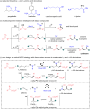
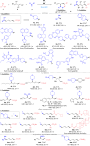
Palladium-catalyzed three-component radical-polar crossover carboamination of 1,3-dienes or allenes with diazo esters and amines
Beilstein J. Org. Chem. 2024, 20, 661–671, doi:10.3762/bjoc.20.59
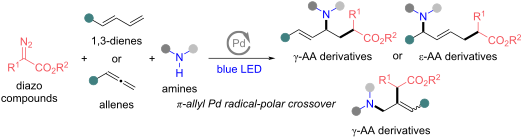
- alkene followed by a nucleophilic addition, is unknown (Scheme 1b, bottom). The radical-polar crossover strategy has been steadily emerging in synthetic organic chemistry during the last few years [43][44][45][46]. This strategy allows complex chemicals to be assembled with high step economy that would



Enhanced reactivity of Li+@C60 toward thermal [2 + 2] cycloaddition by encapsulated Li+ Lewis acid
Beilstein J. Org. Chem. 2024, 20, 653–660, doi:10.3762/bjoc.20.58
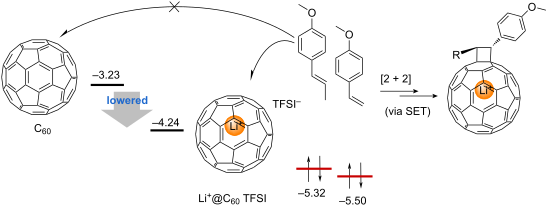
- of N,N,N',N'-tetraethylethynediamine and 1-morpholino-1-cyclopentene with empty C60 has been reported [17][23], while electron-rich styrene derivatives 1 and 2 can react with empty C60 only through a photoinduced SET pathway [19][22]. From these results, the energy gap between the HOMO of the alkene




Switchable molecular tweezers: design and applications
Beilstein J. Org. Chem. 2024, 20, 504–539, doi:10.3762/bjoc.20.45




Ligand effects, solvent cooperation, and large kinetic solvent deuterium isotope effects in gold(I)-catalyzed intramolecular alkene hydroamination
Beilstein J. Org. Chem. 2024, 20, 479–496, doi:10.3762/bjoc.20.43
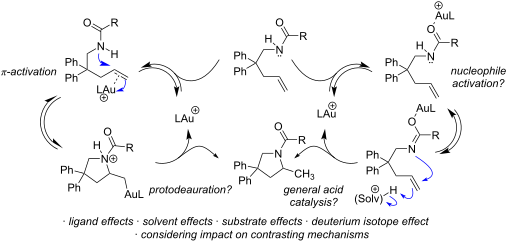
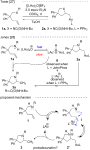
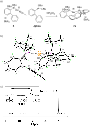
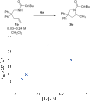
- both within the context of a classic gold π-activation/protodeauration mechanism and a general acid-catalyzed mechanism without intermediate gold alkyls. Keywords: alkene hydroamination; general acid catalysis; gold catalysis; isotope effect; phosphine ligand effect; solvent effect; Introduction
- tackle catalyst stability by changing the chloride scavenger [23] or adding other coordinating moieties [24][25]. Hartwig et al. have argued that a Brønsted acid generated in situ from metal triflates may be the “real” catalyst promoting some alkene functionalizations [26]. Therefore, the possibility of
- competing Brønsted acid catalysis in gold-catalyzed alkene functionalization remains a consideration [2], and while it is assumed that alkene activations follow the same prototypical mechanisms as allene and alkyne activations, that is (1) π-activation with nucleophilic attack followed by (2







Mechanisms for radical reactions initiating from N-hydroxyphthalimide esters
Beilstein J. Org. Chem. 2024, 20, 346–378, doi:10.3762/bjoc.20.35
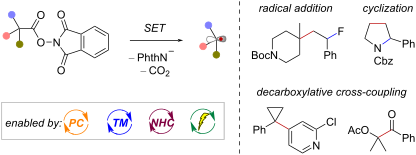
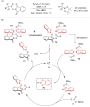
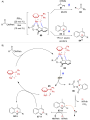
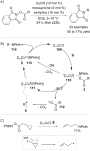
- Z-monofluoroalkene product 136 is achieved through anticoplanar elimination of fluoride. Shuhua Li and co-workers reported the generation of alkyl radicals from NHPI esters, mediated by a pyridine-boryl radical reductant species in the context of alkene hydroalkylation [104] and cross






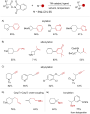
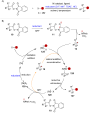
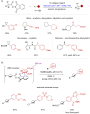


Nucleophilic functionalization of thianthrenium salts under basic conditions
Beilstein J. Org. Chem. 2024, 20, 257–263, doi:10.3762/bjoc.20.26
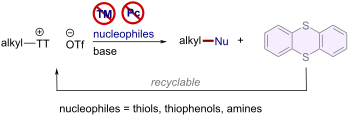
- -stage C–H functionalization of arenes, Wickens’s group has introduced an oxidative alkene aziridination strategy that relies on thianthrenation of an alkene under electrochemical conditions [27]. Subsequently, cyclopropanation, [28] aziridination, [29] allylic C–H functionalization, [30][31] transition

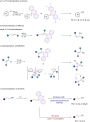
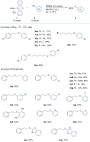


Tandem Hock and Friedel–Crafts reactions allowing an expedient synthesis of a cyclolignan-type scaffold
Beilstein J. Org. Chem. 2024, 20, 162–169, doi:10.3762/bjoc.20.15
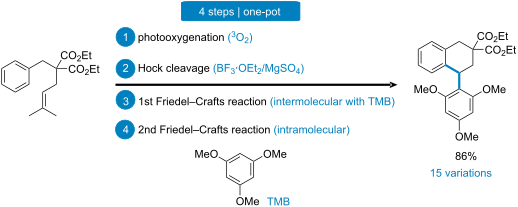
- mention that allylic hydroperoxides are conveniently produced by the photooxygenation of alkene substrates [14][15][16]. Taking all these informations together, since alkenes can be easier intermediates than aldehydes to handle, we envisaged to use a prenyl (= 3-methyl-2-buten-1-yl) group as an aldehyde
- surrogate readilly unmasked under Hock cleavage conditions. The oxidative cleavage of this alkene would not only release the aldehyde group, but also volatile acetone originated from the traceless isopropylidene motif. Overall, a three-reaction process will thus be performed in one pot (Scheme 1c
- ), successively involving a Schenck-ene photooxygenation of an alkene A, an acid-catalyzed Hock cleavage of hydroperoxide B generating an aldehyde derivative C, and an acid-catalyzed Friedel–Crafts reaction in the presence of an aromatic nucleophile leading to D [17]. In principle, a second Friedel–Crafts




Perspectives on push–pull chromophores derived from click-type [2 + 2] cycloaddition–retroelectrocyclization reactions of electron-rich alkynes and electron-deficient alkenes
Beilstein J. Org. Chem. 2024, 20, 125–154, doi:10.3762/bjoc.20.13
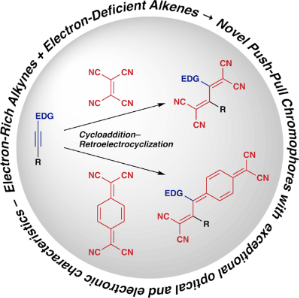
- process. The [2 + 2] CA–RE sequence proceeds successively, as depicted in Scheme 1, where electron-donating groups are denoted as EDGs. During the [2 + 2] CA process, the nucleophilic attack by the terminal alkyne carbon of an electron-rich alkyne on an electron-deficient alkene, such as TCNE and 7,7,8,8
- cyclopentadiene moieties. TCBD 4, obtained through the [2 + 2] CA–RE reaction, continues to function as an electron-accepting alkene, as shown in Scheme 4. Subsequent [2 + 2] CA–RE reactions involving electron-rich alkynes yield tetracyano-1,3,5-hexatrienes (TCHTs). These reactions occur seamlessly in a one-pot


Visible-light-induced radical cascade cyclization: a catalyst-free synthetic approach to trifluoromethylated heterocycles
Beilstein J. Org. Chem. 2024, 20, 118–124, doi:10.3762/bjoc.20.12
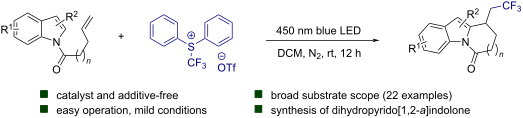
- (Table 1, entry 16). With the optimized conditions in hand, we started to explore the scope of this photoinduced transformation. Various alkene-tethered indole derivatives were subjected to the reaction. Remarkably, a range of dihydropyrido[1,2-a]indolones bearing a trifluoromethyl group were obtained in
- , Umemoto’s reagent undergoes a homolysis process to generate the trifluoromethyl radical species. The trifluoromethyl radical is trapped by the terminal alkene and forms a relayed radical intermediate 6, which is intercepted by the indole ring realizing an intramolecular cyclization (6-exo-trig). The newly
- moderate to good yields. Experimental To a vial equipped with a stirring bar, alkene-tethered indole substrate 1a (0.3 mmol), Umemoto's reagent (2b, 0.1 mmol), and DCM (2 mL) were added. Then, the vial was degassed and backfilled with N2 three times to remove oxygen. The reaction mixture was stirred at




Photoinduced in situ generation of DNA-targeting ligands: DNA-binding and DNA-photodamaging properties of benzo[c]quinolizinium ions
Beilstein J. Org. Chem. 2024, 20, 101–117, doi:10.3762/bjoc.20.11
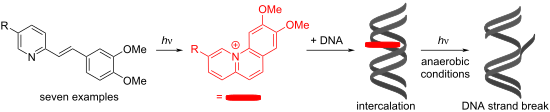
- spectrometry. In all cases, the E-configuration of the alkene double bonds was indicated by characteristic coupling constants of the alkene protons (3JH–H = 16 Hz). Absorption properties and photoreactions of styrylpyridine derivatives In acetonitrile solution, the styrylpyridines 2a–g exhibited long
- by the reaction with C-radicals 4 and 5 to give peroxides such as 6 (Scheme 4), by cycloaddition of 1O2 to alkene and diene units, or by deactivation of the excited state in a triplet-triplet annihilation [90], all of which leading to a reduced photocleavage efficiency. However, with much longer




Synthesis of 7-azabicyclo[4.3.1]decane ring systems from tricarbonyl(tropone)iron via intramolecular Heck reactions
Beilstein J. Org. Chem. 2023, 19, 1615–1619, doi:10.3762/bjoc.19.118
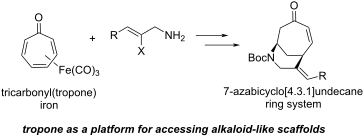
- cyclized product 16 in 75% yield. These results suggest that these Heck cyclizations are quite sensitive to the identity of the alkene substituent that is cis to the halogen. We were also interested in engaging vinyl iodide 17 in a 7-exo-trig cyclization to form 18. Z-Iodoalkene 17 appeared to react
- amine protection – can potentially take place in one pot). We have shown that this protocol can be applied to the synthesis of several analogs bearing different substitution patterns on the alkene. The structural diversity that can be readily obtained utilizing this chemistry underscores the versatility





