


Search results
Search for "hydride" in Full Text gives 505 result(s) in Beilstein Journal of Organic Chemistry. Showing first 200.
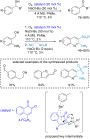
Non-noble metal-catalyzed cross-dehydrogenation coupling (CDC) involving ether α-C(sp3)–H to construct C–C bonds
Beilstein J. Org. Chem. 2023, 19, 1259–1288, doi:10.3762/bjoc.19.94
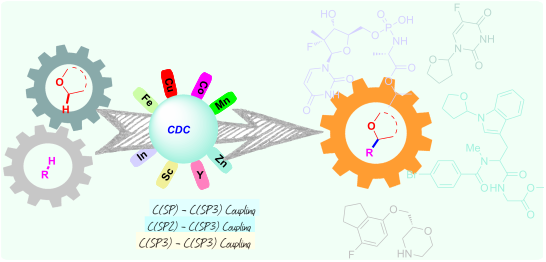
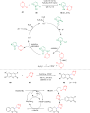
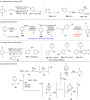
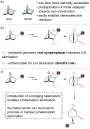
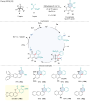
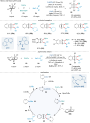
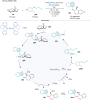
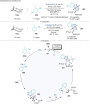
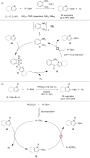
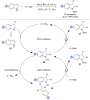
- involves a hydride abstraction from the benzylic site of isochroman to generate a cationic species A, whereas the malonate is activated by the In/Cu catalyst (B). Subsequently, the coupling of the two intermediates yields the desired product and regenerates the catalyst. Alternatively, In(III) may be

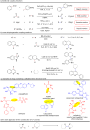


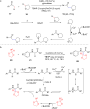
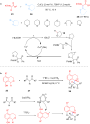







Enabling artificial photosynthesis systems with molecular recycling: A review of photo- and electrochemical methods for regenerating organic sacrificial electron donors
Beilstein J. Org. Chem. 2023, 19, 1198–1215, doi:10.3762/bjoc.19.88
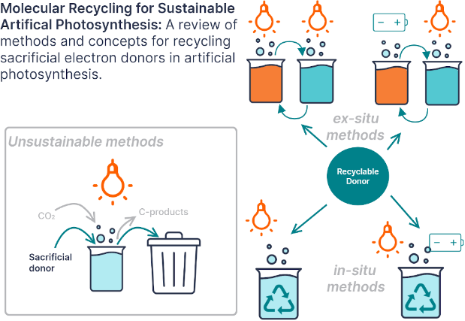
- donors used in photoreduction catalysis for artificial photosynthesis. Specifically, organic electron or hydride donors usually applied in molecular photocatalysis. 2. Survey the literature from different fields and present a sample of potentially recyclable electron donors for artificial photosynthesis
- dioxide [16]. Excited-state PCET, which is of particular interest for interactions between hydrogen atom or hydride-donating sacrificial donors, has recently been reviewed in detail by Dempsey and co-workers [17]. To select an effective sacrificial electron donor, at least four properties need to be
- S–S bond is easily broken. The chemical step can also be a phase change as demonstrated in the work by Girault and co-workers [35]. Systems designed for PCET, whether excited-state PCET or PCET of the ground state species, will benefit from donors that carry a hydride or hydrogen atom equivalent


Clauson–Kaas pyrrole synthesis using diverse catalysts: a transition from conventional to greener approach
Beilstein J. Org. Chem. 2023, 19, 928–955, doi:10.3762/bjoc.19.71
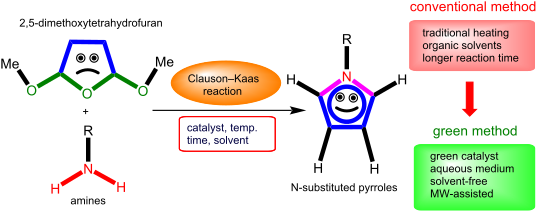
- reaction involving benign reducing agents H2 or HCOOH or CO/H2O mixtures (Scheme 21). The main advantage of this heterogeneous Co catalyst is that it can be used up to 10 times without significant loss of activity and the active cobalt hydride species selectively reduces nitroarenes to their corresponding




Pyridine C(sp2)–H bond functionalization under transition-metal and rare earth metal catalysis
Beilstein J. Org. Chem. 2023, 19, 820–863, doi:10.3762/bjoc.19.62
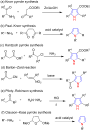
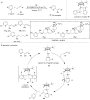
- addition of 1 gives the silyl-iridium complex 52. The insertion of aldehyde 50 into the Ir–Si bond of 52 provides the pyridyl alkyl iridium species 53 that finally by C–C formation via reductive elimination furnishes the desired products 51 along with the formation of an iridium hydride species (Scheme 11b
- regioselectively at the C4 position of the organoborate intermediate 60 delivering the σH-adduct intermediates 62 and 63. Subsequently, hydride elimination with the help of the organoborane gave the desired alkylated product 59 and regenerates the hydride catalyst. Further enantioselective pyridine C–H alkylation
- . Subsequently, insertion of alkene 68 provides the cyclic Pd(II) intermediate 72 which undergoes β-hydride elimination to produce the desired product 69. In the same year, Ramana and Goriya [75] proposed an unexpected C-6 (C-2)-propenylation reaction of pyridine in the presence of allyl bromide (73) and a Ru
















Transition-metal-catalyzed domino reactions of strained bicyclic alkenes
Beilstein J. Org. Chem. 2023, 19, 487–540, doi:10.3762/bjoc.19.38
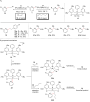
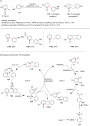
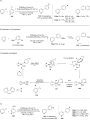
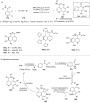
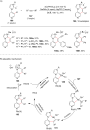
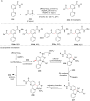
- the bicyclic alkene followed by migratory insertion affords intermediate 12 which undergoes β-oxygen elimination to form 13. Rearrangement of 13 via β-hydride elimination and enolization generates a 1-naphthol species which undergoes intramolecular cyclization with the ester to form the final product
- exo face of 30b, oxidative cyclization can afford the ruthenacycle 101. Unlike previous works studying Ru-catalyzed cyclizations involving bicyclic alkenes and alkynes [56][57][58][59], the reaction preferentially undergoes β-hydride elimination to generate 102 rather than reductive elimination which
- be envisioned for the carbonannulation of diazabicyclic alkenes with 2-formylphenylboronic acid up to the last step which likely operates through a β-hydride elimination of the Rh(I) alkoxide, furnishing the final carbonyl-containing product. In 2013, Lautens reported the synthesis of oxazolidinone











Mechanochemical solid state synthesis of copper(I)/NHC complexes with K3PO4
Beilstein J. Org. Chem. 2023, 19, 440–447, doi:10.3762/bjoc.19.34
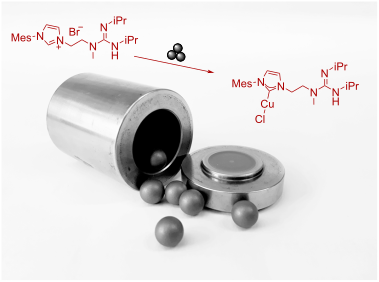
- during the milling process lead to agglutination of the remaining solids and therefore insufficient homogenization of the reaction mixture. This gave a mixture of compounds, in which the envisaged complex 5 could not be identified. A different approach was made using sodium hydride as a base (Table 1


Group 13 exchange and transborylation in catalysis
Beilstein J. Org. Chem. 2023, 19, 325–348, doi:10.3762/bjoc.19.28
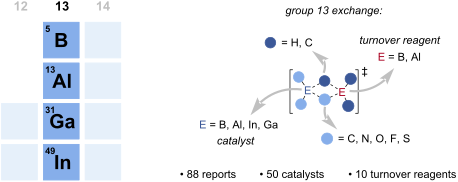
- -coordinated heterocycle 21. Hydride transfer from the BH3-amide 22 to HBpin regenerated the borohydride catalyst 19, and gave a neutral aminoborane 23, which then underwent B‒N/B‒H transborylation with HBpin to give the N‒Bpin dihydropyridine 24 and BH3 (Scheme 6). The mechanism of stoichiometric indole
- molecule of alkyne 1 to give the alkenylboronic ester 3 and regenerate an alkynylaluminium species 78 (Scheme 19b). Thomas et al. proposed a different mechanism for the diisobutylaluminium hydride (DIBALH)- or Et3Al·DABCO-catalysed hydroboration of alkynes [86], whereby an aluminium hydride 81 underwent
- hydroalumination of the alkyne 1, followed by Al‒C/B‒H exchange with HBpin, to give the alkenylboronic ester 3 and regenerate the aluminium hydride 81 (Scheme 19c). Single-turnover experiments and a lack of observable H2 production supported this hypothesis. It should also be noted that nucleophilic bases










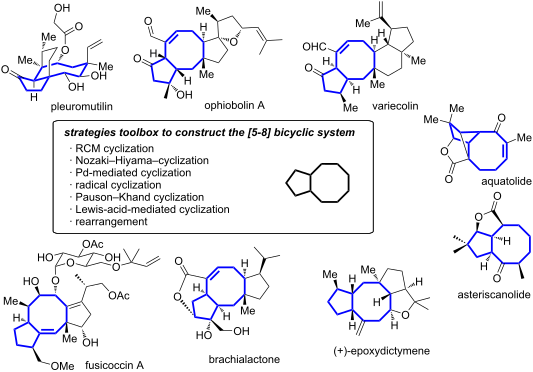
Strategies to access the [5-8] bicyclic core encountered in the sesquiterpene, diterpene and sesterterpene series
Beilstein J. Org. Chem. 2023, 19, 245–281, doi:10.3762/bjoc.19.23


Germacrene B – a central intermediate in sesquiterpene biosynthesis
Beilstein J. Org. Chem. 2023, 19, 186–203, doi:10.3762/bjoc.19.18

- this multistep process is initiated by the abstraction of diphosphate to produce an allyl cation that subsequently undergoes typical cation reactions such as cyclisations by intramolecular attack of an olefin to the cationic centre, Wagner–Meerwein rearrangements, hydride or proton shifts. The process
- that 11 can bind to the main protease Mpro of the SARS-CoV-2 virus that is involved in viral reproduction, but experimental tests supporting this finding are lacking [89]. Selina-5,7(11)-diene (20) can arise from I1 through 1,2-hydride shift to I1a and deprotonation (Scheme 7). This compound was first
- attack of water to I2. As mentioned above, this compound occurs in Cinnamomum camphora [86] and has later also been isolated from Laggera pterodonta ([α]D24 = +4, c 0.5, MeOH) [93]. Compound 38, (+)-eudesma-5,7(11)-diene, could potentially arise from I2 by 1,2-hydride shift to I2a and deprotonation, but






Redox-active molecules as organocatalysts for selective oxidative transformations – an unperceived organocatalysis field
Beilstein J. Org. Chem. 2022, 18, 1672–1695, doi:10.3762/bjoc.18.179
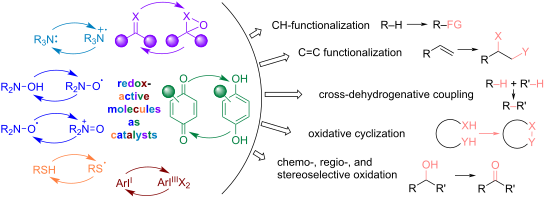
- promotes the formal hydride transfer from the substrate, resulting in the formation of the hydroxylamine and substrate-derived iminium cation, which undergoes nucleophilic addition. Amine cation radical catalysis The single-electron oxidation of amines leads to amine cation radicals. Amine cation radicals
- activation for hydrogenation of various organic substrates. More recently, SET reactivity of FLP was discovered [155]. The FLP-catalyzed dehydrogenation of N-protected indolines with H2 release [156] is depicted in Scheme 39. According to the proposed mechanism, the reaction starts with a hydride transfer











Rhodium-catalyzed intramolecular reductive aldol-type cyclization: Application for the synthesis of a chiral necic acid lactone
Beilstein J. Org. Chem. 2022, 18, 1642–1648, doi:10.3762/bjoc.18.176
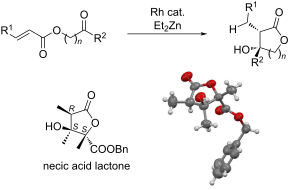
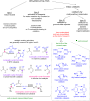
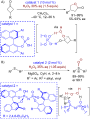
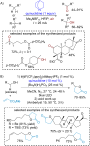
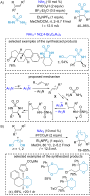
- . Mechanistic investigation of the intramolecular cyclization The reaction mechanism of the intramolecular cyclization can only be speculative at this stage. We have already reported the generation of a rhodium hydride (Rh–H) complex from RhCl(PPh3)3 and Et2Zn, in which the reaction with tert-butyl acrylate


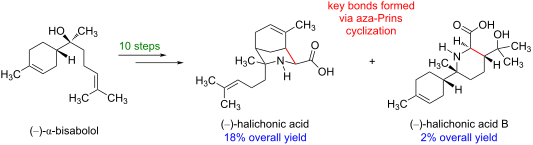
Synthesis of (−)-halichonic acid and (−)-halichonic acid B
Beilstein J. Org. Chem. 2022, 18, 1629–1635, doi:10.3762/bjoc.18.174
- using hydride reducing agents [13]. Nevertheless, specialized conditions for achieving C–N-bond cleavage of amides using SmI2 [13], Tf2O/Et3SiH [14], and stoichiometric Schwartz’s reagent [15] have been reported; however, none of these methods was successful in reducing amide 5 to the desired amine 4
- . Although there is one literature example of directly reducing a benzamide with diisobutylaluminum hydride (DIBAL) to achieve C–N-bond cleavage [16], we observed exclusive over-reduction of compound 5 under these conditions to form the corresponding N-benzylamine, even at −78 °C. We next investigated the
- reducing agent sodium bis(2-methoxyethoxy)aluminum hydride (Red-Al®), which is a convenient alternative to LiAlH4 that exhibits high solubility in organic solvents and is also known to reduce amides [17]. When a solution of amide 5 in toluene was treated with an excess of Red-Al® at 0 °C, rapid gas


A study of the DIBAL-promoted selective debenzylation of α-cyclodextrin protected with two different benzyl groups
Beilstein J. Org. Chem. 2022, 18, 1553–1559, doi:10.3762/bjoc.18.165
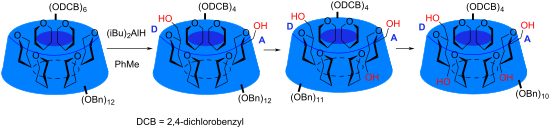
- secondary alcohols was prepared and subjected to DIBAL (diisobutylaluminum hydride)-promoted selective debenzylation. Debenzylation proceeded by first removing two dichlorobenzyl groups from the 6A,D positions and then removing one or two benzyl groups from the 3A,D positions. Keywords: aluminum hydrides
- temperature control during the acetolysis step. The silylation method requires careful drying of 1 before the silylation but is otherwise experimentally simple. Hexol 6 was then DCB-protected using 2,4-dichlorobenzyl chloride and sodium hydride in DMSO. As self-condensation of the alkylating agent is possible


One-pot synthesis of 2-arylated and 2-alkylated benzoxazoles and benzimidazoles based on triphenylbismuth dichloride-promoted desulfurization of thioamides
Beilstein J. Org. Chem. 2022, 18, 1479–1487, doi:10.3762/bjoc.18.155

- reaction of o-alkoxythiobenzamides with iodine in the presence of sodium hydride as the base [11]. Sugita et al. reported an unstable iodoalkyne, pentafluoro(iodoethynyl)benzene, which catalyzed the cyclization of thioamides with 2-aminophenol [12]. These approaches have some drawbacks, such as low yields


Characterization of a new fusicoccane-type diterpene synthase and an associated P450 enzyme
Beilstein J. Org. Chem. 2022, 18, 1396–1402, doi:10.3762/bjoc.18.144
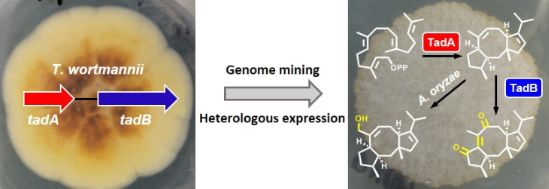
- ], MgMS [20], CotB2 [19], and CpCS [21] have been deciphered. All these enzymes undergo a common C1,11–C10,14-bicyclization to form a C15 carbocation, but differ a lot at the following C2,6 cyclization (Scheme 1B). CotB2 and CpCS trigger the C2,6 cyclization via a distant hydride shift, whereas PaFS



Preparation of an advanced intermediate for the synthesis of leustroducsins and phoslactomycins by heterocycloaddition
Beilstein J. Org. Chem. 2022, 18, 1385–1395, doi:10.3762/bjoc.18.143
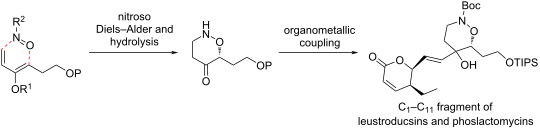
- under argon. Acetonitrile, dichloromethane, DMSO, DMF and toluene were distilled over calcium hydride under argon. All other reagents were used as received. Chromatographic purifications refer to flash chromatography on silica gel. 1H NMR spectra were measured at 250, 300, 360 or 400 MHz using CDCl3 as


B–N/B–H Transborylation: borane-catalysed nitrile hydroboration
Beilstein J. Org. Chem. 2022, 18, 1332–1337, doi:10.3762/bjoc.18.138
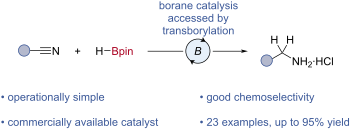
- ]. Traditionally, the reduction of nitriles to primary amines relied on stoichiometric hydride reagents [4]. Current catalytic methods for nitrile reduction, hydrogenation [5][6] or hydroboration [7][8], generally rely on metal catalysts, designer ligands, forcing reaction conditions (such as elevated temperatures


Understanding the competing pathways leading to hydropyrene and isoelisabethatriene
Beilstein J. Org. Chem. 2022, 18, 972–978, doi:10.3762/bjoc.18.97
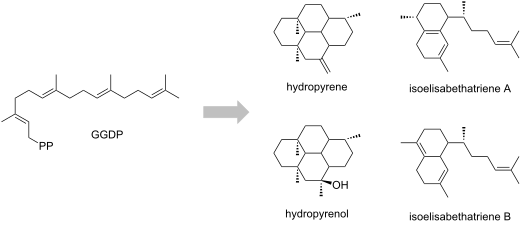
- pyrophosphate (FPP), and geranylgeranyl pyrophosphate (GGPP), to produce mono-, sesqui-, and diterpenes, respectively. The formation of terpenes relies on an assortment of carbocation steps like cyclization, methyl migrations, rearrangements, proton or hydride transfers, hydroxylations, and epoxidations. TPS
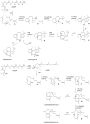
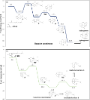
- -phase calculations commenced with geranylgeranyl cation (A and A’) in a fully extended form. HP pathway The HP gas-phase pathway commences with a C1–C10 cyclization, which yields cation B, which is more stable than A by −11.4 kcal/mol. A subsequent 1,3-hydride transfer results in an allyl cation (C
- ), which is −18.5 kcal/mol more stable than A. The barrier for the 1,3-hydride transfer is 16.2 kcal/mol for B→C. Subsequently, the double bond on C14–C15 reacts with the cationic charge on C1 to form intermediate D, which is slightly less stable than C (−17.3 kcal/mol) In the enzyme environment



Anti-inflammatory aromadendrane- and cadinane-type sesquiterpenoids from the South China Sea sponge Acanthella cavernosa
Beilstein J. Org. Chem. 2022, 18, 916–925, doi:10.3762/bjoc.18.91
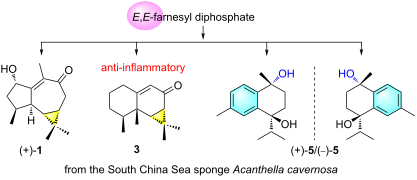
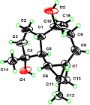
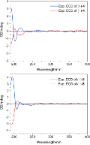
- ], which was further oxidized to afford 2. On the other hand, the aristolane cyclization route is started from protonation on Δ4,5 of B and followed by 5,10-cyclization to give maaliane-type carbocation intermediate F. Then, a successive transformation involving the concerted 1,2-hydride and 1,2-methyl
- isomerized to nerolidyl diphosphate (NPP), followed by the 6,7-bond formation to generate carbocation intermediate I (Scheme 1, II) [31]. Sequential 1,3-hydride shift and 1,6-cyclization occurred to afford cadinyl cation (J). Further 1,3-hydride shift and deprotonation on J resulted in cadina-1(6),4-diene (L






Synthetic strategies for the preparation of γ-phostams: 1,2-azaphospholidine 2-oxides and 1,2-azaphospholine 2-oxides
Beilstein J. Org. Chem. 2022, 18, 889–915, doi:10.3762/bjoc.18.90
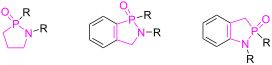
- )(phenyl)phosphinate (53) was reduced with lithium aluminum hydride to 2-aminobenzyl(phenyl)phosphine (57). It was oxidized with sulfur to give zwitterionic 2-aminobenzyl(phenyl)dithiophosphinic acid (58), which underwent thermal elimination of hydrogen sulfide to yield 2-phenyl-1,3-dihydrobenzo[d][1,2
- presence of sodium hydride in dioxane, affording tricyclic γ-phosphonolactams 74, 78, and 81 in low to moderate yields (Scheme 14) [34]. In 2005, Aladzheva and co-workers prepared γ-phosphonolactams 85 from the substitution of ethyl 2-(3-chloropropyl)aminoalkanoates 82 derived from glycine and ᴅʟ-alanine








DDQ in mechanochemical C–N coupling reactions
Beilstein J. Org. Chem. 2022, 18, 639–646, doi:10.3762/bjoc.18.64
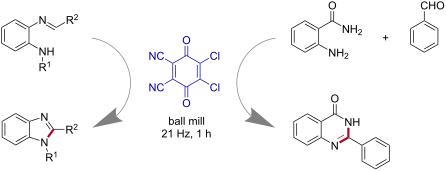
- moiety in 2,3-dichloro-5,6-dicyano-1,4-benzoquinone (DDQ), it was well established as a hydride transfer reagent in various organic reactions [14][15]. Generally, DDQ assists in dehydrogenation reactions in organic synthesis [16]. In this context, various carbon–heteroatom bond formation reactions such
- reaction. So, based on literature reports [53][54][55], we have proposed a reaction mechanism in Figure 5b. Initially, DDQ abstracts a hydride ion from substrate 1a to generate the intermediate A. Then intermediate A undergoes an electrophilic intramolecular cyclization to form the cationic intermediate B
- , followed by hydride abstraction to generate the desired product 2a. On the other hand, the formation of quinazolin-4(3H)-ones starts with the formation of an imine intermediate and then it will follow the similar mechanistic pathway. To explore the synthetic utility of the oxidative C–N cross-coupling


Heteroleptic metallosupramolecular aggregates/complexation for supramolecular catalysis
Beilstein J. Org. Chem. 2022, 18, 597–630, doi:10.3762/bjoc.18.62
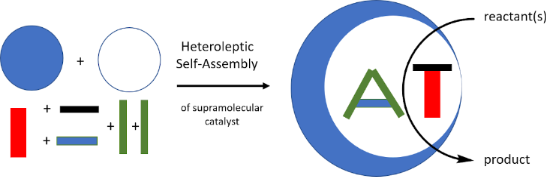
- hydride species 49 that is well known for hydroformylation reactions [77]. Incorporation of the monoligated catalyst into the confined cavity of the capsule showed very good catalytic activity towards the hydroformylation of styrene (50, Figure 11) with a high stereoselectivity (65% ee) at 32% conversion


Tosylhydrazine-promoted self-conjugate reduction–Michael/aldol reaction of 3-phenacylideneoxindoles towards dispirocyclopentanebisoxindole derivatives
Beilstein J. Org. Chem. 2022, 18, 469–478, doi:10.3762/bjoc.18.49
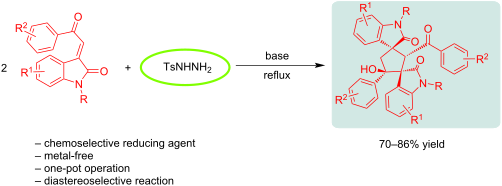
- mechanism is shown in Scheme 4. At first, tosylhydrazine as hydride source [29] promotes reduction of 3-phenacylideneoxindole towards 3-phenacylindolinone A. Then, under basic conditions, the carbanion of 3-phenacylindolinone, which acts as Michael donor, is formed. After this the carbanion undergoes


A resorcin[4]arene hexameric capsule as a supramolecular catalyst in elimination and isomerization reactions
Beilstein J. Org. Chem. 2022, 18, 337–349, doi:10.3762/bjoc.18.38
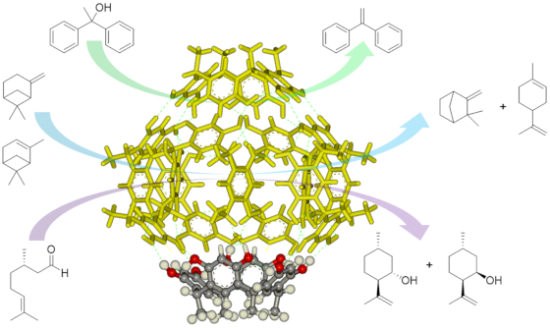
- ] without observing any product formation with 10 mol % of capsule after 24 h at 60 °C. Similarly, the carvone isomerization [54] involving protonation of the exocyclic double bond of the substrate followed by two hydride shifts and aromatization to carvacrol did not proceed at all with 10 mol % of capsule


Site-selective reactions mediated by molecular containers
Beilstein J. Org. Chem. 2022, 18, 309–324, doi:10.3762/bjoc.18.35
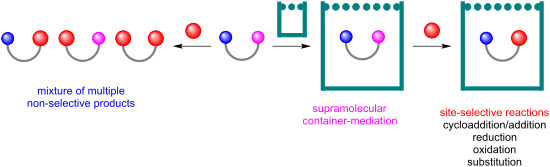
- epoxide guest formed a 2:1 complex, and the internal reactive site of the epoxide was protected by the cyclodextrin host. Therefore, only the terminal site was attacked by the incoming hydride leading to epoxide-ring opening and formation of 1-phenyl-2-propanol (17). Utilizing the similar molecular





