


Search results
Search for "acidity" in Full Text gives 296 result(s) in Beilstein Journal of Organic Chemistry. Showing first 200.
The charge-assisted hydrogen-bonded organic framework (CAHOF) self-assembled from the conjugated acid of tetrakis(4-aminophenyl)methane and 2,6-naphthalenedisulfonate as a new class of recyclable Brønsted acid catalysts
Beilstein J. Org. Chem. 2020, 16, 1124–1134, doi:10.3762/bjoc.16.99
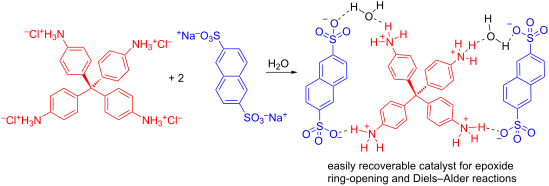
- Supporting Information File 1) to be 4.94, 4.46, 4.04, and 3.79. Thus, the difference in the acidity of the NDS and TAPM components was large enough to ensure a complete salt formation. Solid F-1 was practically insoluble in organic solvents with the exception of DMSO. The analytical data supported its
- . However, the framework F-1 underwent “breathing” in organic solvent solutions (see below), which allowed catalytic sites to become available without the need for a pore structure in the desolvated material. The calculated acidity of the components of F-1 (see above) indicated possible catalytic
- incorporating multitopic tectons with a greater number of negatively charged sulfonate groups mutually rigidly fixed in space. Such arrangement should produce large pores within the framework and further reduce the framework’s solubility in water and organic solvents. Additionally, the acidity of these




Fluorinated phenylalanines: synthesis and pharmaceutical applications
Beilstein J. Org. Chem. 2020, 16, 1022–1050, doi:10.3762/bjoc.16.91
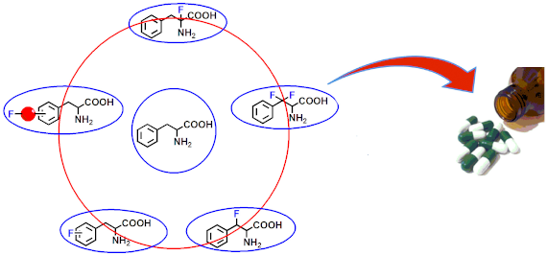
- size of fluorine, the next in size to hydrogen. However, the high electronegativity of the fluorine leads to low polarizability and a strong covalent bond to carbon [1][2][3][4]. Therefore, the introduction of fluorine into phenylalanine (Phe) can modulate the acidity, basicity, hydrophobicity
- the properties of peptides and proteins [5][6][7], influencing aspects such as protein folding, protein–protein interactions, ribosomal translation, lipophilicity, acidity/basicity, optimal pH, stability, thermal stability, and therapeutic properties [8][9][10]. This extends to metabolic properties of


Efficient synthesis of piperazinyl amides of 18β-glycyrrhetinic acid
Beilstein J. Org. Chem. 2020, 16, 798–808, doi:10.3762/bjoc.16.73
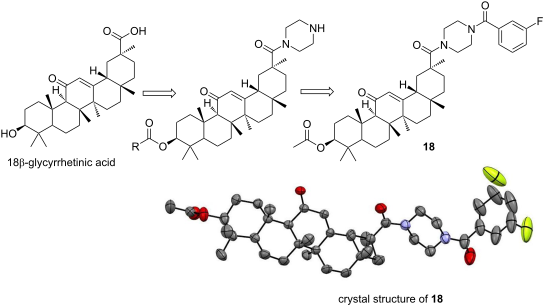
- factor is that the acidity of chloroacetic acid (pKa = 2.87) was stronger than that of acetic acid (pKa = 4.76). The procedure for the generation of byproduct 11 was similar to N-Boc-deprotection using trifluoroacetic acid. The effective synthesis of compound 10 was then explored (Table 3). In our


Asymmetric synthesis of CF2-functionalized aziridines by combined strong Brønsted acid catalysis
Beilstein J. Org. Chem. 2020, 16, 638–644, doi:10.3762/bjoc.16.60
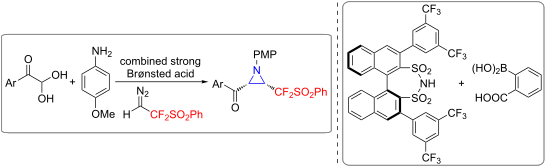
- no enantioselectivity at all. As arylboronic acids have been harnessed to enhance the Brønsted acidity in asymmetric organocatalysis in combination with chiral diols or chiral aminoalcohols [40][41][42][43][44], we envisioned that the simultaneous use of arylboronic acids and chiral Brønsted acids
- limited Brønsted acidity of chiral phosphoric acids. Bearing this in mind, we then turned our attention to chiral disulfonimides developed by List, which have been established as a unique type of stronger Brønsted acids [45]. Putting it into practice, a range of BINOL-derived disulfonimides was used as
- attributed to the increased Brønsted acidity when the strong electron-withdrawing trifluoromethyl group was placed on the benzene ring of the arylboronic acid. Removing the boronic acid from the reaction system leads to a dramatic decrease in both yield and enantiocontrol (Table 1, entry 16). The challenge


Architecture and synthesis of P,N-heterocyclic phosphine ligands
Beilstein J. Org. Chem. 2020, 16, 362–383, doi:10.3762/bjoc.16.35
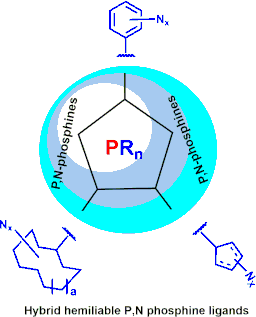
- , Scheme 23) which could only be obtained by using a strong base such as n-BuLi for proton abstraction, probably due to a reduced acidity induced by the positive inductive effect of the substituents. The use of a weaker base such as triethylamine did not result in the targeted compounds and the authors




Why do thioureas and squaramides slow down the Ireland–Claisen rearrangement?
Beilstein J. Org. Chem. 2019, 15, 2948–2957, doi:10.3762/bjoc.15.290
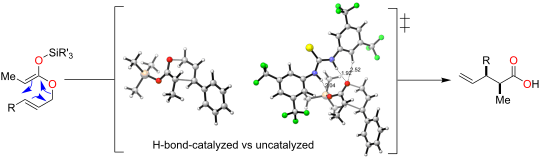
- demanding ones, e.g., C6, C9 or C11. In addition, the acidity of the hydrogen-bond-donating moiety also ranges over a rather large area from pKa (H2O) 1 for phosphoric acid C10 to pKa (DMSO) 28 of diols C7 and C8. However, neither steric factors, nor the acidity of the H-bond-donor moiety seemed to play a


Small anion-assisted electrochemical potential splitting in a new series of bistriarylamine derivatives: organic mixed valency across a urea bridge and zwitterionization
Beilstein J. Org. Chem. 2019, 15, 2277–2286, doi:10.3762/bjoc.15.220
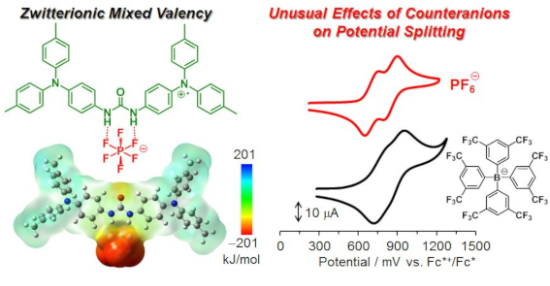
- used for anion recognition [27][28][29]. In the oxidized state, the enhanced acidity of NH protons can increase the strength of H-bonds and give them more dynamic properties, which can be useful for refined designs of supramolecular systems [30] and proton-coupled electron-transfer systems [31][32][33
- oxidation from 1 to 1+ (Supporting Information File 1, Figure S5). The enhanced acidity of the NH protons in 1b+, compared to that in 1b, was well predicted by electrostatic potential maps. The positive regions (blue) were found around the two hydrogen atoms of the urea bridge in the electrostatic potential
- 2.75 Å), primarily reflecting the absence of packing in the former. In the optimized structure of 1a+–PF6−, the N–H···F hydrogen-bonding was comparable to that in 1b+–PF6− with regard to the atomic geometry and the N···F distances. The increased acidity of 1 upon one-electron-oxidation enhances the


Recent advances in transition-metal-catalyzed incorporation of fluorine-containing groups
Beilstein J. Org. Chem. 2019, 15, 2213–2270, doi:10.3762/bjoc.15.218
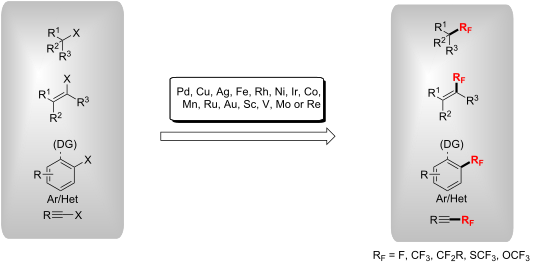
- similar to that of hydrogen atoms. Due to these unique properties, the introduction of fluorine into a molecule can cause dramatic changes, such as the acidity or basicity of neighboring groups, dipole moment, and properties such as lipophilicity, metabolic stability, and bioavailability [1]. Consequently








1,2,3-Triazolium macrocycles in supramolecular chemistry
Beilstein J. Org. Chem. 2019, 15, 2142–2155, doi:10.3762/bjoc.15.211
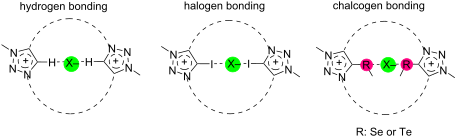
- in the literature in which they bind to the anionic species by utilizing multiple noncovalent interactions based on electrostatics, including hydrogen bonding (HB), anion–π interactions [30], and on Lewis acidity/basicity [31]. 2.1. Bile acid-based 1,2,3-triazolium macrocycles Bile acid-based
- density of the triazolium derivative. Rigid macrocycles 12 display selective complexation with I− because of the complementary size of the cavity of the macrocyclic ring and the iodide ion. In addition, the acidity of the inner protons of 12 is higher than the corresponding neutral analogue which also
- also determined the dissociation constant pKa of this acid−base switchable MIM system by an indicator method which could make a quantitative and precise estimation of its dynamics with environmental acidity change. By combining NMR spectroscopic data and quantum chemistry calculations, a motion




Reactions of 2-carbonyl- and 2-hydroxy(or methoxy)alkyl-substituted benzimidazoles with arenes in the superacid CF3SO3H. NMR and DFT studies of dicationic electrophilic species
Beilstein J. Org. Chem. 2019, 15, 1962–1973, doi:10.3762/bjoc.15.191
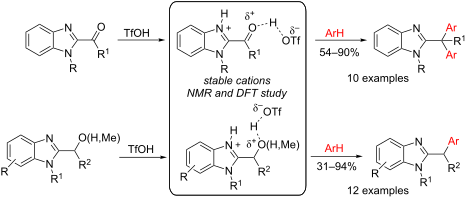
- AlCl3 and AlBr3 took longer time (24–27 h, Table 3, entries 1, 2, and 4). In some cases, the use of H2SO4 resulted in the formation of oligomeric reaction products in the reaction of 1 with electron donating p-xylene (Table 3, entry 10). Apart from that, the acidity of H2SO4 was not high enough to


Recent advances on the transition-metal-catalyzed synthesis of imidazopyridines: an updated coverage
Beilstein J. Org. Chem. 2019, 15, 1612–1704, doi:10.3762/bjoc.15.165
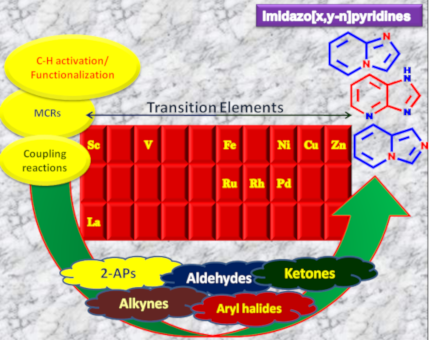
- performed a Cu(OAc)2-Et3N-mediated coupling reaction of α-azido ketones 115 with pyridinium ylides 114 using oxygen as a green oxidant (Scheme 40). The oxo-functionality present in α-azido ketones increased its acidity thus making it a good organic synthon. Optimization of the reaction conditions revealed


Enantioselective PCCP Brønsted acid-catalyzed aza-Piancatelli rearrangement
Beilstein J. Org. Chem. 2019, 15, 1569–1574, doi:10.3762/bjoc.15.160
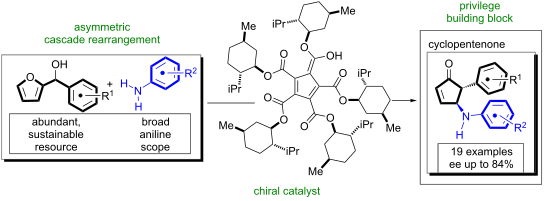
- (Figure 1) [38]. First, the pKa values measured in acetonitrile (MeCN) are lower than chiral phosphoric acids (Brønsted acid pKa = 8.85 vs chiral phosphoric acids pKa = 12–14) [38]. Given the enhanced acidity, we reasoned that this type of chiral Brønsted acid catalyst could facilitate the dehydration


Superelectrophilic carbocations: preparation and reactions of a substrate with six ionizable groups
Beilstein J. Org. Chem. 2019, 15, 1515–1520, doi:10.3762/bjoc.15.153
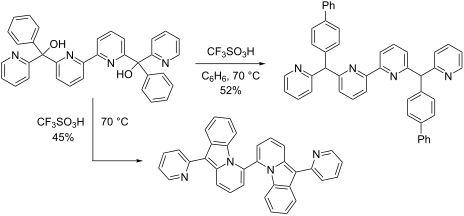
- high degree of delocalization into the neighboring phenyl group. Both the trication 3 and the tetracation 4 were directly observed from FSO3H–SbF5 solution using low temperature NMR. Experimental observations also revealed an exceptionally high acidity of the pyridinium N–H bonds. Here, we describe the




Synthesis of non-racemic 4-nitro-2-sulfonylbutan-1-ones via Ni(II)-catalyzed asymmetric Michael reaction of β-ketosulfones
Beilstein J. Org. Chem. 2019, 15, 1289–1297, doi:10.3762/bjoc.15.127
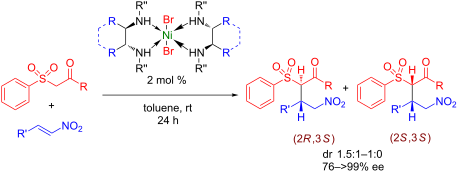
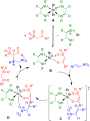
- ) complexes [56]. The above considerations lead to the use of β-ketosulfones in the Ni(II)-catalyzed reaction, since the proposed mechanism [47], that involves the formation of cyclic Ni enolate, and the high CH acidity of ketosulfones (pKa 9.8–10.5 [4]). The formation of the key intermediate can be provided
- organocatalysts [58][59][60][61]. This was explained by the authors as a result of the high CH acidity of the corresponding Michael adducts. The highest reaction rate with good enantioselectivity is achieved using catalyst 7a (Table 1, entry 1). For this reason, further studies were carried out with catalyst 7a




Doebner-type pyrazolopyridine carboxylic acids in an Ugi four-component reaction
Beilstein J. Org. Chem. 2019, 15, 1281–1288, doi:10.3762/bjoc.15.126
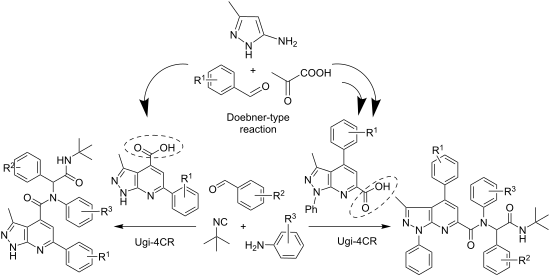
- optimal acidity to the reaction medium needed for successful protonation of the intermediate azomethine, formed between the aromatic aldehyde 8 and aniline 9, to the corresponding iminium cation and its further transformation involving carboxylic acid 4 and isocyanide 10. As a result, we developed an


Robust perfluorophenylboronic acid-catalyzed stereoselective synthesis of 2,3-unsaturated O-, C-, N- and S-linked glycosides
Beilstein J. Org. Chem. 2019, 15, 1275–1280, doi:10.3762/bjoc.15.125
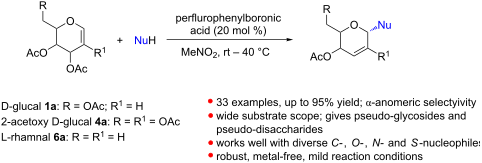
- , entry 1). This is attributed to its low acidity. Gratifyingly, the more acidic perflurophenylboronic acid successfully promoted the reaction to give 4,6-di-O-acetyl-2,3-unsaturated glucoside 3a in CH3CN or CH3NO2 solvents (Table 1, entries 3 and 4). It gave better 92% yield of glucoside 3a in CH3NO2



Electrophilic oligodeoxynucleotide synthesis using dM-Dmoc for amino protection
Beilstein J. Org. Chem. 2019, 15, 1116–1128, doi:10.3762/bjoc.15.108
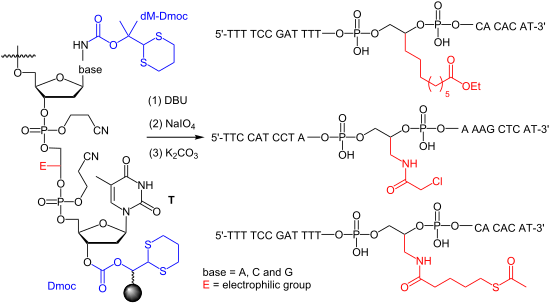
- linkers for ODN synthesis [40][41]. Due to the low acidity of H-2 (pKa ≈31) in the Dmoc function, these groups and linkers were expected to be stable under ODN synthesis conditions. However, once the dithioketal in the group is oxidized, the acidity of H-2 (pKa ≈12) is drastically increased [42][43






Catalytic asymmetric oxo-Diels–Alder reactions with chiral atropisomeric biphenyl diols
Beilstein J. Org. Chem. 2019, 15, 955–962, doi:10.3762/bjoc.15.92
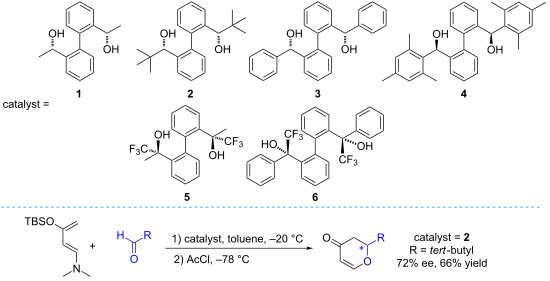
- hydroxy and NH units for hydrogen bonding activation, % ee and yields in oxo-DA reactions were found to be enhanced with increasing NH acidity, leading to stronger hydrogen bonds [32]. So, there is much room for further investigation and improvement with other hydrogen bonding organocatalysts. An earlier
- other biphenyl hybrid diols with different steric bulky substituents were incorporated (3 and 4). Since it is known that the catalyst acidity has significant influence on hydrogen-bond-catalyzed reactions [32], we also incorporated a CF3 group in our molecular scaffold to investigate how it would affect


Tuning the stability of alkoxyisopropyl protection groups
Beilstein J. Org. Chem. 2019, 15, 746–751, doi:10.3762/bjoc.15.70
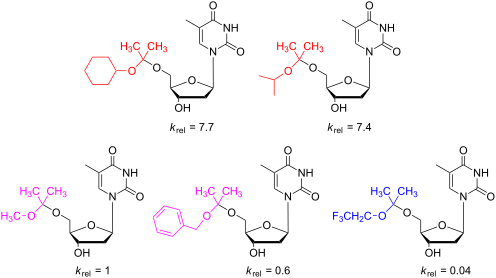
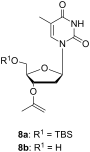
- (Scheme 2). Experimental data on the acidity of the 5’- and 3’-hydroxy groups of thymidine are not available, but computed NBO charges suggest that the electronic properties of both hydroxy functions are close to each other [10]. Our DFT level calculations indicated that the 3’-hydroxy function is
- slightly more acidic than the 5’-hydroxy group, but absolute values for the acidity constants could not be reliably determined. The hydrolysis of the acetals is suggested to follow most often the A-1 mechanism via formation of an oxocarbenium ion [11]. Polarity effects and the stability of the formed
- observed rate constants are proportional to the acidity of the alcohol moieties corresponding to the varied stems of the acetal structures: the hydrolysis rate steadily decreases with increasing electron-withdrawing ability of the alkyl group. A comparison of this observation with the results of Salomaa



Study on the regioselectivity of the N-ethylation reaction of N-benzyl-4-oxo-1,4-dihydroquinoline-3-carboxamide
Beilstein J. Org. Chem. 2019, 15, 388–400, doi:10.3762/bjoc.15.35
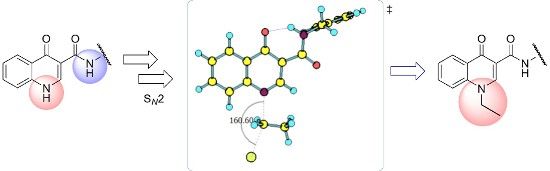
- one-dimension spectra of compound 7 are available in Supporting Information File 1. Theoretical data Two main approaches were considered to better understand the reactivity of substrate 5 and, consequently, the regioselectivity of the reaction: quantification of the acidity of the N–H units and
- comparative analysis of the possible reaction paths. Acidity of the N–H units A first possibility to rationalize the reactivity of carboxamide 5 was its deprotonation to produce a nucleophilic species which would then attack the bromoethane to produce the derivatives 7 or 11. Therefore, we considered the
- deprotonation of both the oxoquinoline core and the carboxamide N–H sites, followed by the alkylation of the respective anion 8a and 8b, providing two possible products 7 and 11, from which the results obtained could be compared (Scheme 3). The acidity of both carboxamide and oxoquinoline N–H sites were


Sigmatropic rearrangements of cyclopropenylcarbinol derivatives. Access to diversely substituted alkylidenecyclopropanes
Beilstein J. Org. Chem. 2019, 15, 333–350, doi:10.3762/bjoc.15.29
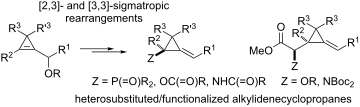
- formation of alkylidenecyclopropanes 58a (86%), 58b (60%) and 58c (84%). It is worth mentioning that despite the use of a strong base (KHMDS) and the acidity of the “vinylic” protons of cyclopropenes which is comparable to that of a terminal alkyne [62], cyclopropenylcarbinyl glycolates devoid of
- 60 was converted into glycolate 61 under standard conditions and the latter ester was engaged in the Ireland–Claisen rearrangement. Because the gem-diester substitution at C3 increased the acidity of the proton at C2 in substrate 61 [64], silylation of that position took place under the reaction

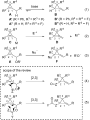


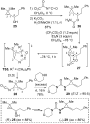


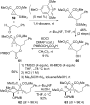


Silanediol versus chlorosilanol: hydrolyses and hydrogen-bonding catalyses with fenchole-based silanes
Beilstein J. Org. Chem. 2019, 15, 167–186, doi:10.3762/bjoc.15.17
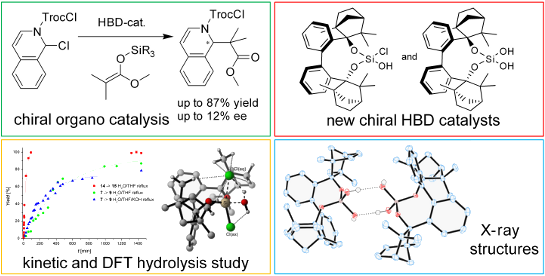
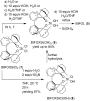
- [58] makes BIFOL (5) a potentially promising chiral backbone for new organo silicates, e.g., silanediol 9 (Figure 1). As a silicic acid ester, silanediol 9 should show increased acidity in comparison to C–Si(OH)2 derivates, e.g., 1–4 [40]. In this work the syntheses of BIFOXSiCl2 (7), BIFOXSi(OH)2 (9
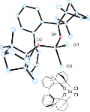
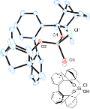
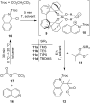
- reported silanediol derivatives 2a and 2b [43], an increase of acidity of one outward facing OH group is achieved by intermolecular hydrogen bonds [43]. Chloride binding The X-ray crystal structures of chlorosilanol 8 (Figure 17) and silanediol 9 (Figure 16) with co-crystallized acetone indicate the








MoO3 on zeolites MCM-22, MCM-56 and 2D-MFI as catalysts for 1-octene metathesis
Beilstein J. Org. Chem. 2018, 14, 2931–2939, doi:10.3762/bjoc.14.272
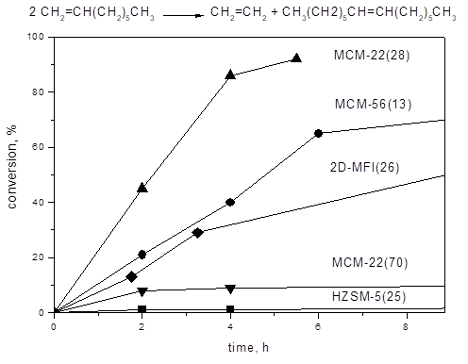
- ‘ acidity and accessibility of the catalytic species on the surface. On the other hand the supports‘ acidity decreases the selectivity to the main metathesis product C14 due to an acid-catalyzed double bond isomerization (followed by cross metathesis) and oligomerization. 6MoO3/2D-MFI(26) with a lower
- metathesis catalysts [1]. Albeit typical ill-defined catalysts they are still popular as relatively cheap catalysts finding industrial applications especially in the treatment of low olefins [2][3][4][5]. Their catalytic activity depends on many factors, especially on Mo loading, support acidity, and pre
- ) where MoO3 signals were clearly visible, probably as a result of lower external surface area. Contrary to the all-siliceous mesoporous sieves (like SBA-15) which are neutral, zeolites are acidic and their acidity (both Brønsted and Lewis-type) plays an important role for catalysis. The acid site


An overview on recent advances in the synthesis of sulfonated organic materials, sulfonated silica materials, and sulfonated carbon materials and their catalytic applications in chemical processes
Beilstein J. Org. Chem. 2018, 14, 2745–2770, doi:10.3762/bjoc.14.253
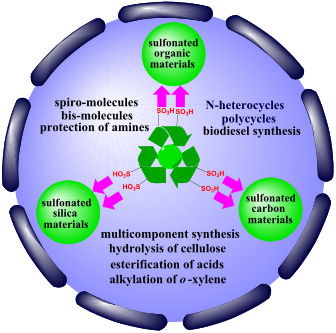
- substance and chlorosulfonic acid for the first time. The authors proposed that the high Brønsted acidity of the catalyst arises mainly from hydrogen bonds between the two -SO3H groups. The catalyst 53 was studied by different analyses including FTIR, 1H NMR, 13C NMR, UV–vis, and fluorescence spectra. Then




Synthesis of functionalised β-keto amides by aminoacylation/domino fragmentation of β-enamino amides
Beilstein J. Org. Chem. 2018, 14, 2602–2606, doi:10.3762/bjoc.14.238
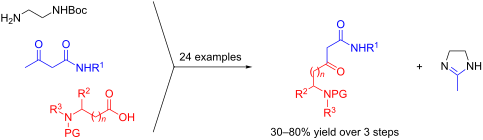
- enolates is one of the main synthetic approaches towards β-keto amides and has found numerous applications [1][2][3][4][5][6][7][8][9]. However, while the generation of tertiary amide enolates is straightforward, this is not the case with secondary and primary amides. The NH acidity of the latter compounds





