


Search results
Search for "activation energy" in Full Text gives 125 result(s) in Beilstein Journal of Organic Chemistry.
New developments in gold-catalyzed manipulation of inactivated alkenes
Beilstein J. Org. Chem. 2013, 9, 2586–2614, doi:10.3762/bjoc.9.294
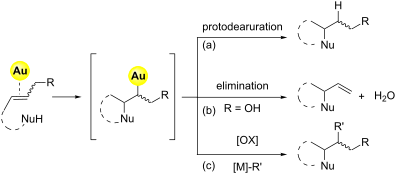
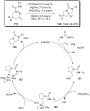
- the real mechanism of the protodeauration step. Interestingly the reaction profile with the lowest activation energy was distinguished in the TfO− promoted tautomerization of 11 to form 12 followed by direct proton transfer to afford the product 13 and regeneration of the catalyst. Intermediates of


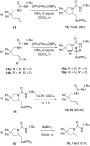

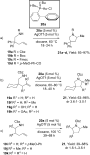
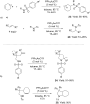





Regioselective carbon–carbon bond formation of 5,5,5-trifluoro-1-phenylpent-3-en-1-yne
Beilstein J. Org. Chem. 2013, 9, 2182–2188, doi:10.3762/bjoc.9.256
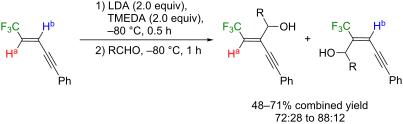
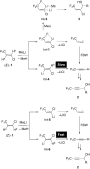
- elucidated as follows: deuteration would quickly occur to afford 4-d1 and 4-d2 whose proportion would reflect the ratio of 4-Li1 and 4-Li2. On the other hand, less reactive aldehydes should be captured more slowly and the product preference of 5 to 6 would be kinetically determined by their activation energy


Cyclization of substitued 2-(2-fluorophenylazo)azines to azino[1,2-c]benzo[d][1,2,4]triazinium derivatives
Beilstein J. Org. Chem. 2013, 9, 1873–1880, doi:10.3762/bjoc.9.219
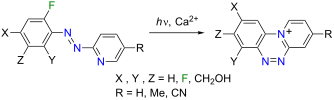
- reaction (NAS) electron-donating groups in the C(4) position of the pyridine ring in 4 should increase the reaction rate. Computational results demonstrate the contrary and as the electron donation of the substituent R increases in the order H (4a) < CH3 (4b) < OCH3 (4g) so does the activation energy
- cyclization process involves 6 π electrons, which allows the formation of the non-zwitterionic product such as 10. Comparison of cyclization of 4c-Z and 13-Z further demonstrates that the activation energy is lower for the azene than for the analogues stilbene, which presumably is related to the
- Table 1. For further probing of the cyclization mechanism, the mildly activating [13][14] N=N-bridging group in 4c–Z was replaced by the non-activating CH=CH group in 13-Z (Figure 6). A computational analysis demonstrated that this structural modification resulted in a modest increase of activation


Gallium-containing polymer brush film as efficient supported Lewis acid catalyst in a glass microreactor
Beilstein J. Org. Chem. 2013, 9, 1698–1704, doi:10.3762/bjoc.9.194
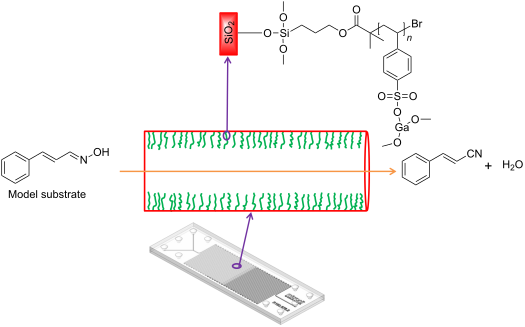
- concentrations of 1 (10–25 µM, Figure 1). The experimental data were fitted to a first-order rate equation, giving an observed rate constant, kobs, of (11 ± 2) × 10−3 s−1. The values of the rate constants at different oxime concentrations were the same, within experimental error. The activation energy of the
- dehydration of oxime 1 was determined by calculating the kobs values at different temperatures ranging from 70–90 °C (Supporting Information, Figure 1), with increments of five degrees. From the slope of the Arrhenius plot (Figure 2), the resulting activation energy was calculated to be 6.55 kJ·mol−1. The


Computational study of the rate constants and free energies of intramolecular radical addition to substituted anilines
Beilstein J. Org. Chem. 2013, 9, 1620–1629, doi:10.3762/bjoc.9.185

- clear that the semi-local TPSS and BP86 functionals strongly underestimate the activation energy of the 5-exo cyclization (by about 3 kcal mol−1) due to the SIE but this behavior is as expected for functionals of this type. The hybrid functional B3LYP slightly overestimates the activation barrier when


Tandem dinucleophilic cyclization of cyclohexane-1,3-diones with pyridinium salts
Beilstein J. Org. Chem. 2013, 9, 1119–1126, doi:10.3762/bjoc.9.124
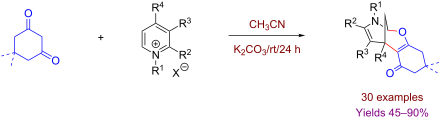
- . Hence, the attack by oxygen on the last stage must be excluded. Within the scope of this mechanism the activation energy is 21.3 kcal/mol (energy gap between 22a and 19). Other TSs (K-S1a-2, K-S1a-3, see Supporting Information File 2), inherent for the initial stage of new C–C bond formation turned out




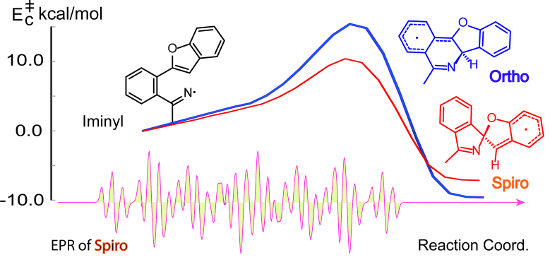
Interplay of ortho- with spiro-cyclisation during iminyl radical closures onto arenes and heteroarenes
Beilstein J. Org. Chem. 2013, 9, 1083–1092, doi:10.3762/bjoc.9.120
- -addition may result from the electron-releasing character of the t-Bu substituent. The SOMO in 9a has a node at C(3) so electron–electron repulsion is smaller than in the SOMOs for para- or ortho-attack. This will lower the activation energy for meta-addition relative to para- or ortho-addition. For all
- spectra [46]. We estimated that the concentration ratio [12a]/[11a] > 4 at 230 K, and hence ksc(230 K) > 55 s−1 (see Supporting Information File 1 for details). Most radical cyclisations have Arrhenius log(Ac) ≈ 10.5 s−1 [47][48] and, by assuming that this holds for 12a, an activation energy Esc < 9 kcal
- the EPR spectra and with the lack of cyclised products. For the parent biphenyliminyl radical 5a the ortho-ring closure (Table 4, entry 5) was computed to have a lower activation energy than spiro-cyclisation (Table 4, entry 4) and to be exothermic in comparison with the endothermic spiro-mode. This


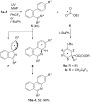


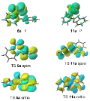
An aniline dication-like transition state in the Bamberger rearrangement
Beilstein J. Org. Chem. 2013, 9, 1073–1082, doi:10.3762/bjoc.9.119
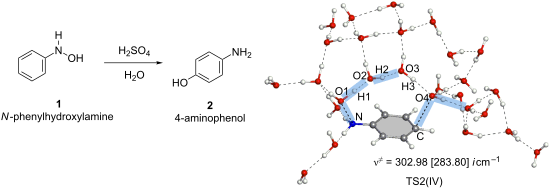
- activation energy similar to the experimental one was obtained. A new mechanism of the rearrangement including the aniline dication-like transition state was proposed. Keywords: Bamberger rearrangement; DFT calculations; N-phenylhydroxylamine; proton transfer; reactive intermediates; transition states
- water from Ar–N+H2OH is rate determining and a diprotonated species, Ar–N+H2OH2+, contributes significantly to the observed reaction rate at the acid-catalyst concentration [H2SO4] > 0.50 mol/L. The activation energy of the rearrangement in Scheme 1 was measured to be 24.8 kcal/mol. The SN1 mechanism


Diastereoselective synthesis of nitroso acetals from (S,E)-γ-aminated nitroalkenes via multicomponent [4 + 2]/[3 + 2] cycloadditions promoted by LiCl or LiClO4
Beilstein J. Org. Chem. 2013, 9, 838–845, doi:10.3762/bjoc.9.96
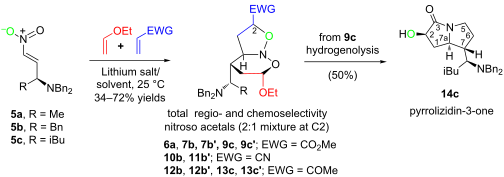
- + 2]-step the role of the Lewis acid is not well established; however, it is reasonable to imagine that lithium can be transferred from the nitronate to the electron-withdrawing group (EWG) of the 1,3-dipolarophile causing a decrease in the activation energy of this step, as similarly proposed by


3-Pyridylnitrene, 2- and 4-pyrimidinylcarbenes, 3-quinolylnitrenes, and 4-quinazolinylcarbenes. Interconversion, ring expansion to diazacycloheptatetraenes, ring opening to nitrile ylides, and ring contraction to cyanopyrroles and cyanoindoles
Beilstein J. Org. Chem. 2013, 9, 743–753, doi:10.3762/bjoc.9.84
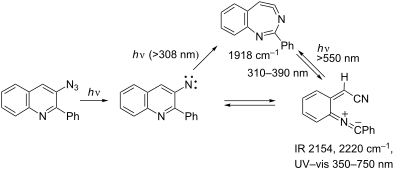
- contraction to 2-cyano-2H-pyrrole (17, Figure 1). Furthermore, a higher proportion of 2-cyanopyrrole would be expected if Scheme 5 was operating. Concerted ring contraction in the 7-membered ring ketenimine 16 is also possible [22], but this type of reaction has an even higher activation energy. The lowest




A computational study of base-catalyzed reactions of cyclic 1,2-diones: cyclobutane-1,2-dione
Beilstein J. Org. Chem. 2013, 9, 594–601, doi:10.3762/bjoc.9.64
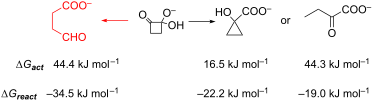
- ). In contrast, path A is not only strongly exergonic but also has a significantly lower activation energy, ΔGreact = –22.2 kcal mol–1 and ΔG≠ = 16.5 kcal mol–1 with respect to Int1. Hence, in agreement with experimental observations [5][6][7], cyclobutane-1,2-dione is calculated to react via benzilic





A new intermediate in the Prins reaction
Beilstein J. Org. Chem. 2013, 9, 476–485, doi:10.3762/bjoc.9.51
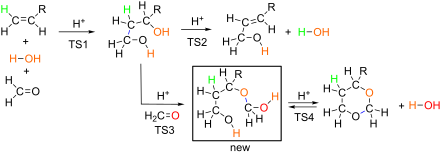
- (Ph). However, TS2(Ph) has a large activation energy, +18.04 kcal/mol. Thus, while ene-ol(Ph) is thermodynamically favorable, it is unfavorable kinetically. The energy of ether(Ph), −12.40 kcal/mol, is again similar to that of dioxane(Ph), −11.12 kcal/mol. Both ether(Ph) and dioxane(Ph) may be





Asymmetric Diels–Alder reaction with >C=P– functionality of the 2-phosphaindolizine-η1-P-aluminium(O-menthoxy) dichloride complex: experimental and theoretical results
Beilstein J. Org. Chem. 2013, 9, 392–400, doi:10.3762/bjoc.9.40
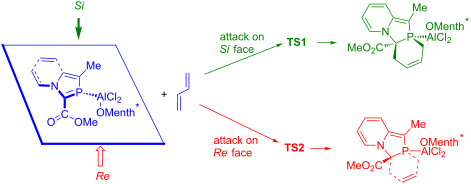
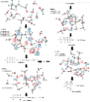
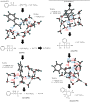
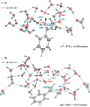
- calculations reveal that the activation energy of the DA reaction is lowered only if the aluminium catalyst is coordinated to the phosphorus atom; when it is coordinated to the carbonyl oxygen atom, the activation energy barrier is rather high as compared to that for the DA reaction of the uncomplexed 2
- diene molecule from the sterically less hindered Si face, reactions involving both endo and exo approaches have been computed, and in contrast to the previous results, we find that the activation energy barrier for the exo approach involving TS2 is smaller than for the endo approach via TS1, by ca. 0.3
- kcal mol−1. Presence of the bulky O-menthoxy moiety possibly makes the exo approach more preferable as compared to the endo approach. In methylene chloride, activation-energy barriers are increased by ca. 1 kcal mol−1. All the reactions are moderately exothermic, and exothermicity remains almost


Spin state switching in iron coordination compounds
Beilstein J. Org. Chem. 2013, 9, 342–391, doi:10.3762/bjoc.9.39
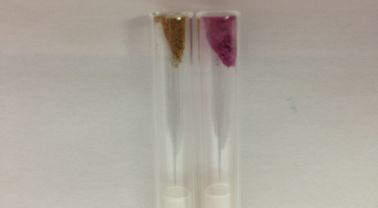
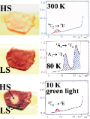
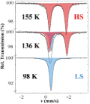
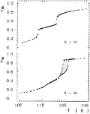
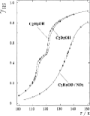
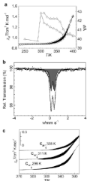
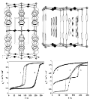
- pressure is neglected in this picture. As a consequence, the zero-point energy difference ΔE0HL increases by the work term pΔV0HL, which in turn decreases the activation energy ΔW0HL and finally favors the LS state. Extensive high-pressure experiments on SCO compounds by using diamond anvil cells have been







![[Graphic 1]](/bjoc/content/inline/1860-5397-9-39-i3.png?max-width=637&scale=1.18182) ) modes versus the anion volu...
) modes versus the anion volu...






Presence or absence of a novel charge-transfer complex in the base-catalyzed hydrolysis of N-ethylbenzamide or ethyl benzoate
Beilstein J. Org. Chem. 2013, 9, 185–196, doi:10.3762/bjoc.9.22
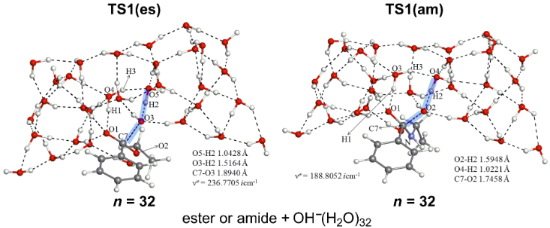
- calculations were carried out to shed light on the five points above, 1–5. As isoelectronic substrates, ethyl benzoate and N-ethylbenzamide were employed, of which the reactions are shown in Scheme 3. The former (ester) reaction has been studied well and its activation energy was reported to be 14.6 kcal/mol
- calculated activation energy +14.45 kcal/mol (exp., +14.6 kcal/mol [47]). While TS2'(es) has a slightly lower energy (= +10.03 kcal/mol) than that (= +10.49 kcal/mol) of TS2(es), the former leads to an unstable intermediate, Ph–C(OH)2–OEt, with the energy +8.86 kcal/mol. Therefore, the possibility {Ph–C(OH)2
- –OEt as the concentration stock} raised in Scheme 5 has been ruled out. The energy changes of Figure 6 (without Na+) demonstrate that the hydrolysis proceeds smoothly and suggest that intermediates may not be detected experimentally. When the Na+ ion is included in the system, the activation energy of




Iron-containing mesoporous aluminosilicate catalyzed direct alkenylation of phenols: Facile synthesis of 1,1-diarylalkenes
Beilstein J. Org. Chem. 2013, 9, 49–55, doi:10.3762/bjoc.9.6
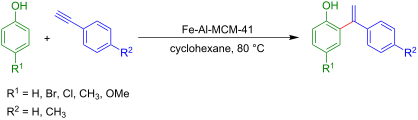
- pretreatment, no conversion was observed (Table 2, entry 3). The basic and the neutral alumina also remained inactive in catalyzing the coupling reaction (Table 2, entries 4 and 5). This may be attributed to the low activation energy or the lack of moisture-free conditions. However, when iron-exchanged Al-MCM
- is directly related to its superior performance in the catalytic reaction. Iron probably has some role in lowering the activation energy of the reaction in synergy with the aluminium moiety present in Al-MCM-41. The short reaction time is probably due to the mesoporous structure of Fe-Al-MCM-41 (pore


Synthesis of oleophilic electron-rich phenylhydrazines
Beilstein J. Org. Chem. 2012, 8, 275–282, doi:10.3762/bjoc.8.29
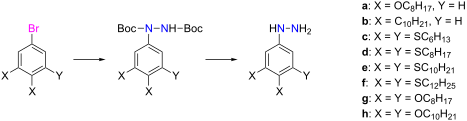
- columnar rectangular phase (Cr 62 (Colr 60) I), a broad absorption band in the visible region, and redox potentials E0/+11/2 = +0.99 V and E0/−11/2 = −0.45 V versus SCE. Photovoltaic studies of 9 demonstrated hole mobility μh = 1.52 × 10⁻³ cm2 V−1s−1 in the mesophase with an activation energy Ea = 0.06


Valence isomerization of cyclohepta-1,3,5-triene and its heteroelement analogues
Beilstein J. Org. Chem. 2011, 7, 1713–1721, doi:10.3762/bjoc.7.201
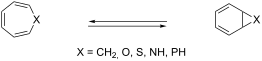
- symmetry conservation rules, studies of chiral substituted cycloheptatrienes showed a preference for the “forbidden” path with inversion of configuration [32][33][34][35]. Finally, a suprafacial [1,5]-hydrogen shift with an activation energy of approximately 31 kcal·mol−1 was unveiled by a high-temperature




Manganese dioxide mediated one-pot synthesis of methyl 9H-pyrido[3,4-b]indole-1-carboxylate: Concise synthesis of alangiobussinine
Beilstein J. Org. Chem. 2011, 7, 1407–1411, doi:10.3762/bjoc.7.164

- reaction mixture. We were also unable to detect any of the nonaromatic intermediate 5, leading us to speculate that the Pictet–Spengler cyclization step, involving conversion of imine 4 to tetrahydrocarboline 5, is the step with the greatest activation energy in the process. In an attempt to lower this


The Eschenmoser coupling reaction under continuous-flow conditions
Beilstein J. Org. Chem. 2011, 7, 1164–1172, doi:10.3762/bjoc.7.135
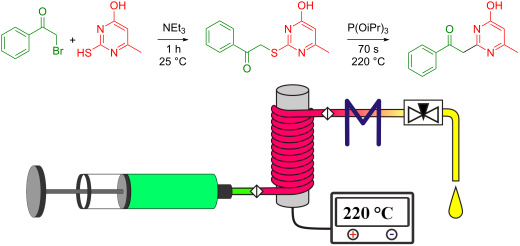
- desired Eschenmoser coupling products were obtained within 70 s residence time. The reaction kinetics was investigated and 15 examples of different building block combinations are given. Keywords: activation energy; episulfide; flow chemistry; keto imine; kinetics; S-alkylation; sulfide contraction
- residence time τ [s]. The resulting kinetic plot is shown in Figure 2 (left). The determined rate constants were used to prepare an Arrhenius plot and for calculation of the activation energy from Equation 2. The resulting Arrhenius plot is shown in Figure 2 (right). An activation energy EA of about 91 kJ
- /mol, and a frequency factor A of about 3.73 × 10⁹ s−1, were found. This activation energy is obviously the reason for the slow reaction kinetics at moderate temperature. Hence, the application of pressurized high temperature conditions should lead to significant reaction intensification. For the


Chiral gold(I) vs chiral silver complexes as catalysts for the enantioselective synthesis of the second generation GSK-hepatitis C virus inhibitor
Beilstein J. Org. Chem. 2011, 7, 988–996, doi:10.3762/bjoc.7.111
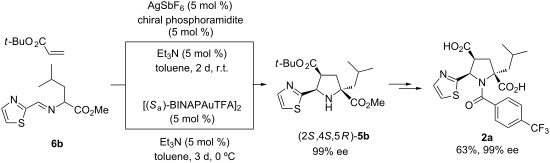
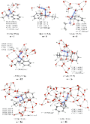
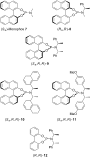
- -hexane:iPrOH 85/15, 0.1 mL/min, λ = 250 nm), tR,maj = 12.5 min, tR,min = 15.5 min. More active GSK HCV inhibitors. Chiral phosphoramidites tested in this study. Gibbs activation energy and main geometrical features of the computed ylide and transition structures (TS) corresponding to the 1,3-DC of the Au(I




Intramolecular hydroxycarbene C–H-insertion: The curious case of (o-methoxyphenyl)hydroxycarbene
Beilstein J. Org. Chem. 2010, 6, 1061–1069, doi:10.3762/bjoc.6.121
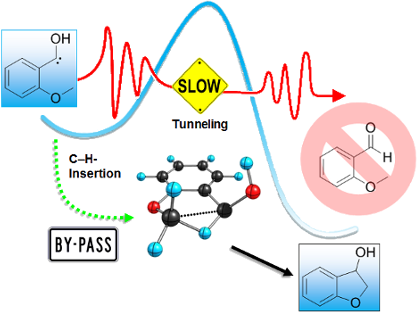
- reactivity of 5, M06-2X/cc-pVDZ computations including a solvent model were performed. These indicate a thermodynamic preference of −12 kcal mol–1 for the insertion product 8 over the aldehyde 7 as well as a 5 kcal mol–1 lower activation energy for the formation of 8. Based on this potential energy


Insights into the mechanical properties of a silicone oil gel with a ‘latent’ gelator, 1-octadecylamine, and CO2 as an ‘activator’
Beilstein J. Org. Chem. 2010, 6, 984–991, doi:10.3762/bjoc.6.111
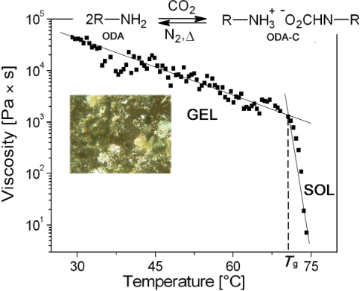
- careful attempts to prepare the gels so that they can be made reproducibly, the activation energy data indicate that we have only been partially successful. The rough trends in the activation energies indicate that the SAFINs of the gels differ at the microscopic level for reasons other than differing




Flow through reactors for organic chemistry: directly electrically heated tubular mini reactors as an enabling technology for organic synthesis
Beilstein J. Org. Chem. 2009, 5, No. 70, doi:10.3762/bjoc.5.70
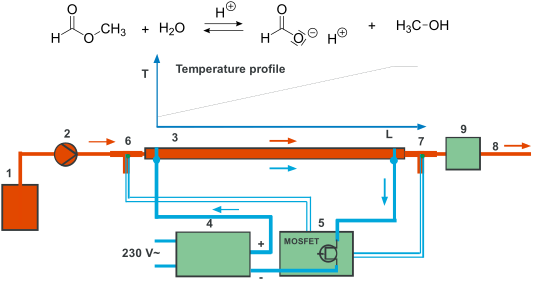
- complete conversion can be reached at approximately 80 °C and a residence time of about one minute. The measurements were used to determine reaction rate constants and the activation energy. As the reaction is first order the reaction rate constants can easily be calculated by where τ is the mean residence
- the activation energy and the pre-exponential factor. To some extent the values for k scatter. This could be based on the conductivity cell which was used for measuring the conversion as it had no temperature control. Measured values showed some influence on fluid temperature. From the Arrhenius plot
- an activation energy of 43.0 kJ mol−1 and a pre exponential factor of 3.27×10⁵ s−1 was determined. The directly heated tubular reactors have low mass and act fast to new temperature settings. After a waiting time of 5 to 6 residence times (which corresponds to a few minutes) the new temperature


High stereoselectivity on low temperature Diels- Alder reactions
Beilstein J. Org. Chem. 2005, 1, No. 14, doi:10.1186/1860-5397-1-14
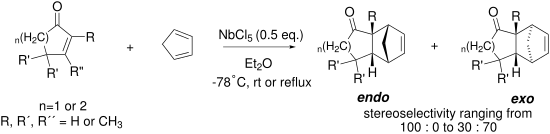
- attack. The resulting lowering of the activation energy usually leads to an enhancement of stereo- and regioselectivity [7]. It was also soon realized that the modifications in the cycloaddition reactions parameters should depend on the Lewis acids used, and a number of authors have performed comparison




