Search results
Search for "benzoquinone" in Full Text gives 134 result(s) in Beilstein Journal of Organic Chemistry.
Synthesis of zearalenone-16-β,D-glucoside and zearalenone-16-sulfate: A tale of protecting resorcylic acid lactones for regiocontrolled conjugation
Beilstein J. Org. Chem. 2014, 10, 1129–1134, doi:10.3762/bjoc.10.112
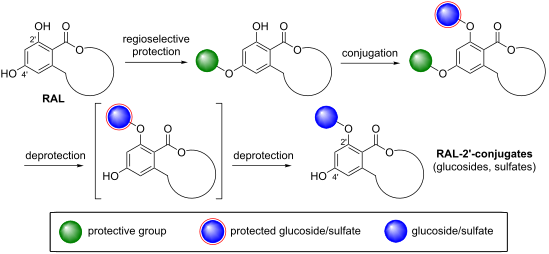
- dry DMF after optimization in terms of base and solvent type (Scheme 4A). Königs–Knorr glucosylation of the PMB-protected mimic 15 afforded 16, which was deprotected using 2,3-dichloro-5,6-dicyano-p-benzoquinone (DDQ) for oxidative PMB cleavage and subsequent ester saponification to yield the desired


The influence of intraannular templates on the liquid crystallinity of shape-persistent macrocycles
Beilstein J. Org. Chem. 2014, 10, 910–920, doi:10.3762/bjoc.10.89
- catalysts and 1,4-benzoquinone as oxidant, the precursor is finally intramolecular cyclized in THF/piperidine under high-dilution conditions by slowly adding (48 hours) a solution of the tetraacetylene to the reaction media. Gel permeation chromatography (GPC) analysis of the crude product indicates that
- can be omitted. For this purpose, we performed the cyclization towards macrocycle 1c not under pseudo high-dilution conditions but by stirring a solution of the complete starting material of 1c at once in THF, piperidine, Pd(PPh3)Cl2 and CuI as catalysts and 1,4-benzoquinone as oxidant for 3 h at 60
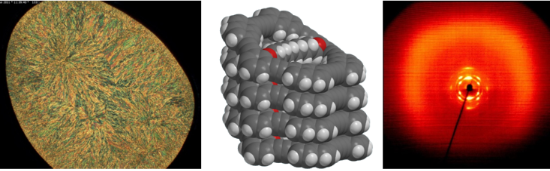
- omitted for clarity); (c) visualization of the intraannular alkyl chain packing within the columns. Synthesis of macrocycle 1a with an intraannular undecanedioxy bridge. a: Pd(PPh3)2Cl2, PPh3, CuI, piperidine, 84%; b: TBAF, THF, 94%; c: Pd(PPh3)2Cl2, CuI, 1,4-benzoquinone, piperidine, THF, 49%. Synthesis


Synthesis of complex intermediates for the study of a dehydratase from borrelidin biosynthesis
Beilstein J. Org. Chem. 2014, 10, 634–640, doi:10.3762/bjoc.10.55
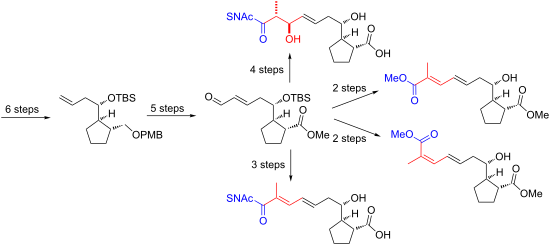
- -dicyano-1,4-benzoquinone, Men = (l)-menthyl, DMP = Dess–Martin periodinane, TMS = trimethylsilyl. Synthesis of the BorDH3 substrates. a) Thiophenolpropionate, Cy2BCl, Me2EtN, Et2O, −78 °C to −20 °C, 16 h (57% over two steps from 12); b) HSNAc, Et3N, DMF, rt, 16 h (70%); c) THF/HCOOH/H2O (6:3:1), rt, 2 d


Synthesis of five- and six-membered cyclic organic peroxides: Key transformations into peroxide ring-retaining products
Beilstein J. Org. Chem. 2014, 10, 34–114, doi:10.3762/bjoc.10.6
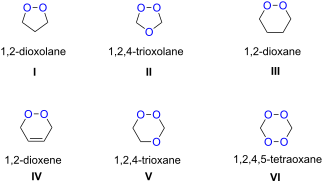
- ). The cyclization was performed in toluene, 1,4-dioxane, or 1,2-dichloroethane at 80 °C for 3 h in the presence of p-benzoquinone or silver carbonate as the oxidizing agent for Pd(0) that was formed in the catalytic cycle. To the best of our knowledge, this method is the first example of a palladium






Halogenated volatiles from the fungus Geniculosporium and the actinomycete Streptomyces chartreusis
Beilstein J. Org. Chem. 2013, 9, 2767–2777, doi:10.3762/bjoc.9.311
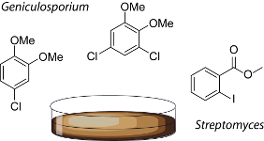
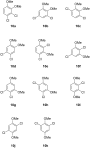
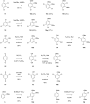
- -dichlororesorcinol (14) provided 10h in 80% yield, and methylation of 2,3-dichlorohydroquinone (16), prepared from benzoquinone (15) by treatment with SO2Cl2 under acidic conditions, generated 10i (13% via two steps). Reduction of 2,6-dichlorobenzoquinone with ascorbic acid to the corresponding hydroquinone 18




A protecting group-free synthesis of the Colorado potato beetle pheromone
Beilstein J. Org. Chem. 2013, 9, 2374–2377, doi:10.3762/bjoc.9.273
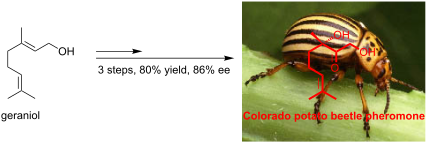
- ) in the presence of either benzoquinone or air as the terminal oxidant [12]. More recently, the transformation of unprotected vicinal polyols to α-hydroxy ketones was achieved by regio- and chemoselective oxidation using catalyst 2 [13]. We used this method for the catalytic regioselective oxidation
- and benzoquinone in CH3CN/water at room temperature. The reaction turned out to be very selective for the secondary alcohol and neither oxidation of the primary alcohol nor of the alkene was observed. (S)-1 was obtained in 91% yield and both 1H NMR and 13C NMR spectra coincided with those reported in
- , tert-butyl hydroperoxide, CH2Cl2, 4 Å MS, –10 to –23 °C, 2 h, 93%, 94:6 er; b) HClO4 (70%), THF/water, rt, 30 min, 94%; c) 0.5 mol % 2, p-benzoquinone, CH3CN/water, rt, overnight, 91%. Synthesis starting from nerol. Reagents and conditions: a) L-(+)-diisopropyl tartrate, Ti(OiPr)4, tert-butyl


The chemistry of isoindole natural products
Beilstein J. Org. Chem. 2013, 9, 2048–2078, doi:10.3762/bjoc.9.243
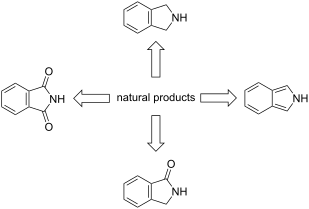
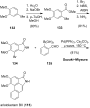
- extensive NMR studies and unambiguously confirmed by a four-step synthesis. In 1991, a more concise and elegant route to this antimicrobial metabolite was established by Schubert-Zsilavecz [11]. The reaction was initiated by heating paraformaldehyde (13) and sarcosine (14) in the presence of benzoquinone 16
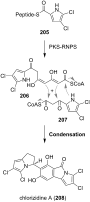
- . This transformation proceeds via a 1,3-dipolar cycloaddition between the in situ formed azomethinylide 15 and the benzoquinone 16 to directly give 17 (Scheme 1). Spontaneous oxidation of the so-obtained cyclization adduct generates isoindole 18. Isoindoles have also found application as dyes. Pigment
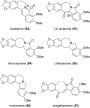
- -benzoquinone (DDQ) gave the dioxocularine yagonine (146). The bioinspired, base-mediated transformation of 146 to 136 obviously proceeds via a benzilic acid rearrangement–oxidation sequence. In 1996, the group of Suau accessed aristocularine 137 along with 149 in one step from acetamide 148. In the presence of


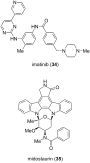


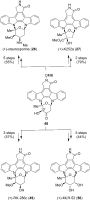








An easy direct arylation of 5-pyrazolones
Beilstein J. Org. Chem. 2013, 9, 2033–2039, doi:10.3762/bjoc.9.240
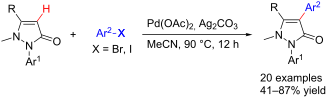
- ). When the reaction was under oxygen (1 atm) in a sealed tube and oxygen was used as an oxidant, product 3a was obtained in 55% yield (Table 1, entry 17). Changing the oxidant to K2S2O8, benzoquinone and Cu(OAc)2 decreased the yield to 5%, 0% and 25%, respectively (Table 1, entries 18–20). When Ag2CO3


Enantioselective synthesis of planar chiral ferrocenes via palladium-catalyzed annulation with diarylethynes
Beilstein J. Org. Chem. 2013, 9, 1891–1896, doi:10.3762/bjoc.9.222
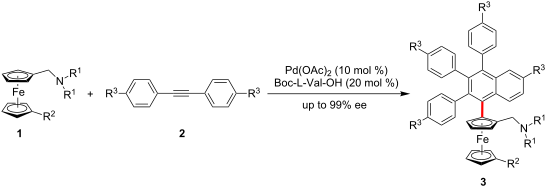
- protecting group on the nitrogen of L-Val-OH was changed to Ac or Cbz, the enantioselectivity slightly decreased (94% ee, entries 10 and 11, Table 1). The oxidants such as Cu(OAc)2, Cu(OTf)2, Ag2CO3, Ag2O, AgOAc and benzoquinone (BQ) were examined but none of them could improve the yield efficiently (for


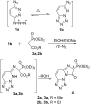
Synthesis and quantitative structure–activity relationship study of substituted imidazophosphor ester based tetrazolo[1,5-b]pyridazines as antinociceptive/anti-inflammatory agents
Beilstein J. Org. Chem. 2013, 9, 1730–1736, doi:10.3762/bjoc.9.199

- our products. Antinociceptive evaluation para-Benzoquinone (p-BQ)-induced writhing test The evaluation of antinociceptive activity of the synthesized compounds was assessed in vivo in mice by using the p-benzoquinone-induced writhing test [26]. Ibuprofen was used as a positive control in our



Palladium(II)-catalyzed Heck reaction of aryl halides and arylboronic acids with olefins under mild conditions
Beilstein J. Org. Chem. 2013, 9, 1578–1588, doi:10.3762/bjoc.9.180
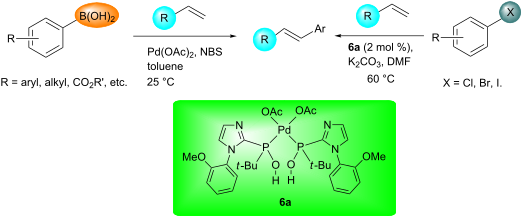
- different reaction conditions employing base-free, ligand-free conditions or by using conventional oxidants such as oxygen, benzoquinone, Cu salts, etc. [48][49][50][51][52][53]. In this article we report two new protocols for Heck cross-coupling reactions: (i) a stable SPO ligated palladium complex 6


Structures of the reaction products of the AZADO radical with TCNQF4 or thiourea
Beilstein J. Org. Chem. 2013, 9, 1487–1491, doi:10.3762/bjoc.9.169

- impressively some TEMPO derivatives with appropriate acceptor units such as 1,4-benzoquinone [7] or naphthalenediimide [8] can form single-component CT complexes by self-assembly. Based on previous results, we next intended to see if similar CT complexes would be formed from AZADO (2) with an appropriate


Synthesis of phenanthridines via palladium-catalyzed picolinamide-directed sequential C–H functionalization
Beilstein J. Org. Chem. 2013, 9, 891–899, doi:10.3762/bjoc.9.102
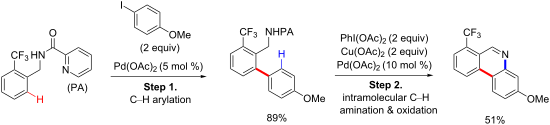
- cyclization and oxidation steps can be performed in one step to give the phenanthridines in a shorter procedure. A variety of oxidants, such as 1,4-benzoquinone (BQ), KMnO4, ceric ammonium nitrate (CAN), and copper salts were examined [46]. The combination of PhI(OAc)2 (2 equiv) and Cu(OAc)2 (2 equiv


Synthesis and evaluation of cell-permeable biotinylated PU-H71 derivatives as tumor Hsp90 probes
Beilstein J. Org. Chem. 2013, 9, 544–556, doi:10.3762/bjoc.9.60
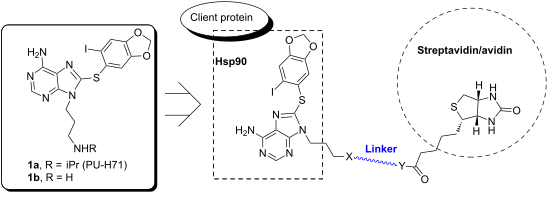
- . Results and Discussion Design and synthesis of biotinylated purine scaffold Hsp90 probes Geldanamycin (GM) is a benzoquinone ansamycin first isolated from a fermentation broth of Streptomyces hygroscopicus [15] and was the first reported Hsp90 inhibitor [16]. It has played a paramount role as a probe


Palladium-catalyzed dual C–H or N–H functionalization of unfunctionalized indole derivatives with alkenes and arenes
Beilstein J. Org. Chem. 2012, 8, 1730–1746, doi:10.3762/bjoc.8.198
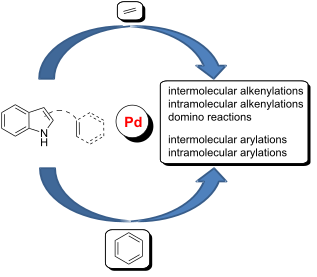
- indole, furan, and benzofuran rings (Scheme 2) [48]. Working with indole and methyl acrylates in the presence of Pd(OAc)2 and 1,4-benzoquinone in catalytic quantity with tert-butyl hydroperoxide as oxidant, 3-alkenyl-substituted products were obtained. The synthetic value of the direct catalytic C–H
- -benzoquinone as the oxidant in a mixture of DMF/THF resulted in the C-3 functionalization of the indole nucleus. Conversely, switching to Pd(OAc)2 with Na2CO3 as a base and Bu4NCl as an additive in DMF provided the indole N–H functionalization. This strategy has also been proven to be operative in effecting
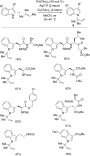
- -alkenylated indoles 27. The pyrimido[3,4-a]indole skeleton 29 was proven to be accessible by intramolecular 6-exo-trig cyclization of the N-alkenylindole 28 with PdCl2(MeCN)2 as catalyst and 1,4-benzoquinone as oxidant in THF/DMF at 80 °C (Scheme 16) [51]. Catalytic oxidative Heck reactions allowed also the




Organocatalytic asymmetric Michael addition of unprotected 3-substituted oxindoles to 1,4-naphthoquinone
Beilstein J. Org. Chem. 2012, 8, 1360–1365, doi:10.3762/bjoc.8.157
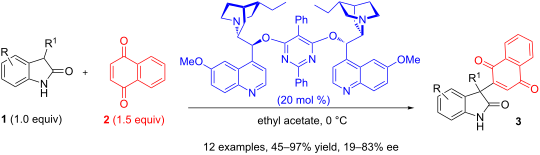
- details, see Supporting Information File 1). Other quinones such as 2,6-dichloro-1,4-benzoquinone and 1,4-benzoquinone were also examined, however, none of them could react with 3-phenyloxindole 1a to give the desired product. While the oxidation product 3 was obtained as the only product from the Michael


Identification and isolation of insecticidal oxazoles from Pseudomonas spp.
Beilstein J. Org. Chem. 2012, 8, 749–752, doi:10.3762/bjoc.8.85
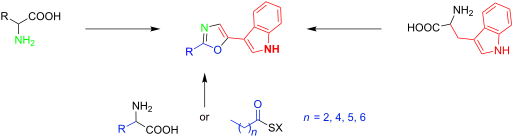
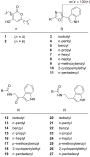
- and 8 were synthesized. Briefly, the respective tryptamine derivatives were formed, which were then oxidized at the alpha-position with the help of 2,3-dichloro-5,6-dicyano-1,4-benzoquinone (DDQ) and cyclized to give the oxazoles by using phosphorylchloride as described [9]. Additionally, three



Synthesis of mesomeric betaine compounds with imidazolium-enolate structure
Beilstein J. Org. Chem. 2012, 8, 390–397, doi:10.3762/bjoc.8.42
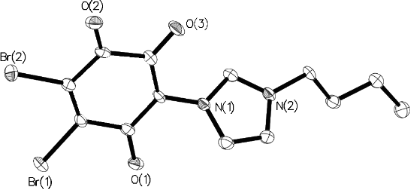
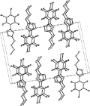
- 10.3762/bjoc.8.42 Abstract The synthesis of a heterocyclic mesomeric betaine by quaternization reaction of 1-butylimidazole and tetrabromo-1,4-benzoquinone is presented. The structure was verified by means of X-ray single-crystal analysis, NMR and IR spectroscopy. Inclusion complexes of the heterocyclic
- -bezoquinone to obtain novel mesomeric betaine materials with imidazolium-enolate structure. Results and Discussion The quaternization of 1-butylimidazole (2) with tetrabromo-1,4-benzoquinone (p-bromanil (1)) in acetonitrile and the subsequent quenching of the reaction mixture with water yielded dipole 2,3
- -dibromo-5-(1-butyl-1H-imidazol-3-ium-3-yl)-1,4-benzoquinone-6-olate (3) instead of the quadrupole compound (Scheme 1). Model compound 3 was dark red, solid, and soluble in chloroform, dichloromethane, and DMSO, but insoluble in water, acetone and toluene. The formation of 3 was confirmed by means of NMR




Syntheses and applications of furanyl-functionalised 2,2’:6’,2’’-terpyridines
Beilstein J. Org. Chem. 2012, 8, 379–389, doi:10.3762/bjoc.8.41
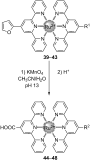
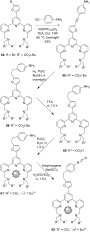
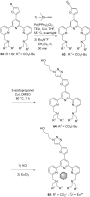
- dihydropyridine 32. The latter undergoes aromatization upon reaction with benzoquinone to afford 33 (Scheme 6). Synthesis by cross-coupling reaction Cross-coupling reactions are widely used in organic chemistry [32] to create new C–C bonds. The importance of this technique was recently highlighted by the award of





Efficient synthesis of 1,3-diaryl-4-halo-1H-pyrazoles from 3-arylsydnones and 2-aryl-1,1-dihalo-1-alkenes
Beilstein J. Org. Chem. 2011, 7, 1656–1662, doi:10.3762/bjoc.7.195
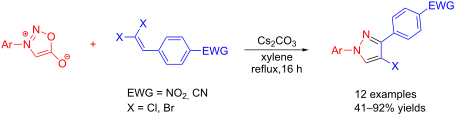
- -dearylation followed by the generation of the parent NH-pyrazole and p-benzoquinone [37]. Conclusion In summary, a series of novel 1,3-diaryl-4-halo-1H-pyrazoles was synthesized in moderate to excellent yields by using 3-arylsydnones and 2-aryl-1,1-dihalo-1-alkenes in the presence of the mild base Cs2CO3. The


Multicomponent reaction access to complex quinolines via oxidation of the Povarov adducts
Beilstein J. Org. Chem. 2011, 7, 980–987, doi:10.3762/bjoc.7.110
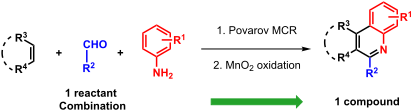
- aromatic species. The literature contains scattered reports of the use of oxidants for this transformation: 2,3-Dichloro-5,6-dicyano-1,4-benzoquinone (DDQ), ceric ammonium nitrate (CAN), nitrobenzene, elemental sulfur, palladium and manganese dioxide among others, all of them far from being ideally suited


Metathesis access to monocyclic iminocyclitol-based therapeutic agents
Beilstein J. Org. Chem. 2011, 7, 699–716, doi:10.3762/bjoc.7.81

- hydride traps. Satisfactory results in RCM were, however, obtained from 78: in the presence of the 2nd-generation Grubbs catalyst 5 and benzoquinone in refluxing toluene, 78 was converted into the cyclized enol ether 79 in 70% yield, while with the Hoveyda–Grubbs catalyst (6, 10 mol %; benzoquinone 10 mol





Asymmetric synthesis of tertiary thiols and thioethers
Beilstein J. Org. Chem. 2011, 7, 582–595, doi:10.3762/bjoc.7.68
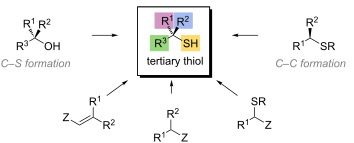
- method employs benzoquinone derivatives instead of azodicarboxylates as the oxidising agent. A series of phosphinites 31 was prepared by treatment of alcohols 30 with chlorodiphenylphosphine in the presence of triethylamine and DMAP. SN2 substitution of the phosphinites proceeds by oxidative activation
- of the leaving group with a 1,4-benzoquinone derivative, DBBQ (35) being most effective (Scheme 12). Addition of a thiol nucleophile to adduct 32 results in SN2 inversion and isolation of the enantiomerically pure (94:6–99:1 er) tertiary thioether 33 and by-product 34. Highest yields were obtained
- to give 39 in 95% yield (Scheme 13). The methodology was later refined to allow substitution of alcohols in 1 step. Phenoxydiphenylphosphine was used to prepare the phosphinite intermediate and an azide was used as the oxidising agent instead of a benzoquinone derivative (Scheme 14) [35][36][37








Predicting the UV–vis spectra of oxazine dyes
Beilstein J. Org. Chem. 2011, 7, 432–441, doi:10.3762/bjoc.7.56
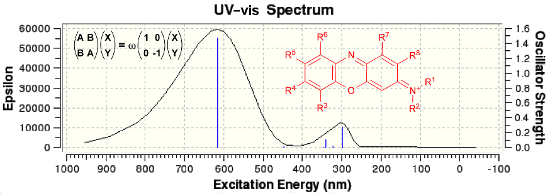
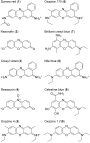
- ; oxazine; TD-DFT; UV–vis; Introduction Oxazine dyes are a subclass of quinone imines, which are all based upon the p-benzoquinone imine or -diimine scaffold. Other important subclasses within the quinone imines include, the azine dyes and thiazine dyes. The structural relationships described are




Reciprocal polyhedra and the Euler relationship: cage hydrocarbons, CnHn and closo-boranes [BxHx]2−
Beilstein J. Org. Chem. 2011, 7, 222–233, doi:10.3762/bjoc.7.30
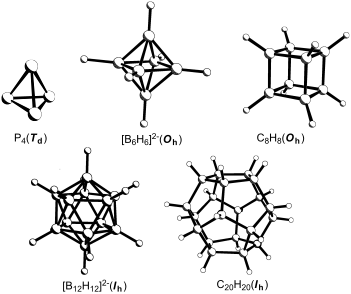
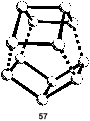
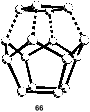
- homopentaprismane, somewhat analogous to the original cubane synthesis. As shown in Scheme 7, Diels–Alder reaction of 1,2,3,4-tetrachloro-5,5-dimethoxycyclopentadiene with p-benzoquinone gave 37 which underwent photolytic [2 + 2] closure to the pentacyclic dione 38. Subsequent dechlorination and functional group