


Search results
Search for "diastereoselectivity" in Full Text gives 403 result(s) in Beilstein Journal of Organic Chemistry. Showing first 200.
First example of organocatalysis by cathodic N-heterocyclic carbene generation and accumulation using a divided electrochemical flow cell
Beilstein J. Org. Chem. 2022, 18, 979–990, doi:10.3762/bjoc.18.98
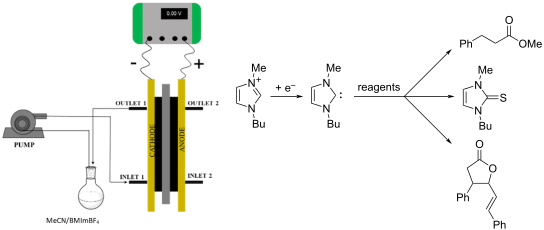
- and 2b. Table 2 reports the results obtained by changing the anolyte composition and the amount of applied electricity. In all cases, with regards to the trans/cis diastereomeric ratio, we observed that the cis isomer 2a was predominantly formed. The diastereoselectivity was not high; however, trans


Synthetic strategies for the preparation of γ-phostams: 1,2-azaphospholidine 2-oxides and 1,2-azaphospholine 2-oxides
Beilstein J. Org. Chem. 2022, 18, 889–915, doi:10.3762/bjoc.18.90
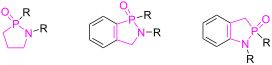
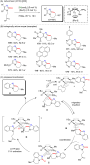
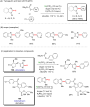
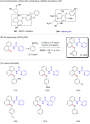
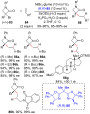
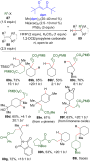
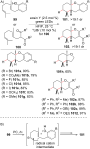
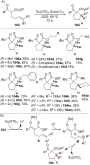
- group and the nature of its terminal substituents (aromatic phenyl and aliphatic isopropyl) are the crucial factors impacting the diastereoselectivity. Generally, the substrates with bulky R and aromatic phenyl terminal substituent in their allyl groups gave rise to the desired 1,5-dihydro-1,2
- -azaphosphole 2-oxides 100, 102, and 104 in higher diastereoselectivity (Scheme 19) [43]. The RCM reaction is a powerful strategy for the synthesis of P-stereogenic 1,5-dihydro-1,2-azaphosphole 2-oxide derivatives, which can be further reduced to 1,2-azaphospholidine 2-oxide derivatives. Thus, the strategy is








Copper-catalyzed multicomponent reactions for the efficient synthesis of diverse spirotetrahydrocarbazoles
Beilstein J. Org. Chem. 2022, 18, 796–808, doi:10.3762/bjoc.18.80
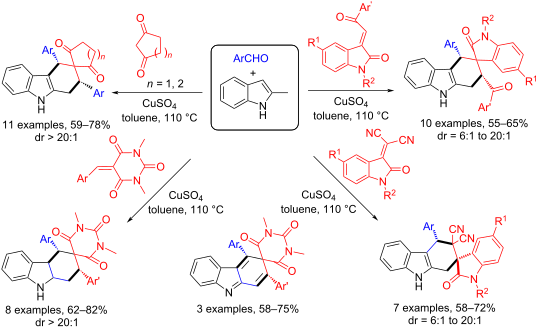
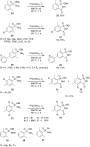
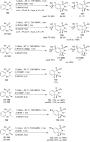
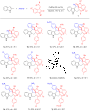
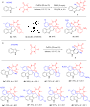
- [carbazole-2,3'-indolines], spiro[carbazole-3,5'-pyrimidines] and spiro[carbazole-3,1'-cycloalkanes] in satisfactory yields and with high diastereoselectivity. Keywords: Diels–Alder reaction; indole; indolo-2,3-quinodimethane; Levy reaction; tetrahydrocarbazole; spirooxindole; Introduction
- -dimethylbarbituric acids or 2-arylidene-1,3-cycloketones efficiently afforded diverse cyclic spirotetrahydrocarbazoles in good yields and with high diastereoselectivity (reaction 3 in Scheme 1). Results and Discussion Initially, (E)-1-benzyl-3-(2-oxo-2-phenylethylidene)indolin-2-one, benzaldehyde, and 2-methylindole
- the byproduct 1a’ was also obtained in less than 5% yield, which indicated the high diastereoselectivity of this reaction. Several other solvents such as EtOH and MeCN were explored, the product 1a was formed in lower yields (Table 1, entries 6 and 7). Importantly, the reaction also proceeded smoothly





Tri(n-butyl)phosphine-promoted domino reaction for the efficient construction of spiro[cyclohexane-1,3'-indolines] and spiro[indoline-3,2'-furan-3',3''-indolines]
Beilstein J. Org. Chem. 2022, 18, 669–679, doi:10.3762/bjoc.18.68
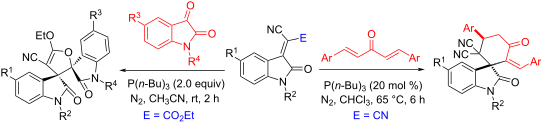
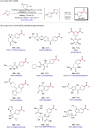
- functionalized spiro[cyclohexane-1,3'-indolines] in good yields and with good diastereoselectivity. On the other hand, the tri(n-butyl)phosphine-catalyzed reaction of 3-(ethoxycarbonylmethylene)oxindoles and bis-chalcones gave functionalized spiro[cyclohexane-1,3'-indolines] with different regioselectivity
- find that the diastereoselectivity of this reaction was not very good. Because the polarity of the two diastereoisomers were very similar, it was very difficult to isolate them as pure compounds by column chromatography. For convenience, only the pure major diastereoisomers of the spiro compounds 3a–w
- compound 8a (Figure 5) was determined by X-ray diffraction analysis. From Figure 5, it can be seen that the two oxindole moieties exist on the trans-configuration. Therefore, this reaction showed very high diastereoselectivity. To explain the formation of the dispiro compounds 8, a plausible reaction


BINOL as a chiral element in mechanically interlocked molecules
Beilstein J. Org. Chem. 2022, 18, 508–523, doi:10.3762/bjoc.18.53
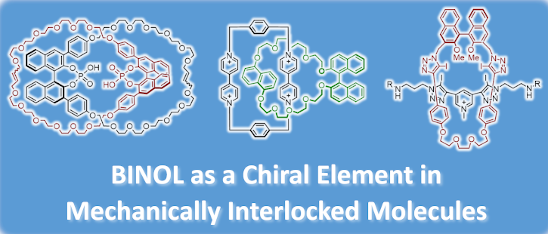
- is formed preferentially under kinetic control (er = 67:33, total yield 23%). Interestingly, employing (R)-15 together with (rac)-19 gave a significantly lower diastereoselectivity (er = 56:44), albeit at slightly increased yield (33%). Similarly, the reaction of the chiral isomannide-based
- macrocycle (ᴅᴅ)-21 with (rac)-19 and 17 gave the desired catenane 22 in 25% yield (see Figure 5c), but only with low diastereoselectivity (er = 58:42 in favor of the (ᴅᴅ,R)-isomer). Unfortunately, in this case the combination of (rac)-21 with (R)-19 was not investigated. Variable-temperature 1H NMR
- -alkylene-linkers, the diastereoselectivity decreases with increasing linker length (79/33/12% de for C3/C6/C12-linkers, respectively). This is in line with an expected localization of the macrocycle around the ester functionality due to weak [C–H···O] interactions from the COOCH2 group to the macrocycle




Tosylhydrazine-promoted self-conjugate reduction–Michael/aldol reaction of 3-phenacylideneoxindoles towards dispirocyclopentanebisoxindole derivatives
Beilstein J. Org. Chem. 2022, 18, 469–478, doi:10.3762/bjoc.18.49
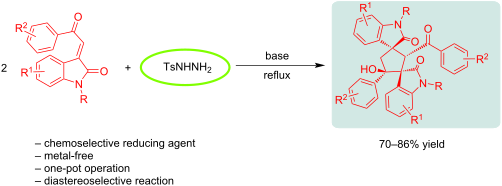
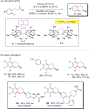
- solution in the presence of K2CO3 as base. After the reaction was completed, we observed that the reductive cyclo-dimerization occurs smoothly to give the corresponding dispirocyclopentanebisoxindole 3a in 68% isolated yield with good diastereoselectivity (>95:5 dr) (Table 1). NMR and HRMS analyses confirm
- each product, but the single crystal X-ray diffraction analysis confirmed the diastereoselectivity of 3. A single crystal of 3g was successfully obtained by slow evaporation of the solvent with the structure unequivocally confirmed by X-ray diffraction analysis (Figure 2). The single crystal X-ray


The asymmetric Henry reaction as synthetic tool for the preparation of the drugs linezolid and rivaroxaban
Beilstein J. Org. Chem. 2022, 18, 438–445, doi:10.3762/bjoc.18.46
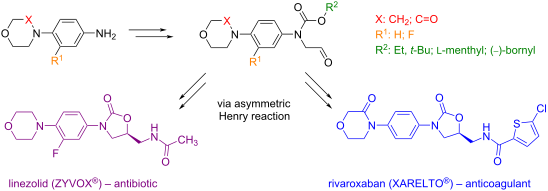
- diastereoselectivity. All nitroaldol products 22–26 were obtained with ee (or de) values in the range of 83–91%. This observation was confirmed in a separate experiment, where the aldehyde 16 bearing the substituent R2 = ᴅ-menthyl (opposite sense of chirality) was applied. This substrate was transformed to the


Unexpected chiral vicinal tetrasubstituted diamines via borylcopper-mediated homocoupling of isatin imines
Beilstein J. Org. Chem. 2022, 18, 303–308, doi:10.3762/bjoc.18.34
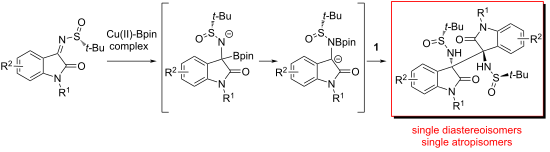
- diastereoselectivity of the reaction (see Supporting Information File 1). All stereochemical implications were fully confirmed by single-crystal X-ray diffraction analysis, which was performed on well-formed prismatic crystals of compound 2a (Figure 1) [28]. Compound 2a is chiral and crystallizes in the orthorhombic
- intermediate spontaneously turns into the carbanion C, thus realizing the imine umpolung and allowing the cross-coupling reaction with the remaining electrophilic ketimine 1. The complete diastereoselectivity would arise from the mutual approach of the two oxindole nuclei from the less hindered side, that is


Regioselectivity of the SEAr-based cyclizations and SEAr-terminated annulations of 3,5-unsubstituted, 4-substituted indoles
Beilstein J. Org. Chem. 2022, 18, 293–302, doi:10.3762/bjoc.18.33
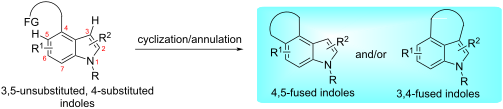
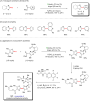
- -cd]indoles 21 from the intramolecular cyclization of Ugi adducts 20 in moderate to good yields and excellent chemo-, regio-, and diastereoselectivity (Scheme 7) [17]. Mechanistically, the reaction involves a tandem gold(I)-catalyzed dearomatization/ipso-cyclization/Michael addition sequence to
- -butyloxycarbonylation and N-alkylation (Scheme 14) [25]. The C5 cyclization regioselectivity and trans-diastereoselectivity were not influenced by the electronic nature of the indole-N-substituent. Conclusion As illustrated by these studies, SEAr-based intramolecular cyclization and annulation reactions of 3,5


Asymmetric organocatalytic Michael addition of cyclopentane-1,2-dione to alkylidene oxindole
Beilstein J. Org. Chem. 2022, 18, 167–173, doi:10.3762/bjoc.18.18
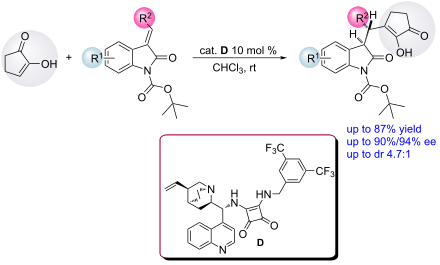
- oxindole and the squaramide decreasing the effective concentration of the catalyst. Taking this into consideration, 2 equiv of substituted oxindole was used and the reaction proceeded smoothly in 2 h in high enantioselectivity (90%/94% ee), in high yield (74%) but in moderate diastereoselectivity (Table 1
- not occur when starting compound 2p was tried. This was probably because of the very poor solubility of the starting material. Generally, the diastereoselectivities of the reactions were moderate (dr 2.1:1–3.6:1) throughout the scope. The diastereoselectivity was missing or was very low for the
- afforded the same major diastereoisomer but opposite enantiomers (Scheme 3, 3q). The diastereoselectivities were similar for the isomers. Since the diastereoselectivity of the reaction was low, we attempted to increase the ratio of diastereoisomers via enolisation followed by diastereoselective protonation


Iron-catalyzed domino coupling reactions of π-systems
Beilstein J. Org. Chem. 2021, 17, 2848–2893, doi:10.3762/bjoc.17.196
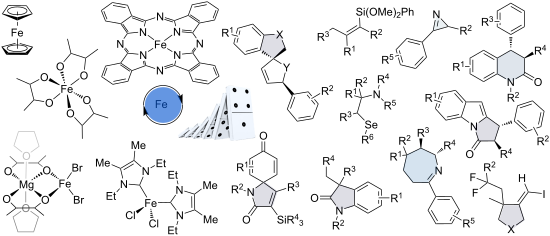
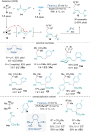
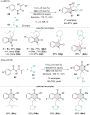
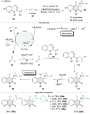
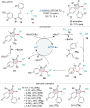
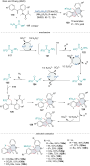
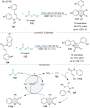
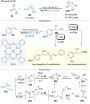
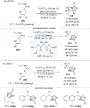
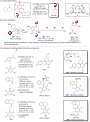
- co-workers established a Heck/Kumada cross-coupling cascade to construct nitrogen and oxygen-containing cis-heterospirocycles 40 in high yield and diastereoselectivity with inexpensive Fe(acac)3 as the precatalyst (Scheme 8) [73]. Interestingly, this protocol was applicable to substrates bearing
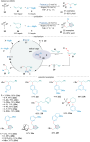
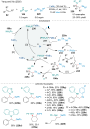
- intermediate 78 may regioselectively attack the α-position of the carbonyl 75a. A thermodynamically controlled 5-exo cyclization with the aryl ring 79 would afford the spirocyclic intermediate 80. The authors theorize the >20:1 diastereoselectivity of the reaction arises from the steric interaction between the
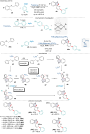
- ]. In the same year, the Du group investigated the FeCl2·4H2O decarboxylative radical alkylative cyclization of cinnamamides 131/134 as an expedient approach towards dihydroquinolinone 133 and pyrrolo[1,2-a]indole 135 analogues in good yield and excellent diastereoselectivity (Scheme 27) [120]. In terms













Selective sulfonylation and isonitrilation of para-quinone methides employing TosMIC as a source of sulfonyl group or isonitrile group
Beilstein J. Org. Chem. 2021, 17, 2822–2831, doi:10.3762/bjoc.17.193
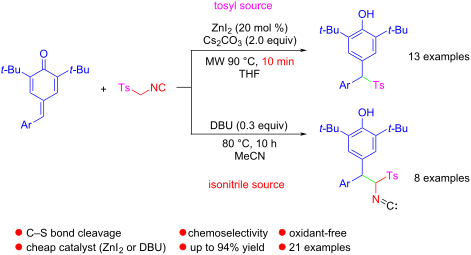
- 10). As depicted in Scheme 4, the substrate scope of p-QMs 1 was first examined. In general, the 1,6-conjugate reaction tolerated a wide range of p-QMs 1, furnishing a series of isonitrile diarylmethanes 4a–h in good to high yields (60–88%) with moderate diastereoselectivity. Substitution of the aryl
- providing, for example, the product 4h with a yield of 86% and excellent diastereoselectivity (dr > 19:1). To further underline the utility of this transformation, several experiments were carried out (Scheme 5). First, the model reaction is scalable. When 1b (3 mmol) and 2a (6 mmol) were mixed under the


Highly stereocontrolled total synthesis of racemic codonopsinol B through isoxazolidine-4,5-diol vinylation
Beilstein J. Org. Chem. 2021, 17, 2781–2786, doi:10.3762/bjoc.17.188
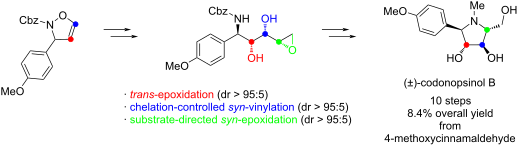
- hydrogen peroxide catalyzed by phosphotungstic heteropoly acid. Each of the key reactions proceeded with an excellent diastereoselectivity (dr > 95:5). (±)-Codonopsinol B was prepared in 10 steps with overall 8.4% yield. The antiproliferative effect of (±)-codonopsinol B and its N-nor-methyl analogue was
- evaluated using several cell line models. Keywords: alkaloids; antiproliferative effect; codonopsinol B; diastereoselectivity; pyrrolidines; Introduction Codonopsinol B (1) is a polyhydroxylated pyrrolidine alkaloid isolated from the roots of the plant Codonopsis pilosula (Figure 1) [1]. This compound was
- the expected high syn diol diastereoselectivity (Scheme 1). The obtained anti,syn-(hydroxyamino)alkenol 4 will be then subjected to reductive cleavage of the N–O bond. Next, a key intermediate epoxide 5 with the desired syn (threo) configuration between the hydroxy group and the epoxide oxygen could


Recent advances in the asymmetric phosphoric acid-catalyzed synthesis of axially chiral compounds
Beilstein J. Org. Chem. 2021, 17, 2729–2764, doi:10.3762/bjoc.17.185
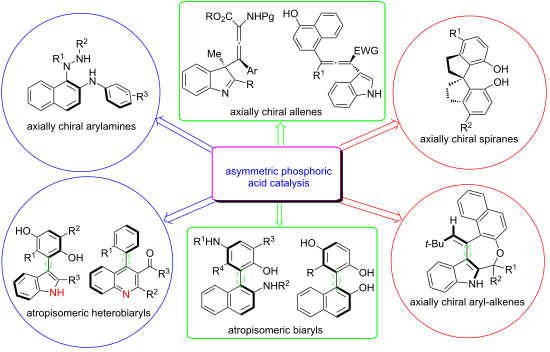
- diastereoselectivity and 99% ee in the presence of the chiral phosphoric acid CPA 2. Subsequently, using the chiral phosphoric acid-catalyzed [3 + 2] formal cycloaddition and a moderate DDQ oxidation method over 34, enantiomerically enriched 2,3-diarylbenzoindoles 35 were successfully prepared by performing a central
- moderate yield with >90% enantioselectivity (Scheme 20c) and tolerable diastereoselectivity (4:1) [73]. The optically enriched benzimidazoles are N-heterocycles which are of great interest as drug-like molecules [75], and exhibit biological activities such as anticancer, antiviral, antifungal, and
- diastereoselectivity (10:1 to >20:1 dr). In addition, the enantioselective 1,8-conjugate addition of azlactones 112 to para-quinone methides generated in situ from propargyl alcohols 110 were carried out in the presence of 1 mol % chiral phosphoric acid CPA 7 and afforded the chiral allenes 114 in high yields (65–97










N-Sulfinylpyrrolidine-containing ureas and thioureas as bifunctional organocatalysts
Beilstein J. Org. Chem. 2021, 17, 2629–2641, doi:10.3762/bjoc.17.176
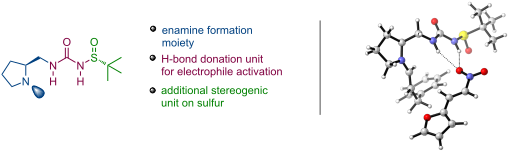
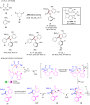
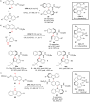
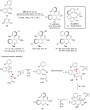
- -nitrostyrene (7a) catalyzed by (S,R)-C2 (Scheme 3). The reaction in CH2Cl2 at 5 °C with Et3N as a base gave 45% of adduct 8a with 86:14 dr and 24:76 er for both diastereomers. Slightly better yields (63%) were achieved in CHCl3 at room temperature with Et3N or NMP as a base, but both diastereoselectivity as
- without a base went much less efficiently (Table 1, entry 16), similarly to the reaction performed without acid additive and base (Table 1, entry 17). The product 10c by Michael addition of hexanal 6b to nitroalkene 9 was obtained with only 40% yield with comparable diastereoselectivity (Table 1, entry 18
- ). The aliphatic aldehydes propanal (6d) and hexanal (6b) provided medium yields and diastereoselectivity and enantioselectivity. The Michael addition of 3-phenylpropanal (6c) to (E)-3-(2-nitrovinyl)pyridine (11) required long reaction times (120 h) in solution, similar to those for the reaction with (E


Recent advances in organocatalytic asymmetric aza-Michael reactions of amines and amides
Beilstein J. Org. Chem. 2021, 17, 2585–2610, doi:10.3762/bjoc.17.173
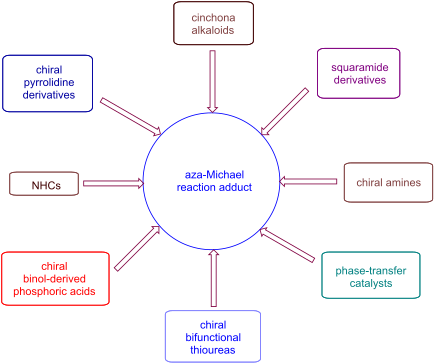
- afforded the corresponding adducts in good yields ranging from 72–99% with excellent diastereoselectivity (up to >99:1 dr) and enantioselectivity (>99% ee) (Table 6) [36]. In another report, Yang et al. accomplished a highly asymmetric cascade aza-Michael/Michael addition reaction for the synthesis of


Strategies for the synthesis of brevipolides
Beilstein J. Org. Chem. 2021, 17, 2399–2416, doi:10.3762/bjoc.17.157
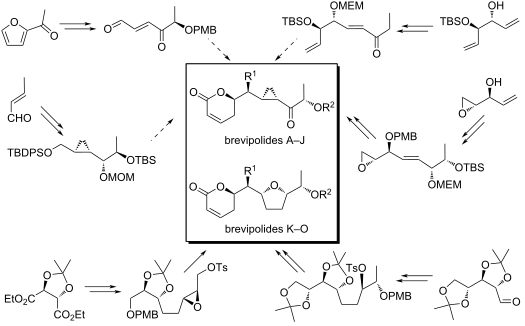
- anti-addition of the sulfoxonium ylide to 52. Hou highlighted that the good diastereoselectivity control for the sulfoxonium ylide addition to acyclic α,β-unsaturated substrates such as 52 observed in their work represented the first example in literature. Hereupon, deprotonation of 53 over LiHMDS
- followed by addition of TBSOTf at low temperature successfully formed the (Z)-silyl enol ether 54. Application of the Sharpless asymmetric dihydroxylation, promoted by AD-mix-β, gave the expected β-(R)-hydroxy cyclopropyl product 55 in 84% yield with moderate diastereoselectivity (dr = 2). The formation of
- successfully attained in 97% yield with very high diastereoselectivity (dr 99:1). The free secondary alcohol group was re-protected as MOM ether 70 in 96% yield. After removal of the TBDPS group, the resulting free primary alcohol was oxidized under Dess–Martin conditions followed by Grignard reaction with


On the application of 3d metals for C–H activation toward bioactive compounds: The key step for the synthesis of silver bullets
Beilstein J. Org. Chem. 2021, 17, 1849–1938, doi:10.3762/bjoc.17.126
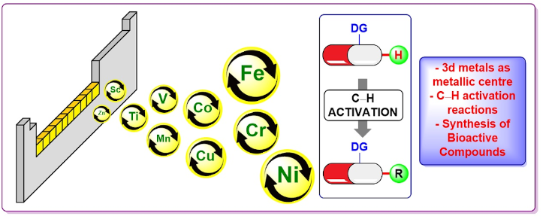
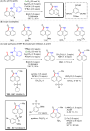
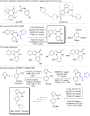
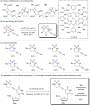
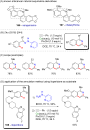
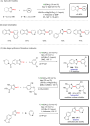
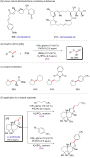
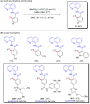
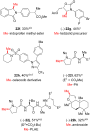
- isosteviol derivate furnished a useful and versatile oxathiazinane (46). The betulinic acid-derived sulfamate ester preferentially underwent amination at the γ primary C–H bond of the equatorial C23 methyl group with high site- and diastereoselectivity to furnish the oxathiazinane derivative in 76% yield
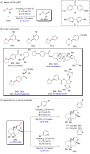
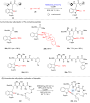
- observed at the Dha-3 part and, according to the substitution pattern from the coupling partner, a higher preference for the substitution at the Dha-1 (product A) over the Dha-2 (product B) site was also observed (Scheme 38B), characterizing an excellent and valuable regio- and diastereoselectivity. In the











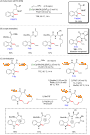
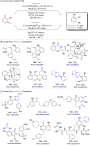
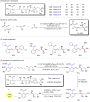

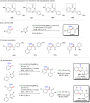
















Sustainable manganese catalysis for late-stage C–H functionalization of bioactive structural motifs
Beilstein J. Org. Chem. 2021, 17, 1733–1751, doi:10.3762/bjoc.17.122

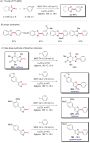
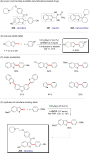
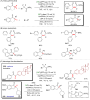
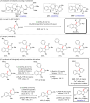
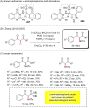
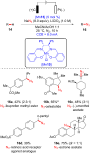
- , citalopram (17b), an antidepressant, was also reacted under amination conditions involving HBF4, affording product 19b in good yield and excellent diastereoselectivity (dr > 20:1). Other multiple benzylic C–H bond-containing molecules, including a dopamine receptor agonist analogue 17c as well as derivatives








Methodologies for the synthesis of quaternary carbon centers via hydroalkylation of unactivated olefins: twenty years of advances
Beilstein J. Org. Chem. 2021, 17, 1565–1590, doi:10.3762/bjoc.17.112
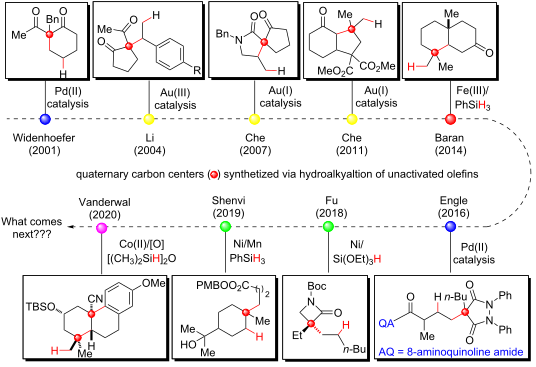
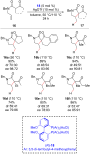
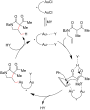
- -alkenyl β-ketoamides 16, in yields ranging from 74% to 94%, in excellent enantiomeric excess (up to 98% ee), and in modest to poor diastereoisomeric ratios (dr up to 70:30). The authors observed that the nature of the activator had a substantial influence on the reaction enantio- and diastereoselectivity
- cascade aza-Michael addition/olefin hydroalkylation reaction between N-tosylallylamines and α,β-unsaturated ketones using a catalytic system of a gold(I) complex and a silver salt [45]. The spiro compound 25, which was obtained in moderate yield and with poor diastereoselectivity after a 20 h reaction
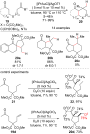
- diastereoselectivity in the synthesis of bicyclic compounds (dr > 20:1, Scheme 19, 37d, 37e, and 37g). Substrates containing Lewis base moieties (Scheme 19, 36k) were tolerated in the reported reaction conditions, thereby representing a synthetic gain over other olefin isomerization methodologies. An important feature






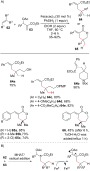
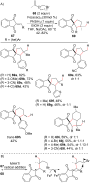
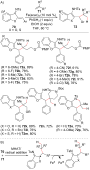


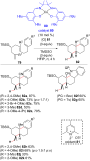





Cascade intramolecular Prins/Friedel–Crafts cyclization for the synthesis of 4-aryltetralin-2-ols and 5-aryltetrahydro-5H-benzo[7]annulen-7-ols
Beilstein J. Org. Chem. 2021, 17, 1481–1489, doi:10.3762/bjoc.17.104
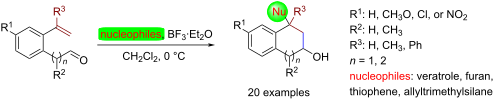
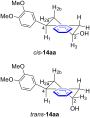
- diastereoselectivity (cis/trans ratio = 1:99). The preferential formation of the trans-configured products for furan nucleophiles may be due to the fact that the addition of furan is reversible leading to equilibration to the more stable trans product. To test this hypothesis, we monitored the reaction by HPLC (Table




N-tert-Butanesulfinyl imines in the asymmetric synthesis of nitrogen-containing heterocycles
Beilstein J. Org. Chem. 2021, 17, 1096–1140, doi:10.3762/bjoc.17.86

- Re-face of the imine (Scheme 4) [1][36]. The nucleophilic addition reactions to N-tert-butanesulfinyl imines were also described by Ellman and co-workers who reported the addition of allylmagnesium bromide to ketimines. The employment of Grignard reagents showed greater diastereoselectivity than
- reactions using organolithium and organocerium compounds. In some examples, the use of organolithium is feasible through the use of aluminum-derived additives [15]. In this study, the influence of solvents on diastereoselectivity was also observed. They found that the reactions performed in noncoordinating
- solvents, such as toluene and dichloromethane, took place with high diastereoselectivity. However, solvents such as ether and THF had a negative impact on stereoselectivity [15]. On the other hand, recent studies developed by Sirvent and Foubelo demonstrated the influence of the solvents in both the yield


Prins cyclization-mediated stereoselective synthesis of tetrahydropyrans and dihydropyrans: an inspection of twenty years
Beilstein J. Org. Chem. 2021, 17, 932–963, doi:10.3762/bjoc.17.77
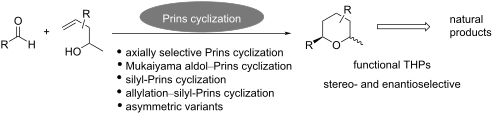
- diastereoselectivity. The carbamate substituent adopted the axial disposition in the proposed transition state 145, as shown in Scheme 34 [69]. In another report by Rychnovsky and Gisinsky, two of the tetrahydropyran rings of the potent molluscicide cyanolide A were synthesized via a silyl-Prins cyclization and
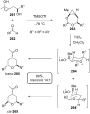
- mixture of cis- and trans-220 (dr = 4.1:1.0). It was explained that the diastereoselectivity of the product depends on the size of the substituent. For example, when the substituent is sterically small, it occupies the pseudoaxial position in the reactive conformation 218 (Scheme 52). Li et al. utilized
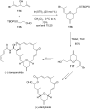
- allylic geminal bissilyl alcohol 221 for the construction of THP ring A of (−)-exiguolide via Prins cyclization with an aldehyde in the presence of Lewis acid as a promoter [95]. High yield and excellent diastereoselectivity were obtained under standard silyl-Prins cyclization conditions using TMSOTf as








α,γ-Dioxygenated amides via tandem Brook rearrangement/radical oxygenation reactions and their application to syntheses of γ-lactams
Beilstein J. Org. Chem. 2021, 17, 688–704, doi:10.3762/bjoc.17.58
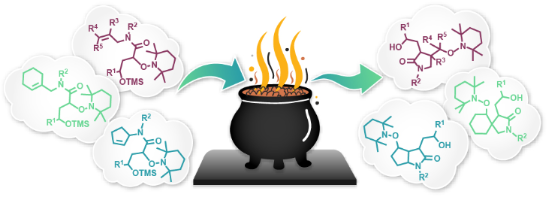
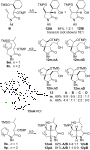
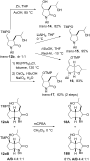
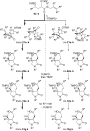
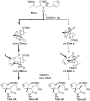
- for all dioxygenated amides 9 the stereocenter at the alkoxyamine unit will be destroyed in the subsequent radical reaction, the low diastereoselectivity at that center is not of concern. In contrast, in the reactions of silylamides 8e–g bearing enantiomerically pure 1-arylethyl substituents with
- enantiomerically pure (S)-propylene oxide ((S)-7b) the dioxygenated amides (2R,4S)-9i–k were predominately formed with 3:1 anti/syn diastereoselectivity in the radical coupling with TEMPO irrespective of the aryl substituent (Table 2, entries 9, 11, and 12), whereas the sequence of amide 8e with (R)-propylene
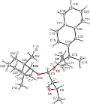
- oxide ((R)-7b) provided the product (2S,4R)-9i in a much better 8:1 anti/syn coupling diastereoselectivity (Table 2, entry 10). The configuration of the major anti-diastereomer of alkoxyamine 9j was determined by X-ray crystallography after desilylation and hydrochloride formation (see Supporting







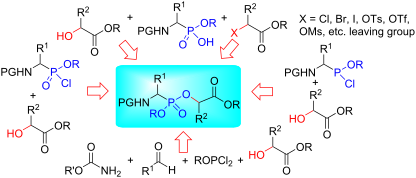
Synthetic strategies of phosphonodepsipeptides
Beilstein J. Org. Chem. 2021, 17, 461–484, doi:10.3762/bjoc.17.41
- -dioxaphospholane-4,5-dicarboxylate (168) gave the corresponding phosphonodepsipeptides 169 in 65–86% yields under mild conditions. Although the diisopropyl ester was applied instead of diethyl ʟ-tartrate, a low diastereoselectivity (ratios varied from 55:45 to 67:33) was observed as well. Acetophenone (170





