


Search results
Search for "imidazole" in Full Text gives 354 result(s) in Beilstein Journal of Organic Chemistry. Showing first 200.
Synthesis of purines and adenines containing the hexafluoroisopropyl group
Beilstein J. Org. Chem. 2020, 16, 2739–2748, doi:10.3762/bjoc.16.224
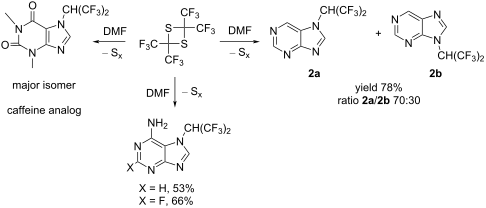
- 19713, USA DuPont Corporate Center for Analytical Sciences, Experimental Station, P.O. Box 80500, Wilmington, DE 19880-0500, USA 10.3762/bjoc.16.224 Abstract Several new derivatives of adenine, purine, and theophylline containing the (CF3)2CH group connected to a nitrogen atom of the imidazole ring
- were prepared by the reaction of 2,2,4,4-tetrakis(trifluoromethyl)-1,3-dithietane (1) with the corresponding substrates, resulting in the selective alkylation of one of the nitrogen atoms of the imidazole ring. The reaction proceeds under mild conditions in a polar solvent, giving the alkylated
- connected to a nitrogen atom of the imidazole segment are relatively rare. Known examples include benzimidazoles carrying NCF3 [10], NCF2H [11][12][13], NRf (Rf = CF2Cl, CF2Br, CF2CFClH, CF=CFClF) [14][15], and hexafluoroisopropyl groups attached to the nitrogen atom [16]. Recently, we reported a new method



Selective recognition of ATP by multivalent nano-assemblies of bisimidazolium amphiphiles through “turn-on” fluorescence response
Beilstein J. Org. Chem. 2020, 16, 2728–2738, doi:10.3762/bjoc.16.223
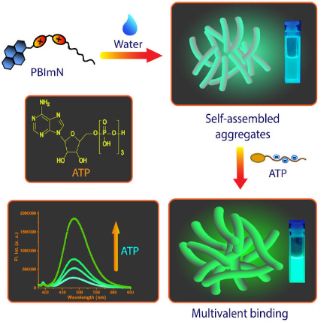
- -imidazol-1-yl)methane (5) was synthesized from imidazole (4) and CH2Br2 following a literature procedure [62][63] with slight modifications. Then, BImNs (N = 4, 10, 12, 14) were synthesized from 5 by mono-alkylation using the corresponding n-alkyl halides in DMF. Finally, PBImNs (N = 4, 10, 12, 14) were
- the nucleotides, 1-pyrenecarboxaldehyde, sodium borohydride, sodium hydride, phosphorus tribromide and 1-bromobutane, 1-bromodecane, 1-bromododecane and 1-bromotetradecane were purchased from Sigma-Aldrich. Imidazole, dibromomethane and tris(hydroxymethyl)aminomethane were purchased from TCI chemicals


Nocarimidazoles C and D, antimicrobial alkanoylimidazoles from a coral-derived actinomycete Kocuria sp.: application of 1JC,H coupling constants for the unequivocal determination of substituted imidazoles and stereochemical diversity of anteisoalkyl chains in microbial metabolites
Beilstein J. Org. Chem. 2020, 16, 2719–2727, doi:10.3762/bjoc.16.222
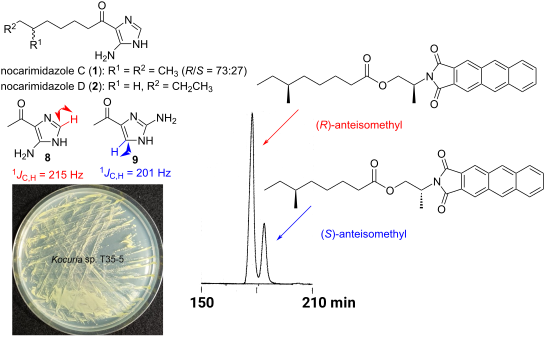
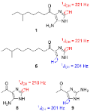
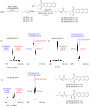
- both are 4-alkanoyl-5-aminoimidazoles with a 6-methyloctanoyl or decanoyl chain, respectively. Two possible positions of the amino group on the imidazole rings (C-2 and C-5) posed a challenge in the structure study, which was settled by the measurement of 1JC,H coupling constants for comparison with
- observed during the study of bulbimidazole A (5), which did not show sp2 carbon signals in neutral solutions due to the presence of multiple resonance structures for the imidazole moiety [22]. We envisaged that due to the presence of an imidazole ring, the UV spectra of 1 and 5 would obviously be different
- C3H4N3 with three double bond equivalents, composed in part by the two nonprotonated sp2 carbon atoms (C-4 and C-5) and an sp2 methine unit (CH-2) and exhibited HMBC correlations from H-2 to C-4 and C-5. These requirements were only satisfied by an amino-substituted imidazole ring. Indeed, a four-bond



Synthesis of 4-substituted azopyridine-functionalized Ni(II)-porphyrins as molecular spin switches
Beilstein J. Org. Chem. 2020, 16, 2589–2597, doi:10.3762/bjoc.16.210
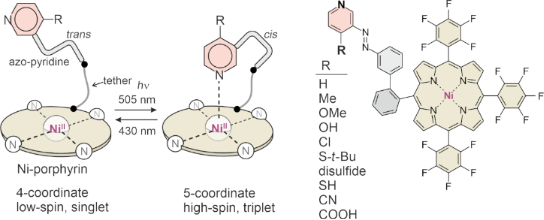
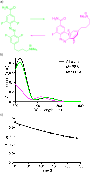
- the switchable ligand). This approach has been dubbed “record player” design for obvious reasons (Figure 1a). The Ni-porphyrin (“disk”) is low-spin if the azo-aryl unit (“tone arm”) is in trans configuration. Upon switching to the bent cis configuration, the lone pair of the pyridine (or imidazole
- substituents at the pyridine or imidazole part) to increase the Ni–ligand coordination strength. Strong coordination in turn improves the performance of the spin switch, namely the conversion rate to the cis isomer, the conversion rate to the high-spin state, as well as the thermal stability of the high-spin


Synthesis of monophosphorylated lipid A precursors using 2-naphthylmethyl ether as a protecting group
Beilstein J. Org. Chem. 2020, 16, 1955–1962, doi:10.3762/bjoc.16.162
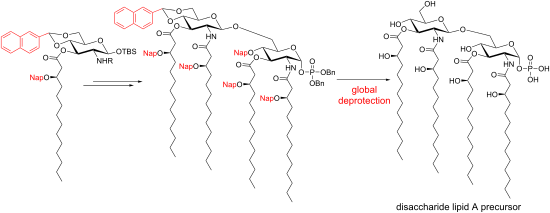
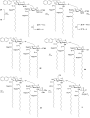
- monoacylated glucosamine building blocks. Conditions: (a) NaHCO3, TrocCl, H2O, 0 °C, 94% ; (b) Ac2O, pyridine, rt, 96%; (c) N2H4, AcOH, DMF, rt, 89%; (d) TBSCl, imidazole, DMF, rt, 93%; (e) guanidine hydrochloride buffer, rt; (f) NapC(OMe)2, camphorsulfonic acid, CH3CN, rt, 68% (2 steps); (g) acid 7, EDC·HCl


Regiodivergent synthesis of functionalized pyrimidines and imidazoles through phenacyl azides in deep eutectic solvents
Beilstein J. Org. Chem. 2020, 16, 1915–1923, doi:10.3762/bjoc.16.158
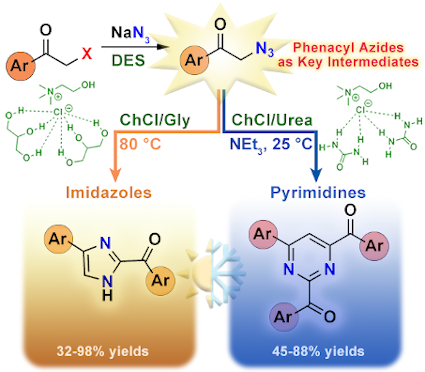
- imidazole (32–98% yield) and pyrimidine derivatives (45–88% yield), with a broad substrate scope, when using deep eutectic solvents [choline chloride (ChCl)/glycerol (1:2 mol/mol) and ChCl/urea (1:2 mol/mol)] as environmentally benign and non-innocent reaction media, by modulating the temperature (25 or 80
- at 50 °C, we were able to isolate by column chromatography on silica gel a product which was characterized as 2-benzoyl-(4 or 5)-phenyl-(1H)-imidazole (3a/3a', Scheme 2). This adduct was formed as a mixture of two tautomers (3a and 3a'; 3a/3a' ratio: 57:43, Supporting Information File 1) [28][29] in
- chromatography on silica gel (hexane/EtOAc 5:1–4:1) to afford the desired α-azido ketone 2. Characterization data of the isolated 2-azido ketones are provided in Supporting Information File 1. Synthesis of 2-benzoyl-4-phenyl-1H-imidazole (3a) and 2-benzoyl-5-phenyl-1H-imidazole (3a'). Typical procedure Sodium


Natural dolomitic limestone-catalyzed synthesis of benzimidazoles, dihydropyrimidinones, and highly substituted pyridines under ultrasound irradiation
Beilstein J. Org. Chem. 2020, 16, 1881–1900, doi:10.3762/bjoc.16.156
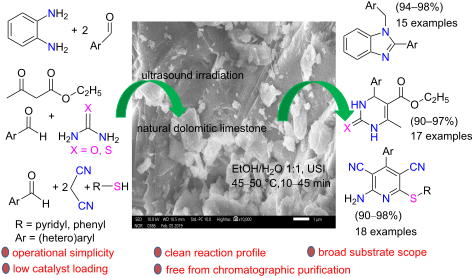
- synthesis of 1-benzyl-2-phenyl-1H-benzo[d]imidazole (3a). At first, a control experiment was conducted by using model substrates, 1 and 2a, in H2O in the absence of catalyst under ultrasound irradiation for 60 min at 45–50 °C. It was found that the reaction did not proceed in the absence of a catalyst


Mechanochemical green synthesis of hyper-crosslinked cyclodextrin polymers
Beilstein J. Org. Chem. 2020, 16, 1554–1563, doi:10.3762/bjoc.16.127
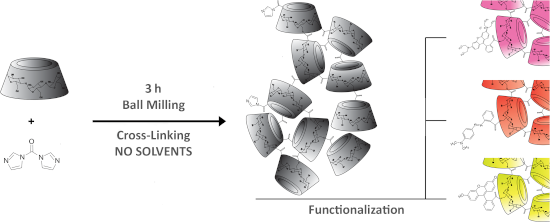
- nanosponges with selected organic dyes that are used as probe molecules with different structures (methyl red, rhodamine B, and fluorescein). The simple functionalization of the cyclodextrin NS, in this case via reactive imidazole moieties, is particularly interesting for a variety of applications. For
- groups of CDs, forming a carbonate bond between two monomers and therefore releasing two imidazole molecules that are soluble in water and could be removed after synthesis. CDI, however, may react asymmetrically forming only one bond with cyclodextrin leaving one of the two moieties reactive. This is
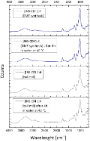
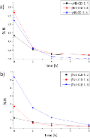
- consistent with what was reported in the literature: the first activation of an alcohol by carbonyl imidazole showed faster kinetics than the second one, which needed longer reaction times and/or a higher temperature (from 60 °C to 80 °C) to obtain a significant yield [31][32]. To distinguish between the




Copper-based fluorinated reagents for the synthesis of CF2R-containing molecules (R ≠ F)
Beilstein J. Org. Chem. 2020, 16, 1051–1065, doi:10.3762/bjoc.16.92
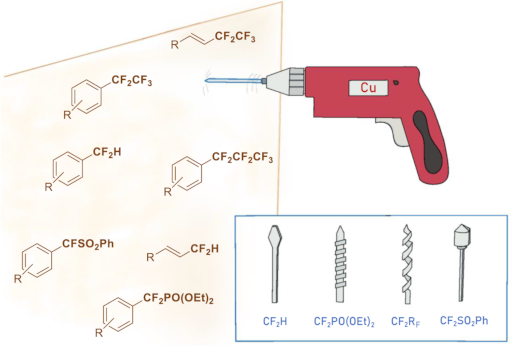
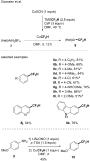
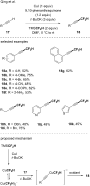
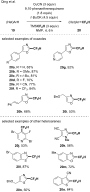
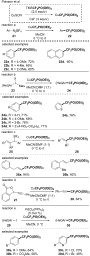
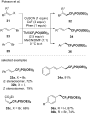
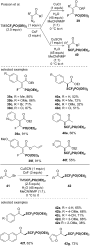
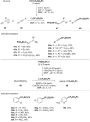
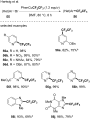
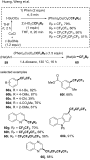
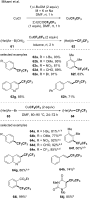
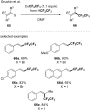
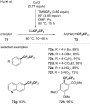
- oxazoles (17 examples, up to 87% yield) were difluoromethylated but a variety of other heteroarenes turned out to be suitable such as pyridine, imidazole, benzo[d]thiazole, benzo[b]thiophene, benzo[d]oxazole, thiazole and thiophene derivatives (Scheme 6). Copper-based CF2FG-containing reagents Besides the











A systematic review on silica-, carbon-, and magnetic materials-supported copper species as efficient heterogeneous nanocatalysts in “click” reactions
Beilstein J. Org. Chem. 2020, 16, 551–586, doi:10.3762/bjoc.16.52
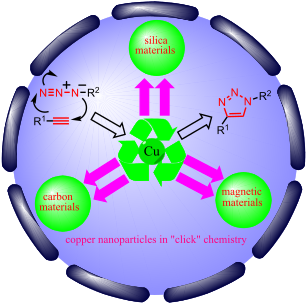
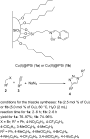
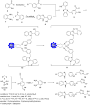
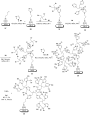
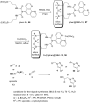
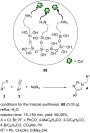
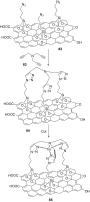
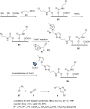
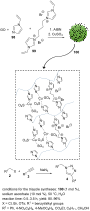
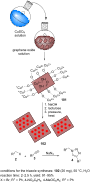
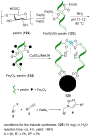
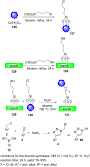
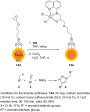
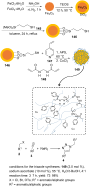
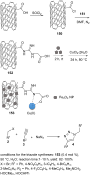
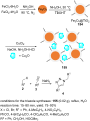
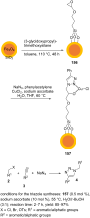
- -heterocyclic carbene) in multiple steps [28]. Initially, imidazole (28) was immobilized on the silica nanomaterial 27 by a nucleophilic attack of 28 on the iodopropylated silica nanomaterial 27 in acetonitrile under reflux for 48 h. The obtained 1-propylimidazole–nanosilica compound ImP–nSiO2 (29) was filtered

















Architecture and synthesis of P,N-heterocyclic phosphine ligands
Beilstein J. Org. Chem. 2020, 16, 362–383, doi:10.3762/bjoc.16.35
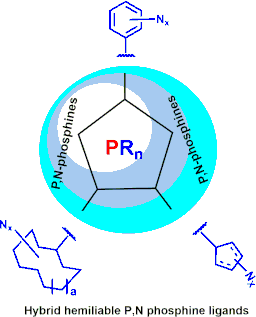
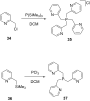
- addition of chlorophosphine resulted in the desired ligand 58. However, the overall yield was lower than the yield obtained through the other method. Imidazole can be regioselectively deprotonated at the more acidic C2 position. The mono- and diphosphine imidazole ligands 62 and 63 were conveniently
- synthesized by Milde et al. (Scheme 11) [8]. The imidazole intermediates 61 were obtained by coupling iodoaniline (59) with the dialdehyde 60. Selective metalation of the imidazole ring and subsequent treatment with the phosphine gave the imidazolylphosphine ligands 62 and 63 (46–64%). The fast and clean
- sterically crowded biaryl ligands as they showed outstanding performances [8]. Phosphines with imidazole and imidazoline functional groups present some interesting features. The imidazolium functionality mimics active sites in biological molecules [83][84]. The ionic nature adds another dimension to the




Copper-catalyzed enantioselective conjugate addition of organometallic reagents to challenging Michael acceptors
Beilstein J. Org. Chem. 2020, 16, 212–232, doi:10.3762/bjoc.16.24
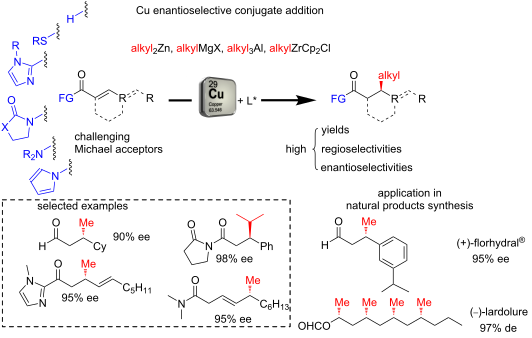
- in moderate to good yields (28–85%) with remarkable regio- (>95%) and enantioselectivities (91–95% ee) [39]. Interestingly, DFT calculations supported the crucial role of the imidazole moiety towards the 1,4-addition (vs 1,6 or 1,8) [39]. Thanks to the efficient post-transformation of the




Photocontrolled DNA minor groove interactions of imidazole/pyrrole polyamides
Beilstein J. Org. Chem. 2020, 16, 60–70, doi:10.3762/bjoc.16.8
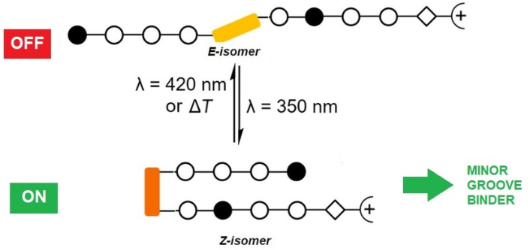
- compounds have frequently been employed as modules, e.g., to control protein–DNA interactions. However, their use in conjunction with minor groove-binding imidazole/pyrrole (Im/Py) polyamides is yet unprecedented. Dervan-type Im/Py polyamides were equipped with an azobenzene unit, i.e., 3-(3-(aminomethyl
- acted as a building block inducing a reverse turn, which favored hydrogen bonds between the pyrrole/imidazole amide and the DNA bases. In contrast, the E-configured polyamides did not induce any ICD characteristic for minor groove binding. The incorporation of the photoswitchable azobenzene unit is a
- . A major breakthrough concerning selective small DNA-targeting molecules was the use of pyrrole/imidazole hairpin polyamides. They are conceptually derived from the natural products netropsin and distamycin A, which selectively bind to particular sequences of the DNA duplex [2][3][4]. Covalent

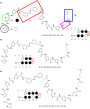


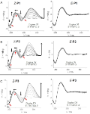
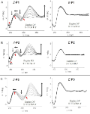
Chemical tuning of photoswitchable azobenzenes: a photopharmacological case study using nicotinic transmission
Beilstein J. Org. Chem. 2019, 15, 2812–2821, doi:10.3762/bjoc.15.274
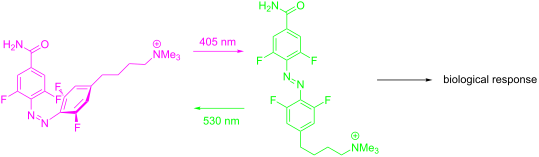
- , n = 7 cells, *** indicates P < 0.001 in paired t-test. Synthesis of 4FABTA. a) Reagents and conditions: (a) 3-Butynol, PdCl2(PPh3)2, CuI, THF, rt, 93%; (b) H2, PtO2, EtOH, rt, 71%; (c) TBDMS-Cl, imidazole, DCM, rt, 96%; (d) n-BuLi, THF, −78 °C to −50 °C; (e) NBS, ACN, rt, 89%; (f) CuCN, NMP, 202 °C




Photochromic diarylethene ligands featuring 2-(imidazol-2-yl)pyridine coordination site and their iron(II) complexes
Beilstein J. Org. Chem. 2019, 15, 2428–2437, doi:10.3762/bjoc.15.235
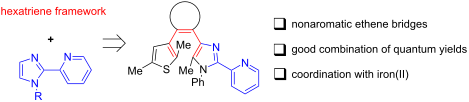
- cyclohexenone bridges [32]. These methods utilize ethyl 4-(2,5-dimethylthiophen-3-yl)-3-oxobutanoate (Scheme 1) or its analogs as starting materials. To obtain novel diarylethenes with 2-(imidazol-2-yl)pyridine moiety, here we have synthesized a previously unknown imidazole derivative 1 by a one-pot
- good accordance with previous DFT calculations [37], the molecule shows exclusively antiparallel conformation [8] of the thiophene and imidazole groups of the photoactive diarylethene moiety, with the respective α-methyl groups pointing in different directions. The thiophene and imidazole rings are
- yield is lower [40]. The quantum yields for cyclohexenone derivatives 6 and 7 are in the 0.22–0.27 range. Similar to some other cyclopentene derivatives [41], diarylethene 4 possesses low cycloreversion quantum yields at 4–6%. However, in accordance with previous results on imidazole derivatives [42], 3


Reversible switching of arylazopyrazole within a metal–organic cage
Beilstein J. Org. Chem. 2019, 15, 2398–2407, doi:10.3762/bjoc.15.232
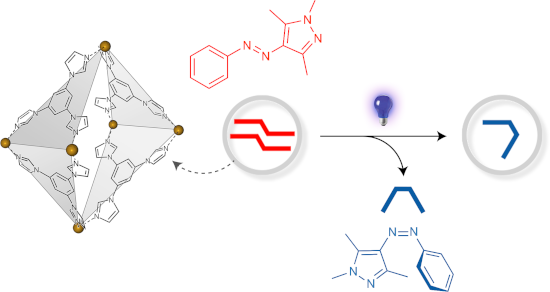
- Arylazopyrazoles represent a new family of molecular photoswitches characterized by a near-quantitative conversion between two states and long thermal half-lives of the metastable state. Here, we investigated the behavior of a model arylazopyrazole in the presence of a self-assembled cage based on Pd–imidazole
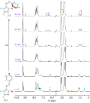
- 2 above). For example, E-1’s Ha protons at 1.07 ppm correlate with 2’s axial – but not equatorial – acidic imidazole H1 protons (cyan in Figure 2), which is in agreement with the close proximity of these two protons in the X-ray structure (da–1 = 3.68 Å). Conversely, Hc protons only correlate with
- of signals at 7.88–7.60 (all of which could be attributed to 2) correlate strongly with the protons of all three methyl groups of Z-1 (Ha, Hb, and Hc), in addition to exhibiting weaker NOE correlations with Hd, He, and Hf. Furthermore, the acidic imidazole protons correlate with most of Z-1’s protons


![[Graphic 1]](/bjoc/content/inline/1860-5397-15-232-i3.svg?max-width=637&scale=1.18182) 2 (500 MHz, D2O, 298 K).
2 (500 MHz, D2O, 298 K).




Click chemistry towards thermally reversible photochromic 4,5-bisthiazolyl-1,2,3-triazoles
Beilstein J. Org. Chem. 2019, 15, 2161–2169, doi:10.3762/bjoc.15.213
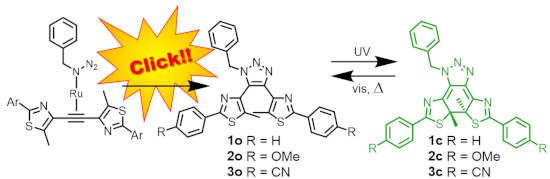
- (thiazole) [39], and 10c (imidazole) [40] in non-polar solvents, 1c has a much longer absorption maximum in toluene (Scheme 4, Table 2). It should also be noted that the absorption maximum wavelength is longer when the central ethene moiety is part of the aromatic ring than when it is an isolated ethene in



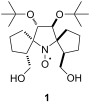
Synthesis of 1-azaspiro[4.4]nonan-1-oxyls via intramolecular 1,3-dipolar cycloaddition
Beilstein J. Org. Chem. 2019, 15, 2036–2042, doi:10.3762/bjoc.15.200
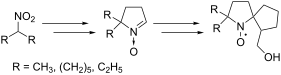
- 7c. 1,3-Dipolar cycloaddition of nitrones to alkenes is known to be reversible [13][14]. We recently reported a similar reversibility of the intramolecular cyclization of sterically hindered pent-4-enylnitrone of the 2H-imidazole series [15]. Treatment with Zn in an AcOH/EtOH/EDTA/Na2 mixture was



Synthesis of benzo[d]imidazo[2,1-b]benzoselenoazoles: Cs2CO3-mediated cyclization of 1-(2-bromoaryl)benzimidazoles with selenium
Beilstein J. Org. Chem. 2019, 15, 2029–2035, doi:10.3762/bjoc.15.199
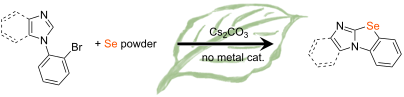
- , imidazo[2,1-b]selenoazoles, in which imidazole and selenophene are condensed, have been synthesized, and it was described in a patent that imidazo[2,1-b]benzoselenazole-3-acetamide derivatives have anticonvulsant activity [5]. Three ring closure reactions for the synthesis of imidazo[2,1-b]selenoazole
- -bromophenyl)imidazole (1i) with Se powder gave the corresponding tricyclic product 10 in low yield. Since the reaction conditions for the synthesis of the starting material 1 and the cyclization of 1 with Se powder are similar, we carried out a three-component reaction of benzimidazole, 1-bromo-2
- mechanism is as depicted in Scheme 3. The base deprotonates the imidazole ring giving an anion at the 2-position, which reacts with selenium by nucleophilic attack, resulting in C(Het)–Se bond formation. Next, the ring closure proceeds via the SNAr reaction by attack of the selenide anion on the phenyl


Reactions of 2-carbonyl- and 2-hydroxy(or methoxy)alkyl-substituted benzimidazoles with arenes in the superacid CF3SO3H. NMR and DFT studies of dicationic electrophilic species
Beilstein J. Org. Chem. 2019, 15, 1962–1973, doi:10.3762/bjoc.15.191
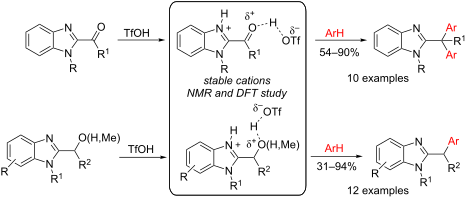
- reaction [14]. Recently, several hydroxyalkylation reactions followed by alkylation of arenes have been reported involving heterocycle-based superelectrophiles: pyridines, thiazoles, quinolines, isoquinolines, pyrazines, pyrazoles, imidazole and furans, bearing a formyl (carbonyl) group [15][16][17][18][19
- , superelectrophilic activation of the carbonyl group was achieved for 5-formyl and 5-acetylimidazoles in triflic acid CF3SO3H (TfOH) by Klumpp [19]. It was proposed that the triflic acid initially protonated the imidazole ring and an equilibrium was established with the O-protosolvated form or the dicationic


N-(1-Phenylethyl)aziridine-2-carboxylate esters in the synthesis of biologically relevant compounds
Beilstein J. Org. Chem. 2019, 15, 1722–1757, doi:10.3762/bjoc.15.168



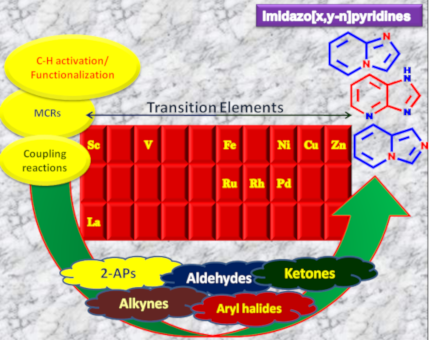
Recent advances on the transition-metal-catalyzed synthesis of imidazopyridines: an updated coverage
Beilstein J. Org. Chem. 2019, 15, 1612–1704, doi:10.3762/bjoc.15.165


An azobenzene container showing a definite folding – synthesis and structural investigation
Beilstein J. Org. Chem. 2019, 15, 1534–1544, doi:10.3762/bjoc.15.156
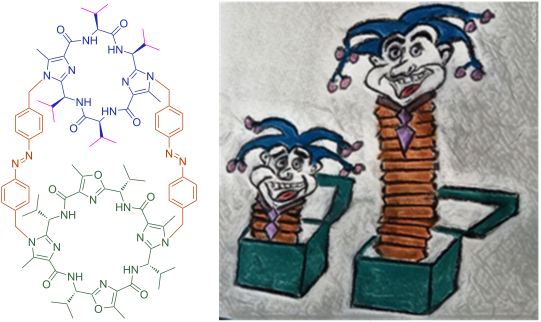
- the amino acid side chains, are described in the literature [49][50]. One example is the platform 4, which consists of two imidazole building blocks connected by two azobenzene units (Figure 2) [50]. Irradiation of the platform 4 with UV light results in a trans→cis isomerization accompanied by a
- reduction of the distance between the two isopropyl groups. As further example the chiral foldable container 5 should be mentioned [49]. Here, two imidazole-containing macrocycles are linked to each other by two azobenzene units (Figure 2). Irradiation with UV light causes two consecutive trans→cis
- the chiral switchable container we intended to use the imidazole-containing peptides 2a (R = R’ = iPr) and 3a (R = R’ = iPr) as macrocycles (see Figure 1 and Scheme 1). Both feature two imidazole units which should be used to attach the azobenzene groups. Additionally, platform 2a has two valine units


Synthesis and biological evaluation of truncated derivatives of abyssomicin C as antibacterial agents
Beilstein J. Org. Chem. 2019, 15, 1468–1474, doi:10.3762/bjoc.15.147
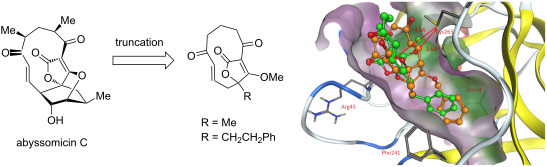
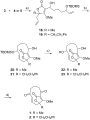
- (2.0 equiv), imidazole (4.0 equiv), DMF, rt, 2 h, 95%. e) HF·pyridine, pyridine, THF, rt, 45 h, 75%. f) i: (COCl)2 (1.2 equiv), DMSO (2.4 equiv), CH2Cl2, −78 °C, 1.5 h; ii: Et3N (5.0 equiv), −78 °C to rt, 1 h, 91%. Synthesis of the building blocks 4 and 5. a) TFA (1.1 equiv), CH2Cl2, rt, 24 h, 84% (14


Steroid diversification by multicomponent reactions
Beilstein J. Org. Chem. 2019, 15, 1236–1256, doi:10.3762/bjoc.15.121
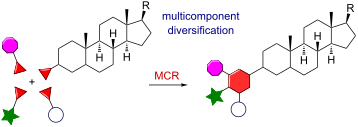
- ] reported another example of a diastereoselective MCR between a 6-ketosteroid, 2-aminopyridines and an isocyanide, using propylphosphonic acid anhydride (TP3) as catalyst to afford a steroidal derivative with an imidazole-pyridine moiety attached to ring B. This moiety is present in several compounds





