


Search results
Search for "iodination" in Full Text gives 148 result(s) in Beilstein Journal of Organic Chemistry.
Pyridine-promoted dediazoniation of aryldiazonium tetrafluoroborates: Application to the synthesis of SF5-substituted phenylboronic esters and iodobenzenes
- George Iakobson,
- Junyi Du,
- Alexandra M. Z. Slawin and
- Petr Beier
Beilstein J. Org. Chem. 2015, 11, 1494–1502, doi:10.3762/bjoc.11.162
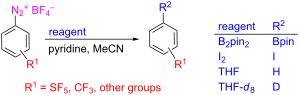
- )phenylboronic esters, iodo(pentafluorosulfanyl)benzenes and (pentafluorosulfanyl)benzene is shown. Keywords: borylation; diazonium salts; iodination; pyridine; sulfur pentafluorides; Introduction Pentafluorosulfanyl-containing compounds have been known for more than half a century [1][2][3][4]; however, for a
- access to SF5-phenylboronates appears to be starting from readily available SF5-substituted anilines or diazonium salts rather than SF5-containing halobenzenes. Herein, we report a new protocol for efficient borylation, iodination and hydrodediazoniation of SF5-phenyldiazonium tetrafluoroborates in the
- presence of pyridine. The generality of the borylation and iodination reactions was demonstrated on several examples. Results and Discussion At the onset of our investigation, Sandmeyer-type borylation of 3- and 4-(pentafluorosulfanyl)anilines (1a and 1b, respectively) to pinacolboronates 2a and 2b

Graphical Abstract

Scheme 1: Borylation of aryldiazonium tetrafluoroborates 3. Reaction conditions: 3 (1 mmol), B2pin2 (1 mmol),...

Scheme 2: Proposed reaction mechanism.

Scheme 3: Reaction of diazonium salt 3i under borylation conditions.

Scheme 4: Suzuki–Miyaura reaction of boronates 2a and 2b with aryl iodides. Reaction conditions: 2 (1 mmol), ...

Scheme 5: Syntesis of boronic acid 8b and trifluoroborates 9. Reaction conditions for the synthesis of 8b: 2 ...

Scheme 6: Iodination of aryldiazonium tetrafluoroborates 3. Reaction conditions: 3 (1 mmol), I2 (1.1 mmol), p...
Deproto-metallation of N-arylated pyrroles and indoles using a mixed lithium–zinc base and regioselectivity-computed CH acidity relationship
- Mohamed Yacine Ameur Messaoud,
- Ghenia Bentabed-Ababsa,
- Madani Hedidi,
- Aïcha Derdour,
- Floris Chevallier,
- Yury S. Halauko,
- Oleg A. Ivashkevich,
- Vadim E. Matulis,
- Laurent Picot,
- Valérie Thiéry,
- Thierry Roisnel,
- Vincent Dorcet and
- Florence Mongin
Beilstein J. Org. Chem. 2015, 11, 1475–1485, doi:10.3762/bjoc.11.160
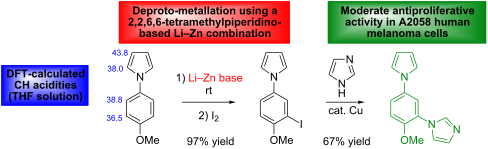
- identified by X-ray diffraction (Figure 3, left, see Supporting Information File 2). It is known that anisole can be ortho-deprotonated using the lithium–zinc base in THF [35]. It was thus of interest to involve N-(4-methoxyphenyl)-substituted azole substrates in the deprotonation–iodination sequence. Under
- procedure 3 for the deprotonative metallation followed by iodination (analogous to that described in [60]). To a stirred, cooled (0 °C) solution of 2,2,6,6-tetramethylpiperidine (0.25 mL, 1.5 mmol) in THF (2–3 mL) were successively added BuLi (about 1.6 M hexanes solution, 1.5 mmol) and, 5 min later, ZnCl2
- 4 for the deprotonative metallation followed by iodination (analogous to that described in [60]). To a stirred, cooled (0 °C) solution of 2,2,6,6-tetramethylpiperidine (0.25 mL, 1.5 mmol) in THF (2-3 mL) were successively added BuLi (about 1.6 M hexanes solution, 1.5 mmol) and, 5 min later, ZnCl2

Graphical Abstract

Figure 1: Substrates involved in deproto-metallation reaction.

Figure 2: ORTEP diagram (30% probability) of 2e.

Scheme 1: Synthesis of the azole substrates 1f and 2f.

Scheme 2: Deproto-metallation of 1c followed by iodolysis [33].

Scheme 3: Deproto-metallation of 1a and 2a followed by iodolysis.

Scheme 4: Deproto-metallation of 1b and 2b followed by iodolysis.

Scheme 5: Deproto-metallation of 1c and 2c followed by iodolysis.

Figure 3: ORTEP diagrams (30% probability) of 4c, 3d and 3e.

Scheme 6: Deproto-metallation of 1d and 2d followed by iodolysis.

Scheme 7: Deproto-metallation of 1e and 2e followed by iodolysis.

Scheme 8: N-arylation of the iodides 3b, 3d and 4d.
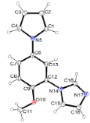
Figure 4: ORTEP diagram (30% probability) of 5d.

Figure 5: Calculated values of pKa(THF) of the compounds 1 and 2, and bromobenzene.

Figure 6: Antiproliferative activity (growth inhibition) of the tested compounds 1a,b,e,f, 2a,b and 5d at con...

Figure 7: Iodides previously formed as major products from the corresponding N-(4-methoxyphenyl)azoles using ...
Selected synthetic strategies to cyclophanes
- Sambasivarao Kotha,
- Mukesh E. Shirbhate and
- Gopalkrushna T. Waghule
Beilstein J. Org. Chem. 2015, 11, 1274–1331, doi:10.3762/bjoc.11.142
- at the 3 position to give 126 (66%) and later, N-allylation was carried out to afford the diallylindole 127 (69%, Scheme 18). A three-step (123→124→125→127) sequence was found to give a higher yield of the 1,3-diallylindole (127). Iodination of 123 gave the 3-iodoindole (124) quantitatively, which on

Graphical Abstract

Figure 1: General representation of cyclophanes.

Figure 2: cyclophanes one or more with heteroatom.

Figure 3: Metathesis catalysts 12–17 and C–C coupling catalyst 18.

Figure 4: Natural products containing the cyclophane skeleton.

Figure 5: Turriane family of natural products.

Scheme 1: Synthesis of [3]ferrocenophanes through Mannich reaction. Reagents and conditions: (i) excess HNMe2...

Scheme 2: Synthesis of cyclophanes through Michael addition. Reagents and conditions: (i) xylylene dibromide,...

Scheme 3: Synthesis of normuscopyridine analogue 37 through an oxymercuration–oxidation strategy. Reagents an...

Scheme 4: Synthesis of tribenzocyclotriyne 39 through Castro–Stephens coupling reaction. Reagents and conditi...

Scheme 5: Synthesis of cyclophane 43 through Glaser–Eglinton coupling. Reagents and conditions: (i) 9,10-bis(...

Scheme 6: Synthesis of the macrocyclic C-glycosyl cyclophane through Glaser coupling. Reagents and conditions...

Scheme 7: Synthesis of cyclophane-containing complex 49 through Glaser–Eglinton coupling reaction. Reagents a...

Scheme 8: Synthesis of cyclophane 53 through Glaser–Eglinton coupling. Reagents and conditions: (i) K2CO3, ac...

Figure 6: Cyclophanes 54–56 that have been synthesized through Glaser–Eglinton coupling.

Figure 7: Synthesis of tetrasubstituted [2.2]paracyclophane 57 and chiral cyclophyne 58 through Eglinton coup...

Scheme 9: Synthesis of cyclophane through Glaser–Hay coupling reaction. Reagents and conditions: (i) CuCl2 (1...

Scheme 10: Synthesis of seco-C/D ring analogs of ergot alkaloids through intramolecular Heck reaction. Reagent...

Scheme 11: Synthesis of muscopyridine 73 via Kumada coupling. Reagents and conditions: (i) 72, THF, ether, 20 ...

Scheme 12: Synthesis of the cyclophane 79 via McMurry coupling. Reagents and conditions: (i) 75, decaline, ref...

Scheme 13: Synthesis of stilbenophane 81 via McMurry coupling. Reagents and conditions: (i) TiCl4, Zn, pyridin...

Scheme 14: Synthesis of stilbenophane 85 via McMurry coupling. Reagents and conditions: (i) NBS (2 equiv), ben...
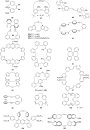
Figure 8: List of cyclophanes prepared via McMurry coupling reaction as a key step.

Scheme 15: Synthesis of paracyclophane by cross coupling involving Pd(0) catalyst. Reagents and conditions: (i...

Scheme 16: Synthesis of the cyclophane 112 via the pinacol coupling and 113 by RCM. Reagents and conditions: (...

Scheme 17: Synthesis of cyclophane derivatives 122a–c via Sonogoshira coupling. Reagents and conditions: (i) C...

Scheme 18: Synthesis of cyclophane 130 via Suzuki–Miyaura reaction as a key step. Reagents and conditions: (i)...

Scheme 19: Synthesis of the mycocyclosin via Suzuki–Miyaura cross coupling. Reagents and conditions: (i) benzy...

Scheme 20: Synthesis of cyclophanes via Wurtz coupling reaction Reagents and conditions: (i) PhLi, Et2O, C6H6,...

Scheme 21: Synthesis of non-natural glycophanes using alkyne metathesis. Reagents and conditions: (i) G-I (12)...

Figure 9: Synthesis of cyclophanes via ring-closing alkyne metathesis.

Scheme 22: Synthesis of crownophanes by cross-enyne metathesis. Reagents and conditions: (i) G-II (13), 5 mol ...

Scheme 23: Synthesis of (−)-cylindrocyclophanes A (156) and (−)-cylindrocyclophanes F (155). Reagents and cond...

Scheme 24: Synthesis of cyclophane 159 derivatives via SM cross-coupling and RCM. Reagents and conditions: (i)...

Scheme 25: Sexithiophene synthesis via cross metathesis. Reagents and conditions: (i) 161, Pd(PPh3)4, K2CO3, T...

Scheme 26: Synthesis of pyrrole-based cyclophane using enyne metathesis. Reagents and conditions: (i) Se, chlo...

Scheme 27: Synthesis of macrocyclic derivatives by RCM. Reagents and conditions: (i) G-I/G-II, CH2Cl2, 0.005 M...

Scheme 28: Synthesis of enantiopure β-lactam-based dienyl bis(dihydrofuran) 179. Reagents and conditions: (i) ...

Scheme 29: Synthesis of a [1.1.6]metaparacyclophane derivative 183 via SM cross coupling. Reagents and conditi...

Scheme 30: Synthesis of a [1.1.6]metaparacyclophane derivative 190 via SM cross coupling. Reagents and conditi...

Scheme 31: Template-promoted synthesis of cyclophanes involving RCM. Reagents and conditions: (i) acenaphthene...

Scheme 32: Synthesis of [3.4]cyclophane derivatives 200 via SM cross coupling and RCM. Reagents and conditions...
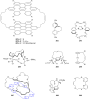
Figure 10: Examples for cyclophanes synthesized by RCM.

Scheme 33: Synthesis of the longithorone C framework assisted by fluorinated auxiliaries. Reagents and conditi...

Scheme 34: Synthesis of the longithorone framework via RCM. Reagents and conditions: (i) 213, NaH, THF, rt, 10...

Scheme 35: Synthesis of floresolide B via RCM as a key step. Reagents and conditions: (i) G-II (13, 0.1 equiv)...

Scheme 36: Synthesis of normuscopyridine (223) by the RCM strategy. Reagents and condition: (i) Mg, THF, hexen...

Scheme 37: Synthesis of muscopyridine (73) via RCM. Reagents and conditions: (i) 225, NaH, THF, 0 °C to rt, 1....

Scheme 38: Synthesis of muscopyridine (73) via RCM strategy. Reagents and conditions: (i) NaH, n-BuLi, 5-bromo...

Scheme 39: Synthesis of pyridinophane derivatives 223 and 245. Reagents and conditions: (i) PhSO2Na, TBAB, CH3...

Scheme 40: Synthesis of metacyclophane derivatives 251 and 253. Reagents and conditions: (i) 240, NaH, THF, rt...

Scheme 41: Synthesis of normuscopyridine and its higher analogues. Reagents and conditions: (i) alkenyl bromid...

Scheme 42: Synthesis of fluorinated ferrocenophane 263 via a [2 + 2] cycloaddition. Reagents and conditions: (...

Scheme 43: Synthesis of [2.n]metacyclophanes 270 via a [2 + 2] cycloaddition. Reagents and conditions: (i) Ac2...

Scheme 44: Synthesis of metacyclophane 273 by a [2 + 2 + 2] co-trimerization. Reagents and conditions: (i) [Rh...

Scheme 45: Synthesis of paracyclophane 276 via a [2 + 2 + 2] cycloaddition reaction. Reagents and conditions: ...

Scheme 46: Synthesis of cyclophane 278 via a [2 + 2 + 2] cycloaddition reaction. Reagents and conditions: (i) ...

Scheme 47: Synthesis of cyclophane 280 via a [2 + 2 + 2] cycloaddition. Reagents and conditions: (i) [(Rh(cod)(...

Scheme 48: Synthesis of taxane framework by a [2 + 2 + 2] cycloaddition. Reagents and conditions: (i) Cp(CO)2 ...

Scheme 49: Synthesis of cyclophane 284 and 285 via a [2 + 2 + 2] cycloaddition reaction. Reagents and conditio...

Scheme 50: Synthesis of pyridinophanes 293a,b and 294a,b via a [2 + 2 + 2] cycloaddition. Reagents and conditi...

Scheme 51: Synthesis of pyridinophanes 296 and 297 via a [2 + 2 + 2] cycloaddition. Reagents and conditions: (...

Scheme 52: Synthesis of triazolophane by a 1,3-dipolar cycloaddition. Reagents and conditions: (i) propargyl b...

Scheme 53: Synthesis of glycotriazolophane 309 by a click reaction. Reagents and conditions: (i) LiOH, H2O, Me...

Figure 11: Cyclophanes 310 and 311 prepared via click chemistry.

Scheme 54: Synthesis of cyclophane via the Dötz benzannulation. Reagents and conditions: (i) THF, 100 °C, 12 h...

Scheme 55: Synthesis of [6,6]metacyclophane by a Dötz benzannulation. Reagents and conditions: (i) THF, 100 °C...

Scheme 56: Synthesis of cyclophanes by a Dötz benzannulation. Reagents and conditions: (i) THF, 65 °C, 3 h; (i...

Scheme 57: Synthesis of muscopyridine (73) via an intramolecular DA reaction of ketene. Reagents and condition...

Scheme 58: Synthesis of bis[10]paracyclophane 336 via Diels–Alder reaction. Reagents and conditions: (i) DMAD,...

Scheme 59: Synthesis of [8]paracyclophane via DA reaction. Reagents and conditions: (i) maleic anhydride, 3–5 ...

Scheme 60: Biomimetic synthesis of (−)-longithorone A. Reagents and conditions: (i) Me2AlCl, CH2Cl2, −20 °C, 7...

Scheme 61: Synthesis of sporolide B (349) via a [4 + 2] cycloaddition reaction. Reagents and conditions: (i) P...

Scheme 62: Synthesis of the framework of (+)-cavicularin (352) via a [4 + 2] cycloaddition. Reagents and condi...

Scheme 63: Synthesis of oxazole-containing cyclophane 354 via Beckmann rearrangement. Reagents and conditions:...

Scheme 64: Synthesis of cyclophanes 360a–c via benzidine rearrangement. Reagents and conditions: (i) 356a–d, K2...

Scheme 65: Synthesis of cyclophanes 365a–c via benzidine rearrangement. Reagents and conditions: (i) BocNHNH2,...

Scheme 66: Synthesis of metacyclophane 367 via Ciamician–Dennstedt rearrangement. Reagents and conditions: (i)...

Scheme 67: Synthesis of cyclophane by tandem Claisen rearrangement and RCM as key steps. Reagents and conditio...

Scheme 68: Synthesis of cyclophane derivative 380. Reagents and conditions: (i) K2CO3, CH3CN, allyl bromide, r...

Scheme 69: Synthesis of metacyclophane via Cope rearrangement. Reagents and conditions: (i) MeOH, NaBH4, rt, 1...

Scheme 70: Synthesis of cyclopropanophane via Favorskii rearrangement. Reagents and conditions: (i) Br2, CH2Cl2...

Scheme 71: Cyclophane 389 synthesis via photo-Fries rearrangement. Reagents and conditions: (i) DMAP, EDCl/CHCl...

Scheme 72: Synthesis of normuscopyridine (223) via Schmidt rearrangement. Reagents and conditions: (i) ethyl s...

Scheme 73: Synthesis of crownophanes by tandem Claisen rearrangement. Reagents and conditions: (i) diamine, Et3...

Scheme 74: Attempted synthesis of cyclophanes via tandem Claisen rearrangement and RCM. Reagents and condition...

Scheme 75: Synthesis of muscopyridine via alkylation with 2,6-dimethylpyridine anion. Reagents and conditions:...

Scheme 76: Synthesis of cyclophane via Friedel–Craft acylation. Reagents and conditions: (i) CS2, AlCl3, 7 d, ...

Scheme 77: Pyridinophane 418 synthesis via Friedel–Craft acylation. Reagents and conditions: (i) 416, AlCl3, CH...

Scheme 78: Cyclophane synthesis involving the Kotha–Schölkopf reagent 421. Reagents and conditions: (i) NBS, A...

Scheme 79: Cyclophane synthesis involving the Kotha–Schölkopf reagent 421. Reagents and conditions: (i) BEMP, ...

Scheme 80: Cyclophane synthesis by coupling with TosMIC. Reagents and conditions: (i) (a) ClCH2OCH3, TiCl4, CS2...

Scheme 81: Synthesis of diaza[32]cyclophanes and triaza[33]cyclophanes. Reagents and conditions: (i) DMF, NaH,...

Scheme 82: Synthesis of cyclophane 439 via acyloin condensation. Reagents and conditions: (i) Na, xylene, 75%;...

Scheme 83: Synthesis of multibridged binuclear cyclophane 442 by aldol condensation. Reagents and conditions: ...

Scheme 84: Synthesis of various macrolactones. Reagents and conditions: (i) iPr2EtN, DMF, 77–83%; (ii) TBDMSCl...

Scheme 85: Synthesis of muscone and muscopyridine via Yamaguchi esterification. Reagents and conditions: (i) 4...

Scheme 86: Synthesis of [5]metacyclophane via a double elimination reaction. Reagents and conditions: (i) LiBr...

Figure 12: Cyclophanes 466–472 synthesized via Hofmann elimination.

Scheme 87: Synthesis of cryptophane via Baylis–Hillman reaction. Reagents and conditions: (i) methyl acrylate,...

Scheme 88: Synthesis of cyclophane 479 via double Chichibabin reaction. Reagents and conditions: (i) excess 478...

Scheme 89: Synthesis of cyclophane 483 via double Chichibabin reaction. Reagents and conditions: (i) 481, OH−;...

Scheme 90: Synthesis of cyclopeptide via an intramolecular SNAr reaction. Reagents and conditions: (i) TBAF, T...

Scheme 91: Synthesis of muscopyridine (73) via C-zip ring enlargement reaction. Reagents and conditions: (i) H...

Figure 13: Mechanism of the formation of compound 494.

Scheme 92: Synthesis of indolophanetetraynes 501a,b using the Nicholas reaction as a key step. Reagents and co...

Scheme 93: Synthesis of cyclophane via radical cyclization. Reagents and conditions: (i) cyclododecanone, phen...

Scheme 94: Synthesis of (−)-cylindrocyclophanes A (156) and (−)-cylindrocyclophanes F (155). Reagents and cond...

Scheme 95: Cyclophane synthesis via Wittig reaction. Reagents and conditions: (i) LiOEt (2.1 equiv), THF, −78 ...

Figure 14: Representative examples of cyclophanes synthesized via Wittig reaction.

Scheme 96: Synthesis of the [6]paracyclophane via isomerization of Dewar benzene. Reagents and conditions: (i)...
Self-assembly of heteroleptic dinuclear metallosupramolecular kites from multivalent ligands via social self-sorting
- Christian Benkhäuser and
- Arne Lützen
Beilstein J. Org. Chem. 2015, 11, 693–700, doi:10.3762/bjoc.11.79
- commercially available 2-aminopyridine (4) (Scheme 4) following mostly literature-known protocols. The electrophilic iodination of aminopyridine 4 gave iodide 5 in good yield. Compound 5 was then subjected to a Sandmeyer-like chlorination to 6 which in turn was transformed in a Sonogashira reaction with

Graphical Abstract

Scheme 1: Schematic representation of self-sorting effects in metallosupramolecular self-assembly processes.

Scheme 2: Schematic representation of our approach to discrete heteroleptic oligonuclear metallosupramolecula...

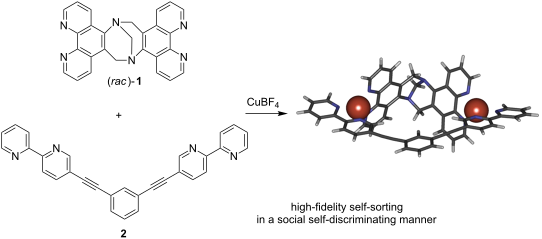
Figure 1: Tröger’s base-derived bis(phenanthroline) ligand (rac)-1 and bis(bipyridine) ligand 2.

Scheme 3: Synthesis of chiral bis(phenanthroline) ligand (rac)-1 from 3.

Scheme 4: Synthesis of bis(bipyridine) ligand 2 from 2-aminopyridine (4).

Figure 2: NMR spectra (500.1 MHz in DMSO-d6 at 295 K) of free ligands b) (rac)-1 and c) 2; 1:1 mixtures of li...

Figure 3: ESI mass spectrum (positive ion mode) of a 1:1:2 mixture of (rac)-1, 2, and CuBF4 sprayed from a 10...

Scheme 5: Summary of the coordination behavior of the two ligands 1 and 2 and their equimolar mixture towards...
Design, synthesis and photochemical properties of the first examples of iminosugar clusters based on fluorescent cores
- Mathieu L. Lepage,
- Antoine Mirloup,
- Manon Ripoll,
- Fabien Stauffert,
- Anne Bodlenner,
- Raymond Ziessel and
- Philippe Compain
Beilstein J. Org. Chem. 2015, 11, 659–667, doi:10.3762/bjoc.11.74
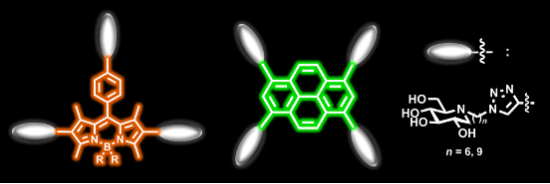
- ethynyl tetra(ethylene glycol)methyl groups [58][59]. Synthesis of the BODIPY precursors The synthesis of the tris-iodo functionalized BODIPY dyes and their acetylenic derivatives is sketched in Scheme 1. The synthesis of derivatives 7 and 8 have previously been reported using a regioselective iodination

Graphical Abstract
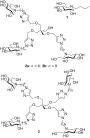
Figure 1: N-Bu DNJ (1) and examples of potent multivalent pharmacological chaperones and CFTR correctors (2 a...

Figure 2: Azide-armed DNJ derivatives 4 and polyalkyne “clickable” scaffolds 5 and 6.

Scheme 1: Synthesis of trisubstituted BODIPY derivatives. (a) ICl, CHCl3/MeOH, rt, 15 min, quantitative; (b) ...

Scheme 2: Synthesis of DNJ clusters 13: (a) CuSO4·5H2O cat., sodium ascorbate, THF/H2O (1:1), 83% (12a), 56% (...
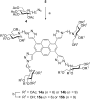
Scheme 3: Synthesis of DNJ clusters 15: (a) CuSO4·5H2O cat., sodium ascorbate, DMF/H2O (6:1), 80 °C (MW) or r...
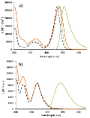
Figure 3: a) Absorption (orange line), corrected emission (green line) (λexc = 510 nm), excitation (dashed bl...
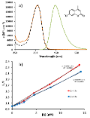
Figure 4: a) Absorption (orange line), corrected emission (green line) (λexc = 360 nm) and excitation (dashed...
C-5’-Triazolyl-2’-oxa-3’-aza-4’a-carbanucleosides: Synthesis and biological evaluation
- Roberto Romeo,
- Caterina Carnovale,
- Salvatore V. Giofrè,
- Maria A. Chiacchio,
- Adriana Garozzo,
- Emanuele Amata,
- Giovanni Romeo and
- Ugo Chiacchio
Beilstein J. Org. Chem. 2015, 11, 328–334, doi:10.3762/bjoc.11.38

- –Jones nucleosidation using silylated thymine and TBAF [42][43][44], was converted into the corresponding iodo-derivative 10 by sequential tosylation and iodination. The subsequent reaction of 10 with sodium azide, performed at 50 °C in CH3CN/H2O (1:10) in the presence of NH4Cl for 48 h afforded two

Graphical Abstract

Figure 1: 2’-Oxa-3’-aza-modified nucleosides and 2’-oxa-3’-aza-modified nucleotides.

Figure 2: Triazolyl-2’-oxa-3’-aza-4’a-carbanucleosides.

Scheme 1: Synthesis of triazolyl isoxazolidinyl-nucleosides 13 and 14. Reagents and conditions: a) Tosyl chlo...

Figure 3: α–β Epimerization.
Electrochemical selenium- and iodonium-initiated cyclisation of hydroxy-functionalised 1,4-dienes
- Philipp Röse,
- Steffen Emge,
- Jun-ichi Yoshida and
- Gerhard Hilt
Beilstein J. Org. Chem. 2015, 11, 174–183, doi:10.3762/bjoc.11.18

- alcohol functionality takes place. It is mentionable that under the reaction conditions no aromatic iodination could be observed. Next to sodium iodide other iodide sources such as KI, I2 or Bu4NI can be used, whereas applying other halogenides such as NaBr, Et4NBr or Bu4NCl led to a complex mixture of

Graphical Abstract

Scheme 1: Cobalt-catalysed 1,4-hydrovinylation.

Scheme 2: Electrochemical selenoalkoxylation of 2.

Scheme 3: Electrochemical iodoalkoxylation of 2.
Cross-dehydrogenative coupling for the intermolecular C–O bond formation
- Igor B. Krylov,
- Vera A. Vil’ and
- Alexander O. Terent’ev
Beilstein J. Org. Chem. 2015, 11, 92–146, doi:10.3762/bjoc.11.13
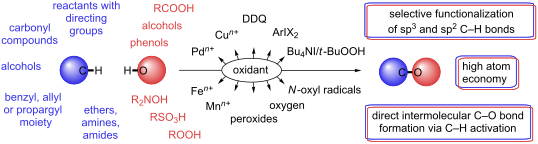
- commonly employed in the oxidative coupling of OH-reagents with carbonyl compounds. Methods were developed for the sulfonyloxylation of ketones, in which iodoarene is generated in situ by the iodination of arene with molecular iodine [183] or NH4I [184] in the presence of m-chloroperbenzoic acid. In the

Graphical Abstract

Scheme 1: Cross-dehydrogenative coupling.

Scheme 2: Cross-dehydrogenative C–O coupling.

Scheme 3: Regioselective ortho-acetoxylation of meta-substituted arylpyridines and N-arylamides.

Scheme 4: ortho-Acyloxylation and alkoxylation of arenes directed by pyrimidine, benzoxazole, benzimidazole a...

Scheme 5: Cu(OAc)2/AgOTf/O2 oxidative system in the ortho-alkoxylation of arenes.
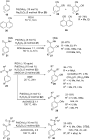
Scheme 6: Pd(OAc)2/persulfate oxidative system in the ortho-alkoxylation and acetoxylation of arenes with nit...
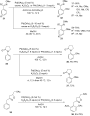
Scheme 7: ortho-Acetoxylation and methoxylation of O-methyl aryl oximes, N-phenylpyrrolidin-2-one, and (3-ben...

Scheme 8: Ruthenium-catalyzed ortho-acyloxylation of acetanilides.

Scheme 9: Acetoxylation and alkoxylation of arenes with amide directing group using Pd(OAc)2/PhI(OAc)2 oxidat...

Scheme 10: Alkoxylation of azoarenes, 2-aryloxypyridines, picolinamides, and N-(1-methyl-1-(pyridin-2-yl)ethyl...

Scheme 11: Acetoxylation of compounds containing picolinamide and quinoline-8-amine moieties using the Pd(OAc)2...

Scheme 12: (CuOH)2CO3 catalyzed oxidative ortho-etherification using air as oxidant.

Scheme 13: Copper-catalyzed aerobic alkoxylation and aryloxylation of arenes containing pyridine-N-oxide moiet...

Scheme 14: Cobalt-catalyzed aerobic alkoxylation of arenes and alkenes containing pyridine N-oxide moiety.

Scheme 15: Non-symmetric double-fold C–H ortho-acyloxylation.

Scheme 16: N-nitroso directed ortho-alkoxylation of arenes.

Scheme 17: Selective alkoxylation and acetoxylation of alkyl groups.

Scheme 18: Acetoxylation of 2-alkylpyridines and related compounds.

Scheme 19: Acyloxylation and alkoxylation of alkyl fragments of substrates containing amide or sulfoximine dir...

Scheme 20: Palladium-catalyzed double sp3 C–H alkoxylation of N-(quinolin-8-yl)amides for the synthesis of sym...

Scheme 21: Copper-catalyzed acyloxylation of methyl groups of N-(quinolin-8-yl)amides.

Scheme 22: One-pot acylation and sp3 C–H acetoxylation of oximes.

Scheme 23: Possible mechanism of oxidative esterification catalyzed by N-heterocyclic nucleophilic carbene.

Scheme 24: Oxidative esterification employing stoichiometric amounts of aldehydes and alcohols.

Scheme 25: Selective oxidative coupling of aldehydes with alcohols in the presence of amines.

Scheme 26: Iodine mediated oxidative esterification.

Scheme 27: Oxidative C–O coupling of benzyl alcohols with methylarenes under the action of Bu4NI/t-BuOOH syste...

Scheme 28: Oxidative coupling of methyl- and ethylarenes with aromatic aldehydes under the action of Bu4NI/t-B...

Scheme 29: Cross-dehydrogenative C–O coupling of aldehydes with t-BuOOH in the presence of Bu4NI.

Scheme 30: Bu4NI-catalyzed α-acyloxylation reaction of ethers and ketones with aldehydes and t-BuOOH.

Scheme 31: Oxidative coupling of aldehydes with N-hydroxyimides and hexafluoroisopropanol.

Scheme 32: Oxidative coupling of alcohols with N-hydroxyimides.

Scheme 33: Oxidative coupling of aldehydes and primary alcohols with N-hydroxyimides using (diacetoxyiodo)benz...

Scheme 34: Proposed mechanism of the oxidative coupling of aldehydes and N-hydroxysuccinimide under action of ...

Scheme 35: Oxidative coupling of aldehydes with pivalic acid (172).

Scheme 36: Oxidative C–O coupling of aldehydes with alkylarenes using the Cu(OAc)2/t-BuOOH system.

Scheme 37: Copper-catalyzed acyloxylation of C(sp3)-H bond adjacent to oxygen in ethers using benzyl alcohols.

Scheme 38: Oxidative C–O coupling of aromatic aldehydes with cycloalkanes.

Scheme 39: Ruthenium catalyzed cross-dehydrogenative coupling of primary and secondary alcohols.

Scheme 40: Cross-dehydrogenative C–O coupling reactions of β-dicarbonyl compounds with sulfonic acids, acetic ...

Scheme 41: Acyloxylation of ketones, aldehydes and β-dicarbonyl compounds using carboxylic acids and Bu4NI/t-B...

Scheme 42: Acyloxylation of ketones using Bu4NI/t-BuOOH system.

Scheme 43: Cross-dehydrogenative C–O coupling of β-dicarbonyl compounds and their heteroanalogues with N-hydro...

Scheme 44: Cross-dehydrogenative C–O coupling of β-dicarbonyl compounds and their heteroanalogues with t-BuOOH....

Scheme 45: Oxidative C–O coupling of 2,6-dialkylphenyl-β-keto esters and thioesters with tert-butyl hydroxycar...

Scheme 46: α’-Acyloxylation of α,β-unsaturated ketones using KMnO4.

Scheme 47: Possible mechanisms of the acetoxylation at the allylic position of alkenes by Pd(OAc)2.

Scheme 48: Products of the oxidation of terminal alkenes by Pd(II)/AcOH/oxidant system.

Scheme 49: Acyloxylation of terminal alkenes with carboxylic acids.

Scheme 50: Synthesis of linear E-allyl esters by cross-dehydrogenative coupling of terminal alkenes wih carbox...

Scheme 51: Pd(OAc)2-catalyzed acetoxylation of Z-vinyl(triethylsilanes).

Scheme 52: α’-Acetoxylation of α-acetoxyalkenes with copper(II) chloride in acetic acid.

Scheme 53: Oxidative acyloxylation at the allylic position of alkenes and at the benzylic position of alkylare...

Scheme 54: Copper-catalyzed alkoxylation of methylheterocyclic compounds using di-tert-butylperoxide as oxidan...

Scheme 55: Oxidative C–O coupling of methylarenes with β-dicarbonyl compounds or phenols.

Scheme 56: Copper-catalyzed esterification of methylbenzenes with cyclic ethers and cycloalkanes.

Scheme 57: Oxidative C–O coupling of carboxylic acids with toluene catalyzed by Pd(OAc)2.

Scheme 58: Oxidative acyloxylation at the allylic position of alkenes with carboxylic acids using the Bu4NI/t-...

Scheme 59: Cross-dehydrogenative C–O coupling of carboxylic acids with alkylarenes using the Bu4NI/t-BuOOH sys...

Scheme 60: Oxidative C–O cross-coupling of methylarenes with ethyl or isopropylarenes.

Scheme 61: Phosphorylation of benzyl C–H bonds using the Bu4NI/t-BuOOH oxidative system.

Scheme 62: Selective C–H acetoxylation of 2,3-disubstituted indoles.

Scheme 63: Acetoxylation of benzylic position of alkylarenes using DDQ as oxidant.

Scheme 64: C–H acyloxylation of diarylmethanes, 3-phenyl-2-propen-1-yl acetate and dimethoxyarene using DDQ.

Scheme 65: Cross-dehydrogenative C–O coupling of 1,3-diarylpropylenes and 1,3-diarylpropynes with alcohols.

Scheme 66: One-pot azidation and C–H acyloxylation of 3-chloro-1-arylpropynes.

Scheme 67: Cross-dehydrogenative C–O coupling of 1,3-diarylpropylenes, (E)-1-phenyl-2-isopropylethylene and is...

Scheme 68: Cross-dehydrogenative C–O coupling of alkylarenes and related compounds with N-hydroxyphthalimide.

Scheme 69: Acetoxylation at the benzylic position of alkylarenes mediated by N-hydroxyphthalimide.

Scheme 70: C–O coupling of methylarenes with aromatic carboxylic acids employing the NaBrO3/NaHSO3 system.

Scheme 71: tert-Butyl peroxidation of allyl, propargyl and benzyl ethers catalyzed by Fe(acac)3.

Scheme 72: Cross-dehydrogenative C–O coupling of ethers with carboxylic acids mediated by Bu4NI/t-BuOOH system....

Scheme 73: Oxidative acyloxylation of dimethylamides and dioxane with 2-aryl-2-oxoacetic acids accompanied by ...

Scheme 74: tert-Butyl peroxidation of N-benzylamides and N-allylbenzamide using the Bu4NI/t-BuOOH system.

Scheme 75: Cross-dehydrogenative C–O coupling of aromatic carboxylic acids with ethers using Fe(acac)3 as cata...

Scheme 76: Cross-dehydrogenative C–O coupling of cyclic ethers with 2-hydroxybenzaldehydes using iron carbonyl...
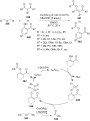
Scheme 77: Cross-dehydrogenative C–O coupling of ethers with β-dicarbonyl compounds and phenols using copper c...

Scheme 78: Cross-dehydrogenative C–O coupling of 2-hydroxybenzaldehyde with dioxane catalyzed by Cu2(BPDC)2(BP...

Scheme 79: Ruthenium chloride-catalyzed acyloxylation of β-lactams.

Scheme 80: Ruthenium-catalyzed tert-butyl peroxydation amides and acetoxylation of β-lactams.

Scheme 81: PhI(OAc)2-mediated α,β-diacetoxylation of tertiary amines.

Scheme 82: Electrochemical oxidative methoxylation of tertiary amines.

Scheme 83: Cross-dehydrogenative C–O coupling of ketene dithioacetals with carboxylic acids in the presence of...

Scheme 84: Cross-dehydrogenative C–O coupling of enamides with carboxylic acids using iodosobenzene as oxidant....

Scheme 85: Oxidative alkoxylation, acetoxylation, and tosyloxylation of acylanilides using PhI(O(O)CCF3)2 in t...

Scheme 86: Proposed mechanism of the oxidative C–O coupling of actetanilide with O-nucleophiles in the presenc...

Scheme 87: Three-component coupling of aldehydes, anilines and alcohols involving oxidative intermolecular C–O...

Scheme 88: Oxidative coupling of phenols with alcohols.

Scheme 89: 2-Acyloxylation of quinoline N-oxides with arylaldehydes in the presence of the CuOTf/t-BuOOH syste...

Scheme 90: Cross-dehydrogenative C–O coupling of azoles with primary alcohols.

Scheme 91: Oxidation of dipyrroles to dipyrrins and subsequent oxidative alkoxylation in the presence of Na3Co...

Scheme 92: Oxidative dehydrogenative carboxylation of alkanes and cycloalkanes to allylic esters.

Scheme 93: Pd-catalyzed acetoxylation of benzene.
Synthetic strategies for the fluorescent labeling of epichlorohydrin-branched cyclodextrin polymers
- Milo Malanga,
- Mihály Bálint,
- István Puskás,
- Kata Tuza,
- Tamás Sohajda,
- László Jicsinszky,
- Lajos Szente and
- Éva Fenyvesi
Beilstein J. Org. Chem. 2014, 10, 3007–3018, doi:10.3762/bjoc.10.319
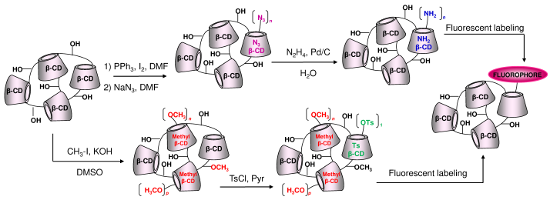
- azido groups The introduction of the azido groups into the β-CD-polymer has been performed by adapting the sequence iodination → azidation [19] to the specific structure. The target was to introduce one azido moiety per CD ring in 0.5–2% of the CD population. The optimization of the three-step reaction
- the same reasons the work-up and the purification steps had to be carefully planned without relying on chromatographic techniques. Taken into consideration that the azidation step is an exhaustive process (if NaN3 is used in excess), the real challenge was to control the degree of the iodination. In
- ) modifying the monomer prior to branching. The strategies were demonstrated on several examples using various fluorescent moieties for labeling. For the first strategy, the fluorophore is attached on the primary side of the CD scaffold, if the sequence iodination→azidation is used. If the intermediate

Graphical Abstract

Scheme 1: Schematic representation of the various synthetic routes for the introduction of an anchoring group...

Scheme 2: Synthetic strategy for the rhodaminylation of β-CD polymer.

Figure 1: TLC study of β-CD iodination showing the proceeding of 6-monoiodination with increasing reaction ti...

Figure 2: HSQC-DEPT spectrum of compound 1 with partial assignment.

Figure 3: IR spectra of compound 1 (black line) and compound 2 (red line) showing the disappearance of the az...

Scheme 3: Schematic representation for the coumarinylation of methylated β-CD-polymer, n, m, p and q mean the...

Figure 4: HSQC-DEPT spectra of compound 4 with partial assignment; in the upper part the full spectrum is sho...

Scheme 4: Schematic representation for the introduction of NBF in a cationic β-CD-polymer.

Scheme 5: Schematic representation for the introduction of fluorescein into a β-CD-polymer.
Scalable synthesis of 5,11-diethynylated indeno[1,2-b]fluorene-6,12-diones and exploration of their solid state packing
- Bradley D. Rose,
- Peter J. Santa Maria,
- Aaron G. Fix,
- Chris L. Vonnegut,
- Lev N. Zakharov,
- Sean R. Parkin and
- Michael M. Haley
Beilstein J. Org. Chem. 2014, 10, 2122–2130, doi:10.3762/bjoc.10.219
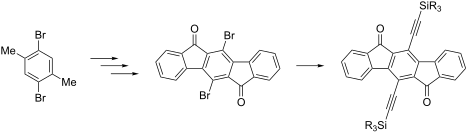
- as the more robust bromines in 11, yet avoid annulene transannular synthesis [24]. Instead, the route we chose involved key precursor 12, which surprisingly is an unknown compound. Starting with commercially available 2,5-dibromo-p-xylene (13) (Scheme 2), iodination using the method reported by

Graphical Abstract

Figure 1: Previously reported indeno[1,2-b]fluorenes and related indeno[1,2-b]fluorene-6,12-diones.

Scheme 1: Transannular cyclization route to diethynyl-IF-diones 8.

Scheme 2: Suzuki/Friedel-Crafts route to diethynyl-IF-diones 8.

Figure 2: UV–vis spectrum (left) and cyclic voltammogram (right) of dione 8c.

Figure 3: Kohn–Sham HOMO (left) and LUMO (right) plots of 8a.

Figure 4: Views perpendicular to the average plane of the π stack. 1st row left to right – 8a, 8b, 8c; 2nd ro...

Figure 5: Schematic of the parameters used for comparing X-ray crystal structures, view is parallel to the mo...
Improving the reactivity of phenylacetylene macrocycles toward topochemical polymerization by side chains modification
- Simon Rondeau-Gagné,
- Jules Roméo Néabo,
- Maxime Daigle,
- Katy Cantin and
- Jean-François Morin
Beilstein J. Org. Chem. 2014, 10, 1613–1619, doi:10.3762/bjoc.10.167
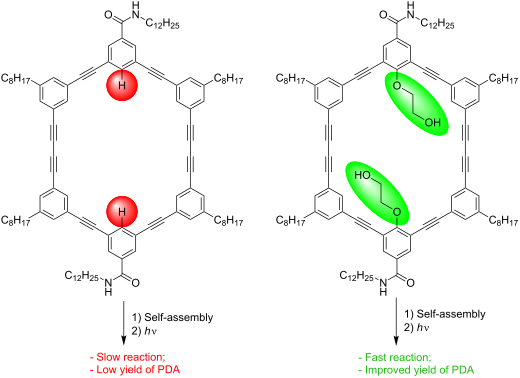
- this study as a control molecule because of the absence of 2-hydroxyethoxy chains in its structure, providing a reliable comparison. Results and Discussion The synthetic pathway toward PAM2 and PAM3 is shown in Scheme 1. Starting from commercially available 4-hydroxybenzoic acid, iodination was

Graphical Abstract

Figure 1: Structures of PAM1 to PAM3.

Scheme 1: Synthetic pathway to PAM2 and PAM3.

Figure 2: Scanning electron microscopy (SEM) images of PAM2 xerogel in cyclohexane (10 mg/mL). Scales are a) ...

Figure 3: UV–vis spectrum of PAM2 before (black) and after (red) polymerization (PDA).

Figure 4: Background-corrected Raman spectra of PAM2 (red) and the blue material obtained after UV irradiatio...
Staudinger ligation towards cyclodextrin dimers in aqueous/organic media. Synthesis, conformations and guest-encapsulation ability
- Malamatenia D. Manouilidou,
- Yannis G. Lazarou,
- Irene M. Mavridis and
- Konstantina Yannakopoulou
Beilstein J. Org. Chem. 2014, 10, 774–783, doi:10.3762/bjoc.10.73
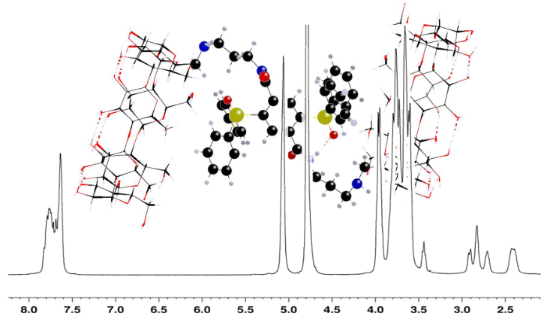
- explored to produce the corresponding functional monomer 4 and thus the β-CD dimer 5. Linker 2 was prepared from methyl 2-aminoterephthalate via a sequence of diazotization–iodination–phosphanylation reactions [4] (Scheme 2a). The new, doubly phosphanylated dimethyl terephthalate linker 3 was prepared from
- p-xylene via consequtive iodination–oxidation–esterification reactions [32][33][34], followed by the final phosphanylation step that afforded linker 3 in excellent yield (Scheme 2b). Compounds 2 and 3 each displayed one signal in the 31P NMR spectrum at −3.5 and −3.8 ppm (Supporting Information File

Graphical Abstract

Scheme 1: (a) Staudinger reaction (b) Staudinger ligation, (c) the cyclodextrin structure with glucopyranose ...

Scheme 2: (a) i) HCl, NaNO2/H2O, then KI/H2O, 58%, ii) Ph2PH, Pd(OAc)2, Et3N, MeOH, 48%; (b) i) CH3COOH, H2SO4...

Scheme 3: Staudinger ligation reactions: (a) Preparation of 4 from mono[6-(3-azidopropylamino)-6-deoxy]-β-CD ...

Figure 1: 1H NMR chemical shift change (Δδ) of CD cavity Η3 signal of compounds titrated with 1-adamantylamin...
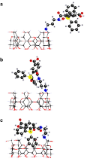
Figure 2: The most stable conformations of 4 at the PM3(COSMO) level of theory: (a) open, (b) vicinal, and (c...

Figure 3: Typical conformations of 6: (a) open conformation, (b) vicinal, (c) inclusion/vicinal and (d) doubl...
Self-assembly of metallosupramolecular rhombi from chiral concave 9,9’-spirobifluorene-derived bis(pyridine) ligands
- Rainer Hovorka,
- Sophie Hytteballe,
- Torsten Piehler,
- Georg Meyer-Eppler,
- Filip Topić,
- Kari Rissanen,
- Marianne Engeser and
- Arne Lützen
Beilstein J. Org. Chem. 2014, 10, 432–441, doi:10.3762/bjoc.10.40
- . Tour [30], M. Gomberg [31], and V. Prelog [32][33] leading to (rac)-2,2’-dihydroxy-9,9’-spirobifluorene ((rac)-1) in six consecutive steps. This sequence involved a Sandmeyer-like iodination, followed by a Grignard reaction with fluorenone to furnish the corresponding tertiary alcohol. This alcohol was

Graphical Abstract
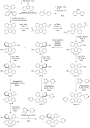
Scheme 1: Synthesis of ligands 3 and 6.

Figure 1: ESI mass spectrum (positive mode) of an 1:1 mixture of (R)-3 and [(dppp)Pd(OTf)2] in acetone.

Figure 2: 1H NMR spectra (500.1 MHz, in CD2Cl2/CD3CN 3:1 at 298 K) of a) a 1:1 mixture of [Pd(dppp)]OTf2 and (...

Figure 3: 31P NMR spectra of a) a 1:1 mixture of [Pd(dppp)]OTf2 and (R)-3, b) a 1:1 mixture of [Pd(dppp)]OTf2...

Figure 4: ESI mass spectrum (positive mode) of an 1:1:2 mixture of (R)-3, (S)-6, and [(dppp)Pt(OTf)2] in acet...

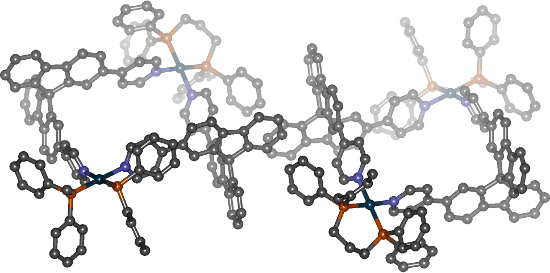
Figure 5: Single crystal X-ray structure analysis of [(dppp)2Pd2{(R)-3}2][(dppp)2Pd2{(S)-3}2](OTf)8 obtained ...
Synthesis of five- and six-membered cyclic organic peroxides: Key transformations into peroxide ring-retaining products
- Alexander O. Terent'ev,
- Dmitry A. Borisov,
- Vera A. Vil’ and
- Valery M. Dembitsky
Beilstein J. Org. Chem. 2014, 10, 34–114, doi:10.3762/bjoc.10.6
- synthesis of diastereomers of dioxanes 252a,b containing triple bonds. Hydroperoxides 251a,b that were synthesized by the ozonolysis of 250 were treated with potassium tert-butoxide. One of the diastereomers, 252a, was then modified first via the stereoselective hydrozirconation and iodination to 253a and

Graphical Abstract

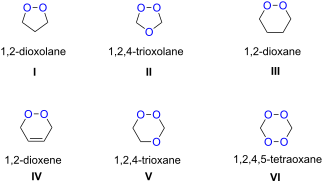
Figure 1: Five and six-membered cyclic peroxides.

Figure 2: Artemisinin and semi-synthetic derivatives.

Scheme 1: Synthesis of 3-hydroxy-1,2-dioxolanes 3a–c.

Scheme 2: Synthesis of dioxolane 6.

Scheme 3: Photooxygenation of oxazolidines 7a–d with formation of spiro-fused oxazolidine-containing dioxolan...

Scheme 4: Oxidation of cyclopropanes 10a–e and 11a–e with preparation of 1,2-dioxolanes 12a–e.

Scheme 5: VO(acac)2-catalyzed oxidation of silylated bicycloalkanols 13a–c.

Scheme 6: Mn(II)-catalyzed oxidation of cyclopropanols 15a–g.

Scheme 7: Oxidation of aminocyclopropanes 20a–c.

Scheme 8: Synthesis of aminodioxolanes 24.
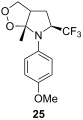
Figure 3: Trifluoromethyl-containing dioxolane 25.

Scheme 9: Synthesis of 1,2-dioxolanes 27a–e by the oxidation of cyclopropanes 26a–e.

Scheme 10: Photoinduced oxidation of methylenecyclopropanes 28.

Scheme 11: Irradiation-mediated oxidation.

Scheme 12: Application of diazene 34 for dioxolane synthesis.

Scheme 13: Mn(OAc)3-catalyzed cooxidation of arylacetylenes 37a–h and acetylacetone with atmospheric oxygen.
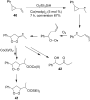
Scheme 14: Peroxidation of (2-vinylcyclopropyl)benzene (40).

Scheme 15: Peroxidation of 1,4-dienes 43a,b.

Scheme 16: Peroxidation of 1,5-dienes 46.

Scheme 17: Peroxidation of oxetanes 53a,b.

Scheme 18: Peroxidation of 1,6-diene 56.

Scheme 19: Synthesis of 3-alkoxy-1,2-dioxolanes 62a,b.

Scheme 20: Synthesis of spiro-bis(1,2-dioxolane) 66.

Scheme 21: Synthesis of dispiro-1,2-dioxolanes 68, 70, 71.

Scheme 22: Synthesis of spirohydroperoxydioxolanes 75a,b.

Scheme 23: Synthesis of spirohydroperoxydioxolane 77 and dihydroperoxydioxolane 79.

Scheme 24: Ozonolysis of azepino[4,5-b]indole 80.

Scheme 25: SnCl4-mediated fragmentation of ozonides 84a–l in the presence of allyltrimethylsilane.

Scheme 26: SnCl4-mediated fragmentation of bicyclic ozonide 84m in the presence of allyltrimethylsilane.

Scheme 27: MCl4-mediated fragmentation of alkoxyhydroperoxides 96 in the presence of allyltrimethylsilane.

Scheme 28: SnCl4-catalyzed reaction of monotriethylsilylperoxyacetal 108 with alkene 109.

Scheme 29: SnCl4-catalyzed reaction of triethylsilylperoxyacetals 111 with alkenes.

Scheme 30: Desilylation of tert-butyldimethylsilylperoxy ketones 131a,b followed by cyclization.

Scheme 31: Deprotection of peroxide 133 followed by cyclization.

Scheme 32: Asymmetric peroxidation of methyl vinyl ketones 137a–e.

Scheme 33: Et2NH-catalyzed intramolecular cyclization.

Scheme 34: Synthesis of oxodioxolanes 143a–j.

Scheme 35: Haloperoxidation accompanied by intramolecular ring closure.

Scheme 36: Oxidation of triterpenes 149a–d with Na2Cr2O7/N-hydroxysuccinimide.

Scheme 37: Curtius and Wolff rearrangements to form 1,2-dioxolane ring-retaining products.

Scheme 38: Oxidative desilylation of peroxide 124.

Scheme 39: Synthesis of dioxolane 158, a compound containing the aminoquinoline antimalarial pharmacophore.

Scheme 40: Diastereomers of plakinic acid A, 162a and 162b.

Scheme 41: Ozonolysis of alkenes.

Scheme 42: Cross-ozonolysis of alkenes 166 with carbonyl compounds.

Scheme 43: Ozonolysis of the bicyclic cyclohexenone 168.

Scheme 44: Cross-ozonolysis of enol ethers 172a,b with cyclohexanone.

Scheme 45: Griesbaum co-ozonolysis.

Scheme 46: Reactions of aryloxiranes 177a,b with oxygen.

Scheme 47: Intramolecular formation of 1,2,4-trioxolane 180.

Scheme 48: Formation of 1,2,4-trioxolane 180 by the reaction of 1,5-ketoacetal 181 with H2O2.

Scheme 49: 1,2,4-Trioxolane 186 with tetrazole fragment.

Scheme 50: 1,2,4-Trioxolane 188 with a pyridine fragment.

Scheme 51: 1,2,4-Trioxolane 189 with pyrimidine fragment.

Scheme 52: Synthesis of aminoquinoline-containing 1,2,4-trioxalane 191.

Scheme 53: Synthesis of arterolane.

Scheme 54: Oxidation of diarylheptadienes 197a–c with singlet oxygen.

Scheme 55: Synthesis of hexacyclinol peroxide 200.

Scheme 56: Oxidation of enone 201 and enenitrile 203 with singlet oxygen.

Scheme 57: Synthesis of 1,2-dioxanes 207 by oxidative coupling of carbonyl compounds 206 and alkenes 205.

Scheme 58: 1,2-Dioxanes 209 synthesis by co-oxidation of 1,5-dienes 208 and thiols.

Scheme 59: Synthesis of bicyclic 1,2-dioxanes 212 with aryl substituents.

Scheme 60: Isayama–Mukaiyama peroxysilylation of 1,5-dienes 213 followed by desilylation under acidic conditio...

Scheme 61: Synthesis of bicycle 218 with an 1,2-dioxane ring.

Scheme 62: Intramolecular cyclization with an oxirane-ring opening.

Scheme 63: Inramolecular cyclization with the oxetane-ring opening.

Scheme 64: Intramolecular cyclization with the attack on a keto group.

Scheme 65: Peroxidation of the carbonyl group in unsaturated ketones 228 followed by cyclization of hydroperox...

Scheme 66: CsOH and Et2NH-catalyzed cyclization.

Scheme 67: Preparation of peroxyplakoric acid methyl ethers A and D.

Scheme 68: Hg(OAc)2 in 1,2-dioxane synthesis.

Scheme 69: Reaction of 1,4-diketones 242 with hydrogen peroxide.

Scheme 70: Inramolecular cyclization with oxetane-ring opening.

Scheme 71: Inramolecular cyclization with MsO fragment substitution.

Scheme 72: Synthesis of 1,2-dioxane 255a, a structurally similar compound to natural peroxyplakoric acids.

Scheme 73: Synthesis of 1,2-dioxanes based on the intramolecular cyclization of hydroperoxides containing C=C ...

Scheme 74: Use of BCIH in the intramolecular cyclization.

Scheme 75: Palladium-catalyzed cyclization of δ-unsaturated hydroperoxides 271a–e.

Scheme 76: Intramolecular cyclization of unsaturated peroxyacetals 273a–d.

Scheme 77: Allyltrimethylsilane in the synthesis of 1,2-dioxanes 276a–d.

Scheme 78: Intramolecular cyclization using the electrophilic center of the peroxycarbenium ion 279.

Scheme 79: Synthesis of bicyclic 1,2-dioxanes.

Scheme 80: Preparation of 1,2-dioxane 286.

Scheme 81: Di(tert-butyl)peroxalate-initiated radical cyclization of unsaturated hydroperoxide 287.

Scheme 82: Oxidation of 1,4-betaines 291a–d.

Scheme 83: Synthesis of aminoquinoline-containing 1,2-dioxane 294.

Scheme 84: Synthesis of the sulfonyl-containing 1,2-dioxane.

Scheme 85: Synthesis of the amido-containing 1,2-dioxane 301.

Scheme 86: Reaction of singlet oxygen with the 1,3-diene system 302.

Scheme 87: Synthesis of (+)-premnalane А and 8-epi-premnalane A.

Scheme 88: Synthesis of the diazo group containing 1,2-dioxenes 309a–e.

Figure 4: Plakortolide Е.

Scheme 89: Synthesis of 6-epiplakortolide Е.

Scheme 90: Application of Bu3SnH for the preparation of tetrahydrofuran-containing bicyclic peroxides 318a,b.

Scheme 91: Application of Bu3SnH for the preparation of lactone-containing bicyclic peroxides 320a–f.

Scheme 92: Dihydroxylation of the double bond in the 1,2-dioxene ring 321 with OsO4.

Scheme 93: Epoxidation of 1,2-dioxenes 324.

Scheme 94: Cyclopropanation of the double bond in endoperoxides 327.

Scheme 95: Preparation of pyridazine-containing bicyclic endoperoxides 334a–c.

Scheme 96: Synthesis of 1,2,4-trioxanes 337 by the hydroperoxidation of unsaturated alcohols 335 with 1O2 and ...

Scheme 97: Synthesis of sulfur-containing 1,2,4-trioxanes 339.

Scheme 98: BF3·Et2O-catalyzed synthesis of the 1,2,4-trioxanes 342a–g.

Scheme 99: Photooxidation of enol ethers or vinyl sulfides 343.

Scheme 100: Synthesis of tricyclic peroxide 346.

Scheme 101: Reaction of endoperoxides 348a,b derived from cyclohexadienes 347a,b with 1,4-cyclohexanedione.

Scheme 102: [4 + 2]-Cycloaddition of singlet oxygen to 2Н-pyrans 350.

Scheme 103: Synthesis of 1,2,4-trioxanes 354 using peroxysilylation stage.

Scheme 104: Epoxide-ring opening in 355 with H2O2 followed by the condensation of hydroxy hydroperoxides 356 wi...

Scheme 105: Peroxidation of unsaturated ketones 358 with the H2O2/CF3COOH/H2SO4 system.

Scheme 106: Synthesis of 1,2,4-trioxanes 362 through Et2NH-catalyzed intramolecular cyclization.

Scheme 107: Reduction of the double bond in tricyclic peroxides 363.

Scheme 108: Horner–Wadsworth–Emmons reaction in the presence of peroxide group.

Scheme 109: Reduction of ester group by LiBH4 in the presence of 1,2,4-trioxane moiety.

Scheme 110: Reductive amination of keto-containing 1,2,4-trioxane 370.

Scheme 111: Reductive amination of keto-containing 1,2,4-trioxane and a Fe-containing moiety.

Scheme 112: Acid-catalyzed reactions of Н2О2 with ketones and aldehydes 374.

Scheme 113: Cyclocondensation of carbonyl compounds 376a–d using Me3SiOOSiMe3/CF3SO3SiMe3.

Scheme 114: Peroxidation of 4-methylcyclohexanone (378).

Scheme 115: Synthesis of symmetrical tetraoxanes 382a,b from aldehydes 381a,b.

Scheme 116: Synthesis of unsymmetrical tetraoxanes using of MeReO3.

Scheme 117: Synthesis of symmetrical tetraoxanes using of MeReO3.

Scheme 118: Synthesis of symmetrical tetraoxanes using of MeReO3.

Scheme 119: MeReO3 in the synthesis of symmetrical tetraoxanes with the use of aldehydes.

Scheme 120: Preparation of unsymmmetrical 1,2,4,5-tetraoxanes with high antimalarial activity.

Scheme 121: Re2O7-Catalyzed synthesis of tetraoxanes 398.

Scheme 122: H2SO4-Catalyzed synthesis of steroidal tetraoxanes 401.

Scheme 123: HBF4-Catalyzed condensation of bishydroperoxide 402 with 1,4-cyclohexanedione.

Scheme 124: BF3·Et2O-Catalyzed reaction of gem-bishydroperoxides 404 with enol ethers 405 and acetals 406.

Scheme 125: HBF4-Catalyzed cyclocondensation of bishydroperoxide 410 with ketones.

Scheme 126: Synthesis of symmetrical and unsymmetrical tetraoxanes 413 from benzaldehydes 412.

Scheme 127: Synthesis of bridged 1,2,4,5-tetraoxanes 415a–l from β-diketones 414a–l and H2O2.

Scheme 128: Dimerization of zwitterions 417.

Scheme 129: Ozonolysis of verbenone 419.

Scheme 130: Ozonolysis of O-methyl oxime 424.

Scheme 131: Peroxidation of 1,1,1-trifluorododecan-2-one 426 with oxone.

Scheme 132: Intramolecular cyclization of dialdehyde 428 with H2O2.

Scheme 133: Tetraoxanes 433–435 as by-products in peroxidation of ketals 430–432.

Scheme 134: Transformation of triperoxide 436 in diperoxide 437.

Scheme 135: Preparation and structural modifications of tetraoxanes.

Scheme 136: Structural modifications of steroidal tetraoxanes.

Scheme 137: Synthesis of 1,2,4,5-tetraoxane 454 containing the fluorescent moiety.

Scheme 138: Synthesis of tetraoxane 458 (RKA182).
Total synthesis of the endogenous inflammation resolving lipid resolvin D2 using a common lynchpin
- John Li,
- May May Leong,
- Alastair Stewart and
- Mark A. Rizzacasa
Beilstein J. Org. Chem. 2013, 9, 2762–2766, doi:10.3762/bjoc.9.310
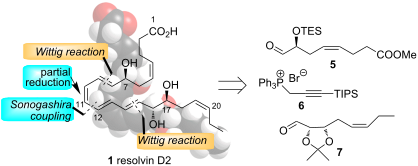
- . Desilylation of 11 followed by hydrozirconation and iodination gave the vinyl iodide 4 and Sonogashira coupling between this compound and enyne 3 provided alkyne 18. Acetonide deprotection, partial reduction and ester hydrolysis then gave resolvin D2 (1). Keywords: catalysis; eicosanoid; natural product

Graphical Abstract

Figure 1: Structures of resolvins D1 (1) and D2 (2).

Scheme 1: Retrosynthetic analysis of RvD2 (1).

Scheme 2: Synthesis of aldehyde 7 and phosphonium salt 6.

Scheme 3: Synthesis of vinyl iodide 4.
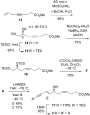
Scheme 4: Synthesis of enyne 3.
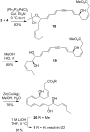
Scheme 5: Completion of the synthesis of RvD2 (1).
An overview of the synthetic routes to the best selling drugs containing 6-membered heterocycles
- Marcus Baumann and
- Ian R. Baxendale
Beilstein J. Org. Chem. 2013, 9, 2265–2319, doi:10.3762/bjoc.9.265

Graphical Abstract

Scheme 1: Scaled industrial processes for the synthesis of simple pyridines.

Scheme 2: Synthesis of nicotinic acid from 2-methyl-5-ethylpyridine (1.11).

Scheme 3: Synthesis of 3-picoline and nicotinic acid.

Scheme 4: Synthesis of 3-picoline from 2-methylglutarodinitrile 1.19.

Scheme 5: Picoline-based synthesis of clarinex (no yields reported).

Scheme 6: Mode of action of proton-pump inhibitors and structures of the API’s.

Scheme 7: Hantzsch-like route towards the pyridine rings in common proton pump inhibitors.

Figure 1: Structures of rosiglitazone (1.40) and pioglitazone (1.41).

Scheme 8: Synthesis of rosiglitazone.

Scheme 9: Syntheses of 2-pyridones.

Scheme 10: Synthesis and mechanism of 2-pyrone from malic acid.

Scheme 11: Polymer-assisted synthesis of rosiglitazone.

Scheme 12: Synthesis of pioglitazone.

Scheme 13: Meerwein arylation reaction towards pioglitazone.

Scheme 14: Route towards pioglitazone utilising tyrosine.

Scheme 15: Route towards pioglitazone via Darzens ester formation.

Scheme 16: Syntheses of the thiazolidinedione moiety.

Scheme 17: Synthesis of etoricoxib utilising Negishi and Stille cross-coupling reactions.

Scheme 18: Synthesis of etoricoxib via vinamidinium condensation.

Figure 2: Structures of nalidixic acid, levofloxacin and moxifloxacin.

Scheme 19: Synthesis of moxifloxacin.

Scheme 20: Synthesis of (S,S)-2,8-diazabicyclo[4.3.0]nonane 1.105.

Scheme 21: Synthesis of levofloxacin.

Scheme 22: Alternative approach to the levofloxacin core 1.125.

Figure 3: Structures of nifedipine, amlodipine and clevidipine.

Scheme 23: Mg3N2-mediated synthesis of nifedipine.

Scheme 24: Synthesis of rac-amlodipine as besylate salt.

Scheme 25: Aza Diels–Alder approach towards amlodipine.

Scheme 26: Routes towards clevidipine.

Figure 4: Examples of piperidine containing drugs.

Figure 5: Discovery of tiagabine based on early leads.

Scheme 27: Synthetic sequences to tiagabine.

Figure 6: Structures of solifenacin (2.57) and muscarine (2.58).

Scheme 28: Enantioselective synthesis of solifenacin.

Figure 7: Structures of DPP-4 inhibitors of the gliptin-type.

Scheme 29: Formation of inactive diketopiperazines from cis-rotameric precursors.

Figure 8: Co-crystal structure of carmegliptin bound in the human DPP-4 active site (PDB 3kwf).

Scheme 30: Improved route to carmegliptin.

Figure 9: Structures of lamivudine and zidovudine.

Scheme 31: Typical routes accessing uracil, thymine and cytosine.

Scheme 32: Coupling between pyrimidones and riboses via the Vorbrüggen nucleosidation.

Scheme 33: Synthesis of lamivudine.

Scheme 34: Synthesis of raltegravir.

Scheme 35: Mechanistic studies on the formation of 3.22.

Figure 10: Structures of selected pyrimidine containing drugs.

Scheme 36: General preparation of pyrimidines and dihydropyrimidones.

Scheme 37: Synthesis of imatinib.

Scheme 38: Flow synthesis of imatinib.

Scheme 39: Syntheses of erlotinib.

Scheme 40: Synthesis of erlotinib proceeding via Dimroth rearrangement.

Scheme 41: Synthesis of lapatinib.

Scheme 42: Synthesis of rosuvastatin.

Scheme 43: Alternative preparation of the key aldehyde towards rosuvastatin.

Figure 11: Structure comparison between nicotinic acetylcholine receptor agonists.

Scheme 44: Syntheses of varenicline and its key building block 4.5.

Scheme 45: Synthetic access to eszopiclone and brimonidine via quinoxaline intermediates.

Figure 12: Bortezomib bound in an active site of the yeast 20S proteasome ([114], pdb 2F16).

Scheme 46: Asymmetric synthesis of bortezomib.

Figure 13: Structures of some prominent piperazine containing drugs.

Figure 14: Structural comparison between the core of aplaviroc (4.35) and a type-1 β-turn (4.36).

Scheme 47: Examplary synthesis of an aplaviroc analogue via the Ugi-MCR.

Scheme 48: Syntheses of azelastine (5.1).

Figure 15: Structures of captopril, enalapril and cilazapril.

Scheme 49: Synthesis of cilazapril.

Figure 16: Structures of lamotrigine, ceftriaxone and azapropazone.

Scheme 50: Synthesis of lamotrigine.

Scheme 51: Alternative synthesis of lamotrigine (no yields reported).

Figure 17: Structural comparison between imiquimod and the related adenosine nucleoside.

Scheme 52: Conventional synthesis of imiquimod (no yields reported).

Scheme 53: Synthesis of imiquimod.

Scheme 54: Synthesis of imiquimod via tetrazole formation (not all yields reported).

Figure 18: Structures of various anti HIV-medications.

Scheme 55: Synthesis of abacavir.

Figure 19: Structures of diazepam compared to modern replacements.

Scheme 56: Synthesis of ocinaplon.

Scheme 57: Access to zaleplon and indiplon.

Scheme 58: Different routes towards the required N-methylpyrazole 6.65 of sildenafil.

Scheme 59: Polymer-supported reagents in the synthesis of key aminopyrazole 6.72.

Scheme 60: Early synthetic route to sildenafil.

Scheme 61: Convergent preparations of sildenafil.

Figure 20: Comparison of the structures of sildenafil, tadalafil and vardenafil.

Scheme 62: Short route to imidazotriazinones.

Scheme 63: Alternative route towards vardenafils core imidazotriazinone (6.95).

Scheme 64: Bayer’s approach to the vardenafil core.

Scheme 65: Large scale synthesis of vardenafil.

Scheme 66: Mode of action of temozolomide (6.105) as methylating agent.

Scheme 67: Different routes to temozolomide.

Scheme 68: Safer route towards temozolomide.

Figure 21: Some unreported heterocyclic scaffolds in top market drugs.
Gold(I)-catalyzed hydroarylation reaction of aryl (3-iodoprop-2-yn-1-yl) ethers: synthesis of 3-iodo-2H-chromene derivatives
- Pablo Morán-Poladura,
- Eduardo Rubio and
- José M. González
Beilstein J. Org. Chem. 2013, 9, 2120–2128, doi:10.3762/bjoc.9.249
- times, 15 mL), dried over Na2SO4, filtered and evaporated to afford the corresponding crude mixture which, in most cases, was pure enough to use in the next step without further purification. Iodination of terminal alkynes The starting alkyne (1 equiv; 2 mmol) was dissolved in acetone (10 mL). Then

Graphical Abstract
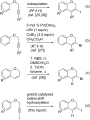
Scheme 1: Synthesis of 3-halo-2H-chromenes.

Figure 1: X-ray molecular structure of 2f.

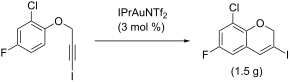
Scheme 2: Gram-scale synthesis of 2f.

Scheme 3: Retaining propargylic chirality.

Scheme 4: Mechanistic basis postulated for the synthesis of 2.
[3 + 2]-Cycloadditions of nitrile ylides after photoactivation of vinyl azides under flow conditions
- Stephan Cludius-Brandt,
- Lukas Kupracz and
- Andreas Kirschning
Beilstein J. Org. Chem. 2013, 9, 1745–1750, doi:10.3762/bjoc.9.201
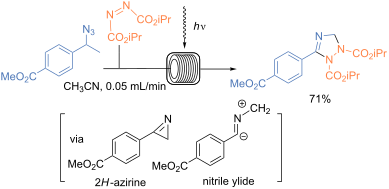
- followed by HI elimination using immobilized DBU as fixed bed material (Scheme 2) [9][22][23]. All vinyl azides used in this report were prepared by azido-iodination of the corresponding alkenes followed by DBU-mediated HI elimination (for details see the Supporting Information File 1). Results and

Graphical Abstract

Scheme 1: Formation of azirines 2 from vinyl azides 1, photoinduced ring-opening to the nitrile ylides 3, and...

Scheme 2: Solid-phase assisted synthesis of vinyl azides 1 from alkenes 6 under flow conditions [9].

Scheme 3: Schematic presentation of the flow set-up for the synthesis of 2H-azirines 2 under inductive heatin...

Scheme 4: Photoinduced cycloadditions of vinyl azides 1a–f and electron-deficient alkenes 4a–d. All experimen...

Scheme 5: Photoinduced cycloaddtion of vinyl azide 1c and diisopropyl azodicarboxylate (4e). The experiment w...

Scheme 6: Photoinduced cycloaddtion of vinyl azide 1b and alkyne 4f. The experiment was conducted at room tem...

Scheme 7: Formation of 2,5-dihydrooxazole 9 starting from vinyl azide 1g under flow conditions (c = 0.01 M, f...
Exploration of an epoxidation–ring-opening strategy for the synthesis of lyconadin A and discovery of an unexpected Payne rearrangement
- Brad M. Loertscher,
- Yu Zhang and
- Steven L. Castle
Beilstein J. Org. Chem. 2013, 9, 1179–1184, doi:10.3762/bjoc.9.132
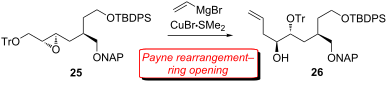
- would ultimately be formed by a Myers alkylation [23] of (+)-pseudoephedrine derived amide 7 with allylic iodide 8. The initial epoxidation substrate of type 6 that we targeted possessed benzyl and TBDPS ethers as the protecting groups. First, allylic iodide 8 was synthesized by iodination of the

Graphical Abstract

Figure 1: Lyconadin A.

Scheme 1: Retrosynthetic analysis of 1.

Scheme 2: Synthesis of triether 15.

Scheme 3: Synthesis and attempted ring-opening of epoxide 17.

Scheme 4: Attempted protection of 14 and silyl migration.

Scheme 5: Synthesis and ring-opening rearrangement of epoxide 25.

Scheme 6: Proposed mechanism for generation of alcohol 26.

Scheme 7: Synthesis of epoxide 29 from alcohol 26 (asterisks indicate relative but not absolute stereochemist...
Alternaric acid: formal synthesis and related studies
- Michael C. Slade and
- Jeffrey S. Johnson
Beilstein J. Org. Chem. 2013, 9, 166–172, doi:10.3762/bjoc.9.19
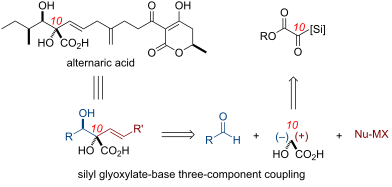
- iodide 26 was generated by hydrozirconation/iodination of the free alkyne with Schwartz’s reagent [47]. The vinyl nucleophile 27 could be generated by Knochel’s Mg/I exchange [48] and employed successfully in the three-component-coupling reaction with silyl glyoxylate 1a and aldehyde 16ba to assemble 28

Graphical Abstract

Scheme 1: (A) Silyl glyoxylates as versatile reagents for three-component coupling reactions: representative ...

Scheme 2: Potential applications of silyl glyoxylate couplings and precedent synthetic intermediates toward t...

Scheme 3: Three-component coupling with a vinyl nucleophile and elaboration to Ichihara’s aldehyde.

Scheme 4: Modified Julia olefination as a step-efficient alternative endgame strategy.

Scheme 5: Three-component coupling with an allyl nucleophile and demonstration of successful ruthenium-cataly...

Scheme 6: Approaches considered to address the stereochemical issue.

Scheme 7: Use of a dithiane moiety to excert stereochemical control in the three-component coupling reaction ...

Scheme 8: Synthesis of a vinyl iodide for nucleophile generation and its use in a three-component coupling re...
An improved synthesis of a fluorophosphonate–polyethylene glycol–biotin probe and its use against competitive substrates
- Hao Xu,
- Hairat Sabit,
- Gordon L. Amidon and
- H. D. Hollis Showalter
Beilstein J. Org. Chem. 2013, 9, 89–96, doi:10.3762/bjoc.9.12
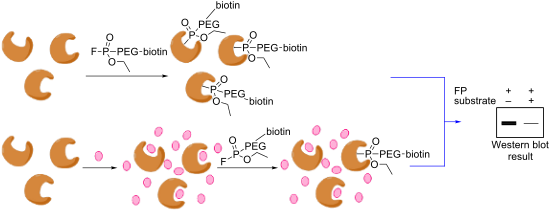
- group (in place of the TBS of the original synthesis) onto the PEG moiety to facilitate the early stages of the synthesis by providing a UV-active chromophore for easy detection; (b) introduction of a high yielding two-step iodination process, which avoids chromatography; and (c) reversing the sequence

Graphical Abstract

Figure 1: Structure of FP–PEG–biotin 1.

Scheme 1: Synthetic scheme to FP–PEG–biotin probe 1.

Figure 2: Labeling and affinity isolation of serine hydrolases by FP–PEG–biotin 1. (A) Lane 1: Protein standa...

Figure 3: Kinetic study on FP labelling reactions. Caco-2 cell homogenates (1 mg/mL) were treated at room tem...

Figure 4: Competition assay between FP–PEG–biotin and enzyme hydrolysis reactions. (A) Enalapril at the indic...
trans-2-(2,5-Dimethoxy-4-iodophenyl)cyclopropylamine and trans-2-(2,5-dimethoxy-4-bromophenyl)cyclopropylamine as potent agonists for the 5-HT2 receptor family
- Adam Pigott,
- Stewart Frescas,
- John D. McCorvy,
- Xi-Ping Huang,
- Bryan L. Roth and
- David E. Nichols
Beilstein J. Org. Chem. 2012, 8, 1705–1709, doi:10.3762/bjoc.8.194
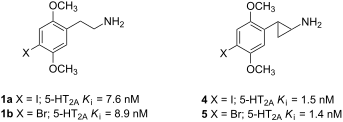
- of a BOC protecting group (Scheme 2). Thus, we first prepared 2-(2,5-dimethoxyphenyl)cyclopropanecarboxylic acid methyl ester (7) from the corresponding cinnamic ester 6 [5], followed by I2/AgNO3 iodination (Scheme 1), and base hydrolysis of the resulting ester to provide iodo acid 10a. Hydrolysis of

Graphical Abstract

Figure 1: Structures of well-known serotonin 5-HT2A agonists 1a,b, 2, and 3, and compounds 4 and 5 reported i...

Scheme 1: Synthesis of arylcyclopropane carboxylic acids from the corresponding cinnamic acids, followed by h...

Scheme 2: Conversion of arylcyclopropane carboxylic acids 10a,b to the amines 4 and 5, and chemical resolutio...

Scheme 3: Chemical resolution of arylcyclopropane carboxylic acid 9 followed by bromination.
Asymmetric total synthesis of smyrindiol employing an organocatalytic aldol key step
- Dieter Enders,
- Jeanne Fronert,
- Tom Bisschops and
- Florian Boeck
Beilstein J. Org. Chem. 2012, 8, 1112–1117, doi:10.3762/bjoc.8.123
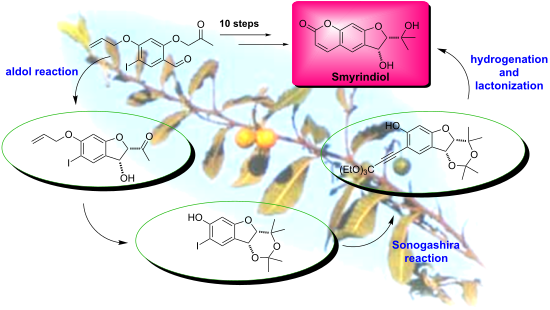
- -diol. The substrate for the aldol key step 8 could be prepared starting with commercially available 2,4-dihydroxybenzaldehyde (9) by a selective iodination of the 5-position of the aromatic ring, protection of the hydroxy group in the 4-position, and 2-O-acetonylation of the selectively protected
- salicylaldehyde (Scheme 6). The total synthesis of smyrindiol is depicted in Scheme 7. Firstly, the O-acetonyl-salicylaldehyde 13, as the substrate for the aldol reaction, was synthesized in five steps. Iodination of commercially available 2,4-dihydroxybenzaldehyde (9) with iodine monochloride in acetic acid [11
- ] furnished a mixture of different iodination products. After the addition of water to the reaction mixture, only the 5-iodo derivative 10 precipitated from the solution and could be separated from the other isomers by filtration in 56% yield. We decided to protect the 4-hydroxy group as an allyl ether, as we

Graphical Abstract

Figure 1: Furocoumarins.

Scheme 1: Synthesis of smyrindiol (1) by Grande et al.

Scheme 2: Synthesis of smyrindiol by Snider et al.

Scheme 3: Proline-catalyzed intramolecular aldol reaction of O-acetonyl-salicylaldehydes.

Scheme 4: First retrosynthetic analysis.

Scheme 5: Attempted proline catalyzed aldol reaction.

Scheme 6: Second retrosynthetic analysis.

Scheme 7: Asymmetric total synthesis of smyrindiol (1).
Sonogashira–Hagihara reactions of halogenated glycals
- Dennis C. Koester and
- Daniel B. Werz
Beilstein J. Org. Chem. 2012, 8, 675–682, doi:10.3762/bjoc.8.75
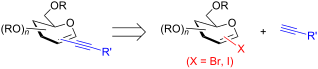
- preparation of internal alkynes [24]. We started our investigations with the persilylated 1-iodoglucal 7, which is easily available by a sequence of lithiation and iodination from the parent, fully TIPS-protected congener [25]. The Sonogashira reaction was carried out under standard conditions. Pd(PPh3)2Cl2

Graphical Abstract

Scheme 1: Different strategies to access C-glycosides starting from 1-substituted glycals.

Scheme 2: Sonogashira–Hagihara reaction of 1-iodo-2-chloroglucal 12 with phenylacetylene (8a) to afford 13.
Synthesis of oleophilic electron-rich phenylhydrazines
- Aleksandra Jankowiak and
- Piotr Kaszyński
Beilstein J. Org. Chem. 2012, 8, 275–282, doi:10.3762/bjoc.8.29
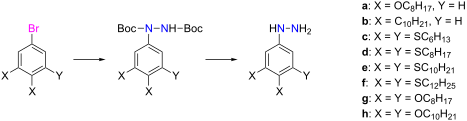
- attempted monoiodination of 8 with BTMA·ICl2 by using a general literature method [35] gave only traces of the product and nearly all of the starting material was recovered. Iodination under the Kern conditions [36][37] (HIO3/I2) gave a mixture of mono- and diiodo derivatives, which were difficult to

Graphical Abstract

Figure 1: Selected methods for the preparation of arylhydrazines I through hydrazides II.

Figure 2: The structures for hydrazines 1a–1h.

Scheme 1: Formation and deprotection of 3a under reductive conditions.

Scheme 2: General mechanism for the deprotection of arylhydrazides. G represents a substituent.

Figure 3: Structure of hydrazide 2a.

Scheme 3: Synthesis of arylhydrazines 1. Substituents X and Y are defined in Figure 2.

Scheme 4: Preparation of bromide 5a.

Scheme 5: Preparation of 5b.

Figure 4: The structure of verdazyl radical 9 and a texture of the Colr phase.



