


Search results
Search for "NMR data" in Full Text gives 500 result(s) in Beilstein Journal of Organic Chemistry. Showing first 200.
Analogs of the carotane antibiotic fulvoferruginin from submerged cultures of a Thai Marasmius sp.
Beilstein J. Org. Chem. 2021, 17, 1385–1391, doi:10.3762/bjoc.17.97
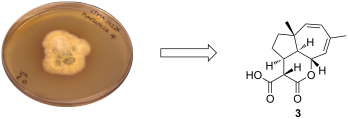
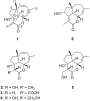
- like hercynolactone. However, NMR data analysis disclosed that the position C-9 (δC 70.8) is hydroxylated. The ROESY spectrum indicates H-9 (δH 4.88) to be cofacial with H-5 and H-13. Thus, fulvoferruginin F could also be named 9-hydroxyhercynolactone [9]. Assessing the bioactivity of the
- are provided in Supporting Information File 1. Fulvoferruginin B (2): faint yellow solid; [α]D20 +14 (c 1, MeOH); UV (MeOH) λmax (log ε) 200 (3.7), 249 (3.5) nm; 1H NMR and 13C NMR data (1H 700 MHz, 13C 175 MHz) in CD3OD: see Table 1; HRMS–ESI (m/z): [M + H]+ calcd for C15H21O3+, 249.1477; found



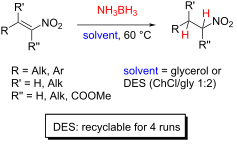
Nitroalkene reduction in deep eutectic solvents promoted by BH3NH3
Beilstein J. Org. Chem. 2021, 17, 1041–1047, doi:10.3762/bjoc.17.83
- characterization and NMR data. Funding M. B. thanks MUR for the project PRIN 2017 “NATURECHEM. M. B. thanks Università degli Studi di Milano for the PSR 2019-financed project “Catalytic strategies for the synthesis of high added-value molecules from bio-based starting material”. M. B. and P. C. G. thank the ITN



Application of the Meerwein reaction of 1,4-benzoquinone to a metal-free synthesis of benzofuropyridine analogues
Beilstein J. Org. Chem. 2021, 17, 977–982, doi:10.3762/bjoc.17.79
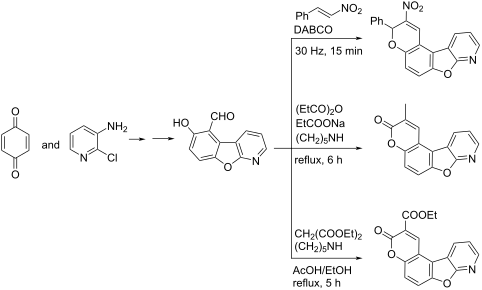
- . Electrophilic aromatic substitution of 6-hydroxybenzofuro[2,3-b]pyridine (13). Synthesis of isomeric oxazole-fused derivatives. Fused derivatives from 16. Supporting Information Supporting Information File 164: Experimental part as well as 1H and 13C NMR data. Funding We thank the KU Leuven for financial


A chromatography-free and aqueous waste-free process for thioamide preparation with Lawesson’s reagent
Beilstein J. Org. Chem. 2021, 17, 805–812, doi:10.3762/bjoc.17.69
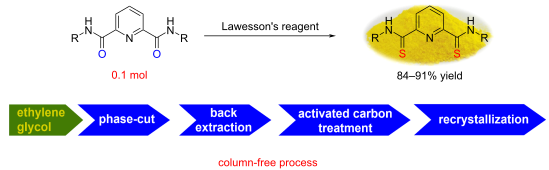
- phase separation. Modified process for the synthesis of pincer ligand 4. Modified process for the synthesis of pincer-type ligand 6. Synthesis of thioamides a. Supporting Information Supporting Information File 72: NMR data for compounds 2–6 and thiophosphonic acid. Funding This work was supported by


Effective microwave-assisted approach to 1,2,3-triazolobenzodiazepinones via tandem Ugi reaction/catalyst-free intramolecular azide–alkyne cycloaddition
Beilstein J. Org. Chem. 2021, 17, 678–687, doi:10.3762/bjoc.17.57
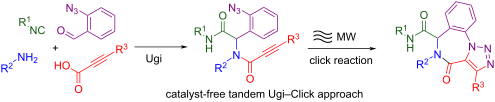
- ). Ugi product 6aaa (first letter – isocyanide code, second letter – amine code, third – carboxylic acid code) was the first to isolate in our trials and its structure was confirmed by X-ray analysis (Figure 3) in addition to mass spectrometry, elemental analysis, 1H and 13C NMR data. Compound 6


[2 + 1] Cycloaddition reactions of fullerene C60 based on diazo compounds
Beilstein J. Org. Chem. 2021, 17, 630–670, doi:10.3762/bjoc.17.55
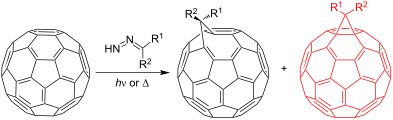
- methanofullerene in the reaction mixture after the loss of H2 depends on the diazo compound used for the cycloaddition. According to 13C NMR data, the [6,5]-bridged compound 5 has an open transannular bond, while the [6,6]-bridged compound 6 has a closed trans-ring bond. A synthetically interesting building block
Menthyl esterification allows chiral resolution for the synthesis of artificial glutamate analogs
Beilstein J. Org. Chem. 2021, 17, 540–550, doi:10.3762/bjoc.17.48
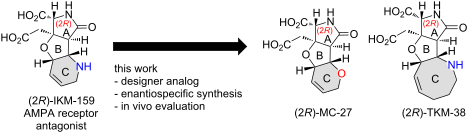
- ) [10][11][12]. Since 10 was obtained as crystals, the configurational analysis was thereafter confirmed by single-crystal X-ray analysis, as shown in Figure 4. The conformational differences for 10 between the results of the calculations and the analysis of the NMR data compared to the situation in the








Synthesis of legonmycins A and B, C(7a)-hydroxylated bacterial pyrrolizidines
Beilstein J. Org. Chem. 2021, 17, 334–342, doi:10.3762/bjoc.17.31

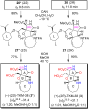
- a chemical and biosynthetic perspective. Their emergence dates back to 1977 with a patent filing from The Upjohn Company describing an unidentified ‘antibiotic 354’ isolated as a fermentation product of Streptomyces puniceus subsp. doliceus; spectroscopic characterization, including 1H NMR data, was


Regioselective chemoenzymatic syntheses of ferulate conjugates as chromogenic substrates for feruloyl esterases
Beilstein J. Org. Chem. 2021, 17, 325–333, doi:10.3762/bjoc.17.30
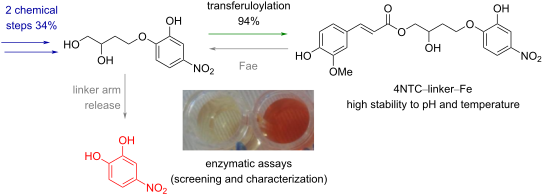
- ether from 0 to 50%) afforded the pure ferulates 1a, 1b, 3–9, and 12. 5-Bromo-4-chloro-3-indolyl 5-O-trans-feruloyl-α-ʟ-arabinofuranoside (1a, 107 mg, 0.19 mmol, 73%). Green-yellow foam. The NMR data (CD3OD) were consistent with those previously reported [15]. 4-Nitrophenyl 5-O-trans-feruloyl-α-ʟ
- -arabinofuranoside (1b). The application of the general procedure for enzymatic transesterifications was used with commercial 4-nitrophenyl α-ʟ-arabinofuranoside (50 mg, 0.18, mmol, 1 equiv) and the vinyl ferulate 2 (61 mg, 0.28 mmol, 1.5 equiv) to give 1b (71 mg, 0.16 mmol, 86%) as a yellowish powder. The NMR data
- solid. [α]D20 0 (c 2.0, CH3OH). The NMR data (CD3OD) of the racemate 11 were consistent with those previously reported for the pure (S)-enantiomer [37] ([α]D20 −52 (c 2.0, CH3OH)). (±)-4-O-(2-Hydroxy-4-nitrophenyl)-1-O-trans-feruloyl-1,2,4-butanetriol (12). The application of the general procedure for


19F NMR as a tool in chemical biology
Beilstein J. Org. Chem. 2021, 17, 293–318, doi:10.3762/bjoc.17.28
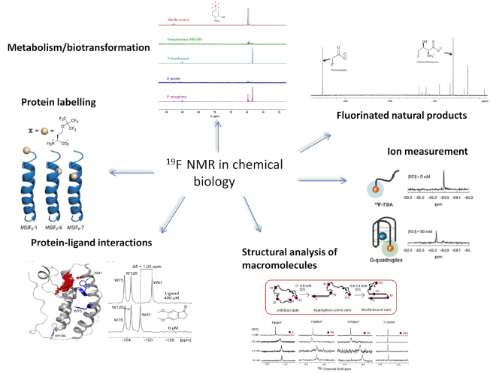
- all 3F-Phe labelled sites regardless of the temperature employed, signifying either a single state at low temperatures or fast exchange between the native and near-native states at higher temperatures (40–70 °C). The NMR data obtained also provided evidence of the rapid ring flipping of the 3-FPhe
- ). Each independent intermediate was characterized on the basis of its 19F NMR chemical shift and the kinetics by which each species formed or decayed were evaluated in real-time. By combining the 19F NMR data with that provided by complementary analytical techniques, mass spectrometry (electrospray


Total synthesis of decarboxyaltenusin
Beilstein J. Org. Chem. 2021, 17, 224–228, doi:10.3762/bjoc.17.22

- pressure (Scheme 4). The product 1 could now be purified by a simple chromatography on silica gel and was obtained in 88% yield. NMR spectroscopic data of the natural product had been published by Wang et al. [2] and by Xiao et al. [7] (Table 1). A comparison of the 13C NMR data of the now synthesized
- agreement with the NMR data measured by us, what leaves no reasonable doubt that the synthesized structure 1 is identical with the natural product. Decarboxyaltenusin (1) was screened for toxicity towards human HeLa cells but proved nontoxic at biologically relevant concentrations and showed an LD50 value
- , K2CO3, DMF/acetone 1:2, 80 °C, 43 h (98%). Final steps in the synthesis of biaryl 1. Conditions: h) Pd(OAc)2, SPhos, Cs2CO3, dioxane/H2O 7:1, 70 °C, 18 h, (R = TBS: 98%, containing non-separable impurities; R = Bn: 89%) ; i) R = Bn: Pd/C (10%), H2, THF, 8 bar, 24 h, 40 °C (88%). NMR data of natural and


Au(III) complexes with tetradentate-cyclam-based ligands
Beilstein J. Org. Chem. 2021, 17, 186–192, doi:10.3762/bjoc.17.18
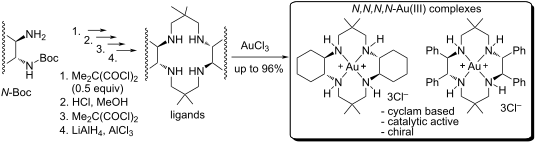
- Supporting Information File 48: Experimental procedures and NMR data for new ligands and gold(III) complexes, as well as a method for testing of catalytic activity. Funding This work was partly supported by the Research Council of Nor-way through the Norwegian NMR Platform, NNP (226244/F50).


Multiswitchable photoacid–hydroxyflavylium–polyelectrolyte nano-assemblies
Beilstein J. Org. Chem. 2021, 17, 166–185, doi:10.3762/bjoc.17.17
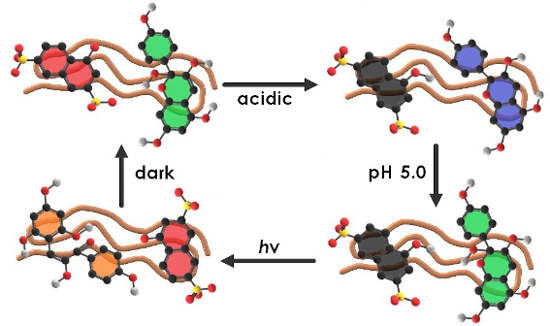
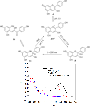
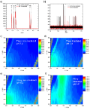
- spectrum shows a small transformation to form B. The relatively weak intensity suggests that this was not due to the irradiation but the well-known hydrolysis. In case of form B, the 13C NMR data show that the irradiation leads to form Cc, which can be seen from the new peaks at 127 ppm, 134 ppm, and 175




Facile preparation and conversion of 4,4,4-trifluorobut-2-yn-1-ones to aromatic and heteroaromatic compounds
Beilstein J. Org. Chem. 2021, 17, 132–138, doi:10.3762/bjoc.17.14
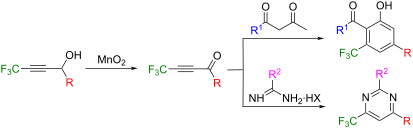
- to proceed under the action of a catalytic amount of a base, and only 2 mol % of t-BuOK led to the formation of the desired adduct 3aa as a sole stereoisomer in 84% isolated yield under the same reaction conditions (Table 2, entries 6−8). The E-stereochemistry of 3aa was deduced from the NMR data of


Progress in the total synthesis of inthomycins
Beilstein J. Org. Chem. 2021, 17, 58–82, doi:10.3762/bjoc.17.7
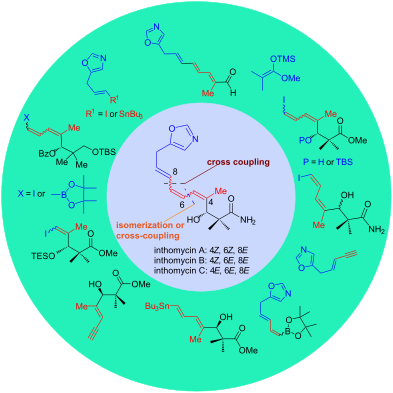
- others were finally resolved in this work. Subsequently, the Hatakeyama team converted their authentic (+)-82 into the (R)- and (S)-MTPA Mosher esters which provided well-matched NMR data to Hale’s previous synthesis [60]. Upon further purification using flash chromatography, the Hatakeyama team re









Chemical constituents of Chaenomeles sinensis twigs and their biological activity
Beilstein J. Org. Chem. 2020, 16, 3078–3085, doi:10.3762/bjoc.16.257
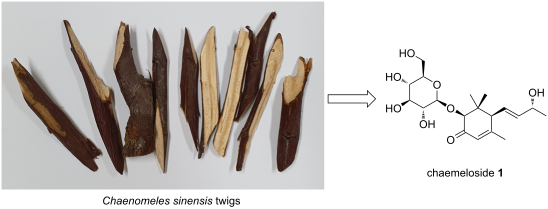
- together with 11 known phytochemicals through chromatographic methods. The chemical structure of the new isolate 1 was determined by conventional 1D and 2D NMR data analysis, ECD experiment, hydrolysis followed by a modified Mosher’s method, and LC–MS analysis. The characterized compounds’ biological
- sodiated molecular ion peak at m/z 409.1830 (calcd for C19H30O8Na+, 409.1833, error = 0.7 ppm). The 1H and HSQC NMR data of compound 1 suggested the presence of three olefinic protons [δH 5.96 (dt, J = 2.8, 1.5 Hz, 1H), 5.74 (dd, J = 15.3, 5.8 Hz, 1H), and 5.58 (ddd, J = 15.3, 10.1, 1.1 Hz, 1H)], seven
- , 71.5, 68.7, and 62.9), and six methyl/methylene/methine [δC 57.2, 43.4, 26.0, 23.8 (×2), and 16.5] carbons. Further investigation of the NMR data (Table 1) suggested the presence of a glucopyranosyl unit in compound 1 with the characteristic 13C NMR signals (δC 104.9, 78.3, 78.2, 75.7, 71.5, and 62.9


Construction of pillar[4]arene[1]quinone–1,10-dibromodecane pseudorotaxanes in solution and in the solid state
Beilstein J. Org. Chem. 2020, 16, 2954–2959, doi:10.3762/bjoc.16.245
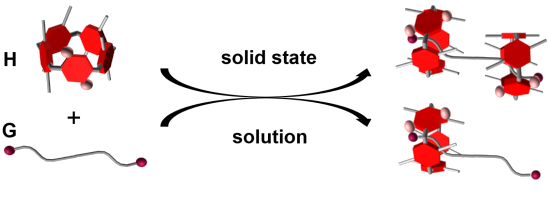
- , Supporting Information File 1). A Job plot based on the proton NMR data was made to determine the complexation stoichiometry between H and G. The formation signified a 1:1 binding stoichiometry in chloroform-d at room temperature (Figures S5 and S6, Supporting Information File 1). Combined with the mass


Synthesis and investigation of quadruplex-DNA-binding, 9-O-substituted berberine derivatives
Beilstein J. Org. Chem. 2020, 16, 2795–2806, doi:10.3762/bjoc.16.230
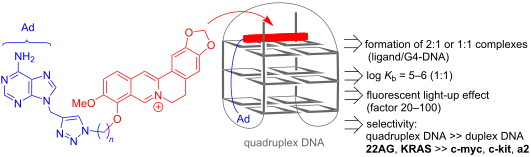
- relevant factors that affect the affinity and selectivity of such ligands. Experimental Equipment NMR data were recorded with a Varian VNMR-S600 spectrometer [600 MHz (1H), 150 MHz (13C)] at 35 °C. NMR spectra were processed with the software ACD/NMR Processor Academic Version 12.01 and are referenced to


Synthesis of purines and adenines containing the hexafluoroisopropyl group
Beilstein J. Org. Chem. 2020, 16, 2739–2748, doi:10.3762/bjoc.16.224
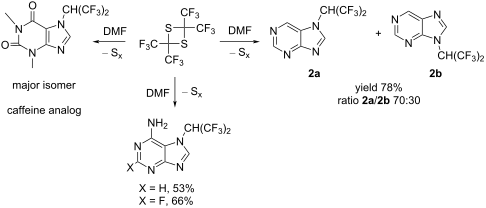
- the compounds 5a and 6a relies solely on NMR data. In both cases, the data were consistent with the structures 5a or 6a, carrying NH2 and CH(CF3)2 groups on the same side of the molecule. Indeed, in the 19F NMR spectra of 5a and 6a, the resonance corresponding to CH(CF3)2 was significantly broadened
- spectroscopy, was at least 99%, unless stated otherwise. Standard NMR experiments The NMR data presented in Table 2 and Table 3 were derived from spectra acquired on a Bruker Neo spectrometer with a 9.4 T magnetic field, equipped with a 5 mm 15N,77Se, 31P {19F,1H} nitrogen cryoprobe. Chemical shifts are
- NMR data are given in Table 1 and Table 3. Reaction of 4-azabenzimidazole (3) and 1 A mixture of 1.2 g (0.01 mol) of 4-azabenzimidazole (3), 2 g (0.06 mol) of 1, and 15 mL of DMSO was agitated at ambient temperature for 24 h. The precipitated sulfur was filtered, washed with hexane, and dried on a



A heterobimetallic tetrahedron from a linear platinum(II)-bis(acetylide) metalloligand
Beilstein J. Org. Chem. 2020, 16, 2701–2708, doi:10.3762/bjoc.16.220
- 31P). In order to measure 19F and 31P NMR spectra, the NMR tube was equipped with a coaxial insert containing the external standards. 1H NMR data are reported as follows: chemical shift (δ) in ppm, multiplicity (dt = doublet of triplets, m = multiplet), coupling constant (J) in Hertz (Hz), integral


Anion exchange resins in phosphate form as versatile carriers for the reactions catalyzed by nucleoside phosphorylases
Beilstein J. Org. Chem. 2020, 16, 2607–2622, doi:10.3762/bjoc.16.212
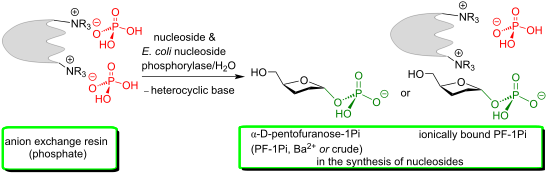
- kept overnight in a refrigerator. The precipitate formed was filtered off, washed with ethanol, dried in vacuum under CaCl2 at room temperature to give Ara-1Pi (Ba2+) as white powder (244 mg, 96%; TLC: iPrOH/25% NH4OH/water, 11:2:5 (vol), Rf 0.30, development by heating). The NMR data were similar to
- silica gel column (1.5 × 23 cm) prepared in EtOAc. The fractions containing the nucleoside were combined, evaporated and dried to afford the powdered product (25 mg; 66%) of 95.5% purity (HPLC), that was crystallized from MeCN to give nelarabine (19 mg; 53%; 99.0% purity by HPLC). For NMR data, see
- MeCN; 99.0% purity according to HPLC; for NMR data, see Supporting Information File 1, SI-1, SI-2 and SI-4). The capacity of the anion exchange resins to bind PF-1Pi As noted above, when studying Ara-U phosphorolysis catalyzed by E. coli UP in the presence of Dowex-nPi, we found that (1) about 10% of


Synthesis of novel fluorinated building blocks via halofluorination and related reactions
Beilstein J. Org. Chem. 2020, 16, 2562–2575, doi:10.3762/bjoc.16.208
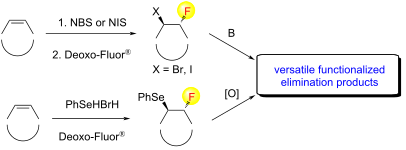
- Information Supporting Information File 400: Characterization and NMR data of the new compounds. Funding We are grateful to the Hungarian Research Foundation (NKFIH No K 119282) for financial support. Fnancial support of the GINOP-2.3.2-15-2016-00038 project is also acknowledged. This research was supported


NMR Spectroscopy of supramolecular chemistry on protein surfaces
Beilstein J. Org. Chem. 2020, 16, 2505–2522, doi:10.3762/bjoc.16.203
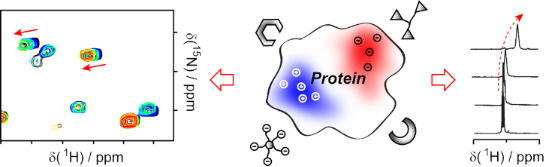
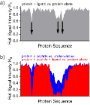
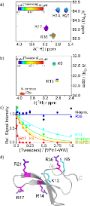
- substituents binding to Cyt c was also studied by 15N-HSQC titrations [59]. Interestingly, large areas of the protein surface showed chemical shift perturbations, even though the binding curves clearly revealed a 1:1 stoichiometry. Crowley et al. concluded from the NMR data in combination with computational



Formation of an exceptionally stable ketene during phototransformations of bicyclo[2.2.2]oct-5-en-2-ones having mixed chromophores
Beilstein J. Org. Chem. 2020, 16, 2297–2303, doi:10.3762/bjoc.16.190

- 13C NMR data were found to be much more informative (Table 3). In 1H NMR, a doublet and a triplet in the region of δ 6.6–6.9 ppm confirmed the presence of the OPh group while the bridgehead protons of the ketenes appeared at a slightly up-field position with respect to the parent compounds. Ketenes


Azo-dimethylaminopyridine-functionalized Ni(II)-porphyrin as a photoswitchable nucleophilic catalyst
Beilstein J. Org. Chem. 2020, 16, 2119–2126, doi:10.3762/bjoc.16.179
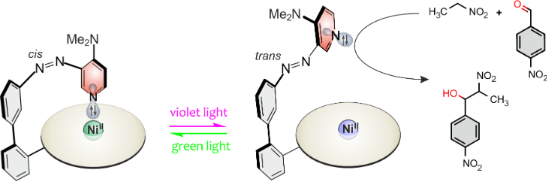
- ring are strongly dependent on the axial coordination at the central Ni2+ ion (Figure 3, and for details see Tables S1 and S2 in Supporting Information File 1). The analysis of the NMR data revealed that 98.8–99.9% of the cis isomer is coordinated in all solvents, which is expectable because DMAP is a





