


Search results
Search for "binding" in Full Text gives 989 result(s) in Beilstein Journal of Organic Chemistry. Showing first 200.
Ligand effects, solvent cooperation, and large kinetic solvent deuterium isotope effects in gold(I)-catalyzed intramolecular alkene hydroamination
Beilstein J. Org. Chem. 2024, 20, 479–496, doi:10.3762/bjoc.20.43
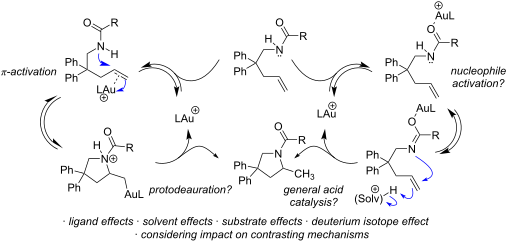
- , acetonitrile, and the triflate counterion [66]. Theoretical calculation of binding constants predict that esters coordinate more strongly than alkynes, and water [68]. Alkenes have been shown in some cases to coordinate more strongly than alkynes, but the trend depends on substitution pattern (alkynes can

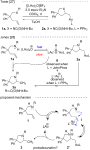


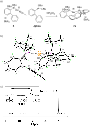


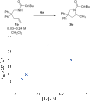


Development of a chemical scaffold for inhibiting nonribosomal peptide synthetases in live bacterial cells
Beilstein J. Org. Chem. 2024, 20, 445–451, doi:10.3762/bjoc.20.39
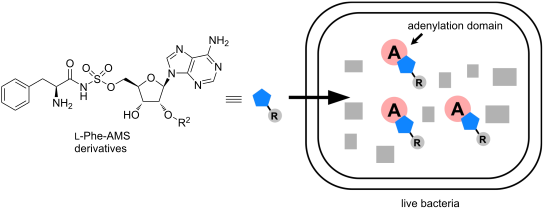
- investigated the influence of a modification of 2′-OH in the AMS scaffold with different functional groups on binding to target enzymes and bacterial cell penetration. The inhibitor 7 with a cyanomethyl group at 2′-OH showed desirable inhibitory activity against both recombinant and intracellular gramicidin S
- activities against the A-domain of MbtA, a component of mycobactin synthetase and antimicrobial activities against M. tuberculosis [7]. In addition, aminoacyl (AA)-AMS has been designed to inhibit the amino acid-activating A-domains in NRPSs and has been found to be a tight-binding inhibitor (Figure 2b) [8
- introduced a pegylated biotin linker at the 2′-OH group of ʟ-Phe-AMS and confirmed that the probe retains the binding activities toward the A-domain of GrsA, a gramicidin S synthetase. Aldrich et al. developed a Sal-AMS-based activity-based probe (ABP) to profile MbtA in M. tuberculosis [12]. In contrast, we


Enhanced host–guest interaction between [10]cycloparaphenylene ([10]CPP) and [5]CPP by cationic charges
Beilstein J. Org. Chem. 2024, 20, 436–444, doi:10.3762/bjoc.20.38
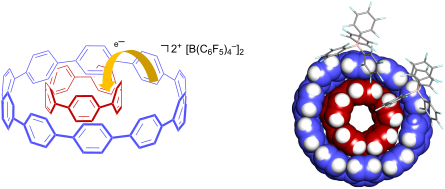
- . Furthermore, Isobe and co-workers also showed that the carbon nanorings with the simplest structural unit of chiral CNTs, such as cyclochrysenylene [34], cyclonaphthylenes [35], and cycloanthanthrenylene [36], are also excellent hosts of fullerenes with exceptionally high binding constants. These results open




Green and sustainable approaches for the Friedel–Crafts reaction between aldehydes and indoles
Beilstein J. Org. Chem. 2024, 20, 379–426, doi:10.3762/bjoc.20.36
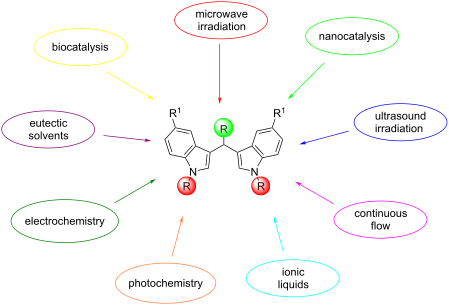
- the GPR receptor can aggravate the symptoms of myeloid leukemia. In contrast to most GPR84 agonists which contain long alkyl chains, BIMs are not lipophilic molecules, which allow them to bind to the GPR receptor via an allosteric binding site and modulate GPR84’s rate of expression [2]. One
- -effects that it can cause in the more sensitive subgroups of patients. Specifically, when DIM was used in tandem with tamoxifen, the ratio between 2OHE1/16αOHE1 increased up to 229%, as well as the concentration of the sex hormone binding globulin (SHBG) that inhibits the growth of breast cancer cells [4
- related environments [8]. The mechanism of action involves the binding of BIMs to the penicillin-restricting protein PBP2a which inhibits the biosynthesis of the bacterial cell wall, making the treatment feasible without any toxicity to human cells [9][10]. The applications of BIMs have also been extended




Spatial arrangements of cyclodextrin host–guest complexes in solution studied by 13C NMR and molecular modelling
Beilstein J. Org. Chem. 2024, 20, 331–335, doi:10.3762/bjoc.20.33
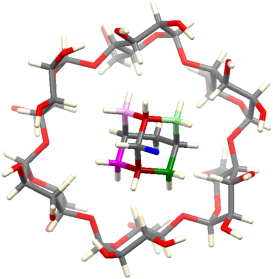
- signals in 13C NMR spectra. This signal split can be correlated to the distance of the guest atoms from the wall of the host cavity and to the spatial separation of binding sites preferred by pairs of prochiral carbon atoms. These measurements complement traditional solid-state analyses, which rely on the
- delivery [2][3][4], in analytical and preparative chemistry for compound separation [5] and in materials science for small molecule detection [6][7]. Association (binding) constants between the host and guest molecules [8][9][10] are typically measured by 1H NMR titration [11][12] or isothermal titration


Elucidating the glycan-binding specificity and structure of Cucumis melo agglutinin, a new R-type lectin
Beilstein J. Org. Chem. 2024, 20, 306–320, doi:10.3762/bjoc.20.31
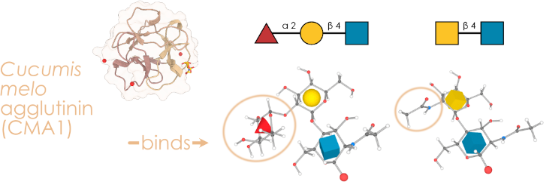
- garnered attention for their roles as laboratory probes and potential therapeutics. Here, we report the discovery and characterization of Cucumis melo agglutinin (CMA1), a new R-type lectin from melon. Our findings reveal CMA1’s unique glycan-binding profile, mechanistically explained by its 3D structure
- , augmenting our understanding of R-type lectins. We expressed CMA1 recombinantly and assessed its binding specificity using multiple glycan arrays, covering 1,046 unique sequences. This resulted in a complex binding profile, strongly preferring C2-substituted, beta-linked galactose (both GalNAc and Fuca1-2Gal
- ), which we contrasted with the established R-type lectin Ricinus communis agglutinin 1 (RCA1). We also report binding of specific glycosaminoglycan subtypes and a general enhancement of binding by sulfation. Further validation using agglutination, thermal shift assays, and surface plasmon resonance


Optimizations of lipid II synthesis: an essential glycolipid precursor in bacterial cell wall synthesis and a validated antibiotic target
Beilstein J. Org. Chem. 2024, 20, 220–227, doi:10.3762/bjoc.20.22
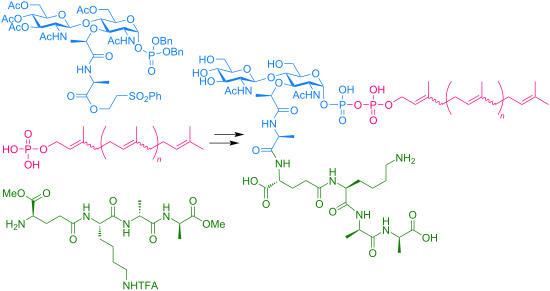
- study the mechanism of action of antimicrobial peptides that kill bacteria through binding to these polyprenyls [21][28][29][30][31][32][33][34]. Lipid II has been of particular interest, and during our synthesis of multiple different lipid II analogues, we have developed several optimizations, which we
- in red and antimicrobial-binding motifs highlighted with blue arcs. R1 = H or Ac; R2 = H or Ac; R3 = OH, OMe or NH2; R4 = H or COOH; R5 = Gly5, Ala2, Ala-Ser/Ala or ᴅ-Asp; R6 = OH, OMe or NH2. These structural modifications are described in detail by Münch and co-workers [9]. For more details on
- lipid II-binding antimicrobials, see recent review by Buijs and co-workers [2]. List of i) glycosyl donors and ii) glycosyl acceptors used in this study. Synthesis of disaccharide pentapeptide core 7. Synthesis of lipid II (11) and its analogues 8–10. Optimization of the glycosylation conditions.a


Synthesis of the 3’-O-sulfated TF antigen with a TEG-N3 linker for glycodendrimersomes preparation to study lectin binding
Beilstein J. Org. Chem. 2024, 20, 173–180, doi:10.3762/bjoc.20.17
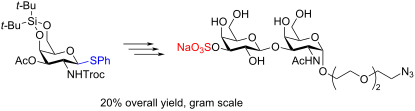
- (β-ᴅ-GalNAc-(1→4)-β-ᴅ-GlcNAc), which have then been used for production of the glycodenrimersomes and interaction studies with various galectins [1][2]. In the continuation of this collaboration, to investigate the binding of siglec-1 and the chimera of 3’-SuTF-binding siglecs and TF-binding galectin


Photoinduced in situ generation of DNA-targeting ligands: DNA-binding and DNA-photodamaging properties of benzo[c]quinolizinium ions
Beilstein J. Org. Chem. 2024, 20, 101–117, doi:10.3762/bjoc.20.11
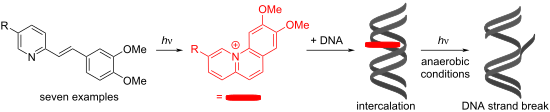
- organic solvents (78–20% in MeCN). The quinolizinium derivatives bind to DNA by intercalation with binding constants of 6–11 × 104 M−1, as shown by photometric and fluorimetric titrations as well as by CD- and LD-spectroscopic analyses. These ligand–DNA complexes can also be established in situ upon
- irradiation of the styrylpyridines and formation of the intercalator directly in the presence of DNA. In addition to the DNA-binding properties, the tested benzo[c]quinolizinium derivatives also operate as photosensitizers, which induce DNA damage at relative low concentrations and short irradiation times
- a change of the DNA structure or occupy binding sites of essential enzymes, which in turn may influence or even inhibit important biochemical processes, for example DNA replication or transcription [1][2]. As a result, the development of DNA-targeting drugs still involves the design of suitable DNA




Aldiminium and 1,2,3-triazolium dithiocarboxylate zwitterions derived from cyclic (alkyl)(amino) and mesoionic carbenes
Beilstein J. Org. Chem. 2023, 19, 1947–1956, doi:10.3762/bjoc.19.145
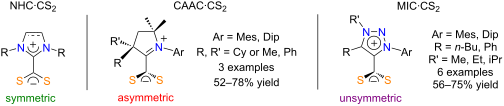
- of charges (Figure 1) [13][14][15][16]. Crabtree and co-workers first reported the abnormal binding of an imidazolium salt to an iridium hydride at the C4 carbon atom instead of C2 in 2001 [17][18]. Since then, many other metal complexes bearing imidazol-4-ylidene ligands (F) have been reported [7


Studying specificity in protein–glycosaminoglycan recognition with umbrella sampling
Beilstein J. Org. Chem. 2023, 19, 1933–1946, doi:10.3762/bjoc.19.144
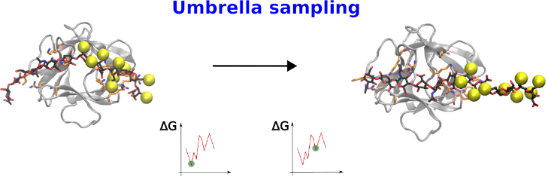
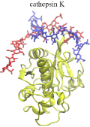
- essential to explain their biological functions. In this study, the umbrella sampling (US) approach is used to pull away a GAG ligand from the binding site and then pull it back in. We analyze the binding interactions between GAGs of three types (heparin, desulfated heparan sulfate, and chondroitin sulfate
- GAG properties, especially protein recognition specificity and multipose binding. We found that the binding free energy landscape in the proximity of the GAG native binding pose is complex and implies the co-existence of several binding poses. The sliding of a GAG chain along a protein surface could
- to multipose binding, wherein various configurations of the protein–GAG complex may exhibit similar free binding energies, allowing them to co-exist. Interpreting the “sulfation code”, the amount (net sulfation) and particular positions of the sulfation group (sulfation pattern), could assist in the




Anion–π catalysis on carbon allotropes
Beilstein J. Org. Chem. 2023, 19, 1881–1894, doi:10.3762/bjoc.19.140
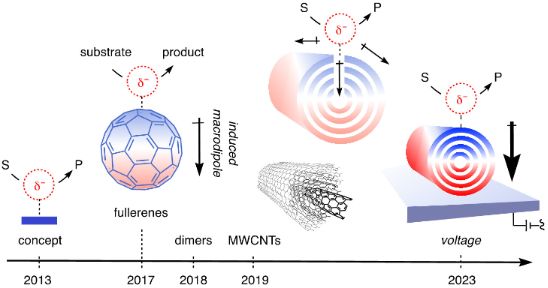
- formation (Figure 1C) [12]. This intriguing mechanism of catalysis should be further intensified on single-walled carbon nanotubes 2 (SWCNTs, Figure 1D) and multi-walled carbon nanotubes 3 (MWCNTs, Figure 1E) [13]. Multiple substrate/transition-state binding should reduce particularly in-plane polarization
- of the π system and thus induced anion–π interactions. Since the polarization caused by substrate/transition-state binding hinders additional binding, this effect should occur only at high concentrations. These expectations were first explored with anion–π catalysis on fullerenes in 2017 [12
- -to-face π stacking because the delocalized π electrons move within the stack away from the charge, which induces a macrodipole along the stack that supports the binding of the anion (Figure 1B) [61]. What works for anion–(π)n–π catalysis on π-stacked foldamers [61] and micelles [8] should apply to




N-Boc-α-diazo glutarimide as efficient reagent for assembling N-heterocycle-glutarimide diads via Rh(II)-catalyzed N–H insertion reaction
Beilstein J. Org. Chem. 2023, 19, 1841–1848, doi:10.3762/bjoc.19.136
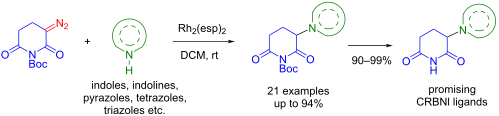
- , using a new synthesis strategy based on the usage of diazo glutarimide 4 (Scheme 1). Compared to thalidomide (Figure 1), the resulting “benzotriazolo thalidomide” has a similar binding mode, but improved properties, as revealed in crystallographic analyses, affinity assays and cell culture [26]. However


Quinoxaline derivatives as attractive electron-transporting materials
Beilstein J. Org. Chem. 2023, 19, 1694–1712, doi:10.3762/bjoc.19.124
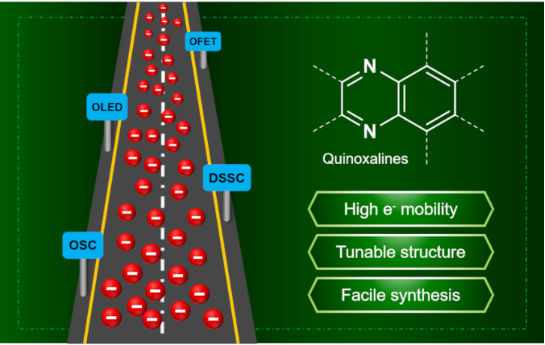
- separation by reducing Coulomb attraction and exciton binding energy. The resulting enhancement in exciton dissociation and reduced charge recombination contribute to the improved performance of polymer acceptors, especially Qx2 which achieved PCE of 5.32% with PBDB-T donor in an all-PSC device [20]. In a




Tying a knot between crown ethers and porphyrins
Beilstein J. Org. Chem. 2023, 19, 1630–1650, doi:10.3762/bjoc.19.120
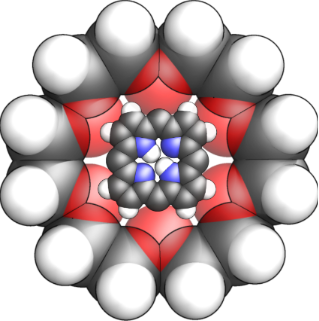
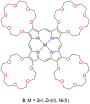
- binding guest molecules/ions, but also to undergo unusual transformations, such as metal-induced expansion/contraction. Depending on the design of the particular hybrid, they present unique features involving intriguing redox chemistry, interesting optical properties, and reactivity towards transition
- date back to 1982 when Krishnan and Thanabal reported synthesising a new host molecule with multiple cavities capable of encompassing several guest molecules/ions [39]. The molecule demonstrated an exciting feature of binding Na+, Mg2+, Ca2+, K+, NH4+, and Ba2+ cations. The incorporation of cations
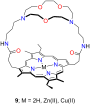
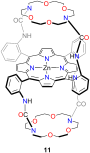
- [46]. The macrotetracycles and macropentacycles, apart from the apparent metal complexation within the porphyrin core, showed cationic guest binding upon adding different ammonium salts, forming 1:1 complexes. Later, in 1985, Camilleri and co-workers reported the synthesis of a capped porphyrin





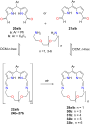


Complexes of resorcin[4]arene with secondary amines: synthesis, solvent influence on “in-out” structure, and theoretical calculations of non-covalent interactions
Beilstein J. Org. Chem. 2023, 19, 1525–1536, doi:10.3762/bjoc.19.109
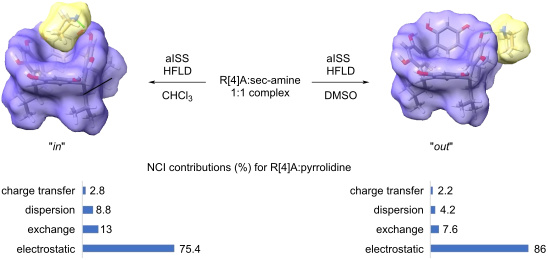
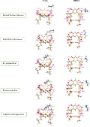
- the amine nitrogen of the guest molecule. In addition to hydrogen bonding, other interactions such as π–π stacking and electrostatic interactions also play a role in the complexation process. These interactions can be modulated by changing the pH, solvent, and temperature of the solution. The binding
- affinity and selectivity of the R[4]A–amine complexes depend on several factors, including the size, shape, and functional groups of both the host and the guest molecules. For example, R[4]A derivatives with different substituents on the aromatic rings [12] have been synthesized to enhance the binding
- dipropylamine and diisopropylamine, complexes with a stoichiometry of 1:2 are formed (i.e., 1 molecule of R[4]A binding to 2 molecules of dipropylamine or diisopropylamine). Regardless of the quantity of amine added to the solution of R[4]A in ethanol (4 equiv, 2 equiv, and 1 equiv, respectively), a 1:2




Synthesis and biological evaluation of Argemone mexicana-inspired antimicrobials
Beilstein J. Org. Chem. 2023, 19, 1511–1524, doi:10.3762/bjoc.19.108
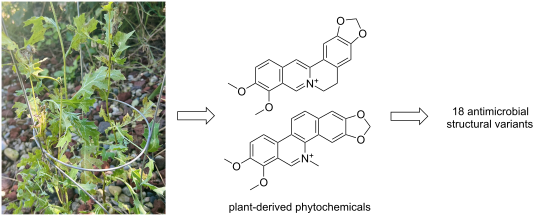
- often attributed to high binding affinity to DNA, interference with protein biosynthesis, induction of membrane leakage, and affecting GTPase activity in bacteria cell division [12][13][14][15]. Recent reports have also pointed to inhibition of the ‘filamenting temperature-sensitive mutant Z’ (FtsZ
- ) protein [16][17], as well as perturbing carbohydrate metabolism to generate reactive oxygen species that damage the DNA [18], as modes of action for berberine’s antibacterial effects. The antitumor properties of berberine have been attributed to DNA binding, and in particular regulating the activity of


Application of N-heterocyclic carbene–Cu(I) complexes as catalysts in organic synthesis: a review
Beilstein J. Org. Chem. 2023, 19, 1408–1442, doi:10.3762/bjoc.19.102
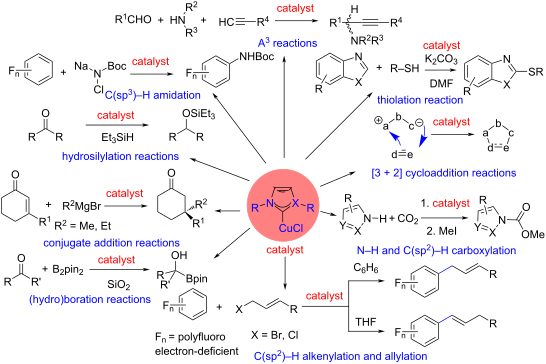
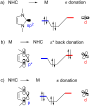
- ), bear only a single flanking heteroatom and exist as a zwitterionic structure with no neutral canonical resonance form (Figure 3). In this case, binding takes place via the C4 or C5 position. These NHCs have been found to be stronger electron-donors due to the reduced σ-withdrawal from the carbene carbon
- 1,3-dipolar cycloaddition and belongs to the general category of [π4s + π2s] cycloadditions. It is an important method to construct a five-membered heterocyclic ring [66]. As discussed earlier, the Cu atom in NHC–Cu(I) complexes has nucleophilic character, which allows binding to the positive end of
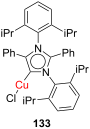
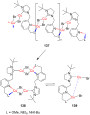
- -donors on the catalytic activity of NHC–Cu(I) complexes for azide–alkyne [3 + 2] cycloaddition reactions [67]. They determined binding constants of four NHC–CuCl complexes with two N-donors, which revealed that addition of phenanthroline to the NHC–CuCl enhanced the catalytic activity manifold. In fact








Synthesis of ether lipids: natural compounds and analogues
Beilstein J. Org. Chem. 2023, 19, 1299–1369, doi:10.3762/bjoc.19.96
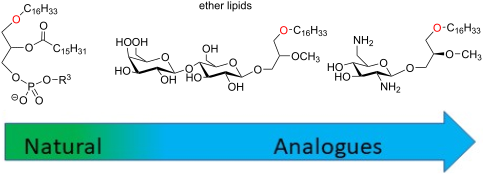
- ). The review of Lemaire et al., dedicated to the synthesis of glycerol ether, is complemental to this review article [57]. Of note, the review of Godfroid and Braquet attempted to decipher the binding site of PAF via a QSAR study [58]. 1.1 Synthesis of PAF and some building blocks The platelet


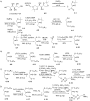


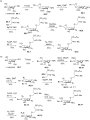


Exploring the role of halogen bonding in iodonium ylides: insights into unexpected reactivity and reaction control
Beilstein J. Org. Chem. 2023, 19, 1171–1190, doi:10.3762/bjoc.19.86
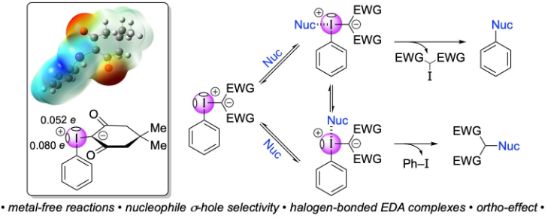
- numerous similar attributes, halogen bonding has also proven to be a viable alternative in methodologies that rely on hydrogen bond initiation. For example, both halogen- and hydrogen bonding can be used in supramolecular chemistry as the binding mechanism in photoresponsive receptors [73][74][75][76][77
- . used 1H NMR titrations and isothermal titration calorimetry (ITC) to experimentally determine interactions energies for I-9 complexes (e.g., I-9-lig, −6.3 kcal/mol), they also discovered that simultaneous binding to both σ-holes was possible [90]. Given these observations, it is unsurprising that HVI







CO2 complexation with cyclodextrins
Beilstein J. Org. Chem. 2023, 19, 1021–1027, doi:10.3762/bjoc.19.78
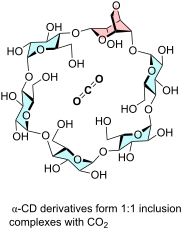
- , are studied as potential CO2 capture agents due to their unique molecular structures and high selectivity towards CO2. In this paper we have investigated binding efficiency of a number of cyclodextrins towards CO2. It is found that the crystal structure of α-cyclodextrin with CO2 has a 1:1
- stoichioimetry and that a number of simple and modified cyclodextrins bind CO2 in water with a Kg of 0.18–1.2 bar−1 (7–35 M−1) with per-O-methyl α-cyclodextrin having the highest CO2 affinity. Keywords: carbon dioxide; crystals; cyclodextrin; gas binding; Introduction The concentration of carbon dioxide (CO2
- CO2 is captured by non-covalent binding. Henglein and Cramer showed many years ago that α-cyclodextrin (1, Figure 1), when treated with CO2 under pressure for several days gave crystals with the gas trapped inside [8]. According to Cramer only 1 was able to form crystals, while larger cyclodextrins


Intermediates and shunt products of massiliachelin biosynthesis in Massilia sp. NR 4-1
Beilstein J. Org. Chem. 2023, 19, 909–917, doi:10.3762/bjoc.19.69
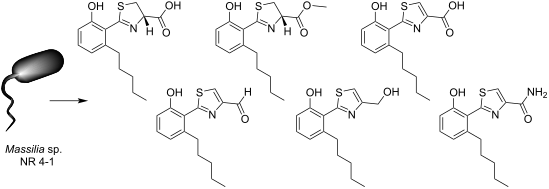
- chelate environmental Fe3+. Ligand groups, such as hydroxamate, phenolate, catecholate, carboxylate, or oxazoline/thiazoline residues, confer siderophores their high affinity for the binding of Fe3+ [3][4][5]. Following the coordination of the metal, the Fe3+-loaded siderophore complex is transported back


A fluorescent probe for detection of Hg2+ ions constructed by tetramethyl cucurbit[6]uril and 1,2-bis(4-pyridyl)ethene
Beilstein J. Org. Chem. 2023, 19, 864–872, doi:10.3762/bjoc.19.63
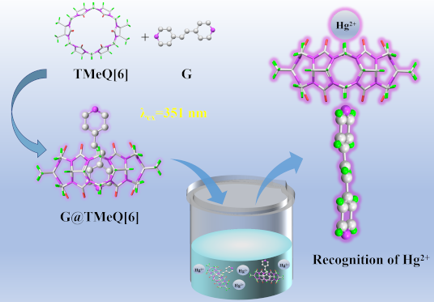
- detection of heavy metal ions. Results and Discussion The interactions of G with TMeQ[6] UV–vis spectroscopy analysis The binding interaction between G and TMeQ[6] in aqueous solution was studied using UV–vis absorption spectroscopy. Figure 2a shows that the absorbance of G decreases with the addition of
- TMeQ[6], and the wavelength redshifts from 301 nm to 330 nm, indicating that TMeQ[6] has binding affinity for G. The molar ratio method (Figure 2b) shows that when n(TMeQ[6])/n(G) = 1:1, the absorption value of the system gradually stabilizes, indicating that the guest G and TMeQ[6] form an inclusion
- , which is an exothermic reaction (enthalpy-driven). The results show that the binding ability of G and TMeQ[6] is strong, and the ratio is 1:1. The results are consistent with those obtained by UV–vis spectroscopy and fluorescence spectroscopy. Single-crystal X-ray diffraction analysis The crystal


pH-Responsive fluorescent supramolecular nanoparticles based on tetraphenylethylene-labelled chitosan and a six-fold carboxylated tribenzotriquinacene
Beilstein J. Org. Chem. 2023, 19, 635–645, doi:10.3762/bjoc.19.45
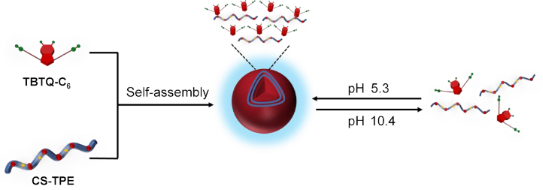
- -soluble bowl-shaped six-fold carboxylated tribenzotriquinacene derivative TBTQ-C6 via host–guest binding. The spherical nanoparticles formed by CS-TPE amphiphiles or TBTQ-C6/CS-TPE supra-amphiphiles disintegrated under alkaline stimulation at pH 10.4 and the dispersion of the aggregates after the collapse
- construct pH-responsive supramolecular vesicles and molecule-scale drug carriers, respectively. Both of them exhibited pH-responsive properties, with the host–guest binding disintegrating when the pH of the solution is adjusted to 5.5 and the binding regenerated when the pH is restored to 7.4. These
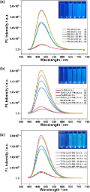
- structures. As shown in Figure 7b, the emission of all CS-TPE in a solution at pH 5.3 was enhanced after the addition of the host TBTQ-C6. This effect can be attributed to the further inhibition of the intramolecular rotation of the phenyl rings of TPE after binding with the host molecule [31]. The



C3-Alkylation of furfural derivatives by continuous flow homogeneous catalysis
Beilstein J. Org. Chem. 2023, 19, 582–592, doi:10.3762/bjoc.19.43
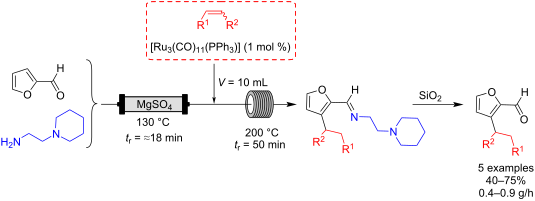
- Supporting Information File 1, p. S20), meaning that the ruthenium trimer was no longer present. The TEM analysis of the recovered solid phase (Scheme 5B) showed the formation of large aggregates with high electron density. Moreover, ruthenium was detected by XPS analysis (Scheme 5B); the binding energy of





