


Search results
Search for "carbenes" in Full Text gives 172 result(s) in Beilstein Journal of Organic Chemistry.
Synthesis, characterization and luminescence studies of gold(I)–NHC amide complexes
Beilstein J. Org. Chem. 2013, 9, 2216–2223, doi:10.3762/bjoc.9.260
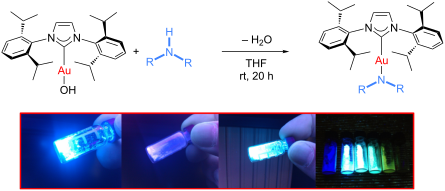
- catalysis; N-heterocyclic carbenes; synthesis; Introduction The synthesis of organogold complexes has recently attracted wide attention due to their considerable range of applications, in areas such as materials and medicinal chemistry, as well as their potential role as reaction intermediates or new


Synthesis of enantiomerically pure N-(2,3-dihydroxypropyl)arylamides via oxidative esterification
Beilstein J. Org. Chem. 2013, 9, 2129–2136, doi:10.3762/bjoc.9.250

- purity was observed. Keywords: N-(2,3-dihydroxypropyl)arylamide; nitrogen heterocyclic carbenes (NHC); oxidative esterification of aromatic aldehyde; Introduction Chiral structures with three carbons are an integral part of many biologically active compounds including alkaloids, pharmaceuticals and
- carbenes, such as 9a to 9k, with different bases (triethylamine, DBU, and DABCO) and with or without an additive to optimize the reaction conditions (Table 1). When the NHC was used in 0.25 equivalents in THF or THF/butanol (10:1) the major product isolated in the reaction was benzoin, and the desired


Gold-catalyzed regioselective oxidation of propargylic carboxylates: a reliable access to α-carboxy-α,β-unsaturated ketones/aldehydes
Beilstein J. Org. Chem. 2013, 9, 1925–1930, doi:10.3762/bjoc.9.227
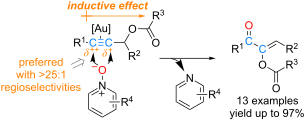
- carboxylate; Introduction We reported in 2010 [1] that α-oxo gold carbenes could be conveniently generated as reactive intermediates in gold-catalyzed intermolecular oxidation of alkynes. By using pyridine N-oxides [1] and later 8-substituted quinoline N-oxides [2] as the external oxidants, this approach
- permits a safe and efficient access to α-oxo gold carbenes without resorting to the dediazotization strategy [3][4][5] using hazardous and potentially explosive diazo substrates (Scheme 1). Since then an array of versatile synthetic methods has been developed based on the general approach by us [2][6][7
- migration might be an even less meaningful event in the reaction; b) it is known that the gold carbenes of type B can be readily oxidized by Ph2S=O [33], which, however, is an inefficient oxidant for generating α-oxo gold carbenes of type A via alkyne oxidation [34][35]; when the N-oxide 3 is replaced by


[3 + 2]-Cycloadditions of nitrile ylides after photoactivation of vinyl azides under flow conditions
Beilstein J. Org. Chem. 2013, 9, 1745–1750, doi:10.3762/bjoc.9.201
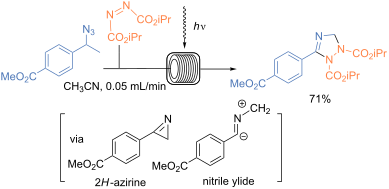
- cycloaddition reactions. They are commonly formed through three routes which are a) the addition of electrophilic carbenes to nitriles, b) the dehydrochlorination of imidoyl chlorides, and c) the photochemical ring opening of strained 2H-azirines 2 [2][3][4][5]. The latter route can be initiated by the


The preparation of several 1,2,3,4,5-functionalized cyclopentane derivatives
Beilstein J. Org. Chem. 2013, 9, 1705–1712, doi:10.3762/bjoc.9.195
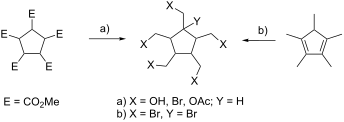
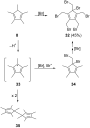
- expected low stability of 3: all its lower and higher analogs are highly reactive hydrocarbons that under normal laboratory conditions polymerize easily and/or readily undergo addition reactions with other compounds – oxygen [2][3], dienophiles [2][3], carbenes [6], and other trapping agents. Another



Organocatalyzed enantioselective desymmetrization of aziridines and epoxides
Beilstein J. Org. Chem. 2013, 9, 1677–1695, doi:10.3762/bjoc.9.192
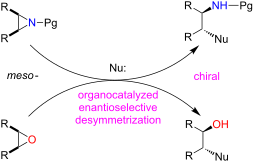
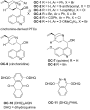
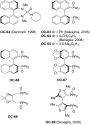
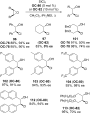
- -oxide, and N-heterocyclic carbenes were published. However, the enantioselective ring-opening of meso-aziridines in the presence of chiral organocatalysts (OC) has emerged as a research field only in recent years. The organocatalysts utilized in these processes are diverse in their structural features








Thiourea-catalyzed Diels–Alder reaction of a naphthoquinone monoketal dienophile
Beilstein J. Org. Chem. 2013, 9, 1414–1418, doi:10.3762/bjoc.9.158
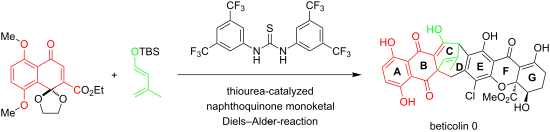
- carbenes, guanidines, thioureas, amidinium ions, diols, and Brønsted acids showed their value to give densely functionalized Diels–Alder products in high selectivities [1][2][3][4][5][6][7]. In addition, some organocatalysts enabled even the formation of quaternary centers in Diels–Alder cycloadditions [3


α-Bromodiazoacetamides – a new class of diazo compounds for catalyst-free, ambient temperature intramolecular C–H insertion reactions
Beilstein J. Org. Chem. 2013, 9, 1407–1413, doi:10.3762/bjoc.9.157

- (EDA) were reacted with sources of electrophilic halogen (SO2Cl2, Br2 or I2). These protocols allowed Gerhart and Schöllkopf et al. to study the properties of the resulting α-halodiazoacetates and the reactivity of their photolytically derived carbenes [26][27][28][29][30]. Some ten years later, Regitz
- the halogenation of diazoacetamides. We report herein the bromination of the diazoacetamides derived from a selection of cyclic secondary amines, using DBU and N-bromophthalimide (NBP), as well as an investigation of the ability of the carbenes/carbenoids derived from the resulting α
- α-bromodiazoacetamides to thermolyse at ambient temperature without the use of a metal catalyst, offers the reactivity of the bromocarbene amides under genuinely mild reaction conditions. Halocarbonyl carbenes and carbene/carbenoid stabilisation In their ground state, the halocarbonyl carbenes


4-Pyridylnitrene and 2-pyrazinylcarbene
Beilstein J. Org. Chem. 2013, 9, 754–760, doi:10.3762/bjoc.9.85
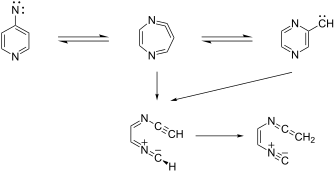
- described below. Since nitrenes are intrinsically more stable than the isomeric carbenes [3][12][13], a rearrangement of 21 to 19 is perfectly reasonable. In the case of phenylazide, mild FVT results in the formation of azobenzene (4) (Scheme 1), but violent FVT, where the pressure is allowed to rise to ca






Synthesis and structure of trans-bis(1,4-dimesityl-3-methyl-1,2,3-triazol-5-ylidene)palladium(II) dichloride and diacetate. Suzuki–Miyaura coupling of polybromoarenes with high catalytic turnover efficiencies
Beilstein J. Org. Chem. 2013, 9, 698–704, doi:10.3762/bjoc.9.79
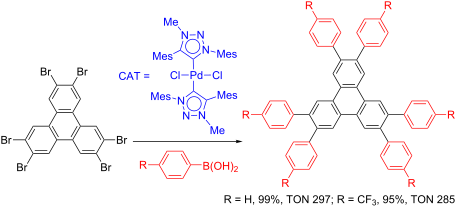
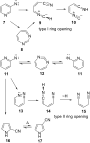
- -triazolylidene; Introduction Over the past decade N-heterocyclic carbenes (NHCs) have attracted the attention of synthetic and organometallic chemists tremendously [1][2][3][4][5]. NHCs have been proven to be useful as organocatalysts in organic synthesis [6][7][8][9]. They are excellent ligands for transition
- mesoionic carbenes because their structures cannot be represented in neutral canonical form [17][19]. Mesoionic NHCs are stronger sigma donors than the normal NHCs (e.g., imidazolylidenes versus triazolylidenes) [21][22][23]. Hence metal complexes of mesoionic carbene ligands are expected to show high


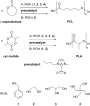
1-n-Butyl-3-methylimidazolium-2-carboxylate: a versatile precatalyst for the ring-opening polymerization of ε-caprolactone and rac-lactide under solvent-free conditions
Beilstein J. Org. Chem. 2013, 9, 647–654, doi:10.3762/bjoc.9.73
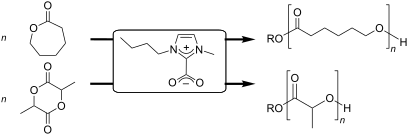
- applications, great efforts have been made recently to develop metal-free organo-catalysts [19][20][21][22][23][24][25][26][27]. In this context, ROP promoted by N-heterocyclic carbenes (NHCs) is an alternative route. Indeed, previous studies have shown that NHCs provide versatile catalyst activities with high
- efficiencies and molecular-weight control [20][27][28][29][30][31][32]. Their selectivity and conversion rate are influenced by the nature of the monomer and the carbene used. Sterically encumbered carbenes, such as 1,3-dimesitylimidazol-2-ylidene (IMes, Figure 1), are known to be highly active for the ROP of
- rac-lactide [20][27][31][33], while less encumbered and electronically rich carbenes such as 1,3,4,5-tetramethylimidazol-2-ylidene (ImMe4, Figure 1) show a higher activity towards the ROP of ε-caprolactone [28][34]. Thus, the design of a versatile catalyst for both reactions still remains a challenge


NHC-catalysed highly selective aerobic oxidation of nonactivated aldehydes
Beilstein J. Org. Chem. 2013, 9, 602–607, doi:10.3762/bjoc.9.65
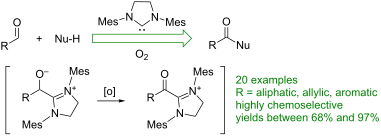
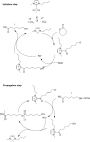
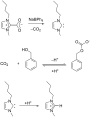
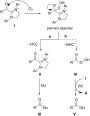
- of aldehydes to the corresponding acids or esters. The reaction proceeds under metal-free conditions by using N-heterocyclic carbenes as organocatalysts in combination with environmentally friendly oxygen as the terminal oxidation agent. Keywords: aerobic oxidation; chemoselective oxidation; metal
- , which is known to yield highly stable carbenes [19]. Using acetonitrile as solvent, 2 equivalents of water as a nucleophile, 2 mol % A, 1.1 equivalents of DBU and 20 mg/mmol mpg-C3N4, we obtained after 1 h under an O2 atmosphere, 85% conversion to the wanted acid. Next we tested different NHC-salts B–E
- as precatalysts, varying the sterics and electron densities (Scheme 2) [19][20][21][22]. All carbenes were reactive; however, the salt D gave the best results. With 2 mol % D we obtained 97% conversion (96% isolated product). With 0.5 mol % the reaction needed 2 h for the same yield. With the best


N-Heterocyclic carbene–palladium catalysts for the direct arylation of pyrrole derivatives with aryl chlorides
Beilstein J. Org. Chem. 2013, 9, 303–312, doi:10.3762/bjoc.9.35

- with heteroarenes. Keywords: aryl chlorides; atom-economy; C–H bond activation; C–H functionalization; carbenes; palladium; pyrroles; Introduction N-Heterocyclic carbenes (NHC) have emerged as an important class of ligands in the development of homogeneous catalysis [1][2][3][4][5][6][7][8][9]. Such
- , benzothiophene [42][45] or arenes [40]. Therefore, we employed carbenes bearing relatively bulky N-substituents. The reaction of Pd(OAc)2 with the corresponding benzimidazolium halides in DMSO at 60–110 °C gave 1–9 in 53–87% yields (Scheme 1). The geometry of these complexes was not defined, as no crystals


One-pot tandem cyclization of enantiopure asymmetric cis-2,5-disubstituted pyrrolidines: Facile access to chiral 10-heteroazatriquinanes
Beilstein J. Org. Chem. 2013, 9, 265–269, doi:10.3762/bjoc.9.32
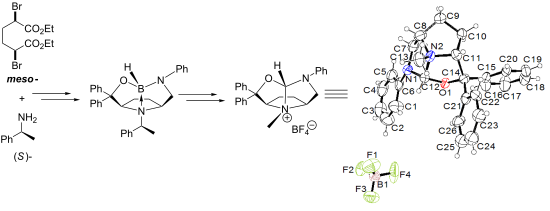
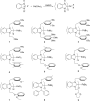
- 5a, 5b, 6a and 6b were also reported in [9], but our previously published structures for compounds 5a and 5b were not completely correct, because the B–N dative bonds were missing. The aim of the following procedures was to obtain several novel bifunctional N-hetereocyclic carbenes (NHCs) [10][11][12
- process, both N-debenzylation and a ring-opening reaction occurred. Diamino-alcohols 6a and 6b are enantiomers, and they can serve as precursors for the synthesis of hydroxy N-heterocyclic carbenes. Following the reported procedure for the preparation of N-heterocyclic carbenes [19][20], the enantiopure


Alkyne hydroarylation with Au N-heterocyclic carbene catalysts
Beilstein J. Org. Chem. 2013, 9, 246–253, doi:10.3762/bjoc.9.29

- ; gold; hydroarylation; N-heterocyclic carbenes; Introduction The hydroarylation of alkynes (Scheme 1) is arguably one of the most intensively studied reactions leading to aromatic C–H bond functionalization [1][2][3][4][5][6][7]. In this reaction, the C–H bond of an arene adds formally trans to the
- towards the hydroarylation product, more activating, hence electron-donating substituents should be installed on the aryl ring. Experiments towards this goal are currently underway. Conclusion In conclusion, we have demonstrated that gold complexes with N-heterocyclic carbenes are active catalysts for














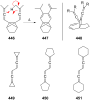


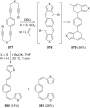


N-Heterocyclic carbene–palladium(II)-1-methylimidazole complex catalyzed Mizoroki–Heck reaction of aryl chlorides with styrenes
Beilstein J. Org. Chem. 2012, 8, 1916–1919, doi:10.3762/bjoc.8.222

- associated with the phosphine ligands, the development of alternative stable, inexpensive and easily available phosphine-free ligands is still in great demand. In the meantime, N-heterocyclic carbenes (NHCs), possessing the advantages of being stronger σ-donors and weaker π-acceptors than traditional


Alkenes from β-lithiooxyphosphonium ylides generated by trapping α-lithiated terminal epoxides with triphenylphosphine
Beilstein J. Org. Chem. 2012, 8, 1896–1900, doi:10.3762/bjoc.8.219
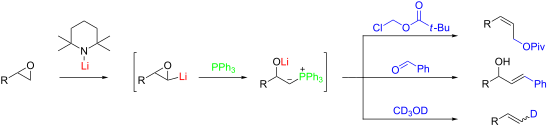
- epoxides 8 by using hindered lithium amides, such as lithium tetramethylpiperidide (9, LTMP) [20], and have shown synthetically useful carbene reactivity (e.g., cyclopropanation [21][22], dimerization [23][24][25]). The reaction of carbenes and carbenoids with heteroatom lone pairs is a popular strategy to


Extending the utility of [Pd(NHC)(cinnamyl)Cl] precatalysts: Direct arylation of heterocycles
Beilstein J. Org. Chem. 2012, 8, 1637–1643, doi:10.3762/bjoc.8.187
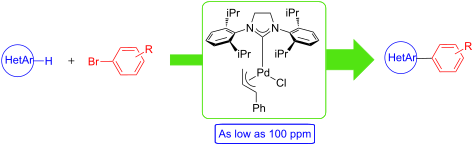
- . Keywords: C–H functionalization; direct arylation; heterocycles; N-heterocyclic carbenes; palladium; Introduction As a powerful addition to the classic palladium cross-coupling reactions, C–H bond functionalization has become a growing field of research over the last few years. The ubiquity of C–H bonds



Cyclization of ortho-hydroxycinnamates to coumarins under mild conditions: A nucleophilic organocatalysis approach
Beilstein J. Org. Chem. 2012, 8, 1630–1636, doi:10.3762/bjoc.8.186
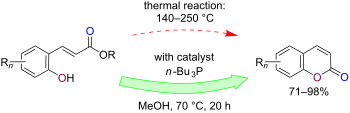
- established catalysts in Morita–Baylis–Hillman type reactions, where they add to conjugated acceptor systems [39]. Tests with either nitrogen bases (Table 1, entries 2–5) or N-heterocyclic carbenes (Table 1, entry 6) were not rewarded with success. Finally, phosphanes were tested, and while triphenylphosphane


Metal–ligand multiple bonds as frustrated Lewis pairs for C–H functionalization
Beilstein J. Org. Chem. 2012, 8, 1554–1563, doi:10.3762/bjoc.8.177
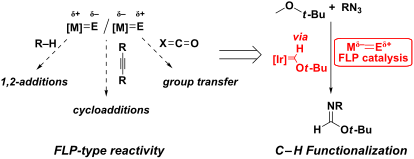
- require cooperative activation of substrates. One well-defined case with iridium(I) carbenes generated by multiple C−H activations is explored as a proof of principle. Note that the purpose of this review is not to provide an exhaustive list of examples of reactivity consistent with the description of
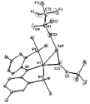
- with the Ir═C bond [74], and this complex was crystallographically characterized (Figure 3). Together, these findings showed that carbenes of this type do not exhibit traditional Fischer (electrophilic at Cα) or Schrock-type (nucleophilic at Cα) reactivity, and were better classified as nucleophilic-at
- -metal (or "Roper-type") carbenes with significant π backbonding, consistent with Roper's predicted patterns of reactivity for metal–carbon double bonds [75]. These Roper-type carbenes also reacted with organic azides and nitrous oxide via an apparent [3 + 2] cycloaddition [76][77], leading to oxygen




C–H Functionalization
Beilstein J. Org. Chem. 2012, 8, 1552–1553, doi:10.3762/bjoc.8.176
- can become broadly applicable. Metal-bound carbenes, nitrenes and oxo species have been particularly effective at stereoselective sp3 C–H functionalization. However, considerable advances still need to be made to enhance the selectivity and to increase the range of functionality that can be introduced
N-Heterocyclic carbene-catalyzed direct cross-aza-benzoin reaction: Efficient synthesis of α-amino-β-keto esters
Beilstein J. Org. Chem. 2012, 8, 1499–1504, doi:10.3762/bjoc.8.169
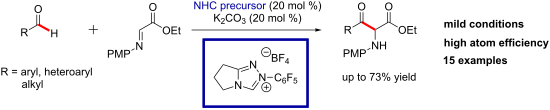
- -amino-β-keto esters; cross-aza-benzoin; α-imino ester; N-heterocyclic carbenes; organocatalysis; umpolung reactions; Introduction α-Amino-β-keto ester derivatives are one of the fundamental structural subunits in natural products such as miuraenamides [1], and important building blocks for the


A quantitative approach to nucleophilic organocatalysis
Beilstein J. Org. Chem. 2012, 8, 1458–1478, doi:10.3762/bjoc.8.166
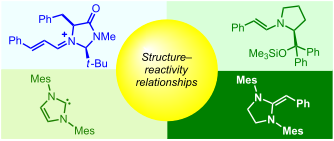
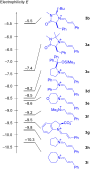
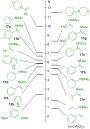
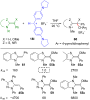
- settled by studying the reactivities of independently synthesized intermediates. Kinetic investigations of the reactions of N-heterocyclic carbenes (NHCs) with benzhydrylium ions showed that they have similar nucleophilicities to common organocatalysts (e.g., PPh3, DMAP, DABCO) but are much stronger (100
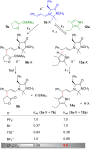
- explained by the inductive electron withdrawal of the extra nitrogen in the triazol derivative 43. The similar nucleophilicities of the imidazole- and imidazolidine-derived carbenes 42 and 41 are, at first glance, surprising and will be discussed below. The lower part of Figure 23 illustrates that all three
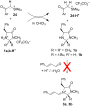
- by quantum chemical calculations: The methyl cation affinities (MCAs) of the three carbenes 41–43 are 100–200 kJ mol–1 higher than those of the other Lewis bases in Figure 23 [96]. As the carbenes 41 and 42 have almost identical nucleophilicities and Lewis basicities, the question arose as to why


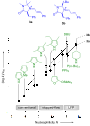







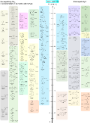
Cation affinity numbers of Lewis bases
Beilstein J. Org. Chem. 2012, 8, 1406–1442, doi:10.3762/bjoc.8.163
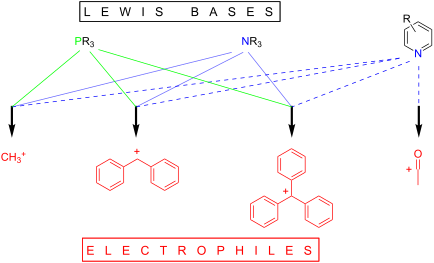
- that the (R)- and the (S)-enantiomer do not have to have the same affinity values. For the phosphane 317 the difference is below 2 kJ/mol, but for phosphane 316 the difference is 21 kJ/mol. A last group of nucleophiles employed in Lewis-base catalysis concerns nucleophilic carbenes (Table 8) [14][15
- ][16][17]. MCA values obtained for NHC-carbenes are significantly larger than those obtained for nitrogen- and phosphorus-based nucleophiles and depend on both the structure of the heterocyclic ring system as well as the substituents attached to the respective 2- and 5-positions. With respect to the
- dimethyl substituted carbenes, the lowest MCA value is found for the triazolyl carbene 330, followed by imidazolyl carbene 336 and imidazolidinyl carbene 337. It should be added that the MCA values for the latter two systems are closely similar (MCA(336) = +718.0 kJ/mol vs. MCA(337) = +719.3 kJ/mol





