


Search results
Search for "cyclization reaction" in Full Text gives 217 result(s) in Beilstein Journal of Organic Chemistry. Showing first 200.
One hundred years of benzotropone chemistry
Beilstein J. Org. Chem. 2018, 14, 1120–1180, doi:10.3762/bjoc.14.98
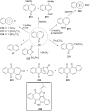
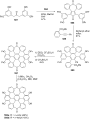
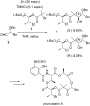
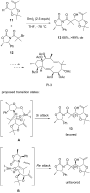
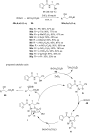
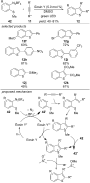
- -benzotropone (11) with dimethyl barbituric acid (62) and subsequent oxidative cyclization reaction using DDQ-Sc(OTf)3 or photoirradiation under aerobic conditions afforded 61+.BF4− (Scheme 12). The pKR+ value and reduction potential of the cation 61 were studied. The relative stability of a carbocation can be








Methyl isocyanide as a convertible functional group for the synthesis of spirocyclic oxindole γ-lactams via post-Ugi-4CR/transamidation/cyclization in a one-pot, three-step sequence
Beilstein J. Org. Chem. 2018, 14, 875–883, doi:10.3762/bjoc.14.74
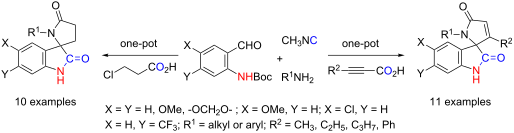
- analysis (Figure 1). We then elected to carry out yield optimization studies of the cyclization reaction using a number of solvents, reagents and reaction temperatures (Table 1) and also to explore the possibility of a possible 4-exo-dig outcome. The study validated that all the reaction conditions, with
- spirocyclic 2-oxindoles. Post-Ugi-4CR/transamidation/cyclization sequence. Base-promoted intramolecular 5-endo-dig cyclization. Reaction scope with varying combinations of substrates. Synthesis of 5-chloro-1'-phenylspiro[indoline-3,2'-pyrrolidine]-2,5'-dione (8a). Method applicability for the one-pot


Recent developments in the asymmetric Reformatsky-type reaction
Beilstein J. Org. Chem. 2018, 14, 325–344, doi:10.3762/bjoc.14.21
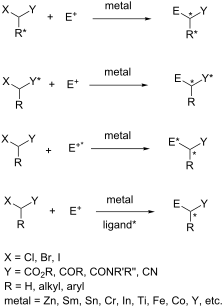
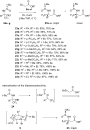
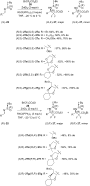
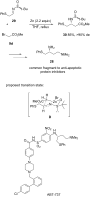
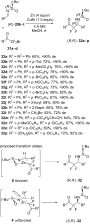
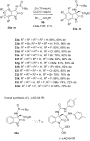
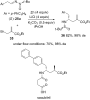
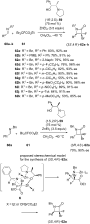
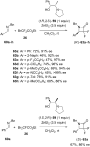
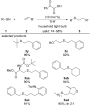
- (Scheme 23). As an extension of the precedent methodology, the same ligand (1R,2S)-59 was applied to promote the enantioselective domino aza-Reformatsky/cyclization reaction of aromatic imines 60a–h with ethyl bromodifluoroacetate (26) [48]. In this case, a stoichiometric amount of this ligand was
- halofluoroacetate. When the opposite enantiomer of the ligand (1S,2R)-59 was used under the same reaction conditions, it provided the corresponding (3R,4S) product 62a in 70% yield and 90% ee starting from the corresponding imine 60a (Scheme 23). Unfortunately, the scope of this domino Reformatsky/cyclization
- reaction could not be extended to aliphatic imines since they led to complex mixtures. To explain the stereoselectivity of the reaction providing (3S,4R)-62a, the authors proposed transition state K arisen from coordination between zinc ions and imine nitrogen, ligand 59, and the Reformatsky reagent









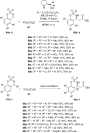


One-pot sequential synthesis of tetrasubstituted thiophenes via sulfur ylide-like intermediates
Beilstein J. Org. Chem. 2018, 14, 243–252, doi:10.3762/bjoc.14.16
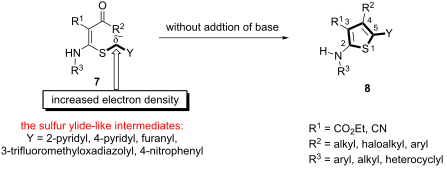
- yield (32%). Starting from malonitrile, compound 8an was also prepared in a moderate yield (50%) via a Thorpe–Ziegler-type cyclization of N,S-acetal 7an. In this case, the intramolecular cyclization reaction was carried out at 100 °C for 3 h. With 5,5-dimethylcyclohexane-1,3-dione, thiophene 8ao was


Fluorescent nucleobase analogues for base–base FRET in nucleic acids: synthesis, photophysics and applications
Beilstein J. Org. Chem. 2018, 14, 114–129, doi:10.3762/bjoc.14.7
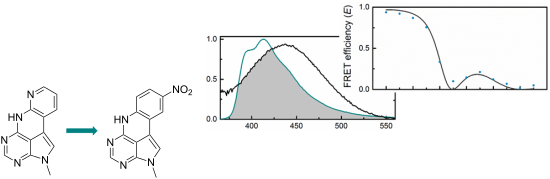
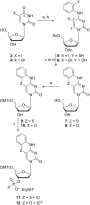
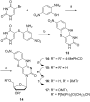
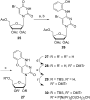
- decay from excited states via non-radiative processes, in 2012 we decided to re-synthesize the quadracyclic adenine according to the procedure of Buhr et al. (Scheme 8) [51][53]. However, in our hands the vital cyclization reaction starting from compound 36 (Scheme 8) never provided more than a 46






Photocatalytic formation of carbon–sulfur bonds
Beilstein J. Org. Chem. 2018, 14, 54–83, doi:10.3762/bjoc.14.4
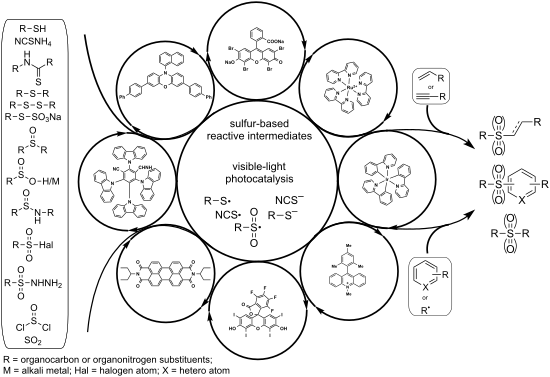
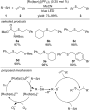
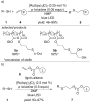
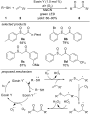
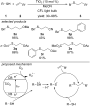
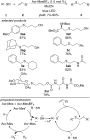
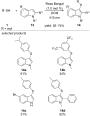
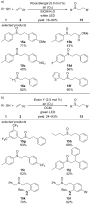
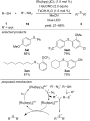
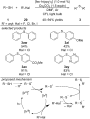
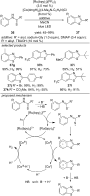
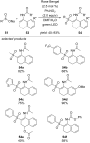
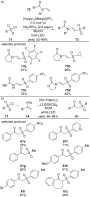
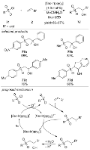
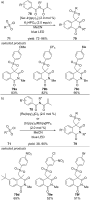
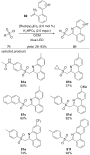
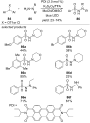
- metal-free method for the synthesis of benzothiophenes via a photocatalyzed tandem addition/cyclization reaction (Scheme 11) [41]. Aryl thiols were coupled with dimethyl acetylenedicarboxylate, applying 9-mesityl-10-methylacridinium perchlorate (Acr+-Mes ClO4−) as organic photocatalyst and benzoic acid
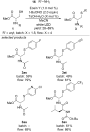
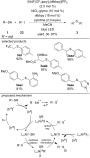
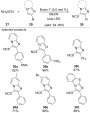
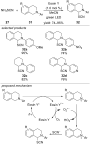
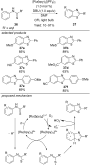
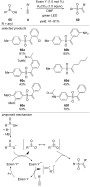
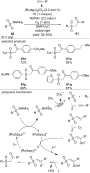
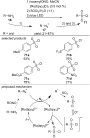
- N2) which triggers an intramolecular cyclization reaction via a nitrogen-centred radical intermediate to form sulfonylated phenanthridines. The reaction is photocatalyzed by [Ru(bpy)3]Cl2 under irradiation with blue LEDs and proceeds smoothly for a variety of substituted vinyl azides and sulfonyl





























Dialkyl dicyanofumarates and dicyanomaleates as versatile building blocks for synthetic organic chemistry and mechanistic studies
Beilstein J. Org. Chem. 2017, 13, 2235–2251, doi:10.3762/bjoc.13.221
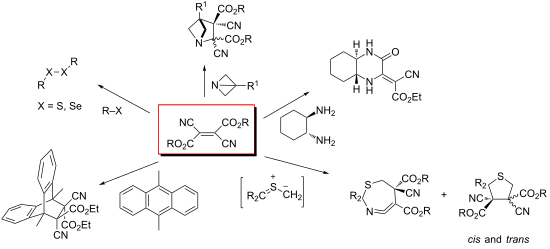
- hydrazide, in the presence of ethanol, undergoes a cyclization reaction yielding the aminopyrazole 65 in 44% yield [63] (Scheme 21). The explanation of the reaction course is based on the assumption that under the reaction conditions ethanolysis of the carbohydrazide occurs and the formed enehydrazine 61


Sustainable synthesis of 3-substituted phthalides via a catalytic one-pot cascade strategy from 2-formylbenzoic acid with β-keto acids in glycerol
Beilstein J. Org. Chem. 2017, 13, 1425–1429, doi:10.3762/bjoc.13.139
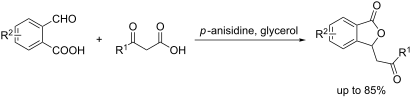
- /cyclization reaction of 2-formylbenzoic acid and substituted ketones catalyzed by strong acids [15][16][17], strong bases [18][19] and solid acid catalysts [20][21]. The majority of these protocols generally suffer from one or more drawbacks, such as the requirement of stoichiometric or excess amounts of
- species and glycerol as a solvent will allow the establishment of an efficient catalytic one-pot cascade aldol/cyclization reaction. Herein, we present a new method to provide a convenient, green and efficient alternative for rapidly accessing a variety of 3-substituted phthalides (Scheme 1). Results and



An eco-compatible strategy for the diversity-oriented synthesis of macrocycles exploiting carbohydrate-derived building blocks
Beilstein J. Org. Chem. 2017, 13, 1106–1118, doi:10.3762/bjoc.13.110
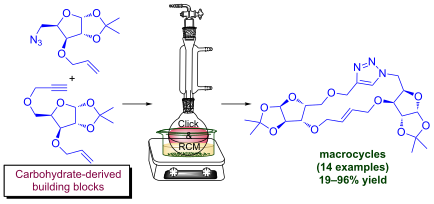
- blocks were coupled via 1,3-dipolar cycloaddition (click reaction) iteratively through the development of a greener base-free Cu(I)-catalyzed azide–alkyne cycloaddition reaction. The cycloadducts were then converted to macrocycles by Ru-catalyzed cyclization reaction using greener and non-hazards
- inherent properties including stability towards acid–base hydrolysis, active participation in H-bonding, dipole–dipole and π-stacking interactions [37][64][65][66]. The reaction would then afford a range of acyclic precursors, which could then undergo the intramolecular cyclization reaction to furnish the


Transition-metal-free one-pot synthesis of alkynyl selenides from terminal alkynes under aerobic and sustainable conditions
Beilstein J. Org. Chem. 2017, 13, 910–918, doi:10.3762/bjoc.13.92
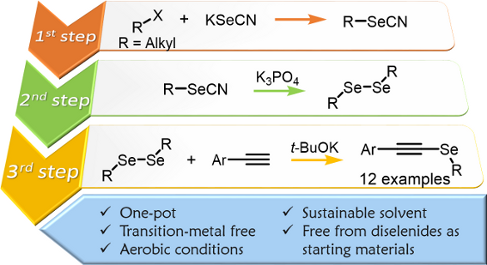
- excess and the correct arrangement and electronic properties of both the amine and alkynyl groups promote a spontaneous cyclization reaction to form indole 9 in good yields [50]. Conclusion We have developed a novel one-pot procedure for the synthesis of alkyl alkynyl selenides in moderate to good yields


Nucleophilic and electrophilic cyclization of N-alkyne-substituted pyrrole derivatives: Synthesis of pyrrolopyrazinone, pyrrolotriazinone, and pyrrolooxazinone moieties
Beilstein J. Org. Chem. 2017, 13, 825–834, doi:10.3762/bjoc.13.83
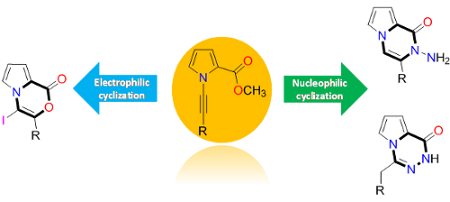
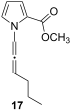
- pyrrole ring and the imine double bond. With these encouraging results in hand, we embarked on the evaluation of the substrate scope for this useful transformation. The compounds 7a, 7b, and 7d were submitted to a cyclization reaction under the same reaction conditions applied to compound 7c. As shown in
- Scheme 2, compounds 7a and 7d formed 2-aminopyrrolopyrazinone derivatives 12a and 12d, whereas 7b furnished pyrrolotriazinone derivative 13b. The electronic nature of the substituents attached to the alkyne determines the mode of the cyclization reaction. Since the electron-donating methoxy group
- to afford pyrrolotriazinone moiety 13. After completion of the nucleophilic cyclization reactions, we desired to activate the triple bond with iodine to synthesize pyrrolooxazinone derivatives via an electrophilic intramolecular cyclization reaction. For this purpose, N-alkyne-substituted methyl 1H




A practical and efficient approach to imidazo[1,2-a]pyridine-fused isoquinolines through the post-GBB transformation strategy
Beilstein J. Org. Chem. 2017, 13, 817–824, doi:10.3762/bjoc.13.82
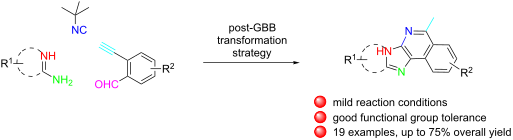
- acetylene unit may then undergo a sequential 6-exo-dig cyclization/retro-ene reaction to form the desired imidazo[1,2-a]pyridine-fused isoquinoline 6a. The cyclization reaction could be realized with the aid of silver or gold catalysts [51][52]. With this idea in mind, we commenced our studies by
- detected under these mild conditions. Subsequent heating of 4a in refluxing 1,4-dioxane or toluene failed to deliver the expected product 6a, even under acidic or basic conditions. Then, we turned to Ag and Au catalysts and investigated the metal-catalyzed intramolecular cyclization reaction of 4a and the
- product was obtained in refluxing CH3CN or 1,4-dioxane (Table 1, entries 1–4). It revealed that the solvent plays a key role in this cyclization reaction. For comparison, we tested also AgSbF6 as the catalyst and it was found to be less effective than AgOTf (Table 1, entry 5). To improve the reaction


N-Propargylamines: versatile building blocks in the construction of thiazole cores
Beilstein J. Org. Chem. 2017, 13, 625–638, doi:10.3762/bjoc.13.61
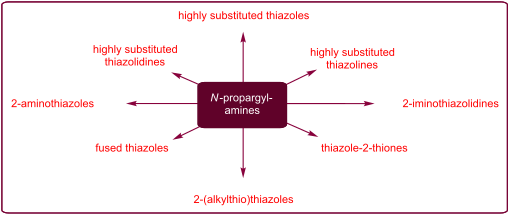
- syntheses of a series of multiply substituted thiazolidines 33 via the cyclization reaction of secondary N-propargylamines 32 with blocked N-isothiocyanate precursors 31. The desired N-isocyanates A are produced in situ upon heating or treatment with a base, in acetonitrile under microwave irradiation
- converted to the corresponding vinylthiazolines 38 through the treatment with dithioic acids 37 in the presence of EDCI in dichloromethane. This transformation is believed to occur through a tandem coupling–cyclization reaction. The authors showed that the treatment of 38 with DBU at 0 °C provided thiazoles




Synthesis of 1-indanones with a broad range of biological activity
Beilstein J. Org. Chem. 2017, 13, 451–494, doi:10.3762/bjoc.13.48
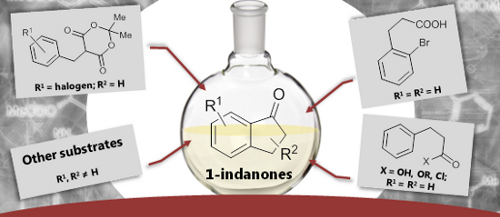
- the carbonylative cyclization reaction of carboxylic acid methyl and ethyl esters 42 which led to the formation of 1-indanones 43 [33]. This reaction was carried out in acetonitrile, in the presence of triethylamine, under carbon monoxide atmosphere, achieving efficiency in the range of 88–92%, when
- 83. The latter underwent a Michael cyclization reaction to afford 84. Finally, dehydratation of 84 gave the spiro bis-indane product 85 (Scheme 27). A new method to synthesize 2-benzylidene-1-indanone derivatives 88a–d has been proposed in 2014 by Álvarez-Toledano et al. [52]. These derivatives were


Brønsted acid-mediated cyclization–dehydrosulfonylation/reduction sequences: An easy access to pyrazinoisoquinolines and pyridopyrazines
Beilstein J. Org. Chem. 2017, 13, 428–440, doi:10.3762/bjoc.13.46
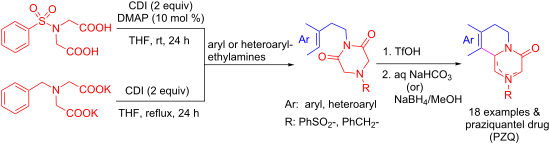
- the cyclization reaction in the presence of TfOH at room temperature to generate a potential precursor for the synthesis of praziquantel. To realize the cyclization, the imide 7h was treated with TfOH under neat conditions at 70 °C, quite unfortunately to witness the decomposition of imide 7h. This
- the potassium salt of N-benzyliminodiacetic acid in THF at reflux to furnish the expected imides 8a–c, 8h, and 8i in good yields (Scheme 6). The imide 8h was subjected to the cyclization reaction conditions using 6 equivalents of TfOH under neat conditions at 70 °C followed by reduction using NaBH4
- pyrazinoisoquinolines, 2-oxopiperazines and aldose reductase inhibitors (ALR2). HRMS spectra of aliquot generated from cyclization reaction of 7c. ORTEP diagrams of compound 9b and 10a. Comparison of previous reports with present work for piperazine-2,6-dione synthesis. Coupling of N-benzenesulfonyliminodiacetic acid




The reductive decyanation reaction: an overview and recent developments
Beilstein J. Org. Chem. 2017, 13, 267–284, doi:10.3762/bjoc.13.30
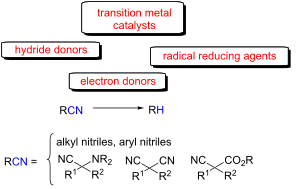
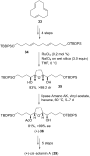
- decyanation in metal dissolving conditions coupled with deprotection [30]. TBDMS = tert-butyldimethylsilyl. Preparation of α,ω-dienes [18][33]. Cyclization reaction using a radical probe [18]. Synthesis of (±)-xanthorrhizol (8) [39]. Mechanism for the reduction of α-aminonitriles by hydride donors. Synthesis


Regiochemistry of cyclocondensation reactions in the synthesis of polyazaheterocycles
Beilstein J. Org. Chem. 2017, 13, 257–266, doi:10.3762/bjoc.13.29
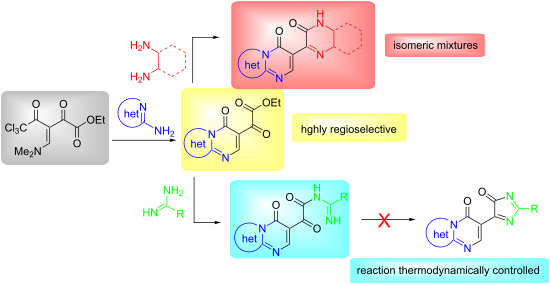
- , thiophene-2-glyoxylic acid, and N-(2-amino-4-nitrophenyl)acetamide, in accordance with the mechanism proposed in this work. To rationalize why the cyclization reaction between the amidines 8g,h and the α-ketoester did not occur, the HOMO coefficient and charge densities for the nitrogens of the amidine were


Poly(ethylene glycol)s as grinding additives in the mechanochemical preparation of highly functionalized 3,5-disubstituted hydantoins
Beilstein J. Org. Chem. 2017, 13, 19–25, doi:10.3762/bjoc.13.3

- investigated in the presence of various poly(ethylene) glycols (PEGs), as safe grinding assisting agents (liquid-assisted grinding, LAG). A comparative study under dry-grinding conditions was also performed. The results showed that the cyclization reaction was influenced by the amount of the PEG grinding
- from α-amino methyl esters 1, via an in situ intramolecular cyclization reaction of the ureido derivative B, which was obtained from N-carbamoylimidazole activated amino ester derivative A by reaction with various amines [9][10][11] (Scheme 1). Hanusa’s formalism was used to represent the reaction
- its enantiomer (Table 2, entry 3). Therefore, the one-pot two-steps cyclization reaction was investigated with different amino ester/amine combinations (H-AA-OMe/R2-NH2) and comparative experiments using dry- or wet-grinding with PEGs (Mw = 2000 and 3400, 450 mg mmol−1) were also performed (Table 3


The direct oxidative diene cyclization and related reactions in natural product synthesis
Beilstein J. Org. Chem. 2016, 12, 2104–2123, doi:10.3762/bjoc.12.200
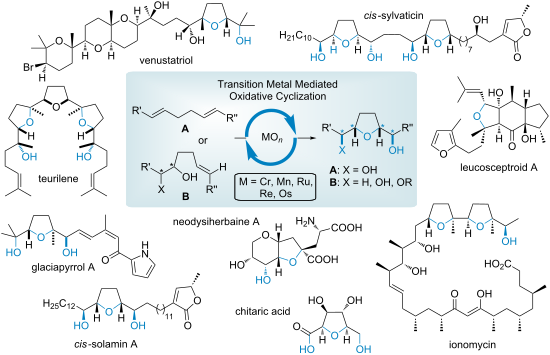
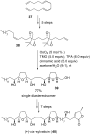
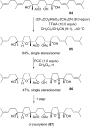
- ][68]. In 2013, the Fürstner group published a successful approach to amphidinolide F (24) applying an oxidative type C Mukaiyama cyclization reaction for the THF segment 22 (Scheme 7) [69][70]. Therefore, enantiomerically pure epoxide 20 was converted to 5-hydroxyalkene 21, the oxidative cyclization
- precursor in this total synthesis. The subsequent cobalt-catalyzed cyclization reaction proceeded chemoselectively in the presence of the alkyne moiety and provided the trans-disubstituted THF 22 in high yield [69][70][71]. Finally, building block 23, one important fragment in the total synthesis of
- , it has to be noted that the trans-THF was not directly formed in an oxidative cyclization reaction but rather through a subsequent sequential solvolysis/hydride shift/intramolecular reduction cascade. Another total synthesis of cis-sylvaticin (40) has been published by Brown and co-workers in 2008






Microwave-assisted cyclizations promoted by polyphosphoric acid esters: a general method for 1-aryl-2-iminoazacycloalkanes
Beilstein J. Org. Chem. 2016, 12, 2026–2031, doi:10.3762/bjoc.12.190
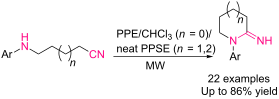
- trimethylsilyl polyphosphate (PPSE) in solvent-free conditions allowed for the synthesis of 1-aryl-2-iminopiperidines and hitherto unreported 1-aryl-2-iminoazepanes. The cyclization reaction involves good to high yields and short reaction times, and represents a novel application of PPA esters in heterocyclic


Bridgehead vicinal diallylation of norbornene derivatives and extension to propellane derivatives via ring-closing metathesis
Beilstein J. Org. Chem. 2016, 12, 1877–1883, doi:10.3762/bjoc.12.177
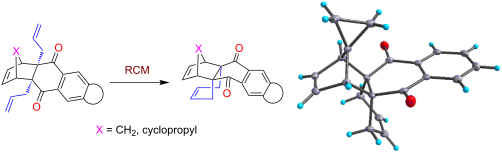
- dienophile [6][7][8]. Cage compounds with interesting applications have been assembled by a cyclization reaction starting with suitably functionalized norbornene derivatives [9][10][11]. Moreover, the norbornene unit induces a hairpin-like architecture when it is incorporated into a peptide chain. This


Synthesis of 2,1-benzisoxazole-3(1H)-ones by base-mediated photochemical N–O bond-forming cyclization of 2-azidobenzoic acids
Beilstein J. Org. Chem. 2016, 12, 874–881, doi:10.3762/bjoc.12.86
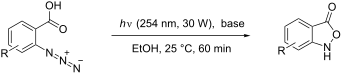
- 2,1-benzisoxazole-3(1H)-ones is reported. The optimization and scope of this cyclization reaction is discussed. It is shown that an essential step of the ring closure of 2-azidobenzoic acids is the formation and photolysis of 2-azidobenzoate anions. Keywords: aryl azides; azepinones; 2,1


Cascade alkylarylation of substituted N-allylbenzamides for the construction of dihydroisoquinolin-1(2H)-ones and isoquinoline-1,3(2H,4H)-diones
Beilstein J. Org. Chem. 2016, 12, 301–308, doi:10.3762/bjoc.12.32
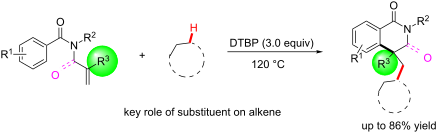
- substrate, the cyclization reaction proceeded smoothly (Scheme 1c). Herein, we report a metal-free cascade 1,2-alkyarylation of substituted N-allylbenzamides with alkanes affording 4-alkyl-substituted dihydroisoquinoline-1(2H)-ones as the product. Results and Discussion Initially, we selected N-methyl-N-(2
- corresponding products (5ae1–5ae5) with 42% total yield. To extend the synthetic utility of this radical cyclization reaction, N-methacryloyl-N-methylbenzamide derivatives 6 were then tried as substrates for this reaction (Scheme 4). It should be mentioned that only a few radical precursors, such as the TMSCF3
- radical cyclization reaction was proposed (Scheme 6). Initially, DTBP undergoes homolytic cleavage to form the tert-butoxy radical A, which reacts with cyclohexane (2a) affording intermediate B. Then, intermediate B adds to N-methyl-N-(2-methylallyl)benzamide (4a), giving radical intermediate C




Facile synthesis of 4H-chromene derivatives via base-mediated annulation of ortho-hydroxychalcones and 2-bromoallyl sulfones
Beilstein J. Org. Chem. 2016, 12, 16–21, doi:10.3762/bjoc.12.3
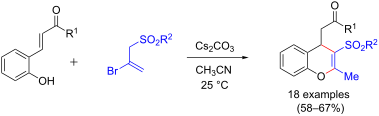
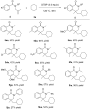
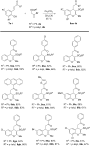
- salicylaldehyde and Cs2CO3 and d) reaction of 2a with Cs2CO3. Base-mediated cyclization reaction of o-hydroxychalcone 7a and 2-bromoallyl sulfone 2a. Preparation of ortho-hydroxychalcones 7a–i. Synthesis of 4H-chromenes via base-mediated reactions of 7a–i and 2a,b. Reaction conditions: 7a–i (0.25 mmol), 2a,b



A new approach to ferrocene derived alkenes via copper-catalyzed olefination
Beilstein J. Org. Chem. 2015, 11, 2072–2078, doi:10.3762/bjoc.11.223
- we assume that the radical-ions formed after the first electron transfer would enter the intramolecular cyclization reaction involving the second adjacent double bond with subsequent electropolymerization. The latter is confirmed by a pronounced decrease in current values (3–4 times) as compared to





