


Search results
Search for "functionalization" in Full Text gives 800 result(s) in Beilstein Journal of Organic Chemistry. Showing first 200.
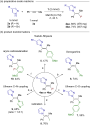
Carbonylative synthesis and functionalization of indoles
Beilstein J. Org. Chem. 2024, 20, 973–1000, doi:10.3762/bjoc.20.87
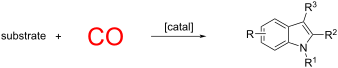
- recent achievements on the synthesis and functionalization of indole derivatives via carbonylative approaches. Keywords: carbonylation; functionalization; indole; metal catalyst; organometallic chemistry; Introduction Indole is a heterocyclic compound consisting of a benzene ring fused with a pyrrole
- powerful method for the introduction of a C1 building block into organic substrates using carbon monoxide, its surrogates, or compounds able to act as carbon monoxide sources [11]. In recent years, many groups have used the carbonylation approach for the synthesis and functionalization of indoles, which is
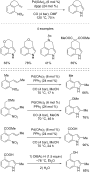
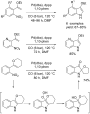
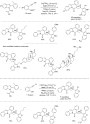
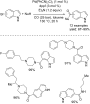
- result with some effort because a dearomatization, followed by aromatization, was necessary to achieve the goal. With [Rh(CO)2Cl]2 or [Rh(COD)2]BF4 as the catalyst under atmospheric pressure of CO (1 bar), good yields of the desired products were obtained (Scheme 24). Carbonylative functionalization of












Enhancing structural diversity of terpenoids by multisubstrate terpene synthases
Beilstein J. Org. Chem. 2024, 20, 959–972, doi:10.3762/bjoc.20.86
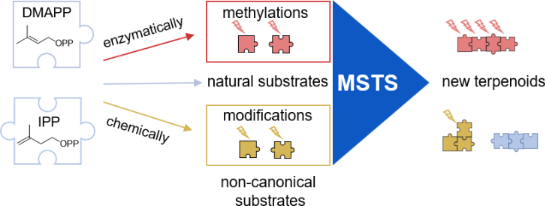
- terpenoids via genome mining. Nevertheless, for drug development, the accumulated terpene skeletons still require further functionalization, which requires additional genome-mining efforts for the discovery of tailored enzymes. Researchers have successfully expanded the chemical space of terpenoid






Innovative synthesis of drug-like molecules using tetrazole as core building blocks
Beilstein J. Org. Chem. 2024, 20, 950–958, doi:10.3762/bjoc.20.85
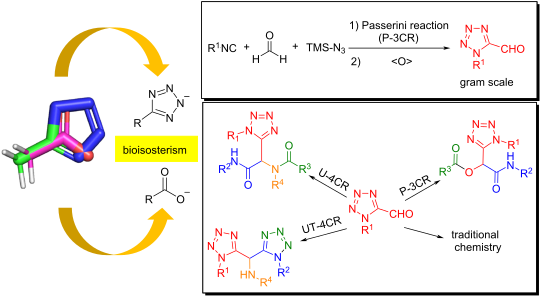
- introduced from their nitrile precursors through late-stage functionalization. In this work, we propose a novel strategy involving the use of diversely protected, unprecedented tetrazole aldehydes as building blocks. This approach facilitates the incorporation of the tetrazole group into multicomponent
- 1H-tetrazole as a bioisostere for carboxylic acid has long been recognized for its potential in enhancing drug-like properties [37]. Predominantly, tetrazoles are currently introduced by a late-stage-functionalization approach from their nitrile precursors. This work, however, takes an additional




Three-component N-alkenylation of azoles with alkynes and iodine(III) electrophile: synthesis of multisubstituted N-vinylazoles
Beilstein J. Org. Chem. 2024, 20, 891–897, doi:10.3762/bjoc.20.79
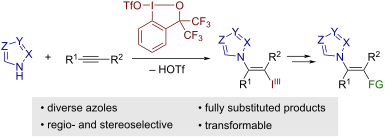
- natural products and pharmaceutical agents, including antifungal drugs [1][2][3], and hence their selective preparation has attracted considerable attention from the synthetic community. Compared to methods for the de novo construction of azole heterocycles, direct functionalization of the azole N–H bond
- difunctionalization of alkynes with various heteroatom and carbon nucleophiles [27][28][29][30][31][32][33][34]. Specifically, intermolecular trans-iodo(III)functionalization of alkynes has been achieved using oxygen nucleophiles such as alcohols [28][32], ethers [33], carboxylic acids [31], phosphate esters [31



Synthesis and characterization of water-soluble C60–peptide conjugates
Beilstein J. Org. Chem. 2024, 20, 777–786, doi:10.3762/bjoc.20.71
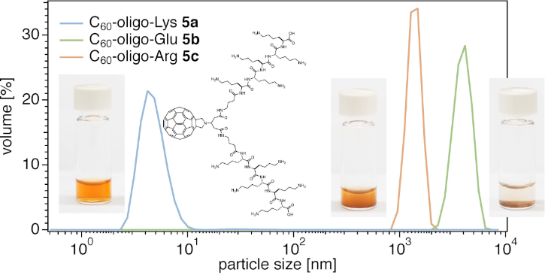
- either 1) covalent functionalization of the fullerene surface with polar moieties or 2) complexation with water-soluble host molecules or polymers. Related to the former approach, the Nakamura group [11], Wudl group [12], and Hirsch group [13] reported initial work in the early 1990s on water-soluble C60
- C60 [17][18]. By either chemical functionalization or complexation of the fullerene core, a number of biocompatible fullerene materials with interesting biological activities were recently prepared and reported [19][20][21][22][23][24]. We have reported water-soluble complexes of C60 with a nontoxic
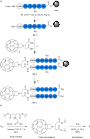
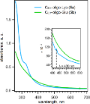
- inhibition [34]. For the covalent functionalization, we have previously developed a versatile and convenient biscarboxylic acid-substituted C60 derivative (3, Figure 1) [35], which was prepared via the Prato reaction [36]. We used this derivative 3 as a starting material and synthesized a series of water




Synthesis of new representatives of A3B-type carboranylporphyrins based on meso-tetra(pentafluorophenyl)porphyrin transformations
Beilstein J. Org. Chem. 2024, 20, 767–776, doi:10.3762/bjoc.20.70
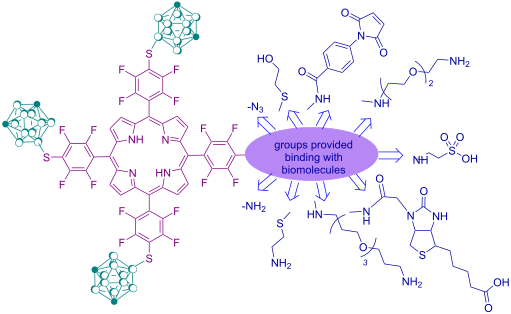
- compounds allowing for the preparation of porphyrins with different reactive groups such as hydroxy and amino derivatives capable for further functionalization and conjugation of these porphyrins to other substrates. In addition, conjugates containing maleimide or biotin entities in the structure of
- compounds in drug development [34][35][36][37]. Owing to their stability, carboranes also may increase the in vivo stability and bioavailability of pharmaceuticals that might otherwise rapidly metabolize [38]. The functionalization of porphyrins with carborane clusters provides dual-action photo(radio
- the ability of the amino group in porphyrin 5 to enter acylation reactions with 4-(N-maleimido)benzoyl chloride (8, prepared in situ from 4-(N-maleimido)benzoic acid (9) and oxalyl chloride) and chloroacetyl chloride (10) with the aim of using these compounds for further functionalization. The


SOMOphilic alkyne vs radical-polar crossover approaches: The full story of the azido-alkynylation of alkenes
Beilstein J. Org. Chem. 2024, 20, 701–713, doi:10.3762/bjoc.20.64
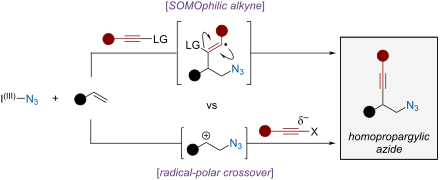
- building blocks bearing two of the most versatile functional groups, allowing a rich panel of functionalization. They have been used as intermediates in numerous syntheses to access bioactive compounds [1][2][3][4] or materials [5][6][7]. In addition, azide reduction affords homopropargylic amines, which
- diasteroisomer was determined to be trans. Diyne 4l could be accessed in 44% yield from the exclusive 1,2-functionalization of the corresponding ene-yne. Crude NMR of the reaction did not show the presence of an allene product which could have been formed by a 1,4-functionalization. Enol ether could also be


Palladium-catalyzed three-component radical-polar crossover carboamination of 1,3-dienes or allenes with diazo esters and amines
Beilstein J. Org. Chem. 2024, 20, 661–671, doi:10.3762/bjoc.20.59
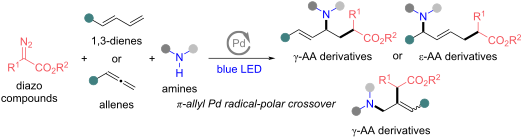
- the first reaction mode for a difunctionalization of alkenes with diazo compounds via a radical-polar crossover process. This synthetic transformation proceeds under mild reaction conditions and shows high functional group tolerance. The studies on late-stage functionalization, scale-up reactions, and



Enhanced reactivity of Li+@C60 toward thermal [2 + 2] cycloaddition by encapsulated Li+ Lewis acid
Beilstein J. Org. Chem. 2024, 20, 653–660, doi:10.3762/bjoc.20.58
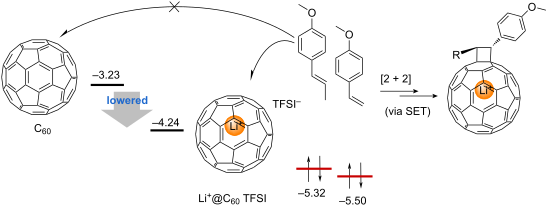
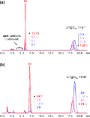
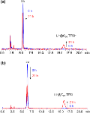
- experimental and theoretical approaches, we clarified the range of applicable substrates for the thermal [2 + 2] cycloaddition of Li+@C60, highlighting the expanded scope of this straightforward and selective functionalization method. Keywords: electron transfer; fullerene; ion-endohedral fullerene; Lewis
- acid catalyst; thermal [2 + 2] cycloaddition; Introduction Chemical functionalization of fullerenes is a fascinating and extensively studied approach, playing a pivotal role in fullerene-based materials science to introduce various characteristic functionalities [1][2][3][4][5][6][7]. Significant
- , resulting in much better yields of the target monoadducts. Electrochemical measurements revealed that the functionalization raised the LUMO level of Li+@C60, leading to lower reactivity for the second addition. With this facile, selective, and high-yield approach for the derivatization of ion-endohedral




Possible bi-stable structures of pyrenebutanoic acid-linked protein molecules adsorbed on graphene: theoretical study
Beilstein J. Org. Chem. 2024, 20, 570–577, doi:10.3762/bjoc.20.49
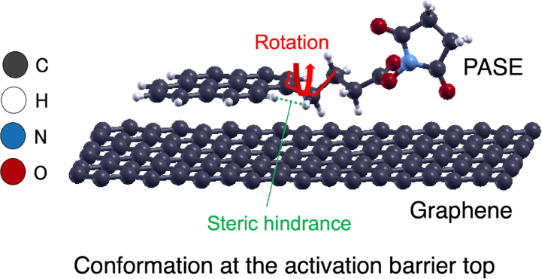
- functionalization, i.e., weaker in bonding with graphene than covalent one for functionalization. Actually, widely employed covalent functionalization may not be suitable for a special purpose [26]. This approach is known to have an undesirable effect of disturbing the electronic properties of graphene [15]. On the
- other hand, in non-covalent functionalization, the electronic properties of graphene can be preserved [27][28][29]. Therefore, the PASE linker and its properties may be relevant for another type of the electronic sensing strategy, such as field effect transistor-based biosensors. Conclusion We discussed


Switchable molecular tweezers: design and applications
Beilstein J. Org. Chem. 2024, 20, 504–539, doi:10.3762/bjoc.20.45



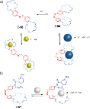


Ligand effects, solvent cooperation, and large kinetic solvent deuterium isotope effects in gold(I)-catalyzed intramolecular alkene hydroamination
Beilstein J. Org. Chem. 2024, 20, 479–496, doi:10.3762/bjoc.20.43
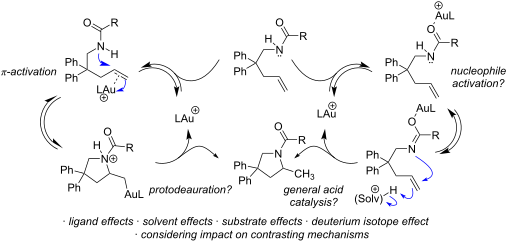
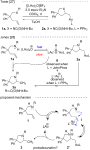
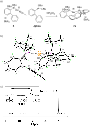
- of alkenes remains challenging. Advances in asymmetric catalysis [2][3][4][5][6][7][8][9][10], C–N [11][12][13][14][15][16][17] and C–C functionalization [18][19] reveal opportunities, but harsh conditions and limited substrate scope present problems. Intramolecular reactions almost invariably
- competing Brønsted acid catalysis in gold-catalyzed alkene functionalization remains a consideration [2], and while it is assumed that alkene activations follow the same prototypical mechanisms as allene and alkyne activations, that is (1) π-activation with nucleophilic attack followed by (2







Mono or double Pd-catalyzed C–H bond functionalization for the annulative π-extension of 1,8-dibromonaphthalene: a one pot access to fluoranthene derivatives
Beilstein J. Org. Chem. 2024, 20, 427–435, doi:10.3762/bjoc.20.37
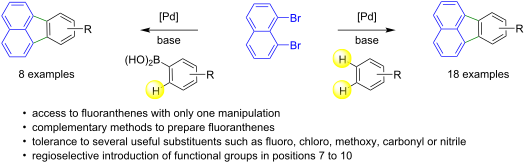
- -catalyzed annulative π-extension of 1,8-dibromonaphthalene for the preparation of fluoranthenes in a single operation has been investigated. With specific arenes such as fluorobenzenes, the Pd-catalyzed double functionalization of C–H bonds yields the desired fluoranthenes. The reaction proceeds via a
- activation has also been investigated to provide a complementary method. Using the most appropriate synthetic route and substrates, it is possible to introduce the desired functional groups at positions 7–10 on fluoranthenes. Keywords: catalysis; C–H bond functionalization; direct arylation; fluoranthenes
- using commercially available substrates and allowing the regioselective introduction of functional groups at the desired positions is still needed. By using Pd-catalyzed double C–H bond functionalization of activated arenes, such as (poly)fluoroarenes, or by combining a palladium-catalyzed


Mechanisms for radical reactions initiating from N-hydroxyphthalimide esters
Beilstein J. Org. Chem. 2024, 20, 346–378, doi:10.3762/bjoc.20.35
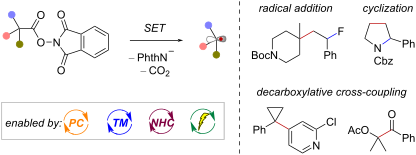
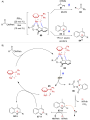
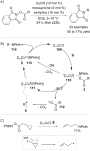
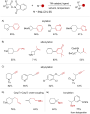
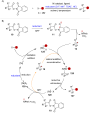
- activation of NHPI esters under a photocatalytic oxidative quenching mechanism was reported for the first time by Glorius and co-workers in 2017 [46]. This activation mode was applied in the functionalization of styrenes using an Ir-photocatalyst and a diverse range of nucleophiles that are H-bond donors
- oxyalkylation product 28. Li and co-workers described the activation of NHPI esters towards SET using a Lewis acid catalyst, allowing for the functionalization of styrene radical acceptors with nucleophiles that do not necessarily engage in hydrogen-bonding interactions, such as electron-rich (hetero)arenes [47
- . Intramolecular radical addition into the radical cation of the furan ring would then form cation 50 before nucleophilic capture by H2O leads to product 45. In 2020, the Wang group reported the functionalization of enamides employing radicals derived from NHPI esters in combination with indole nucleophiles [57








Unveiling the regioselectivity of rhodium(I)-catalyzed [2 + 2 + 2] cycloaddition reactions for open-cage C70 production
Beilstein J. Org. Chem. 2024, 20, 272–279, doi:10.3762/bjoc.20.28
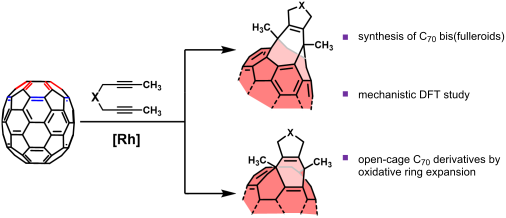
- Cristina Castanyer Anna Pla-Quintana Anna Roglans Albert Artigas Miquel Sola Institut de Química Computacional i Catàlisi (IQCC) and Departament de Química, Universitat de Girona (UdG), Girona 17003 Catalunya, Spain 10.3762/bjoc.20.28 Abstract The regioselective functionalization of fullerenes
- applications are still in various stages of research and development. The functionalization of fullerenes makes them versatile materials, broadening the range of potential applications [17][18]. It allows the properties of these carbon cages to be tuned, making them more soluble (especially in water for
- medical applications) and improving their stability, among other desirable properties. The most common reactions used to functionalize fullerenes are Diels–Alder and 1,3-dipolar cycloadditions and Bingel–Hirsch cyclopropanations [19][20]. In most cases, functionalization occurs while preserving the carbon


Nucleophilic functionalization of thianthrenium salts under basic conditions
Beilstein J. Org. Chem. 2024, 20, 257–263, doi:10.3762/bjoc.20.26
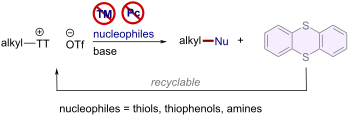
- -free conditions. This strategy exhibits good functional-group tolerance, operational simplicity, and an extensive range of compatible substrates. Keywords: amination; functionalization of alcohol; metal-free; S-(alkyl)thianthrenium salts; thioetherification; Introduction Sulfonium salts [1][2][3][4
- ][5][6][7][8][9][10] have been extensively utilized as readily accessible synthetic building blocks in organic synthesis, particularly in the ipso-functionalization of C–S bonds. Of the sulfonium salts, organothianthrenium salts exhibit distinct structural properties and reactivities, thereby offering
- -stage C–H functionalization of arenes, Wickens’s group has introduced an oxidative alkene aziridination strategy that relies on thianthrenation of an alkene under electrochemical conditions [27]. Subsequently, cyclopropanation, [28] aziridination, [29] allylic C–H functionalization, [30][31] transition



Substitution reactions in the acenaphthene analog of quino[7,8-h]quinoline and an unusual synthesis of the corresponding acenaphthylenes by tele-elimination
Beilstein J. Org. Chem. 2024, 20, 243–253, doi:10.3762/bjoc.20.24
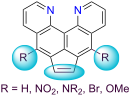
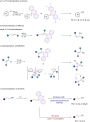
- , Pushkin str. 1a, 355017 Stavropol, Russian Federation 10.3762/bjoc.20.24 Abstract The possibility of functionalization of dipyrido[3,2-e:2′,3′-h]acenaphthene containing a quino[7,8-h]quinoline fragment and being a highly basic diazine analog of 1,8-bis(dimethylamino)naphthalene (“proton sponge”) has been
- make molecule 5 (and derivatives) more rigid and flat when compared to compound 3 but it will also affect its reactivity and the sites of functionalization. This work is devoted to the clarification of this circumstance with substitution and elimination reactions chosen as the key transformations. The
- structure of compound 15 was confirmed by a combination of spectral methods, in particular, the disappearance of a singlet from H-5,8 protons at 7.8–7.9 ppm in the starting material 5 during functionalization (nitration, bromination), unambiguously indicates the occurrence of substituents precisely in these




Chiral phosphoric acid-catalyzed transfer hydrogenation of 3,3-difluoro-3H-indoles
Beilstein J. Org. Chem. 2024, 20, 205–211, doi:10.3762/bjoc.20.20
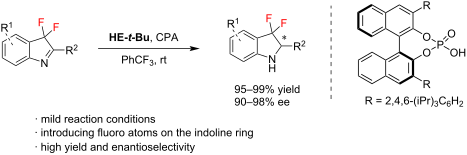
- great attention in organic synthesis. Various methods [9], including reductive hydrogenation [10][11], kinetic resolution [12][13][14], functionalization of indole [15], and de novo construction of chiral 2-substituted indolines, have been developed [16][17][18][19][20]. In recent years, the metal


Perspectives on push–pull chromophores derived from click-type [2 + 2] cycloaddition–retroelectrocyclization reactions of electron-rich alkynes and electron-deficient alkenes
Beilstein J. Org. Chem. 2024, 20, 125–154, doi:10.3762/bjoc.20.13
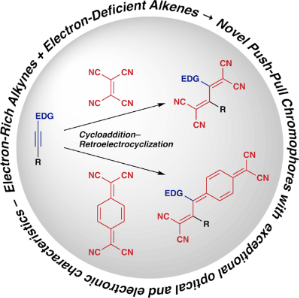
- . This endeavor aims to delineate new directions for prospective applications of push–pull chromophores. Notably, in polymer chemistry, significant progress has been made in employing [2 + 2] CA–RE reactions for polymers as a valuable post-functionalization treatment [9][10]. However, this topic lies
- through scanning tunneling microscopy [85]. For TCBDs bearing unsubstituted anilino (p-H2NC6H4–) groups, their conversion into the p-iodophenyl derivatives via the Sandmeyer reaction and subsequent post-functionalization via the Suzuki and Sonogashira coupling reactions are achieved [86]. In the reaction


Multi-redox indenofluorene chromophores incorporating dithiafulvene donor and ene/enediyne acceptor units
Beilstein J. Org. Chem. 2024, 20, 59–73, doi:10.3762/bjoc.20.8
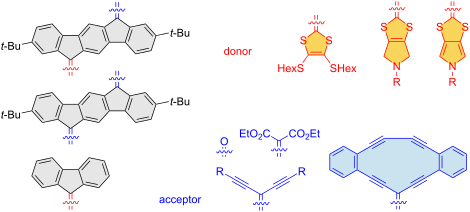
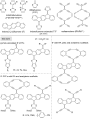
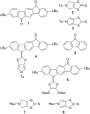
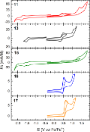
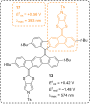
- with one of the exocyclic enediyne units removed) [17][18] is a particularly good electron acceptor as it gains 14π-aromaticity upon reduction. In this work, we also want to further explore pyrrolo-annelated IF-DTFs with different substituents on the nitrogen atom, and the functionalization at the
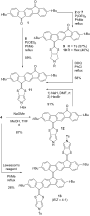
- as a mixture of E and Z isomers (ca. 4:1). Further functionalization of the IF-DTF ketone 11 was obtained by Ramirez/Corey–Fuchs dibromo-olefination and Knoevenagel condensation to yield vinylic dibromide 14 and diester 15, respectively, as illustrated in Scheme 2. We noted that the dibromo
- compound is shown below, in which the hydrogen atoms are omitted for clarity. Atoms are colored grey (carbon), white (hydrogen), brown (bromine), pale-yellow (silicon). Labels of bonds within five-membered ring. Synthesis of IF-DTF ketones 9–12 and dimer 13. Further functionalization of the IF-DTF ketone






Facile access to pyridinium-based bent aromatic amphiphiles: nonionic surface modification of nanocarbons in water
Beilstein J. Org. Chem. 2024, 20, 32–40, doi:10.3762/bjoc.20.5
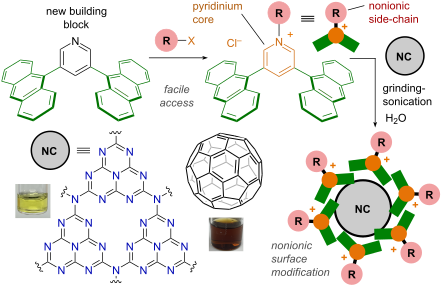
- )m was roughly estimated to be 0.1 mg mL−1. The DLS measurement of (PA-Im)n·(C60)m displayed an average particle diameter of ≈2 nm, which, in combination with molecular modeling, indicated a noncovalent surface functionalization of a single C60 molecule by five PA-Im amphiphiles (Figure 4d,e




Controlling the reactivity of La@C82 by reduction: reaction of the La@C82 anion with alkyl halide with high regioselectivity
Beilstein J. Org. Chem. 2023, 19, 1858–1866, doi:10.3762/bjoc.19.138

- benzyl bromide under photolytic conditions affords eight monoadducts [19]. Therefore, one-electron reduction and the subsequent thermal reaction of La@C2v-C82 were effective for its functionalization in terms of both regioselectivity and reactivity compared to the thermal and photoreactions of La@C2v-C82


Synthetic approach to 2-alkyl-4-quinolones and 2-alkyl-4-quinolone-3-carboxamides based on common β-keto amide precursors
Beilstein J. Org. Chem. 2023, 19, 1804–1810, doi:10.3762/bjoc.19.132
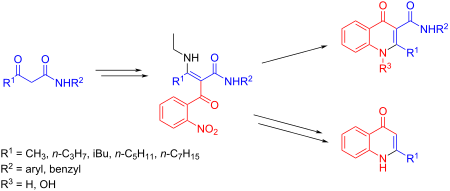
- ]. Despite the variety of synthetic approaches to the construction and functionalization of the 4-quinolone ring system, most of the recent studies related to microbial 2-alkyl-4-quinolones relied on variations of the age-old Conrad–Limpach and Camps methods for the construction of the heterocyclic quinolone


Recent advancements in iodide/phosphine-mediated photoredox radical reactions
Beilstein J. Org. Chem. 2023, 19, 1785–1803, doi:10.3762/bjoc.19.131
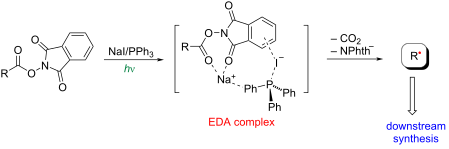
- active natural products. The direct functionalization of C–H bonds in enamides offers a convenient and versatile approach to access a wide range of functionalized enamides. In 2021, Fu and his colleagues successfully developed a novel method for the stereoselective alkylation of enamides 14 using iodine
- 15) [27]. This method involved a series of steps, including the formation of an EDA complex, decarboxylation, radical addition, C–H functionalization, and annulation. Various primary, secondary, and tertiary alkyl N-hydroxyphthalimide esters 33 showed potential as viable substrates for the synthesis




Charge carrier transport in perylene-based and pyrene-based columnar liquid crystals
Beilstein J. Org. Chem. 2023, 19, 1755–1765, doi:10.3762/bjoc.19.128
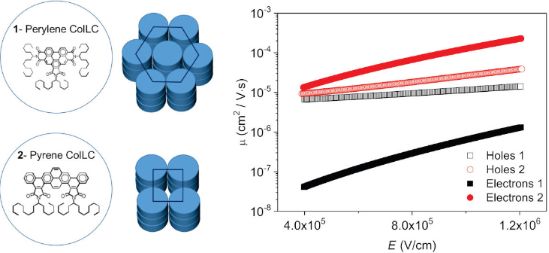
- derivatives are among the most investigated due to their easy functionalization, high chemical and thermal stability, strong photoluminescence, and n-type semiconductor character. They tend to adopt columnar organization due to the strong π–π interaction of the rigid cores, providing a path for the efficient





