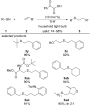
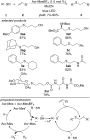
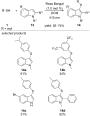
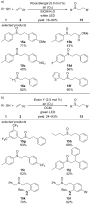
Search for "indoles" in Full Text gives 237 result(s) in Beilstein Journal of Organic Chemistry. Showing first 200.
Beilstein J. Org. Chem. 2018, 14, 2266–2288, doi:10.3762/bjoc.14.202
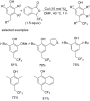
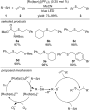
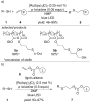
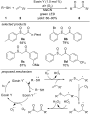
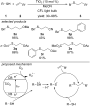
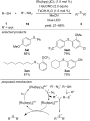
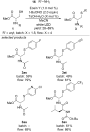
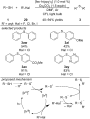
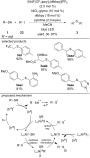
Graphical Abstract
Scheme 1: Cobalt-catalyzed C–H carbonylation.
Scheme 2: Hydroarylation by C–H activation.
Scheme 3: Pathways for cobalt-catalyzed hydroarylations.
Scheme 4: Co-catalyzed hydroarylation of alkynes with azobenzenes.
Scheme 5: Co-catalyzed hydroarylation of alkynes with 2-arylpyridines.
Scheme 6: Co-catalyzed addition of azoles to alkynes.
Scheme 7: Co-catalyzed addition of indoles to alkynes.
Scheme 8: Co-catalyzed hydroarylation of alkynes with imines.
Scheme 9: A plausible pathway for Co-catalyzed hydroarylation of alkynes.
Scheme 10: Co-catalyzed anti-selective C–H addition to alkynes.
Scheme 11: Co(III)-catalyzed hydroarylation of alkynes with indoles.
Scheme 12: Co(III)-catalyzed branch-selective hydroarylation of alkynes.
Scheme 13: Co(III)-catalyzed hydroarylation of terminal alkynes with arenes.
Scheme 14: Co(III)-catalyzed hydroarylation of alkynes with amides.
Scheme 15: Co(III)-catalyzed C–H alkenylation of arenes.
Scheme 16: Co-catalyzed alkylation of substituted benzamides with alkenes.
Scheme 17: Co-catalyzed switchable hydroarylation of styrenes with 2-aryl pyridines.
Scheme 18: Co-catalyzed linear-selective hydroarylation of alkenes with imines.
Scheme 19: Co-catalyzed linearly-selective hydroarylation of alkenes with N–H imines.
Scheme 20: Co-catalyzed branched-selective hydroarylation of alkenes with imines.
Scheme 21: Mechanism of Co-catalyzed hydroarylation of alkenes.
Scheme 22: Co-catalyzed intramolecular hydroarylation of indoles.
Scheme 23: Co-catalyzed asymmetric hydroarylation of alkenes with indoles.
Scheme 24: Co-catalyzed hydroarylation of alkenes with heteroarenes.
Scheme 25: Co(III)-catalyzed hydroarylation of activated alkenes with 2-phenyl pyridines.
Scheme 26: Co(III)-catalyzed C–H alkylation of arenes.
Scheme 27: Co(III)-catalyzed C2-alkylation of indoles.
Scheme 28: Co(III)-catalyzed switchable hydroarylation of alkyl alkenes with indoles.
Scheme 29: Co(III)-catalyzed C2-allylation of indoles.
Scheme 30: Co(III)-catalyzed ortho C–H alkylation of arenes with maleimides.
Scheme 31: Co(III)-catalyzed hydroarylation of maleimides with arenes.
Scheme 32: Co(III)-catalyzed hydroarylation of allenes with arenes.
Scheme 33: Co-catalyzed hydroarylative cyclization of enynes with carbonyl compounds.
Scheme 34: Mechanism for the Co-catalyzed hydroarylative cyclization of enynes with carbonyl compounds.
Scheme 35: Co-catalyzed addition of 2-arylpyridines to aromatic aldimines.
Scheme 36: Co-catalyzed addition of 2-arylpyridines to aziridines.
Scheme 37: Co(III)-catalyzed hydroarylation of imines with arenes.
Scheme 38: Co(III)-catalyzed addition of arenes to ketenimines.
Scheme 39: Co(III)-catalyzed three-component coupling.
Scheme 40: Co(III)-catalyzed hydroarylation of aldehydes.
Scheme 41: Co(III)-catalyzed addition of arenes to isocyanates.
Beilstein J. Org. Chem. 2018, 14, 2035–2064, doi:10.3762/bjoc.14.179
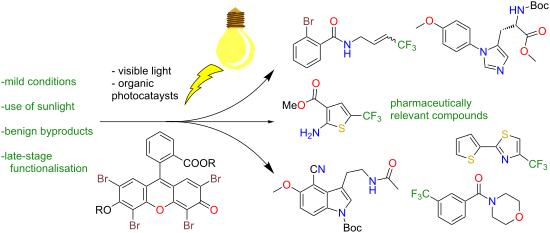
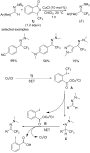
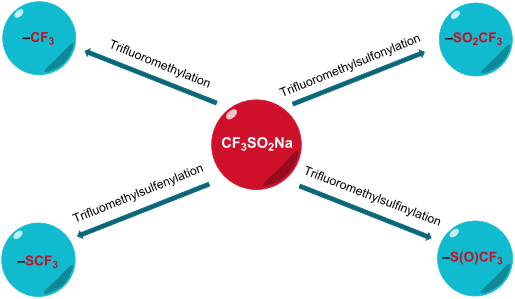
Graphical Abstract
Figure 1: Depiction of the energy levels of a typical organic molecule and the photophysical processes it can...
Figure 2: General catalytic cycle of a photocatalyst in a photoredox organocatalysed reaction. [cat] – photoc...
Figure 3: Structures and names of the most common photocatalysts encountered in the reviewed literature.
Figure 4: General example of a reductive quenching catalytic cycle. [cat] – photocatalyst, [cat]* – photocata...
Figure 5: General example of an oxidative quenching catalytic cycle. [cat] – photocatalyst, [cat]* – photocat...
Scheme 1: Oxidative coupling of aldehydes and amines to amides using acridinium salt photocatalysis.
Figure 6: Biologically active molecules containing a benzamide linkage.
Scheme 2: The photocatalytic reduction of amino acids to produce the corresponding free or protected amines.
Scheme 3: The organocatalysed photoredox base-mediated oxidation of thiols to disulfides.
Scheme 4: C-Terminal modification of peptides and proteins using organophotoredox catalysis.
Scheme 5: The reduction and aryl coupling of aryl halides using a doubly excited photocatalyst (PDI).
Figure 7: Mechanism for the coupling of aryl halides using PDI, which is excited sequentially by two photons.
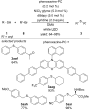
Scheme 6: The arylation of five-membered heteroarenes using arenediazonium salts under organophotoredox condi...
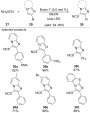
Scheme 7: The C–H (hetero)arylation of five-membered heterocycles under Eosin Y photocatalysis.
Scheme 8: The C–H sulfurisation of imidazoheterocycles using Eosin B-catalyzed photochemical methods.
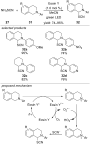
Scheme 9: The introduction of the thiocyanate group using Eosin Y photocatalysis.
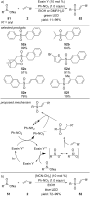
Scheme 10: Sulfonamidation of pyrroles using oxygen as the terminal oxidant.
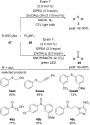
Scheme 11: DDQ-catalysed C–H amination of arenes and heteroarenes.
Scheme 12: Photoredox-promoted radical Michael addition reactions of allylic or benzylic carbons.
Figure 8: Proposed mechanistic rationale for the observed chemoselectivities.
Scheme 13: The photocatalytic manipulation of C–H bonds adjacent to amine groups.
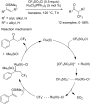
Scheme 14: The perylene-catalysed organophotoredox tandem difluoromethylation–acetamidation of styrene-type al...
Figure 9: Examples of biologically active molecules containing highly functionalised five membered heterocycl...
Scheme 15: The [3 + 2]-cycloaddition leading to the formation of pyrroles, through the reaction of 2H-azirines...
Figure 10: Proposed intermediate that determines the regioselectivity of the reaction.
Figure 11: Comparison of possible pathways of reaction and various intermediates involved.
Scheme 16: The acridinium salt-catalysed formation of oxazoles from aldehydes and 2H-azirines.
Scheme 17: The synthesis of oxazolines and thiazolines from amides and thioamides using organocatalysed photor...
Figure 12: Biologically active molecules on the market containing 1,3,4-oxadiazole moieties.
Scheme 18: The synthesis of 1,3,4-oxadiazoles from aldehyde semicarbazones using Eosin Y organophotocatalysis.
Scheme 19: The dimerization of primary thioamides to 1,2,4-thiadiazoles catalysed by the presence of Eosin Y a...
Scheme 20: The radical cycloaddition of o-methylthioarenediazonium salts and substituted alkynes towards the f...
Scheme 21: The dehydrogenative cascade reaction for the synthesis of 5,6-benzofused heterocyclic systems.
Figure 13: Trifluoromethylated version of compounds which have known biological activities.
Scheme 22: Eosin Y-catalysed photoredox formation of 3-substituted benzimidazoles.
Scheme 23: Oxidation of dihydropyrimidines by atmospheric oxygen using photoredox catalysis.
Scheme 24: Photoredox-organocatalysed transformation of 2-substituted phenolic imines to benzoxazoles.
Scheme 25: Visible light-driven oxidative annulation of arylamidines.
Scheme 26: Methylene blue-photocatalysed direct C–H trifluoromethylation of heterocycles.
Scheme 27: Photoredox hydrotrifluoromethylation of terminal alkenes and alkynes.
Scheme 28: Trifluoromethylation and perfluoroalkylation of aromatics and heteroaromatics.
Scheme 29: The cooperative asymmetric and photoredox catalysis towards the functionalisation of α-amino sp3 C–...
Scheme 30: Organophotoredox-catalysed direct C–H amidation of aromatics.
Scheme 31: Direct C–H alkylation of heterocycles using BF3K salts. CFL – compact fluorescent lamp.
Figure 14: The modification of camptothecin, demonstrating the use of the Molander protocol in LSF.
Scheme 32: Direct C–H amination of aromatics using acridinium salts.
Scheme 33: Photoredox-catalysed nucleophilic aromatic substitution of nucleophiles onto methoxybenzene derivat...
Scheme 34: The direct C–H cyanation of aromatics with a focus on its use for LSF.
Beilstein J. Org. Chem. 2018, 14, 1508–1528, doi:10.3762/bjoc.14.128
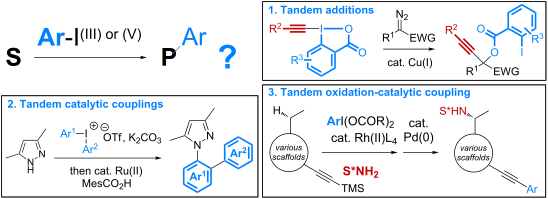
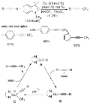
Graphical Abstract
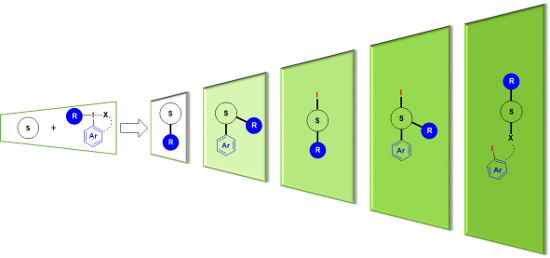
Scheme 1: Strategies to address the issue of sustainability with polyvalent organoiodine reagents.
Scheme 2: Functionalization of ketones and alkenes with IBX.
Scheme 3: Functionalization of pyrroles with DMP.
Scheme 4: Catalytic benzoyloxy-trifluoromethylation reported by Szabó.
Scheme 5: Catalytic benzoyloxy-trifluoromethylation reported by Mideoka.
Scheme 6: Catalytic 1,4-benzoyloxy-trifluoromethylation of dienes.
Scheme 7: Catalytic benzoyloxy-trifluoromethylation of allylamines.
Scheme 8: Catalytic benzoyloxy-trifluoromethylation of enynes.
Scheme 9: Catalytic benzoyloxy-trifluoromethylation of allenes.
Scheme 10: Alkynylation of N-(aryl)imines with EBX for the formation of furans.
Scheme 11: Catalytic benzoyloxy-alkynylation of diazo compounds.
Scheme 12: Catalytic asymmetric benzoyloxy-alkynylation of diazo compounds.
Scheme 13: Catalytic 1,2-benzoyloxy-azidation of alkenes.
Scheme 14: Catalytic 1,2-benzoyloxy-azidation of enamides.
Scheme 15: Catalytic 1,2-benzoyloxy-iodination of alkenes.
Scheme 16: Seminal study with cyclic diaryl-λ3-iodane.
Scheme 17: Synthesis of alkylidenefluorenes from cyclic diaryl-λ3-iodanes.
Scheme 18: Synthesis of alkyne-substituted alkylidenefluorenes.
Scheme 19: Synthesis of phenanthrenes from cyclic diaryl-λ3-iodanes.
Scheme 20: Synthesis of dibenzocarbazoles from cyclic diaryl-λ3-iodanes.
Scheme 21: Synthesis of triazolophenantridines from cyclic diaryl-λ3-iodanes.
Scheme 22: Synthesis of functionalized benzoxazoles from cyclic diaryl-λ3-iodanes.
Scheme 23: Sequential difunctionalization of cyclic diaryl-λ3-iodanes.
Scheme 24: Double Suzuki–Miyaura coupling reaction of cyclic diaryl-λ3-iodanes.
Scheme 25: Synthesis of a δ-carboline from cyclic diaryl-λ3-iodane.
Scheme 26: Synthesis of N-(aryl)carbazoles from cyclic diaryl-λ3-iodanes.
Scheme 27: Synthesis of carbazoles from cyclic diaryl-λ3-iodanes.
Scheme 28: Synthesis of carbazoles and acridines from cyclic diaryl-λ3-iodanes.
Scheme 29: Synthesis of dibenzothiophenes from cyclic diaryl-λ3-iodanes.
Scheme 30: Synthesis of various sulfur heterocycles from cyclic diaryl-λ3-iodanes.
Scheme 31: Synthesis of dibenzothioheterocycles from cyclic diaryl-λ3-iodanes.
Scheme 32: Synthesis of dibenzosulfides and dibenzoselenides from cyclic diaryl-λ3-iodanes.
Scheme 33: Synthesis of dibenzosulfones from cyclic diaryl-λ3-iodanes.
Scheme 34: Seminal study with linear diaryl-λ3-iodanes.
Scheme 35: N-Arylation of benzotriazole with symmetrical diaryl-λ3-iodanes.
Scheme 36: Tandem catalytic C–H/N–H arylation of indoles with diaryl-λ3-iodanes.
Scheme 37: Tandem N-arylation/C(sp2)–H arylation with diaryl-λ3-iodanes.
Scheme 38: Catalytic intermolecular diarylation of anilines with diaryl-λ3-iodanes.
Scheme 39: Catalytic synthesis of diarylsulfides with diaryl-λ3-iodanes.
Scheme 40: α-Arylation of enolates using [bis(trifluoroacetoxy)iodo]arenes.
Scheme 41: Mechanism of the α-arylation using [bis(trifluoroacetoxy)iodo]arene.
Scheme 42: Catalytic nitrene additions mediated by [bis(acyloxy)iodo]arenes.
Scheme 43: Tandem of C(sp3)–H amination/sila-Sonogashira–Hagihara coupling.
Scheme 44: Tandem reaction using a λ3-iodane as an oxidant, a substrate and a coupling partner.
Scheme 45: Synthesis of 1,2-diarylated acrylamidines with ArI(OAc)2.
Beilstein J. Org. Chem. 2018, 14, 1263–1280, doi:10.3762/bjoc.14.108
Graphical Abstract
Scheme 1: Overview of different types of iodane-based group-transfer reactions and their atom economy based o...
Scheme 2: (a) Structure of diaryliodonium salts 1. (b) Diarylation of a suitable substrate A with one equival...
Scheme 3: Synthesis of biphenyls 3 and 3’ with symmetrical diaryliodonium salts 1.
Scheme 4: Synthesis of diaryl thioethers 5.
Scheme 5: Synthesis of two distinct S-aryl dithiocarbamates 7 and 7’ from one equivalent of diaryliodonium sa...
Scheme 6: Synthesis of substituted isoindolin-1-ones 9 from 2-formylbenzonitrile 8 and the postulated reactio...
Scheme 7: Domino C-/N-arylation of indoles 10.
Scheme 8: Domino modification of N-heterocycles 12 via in situ-generated directing groups.
Scheme 9: Synthesis of triarylamines 17 through a double arylation of anilines.
Scheme 10: Selective conversion of novel aryl(imidazolyl)iodonium salts 1b to 1,5-disubstituted imidazoles 18.
Scheme 11: Selected examples for the application of cyclic diaryliodonium salts 19.
Scheme 12: Tandem oxidation–arylation sequence with (dicarboxyiodo)benzenes 20.
Scheme 13: Oxidative α-arylation via the transfer of an intact 2-iodoaryl group.
Scheme 14: Tandem ortho-iodination/O-arylation cascade with PIDA derivatives 20b.
Scheme 15: Synthesis of meta-N,N-diarylaminophenols 28 and the postulated mechanism.
Scheme 16: (Dicarboxyiodo)benzene-mediated metal-catalysed C–H amination and arylation.
Scheme 17: Postulated mechanism for the amination–arylation sequence.
Scheme 18: Auto-amination and cross-coupling of PIDA derivatives 20c.
Scheme 19: Tandem C(sp3)–H olefination/C(sp2)–H arylation.
Scheme 20: Atom efficient functionalisations with benziodoxolones 36.
Scheme 21: Atom-efficient synthesis of furans 39 from benziodoxolones 36a and their further derivatisations.
Scheme 22: Oxyalkynylation of diazo compounds 42.
Scheme 23: Enantioselective oxyalkynylation of diazo compounds 42’.
Scheme 24: Iron-catalysed oxyazidation of enamides 45.
Beilstein J. Org. Chem. 2018, 14, 1208–1214, doi:10.3762/bjoc.14.102
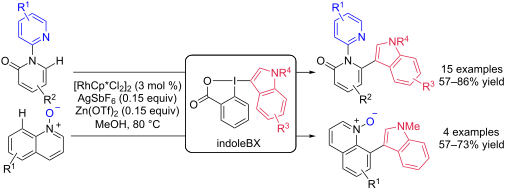
Graphical Abstract
Figure 1: Bioactive compounds with pyridinone, quinolone and indole cores.
Scheme 1: C–H functionalization of pyridinones and quinoline N-oxides.
Scheme 2: Scope and limitations of the Rh-catalyzed C–H activation of [1,2'-bipyridin]-2-one.
Scheme 3: Scope of the Rh-catalyzed peri C–H activation of quinoline N-oxides.
Scheme 4: Product modifications.
Beilstein J. Org. Chem. 2018, 14, 560–575, doi:10.3762/bjoc.14.43
Graphical Abstract
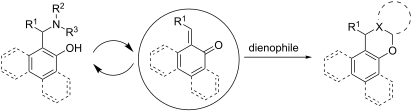
Scheme 1: Formation of amidoalkylnaphthols 4 via o-QM intermediate 3.
Scheme 2: Asymmetric syntheses of triarylmethanes starting from diarylmethylamines.
Scheme 3: Proposed mechanism for the formation of 2,2-dialkyl-3-dialkylamino-2,3-dihydro-1H-naphtho[2,1-b]pyr...
Scheme 4: Cycloadditions of isoflavonoid-derived o-QMs and various dienophiles.
Scheme 5: [4 + 2] Cycloaddition reactions between aminonaphthols and cyclic amines.
Scheme 6: Brønsted acid-catalysed reaction between aza-o-QMs and 2- or 3-substituted indoles.
Scheme 7: Formation of 3-(α,α-diarylmethyl)indoles 52 in different synthetic pathways.
Scheme 8: Alkylation of o-QMs with N-, O- or S-nucleophiles.
Scheme 9: Formation of DNA linkers and o-QM mediated polymers.
Beilstein J. Org. Chem. 2018, 14, 499–505, doi:10.3762/bjoc.14.35
Graphical Abstract
Scheme 1: Cross dehydrogenative coupling of N-arylglycine esters with C–H nucleophiles.
Scheme 2: Electrochemical CDC reaction of 2a and various N-arylglycine esters. Reaction conditions for the in...
Scheme 3: Scope of 2 using n-Bu4NI as mediator. Reaction conditions:1a (0.5 mmol), 2 (0.6 mmol), n-Bu4NI (30 ...
Scheme 4: Scaling up.
Scheme 5: Control experiments.
Scheme 6: A plausible mechanism for the electrocatalytic cross dehydrogenative coupling of N-arylglycine este...
Beilstein J. Org. Chem. 2018, 14, 243–252, doi:10.3762/bjoc.14.16
Graphical Abstract
Figure 1: The selected examples of sulfur(IV) and sulfur(VI) ylides 1 [1], 2 [5-7], 3 [6,7,9], 4 [11,12], 5 [33,34], 6 [35-38].
Figure 2: Metal-free synthesis of thiophene-based heterocycles (A) [54,55], (B) [56].
Scheme 1: One-pot sequential synthesis of the trisubstituted 5-(pyridine-2-yl)thiophenes 8a. Substrate: amalo...
Figure 3: X-ray crystal structures of 8ad and 8an [68].
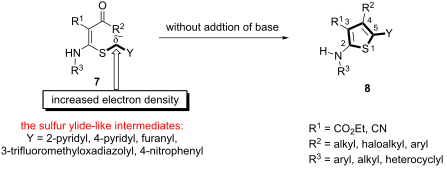
Figure 4: The proposed structure of sulfur ylide-like intermediates; resonance contributors (mesomeric struct...
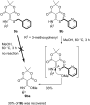
Scheme 2: The substitution reaction with MeOH.
Beilstein J. Org. Chem. 2018, 14, 194–202, doi:10.3762/bjoc.14.14
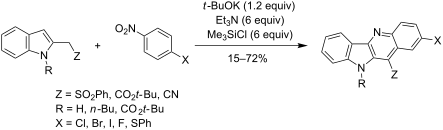
Graphical Abstract
Figure 1: Selected indolo[3,2-b]quinolines (quindolines) with biological activity.
Scheme 1: Selected starting materials for the construction of the quindoline system.
Scheme 2: Synthesis of condensed pyridines mediated by a σH-adduct.
Scheme 3: Formation of condensed isoxazole derivatives.
Scheme 4: Reaction of unprotected indole ester 1c with 4-chloronitrobenzene.
Scheme 5: A plausible mechanism for the formation of 11-(phenylsulfonyl)indolo[3,2-b]quinolines.
Beilstein J. Org. Chem. 2018, 14, 155–181, doi:10.3762/bjoc.14.11
Graphical Abstract
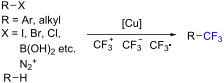
Figure 1: Selected examples of pharmaceutical and agrochemical compounds containing the trifluoromethyl group....
Scheme 1: Introduction of a diamine into copper-catalyzed trifluoromethylation of aryl iodides.
Scheme 2: Addition of a Lewis acid into copper-catalyzed trifluoromethylation of aryl iodides and the propose...
Scheme 3: Trifluoromethylation of heteroaromatic compounds using S-(trifluoromethyl)diphenylsulfonium salts a...
Scheme 4: The preparation of a new trifluoromethylation reagent and its application in trifluoromethylation o...
Scheme 5: Trifluoromethylation of aryl iodides using CF3CO2Na as a trifluoromethyl source.
Scheme 6: Trifluoromethylation of aryl iodides using MTFA as a trifluoromethyl source.
Scheme 7: Trifluoromethylation of aryl iodides using CF3CO2K as a trifluoromethyl source.
Scheme 8: Trifluoromethylation of aryl iodides and heteroaryl bromides using [Cu(phen)(O2CCF3)] as a trifluor...
Scheme 9: Trifluoromethylation of aryl iodides with DFPB and the proposed mechanism.
Scheme 10: Trifluoromethylation of aryl iodides using TCDA as a trifluoromethyl source. Reaction conditions: [...
Scheme 11: The mechanism of trifluoromethylation using Cu(II)(O2CCF2SO2F)2 as a trifluoromethyl source.
Scheme 12: Trifluoromethylation of benzyl bromide reported by Shibata’s group.
Scheme 13: Trifluoromethylation of allylic halides and propargylic halides reported by the group of Nishibayas...
Scheme 14: Trifluoromethylation of propargylic halides reported by the group of Nishibayashi.
Scheme 15: Trifluoromethylation of alkyl halides reported by Nishibayashi’s group.
Scheme 16: Trifluoromethylation of pinacol esters reported by the group of Gooßen.
Scheme 17: Trifluoromethylation of primary and secondary alkylboronic acids reported by the group of Fu.
Scheme 18: Trifluoromethylation of boronic acid derivatives reported by the group of Liu.
Scheme 19: Trifluoromethylation of organotrifluoroborates reported by the group of Huang.
Scheme 20: Trifluoromethylation of aryl- and vinylboronic acids reported by the group of Shibata.
Scheme 21: Trifluoromethylation of arylboronic acids via the merger of photoredox and Cu catalysis.
Scheme 22: Trifluoromethylation of arylboronic acids reported by Sanford’s group. Isolated yield. aYields dete...
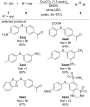
Scheme 23: Trifluoromethylation of arylboronic acids and vinylboronic acids reported by the group of Beller. Y...
Scheme 24: Copper-mediated Sandmeyer type trifluoromethylation using Umemoto’s reagent as a trifluoromethylati...
Scheme 25: Copper-mediated Sandmeyer type trifluoromethylation using TMSCF3 as a trifluoromethylation reagent ...
Scheme 26: One-pot Sandmeyer trifluoromethylation reported by the group of Gooßen.
Scheme 27: Copper-catalyzed trifluoromethylation of arenediazonium salts in aqueous media.
Scheme 28: Copper-mediated Sandmeyer trifluoromethylation using Langlois’ reagent as a trifluoromethyl source ...
Scheme 29: Trifluoromethylation of terminal alkenes reported by the group of Liu.
Scheme 30: Trifluoromethylation of terminal alkenes reported by the group of Wang.
Scheme 31: Trifluoromethylation of tetrahydroisoquinoline derivatives reported by Li and the proposed mechanis...
Scheme 32: Trifluoromethylation of phenol derivatives reported by the group of Hamashima.
Scheme 33: Trifluoromethylation of hydrazones reported by the group of Baudoin and the proposed mechanism.
Scheme 34: Trifluoromethylation of benzamides reported by the group of Tan.
Scheme 35: Trifluoromethylation of heteroarenes and electron-deficient arenes reported by the group of Qing an...
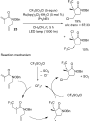
Scheme 36: Trifluoromethylation of N-aryl acrylamides using CF3SO2Na as a trifluoromethyl source.
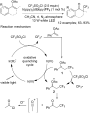
Scheme 37: Trifluoromethylation of aryl(heteroaryl)enol acetates using CF3SO2Na as the source of CF3 and the p...
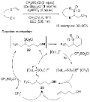
Scheme 38: Trifluoromethylation of imidazoheterocycles using CF3SO2Na as a trifluoromethyl source and the prop...
Scheme 39: Copper-mediated trifluoromethylation of terminal alkynes using TMSCF3 as a trifluoromethyl source a...
Scheme 40: Improved copper-mediated trifluoromethylation of terminal alkynes reported by the group of Qing.
Scheme 41: Copper-catalyzed trifluoromethylation of terminal alkynes reported by the group of Qing.
Scheme 42: Copper-catalyzed trifluoromethylation of terminal alkynes using Togni’s reagent and the proposed me...
Scheme 43: Copper-catalyzed trifluoromethylation of terminal alkynes using Umemoto’s reagent reported by the g...
Scheme 44: Copper-catalyzed trifluoromethylation of 3-arylprop-1-ynes reported by Xiao and Lin and the propose...
Beilstein J. Org. Chem. 2018, 14, 54–83, doi:10.3762/bjoc.14.4
Graphical Abstract
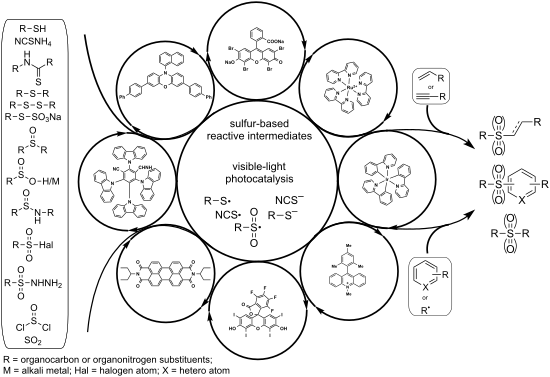
Scheme 1: General overview over the sulfur-based substrates and reactive intermediates that are discussed in ...
Scheme 2: Photoredox-catalyzed radical thiol–ene reaction, applying [Ru(bpz)3](PF6)2 as photocatalyst.
Scheme 3: Photoredox-catalyzed thiol–ene reaction of aliphatic thiols with alkenes enabled by aniline derivat...
Scheme 4: Photoredox-catalyzed radical thiol–ene reaction for the postfunctionalization of polymers (a) and n...
Scheme 5: Photoredox-catalyzed thiol–ene reaction enabled by bromotrichloromethane as redox additive.
Scheme 6: Photoredox-catalyzed preparation of β-ketosulfoxides with Eosin Y as organic dye as photoredox cata...
Scheme 7: Greaney’s photocatalytic radical thiol–ene reaction, applying TiO2 nanoparticles as photocatalyst.
Scheme 8: Fadeyi’s photocatalytic radical thiol–ene reaction, applying Bi2O3 as photocatalyst.
Scheme 9: Ananikov’s photocatalytic radical thiol-yne reaction, applying Eosin Y as photocatalyst.
Scheme 10: Organocatalytic visible-light photoinitiated thiol–ene coupling, applying phenylglyoxylic acid as o...
Scheme 11: Xia’s photoredox-catalyzed synthesis of 2,3-disubstituted benzothiophenes, applying 9-mesityl-10-me...
Scheme 12: Wang’s metal-free photoredox-catalyzed radical thiol–ene reaction, applying 9-mesityl-10-methylacri...
Scheme 13: Visible-light benzophenone-catalyzed metal- and oxidant-free radical thiol–ene reaction.
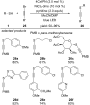
Scheme 14: Visible-light catalyzed C-3 sulfenylation of indole derivatives using Rose Bengal as organic dye.
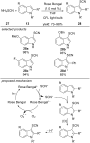
Scheme 15: Photocatalyzed radical thiol–ene reaction and subsequent aerobic sulfide-oxidation with Rose Bengal...
Scheme 16: Photoredox-catalyzed synthesis of diaryl sulfides.
Scheme 17: Photocatalytic cross-coupling of aryl thiols with aryl diazonium salts, using Eosin Y as photoredox...
Scheme 18: Photocatalyzed cross-coupling of aryl diazonium salts with cysteines in batch and in a microphotore...
Scheme 19: Fu’s [Ir]-catalyzed photoredox arylation of aryl thiols with aryl halides.
Scheme 20: Fu’s photoredox-catalyzed difluoromethylation of aryl thiols.
Scheme 21: C–S cross-coupling of thiols with aryl iodides via [Ir]-photoredox and [Ni]-dual-catalysis.
Scheme 22: C–S cross-coupling of thiols with aryl bromides, applying 3,7-bis-(biphenyl-4-yl)-10-(1-naphthyl)ph...
Scheme 23: Collin’s photochemical dual-catalytic cross-coupling of thiols with bromoalkynes.
Scheme 24: Visible-light-promoted C–S cross-coupling via intermolecular electron donor–acceptor complex format...
Scheme 25: Li’s visible-light photoredox-catalyzed thiocyanation of indole derivatives with Rose Bengal as pho...
Scheme 26: Hajra’s visible-light photoredox-catalyzed thiocyanation of imidazoheterocycles with Eosin Y as pho...
Scheme 27: Wang’s photoredox-catalyzed thiocyanation reaction of indoles, applying heterogeneous TiO2/MoS2 nan...
Scheme 28: Yadav’s photoredox-catalyzed α-C(sp3)–H thiocyanation reaction for tertiary amines, applying Eosin ...
Scheme 29: Yadav’s photoredox-catalyzed synthesis of 5-aryl-2-imino-1,3-oxathiolanes.
Scheme 30: Yadav’s photoredox-catalyzed synthesis of 1,3-oxathiolane-2-thiones.
Scheme 31: Li’s photoredox catalysis for the preparation of 2-substituted benzothiazoles, applying [Ru(bpy)3](...
Scheme 32: Lei’s external oxidant-free synthesis of 2-substituted benzothiazoles by merging photoredox and tra...
Scheme 33: Metal-free photocatalyzed synthesis of 2-aminobenzothiazoles, applying Eosin Y as photocatalyst.
Scheme 34: Metal-free photocatalyzed synthesis of 1,3,4-thiadiazoles, using Eosin Y as photocatalyst.
Scheme 35: Visible-light photoredox-catalyzed preparation of benzothiophenes with Eosin Y.
Scheme 36: Visible-light-induced KOH/DMSO superbase-promoted preparation of benzothiophenes.
Scheme 37: Jacobi von Wangelin’s photocatalytic approach for the synthesis of aryl sulfides, applying Eosin Y ...
Scheme 38: Visible-light photosensitized α-C(sp3)–H thiolation of aliphatic ethers.
Scheme 39: Visible-light photocatalyzed cross-coupling of alkyl and aryl thiosulfates with aryl diazonium salt...
Scheme 40: Visible-light photocatalyzed, controllable sulfenylation and sulfoxidation with organic thiosulfate...
Scheme 41: Rastogi’s photoredox-catalyzed methylsulfoxidation of aryl diazonium salts, using [Ru(bpy)3]Cl2 as ...
Scheme 42: a) Visible-light metal-free Eosin Y-catalyzed procedure for the preparation of vinyl sulfones from ...
Scheme 43: Visible-light photocatalyzed cross-coupling of sodium sulfinates with secondary enamides.
Scheme 44: Wang’s photocatalyzed oxidative cyclization of phenyl propiolates with sulfinic acids, applying Eos...
Scheme 45: Lei’s sacrificial oxidant-free synthesis of allyl sulfones by merging photoredox and transition met...
Scheme 46: Photocatalyzed Markovnikov-selective radical/radical cross-coupling of aryl sulfinic acids and term...
Scheme 47: Visible-light Eosin Y induced cross-coupling of aryl sulfinic acids and styrene derivatives, afford...
Scheme 48: Photoredox-catalyzed bicyclization of 1,7-enynes with sulfinic acids, applying Eosin Y as photocata...
Scheme 49: Visible-light-accelerated C–H-sulfinylation of arenes and heteroarenes.
Scheme 50: Visible-light photoredox-catalyzed β-selenosulfonylation of electron-rich olefins, applying [Ru(bpy)...
Scheme 51: Photocatalyzed preparation of β-chlorosulfones from the respective olefins and p-toluenesulfonyl ch...
Scheme 52: a) Photocatalyzed preparation of β-amidovinyl sulfones from sulfonyl chlorides. b) Preparation of β...
Scheme 53: Visible-light photocatalyzed sulfonylation of aliphatic tertiary amines, applying [Ru(bpy)3](PF6)2 ...
Scheme 54: Reiser’s visible-light photoredox-catalyzed preparation of β-hydroxysulfones from sulfonyl chloride...
Scheme 55: a) Sun’s visible-light-catalyzed approach for the preparation of isoquinolinonediones, applying [fac...
Scheme 56: Visible-light photocatalyzed sulfonylation/cyclization of vinyl azides, applying [Ru(bpy)3]Cl2 as p...
Scheme 57: Visible-light photocatalyzed procedure for the formation of β-ketosulfones from aryl sulfonyl chlor...
Scheme 58: Zheng’s method for the sulfenylation of indole derivatives, applying sulfonyl chlorides via visible...
Scheme 59: Cai’s visible-light induced synthesis of β-ketosulfones from sulfonyl hydrazines and alkynes.
Scheme 60: Photoredox-catalyzed approach for the preparation of vinyl sulfones from sulfonyl hydrazines and ci...
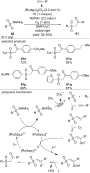
Scheme 61: Jacobi von Wangelin’s visible-light photocatalyzed chlorosulfonylation of anilines.
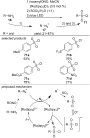
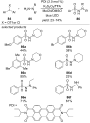
Scheme 62: Three-component photoredox-catalyzed synthesis of N-amino sulfonamides, applying PDI as organic dye....
Scheme 63: Visible-light induced preparation of complex sulfones from oximes, silyl enol ethers and SO2.
Beilstein J. Org. Chem. 2017, 13, 2800–2818, doi:10.3762/bjoc.13.273
Graphical Abstract
Scheme 1: Trifluoromethylation of silyl enol ethers.
Scheme 2: Continuous flow trifluoromethylation of ketones under photoredox catalysis.
Scheme 3: Trifluoromethylation of enol acetates.
Scheme 4: Photoredox-catalysed tandem trifluoromethylation/cyclisation of N-arylacrylamides: a route to trifl...
Scheme 5: Tandem trifluoromethylation/cyclisation of N-arylacrylamides using BiOBr nanosheets catalysis.
Scheme 6: Photoredox-catalysed trifluoromethylation/desulfonylation/cyclisation of N-tosyl acrylamides (bpy: ...
Scheme 7: Photoredox-catalysed trifluoromethylation/aryl migration/desulfonylation of N-aryl-N-tosylacrylamid...
Scheme 8: Proposed mechanism for the trifluoromethylation/aryl migration/desulfonylation (/cyclisation) of N-...
Scheme 9: Photoredox-catalysed trifluoromethylation/cyclisation of N-methacryloyl-N-methylbenzamide derivativ...
Scheme 10: Photoredox-catalysed trifluoromethylation/cyclisation of N-methylacryloyl-N-methylbenzamide derivat...
Scheme 11: Photoredox-catalysed trifluoromethylation/dearomatising spirocyclisation of a N-benzylacrylamide de...
Scheme 12: Photoredox-catalysed trifluoromethylation/cyclisation of an unactivated alkene.
Scheme 13: Asymmetric radical aminotrifluoromethylation of N-alkenylurea derivatives using a dual CuBr/chiral ...
Scheme 14: Aminotrifluoromethylation of an N-alkenylurea derivative using a dual CuBr/phosphoric acid catalyti...
Scheme 15: 1,2-Formyl- and 1,2-cyanotrifluoromethylation of alkenes under photoredox catalysis.
Scheme 16: First simultaneous introduction of the CF3 moiety and a Cl atom onto alkenes.
Scheme 17: Chlorotrifluoromethylaltion of terminal, 1,1- and 1,2-substituted alkenes.
Scheme 18: Chorotrifluoromethylation of electron-deficient alkenes (DCE = dichloroethane).
Scheme 19: Cascade trifluoromethylation/cyclisation/chlorination of N-allyl-N-(benzyloxy)methacrylamide.
Scheme 20: Cascade trifluoromethylation/cyclisation (/chlorination) of diethyl 2-allyl-2-(3-methylbut-2-en-1-y...
Scheme 21: Trifluoromethylchlorosulfonylation of allylbenzene derivatives and aliphatic alkenes.
Scheme 22: Access to β-hydroxysulfones from CF3-containing sulfonyl chlorides through a photocatalytic sequenc...
Scheme 23: Cascade trifluoromethylchlorosulfonylation/cyclisation reaction of alkenols: a route to trifluorome...
Scheme 24: First direct C–H trifluoromethylation of arenes and proposed mechanism.
Scheme 25: Direct C–H trifluoromethylation of five- and six-membered (hetero)arenes under photoredox catalysis....
Scheme 26: Alternative pathway for the C–H trifluoromethylation of (hetero)arenes under photoredox catalysis.
Scheme 27: Direct C–H trifluoromethylation of five- and six-membered ring (hetero)arenes using heterogeneous c...
Scheme 28: Trifluoromethylation of terminal olefins.
Scheme 29: Trifluoromethylation of enamides.
Scheme 30: (E)-Selective trifluoromethylation of β-nitroalkenes under photoredox catalysis.
Scheme 31: Photoredox-catalysed trifluoromethylation/cyclisation of an o-azidoarylalkynes.
Scheme 32: Regio- and stereoselective chlorotrifluoromethylation of alkynes.
Scheme 33: PMe3-mediated trifluoromethylsulfenylation by in situ generation of CF3SCl.
Scheme 34: (EtO)2P(O)H-mediated trifluoromethylsulfenylation of (hetero)arenes and thiols.
Scheme 35: PPh3/NaI-mediated trifluoromethylsulfenylation of indole derivatives.
Scheme 36: PPh3/n-Bu4NI mediated trifluoromethylsulfenylation of thiophenol derivatives.
Scheme 37: PPh3/Et3N mediated trifluoromethylsulfinylation of benzylamine.
Scheme 38: PCy3-mediated trifluoromethylsulfinylation of azaarenes, amines and phenols.
Scheme 39: Mono- and dichlorination of carbon acids.
Scheme 40: Monochlorination of (N-aryl-N-hydroxy)acylacetamides.
Scheme 41: Examples of the synthesis of heterocycles fused with β-lactams through a chlorination/cyclisation p...
Scheme 42: Enantioselective chlorination of β-ketoesters and oxindoles.
Scheme 43: Enantioselective chlorination of 3-acyloxazolidin-2-one derivatives (NMM = N-methylmorpholine).
Beilstein J. Org. Chem. 2017, 13, 2764–2799, doi:10.3762/bjoc.13.272
Graphical Abstract
Scheme 1: Trifluoromethylation of enol acetates by Langlois.
Scheme 2: Trifluoromethylation of (het)aryl enol acetates.
Scheme 3: Mechanism for the trifluoromethylation of enol acetates.
Scheme 4: Oxidative trifluoromethylation of unactivated olefins and mechanistic pathway.
Scheme 5: Oxidative trifluoromethylation of acetylenic substrates.
Scheme 6: Metal free trifluoromethylation of styrenes.
Scheme 7: Synthesis of α-trifluoromethylated ketones by oxytrifluoromethylation of heteroatom-functionalised ...
Scheme 8: Catalysed photoredox trifluoromethylation of vinyl azides.
Scheme 9: Oxidative difunctionalisation of alkenyl MIDA boronates.
Scheme 10: Synthesis of β-trifluoromethyl ketones from cyclopropanols.
Scheme 11: Aryltrifluoromethylation of allylic alcohols.
Scheme 12: Cascade multicomponent synthesis of nitrogen heterocycles via azotrifluoromethylation of alkenes.
Scheme 13: Photocatalytic azotrifluoromethylation of alkenes with aryldiazonium salts and CF3SO2Na.
Scheme 14: Copper-promoted intramolecular aminotrifluoromethylation of alkenes with CF3SO2Na.
Scheme 15: Oxytrifluoromethylation of alkenes with CF3SO2Na and hydroxamic acid.
Scheme 16: Manganese-catalysed oxytrifluoromethylation of styrene derivatives.
Scheme 17: Oxytrifluoromethylation of alkenes with NMP/O2 and CF3SO2Na.
Scheme 18: Intramolecular oxytrifluoromethylation of alkenes.
Scheme 19: Hydrotrifluoromethylation of styrenyl alkenes and unactivated aliphatic alkenes.
Scheme 20: Hydrotrifluoromethylation of electron-deficient alkenes.
Scheme 21: Hydrotrifluoromethylation of alkenes by iridium photoredox catalysis.
Scheme 22: Iodo- and bromotrifluoromethylation of alkenes by CF3SO2Na/I2O5 or CF3SO2Na / NaBrO3.
Scheme 23: N-methyl-9-mesityl acridinium and visible-light-induced chloro-, bromo- and SCF3 trifluoromethylati...
Scheme 24: Carbotrifluoromethylation of N-arylacrylamides with CF3SO2Na / TBHP by Lipshutz.
Scheme 25: Carbotrifluoromethylation of N-arylacrylamides with CF3SO2Na/TBHP reported by Lei.
Scheme 26: Carbotrifluoromethylation of N-arylacrylamides with CF3SO2Na/(NH4)2S2O8.
Scheme 27: Metal-free carbotrifluoromethylation of N-arylacrylamides with CF3SO2Na/K2S2O8 reported by Wang.
Scheme 28: Metal-free carbotrifluoromethylation of N-arylacrylamides with CF3SO2Na/PIDA reported by Fu.
Scheme 29: Metal-free cascade trifluoromethylation/cyclisation of N-arylmethacrylamides (a) and enynes (b) wit...
Scheme 30: Trifluoromethylation/cyclisation of N-arylcinnamamides: Synthesis of 3,4-disubstituted dihydroquino...
Scheme 31: Trifluoromethylation/cyclisation of aromatic-containing unsaturated ketones.
Scheme 32: Chemo- and regioselective cascade trifluoromethylation/heteroaryl ipso-migration of unactivated alk...
Scheme 33: Copper-mediated 1,2-bis(trifluoromethylation) of alkenes.
Scheme 34: Trifluoromethylation of aromatics with CF3SO2Na reported by Langlois.
Scheme 35: Baran’s oxidative C–H trifluoromethylation of heterocycles.
Scheme 36: Trifluoromethylation of acetanilides and anilines.
Scheme 37: Trifluoromethylation of heterocycles in water.
Scheme 38: Trifluoromethylation of coumarins in a continuous-flow reactor.
Scheme 39: Oxidative trifluoromethylation of coumarins, quinolines and pyrimidinones.
Scheme 40: Oxidative trifluoromethylation of pyrimidinones and pyridinones.
Scheme 41: Phosphovanadomolybdic acid-catalysed direct C−H trifluoromethylation.
Scheme 42: Oxidative trifluoromethylation of imidazopyridines and imidazoheterocycles.
Scheme 43: Oxidative trifluoromethylation of imidazoheterocycles and imidazoles in ionic liquid/water.
Scheme 44: Oxidative trifluoromethylation of 8-aminoquinolines.
Scheme 45: Oxidative trifluoromethylation of various 8-aminoquinolines using the supported catalyst CS@Cu(OAc)2...
Scheme 46: Oxidative trifluoromethylation of the naphthylamide 70.
Scheme 47: Oxidative trifluoromethylation of various arenes in the presence of CF3SO2Na and sodium persulfate.
Scheme 48: Trifluoromethylation of electron-rich arenes and unsymmetrical biaryls with CF3SO2Na in the presenc...
Figure 1: Trifluoromethylated coumarin and flavone.
Scheme 49: Metal-free trifluoromethylation catalysed by a photoredox organocatalyst.
Scheme 50: Quinone-mediated trifluoromethylation of arenes and heteroarenes.
Scheme 51: Metal- and oxidant-free photochemical trifluoromethylation of arenes.
Scheme 52: Copper-mediated trifluoromethylation of arenediazonium tetrafluoroborates.
Scheme 53: Oxidative trifluoromethylation of aryl- and heteroarylboronic acids.
Scheme 54: Oxidative trifluoromethylation of aryl- and vinylboronic acids.
Scheme 55: Oxidative trifluoromethylation of unsaturated potassium organotrifluoroborates.
Scheme 56: Oxidative trifluoromethylation of (hetero)aryl- and vinyltrifluoroborates.
Scheme 57: Copper−catalysed decarboxylative trifluoromethylation of cinnamic acids.
Scheme 58: Iron-mediated decarboxylative trifluoromethylation of α,β-unsaturated carboxylic acids.
Scheme 59: Cu/Ag-catalysed decarboxylative trifluoromethylation of cinnamic acids.
Scheme 60: I2O5-Promoted decarboxylative trifluoromethylation of cinnamic acids.
Scheme 61: Silver(I)-catalysed denitrative trifluoromethylation of β-nitrostyrenes.
Scheme 62: Copper-catalysed direct trifluoromethylation of styrene derivatives.
Scheme 63: Transition-metal-free synthesis of β-trifluoromethylated enamines.
Scheme 64: I2O5-mediated iodotrifluoromethylation of alkynes.
Scheme 65: Silver-catalysed tandem trifluoromethylation/cyclisation of aryl isonitriles.
Scheme 66: Photoredox trifluoromethylation of 2-isocyanobiphenyls.
Scheme 67: Trifluoromethylation of potassium alkynyltrifluoroborates with CF3SO2Na.
Scheme 68: N-trifluoromethylation of nitrosoarenes with CF3SO2Na (SQ: semiquinone).
Scheme 69: Trifluoromethylation of disulfides with CF3SO2Na.
Scheme 70: Trifluoromethylation of thiols with CF3SO2Na/I2O5.
Scheme 71: Electrophilic trifluoromethylsulfenylation by means of CF3SO2Na/(EtO)2P(O)H/CuCl/DMSO.
Scheme 72: Electrophilic trifluoromethylsulfenylation by means of CF3SO2Na/(EtO)2P(O)H/TMSCl.
Scheme 73: Electrophilic trifluoromethylsulfenylation by means of CF3SO2Na/PPh3/N-chlorophthalimide.
Scheme 74: Electrophilic trifluoromethylsulfenylation by means of CF3SO2Na/PCl3.
Scheme 75: Electrophilic trifluoromethylsulfenylation by means of CF3SO2Na/PCl3.
Scheme 76: Trifluoromethylsulfenylation of aryl iodides with in situ generated CuSCF3 (DMI: 1,3-dimethyl-2-imi...
Scheme 77: Pioneering trifluoromethylsulfinylation of N, O, and C-nucleophiles.
Scheme 78: Trifluoromethylsulfinylation of (1R,2S)-ephedrine (Im: imidazole; DIEA: N,N-diisopropylethylamine).
Scheme 79: Trifluoromethylsulfinylation of substituted benzenes with CF3SO2Na/CF3SO3H.
Scheme 80: Trifluoromethylsulfinylation of indoles with CF3SO2Na/P(O)Cl3.
Scheme 81: Trifluoromethylsulfinylation of indoles with CF3SO2Na/PCl3.
Scheme 82: Formation of triflones from benzyl bromides (DMA: dimethylacetamide).
Scheme 83: Formation of α-trifluoromethylsulfonyl ketones, esters, and amides.
Scheme 84: Allylic trifluoromethanesulfonylation of aromatic allylic alcohols.
Scheme 85: Copper-catalysed couplings of aryl iodonium salts with CF3SO2Na.
Scheme 86: Palladium-catalysed trifluoromethanesulfonylation of aryl triflates and chlorides with CF3SO2Na.
Scheme 87: Copper-catalysed coupling of arenediazonium tetrafluoroborates with CF3SO2Na.
Scheme 88: Synthesis of phenyltriflone via coupling of benzyne with CF3SO2Na.
Scheme 89: Synthesis of 1-trifluoromethanesulfonylcyclopentenes from 1-alkynyl-λ3-bromanes and CF3SO2Na.
Scheme 90: One-pot synthesis of functionalised vinyl triflones.
Scheme 91: Regioselective synthesis of vinyltriflones from styrenes.
Scheme 92: Trifluoromethanesulfonylation of alkynyl(phenyl) iodonium tosylates by CF3SO2Na.
Scheme 93: Synthesis of thio- and selenotrifluoromethanesulfonates.
Beilstein J. Org. Chem. 2017, 13, 2549–2560, doi:10.3762/bjoc.13.251
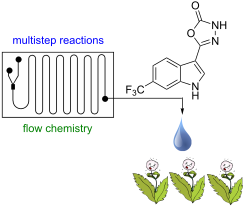
Graphical Abstract
Figure 1: Natural indole containing molecules 1–7 of biological importance and synthetic auxin analogue 8 req...
Scheme 1: Synthetic strategy towards desired indole product 8.
Scheme 2: Initial flow reactor setup for the synthesis of intermediate 11.
Scheme 3: Coflore ACR setup for the synthesis of intermediate 11.
Scheme 4: Quenching and work-up of the reaction stream from the Coflore ACR for the synthesis intermediate 11....
Figure 2: X-ray structure of intermediate 11, and reductive cyclisation products 12 and 14, assigned structur...
Scheme 5: Stepwise reduction of intermediate 11 under hydrogenation conditions. * Indicates potential tautome...
Scheme 6: Flow sequence for the construction of product 8.
Scheme 7: Assembled process for flow synthesis of product 8 with yields and throughputs.
Beilstein J. Org. Chem. 2017, 13, 2304–2309, doi:10.3762/bjoc.13.226
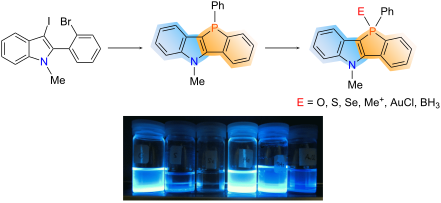
Graphical Abstract
Figure 1: Phosphole-based tetracyclic heteroacenes.
Scheme 1: Synthesis of benzophospholo[3,2-b]indole 3.
Scheme 2: Chemical modifications of the phosphorus atom of 3.
Figure 2: ORTEP drawing of compound 3 (left) and 4 (right) with 50% probability. All hydrogen atoms are omitt...
Figure 3: UV–vis absorption (left) and normalized fluorescence emission (right, excitation at 335 nm) spectra...
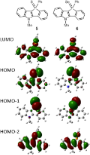
Figure 4: The spatial plots of the HOMO and LUMO of compounds 3, 4, 7 and 9. The calculations were performed ...
Figure 5: The spatial plots of the selected molecular orbitals of compounds 5 and 6. The calculations were pe...
Beilstein J. Org. Chem. 2017, 13, 2214–2234, doi:10.3762/bjoc.13.220
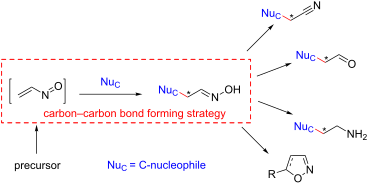
Graphical Abstract
Scheme 1: Precursors of nitrosoalkenes NSA.
Scheme 2: Reactions of cyclic α-chlorooximes 1 with 1,3-dicarbonyl compounds.
Scheme 3: C-C-coupling of N,N-bis(silyloxy)enamines 3 with 1,3-dicarbonyl compounds.
Scheme 4: Reaction of N,N-bis(silyloxy)enamines 3 with nitronate anions.
Scheme 5: Reaction of α-chlorooximes TBS ethers 2 with ester enolates.
Scheme 6: Assembly of bicyclooctanone 14 via an intramolecular cyclization of nitrosoalkene NSA2.
Scheme 7: A general strategy for the assembly of bicyclo[2.2.1]heptanes via an intramolecular cyclization of ...
Scheme 8: Stereochemistry of Michael addition to cyclic nitrosoalkene NSA3.
Scheme 9: Stereochemistry of Michael addition to acyclic nitrosoalkenes NSA4.
Scheme 10: Stereochemistry of Michael addition to γ-alkoxy nitrosoalkene NSA5.
Scheme 11: Oppolzer’s total synthesis of 3-methoxy-9β-estra(1,3,5(10))trien(11,17)dione (25).
Scheme 12: Oppolzer’s total synthesis of (+/−)-isocomene.
Figure 1: Alkaloids synthesized using stereoselective Michael addition to conjugated nitrosoalkenes.
Scheme 13: Weinreb’s total synthesis of alstilobanines A, E and angustilodine.
Scheme 14: Weinreb’s approach to the core structure of apparicine alkaloids.
Scheme 15: Weinreb’s synthesis of (+/−)-myrioneurinol via stereoselective conjugate addition of malonate to ni...
Scheme 16: Reactions of cyclic α-chloro oximes with Grignard reagents.
Scheme 17: Corey’s synthesis of (+/−)-perhydrohistrionicotoxin.
Scheme 18: Addition of Gilman’s reagents to α,β-epoxy oximes 53.
Scheme 19: Addition of Gilman’s reagents to α-chlorooximes.
Scheme 20: Reaction of silyl nitronate 58 with organolithium reagents via nitrosoalkene NSA12.
Scheme 21: Reaction of β-ketoxime sulfones 61 and 63 with lithium acetylides.
Scheme 22: Electrophilic addition of nitrosoalkenes NSA14 to electron-rich arenes.
Scheme 23: Addition of nitrosoalkenes NSA14 to pyrroles and indoles.
Scheme 24: Reaction of phosphinyl nitrosoalkenes NSA15 with indole.
Scheme 25: Reaction of pyrrole with α,α’-dihalooximes 70.
Scheme 26: Synthesis of indole-derived psammaplin A analogue 72.
Scheme 27: Synthesis of tryptophanes by reduction of oximinoalkylated indoles 68.
Scheme 28: Ottenheijm’s synthesis of neoechinulin B analogue 77.
Scheme 29: Synthesis of 1,2-dihydropyrrolizinones 82 via addition of pyrrole to ethyl bromopyruvate oxime.
Scheme 30: Kozikowski’s strategy to indolactam-based alkaloids via addition of indoles to ethyl bromopyruvate ...
Scheme 31: Addition of cyanide anion to nitrosoalkenes and subsequent cyclization to 5-aminoisoxazoles 86.
Scheme 32: Et3N-catalysed addition of trimethylsilyl cyanide to N,N-bis(silyloxy)enamines 3 leading to 5-amino...
Scheme 33: Addition of TMSCN to allenyl N-siloxysulfonamide 89.
Scheme 34: Reaction of nitrosoallenes NSA16 with malodinitrile and ethyl cyanoacetic ester.
Scheme 35: [4 + 1]-Annulation of nitrosoalkenes NSA with sulfonium ylides 92.
Scheme 36: Reaction of diazo compounds 96 with nitrosoalkenes NSA.
Scheme 37: Tandem Michael addition/oxidative cyclization strategy to isoxazolines 100.
Beilstein J. Org. Chem. 2017, 13, 1907–1931, doi:10.3762/bjoc.13.186
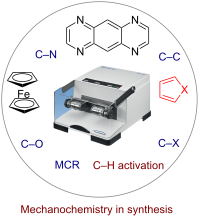
Graphical Abstract
Scheme 1: Mechanochemical aldol condensation reactions [48].
Scheme 2: Enantioselective organocatalyzed aldol reactions under mechanomilling. a) Based on binam-(S)-prolin...
Scheme 3: Mechanochemical Michael reaction [51].
Scheme 4: Mechanochemical organocatalytic asymmetric Michael reaction [52].
Scheme 5: Mechanochemical Morita–Baylis–Hillman (MBH) reaction [53].
Scheme 6: Mechanochemical Wittig reactions [55].
Scheme 7: Mechanochemical Suzuki reaction [56].
Scheme 8: Mechanochemical Suzuki–Miyaura coupling by LAG [57].
Scheme 9: Mechanochemical Heck reaction [59].
Scheme 10: a) Sonogashira coupling under milling conditions. b) The representative example of a double Sonogas...
Scheme 11: Copper-catalyzed CDC reaction under mechanomilling [67].
Scheme 12: Asymmetric alkynylation of prochiral sp3 C–H bonds via CDC [68].
Scheme 13: Fe(III)-catalyzed CDC coupling of 3-benzylindoles [69].
Scheme 14: Mechanochemical synthesis of 3-vinylindoles and β,β-diindolylpropionates [70].
Scheme 15: Mechanochemical C–N bond construction using anilines and arylboronic acids [78].
Scheme 16: Mechanochemical amidation reaction from aromatic aldehydes and N-chloramine [79].
Scheme 17: Mechanochemical CDC between benzaldehydes and benzyl amines [81].
Scheme 18: Mechanochemical protection of -NH2 and -COOH group of amino acids [85].
Scheme 19: Mechanochemical Ritter reaction [87].
Scheme 20: Mechanochemical synthesis of dialkyl carbonates [90].
Scheme 21: Mechanochemical transesterification reaction using basic Al2O3 [91].
Scheme 22: Mechanochemical carbamate synthesis [92].
Scheme 23: Mechanochemical bromination reaction using NaBr and oxone [96].
Scheme 24: Mechanochemical aryl halogenation reactions using NaX and oxone [97].
Scheme 25: Mechanochemical halogenation reaction of electron-rich arenes [88,98].
Scheme 26: Mechanochemical aryl halogenation reaction using trihaloisocyanuric acids [100].
Scheme 27: Mechanochemical fluorination reaction by LAG method [102].
Scheme 28: Mechanochemical Ugi reaction [116].
Scheme 29: Mechanochemical Passerine reaction [116].
Scheme 30: Mechanochemical synthesis of α-aminonitriles [120].
Scheme 31: Mechanochemical Hantzsch pyrrole synthesis [121].
Scheme 32: Mechanochemical Biginelli reaction by subcomponent synthesis approach [133].
Scheme 33: Mechanochemical asymmetric multicomponent reaction[134].
Scheme 34: Mechanochemical Paal–Knorr pyrrole synthesis [142].
Scheme 35: Mechanochemical synthesis of benzothiazole using ZnO nano particles [146].
Scheme 36: Mechanochemical synthesis of 1,2-di-substituted benzimidazoles [149].
Scheme 37: Mechanochemical click reaction using an alumina-supported Cu-catalyst [152].
Scheme 38: Mechanochemical click reaction using copper vial [155].
Scheme 39: Mechanochemical indole synthesis [157].
Scheme 40: Mechanochemical synthesis of chromene [158].
Scheme 41: Mechanochemical synthesis of azacenes [169].
Scheme 42: Mechanochemical oxidative C-P bond formation [170].
Scheme 43: Mechanochemical C–chalcogen bond formation [171].
Scheme 44: Solvent-free synthesis of an organometallic complex.
Scheme 45: Selective examples of mechano-synthesis of organometallic complexes. a) Halogenation reaction of Re...
Scheme 46: Mechanochemical activation of C–H bond of unsymmetrical azobenzene [178].
Scheme 47: Mechanochemical synthesis of organometallic pincer complex [179].
Scheme 48: Mechanochemical synthesis of tris(allyl)aluminum complex [180].
Scheme 49: Mechanochemical Ru-catalyzed olefin metathesis reaction [181].
Scheme 50: Rhodium(III)-catalyzed C–H bond functionalization under mechanochemical conditions [182].
Scheme 51: Mechanochemical Csp2–H bond amidation using Ir(III) catalyst [183].
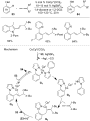
Scheme 52: Mechanochemical Rh-catalyzed Csp2–X bond formation [184].
Scheme 53: Mechanochemical Pd-catalyzed C–H activation [185].
Scheme 54: Mechanochemical Csp2–H bond amidation using Rh catalyst.
Scheme 55: Mechanochemical synthesis of indoles using Rh catalyst [187].
Scheme 56: Mizoroki–Heck reaction of aminoacrylates with aryl halide in a ball-mill [58].
Scheme 57: IBX under mechanomilling conditions [8].
Scheme 58: Thiocarbamoylation of anilines; trapping of reactive aryl-N-thiocarbamoylbenzotriazole intermediate...
Beilstein J. Org. Chem. 2017, 13, 1871–1878, doi:10.3762/bjoc.13.182
Graphical Abstract
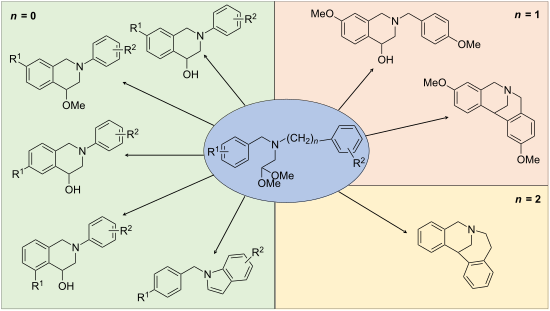
Figure 1: Non-steroidal templates from estradiol.
Scheme 1: Pomeranz–Fritsch and Pomeranz–Fritsch–Bobbitt reactions. Conditions: (a) conc. H2SO4; (b) benzene, ...
Scheme 2: Designed synthesis of THIQ. Conditions: (a) NaBH(OAc)3, CHCl3, rt; (b) 6 M HCl or 70% HClO4 (see Table 1),...
Scheme 3: Side reaction during the double alkylation of 7 and possible reaction mechanism for the formation o...
Scheme 4: Competition between the formation of 5- and 7-substituted THIQs. Conditions: (a) 6 M HCl, rt.
Scheme 5: Formation of the 4-hydroxy and 4-methoxy-THIQs. Conditions: (a) 6 M HCl or 70% HClO4, rt (see Table 3).
Scheme 6: Competition between the formation of THIQs 10a,o,p and indoles 16a,o,p. Conditions: (a) 70% HClO4, ...
Scheme 7: Competition between 6- and 7-membered ring formation. Conditions: (a) NaBH(OAc)3, CHCl3, rt; (b) 2,...
Scheme 8: Competition between ring formation para- or meta- to an activating group. Conditions: (a) NaBH(OAc)3...
Beilstein J. Org. Chem. 2017, 13, 1866–1870, doi:10.3762/bjoc.13.181
Graphical Abstract
Figure 1: Examples of biologically active benzothiophene derivatives.
Scheme 1: Proposal of applicable β-sulfonium carbanion.
Figure 2: Synthesis of benzothiophenes. Reaction conditions: 1 (0.5 mmol), DBU (0.1 mmol), THF (2.0 mL), 50 °...
Scheme 2: Proposal of indole synthesis via allenylphosphonates.
Figure 3: Synthesis of 1-methylindole phosphine oxides. Reaction conditions: 3 (0.5 mmol), (EtO)2PCl (0.6 mmo...
Beilstein J. Org. Chem. 2017, 13, 1857–1865, doi:10.3762/bjoc.13.180
Graphical Abstract
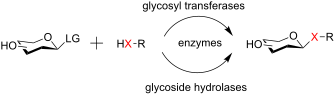
Figure 1: Mechanisms of O-GTs-catalysed glycosylation.
Figure 2: Desulfoglucosinolate biosynthesis by UGT74B1.
Figure 3: Examples of thiol-containing acceptors used in the chemo-enzymatic biosynthesis of S-glycosides cat...
Figure 4: Examples of C-glycosylated products biosynthesized by natural C-GT. Compounds showed are formed by ...
Figure 5: General mechanisms of the O-GHs-catalysed hydrolysis.
Figure 6: Neighbouring group participation mechanism of retaining the O-GHs-catalysed hydrolysis.
Figure 7: Mechanism of the thioligases.
Figure 8: Examples of thiol acceptors utilized with GHs.
Beilstein J. Org. Chem. 2017, 13, 1670–1692, doi:10.3762/bjoc.13.162
Graphical Abstract
Figure 1: Representative bioactive heterocycles.
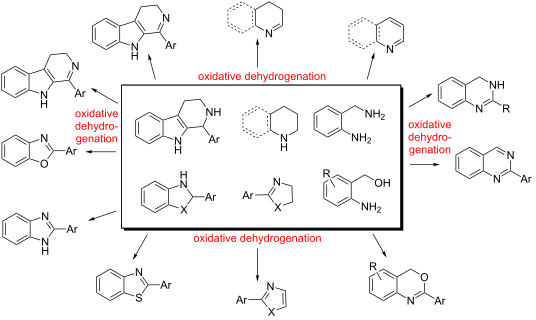
Scheme 1: The concept of oxidative dehydrogenation.
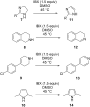
Scheme 2: IBX-mediated oxidative dehydrogenation of various heterocycles [31-34].
Scheme 3: Potential mechanism of IBX-mediated oxidative dehydrogenation of N-heterocycles [31-34].
Scheme 4: IBX-mediated room temperature one-pot condensation–oxidative dehydrogenation of o-aminobenzylamines....
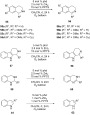
Scheme 5: Anhydrous cerium chloride-catalyzed, IBX-mediated oxidative dehydrogenation of various heterocycles...
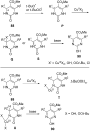
Scheme 6: Oxidative dehydrogenation of quinazolinones with I2 and DDQ [37-40].
Scheme 7: DDQ-mediated oxidative dehydrogenation of thiazolidines and oxazolidines.
Scheme 8: Oxone-mediated oxidative dehydrogenation of intermediates from o-phenylenediamine and o-aminobenzyl...
Scheme 9: Transition metal-free oxidative cross-dehydrogenative coupling.
Scheme 10: NaOCl-mediated oxidative dehydrogenation.
Scheme 11: NBS-mediated oxidative dehydrogenation of tetrahydro-β-carbolines.
Scheme 12: One-pot synthesis of various methyl(hetero)arenes from o-aminobenzamide in presence of di-tert-buty...
Scheme 13: Oxidative dehydrogenation of 1, 4-DHPs.
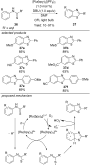
Scheme 14: Synthesis of quinazolines in the presence of MnO2.
Scheme 15: Selenium dioxide and potassium dichromate-mediated oxidative dehydrogenation of tetrahydro-β-carbol...
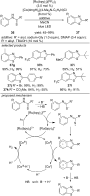
Scheme 16: Synthesis of substituted benzazoles in the presence of barium permanganate.
Scheme 17: Oxidative dehydrogenation with phenanthroline-based catalysts. PPTS = pyridinium p-toluenesulfonic ...
Scheme 18: Oxidative dehydrogenation with Flavin mimics.
Scheme 19: o-Quinone based bioinspired catalysts for the synthesis of dihydroisoquinolines.
Scheme 20: Cobalt-catalyzed aerobic dehydrogenation of Hantzch 1,4-DHPs and pyrazolines.
Scheme 21: Mechanism of cobalt-catalyzed aerobic dehydrogenation of Hantzch 1,4-DHPs.
Scheme 22: DABCO and TEMPO-catalyzed aerobic oxidative dehydrogenation of quinazolines and 4H-3,1-benzoxazines....
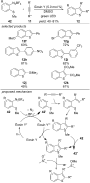
Scheme 23: Putative mechanism for Cu(I)–DABCO–TEMPO catalyzed aerobic oxidative dehydrogenation of tetrahydroq...
Scheme 24: Potassium triphosphate modified Pd/C catalysts for the oxidative dehydrogenation of tetrahydroisoqu...
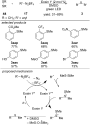
Scheme 25: Ruthenium-catalyzed polycyclic heteroarenes.
Scheme 26: Plausible mechanism of the ruthenium-catalyzed dehydrogenation.
Scheme 27: Bi-metallic platinum/iridium alloyed nanoclusters and 5,5’,6,6’-tetrahydroxy-3,3,3’,3’-tetramethyl-...
Scheme 28: Magnesium iodide-catalyzed synthesis of quinazolines.
Scheme 29: Ferrous chloride-catalyzed aerobic dehydrogenation of 1,2,3,4-tetrahydroquinolines.
Scheme 30: Cu(I)-catalyzed oxidative aromatization of indoles.
Scheme 31: Putative mechanism of the transformation.
Scheme 32: Oxidative dehydrogenation of pyrimidinones and pyrimidines.
Scheme 33: Putative mechanisms (radical and metal-catalyzed) of the transformation.
Scheme 34: Ferric chloride-catalyzed, TBHP-oxidized synthesis of substituted quinazolinones and arylquinazolin...
Scheme 35: Iridium-catalyzed oxidative dehydrogenation of quinolines.
Scheme 36: Microwave-assisted synthesis of β-carboline with a catalytic amount of Pd/C in lithium carbonate at...
Scheme 37: 4-Methoxy-TEMPO-catalyzed aerobic oxidative synthesis of 2-substituted benzazoles.
Scheme 38: Plausible mechanism of the 4-methoxy-TEMPO-catalyzed transformation.
Scheme 39: One-pot synthesis of 2-arylquinazolines, catalyzed by 4-hydroxy-TEMPO.
Scheme 40: Oxidative dehydrogenation – a key step in the synthesis of AZD8926.
Scheme 41: Catalytic oxidative dehydrogenation of tetrahydroquinolines to afford bioactive molecules.
Scheme 42: Iodobenzene diacetate-mediated synthesis of β-carboline natural products.
Beilstein J. Org. Chem. 2017, 13, 817–824, doi:10.3762/bjoc.13.82
Graphical Abstract
Figure 1: Representative bioactive imidazo[1,2-a]pyridine and isoquinoline-containing derivatives.
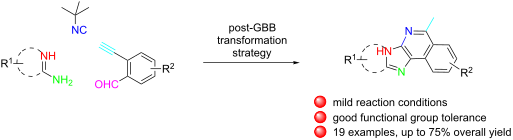
Scheme 1: GBB-based MCR strategy for the imidazo[1,2-a]pyridine-fused isoquinoline derivatives.
Beilstein J. Org. Chem. 2016, 12, 2420–2442, doi:10.3762/bjoc.12.236
Graphical Abstract
Figure 1: Possible two-component couplings for various monocyclic rings frequently encountered in organic mol...
Figure 2: Possible three-component couplings for various monocyclic rings frequently encountered in organic m...
Figure 3: Possible four-component couplings for various monocyclic rings frequently encountered in organic mo...
Figure 4: Permutations of two-component coupling patterns for synthesizing the cyclohexanone ring. Synthesis ...
Figure 5: Permutations of two-component coupling patterns for synthesizing the cyclohexanone ring overlayed w...
Scheme 1: Conjectured syntheses of cyclohexanone via [5 + 1] strategies.
Scheme 2: Conjectured syntheses of cyclohexanone via [4 + 2] strategies.
Scheme 3: Conjectured syntheses of cyclohexanone via [3 + 3] strategies.
Figure 6: Permutations of three-component coupling patterns for synthesizing the cyclohexanone ring. Synthesi...
Figure 7: Permutations of three-component coupling patterns for synthesizing the pyrazole ring via [2 + 2 + 1...
Scheme 4: Literature method for constructing the pyrazole ring via the A4 [2 + 2 + 1] strategy.
Scheme 5: Literature methods for constructing the pyrazole ring via the A5 [2 + 2 + 1] strategy.
Scheme 6: Literature methods for constructing the pyrazole ring via the A1 [2 + 2 + 1] strategy.
Scheme 7: Literature methods for constructing the pyrazole ring via the B4 [3 + 1 + 1] strategy.
Figure 8: Intrinsic green performance of documented pyrazole syntheses according to [2 + 2 + 1] and [3 + 1 + ...
Scheme 8: Conjectured reactions for constructing the pyrazole ring via the A2 and A3 [2 + 2 + 1] strategies.
Scheme 9: Conjectured reactions for constructing the pyrazole ring via the B1, B2, B3, and B4 [3 + 1 + 1] str...
Figure 9: Permutations of three-component coupling patterns for synthesizing the Biginelli ring adduct. Synth...
Scheme 10: Reported syntheses of the Biginelli adduct via the traditional [3 + 2 + 1] mapping strategy.
Scheme 11: Reported syntheses of the Biginelli adduct via new [3 + 2 + 1] mapping strategies.
Scheme 12: Reported syntheses of the Biginelli adduct via a new [2 + 2 + 1 + 1] mapping strategy.
Scheme 13: Conjectured syntheses of the Biginelli adduct via new [2 + 2 + 2] mapping strategies.
Scheme 14: Conjectured syntheses of the Biginelli adduct via new [3 + 2 + 1] mapping strategies.
Figure 10: Intrinsic green performance of documented Biginelli adduct syntheses according to [3 + 2 + 1] three...
Figure 11: Intrinsic green performance of newly conjectured Biginelli adduct syntheses according to [4 + 1 + 1...
Beilstein J. Org. Chem. 2016, 12, 2240–2249, doi:10.3762/bjoc.12.216
Graphical Abstract
Figure 1: Bioactive 2,3’-spiropyrrolidinyloxindoles.
Scheme 1: Earlier studied cycloaddition reaction.
Scheme 2: Synthesis of dipolarophiles 1a–c.
Scheme 3: Synthesis of dispirocompounds 4a–o.
Figure 2: Synthesis of dispiro compounds 4a–o. Reaction conditions: heating the mixture of compounds 1 (0.5 m...
Scheme 4: Synthesis of dipolarophiles 1d–f.
Figure 3: Synthesis of dispiro compounds 4p–t. Reaction conditions: heating the solution of compounds 1 (0.5 ...
Figure 4: Key interactions in {1H-13C}HMBC spectrum of 4f.
Figure 5: General view of 4c in the crystal in thermal ellipsoids representation (50% probability). Hydrogen ...
Figure 6: General view of 4e in the crystal in thermal ellipsoids representation (40% probability). Hydrogen ...
Figure 7: General view of 4r in the crystal in thermal ellipsoids representation (50% probability). Hydrogen ...
Figure 8: Modes of approach of azomethine ylide (R = H, Ph).
Beilstein J. Org. Chem. 2016, 12, 2026–2031, doi:10.3762/bjoc.12.190