


Search results
Search for "phenol" in Full Text gives 368 result(s) in Beilstein Journal of Organic Chemistry. Showing first 200.
Activated carbon as catalyst support: precursors, preparation, modification and characterization
Beilstein J. Org. Chem. 2020, 16, 1188–1202, doi:10.3762/bjoc.16.104
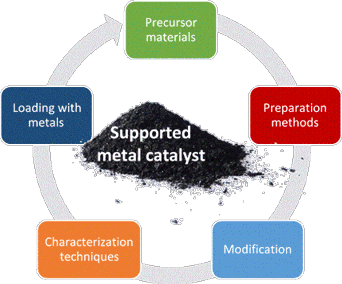
- be produced by salt templating or ultrasonic spray pyrolysis as well as by microwave irradiation. The resulting activated carbon materials are characterized by a variety of techniques such as SEM, FTIR, nitrogen adsorption, Boehm titrations, adsorption of phenol, methylene blue and iodine, TPD, CHNS
- aerosol-assisted self-assembly using amphiphilic triblock copolymers as template and low-molecular weight soluble phenol resin as carbon source. The amphiphilic surfactant influences the pore size and mesostructure of the resulting spherical carbons. Finally, the template is removed by calcination [97
- groups and simultaneously increase of basic properties [10]. Phenol, methylene blue and iodine adsorption: Adsorption capacity and amount of pores of activated carbon materials are determined by using different adsorbates (phenol, methylene blue and iodine). The activated carbons are added to defined


Recent applications of porphyrins as photocatalysts in organic synthesis: batch and continuous flow approaches
Beilstein J. Org. Chem. 2020, 16, 917–955, doi:10.3762/bjoc.16.83
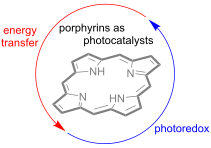
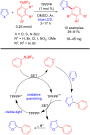
- synthesis of a Zr-based MOF with meso-tetrakis(4-carboxyphenyl)porphyrin (TCPP) (MOF-525, Zr6(OH)4O4(C48N4O8H26)3) [42] and showed its photocatalytic efficiency for oxidative hydroxylation of arylboronic acids [43]. The phenol products were obtained in quantitative yields for all evaluated arylboronic acids






Copper catalysis with redox-active ligands
Beilstein J. Org. Chem. 2020, 16, 858–870, doi:10.3762/bjoc.16.77
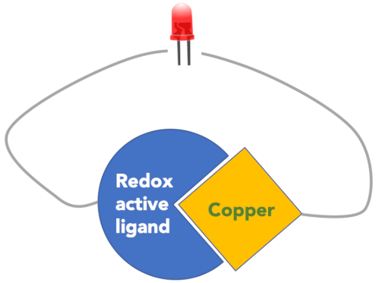
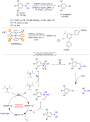
- could be circumvented through ligand modification. Phenol oxidation is ubiquitous in biological systems as demonstrated by the involvement of the copper enzymes tyrosinases (type III) in the melanogenesis process. The regioselectivity and reactivity of the oxidation of phenols are strongly dependent on
- the phenol substrate substitution pattern, and it is therefore difficult to develop general methods for this transformation. This substrate–control bias was successfully outmaneuvered by the development of a copper-based catalytic system operating under aerobic conditions and allowing selective access
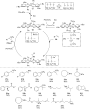
- metalloenzymatic active site was not characterized in detail, it might bear some resemblance to the original biological active site. Building on their previously discussed phenol oxidation methodology (Scheme 5 and Scheme 6), Lumb and co-workers have targeted subsequent C–N bond formation to access oxindoles [34



Recent advances in Cu-catalyzed C(sp3)–Si and C(sp3)–B bond formation
Beilstein J. Org. Chem. 2020, 16, 691–737, doi:10.3762/bjoc.16.67
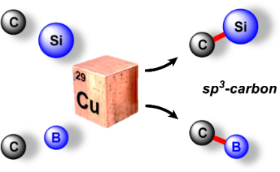
- equivalent to dienones (Scheme 29). In this case, however, instead of forming an enol, a highly stable phenol resulted from the addition of silicon at the methide position. The reaction was exclusively done on electron-rich systems 163–166. Nonetheless, further functionalization of one of the silicon
- -containing products (166) was carried out to arrive at the keto phenol derivative 167. Loh, Xu, and co-workers [66] explored related reactions involving unsaturated ketimines using copper triflate or copper bis(4-cyclohexylbutyrate) (Cu(CHB)2) to prepare allylic silanes. Interestingly, using one or the other


Towards the total synthesis of chondrochloren A: synthesis of the (Z)-enamide fragment
Beilstein J. Org. Chem. 2020, 16, 670–673, doi:10.3762/bjoc.16.64
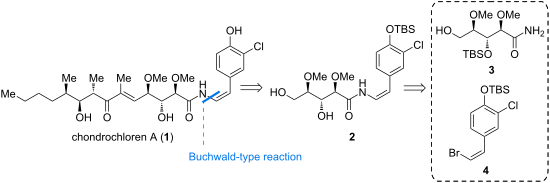
- (Scheme 2). Therefore, 4-hydroxybenzaldehyde (12) was chlorinated and phenol 13 was protected as TBS ether to afford aldehyde 14 which was then converted into dibromoolefine 15 in good yields using the Corey–Fuchs protocol. Uenishi et al. [21] published an effective way of defunctionalizing dihalogenated


A systematic review on silica-, carbon-, and magnetic materials-supported copper species as efficient heterogeneous nanocatalysts in “click” reactions
Beilstein J. Org. Chem. 2020, 16, 551–586, doi:10.3762/bjoc.16.52
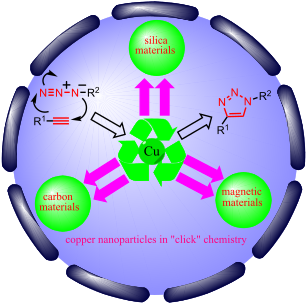
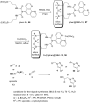
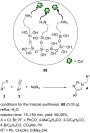
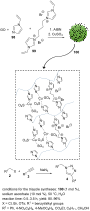
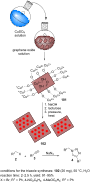
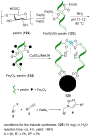
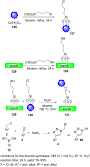
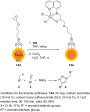
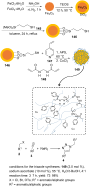
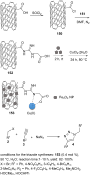
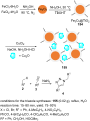
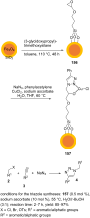
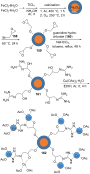
- phenol 8 was generated by the reaction of 2-hydroxybenzaldehyde (5) and o‐phenylenediamine (7) at rt using a cobalt catalyst. In the next step, a benzimidazole-containing aldehyde 9 was obtained by the reaction of 6 with benzimidazole-substituted phenol 8. This ligand was immobilized on propylamine
- employed in diverse organic reactions, including Suzuki reactions [64], Sonogashira reactions [65], transesterifications of triglycerides [66], hydrogenation reactions [67], N-heterocycle syntheses [68], cleavage of propargyl phenol ethers [69], etc. [70][71][72][73][74][75]. In this review article, we

















Copper-catalyzed enantioselective conjugate reduction of α,β-unsaturated esters with chiral phenol–carbene ligands
Beilstein J. Org. Chem. 2020, 16, 537–543, doi:10.3762/bjoc.16.50
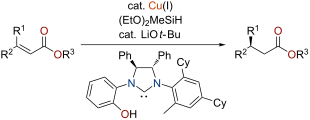
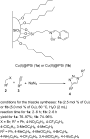
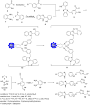
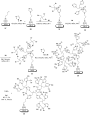
- , Sapporo, Hokkaido 001-0021, Japan 10.3762/bjoc.16.50 Abstract A chiral phenol–NHC ligand enabled the copper-catalyzed enantioselective conjugate reduction of α,β-unsaturated esters. The phenol moiety of the chiral NHC ligand played a critical role in producing the enantiomerically enriched products. The
- , while an achiral NHC/copper catalyst has successfully been utilized in this reaction [13]. Meanwhile, we devoted our effort to develop novel enantioselective C–C bond formation reactions utilizing chiral phenol–NHC/copper catalyst systems [14][15][16][17][18], in which the phenol group of the NHC ligand
- plays crucial roles in both the catalytic activity and stereoselectivity [19][20][21]. Notably, these catalyst systems were also applicable for three-component coupling reactions using hydrosilanes as hydride reagents [17]. Based on this knowledge, we decided to investigate the effects of the phenol–NHC


Synthesis and circularly polarized luminescence properties of BINOL-derived bisbenzofuro[2,3-b:3’,2’-e]pyridines (BBZFPys)
Beilstein J. Org. Chem. 2020, 16, 325–336, doi:10.3762/bjoc.16.32
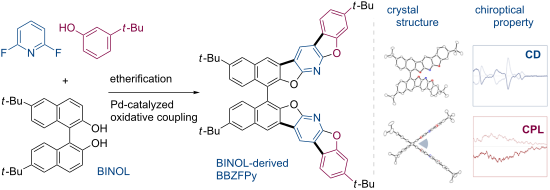
- using cesium carbonate as base in DMF at 40 °C [42], giving both the enantiomers of 2 in optically pure forms. The remaining fluorine substituents were subsequently replaced by a series of phenols including unsubstituted phenol, p-tert-butylphenol, and m-tert-butylphenol to produce the corresponding
- at 250.0 nm. Preparation of 3a–c Compound 3a: To a 10 mL Schlenk flask were added 2 (294 mg, 0.5 mmol), phenol (103 mg, 1.1 mmol), and Cs2CO3 (358 mg, 1.1 mmol). DMSO (3.5 mL) was added via the syringe. The mixture was stirred at 100 °C for 18 h under N2. The resulting mixture was extracted with


Recent developments in photoredox-catalyzed remote ortho and para C–H bond functionalizations
Beilstein J. Org. Chem. 2020, 16, 248–280, doi:10.3762/bjoc.16.26
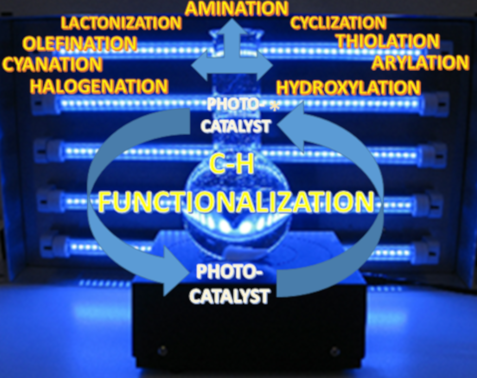
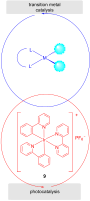
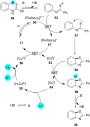
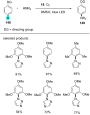
- -worker’s results [86], in 2015, Rueping and co-workers reported reoxidation reactions via visible photoredox catalysis [87]. In their study, they used photoredox catalyst 9 along with a Ru catalyst for ortho C–H functionalization of phenol derivatives, viz, ortho-(2-pyridyl)phenols (Pyr, Scheme 2
- ). Captivatingly, in the absence of a photoredox catalyst, poor yields were obtained, and no reoxidation happened. On the other hand, quite recently, the same group reported on the conversion of phenol derivatives using dual semiconductor photoredox catalysis for C–H bond functionalizations, which was proved to be
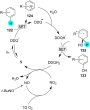
- catalysts was also reported, and this approach allowed for easy and fast transformations to take place. Herein, we cover all the reported strategies for aryl para C–H bond functionalizations by means of photoredox catalysis. Aryl C–H hydroxylation: synthesis of substituted phenols The synthesis of phenol










Efficient method for propargylation of aldehydes promoted by allenylboron compounds under microwave irradiation
Beilstein J. Org. Chem. 2020, 16, 168–174, doi:10.3762/bjoc.16.19
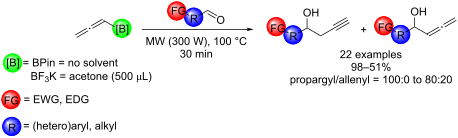
- method was evaluated using aldehydes containing different functionalities. For example, the use of vanillin, an aldehyde containing the acidic phenol group as substituent, gave the corresponding product 2o in 93% yield in an 82:18 ratio of regioisomers. In the same way, when aldehydes containing an ester


Synthesis and characterization of bis(4-amino-2-bromo-6-methoxy)azobenzene derivatives
Beilstein J. Org. Chem. 2019, 15, 3000–3008, doi:10.3762/bjoc.15.296
- , resulting in a yellowish oil. This was purified by column chromatography using hexane/ethyl acetate, 4:1, v/v as eluent. The product, phenol tert-butyl (4-chloro-2-hydroxyphenyl)carbamate, was used directly in the next step. (2) tert-Butyl (4-chloro-2-hydroxyphenyl)carbamate (2 mmol, 500 mg) was dissolved


Photoreversible stretching of a BAPTA chelator marshalling Ca2+-binding in aqueous media
Beilstein J. Org. Chem. 2019, 15, 2801–2811, doi:10.3762/bjoc.15.273
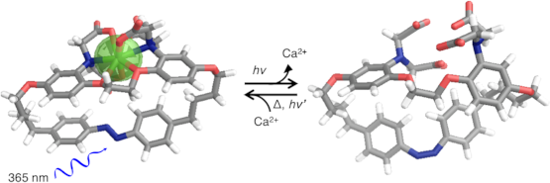
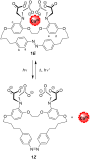
- then underwent a regioselective monodeprotection to generate a lone phenol group. The phenolate was reacted with 1,2-dibromoethane and the nitrobenzene groups were reduced to the corresponding anilines giving 1a. The double aniline 1a was alkylated using ethyl bromoacetate under basic conditions in




Synthesis of novel sulfide-based cyclic peptidomimetic analogues to solonamides
Beilstein J. Org. Chem. 2019, 15, 2544–2551, doi:10.3762/bjoc.15.247
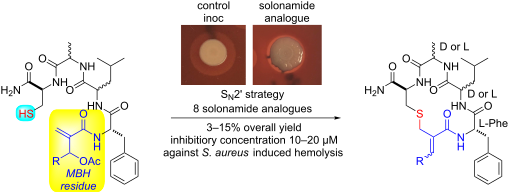
- prevent the expression of Staphylococcus aureus virulence factors such as α-hemolysin and phenol-soluble modulins without affecting the bacterial growth [3]. Particularly, solonamide B and its analogues revealed no detectable toxicity against erythrocytes or human neutrophils [3][4]. Staphylococcus aureus


Perspective isomorphs – a new classification of molecular structures based on artistic and chemical concepts
Beilstein J. Org. Chem. 2019, 15, 2319–2326, doi:10.3762/bjoc.15.224
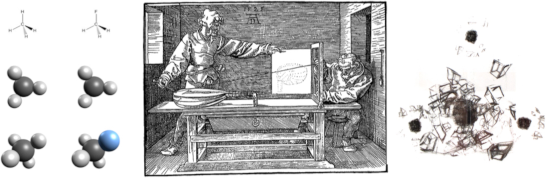
- . According to the viewpoint, one molecule can be assigned to different PI classes. In Figure 2 different aromatic compounds are shown. While 1,2-dihydroxybenzene is perspective isomorphic to 1,2-difluorobenzene or naphthalene, benzene and phenol can be grouped into the same PI class. These two compounds can
- to a group on the left: 1,2-dihydroxybenzene, 1,2-difluorobenzene, naphthalene. Molecules that can be allocated to a group on the right: diphenylacetylene, 4-fluorobiphenyl, benzoic acid. Molecules that can be allocated to both groups: benzene (not shown), phenol, fluorobenzene (the arrows in red and


Fluorescent phosphorus dendrimers excited by two photons: synthesis, two-photon absorption properties and biological uses
Beilstein J. Org. Chem. 2019, 15, 2287–2303, doi:10.3762/bjoc.15.221
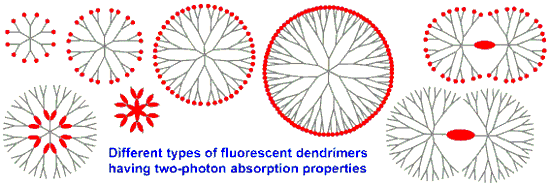
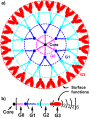
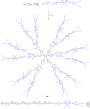
- dendrimers functionalized with TPA fluorophores used a blue-emitting quadrupolar fluorophore based on a fluorene core [37][38][39][40][41] and functionalized by a phenol on one side. The synthesis was carried out from generation 1 (12 fluorophores) to generation 4 (96 fluorophores) (Scheme 2). The
- . Besides the blue-emitting TPA fluorophore shown in Scheme 2, a related green-emitting fluorophore functionalized by a phenol has been synthesized and grafted to the surface of the second generation dendrimer (Figure 3). A very high TPA cross-section of 35,000 GM was obtained at 740 nm for this dendrimer
- derivatives grafted on the surface of phosphorhydrazone dendrimers. In this case, a β-diketone functionalized by a phenol was first grafted on the surface of the dendrimer [47], then BF3 was added to obtain the dioxaborines (Scheme 3). Monomer, dimer, and all generations of the dendrimer from zero (6 terminal





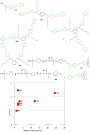


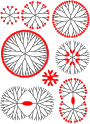
Synthesis of acremines A, B and F and studies on the bisacremines
Beilstein J. Org. Chem. 2019, 15, 2271–2276, doi:10.3762/bjoc.15.219

- traced back to silyl enol ether 10. Ent-10 was first reported by Herzon and co-workers [9] and is derived from phenol silyl ether 11 via Birch reduction and dihydroxylation. Results and Discussion Our synthesis started with meta-cresol (12) which was protected as a TIPS ether and then subjected to Birch


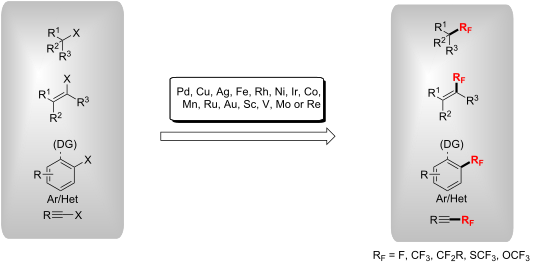
Recent advances in transition-metal-catalyzed incorporation of fluorine-containing groups
Beilstein J. Org. Chem. 2019, 15, 2213–2270, doi:10.3762/bjoc.15.218


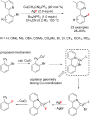






A review of the total syntheses of triptolide
Beilstein J. Org. Chem. 2019, 15, 1984–1995, doi:10.3762/bjoc.15.194
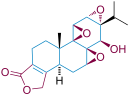
- corresponding carboxylic acid followed by hydrogenolysis with H2/Pd-C led in spontaneous lactonization to give the key butenolide 66. Oxidation of 66 with CrO3/AcOH–H2O, followed by saponification and reduction afforded known benzyl alcohol 46 (19% from 66). Then, phenol 46 was converted to the corresponding


Archangelolide: A sesquiterpene lactone with immunobiological potential from Laserpitium archangelica
Beilstein J. Org. Chem. 2019, 15, 1933–1944, doi:10.3762/bjoc.15.189
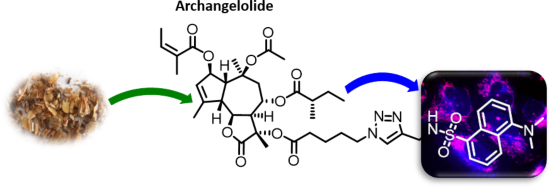
- ) and, the cells were incubated for another 24, 48 and 72 h. Next, the medium was removed and the cells were incubated with 5 µL of WST-1 dissolved in 100 µL of high glucose DMEM without phenol red with 10% FBS for 2 h. Then, the absorbance was measured. Cells incubated with a vehicle (DMSO) in medium




A novel three-component reaction between isocyanides, alcohols or thiols and elemental sulfur: a mild, catalyst-free approach towards O-thiocarbamates and dithiocarbamates
Beilstein J. Org. Chem. 2019, 15, 1523–1533, doi:10.3762/bjoc.15.155
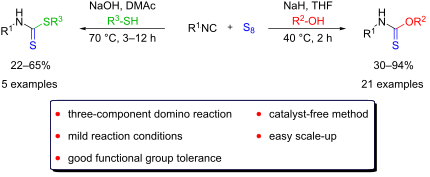
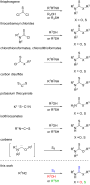
- latter case no dimeric product but several unidentified side products were detected by TLC and HPLC–MS. Although the full conversion of the isocyanide to the isothiocyanate intermediate was observed by TLC and HPLC–MS, phenol proved to be unreactive under the standard reaction conditions. Consequently
- -thiocarbamate. However, in this case only the isothiocyanate intermediate was obtained. Then, trimethylamine was applied in refluxing MeCN [95] or sodium hydroxide in dimethyl sulfoxide (DMSO) at 70 °C. In both cases only the isothiocyanate intermediate and phenol were observed by HPLC–MS but no formation of
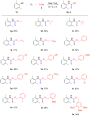
- and 5b), while in the case of secondary (5c and 5d) and tertiary thiols (5e) the products were isolated in lower yields. Although a full conversion of the isocyanide to the isothiocyanate intermediate was observed by TLC and HPLC–MS, thiophenol, likewise to phenol was unreactive under the standard




Different reactivity of phosphorylallenes under the action of Brønsted or Lewis acids: a crucial role of involvement of the P=O group in intra- or intermolecular interactions at the formation of cationic intermediates
Beilstein J. Org. Chem. 2019, 15, 1491–1504, doi:10.3762/bjoc.15.151
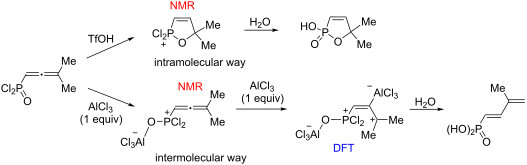
- Supporting Information File 1). Reactions of allene 1a with strongly donating arenes, 1,3,5-trimethylbenzene (mesitylene), 1,2,4-trimethylbenzene (pseudocumene), phenol, thiophenol, 1,3-dimethoxybenzene, 1,4-dimethoxybenzene, and other arenes, such as 1,2-dichlorobenzene, 1,4-dibromobenzene, gave rise to




Fluorine-containing substituents: metabolism of the α,α-difluoroethyl thioether motif
Beilstein J. Org. Chem. 2019, 15, 1441–1447, doi:10.3762/bjoc.15.144
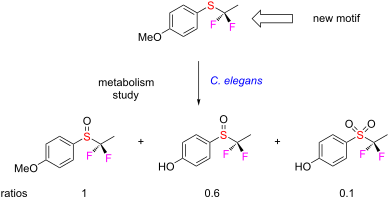
- significantly more slowly to the sulfone. When the substrate was (p-OMe)PhSCF2CH3, then the resultant (demethylated) phenol sulfoxide had an enantiomeric excess of 60%, and when the substrate was the β-substituted-SCF2CH3 naphthalene, then the enantiomeric excess of the resultant sulfoxide was 54%. There was no
- evidence of defluorination, unlike the corresponding oxygen ether (p-OMe)PhOCF2CH3, which was converted to the (demethylated) phenol acetate ester during C. elegans incubation. We conclude that the aryl–S–CF2CH3 motif is metabolised in a similar manner to aryl–SCF3, a motif that is being widely explored in
- metabolised. Product profiles were again determined by HPLC analysis and relationships are summarised in Scheme 2. Incubation of racemic sulfoxide 6 led to a similar outcome to that for 4 with the formation of phenol sulfoxide 7 and phenol sulfone 8 suggesting that sulfoxide 6 is the first formed metabolite


Complexation of a guanidinium-modified calixarene with diverse dyes and investigation of the corresponding photophysical response
Beilstein J. Org. Chem. 2019, 15, 1394–1406, doi:10.3762/bjoc.15.139
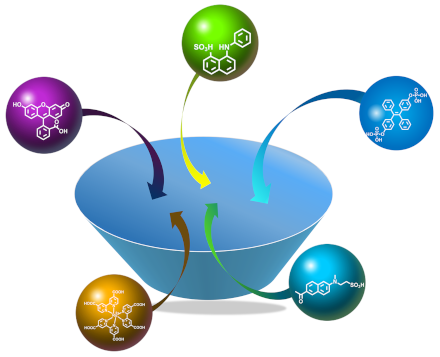
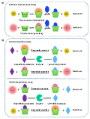
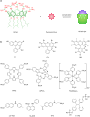
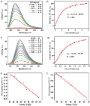
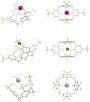
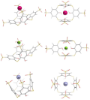
- photophysical behavior of Ru(II) complexes affected by calixarenes has been studied by different groups. Kirsch-De Mesmaeker and co-workers reported that the luminescence of [Ru(TAP)2(phen)]2+ (TAP = 1,4,5,8-tetraazaphenanthrene, phen = 1,10-phenanthroline) complex could be quenched by the phenol moieties of a



Host–guest interactions between p-sulfonatocalix[4]arene and p-sulfonatothiacalix[4]arene and group IA, IIA and f-block metal cations: a DFT/SMD study
Beilstein J. Org. Chem. 2019, 15, 1321–1330, doi:10.3762/bjoc.15.131
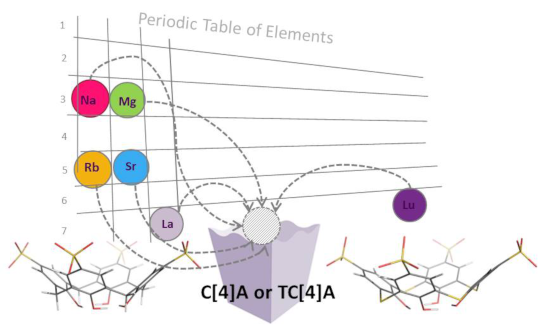
- the well-studied cyclodextrins and crown ethers. Calixarenes are products of phenol–aldehyde condensation, as the aromatic components may derived from phenol, resorcinol, or pyrogallol; the aldehyde most often used for phenol is simple formaldehyde (methanal, HCHO), while larger aldehydes (e.g
- ., acetaldehyde – ethanal, CH3CHO) are required in condensation reactions with resorcinol and pyrogallol [1]. Thiacalixarenes are macrocycles (or cyclic oligomers) based on a condensation of the same phenol derivatives and sulfur [2]. They are characterized by a larger cavity size than the conventional





Mechanochemical Friedel–Crafts acylations
Beilstein J. Org. Chem. 2019, 15, 1313–1320, doi:10.3762/bjoc.15.130
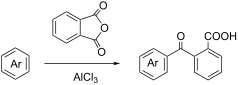
- the reaction carried out in solution (40% vs 6% yield). The screening of substrates showed disparate reactivities, ranging from quantitative to low (Scheme 3). Most rewarding are reactions of toluene, o-xylene, naphthalene and tetralin. Interestingly, ball milling of 4-ethylanisole provided phenol 12





