Search results
Search for "solubility" in Full Text gives 993 result(s) in Beilstein Journal of Organic Chemistry. Showing first 200.
Innovative synthesis of drug-like molecules using tetrazole as core building blocks
Beilstein J. Org. Chem. 2024, 20, 950–958, doi:10.3762/bjoc.20.85
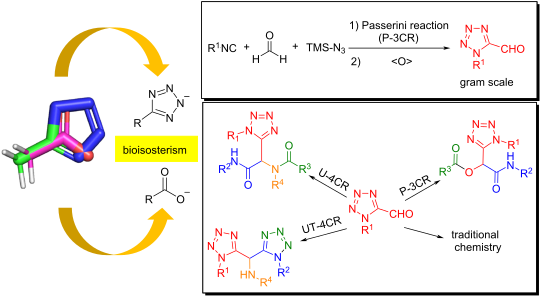
- . Trimethylsilyl azide is considered as a safe replacement of metal azides. We started the solvent optimization with MeOH and H2O as solvent system at room temperature, however, it did not yield any product even after 3 days (Table 1, entry 1). The use of DMF to improve the solubility of the paraformaldehyde solid




(Bio)isosteres of ortho- and meta-substituted benzenes
Beilstein J. Org. Chem. 2024, 20, 859–890, doi:10.3762/bjoc.20.78
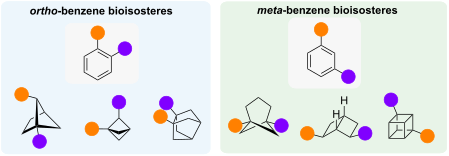
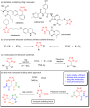
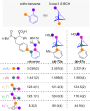
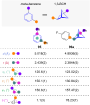
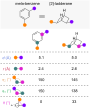
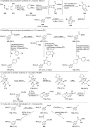
- candidates in development. Bioisosteres of para-benzenes, such as those based on bicyclo[1.1.1]pentane, are now very common and can be used to increase aqueous solubility and improve metabolic stability, among other benefits. Bioisosteres of ortho- and meta-benzenes were for a long time severely
- early drug discovery process. In many cases, the primary aim is the enhancement of biological activity, but in others, modulation of other critical properties such as aqueous solubility, metabolic stability, polarity, or lipophilicity is the target. In the latter cases, there is often a desire to retain
- fluorothalidomide [8]. Similarly, the reduction in the number of aromatic groups and increase in the level of saturation have risen to prominence as a way of improving low aqueous solubility, metabolic instability, or low lipophilicity in drug candidates that contain a high number of these functionalities [9][10














Synthesis and characterization of water-soluble C60–peptide conjugates
Beilstein J. Org. Chem. 2024, 20, 777–786, doi:10.3762/bjoc.20.71
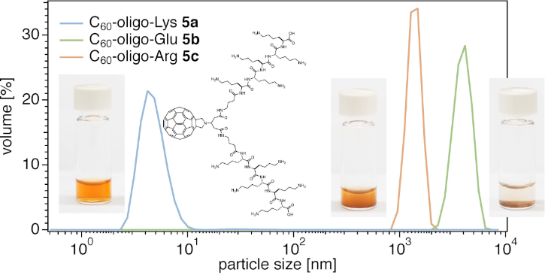
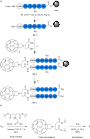
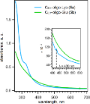
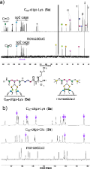
- biomaterials since related in vitro bioassay systems require water solubility of the chemicals for testing. To overcome this important obstacle, over the past decades, a variety of water-soluble fullerenes have been reported [10]. General approaches towards enhancing the water solubility of fullerenes involve
- solubility [14][15]. As early examples of the latter approach in the 1990s, Wennerström and co-workers reported the study of supramolecular BiCAP complexation of C60 with γ-cyclodextrin (γ-CD) [16]. Shinkai and co-workers synthesized water-soluble calixarene derivatives to form water-soluble complexes with
- -soluble C60 and C70 derivatives by covalently attaching biocompatible water-soluble polymers, such as polyethylene glycol (PEG) [37][38] and PVP [39]. Although these C60– and C70–polymer conjugates revealed high water-solubility, it was found that they, especially the PEG conjugates, formed micelle-like




Synthesis of new representatives of A3B-type carboranylporphyrins based on meso-tetra(pentafluorophenyl)porphyrin transformations
Beilstein J. Org. Chem. 2024, 20, 767–776, doi:10.3762/bjoc.20.70
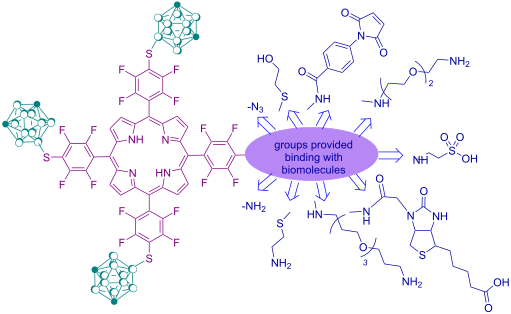
- known to enhance the aqueous solubility and tumor selectivity of hydrophobic drugs through the enhanced permeability and retention effect [46]. It was also shown that porphyrin 6 undergoes reaction with taurine (2-aminoethanesulfonic acid, 25) which is an essential nutraceutical with diverse


Research progress on the pharmacological activity, biosynthetic pathways, and biosynthesis of crocins
Beilstein J. Org. Chem. 2024, 20, 741–752, doi:10.3762/bjoc.20.68
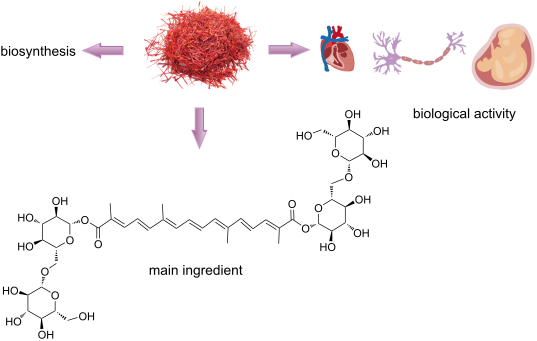
- that it was able to convert crocetin dialdehyde (8) into crocetin (1) in vitro [100]. BdALDH and CsALDH3I1 belong to the ALDH3 family, one of the most diverse groups of the ALDH superfamily. UGTs: Glycosylation of crocetin (1) improves the solubility significantly [101][102]. Moraga et al. cloned two


SOMOphilic alkyne vs radical-polar crossover approaches: The full story of the azido-alkynylation of alkenes
Beilstein J. Org. Chem. 2024, 20, 701–713, doi:10.3762/bjoc.20.64
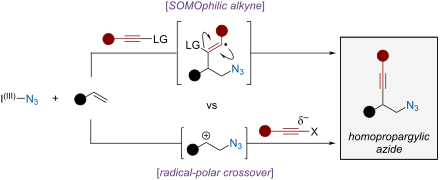
- minimized diazide formation. Next, a solvent screening was performed as it can vastly influence reaction proceeding via a carbocation intermediate. Alkynyltrifluoroborates have a low solubility in chlorinated solvents but are well soluble in acetonitrile. Although this solvent has been used in similar
- solubility in DME, which might cause the low yield observed. Ynonetrifluoroborate 5d could not be introduced as nucleophile, probably due to its reduced reactivity caused by the electron-withdrawing acyl group. Unfortunately, although Molander previously reported the use of vinyl-trifluoroborate 11 to trap
- investigation of the photocatalyst solubility. n.o = not observed, PC = photocatalyst. aThe data were already published in the supporting information of ref. [45]. Selected scope entries of the azido-alkynylation. The data were already published in ref. [45]. Unsuccessful examples. The conditions used are the


Synthesis and biological profile of 2,3-dihydro[1,3]thiazolo[4,5-b]pyridines, a novel class of acyl-ACP thioesterase inhibitors
Beilstein J. Org. Chem. 2024, 20, 540–551, doi:10.3762/bjoc.20.46
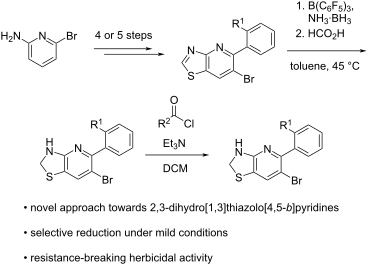
- thiazole moiety into a thiazoline unit had a measurable impact on several physicochemical parameters, such as LogP and water solubility. Whilst thiazolo[4,5-b]pyridine 5 afforded a moderate water solubility of 49 mg/L, paired with a LogP of 2.28 (pH 2.3), the corresponding 2,3-dihydro[1,3]thiazolo[4,5-b
- ]pyridine 7b had a higher water solubility of 173 mg/L and a lower LogP of 1.59 (pH 2.3). However, the lipophilicity of the new 2,3-dihydro[1,3]thiazolo[4,5-b]pyridines was highly dependent on the substituents. For example, the brominated analogs 13b and 13c showed considerably higher LogP values of 2.88


Ligand effects, solvent cooperation, and large kinetic solvent deuterium isotope effects in gold(I)-catalyzed intramolecular alkene hydroamination
Beilstein J. Org. Chem. 2024, 20, 479–496, doi:10.3762/bjoc.20.43
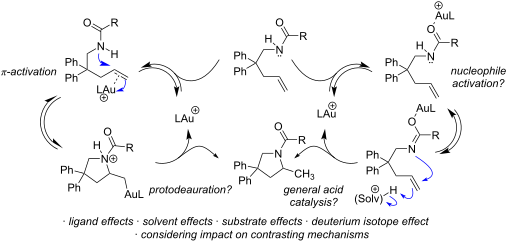
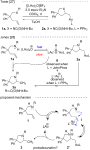
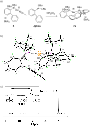
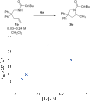
- concentrations of 1a, solutions became turbid as the substrate became less soluble, thus limiting the range of concentrations that could be used for relative rate plots. Switching to carbamate 1b alleviated the solubility problem, but the significantly slower reactions required switching to a more reactive
- and organic molecules [6]. Our results here are consistent, but the dynamics of mixed solvent systems are complex – water in DCM enhances rates, while water in MeOH nearly shuts them down. We presume these are consistent with the solubility effects proposed by Michon. In DCM, protic co-solvents were
- deviating from classic π-activation. Solvent effects that subtly impact solubility and proton transfer processes are likely to mask the impact of individual mechanistic steps involving gold and are not adequate to distinguish between the contrasting mechanisms under consideration here (Scheme 1 vs Scheme 2







Synthesis of 2,2-difluoro-1,3-diketone and 2,2-difluoro-1,3-ketoester derivatives using fluorine gas
Beilstein J. Org. Chem. 2024, 20, 460–469, doi:10.3762/bjoc.20.41
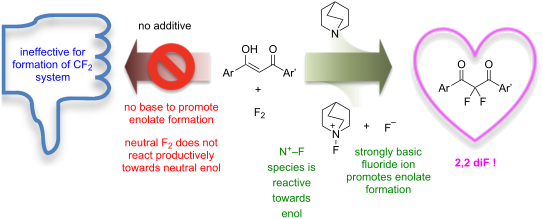
- effective base to facilitate the formation of 1a-enolate from 1a-enol and thus facilitate the initial monofluorination step by either fluorine or N-fluoroammonium ion 6. Carbonate ions are also expected to be highly basic in MeCN, however, their limited solubility is likely to inhibit their ability to act
- as an effective base for the formation of enolates of 1a and 2a, and this is reflected in the modest levels of formation of 3a (Scheme 4). Chloride ion, on the other hand, is less basic (pKa(MeCN) of HCl is 10.30 [60]), however, its greater solubility seemingly allows some level of deprotonation of


Enhanced host–guest interaction between [10]cycloparaphenylene ([10]CPP) and [5]CPP by cationic charges
Beilstein J. Org. Chem. 2024, 20, 436–444, doi:10.3762/bjoc.20.38
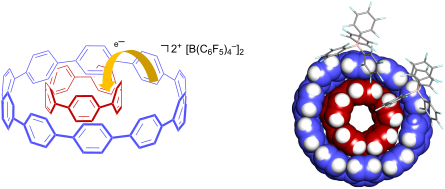
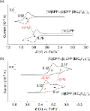
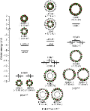
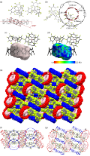
- . However, the low solubility and stability of the dication in polar solvents prevented confirmation of the solvent effect. To clarify the additional interaction in the complex, the electrochemical analysis of the [10]CPP⊃[5]CPP2+[B(C6F5)4–]2 was examined by using cyclic voltammetry, which was performed in




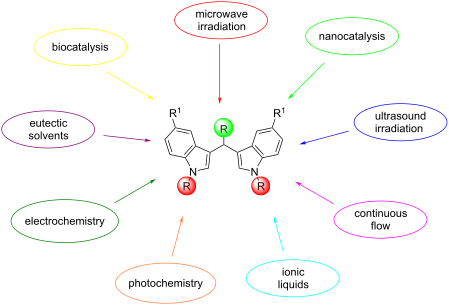
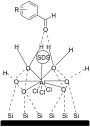
Green and sustainable approaches for the Friedel–Crafts reaction between aldehydes and indoles
Beilstein J. Org. Chem. 2024, 20, 379–426, doi:10.3762/bjoc.20.36




Facile approach to N,O,S-heteropentacycles via condensation of sterically crowded 3H-phenoxazin-3-one with ortho-substituted anilines
Beilstein J. Org. Chem. 2024, 20, 336–345, doi:10.3762/bjoc.20.34
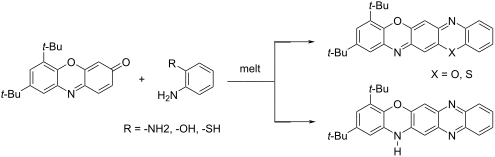
- ). This is also the basic compound used in the transformations that are studied in this work due to the high kinetic stability and good solubility ensured by the tert-butyl groups. The largest positive charge of the C(1)–C(2)–C(3) segment is concentrated at the C(2) atom. The charge at the other


Synthesis of π-conjugated polycyclic compounds by late-stage extrusion of chalcogen fragments
Beilstein J. Org. Chem. 2024, 20, 287–305, doi:10.3762/bjoc.20.30
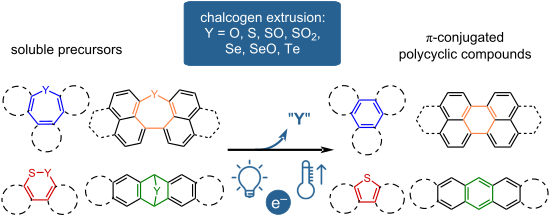
- devices [1][2][3][4][5][6][7][8]. In this regard, the planar character of most (non-substituted) π-CPCs represents a challenge, as it results in very low solubility in common organic solvents due to favorable intermolecular π–π stacking interactions. This inherently hampers the purification of the target
- pristine acene with a dienophile to transiently form a cycloadduct with increased solubility for processing purposes, and unmasking it afterwards via a retro-Diels–Alder reaction [16][17][18][19]. In parallel to retro-Diels–Alder reactions, another efficient strategy for the in situ aromatization of target
- precursors of π-CPCs bearing non linearly-fused benzene rings. In addition, the non-planar geometry of such heteropines appears as an asset towards increased solubility, and the existence of several oxidation states for these heteroatoms expands the panel of reaction conditions applicable to trigger the


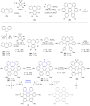


Substitution reactions in the acenaphthene analog of quino[7,8-h]quinoline and an unusual synthesis of the corresponding acenaphthylenes by tele-elimination
Beilstein J. Org. Chem. 2024, 20, 243–253, doi:10.3762/bjoc.20.24
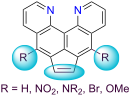
- several minutes with a good yield (Scheme 4). The spectral data fully confirmed the purity and asymmetric structure of product 11. It should be emphasized that the isolation and purification of nitro compounds 10 and 11 is complicated by their low solubility in traditional organic solvents, sensitivity to
- decided to carry out its oxidation to 12 by the traditional method – the action of chloranil in boiling benzene or chloroform (in the latter, the solubility of the components is somewhat better, although the temperature of the process decreases). At the end of the synthesis, the reaction mass was treated




Photochromic derivatives of indigo: historical overview of development, challenges and applications
Beilstein J. Org. Chem. 2024, 20, 228–242, doi:10.3762/bjoc.20.23
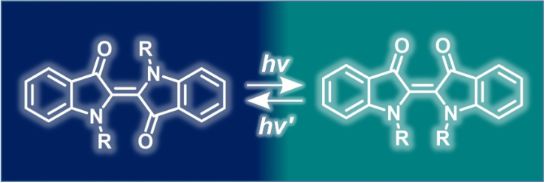
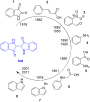
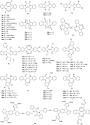
- significant difference in the values of β-angles, which results in some differences in the densities [10]. The solubility of crystalline indigo is poor even in polar solvents such as aniline, nitrobenzene, phenol, phthalic anhydride, DMSO, and DMF upon heating. The reason for the low solubility and high





Optimizations of lipid II synthesis: an essential glycolipid precursor in bacterial cell wall synthesis and a validated antibiotic target
Beilstein J. Org. Chem. 2024, 20, 220–227, doi:10.3762/bjoc.20.22
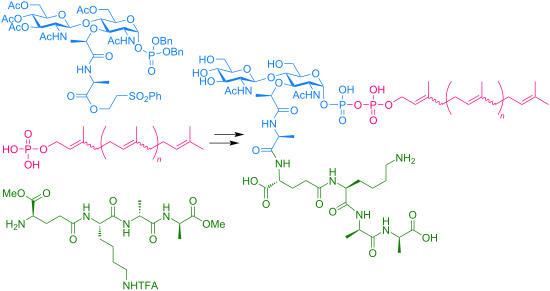
- applications due to their improved solubility in aqueous systems. Assembly is achieved by integrating distinct carbohydrate, peptide, and polyprenyl phosphate building blocks. This modular synthetic method allows for the strategic substitution of constituent building blocks at different synthetic stages and


Chiral phosphoric acid-catalyzed transfer hydrogenation of 3,3-difluoro-3H-indoles
Beilstein J. Org. Chem. 2024, 20, 205–211, doi:10.3762/bjoc.20.20
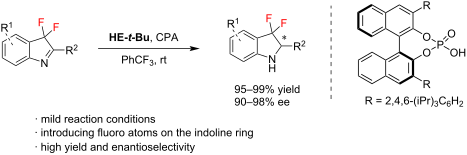
- excellent yield and enantioselectivity. Keywords: asymmetric organocatalysis; chiral Brønsted acid; 3,3-difluoroindoline; Hantzsch ester; transfer hydrogenation; Introduction The introduction of fluoro atoms into organic molecules can alter their lipophilicity, solubility, metabolic stability, and


Photoinduced in situ generation of DNA-targeting ligands: DNA-binding and DNA-photodamaging properties of benzo[c]quinolizinium ions
Beilstein J. Org. Chem. 2024, 20, 101–117, doi:10.3762/bjoc.20.11
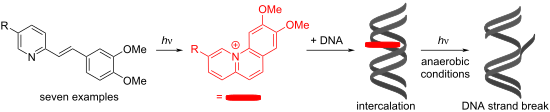
- because of their low water solubility. The styrylpyridine derivatives 2a–g were irradiated in oxygen-saturated solutions in MeCN, H2O, MeOH, or MeCN/H2O with a high-pressure Hg lamp (λ > 220 nm), and the course of the photocyclization reaction was monitored by absorption spectroscopy (Figure 2). In
- S6A). Because of the low water solubility of the styrylpyridine derivatives 2a–g, solvent mixtures of MeCN/H2O or pure MeCN were used for the preparative photocyclization reactions (Scheme 3, cf. Supporting Information File 1, Figure S2C,D) to provide sufficient solubility of the substrates, as well
- low solubility of compound 2c in aqueous solutions, the former could not be irradiated in situ in the presence of DNA. Photoinduced DNA damage In first orienting experiments, the photoinduced DNA damage by benzo[c]quinolizinium derivatives was examined exemplarily with ligand 3f and plasmid DNA pBR322




Multi-redox indenofluorene chromophores incorporating dithiafulvene donor and ene/enediyne acceptor units
Beilstein J. Org. Chem. 2024, 20, 59–73, doi:10.3762/bjoc.20.8
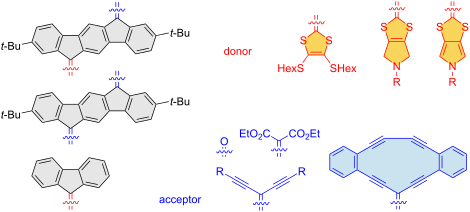
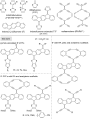
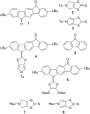
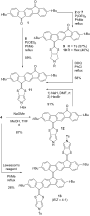
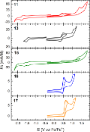
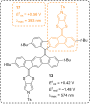
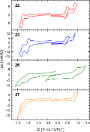
- ) Pd2dba2, P(t-Bu)3, CuI, THF, Et3N, rt. Synthesis of acetylenic scaffolds with IF as central core. *Not fully characterized due to poor solubility. Conditions: (a) Pd(PPh3)2Cl2, CuI, THF, Et3N, rt. Reduction of IF dione 1 to dihydro-IF 29. UV–vis absorption data of compounds in PhMe or CH2Cl2 at 25 °C





Facile access to pyridinium-based bent aromatic amphiphiles: nonionic surface modification of nanocarbons in water
Beilstein J. Org. Chem. 2024, 20, 32–40, doi:10.3762/bjoc.20.5
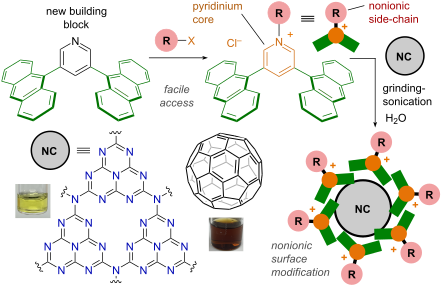
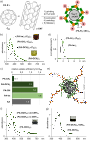
- -solubilities. It is noteworthy that an AA derivative featuring three nonionic –O(CH2CH2O)2CH3 side-chains on the phenylene spacer is insoluble in water (see Figure S45 in Supporting Information File 1), emphasizing the importance of the hydrophilic pyridinium core for the observed water-solubility. Formation
- the employed PA-R side-chain, likely due to the difference in water-solubility of the corresponding amphiphiles. The efficiency was found to be in the order of PA-Im > PA-OH > PA-OCH3 >> PA-CH3, as judged by the guest absorbance at 525 nm (Figure 4c). Importantly, PA-OCH3, PA-OH, and PA-Im displayed




NMRium: Teaching nuclear magnetic resonance spectra interpretation in an online platform
Beilstein J. Org. Chem. 2024, 20, 25–31, doi:10.3762/bjoc.20.4
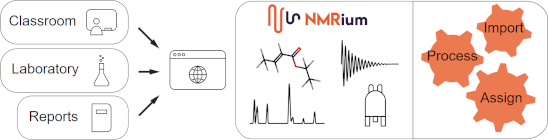
- rapid and comparatively easy deduction of structural features with the only requirement being the molecule's solubility in deuterated solvents. Therefore, NMR spectroscopy is of ubiquitous presence in many disciplines today. At the same time, with the high throughput analysis of samples that has been a


Cycloaddition reactions of heterocyclic azides with 2-cyanoacetamidines as a new route to C,N-diheteroarylcarbamidines
Beilstein J. Org. Chem. 2024, 20, 17–24, doi:10.3762/bjoc.20.3
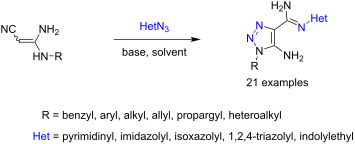
- solvents screened, 1,4-dioxane was found the best solvent in terms of yield of the target product, solubility of the reagents, and ease of separation of the product. Thus, the optimal conditions found were reacting amidine 1 with azide 2 in the presence of DBU in a 1:1:1 ratio in 1,4-dioxane at room
- of the substituents in azides 2 was observed. We assume the higher yield of pyrimidine containing triazoles 3a–k by their lower solubility in 1,4-dioxane compared with the solubility of azole containing compounds 3l–s in both 1,4-dioxane and ethanol. With regard to the scope of diaminoacrylonitriles



1-Butyl-3-methylimidazolium tetrafluoroborate as suitable solvent for BF3: the case of alkyne hydration. Chemistry vs electrochemistry
Beilstein J. Org. Chem. 2023, 19, 1966–1981, doi:10.3762/bjoc.19.147
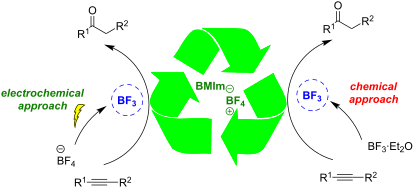
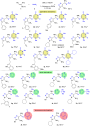
- this way, the hydration product was not obtained. In addition to the different reactivity, due to the presence or not of chlorine in the para position of the phenyl group, the different physical state (liquid for 1m vs solid for 1n) and the possible different solubility in BMIm-BF4 at room temperature
- . Therefore, while confirming the presence of the adduct, we could not quantify it. The next choice was DBU (1,8-diazabicyclo[5,4,0]undec-7-ene). The DBU-BF3 adduct is reported to be very stable in water and in air and not subjected to hydrolysis [115]. The DBU solubility in BMIm-BF4 was confirmed by NMR


Biphenylene-containing polycyclic conjugated compounds
Beilstein J. Org. Chem. 2023, 19, 1895–1911, doi:10.3762/bjoc.19.141
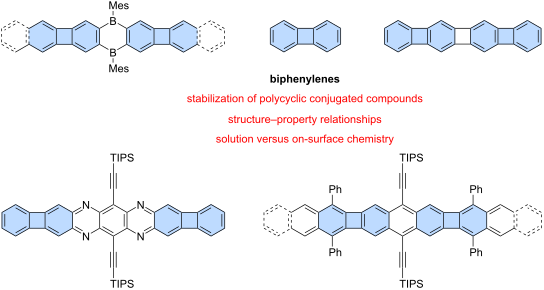
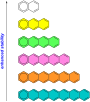
- can be attributed to Clar's rule, which considers the increasing number of non-sextet rings throughout the acene series as a contributing factor (Figure 1) [5][6]. Numerous approaches have been developed to address the challenges arising from the instability and solubility issues encountered in acenes
- successfully obtained in 30% yield. In the final step, the target POA-type structure containing naphthazarin 69 was synthesized by aromatization under acidic conditions. The attempts to conduct complexation experiments using BF3·OEt2 to obtain a stable BF2 complex were unsuccessful, primarily due to solubility
- complexation step to isolate stable BF2 complex of 69, likely attributable to solubility issues encountered with substrate 69, prevented the incorporation of the acene backbone into the structure. Consequently, the anticipated red-shift in the absorption spectrum could not be observed as expected. Boron-doped



Anion–π catalysis on carbon allotropes
Beilstein J. Org. Chem. 2023, 19, 1881–1894, doi:10.3762/bjoc.19.140
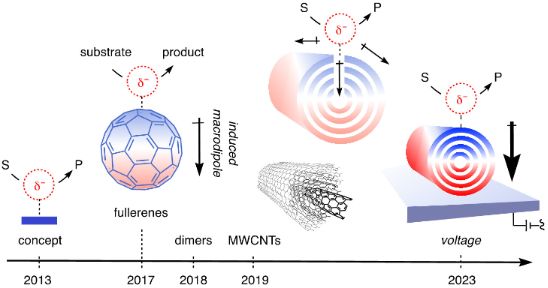
- fullerenes act as anion–π catalyst without additional activating groups, usually a tethered base to inject a negative charge into the substrate directly on top of the catalytic π surface [69]. The tert-butyl esters in Bingel fullerene 31 serve only to improve solubility and are not expected to participate in
- were not fruitful, mostly due to poor solubility. Anion–π catalysis on carbon nanotubes With fullerenes confirmed as privileged scaffold for induced anion–π catalysis but higher oligomers inaccessible [12][67][80], the obvious next move was to switch to carbon nanotubes. Compared to the sixty free