


Search results
Search for "asymmetric" in Full Text gives 954 result(s) in Beilstein Journal of Organic Chemistry. Showing first 200.
Pyridine C(sp2)–H bond functionalization under transition-metal and rare earth metal catalysis
Beilstein J. Org. Chem. 2023, 19, 820–863, doi:10.3762/bjoc.19.62
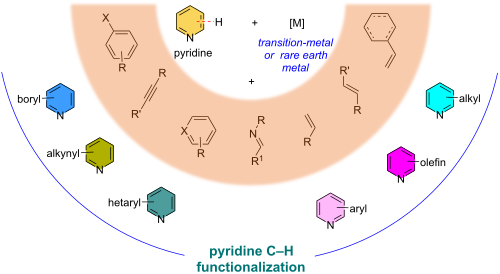
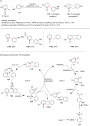
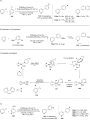
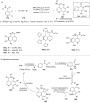
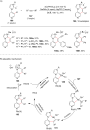
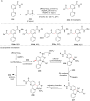
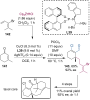
- regeneration of 189 (Scheme 36b). In 2019, using NHC ligands, a protocol for the regio- and enantioselective C–H cyclization of pyridines was reported by Shi and co-workers [107] toward the direct asymmetric pyridine C–H alkylation (Scheme 37). The authors found that alkene-tethered C2 pyridine 193, C3
















Non-peptide compounds from Kronopolites svenhedini (Verhoeff) and their antitumor and iNOS inhibitory activities
Beilstein J. Org. Chem. 2023, 19, 789–799, doi:10.3762/bjoc.19.59
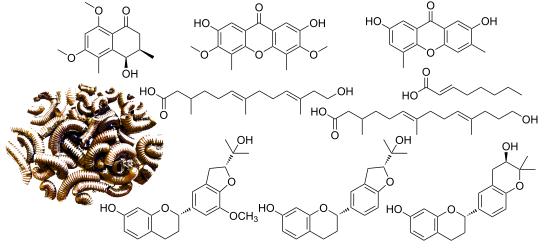
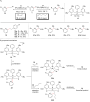
- -hydroxyflavan skeleton. The distinction in compound 4 is an additional methoxy group, which is connected to C-5' as supported by the HMBC correlation (Figure 2 and Figure S24 in Supporting Information File 1) of 5'-OCH3 (δH 3.85)/C-5' (δC 136.1). Two asymmetric carbon centers are present at C-2 and C-2″ in


Synthesis of substituted 8H-benzo[h]pyrano[2,3-f]quinazolin-8-ones via photochemical 6π-electrocyclization of pyrimidines containing an allomaltol fragment
Beilstein J. Org. Chem. 2023, 19, 778–788, doi:10.3762/bjoc.19.58
- ppm are present. In addition to the aforementioned characterization methods, the crystal structure of 11g·0.5EtOH was determined by single-crystal X-ray diffraction analysis. Its asymmetric unit contains 12 crystallographically unique molecules of 11g (Z' = 12, Z = 24) and 6 independent ethanol


Construction of hexabenzocoronene-based chiral nanographenes
Beilstein J. Org. Chem. 2023, 19, 736–751, doi:10.3762/bjoc.19.54
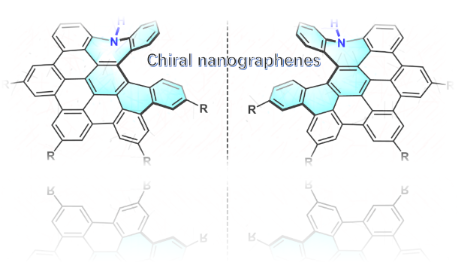
- diastereomers, C3-symmetric (P,P,P/M,M,M)-117 and C1-asymmetric (P,P,M/M,M,P)-117 were separated and each racemic diastereomer was resolved into the enantiomers by chiral HPLC. The CPL spectra of both enantiomers show a maximum centered at 643 nm, a glum value estimated as 3 × 10⁻⁴ for (P,P,P/M,M,M)-117. The


Palladium-catalyzed enantioselective three-component synthesis of α-arylglycine derivatives from glyoxylic acid, sulfonamides and aryltrifluoroborates
Beilstein J. Org. Chem. 2023, 19, 719–726, doi:10.3762/bjoc.19.52
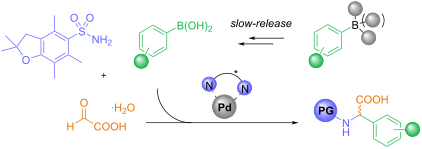
- products. Keywords: amino acids; asymmetric catalysis; multicomponent reaction; palladium catalysis; Petasis reaction; sulfonamides; Introduction α-Amino acids play a crucial role in every aspect of our human life [1]. They are important synthetic intermediates in the chemical industry and used for the
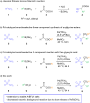
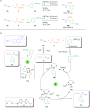
- electrophilic iminium carbon, leading to the amine product as racemic mixture. Consequently, examples for asymmetric Petasis borono-Mannich reactions are rare [13] and usually rely on the utilization of chiral amine components in stoichiometric amounts [10][11]. As part of our research program utilizing the in




Synthesis of medium and large phostams, phostones, and phostines
Beilstein J. Org. Chem. 2023, 19, 687–699, doi:10.3762/bjoc.19.50
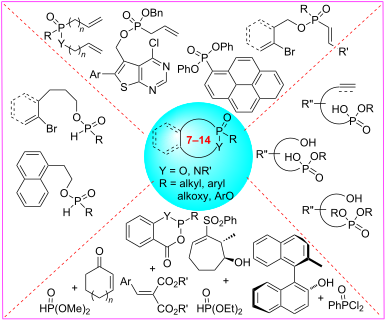
- the catalytic antibody [24]. They are also potential chiral ligands in asymmetric catalysis [25] (Figure 1). Cyclizations and annulations are two major strategies for the synthesis of medium and large phostam, phostone, and phostine derivatives. The cyclizations have been applied in the construction
- construction of the rings. However, the synthetic methods are still limited, especially for asymmetric synthetic methods. Thus, it is clear that highly stereoselective asymmetric synthetic methods to access various medium and large phostam, phostone, and phostine derivatives are in high demand and should be


Synthesis, structure, and properties of switchable cross-conjugated 1,4-diaryl-1,3-butadiynes based on 1,8-bis(dimethylamino)naphthalene
Beilstein J. Org. Chem. 2023, 19, 674–686, doi:10.3762/bjoc.19.49
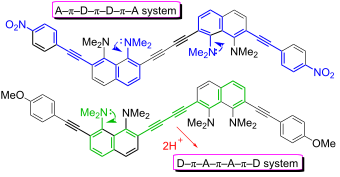
- trifluoromethyl group of one independent molecule is disordered with an occupancy of fluorine atoms of 0.54/0.46, which makes the molecule asymmetric. The second independent molecule has an inversion center. Compared to the free bases 5 discussed above, the protonated form 11с demonstrates almost complete



Enolates ambushed – asymmetric tandem conjugate addition and subsequent enolate trapping with conventional and less traditional electrophiles
Beilstein J. Org. Chem. 2023, 19, 593–634, doi:10.3762/bjoc.19.44
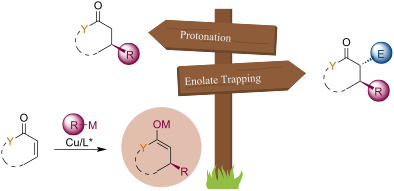
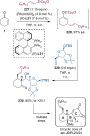
- organic synthetic transformations. Chiral metal enolates obtained by asymmetric conjugate additions of organometallic reagents are structurally complex intermediates that can be employed in many transformations. In this review, we describe this burgeoning field that is reaching maturity after more than 25
- . Short information on applications in total synthesis is also given. Keywords: asymmetric catalysis; conjugate addition; electrophile; enolate; tandem reaction; Introduction The formation of complex chiral molecules is a crucial task of organic synthesis that enables the synthesis of pharmaceuticals
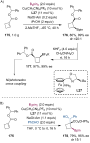
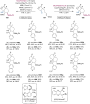
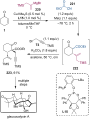
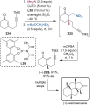
- were successfully employed in asymmetric conjugate additions (ACA) [3][4][5][6][7][8][9], mainly organozinc [10], Grignard [11][12][13], trialkylaluminum [14], or organozirconium reagents [15]. Additions with these reagents lead to corresponding zinc, magnesium, aluminum, and zirconium enolates, which








A new oxidatively stable ligand for the chiral functionalization of amino acids in Ni(II)–Schiff base complexes
Beilstein J. Org. Chem. 2023, 19, 566–574, doi:10.3762/bjoc.19.41
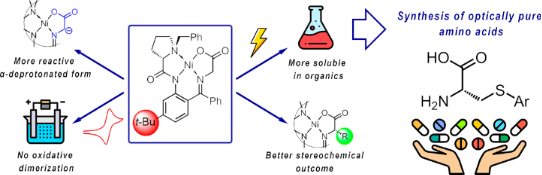
- complex. Solubility of the t-Bu-containing ligand and its Schiff base complexes is increased, facilitating scaling-up the reaction procedure and isolation of the functionalized amino acid. Keywords: asymmetric synthesis; chiral auxiliaries; cysteine derivatives; Ni–Schiff base complexes; voltammetry
- testing; Introduction Asymmetric synthesis of functionalized amino acids is a subject of intense research because these compounds are of great demand for pharmaceutical industry, health care, and food production [1][2][3]. Various approaches to enantiomerically enriched amino acids have been developed
- employing chiral auxiliaries [4][5] and asymmetric phase-transfer catalysis [6][7]. The former approach is commonly based on the application of chiral derivatives of glycine containing structurally diverse chiral auxiliaries, both cyclic [8][9][10][11] and acyclic [12][13]. Transition-metal complexes



Transition-metal-catalyzed domino reactions of strained bicyclic alkenes
Beilstein J. Org. Chem. 2023, 19, 487–540, doi:10.3762/bjoc.19.38
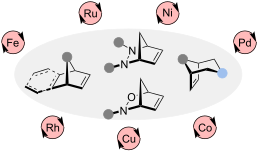
- identical reactivity when exploring the Pd- and Ni-catalyzed asymmetric reductive ring opening of heterobicyclic alkenes, ultimately generating the bicyclic product 7 (Scheme 1) [32]. In 2003, the Cheng laboratory continued studying Ni-catalyzed routes towards coumarin cores through the Ni-catalyzed ring
- used directly which showed comparable yields. The authors also reported preliminary results for an asymmetric variant of the reaction using (R,R)-Ph-BPE as a chiral ligand. Although the use of the chiral phosphine ligand resulted in slightly diminished yields, the authors were able to achieve ees up to
- . While broadly successful, strongly electron-withdrawing groups lowered the yield of the reaction. In 2021, Isozaki and Nakamura reinvestigated the reaction and established an asymmetric variant of the Fe-catalyzed carbozincation of azabicyclic alkenes 77 (Scheme 13) [48]. Using (S,S)-chiraphos, the





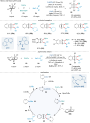


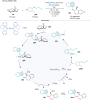


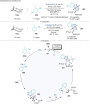


Asymmetric synthesis of a stereopentade fragment toward latrunculins
Beilstein J. Org. Chem. 2023, 19, 428–433, doi:10.3762/bjoc.19.32
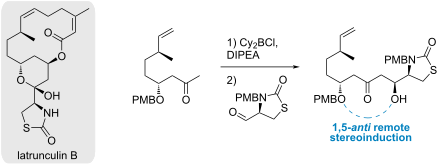
- analogue synthesis, starting from (+)-β-citronellene. Key stereoselective transformations involve an asymmetric Krische allylation, an aldol reaction under 1,5-anti stereocontrol, and a Tishchenko–Evans reduction accompanied by a peculiar ester transposition, allowing to install key stereogenic centers of
- formed by the oxidation of an allyl moiety introduced by the asymmetric allylation of an aldehyde derived from (+)-β-citronellene. At this stage, we can speculate that the stereocontrol of this reaction could either follow a polar Felkin–Anh model [14][15][16] based on chiral aldehyde partner 8 [17], or
- precluded the installation of the pyran ring – and the use of its well-known isomerization to set up important stereocenters [6][9] –, thus imposing the anticipated construction of key asymmetric centers. The following discussion will deal with the stereoselective synthesis of a stereopentade amenable to




Combretastatins D series and analogues: from isolation, synthetic challenges and biological activities
Beilstein J. Org. Chem. 2023, 19, 399–427, doi:10.3762/bjoc.19.31
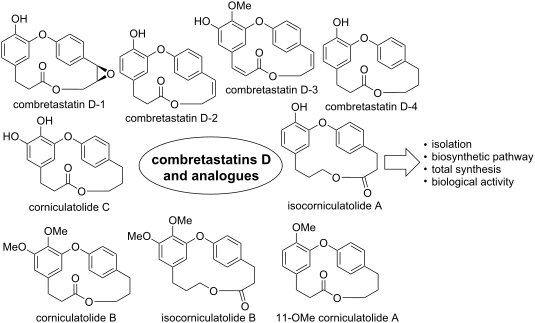
- furnished the α,β-unsaturated ester 69. The subsequent catalytic hydrogenation led to the desired phenol 70 (Scheme 13) [44][45]. An Ullmann coupling reaction using compounds 66 and 70 gave the corresponding diaryl ether 71, which was submitted to an asymmetric dihydroxylation reaction using (DHQD)2PHAL to




Discrimination of β-cyclodextrin/hazelnut (Corylus avellana L.) oil/flavonoid glycoside and flavonolignan ternary complexes by Fourier-transform infrared spectroscopy coupled with principal component analysis
Beilstein J. Org. Chem. 2023, 19, 380–398, doi:10.3762/bjoc.19.30
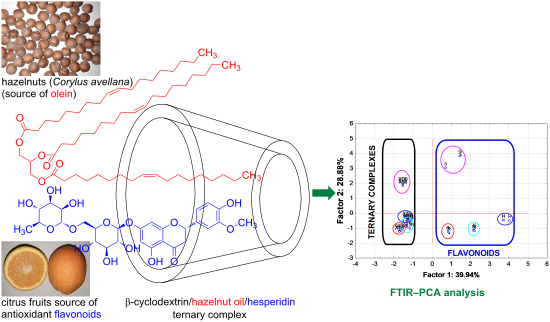
- component (PC1) by all FTIR band intensities and along PC2 by the wavenumber of the asymmetric stretching vibrations of the CH groups at 2922.9 (± 0.4) cm−1 for ternary complexes and 2924.8 (± 1.4) cm−1 for β-CD hydrate. The first two PCA components explain 70.38% from the variance of the FTIR data (from a
- band for the asymmetric stretching vibrations of the C–H groups appears at 2924.8 (± 1.4) cm−1, while the bending vibrations (in-plane, asymmetric, and symmetric) of the OH and CH groups appear as weak bands in the range of 1205–1643 cm−1. The stretching vibrations of the C–O and C–C groups in the
- stretching vibrations of the =CH groups from the mono- and polyunsaturated FA moieties (especially oleic acid, but also palmitoleic and linoleic acids). The asymmetric and symmetric stretching vibrations of the CH groups provide strong bands at 2952.5 (± 0.3), 2922.5 (± 0), and 2853.2 (± 0) cm−1 due to the



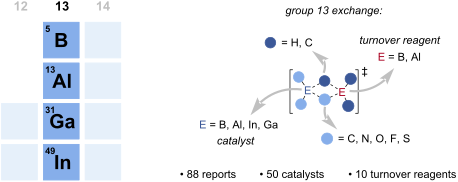
Group 13 exchange and transborylation in catalysis
Beilstein J. Org. Chem. 2023, 19, 325–348, doi:10.3762/bjoc.19.28
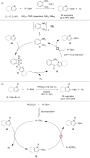
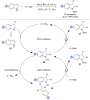
- achieved. When AgOTf was replaced with silver (R)-BINOL phosphate, the asymmetric allylation proceeded in a moderate yield (60%) and enantioselectivity (40% ee). The structure of the ‘GaIOTf’ species was explored in more detail by Slattery, and a monovalent [GaI(18-crown-6)OTf] complex was isolated and
- -catalysed asymmetric reduction of propargylic ketones and the proposed mechanism. H-B-9-BBN-catalysed C–F esterification of alkyl fluorides and the proposed mechanism. H-B-9-BBN-catalysed 1,4-hydroboration of enones and the proposed mechanism. Boric acid-promoted reduction of esters, lactones, and
- -catalysed hydroboration of unsaturated compounds and the general reaction mechanism. a) Gallium-catalysed asymmetric hydroboration of ketones and the proposed mechanism. b) Gallium-catalysed hydroboration of CO2. c) Gallium-catalysed hydroboration of ketones and imines. Gallium(I)-catalysed allylation










Strategies to access the [5-8] bicyclic core encountered in the sesquiterpene, diterpene and sesterterpene series
Beilstein J. Org. Chem. 2023, 19, 245–281, doi:10.3762/bjoc.19.23
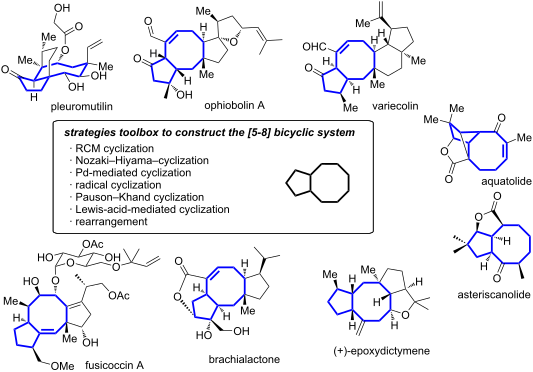
- was not controlled, yielding a mixture of stereoisomers. Recent developments were undertaken to propose an asymmetric version [56][57]. In its intramolecular version, the NHK reaction was successfully applied by Kishi in 1989 to forge the cyclooctane ring of ophiobolin C (30) [5-8-5] framework, thus
- Cav3.1 calcium channel. From a chemical point of view, hypoestin A (177) presents a complex structure: it is composed of a [5-8-5-3] tetracyclic core skeleton, with five stereogenic centers, whose four of them are contiguous. Before their work, no asymmetric total synthesis of hypoestin A (177) has been
- reported. During this study, they also looked into the asymmetric total synthesis of albolic acid (178) and ceroplastol II (179). Only one paper reported their total synthesis, using a reductive coupling of aldehydes for the synthesis of the eight-membered ring with an excellent yield of 96% [82]. However


1,4-Dithianes: attractive C2-building blocks for the synthesis of complex molecular architectures
Beilstein J. Org. Chem. 2023, 19, 115–132, doi:10.3762/bjoc.19.12
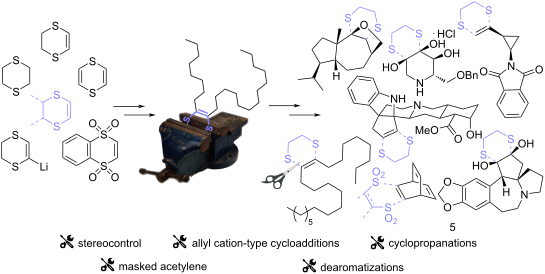
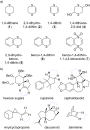
- extensively explored, is in asymmetric synthesis, although this should be quite feasible. We hope this review can help inspire such future developments. a) 1,4-Dithiane-type building blocks that can serve as C2-synthons and b) examples of complex target structures that have been prepared using 1,4-dithiane










Organophosphorus chemistry: from model to application
Beilstein J. Org. Chem. 2023, 19, 89–90, doi:10.3762/bjoc.19.8
- newly prepared thiophosphorus acids were not efficient in the asymmetric transfer hydrogenation of 2-phenylquinoline. However, they may find application in other model reactions. These days, stereoselective syntheses incorporating “green" chemical considerations are of utmost importance in medicinal
Combining the best of both worlds: radical-based divergent total synthesis
Beilstein J. Org. Chem. 2023, 19, 1–26, doi:10.3762/bjoc.19.1
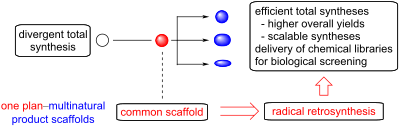
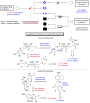
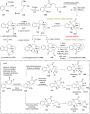
- asymmetric conjugate reaction of commercially available 81 and 82 using Fletcher’s protocol (94% ee) [44]. A subsequent intramolecular arylation in the α-position of the ketone of 83, catalyzed by a Pd(II)–NHC [45], followed by methylation, provided cis-decalin 84 (Scheme 7). Appropriate redox modifications
- distributed in Southeast Asia and China [70]. Compounds of this class are traditionally used for detoxification and as anti-inflammatory agents in Chinese medicine [71]. Qin and co-workers reported the asymmetric total syntheses of several eburnane alkaloids. Therein, they relied on one of their previous
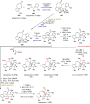
- (–)-eburnaminol (132), (+)-larutenine (133), (–)-terengganensine B (134), and (–)-strempeliopine (136), as well as the asymmetric formal total synthesis of (–)-terengganensine A (not shown, Scheme 11). The requisite common synthetic intermediate 129 for the cascade was accessed by an acid-promoted condensation of








Inclusion complexes of the steroid hormones 17β-estradiol and progesterone with β- and γ-cyclodextrin hosts: syntheses, X-ray structures, thermal analyses and API solubility enhancements
Beilstein J. Org. Chem. 2022, 18, 1749–1762, doi:10.3762/bjoc.18.184
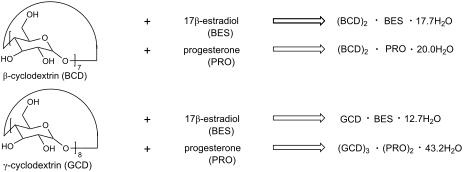
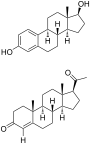
- which no single crystals of adequate diffraction quality were isolated. The asymmetric units (ASUs) of β-CD·BES and β-CD·PRO (Figure 6) each consist of a single β-CD molecule, one severely disordered guest molecule (either 17β-estradiol for β-CD·BES, or progesterone for β-CD·PRO), and water molecules
- host–guest complexation, as a consequence of a mutual-induced fit of host and guest molecules [39]. With reference to γ-CD·PRO, the asymmetric unit (ASU) comprises three pairs of glucose rings that generate three complete γ-CD molecules when rotation of these units around the four-fold axis parallel to



Synthetic study toward tridachiapyrone B
Beilstein J. Org. Chem. 2022, 18, 1741–1748, doi:10.3762/bjoc.18.183
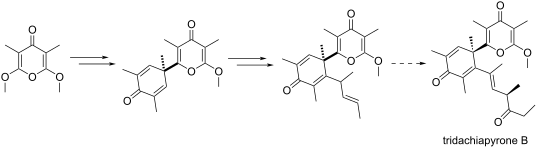
- yield was actually noted with (PhSe)2 as electrophile, 5 being obtained in 62% yield, enabling thus an evaluation of the next desymmetrization step. An overview of the scientific literature revealed that, while the asymmetric desymmetrization of prochiral 2,5-cyclohexadienones is a rich topic of


Total synthesis of grayanane natural products
Beilstein J. Org. Chem. 2022, 18, 1707–1719, doi:10.3762/bjoc.18.181
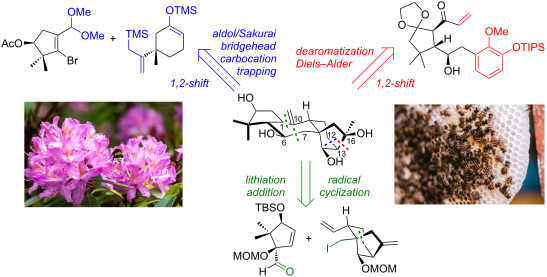
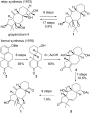
- . This first total synthesis of principinol D, in 19 steps as the longest linear sequence, is asymmetric even though a separation of the mixture of diastereomers resulting from fragment coupling is necessary. The SmI2-mediated reductive ring-closure of the 7-membered ring is among the most remarkable
- cyclization based on a bridgehead tertiary carbocation intermediate forging the B ring; iii) redox manipulations and a 1,2-migration as final steps. The synthesis started from (S)-ketone 44 which was prepared via asymmetric CBS reduction of diketone 26 (Scheme 7). Firstly, this (S)-ketone 44 was transformed




Redox-active molecules as organocatalysts for selective oxidative transformations – an unperceived organocatalysis field
Beilstein J. Org. Chem. 2022, 18, 1672–1695, doi:10.3762/bjoc.18.179
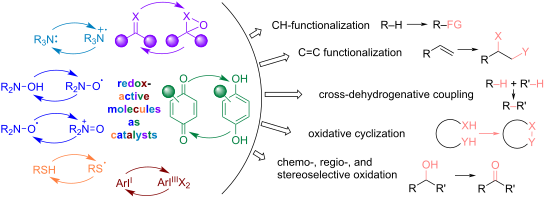
- organic chemistry. It allows chemists to avoid the use of precious and (or) toxic metals by taking advantage of the catalytic activity of small and synthetically available molecules. Today, the term organocatalysis is mainly associated with redox-neutral asymmetric catalysis of C–C bond-forming processes
- redox-neutral asymmetric organocatalysis, whereas organocatalysis by redox-active molecules stays in the shadows. For example, redox-active organic molecules are almost not mentioned in some recent overviews of compound types used in organocatalysis [3][12][13], except for photoredox catalysts [12][13
- organocatalysis in general. Examples of typical reaction types for redox-neutral asymmetric organocatalysis are aldol reactions [13], Michael reactions [14][15][16], and Diels–Alder reactions [17][18]. The processes associated with changing oxidation states of atoms in substrates thus can be named “redox











Rhodium-catalyzed intramolecular reductive aldol-type cyclization: Application for the synthesis of a chiral necic acid lactone
Beilstein J. Org. Chem. 2022, 18, 1642–1648, doi:10.3762/bjoc.18.176
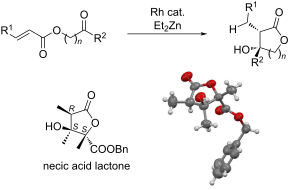
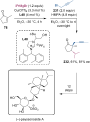
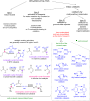
- , the reductive aldol-type reaction could also be applied to an asymmetric system, although the diastereoselectivity was poor. On the other hand, reductive Mannich-type reactions were achieved in good to excellent yields with high diastereoselectivity [45][46]. As part of a wider program of C–C bond


One-pot double annulations to confer diastereoselective spirooxindolepyrrolothiazoles
Beilstein J. Org. Chem. 2022, 18, 1607–1616, doi:10.3762/bjoc.18.171
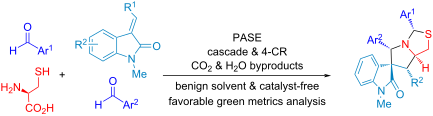
- ]. Pyrrolothiazole and spirooxindole moieties occupy exclusive positions as valuable source of natural products and therapeutic agents in organic synthesis and drug discovery [60][61][62][63][64][65][66][67][68]. We have developed a number of asymmetric reactions to construct spirooxindole-based scaffolds through


Comparison of crystal structure and DFT calculations of triferrocenyl trithiophosphite’s conformance
Beilstein J. Org. Chem. 2022, 18, 1499–1504, doi:10.3762/bjoc.18.157
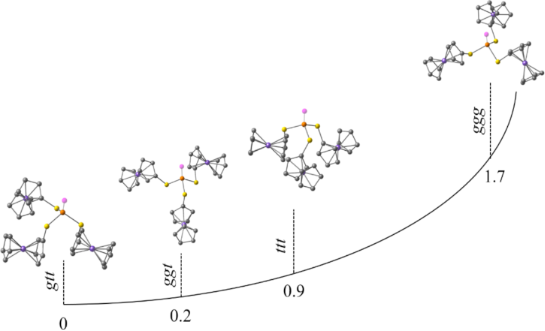
- by X-ray single-crystal diffraction. Triferrocenyl trithiophosphite has nine axes of internal rotation: three P–S bonds, three C–S bonds and three Fe–cyclopentadienyl axes. Rotation around the P–S bonds results in a totally asymmetric structure with three ferrocenylthio groups exhibiting different





