Search results
Search for "carbonyl compounds" in Full Text gives 275 result(s) in Beilstein Journal of Organic Chemistry. Showing first 200.
Rh(II)-mediated domino [4 + 1]-annulation of α-cyanothioacetamides using diazoesters: A new entry for the synthesis of multisubstituted thiophenes
Beilstein J. Org. Chem. 2017, 13, 2569–2576, doi:10.3762/bjoc.13.253
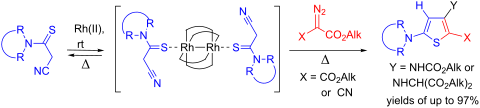
- carbonyl compounds, activated multiple bonds, or other nucleophiles to furnish heterocyclic cores [22][23][24][25][26][27][28][29][30][31][32]. Similar intramolecular transformations of intermediate ylides with several nucleophilic reaction centers in the initial substrate, are also possible. The known
- the study (Figure 1). Dirhodium carboxylates [Rh2(OAc)4, Rh2(Oct)4 and Rh2(Piv)4] which were found to be the most effective catalysts in reactions of diazo carbonyl compounds with different substrates [46][47], were employed in this research. At first, we studied reactions of thioamides 1 with


Is the tungsten(IV) complex (NEt4)2[WO(mnt)2] a functional analogue of acetylene hydratase?
Beilstein J. Org. Chem. 2017, 13, 2332–2339, doi:10.3762/bjoc.13.230
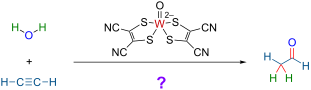
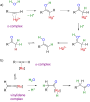
- generation of 10, and the source and purification method for substrate 2 were not indicated [13]. Derivatization to 2,4-dinitrophenylhydrazones is a well-established identification method for carbonyl compounds that recommends itself for small amounts of volatile products [38][39]. However, aldehyde
- through an acidic solution of DNPH to absorb volatile carbonyl compounds. Emphasis was placed both on unequivocal and direct analysis of acetaldehyde (3) in the reaction solution, and on identification of all major species in the reaction solution or the DNPH solution. For this purpose, 1H and 13C NMR



Homologated amino acids with three vicinal fluorines positioned along the backbone: development of a stereoselective synthesis
Beilstein J. Org. Chem. 2017, 13, 2316–2325, doi:10.3762/bjoc.13.228

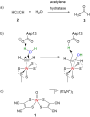
- β-fluorinated carbonyl compounds besides 9. Thus, β-fluoroaldehyde 17 which was synthesized by an independent method (see Supporting Information File 1) was treated with NFSI and catalyst 10 according to Jørgensen’s fluorination protocol [20] (Table 1, entry 1). However, this resulted in a complex


Mechanically induced oxidation of alcohols to aldehydes and ketones in ambient air: Revisiting TEMPO-assisted oxidations
Beilstein J. Org. Chem. 2017, 13, 2049–2055, doi:10.3762/bjoc.13.202
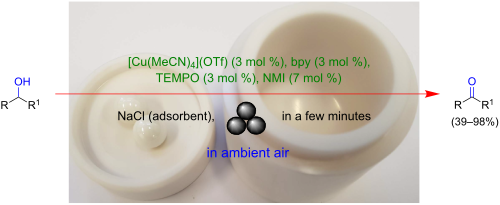
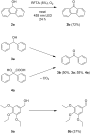
- primary and secondary alcohols to the corresponding aldehydes and ketones by mechanical processing under air. Ball milling was shown to promote the quantitative conversion of a broad set of alcohols into carbonyl compounds with no trace of an over-oxidation to carboxylic acids. The mechanochemical
- observed. Conclusion We have developed a TEMPO-based oxidative procedure for the air oxidation of primary and secondary benzyl alcohols to the corresponding aldehydes and ketones under ball milling conditions. A library of common alcohols was efficiently converted into carbonyl compounds with no trace of
- -based oxidations. Studies are underway to identify more effective TEMPO-based catalysts that are also capable of promoting the oxidation of non-activated alcohols. Experimental General procedure to prepare carbonyl compounds 2a–v. 2,2,6,6-Tetramethylpiperidine 1-oxyl (TEMPO, 9.4 mg, 0.06 mmol, 3 mol


Mechanochemical synthesis of small organic molecules
Beilstein J. Org. Chem. 2017, 13, 1907–1931, doi:10.3762/bjoc.13.186
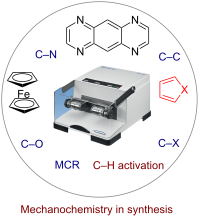
- (Scheme 23). α,β-Unsaturated carbonyl compounds could also undergo a trans-bromination reaction efficiently within 40 min. Following to Wang’s report, Stolle and co-workers also reported a similar method of aryl bromination and chlorination using NaBr and NaCl, respectively, in the presence of oxidizing


NHC-catalyzed cleavage of vicinal diketones and triketones followed by insertion of enones and ynones
Beilstein J. Org. Chem. 2017, 13, 1816–1822, doi:10.3762/bjoc.13.176
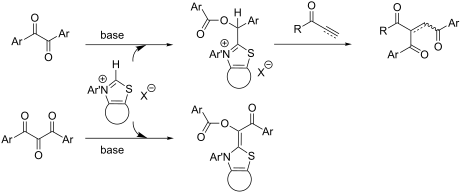
- convert aldehydes to nucleophilic species, which react with activated alkenes to yield hydroacylation products [10][11][12][13][14]. When the carbonyl compounds I other than aldehyde behave similarly, functionalized 1,4-diketones IV would be produced (Scheme 1). Previously, we reported that benzils I (G




Chiral phase-transfer catalysis in the asymmetric α-heterofunctionalization of prochiral nucleophiles
Beilstein J. Org. Chem. 2017, 13, 1753–1769, doi:10.3762/bjoc.13.170
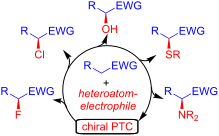
- the hereby accessed products can be of significant interest with respect to biological or medical applications, which is especially the case for α-fluoro targets [64][65]. On the other hand, such α-halo carbonyl compounds may serve as valuable intermediates for further manipulations like, for example
- , enantiospecific nucleophilic displacement reactions [66][67]. α-Fluorinations The stereoselective electrophilic α-fluorination of carbonyl compounds became a thoroughly investigated field over the course of the last 15 years [68][69][70][71][72]. A variety of different catalytic approaches, either relying on the
- that use SelectfluorTM (8) as a simple and highly reactive electrophilic F-transfer reagent. Besides fluoro-cyclizations of olefines [56], also the asymmetric α-fluorination of prochiral carbonyl compounds or analogues like enamides 7 has been carried out with remarkable enantioselectivities by using


Phenylsilane as an effective desulfinylation reagent
Beilstein J. Org. Chem. 2017, 13, 1513–1517, doi:10.3762/bjoc.13.150
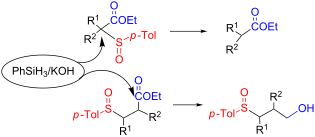
- another convenient method for the reduction of carbonyl compounds, although low selectivities have sometimes been observed and the reaction usually required drastic conditions [9]. Also, the catalytic hydrosilylation of carbonyl moieties has become an important transformation as an alternative reduction
- structure, so this reaction could be considered as a new regiospecific method of a desulfinylation. In order to examine the scope of observed desulfinylation different carbonyl compounds with sulfinyl substituents were synthetized and subjected to the reaction with phenylsilane. Reactions of α


Development of a method for the synthesis of 2,4,5-trisubstituted oxazoles composed of carboxylic acid, amino acid, and boronic acid
Beilstein J. Org. Chem. 2017, 13, 1478–1485, doi:10.3762/bjoc.13.146
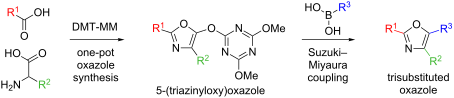
- materials, such as α-haloketones and primary amides [8], alkynes and nitriles [9], amines and α,β-unsaturated carbonyl compounds [10], etc. [11] have been reported. However, these reactions are often conducted under harsh reaction conditions and multistep syntheses of the starting materials are needed. ii


1-Imidoalkylphosphonium salts with modulated Cα–P+ bond strength: synthesis and application as new active α-imidoalkylating agents
Beilstein J. Org. Chem. 2017, 13, 1446–1455, doi:10.3762/bjoc.13.142
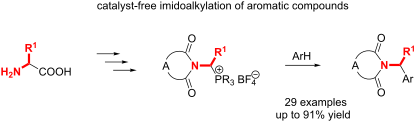
- aldehydes or ketones (mainly formaldehyde) with ammonia or aliphatic amines and CH-acidic carbonyl compounds, known as the Mannich reaction, plays an important role in organic synthesis, despite some limitations of this reaction. α-Amidoalkylation reactions are considered an important extension of the


Synthesis of alkynyl-substituted camphor derivatives and their use in the preparation of paclitaxel-related compounds
Beilstein J. Org. Chem. 2017, 13, 1230–1238, doi:10.3762/bjoc.13.122
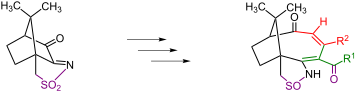
- (Scheme 1) [20]. A hydroxy group neighbouring an alkynyl substituent, under treatment with acids, normally leads to Rupe and Meyer–Schuster rearrangements, forming unsaturated carbonyl compounds. This was indeed observed in camphor-derived bicyclic alcohols containing a single ethinyl group [21][22


α-Acetoxyarone synthesis via iodine-catalyzed and tert-butyl hydroperoxide-mediateded self-intermolecular oxidative coupling of aryl ketones
Beilstein J. Org. Chem. 2017, 13, 1079–1084, doi:10.3762/bjoc.13.107

- products and pharmaceuticals, and α-acetoxyaryl ketones are widely used as synthetic intermediates [1][2][3][4][5]. Traditional methods for the preparation of α-acyloxy ketones focus on the substitution reactions of α-halo carbonyl compounds with alkaline carboxylates or carboxylic acids [6][7], and
- transition-metal-catalyzed direct oxidative coupling reactions of carbonyl compounds with carboxylic acids (or their surrogates) [8][9]. Recently, robust approaches using organohypervalent iodine reagents and peroxide-mediated oxidative coupling have been developed [10][11]. Although impressive progress has




Synthesis of tetrasubstituted pyrazoles containing pyridinyl substituents
Beilstein J. Org. Chem. 2017, 13, 895–902, doi:10.3762/bjoc.13.90
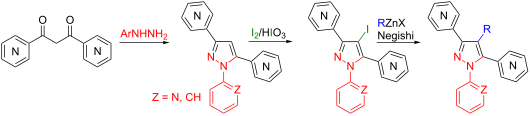
- most common strategies employ reactions of 1,3-dicarbonyl compounds or α,β-unsaturated carbonyl compounds with substituted hydrazines [4][6][19]. To overcome the drawbacks of this method, namely insufficient regioselectivity [20], other accesses such as, for instance, regioselective metalations of N


Ultrasound-promoted organocatalytic enamine–azide [3 + 2] cycloaddition reactions for the synthesis of ((arylselanyl)phenyl-1H-1,2,3-triazol-4-yl)ketones
Beilstein J. Org. Chem. 2017, 13, 694–702, doi:10.3762/bjoc.13.68
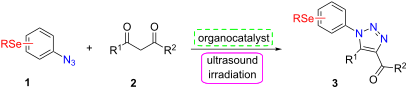
- carbonyl compounds could successfully generate an enamine or an enolate, and these species react as dipolarophiles with organic azides in organocatalyzed 1,3-dipolar cycloadditions. Our research group has demonstrated β-enamine–azide cycloaddition reactions for the synthesis of selenium-functionalized


Isoxazole derivatives as new nitric oxide elicitors in plants
Beilstein J. Org. Chem. 2017, 13, 659–664, doi:10.3762/bjoc.13.65
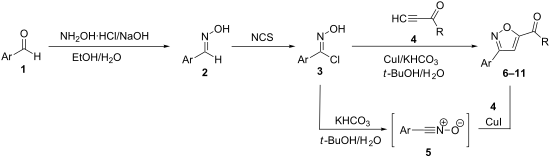
- synthetic approaches towards the isoxazole core include the reactions of hydroxylamine with aryl-β-diketones [20], α,β-unsaturated carbonyl compounds [21], or α,β-unsaturated nitriles [22], and 1,3-dipolar cycloaddition reactions between alkenes or alkynes and nitrile oxides [23][24][25]. Nitrile oxides are


Derivatives of the triaminoguanidinium ion, 5. Acylation of triaminoguanidines leading to symmetrical tris(acylamino)guanidines and mesoionic 1,2,4-triazolium-3-aminides
Beilstein J. Org. Chem. 2017, 13, 579–588, doi:10.3762/bjoc.13.57
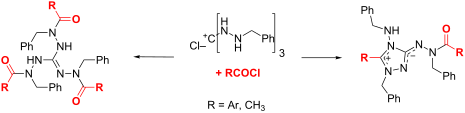
- , triaminoguanidinium salts or the neutral triaminoguanidine have been reacted with carbonyl compounds. Reactions with aldehydes [3][4][5][6][7] or ketones [8][9][10] yielded the corresponding tris(iminyl)guanidines; cyclocondensation of pentane-2,4-dione at one hydrazinyl branch of TAG-Cl afforded a pyrazole which




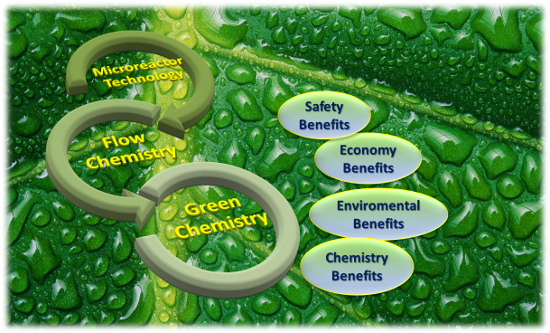
Contribution of microreactor technology and flow chemistry to the development of green and sustainable synthesis
Beilstein J. Org. Chem. 2017, 13, 520–542, doi:10.3762/bjoc.13.51
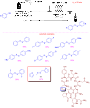
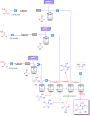
- -Haloalkyllithiums are a useful class of organometallic reagents widely employed in synthetic chemistry. In fact, they allow the direct homologation of carbonyl compounds and imines leading to β-halo-alcohols and amines that are useful building blocks [29][30][31]. This work represents a remarkable example of flash






Synthesis of 1-indanones with a broad range of biological activity
Beilstein J. Org. Chem. 2017, 13, 451–494, doi:10.3762/bjoc.13.48
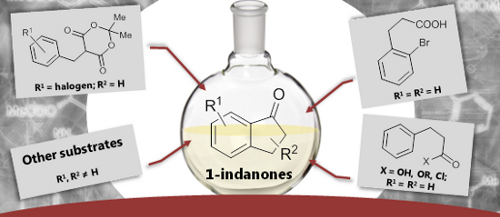
- 5- (section 1), 6- (section 2) and simultaneous formation of 5- and 6-membered rings of 1-indanones (section 3) as well as functionalization of 1-indanones or related compounds (section 4). Review 1 Construction of the 5-membered ring 1.1 From carbonyl compounds 1.1.1 From carboxylic acids: The


Efficient access to β-vinylporphyrin derivatives via palladium cross coupling of β-bromoporphyrins with N-tosylhydrazones
Beilstein J. Org. Chem. 2017, 13, 195–202, doi:10.3762/bjoc.13.22
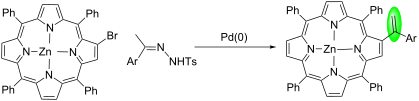
- features – stoichiometric organometallic reagents are not required for the coupling reaction and di- and trisubstituted olefins can be prepared with high stereoselectivity. In fact, N-tosylhydrazones used in this methodology can be easily prepared from carbonyl compounds (Scheme 1), as it has been well


New approaches to organocatalysis based on C–H and C–X bonding for electrophilic substrate activation
Beilstein J. Org. Chem. 2016, 12, 2834–2848, doi:10.3762/bjoc.12.283
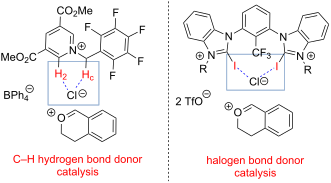
- bond-donor activation of α,β-unsaturated carbonyl compounds in the [2 + 4] cycloaddition reaction of MVK and cyclopentadiene [88]. Halogen bond donor activation of imines in the [2 + 4] cycloaddition reaction of imine and Danishefsky’s diene [90]. Transfer hydrogenation catalyzed by a chiral halogen








Chromium(II)-catalyzed enantioselective arylation of ketones
Beilstein J. Org. Chem. 2016, 12, 2771–2775, doi:10.3762/bjoc.12.275
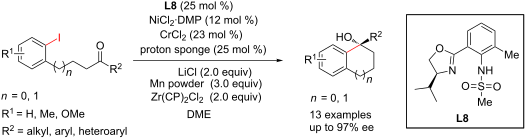
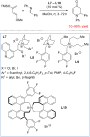
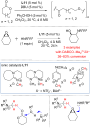
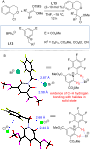
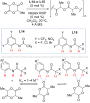
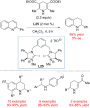
- /bjoc.12.275 Abstract The chromium-catalyzed enantioselective addition of carbo halides to carbonyl compounds is an important transformation in organic synthesis. However, the corresponding catalytic enantioselective arylation of ketones has not been reported to date. Herein, we report the first Cr
- pharmaceutical industry. The chromium (Cr)-catalyzed enantioselective addition of carbo halides to carbonyl compounds is one of the most reliable methods in organic chemistry for chemoselective and structurally diverse synthesis [1][2][3][4][5][6][7][8][9]. To date, the Cr-catalyzed enantioselective carbonyl
- pharmaceutical study, finally leading to the discovery of the anticancer drug Eribulin [31][32][33][34][35]. However, to our knowledge, the Cr-catalyzed enantioselective arylation of carbonyl compounds has rarely been explored. On the other hand, most of the reactions focused on aldehyde components, while

Electron-transfer-initiated benzoin- and Stetter-like reactions in packed-bed reactors for process intensification
Beilstein J. Org. Chem. 2016, 12, 2719–2730, doi:10.3762/bjoc.12.268
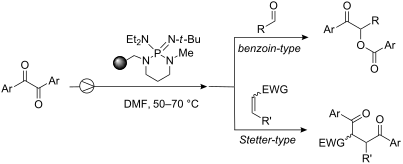
- ). Keywords: C–C coupling; continuos-flow; diketone; electron-transfer; umpolung; Introduction The polarity reversal (umpolung) of carbonyl compounds by N-heterocyclic carbene (NHC) or cyanide catalysis represents a straightforward strategy for the synthesis of valuable molecules such as, among the many


Construction of bis-, tris- and tetrahydrazones by addition of azoalkenes to amines and ammonia
Beilstein J. Org. Chem. 2016, 12, 2471–2477, doi:10.3762/bjoc.12.241
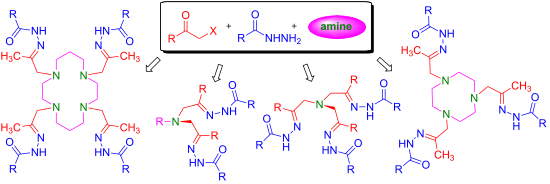
- -substituted hydrazones 1 were prepared from the corresponding carbonyl compounds and acylhydrazines or carbazates to study the reaction with amines (Scheme 2, for details see Supporting Information File 1). Acetic acid was added as catalyst and for suppression of the side reaction of the formed α-halogen




β-Amino functionalization of cinnamic Weinreb amides in ionic liquid
Beilstein J. Org. Chem. 2016, 12, 2372–2377, doi:10.3762/bjoc.12.231

- ; ionic liquid; Weinreb amides; Introduction Unlike N-protected α-amino carbonyl compounds, their analogues, the β-amino carbonyl compounds, have drawn relatively little attention. However, the β-amino carbonyl moieties are not only found in natural products [1][2][3], e.g., in the side chain of Taxol
- towards the preparation of β-amino carbonyl compounds is the Mannich reaction [8][9]. However, there are few reported methods specifically focused on this target, which include oxidation of γ-amino alcohols [10], hydrolysis of 1,3-oxazines [11], rearrangement of 2,3-aziridinio alcohols [12], etc. N


Solvent-free, visible-light photocatalytic alcohol oxidations applying an organic photocatalyst
Beilstein J. Org. Chem. 2016, 12, 2358–2363, doi:10.3762/bjoc.12.229
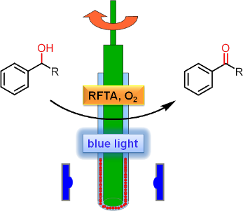
- reaction mixture. The corresponding carbonyl compounds were obtained in moderate to good yields. Keywords: benzylic alcohol; oxidation; photocatalysis; solvent free; visible light; Introduction According to a classification made by Wilhelm Ostwald, one of the pioneers in the field of physical chemistry
- photocatalyst has been reported yet. In this work, we present a novel milling apparatus, which we developed especially for the conversion of solid substrates. Applying this apparatus, the solvent-free oxidation of various benzylic alcohols to their corresponding carbonyl compounds using riboflavin tetraacetate
- catalyst was reported [15], which was also used for cyclization to form coumarins [16]. In this work, we focus on benzylic alcohols as substrates since their oxidation to the corresponding carbonyl compounds can be simply performed in acetonitrile/water mixtures. Thus, they are suitable model substrates