


Search results
Search for "hydrogen bond" in Full Text gives 463 result(s) in Beilstein Journal of Organic Chemistry. Showing first 200.
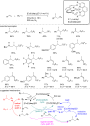
Fluorohydration of alkynes via I(I)/I(III) catalysis
Beilstein J. Org. Chem. 2020, 16, 1627–1635, doi:10.3762/bjoc.16.135
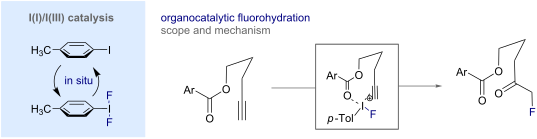
- inversion of the local electronic environment, or the precise deletion of hydrogen-bond donors, respectively, with minimal steric variation [7]. The latter aspect is a crucial determinant in enabling fluorinated materials to adopt intriguing conformations which are a manifest representation of stabilising


Five-component, one-pot synthesis of an electroactive rotaxane comprising a bisferrocene macrocycle
Beilstein J. Org. Chem. 2020, 16, 1564–1571, doi:10.3762/bjoc.16.128
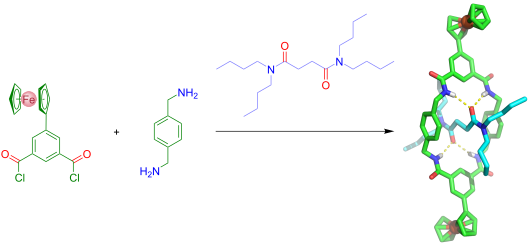
- macrocycle-thread hydrogen bonds, thereby reducing self-aggregation. To this end, a five-component clipping strategy was adopted using different tetrabutylsuccinamide threads (Figure 2) with varying hydrogen-bond basicity (amides > esters) [4][15]. Threads containing an ester group were selected as esters




One-step route to tricyclic fused 1,2,3,4-tetrahydroisoquinoline systems via the Castagnoli–Cushman protocol
Beilstein J. Org. Chem. 2020, 16, 1456–1464, doi:10.3762/bjoc.16.121
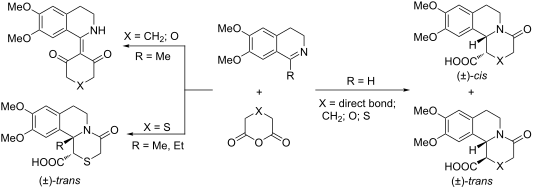
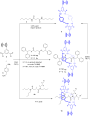
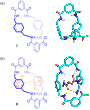
- and the exocyclic C–C double bond. The geometry of the nitrogen atom is also planar most likely because of conjugation with the exocyclic C–C double bond and the C=O groups. The nitrogen planarity is probably also caused by a hydrogen bond between the NH group and the neighboring carbonyl oxygen atom


Synthesis, antiinflammatory activity, and molecular docking studies of bisphosphonic esters as potential MMP-8 and MMP-9 inhibitors
Beilstein J. Org. Chem. 2020, 16, 1277–1287, doi:10.3762/bjoc.16.108
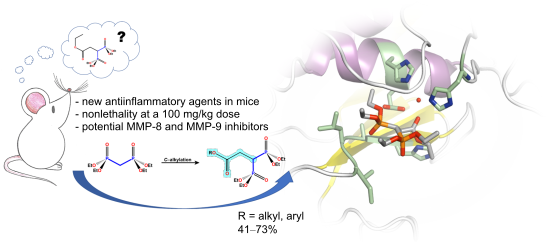
- small molecular volume increases the pharmacokinetic abilities of the compounds. In addition, 3 and 4 have a greater dipole moment compared to 5 and 6. The hydrogen-bond formation and the noncovalent interactions are influenced by the dipole moment. This means that an increased dipole moment can improve
- distance from the oxygen atom to the amide hydrogen atom (or a 3.09 Å O–N distance, Figure 4a). Compound 4 only displayed one hydrogen bond of the double bonded carbonyl oxygen atom to an amide hydrogen atom located between Asn218 and Tyr219. This interaction was regarded as weak, with an energy of −0.47
- kcal/mol and a 3.51 Å O–N distance (Figure 4b). Also, for compound 5, only one hydrogen bond interaction was seen. Indeed, the oxygen atom double bonded to the phosphorus atom of the phosphonate group was strongly bonded to an amide hydrogen atom localized between Ile159 and Leu160, with a 3.08 Å O–N


Aldehydes as powerful initiators for photochemical transformations
Beilstein J. Org. Chem. 2020, 16, 833–857, doi:10.3762/bjoc.16.76
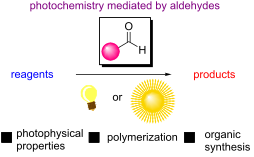
- , proved to be completely inactive as the photosensitizer. Also, no reaction was observed when salicylaldehyde (68) was employed as a photosensitizer, despite of a triplet state energy of ≈70 kcal/mol, most probably due to an internal hydrogen bond (Scheme 16). As mentioned before, in the section on the
- photosensitizers. Salicylaldehyde (68) forms an internal hydrogen bond. Olefin isomerization via energy transfer from a carbonyl compound. Mechanistic pathways for the Paterno–Büchi reaction. Isomeric oxetanes formed after photochemical addition of aryl aldehydes to 2-butenes. Rotation of the C3–C4 bond of the






Reaction of indoles with aromatic fluoromethyl ketones: an efficient synthesis of trifluoromethyl(indolyl)phenylmethanols using K2CO3/n-Bu4PBr in water
Beilstein J. Org. Chem. 2020, 16, 778–790, doi:10.3762/bjoc.16.71
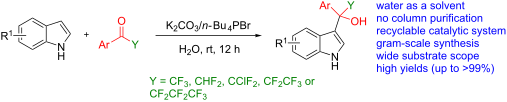
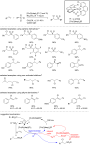
- makes a hydrogen bond interaction with the NH of the 5-methoxyindole (1a) and form the adduct B. This interaction assists 1a reacting with an electrophilic ketone (2a) to form the intermediate D via C–C bond formation (C). Re-aromatization of D generates E, which then protonates to form the desired


Exploring the scope of DBU-promoted amidations of 7-methoxycarbonylpterin
Beilstein J. Org. Chem. 2020, 16, 509–514, doi:10.3762/bjoc.16.46
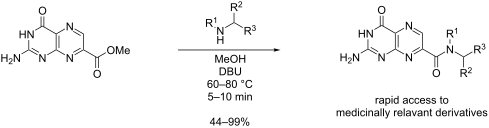
- modifications to the pteridine core which disrupt the hydrogen-bond assembly, such as benzylation of the lactam oxygen or conversion of the exocyclic amine to the pivalic amide [12][13]. The installation and subsequent removal of these groups naturally affects the overall yield and time necessary to generate


Recent advances in photocatalyzed reactions using well-defined copper(I) complexes
Beilstein J. Org. Chem. 2020, 16, 451–481, doi:10.3762/bjoc.16.42
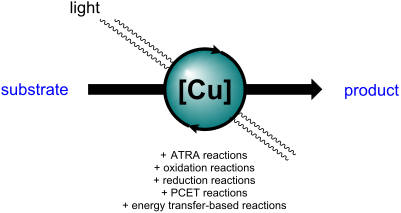
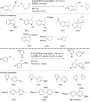
- suggested to explain the reaction pathway: After irradiation, the copper catalyst, in an excited state, is quenched by the HEH, as demonstrated by a quenching experiment. Then, the reduced catalyst is involved in a hydrogen bond interaction with the carbonyl derivative, attributed to the acidic proton








p-Pyridinyl oxime carbamates: synthesis, DNA binding, DNA photocleaving activity and theoretical photodegradation studies
Beilstein J. Org. Chem. 2020, 16, 337–350, doi:10.3762/bjoc.16.33
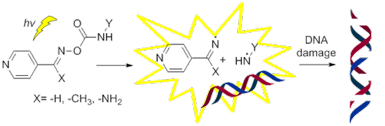
- compounds 25–27 were calculated using DFT computational methods with discrete solute–solvent hydrogen bond interactions [66] (see optimized structures in Supporting Information File 1). Geometry optimizations were calculated at the DFT (B3PW91) level, using the 6-31G(d) basis set. The predicted 1H chemical


Ultrasonic-assisted unusual four-component synthesis of 7-azolylamino-4,5,6,7-tetrahydroazolo[1,5-a]pyrimidines
Beilstein J. Org. Chem. 2020, 16, 281–289, doi:10.3762/bjoc.16.27
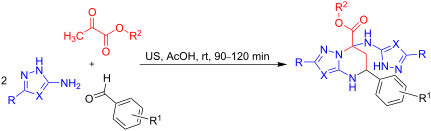
- , molecules 4g formed centrosymmetric dimers due to the N1–H···N4 intermolecular hydrogen bonds (1 x, 1 y, 2 z; H···N 2.22 Å, N–H···N 164°). The dimers were bound by a N6–H···O1 intermolecular hydrogen bond (x 1, y, z; H···O 2.16 Å, N–H···O 162°), forming chains along the [100] crystallographic direction


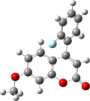
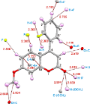
Synthesis of 4-(2-fluorophenyl)-7-methoxycoumarin: experimental and computational evidence for intramolecular and intermolecular C–F···H–C bonds
Beilstein J. Org. Chem. 2020, 16, 190–199, doi:10.3762/bjoc.16.22
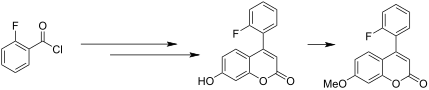
- : DFT; F···H hydrogen bond; fluorinated phenylcoumarin; Pechmann reaction; through-space coupling; Introduction Coumarins constitute one of the big classes of naturally occurring compounds. The first coumarin was isolated from the tonka bean (Dipteryx odorata) in 1820 and, to date, more than 1300
- activity of a molecule. Oxygen and nitrogen have been proven to be good hydrogen-bond acceptors which form strong intermolecular and intramolecular hydrogen bonds, however, fluorine is still denied hydrogen-bond acceptor status by some scientists. There is evidence of the existence of C–F···H interaction
- interaction was observed, although the conclusions of the two groups were different – O’Hagan et al. concluded that fluorine is not a good hydrogen-bond acceptor, whereas Desiraju et al. concluded that the interaction has genuine hydrogen-bond character [24][33][34][35][36]. The C–F···H–C interaction is



The use of isoxazoline and isoxazole scaffolding in the design of novel thiourea and amide liquid-crystalline compounds
Beilstein J. Org. Chem. 2020, 16, 175–184, doi:10.3762/bjoc.16.20
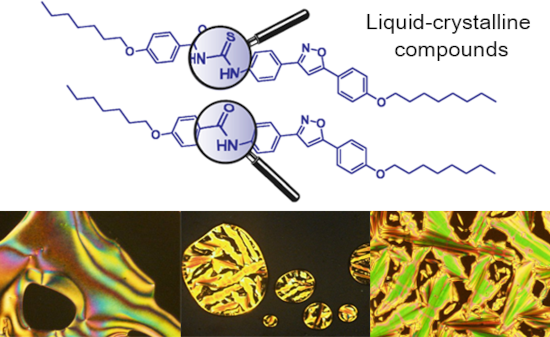
- ability to establish intra- and intermolecular hydrogen bonds [11]. In addition to π–π, dipole–dipole and van der Waals interactions, hydrogen bond interactions are involved in gel formation through self-aggregation of the small gelator molecules. In recent years, there has been increased interest in the



The interaction between cucurbit[8]uril and baicalein and the effect on baicalein properties
Beilstein J. Org. Chem. 2020, 16, 71–77, doi:10.3762/bjoc.16.9
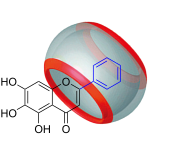
- ] easily. Because the hydroxy group on the carboxylic acid of the baicalin formed a hydrogen bond with the oxygen atoms of Q[8] at the portal, cycle C of baicalin was pushed into the cavity of Q[8]. Therefore, the inclusion model of cucurbit[8] with flavonoid compounds was determined by the structure of


SnCl4-catalyzed solvent-free acetolysis of 2,7-anhydrosialic acid derivatives
Beilstein J. Org. Chem. 2019, 15, 2990–2999, doi:10.3762/bjoc.15.295
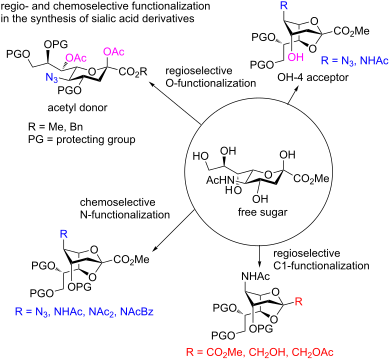
- compound 12. Due to the absence of a hydrogen bond, azido-protected glycal 13 could be used as acceptor for reactions at its OH-4 and OH-8 group [36][37]. Moreover, it was used as sialyl donor in α-selective glycosylation reactions [35]. Next, acetolysis of 2,7-anhydro derivative 6 was examined with SnCl4




Regioselectivity of glycosylation reactions of galactose acceptors: an experimental and theoretical study
Beilstein J. Org. Chem. 2019, 15, 2982–2989, doi:10.3762/bjoc.15.294
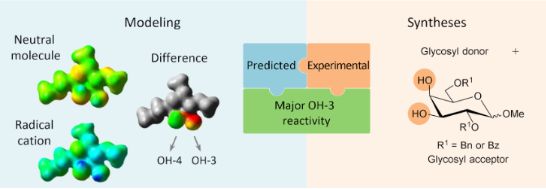
- in α-anomers could be associated with the lower capacity of the O-5 atom to establish hydrogen bond interactions due to the anomeric effect [34]. For donor 4, the regioselectivity observed for 1α, 1β, and 2α was lower than that observed for 3, but for 2β, the only product detected was the 1→4
- could be ascribed to the greater basicity of the O-ring of the β-anomers [34], which results in a stronger hydrogen bond OH-4⋅⋅⋅O-5. Although stronger interactions were observed for some of the conformers (Table S1, Supporting Information File 1), they corresponded to the less stable conformers


Why do thioureas and squaramides slow down the Ireland–Claisen rearrangement?
Beilstein J. Org. Chem. 2019, 15, 2948–2957, doi:10.3762/bjoc.15.290
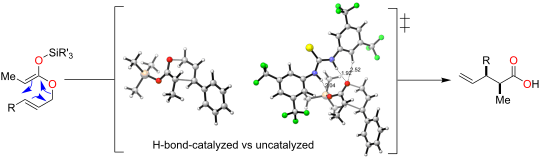
- Bratislava, Mlynská dolina, Ilkovičova 6, 84215 Bratislava, Slovakia 10.3762/bjoc.15.290 Abstract A range of chiral hydrogen-bond-donating organocatalysts was tested in the Ireland–Claisen rearrangement of silyl ketene acetals. None of these organocatalysts was able to impart any enantioselectivity on the
- rearrangement, we tried to optimize its reaction course under mild conditions using various bases, solvents, and hydrogen-bond-donating catalysts. We also present a computational explanation and NMR kinetic study for the inefficient Ireland–Claisen rearrangement under thiourea and squaramide catalysis. Results
- was performed at 5 °C (Table 2, cf. entries 4 and 5) and the reaction temperature did not affect the diastereoselectivity of the reaction. No product 3c was obtained when the reaction was performed without silyl triflate (Table 2, entry 6). We assumed that hydrogen-bond-donating organocatalysts could


Palladium-catalyzed synthesis and nucleotide pyrophosphatase inhibition of benzo[4,5]furo[3,2-b]indoles
Beilstein J. Org. Chem. 2019, 15, 2830–2839, doi:10.3762/bjoc.15.276
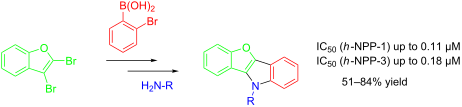
- . However, the zinc–metal interaction was exhibited by the substituted phenyl moiety on the indole ring. The oxygen atom of the furan ring of dual inhibitor 6e showed a single hydrogen bond with Phe548. Asp423 was found to be involved in two π–cation bindings with the indole ring, whereas π–π stacked, π–π T


Emission solvatochromic, solid-state and aggregation-induced emissive α-pyrones and emission-tuneable 1H-pyridines by Michael addition–cyclocondensation sequences
Beilstein J. Org. Chem. 2019, 15, 2684–2703, doi:10.3762/bjoc.15.262
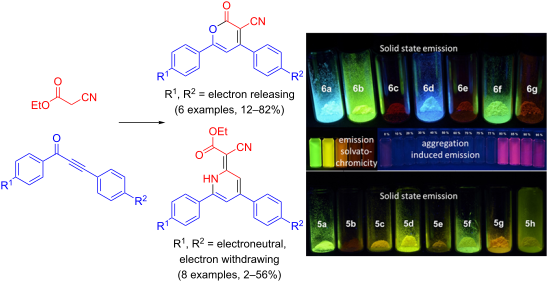
- -pyridines 5 was further corroborated by a single crystal X-ray structure determination of compound 5a (Figure 1) [35]. In the single crystal the carboxyl ester group is oriented to the N–H and via a hydrogen bond. Solid-state torsional/dihedral angles between the 4- and 6-positioned aryl rings differ




Unexpected one-pot formation of the 1H-6a,8a-epiminotricyclopenta[a,c,e][8]annulene system from cyclopentanone, ammonia and dimethyl fumarate. Synthesis of highly strained polycyclic nitroxide and EPR study
Beilstein J. Org. Chem. 2019, 15, 2664–2670, doi:10.3762/bjoc.15.259

- distorted half-chair. Presumably, this difference is due to the formation of an intramolecular hydrogen bond O6–H…O5 (H…O 1.95(2) Å, O–H…O 154(2)°) in molecule 6. In the crystal of 1 the amino group participates in intermolecular hydrogen bonding N1–H…O3 (H…O 2.39(2) Å, N–H…O 167(1)°) forming chains of


Probing of local polarity in poly(methyl methacrylate) with the charge transfer transition in Nile red
Beilstein J. Org. Chem. 2019, 15, 2552–2562, doi:10.3762/bjoc.15.248

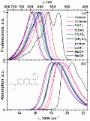
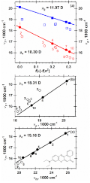
- anomalous fluorescence red shift of fluorophores in alcohols [44]. The additional red shift of NR in protic solvents, such as alcohols and probably chloroform, is associated with the hydrogen-bond formation with the carbonyl group of the dye [45]. The fluorescence maxima of NR in highly polarizable toluene
- substantial (53%) increase of the dipole moment upon excitation of NR. A clear deviation is observed for protic solvents and highly polarizable solvents (with n = 1.421−1.494) due to the different efficiency of hydrogen bond formation and contributions of inductive solute–solvent interactions in the ground




Anion-driven encapsulation of cationic guests inside pyridine[4]arene dimers
Beilstein J. Org. Chem. 2019, 15, 2486–2492, doi:10.3762/bjoc.15.241
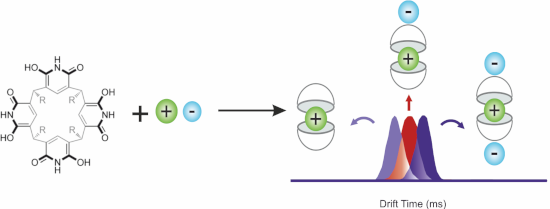
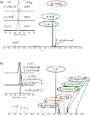
- + formed complexes with 1 and 12, neither using electrospray ionization (ESI) in the positive nor the negative mode. Pr4N+ is certainly too large to fit inside the dimeric capsule, whereas the other non-complexing cations are protic and – as rather strong hydrogen-bond donors – may interfere with
- dispersion correction (hydrogen bond lengths are listed in Table S2, Supporting Information File 1). This is expected, because the standard hybrid functionals are able to describe strong hydrogen bonds such as NH···O and OH···O in a reasonable manner [31][32]. Due to the encapsulated guest molecule, the [12
- + Me4Nendo]+ complex has slightly longer NH···O and OH···O bonds than empty 12. The addition of I− anion(s) at the lower rim(s) of [12 + Me4Nendo]+ has hardly any influence on the length of NH···O and OH···O bonds as exemplified by the hydrogen bond lengths of [12 + Me4Nendo + Iexo] and [12 + Me4Nendo




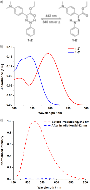
Ultrafast processes triggered by one- and two-photon excitation of a photochromic and luminescent hydrazone
Beilstein J. Org. Chem. 2019, 15, 2438–2446, doi:10.3762/bjoc.15.236
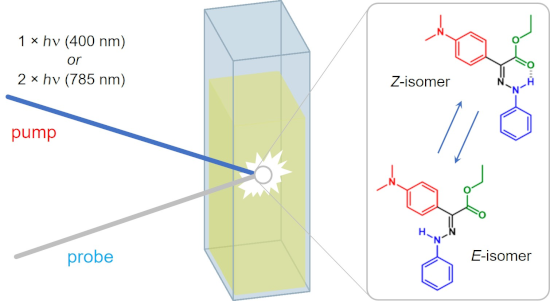
- the competition between the intramolecular hydrogen bond between the N–H and C=O groups in the Z-form and hydrogen bonds formed by these functional groups with solvent molecules. The conformational distortion and the increased conformational disorder arising from hydrogen bonding with the solvent can



Sugar-derived oxazolone pseudotetrapeptide as γ-turn inducer and anion-selective transporter
Beilstein J. Org. Chem. 2019, 15, 2419–2427, doi:10.3762/bjoc.15.234
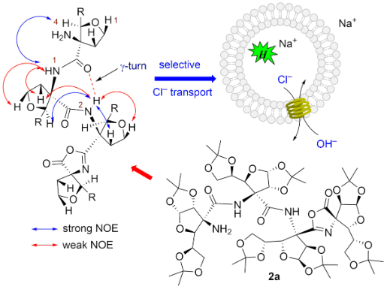
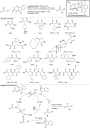
- in the presence of valinomycin confirming the transport process occurring through an antiport mechanism via Cl−/NO3− exchange (Figure 8D). Such anion-selective transport can be rationalized based on the binding of anions with the terminal amino group of the transporter through hydrogen bond


![[Graphic 2]](/bjoc/content/inline/1860-5397-15-234-i4.svg?max-width=637&scale=1.18182) lucigenin (A). Conce...
lucigenin (A). Conce...
Small anion-assisted electrochemical potential splitting in a new series of bistriarylamine derivatives: organic mixed valency across a urea bridge and zwitterionization
Beilstein J. Org. Chem. 2019, 15, 2277–2286, doi:10.3762/bjoc.15.220
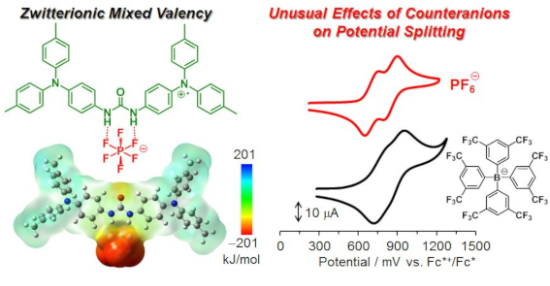
- . Such N–H···F hydrogen-bond formation was also reported for other urea derivatives with PF6− as counteranion in the solid state [54][55]. The N···F distance of 2.85 Å in 1b+–PF6− is slightly longer than that observed in the crystal structure of a silver complex having a pyridyl urea ligand (2.67 and


Aggregation-induced emission effect on turn-off fluorescent switching of a photochromic diarylethene
Beilstein J. Org. Chem. 2019, 15, 2204–2212, doi:10.3762/bjoc.15.217
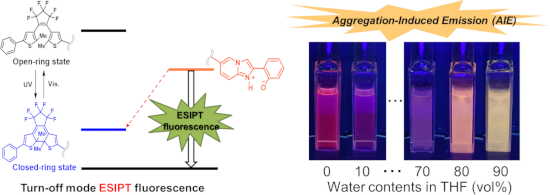
- because the proton transfer occurs through an intramolecular hydrogen bond. This is also an origin of a large Stokes shift (8,000–11,000 cm−1) in the emission from the ESIPT state. Consequently, yellow luminescence was observed by UV-excitation [17][18]. Mutai et al. reported an ESIPT luminescence of an





