


Search results
Search for "mercury" in Full Text gives 192 result(s) in Beilstein Journal of Organic Chemistry.
Easy and direct conversion of tosylates and mesylates into nitroalkanes
Beilstein J. Org. Chem. 2013, 9, 533–536, doi:10.3762/bjoc.9.58

- methodology [42]. 1H NMR was recorded at 400 MHz on a Varian Mercury Plus 400. 13C NMR was recorded at 100 MHz. Microanalyses were performed with a CHNS-O analyser Model EA 1108 from Fisons Instruments. Mass spectra were performed with a GC–MS system Agilent Technologies 6850 II/5973 Inert by means of the EI


Tandem aldehyde–alkyne–amine coupling/cycloisomerization: A new synthesis of coumarins
Beilstein J. Org. Chem. 2013, 9, 180–184, doi:10.3762/bjoc.9.21

- transition-metal catalysts (based on gold, mercury, platinum, silver, etc.), Brønsted acids and electrophilic iodine sources (I2, ICl, NIS) have been used for the transformation. If one of the partners in A3 coupling has any nucleophile for concomitant electrophilic cyclization on the alkyne group in the A3


A bisazobenzene crosslinker that isomerizes with visible light
Beilstein J. Org. Chem. 2012, 8, 2184–2190, doi:10.3762/bjoc.8.246
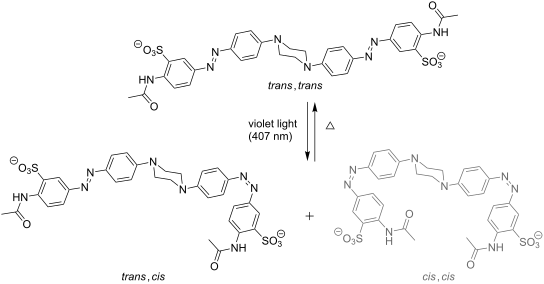
- ) were used as received. NMR spectra were recorded either on Varian Vnmr-S 400 MHz, Varian Mercury 400 MHz or Agilent DD2 500 MHz spectrometers. Silica gel of particle size 40–63 μm from Silicycle Chemical Division was used for column chromatography. Synthesis of 1,4-diphenylpiperazine (7) [34]: A


Flow photochemistry: Old light through new windows
Beilstein J. Org. Chem. 2012, 8, 2025–2052, doi:10.3762/bjoc.8.229
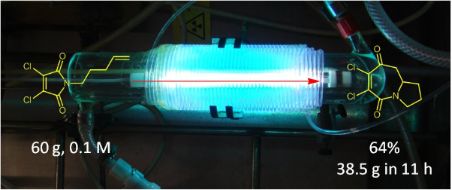
- -well photoreactor in conjunction with mercury-vapour-discharge lamps (Figure 1). This compact batch reactor is an excellent device to carry out preparative photochemistry on scales of milligrams up to a few grams. The lamp is contained in a double-jacketed water-cooled immersion well. This is then
- monitored by conventional means (TLC, GC, LCMS). As often no reagents are used, workup is by simple evaporation of solvent, and the product is purified by conventional means. The most common UV sources are the commercially available mercury-discharge lamps. These are evacuated glass tubes containing mercury
- know-how, e.g., which lamp, glassware and solvent to use. • Safety. Medium pressure mercury lamps operate optimally at ~600 °C and emit intense and potentially damaging UV radiation. • Difficulty in scaling up. The Toray caprolactam process proves this is not a problem at the industrial scale. However


The chemistry of bisallenes
Beilstein J. Org. Chem. 2012, 8, 1936–1998, doi:10.3762/bjoc.8.225
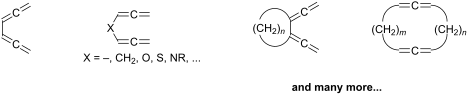
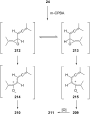
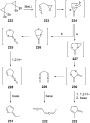
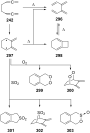
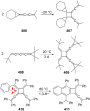
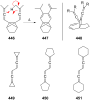
- mercury-arc lamp or heating (250 °C, benzene), is converted quantitatively to 88, which is presumably the thermodynamically most stable of the C6(TMS)6-isomers (Scheme 22) [73]. West and Priesner obtained 88 as one of the products produced when 2,4-hexadiyne was first metalated by the n-butyllithium/TMEDA
















Imidazolinium and amidinium salts as Lewis acid organocatalysts
Beilstein J. Org. Chem. 2012, 8, 1798–1803, doi:10.3762/bjoc.8.205
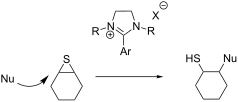
- hydrogen-bond activation catalysts [18]. The utilization of the soft Lewis basic sulfur groups in this reaction is rare. Often mercury Lewis acids are applied [19][20][21][22] to activate the sulfur group and there is also the risk of desulfurization [23]. The only known asymmetric Diels–Alder reaction





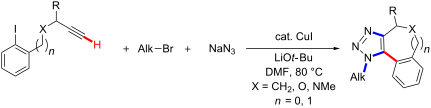
Copper-catalyzed CuAAC/intramolecular C–H arylation sequence: Synthesis of annulated 1,2,3-triazoles
Beilstein J. Org. Chem. 2012, 8, 1771–1777, doi:10.3762/bjoc.8.202
- , estimated to be >95 % pure, as determined by 1H NMR. Thin-layer chromatography (TLC) was carried out on silica gel 60 F254 aluminum plates (Merck). Chromatography: Merck silica gel 60 (40–63 μm). NMR: Spectra were recorded on Varian Unity 300, Mercury 300 or Inova 500 in the solvent indicated; chemical


A Wittig-olefination–Claisen-rearrangement approach to the 3-methylquinoline-4-carbaldehyde synthesis
Beilstein J. Org. Chem. 2012, 8, 1725–1729, doi:10.3762/bjoc.8.197

- gel (100–200 mesh) was used for column chromatography. IR spectra were recorded on a Perkin Elmer model 1600 series FTIR instrument. 1H and 13C NMR (ppm, TMS, internal standard) in CDCl3 were recorded on a JEOL FX 90Q, Varian Mercury 300 MHz and 75 MHz, respectively. CHN analysis was performed on a


A simple and efficient dual optical signaling chemodosimeter for toxic Hg(II)
Beilstein J. Org. Chem. 2012, 8, 1352–1357, doi:10.3762/bjoc.8.155
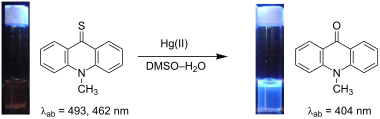
- disciplines of biology, medicine and environment [1][2][3][4][5]. Though, mercury and alkylmercury are highly poisonous, mercury ions are also a subject of worldwide concern because of their acute immune-, geno- and neurotoxic effects on human, livestock and marine mammals [6][7][8][9][10][11]. The poisonous
- effects of mercury ions stem from their irreversible binding with the sulfhydryl-containing groups of proteins and enzymes, resulting in clinical problems such as prenatal brain damage, muscle coordination difficulties, lung, kidney and vision disorders. To date, many chemosensors featuring assortments of
- action of hazardous mercury ions in samples containing several background metal ions. In addition to the matrix experiment described above, we studied the effects of individual interferents on the fluorescence response of mercury ions. Therefore, the fluorescence spectra of the probe in the presence of


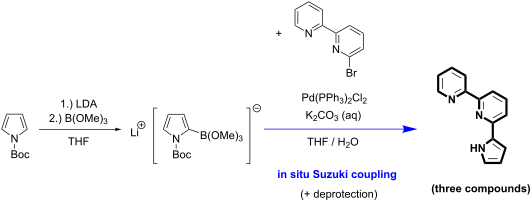
Synthesis of new pyrrole–pyridine-based ligands using an in situ Suzuki coupling method
Beilstein J. Org. Chem. 2012, 8, 1037–1047, doi:10.3762/bjoc.8.116
- solvents. NMR: 600 MHz (1H), 151 MHz (13C): Bruker AV2-600 spectrometer. 200 MHz (1H), 50 MHz (13C): Varian Mercury Plus 200. 1H chemical shifts were recorded with tetramethylsilane (TMS) as the internal standard. 13C measurements were taken with the corresponding solvent signal as the reference. J values


Phytoalexins of the Pyrinae: Biphenyls and dibenzofurans
Beilstein J. Org. Chem. 2012, 8, 613–620, doi:10.3762/bjoc.8.68
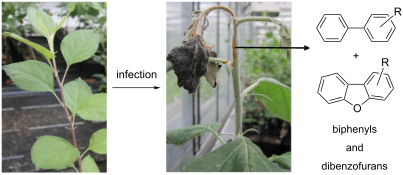
- 34 species of the Pyrinae, only Sorbus aucuparia formed a phytoalexin, namely aucuparin (3) [20]. Another abiotic elicitor, mercury, caused accumulation of 4'-methoxyaucuparin (10) in Rhaphiolepis umbellata at concentrations higher than after fungal infection [14][19]. So far, no glycosides of



Aryl nitrile oxide cycloaddition reactions in the presence of pinacol boronic acid ester
Beilstein J. Org. Chem. 2012, 8, 606–612, doi:10.3762/bjoc.8.67
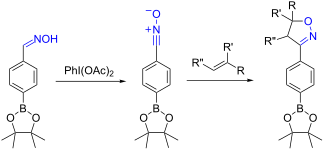
- halogenation–dehydrohalogenation process is most common, several methods involving direct oxidative dehydrogenation of aldoximes have been reported, including the use of lead tetraacetate [22][23], mercury(II) acetate [24], hypervalent iodine [25][26], and manganese(IV) oxide [27]. We were interested in


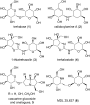
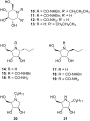
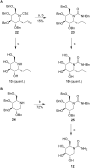
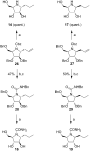
Synthesis and biological evaluation of nojirimycin- and pyrrolidine-based trehalase inhibitors
Beilstein J. Org. Chem. 2012, 8, 514–521, doi:10.3762/bjoc.8.58
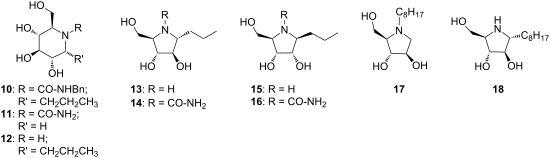
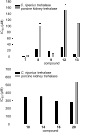
- solution of (NH4)6Mo7O24 (21 g), Ce(SO4)2 (1 g), conc. H2SO4 (31 mL) in water (500 mL) and then heating to 110 °C for 5 min. Flash column chromatography was performed on silica gel 230–400 mesh (Merck). Routine 1H and 13C NMR spectra were recorded on a Varian Mercury instrument at 400 MHz (1H) and 100.57



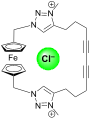
A ferrocene redox-active triazolium macrocycle that binds and senses chloride
Beilstein J. Org. Chem. 2012, 8, 246–252, doi:10.3762/bjoc.8.25
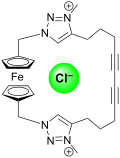
- . Tetrabutylammonium salts were stored in a vacuum desiccator under reduced pressure. All other compounds were bought commercially and used as received. Routine NMR spectra were recorded on a Varian Mercury 300 spectrometer with 1H NMR operating at 300 MHz, 13C at 75.5 MHz. Spectra for anion-binding titrations were


Fifty years of oxacalix[3]arenes: A review
Beilstein J. Org. Chem. 2012, 8, 201–226, doi:10.3762/bjoc.8.22
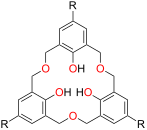
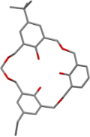
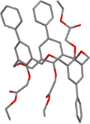
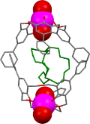
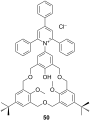
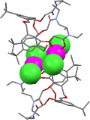
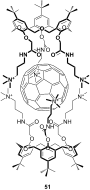
- pattern at ambient temperature. At lower temperatures, however, the A3X pattern seen for the silver(I) complex changes to an A2BX pattern, indicating that the apparent symmetry is a time-averaged effect. Cragg reported the reaction of 17a with mercury(II) chloride and the X-ray crystal structure of the












Synthesis and characterization of new diiodocoumarin derivatives with promising antimicrobial activities
Beilstein J. Org. Chem. 2011, 7, 1688–1696, doi:10.3762/bjoc.7.199
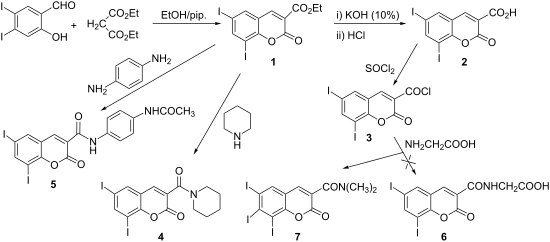
- -IR 5300 spectrometer and Perkin Elmer spectrum RXIFT-IR system (ν, cm−1). The 1H NMR spectra at 300 MHz and 13C NMR spectra at 75 MHz were recorded in CDCl3 or DMSO-d6 on a Varian Mercury VX-300 NMR spectrometer. Chemical shifts (δ) are related to that of the solvent. Mass spectra were measured on a


Scalable synthesis of (1-cyclopropyl)cyclopropylamine hydrochloride
Beilstein J. Org. Chem. 2011, 7, 1003–1006, doi:10.3762/bjoc.7.113

- (Distortionless Enhancement by Polarization Transfer)] on Bruker AM 250 and Varian Mercury Vx300 instruments in CDCl3 and D2O solutions, CHCl3/CDCl3 and DHO as internal references. EI-MS, ESI-MS and HRMS spectra were measured with Finnigan MAT 95 (70 eV), Finnigan LCQ and Bruker Daltonic APEX IV 7T FTICR


Multicomponent reaction access to complex quinolines via oxidation of the Povarov adducts
Beilstein J. Org. Chem. 2011, 7, 980–987, doi:10.3762/bjoc.7.110
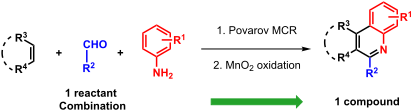
- , anilines and activated alkenes in a short sequence, involving Povarov MCR and oxidation steps. Experimental General 1H and 13C NMR spectra were recorded on a Varian Mercury 400 spectrometer. Unless otherwise stated, NMR spectra were recorded in CDCl3 solution with TMS as an internal reference. Data for 1H


Intraannular photoreactions in pseudo-geminally substituted [2.2]paracyclophanes
Beilstein J. Org. Chem. 2011, 7, 658–667, doi:10.3762/bjoc.7.78

- the freeze, pump, and thaw technique. Irradiations were conducted with a high-pressure mercury lamp (150 W) or a halogen torch lamp (1 kW) using water cooling reactor. Synthesis: (1,3-Dioxolan-2-ylmethyl)triphenylphosphonium bromide was prepared according to [24]; 4,15-diformyl[2.2]paracyclophane (9


Gold-catalyzed naphthalene functionalization
Beilstein J. Org. Chem. 2011, 7, 653–657, doi:10.3762/bjoc.7.77
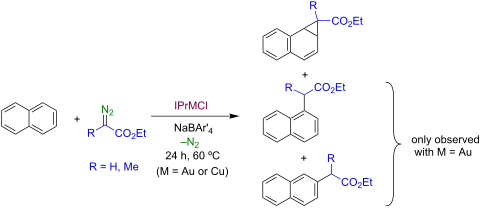
- ), NaBAr'4 and ethyl 2-diazopropionate were prepared by literature procedures [12][13][14][15][16]. 1H and 13C NMR spectra were recorded on a Varian Mercury 400 spectrometer in CDCl3 as solvent, with chemical shifts (δ) referenced to internal standards. General catalytic experiment Complex 1 (0.025 mmol


Effects of anion complexation on the photoreactivity of bisureido- and bisthioureido-substituted dibenzobarrelene derivatives
Beilstein J. Org. Chem. 2011, 7, 278–289, doi:10.3762/bjoc.7.37
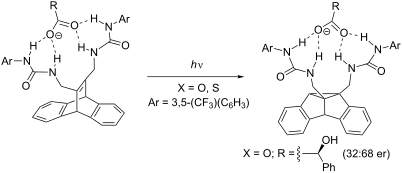
- . Preparative column chromatography was performed on MN Silica Gel 60 M (particle size 0.04–0.063 mm, 230–440 mesh). Irradiations were performed with a TQ150 middle-pressure mercury lamp (Heraeus, UV-Consulting Peschl), which was placed inside a quartz cooling tube. The reaction mixture was placed ca. 10–15 cm




Hoveyda–Grubbs type metathesis catalyst immobilized on mesoporous molecular sieves MCM-41 and SBA-15
Beilstein J. Org. Chem. 2011, 7, 22–28, doi:10.3762/bjoc.7.4
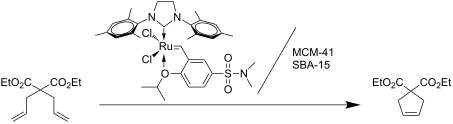
- spectrometer. A Spectralon integration sphere was applied to collect diffuse reflectance spectra of powder samples. Spectralon served also as a reference. Catalyst samples were placed in a quartz cuvette under an Ar atmosphere. 1H (300 MHz) and 13C (75 MHz) NMR spectra were recorded on a Varian Mercury 300


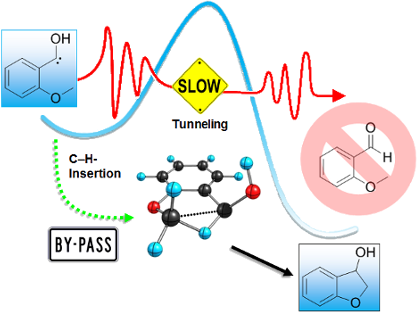
Intramolecular hydroxycarbene C–H-insertion: The curious case of (o-methoxyphenyl)hydroxycarbene
Beilstein J. Org. Chem. 2010, 6, 1061–1069, doi:10.3762/bjoc.6.121
- approximately 50 mm. A high-pressure mercury lamp (HBO 200, Osram) with a monochromator (Bausch & Lomb) was used for irradiation. Experiments with deuterated acid were conducted accordingly. (o-Methoxyphenyl)glyoxylic acid (6) [25]. To a solution of 3.00 g (20.0 mmol) o-methoxyacetophenone in absolute pyridine


Redox-active tetrathiafulvalene and dithiolene compounds derived from allylic 1,4-diol rearrangement products of disubstituted 1,3-dithiole derivatives
Beilstein J. Org. Chem. 2010, 6, 1002–1014, doi:10.3762/bjoc.6.113

- rotation and therefore isomerisation. It can be anticipated that the two isomers will not differ significantly in their electrochemical properties (see below). Compound 3 was trans-chalcogenated by mercury(II)acetate in a mixture of acetic acid and CH2Cl2 to give the oxo derivative 26 in 89% yield
- mixture of 3:1 by volume CH2Cl2:glacial acetic acid (100 ml) with magnetic stirring. Mercury (II) acetate (0.236 g, 7.423 × 10⁻⁴ mol) was added which caused an immediate lightening of the yellow solution and the formation of a white precipitate. The reaction was stirred at room temperature for 4 h then


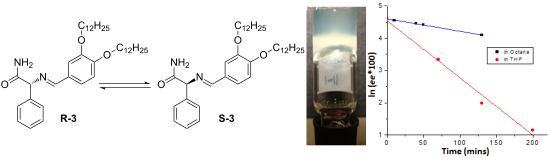
Towards racemizable chiral organogelators
Beilstein J. Org. Chem. 2010, 6, 960–965, doi:10.3762/bjoc.6.107
- Varian Mercury NMR Spectrometer. IR spectra were measured on a Perkin Elmer 1600 FT-IR. MALDI-TOF MS spectra were measured on a Perseptive DE Voyager Mass Spectrometer with α-cyano-4-hydroxycinnamic acid as the matrix. Synthesis Phenylglycinamide R-2, S-2: The ester salt R-1, S-1 (5.04 g, 25 mmol) was





