


Search results
Search for "this compound" in Full Text gives 524 result(s) in Beilstein Journal of Organic Chemistry. Showing first 200.
Controlled decomposition of SF6 by electrochemical reduction
Beilstein J. Org. Chem. 2020, 16, 2948–2953, doi:10.3762/bjoc.16.244
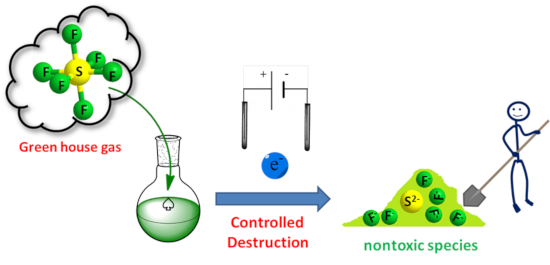
- chemically and physiologically, it is non-flammable, has a high density and a high dielectric constant (2.5 times greater than that of air) [2][3][4][5]. These properties explain that this compound is widely used industrially as an electrical insulating gas in circuit breakers or in electrical substations [6


3-Acetoxy-fatty acid isoprenyl esters from androconia of the ithomiine butterfly Ithomia salapia
Beilstein J. Org. Chem. 2020, 16, 2776–2787, doi:10.3762/bjoc.16.228
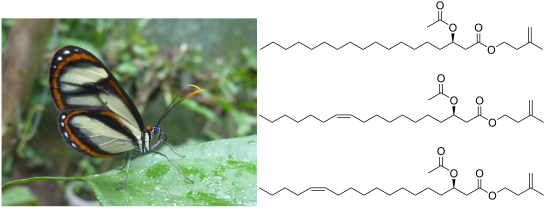
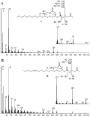
- closely together. The number before the colon indicates the number of individuals carrying this compound, followed by the range of the relative amount. Supporting Information Supporting Information File 430: Butterfly photos, mass, IR and NMR spectra, experimental procedures and analysis of individuals





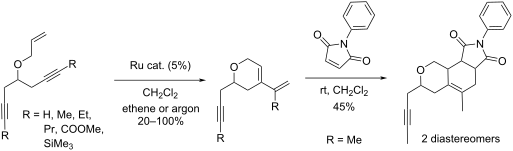
Ring-closing metathesis of prochiral oxaenediynes to racemic 4-alkenyl-2-alkynyl-3,6-dihydro-2H-pyrans
Beilstein J. Org. Chem. 2020, 16, 2757–2768, doi:10.3762/bjoc.16.226
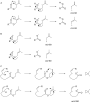
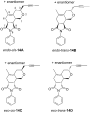
- target diynol 4a was obtained in a 90% yield contaminated with up to 5% of hepta-1,2-dien-6-yn-4-ol (6a), which could not be separated at this stage; however, derivatives of this compound could be conveniently removed by column chromatography in the subsequent steps. Unfortunately, the analogous




Vicinal difluorination as a C=C surrogate: an analog of piperine with enhanced solubility, photostability, and acetylcholinesterase inhibitory activity
Beilstein J. Org. Chem. 2020, 16, 2663–2670, doi:10.3762/bjoc.16.216
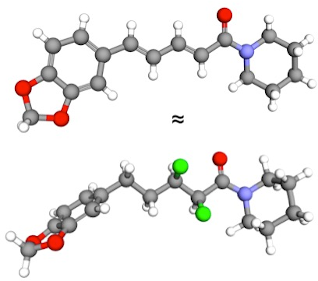
- carried out, and these studies have led to a diverse array of biological activities being claimed for this compound [4][5][6][7][8][9]. For example, 1 is reported to exhibit inhibitory activity towards both acetylcholinesterase (AChE) and β-secretase (BACE-1), which suggests that 1 could hold promise as a


Anion exchange resins in phosphate form as versatile carriers for the reactions catalyzed by nucleoside phosphorylases
Beilstein J. Org. Chem. 2020, 16, 2607–2622, doi:10.3762/bjoc.16.212
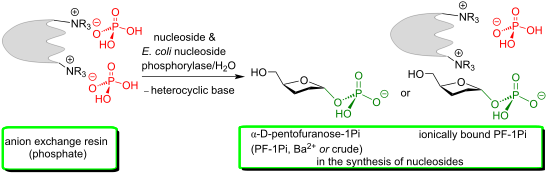
- attracted our interest in this compound [57]. It was found that in the presence of QAE Sephadex A-25, BAPR formation reached 67%, while in the case of BIO-RAD AG 1-X2 and DEAE-Cellulose, the yield was 25 and 23%, respectively. Quite unexpectedly in the experiment with Dowex-nPi the conversion of the base


Synthesis of novel fluorinated building blocks via halofluorination and related reactions
Beilstein J. Org. Chem. 2020, 16, 2562–2575, doi:10.3762/bjoc.16.208
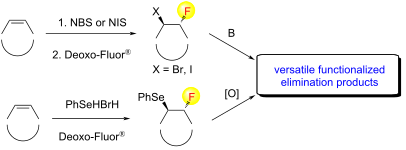
- (rac)-11b was unequivocally established by single-crystal X-ray diffraction (Figure 1). Then, the preparation of another model compound, the trans-annelated bicyclic carbamide derivative (rac)-13, was attempted. This compound was also unknown in the literature. In the reaction of commercially available


Water-soluble host–guest complexes between fullerenes and a sugar-functionalized tribenzotriquinacene assembling to microspheres
Beilstein J. Org. Chem. 2020, 16, 2551–2561, doi:10.3762/bjoc.16.207

- sugar-functionalized derivative TBTQ-(OG)6 in 80% yield. The solubility of this compound was completely different from that of its acetylated precursor: it exhibited good solubility in DMF, DMSO, toluene/DMSO 1:1 (v/v) as well as in water. Structural characterization. All synthesized compounds were


![[Graphic 2]](/bjoc/content/inline/1860-5397-16-207-i3.svg?max-width=637&scale=1.18182) C60 [TBTQ-(OG)6: 50 μM; C60: 50 μM] and (b) TBTQ-(OG)6
C60 [TBTQ-(OG)6: 50 μM; C60: 50 μM] and (b) TBTQ-(OG)6 


Conformational preferences of fluorine-containing agrochemicals and their implications for lipophilicity prediction
Beilstein J. Org. Chem. 2020, 16, 2469–2476, doi:10.3762/bjoc.16.200
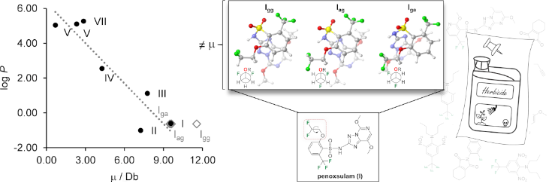
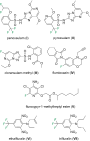
- conformational equilibrium of penoxsulam (I, Figure 1). This compound has a 1,2–disubstituted ethane motif that could adopt three main staggered conformations, namely Igg, Iag and Iga (g = gauche and a = anti; see Figure 1), thus we have explored the intramolecular interactions governing its conformational




Naphthalene diimide–amino acid conjugates as novel fluorimetric and CD probes for differentiation between ds-DNA and ds-RNA
Beilstein J. Org. Chem. 2020, 16, 2032–2045, doi:10.3762/bjoc.16.170
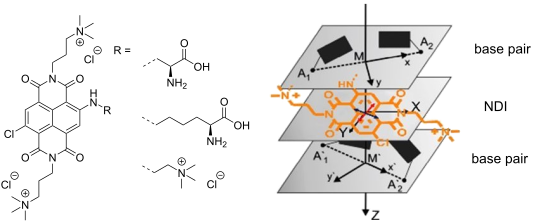
- , starting from the literature-known dichloro NDI 1 having two 3-dimethylaminopropyl groups attached to the imide nitrogens [31]. This compound was first methylated at the nitrogen atoms by the reaction with iodomethane in refluxing toluene, giving the diammonium NDI 2 in a very good yield of 89%. In the


On the hydrolysis of diethyl 2-(perfluorophenyl)malonate
Beilstein J. Org. Chem. 2020, 16, 1863–1868, doi:10.3762/bjoc.16.153
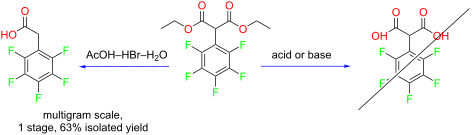
- surprise, 2-(perfluorophenyl)malonic acid (2) was not described in the literature to date. The only reference to this compound actually concerned the formation of the anion from diethyl 2-(perfluorophenyl)malonate (3) with excess NaH [21]. At the same time, diethyl 2-(perfluorophenyl)malonate (3) is a


Synthesis, docking study and biological evaluation of ᴅ-fructofuranosyl and ᴅ-tagatofuranosyl sulfones as potential inhibitors of the mycobacterial galactan synthesis targeting the galactofuranosyltransferase GlfT2
Beilstein J. Org. Chem. 2020, 16, 1853–1862, doi:10.3762/bjoc.16.152
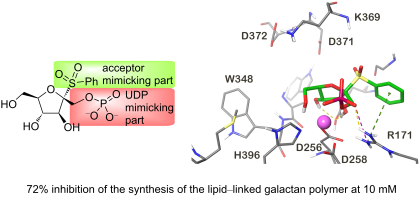
- that given the high concentration of this compound required to achieve inhibitory effects on the galactan synthesis, this approach requires further optimization. Indeed, our pilot docking study was performed with compounds initially targeted at the transition state of GnT-I. Moreover, presented


Nonenzymatic synthesis of anomerically pure, mannosyl-based molecular probes for scramblase identification studies
Beilstein J. Org. Chem. 2020, 16, 1732–1739, doi:10.3762/bjoc.16.145
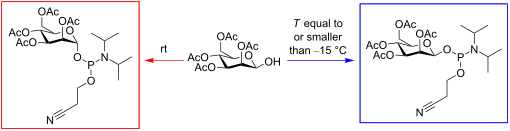
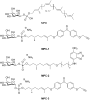
- target compounds MPC-1 and MPC-2 was the preparation of the phosphoramidite β-4Ac-Man-CEP (Figure 4). Two points are of particular importance for the synthesis of this compound. Firstly, we needed access to an anomerically pure starting material, i.e., 2,3,4,6-tetra-O-acetyl-β-ᴅ-mannopyranose. This was



Rearrangement of o-(pivaloylaminomethyl)benzaldehydes: an experimental and computational study
Beilstein J. Org. Chem. 2020, 16, 1636–1648, doi:10.3762/bjoc.16.136
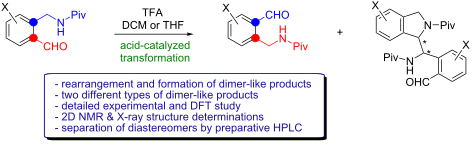
- upfield aromatic δH(7) value (5.71 ppm) was measured for the isoindoline moiety of this compound, i.e., a diamagnetic shift of ca. 1.8 ppm occurred in this position. In order to explain this phenomenon, we should consider the anisotropic effect of the aromatic rings. Such steric arrangement is only
- , and recrystallized from EtOAc/hexane to afford the title compounds as white solids. N-[(5-Formyl-2H-1,3-benzodioxol-4-yl)methyl]-2,2-dimethylpropanamide (2a) [1]. Method A: This compound was prepared according to general procedure I using 1a [2] (1.02 g, 3.88 mmol) and TFA (30 µL, 44 mg, 0.39 mmol
- C14H17NO4 (263.29): N, 5.32; H, 6.51; C, 63.87; found: N, 5.38; H, 6.44; C, 63.77%; NMR data are identical with those published earlier [1]. Method B: This compound was prepared according to general procedure II using 1a [2] (1.00 g, 3.80 mmol) and TFA (29 µL, 43 mg, 0.38 mmol). The title compound (592 mg


Antibacterial scalarane from Doriprismatica stellata nudibranchs (Gastropoda, Nudibranchia), egg ribbons, and their dietary sponge Spongia cf. agaricina (Demospongiae, Dictyoceratida)
Beilstein J. Org. Chem. 2020, 16, 1596–1605, doi:10.3762/bjoc.16.132
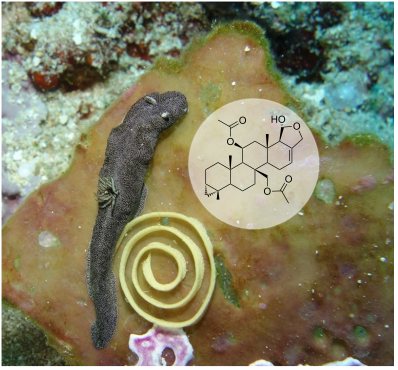
- of this compound. In general, scalarane sesterterpenes are bioactive metabolites, mainly isolated from marine sources, such as Dictyoceratida sponges and the nudibranchs that feed on them [7][25][29][33][56]. So far, only six scalaranes containing cyclopropane rings, constructed of C-4, C-19 and C-20



4-Hydroxy-3-methyl-2(1H)-quinolone, originally discovered from a Brassicaceae plant, produced by a soil bacterium of the genus Burkholderia sp.: determination of a preferred tautomer and antioxidant activity
Beilstein J. Org. Chem. 2020, 16, 1489–1494, doi:10.3762/bjoc.16.124
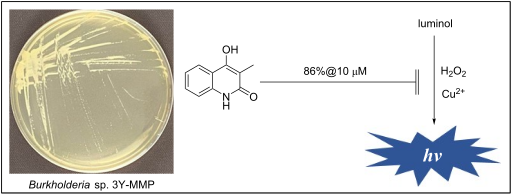
- -hydroxy-3-methyl-2(1H)-quinolone (1, Figure 1). This compound was recently reported from the root of woad (Isatis tinctoria, family Brassicaceae) with no details of structure characterization [17]. Herein we describe the isolation, unequivocal structure characterization, and antioxidant activity of


Synthesis and properties of quinazoline-based versatile exciplex-forming compounds
Beilstein J. Org. Chem. 2020, 16, 1142–1153, doi:10.3762/bjoc.16.101
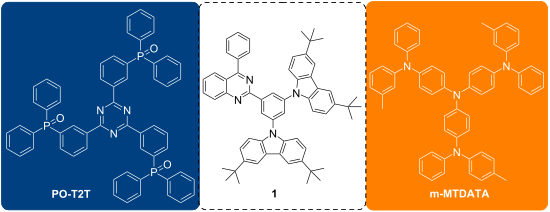
- ) which is usually detected for materials exhibiting low-intensity emissions [22][23]. Exciplex-forming properties Since compound 1 was characterized by the most blue-shifted fluorescence in the solid-state and a high first triplet energy level of 2.97 eV (Figure 5a and Figure 7a), this compound was


Fluorinated phenylalanines: synthesis and pharmaceutical applications
Beilstein J. Org. Chem. 2020, 16, 1022–1050, doi:10.3762/bjoc.16.91
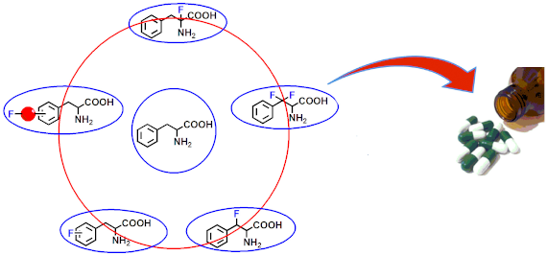
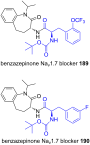
- capture therapy (BNCT) [53][88][89][90][91][92]. This compound was used for PET imaging of melanoma in animal models. The low affinity of 178 for the ʟ-type amino acid transporter1 (LAT1), however, limited the use of this compound as PET radiotracer for brain tumor imaging [93][94][95][96]. Therefore, for


Aryl-substituted acridanes as hosts for TADF-based OLEDs
Beilstein J. Org. Chem. 2020, 16, 989–1000, doi:10.3762/bjoc.16.88
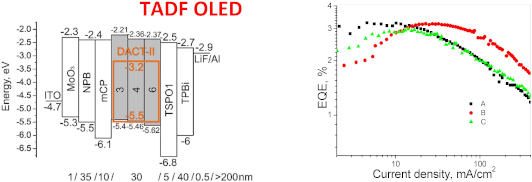
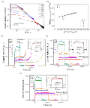
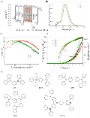
- values were estimated as 2.54 eV for 4, and 2.67 eV for 3 and 6. The triplet energy could not be estimated for derivative 5, since the phosphorescence at 77 K was practically undetectable for this compound. Electrochemical and photoelectrical properties The electrochemical properties of the acridane


Cation-induced ring-opening and oxidation reaction of photoreluctant spirooxazine–quinolizinium conjugates
Beilstein J. Org. Chem. 2020, 16, 904–916, doi:10.3762/bjoc.16.82
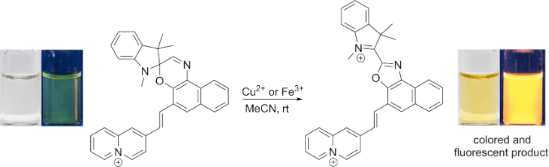
- photochromism, i.e., a blue shift of the absorption maximum of the merocyanine form [5][19][27][28][29], and increased stability of the latter towards the thermal back reaction [21][28][30][31][32][33][34]. In this context, the complexation of metal cations has also been exploited to utilize this compound class


Synthesis of disparlure and monachalure enantiomers from 2,3-butanediacetals
Beilstein J. Org. Chem. 2020, 16, 616–620, doi:10.3762/bjoc.16.57
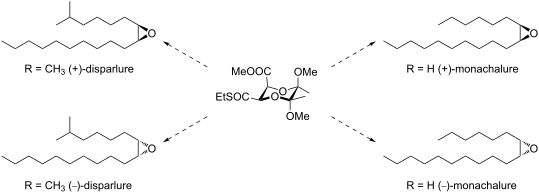
- ensure the required configuration of the asymmetric centers determining the biological activity of this compound. They include the use of naturally occurring chiral substrates, such as ʟ-glutamic acid [13], ʟ-tartaric acid [14][15][16], ᴅ-glucose [17], and sorbitol [18] as starting materials, as well as
- –8 are obtained. We therefore decided to apply this compound for the synthesis of both enantiomers of disparlure and both enantiomers of monachalure. Results and Discussion Compound 14 was prepared and converted to 15 by Fukuyama reduction as described previously [37]. The overall yield for the
- 19 instead. This compound was obtained from both aldehyde 15 and its precursor ethyl thioester methyl ester 14, respectively (Scheme 3). Both substrates 14 and 15 were reduced to the corresponding diol 17 with lithium aluminum hydride with 73% or 83% yield, respectively. Next, the selective


Regio- and stereoselective synthesis of new ensembles of diversely functionalized 1,3-thiaselenol-2-ylmethyl selenides by a double rearrangement reaction
Beilstein J. Org. Chem. 2020, 16, 515–523, doi:10.3762/bjoc.16.47
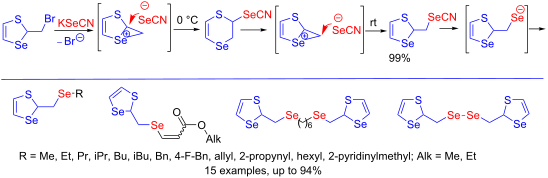
- % yields, respectively. The one-pot synthesis of hitherto unknown bis(1,3-thiaselenol-2-ylmethyl) diselenide (8) in 90% yield from thiaselenole 1 was developed (Scheme 10). The reaction proceeded via the formation of thiaselenole selenocyanate 4, which was in situ converted into diselenide 8. This compound


Visible-light-induced addition of carboxymethanide to styrene from monochloroacetic acid
Beilstein J. Org. Chem. 2020, 16, 398–408, doi:10.3762/bjoc.16.38
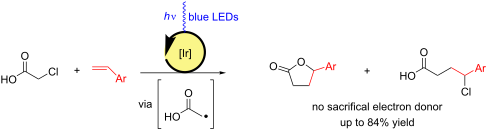
- traditional reactivity of this compound. Here, we investigated the possibility of applying monochloroacetic acid as a substrate for photoredox catalysis with styrene to directly produce γ-phenyl-γ-butyrolactone. Instead of using nucleophilic substitution, we cleaved the carbon chlorine bond by single-electron
- monochloroacetic acid have been published. The production of basic building blocks like glycine [5] (>600 000 tons/year in China in 2015) and diethyl malonate from monochloroacetic acid show the value of this compound as a starting material. Many reactions with monochloroacetic acid, including the synthesis of


The reaction of arylmethyl isocyanides and arylmethylamines with xanthate esters: a facile and unexpected synthesis of carbamothioates
Beilstein J. Org. Chem. 2020, 16, 159–167, doi:10.3762/bjoc.16.18
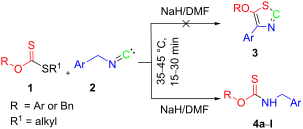
- of the final products were detected in the NMR spectra, and a representative DFT computational analysis conducted with 4c (this compound also yielded a crystal structure) was in agreement with the ratio of the two rotamers that were observed in the corresponding NMR spectra. A mechanism was proposed


Synthesis, liquid crystalline behaviour and structure–property relationships of 1,3-bis(5-substituted-1,3,4-oxadiazol-2-yl)benzenes
Beilstein J. Org. Chem. 2020, 16, 149–158, doi:10.3762/bjoc.16.17
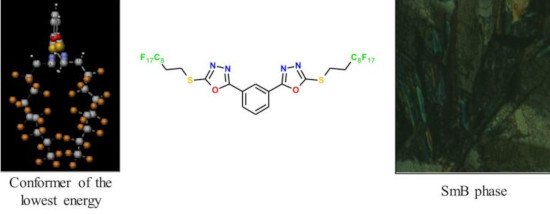
- , compared to two-chain and shorter-chain homologues. Taking into account these observations, the inability of 2d to exhibit mesophases becomes axiomatic, since this compound is devoid of any terminal alkyl chain. X-ray patterns analysis In order to correlate the obtained results from POM and DSC, we have




Synthesis and characterization of bis(4-amino-2-bromo-6-methoxy)azobenzene derivatives
Beilstein J. Org. Chem. 2019, 15, 3000–3008, doi:10.3762/bjoc.15.296
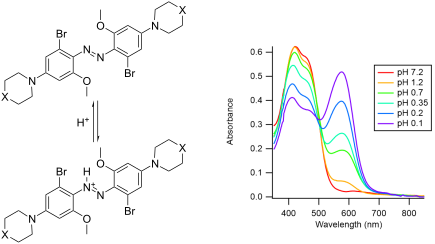
- (i.e., a 2-bromo-6-methoxy substitution pattern) was found to lower the pKa of the azonium ion such that it fell outside the normal physiological range. The neutral version of this compound nevertheless underwent trans-to-cis photoisomerization in the presence of blue-green light and exhibited slow





