


Search results
Search for "Pd(OAc)2" in Full Text gives 206 result(s) in Beilstein Journal of Organic Chemistry. Showing first 200.
Extending the utility of [Pd(NHC)(cinnamyl)Cl] precatalysts: Direct arylation of heterocycles
Beilstein J. Org. Chem. 2012, 8, 1637–1643, doi:10.3762/bjoc.8.187
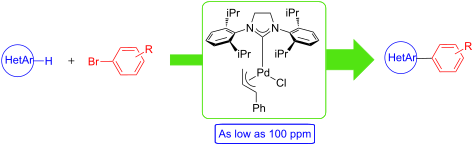
- derivatives. To complete the study, experiments were performed at lower catalyst loading using imidazopyridine (13). This class of substrate has recently been involved, by Doucet et al. [45], in direct arylation with a catalytic charge of Pd(OAc)2 ranging from 0.1 to 0.01 mol %. In our case, comparable yields



Synthesis of conformationally restricted glutamate and glutamine derivatives from carbonylation of orthopalladated phenylglycine derivatives
Beilstein J. Org. Chem. 2012, 8, 1569–1575, doi:10.3762/bjoc.8.179
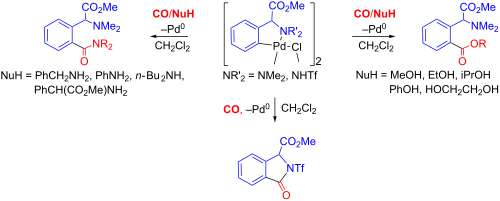
- )(CO2Me)NMe2] has been reported previously by Ryabov and Beck [17][18], and affords complex 1 by heating of Pd(OAc)2 and [C6H5C(H)(CO2Me)NMe2] in acetic acid (55–60 °C over 15–20 min), followed by stirring at room temperature for 2–3 days. In this way, complex 1 is obtained in 50% yield. We did not use
- this method, and we present here an optimized synthesis of complex 1, which is achieved by heating a solution of Pd(OAc)2 with [C6H5C(H)(CO2Me)NMe2] (1:1 molar ratio) in acetone under reflux for 24 h, followed by the typical metathesis of acetate by chloride bridging ligands in MeOH. Our improved
- )NHTf] with Pd(OAc)2 (1:1 molar ratio) affords the orthometallated [Pd(µ-Cl)(C6H4CH(CO2Me)NHTf-2)]2 (3), after metathesis of acetate by chloride bridging ligands, as shown in Scheme 2. In this case the reaction also takes place in acetone under reflux, but 48 h of heating is necessary to achieve


Impact of cyclodextrins on the behavior of amphiphilic ligands in aqueous organometallic catalysis
Beilstein J. Org. Chem. 2012, 8, 1479–1484, doi:10.3762/bjoc.8.167
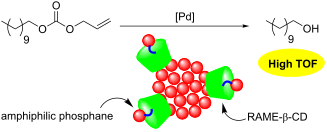
- . Reaction conditions: Pd(OAc)2 = 2.23 μmol, phosphane = 20.1 μmol, RAME-β-CD = 0–241 μmol, H2O = 2 g, allyl undecyl carbonate = 223 μmol, diethylamine = 446 μmol, dodecane = 110 μmol, heptane = 2 g, 1250 rpm, room temperature. The TOF was defined as the number of moles of allyl undecyl carbonate converted


On the bromination of the dihydroazulene/vinylheptafulvene photo-/thermoswitch
Beilstein J. Org. Chem. 2012, 8, 958–966, doi:10.3762/bjoc.8.108
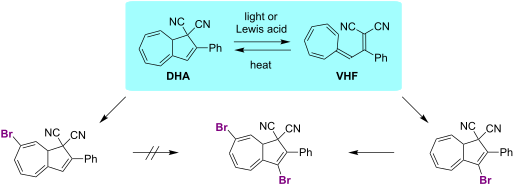
- the azulene 14 (50 mg, 0.129 mmol) and 2,5-dimethoxyphenylboronic acid (16) (47 mg, 0.259 mmol) under an Ar atmosphere in an argon-degassed toluene/water 9:1 mixture were added K3PO4 (110 mg, 0.517 mmol), Pd(OAc)2 (6 mg, 0.0026 mmol) and RuPhos (2-dicyclohexylphosphino-2',6'-diisopropoxy-1,1'-biphenyl


Synthesis and characterization of Sant-75 derivatives as Hedgehog-pathway inhibitors
Beilstein J. Org. Chem. 2012, 8, 841–849, doi:10.3762/bjoc.8.94
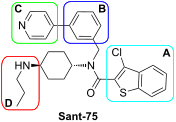
- reaction conditions, we found that the reaction proceeded well in 1,4-dioxane at 100 °C for 8 h with Na2CO3 as base in the presence of Pd(OAc)2 as catalyst, and PPh3 as ligand, providing the products in 73–85% yield. Different from the synthetic strategy of 11a–d, the pyrimidine nucleus in biaryl aldehydes
- conditions: (a) BOP, DIEA, DMF; (b) CH2Cl2, TFA. Synthesis of key intermediate biaryl aldehydes. Reagents and conditions: (a) Pd(OAc)2, PPh3, 1,4-dioxane, Na2CO3, 100 °C; (b) cat. NaOMe, MeOH; then NH4Cl; (c) acetylacetaldehyde dimethyl acetal, 1,4-dioxane, reflux; (d) SeO2, 1,4-dioxane, reflux; (e) DMF-DMA
- , PhMe, reflux; (f) acetamidine hydrochloride, Na, EtOH, reflux; (g) 1H-imidazole-4-carbaldehyde, DMF, CuI, Cs2CO3. Chemical modifications on the motif C. Reagents and conditions: (a) Pd(OAc)2, PPh3, 1,4-dioxane, Na2CO3, 100 °C; (b) CuI, DMF, Cs2CO3, 120 °C; (c) (i) Pd2(dba)3, rac-BINAP, NaOt-Bu, PhMe


Synthesis of axially chiral oxazoline–carbene ligands with an N-naphthyl framework and a study of their coordination with AuCl·SMe2
Beilstein J. Org. Chem. 2012, 8, 726–731, doi:10.3762/bjoc.8.81
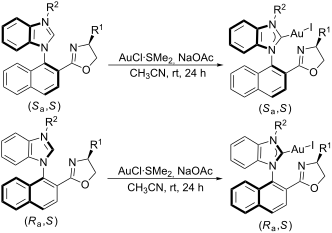
- trifluoromethanesulfonate 10 in 95% yield, which was made to react with 2-nitroaniline in the presence of Pd(OAc)2/DPE-phos catalytic system to give the corresponding coupling compound 11 in 98% yield (Scheme 1). Subsequent reduction of compound 11 with Pd/C under a hydrogen atmosphere produced the desired compound 12 in
- benzimidazolium salts 7, respectively. Coordination study with AuCl·SMe2 The coordination behavior of ligand 7 with Pd(OAc)2 has been disclosed in previous work. However, only (Sa,S)-7 could give the corresponding Pd-complex (Sa,S)-8, while the Pd(II)-complex with R-geometry of the chiral N-naphthyl axis could



Branching out at C-2 of septanosides. Synthesis of 2-deoxy-2-C-alkyl/aryl septanosides from a bromo-oxepine
Beilstein J. Org. Chem. 2012, 8, 522–527, doi:10.3762/bjoc.8.59

- , Heck, Suzuki and Sonogashira coupling reactions. Heck coupling reactions [24][25] were undertaken first. Thus, the reaction of bromo-oxepine 2 with methyl acrylate was performed, in the presence of Pd(OAc)2 (10 mol %) and Cs2CO3 in 1,4-dioxane, at 98 °C (Scheme 1), to afford diene 3, in 70% yield. The
- only the mono-Heck coupling product 5 was obtained. Alternative reaction conditions were attempted, for example, by using Pd(PPh3)2Cl2 (10 mol %), instead of Pd(OAc)2, while keeping other parameters of the reaction uniform, yet the double-Heck coupling product was not observed. The newly generated
- bromo-oxepine 2, efforts were undertaken to implement C–C bond forming Suzuki and Sonogashira coupling reactions. Suzuki reactions were undertaken by involving phenylboronic acid and substituted phenylboronic acids [26][27], in the presence of Pd(OAc)2 (10 mol %) and Cs2CO3 in 1,4-dioxane at 98 °C


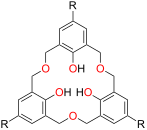
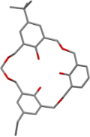
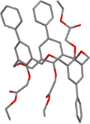
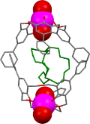
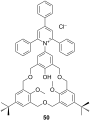
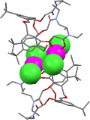
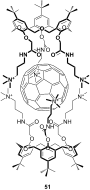
Fifty years of oxacalix[3]arenes: A review
Beilstein J. Org. Chem. 2012, 8, 201–226, doi:10.3762/bjoc.8.22












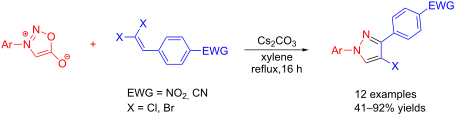
Efficient synthesis of 1,3-diaryl-4-halo-1H-pyrazoles from 3-arylsydnones and 2-aryl-1,1-dihalo-1-alkenes
Beilstein J. Org. Chem. 2011, 7, 1656–1662, doi:10.3762/bjoc.7.195
- or phenylboronic acid was investigated (Scheme 3). Compounds 3b, 3h, and 3g were chosen as the model substrates. When compounds 3b and 3h were treated with 2 equiv each of iodobenzene and potassium carbonate in DMF with Pd(OAc)2 as a catalyst, the desired 5-aryl substituted products 4a and 4b were
- generated in 51% and 82% yields, respectively. When pyrazole 3g was treated with 2 equiv each of phenylboronic acid and potassium carbonate in DMF with Pd(OAc)2 as a catalyst, the desired 4-aryl substituted product 5 was formed in 86% yield. The three reactions mentioned above indicate that pyrazoles 3 are


Recent advances in direct C–H arylation: Methodology, selectivity and mechanism in oxazole series
Beilstein J. Org. Chem. 2011, 7, 1584–1601, doi:10.3762/bjoc.7.187
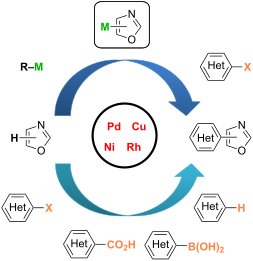
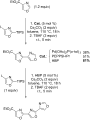
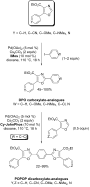
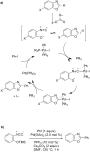
- performance of the Herrmann–Beller precatalyst (HBP) as well as the (1-Ad)2P(O)H/Pd(OAc)2 combination for the direct coupling of ethyl oxazole-4-carboxylate, with iodides and bromides, respectively (Scheme 9) [51][52]. Greaney’s methodology was remarkably applied to the preparation of bis- and trisoxazoles






Synthesis of fluoranthenes by hydroarylation of alkynes catalyzed by gold(I) or gallium trichloride
Beilstein J. Org. Chem. 2011, 7, 1520–1525, doi:10.3762/bjoc.7.178
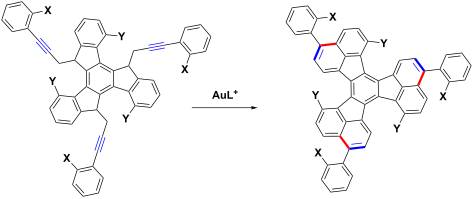
- (Table 2, entries 11 and 12). The reaction of 3a with Pd(OAc)2 as catalyst proceeded differently to give known (E)-9-(3-phenylallylidene)-9H-fluorene (9) [60], presumably via the formation of the corresponding allene as an intermediate (Scheme 2). Substrates 7b–j, prepared by alkylation of fluorenyl
- 6. Proposed metal catalyzed annulation for the synthesis of triaryldiacenaphtho[1,2-j:1',2'-l]fluoranthenes 2. Pd(OAc)2-catalyzed isomerization of 7a to form (E)-9-(3-phenylallylidene)-9H-fluorene (9). Gold(I)-catalyzed hydroarylation of 7k to give 1,10b-dihydrofluoranthene 9. Gold(I)-catalyzed


Amines as key building blocks in Pd-assisted multicomponent processes
Beilstein J. Org. Chem. 2011, 7, 1387–1406, doi:10.3762/bjoc.7.163
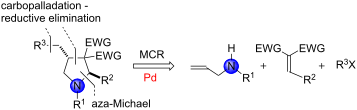
- and Pd(OAc)2, and with CuI as the catalyst system. A first Sonogashira coupling reaction occurred, in the presence of Cs2CO3 as base, leading to ortho-alkynylchloroarene intermediates 51. A subsequent amination was possible due to the high catalytic activity of this palladiumcarbene complex in the
- results for this Pd-catalyzed tandem Sonogashira/double C–N coupling reaction were obtained when Pd(OAc)2 was used as the catalyst along with a bulky bidentate phosphine ligand such as Xantphos in the presence of Cs2CO3 as base. Most likely, the reaction proceeds through a Pd-catalyzed Sonogashira


Scaling up of continuous-flow, microwave-assisted, organic reactions by varying the size of Pd-functionalized catalytic monoliths
Beilstein J. Org. Chem. 2011, 7, 1150–1157, doi:10.3762/bjoc.7.133
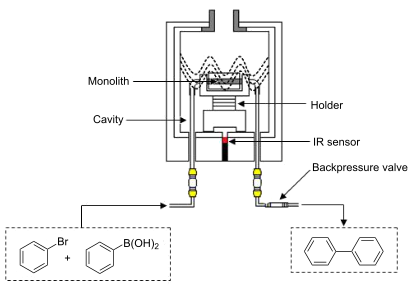
- with microwave heating. The silica monoliths were impregnated with a range of Pd precursors, namely Na2PdCl4, Pd(OAc)2, Pd(dba)2 and Pd(NO3)2, by a standard method described previously for the preparation of Pd-monoliths. The Pd-monolith-3.2 catalysts were evaluated using the previously optimized


Homocoupling of aryl halides in flow: Space integration of lithiation and FeCl3 promoted homocoupling
Beilstein J. Org. Chem. 2011, 7, 1064–1069, doi:10.3762/bjoc.7.122
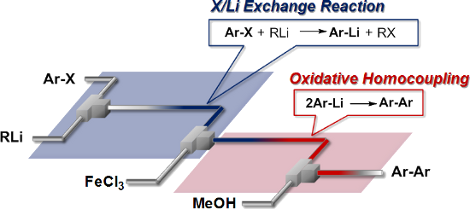
- most useful methods for the construction of biaryl frameworks [1]. Stoichiometric amounts of transition metal salts such as TiCl4 [2], TlCl [3], VO(OEt)Cl2 [4], CoCl2 [5], CuCl2 [6] and Pd(OAc)2 [7] have been used for homocoupling of arylmetals. In some cases catalytic processes in the presence of a


Synthesis, reactivity and biological activity of 5-alkoxymethyluracil analogues
Beilstein J. Org. Chem. 2011, 7, 678–698, doi:10.3762/bjoc.7.80
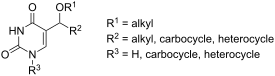
- . Synthesis of 5-[alkoxy-(4-nitrophenyl)methyl]uracils 124. Synthesis of 5-[alkoxy-(4-nitrophenyl)methyl]uridines 126 and 127. Synthesis of phosphoramidite 134. Reaction conditions 1: (a) TBDMSCl, imidazole, pyridine, 33 h, 99%; (b) vinyl acetate, Pd(OAc)2, PPh3, Et3N, DMF, 70 °C, 16 h, 68%; (c) OsO4, 4


Gold-catalyzed heterocyclizations in alkynyl- and allenyl-β-lactams
Beilstein J. Org. Chem. 2011, 7, 622–630, doi:10.3762/bjoc.7.73
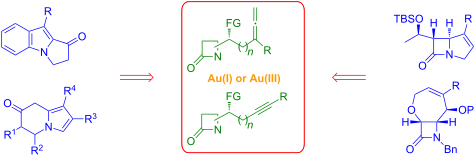
- palladium-based catalysts such as Pd(OAc)2, PdCl2, [Pd(PPh3)4], and [Pd2(dba)3]·CHCl3 failed to give the desired cyclized products, exposure of allenyl-β-lactams 1 to 5 mol % AuCl3 in CH2Cl2 produced the bicyclic β-lactam products, i.e., the Δ1-carbapenems 2 (Scheme 1). The desired products were produced in



Unusual behavior in the reactivity of 5-substituted-1H-tetrazoles in a resistively heated microreactor
Beilstein J. Org. Chem. 2011, 7, 503–517, doi:10.3762/bjoc.7.59
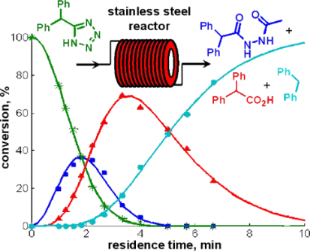
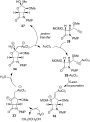
- publication we reported the Mizoroki–Heck coupling of 4-iodobenzonitrile (12) with n-butyl acrylate (13) under high-temperature continuous flow conditions (150–190 °C) employing Pd(OAc)2 as a homogeneous pre-catalyst and a stainless steel-based coil flow system (Scheme 4) [59]. With only 0.01 mol % of Pd(OAc
- of 1.0 mm i.d. coil) was “loaded” with Pd by processing ≈2 mL of the Mizoroki–Heck reaction mixture through the coil under reaction conditions (180 °C, 1.6 mL/min flow rate) with 1 mol % of the Pd(OAc)2 as pre-catalyst. As expected, the desired product 14 was obtained in 94% isolated yield after
- solvent [59]. We suspect that the Pd metal inside the steel coil is present in the form of a thin film of nanometer-sized Pd crystallites, very similar to the highly porous and catalytically active Pd films that can be generated very easily inside glass capillaries by the decomposition of Pd(OAc)2 under


Studies on Pd/NiFe2O4 catalyzed ligand-free Suzuki reaction in aqueous phase: synthesis of biaryls, terphenyls and polyaryls
Beilstein J. Org. Chem. 2011, 7, 310–319, doi:10.3762/bjoc.7.41
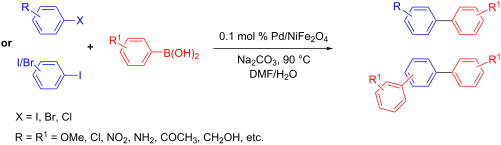
- nonaflates [53], Grignard reagents with dihalobenzenes [54][55][56]: Other methods give poor yields. The Suzuki cross coupling protocol has been used for the synthesis of terphenyls and polyaryls using Pd(OAc)2 or Pd(PPh3)4 with or without ligands in homogeneous medium [57][58][59][60]. Although, these

Palladium- and copper-mediated N-aryl bond formation reactions for the synthesis of biological active compounds
Beilstein J. Org. Chem. 2011, 7, 59–74, doi:10.3762/bjoc.7.10
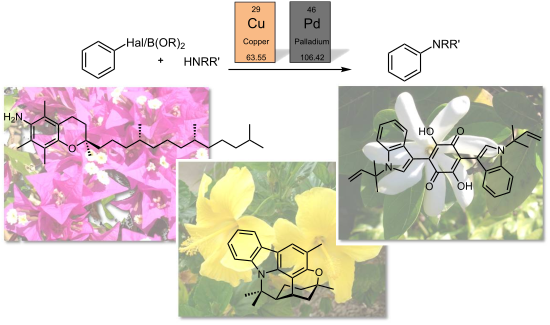
- syntheses have been developed in which Pd(OAc)2 proved to be the best catalyst in comparison to the dba complex, and BINAP the best ligand. There was no difference if the racemic or the enantiomeric pure ligand was used. The use of Pd(OAc)2 is advantageous on a larger scale due to low cost and easy handling




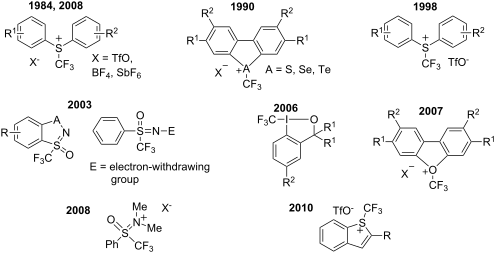
Shelf-stable electrophilic trifluoromethylating reagents: A brief historical perspective
Beilstein J. Org. Chem. 2010, 6, No. 65, doi:10.3762/bjoc.6.65
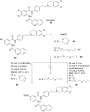
- trifluoromethylated arenes by treatment with Umemoto reagents, 5a or 5b, in the presence of Pd(OAc)2 and Cu(OAc)2 at 110 °C in a mixture of dichloroethane (DCE) and 10 equiv of trifluoroacetic acid (TFA). Arenes having other heterocycles such as thiazole, imidazole, or pyrimidine also reacted under the same


Pd-catalyzed decarboxylative Heck vinylation of 2-nitrobenzoates in the presence of CuF2
Beilstein J. Org. Chem. 2010, 6, No. 43, doi:10.3762/bjoc.6.43
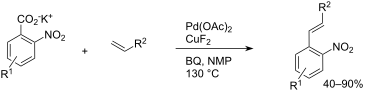
- acids is disclosed. In the presence of a catalyst system generated in situ from Pd(OAc)2 (2 mol %), CuF2 (2 equiv), and benzoquinone (0.5 equiv) in NMP, a wide range of olefins were coupled with various 2-nitrobenzoates at 130 °C with the release of carbon dioxide to afford the corresponding vinyl


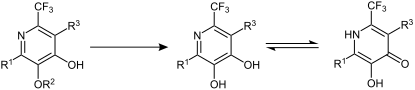
Preparation of pyridine-3,4-diols, their crystal packing and their use as precursors for palladium-catalyzed cross-coupling reactions
Beilstein J. Org. Chem. 2010, 6, No. 42, doi:10.3762/bjoc.6.42
- possible palladium-catalyzed cross-couplings we performed several Sonogashira-reactions [28][29][30]. As described in Scheme 3, the pyridinyl-bistriflates or -nonaflates 3 were coupled with alkynes like phenylacetylene or (triisopropylsilyl)acetylene using Pd(PPh3)4 or alternatively, Pd(OAc)2/PPh3 as
- couplings of pyridinediyl bis(perfluoroalkanesulfonates) 3. a) Pd(PPh3)4 [or Pd(OAc)2/PPh3], CuI, iPr2NH, DMF, 70 °C, 4 h. b) TBAF, THF, rt, 1 h. Supporting Information Supporting Information File 1 contains the supplementary data for compounds 2d, 3a, 3c–d and 4b–c. Supporting Information File 90


A short and efficient synthesis of valsartan via a Negishi reaction
Beilstein J. Org. Chem. 2010, 6, No. 27, doi:10.3762/bjoc.6.27
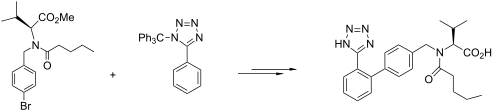
- , THF, 70%; (c) n-BuLi, 25 °C, THF, anhyd ZnCl2, −20 °C, Q-phos, Pd(OAc)2, 75 °C, 2 h, 80%; (d) 3 N NaOH, MeOH, reflux, 90%. Acknowledgements We are grateful for the support of the Sardar Vallabhbhai National Institute of Technology, Surat and Indian Association for the Cultivation of Science, Jadavpur


Solvent-free and time-efficient Suzuki–Miyaura reaction in a ball mill: the solid reagent system KF–Al2O3 under inspection
Beilstein J. Org. Chem. 2010, 6, No. 7, doi:10.3762/bjoc.6.7
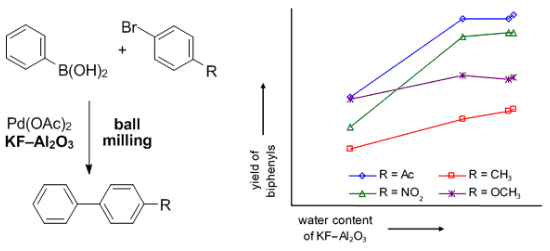
- pH measurements of aqueous suspension of the pure aluminas. Investigating the influence of different SRS, the Pd(OAc)2-assisted Suzuki–Miyaura coupling of phenylboronic acid (1) with different aryl bromides 2 furnishing p-substituted biphenyls 3 (Scheme 1) was chosen. Reactions were performed in a
- ; 5 mmol), phenylboronic acid (1; 6.19 mmol, 0.755 g, 124 mol %), Pd(OAc)2 (0.18 mmol, 0.04 g, 3.56 mol %) were added to the grinding beaker (agate, V = 45 ml) already equipped with the milling balls (6× agate, d = 15 mm) and placed inside the planetary ball mill Pulverisette 7 (Fritsch GmbH, Germany
- beakers (V = 45 ml), 6 agate milling balls (d = 15 mm) per beaker, 800 rpm, 10 min; batch: 5 mmol 2a, 124 mol % 1, 3.6 mol % Pd(OAc)2]. Results of the Suzuki–Miyaura reaction according to Scheme 1 assisted by pure aluminas [5 g SRS1–3: cf. Table 2; ball milling: 2 agate milling beakers (V = 45 ml), 6


Diastereoselective functionalisation of benzo-annulated bicyclic sultams: Application for the synthesis of cis-2,4-diarylpyrrolidines
Beilstein J. Org. Chem. 2009, 5, No. 69, doi:10.3762/bjoc.5.69
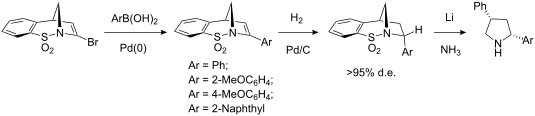
- mixture of the compound 24a (500 mg, 1.75 mmol, 1 equiv), phenylboronic acid (1.073 g, 8.80 mmol, 5 equiv), Pd(OAc)2 (20 mg, 0.09 mmol, 5 mol %), PPh3 (47 mg, 0.18 mmol, 10 mol %) and Cs2CO3 (1.714 g, 5.26 mmol, 3 equiv) in a mixture of THF:H2O (10:1) (25 mL) was heated to reflux for 15 h. On cooling Et2O





